Ha'apai
Ha'apai, Tonga
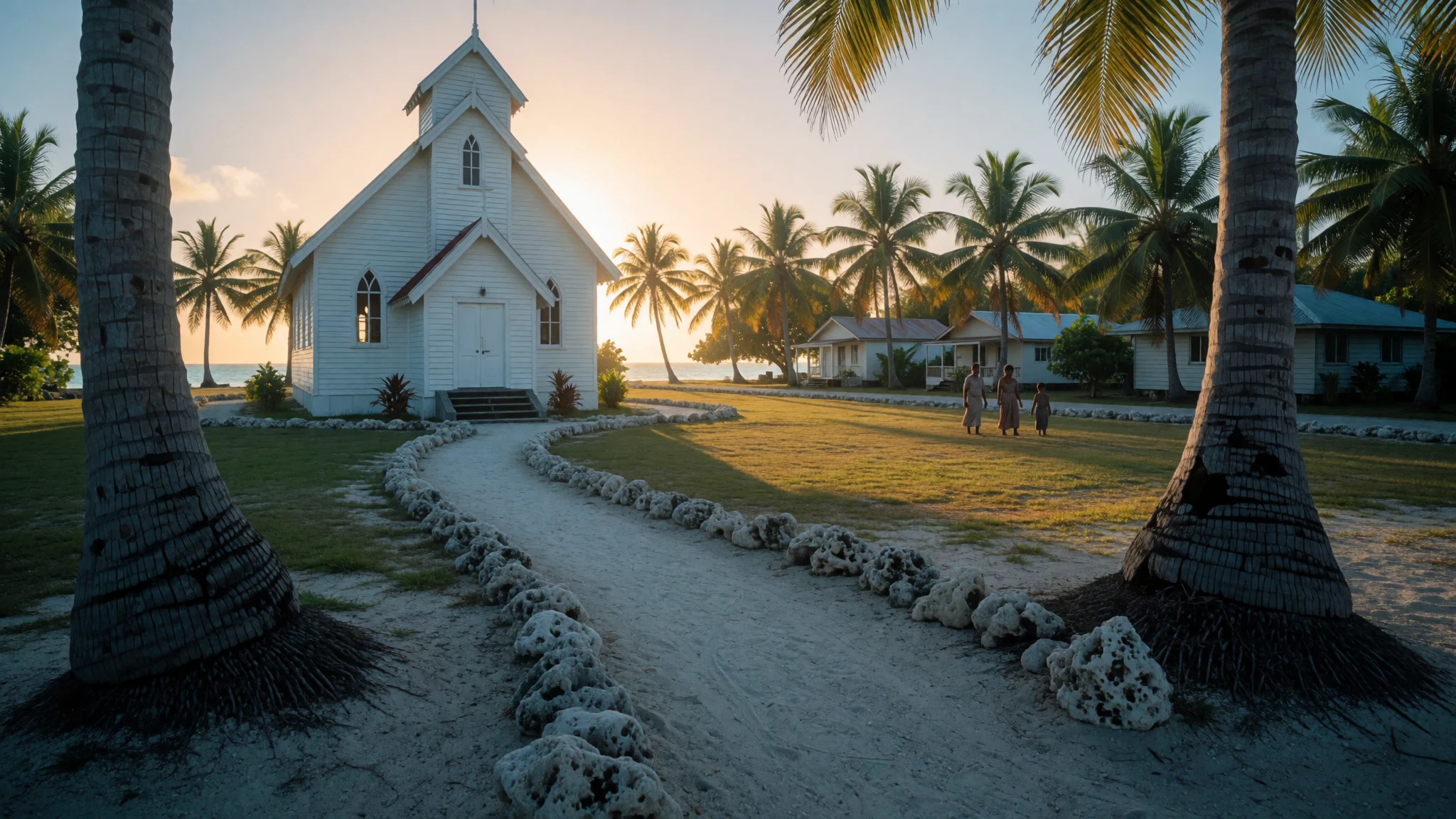
Ha'apai is Tonga's quiet middle: village islands and a long lagoon between busier Tongatapu and Vava'u.
The place
Ha'apai is the central island division of the Kingdom of Tonga, lying in the South Pacific between Tongatapu to the south and Vava'u to the north. The mapped point for the group falls among reefs, which suits the place: land is a thin interruption of lagoon. Daily life gathers on Lifuka. Pangai, its small administrative town, is a wharf, a few shops, churches and houses under coconut palms, with lagoon on one side and open ocean on the other. A causeway links Lifuka to Foa, so Lifuka and Foa read as one strip of villages, Faleloa among them.
Beyond that strip, Ha'apai is mostly water. Outer islands are reached by boat, and the decision sits with weather and tide. Coconut, breadfruit and root crops fill the interiors. Coasts run to sand, coral rock and reef flats that appear at low water. West of the coral chain, volcanic Tofua holds a crater lake, and the cone of Kao stands nearby, part of the same volcanic arc.
The built world stays modest. Warmer months bring heavy rain, and cyclones have lifted roofs off Lifuka's churches; photographs show the scale of such damage. There is no resort strip. Evenings are church, a generator or a small grid, and the reef. The same quiet that keeps beaches empty also means a full flight or a cancelled boat holds travellers in place. The lagoon and the villages, and the sea between them, are what the map is really showing.
Its story
Ha'apai enters written history through ships that needed water, wood and a lee, and through Tongans who already governed these islands. James Cook left the wider archipelago with the name Friendly Islands. Later accounts tied to Ha'apai say that friendliness was incomplete: a plan to take the ships was argued on shore and then set aside, so the pleasant name outlived a risk the captain never plainly saw. The details are disputed, and the episode sits between oral history and a logbook.
The mutiny on the Bounty brought Ha'apai into another voyage. Cast adrift, William Bligh's boat party made land at Tofua. The landing failed. While the men tried to gather supplies they clashed with islanders, a sailor was killed, and the boat put to sea without another Tongan stop. Nothing on Tofua marks that hour. The island remains a volcano with a crater lake, and the story lives in books more than on the ground.
The privateer Port-au-Prince was later seized at Lifuka. A young sailor, William Mariner, lived under a Ha'apai chief, learned the language and the rank around him, and in England dictated an account of kava, warfare, ceremony and household politics. The book is an outsider's memory, yet it described Ha'apai as a court and a web of alliances.
Those ship stories sit inside a Tongan one. Families, churches and chiefly lines were here before the Europeans and remained after the whalers and the missionaries. The modern kingdom looks towards Nuku'alofa, while Pangai stays the local centre. Continuity shows in Sunday worship, in mats and tapa, and in damage that is mended and left visible. A Lifuka church that lost its roof to a cyclone belongs to that memory.
What to see
- Pangai — Lifuka
Pangai is the small town of Ha'apai, strung along Lifuka beside the wharf. Shops, churches and houses sit under coconut palms within a short walk of the water, and the street is the group's ordinary centre rather than a capital promenade. When a ferry is due the front comes alive with cargo, families and talk; on other days it is quiet enough to cross without a plan.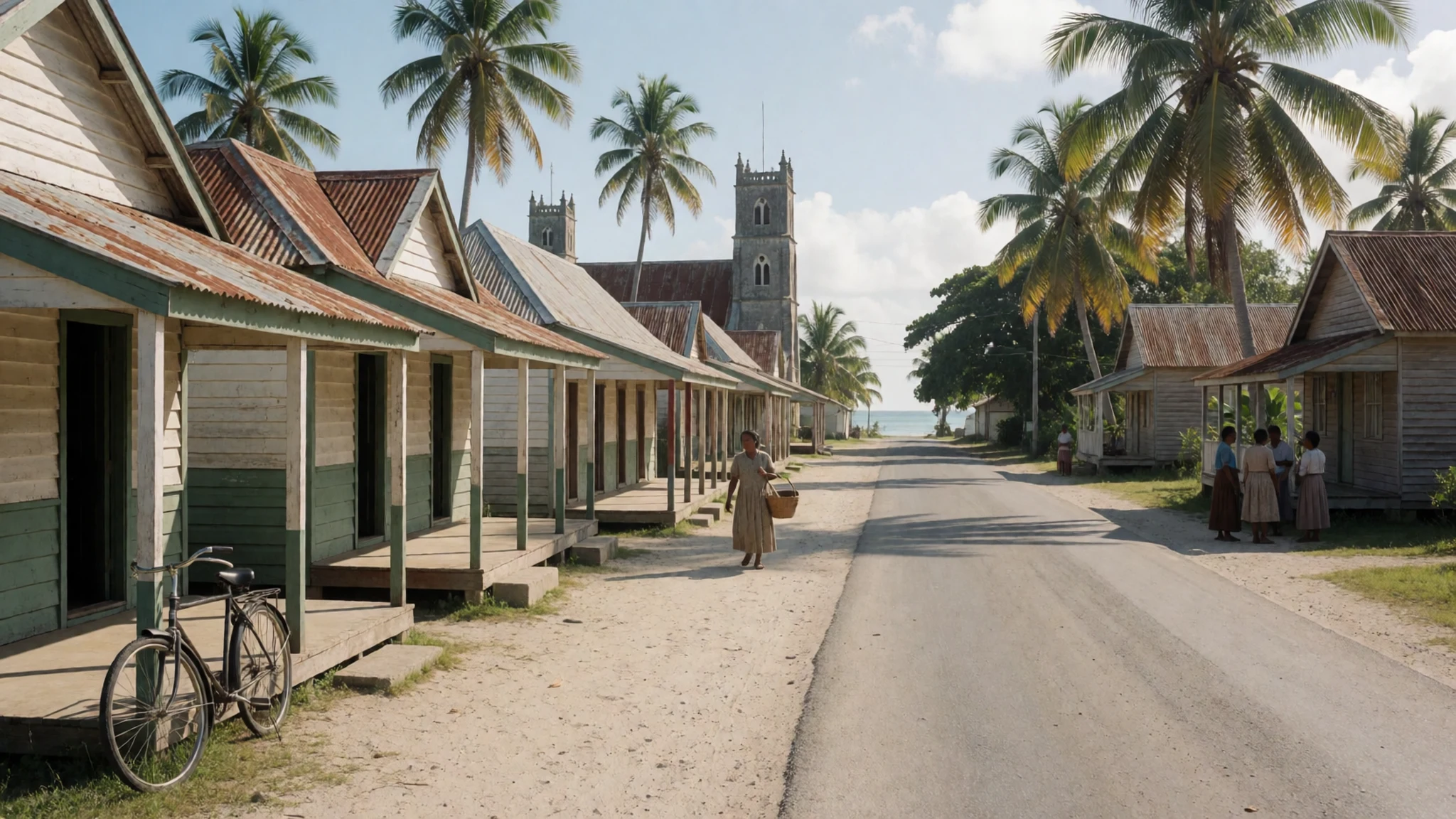
- Faleloa — Foa
Faleloa is a shore village on Foa in Ha'apai, joined to Lifuka by a causeway so the trip is a walk or a slow ride rather than a boat. Houses look towards the water, coconut palms break the sun, and gardens of food crops sit just inland. The beach is the foreground, not a resort frontage, and the reef flat shows at low tide.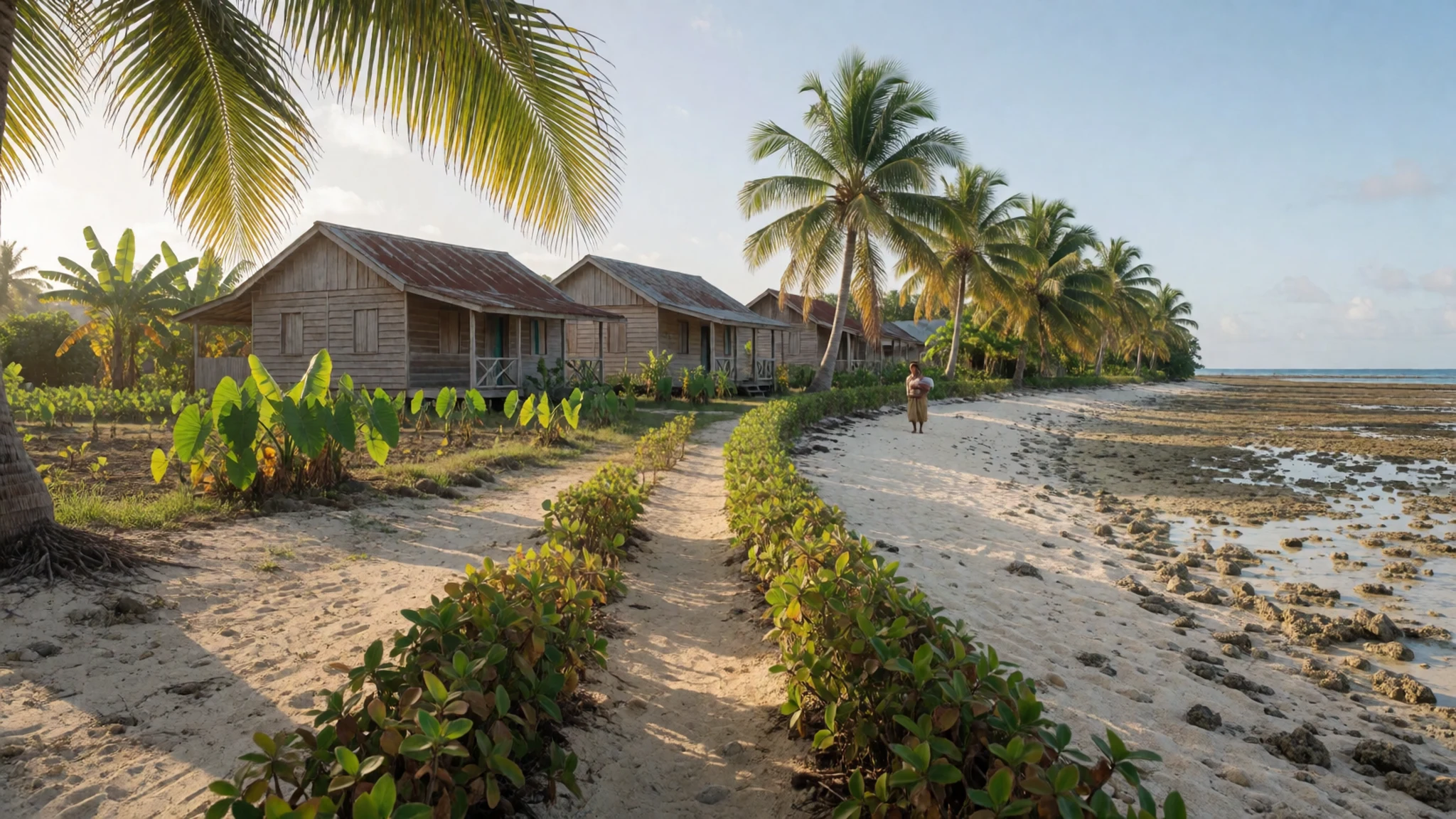
- Lifuka and Foa beaches — Lifuka and Foa
The western beaches of Ha'apai, along Lifuka and Foa, are long, pale and usually quiet. Snorkelling is a wade from shore onto reef, best when the tide is in and the wind has not made the lagoon cloudy. Shade is a palm or a wrap, not a row of umbrellas. Coral is close to the surface, so reef shoes save a bad step, and the sun is direct.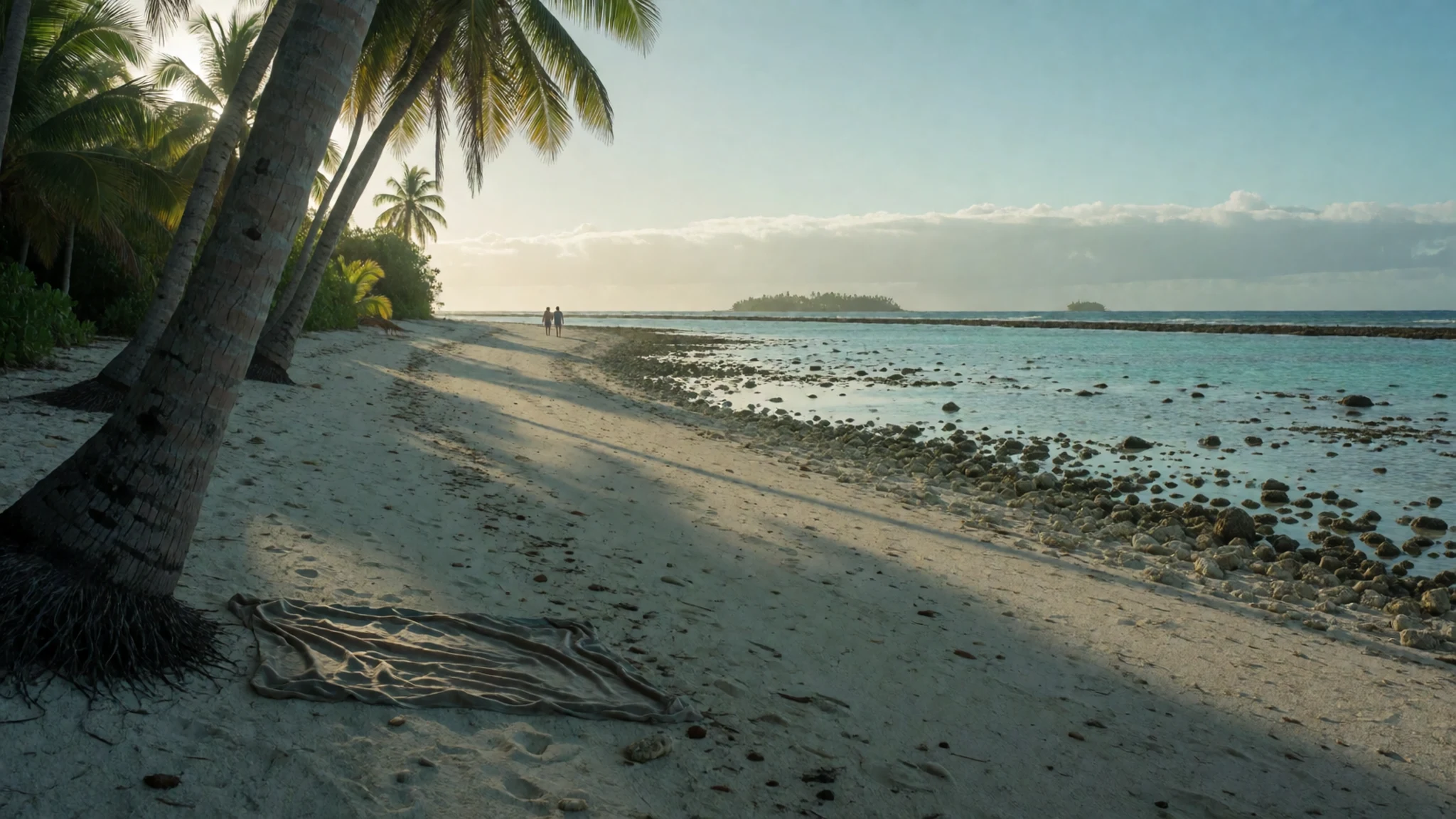
- Lifuka's churches — Lifuka
Churches on Lifuka are the landmarks of Ha'apai, white or painted, larger than the houses around them, and full on a Sunday morning. One of them lost its roof to a cyclone, a reminder that faith here is also carpentry and recovery. Visitors are welcome at a service if they dress modestly and sit quietly; hymns in Tongan are the point.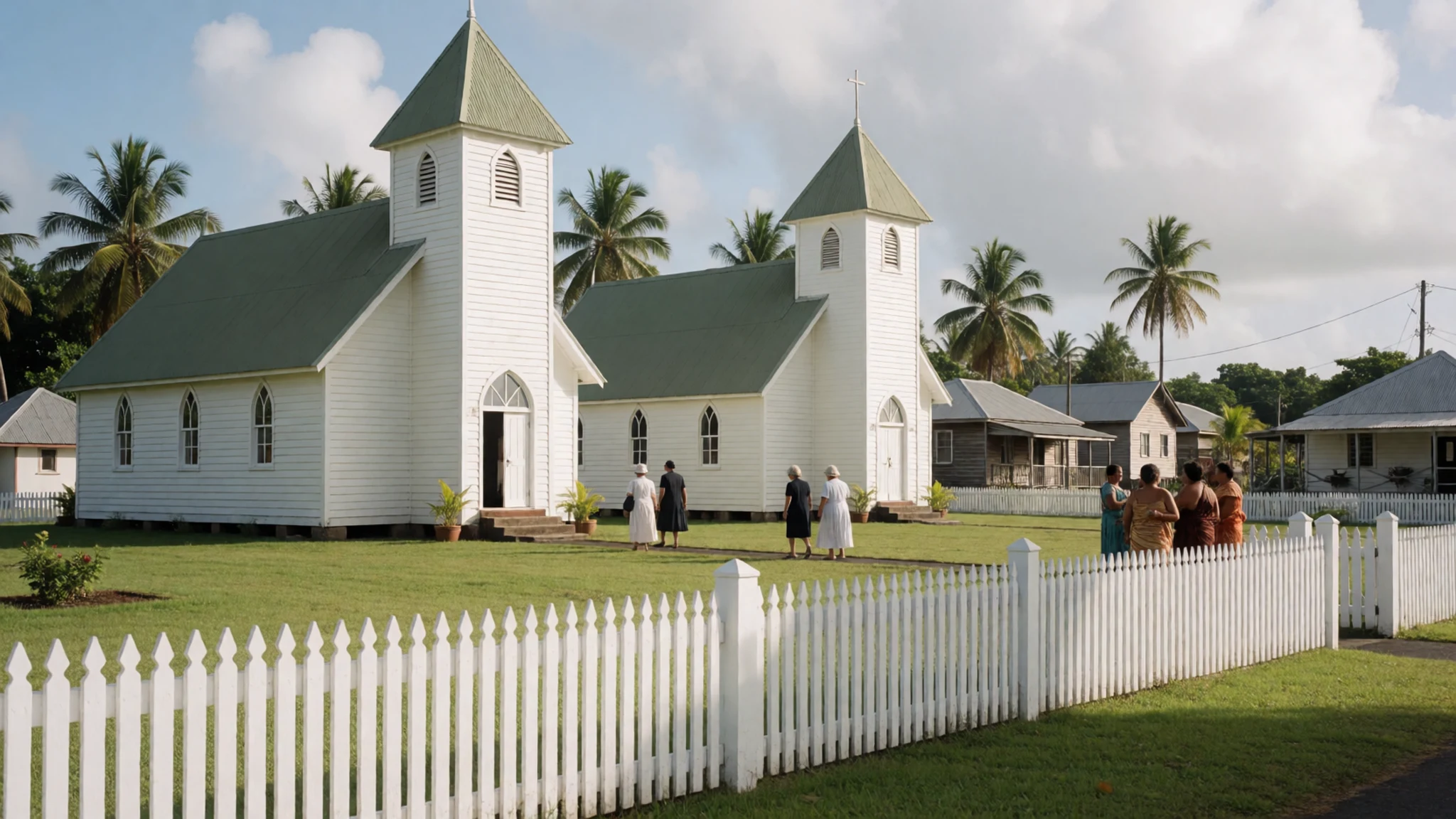
- The lagoon — Ha'apai lagoon
The lagoon of Ha'apai is the open space of the group: shallow colour over sand and coral, with low islands on the horizon. Boat trips depend on a local skipper and a calm day. Tofua and Kao are a different sight, steep and seen from the water rather than walked. Departures are arranged in Pangai, not from a tour desk.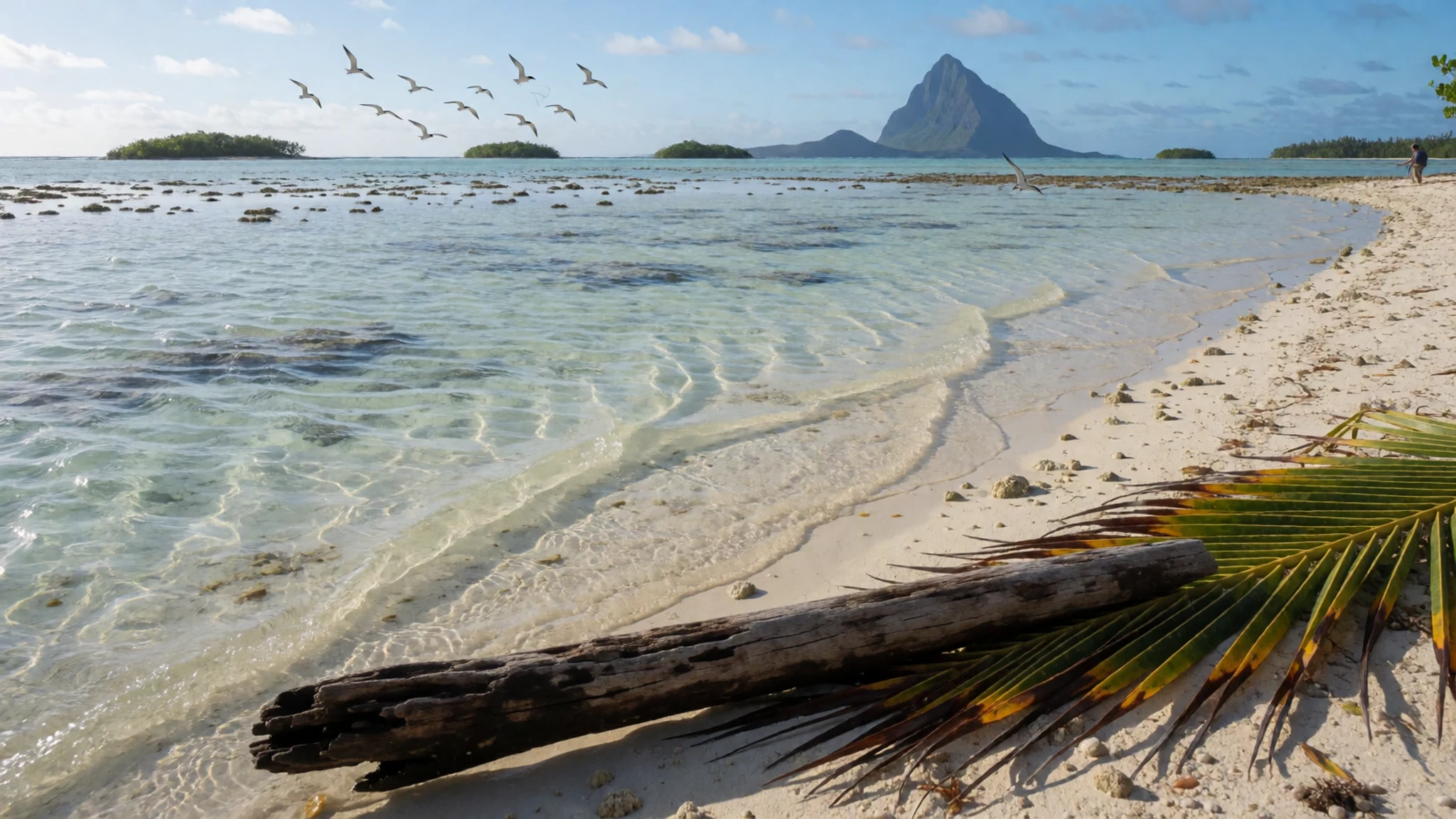
Culture
Ha'apai's culture is Tongan culture lived at village scale. Rank still organises courtesy: chiefs, elders and the church set the tone of a meeting, and people introduce themselves through family as much as through a job. The week bends around Sunday, when worship fills the churches on Lifuka and ordinary errands pause. Hymns, white shirts and a woven mat at the waist mark the morning. Through the week, faikava — kava shared in a circle — is where news, jokes and decisions loosen up. Men often sit the formal bowl; women pass through on their own terms, and a guest follows the host's cue rather than a rule learned from a book.
Making and giving still matter. Ngatu, the barkcloth beaten from paper-mulberry and patterned in brown and black, appears at ceremonies, as do fine mats. A presentation is a relationship, not a souvenir transaction. English is widely understood in Pangai, while Tongan carries the real conversation, and a few words of greeting (mālō e lelei) are noticed. Land is family land. Beaches that look empty may be in front of someone's house.
Ha'apai rewards a visitor who dresses modestly for church and the village, asks before photographing people, and treats Sunday quiet as the local week rather than an inconvenience.
What to wear
Ha'apai dresses with the rest of Tonga, in a code that is formal on Sunday and practical in the heat. The traditional layer is the ta'ovala, a mat of pandanus worn over a tupenu or a dress and tied with a cord of coconut fibre or a decorative band. Rank and occasion decide the fineness: a coarse mat can signal humility at a funeral, while a fine one marks ceremony. Women also wear the kiekie, a waist garment of strips of pandanus, hibiscus fibre or modern ribbon, easier in the heat than a full mat. Ngatu, barkcloth of paper-mulberry, is less daily wear than ceremonial wealth, wrapped, gifted and sometimes hung.
On an ordinary weekday the street in Pangai looks contemporary: T-shirts, tupenu or shorts for men, dresses and skirts for women, school uniforms in the morning, rubber sandals that can be left at a door. Church resets the code. Shoulders and knees disappear under shirts, dresses and the mat, and white or cream is common.
A visitor fits in with light cotton that covers shoulders and knees for villages and any church, plus a wrap for the beach walk back into town. Swimwear stays on the sand and off the road. Footwear should come off easily at a threshold, and something that can grip wet coral is worth packing because the reef, not the high street, is the usual path into the water.
What to eat
- ʻOta ika — Guesthouse kitchens and family tables
ʻOta ika is raw fish as Ha'apai cooks it: reef fish cut small and mixed with citrus, coconut cream, onion and chilli, then served cold. Guesthouse kitchens and family tables produce it when the morning's catch allows. The cream carries the dish, and the fish should still taste clean.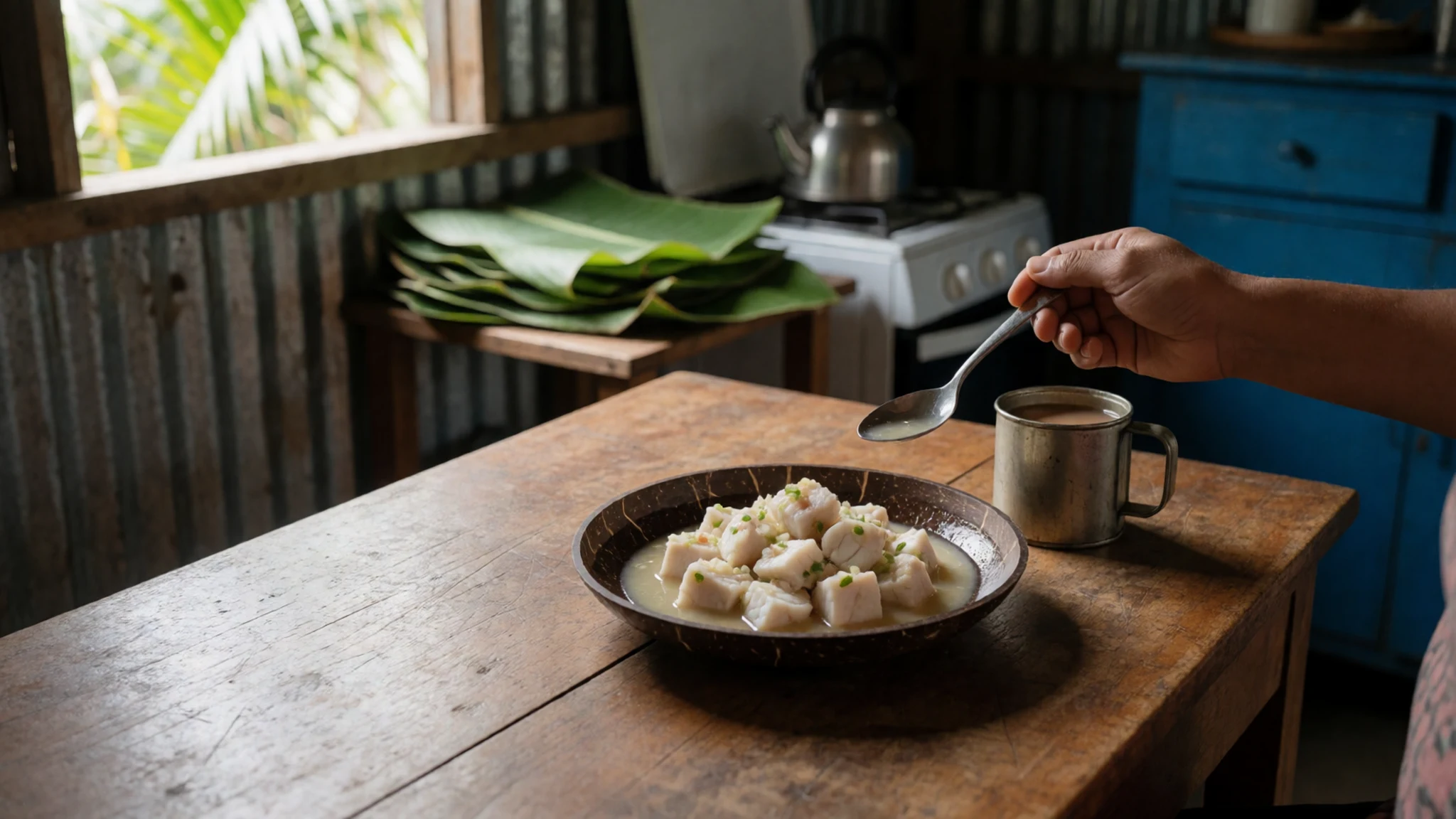
- Lu pulu — An umu at a Sunday feast, or a guesthouse kitchen
Lu pulu is Ha'apai taro leaf wrapped around corned beef and coconut cream, then slow-cooked until the leaf is soft and the sauce is rich. It belongs to the umu, the earth oven used for Sundays and feasts, and sometimes to a guesthouse pot.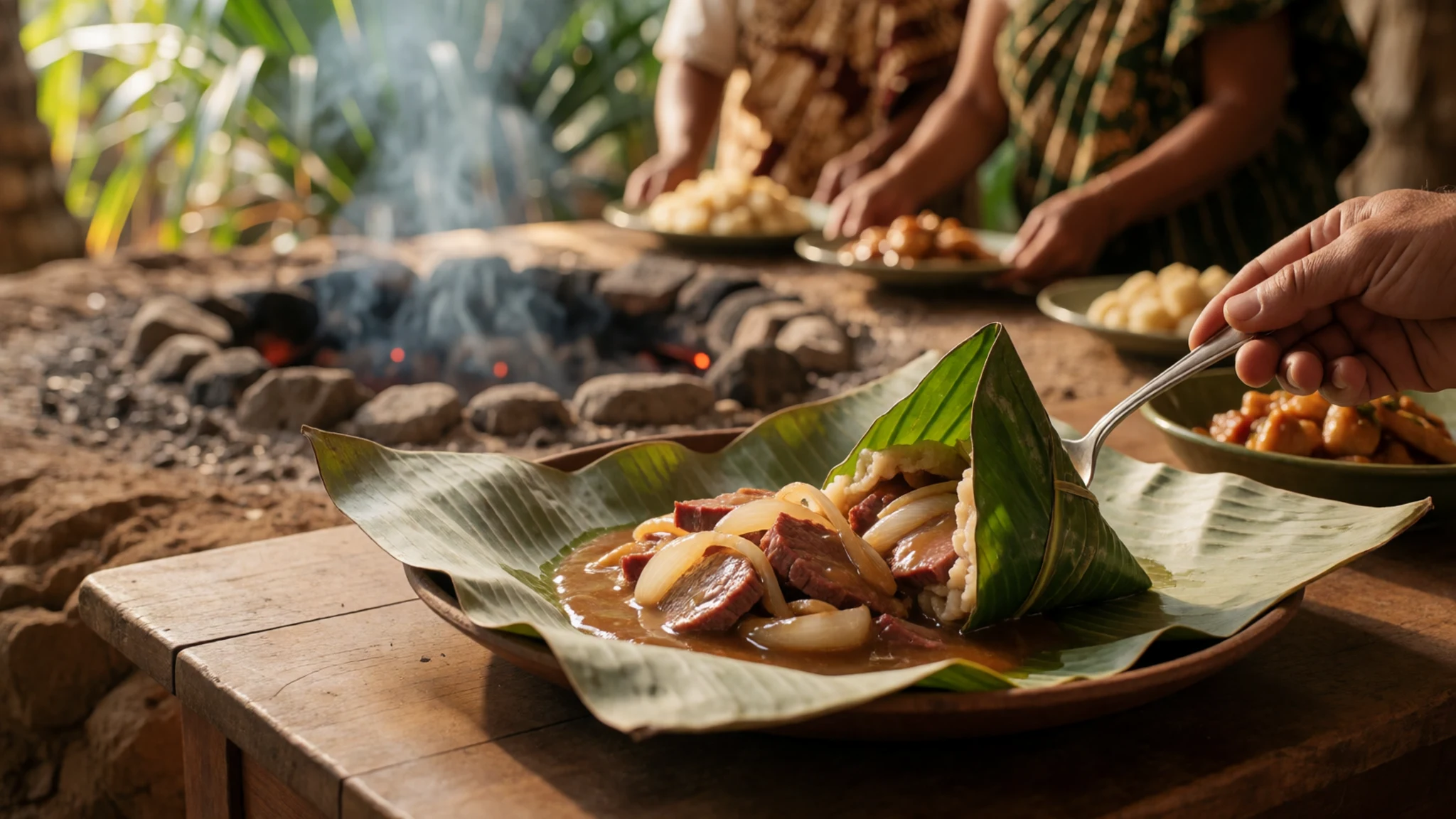
- Talo, manioke and breadfruit — Village plantations and feast tables
Talo (taro), manioke (cassava) and breadfruit are the starch of a Ha'apai plate, boiled, baked in the umu or fried when there is oil. They come from village plantations, not from a market hall, and they arrive at feasts in large portions meant for sharing. - Reef fish in coconut — A guesthouse kitchen or a host's meal after a boat comes in
Reef fish in Ha'apai is often simply grilled or boiled in coconut cream and served with the root crop of the day. The place to find it is a guesthouse kitchen or a village meal arranged through a host, especially after a boat has come in. - Coconut and island fruit — A host's garden, a village roadside, or the small shops in Pangai
Drinking coconut and the fruit in season — banana, papaya, mango when the trees are bearing — are the everyday refreshment of Ha'apai. Stalls are rare; fruit comes from a host's garden, a village roadside when someone has a surplus, or the small shops in Pangai.
Plan it
Best time. May to October is the easier season in Ha'apai, with lighter rain and generally kinder seas, and humpback whales pass through in the middle of that stretch. November to April is hotter and wetter, and cyclones are a real risk.
How long. 3–4
Getting there. Ha'apai is reached through Tongatapu. Flights land at Fua'amotu, near Nuku'alofa, then a domestic flight continues to the airfield on Lifuka, or the inter-island ferry leaves the capital when it is running. Aircraft are small and weather can hold a boat, so confirm the operator before booking.
Budget. mid
Tips
- Book the Lifuka flight or the ferry as soon as the international ticket is firm, because small aircraft fill quickly.
- Carry cash; card machines are scarce beyond a few Pangai counters.
- Treat Sunday as a quiet day for church, rest and a walk, not for errands.
- Pack reef shoes, a sun shirt and drinking water, and carry rubbish back off the beach.
- Read the marine weather each morning before a lagoon crossing.
Etiquette
- Cover shoulders and knees in villages and at church, and carry a wrap.
- Remove shoes before entering a home.
- Ask before photographing people, and do not take pictures during a service.
- Walk behind a seated group instead of stepping over legs.
Nearby
Sources
- Wikidata (CC0)
- Wikipedia (CC BY-SA 4.0)
- Wikivoyage (CC BY-SA 4.0)
- Staged photograph caption, church on Lifuka after Cyclone Ian (CC BY 2.5)
