Late Island
Late Island, Tonga
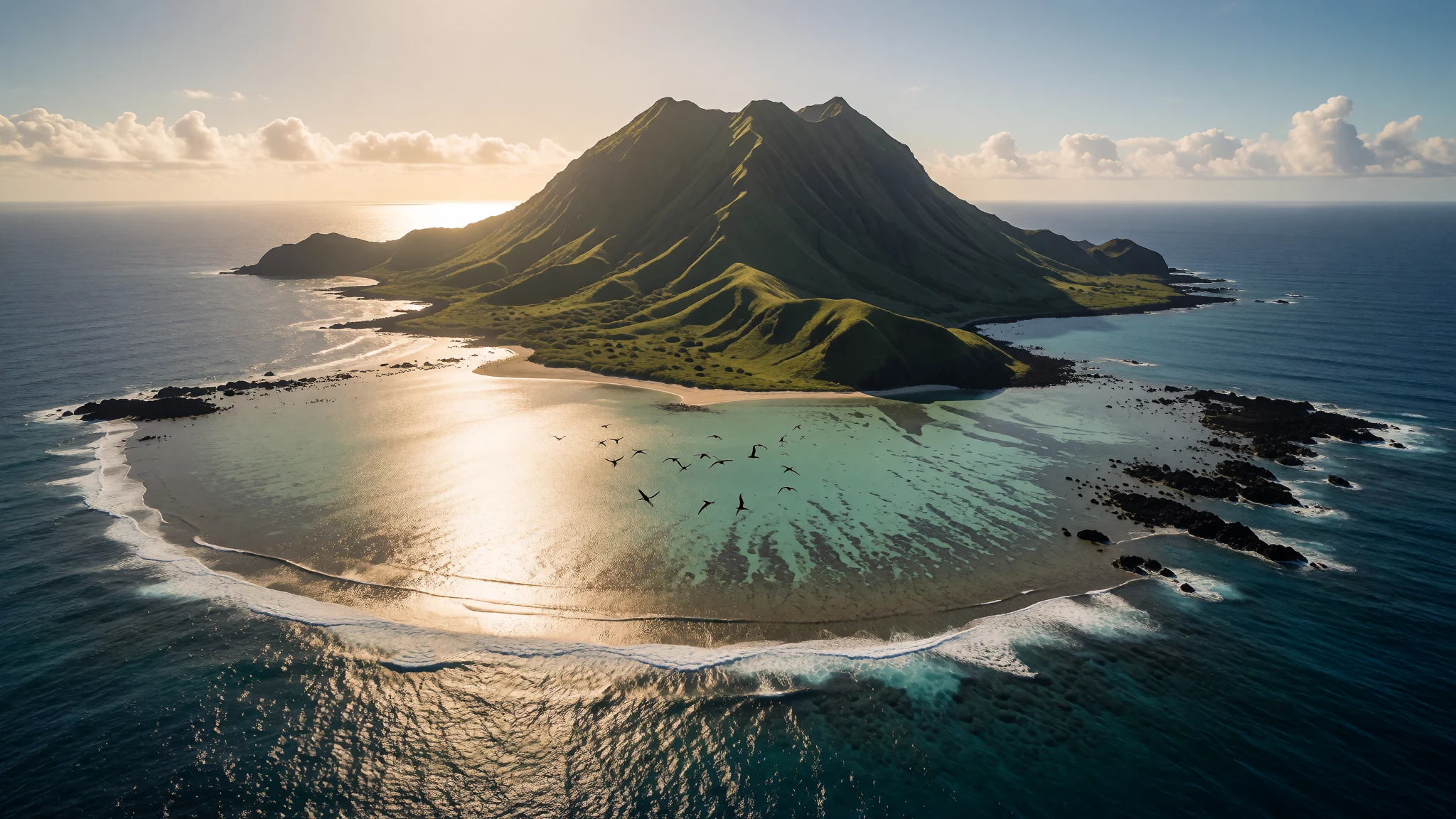
Late Island is an uninhabited Tongan volcano with crater lakes, best appreciated from Vavaʻu, where whales, harbours and feasts make the trip worthwhile.
The place
Late Island is an uninhabited volcanic cone in the kingdom of Tonga, about 55 km west-southwest of the Vavaʻu group. It is roughly circular and about 6 km across, covering around 15 square kilometres, and its conical summit stands 540 m above the sea. Most of the volcano is underwater: the seafloor falls away steeply, so the island is only the visible tip of a much larger mountain of basaltic andesite and andesite.
The summit holds a crater with a lake that comes and goes with the rain. Two more large craters scar the north-east flank, and one of them is filled by a lake. From a boat, the island reads as a green, steep-sided dome with no settlement, no jetty and no shops, which is a large part of its character.
Late sits on the Tonga–Kermadec arc, a chain of volcanoes that runs from New Zealand towards Fiji, where the Pacific Plate dives beneath the plate to its west. That tectonic setting explains both the volcanoes and the earthquakes that Tonga lives with.
Tonga itself is a kingdom of Polynesian culture and strong Christian faith, with a monarchy that stayed independent through the colonial era. Almost all visitors base themselves in Vavaʻu or on Tongatapu. Late is something to see from the water, or to learn about, rather than a place with facilities.
Its story
Late Island entered European records in 1781, when Francisco Mourelle de la Rúa, sailing for Spain in the frigate Princesa, logged the island. The French explorer La Pérouse examined it some years afterwards, and in 1791 the British officer Edward Edwards gave it the name Bickerston, which never took hold.
Late was not always empty. Slave-traders were the reason it was abandoned: around 1830 its people were resettled in Vavaʻu, and their descendants now live on Hunga. In the later twentieth century, kava was planted here by people from Ovaka, although nobody settled for good, and in the 1970s the island was used as a penal colony. Visitors today find no village, only forest, crater and shoreline.
The volcano has had a quiet recorded history. Only two eruptions are known, in 1790 and 1854, and both came from craters on the north-east flank. The first was explosive, while the second may also have sent out lava. The mountain itself was built over a much longer span, as lava and ash accumulated on the seafloor above the subduction zone until the cone broke the surface.
That mix of geology and human upheaval gives Late a story that is mostly about absence: an island its people left, planted, filled with prisoners and then left again to its crater lakes.
What to see
- Late Island from the sea — Open sea west-southwest of Vavaʻu
Late Island is best taken in from the water, where the steep green cone is easier to appreciate than on any map. It is uninhabited and has no facilities, so any landing needs permission and a local boat operator; ask in Vavaʻu and follow the advice of Tongan authorities.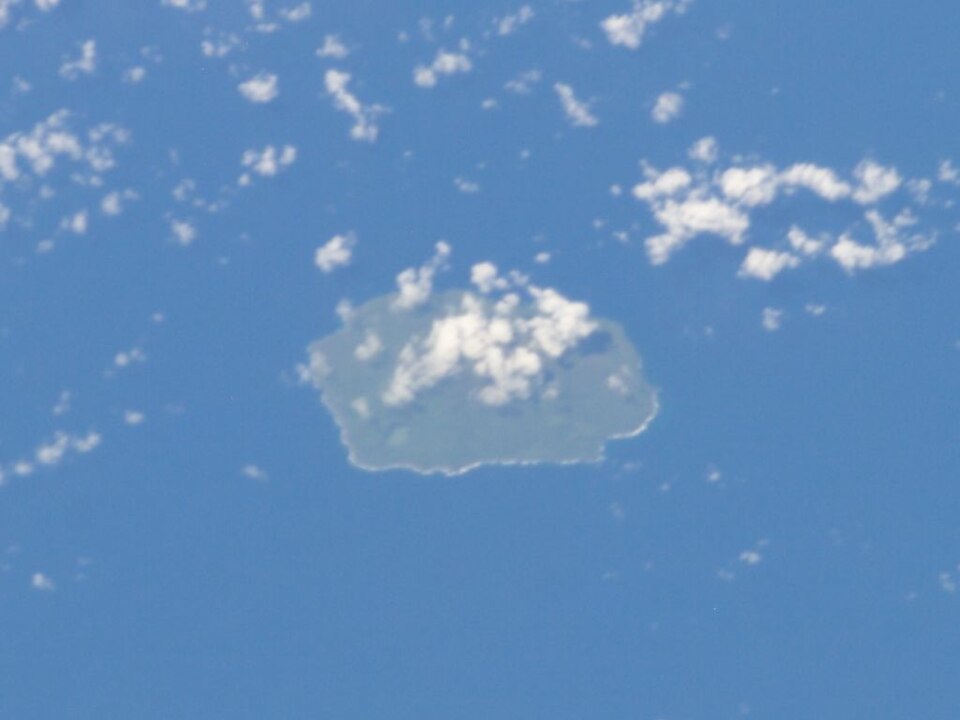
- Neiafu and Vavaʻu harbour — Vavaʻu group
Neiafu, the main town of Vavaʻu, sits on a sheltered harbour that is a regular stop for yachts crossing the South Pacific. The surrounding islands are limestone or coral, the water is notably clear, and from June to November humpback whales arrive, with organised tours from town for watching them. - Hunga — Vavaʻu group
Hunga, in the Vavaʻu group, is home to the descendants of the people once moved off Late Island. It is a small island community rather than a sight in the usual sense, so a visit is best arranged through a local guide or guesthouse, with respect for village life and Sunday rest. - Haʻapai — Central Tonga
Haʻapai is a scatter of islands between Vavaʻu and Tongatapu, only some of them lived on all year. Sandy beaches, snorkelling and diving are the draw, along with the chance of whales in season. It is also where the mutiny on the Bounty took place, in the late eighteenth century. - ʻEua — South-east of Tongatapu
ʻEua lies a short hop from Tongatapu and is geologically older than most of Tonga's islands, which are coral or volcanic. Its west coast has beaches, its east coast has dramatic cliffs, and the large tropical rain forest makes it a good choice for trekking. Guesthouses are small and few. - Tongatapu and Nukuʻalofa — Southern Tonga
Tongatapu is the main island and home to the capital, Nukuʻalofa. It is a low coral island with reefs, beaches and snorkelling, plus ancient tombs and coastal blowholes. Most international flights land here, and it is the easiest place to get a first sense of Tongan life, from churches to markets.
Culture
Tonga, the kingdom that Late Island belongs to, is a place where Polynesian custom and Christian faith shape daily life. Hospitality and humility are valued, and respect for elders and people in authority is expected rather than negotiated. Kinship ties and village life remain strong even in the capital, Nukuʻalofa, where European and Tongan habits sit side by side.
Sunday is the clearest example. Most people rest, go to church and spend the day with family, and commerce and entertainment largely stop; only some guesthouses, restaurants and beach resorts stay open. Many services are musical and welcoming, and visitors who have made friends with locals may be invited along.
The monarchy is part of the picture too. Tonga was united as a Polynesian kingdom in 1845, later became a constitutional monarchy, and was for a time a British protectorate before joining the Commonwealth. The king still holds a central role in how land and titles are handled, which gives the country a different feel from republics elsewhere in the Pacific.
Late Island itself has no community, so these customs are met on Vavaʻu, Tongatapu and the other inhabited islands. The mood is relaxed but conservative.
Dress modestly in towns and villages, keep beachwear for the beach or resort, and plan your Sunday around rest and church rather than errands or loud activities.
What to wear
Fashion in Tonga, the country that includes Late Island, still centres on wrapped garments and woven mats. The tupenu, a length of cloth wrapped around the waist like a skirt, is worn by both men and women. Over it, people wear the taʻovala, a mat woven from pandanus leaf and tied at the waist, to church, weddings, funerals and royal occasions, and women often add the kiekie, a decorative woven belt. Ngatu, a barkcloth made from paper mulberry and painted in repeating patterns, appears at ceremonies and as gifts. Black is worn for mourning.
Day to day, clothes are simpler. Shirts, T-shirts, shorts and sandals are common on weekdays, and Sunday brings out the smartest outfits of the week, often with mats. On boats and in plantations people wear whatever is practical for sun and salt.
A visitor should dress modestly: cover shoulders and knees in towns and villages, and keep swimwear to beaches and resorts, since going topless has led to arrests. Light cotton or linen copes with heat and humidity, and a hat helps on the water. Sharp coral lines many beaches, so reef shoes or sandals are sensible, and shoes come off at a house door. For church, a long skirt or trousers and a modest top fit in well; a mat is not expected from visitors.
What to eat
- ʻOta ika — Harbour-side fish stalls in Nukuʻalofa and Neiafu, and feast nights
Marinated raw fish, usually dressed with citrus and coconut cream, served cold and fresh. Quality depends on the catch, so it is best eaten close to where boats land. Harbour-side fish stalls and feast nights are the usual places to try it. - Lu — Feast nights run by guesthouses and tour companies on Tongatapu and Vavaʻu
Lu is meat, often corned beef or pork, wrapped in taro leaves with coconut cream and baked until soft and rich. It is a staple of feasts and family Sunday meals, with a mild, earthy taste that suits the root vegetables served beside it. - ʻUmu feast — Tongatapu and Vavaʻu, through guesthouses and tour companies
A Tongan feast is cooked in an earth oven, the ʻumu, and laid out as a spread of fish, roast pork, lu and root vegetables, often with dancing. Tour companies and guesthouses run them on several nights a week; book ahead and check details with the organiser. - Kava — Village kava circles and feast evenings
Kava is a pepper-root drink with a muddy look and a numbing, slightly bitter edge, shared in social circles and ceremonies. Most visitors try it once. Sip politely, expect your lips to tingle, and accept the bowl graciously when it is offered. - Ikale beer — Restaurants, bars, roadside shops and supermarkets
Ikale is Tonga's local beer, sold in small bottles at most restaurants and bars, and at roadside shops and supermarkets for less. It is a straightforward drink for hot evenings; remember that Sunday trading is very limited.
Plan it
Best time. June to October is the drier, cooler part of the year, and humpback whales visit Vavaʻu between June and November. The wetter season, roughly November to April, is hotter and more humid, and cyclones are possible.
How long. 4–6
Getting there. Fuaʻamotu Airport on Tongatapu is the main gateway, with services from Auckland, Sydney, Suva and Nadi; check current schedules for onward flights or boats to Vavaʻu. Late Island has no landing facilities, so the last leg is a boat from Vavaʻu arranged locally.
Budget. mid
Tips
- Book whale-watching tours ahead if travelling between June and November
- Arrange any boat trip towards Late through a local operator and check sea conditions and landing permission first
- Carry cash, as small islands and roadside shops may not take cards
- Wear reef shoes or sturdy sandals, because sharp coral is common on beaches
- Buy food and fuel on Saturday, since Sunday is very quiet
- After any strong earthquake, follow local tsunami warning advice and move to high ground
Etiquette
- Dress modestly away from the beach, covering shoulders and knees
- Keep Sundays quiet and respect church time
- Greet elders first and accept hospitality graciously
Nearby
Sources
- Wikidata Q1550157 (CC0)
- Wikipedia, Late (Tonga), rev 1386254831 (CC BY-SA 4.0)
- Wikivoyage, Tonga, rev 5422801 (CC BY-SA 4.0)
- Photo: TONGA/LATE ISLAND, NASA Johnson Space Center, via Wikimedia Commons (Public domain)
- Photo: Relief location map of Pacific Ocean, Uwe Dedering, via Wikimedia Commons (CC BY 3.0)

