'Eua
'Eua, Tonga
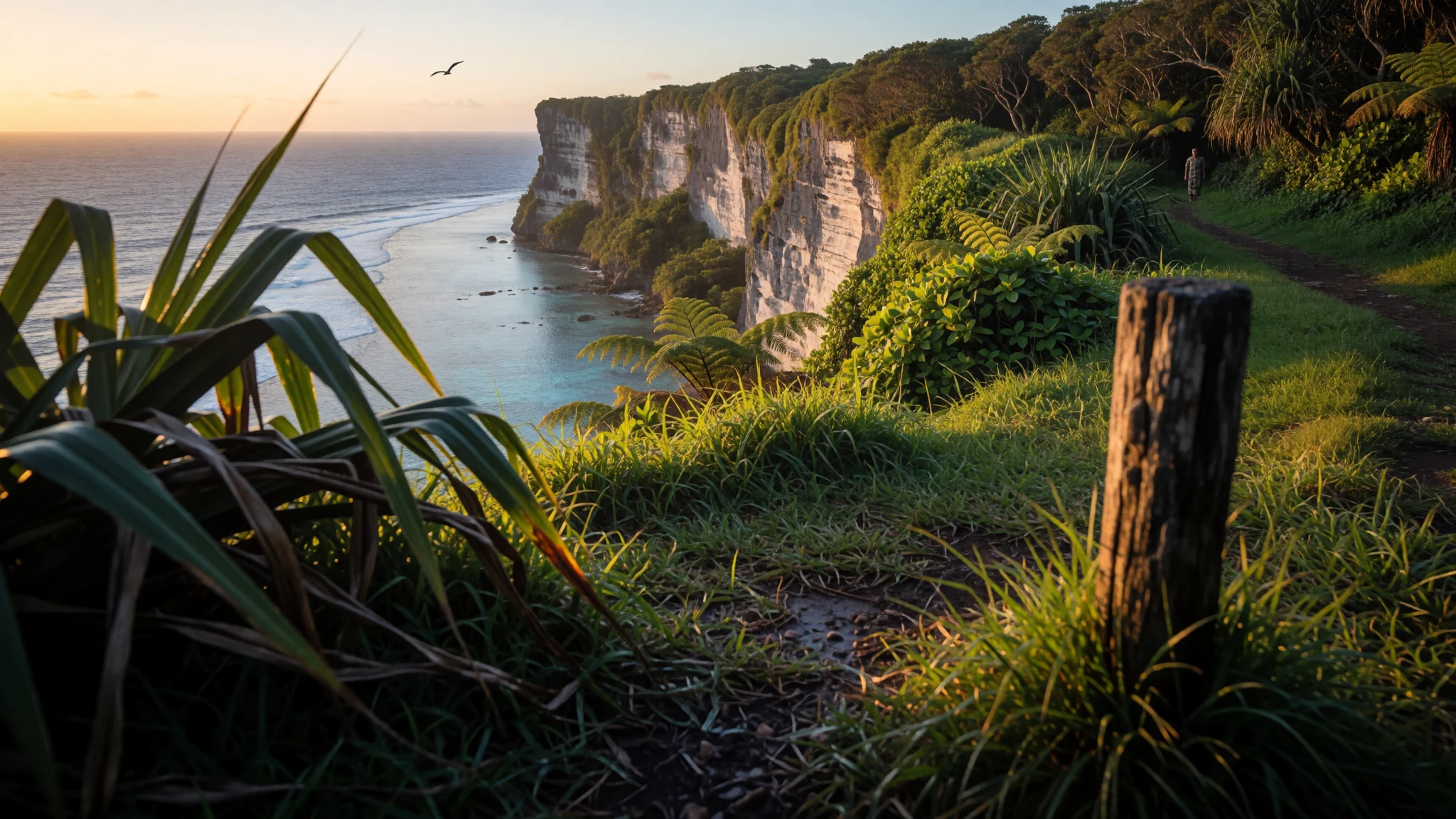
'Eua is a quiet raised island off Tongatapu where rainforest, sea cliffs and caves take the place of the beach resorts found elsewhere in Tonga.
The place
'Eua lies a short hop south-east of Tongatapu, the main island of Tonga, and feels like a different country from it. Tongatapu is flat and farmed. 'Eua is tilted: the land climbs gently from the west coast to a long ridge, then drops in sheer cliffs into the Pacific on the eastern side. That shape decides what a visitor does here. The east belongs to 'Eua National Park, a belt of forest and cliff-top tracks, while the west holds the villages, the small farms and the few places to stay. The landing point for boats is near Ohonua, a small settlement with a harbour and a handful of shops.
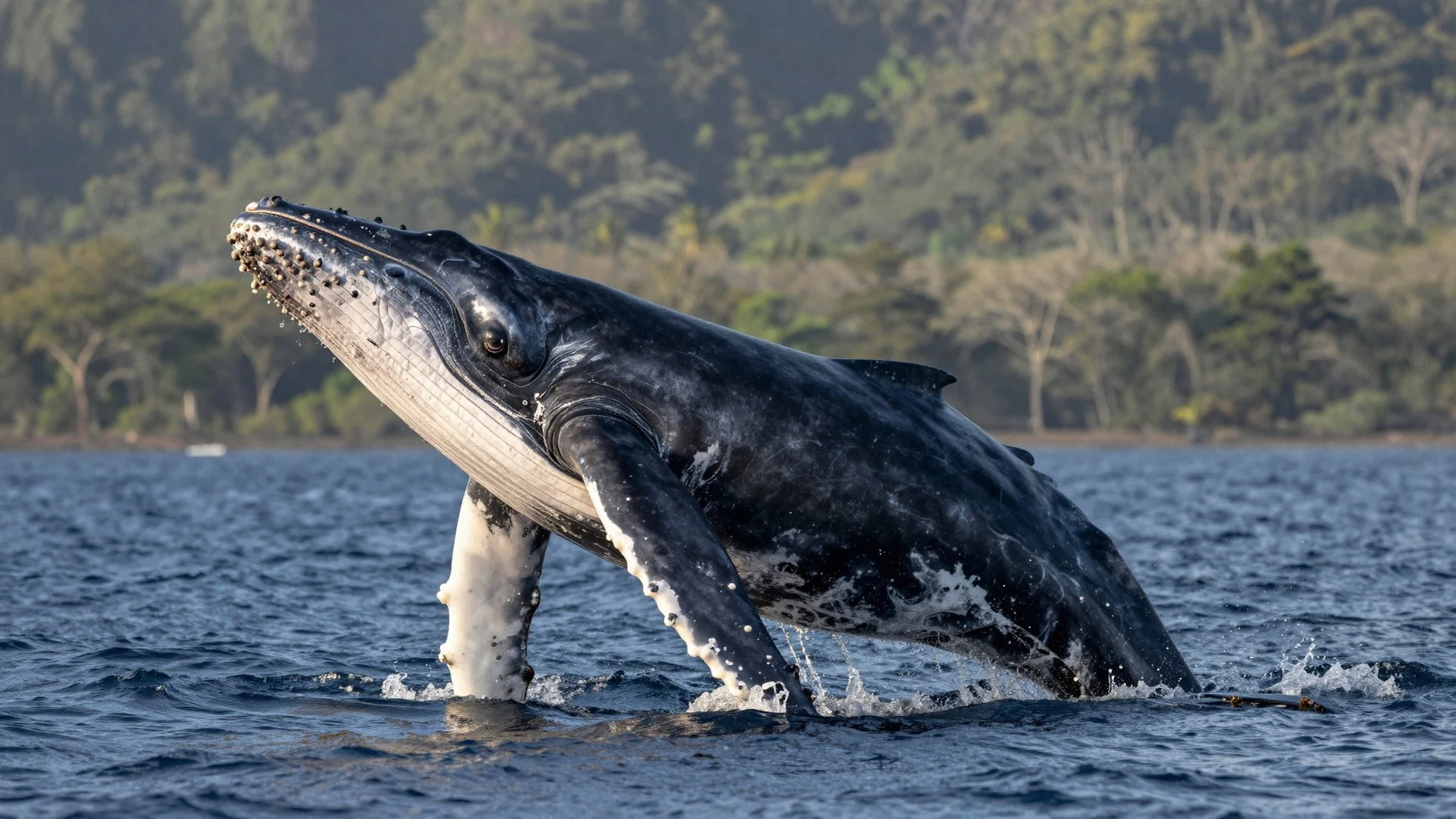
There is no resort strip. Swimming is mostly in sheltered pools and caves rather than on long sandy beaches, and the sea under the cliffs is too rough for casual bathing. The draws are walking, caving, birdwatching and, in the right season, whale watching from boats. Most people who come are independent travellers, researchers, volunteers and those who want Tonga at a slower pace.
Weather matters. The island is green because it catches rain, and forest tracks can be slick and muddy even in the drier months. Heat and humidity build in the wetter season, so early starts help. Accommodation is small and family-run, and the island rewards a couple of nights rather than a rushed day trip from the capital, since boat and flight timings can shift with the weather.
Its story
The story of 'Eua is that of a high island set apart from its low coral neighbours. Its ridge is raised and its soil fertile, which is why Tongans have long farmed it and why gardens still climb the slopes behind the villages. European ships called here during the age of Pacific exploration, among them Tasman and later Captain Cook. An engraving made from Cook's voyages, titled with the old spelling 'Eaoo, shows an islander from this part of the kingdom and survives in public collections.
Tonga was never colonised in the usual sense. It stayed under its own monarchy, with a period of British protection, and 'Eua's story belongs to that independent line. Chiefly titles, land held through families and the strong role of the church all shaped how the island was settled and run.
In more recent decades 'Eua became known for its agriculture, with root crops, vegetables and forestry plantations alongside the older forest. Part of that forest and the cliff country was set aside as a national park to protect what remained of the native rainforest and its birds. Like many Pacific islands, 'Eua has also seen many of its people move to New Zealand, Australia and the United States, and money sent home by relatives is a quiet but important part of village life. The island today is a place of small farms, big church congregations and long family ties abroad.
What to see
- 'Eua National Park — Eastern side of the island
The park covers the wild eastern side of 'Eua, where forest runs right up to the cliff edge. Tracks lead through the trees to lookouts over open ocean. Go with a local guide if the path is unclear, wear shoes with grip, and expect mud after rain.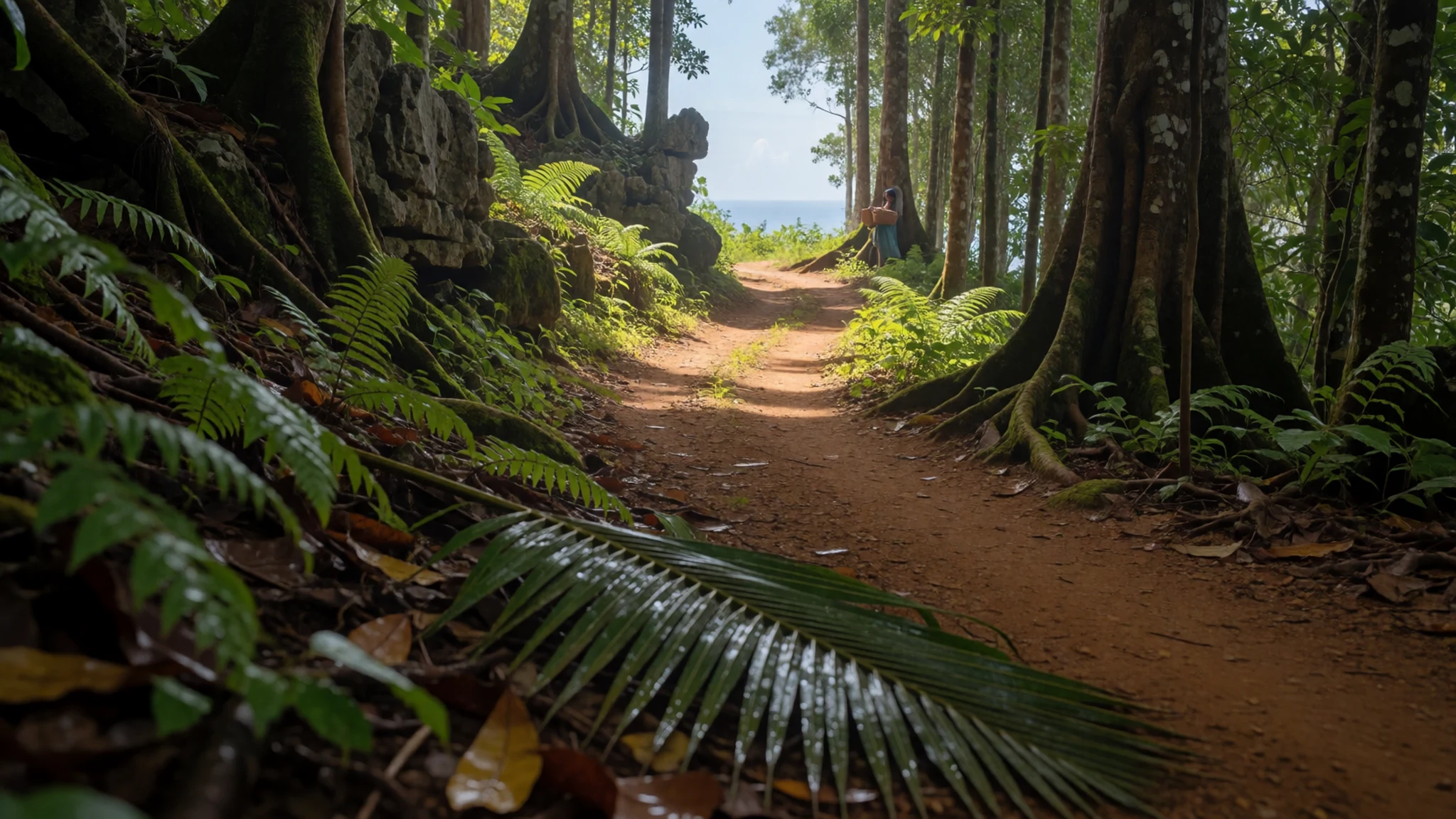
- Ha'atu'a lookouts and the eastern cliffs — Cliff edge above the Pacific
The eastern cliffs fall straight to a reef-fringed sea with nothing between 'Eua and the horizon. The lookouts are simple clearings, with no railings in places, so keep well back from the edge. Morning light is clearest, and cloud can roll in quickly.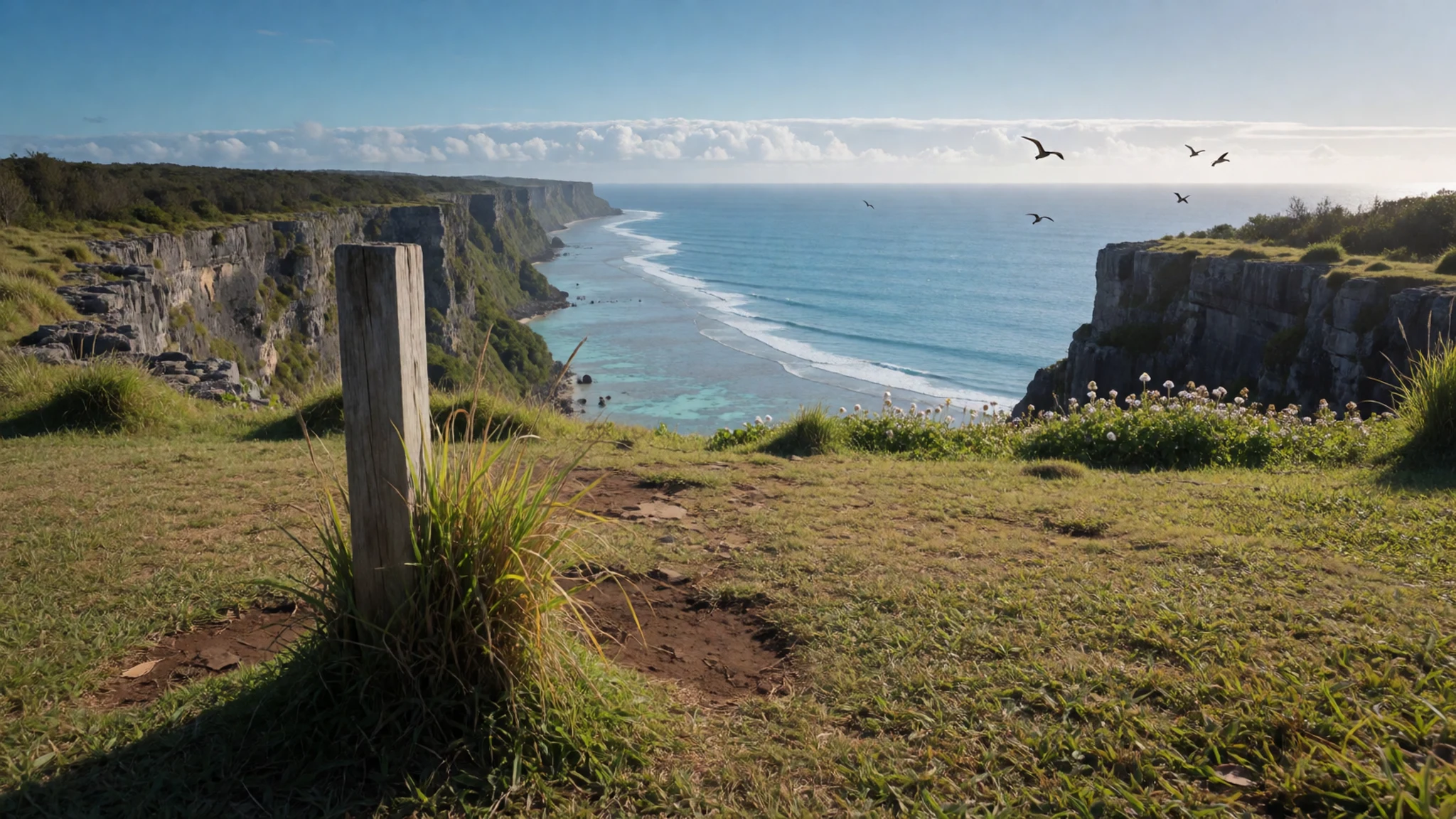
- Rainforest tracks — Inland ridge and park forest
Under the canopy the air is damp and cool, with tree ferns, vines and loud birdsong. Several walks cross the ridge, from short strolls to full days. A guide helps with route-finding and with spotting birds and useful plants, and can explain how villagers use the forest.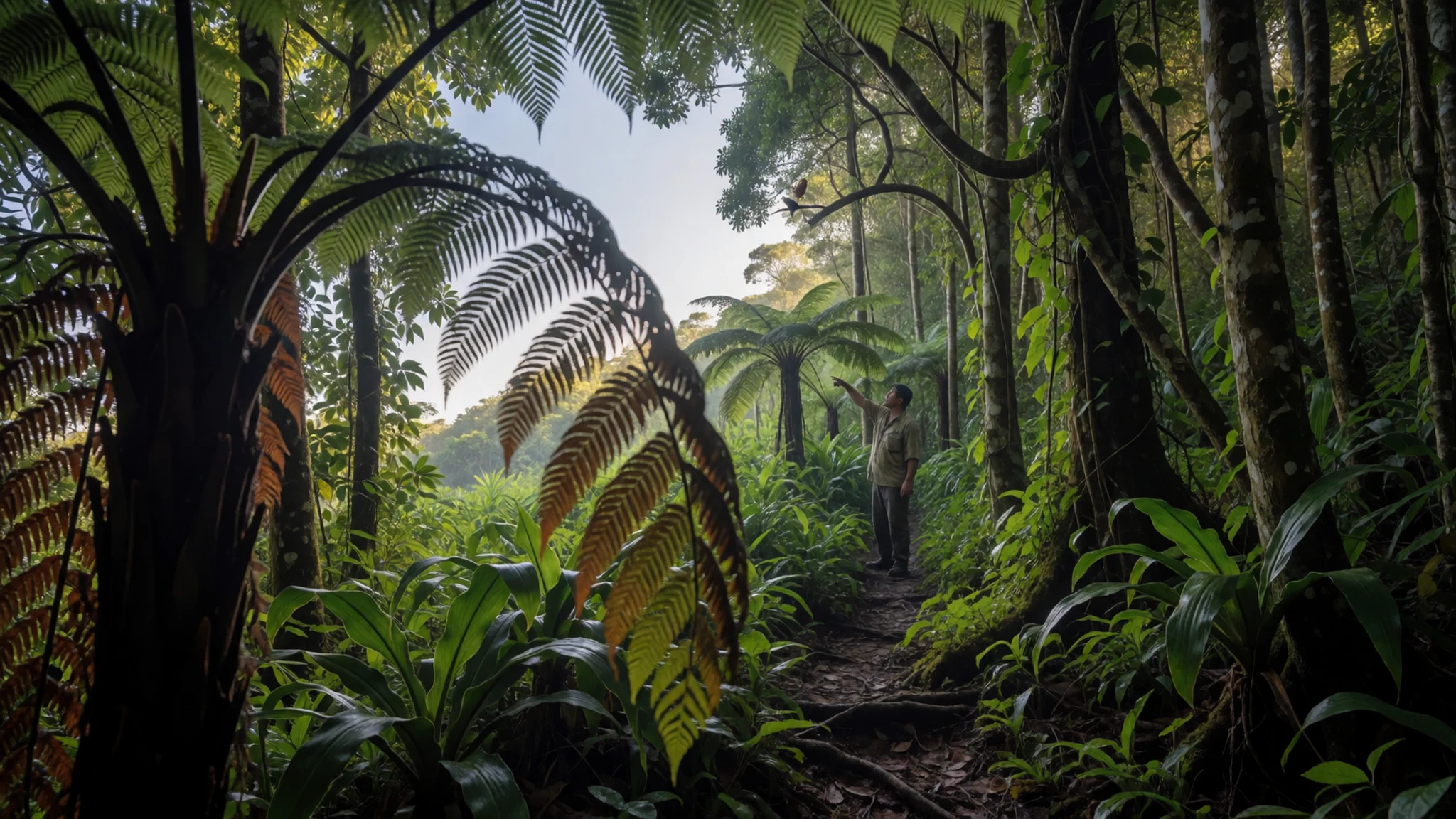
- Hufangalupe stone arch — South-eastern coast
Hufangalupe is a natural limestone arch on the coast, where the sea has cut through the rock beside a deep drop to the surf below. It is reached on foot or by a rough track. Visit in settled weather, as surf can be heavy and the ground slippery.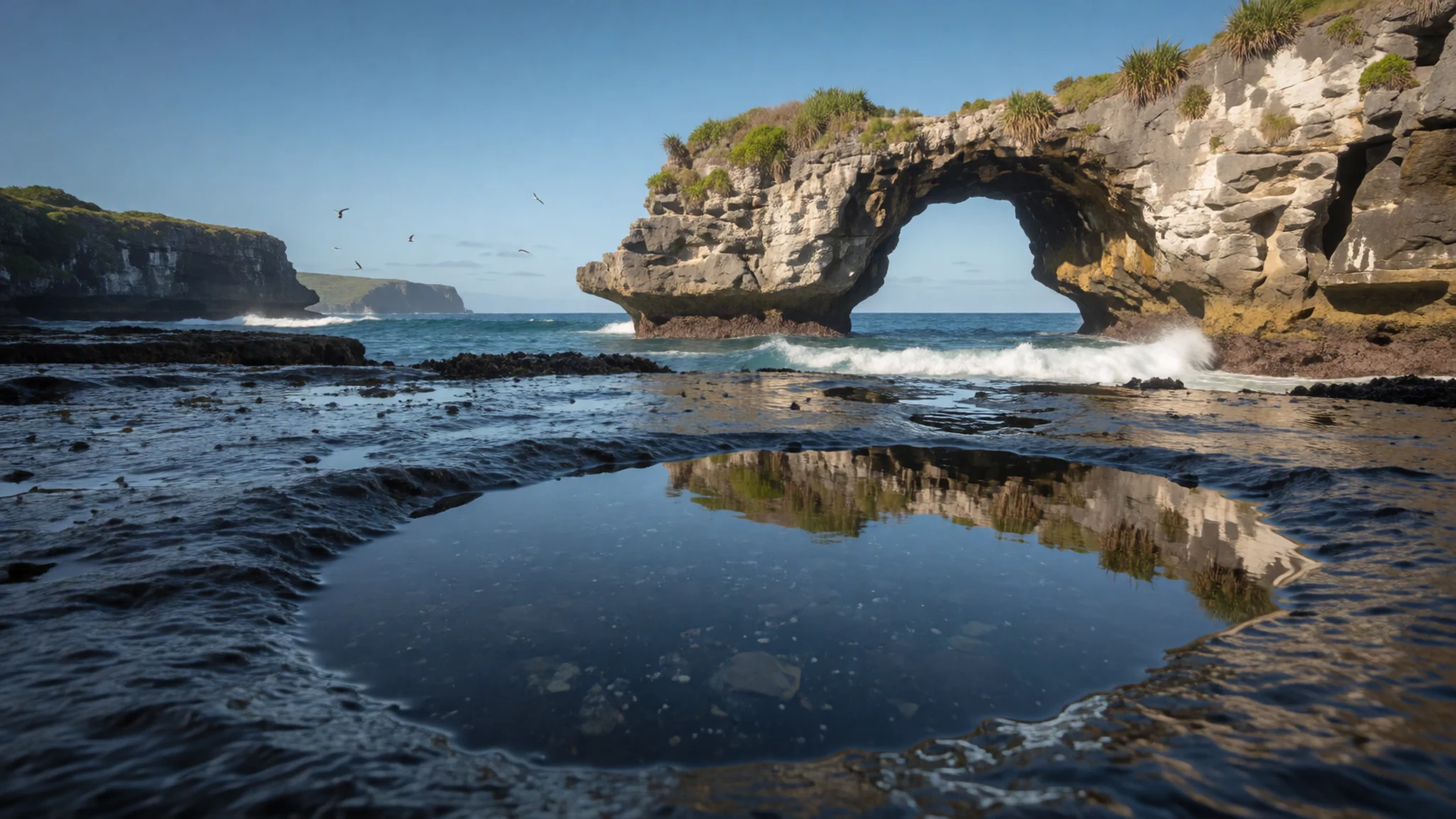
- Limestone caves and swimming pools — Southern and central areas
The island's limestone has been carved into caves and freshwater and sea pools. Some are good for a cool swim, others need a torch, sturdy shoes and a local guide who knows the entrances. Tides and recent rain change conditions, so ask at your guesthouse before setting out.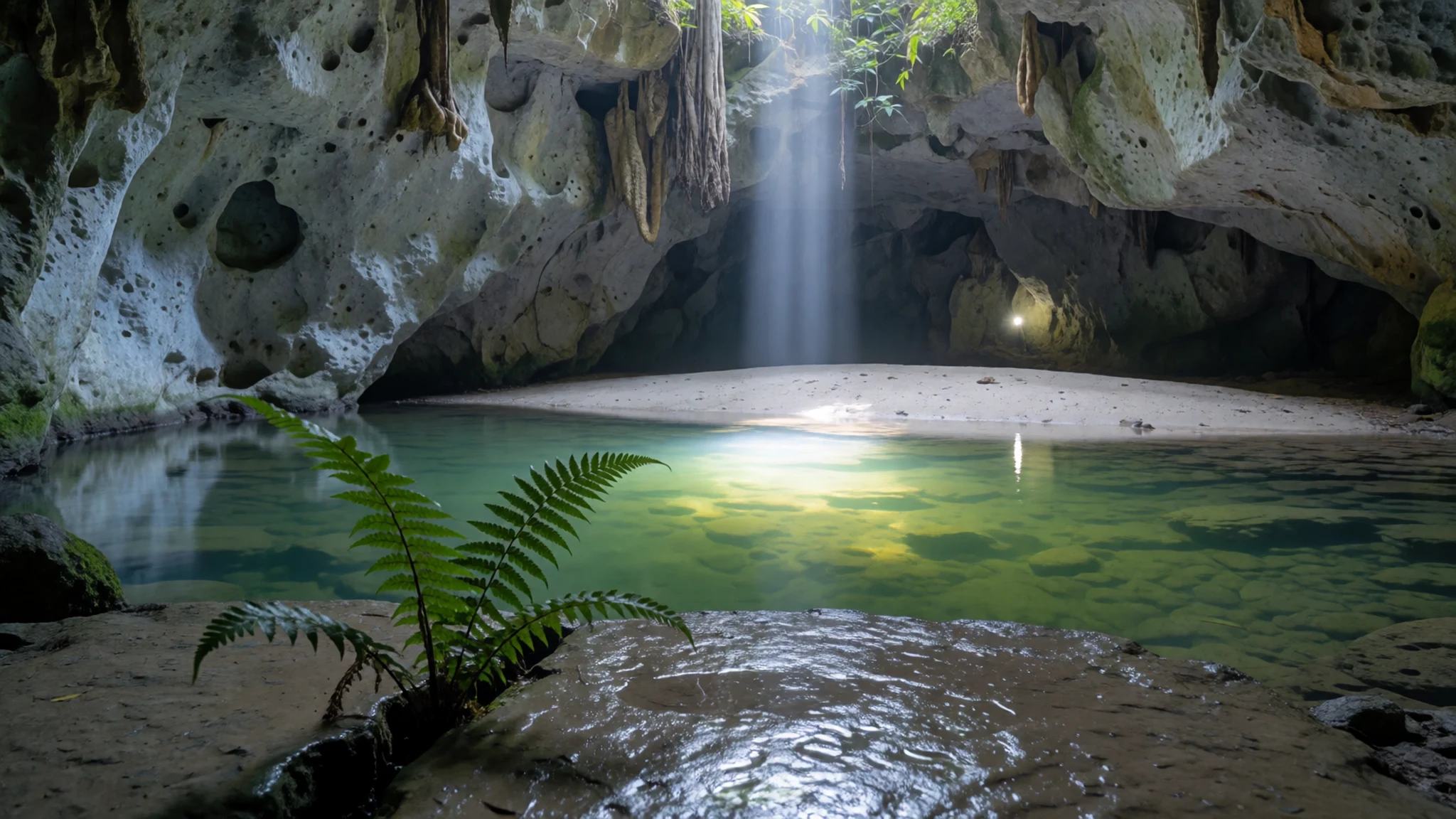
- Ohonua and the west-coast villages — Western side
Ohonua is the island's small harbour settlement, and the villages near it show everyday 'Eua: tidy gardens, pigs and chickens, large churches and children walking to school. A slow walk or bicycle ride here, greeting people as you pass, is as rewarding as any viewpoint.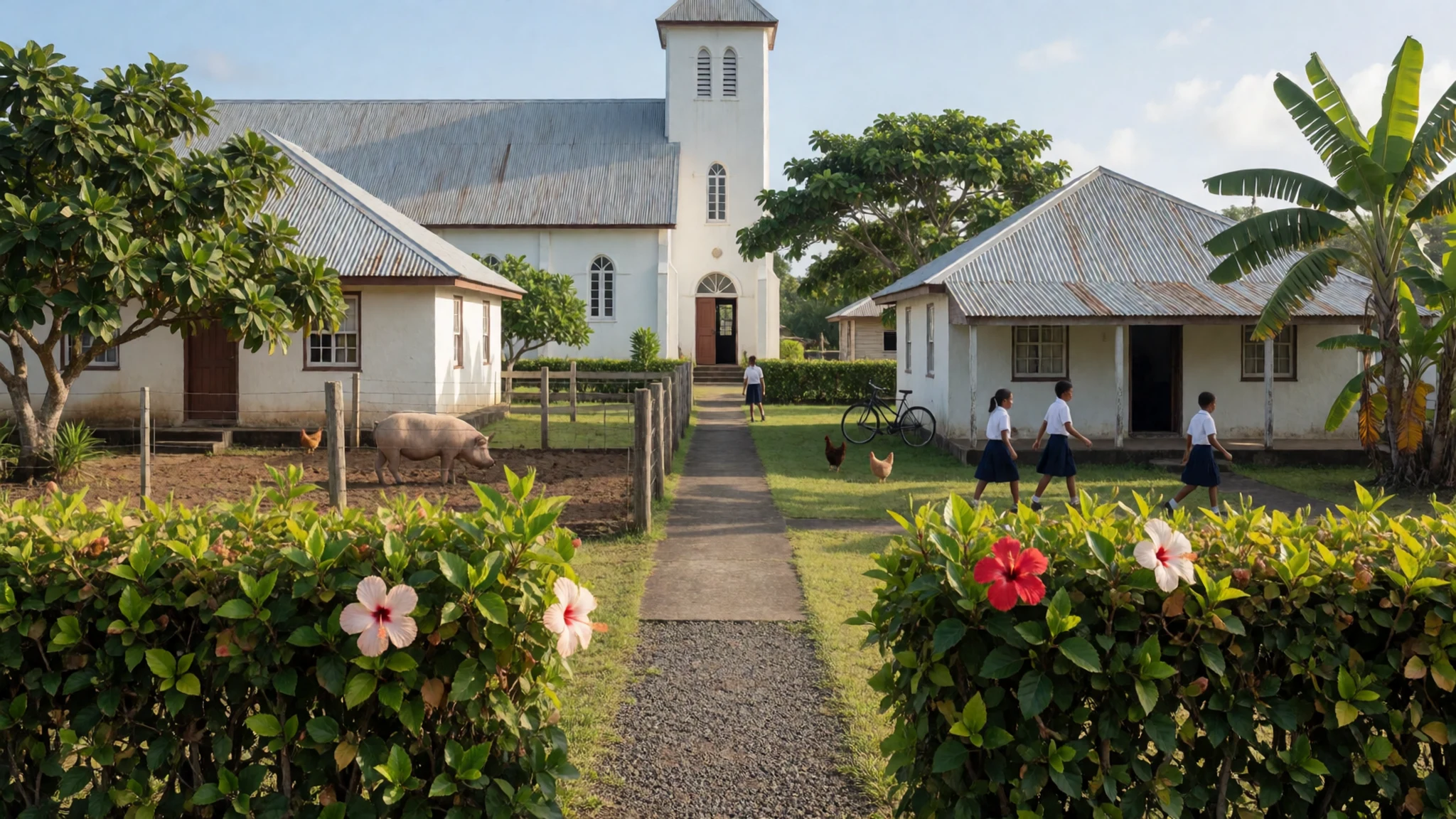
Culture
'Eua shares the culture of the wider Kingdom of Tonga, in which family, church and rank organise daily life. Most people belong to a Christian congregation, and church services, choir practice and feasts set the rhythm of the week. The singing is worth hearing: voices in close harmony, usually unaccompanied, fill the building and spill out of the doors.
Sunday is a day of rest across Tonga. Shops close, work stops and families go to church and then share a large meal. This is a quiet, serious part of island life rather than a performance for visitors, though a respectful guest is usually welcomed at a service.
Hospitality is generous. A visitor may be offered food, a seat in the shade or a drink of kava, the mildly numbing root drink shared in formal and informal gatherings. Gifts of woven mats and decorated bark cloth mark weddings, funerals and birthdays, and these textiles carry family history. Respect for elders and for chiefly families is shown in speech, in seating and in how people carry themselves.
Land is held through families, and gardens, forest and coast often belong to someone, even when no fence marks them. Asking before walking through or taking photographs is simply good manners here.
On Sundays, keep noise low, do not swim, sunbathe or do laundry in public view, and cover your shoulders and knees when passing through villages or attending church.
What to wear
Traditional dress on 'Eua is the same as across Tonga. Men and women wear the tupenu, a wrap skirt, and on formal occasions the ta'ovala, a woven mat of pandanus leaf tied around the waist as a mark of respect. Women may add a kiekie, a decorative girdle of plant fibre. Ngatu, the bark cloth made from the paper mulberry and painted with patterns, is used in clothing and as gifts, and fine mats are heirlooms. Black is worn for mourning, often with large old mats.
Everyday wear is simpler. Men often wear a tupenu or shorts with a shirt, and women wear long skirts or dresses with a modest top. Church clothes are the smartest on the island, usually white or dark and well pressed. Many villagers work in gardens, so practical clothes and rubber shoes are common during the week.
Visitors should dress for a hot, humid and sometimes rainy climate, but also for modest village norms. Lightweight cotton or quick-drying tops that cover the shoulders, and shorts or skirts that reach the knee, suit walking in villages and church visits. Bring a light rain jacket and shoes with proper grip for muddy forest tracks and wet rock. Old trainers or reef shoes help in caves and pools. Swimwear is for pools and boats; cover up with a wrap or T-shirt when walking back through a village.
What to eat
- 'Umu feast — Village gatherings and Sunday meals; some guesthouses arrange one
The 'umu is an earth oven in which food is wrapped in leaves and cooked over heated stones. Pork, chicken, root crops and parcels in taro leaf come out smoky and tender. It is the centre of a Tongan feast, so ask a host in advance.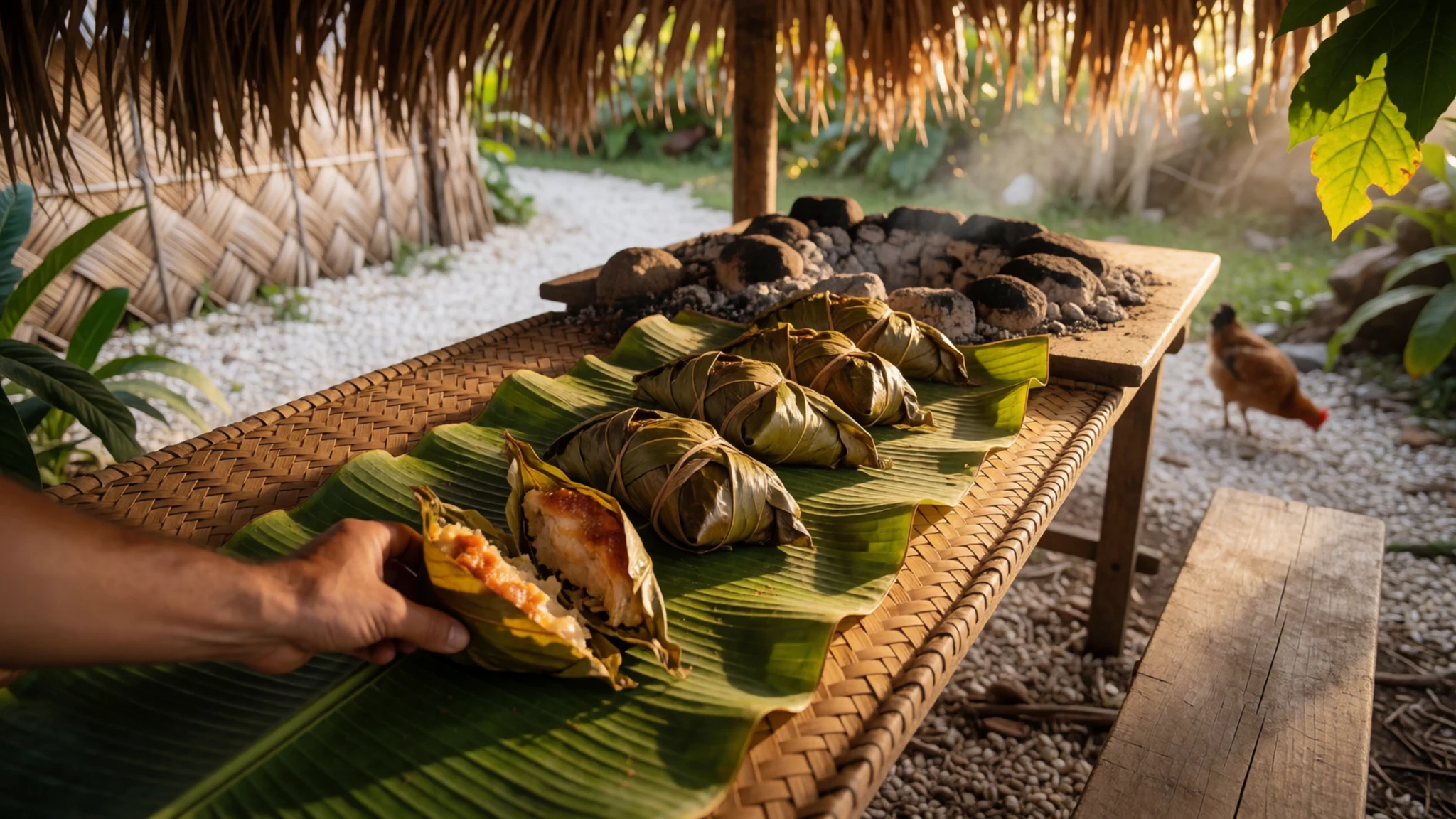
- Lu pulu — Village feasts and home cooking
Taro leaves are filled with coconut cream and often corned beef or other meat, then wrapped and baked or steamed in the 'umu. The result is rich, soft and slightly sweet. It is a favourite at celebrations, usually served alongside root vegetables.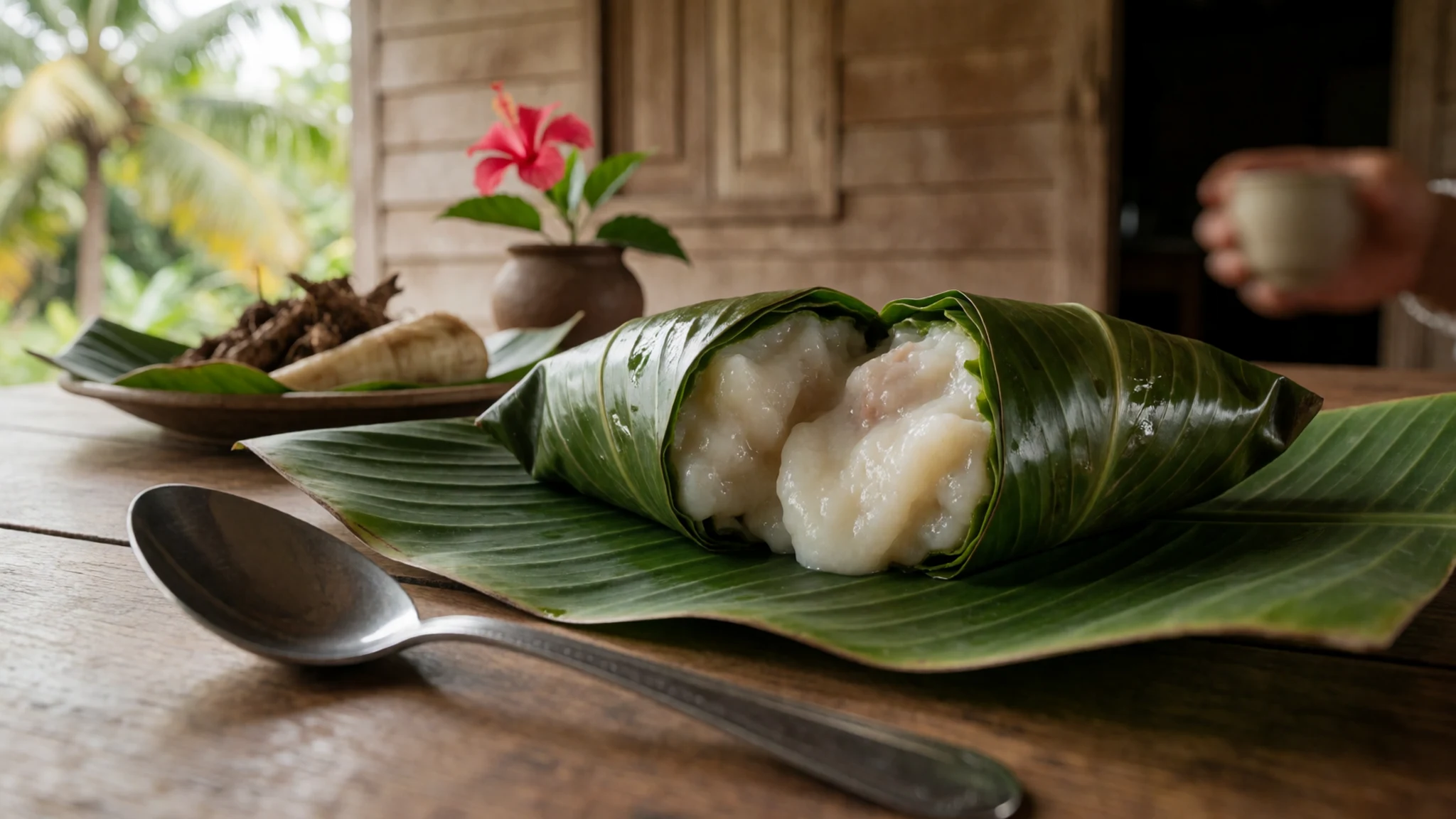
- 'Ota 'ika — Guesthouse meals and local eateries near the harbour
Raw fish is marinated in lime or lemon juice and finished with coconut cream, often with chopped onion, tomato or cucumber. It is cool and fresh, and good after a hot walk. Ask what was caught that day. - Root crops: 'ufi, taro and kumara — Village gardens, the roadside and home meals
Yams, taro and sweet potato grow well on the island's soil and fill the plate at most meals. They are boiled, baked in the 'umu or fried. The flavour is plain and filling, and they are the base for sauces and meat. - Faikakai — Village bakers and family kitchens
These are sweet dumplings or puddings of root crop or banana, topped with coconut caramel. They are often made for celebrations and church events. A small portion is plenty, and it goes well with tea after a meal.
Plan it
Best time. May to October is the cooler, drier part of the year and best for forest walks. Whale watching is possible in the latter part of that period, roughly July to October. December to April is hotter, more humid and wetter, with the cyclone season to consider.
How long. 2–3
Getting there. Fly to Fua'amotu International Airport on Tongatapu, then travel to 'Eua by the short domestic flight or by ferry from Nuku'alofa, landing near Ohonua. Check current operators and schedules, as sailings and flights change and can be cancelled in rough weather.
Budget. low
Tips
- Book guesthouses and any ferry or flight ahead, as services are limited
- Carry cash, because cards are not widely taken outside the main centres
- Start walks early, when it is cooler and the cliff lookouts are clearer
- Bring drinking water and refill from your guesthouse, and carry insect repellent
- Hire a local guide for caves and park tracks, and ask your host about tides and recent rain
Etiquette
- Keep Sunday quiet and avoid swimming or public activity during church hours
- Cover shoulders and knees in villages and ask before photographing people or private land
- Accept food and kava graciously and thank your host
Nearby
Sources
- Wikidata, 'Eua (CC0)
- Wikipedia, 'Eua (CC BY-SA 4.0)
- Wikivoyage, 'Eua (CC BY-SA 4.0)
- Wikimedia Commons photographs of 'Eua (CC BY-SA, CC BY and public domain, as credited per image)
Wildlife
- Humpback whale (animal)
The humpback is a giant baleen whale with very long flippers, bumpy knobs on its head and a habit of leaping from the sea. The males also sing long, complicated songs. In 'Eua, you watch them from boats, but only in the right season, so check the months before you travel. Keep your eyes on the surface, where the leaps and splashes happen, and enjoy the show from the boat.