Tongatapu
Tongatapu, Tonga
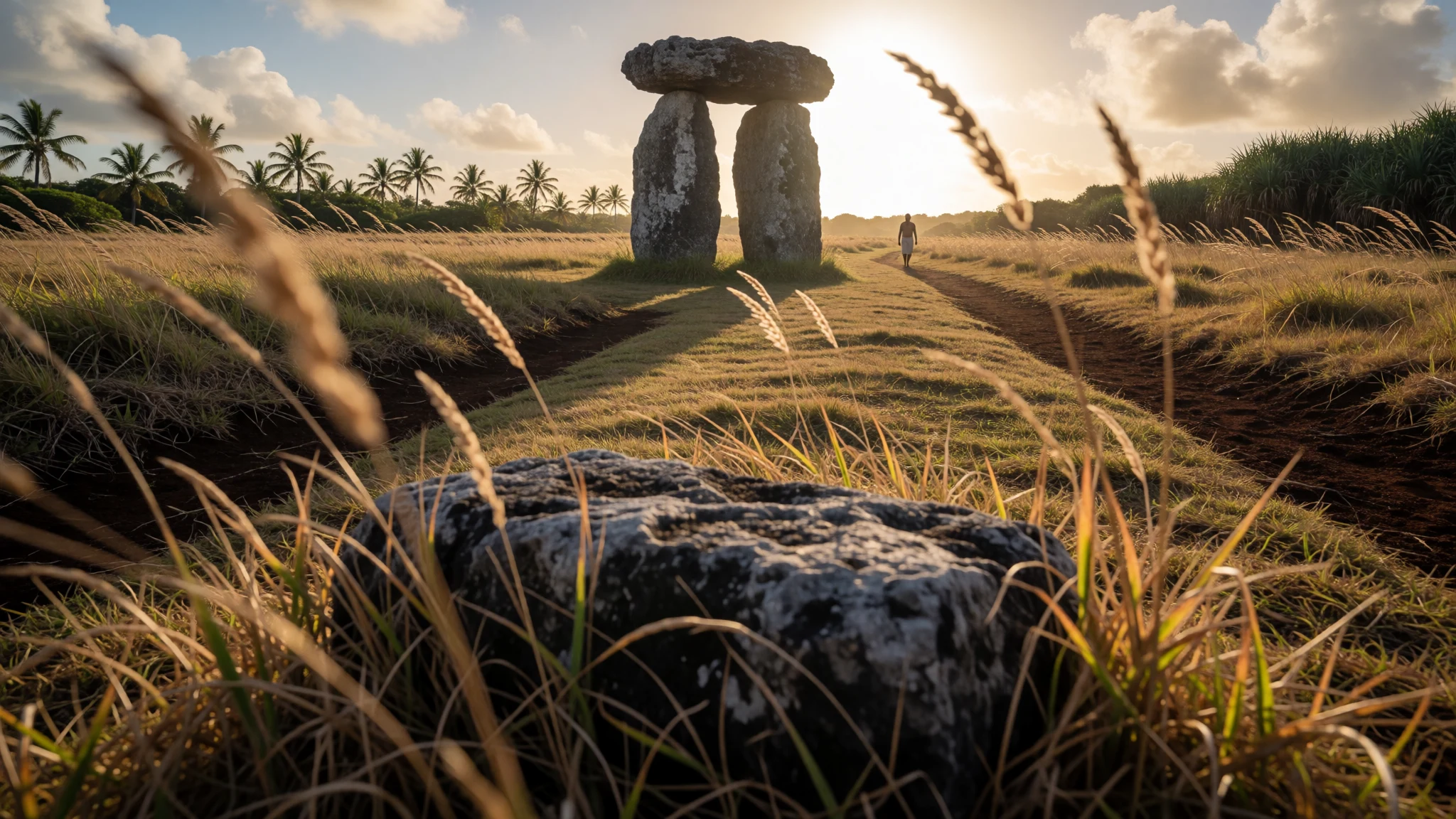
Tongatapu is a flat coral island where Pacific kings are buried, a stone gateway still stands, and the beaches are quiet and unhurried.
The place
Tongatapu is the island where Tonga's government, harbour and main airport sit, with the capital Nukuʻalofa on its north coast and about 71,000 residents. It lends its name to the southern island group, and most of the kingdom's people live here. Geologically it is a low plateau of coral limestone, covered in rich soil that came from volcanic ash blown over from neighbouring islands. The south coast ends in cliffs, blowholes and rough surf, while the land slopes gently towards the north, where lagoons, sandbars and small islets lie inside a wide fringe of reef. Two almost enclosed stretches of water, Fangaʻuta and Fangakakau lagoons, are bordered by mangroves that shelter young fish and nesting birds, and the area is a government-protected reserve. Because it is the southernmost group, Tongatapu is cooler than the northern islands, and fruit crops do less well here than there. Nukuʻalofa feels unhurried, more market town than city, and it holds most of the guesthouses and other places to stay. The sights, though, are mostly outside it: royal tombs, a stone monument, cliffs and quiet beaches, reached by short drives along flat roads. A day with a hired driver covers a lot. Sundays are very quiet, with shops shut and the day given over to church, so plans are best made around that.
Its story
Tongatapu holds some of the densest archaeological remains in the Pacific, and much of Tonga's story begins on its shores. Lapita potters, part of the great seafaring settlement of the western Pacific, left decorated pottery around Fangaʻuta Lagoon, far from the nearest comparable finds in the Solomon Islands, which shows how widely these voyagers travelled. Later the island became the seat of the Tuʻi Tonga, a line of sacred paramount chiefs whose influence reached across a huge span of ocean, though often more through prestige than direct control. Their capital moved over time: first Toloa, then Heketā, where the great coral trilithon Haʻamonga ʻa Maui still stands, and finally Muʻa, on the edge of the lagoon, which stayed the centre of power for several centuries and is ringed by terraced royal tombs. Europeans arrived late. The Dutch navigator Abel Tasman, sent by the Dutch East India Company to chart unknown southern seas, sighted the island in the middle of the seventeenth century. He named it Amsterdam Island because the people supplied his crews so generously with food and water. Captain Cook landed more than a century later and his name is now attached to a spot on the shore. Today the old royal seat and the modern capital are only a short drive apart, and royal ceremony and church life still shape the calendar.
What to see
- Haʻamonga ʻa Maui — North-east Tongatapu
A trilithon of two upright coral-limestone slabs bridged by a third, standing in open land on the north-east of the island. The name means Maui's burden, after the demigod said to have fished up the islands. It marks the old capital of Heketā and is worth reaching early, before the heat.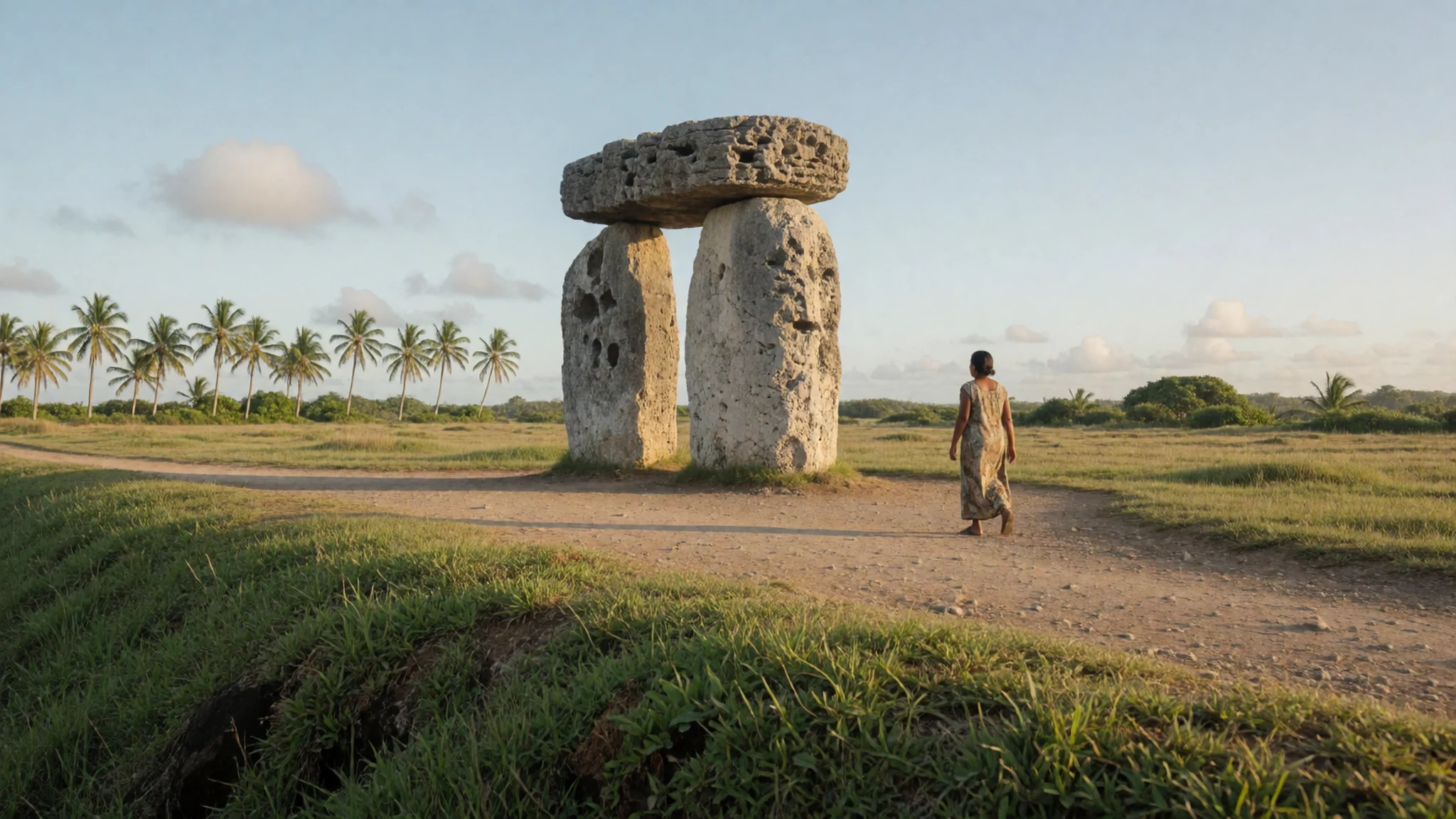
- Muʻa and the royal tombs of Lapaha — East of the lagoon
Muʻa sits on the eastern side of the lagoon and was the seat of the Tuʻi Tonga for centuries. Grassy, terraced tombs, shaped like stepped pyramid bases, still mark the burial places of the kings. A quiet walk, best with a local guide who knows the lineages.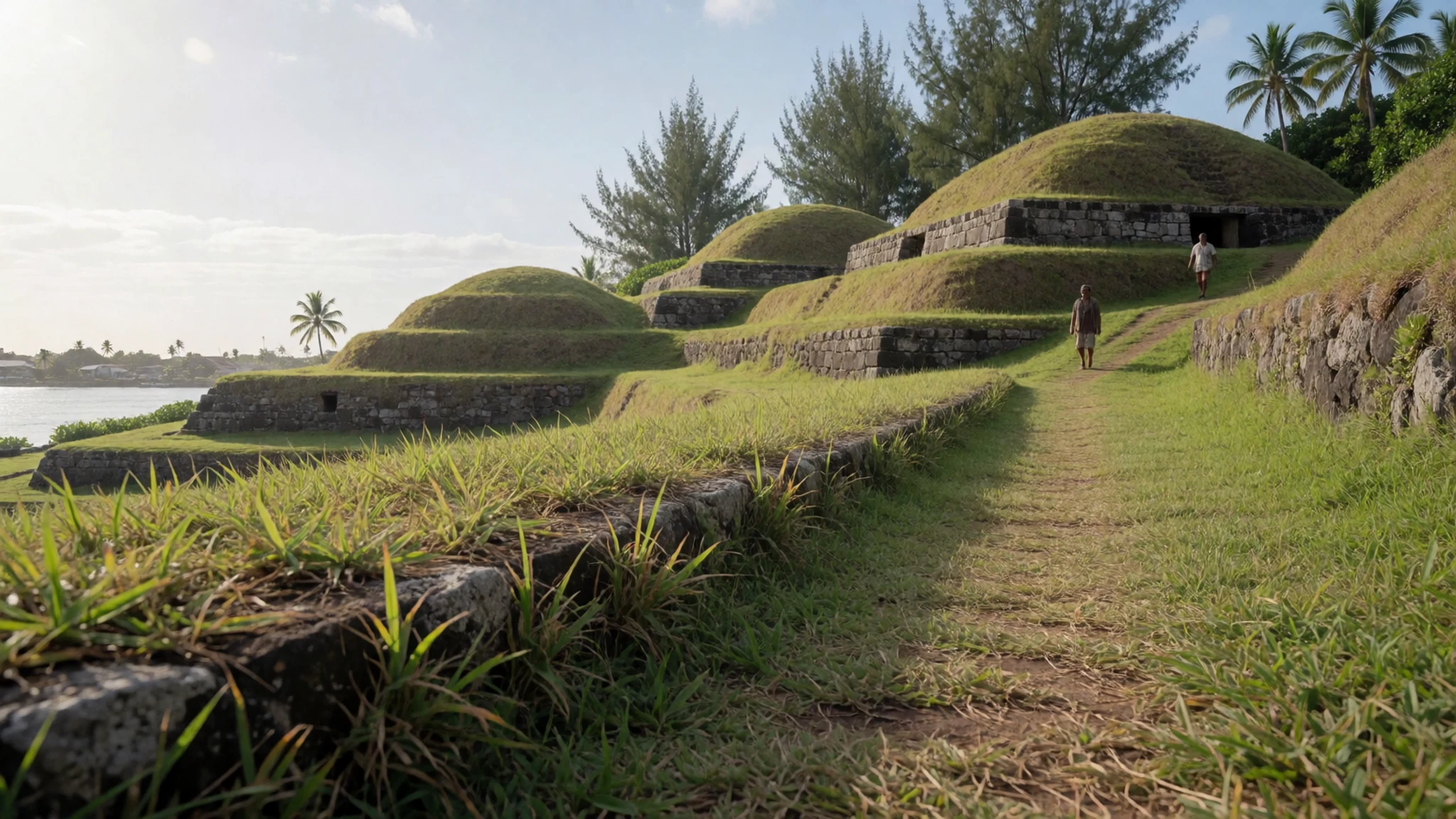
- Royal Palace, Nukuʻalofa — Nukuʻalofa waterfront
The white timber palace faces the sea on the capital's waterfront, with lawns and tall trees around it. It is a working royal residence, so visitors admire it from the road and gate rather than going inside. Pair it with a stroll along the harbour front and the nearby market.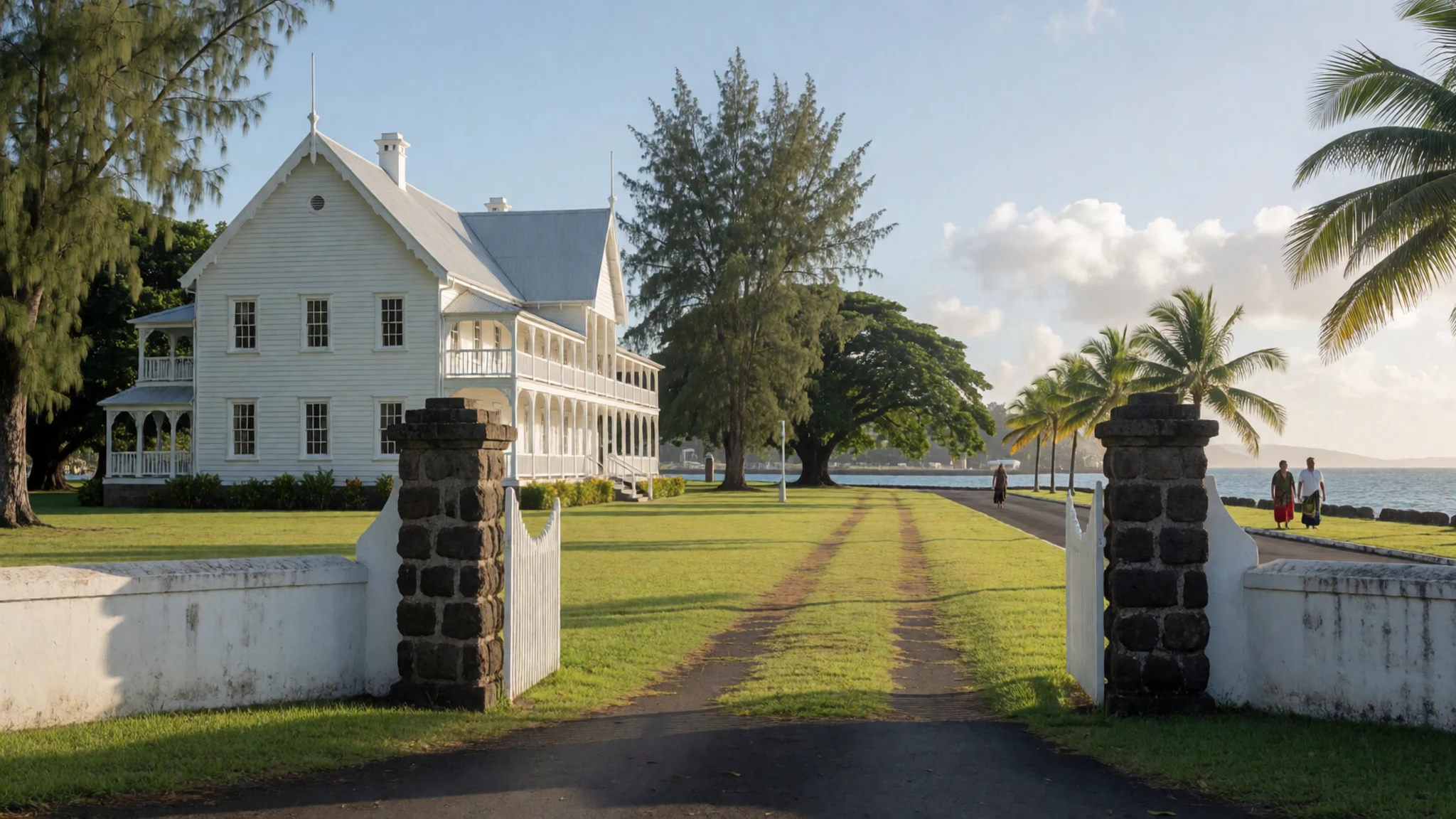
- Captain Cook Landing Site — Near Muʻa
A small memorial by the lagoon shore records where the British navigator came ashore in Tonga. There is little to see beyond the marker and the water, so it works best as a short stop on a drive between Muʻa and the south coast.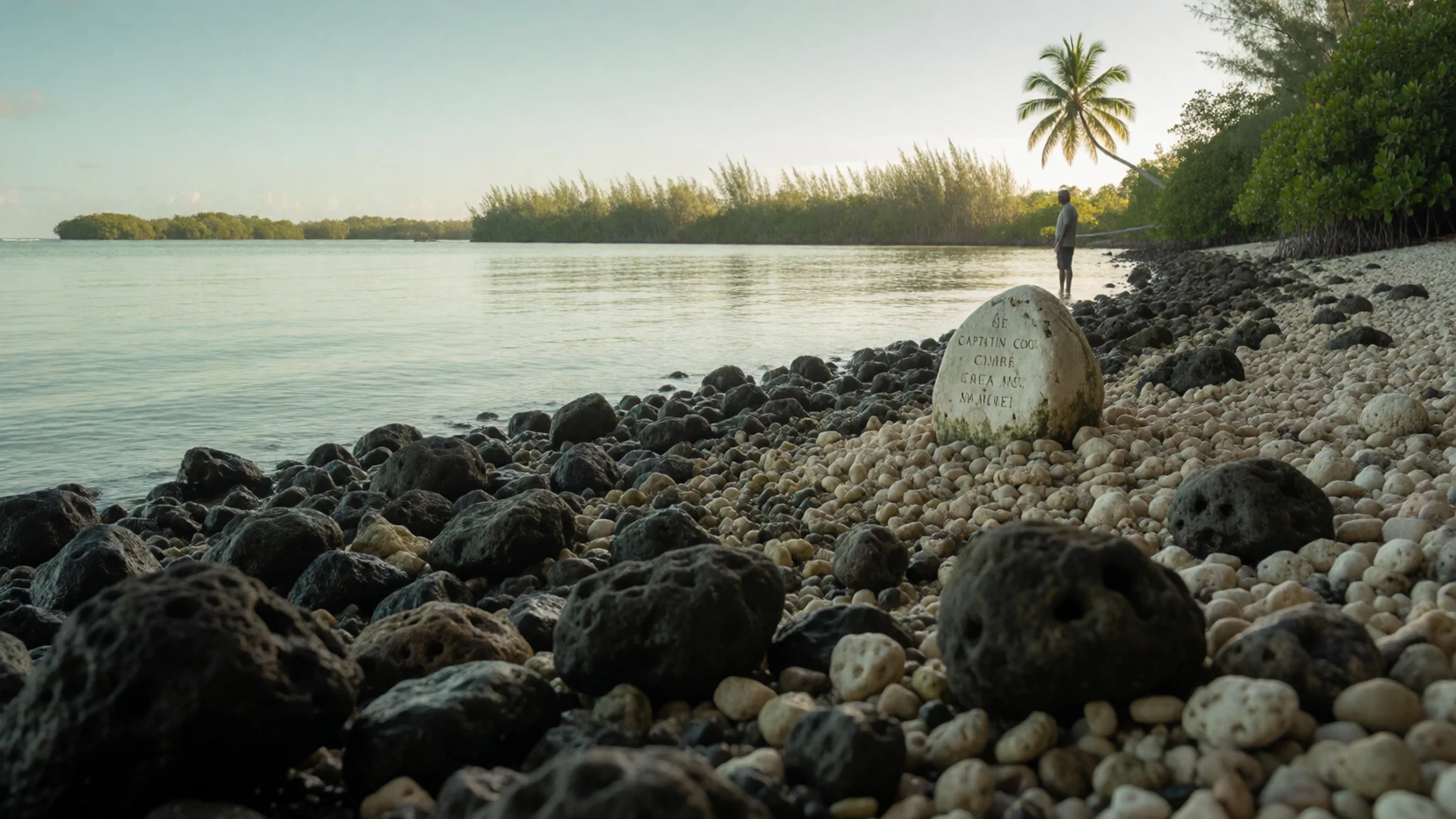
- Abel Tasman Landing Site — North-west coast
On the north-west coast, a memorial notes the first European landing in Tonga, which came well before Cook. The setting is a modest stretch of shore with a view across reef water. It suits travellers who like to follow history to out-of-the-way places.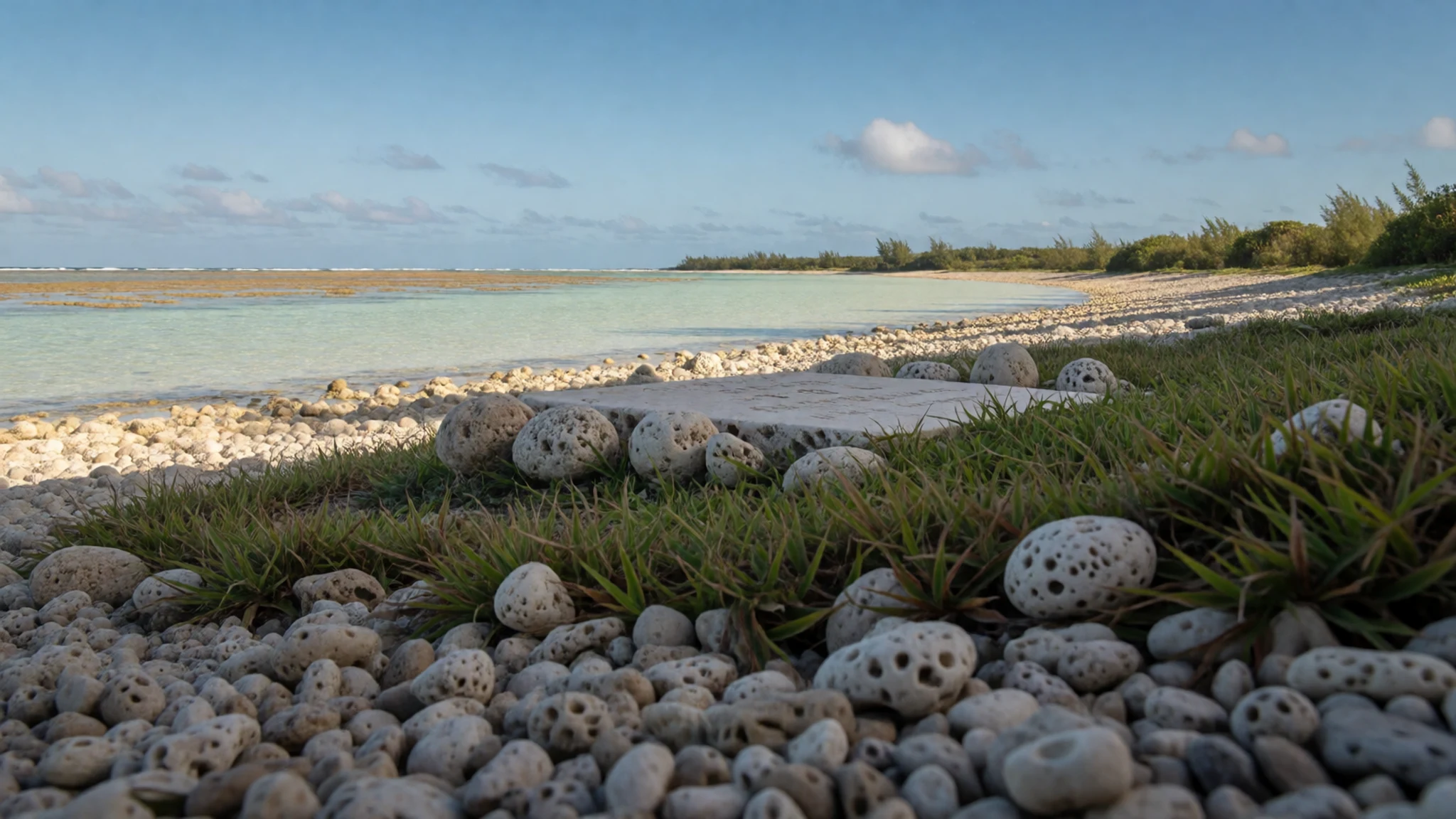
- Southern beaches and cliffs — South coast
The southern shore alternates between pale sandy coves and limestone cliffs where waves force spray through blowholes. Swimming depends on tide and surf, so ask locally before going in. Shade is scarce, and there are few facilities, so bring water and a hat.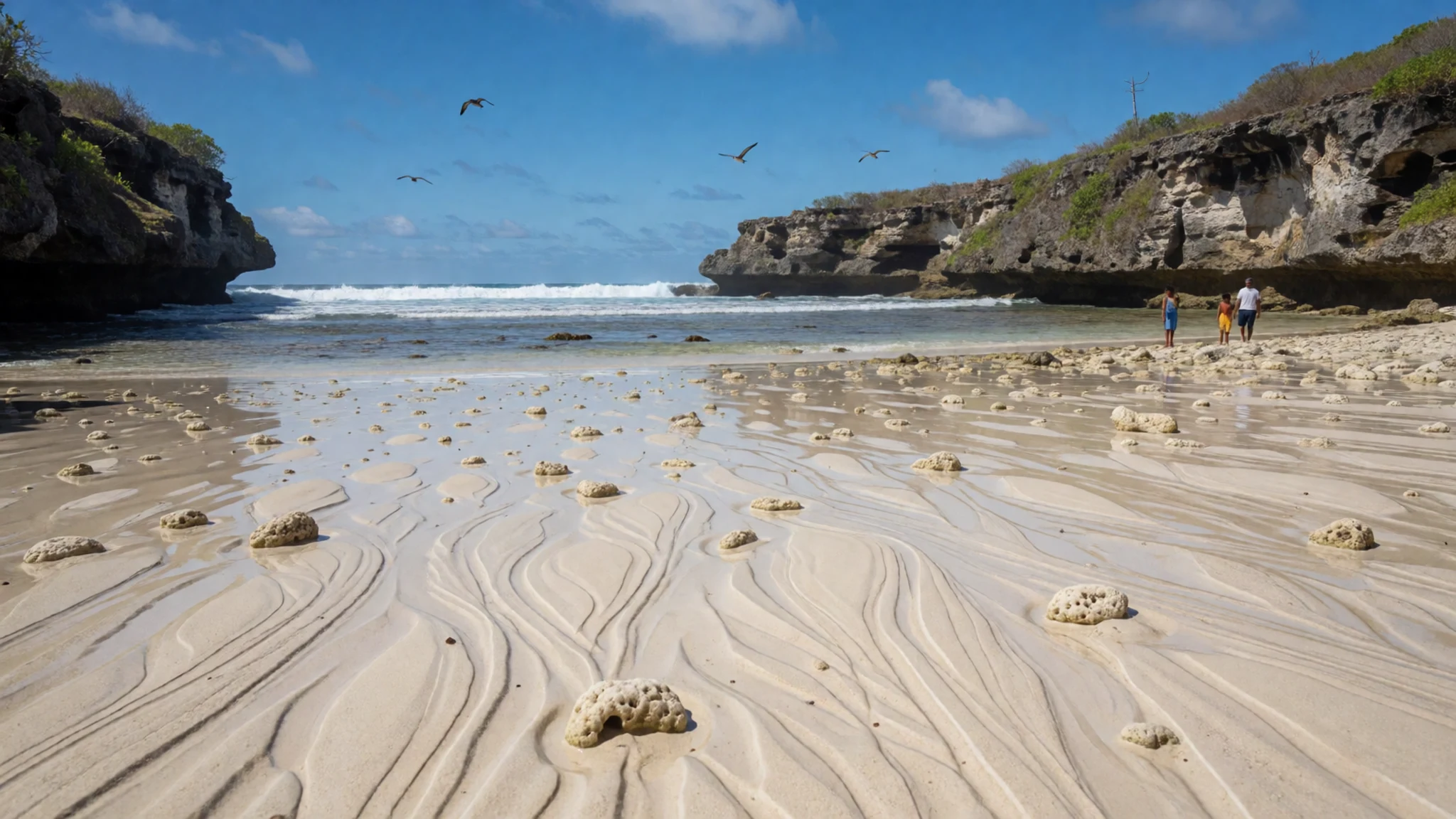
Culture
Tongatapu is the heart of Tongan tradition, known as faka-Tonga, a way of life built on rank, family duty and respect. Tonga is a kingdom, and the monarch and nobles are treated with real reverence, which shows in ceremonies, in forms of address and in how the Royal Palace is regarded. Church is just as central. Most people belong to one of several Christian denominations, and Sunday is set aside for services, long lunches and rest. Choirs fill the churches with harmonised singing that visitors are often welcome to hear. Feasts mark weddings, birthdays, funerals and church events, with earth-oven food laid out in great quantity and shared among extended families. Kava, a drink made from a pepper-plant root, is prepared and sipped in a formal circle at ceremonies and gatherings. Mats and bark cloth are given as gifts and carry weight at family events. Visitors will find people friendly and curious, with a gentle humour. The pace is slow, and arriving a little late is normal. Older sites such as Muʻa and Haʻamonga ʻa Maui are tied to royal and sacred history, so they are treated with care rather than as picnic spots. On Sundays swimming, sport and noisy activity are often frowned upon in villages, and the island stays quiet until the evening. On Sundays, dress modestly, keep noise down and skip swimming or sightseeing in villages, and always ask before photographing people or their churches.
What to wear
In Tongatapu, traditional dress is worn by both women and men for church, funerals, weddings and official occasions. The central piece is the tupenu, a wraparound skirt, often with a jacket or shirt above. Over it goes the taʻovala, a mat of woven pandanus leaf wrapped around the waist, which signals respect. Older, finely plaited mats can be treasured heirlooms. Women sometimes add a kiekie, a decorative woven waist ornament with fringes. Ngatu, bark cloth made from the paper mulberry tree, is beaten, joined and painted with dark geometric patterns and is used for gifts, ceremonies and decoration. Day to day, people wear lightweight shirts, T-shirts, shorts and wraparounds, with plain, covered styles preferred in town. Office workers and schoolchildren often wear tupenu and taʻovala as uniform. Rubber sandals are everywhere. Visitors should dress for a warm, humid climate in light cotton or linen, with shoulders and knees covered away from the beach, because Tongans value modesty. Swimwear belongs at the beach or resort, not in villages or town. For churches and any royal or ceremonial event, wear a skirt or trousers below the knee and a covered top. Sturdy reef shoes help on rocky shore and coral, and a hat, sunglasses and high-factor sun cream are essential on shadeless roads and beaches.
What to eat
- ʻOta ika — Nukuʻalofa eateries and the harbour market
Raw fish cured in lime juice and mixed with coconut milk, onion, tomato and cucumber, served chilled. Fresh, sharp and creamy together. Try it at local eateries around Nukuʻalofa or at the harbour-side market, where the day's catch is usually the base.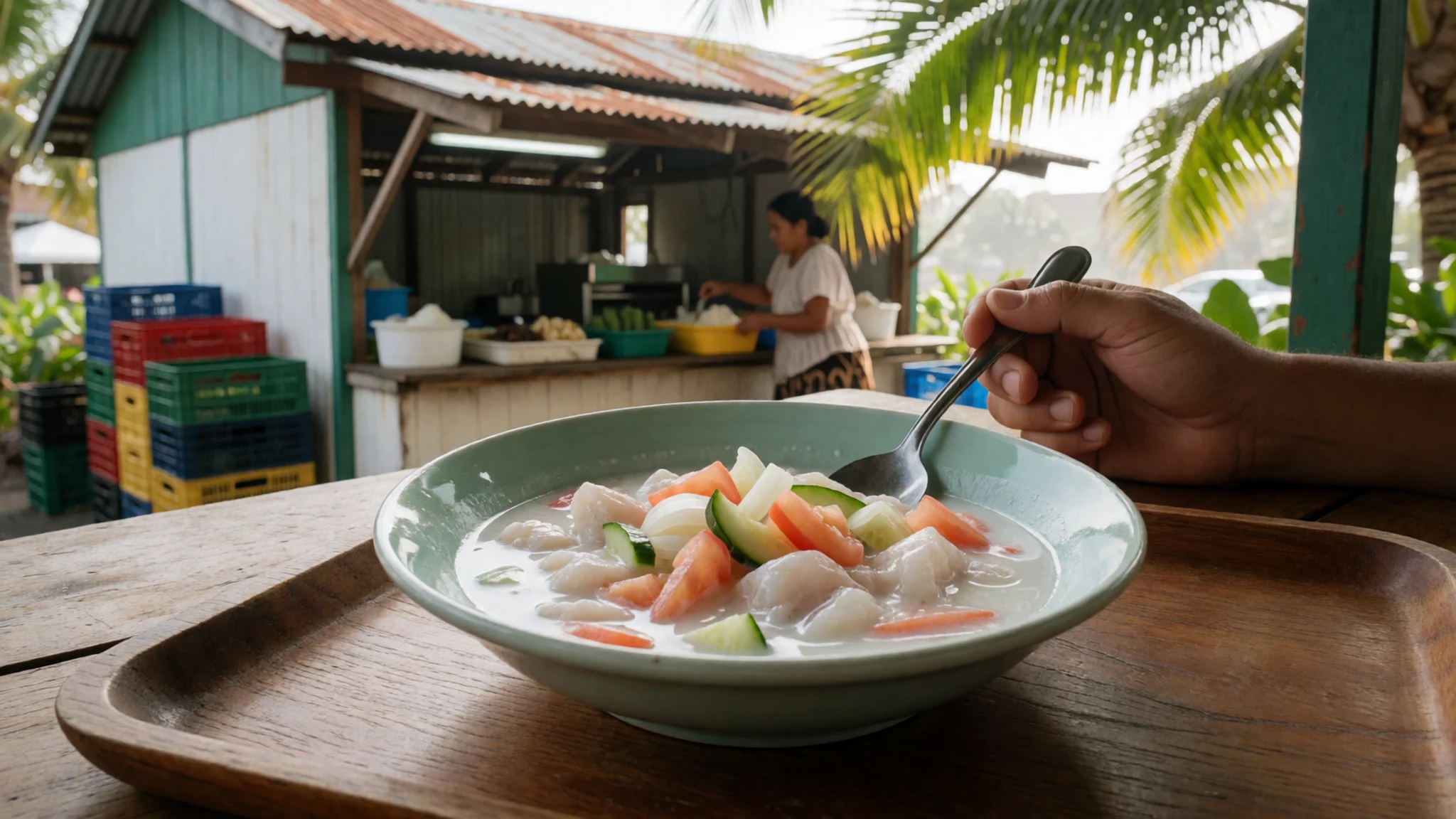
- Lu pulu — Local Tongan restaurants and village feasts
Taro leaves folded around coconut cream and often corned beef or fish, then baked in a parcel until soft and rich. A staple of Sunday meals and feasts. Look for it at local restaurants serving Tongan dishes and on feast tables at family events.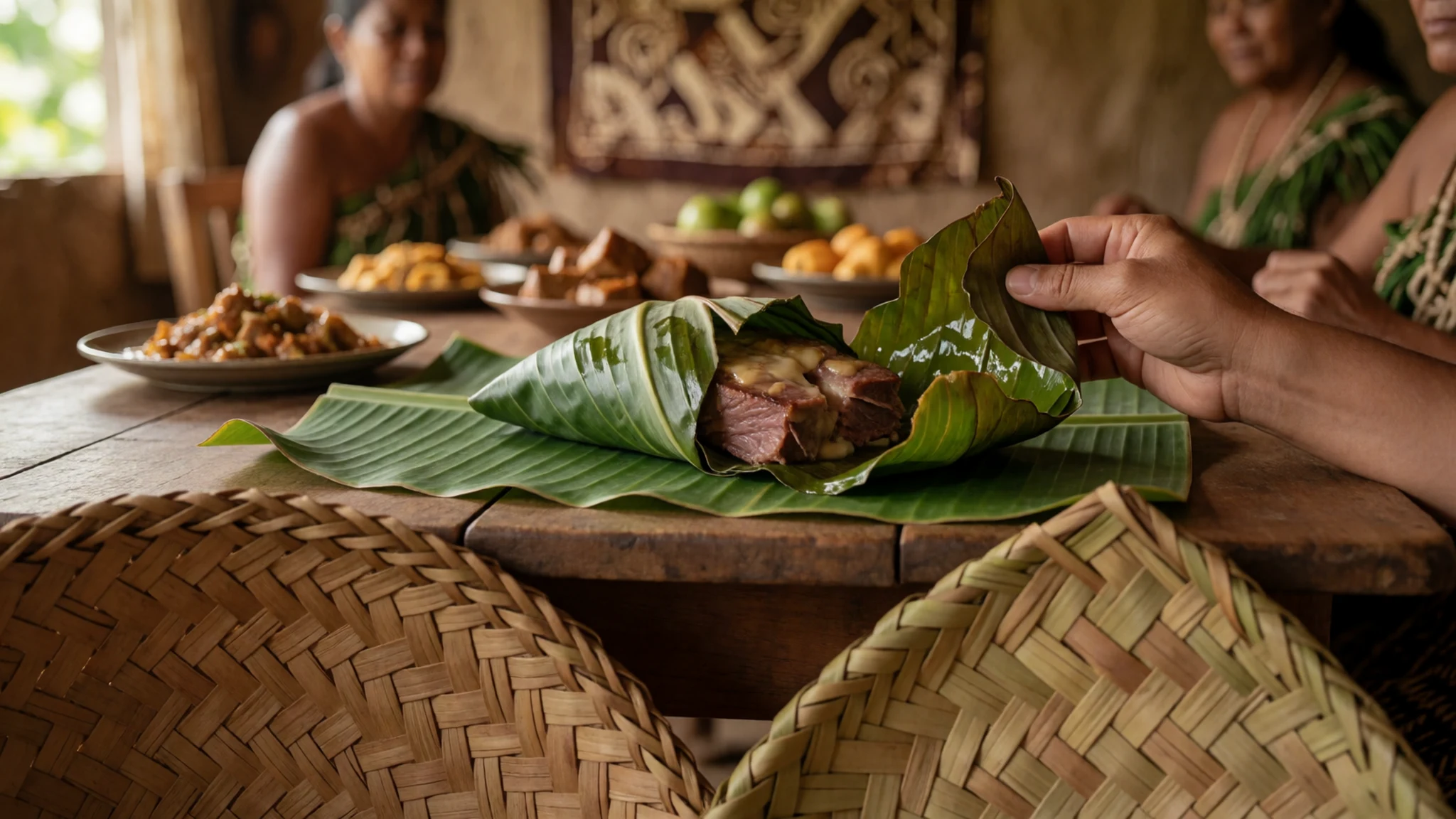
- ʻUmu feast — Resorts, guesthouses and village celebrations
Food cooked in an earth oven: root vegetables, pork, chicken and lu, covered with leaves and left to steam. Resorts and guesthouses sometimes lay on an evening version for guests, and it is the heart of any celebration in a village. - Fried fish with sweet potato — Casual local restaurants in Nukuʻalofa
Simple, filling and common: fillets fried until crisp, served with sweet potato or cassava and sometimes a squeeze of lime. It is an easy, affordable plate for travellers wanting to eat as locals do, and the fish depends on the catch. - Fresh coconut and fruit — Roadside stalls and the central market
Green coconuts are cut open on the spot for cool, lightly sweet water, and the flesh is scraped out afterwards. Papaya, bananas and watermelon are sold alongside. Fruit grows better in the warmer north, so selection varies by season.
Plan it
Best time. May to October is the better window, when the island is cooler and less humid. November to April is hotter, wetter and carries the risk of tropical storms, though the sea is warmest. Tongatapu is the coolest part of Tonga, so evenings can feel fresh in winter.
How long. 3–4
Getting there. Fly into Tongatapu's international airport, with services from Auckland, Sydney and Fiji (Nadi and Suva); schedules change, so check the airlines. From the airport, a taxi or a shared minibus to Nukuʻalofa takes under an hour; agree the fare before getting in.
Budget. mid
Tips
- Book flights and accommodation well ahead, as services are limited and rooms fill around festivals and holidays
- Hire a car or a driver for sights outside Nukuʻalofa, which are spread out, though there is a good bus network
- Carry some cash in pa'anga, as small shops and stalls often do not take cards, and withdraw from the airport machine on arrival
- Start sightseeing early to beat the heat, and bring water, a hat and sun cream, as shade is scarce
- Plan around Sunday, when shops, many restaurants and most activities close
Etiquette
- Dress modestly away from the beach, with shoulders and knees covered
- Keep Sundays quiet and avoid swimming or loud activity near villages
- Ask before photographing people, churches or royal sites
Nearby
Sources
- Wikidata Q620452 (CC0)
- Wikipedia: Tongatapu (rev 1379868649) (CC BY-SA 4.0)
- Wikivoyage: Tongatapu (rev 5431943) (CC BY-SA 4.0)
- Photo: TONGA/TONGATABU & EUA ISLANDS, NASA Johnson Space Center (Public domain)
- Photo: Tonga ESA363260, European Space Agency (CC BY-SA 3.0 igo)
- Photo: Sandy beach in southern Tongatapu, Uhooep (CC BY-SA 4.0)
- Photo: Journaal van Abel Tasman Jansz., Nationaal Archief (Public domain)
- Photo: Royal Palace, Nuku'alofa, Uhooep (CC BY-SA 4.0)
- Photo: Haʻamonga ʻa Maui, Tauʻolunga (CC BY-SA 2.0)
- Photo: 'Atata Island, Haanofonua (CC BY-SA 2.0)
- Photo: Afia-Too-Ca, a burying place in the Isle of Amsterdam, W. Byrne after W. Hodges (CC BY 4.0)


