Niuatoputapu
Niuatoputapu, Tonga
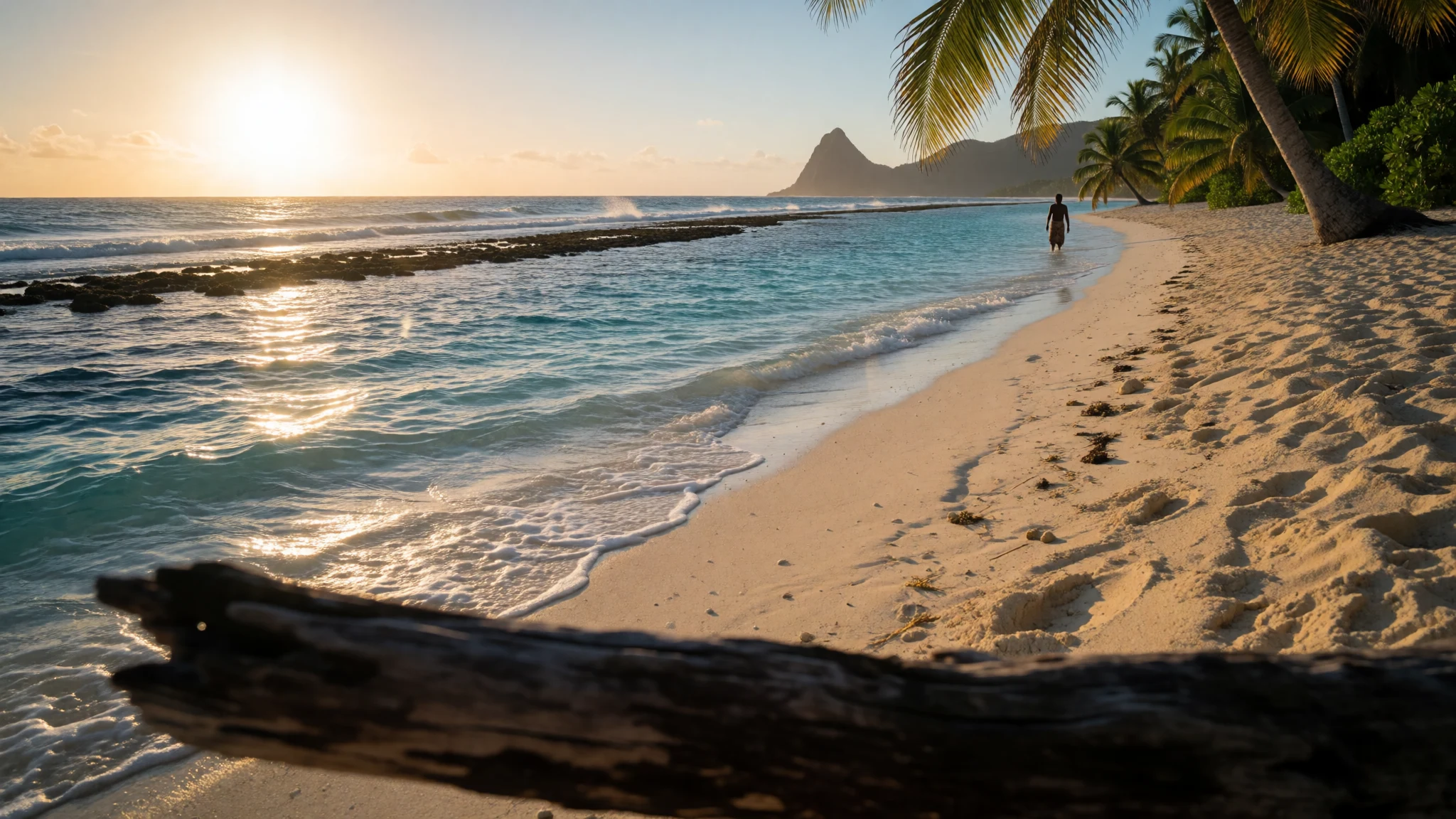
Niuatoputapu is a remote, reef-ringed Tongan island with quiet white beaches, village life and a Dutch-era history, for travellers happy with simple home stays.
The place
Niuatoputapu is a small volcanic island at the far north of Tonga, nearer to Samoa than to the main Tongan islands, and it feels correspondingly remote. The name means sacred island, and older charts also call it Traitors Island or Keppel Island. The population is 708, living in three villages. Hihifo, in the west, is the largest and holds the post office, telecommunications, police station and high school. Vaipoa sits in the middle of the island. Falehau, to the east, faces the only harbour. The land is low and green. The highest point is a hill of 157 m, the worn remnant of a volcano that last erupted about 3 million years ago, and a reef almost completely encircles the island. Ash from that old volcano left fertile soil, so gardens and coconut groves fill much of the interior. Tafahi, a small steep-sided island about 9 km to the north-northeast, is always visible on a clear day. Together with Niuafo'ou, these islands form the administrative division known as the Niuas. White beaches run along the north-west side. The Tongan spoken here carries traces of Samoan, ʻUvean and Futunan, a sign of old sea connections, while the island's original language has disappeared. Services are basic, visitors are few, and a stay normally means a home stay arranged through the Tonga Visitor's Bureau. Evenings are quiet, church is central to the week, and most distances are short enough to walk.
Its story
Niuatoputapu first appeared on European maps in 1616, when the Dutch navigators Willem Schouten and Jacob Le Maire passed through on their circumnavigation aboard the Eendracht. They had traded with people on neighbouring Tafahi but found nowhere to anchor, so they moved on to the larger island to the south. The welcome there turned hostile. Islanders boarded the ship and attacked with clubs until the sailors' muskets showed what they could do. An uneasy truce followed, and the Dutch bartered for coconuts, yams, pigs and water. A chief came alongside but stayed off the ship, recognisable only by the deference of those around him. The next day he ordered an assault by a fleet of double and single canoes, but musket and cannon fire scattered it. The Dutch sailed west and left behind the name Verraders, meaning Traitors, island. Local tradition tells the island's past in a different way, through the Māʻatu line of lords, one early member of whom is said to have become the fish god Seketoʻa. A stone mound called Atatuka is linked with the Māʻatu title. More recent events were violent in other ways. In 1886 a French steamer reported seeing a volcanic eruption here, and in 2009 a tsunami from an earthquake off Samoa severely damaged the island.
What to see
- Falehau harbour and cemetery — Falehau
Falehau, on the east side, has the island's only harbour. The village cemetery sits on a rise with a clear view north to the volcanic cone of Tafahi. It is a good place to watch fishing boats, see how the village is laid out, and understand the island's scale.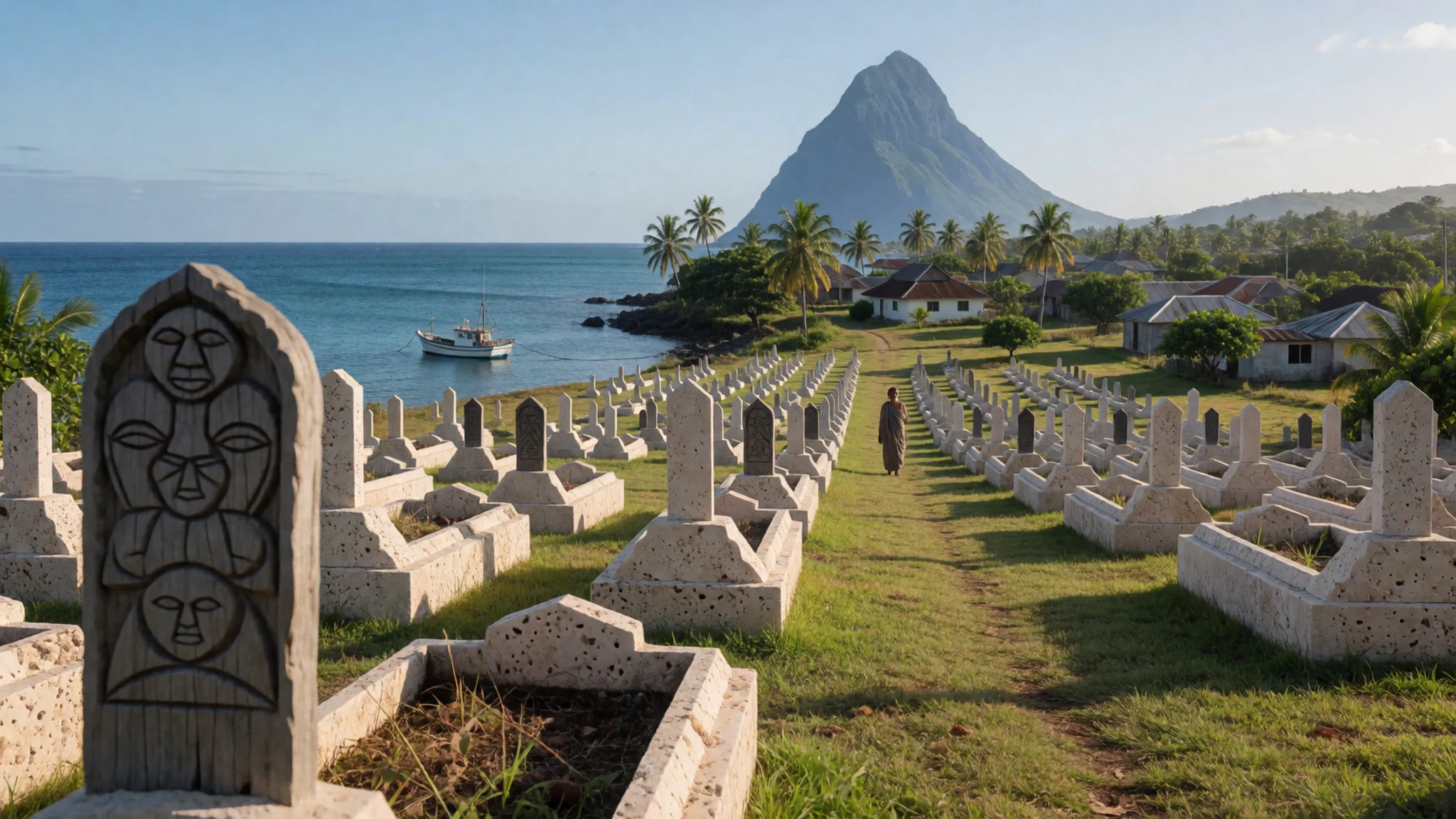
- North-west beaches — North-west coast
The white beaches on the north-west coast are the island's main draw. Expect empty sand, reef-calmed water and no facilities, so bring drinking water and shade. Check tides and reef conditions with your host before swimming, and keep to modest swimwear near villages.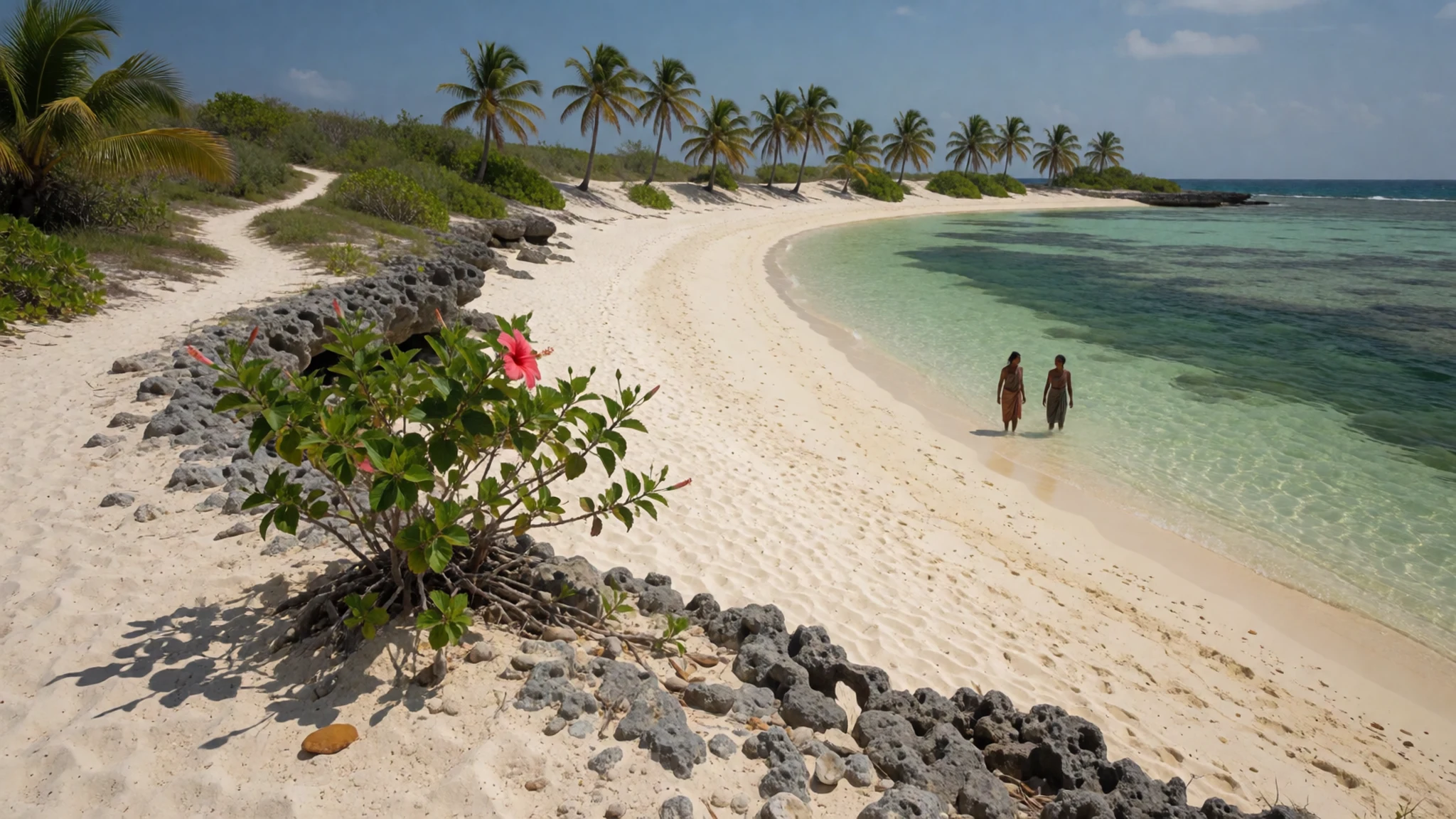
- Atatuka stone mound — Niuatoputapu island
Atatuka is a mound of stones connected with the Māʻatu title, the line of chiefs who ruled the island. It is a quiet historical site rather than a spectacle. Ask a local host for directions and context, and treat it with the respect due to a chiefly place.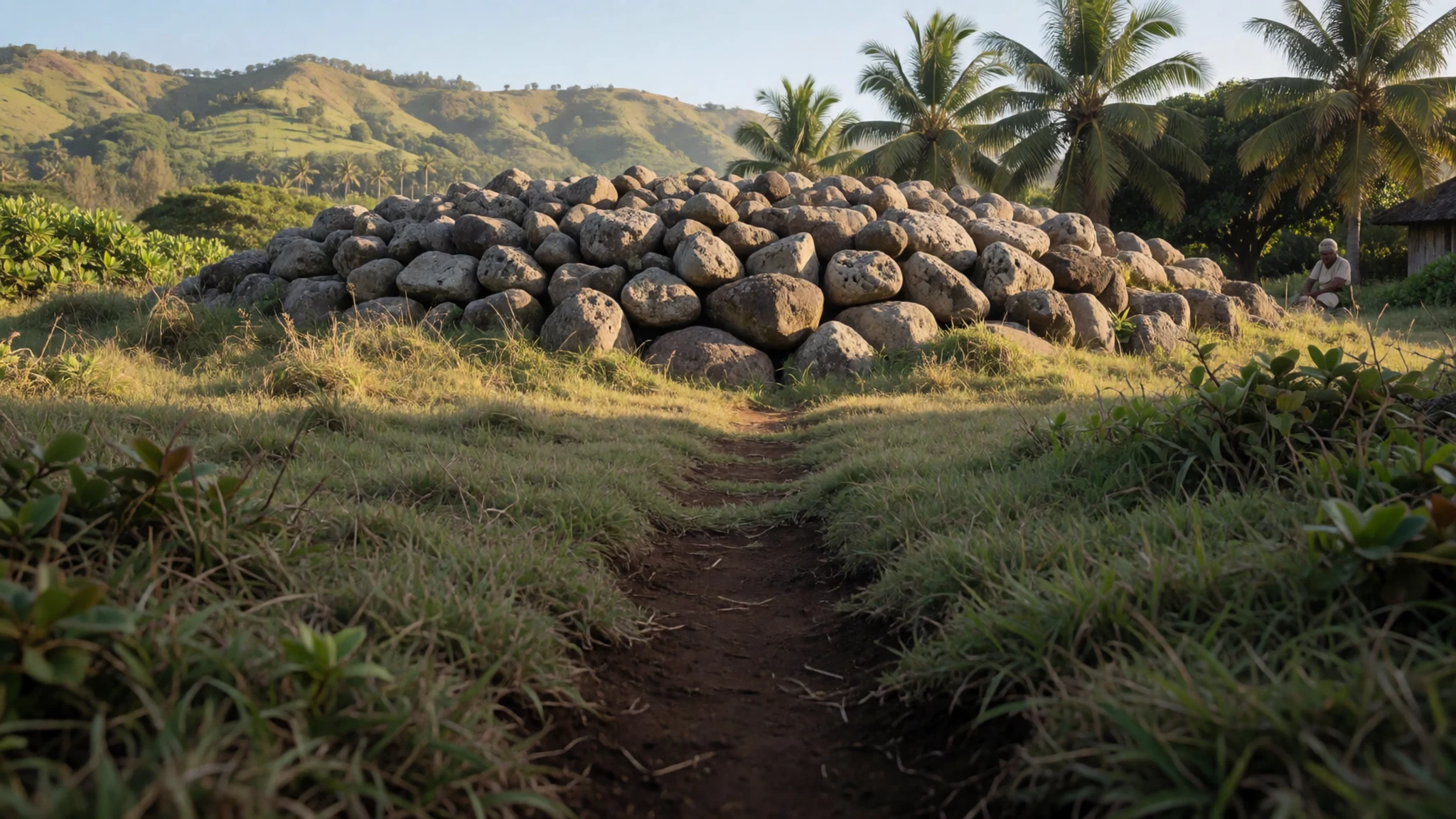
- Hihifo village — Western Niuatoputapu
Hihifo is the largest village and the island's administrative centre, with the post office, police station and high school. A slow walk through it shows daily life: gardens, church, school children and neighbours chatting. It is also where practical errands, such as sending a message, are likely to be done.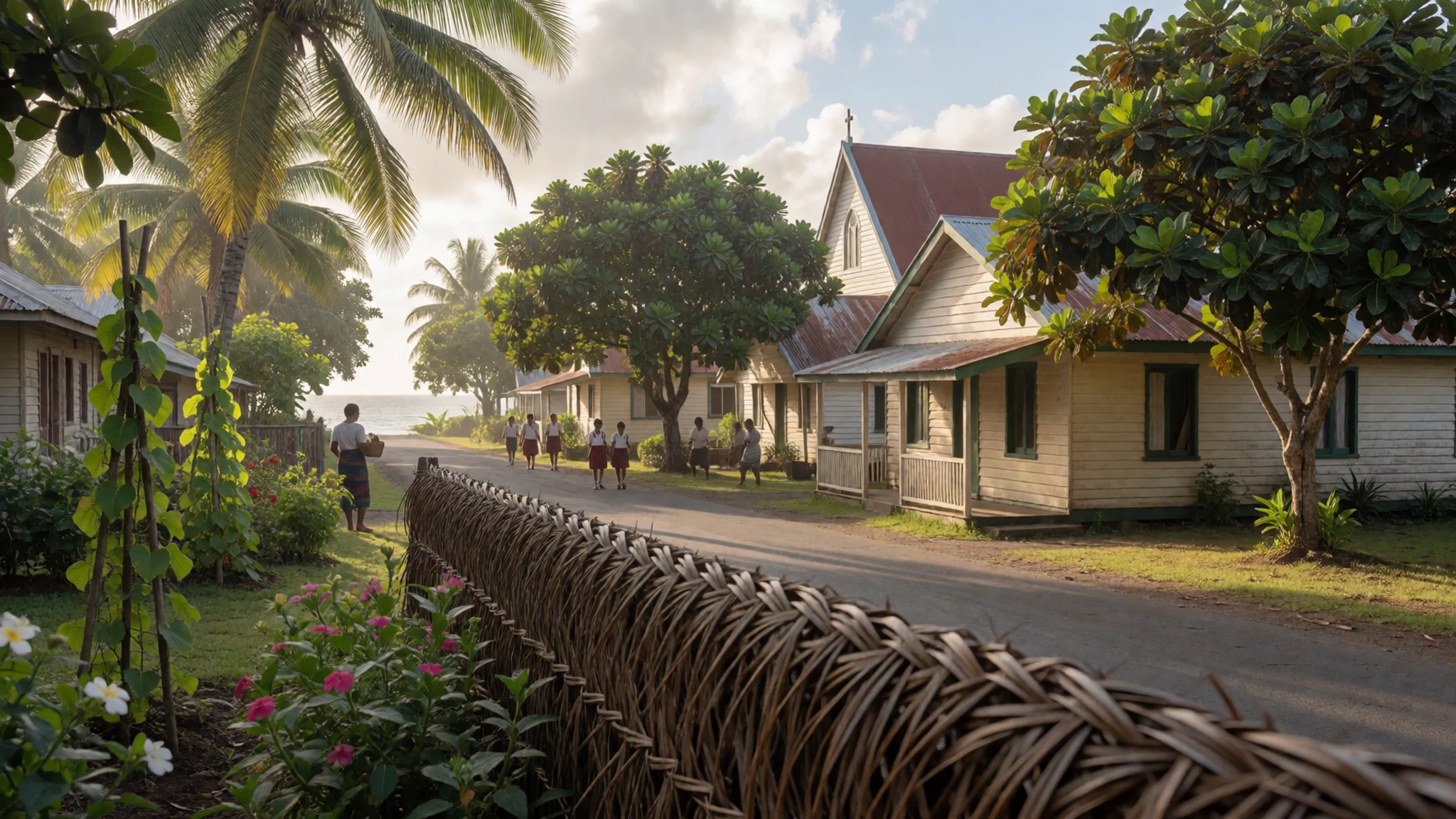
- The reef and the view of Tafahi — Coastline and northern shore
A reef almost surrounds Niuatoputapu, and the shoreline walks reveal tidal flats, coral rubble and fishing activity. Looking north, Tafahi stands out as a steep volcanic cone. Local boat trips may be possible, but arrange them through your host and check sea conditions first.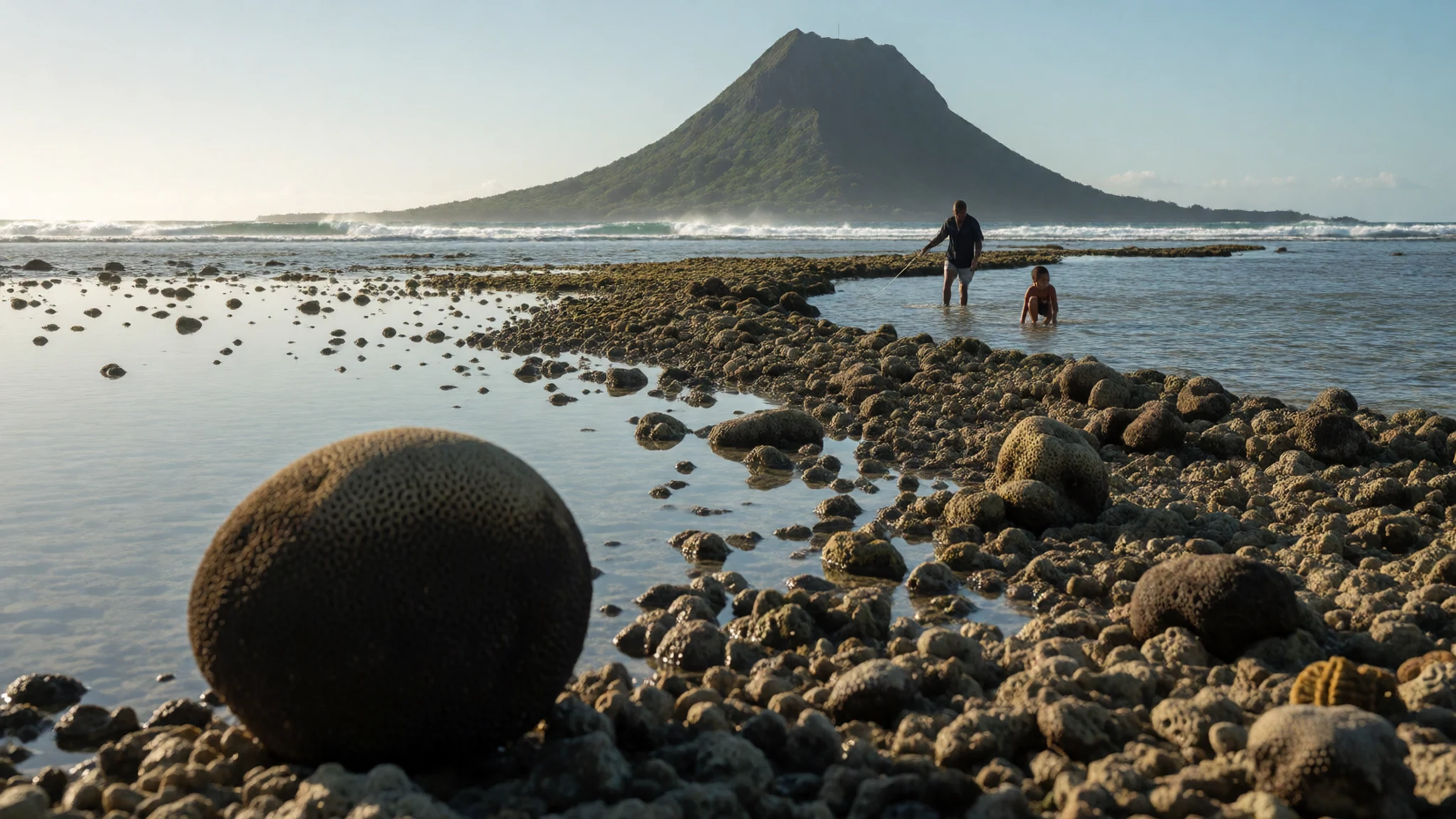
Culture
Niuatoputapu keeps Tongan custom close to the surface. Wikivoyage describes the island as conservative in dress and behaviour, and visitors will notice that village life revolves around family, church and the chiefly structure that has shaped the island for centuries. The Māʻatu line of lords is still part of local memory, and titles, land and obligations matter. Hospitality is a strong value. A home stay here is not just accommodation, it is an introduction to a household, and guests are usually expected to fit in with its rhythm: meals together, early nights, and church on Sunday. Tongan is the everyday language, with Samoan, ʻUvean and Futunan influences in the local speech, and a few greetings in Tongan are noticed and appreciated. Gifts to a host family, such as useful staples or something from home, are a courteous gesture, but ask the Tonga Visitor's Bureau or your host what is appropriate. Fishing and gardening still provide much of daily food, so a visitor sees the island's economy at close quarters. The 2009 tsunami remains part of shared memory, and residents may speak about it with feeling, so listen before asking questions. Photographs of people, churches and graves should never be taken casually. Ask permission before photographing anyone, dress modestly in villages, and keep Sundays quiet, avoiding swimming, loud activity and sightseeing during church hours.
What to wear
Niuatoputapu follows Tongan dress customs, and the clothing here is more conservative than in many beach destinations. The traditional garment for both sexes is the tupenu, a wrap-around skirt, worn with a ta'ovala, a mat woven from pandanus leaves and tied at the waist as a sign of respect. Women may add a kiekie, a decorative woven waist band. Ngatu, tapa cloth beaten from the bark of the paper mulberry, and fine woven mats are valued for weddings, funerals and church or chiefly occasions. Day to day, people wear shorts or lavalava-style wraps, cotton shirts and T-shirts, with rubber sandals for walking on coral paths. On Sundays, church clothes are neat, often white or dark, and many wear the ta'ovala. Visitors should pack light, quick-drying clothing that covers shoulders and knees, and a wrap or sarong that can double as a skirt. Swimwear belongs on the beach, not in the village, and women especially may prefer shorts and a T-shirt in the water near houses. Bring reef shoes for rocky shorelines and tidal flats, a hat and sun protection for strong tropical sun, and a light rain jacket. For church, wear a clean shirt and a skirt or trousers below the knee.
What to eat
- ʻOta ika — Home stay meals and village feasts
Raw fish marinated in lime or lemon juice and finished with coconut cream, a Tongan favourite. On an island ringed by reef, the fish is likely to be caught locally. Ask your home stay host whether it can be prepared.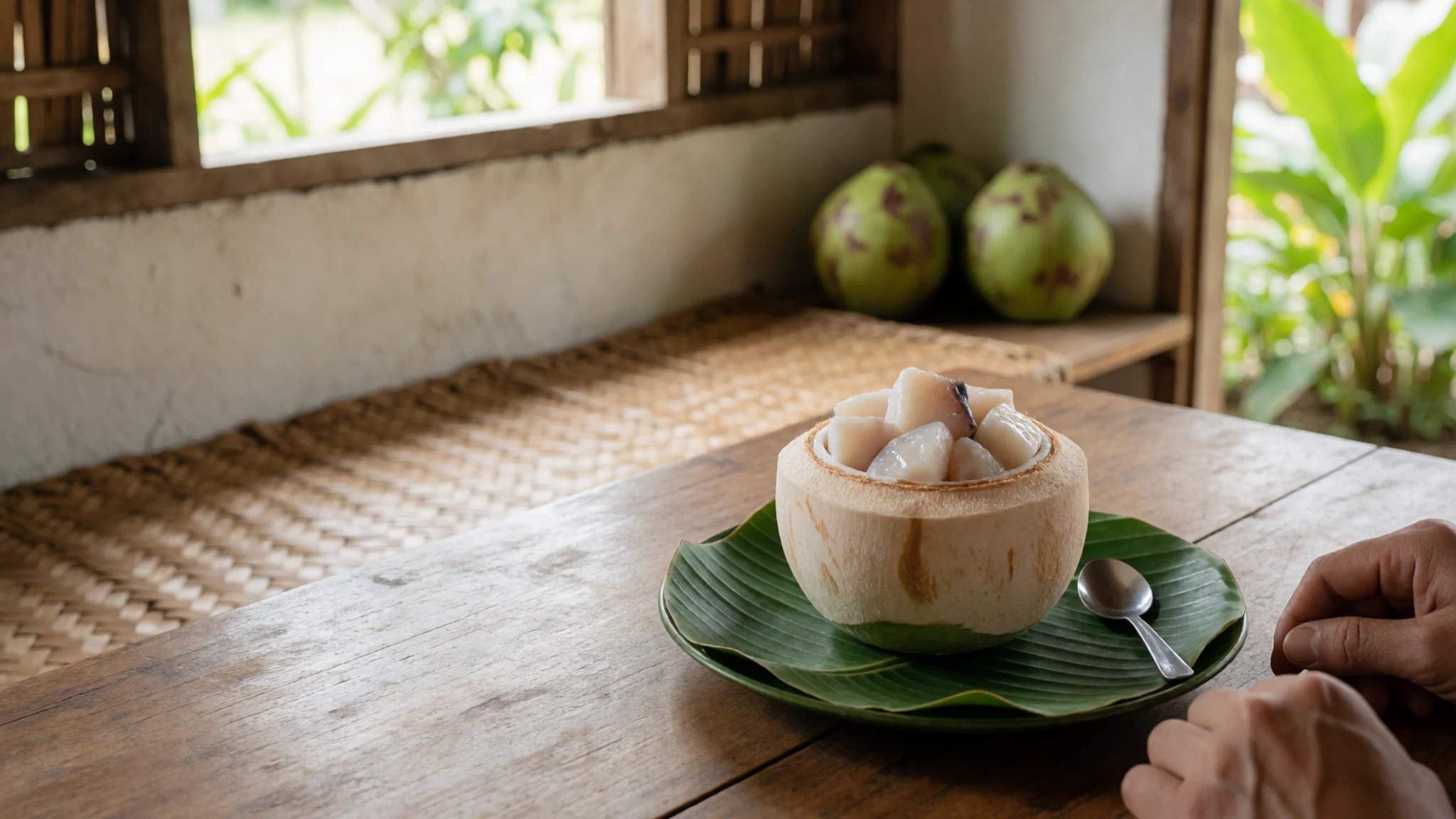
- ʻUfi (yam) — Village gardens and home stay tables
Yams are a long-standing island staple, boiled or baked and served in large portions alongside fish or meat. The Dutch sailors of 1616 recorded bartering for similar roots. Fertile volcanic soil supports local gardens.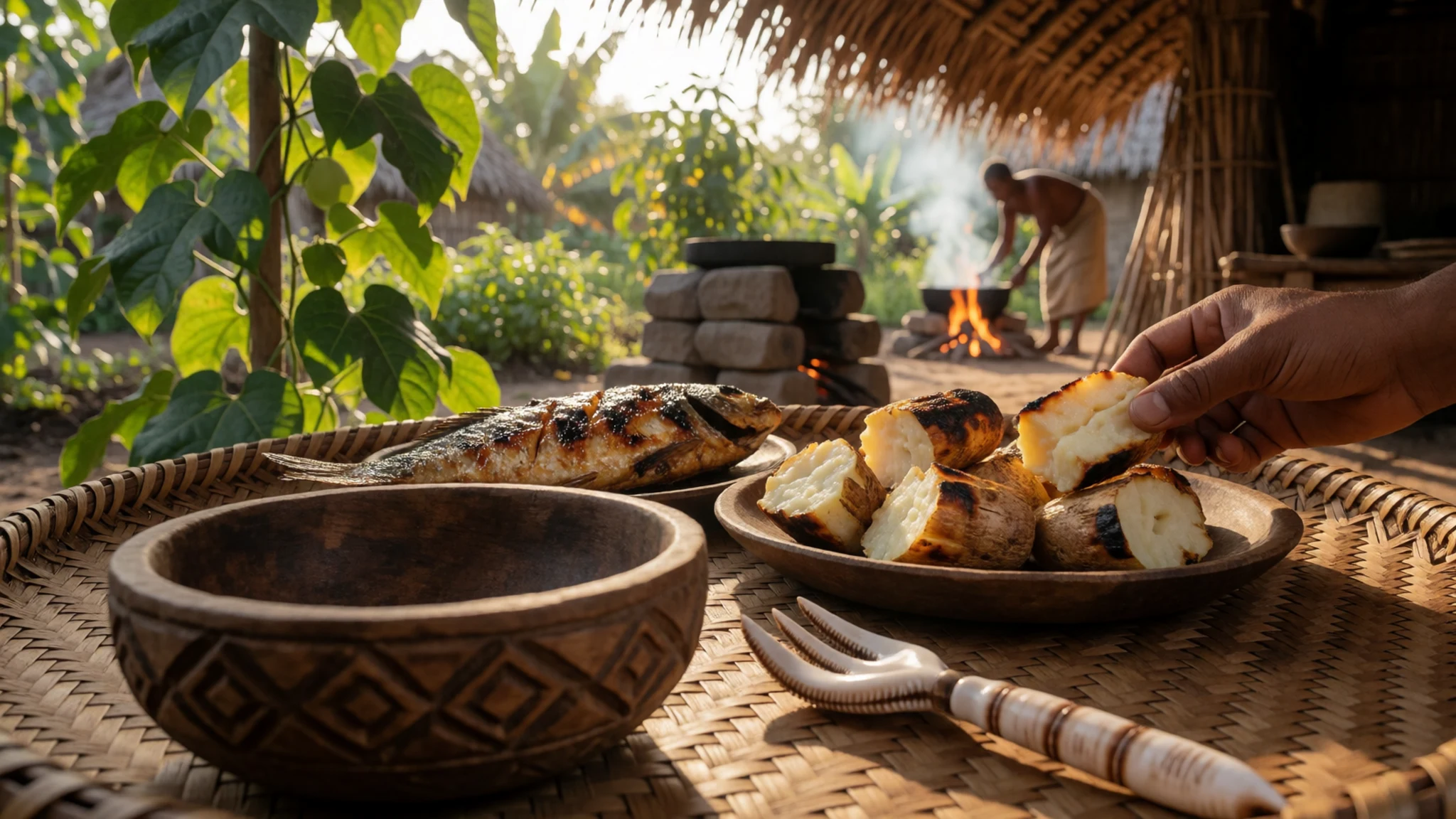
- Lu pulu — Sunday meals and community feasts
Corned beef or other meat baked in taro leaves with coconut cream, a rich dish served at Sunday meals and celebrations. It is usually cooked in an underground oven for feasts. Ask your host if one is planned. - Fresh coconut — Village gardens and roadside trees
Coconuts are central to island life, and drinking nuts are a refreshing, safe way to cool down in the heat. The flesh and cream also go into many dishes. Hosts will often cut one open on request. - Grilled reef fish — Home stay kitchens and Falehau harbour area
Fish caught from the reef lagoon and cooked simply over fire, often with root vegetables on the side. What is on offer depends on the day's catch and the weather. Eating with a host family is the usual way to try it.
Plan it
Best time. May to October is usually the drier and cooler part of the year in the tropical Pacific, which suits beach days and walking. November to April is the warmer, wetter and more humid season, when cyclones are possible, so check forecasts and travel insurance terms.
How long. 3–5
Getting there. Niuatoputapu Airport accepts international flights, but services here are limited, so confirm current routes and schedules with the airline and the Tonga Visitor's Bureau. Once on the island, the villages are close together and the last leg is a short ride or walk to your home stay.
Budget. mid
Tips
- Arrange a home stay through the Tonga Visitor's Bureau well before travelling, as options are limited
- Bring enough cash, medicines, sun protection and insect repellent, since shops and services are basic
- Carry drinking water for beach days and ask your host about safe water for refills
- Allow slack in your plans, as flights and weather can shift schedules in remote islands
- Ask your host about tsunami warnings and evacuation routes on arrival
Etiquette
- Dress modestly in villages, with shoulders and knees covered away from the beach
- Keep Sundays quiet and join or respect church time
- Ask before photographing people, churches, graves or chiefly sites
Nearby
Sources
- Wikidata Q1144842 (CC0)
- Wikipedia: Niuatoputapu (rev 1355220466) (CC BY-SA 4.0)
- Wikivoyage: Niuas (rev 5033244) (CC BY-SA 4.0)
- NASA picture of Niuatoputapu and Tafahi (Public domain)
- Tonga.jpg (Public domain)
- View of Cocos Island and Traitors' Island (M. Colijn) (Public domain)
- Atatuka stone mound, Niuatoputapu (Garth Rogers) (CC BY-SA 4.0)
- Cemetery of Falehau Village, Niuatoputapu (David Stanley) (CC BY 4.0)
- Coastal view of Admiral Keppel's Island (James Cook) (Public domain)
- Earthquake off Samoa Generates Tsunami, After (Robert Simmon) (Public domain)
- Earthquake off Samoa Generates Tsunami, Before (Robert Simmon) (Public domain)


