Maafushi
Maafushi, Maldives
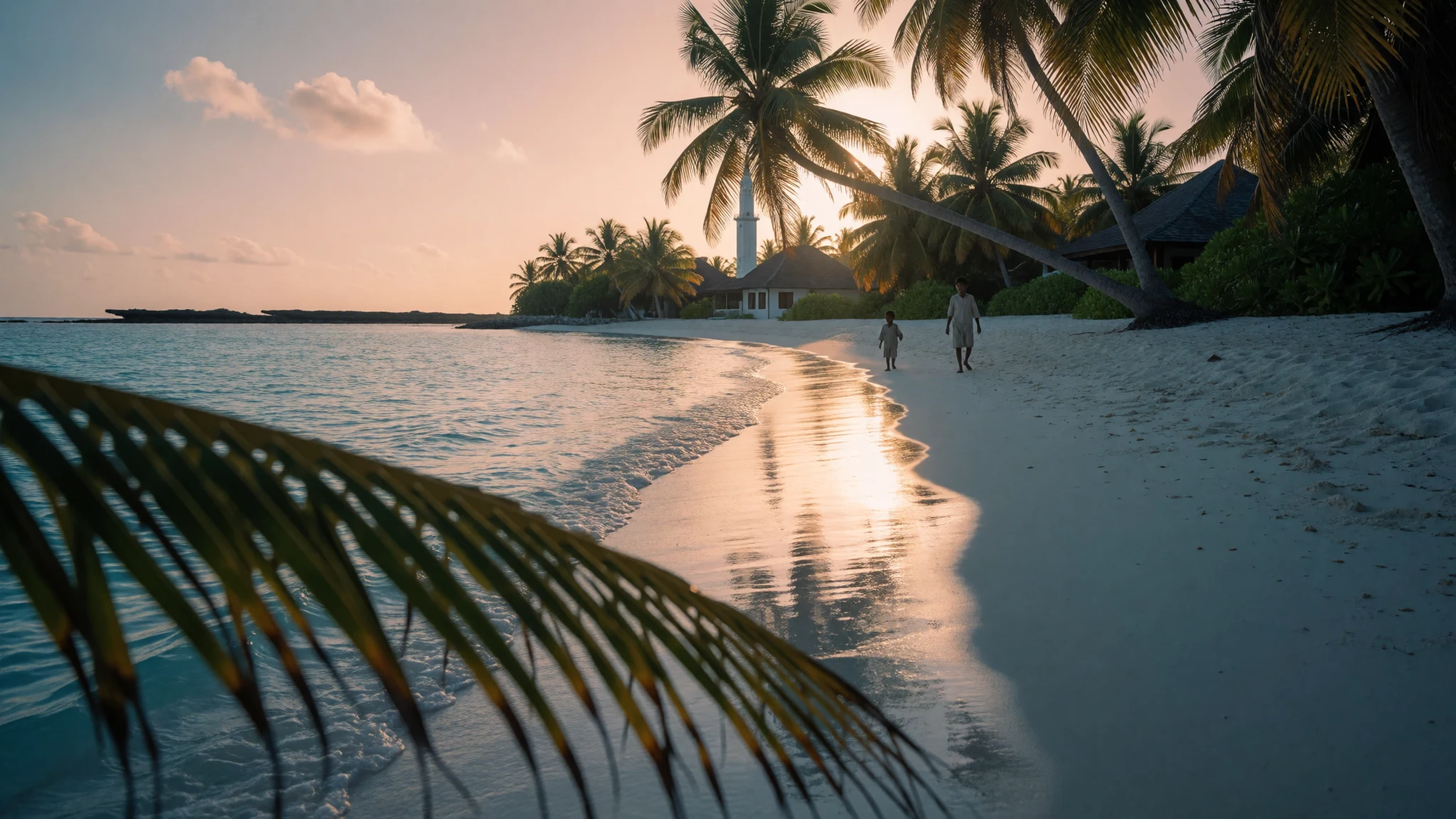
Maafushi is a small local island near Malé where guesthouses, reef snorkelling and everyday Maldivian life sit side by side, without resort prices.
The place
Maafushi (Dhivehi: މާފުށި) is a small inhabited island in Kaafu Atoll, about 26 km south of Malé, the capital. It is a local island, which means families live here, with a school, mosques, shops and fishing boats, rather than a single company running a private resort. That is the heart of its appeal. Guesthouses sit on the same lanes as homes, so a stay here is a way of seeing the Maldives from the ground rather than from a resort jetty.
The island is flat and low, ringed by sand and a lagoon with a reef beyond. Crossing it on foot does not take long, and days tend to follow a pattern: breakfast, a boat trip to snorkel or dive, a long lunch, then sunset on the sand. The water is warm and clear, though shallow in places, and its colour shifts through the day from pale green to deep blue beyond the reef.
A few honest points. The island is busy with visitors, especially in the drier months, and the main lanes can feel more like a holiday strip than a village. Shade is limited and the midday heat is constant. Day-trippers from nearby resort islands also come over for souvenir shopping, so the central area gets lively in the afternoon. Quiet corners exist at the edges of the island and early in the morning, when fishermen and schoolchildren outnumber tourists.
Alcohol is not sold on the island, which shapes the evenings: more tea, fresh juice and long conversation than nightlife. For travellers from India or the UK, the draw is plain enough: sea, sun and snorkelling, a short transfer from the airport, and a cost that stays well below a resort stay.
Its story
Maafushi's modern story begins with water. When the tsunami of 2004 struck, the island was badly damaged, as were many communities across the Maldives, a country where most land sits only slightly above the sea. Recovery was slow and practical. Red Cross and Red Crescent societies worked with donors on basic infrastructure, starting with a proper sewage system, and funded new homes for families who had lost theirs.
Those projects still shape the island. Much of what a visitor walks past today, the streets, the housing and the services, owes more to rebuilding than to long-standing layout. It is a reminder that this is a living community that had to put itself back together, not a stage set for holidays.
Tourism arrived from an unusual direction. For a long time, visitors to the Maldives stayed on resort islands, one company to one island. Once local islanders were able to host guests in their own guesthouses, Maafushi had two advantages: it is close to Malé, and boats make the crossing easily. Guesthouses multiplied quickly, and the island became the best-known example of the local-island model, where visitors stay among residents.
That growth has brought income, work and new shops, and also pressure on space, waste and quiet. Residents and guesthouse owners are still working out how to balance the two. Today the island is a place where the tsunami's aftermath, a fishing past and a busy tourist present all sit within a short walk of each other, and understanding that makes a stay richer than the beach alone.
What to see
- The bikini beach — North of the island
At the northern end of Maafushi, a stretch of sand is set aside for swimwear and sunbathing. This is the one place on the island where beach clothes are expected. It is popular and can get crowded by mid-morning, so early starts or late afternoons give more space and softer light on the water.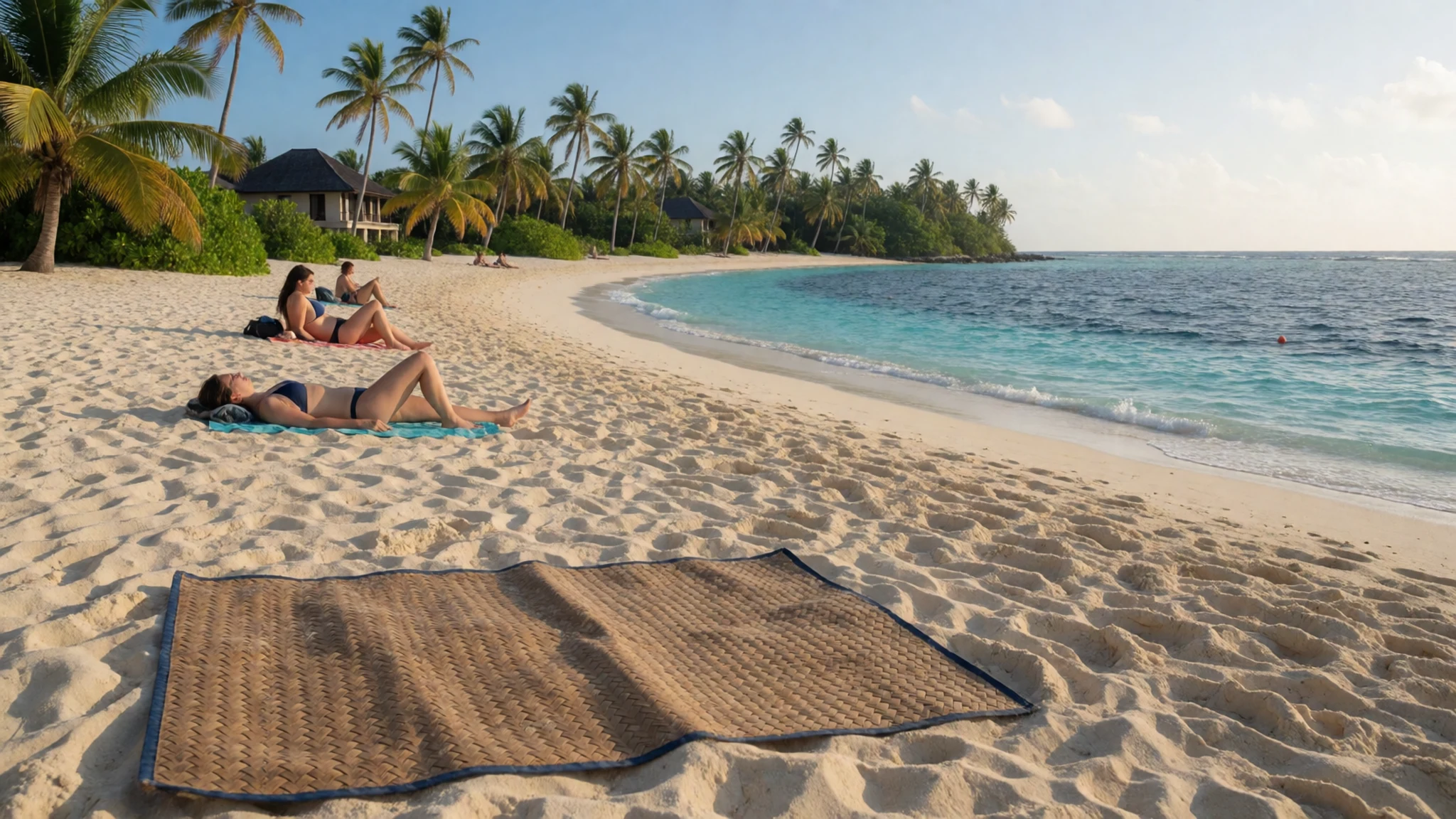
- Water sports along the shore — Beachfront
Jet-skis, parasailing, banana boats and wakeboarding are offered from the beachfront, usually arranged through guesthouses or small operators. They are noisy and fun rather than peaceful. Agree what is included before you go, and keep to the marked swimming areas, as boats move fast through the lagoon.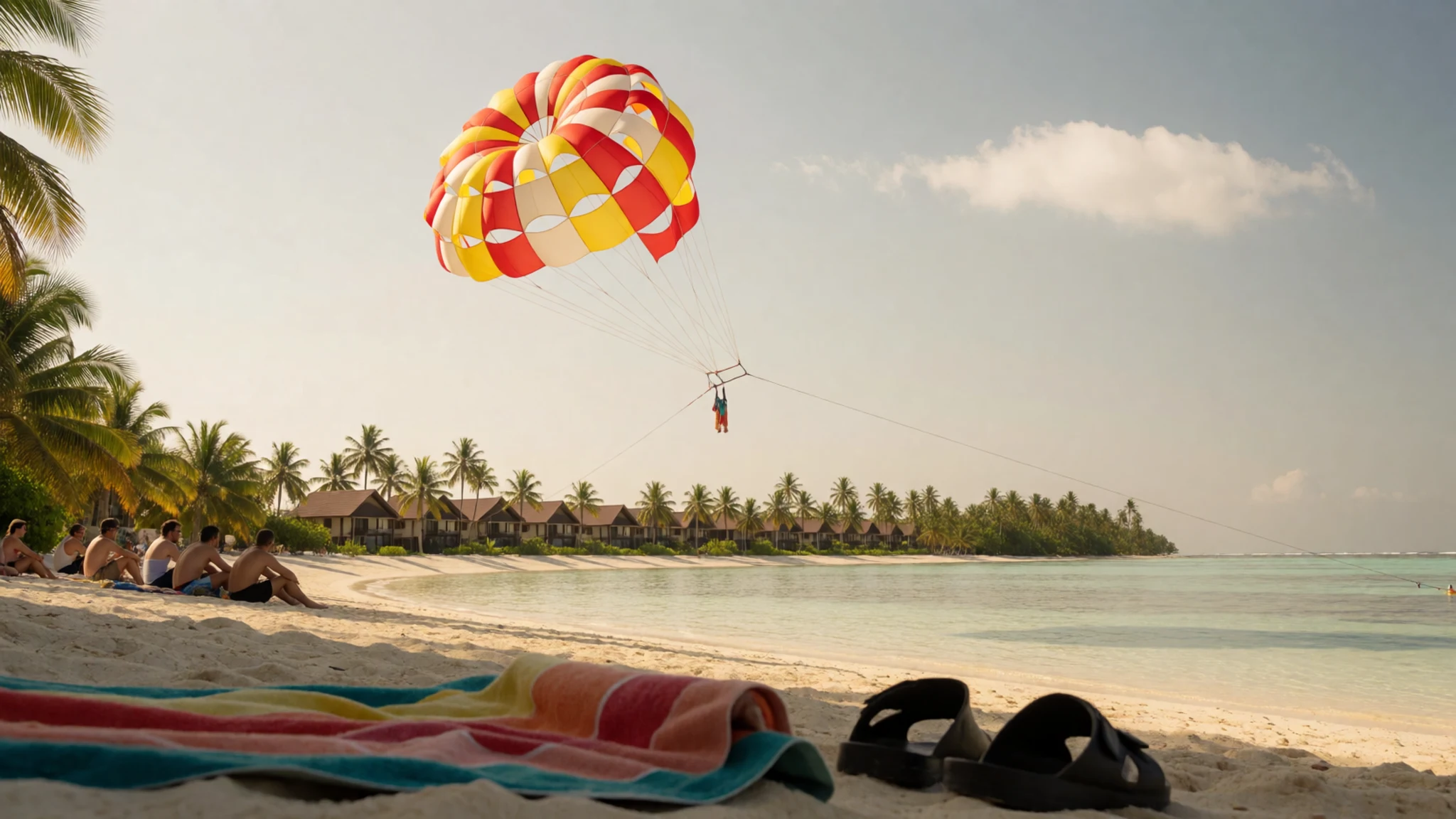
- Diving and snorkelling trips — Harbour and reef
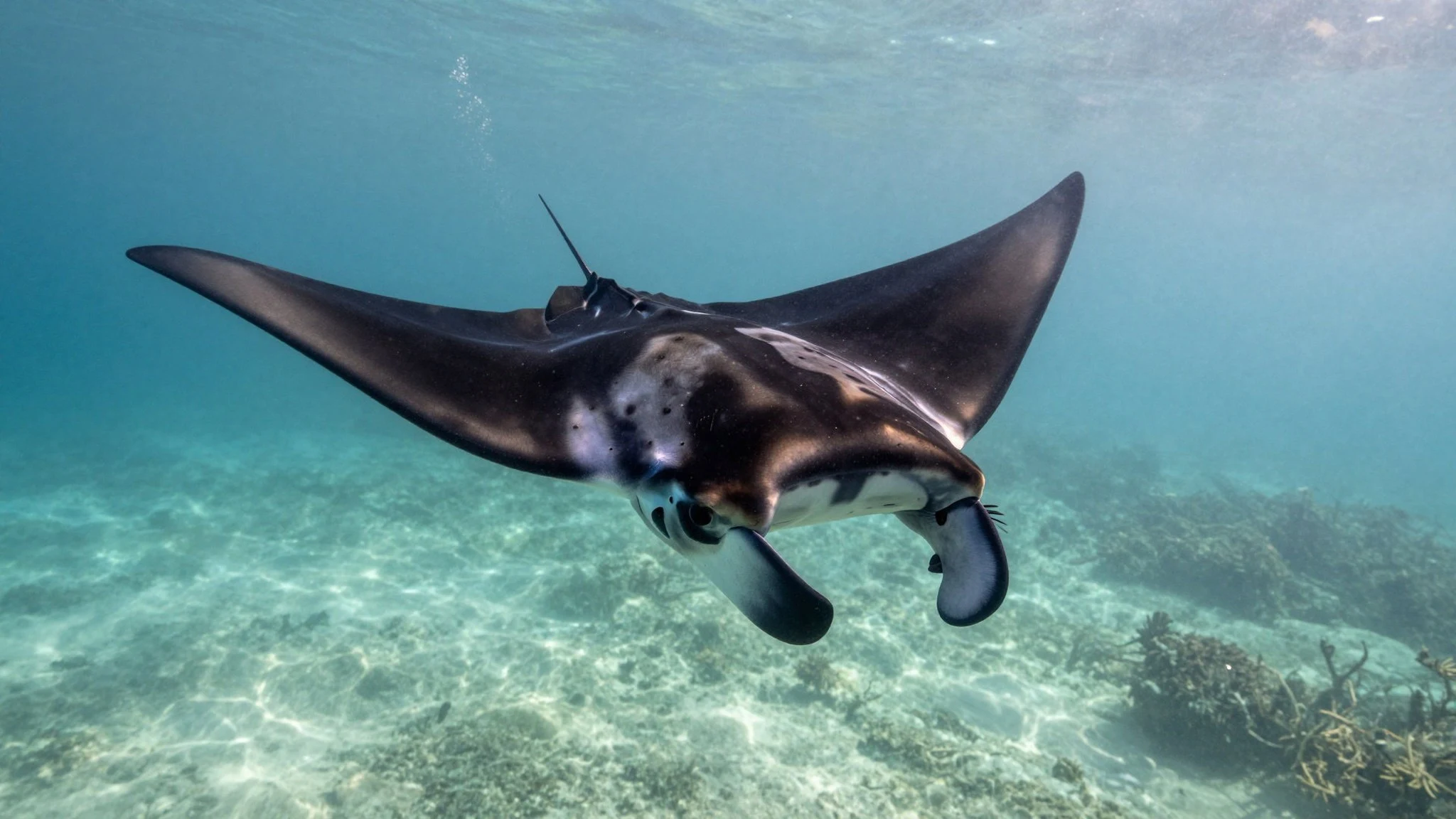
Several dive centres operate here, and many guesthouses can arrange snorkel outings by boat. Reef fish, turtles and rays are the usual draw, though sightings depend on the day and the current. Beginners can try a guided introduction; certified divers should check each centre's briefing and safety record.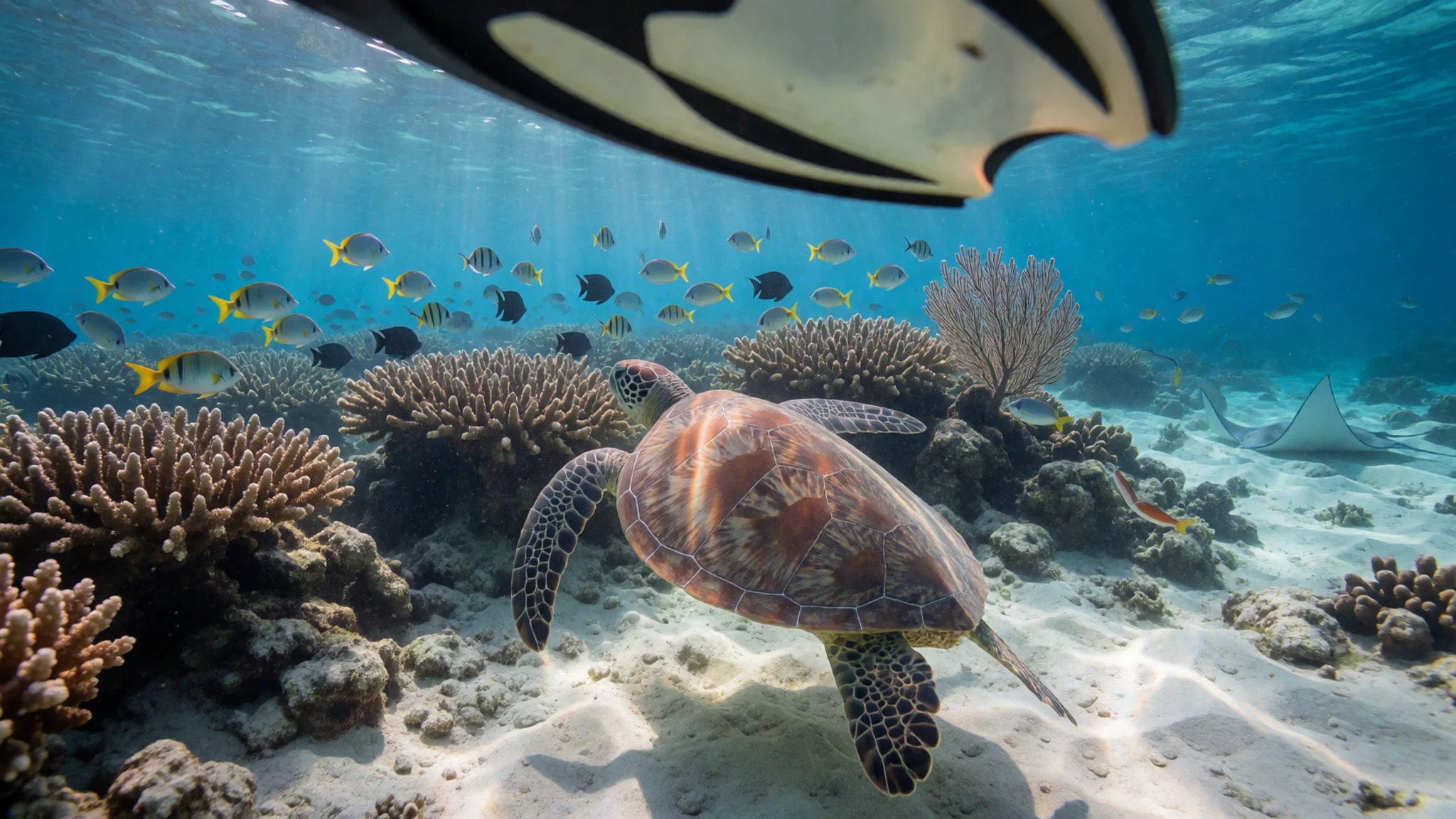
- The village lanes and welcome sign — Arrival area and village
Away from the beach, a walk through the sandy lanes shows the everyday island: laundry, school uniforms, small shops and boats being repaired. The painted island sign near the arrival area is a popular photo stop. Keep clothing modest here and ask before photographing residents.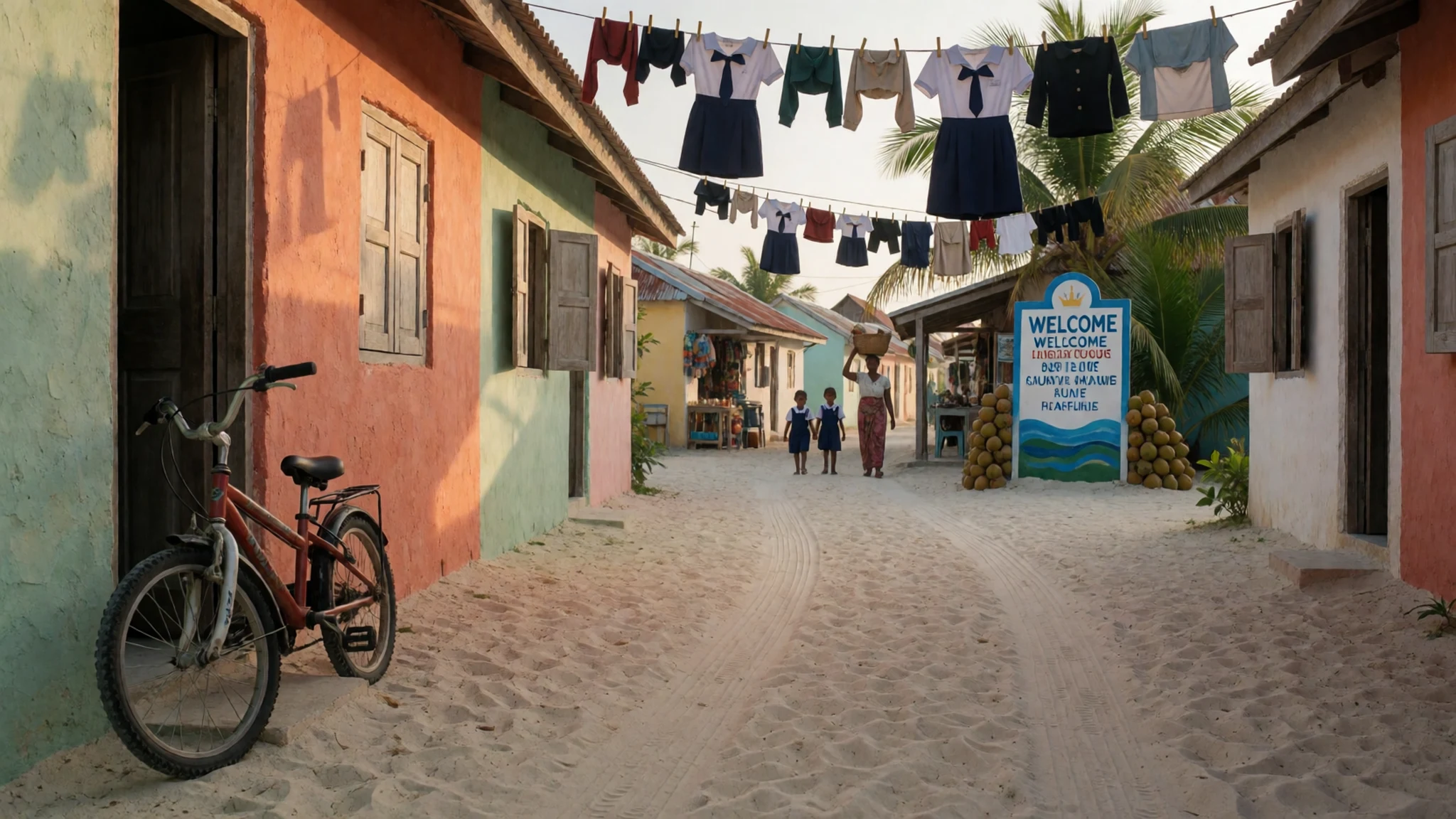
- Souvenir shops and a day trip to another island — Shopping area and harbour
Souvenir shops cluster in a designated area, selling shells, textiles, carvings and sarongs, and day-trippers from nearby resorts add to the bustle. Many guesthouses also arrange boat excursions to a resort island or another local island, which gives a useful comparison of how different Maldivian islands feel.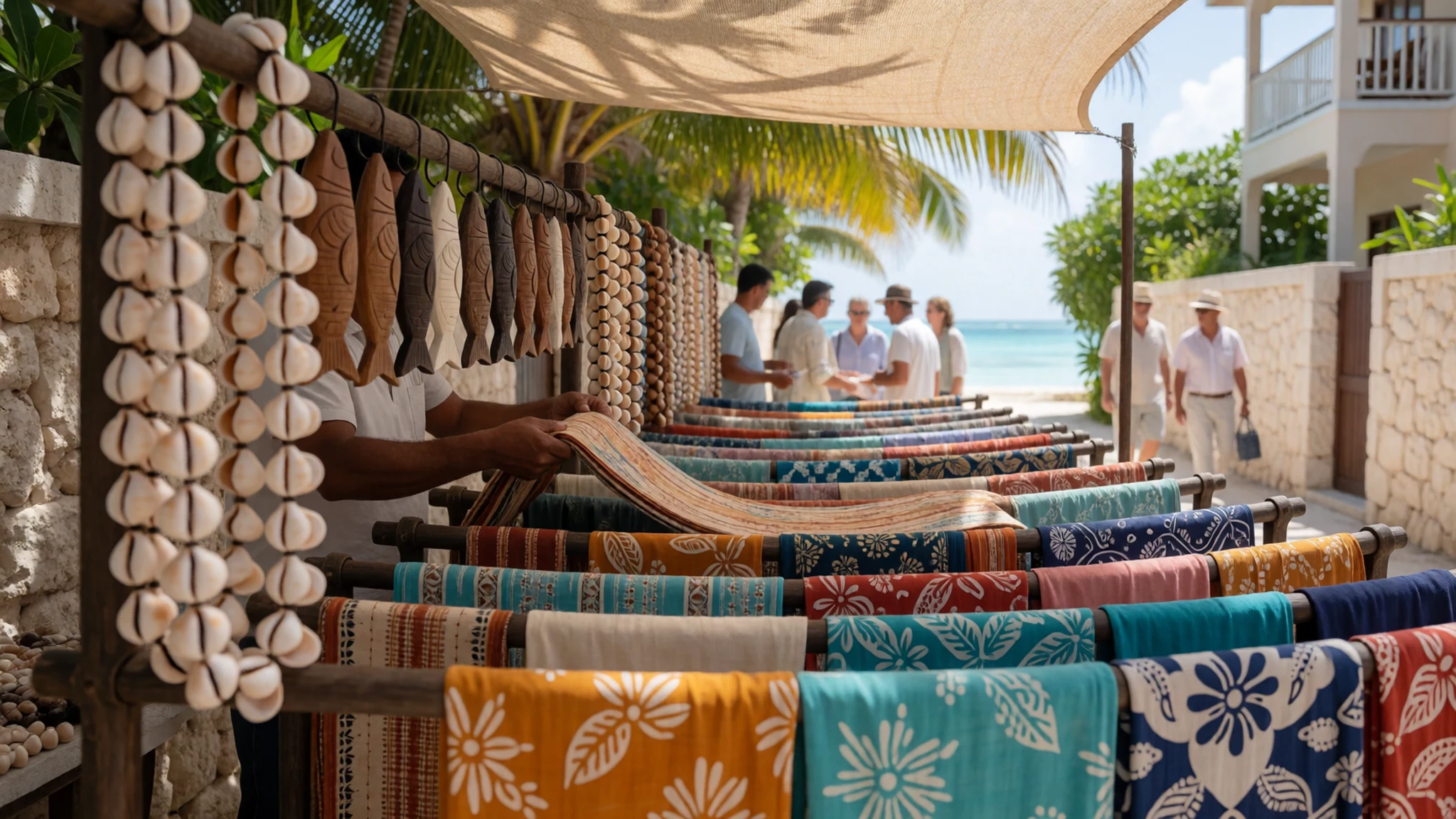
Culture
Maafushi follows the customs of the Maldives, a Muslim country, and the island's daily rhythm reflects that. The call to prayer sounds through the day, shops may pause at prayer times, and Friday is the weekly day of congregation, so the island can feel quieter around midday. The language is Dhivehi, and a few words of greeting, offered with a smile, are noticed and appreciated, though English is widely used around guesthouses.
Fishing, especially for tuna, has long been central to island life, and boats are still part of the morning scene at the harbour. Music and dance traditions such as drumming sessions are part of celebrations, and some guesthouses arrange evenings, though they are staged for visitors and are best treated as an introduction rather than the whole story.
Tourism and local custom live closely together here. The island has set aside areas for visitors, notably the bikini beach, and the rest is a village where families raise children and keep to their own norms. Alcohol is not permitted on the island; guesthouses may arrange a boat trip to a licensed vessel offshore, but residents do not expect drinking to spill into the village. During religious periods, such as the fasting month, eating and drinking in public during daylight can be considered discourteous, and some cafés open later in the day.
Wear swimwear only on the designated tourist beach, and cover your shoulders and knees when walking through the village lanes or entering any shop.
What to wear
Traditional dress in the Maldives is worn mostly on special occasions today. Women's festive dress is the libaas, a long, dark-toned gown with embroidered panels at the neck and cuffs, often worked in gold or silver thread, traditionally in cotton or similar light cloth. Men have long worn the feyli, a woven sarong with bold striped borders, wrapped at the waist and worn with a shirt. Woven reed mats, made from screw-pine leaf, are a related craft and sometimes sold as souvenirs. Festival days and weddings are when you are most likely to see these garments.
Everyday clothing on Maafushi is simple and suited to the heat. Men wear cotton shirts with trousers or sarongs, women often wear long skirts or dresses with loose tops, and many cover their hair with a scarf. Schoolchildren wear neat uniforms on the walk to class, and fishermen favour old shirts and shorts that can get wet.
Visitors should pack light cotton or linen that dries quickly. Swimwear is for the bikini beach and for boat trips; in the village, shoulders and knees should be covered, so a light shirt, a sarong or loose trousers are useful. Bring a wide-brimmed hat, sunglasses and reef-safe sun protection. Sandals are enough on the sandy lanes, but reef shoes protect the feet from coral and sharp shells when snorkelling or wading in the shallows.
What to eat
- Garudhiya — Local cafés and guesthouse kitchens
A clear, lightly spiced tuna broth, usually served with rice, lime, chilli and sometimes a piece of boiled fish on the side. It is the staple of Maldivian home cooking and is found at local cafés and in guesthouse dining rooms that serve island food.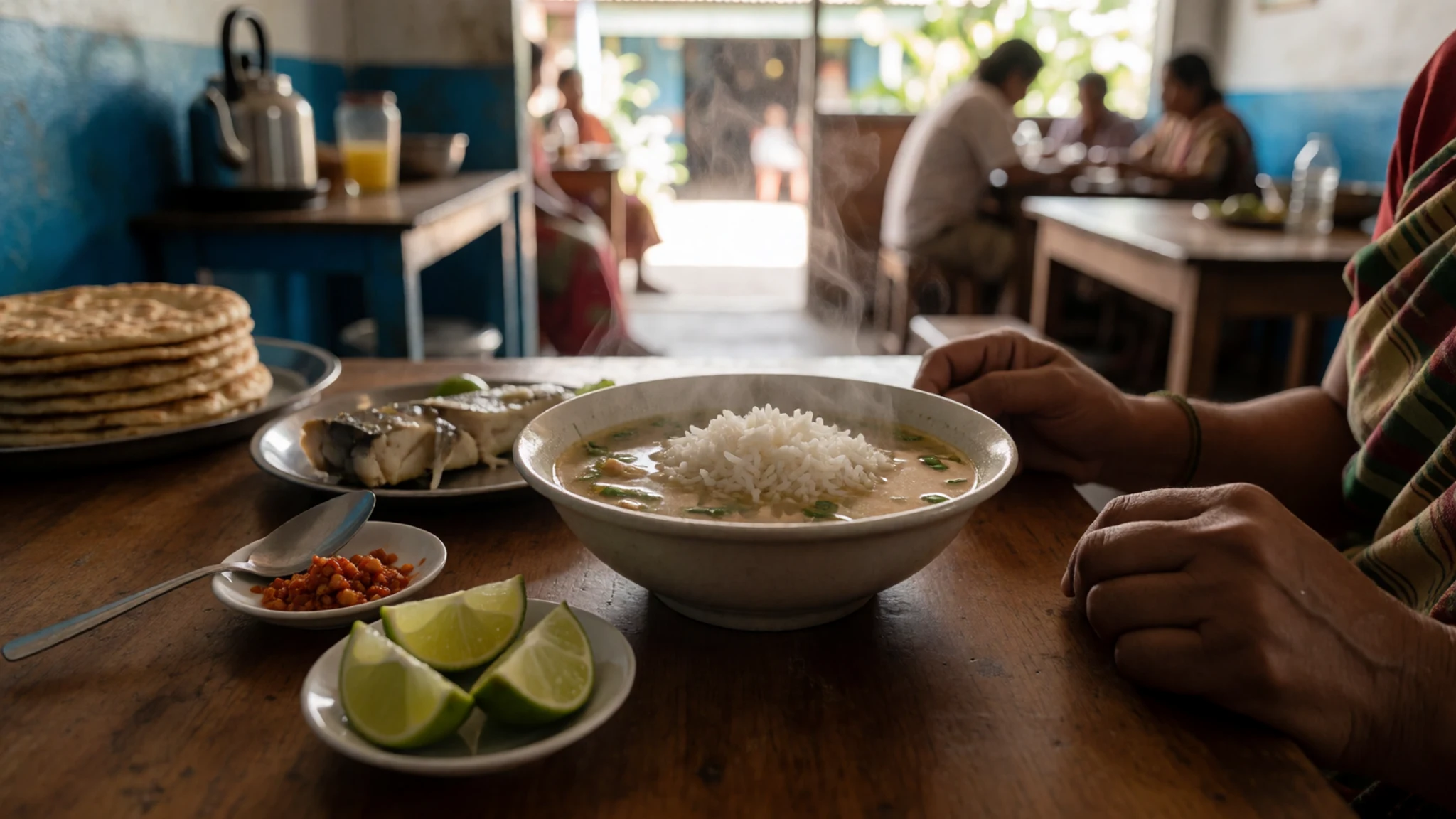
- Mas huni — Breakfast tables at guesthouses and small cafés
Finely shredded smoked tuna mixed with grated coconut, onion and chilli, then scooped up with soft flatbread. It is a traditional breakfast and one of the more satisfying ways to start a day before a boat trip. Squeeze lime over it.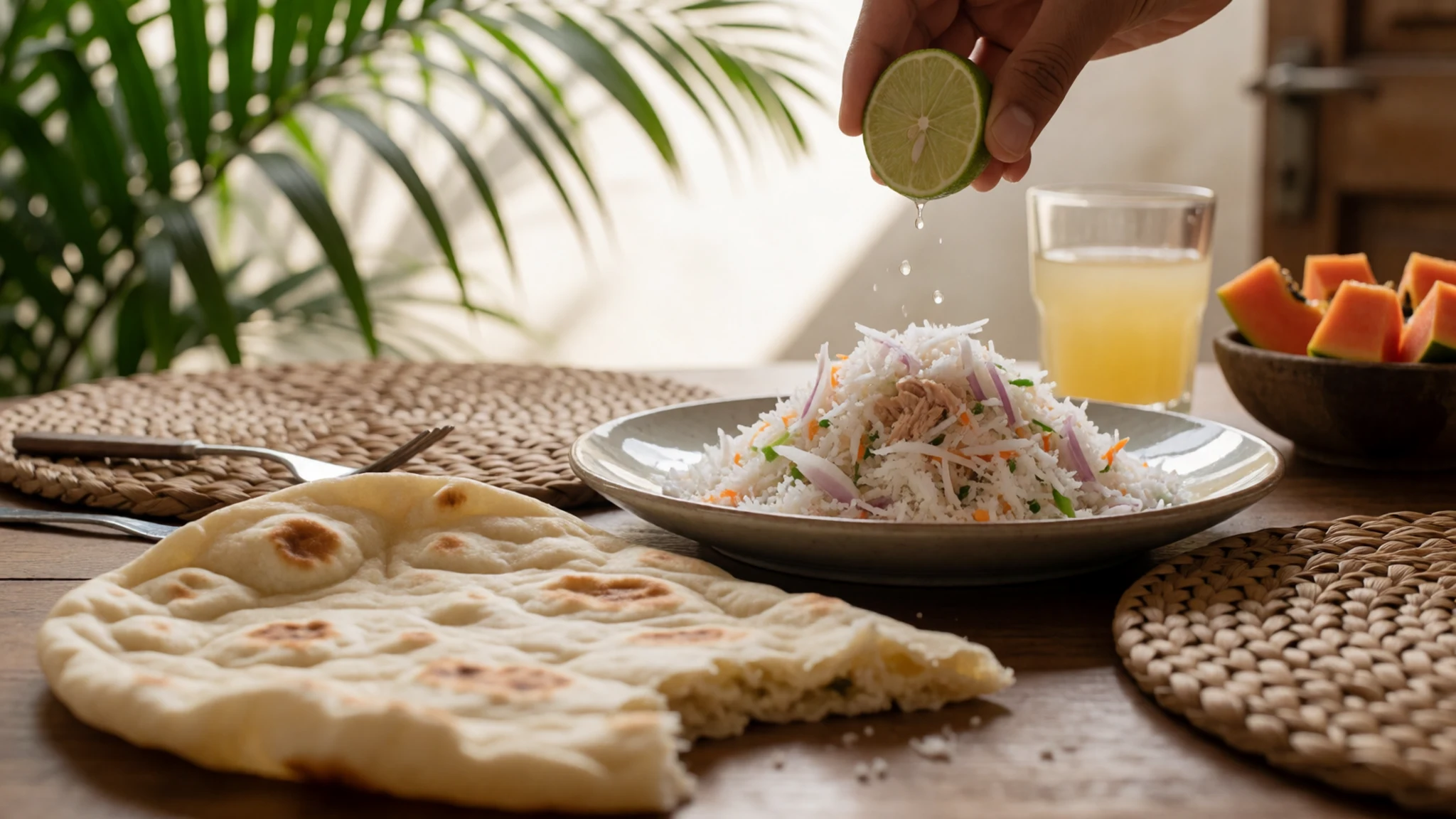
- Hedhikaa (short eats) — Tea shops along the main lanes
Small fried or baked snacks such as fish cutlets, spiced rolls and sweet pastries, served with tea in the late afternoon. They are cheap, filling and a good way to sample many flavours. Prices and choice vary, so look at what locals are ordering. - Grilled fish with rice and chilli — Beachfront restaurants and guesthouse dinners
Fresh reef or tuna fish, seasoned and grilled, with rice, salad and a chilli sambol on the side. The best of it is simply what came off the boat that day. Ask what is fresh rather than relying on the menu. - Indian and Thai plates — Restaurants along the central street
Many restaurants here cook curries, biryani, noodles and Thai-style dishes alongside western options, and there is an Italian pizza-and-pasta place and a Bengali eatery. Useful if group tastes differ, and familiar for visitors from India. Vegetarian choices are easy to find.
Plan it
Best time. December to April is the drier, sunnier season with calmer seas, which suits snorkelling and diving, though it is also the busiest and most expensive period. May to November is wetter and windier, with rougher boat days and more cloud, but quieter lanes and lower prices.
How long. 3–4
Getting there. Fly to Velana International Airport on the island beside Malé. From Malé, take a public ferry from the Villingili terminal (a couple of hours, with limited days and times) or a speedboat, which takes about 30 minutes. Check the current MTCC ferry timetable, or ask your guesthouse to arrange the speedboat.
Budget. mid
Tips
- Book the boat transfer with your guesthouse so it matches your flight arrival time
- Public ferries run only on certain days and times, so confirm the schedule before relying on one
- Carry some cash for small shops and tea stalls, as cards are not accepted everywhere
- Use reef-safe sun cream, a hat and a long-sleeved swim top, since the sun is strong all day
- Book dive or snorkel trips a day ahead in the dry season, when boats fill up
Etiquette
- Keep swimwear to the designated bikini beach and cover shoulders and knees in the village
- Do not bring alcohol onto the island, and avoid eating or drinking in public in daylight during the fasting month
- Ask before photographing residents, and never touch or stand on coral
Nearby
Sources
- Wikidata Q1875719 (CC0)
- Wikipedia: Maafushi (Kaafu Atoll) (CC BY-SA 4.0)
- Wikivoyage: Maafushi (CC BY-SA 4.0)
- Photo: Maafushi island (Nattu) (CC BY 2.5)
- Photo: Maafushi Beach (Nicolai Edgar Andersen) (CC BY-SA 4.0)
- Photo: Maafushi, Maldives (Nadhuha Amir) (CC BY-SA 4.0)
- Photo: Welcome to Maafushi (Saaremees) (CC BY-SA 4.0)
- Photo: Kaani Watersports (Saaremees) (CC BY-SA 4.0)
- Photo: Dive Boat (Saaremees) (CC BY-SA 4.0)
- Photo: Maafushi Sign (Saaremees) (CC BY-SA 4.0)
- Photo: Water Sports Beach (Saaremees) (CC BY-SA 4.0)


Wildlife
- Green sea turtle (animal)
The green sea turtle is a big, gentle swimmer that munches seagrass and wears an olive-to-black shell. Its name comes from the greenish fat beneath the shell, not from its back. Turtles are a regular highlight around Maafushi, though meeting one depends on the day and the current. Keep a respectful distance, move quietly, go with a local guide, and never feed it. Let it carry on grazing and simply enjoy the sight.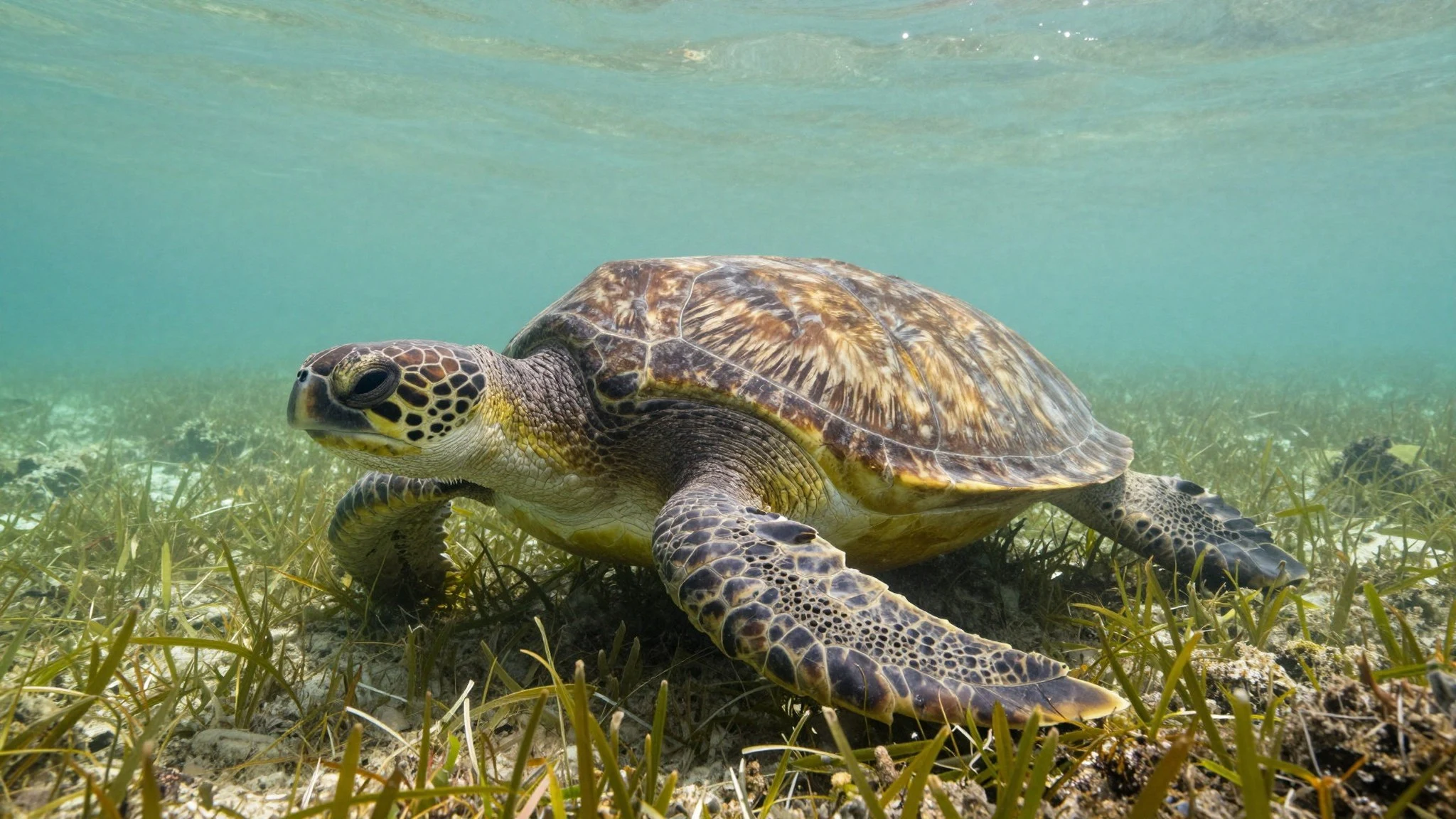
- Reef manta ray (animal)
The reef manta ray is a vast, soft-winged glider of the sea, one of the biggest rays in the world and the third largest of all. Rays are a regular highlight around Maafushi, though seeing one depends on the day and the current. Go with a guide, stay well back, keep calm and quiet in the water, and never feed it. If it glides past, simply watch and wonder.