Fuvahmulah
Fuvahmulah, Maldives
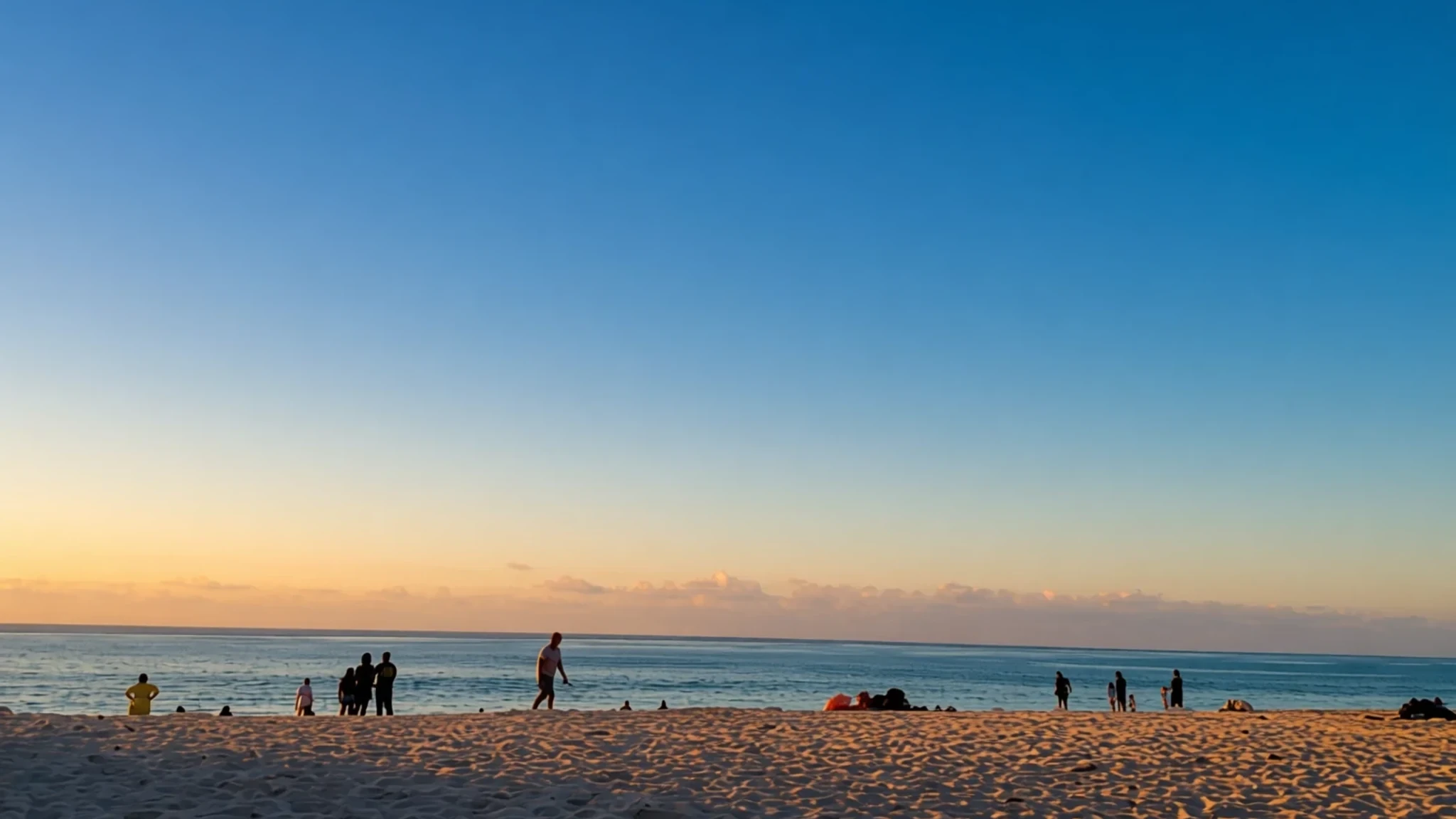
Fuvahmulah is a solitary Maldivian island of freshwater lakes, yam fields and reef, lived in as a town rather than a resort.
The place
Fuvahmulah (ފުވައްމުލައް) sits alone in the far south of the Maldives, a single island rather than a ring of sandbanks around a lagoon. On a map it reads as a small green oval in open ocean; from the air the oval is fields, trees and dark freshwater lakes, with a pale beach and a breaking reef around the edge. Maldivians also use the older spelling Fua Mulaku, and the atoll this one island makes by itself is called Gnaviyani.
What sets Fuvahmulah apart is fresh water lying open to the sky. Coral ground usually hides its groundwater. Here the lens feeds lakes the islanders call kilhi, above all Bandaara Kilhi, and it keeps the soil wet enough for yams, taro, breadfruit and bananas to grow in plots between the houses. A walk along an island road passes a compound wall, then a stand of yams, then a dark sheet of lake. It feels like a cultivated island, not a bare cay.
People live in neighbourhoods that run together into one town: mosques, tea shops and family houses, not a resort strip. Because the reef has no wide natural channel, a harbour has been cut through it, and boats plus a small airfield tie Fuvahmulah to the rest of the Maldives. The ocean still decides the day. Swells wrap the coast, and the beaches — a long run of pale sand, and the pebble shore known as Thoondu — change temper with the monsoon. Inland, the lakes attract waterbirds, including the common moorhen. Heat and humidity stay all year; what changes is the rain.
Its story
Fuvahmulah's story is the story of an island that could feed and water itself far from Malé. In the southern Maldives, most atolls are circles of small islets. This one kept its land in a single piece, with lakes and gardens, so it could support a real community of farmers and fishers when neighbouring islands lived more tightly from the reef. Older charts and sailors' speech recorded it as Fua Mulaku, a name still heard beside the modern spelling.
Islam shapes the recorded life of the island, as it does across the Maldives. Neighbourhood mosques, among them Kederey Miskiy, anchor the wards, and quiet tombs called ziyarai — Riba, on the south-western tip, is one — mark scholars and holy men whom families still visit. Fresh water, timber and crops gave Fuvahmulah weight in a nation of coral and tuna. Drumming, Friday prayer and the sharing of fish and breadfruit are the continuities people point to, more than palaces or inscribed walls.
The hard chapter is the reef. Without a natural harbour mouth, heavy seas could cut Fuvahmulah off, and landing a boat was a skill, not a timetable. Cutting a harbour through the coral, and later laying an airfield, changed that isolation without turning the island into a resort enclave. Administration eventually treated it as its own atoll under the name Gnaviyani. Today the story on the ground is practical: yam fields beside the lane, a lake at the end of a path, a mosque courtyard, and the sound of the reef just beyond the houses.
What to see
- Bandaara Kilhi — inland wetlands
Bandaara Kilhi is the freshwater lake that makes Fuvahmulah feel unlike a bare sandbank. Trees meet dark water, and a path follows the shore through the wetland. Waterbirds use the margins, among them the common moorhen. Visit for the quiet and the contrast with the reef. Keep to the path, leave the banks clean, and treat the kilhi as living water beside people's land.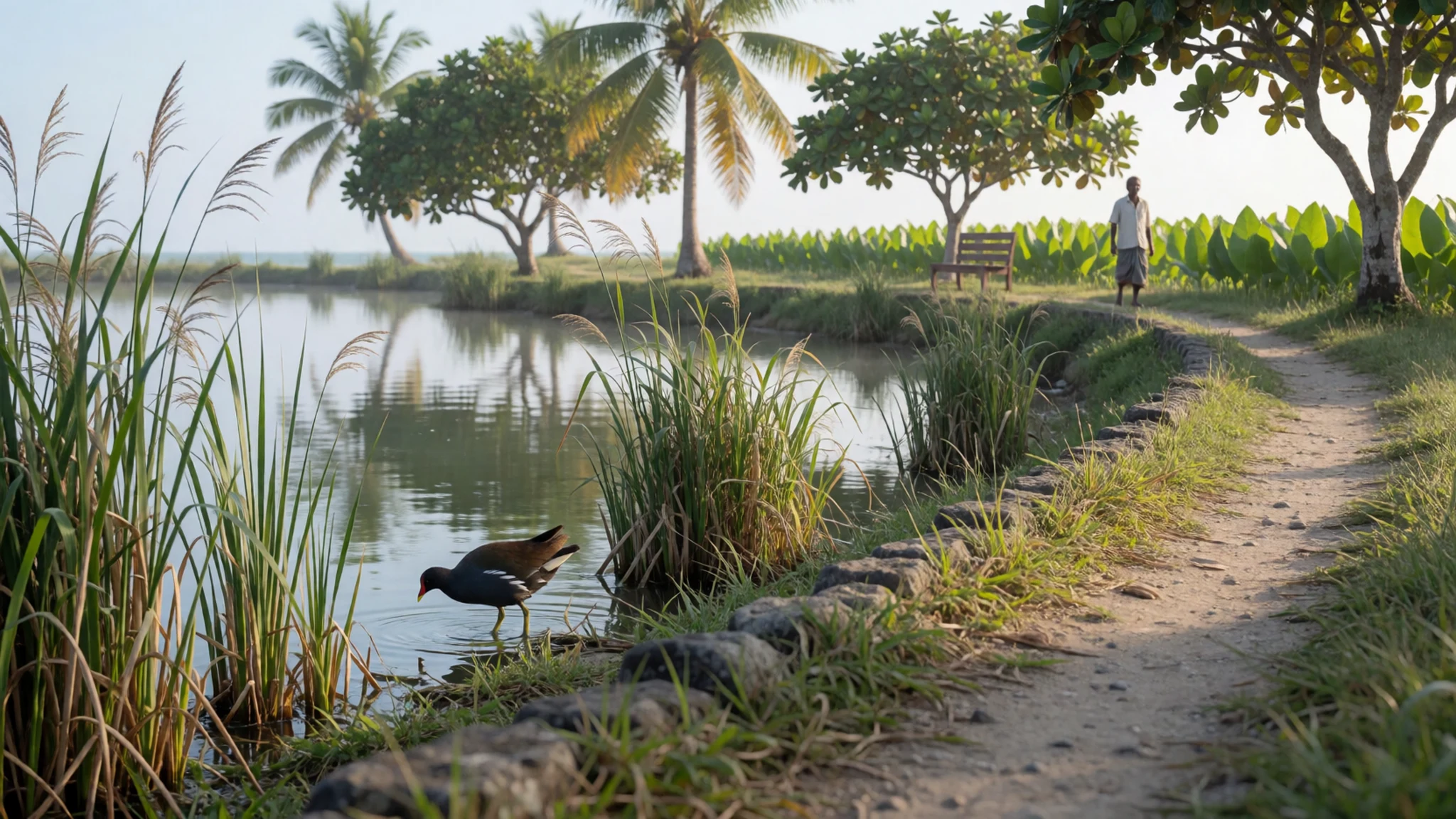
- Thoondu — north-east shore
Thoondu is the beach at Fuvahmulah's northernmost point, in Dhadimagu on the north of the island, where pale sand gives way to smooth coral pebbles thrown up by the monsoon. The horizon is open, and a swell can make swimming unwise, so treat it as a walk rather than a sheltered lagoon. In a strong sea the pebbles rattle; on a calm morning the stroll is easy before the heat.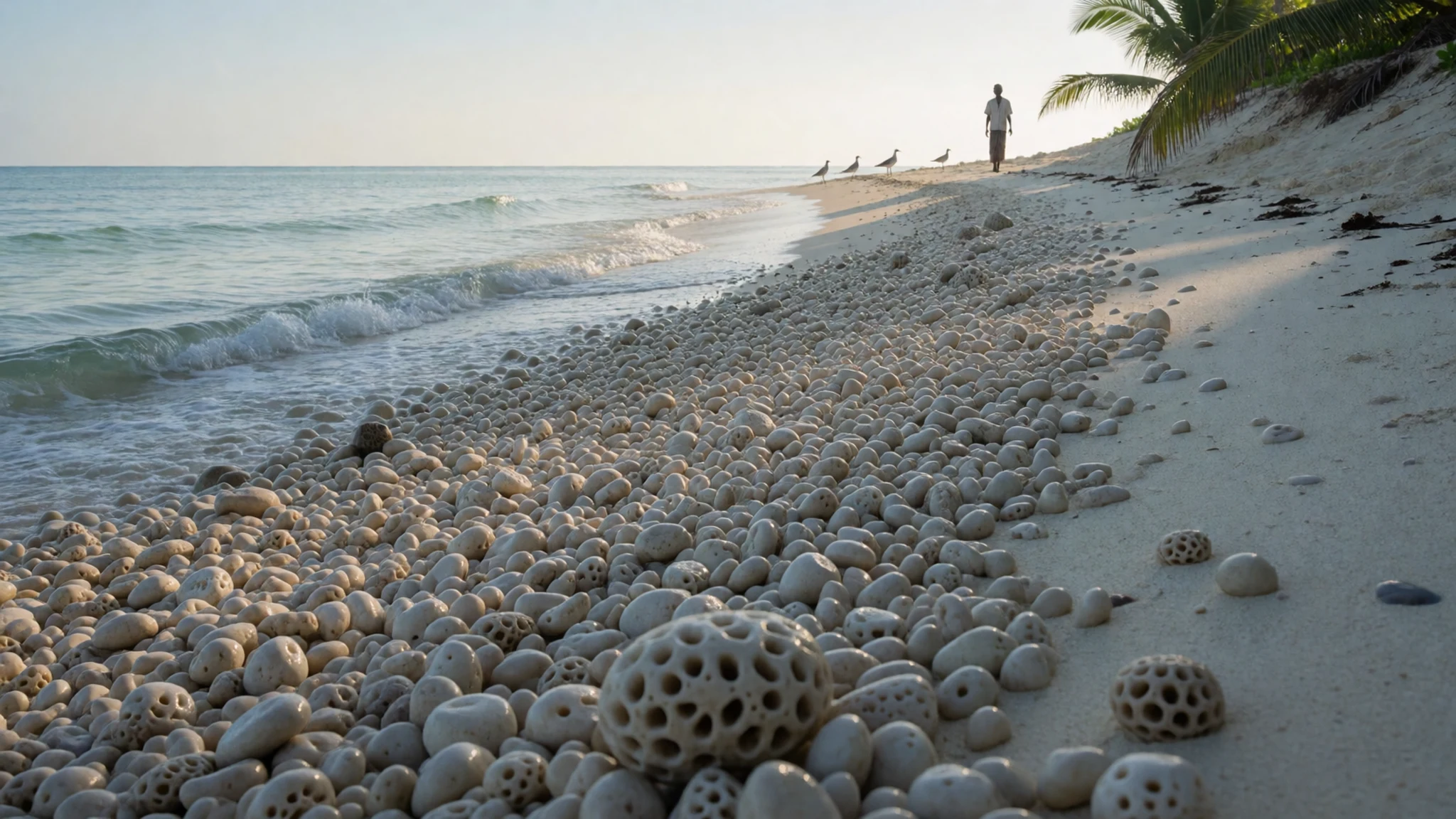
- Kederey Miskiy — island wards
Kederey Miskiy is a neighbourhood mosque on Fuvahmulah, a pale courtyard among trees and houses. It is a working prayer hall in the island's wards, not a ticketed monument. Shoes at the step and neighbours passing all day show how Islam sits in the street pattern. Admire it from the lane. Go in only if you are modestly dressed, outside prayer, and a local person has welcomed you.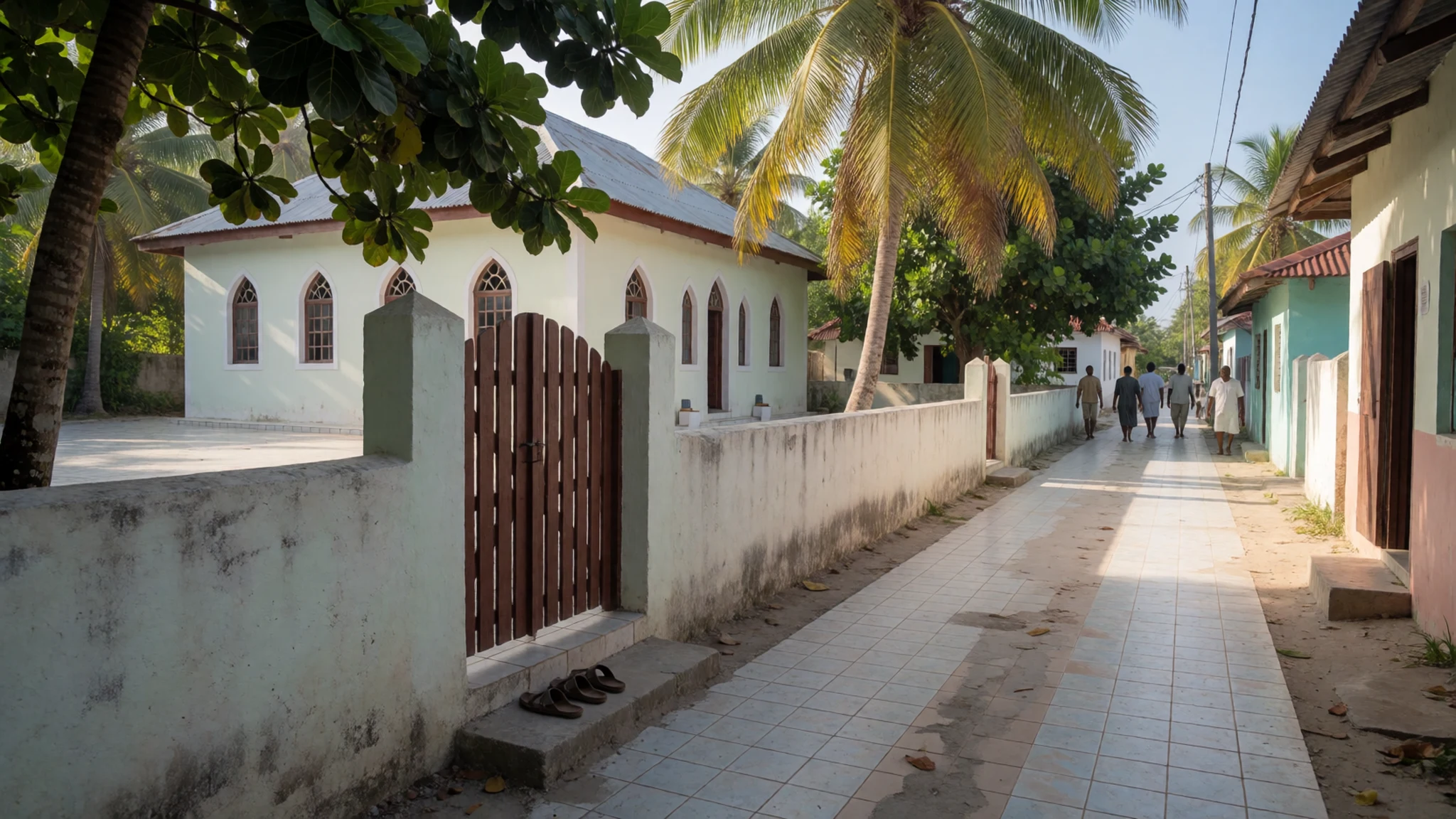
- Riba — south-western tip
Riba is a ziyarai, a tomb-shrine, in a lonely spot on the south-western tip of Fuvahmulah. Islanders tie it to a local holy man, and families still treat such tombs with quiet respect. Expect no spectacle: a small structure, wind off the reef, and the end of the island underfoot. Dress as you would for a mosque and keep your voice down. Leave it as a place of respect.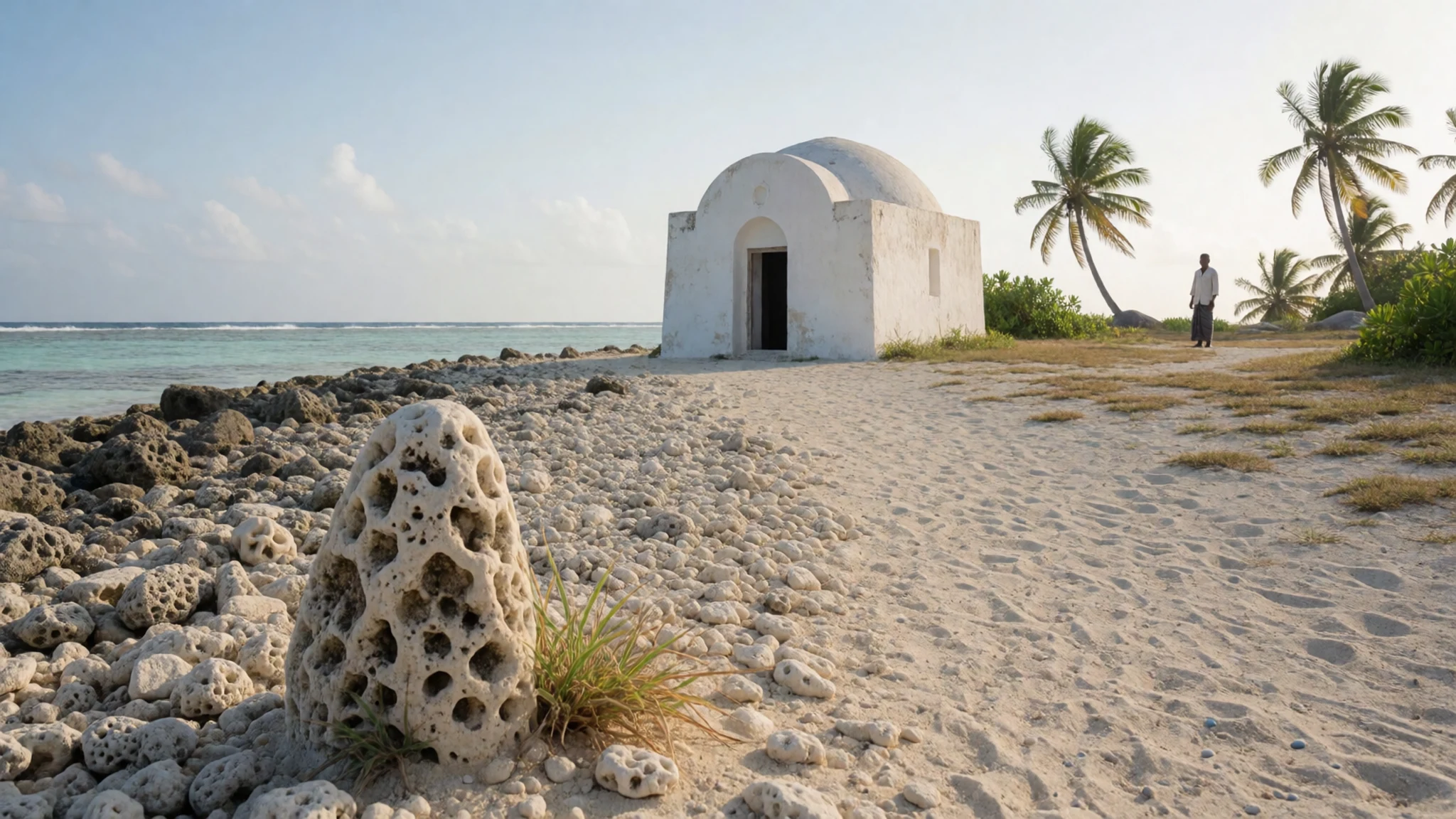
- The harbour — reef edge
The harbour of Fuvahmulah is a channel and basin cut through the reef, where a natural pass at Diyarehifaando once opened a saltwater lagoon until coral boulders closed it and left two freshwater lakes. Fishing craft and trip boats use it, and it is the working door to the sea for shark trips and supply runs alike. Stand back from the quay when boats are moving, and expect diesel, nets and concrete rather than a promenade.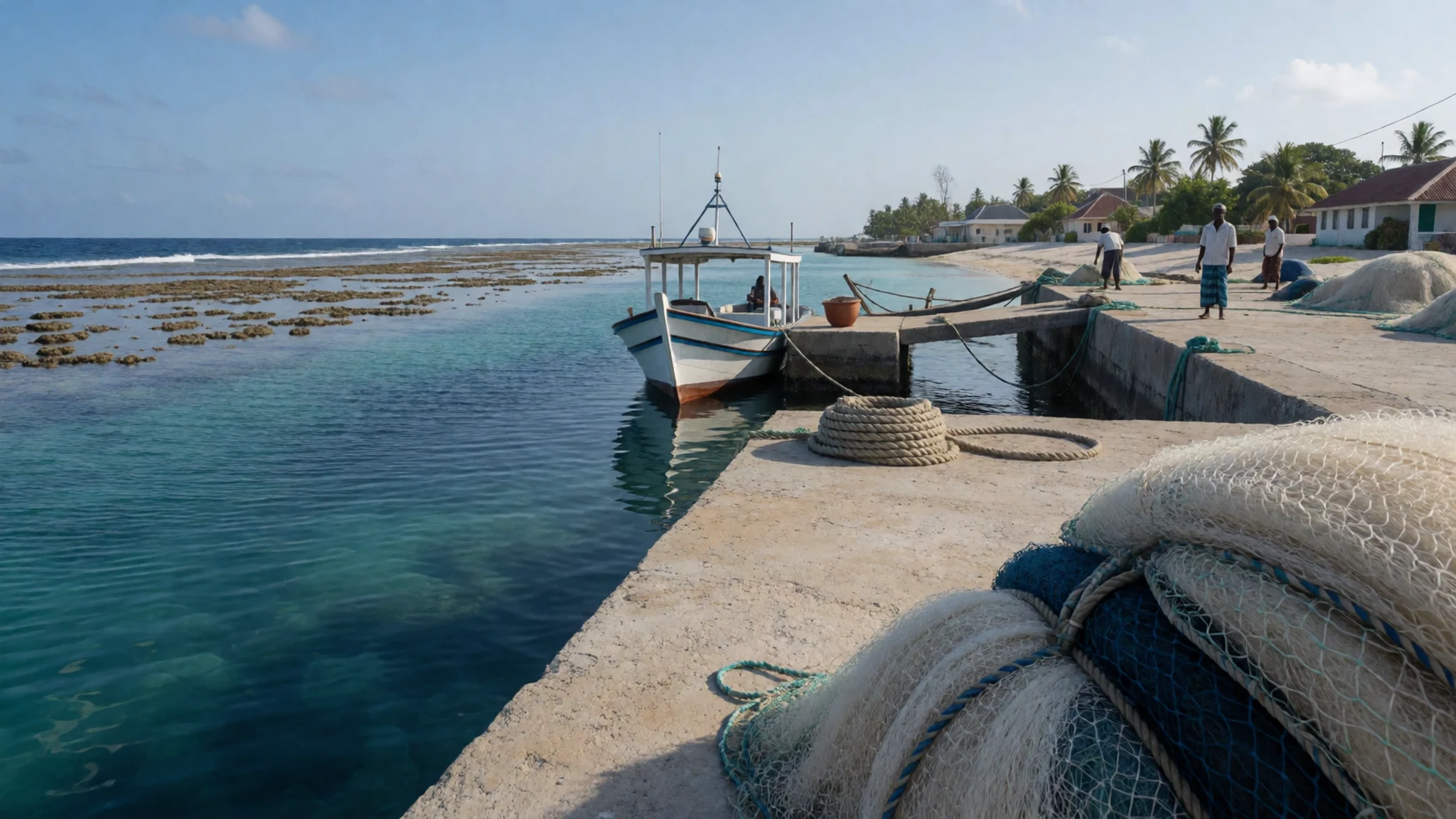
- Yam fields along the lanes — village roads
The island roads of Fuvahmulah run between house compounds and plots of yams, a sight rare on Maldivian islets that grow little more than coconuts. The fields are why the interior looks green from the air and why meals here can include tubers and breadfruit as well as tuna. Walk or cycle when the sun is lower; scooters share the lanes. It is someone's crop, so stay on the road.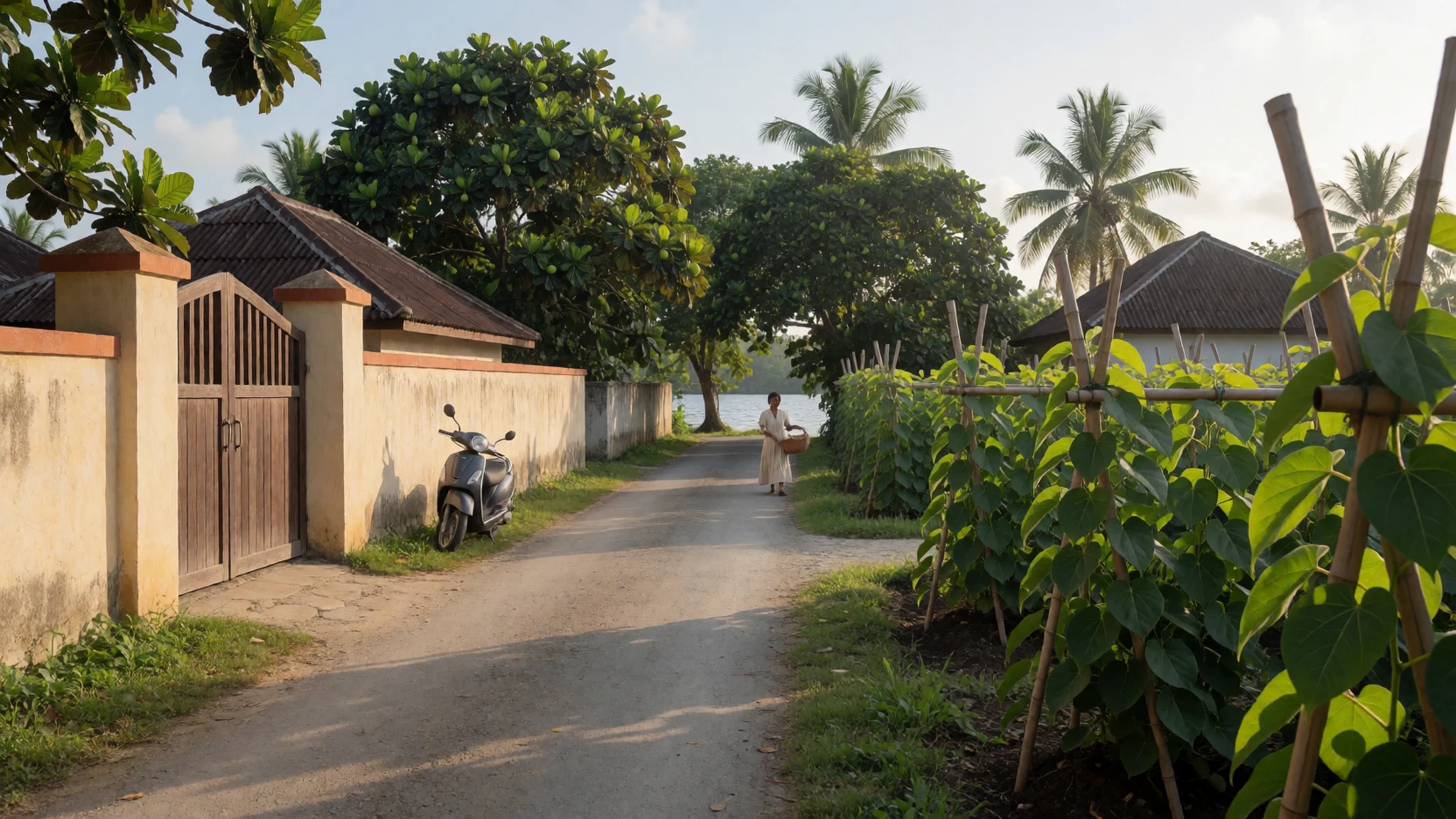
Culture
Fuvahmulah is a Muslim island community, and the rhythm of the day follows the call to prayer as surely as it follows the tide. Dhivehi is the language of the lanes, written in Thaana; English appears in guesthouses and with younger people, but it is not the speech of the tea shop. Neighbourhoods keep their own mosques, and ziyarai such as Riba remain places families visit with respect rather than sights to be consumed. Hospitality is real and domestic: a guesthouse is often a family home with rooms, and a conversation about where a guest has come from is part of the welcome. Food is shared from a common plate at times, and the right hand is the one that eats and that passes a dish. Public affection is discreet, alcohol has no place on this local island, and beachwear belongs on the beach alone. Dress so that shoulders and knees are covered in the villages, take your shoes off at a mosque door, and ask before you photograph people.
What to wear
On Fuvahmulah the traditional dress of the Maldives is still known even when daily clothes have moved on. Women wore the libaas, a long dress finished with kasabu, a band of gold or silver embroidery at the neck. Men wore the feyli or mundu, a sarong with a shirt, and still do for Friday prayer, weddings and other ceremonies. Cotton suited the heat; the embroidered neckline marked a formal day. In the lanes now, people dress for humidity and for Muslim modesty: women in long dresses or tunics and trousers, usually with a hijab; men in shirts and trousers, or a mundu at home and at the mosque. A visitor needs the same pattern. Light clothes that cover shoulders and knees belong in the villages; swimwear stays on Thoondu and the other beaches, with a shirt back on before the road. Pack shoes you can slip off, a scarf in case you enter a mosque, and sandals that can take coral pebbles and rain-wet lanes.
What to eat
- Garudhiya — guesthouse kitchens and family eateries
Garudhiya is the clear tuna broth of the Maldives, served on Fuvahmulah with rice, lime, chilli and a few pieces of fish. It is daily food, not a banquet dish: light, salty and filling in the heat. Guesthouse kitchens and family eateries cook it as the ordinary main meal.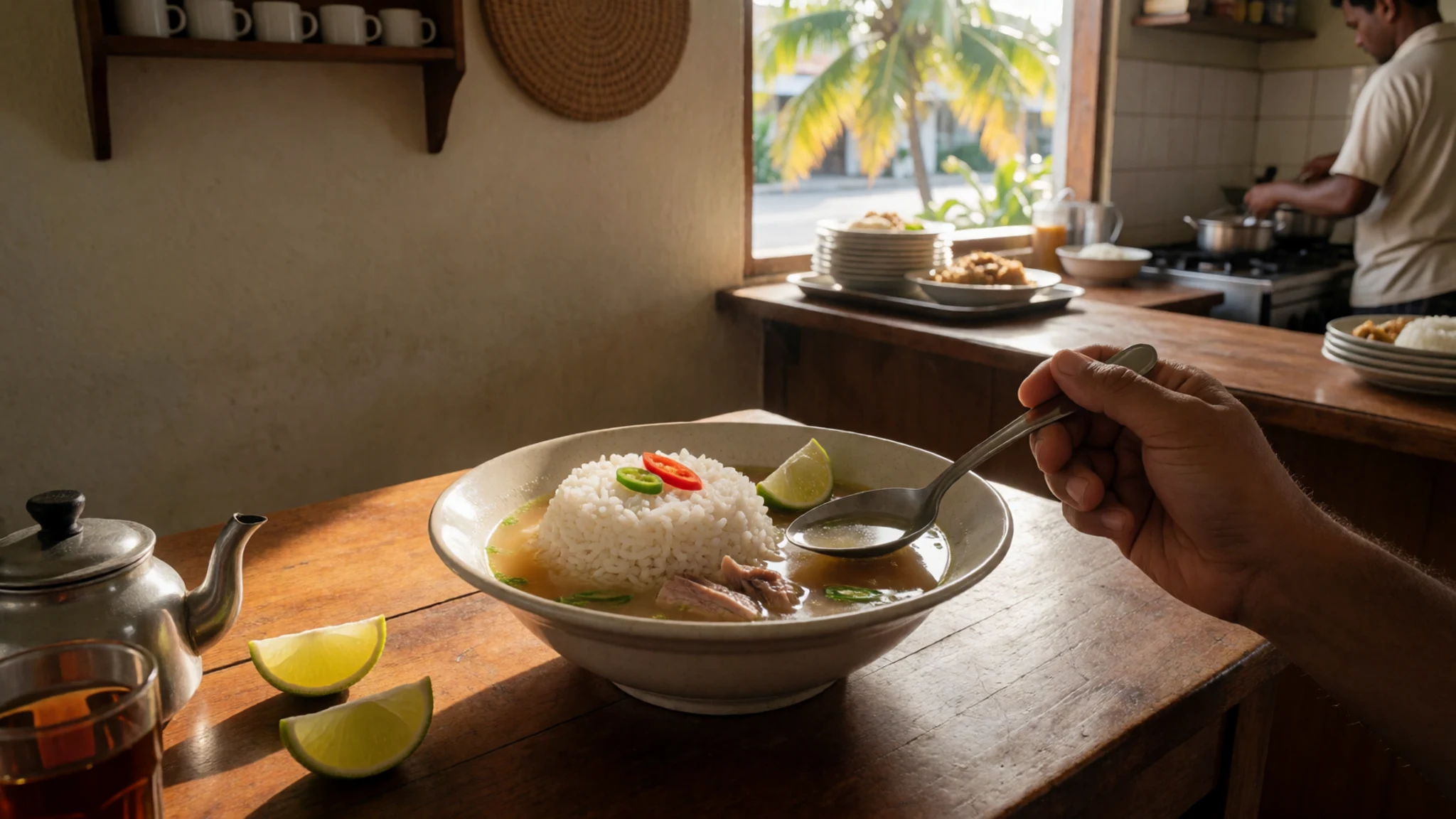
- Mas huni — guesthouse breakfasts and morning tea shops
Mas huni is chopped smoked tuna mixed with grated coconut, onion, lime and chilli, eaten on Fuvahmulah with roshi at breakfast. The tuna is the preserved fish of the islands, and the coconut is what makes the plate cooling. Find it at a guesthouse breakfast or a morning tea shop.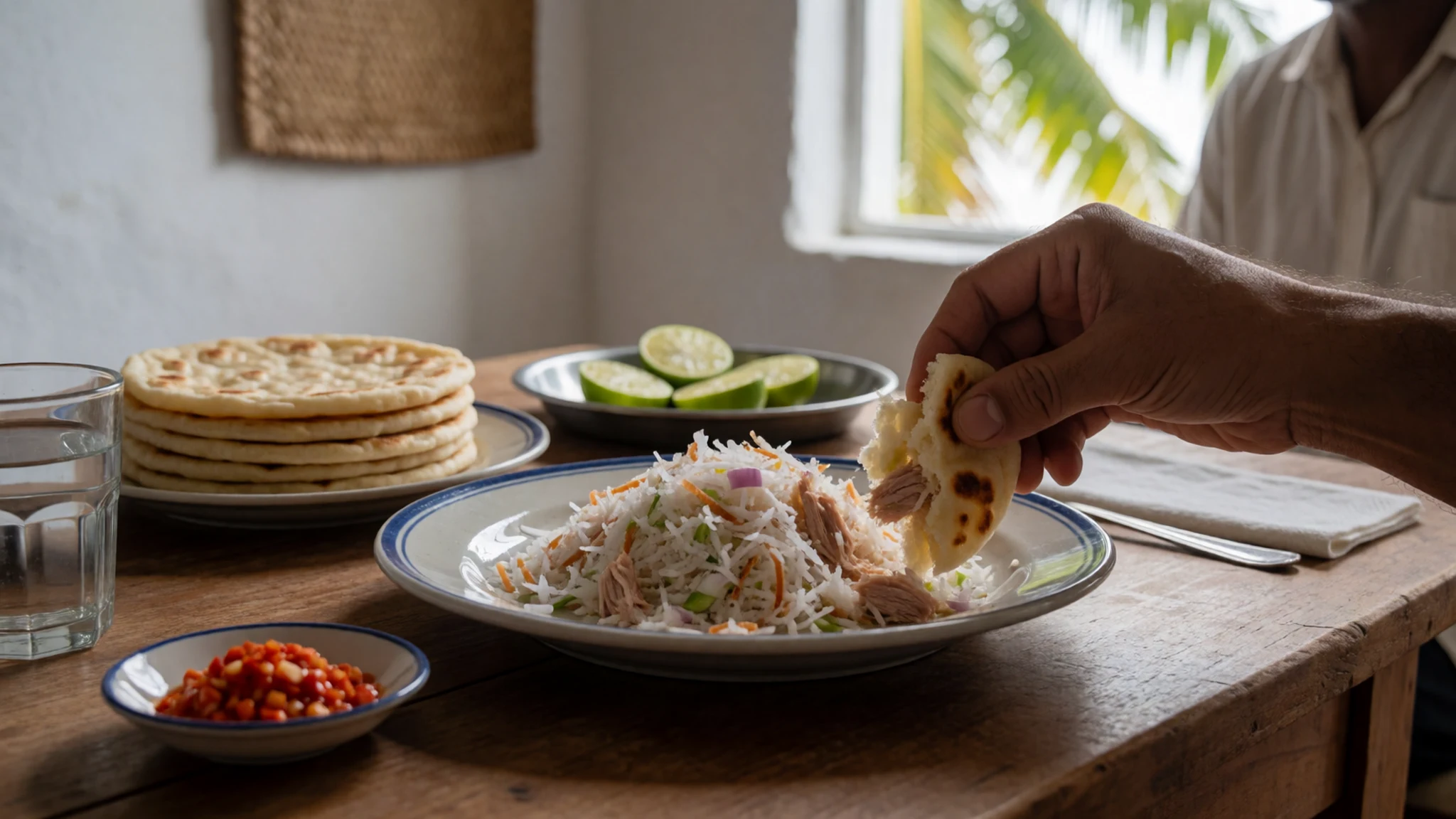
- Roshi — tea shops and guesthouse kitchens
Roshi is the flatbread that arrives with almost every home-style meal on Fuvahmulah, folded and soft, closer to a chapati than to a loaf. Tuna, curry and garudhiya are eaten with pieces torn off it. Tea shops bake it all day. - Fihunu mas — simple eateries near the harbour
Fihunu mas is reef fish grilled over a flame, rubbed with chilli and spices, and it is the smell of an evening on Fuvahmulah. Tuna or another firm fish is typical, served with rice or roshi and a sharp lime. Look for it at simple eateries near the harbour. - Breadfruit and yam — home cooking and guesthouse meals
Breadfruit and yam are the garden foods of Fuvahmulah, boiled or cooked in coconut until soft and eaten with fish or chilli paste. The yam plots along the roads are not decoration; they reach the plate. Guesthouses serve them more often than a menu suggests. - Hedhikaa — island tea shops
Hedhikaa are the short eats of the Maldives: small savouries such as gulha, bajiyaa and keemia, filled with tuna, coconut and spices. On Fuvahmulah they belong to the tea shop, with sweet tea, in the afternoon as much as the morning. Order a small plate and share.
Plan it
Best time. February and March are the most comfortable months on Fuvahmulah, with the lightest rain of the year and days a little under the hottest. June to November is the wetter southwest monsoon, hottest in June and wettest in October and November, with a heavier sea that can upset boat trips and beach days. Heat and humidity barely let up in either season.
How long. 2–3
Getting there. Fly into Velana International Airport at Malé, then take a domestic flight to Fuvahmulah's own airfield. There is no resort speedboat; the last leg is a short ride on the island roads, usually arranged with the guesthouse. In rough monsoon weather, confirm the flight on the day.
Budget. mid
Tips
- Book the guesthouse and the domestic flight together; dry-season seats and rooms fill early.
- Ask the guesthouse which licensed boat runs shark and dive trips, and accept a cancellation if the sea is up.
- Carry cash in rufiyaa for tea shops, short eats and small boats.
- Use a bicycle or a scooter for the lakes and the far shore, and walk the lanes in the early morning.
- Keep a covered outfit in your day bag so a beach hour can end in a village without a dash back.
- Do not plan on buying alcohol; this is a local island, not a resort.
Etiquette
- Cover shoulders and knees in town, and change out of swimwear before you leave the beach.
- Remove shoes at mosques and homes, and do not enter a ziyarai in beach clothes.
- Ask before photographing people.
- Use the right hand to eat and to pass food.
- Stay quiet near a mosque during prayer.
Nearby
Sources
- Wikidata (CC0)
- Wikipedia (CC BY-SA 4.0)
- Wikivoyage (CC BY-SA 4.0)
Wildlife
- Common moorhen (animal)
Remember the common moorhen as the waterhen, a member of the rail family of birds that makes its home among leafy, watery places. In Fuvahmulah, you can look for it inland, around the lakes where waterbirds gather. Ask a local guide when it is most easily seen. Watch from afar, speak softly and keep still, so it feels safe. Never offer it food; let it forage naturally, as wild birds should. - Common moorhen (bird)
Remember the common moorhen as the waterhen, a member of the rail family of birds that makes its home among leafy, watery places. In Fuvahmulah, you can look for it inland, around the lakes where waterbirds gather. Ask a local guide when it is most easily seen. Watch from afar, speak softly and keep still, so it feels safe. Never offer it food; let it forage naturally, as wild birds should.