Felidhu Atoll
Felidhu Atoll, Maldives
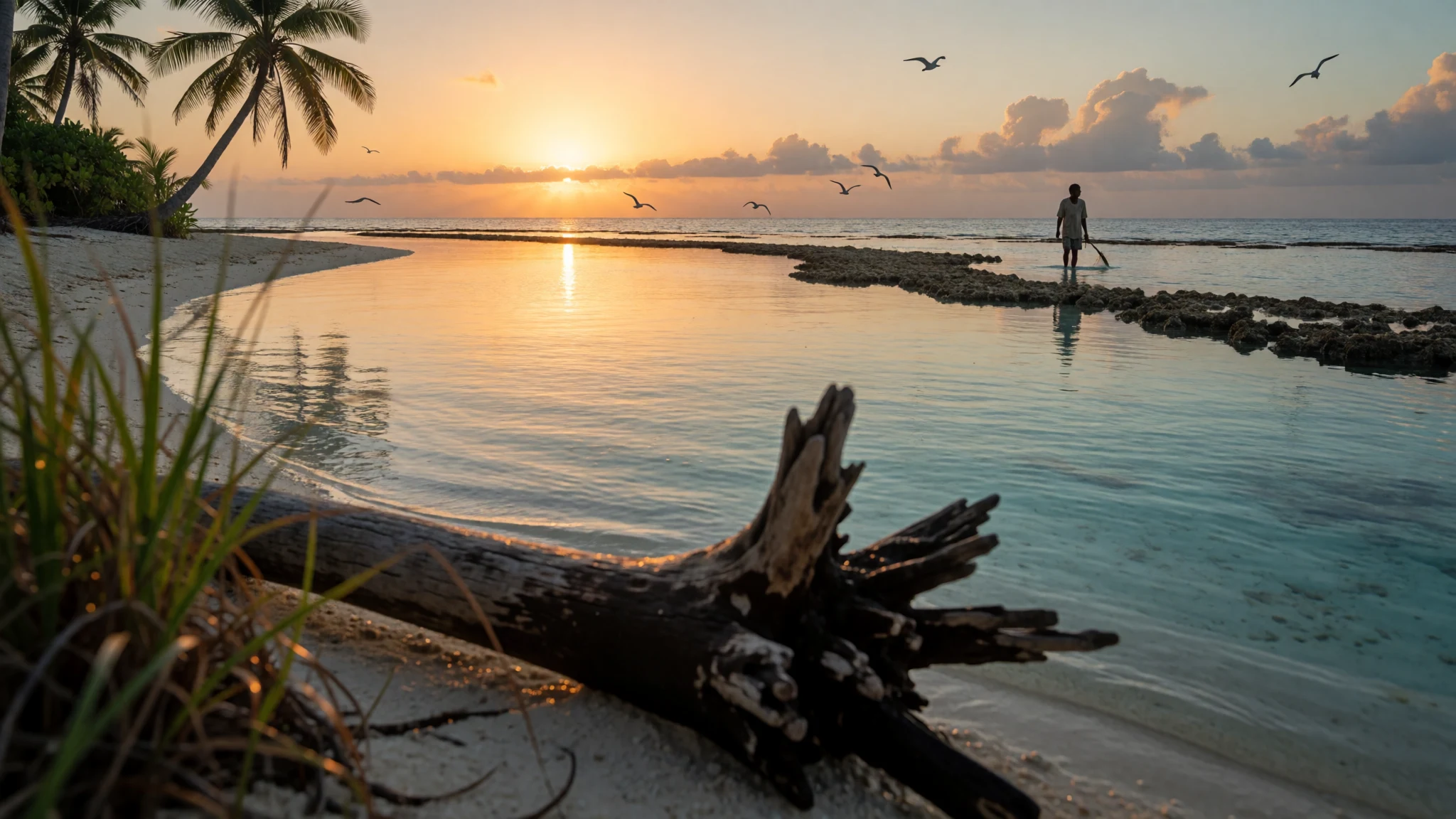
Felidhu Atoll offers a quiet reef lagoon an hour by speedboat from Malé, with a few small islands and no crowds.
The place
Felidhu Atoll (ފެލިދެ އަތޮޅު) lies in the eastern chain of the Maldives, and most travellers know it by the name of its administrative unit, Vaavu. The atoll is a loose diamond of coral reef enclosing a lagoon, with small islands strung along its rim and a long arm of reef reaching out to the east. Nearly every island of the group sits on this diamond. A second natural atoll, Vattaru, is counted in the same administrative unit; it has a single island and no residents, and very few boats call there.
Reaching Felidhu Atoll is simple by Maldivian standards. Malé is about 64 km away, roughly an hour by speedboat or three hours by traditional dhoni. That short hop makes a week-long trip realistic, yet the atoll feels far calmer than the islands near the capital. Only a handful of islands have people living on them, with Keyodhoo, Fulidhoo, Felidhoo, Thinadhoo and Rakeedhoo the usual names. The rest are empty or have been turned into resorts.
A word of honesty for anyone browsing this under waterfalls and lakes: there are none here. Water means lagoon, reef channel and open ocean. The interest lies in the passes between reefs, the pale sandbanks, sunsets from a dhoni deck, and the odd experience of standing on an island where nothing rises above the coconut palms. The heat is constant, shade is limited, and the sun is stronger than it looks, especially when it is bouncing off white sand and water.
Its story
Felidhu Atoll has a history that is partly defined by what has not turned up. Buddhist-era remains have been found on some other atolls of the Maldives, but nothing from that period has been recorded here. What is known comes from the long centuries of Islamic Maldivian life that followed: fishing for tuna, gathering coconuts, and moving between islands by dhoni, the wooden boat that still carries people and cargo today.
The name Vaavu now covers both Felidhu and the uninhabited Vattaru. The eastern end of the atoll is remote even by local standards. The great reef of Foththeyo runs out that way, and the nearest inhabited island, Keyodhoo, is about 27 km from it. Fotteyo Muli, close to the island of Foththeyo-bodufushi, marks the easternmost point of the whole country, which gives the area a faint end-of-the-map feeling.
Tourism arrived late and in small doses. As of 2017 the atoll had two resorts with 434 beds between them, a modest figure for the Maldives. Divers were among the first to notice the reef channels, where tidal currents pull fish and larger animals through narrow gaps. More recently, guesthouses on local islands have let visitors see everyday island life rather than only a resort. The low islands also sit only slightly above the sea, a fact that local people and visitors both tend to mention sooner or later.
What to see
- The diamond lagoon — The lagoon and rim reef
Felidhu Atoll is best understood from the water. A day on a dhoni or speedboat shows the diamond shape of the reef, the colour change from pale lagoon to deep blue outside it, and the small islands along the rim. Satellite images give the same pattern in a single glance.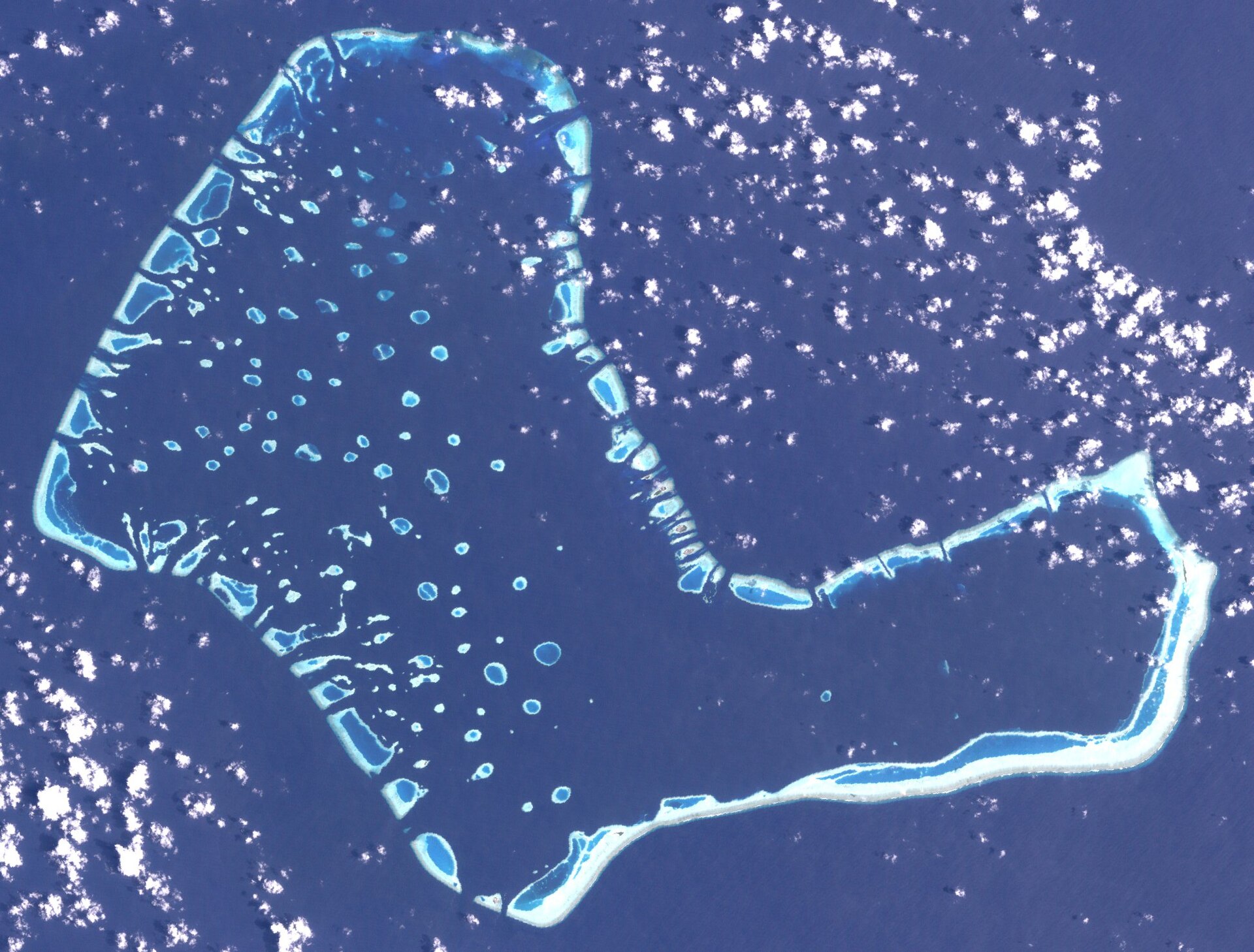
- Fotteyo Kandu and the eastern reef — Eastern edge of the atoll, near Rakeedhoo
The reef passes on the eastern side are the atoll's best-known dive sites, where currents sweep through channels and bring in fish. They suit experienced divers with a licensed operator. Conditions change with tide and season, so go with local guides and let them choose the dive. - Fulidhoo — Northern part of the atoll
Fulidhoo is a small inhabited island, easy to cross on foot in a short time. Sandy lanes, boat building by the shore and children playing in the afternoon give a gentle picture of island life. Guesthouses here let visitors stay among residents instead of on a resort. - Keyodhoo — Eastern side of the lagoon
Keyodhoo is the last inhabited island before the long run of empty reef towards the far east. A walk through the village shows the mosque, the school and the fishing boats pulled up on the beach. It also makes a useful sense of how remote the outer atoll is. - Sandbank and sunset trips — Lagoon sandbanks and reef flats
Boat operators on the local islands run trips to uninhabited sandbanks and quiet reef edges. A typical outing combines snorkelling, a stop on a patch of sand with no shade, and a return as the sun lowers. Take water, a hat and a long-sleeved swim top.
Culture
Felidhu Atoll is part of a Muslim country, and island life revolves around the mosque, the school and the sea. The language is Dhivehi, and the call to prayer marks the day on every inhabited island. Friday is the weekly day of rest, so some island shops and services open late or close for part of it. Fishing, especially for tuna, remains the thread that ties households together.
Music and drumming are part of island celebrations. Bodu beru, a group performance with large drums and rising tempo, is the best-known form, and it appears at local festivals and sometimes at resorts. Tea shops serve small fried snacks in the late afternoon, and people gather there to talk after work. Many families have members working in resorts or in Malé, so the pace of village life shifts with transfer boats and holidays.
Resorts and local islands run under different rules. Alcohol is served on resort islands but not on inhabited ones, and the clothing norms differ too. A visit to a local island is a visit to someone's home village, and the people who live there are generous with time if guests are respectful. Visitors who stay in guesthouses will notice that days follow the sun and prayer times more than the clock. On a local island, cover your shoulders and knees except on the marked bikini beach, and ask before photographing anyone.
What to wear
Felidhu Atoll shares the traditional dress of the wider Maldives. Women wear the libaas, a long gown with a embroidered neckline, usually in dark red, green or black, and worked in thread that catches the light. It appears at weddings, Eid and other celebrations, and at some official occasions. Men wear the feyli, a woven cotton sarong with bold stripes, often with a plain shirt. The cloth is traditionally cotton, and the weave and colours show the maker's skill.
Everyday clothes are much simpler. On local islands, women often wear loose long dresses or a skirt and tunic, and many cover their hair with a scarf. Men favour shirts and sarongs or long shorts, and children wear school uniforms on weekdays. Fishing crews dress for the sun and salt, in light long sleeves and caps. Resorts are more relaxed, and swimwear is normal there.
Visitors should pack for heat and sun first, and for modesty second. Lightweight cotton or linen that covers the shoulders and knees works on local islands, along with a sun hat and a swim top with long sleeves for snorkelling. Reef shoes protect feet on coral rubble and sandbanks, and flip-flops are fine for sandy lanes. A scarf is handy for entering a village at prayer time. Save swimwear for resort islands and the designated tourist beach on a local island.
What to eat
- Mas huni — Guesthouse breakfasts and island cafes
A breakfast of shredded smoked tuna mixed with grated coconut, onion and chilli, eaten with flatbread called roshi. It is dry, fresh and lightly spicy. Look for it at guesthouse breakfasts and at small cafes on the local islands. - Garudhiya — Home-style lunches on local islands
A clear, salty fish broth made from tuna simmered with a little lime, chilli and onion, usually served with rice. It is plain but warming, and it shows how much of the diet leans on tuna. Many families serve it at midday. - Fihunu mas — Island restaurants and guesthouse dinners
Tuna rubbed with chilli, pepper and spices, then grilled over coals until the outside chars. It comes with rice or roshi, and it is often hot enough to surprise visitors. Ask for a milder version if you are unsure. - Bis keemiya — Tea shops on local islands
A crisp pastry filled with cabbage, egg and sometimes tuna, rolled into a triangle or cylinder and fried. It is a common afternoon snack, sold hot and cheap by weight. Eat it with tea while the pastry is still crisp. - Gulha — Tea shops and evening snack stalls
Small round dough balls filled with tuna, onion and chilli, then deep fried. They are salty and slightly spicy, and they are typical of the snack plates known as short eats. A pot of sweet tea makes a good partner.
Plan it
Best time. December to April brings the drier northeast monsoon, with calmer seas, more sunshine and clearer water for snorkelling. May to November is wetter and windier, with rougher boat crossings and more cloud, though showers usually pass quickly and prices tend to be lower.
How long. 4–7
Getting there. Fly to Velana International Airport at Malé, then take a speedboat to the atoll, about an hour for the 64 km, or a slower dhoni, about three hours. Resorts and guesthouses usually arrange transfers, so book the boat before you land and check the schedule with them.
Budget. high
Tips
- Book transfers and guesthouses well ahead for December to April, when boat seats and rooms fill
- Carry cash for small island shops, since card machines are rare outside resorts
- Bring reef-safe sun cream, a hat and a long-sleeved swim top, because shade on sandbanks is scarce
- Bring a refillable bottle and ask your host about drinking water, since supplies on small islands are limited
- Check weather and sea conditions with your operator before any reef or channel trip
Etiquette
- Dress modestly on inhabited islands and use only the marked tourist beach for swimwear
- Ask permission before photographing residents, especially women and children
- Do not stand on coral or take shells or coral away
Nearby
Sources
- Wikidata Q5265227 (CC0)
- Wikipedia: Felidhu Atoll (rev 1376954754) (CC BY-SA 4.0)
- Vaavu Atoll.png (CC BY 3.0)
- Felidhu Atoll (Landsat), NASA (Public domain)
- Vaavu Atoll, Maldives (11), goldpicasa (CC BY 3.0)
- Vaavu Atoll, Maldives (23), goldpicasa (CC BY 3.0)
- Vaavu Atoll, Maldives (26), goldpicasa (CC BY 3.0)
- Vaavu Atoll, Maldives (27), goldpicasa (CC BY 3.0)
- Vaavu Atoll, Maldives (28), goldpicasa (CC BY 3.0)
- Vaavu Atoll, Maldives (29), goldpicasa (CC BY 3.0)
- Wikivoyage (CC BY-SA 4.0)


