Rasdhoo
Rasdhoo, Maldives
Rasdhoo is a small, lived-in Maldivian island, with guesthouse stays, reef snorkelling and dive trips a short walk from the ferry dock.
The place
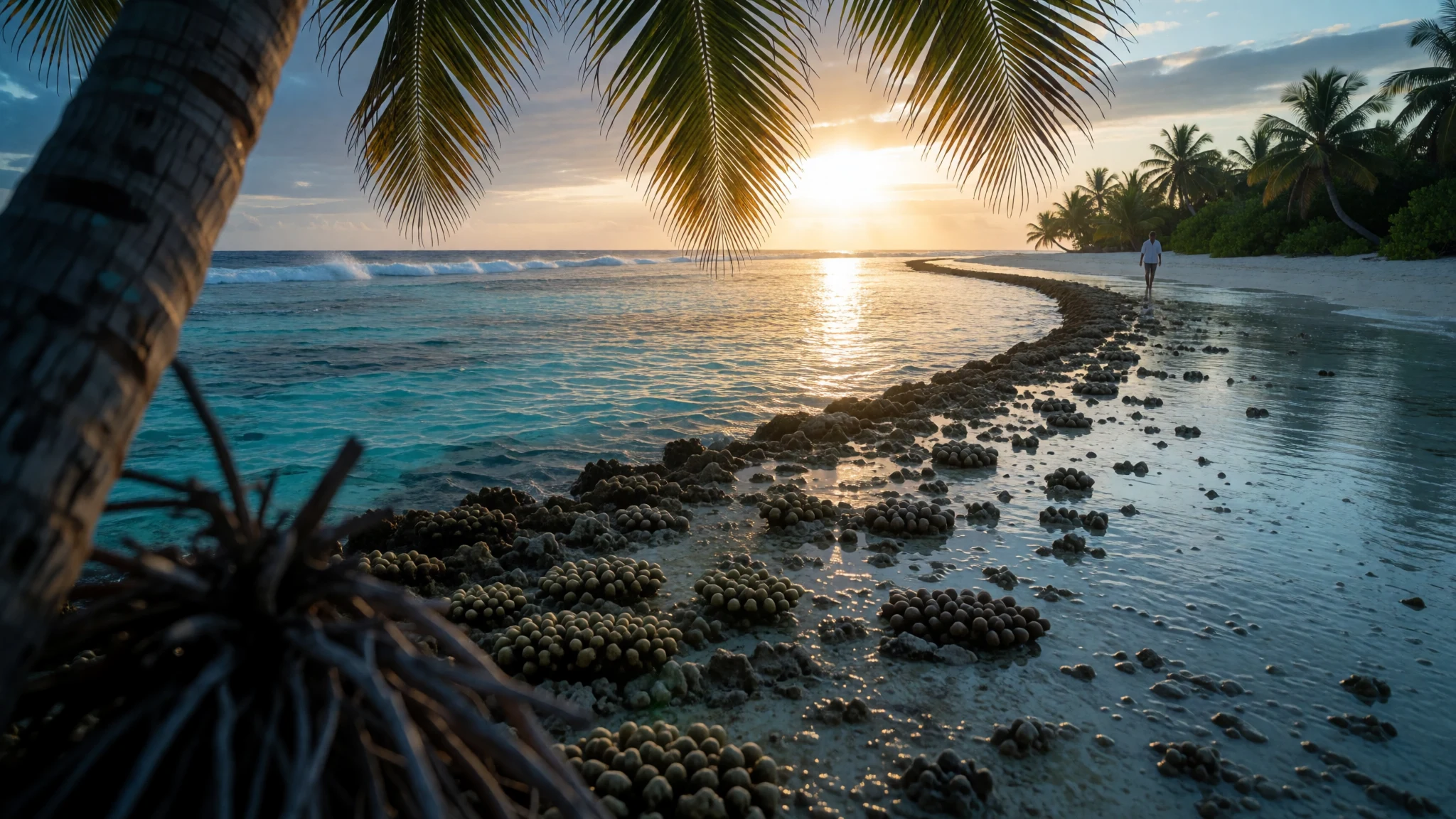
Rasdhoo is an inhabited island in the Maldives and the administrative capital of Alif Alif Atoll. It lies west of Malé across open Indian Ocean water. It is the single settled island on its own small ring of reef, known as Rasdhoo or Ross Atoll, which sits just off the north-eastern corner of the larger Ari Atoll. On a map it is a speck: a few sandy lanes, a harbour, a mosque, a scatter of guesthouses and dive shops, and then reef and lagoon in every direction. Because the island is close to the equator, the heat is steady all year and the sea stays warm. The seasons are marked by wind and rain rather than by temperature. Rasdhoo is a working community first. Fishing boats share the harbour with ferries and dive boats, and residents go about school, prayer and shop errands between visitors' snorkelling trips. Guesthouses, not private-island resorts, are the usual place to stay, which means meals and conversation happen alongside the people who live here. The sand is modest. The beach set aside for swimwear is very small, and much of the appeal lies in the water: reef edges, channels, sandbanks and uninhabited islets across the surrounding atoll. Visitors expecting the polished, one-island-one-resort Maldives will find something plainer, more social and far more connected to daily island life.
Its story
Rasdhoo's story is largely that of small Maldivian islands in general. For generations, communities across the atolls lived from the sea: fishing for tuna, gathering coconuts, building with coral stone and sailing between neighbouring islands. Rasdhoo carried the Dhivehi name that appears in the brief's script form, ރަސްދޫ, and its position at the edge of a reef ring made it a natural stopping point for boats moving around the northern Ari region. Over time the island took on an official role as the seat of Alif Alif Atoll's administration, which brought government offices, a school and the regular movement of people to and from Malé. The sources here say little about earlier centuries, so the picture is of continuity rather than of dated events: fishing families, a mosque at the heart of the village, and a harbour that decides the rhythm of the day. The more recent change is tourism on inhabited islands. Divers noticed that the reef around Rasdhoo offered close encounters with sharks and rays, and small guesthouses followed, reaching sixteen by 2016. That growth has given residents new work in boats, cafés and dive centres, while also putting pressure on a small island's water, waste and quiet. Visitors arrive in a place still adjusting to that balance.
What to see
- Bikini beach — Edge of the village, seaward side
Rasdhoo's bikini beach is the strip set aside for swimwear, and it is small, so it fills quickly in the afternoon. Snorkellers report seeing rays and reef sharks close in, though sharks tend to swim away when approached. Treat it as a sea-entry point rather than a place for a day of lying out.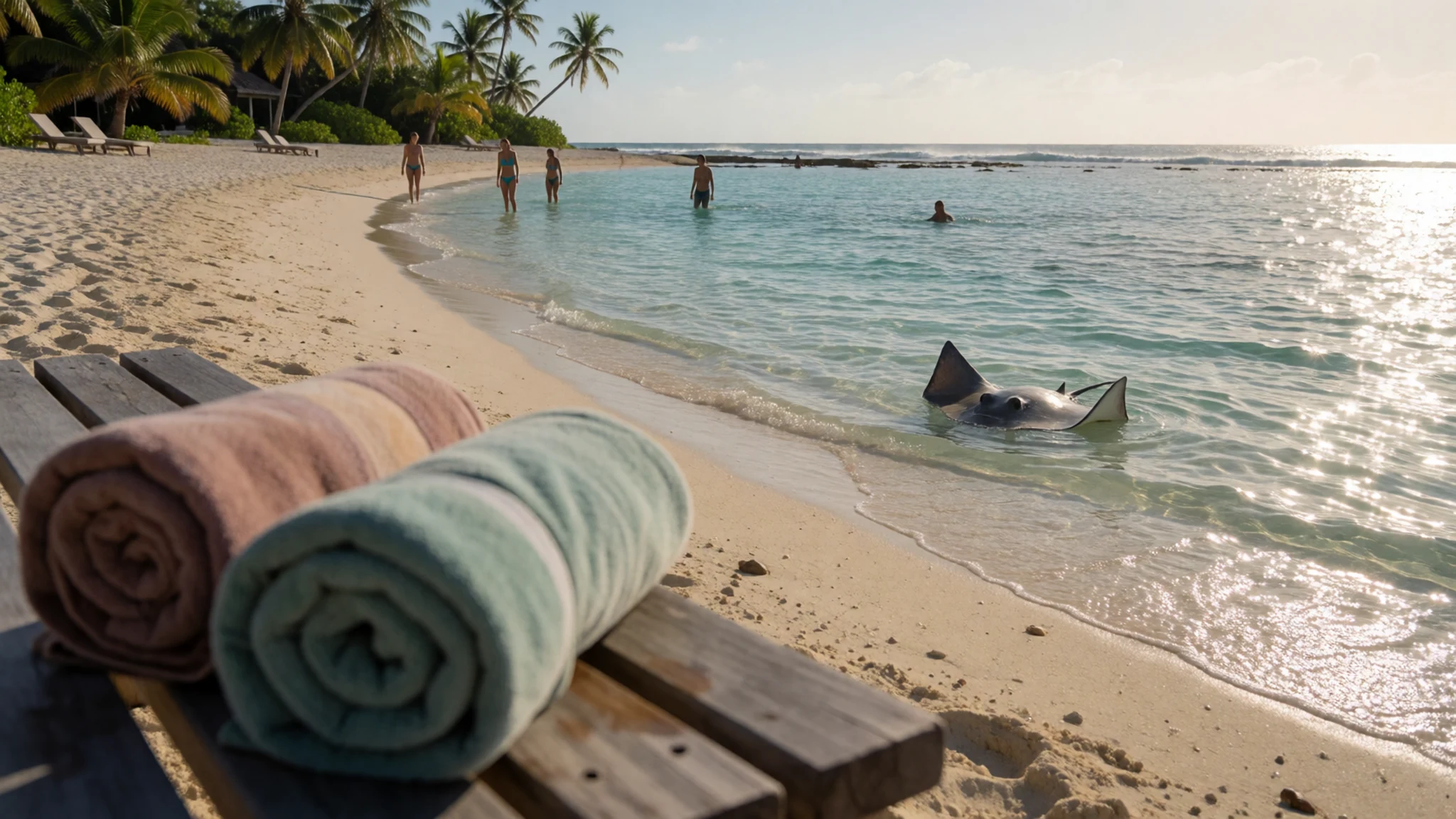
- Masjid Hudha — Village centre near the harbour
Masjid Hudha is the island's mosque, set among the village lanes near the harbour. It is not a sight to tour; its role is as the centre of daily prayer, and the call to prayer shapes the rhythm of the day. Admire it from outside, keep voices low nearby, and ask before entering or photographing.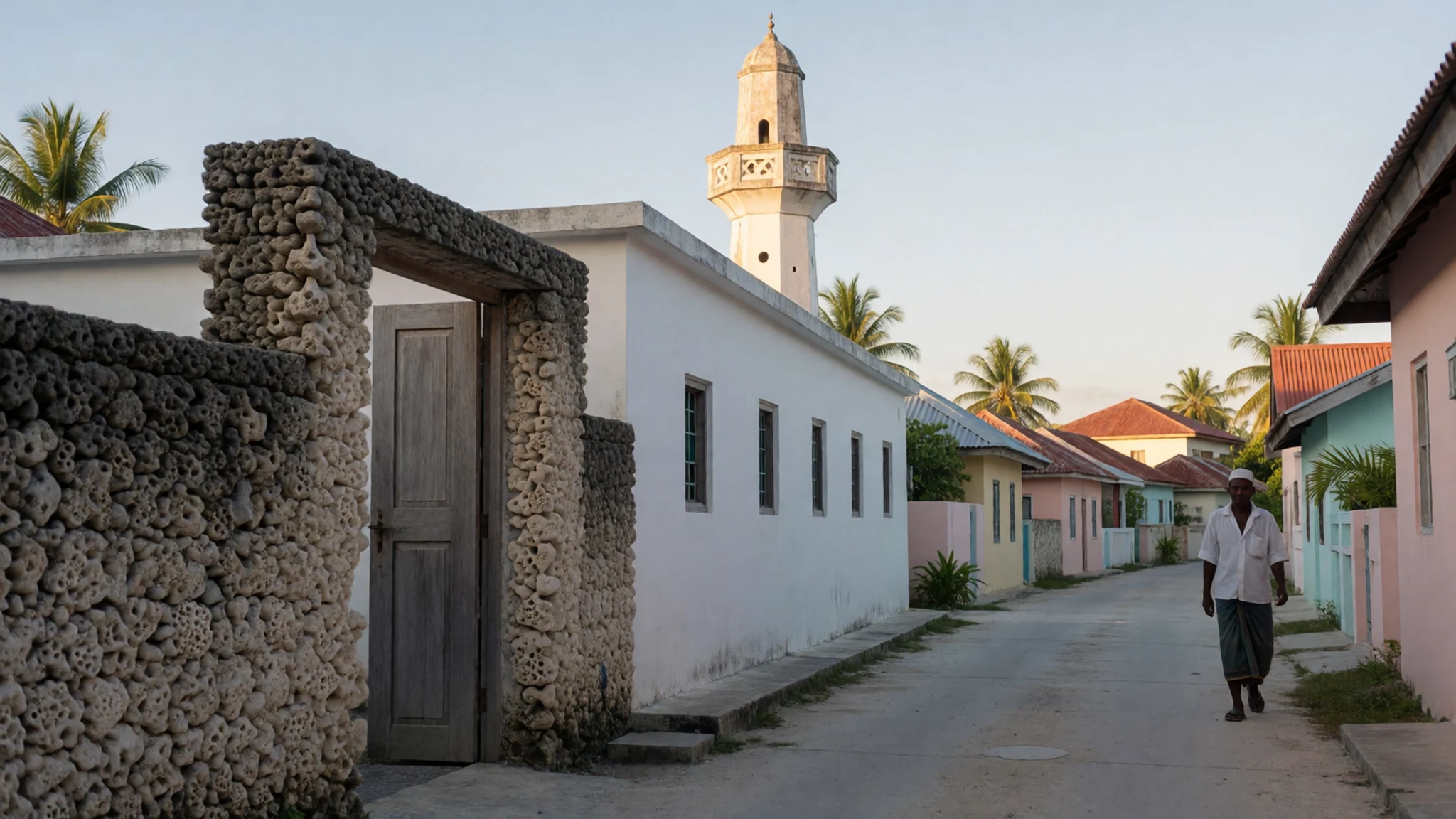
- Picnic Island — East of Rasdhoo, in the atoll lagoon
Picnic Island is a small uninhabited islet in the atoll, reached by boat. Guesthouses can arrange a trip, and local fishermen sometimes take visitors too; agree the fare and the return time before leaving. Bring water, shade and a hat, as there is little shelter, and take all rubbish back with you.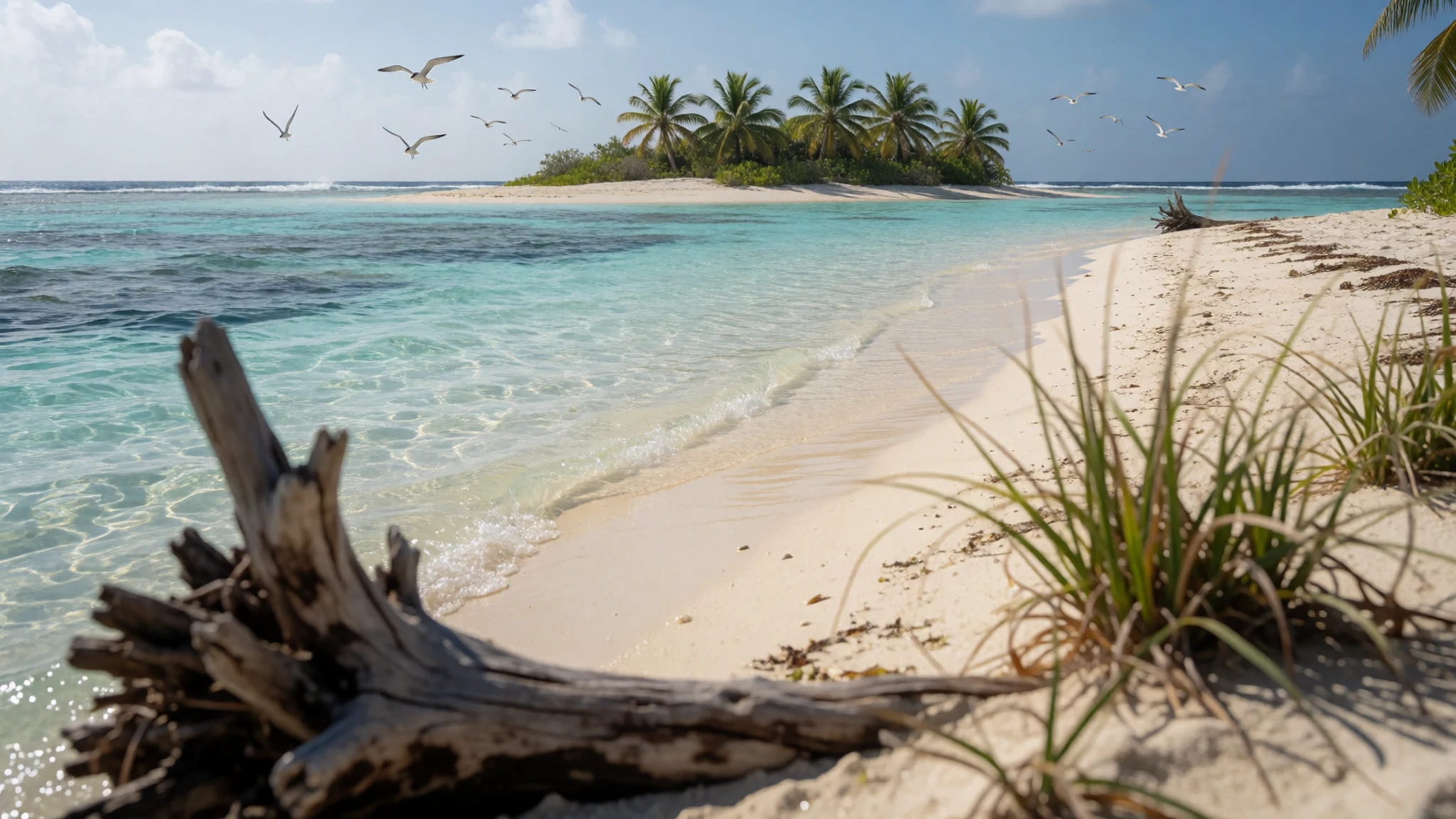
- Diving and snorkelling — Harbour-side dive centres
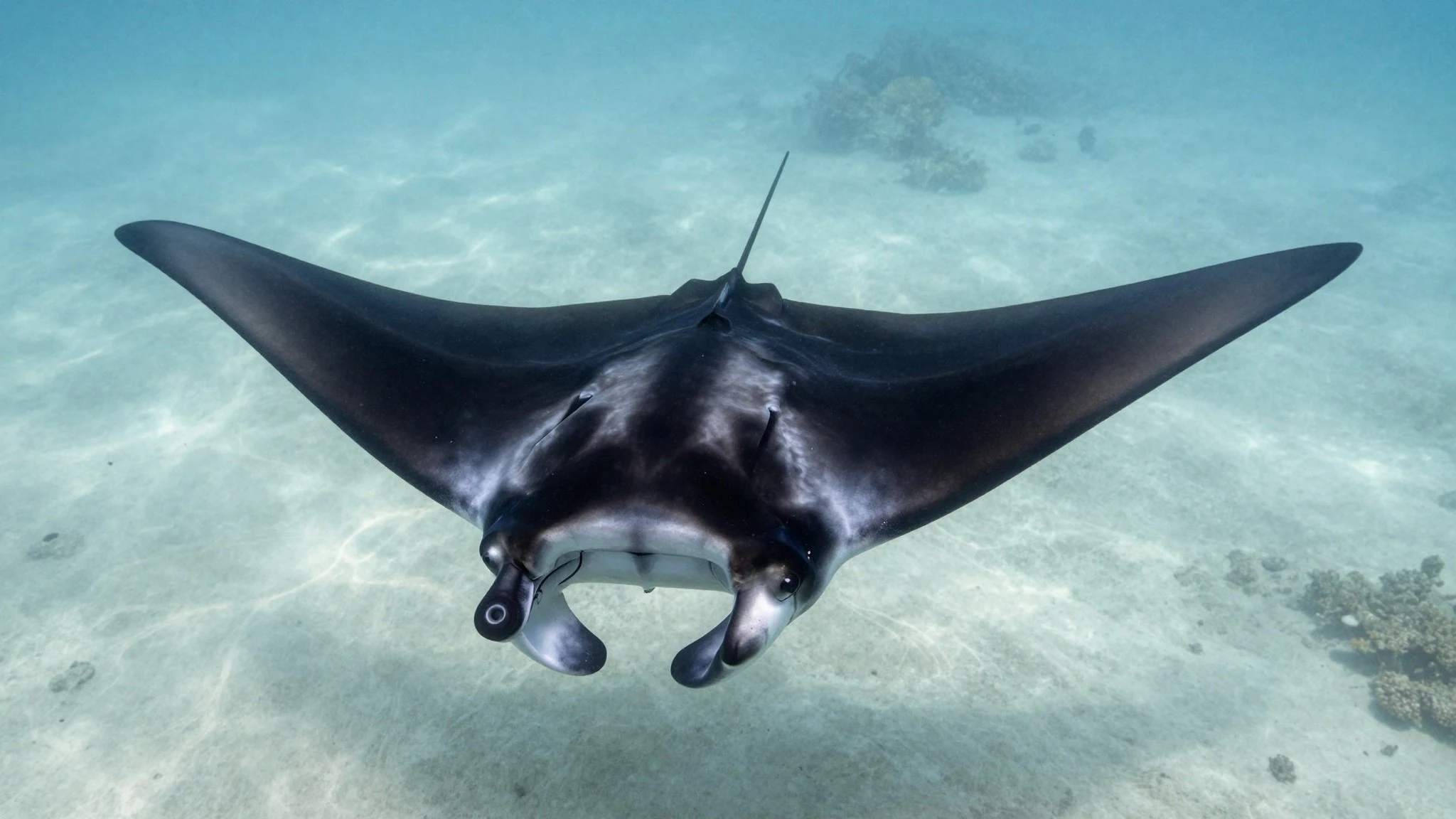
Rasdhoo has several dive centres near the harbour, offering courses, guided dives and snorkel outings. Sharks and manta rays are among the animals people come for, and some can be spotted from the shore. Check the operator's certification, group size and safety briefing before booking, and ask what conditions to expect.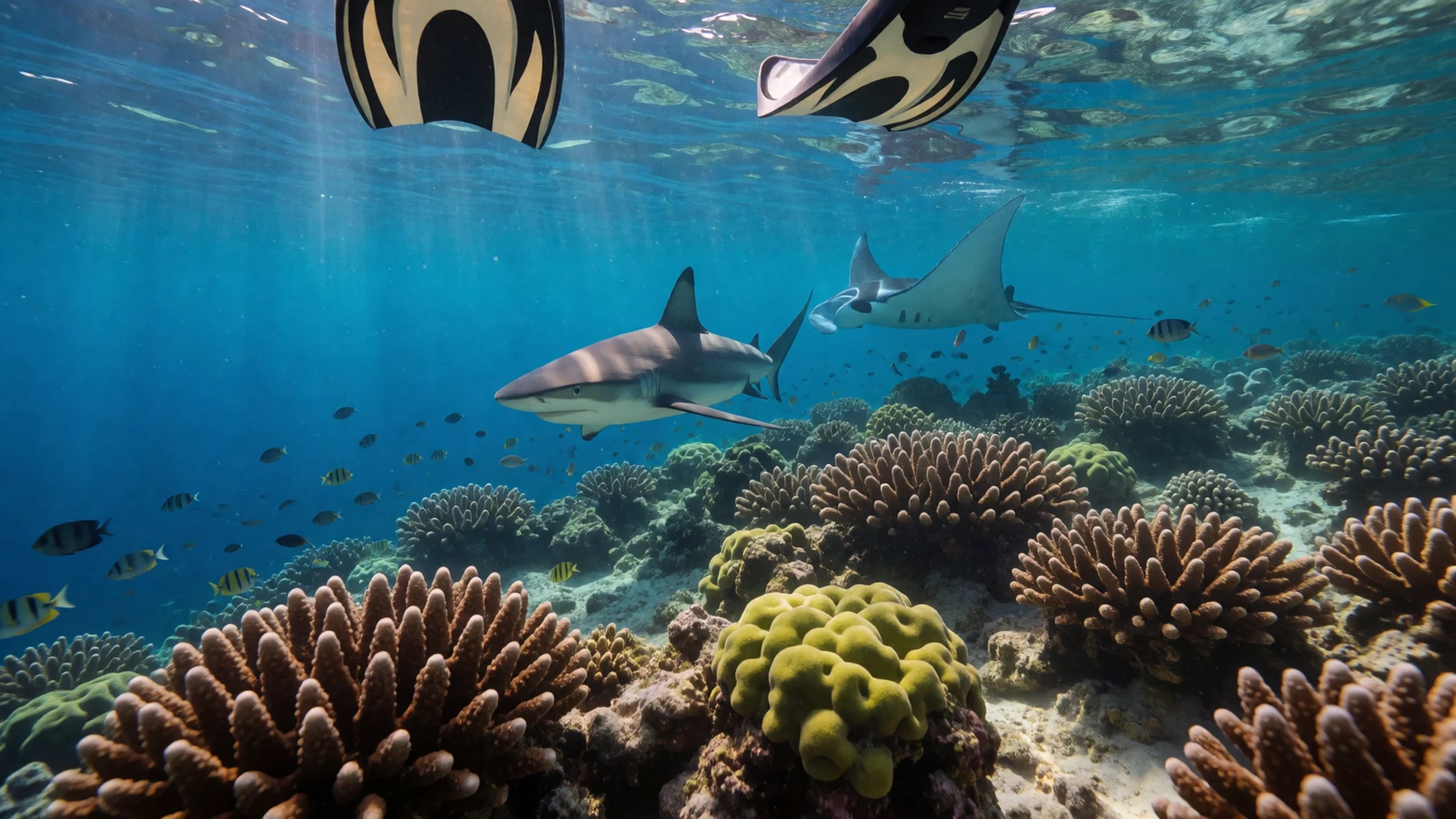
- The atoll lagoon — Ross Atoll, around the island
The reef ring of Ross Atoll encloses the water around Rasdhoo, with pale sand, shallow lagoon and darker channels where the reef drops away. A boat trip is the clearest way to understand its shape. From the air it reads as a small green-blue necklace beside the larger Ari Atoll.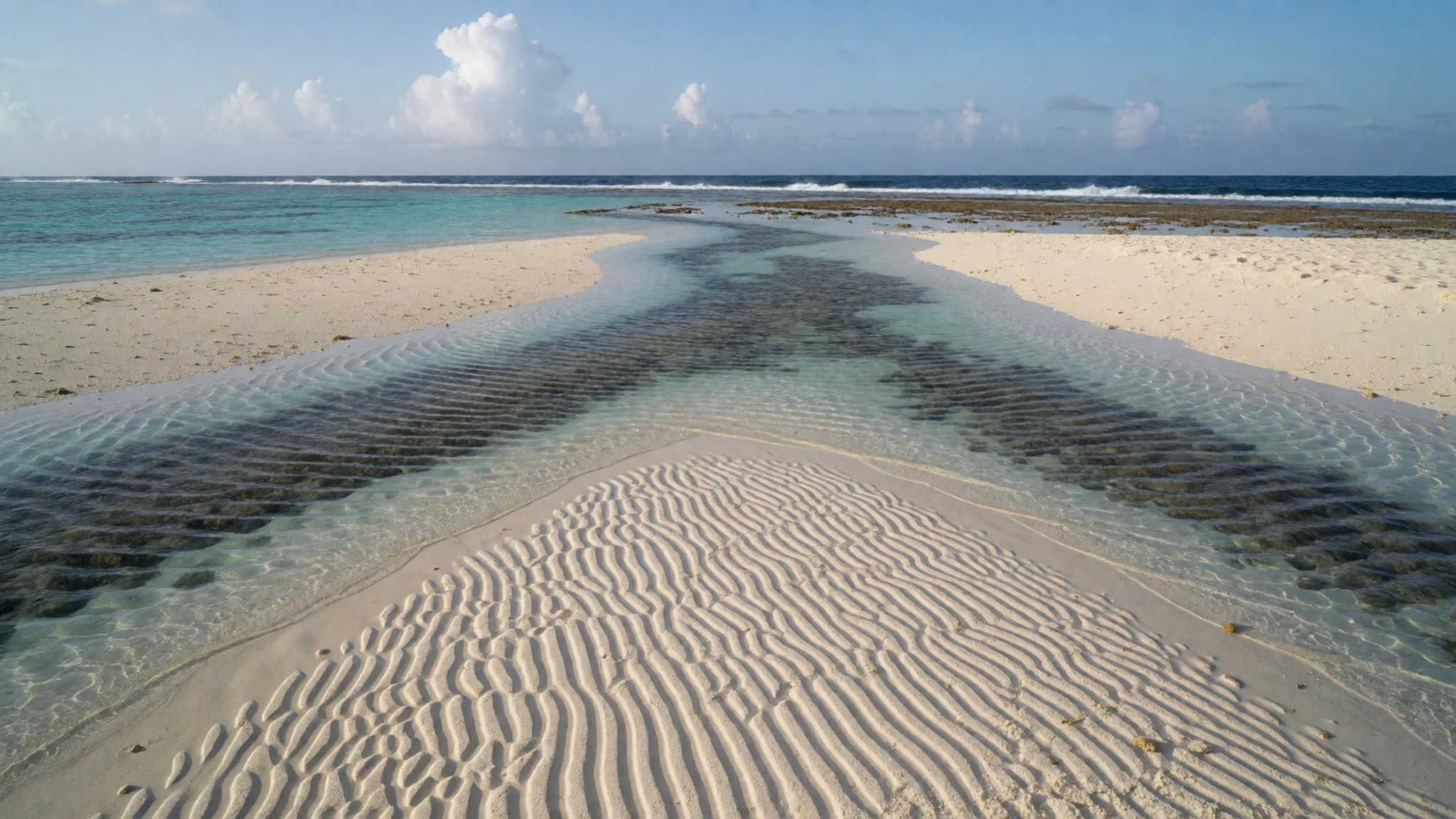
Culture
Rasdhoo is a Muslim community, like the rest of the Maldives, and its daily life follows the prayer calendar. The call to prayer sounds across the island several times a day, shops may close briefly around prayer times, and Friday is quieter than other days, with fewer services and some boats not running. Family and neighbourhood ties are close, and visitors staying in guesthouses are often treated as guests of the household rather than as customers, with meals shared, questions asked and plans made over tea. Alcohol is not sold on inhabited islands, and the atmosphere is calm in the evenings, with people sitting outside, playing football or chatting by the harbour. Music and dance in the Maldives include drumming traditions known as bodu beru, usually seen at festivals and celebrations rather than as nightly shows, so it is worth asking at a guesthouse whether anything is planned. Rubbish and water are real concerns on a small island, so reusable bottles and taking waste back to the guesthouse make a practical difference. Photographing people, especially women and children, should always be done with permission. Outside the designated beach, keep shoulders and knees covered while walking through Rasdhoo village, and ask before photographing anyone or entering the mosque.
What to wear
Rasdhoo shares the traditional dress of the Maldives, which is now mostly kept for festivals, weddings and national occasions. Women's formal dress is the libaas, a long, loose gown, often in deep colours, with a neckline worked in fine thread embroidery known as kasabu, traditionally in gold or silver-coloured thread. Men wear the feyli, a sarong woven with narrow bands of colour and usually of cotton, with a white shirt. Handloom cotton and woven mats are part of the island craft tradition. In everyday life on Rasdhoo, people dress for heat and modesty: cotton shirts, long skirts or trousers, headscarves for many women, school uniforms on weekdays, and sandals or flip-flops. Fishermen and boat crews wear shorts or light trousers and work shirts. Visitors should pack loose cotton or linen that covers shoulders and knees for walking through the village, since swimwear is for the beach and boats only. A light shirt or sarong helps in the sun and for visiting any community space. Bring a rash vest, a wide-brimmed hat, reef-safe sunscreen, and sandals that can get wet. Reef shoes are useful for entering the water from rocky or coral-strewn spots. Evenings are warm, so extra layers are rarely needed except against sea-spray on night boat rides.
What to eat
- Mas huni — Guesthouse breakfast tables
A breakfast mix of shredded smoked tuna, grated coconut, onion and chilli, eaten with flatbread (roti). Rasdhoo guesthouses often serve it in the morning, and it is the dish most closely tied to island fishing households.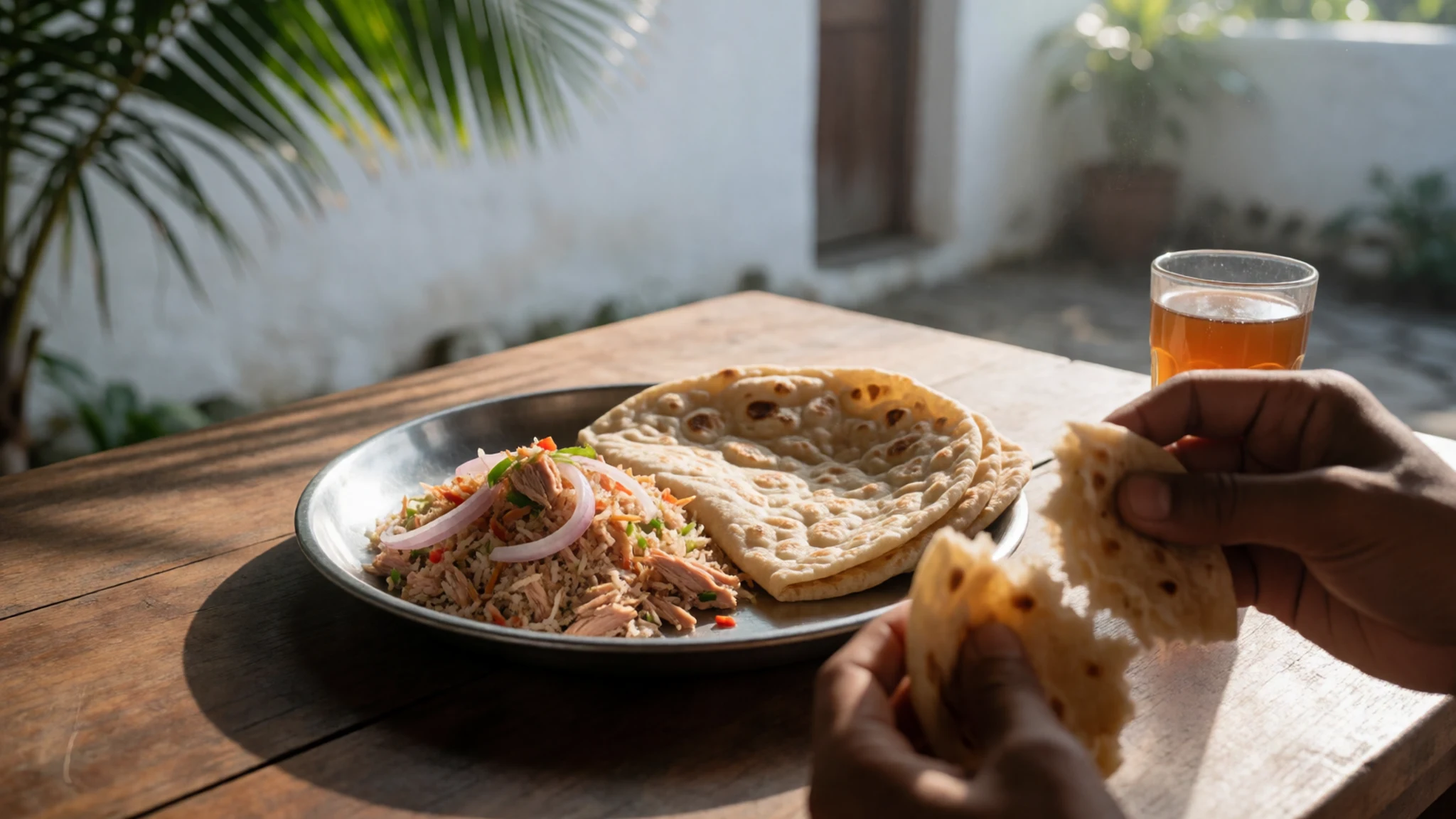
- Garudhiya — Small local restaurants and home-style guesthouse lunches
A clear, light tuna broth, usually served with rice, lime, chilli and sometimes a little coconut. It is a simple everyday meal across the islands, and a good way to taste local fish cooked plainly.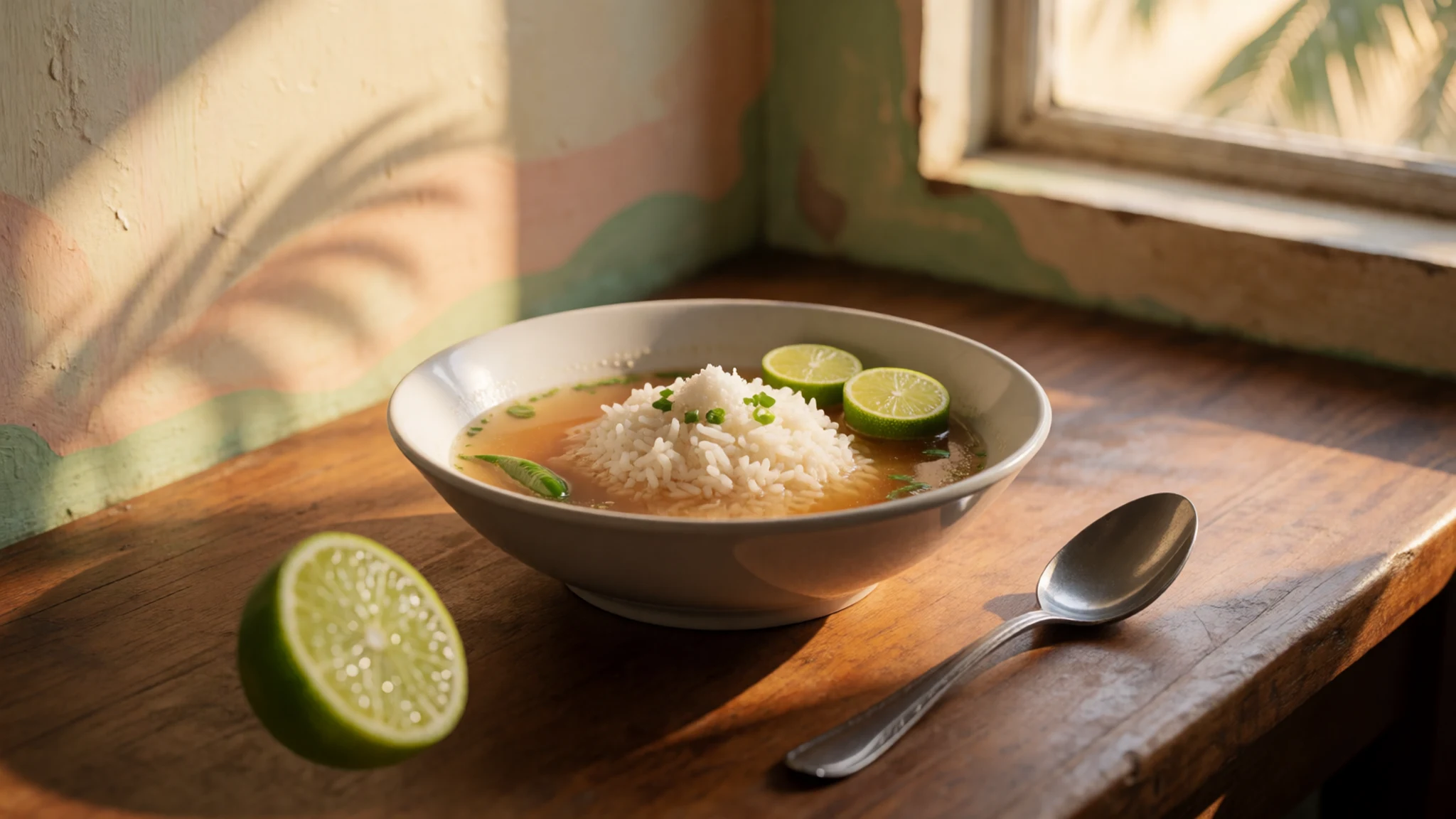
- Fried noodles and rice plates — Cafés near the ferry dock and side-street eateries
Rasdhoo cafés commonly offer fried noodles, rice dishes and sandwiches, with chicken, fish or egg. They are quick, filling and more reliable than ambitious menus. Quality varies by place, so watch what other diners order. - Short eats (hedhikaa) — Tea shops and café counters, mostly afternoon
Small fried or baked snacks, often filled with spiced tuna, onion and coconut, such as fish rolls or fried dumplings. They are typically served with tea in the late afternoon and are cheap to try. - Fresh coconut and sai (tea) — Shaded benches and tea shops near the harbour
Drinking coconut is sold or offered across the island, and sweet milky tea accompanies short eats and conversation. Both are useful in the heat and a gentle way to spend time with local people.
Plan it
Best time. December to April, when the north-east monsoon usually brings drier, sunnier weather and calmer seas. May to November is the wetter south-west monsoon, with more rain and wind, though diving and snorkelling are still possible; check conditions with operators.
How long. 3–4
Getting there. Fly to Velana International Airport at Malé, then take a public ferry or a faster private boat to Rasdhoo; check the ferry operator's website or ask your guesthouse for the current days, times and fares, as schedules change and some days have no service.
Budget. mid
Tips
- Book guesthouses and ferry seats early for December to April, and confirm the boat timetable before travelling
- Carry cash in small notes as card machines are not guaranteed on a small island
- Bring a refillable water bottle and ask your guesthouse about drinking water
- Book dives and boat trips through established operators and ask about group size and safety
- Protect against sun with a hat, long-sleeved rash vest and reef-safe sunscreen
Etiquette
- Cover shoulders and knees in the village and keep swimwear for the beach and boats
- Ask before photographing people, and keep voices low near the mosque at prayer times
- Take rubbish back to your guesthouse, and do not touch or chase reef animals
Nearby
Sources
- Wikidata Q2053471 (CC0)
- Wikipedia: Rasdhoo (rev 1374548572) (CC BY-SA 4.0)
- Wikivoyage: Rasdhoo (rev 5415580) (CC BY-SA 4.0)
- Alif Alif Atoll.jpg, Wikimedia Commons (CC BY 3.0)

Wildlife
- Blacktip reef shark (animal)
The blacktip reef shark is the reef's shy patroller, a sleek shark whose fins look as if they have been dipped in black ink. It favours shallow water, so snorkellers around Rasdhoo may meet one fairly close in. No particular season or hour is certain, so ask your guide what to expect. Keep a respectful distance, move slowly and quietly, and let it swim away, as these sharks usually do when approached. Never feed it.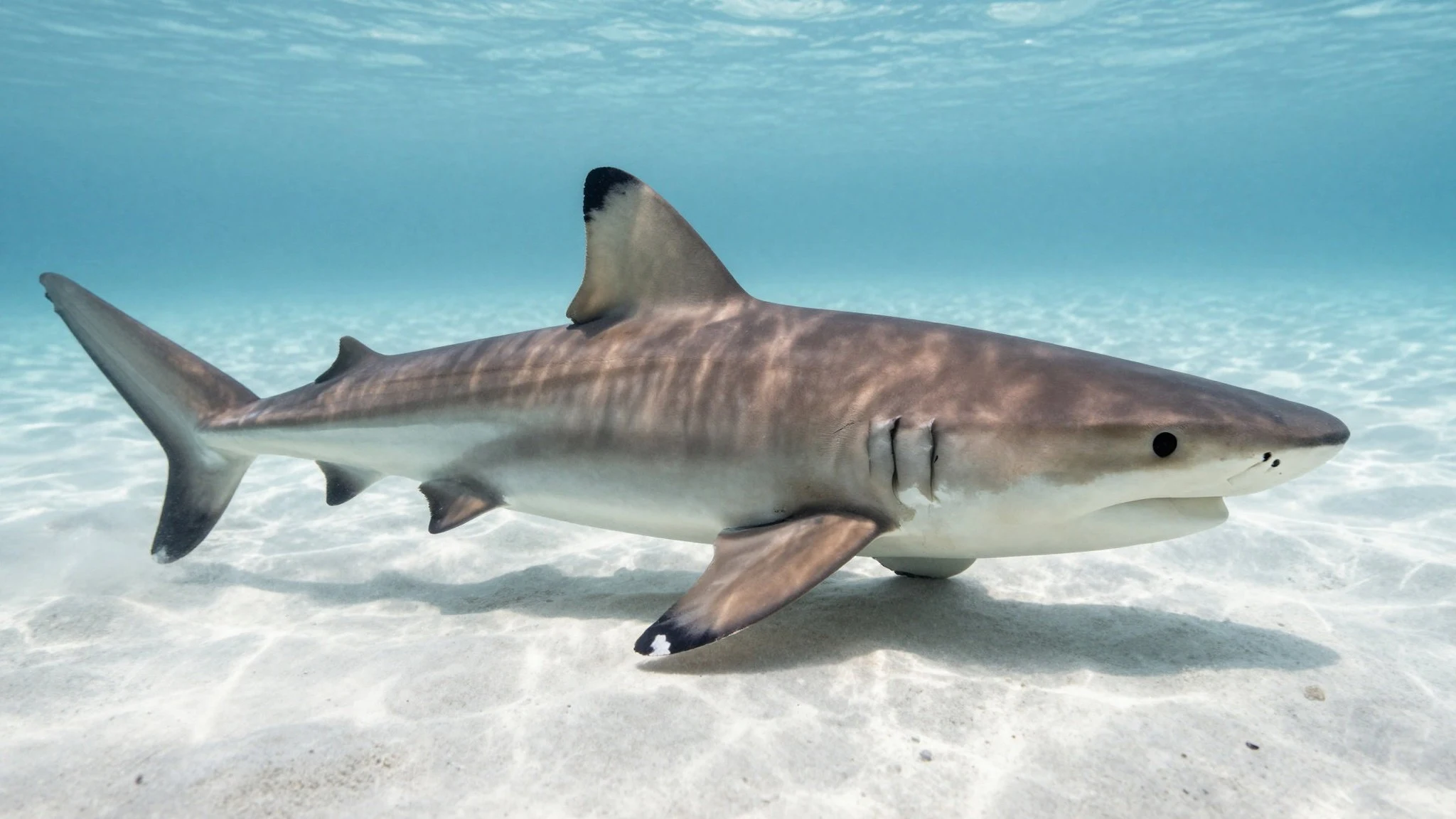
- Reef manta ray (animal)
The reef manta ray is a gentle giant that seems to fly through the sea, one of the largest rays in the world and the third biggest of them all. Many travellers come hoping to see one, and some can be spotted from the shore, so a quiet walk by the water is worthwhile. Ask local guides where and when to look. If you swim nearby, stay back, keep calm and quiet, and never feed it.