Addu
Addu, Maldives
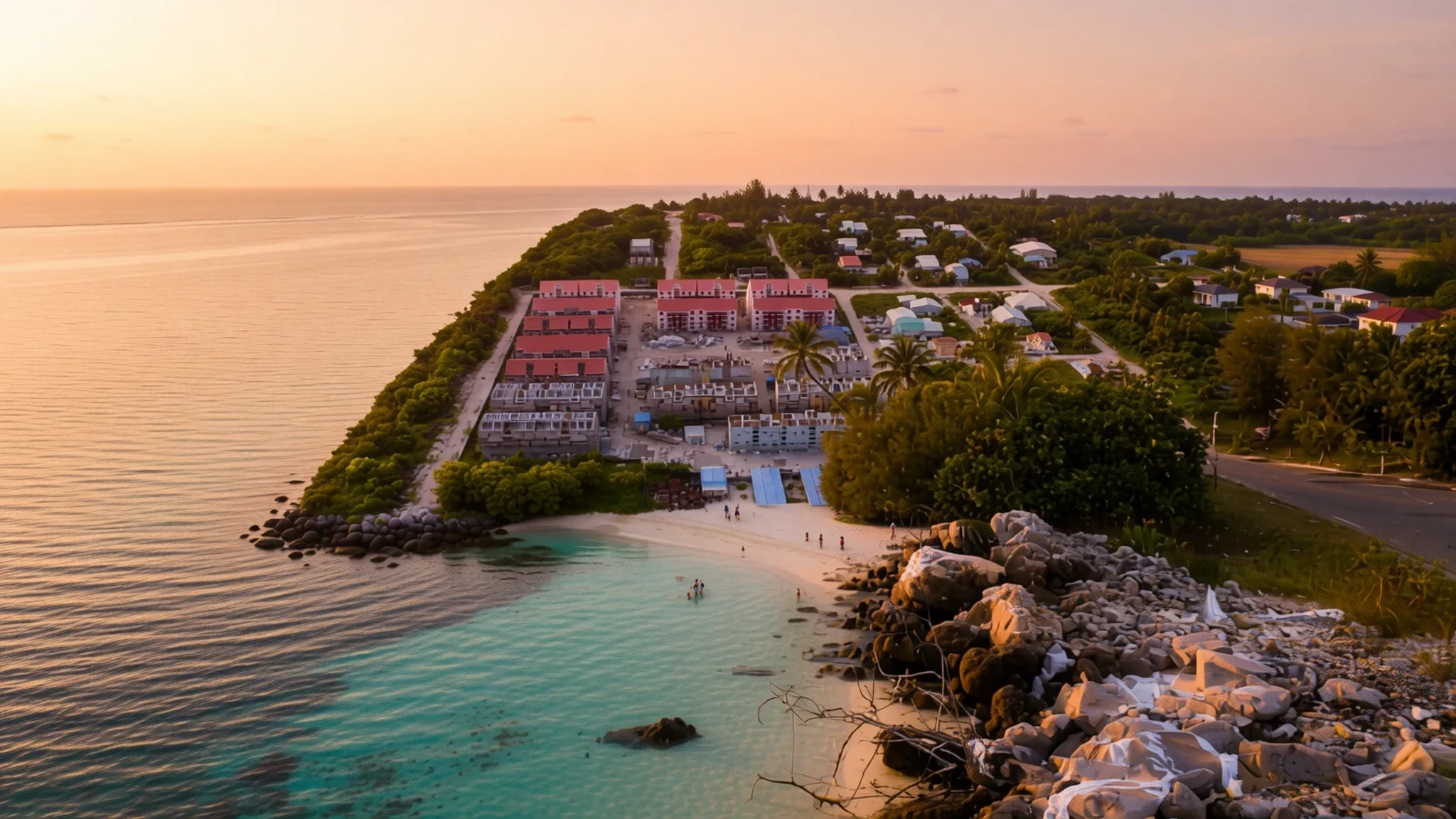
Addu is the Maldives' southern atoll city, where a lagoon, a causeway and a former air base sit just south of the equator.
The place
Addu is a string of coral islands at the southern end of the Maldives, gathered around a wide lagoon and joined for most of their length by a causeway road. The city lies just south of the equator, so the sun passes nearly overhead and the heat stays heavy through the year. There is no hill and no river: reef flat, pale sand and a deep channel are the whole geography, and the soil under the lanes is coral sand.
Hithadhoo is the administrative and commercial heart, a spread of neighbourhoods behind a harbour edge. Along the same linked chain sit Maradhoo, Maradhoo-Feydhoo and Feydhoo, low houses under coconut palms, each still an island in name. Gan, at the far end of the causeway, is shaped by the airfield that was a British base and is now the city's airport. Across a separate stretch of water, Hulhudhoo and Meedhoo make up Hulhumeedhoo. They are reached by boat, and they keep the feel of older island parishes rather than outskirts of the causeway towns.
The lagoon inside the reef is often shallow enough to show its bottom; the outer rim takes the Indian Ocean. Pockets of wetland, including the kilhi, a wetland, beside Hithadhoo, hold mangroves and wading birds within walking distance of houses. Under the southwest monsoon, rain arrives in hard bursts, streets flash white and the lagoon turns cloudy. In the drier months the light is sharper and the water looks clearer.
By Maldivian measure Addu is a city; by continental measure it is a small town strung along a road. Fishing, the airport, public employment and a short row of guesthouses and resorts carry the economy.
Its story
Addu's story is a southern one, lived at a long distance from Malé. The islands grew up on tuna, sailing dhonis and trade across the equator, and the Dhivehi spoken here still marks a person as southern the moment they open their mouth in the capital. Britain's foothold in the central Indian Ocean then put an air base on Gan. The runway and a habit of dealing with foreigners arrived in Addu earlier, and more thickly, than in most Maldivian islands.
Distance turned into a break with the capital at mid-century. Addu and other southern atolls declared the United Suvadive Republic, led by Abdullah Afif of Hithadhoo, who had worked with the British. The republic stood from 1959 to 1963. It depended on the open water between Addu and Malé. When the Maldivian government retook the south, the episode closed. Afif left the Maldives.
What the years left behind was useful. The British runway became the civilian airport at Gan. A causeway road tied Hithadhoo to Gan, so that an airfield, a town and several villages could operate as a single city. In Hithadhoo the Equatorial Convention Centre was built for the 2011 summit of SAARC, a formal hall on a lagoon that had seldom seen official delegations. The story a visitor walks through now is quieter than those chapters: a working atoll city that remembers secession, a foreign base and a summit, and that makes its living between the runway, the reef and the road.
What to see
- The link road — Hithadhoo to Gan
The link road is how Addu became one city. Causeways and a single carriageway join Hithadhoo, Maradhoo, Maradhoo-Feydhoo, Feydhoo and Gan, so a bicycle, a scooter or a slow car can move from town to airfield without a boat. The water on both sides is the point: lagoon on one hand, reef edge on the other, houses and palms in between. Fishermen, school runs and airport transfers all share it.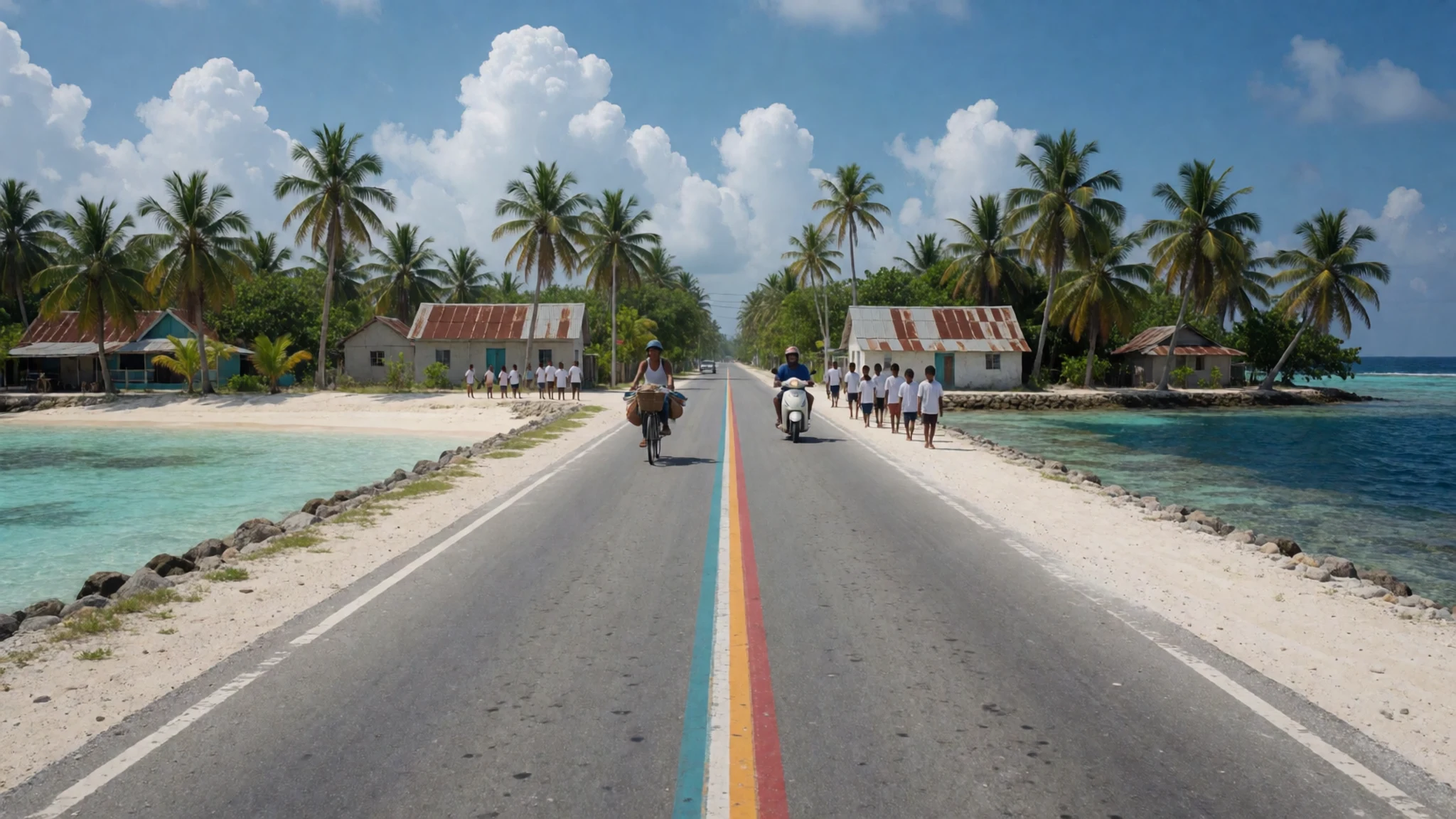
- Equatorial Convention Centre — Hithadhoo
The Equatorial Convention Centre is Addu's official face, a broad modern hall on Hithadhoo built to host the 2011 SAARC summit. It looks nothing like the coral-stone lanes around it, which is the interest: a piece of diplomatic architecture set down on a fishing atoll. It is being converted into a hospital, so a passer-by mostly gets the exterior and the water beside it.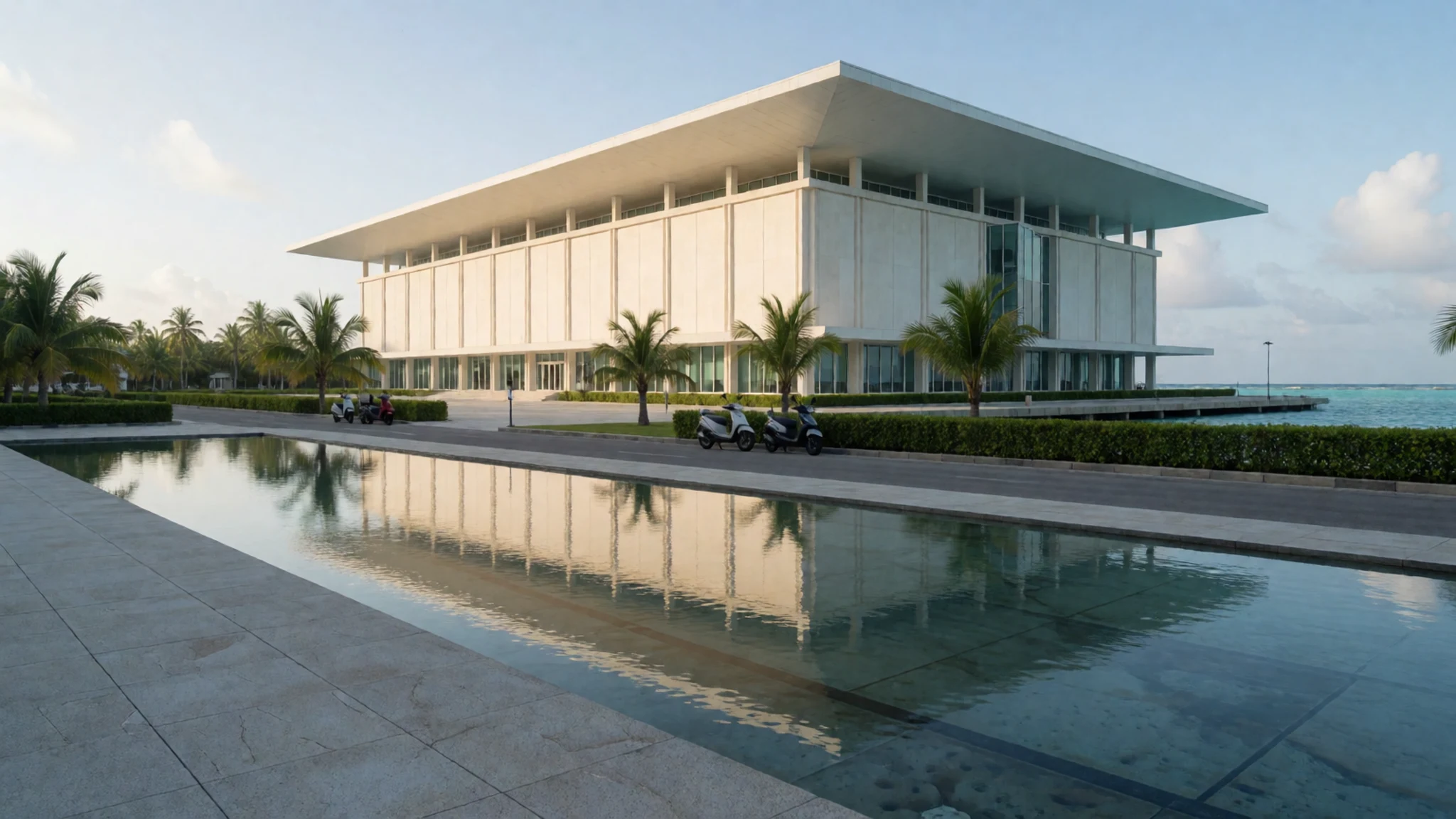
- Hankede — Hankede
Hankede is a low, sandy edge of Addu, best read from above or from the water: a pale spit, reef colours shifting from turquoise to deep blue, and the thin green of coastal scrub. It is the sort of shore the atoll has many of, which is why it stays useful as a picture of the city's geography rather than as a single famous beach with a gate.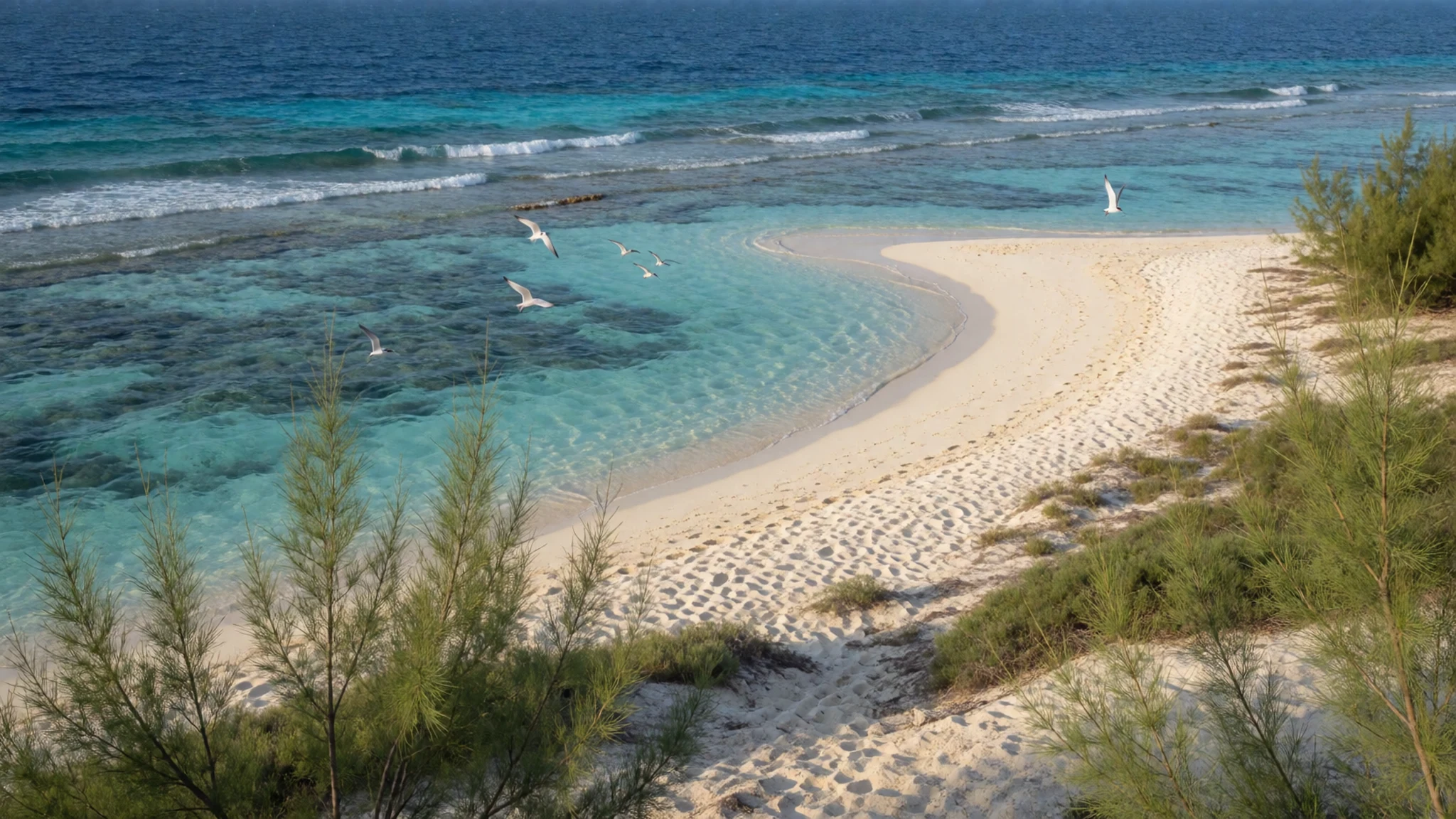
- Eidhigali Kilhi — Hithadhoo
Eidhigali Kilhi is the wetland on the Hithadhoo side of Addu, a kilhi of mangroves, open water and wading birds rather than a swimming beach. Herons and other shorebirds use the shallows, and the walk out from the houses is short, which makes dawn the right time before heat and foot traffic. Stay on the paths and do not feed the birds.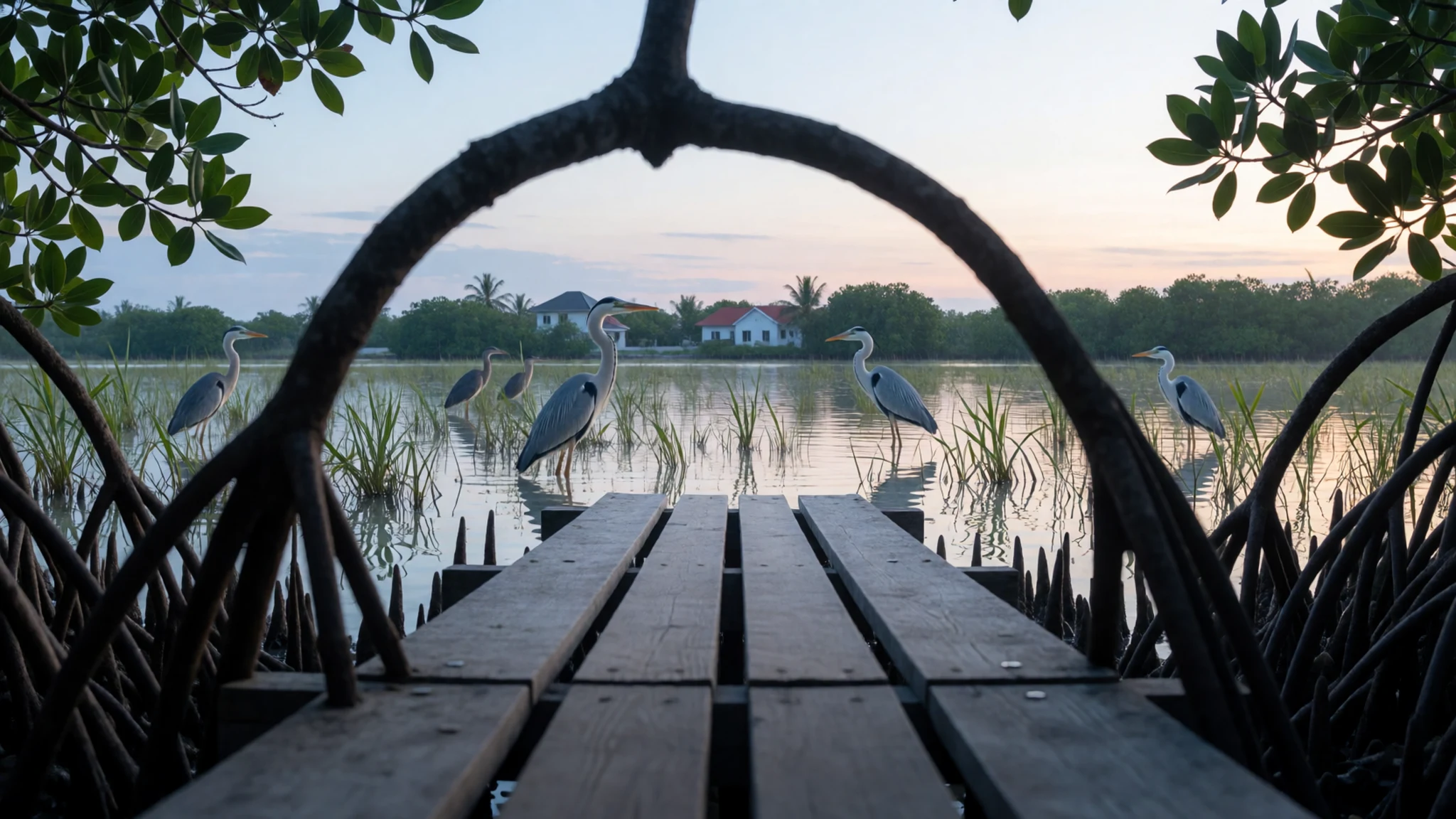
- Gan — Gan
Gan is the island Addu travels through. The long runway of the old British air base is now Gan International Airport, so a visit starts with tarmac, a low terminal and palms, the lagoon lying just beyond the fence. Around the field are remnants of the base years: straight roads, spreading shade trees and buildings that were never made of coral stone.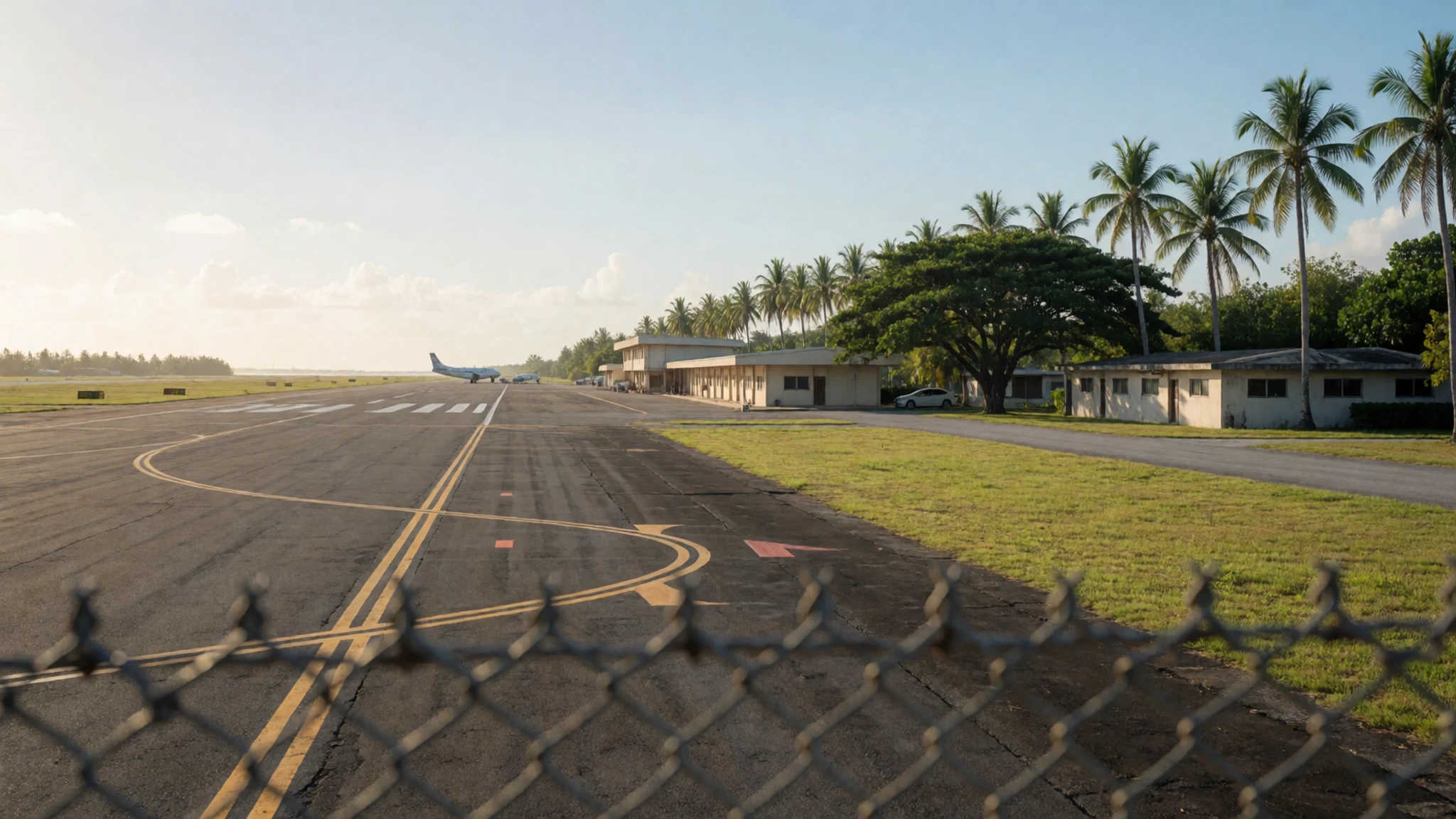
Culture
Addu's culture is Dhivehi and Muslim, lived across several islands that share one municipality and do not quite share one temperament. Dhivehi is the language of shops, harbours and homes; English turns up at the airport, in resorts and wherever a form has to be filled for a visitor. The call to prayer marks the day, Friday fills the mosques, and during Ramadan the tea shops change their hours even when the lagoon looks the same as ever.
What the south adds is a strong sense of being its own place. Island of residence still matters: Hithadhoo, the causeway villages, Gan and Hulhumeedhoo across the channel each keep local pride, and speech patterns that Malé notices at once. Bodu beru drumming and dance come out at festivals and for guests, the drums meant for open air rather than a hall.
Public life is modest. Tea shops, the harbour wall and the link road after dark do the job of a square. The fuller meal is in the house. Alcohol is not part of local-island life; it belongs, if anywhere, on a resort island with a licence. Dress is covered, greetings are unhurried, and a stranger who rushes is the one out of step.
Ask before you photograph people, and keep shoulders and knees covered when you leave the resort beach.
What to wear
Addu's clothing is made for equatorial sun, sudden rain and a Muslim public square. Traditionally, men wear the mundu, a cotton sarong, with a shirt; a feyli with a checked or striped border comes out for the mosque and for festivals. Women wear a long dress, called a libaas or a dhigu hedhun, sometimes with a kasabu panel of metallic thread embroidered at the neck, and a head covering is usual in public. Everyday cloth is light cotton.
Walk through Hithadhoo now and the mix is plain to see. School uniforms, collared shirts, jeans, trainers and bright hijabs share the road with an older man in a mundu on his way to pray. Staff heading to Gan or a resort island change into uniforms; younger people dress much as they do in the capital, only with more weather on them. Humidity, squalls and coral dust decide what survives a season better than any trend does.
A visitor should wear light cotton that covers shoulders and knees on every inhabited island, and keep swimwear for a resort beach or an agreed sandbank. Shoes should slip off at mosque steps and at the door of a home, and sandals cope better with coral sand than heavy trainers. A hat, sunglasses and a thin rain layer earn their place in the bag; a formal jacket does not.
What to eat
- Garudhiya — tea shops and home kitchens in Hithadhoo
Garudhiya, Addu's everyday tuna broth, is scented with curry leaves, chilli and lime and eaten with rice or roshi. It is ordinary cooking on the atoll: local fish, a light broth, and enough of it for a hot afternoon.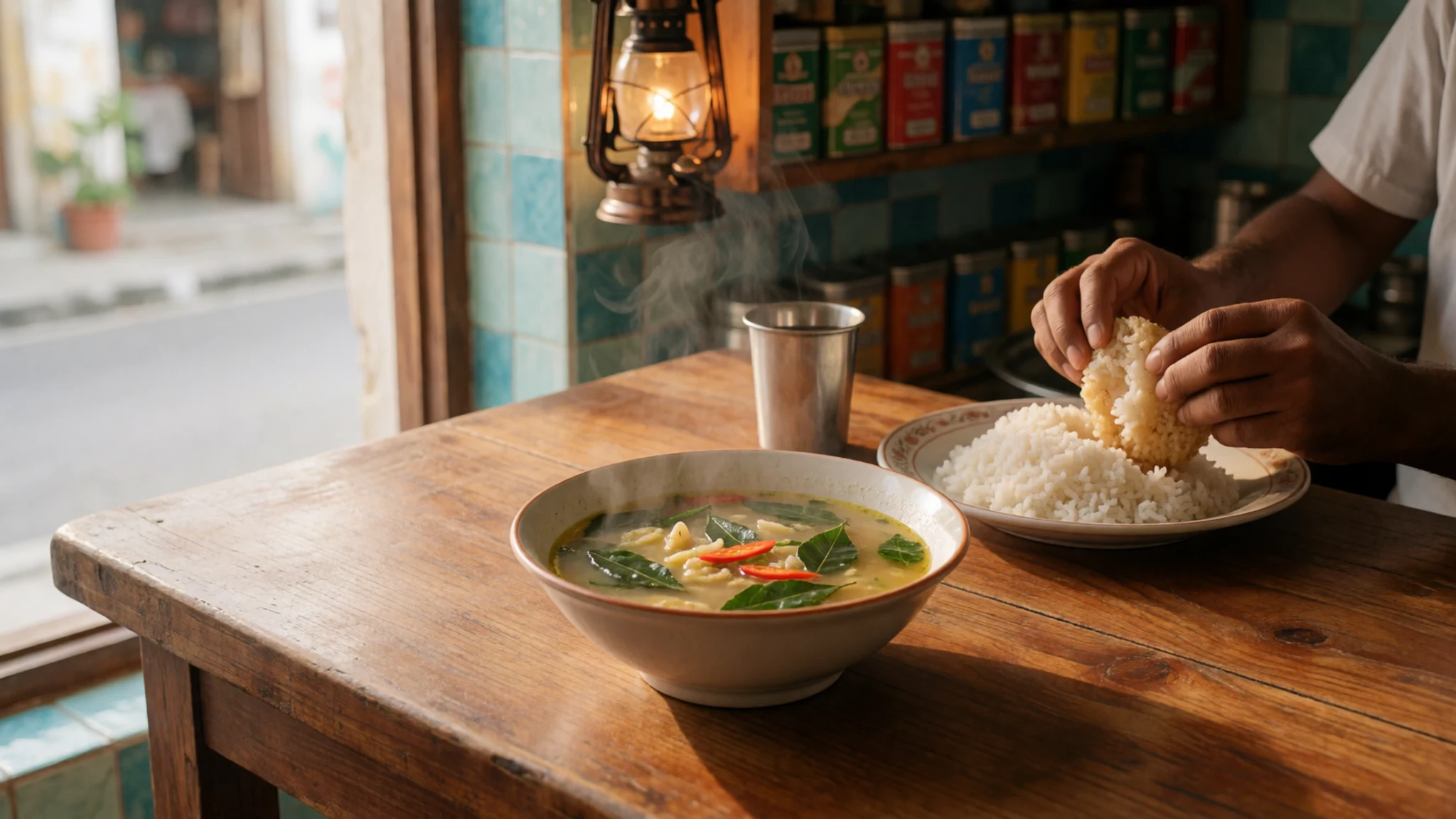
- Mas huni — breakfast stalls and tea shops on the link-road islands
Mas huni is Addu's breakfast: shredded smoked tuna with grated coconut, onion, chilli and lime, piled on roshi. Tea shops serve it before the causeway heats up, tuna from the store cupboard and coconut from the lane.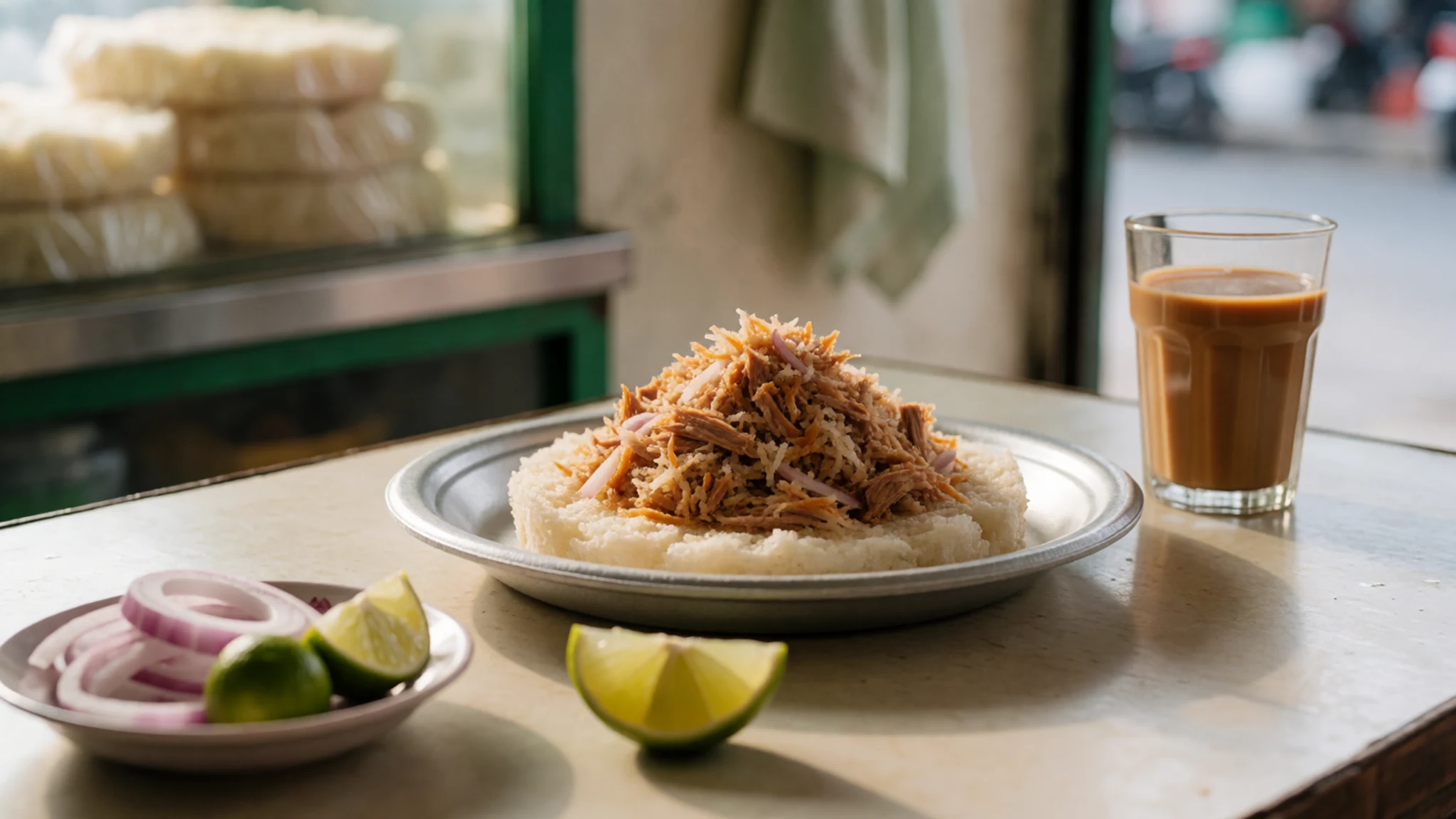
- Fihunu mas — harbour-side grills in Hithadhoo and Feydhoo
Fihunu mas is Addu's grilled fish: tuna or a reef catch smeared with chilli, garlic, lime and scraped coconut, then cooked over coals. The skin blisters, the flesh stays moist, and the paste is as hot as the afternoon. Look for it near a harbour in the evening. - Hedhikaa — tea shops in Hithadhoo
Hedhikaa in Addu are the short eats in a tea-shop glass case: gulha, small fish cakes, and bajiya, fried tuna pastries. They taste of tuna and coconut more than of a long spice list, and they are eaten with milk tea. - Theluli mas — local eateries in Hithadhoo
Theluli mas is tuna fried, in the Addu way, with curry leaves, chilli, garlic and lime until the edges darken. Plain eateries and family tables serve it with rice or roshi.
Plan it
Best time. December to April is the drier northeast monsoon: clearer water in the lagoon, fewer squalls and a calmer boat ride to Hulhumeedhoo. May to November is the southwest monsoon, wetter and rougher outside the reef, with bright days between storms. Heat and humidity stay all year.
How long. 3–4
Getting there. Fly to Gan International Airport on Gan, most often on a domestic flight from Velana International Airport in Malé. The link road then runs from the airport through Feydhoo and Maradhoo into Hithadhoo, so the causeway islands need no further sea crossing. Hulhumeedhoo still needs a boat. Check the airline for current flights.
Budget. high
Tips
- Book the Malé–Gan flight ahead in the drier months, when the small aircraft fill.
- Begin wetland walks and any beach time early; midday equatorial sun is severe and shade is thin.
- Carry cash, because cards are less widely accepted on local islands than in Malé.
- Use a bicycle or a scooter on the link road rather than waiting for a ride.
- Pack a light rain cover; squalls are short and heavy, then the sun returns.
Etiquette
- Cover shoulders and knees on inhabited islands, and keep swimwear for the resort beach.
- Take shoes off at a mosque and before entering a home.
- Do not take alcohol onto a local island, and ask before you photograph people.
Nearby
Sources
- Wikidata (CC0)
- Wikipedia, Addu City (CC BY-SA 4.0)
- Wikivoyage, Addu City (CC BY-SA 4.0)
- 02-abdulla-afeef.png (CC BY-SA 4.0)
- 03-addu-convention-centre.jpg (CC0 1.0)
- 06-addu-city-maldives-drone-unsplash.jpg (CC0 1.0)
- 07-birds-of-addu-city-unsplash.jpg (CC0 1.0)
- 08-hankede-the-addu-city-aerial-view-panoramio.jpg (CC BY 3.0)