Thulusdhoo
Thulusdhoo, Maldives
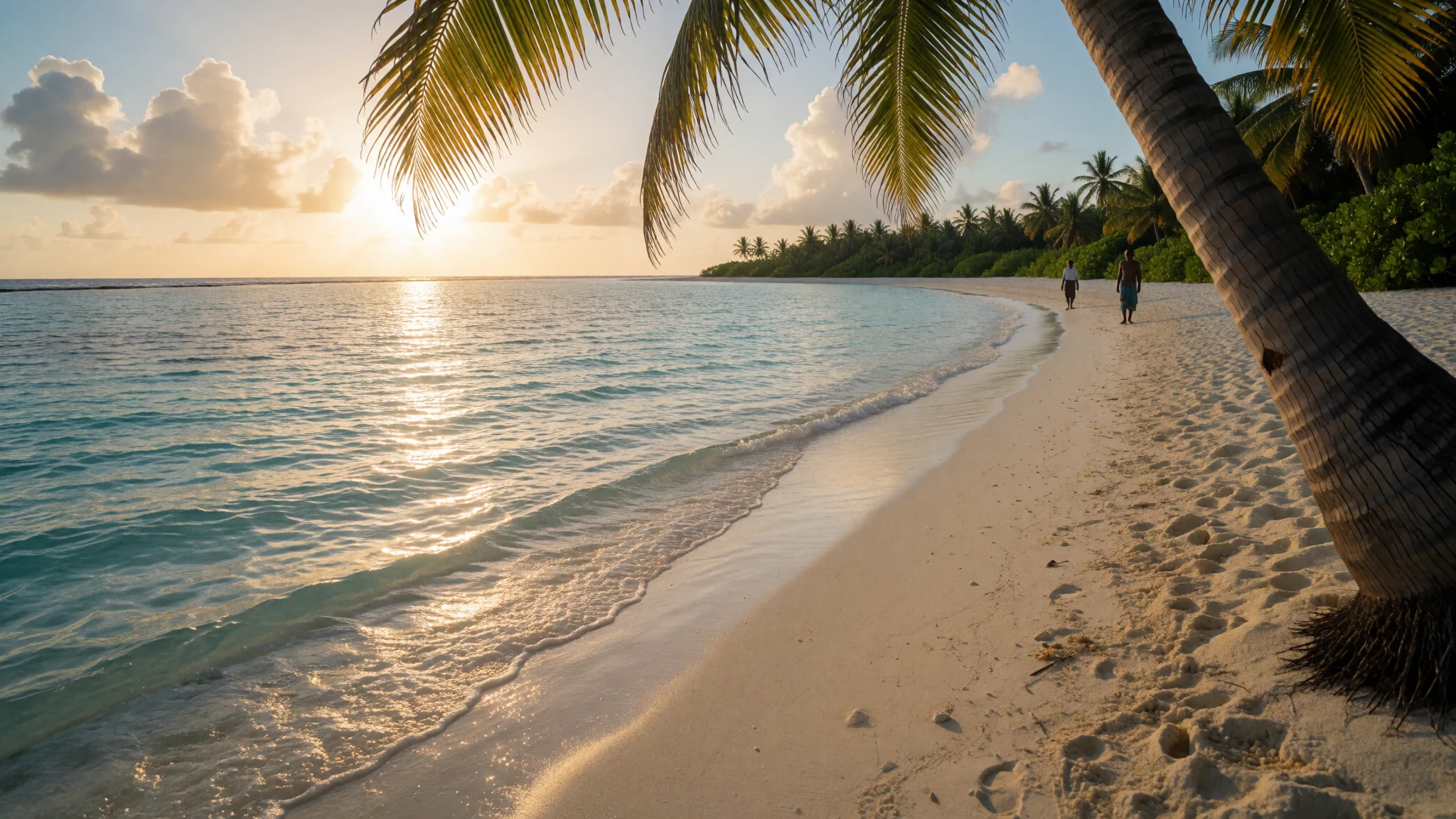
Thulusdhoo offers a lived-in Maldivian island with a tourist beach, reef snorkelling and surf breaks, at a gentler scale than the private resorts around it.
The place
Thulusdhoo is a small, flat island in North Malé Atoll, and it serves as the administrative capital of Kaafu Atoll. Its name is written ތުލުސްދޫ in Dhivehi. The island lies north-east of Malé, close enough to the capital that most visitors arrive within a morning of landing at the airport. It is longer than it is wide, and the land is so slight that the sea shows at the end of almost every lane; a slow walk from one tip to the other takes well under an hour. That scale shapes everything here. There are houses, a mosque, a school, small shops, a harbour where boats come and go, and a handful of guesthouses squeezed between them. The islands around Thulusdhoo are a different picture. Nearly every uninhabited island in this part of the atoll was turned into a private resort in the last decades of the previous century, and the area around Malé and its airport has seen more tourism development than anywhere else in the country. Thulusdhoo remained a living community, which is both its appeal and its limit. Visitors get ordinary island life, warm shallow water, and reef diving and snorkelling close by, but not the manicured sand of a resort. Heat and humidity are constant, shade is precious at midday, and the beach set aside for tourists is separate from the village shore. Expect quiet evenings, early mornings, and food and drink that follow local custom rather than resort habits.
Its story
The story of Thulusdhoo is that of a working island finding its place beside a resort industry that grew up around it. For generations, as in most Maldivian communities, life here turned on the reef and the open sea: fishing, small-scale trade by boat, and the rhythms of a close-knit village. When tourism arrived in the atoll, it came as private resorts on uninhabited islands, kept apart from local life by design. Thulusdhoo sat in the middle of that boom without being part of it. Later it gained a different role, partly through industry, since a soft-drink bottling plant became a well-known employer and a curiosity for outsiders, and partly through surfers, who found reef breaks off the island and began staying on shore. That helped open the way for the guesthouse model, in which visitors sleep in a village rather than on a private island. The change has been gradual and not entirely smooth. Guesthouse owners must balance income against the customs of a conservative community, and residents share a small stretch of land with growing numbers of visitors. Waste, fresh water and boat traffic are the practical pressures. Today Thulusdhoo is a useful place for understanding the modern Maldives: somewhere the tourism economy and everyday island life sit side by side, separated by a lane rather than a stretch of open water.
What to see
- Village lanes and harbour — Island centre and harbour
Thulusdhoo's sandy lanes and working harbour show the island as residents use it. Walk early, when boats unload fish, children cycle to school and shopkeepers open up. The mosque, painted houses and small shops sit within minutes of each other, and the pace stays easy even in the heat.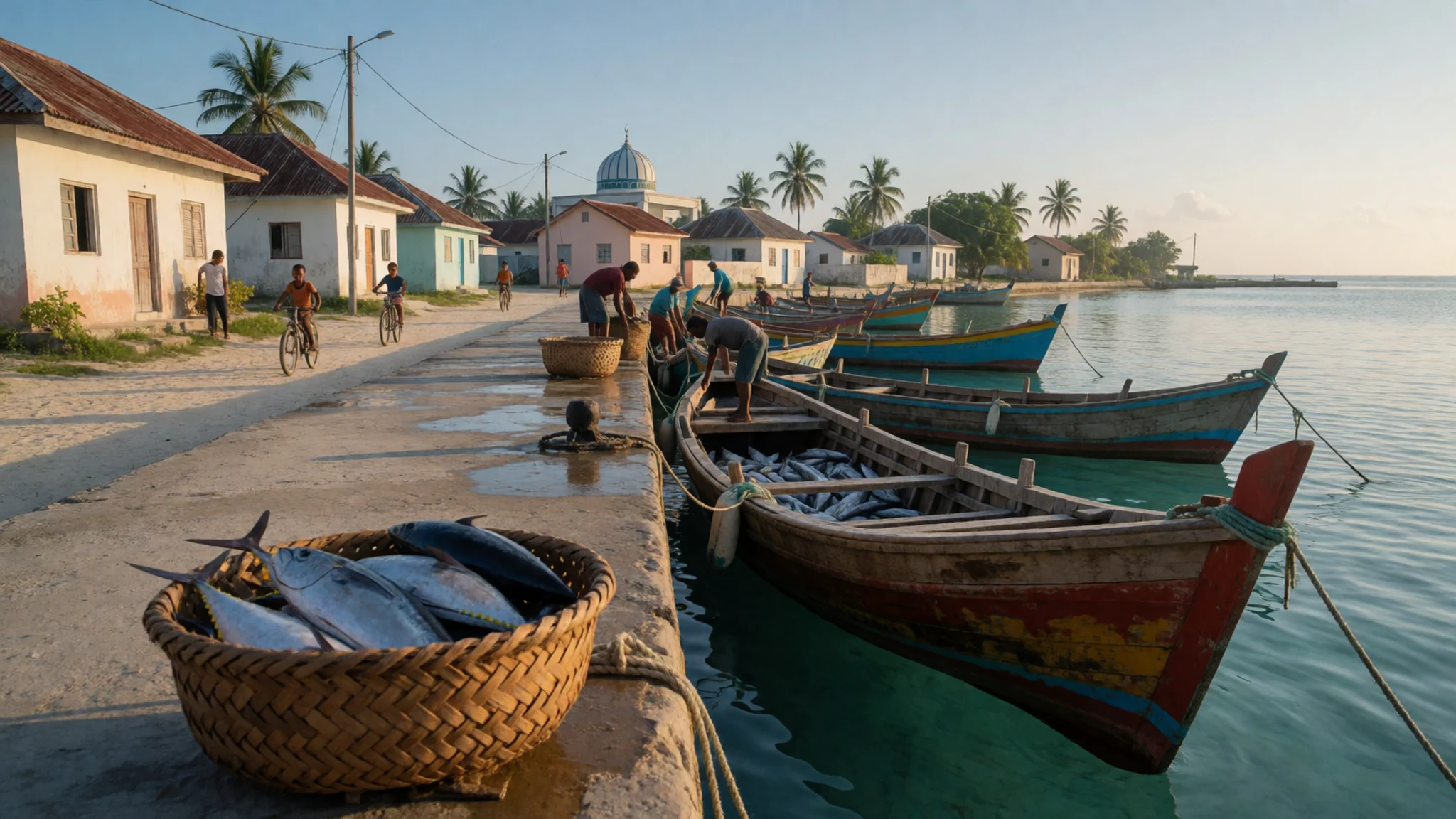
- The tourist beach — Designated beach on the island's edge
Thulusdhoo has a stretch of shore set aside for visitors, where swimwear is acceptable and loungers are shaded by palms. The water is shallow, warm and clear on calm days. It is a good place to swim, read and watch the light change, and it is rarely crowded.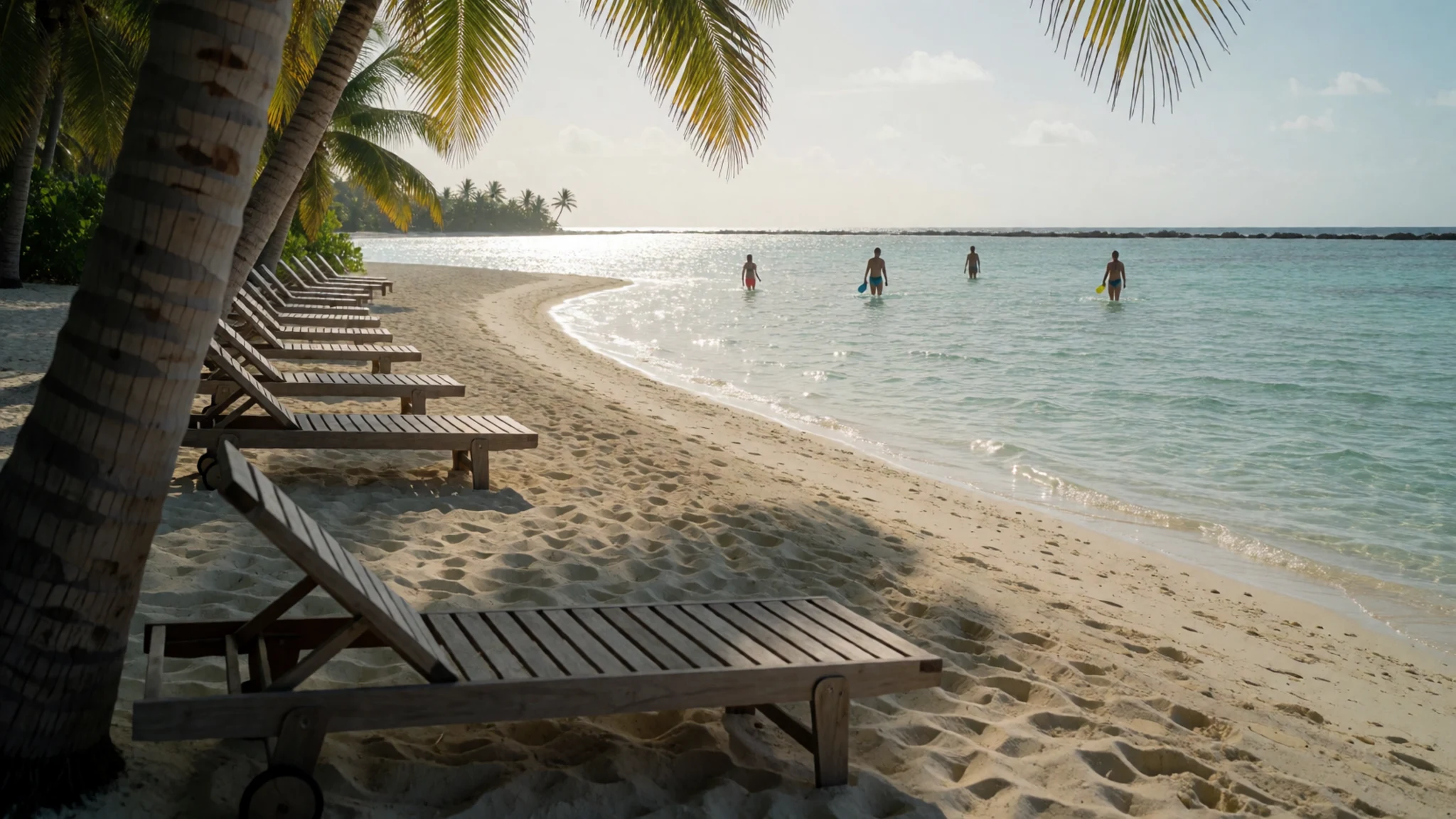
- Reef snorkelling — Reefs off the island, by boat
Snorkelling and scuba diving are the main activities around Thulusdhoo. The reef lies a short boat ride away, with coral, reef fish and, on good days, turtles or rays. Go with a local guide who knows the currents, and wear a rash vest to protect against the sun.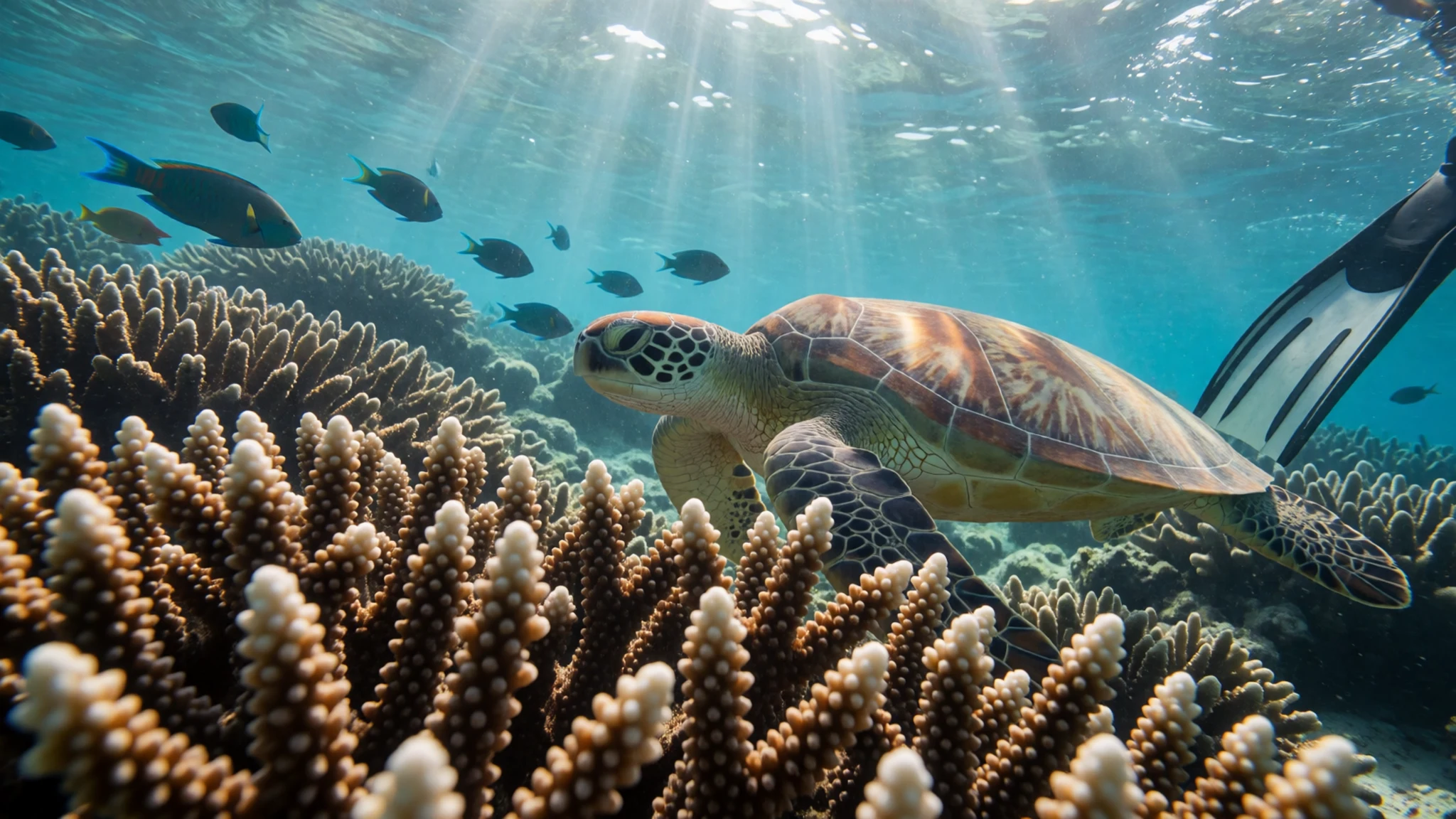
- Surf breaks offshore — Outer reef, short boat ride
Surfers know the reef breaks off Thulusdhoo, which are reached by boat from the harbour. Even for non-surfers, a morning boat trip to watch the waves peel across the reef is worthwhile. Conditions change with season and swell, so ask your guesthouse host which days are best.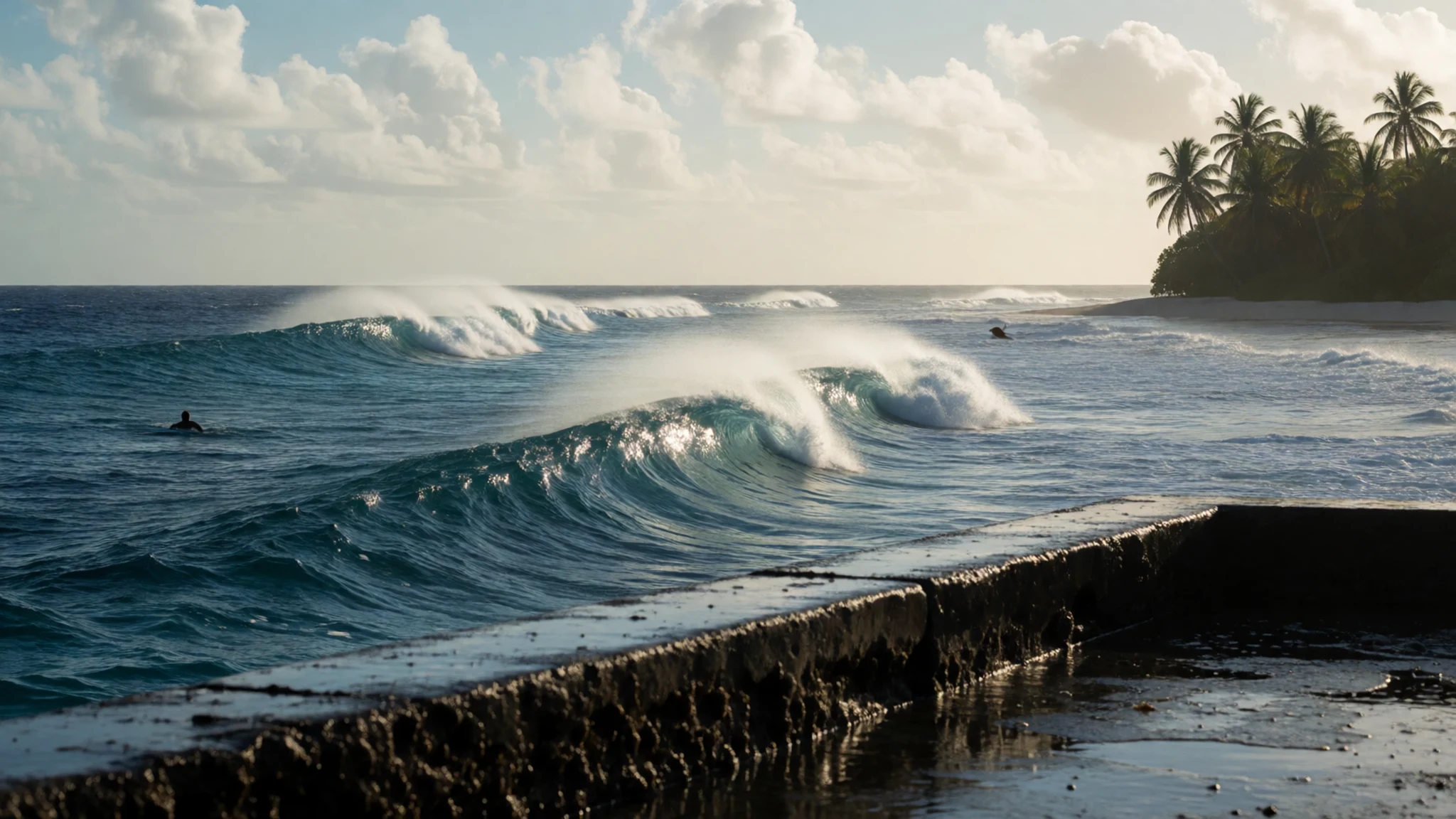
- Neighbouring local islands — Elsewhere in Kaafu Atoll
Other inhabited islands nearby, among them Gulhi and Maafushi, make easy day trips by boat and show how each community has handled tourism differently. Maafushi is busier, Gulhi quieter. Arrange the crossing through your guesthouse and check return times before you set out.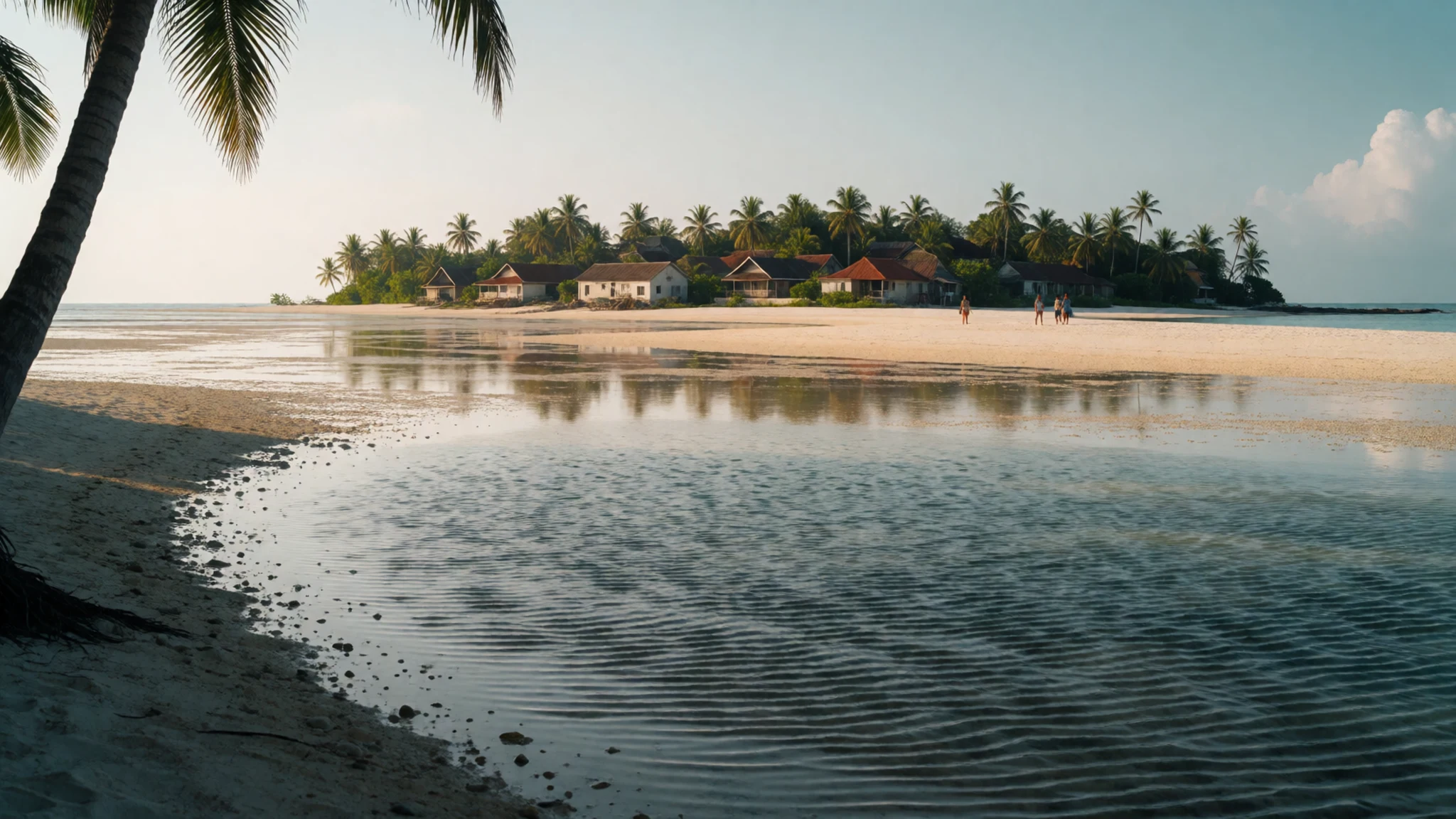
Culture
Thulusdhoo is a Muslim island, and Islam sets the tone of daily life: the call to prayer carries across the lanes, shops may pause around prayer times, and Friday is the quiet day of the week. The community speaks Dhivehi, the national language, and English is widely understood by anyone who works with visitors. Family and neighbourhood ties are strong, and the island runs on small favours, shared boats and long conversations over tea. Because this is a lived-in village rather than a resort, local rules apply: alcohol is not sold on inhabited islands, and public behaviour is more reserved than a holiday brochure might suggest. Resorts elsewhere in the atoll follow their own rules, which is why the two experiences feel so different. Religious holidays and festivals follow the Islamic calendar, so dates move from year to year; during the fasting month, eating and drinking in public by day is discouraged and many eateries open only after sunset. Guesthouse hosts are the best guide to what is happening and what is appropriate. Generosity is common, but so is privacy, and residents appreciate visitors who greet people with a smile and a few words of Dhivehi. In the village, cover your shoulders and knees, keep swimwear for the designated tourist beach, and ask before photographing anyone.
What to wear
Thulusdhoo follows the wider Maldivian tradition in dress. For women, the classic garment is the libaas, a long dress with a decorated neckline worked in gold or silver thread, known locally as kasabu embroidery; it is worn at weddings, festivals and family occasions. Men's formal dress is a sarong, the mundu or feyli, usually with a white shirt, sometimes with a small cap. These are woven and embroidered in cotton and silk, and are kept for special days rather than daily wear. In everyday life, people wear practical, modest clothes suited to heat: loose long dresses or tunics and trousers, often with a headscarf for women, and shirts with trousers or a sarong for men. Schoolchildren wear uniforms, and fishermen wear whatever dries quickly. Visitors should pack light cotton or linen that covers shoulders and knees for walking through the village, and keep swimsuits for the tourist beach, where a cover-up is still sensible on the way there. A rash vest, wide-brimmed hat and reef-safe sun cream matter more than fashion in this sun. Sandals are fine on sand lanes, and reef shoes help with rocky entries and sharp coral. A light scarf is useful in the evening breeze and if you are invited into any religious or community space.
What to eat
- Mas huni — Guesthouse breakfast tables and village tea shops
Shredded smoked tuna mixed with grated coconut, onion and chilli, eaten with flatbread at breakfast. It is the Maldivian morning staple, light and lightly spiced, and usually served with sweet black tea.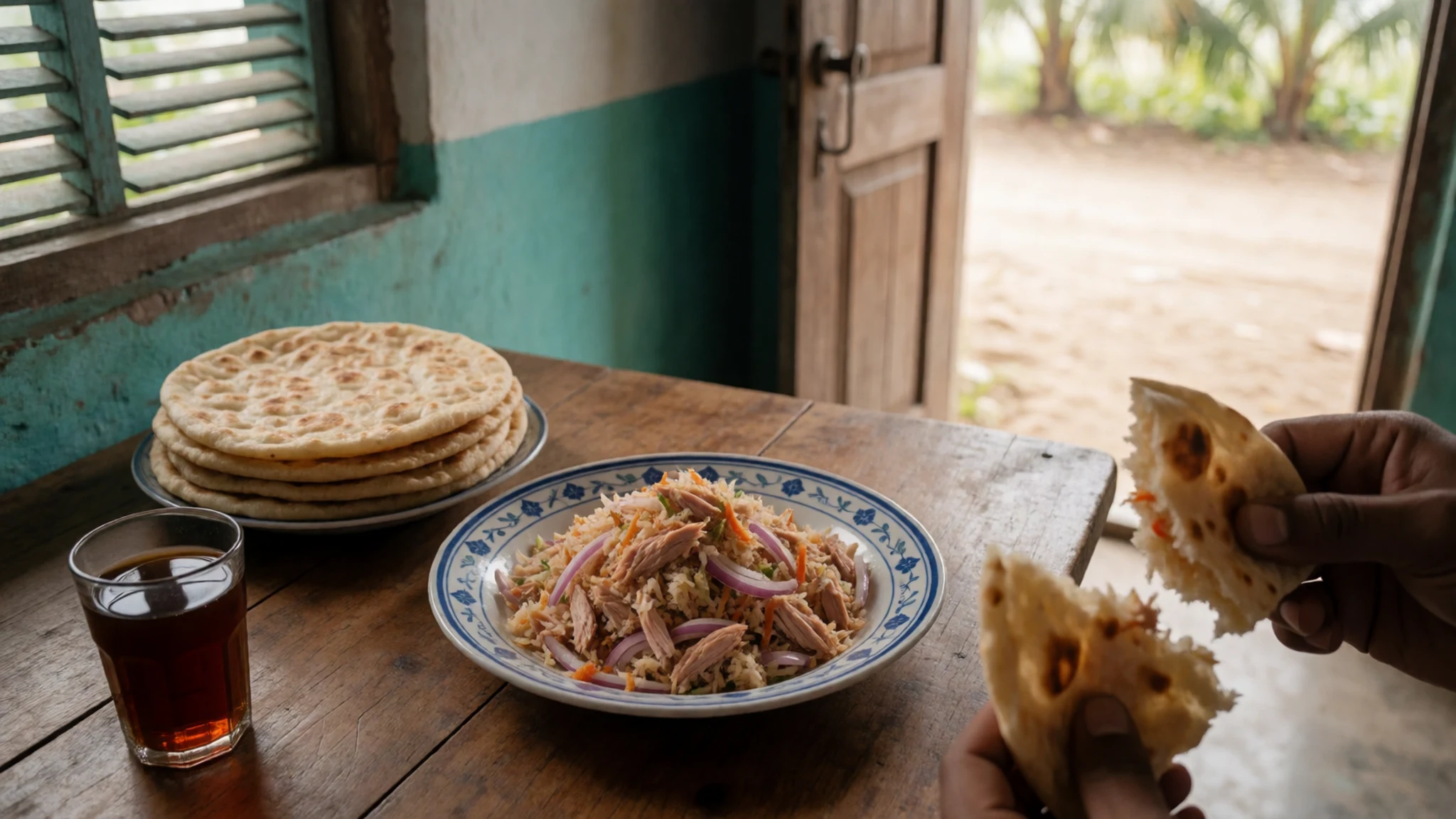
- Garudhiya — Local eateries and family-run guesthouse kitchens
A clear, salty tuna broth, often served with rice, lime, chilli and a little onion. It is plain on purpose and very much an everyday meal for island families, especially after a morning on the water.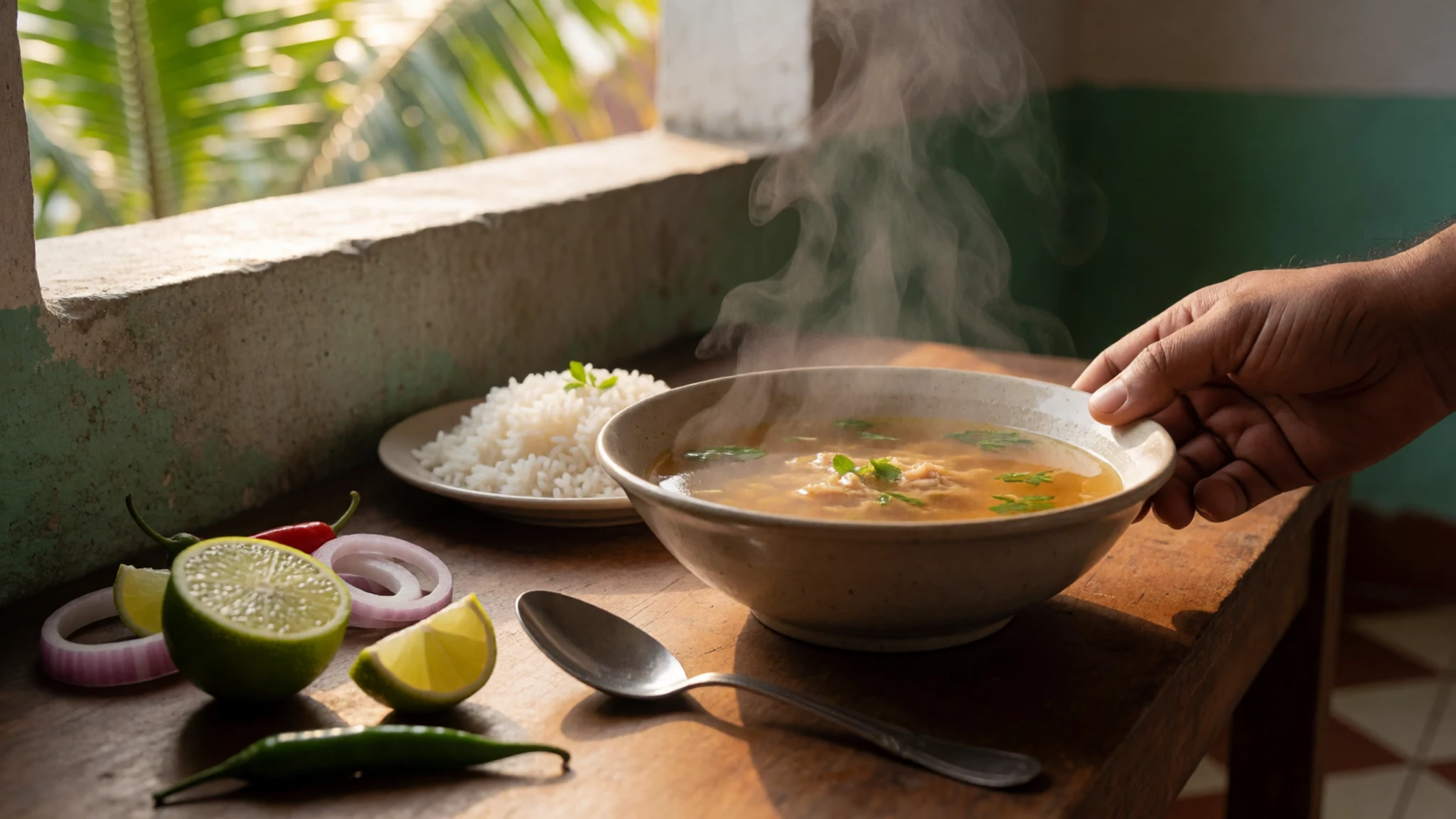
- Fihunu mas — Guesthouse dinners and small eateries by the harbour
Tuna rubbed with chilli and spices, then grilled over coals until the outside is dark and smoky. It is served with rice or flatbread and a squeeze of lime. Ask what came off the boats that day. - Hedhikaa (short eats) — Tea shops and bakeries in the village lanes
Small snacks such as fish cutlets, fried pastries and sweet rolls, set out in the afternoon with tea. They are cheap, filling and a good way to try several flavours at once. - Roshi with curry — Home-style guesthouse meals and local cafés
Thin, soft flatbread eaten with fish or vegetable curry, a daily pairing across the atolls. The bread is made fresh and torn by hand, and the curry is typically coconut-based and warming rather than fiery.
Plan it
Best time. December to April, when the north-east monsoon brings drier, sunnier weather and calmer seas for snorkelling and boat trips. May to November is wetter and windier, with more cloud and rougher crossings, though it is also the season many surfers prefer.
How long. 2–4
Getting there. Fly into Velana International Airport beside Malé, then continue by sea: the usual routes are a speedboat transfer arranged through your guesthouse or the public ferry from Malé. Confirm the current ferry timetable with your host before you land, as sailings change.
Budget. mid
Tips
- Book guesthouses well ahead for December to April, when rooms fill first
- Carry some cash, as small shops and tea houses may not take cards
- Bring reef-safe sun cream, a hat and a rash vest; the sun is strong all year
- Drink bottled or filtered water and carry a refillable bottle
- Check boat transfer times before booking onward flights, since rough weather can delay crossings
Etiquette
- Cover shoulders and knees in the village and keep swimwear for the tourist beach
- Ask before photographing local people, especially women and children
- Do not bring alcohol or pork products onto the island
Nearby
Sources
- Wikidata Q779848 (CC0)
- Wikipedia: Thulusdhoo (rev 1374552273) (CC BY-SA 4.0)
- Wikivoyage: Kaafu (rev 5430361) (CC BY-SA 4.0)
Wildlife
- Green sea turtle (animal)
The green sea turtle is a large sea reptile that grazes on seagrass, and its name comes from the greenish fat under its shell rather than the shell itself, which is olive to black. Around Thulusdhoo, you may spot one over the reef, a brief boat trip from the island, though only with a bit of luck. Go with a guide, stay quiet, keep well back and let it drift by. Never feed it.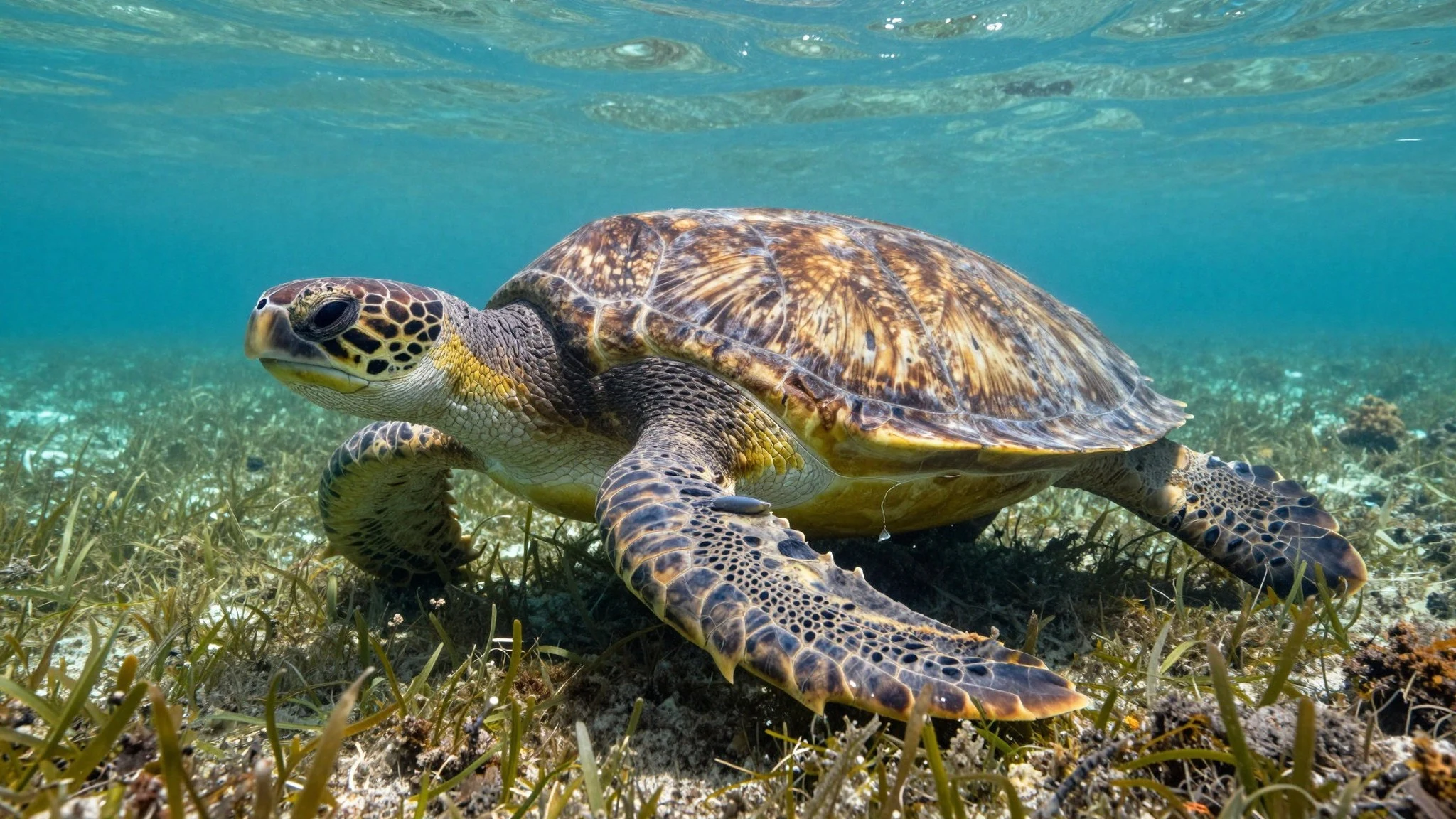
- Reef manta ray (animal)
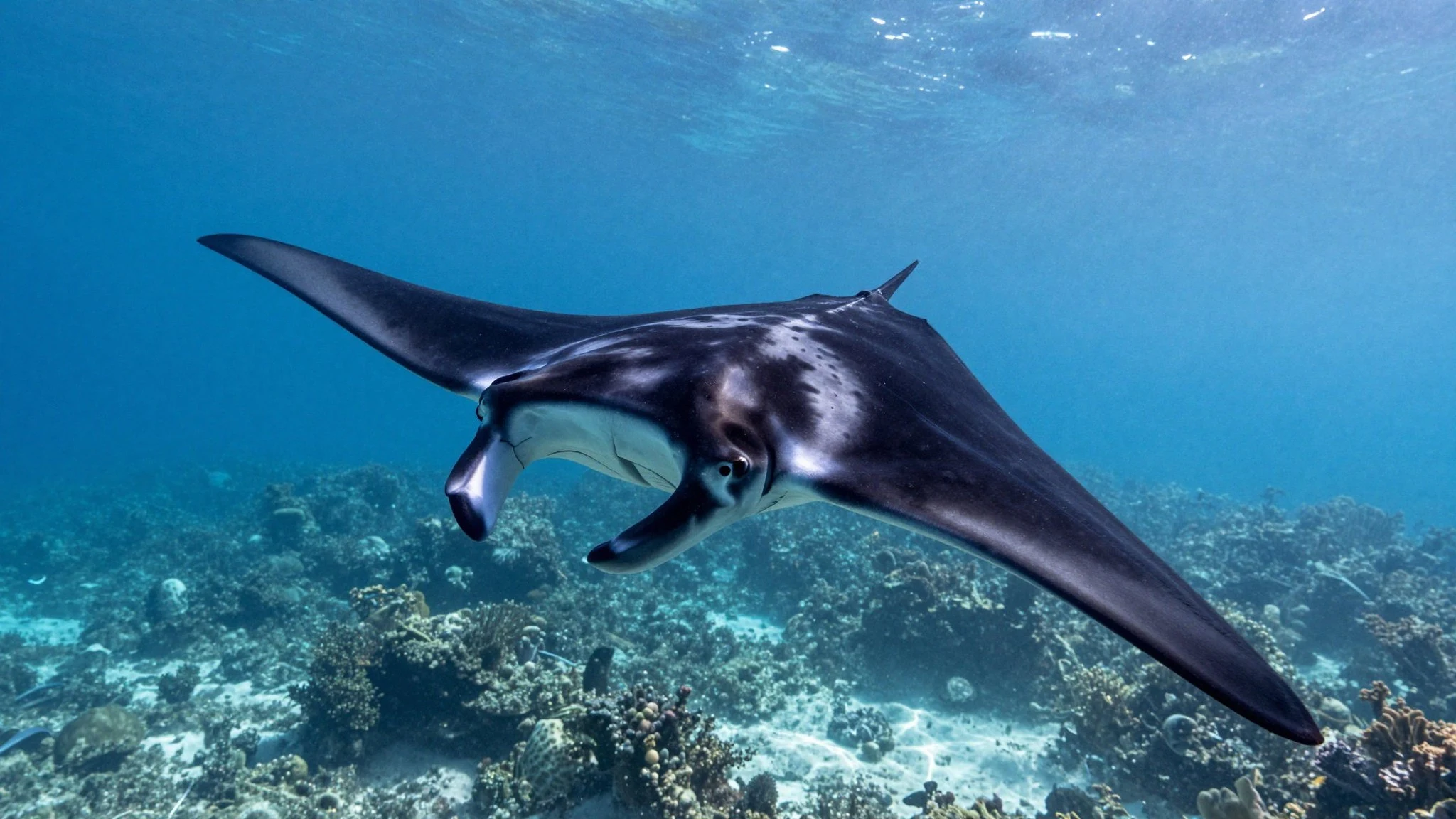
The reef manta ray is a giant flat swimmer that flaps through the water like a great underwater bird, one of the largest rays anywhere. Near Thulusdhoo, rays can appear over the reef, a brief boat trip from the island, on a lucky day. Ask your guide when your chances are best. Watch quietly from a respectful distance, follow your guide, and never feed it.