Vaadhoo
Vaadhoo, Maldives
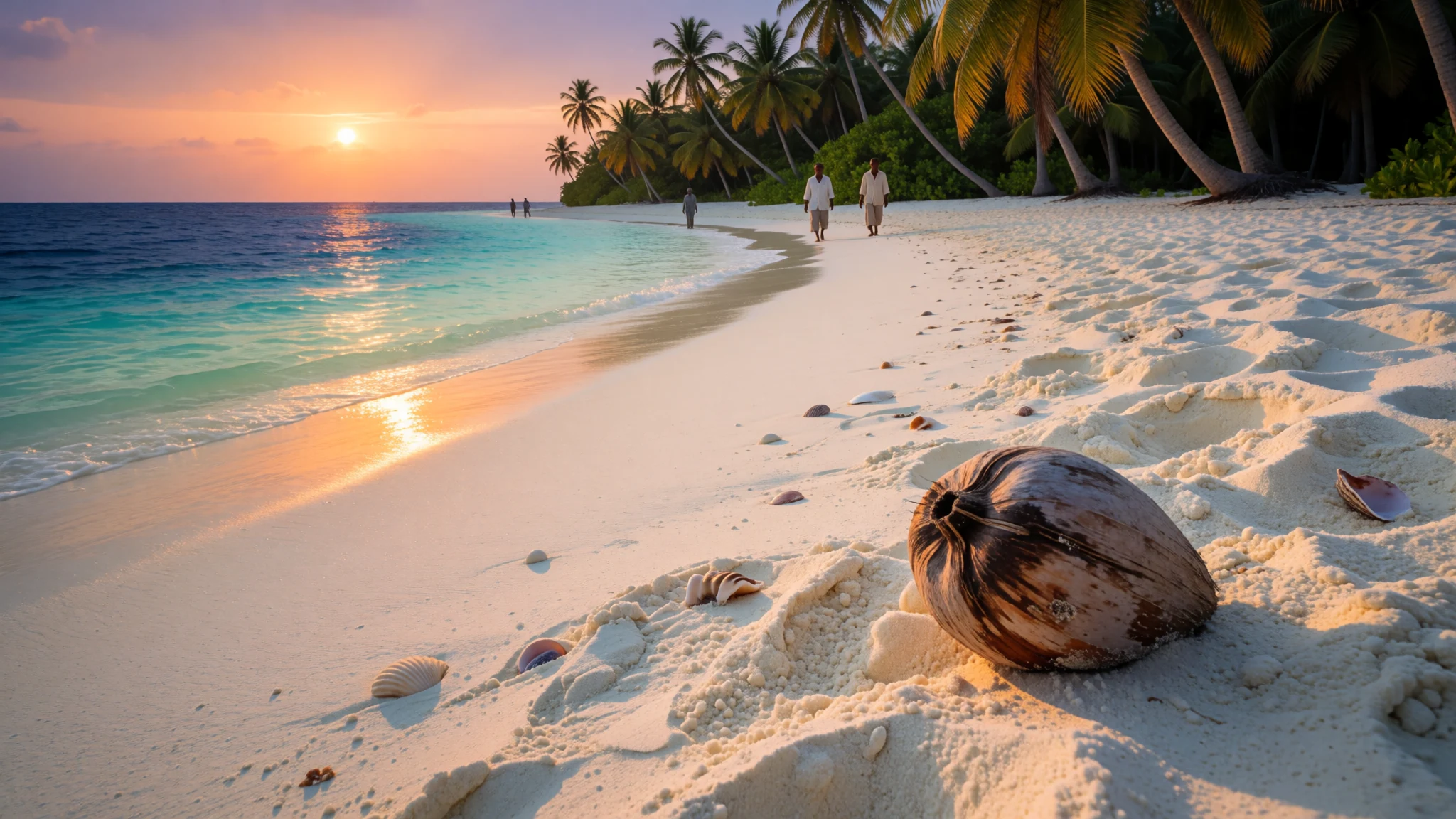
Vaadhoo is a small Maldivian island in Raa Atoll, known for a reef, a deep lagoon and shoreline water that can glow blue at night.
The place
Vaadhoo is an inhabited island in Raa Atoll, in the north of the Maldives, even though the Wikipedia article describes it as lying at the southern end of the atoll. It sits at the south end of the atoll's largest reef, and the reef is the thing that defines the place. On the north side there is a deep lagoon, and the rest is a broad sweep of shallow water over coral.
The island is small and low, like most in the country. Its beaches change with the seasons, as sand moves with the monsoon winds and currents, so a stretch that is wide in one month can be narrow in another. Life here runs on fishing, on farming breadfruit and coconuts, and on palm weaving, a craft led by local women. Visitors who come are mostly there for the sea: snorkelling, diving, kayaking and fishing.
This is not the resort Maldives of overwater villas and private jetties. Vaadhoo is a lived-in community, and that shapes everything from how you dress to where you eat. Facilities are modest, and the pace follows the tides and the fishing boats rather than a timetable.
Malé, the capital, lies a long way south, and the journey to the atoll is part of the experience, over open ocean and past scattered islets. The country is hundreds of kilometres of water with small patches of land, and Vaadhoo shows that clearly. Expect warmth, humidity, strong sun and very clear water, and expect to be close to the sea wherever you stand.
Its story
Vaadhoo's story is that of many Maldivian islands: a community that grew up around the reef and the lagoon, and lived by what they gave. Fish, coconuts and breadfruit fed people, and palm leaves became mats, ropes and roofing. Women have long led the palm weaving, and the skill is still passed on.
For most of the modern era, tourism in the Maldives was kept to dedicated resort islands. That changed in 2008, when all islands were opened to visitors, and small guesthouses began appearing on inhabited islands across the archipelago. Vaadhoo belongs to that second wave, where visitors stay among residents rather than behind a resort boundary.
What put the island in front of a wider audience was its night-time shoreline. On some evenings the water at the edge of the beach glows a cool blue, an effect widely called the Sea of Stars. It is a form of marine bioluminescence, produced by tiny organisms in the water. Phytoplankton flash only briefly, so ostracods, small crustaceans, are credited with the longer glow. Because countless organisms clump together, the light looks continuous rather than flickering.
Photographs of the glow travelled quickly online, and with them came interest in the island as a place to visit. The challenge now is the usual one: keeping a small community's crafts, reef and routines intact while welcoming people who want to see the water shine. Local palm weaving and low-key, small-scale stays are part of how the island is trying to do that.
What to see
- The glowing shoreline — Island beach
After dark, the water's edge at Vaadhoo can light up blue where waves break, the effect known as the Sea of Stars. It is not guaranteed and varies by night and season. Go when it is properly dark, away from lights, and let your eyes adjust.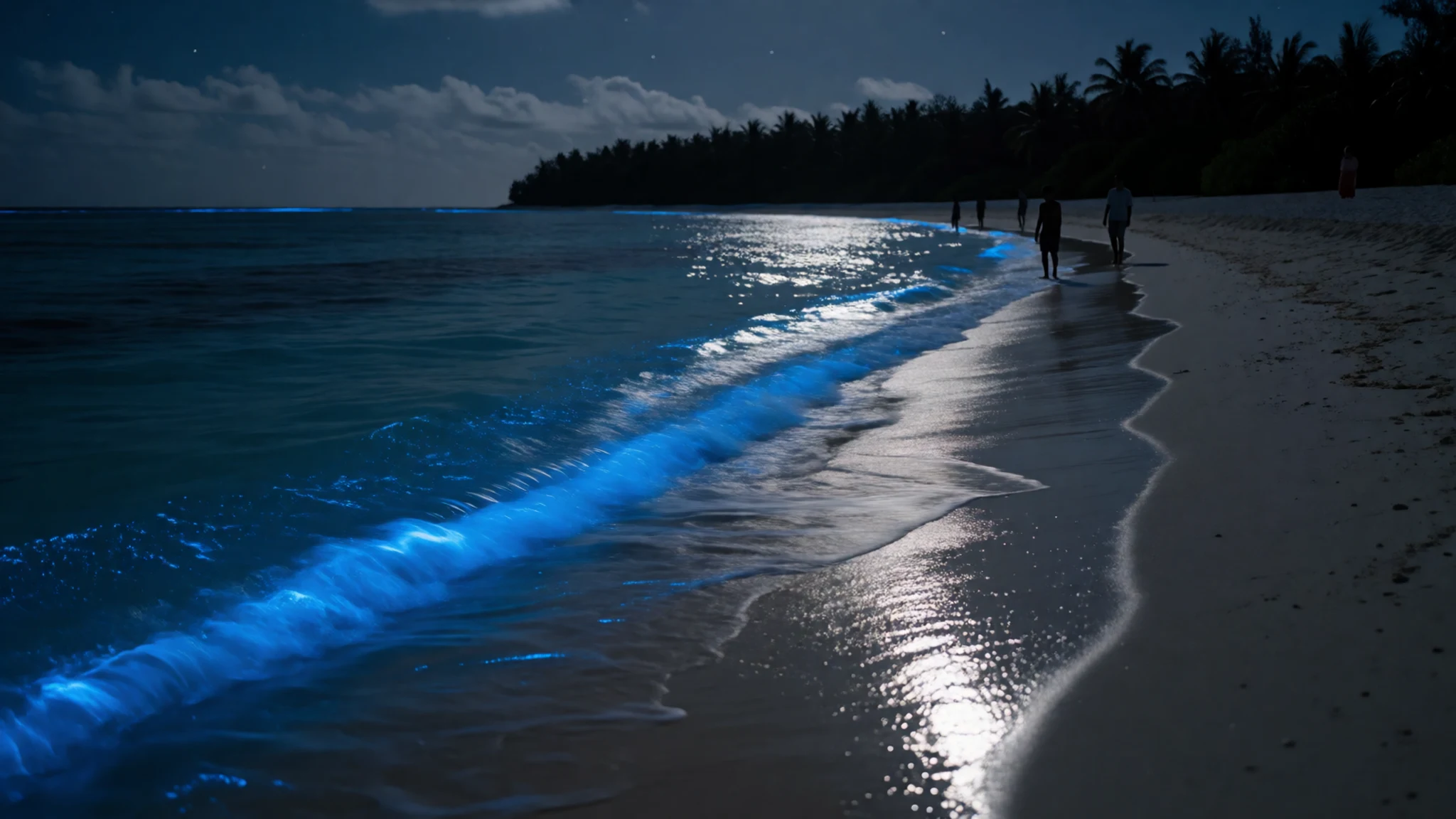
- The house reef — Reef around the island
The reef at the southern end of the atoll's largest reef system is the island's main daytime draw. Shallow areas suit snorkellers, while the deep lagoon to the north drops to around 20 to 30 metres. Expect anemones, rays and many reef fish.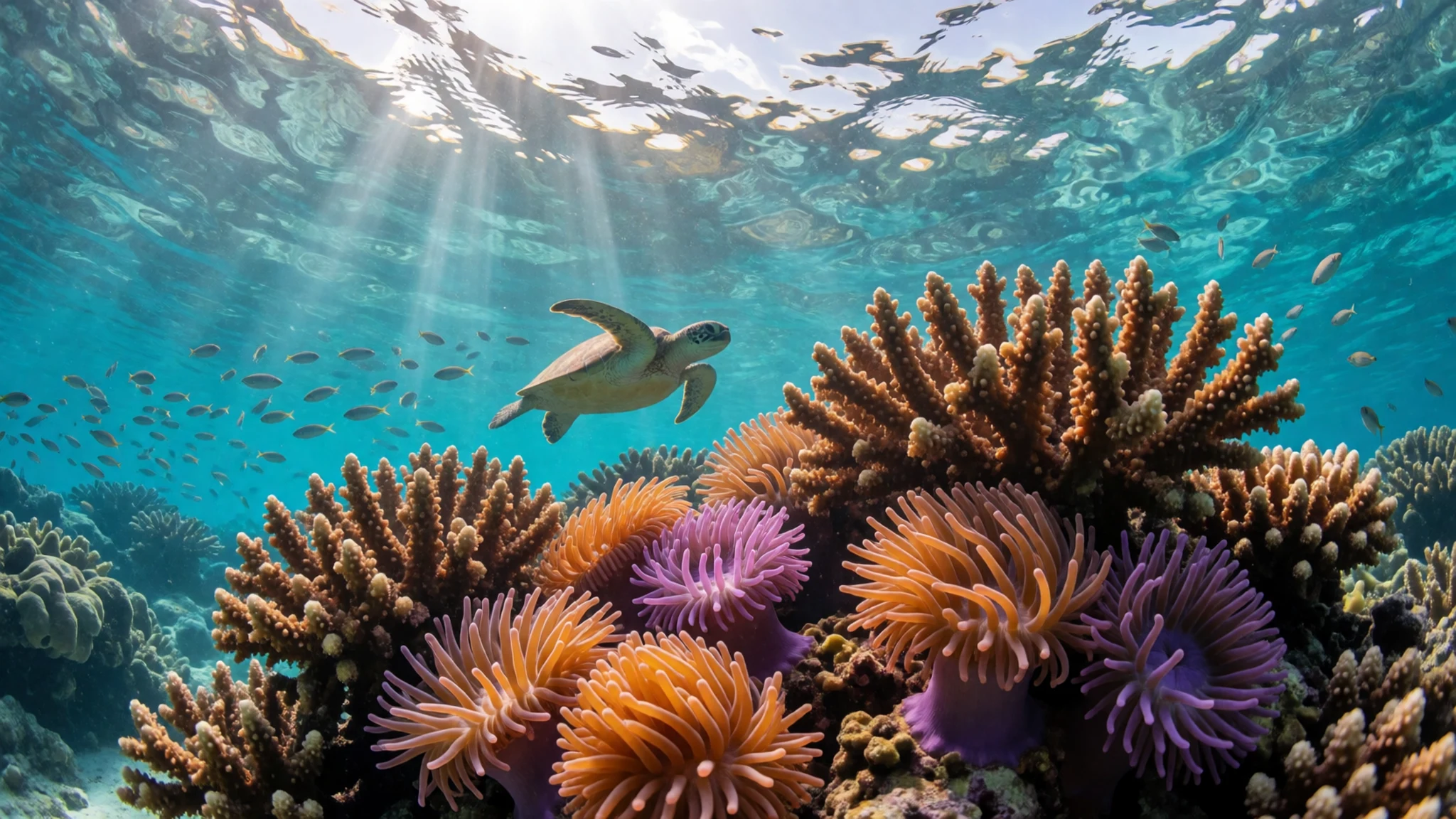
- The deep lagoon — North of the reef
North of the reef lies a deep lagoon, with depths of 20 to 30 metres on average. It is calmer than open sea and suits kayaking and fishing trips with local boat crews. Ask your guesthouse about tides and currents before heading out.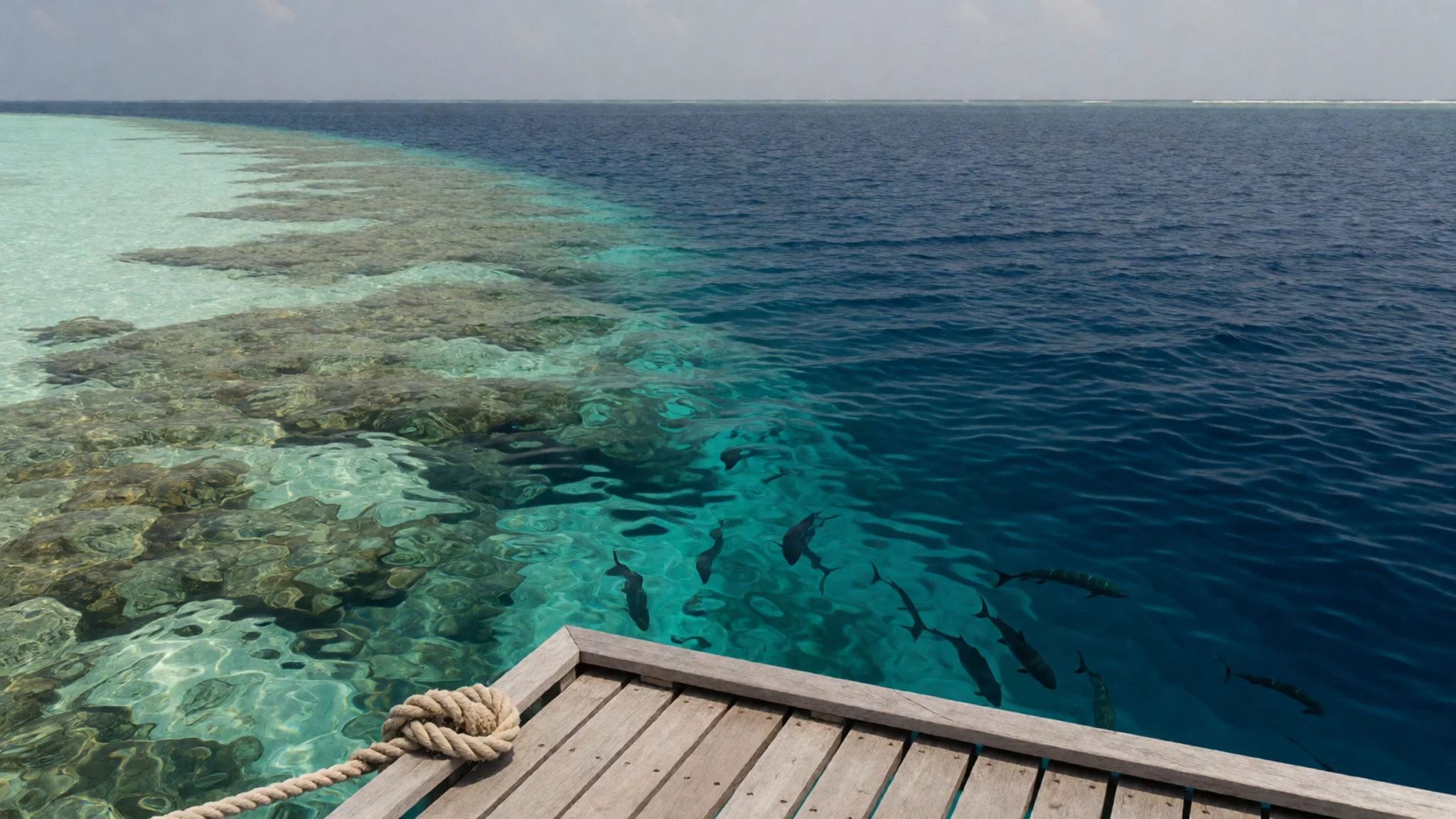
- Palm-weaving work — Village lanes
Palm weaving is led by local women, and the craft turns leaves into practical goods. Ask through your guesthouse whether a visit can be arranged, and buy directly if something is offered. It is a way to spend time with the island's traditions rather than only its water.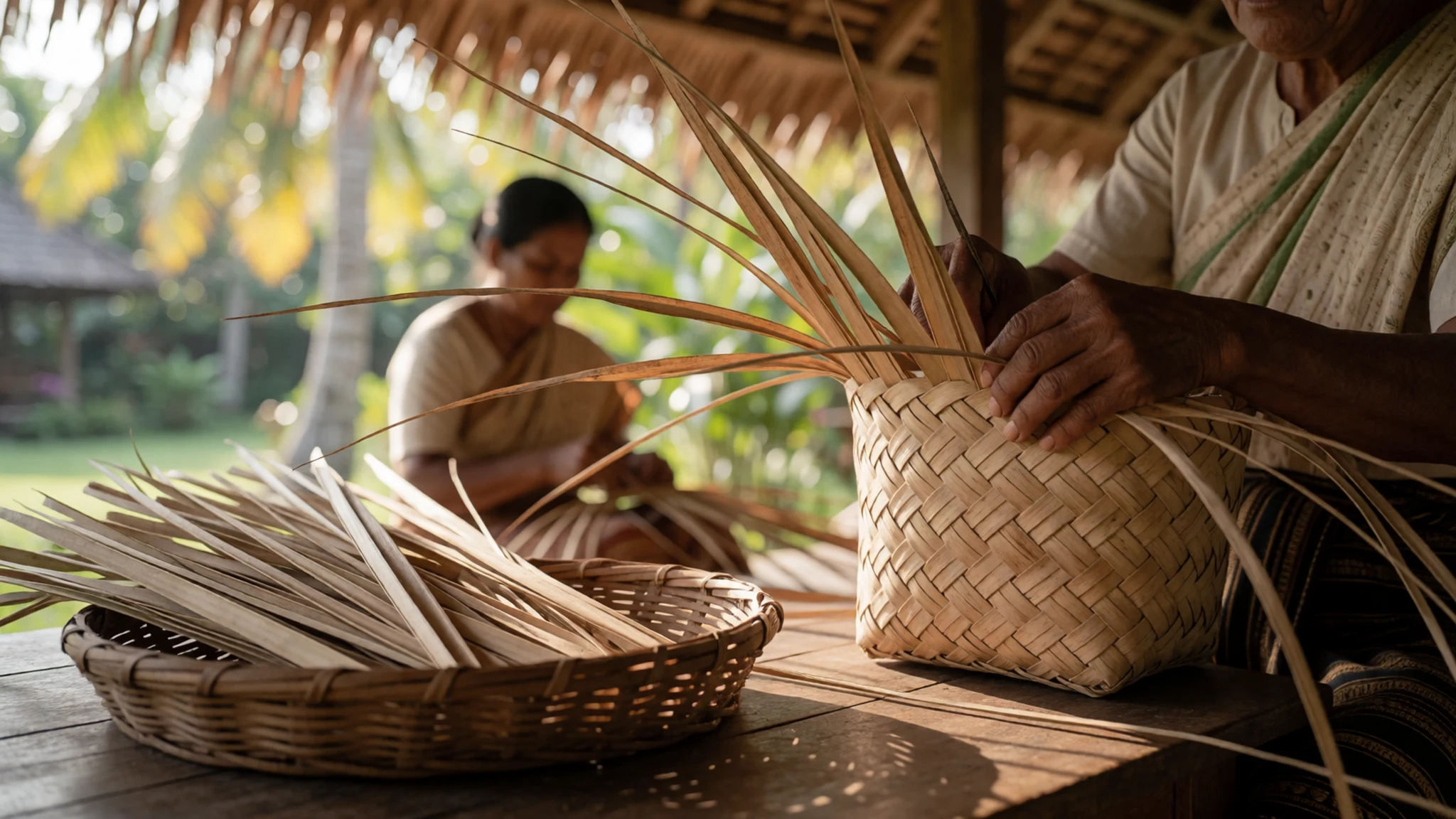
- Breadfruit and coconut groves — Island interior
Breadfruit and coconut are the main crops, and the trees shade much of the island's interior. A slow walk through the village and groves shows how people actually live here: boats pulled up, nets mended, fruit drying in the sun.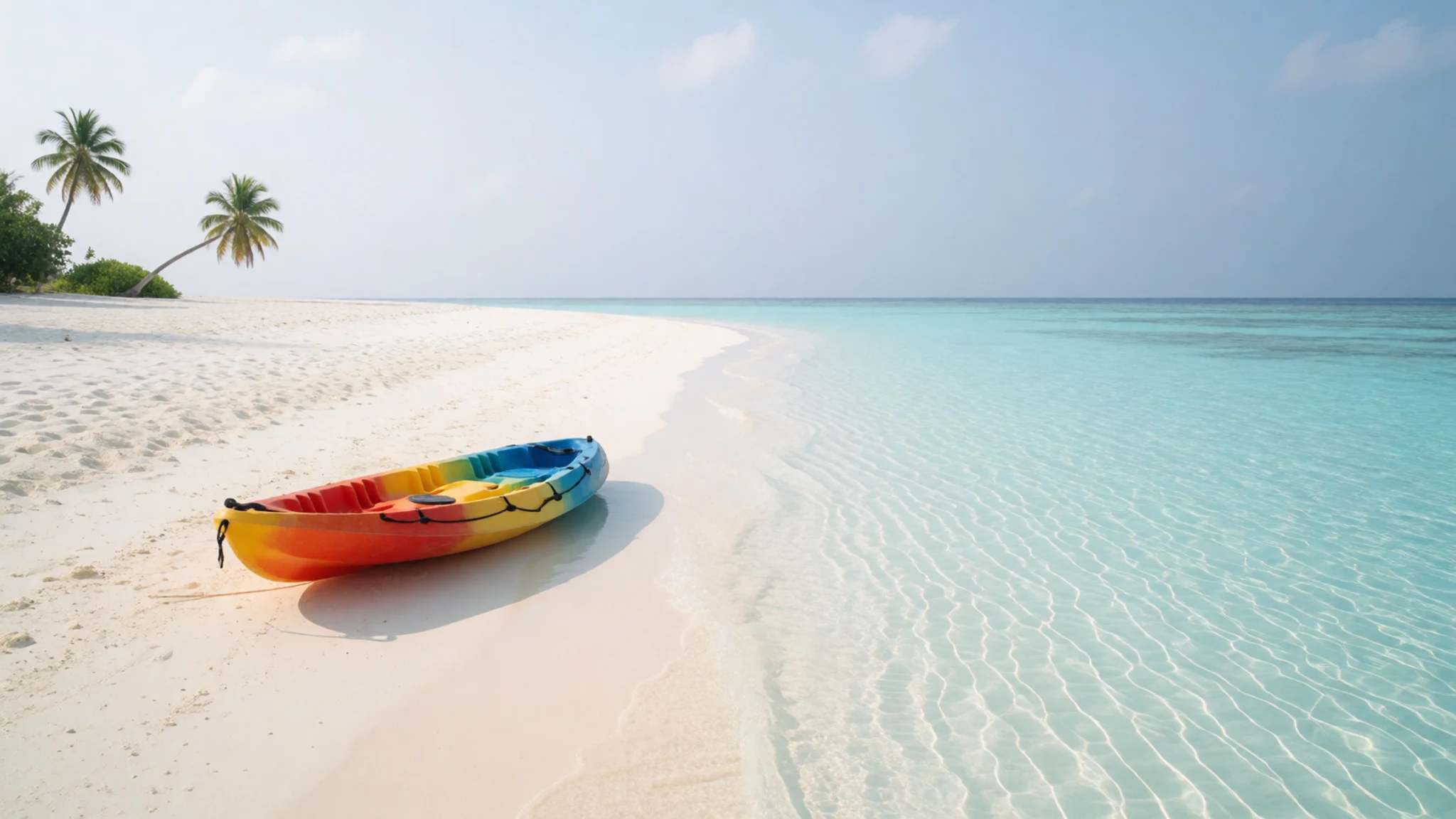
Culture
Vaadhoo is a Muslim community in a highly religious country, and daily life follows that rhythm: prayer times, modest dress and a quiet respect for religion. Much of what counts as good manners elsewhere in South Asia applies here too. Greet people politely, accept tea or snacks if they are offered, and ask before photographing anyone, especially women and children.
The island's economy is fishing, palm weaving led by women, and farming of breadfruit and coconuts. Tourism is a newer layer, and it works best when visitors treat it as an extra rather than the main event. Staying at a local guesthouse, buying crafts directly and eating at local eateries all keep money on the island.
Alcohol is banned for the local population and is available only at licensed resorts and liveaboard boats, so do not expect to find it on an inhabited island. Religion is a sensitive subject, and speaking negatively about it, or voicing agnostic views casually, can provoke strong reactions. Nudity and topless sunbathing are not allowed anywhere in the Maldives.
Cover your shoulders and knees when walking through the village, and swim only in the designated bikini area if the island has one, otherwise wear a swimsuit with shorts and a loose top.
What to wear
Vaadhoo's traditional dress has its roots in Maldivian island custom. Women have historically worn the dhigu hedhun, a long dress, with the libaas, a decorated cotton garment with embroidered neckline known as kasabu. Men wore the mundu, a wrapped cloth, with a shirt. Such clothes are now mostly seen at festivals, weddings and national occasions rather than every day.
Day to day, people on the island dress modestly and for the heat: light cotton, long skirts or loose trousers and covered shoulders for women, many of whom wear a headscarf, and shirts with trousers or sarongs for men. Fishermen and farmers favour practical, quick-drying clothes.
Visitors should dress to match. Pack loose, breathable cotton or linen that covers shoulders and knees for walking through the village, and for both men and women avoid short or tight-fitting shorts. Bikinis are allowed only in a designated area on some local islands, so ask your host where that is, and use a rash vest and board shorts or a modest swimsuit with a cover-up elsewhere.
Bring reef-safe sun protection, a wide-brimmed hat and sunglasses. Sandals or flip-flops are fine on the sand, and reef shoes help in shallow coral areas. Carry a light scarf or shawl for visiting a mosque, should you be invited, and remove your shoes at any doorway.
What to eat
- Garudhiya — Guesthouse kitchens and local cafés
A clear, simple tuna broth, the heart of Maldivian cooking. It is usually served with rice, lime, chilli and onion on the side. Eat it at a family-run guesthouse meal or a local café.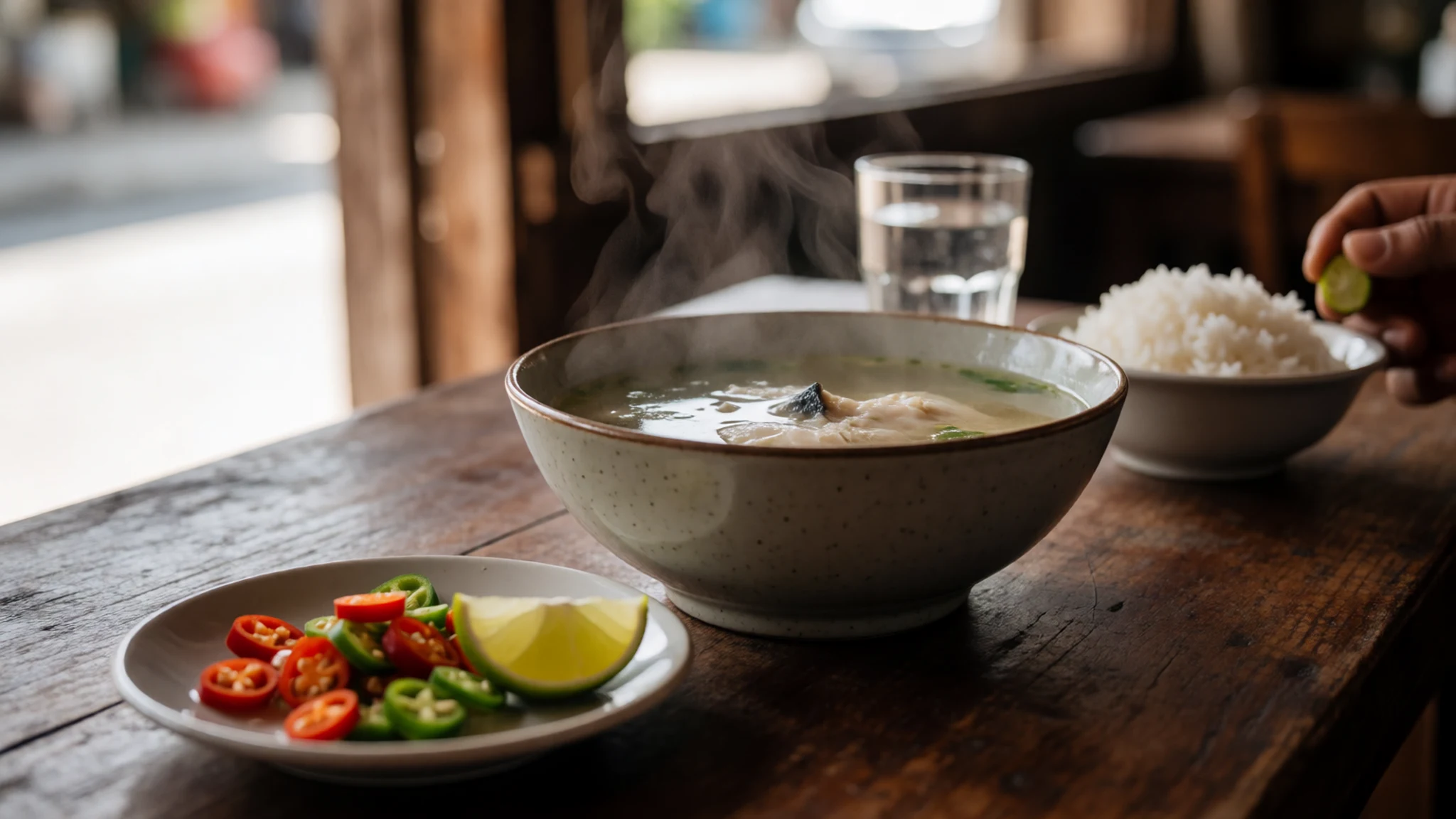
- Mas huni — Breakfast at a guesthouse or home-style eatery
Shredded smoked tuna mixed with grated coconut, onion and chilli, typically eaten at breakfast with flatbread. It is light, fresh and hot with chilli, and a good way to start a day on the water.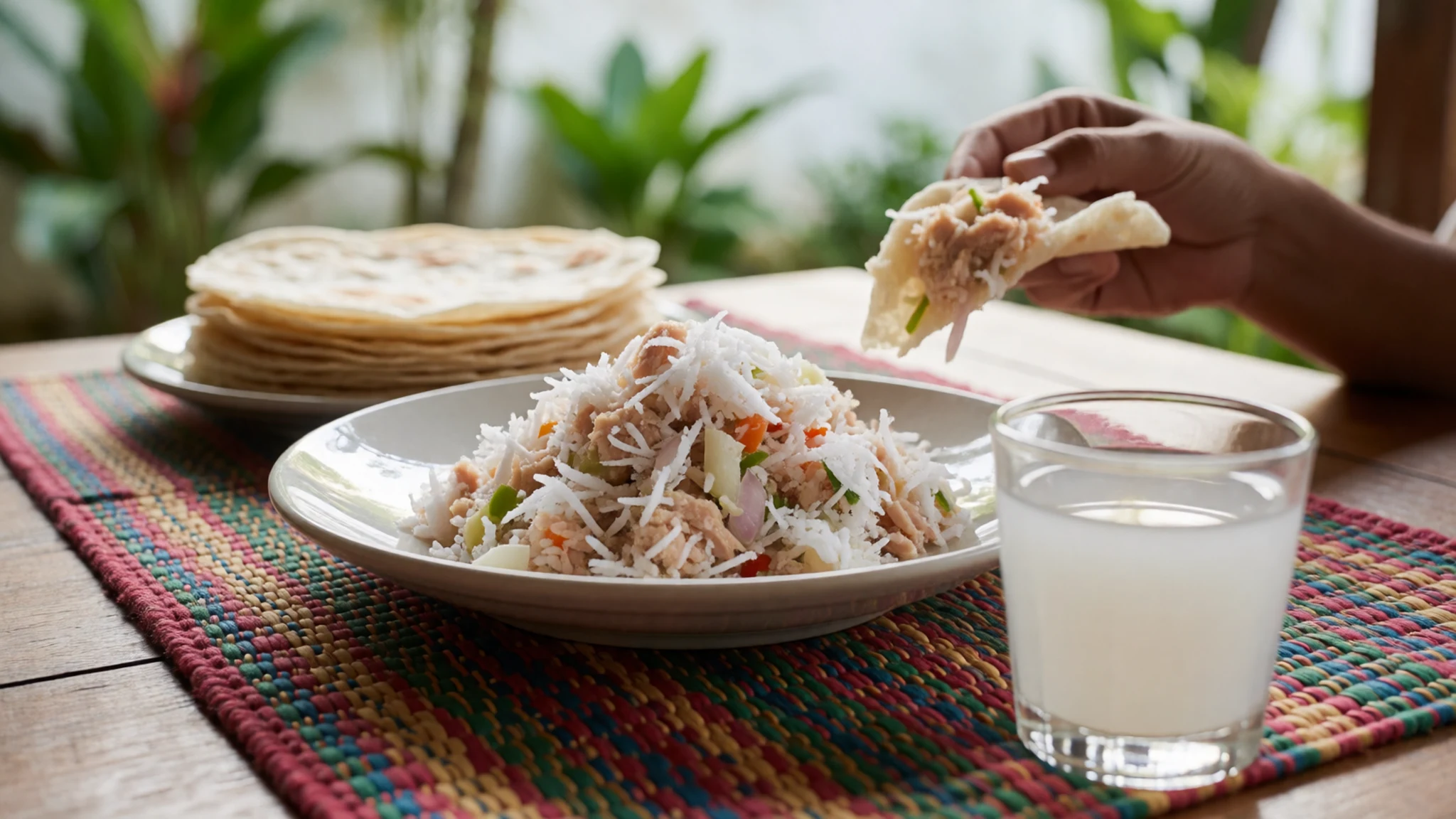
- Roshi — Local cafés and family kitchens
A thin, unleavened flatbread, similar to chapati, served alongside curries and mas huni. It reflects the South Indian influence on Maldivian food, and is made fresh in many island kitchens. - Fresh grilled tuna — Harbour-side eateries and guesthouse dinners
Tuna (kandu mas) is the staple fish, and the daily catch comes straight off the boats. It is often grilled or cooked in spicy, coconut-based curries with very few vegetables. Ask what came in that morning. - Breadfruit dishes — Village homes and guesthouse meals
Breadfruit grows on the island and is boiled, fried into chips or cooked in curry as a starchy side. Its mild flavour pairs well with hot fish dishes and coconut. Look for it on home-style menus.
Plan it
Best time. December to April is the drier season, with calmer seas and clearer water for snorkelling and diving; the south-west monsoon from May to November brings more rain, wind and rougher water.
How long. 2–3
Getting there. Fly to Velana International Airport (MLE) at Malé, then continue to Raa Atoll by domestic flight and boat or by speedboat or ferry transfer; ask your guesthouse to arrange the last leg, as schedules change.
Budget. mid
Tips
- Book the guesthouse and transfers ahead, and confirm the boat or ferry timings in writing
- Bring enough cash for small local purchases, as card facilities on small islands can be limited
- Check whether tap water is drinkable and carry a refillable bottle
- Go to the beach on a dark, moonless night for the best chance of seeing the glow
- Take local advice on tides and currents before swimming, as the sea can be strong
Etiquette
- Dress modestly in the village, covering shoulders and knees
- Ask before photographing local people
- Do not take sand, shells or coral away with you
Sources
- Wikidata Q1900637 (CC0)
- Wikipedia: Vaadhoo (Raa Atoll) (CC BY-SA 4.0)
- Wikivoyage: Maldives (CC BY-SA 4.0)
Wildlife
- Green sea turtle (animal)
The green sea turtle is a large sea creature that eats only seagrass, and it gets its name from the green tint of the fat beneath its shell, not from the shell itself, which is olive to black. Around Vaadhoo you may well see turtles drifting through the clear water over the reef. Watch from a respectful distance, move quietly, ideally with a guide, and never feed or chase them.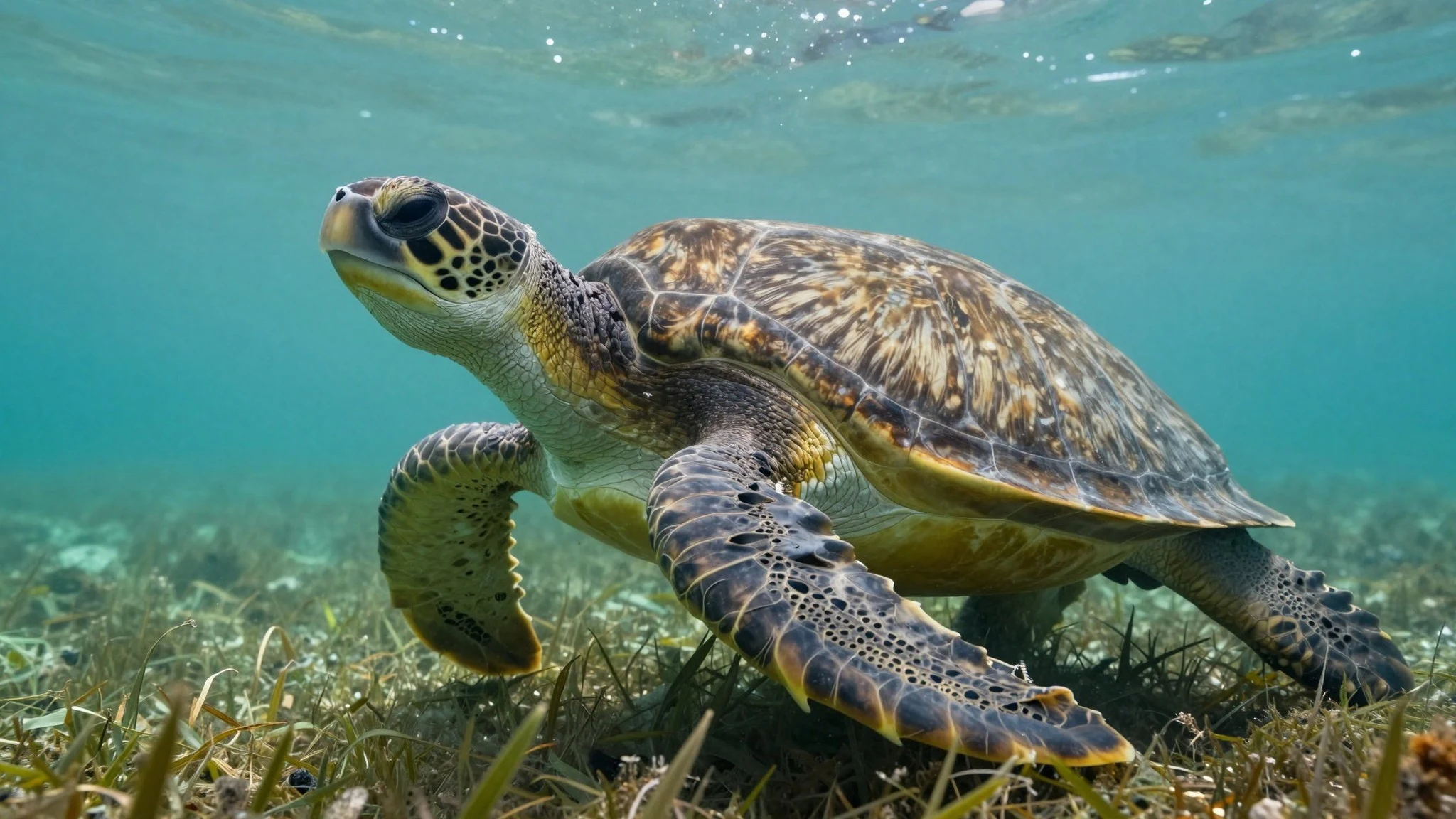
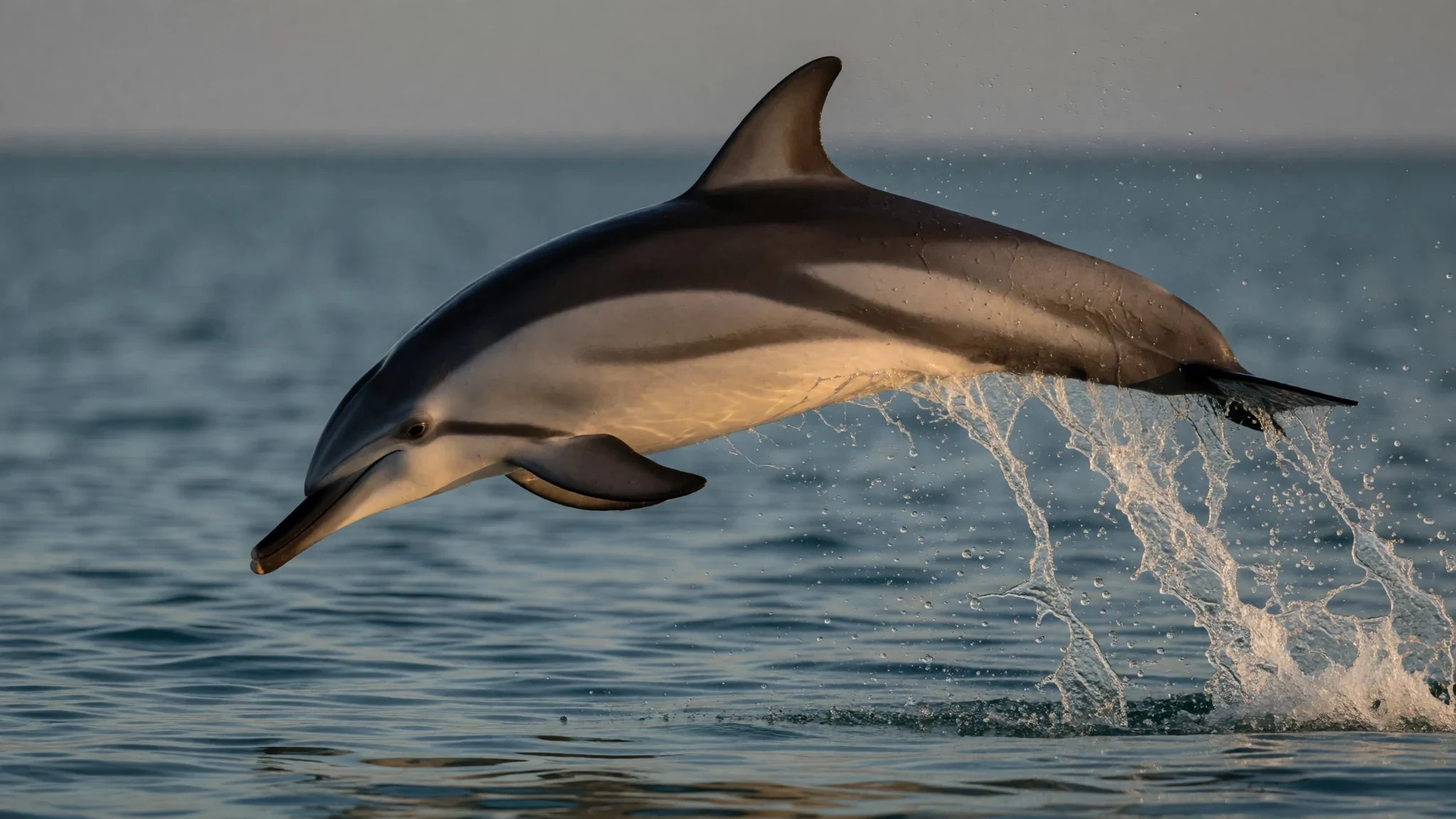
- Spinner dolphin (animal)
The spinner dolphin is a small dolphin that loves to leap and twirl through the air, like a tiny acrobat of the sea. It lives in warm, open tropical waters, and dolphins are a common sight around Vaadhoo's clear reef waters. Keep a good distance, stay quiet and calm, let a local guide show you the best way to watch, and never feed them.