Dhigurah
Dhigurah, Maldives
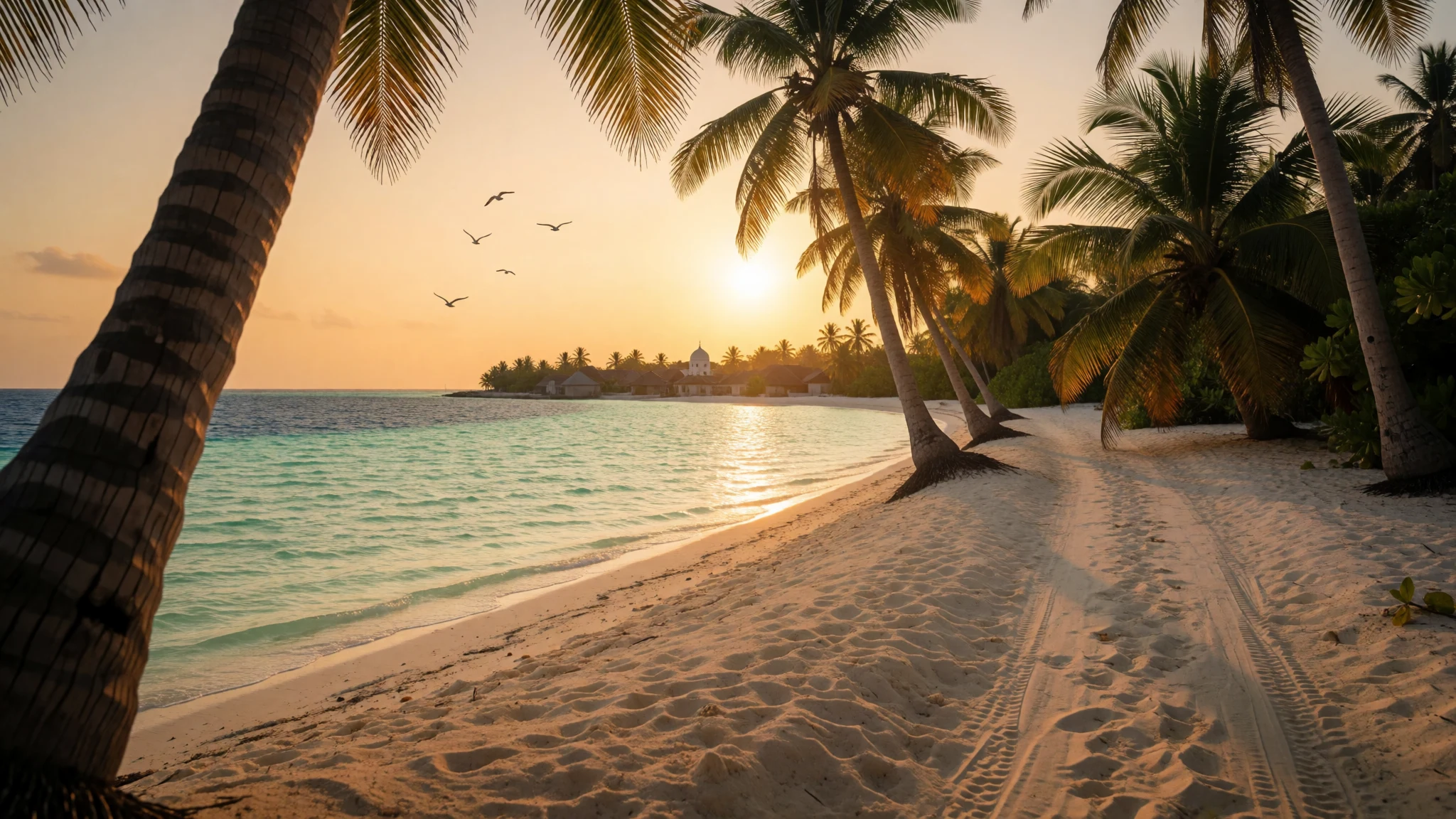
Dhigurah is a long, lived-in Maldivian island where whale sharks, calm lagoon water and a small fishing village sit together without a resort in sight.
The place
Dhigurah is a long, thin inhabited island on the southern side of Alif Dhaal Atoll in the Maldives. Wikidata records its elevation as 11 m, and on the ground it feels lower: palms, a sandy lane, then the sea on both sides. The village sits towards one end, with guesthouses, small shops, a mosque and a school, while the rest is mostly beach and coconut grove stretching away for kilometres. That length is the point of the place. The lagoon side is calm and shallow, good for wading and for children, and the outer side meets the reef, where the water turns darker and the swell picks up.
Dhigurah is known for whale sharks, which are reported around the island throughout the year. Sightings are never guaranteed, since these are wild animals that follow food, and boat trips go out looking rather than promising. The same waters hold reef sharks, turtles, rays and many reef fish, so a mask and snorkel earn their keep even on a day when no whale shark appears.
It is a very different Maldives from the private-resort picture. Dhigurah is a community where fishing and, increasingly, guesthouse hosting shape the day. Meals are eaten in family-run dining rooms, getting about is by bicycle or on foot, and the pace follows tides, prayer times and weather. Heat and humidity are constant, shade on the beach is scarce, and the sun is stronger than most first-time visitors expect.
Its story
Dhigurah's story is bound up with that of the Maldives as a whole, a chain of coral islands whose past survives in legend, carved coral and old copperplate records. The country passed through a sultanate under Dutch and later British protection, became independent from Britain in 1965 and a republic in 1968. Politics since then has been turbulent: a long period of one-man rule, contested elections, street protests, and a change of president after a free vote in 2008. Through all of it, island communities like Dhigurah lived largely by the sea, selling tuna and reef fish and building their boats from what they could get.
What changed everyday life was tourism policy. For decades visitors were confined to dedicated resort islands, so ordinary villages saw almost none of them. A change in 2008 allowed travellers to stay on any inhabited island, and small locally run guesthouses began to appear across the country. Dhigurah is now known among divers and snorkellers mainly for its whale sharks.
The result is an island with two livelihoods side by side: fishing and hosting. Families who once only fished now run rooms, boats and kitchens, and the village has adjusted its routines to visitors without giving up its own. Rules about dress and alcohol exist because Dhigurah is an Islamic community first and a holiday stop second. Visiting well means understanding that arrangement from the start.
What to see
- The long beach and sand strip — Along the length of the island
The defining sight on Dhigurah is the island itself: a narrow ribbon of sand and palms with calm lagoon water on one side and open reef on the other. Walking its length in the cooler hours is the simplest way to see it. Shade is patchy, so carry water and a hat.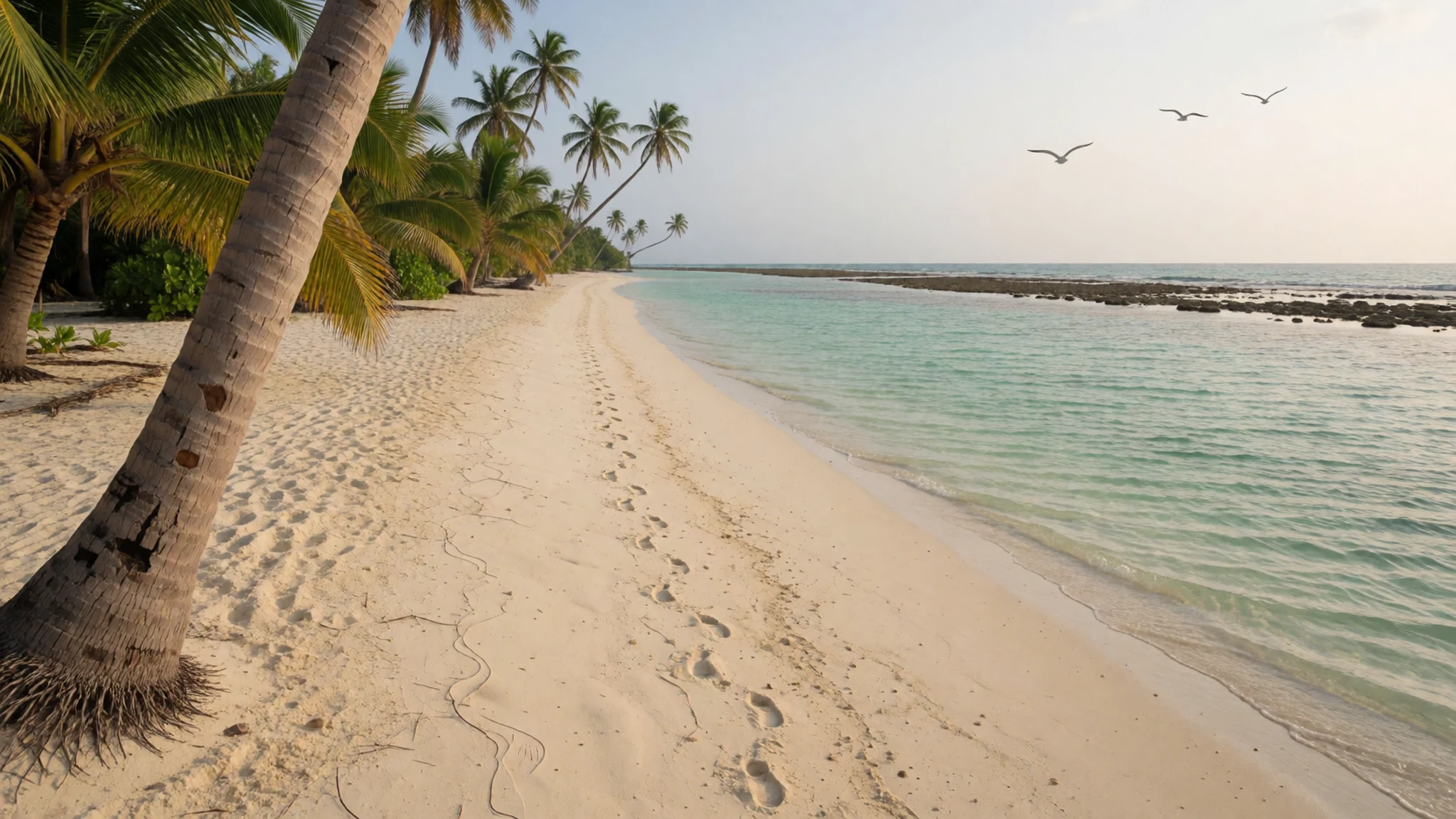
- Lagoon snorkelling — Lagoon side of the island
The shallow lagoon beside Dhigurah is where most visitors first put on a mask. Colourful reef fish, rays and the occasional turtle show up close to shore, and the water is gentle enough for beginners. Local advice matters here, because currents change with the tide and can be strong beyond the shallows.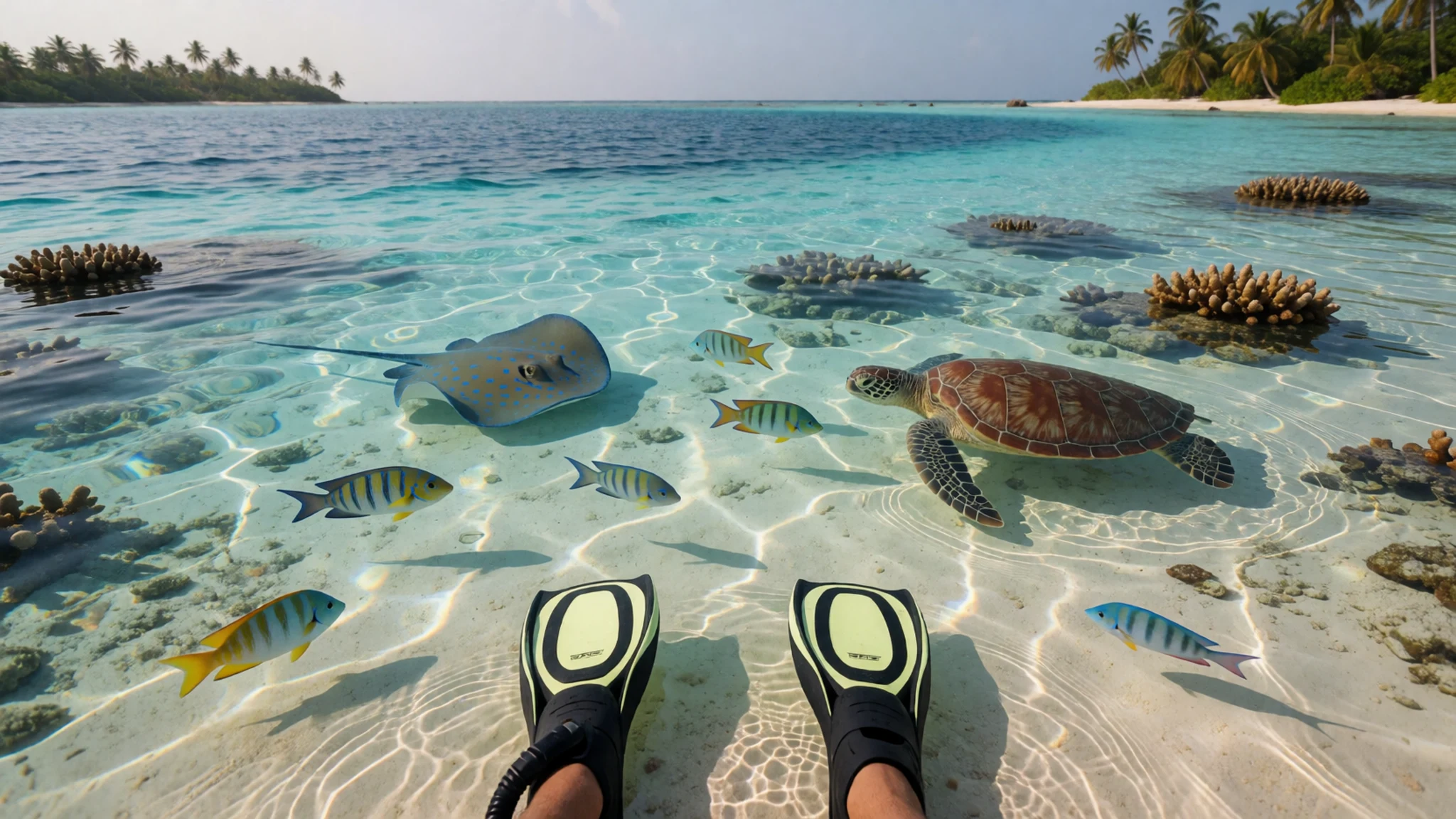
- Whale shark trips — Outer reef waters off the island
Boat trips from Dhigurah head out to the outer reef edge to look for whale sharks, which the island is best known for. Sightings are likely rather than certain, and the animals are wild. Guides brief swimmers on keeping distance and not touching, and good operators turn back when the animals are not there.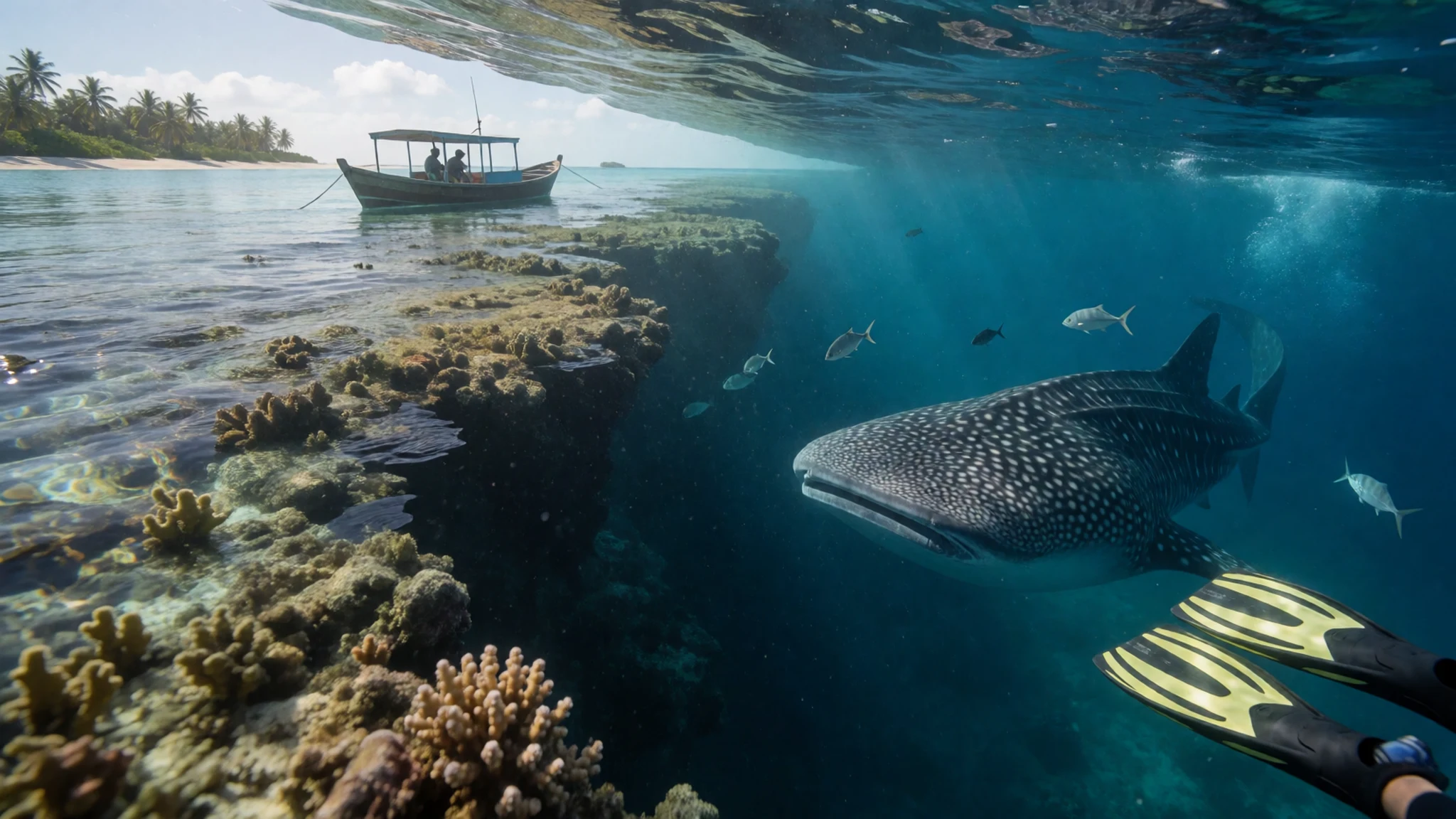
- The village lanes — Village area
The village at the northern end is a short walk of sandy lanes, small shops, boats pulled up on the shore and the mosque, whose exterior can be admired from the street. It is the best place to see how an island community arranges its day around fishing, school and prayer.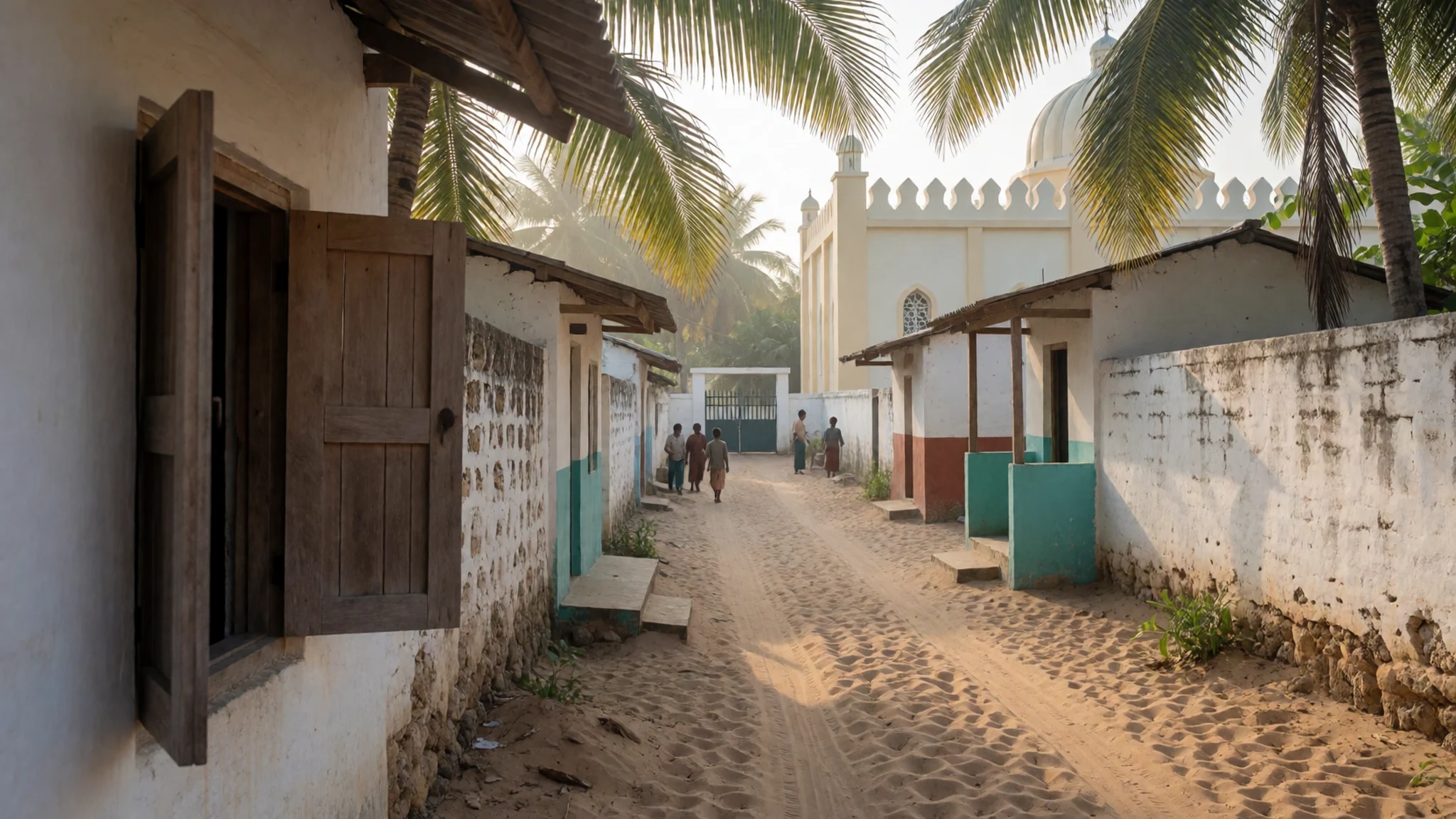
- Southern tip at sunset — Southern end of the island
The far southern end of Dhigurah thins to sand and low scrub, with water on almost every side and few people about. Visitors tend to walk or cycle out in the late afternoon for the light. Insects and strong sun are the trade-offs, so bring repellent and a cover-up.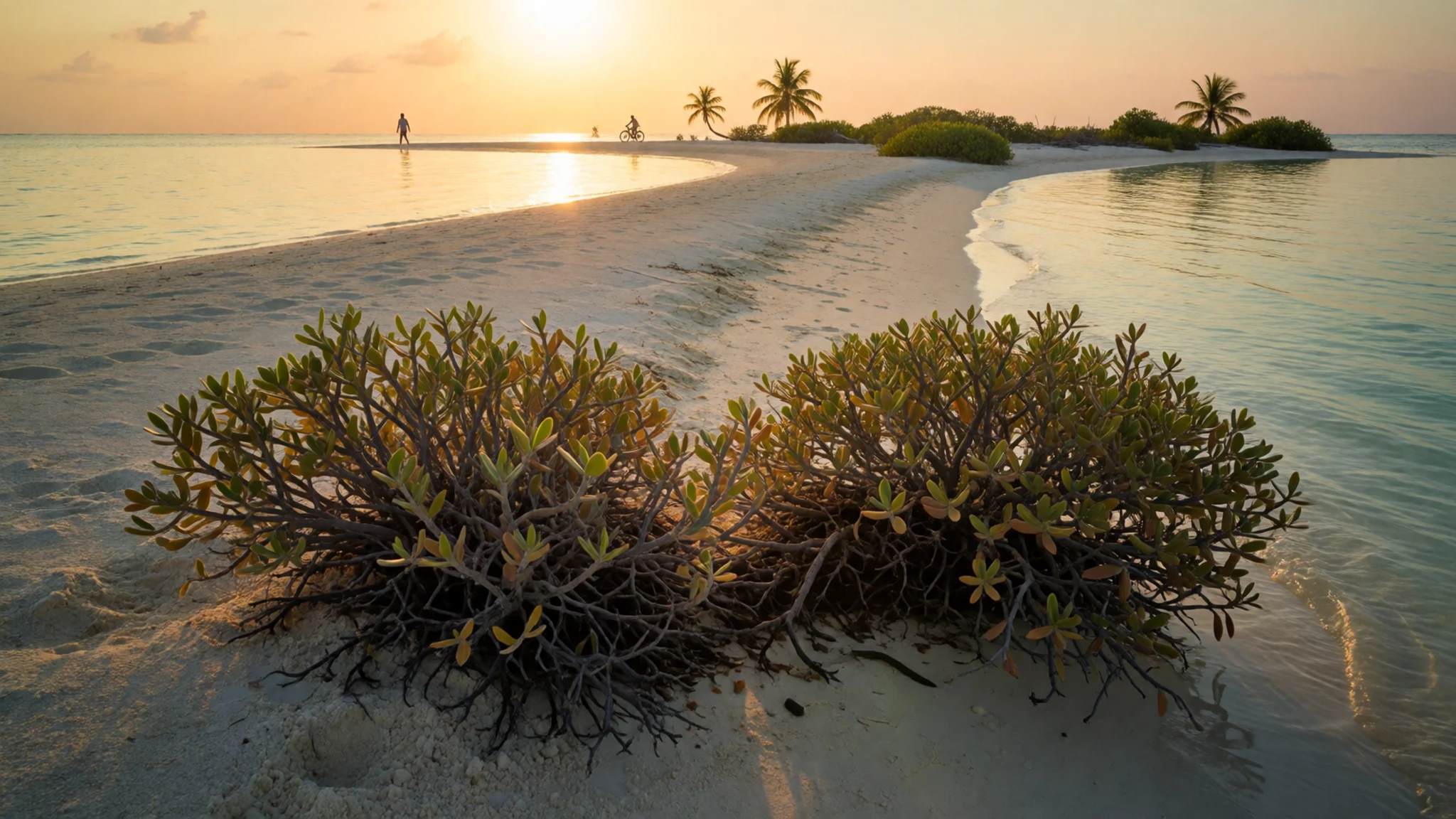
Culture
Dhigurah is a Muslim community, and religion shapes daily life more than a first glance at the beach suggests. The call to prayer marks the day, shops may close briefly at prayer times, and Friday is the quietest day on the island. Much of what counts as good manners elsewhere in South Asia applies here too: a calm voice, modest behaviour, patience, and respect when religion is discussed. Criticising Islam, or joking about it, can cause real offence and is best avoided entirely.
Islamic rules also govern alcohol. It is not available to local people and not sold in the village, and visitors should not expect it on an island like Dhigurah. Guesthouse hosts are generally welcoming and relaxed with guests, but they are also running a household, so small courtesies count: a greeting, a thank-you, asking before photographing someone.
Life is shaped by the sea. Fishing remains central, tuna is a staple, and the reef is both a livelihood and a shared asset that the community wants to keep healthy. Visitors who snorkel are asked to keep clear of coral and wildlife, take their rubbish with them and never remove shells, sand or coral.
On local islands such as Dhigurah, cover your shoulders and knees in the village, and wear swimwear only on the designated bikini beach or on a boat trip, never while walking through the village.
What to wear
Dhigurah's traditional dress is part of wider Maldivian custom. Women have long worn the libaas, a long dress in cotton or similar light cloth, often with a decorated neckline worked in gold or silver thread, and kept for weddings, festivals and religious occasions. Men's traditional dress is the feyli, a sarong-style wrap, usually with a plain shirt. Both are chosen for heat and for modesty.
On an ordinary day in Dhigurah's village, people wear what suits a hot, humid island: light cotton shirts, loose trousers or long skirts, headscarves for many women, and sandals or bare feet near the shore. Smart wear appears on Fridays and festival days. School uniforms are common sights in the lanes.
Visitors should dress for both climate and community. In the village, loose, lightweight clothes that cover shoulders and knees work well for men and women, and a thin long-sleeved shirt also helps against sun. Swimwear is for the designated bikini beach and for boats, with a cover-up for the walk back. Topless sunbathing is not allowed. Sandals or flip-flops handle sandy lanes, and reef shoes help with rocky entries. Rash vests protect shoulders during long snorkels, and a wide-brimmed hat is useful on the sand strip.
What to eat
- Mas huni — Guesthouse breakfast tables and small tea shops in the village
A breakfast of shredded smoked tuna mixed with grated coconut, onion and chilli, usually eaten with flatbread and a cup of tea. It is simple, fresh and quietly spicy, and a reliable way to start a day on the island.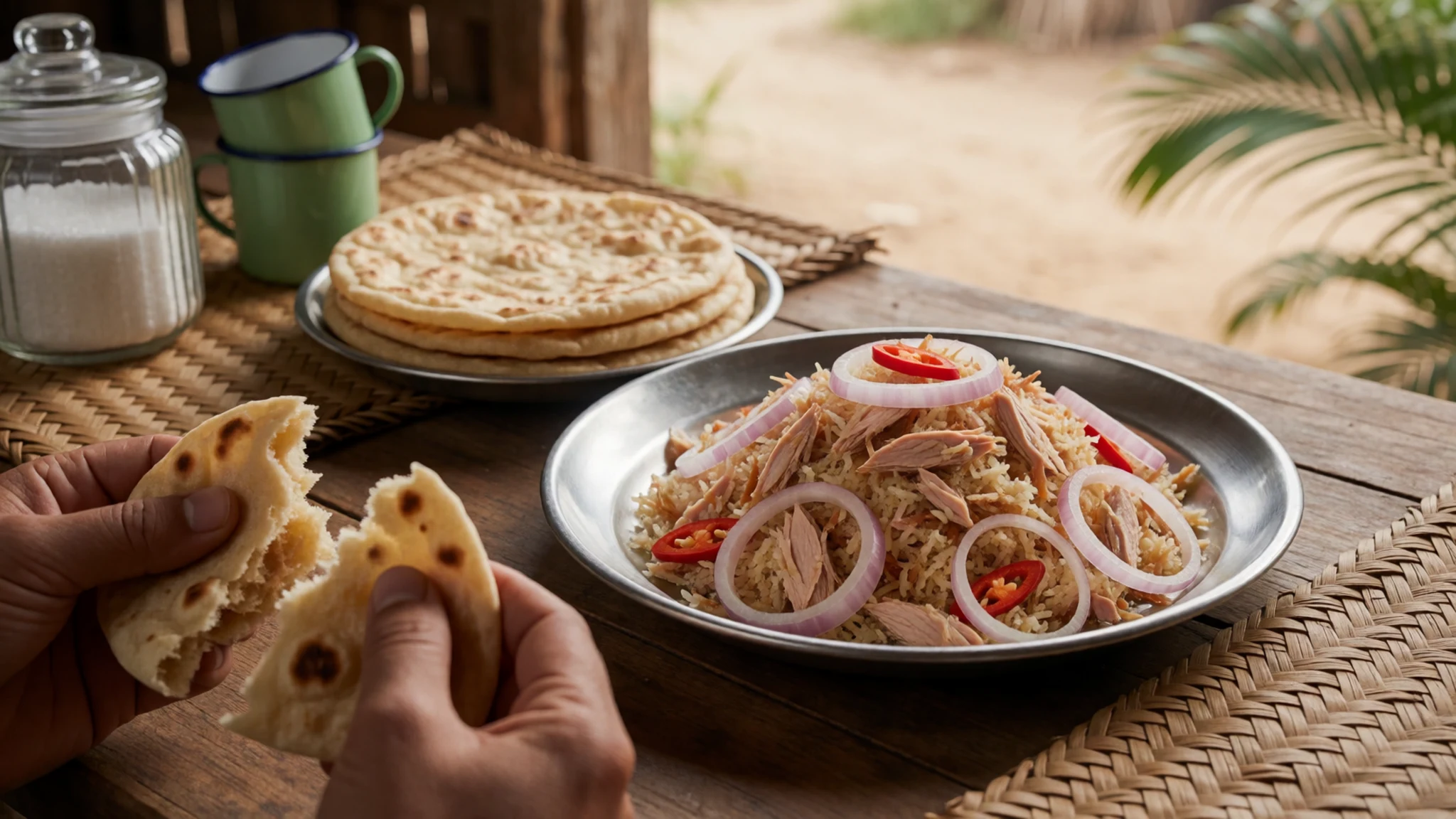
- Garudhiya — Family-run dining rooms and guesthouse lunch tables
A clear, gently salted tuna broth served over rice with lime, chilli and onion on the side. It is the core of a traditional Maldivian meal, and the lime and chilli let each diner adjust it to taste.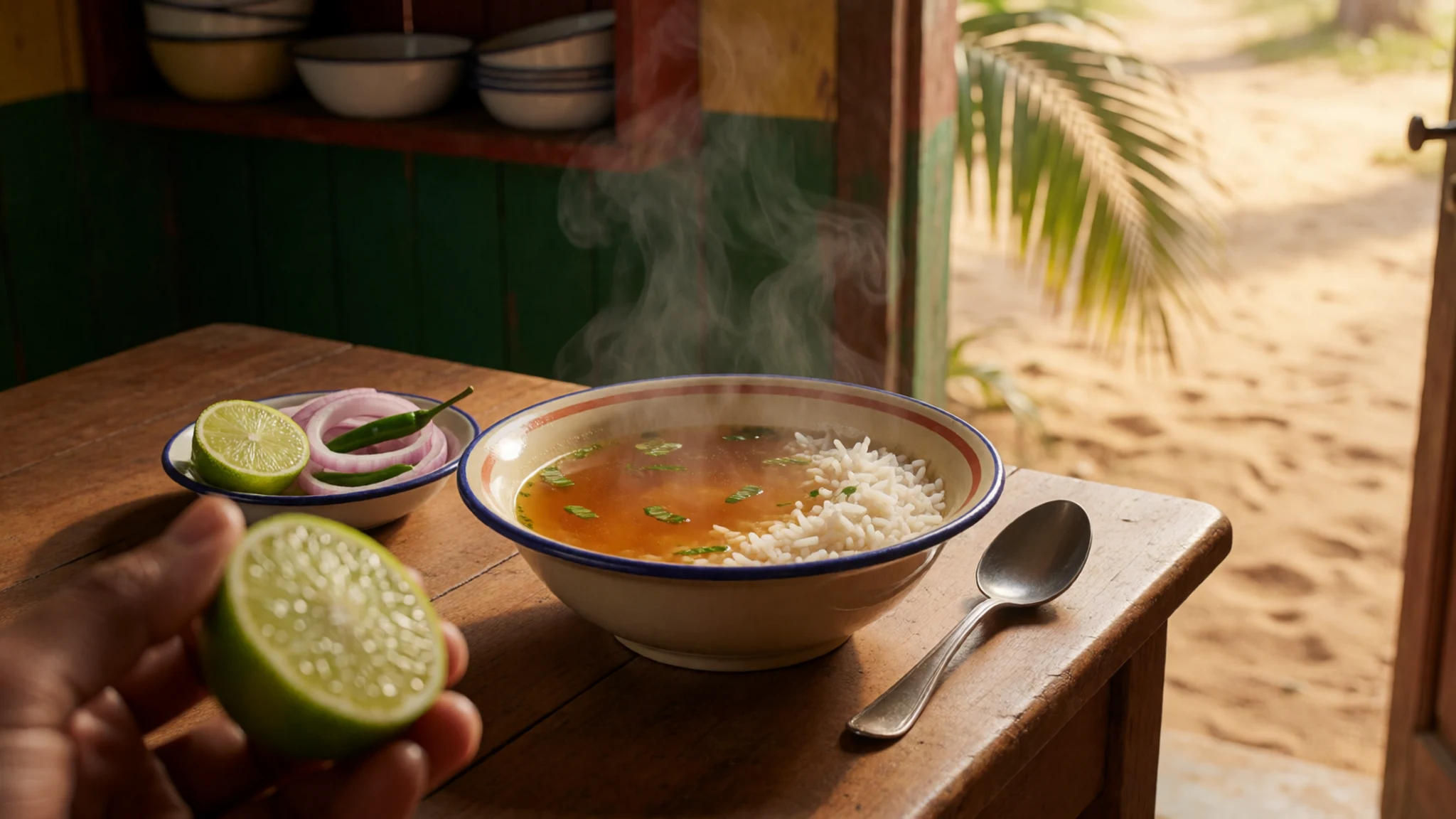
- Roshi with fish curry — Village eateries and guesthouse dinners
Thin, unleavened flatbread served with a coconut-based tuna curry, a pairing that shows the South Indian influence on Maldivian cooking. Expect heat from chilli and a rich, coconut-heavy gravy. - Hedhikaa short eats — Tea shops and small shops in the village
The Maldivian tea-time snacks: fried or baked parcels of fish, coconut and spice, such as fish rolls and small fried bites. They are made fresh, often sold in the late afternoon, and work well after a morning on the water. - Grilled reef or tuna fish — Guesthouse dinners and beach-side evening cookouts
Fresh fish grilled over heat with local spices, usually from the day's catch and served with rice or salad. Ask the guesthouse what came in that morning, since the catch varies with weather and season.
Plan it
Best time. December to April is the drier, calmer part of the year, with more sunshine and easier boat conditions; the wetter months bring heavier showers and rougher seas. It is hot and humid year-round, and whale sharks are reported all year, so timing matters less for them than for comfort.
How long. 3–4
Getting there. Fly to Velana International Airport (MLE) near Malé. From there, onward transfer to Dhigurah is by domestic flight and boat, or by speedboat or ferry, depending on the day; ask the guesthouse to arrange the current option and confirm timings before booking.
Budget. mid
Tips
- Book the guesthouse and the onward transfer together, and confirm the last leg in writing before travelling.
- Carry some cash, since small village shops and boat operators may not take cards.
- Bring reef-safe sun protection and a rash vest; shade on the beach is limited.
- Ask the guesthouse about currents and local conditions before swimming, especially off the outer reef.
- Treat whale shark trips as chances rather than guarantees and leave a spare day if you can.
Etiquette
- Cover shoulders and knees in the village, and keep swimwear for the designated beach and boats.
- Do not touch whale sharks, turtles or coral, and keep your distance in the water.
- Ask before photographing local people, especially women and children.
Sources
- Wikidata Q1816368 (CC0)
- Wikipedia: Dhigurah (Alif Dhaalu Atoll), rev 1374303381 (CC BY-SA 4.0)
- Wikivoyage: Maldives, rev 5340207 (CC BY-SA 4.0)
- Photo: Dhigurah.jpg, Syced (CC BY 3.0)

Wildlife
- Whale shark (animal)
The whale shark is the biggest fish in the world, a gentle giant that glides along and strains tiny food from the water rather than hunting. Around Dhigurah it is reported all year, so there is hope whenever you visit, though no sighting is ever promised. Go with a guide, slip into the water quietly, and keep a respectful distance so it can swim on undisturbed. Never touch it or feed it; simply enjoy watching it pass.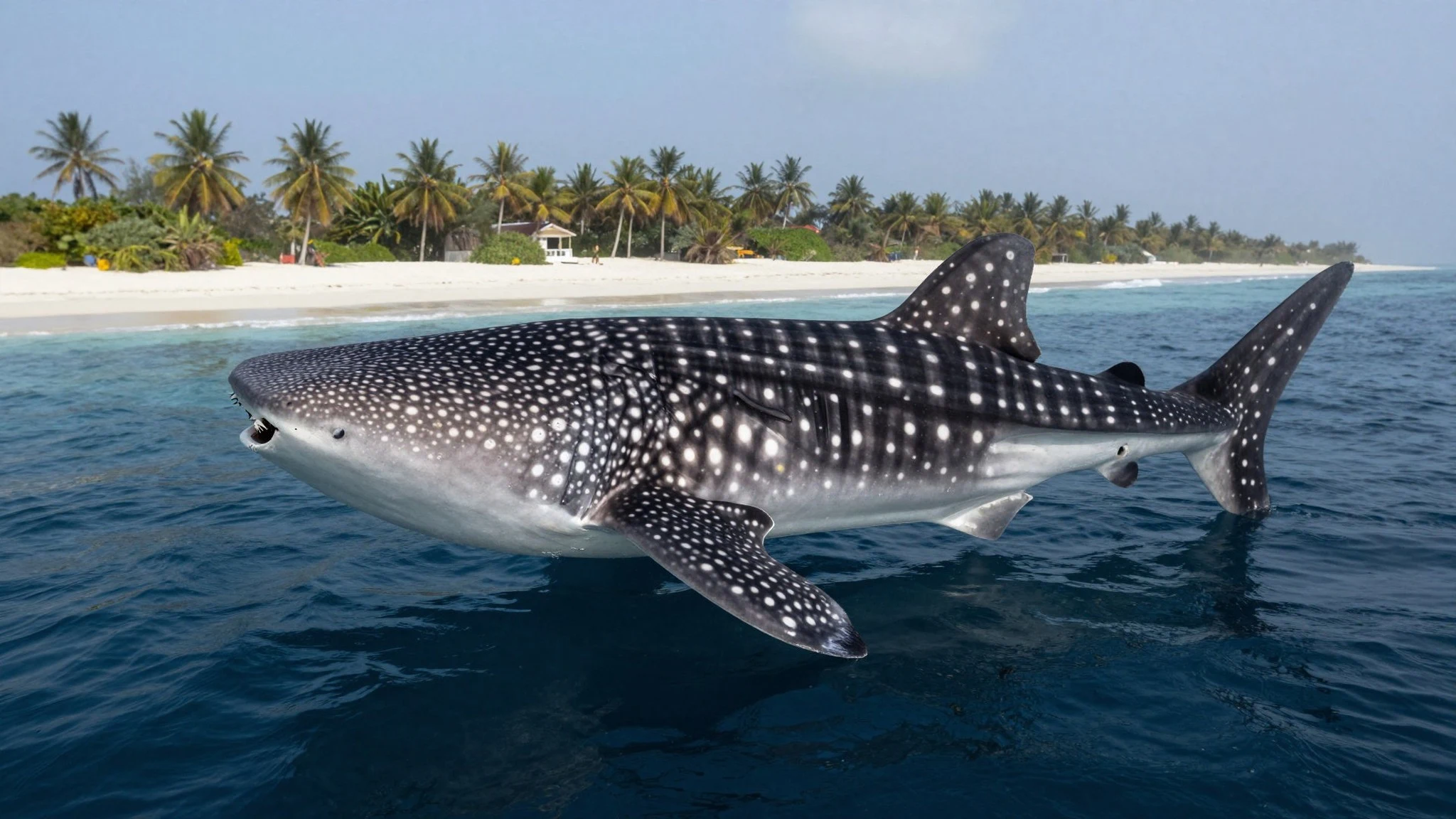
- Reef shark (animal)
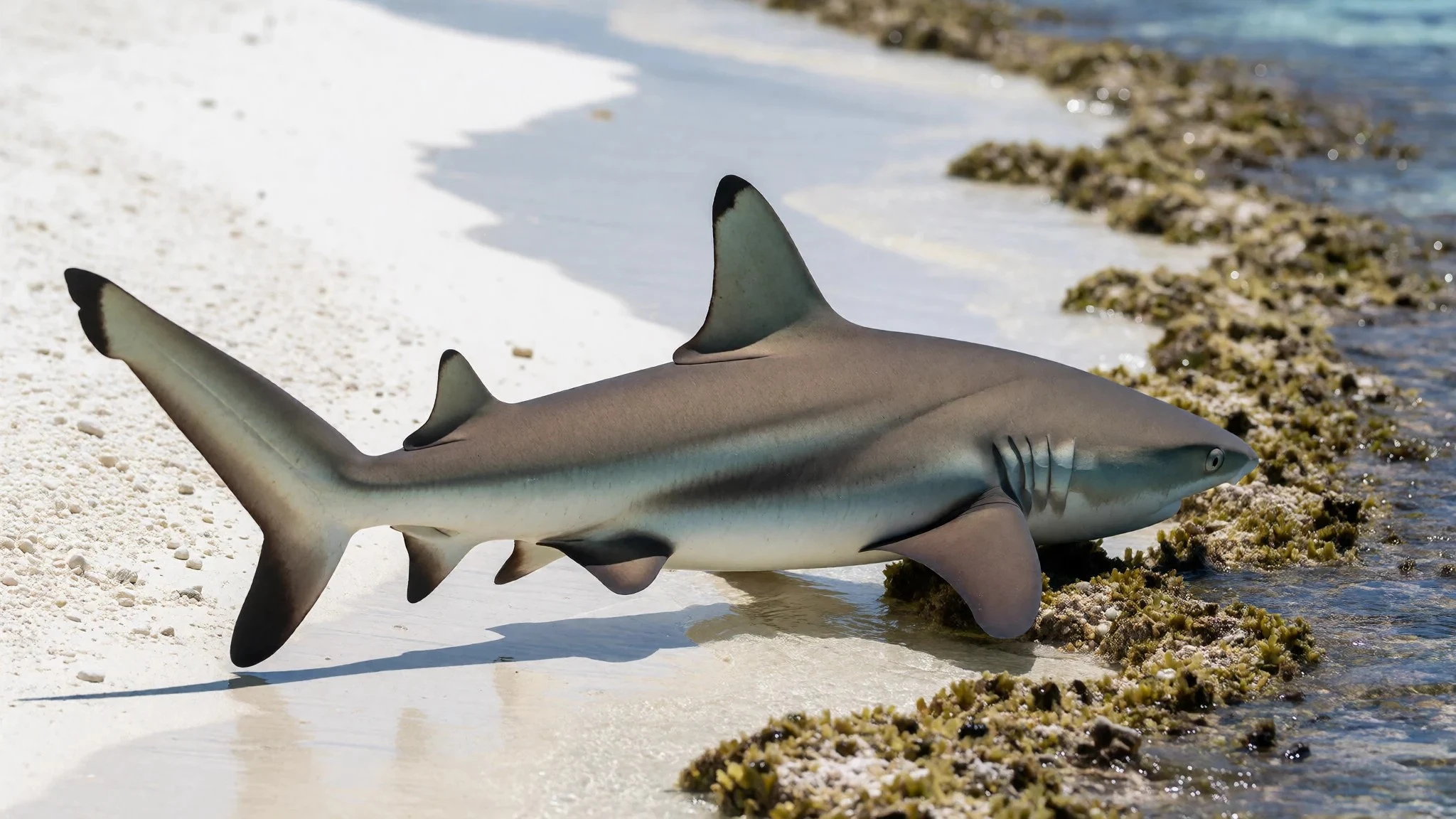
The blacktip reef shark is easy to spot by the dark tips on its fins, as if dipped in ink. It likes shallow water close to shore, over reef ledges and sandy flats, and its fin often shows above the surface. Reef sharks share Dhigurah's waters with turtles and rays, so a mask and snorkel are worth bringing. Float quietly, keep your distance, ideally with a guide, and never feed them.