Ly Son
Ly Son, Vietnam
Ly Son is a small volcanic island off central Vietnam, where whale shrines, crater views and garlic fields sit beside quiet beaches and fresh seafood.
The place
Ly Son is a small volcanic island group off the coast of Quảng Ngãi province in central Vietnam, run as a special zone rather than an ordinary district. Its land area is about 9.97 square kilometres, shared between two inhabited islands and a scatter of islets. The larger island, Ly Son, once called Cù Lao Ré, carries three craters, the largest being Mount Thoi Loi, and the island's power plant draws on hot water from beneath it. Its smaller neighbour, Little Island (Cù Lao Bờ Bãi), has residents of its own. Daily life here runs on the sea. Fishing is the backbone of the economy, and Ly Son is known across Vietnam for a particular variety of garlic grown in the island's sandy soil. Digging sand to feed that cultivation has eroded parts of the coast, so the garlic fields carry a real cost. Tourism only began to grow in this century, and it still feels like a working fishing community with guesthouses added, not a resort. Visitors typically arrive by sea from the mainland, spend a few days on scooters circling the coast, swim from small beaches, climb a crater and eat a great deal of seafood. Weekends, public holidays and school holidays bring full ferries and busy lanes, while midweek is calmer. The sea sets the schedule, so plans need slack for weather and cancelled boats.
Its story
Ly Son has been lived in for a very long time. Archaeologists have found traces of the Sa Huỳnh culture on the islands, dating from before 200 CE, so people were here long before the Vietnamese settlement of later centuries. The Cham later used the islands as a base for transferring cargo between ships. The Xó La well on the shore of the main island, one of several that supplied vessels with fresh water, is still in use. In the 15th century the islands served as a landmark for sailors on Admiral Zheng He's treasure voyages, a reminder that a volcanic cone rising from open water is easy to steer by. Settlement from the mainland followed in the 17th century, when the Nguyễn lords brought families over from An Vĩnh in Bình Sơn district. The colony sat alongside the Hoàng Sa Company's efforts out in the Paracel Islands, and it linked the island to a wider tradition of Vietnamese seafaring. The war years left their own mark. A US Navy radar post on the island watched coastal sea traffic during the American phase of the Vietnam War. Little of this is advertised in grand monuments. The island's history is read more in its wells, temples and the routines of fishing families, so a visit rewards slow wandering and conversation over ticking off sights.
What to see
- Cong To Vo — Main island, coast
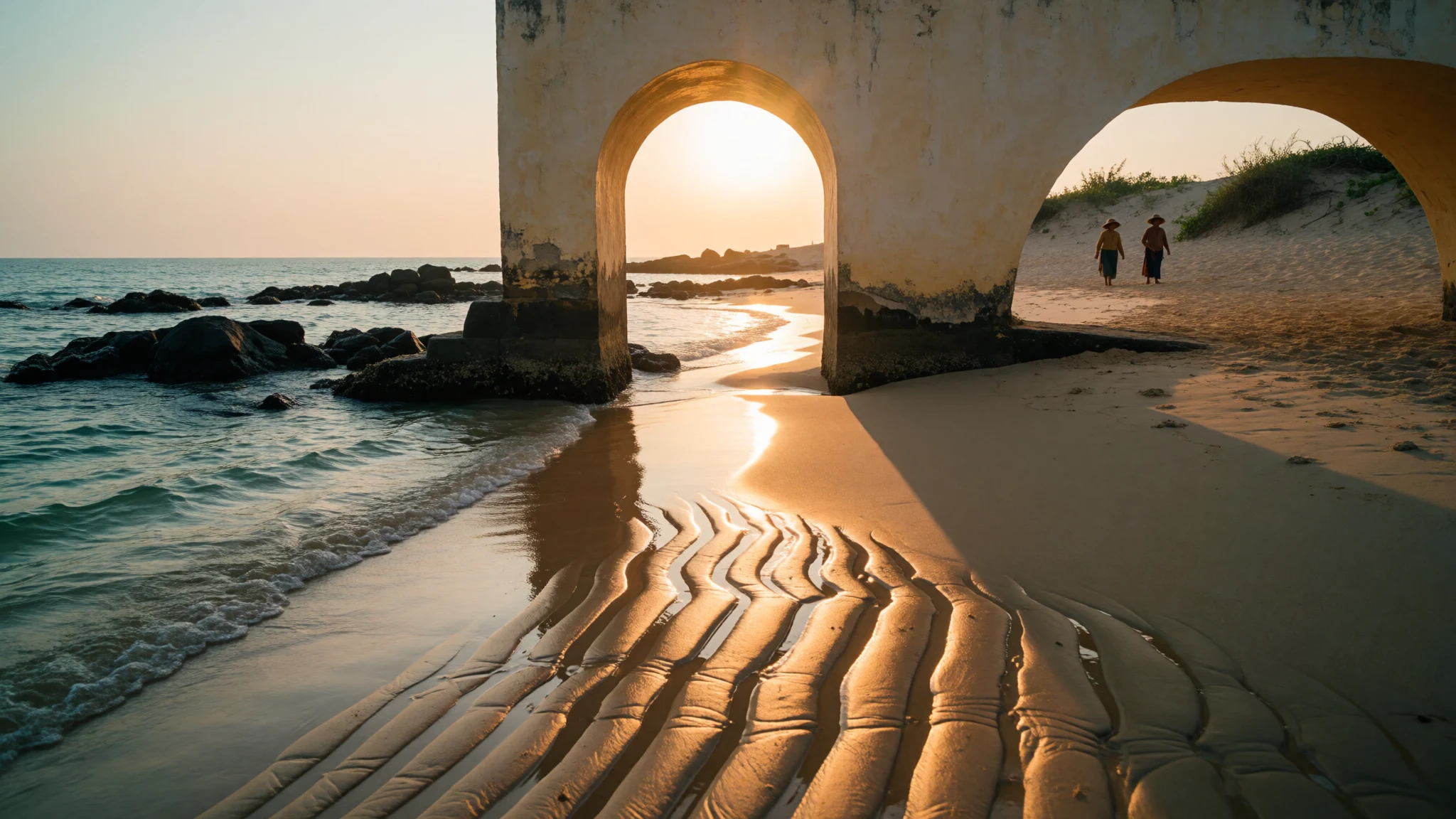
Cong To Vo is an archway on the beach and the usual place to watch the sun go down. Arrive in the late afternoon, when the low light turns the sand gold, and expect company at sunset, because few visitors skip it. Bring a hat for the wait.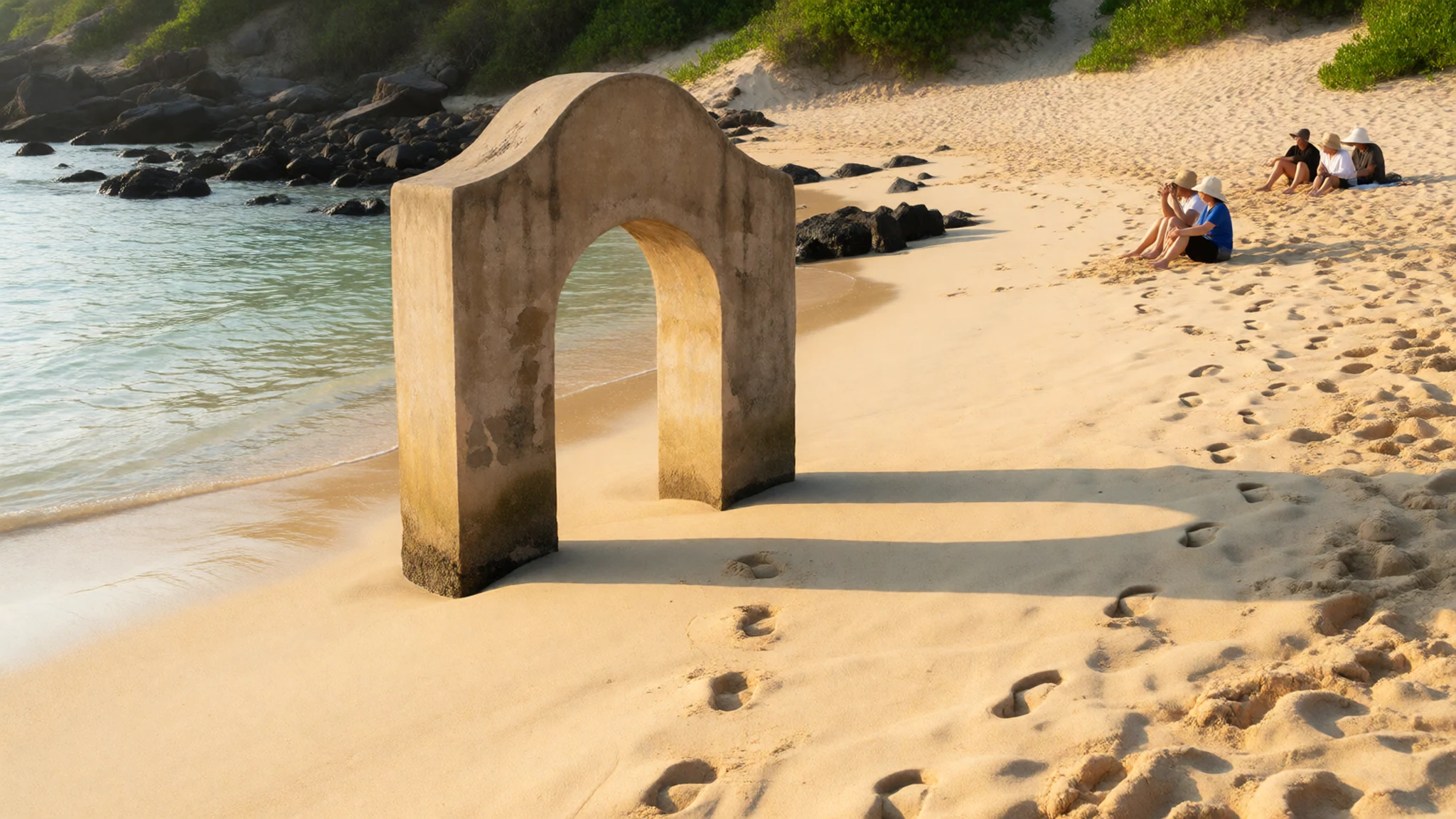
- Thới Lới crater — Main island, interior
Mount Thoi Loi is an extinct volcano and the largest of the main island's three craters. From the top the whole island, its fields and coast, spreads out below. Go early or late to avoid the heat, and wear shoes with grip for the climb.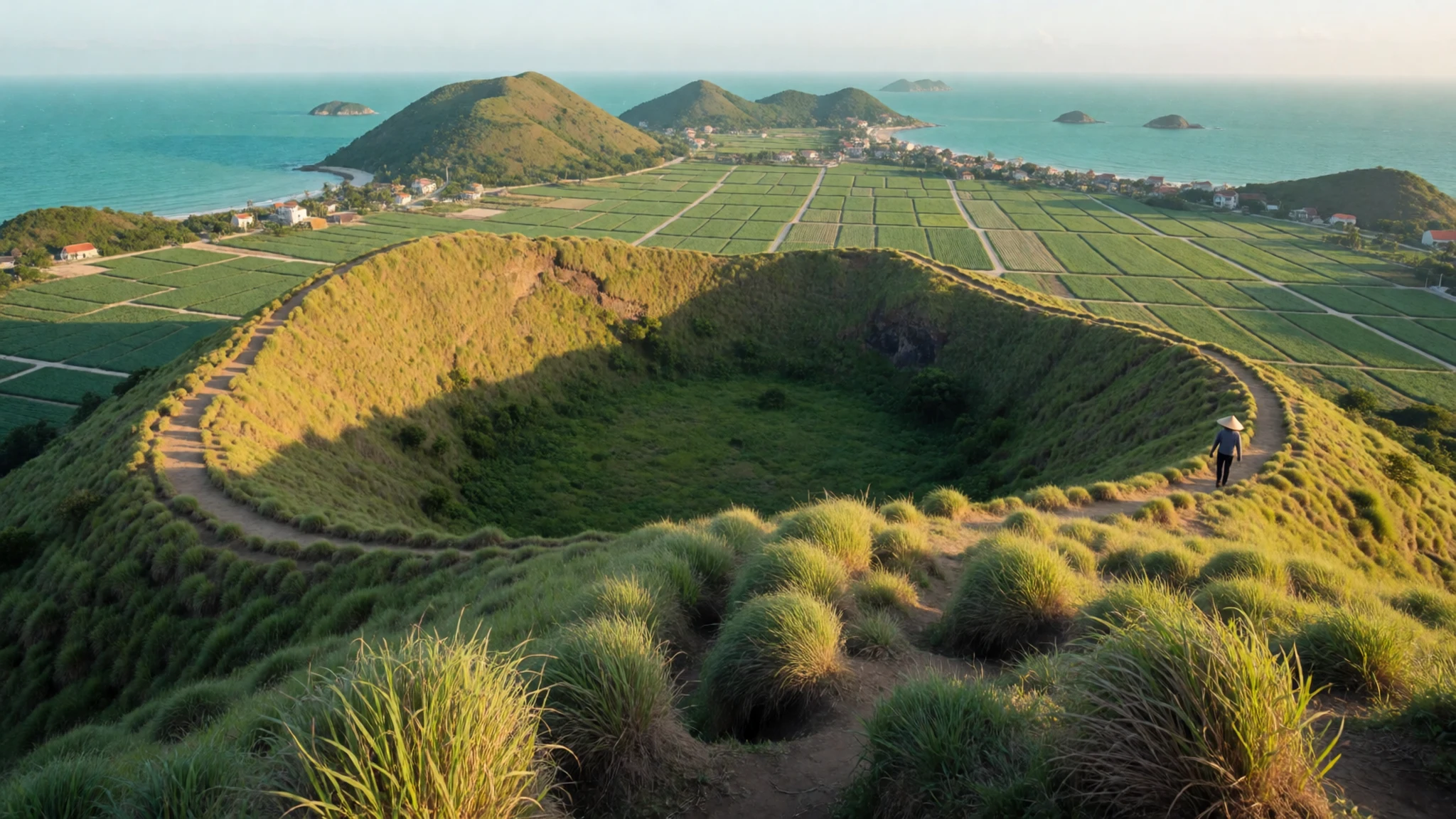
- Hồ Thới Lới — Main island, crater top
Hang Câu is a scenic spot on the coast of the main island. It makes a quiet stop on the way up or down, a contrast to the salt and wind of the coast. Treat it as a short, still pause rather than an all-day destination.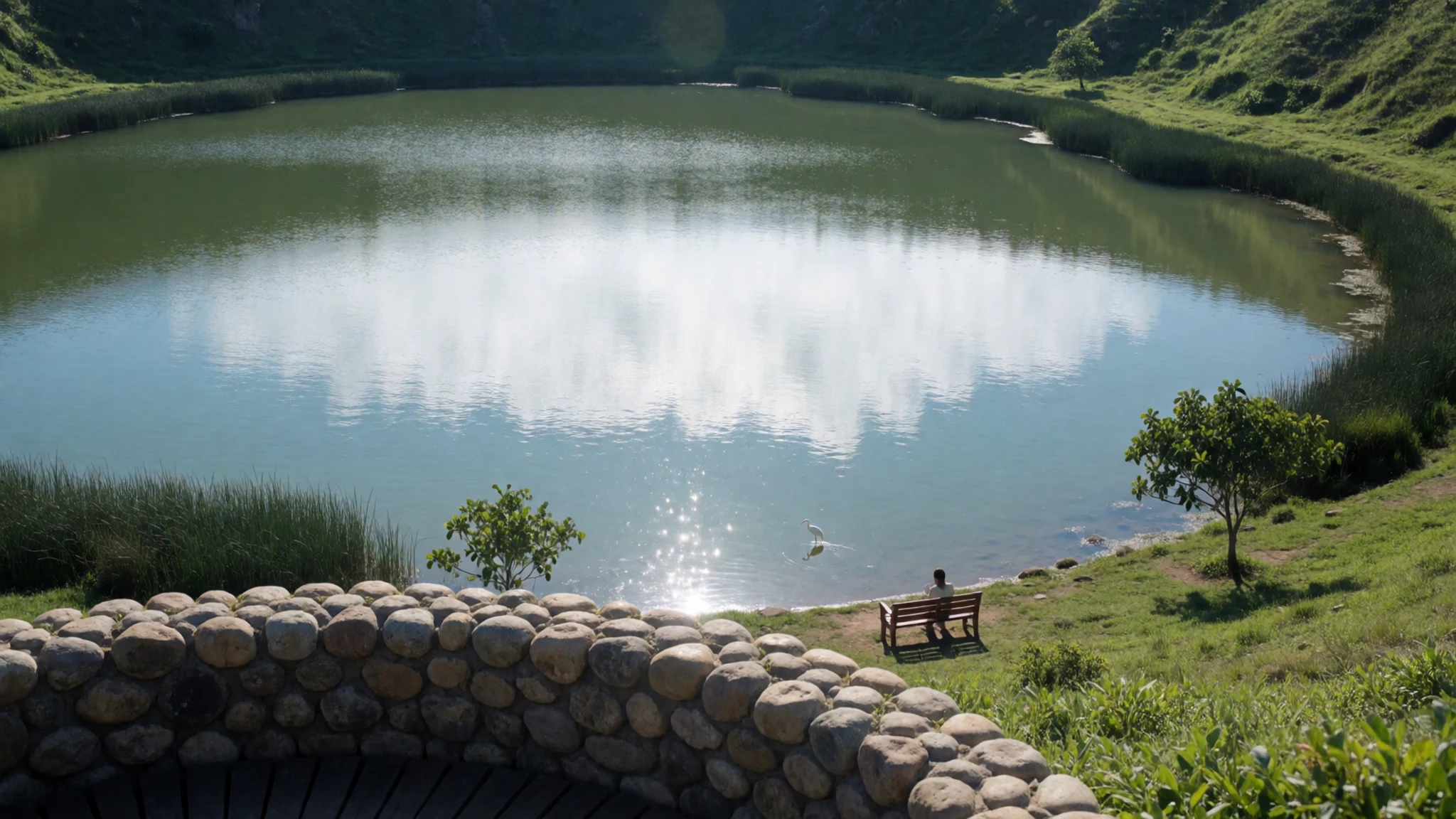
- Chùa Hang — Main island, coast
Hang Câu is a scenic spot where the cliffs meet the sea. The setting is the draw: the shade of the cave against the bright water below. It is a place of worship, so visit quietly and dress with respect.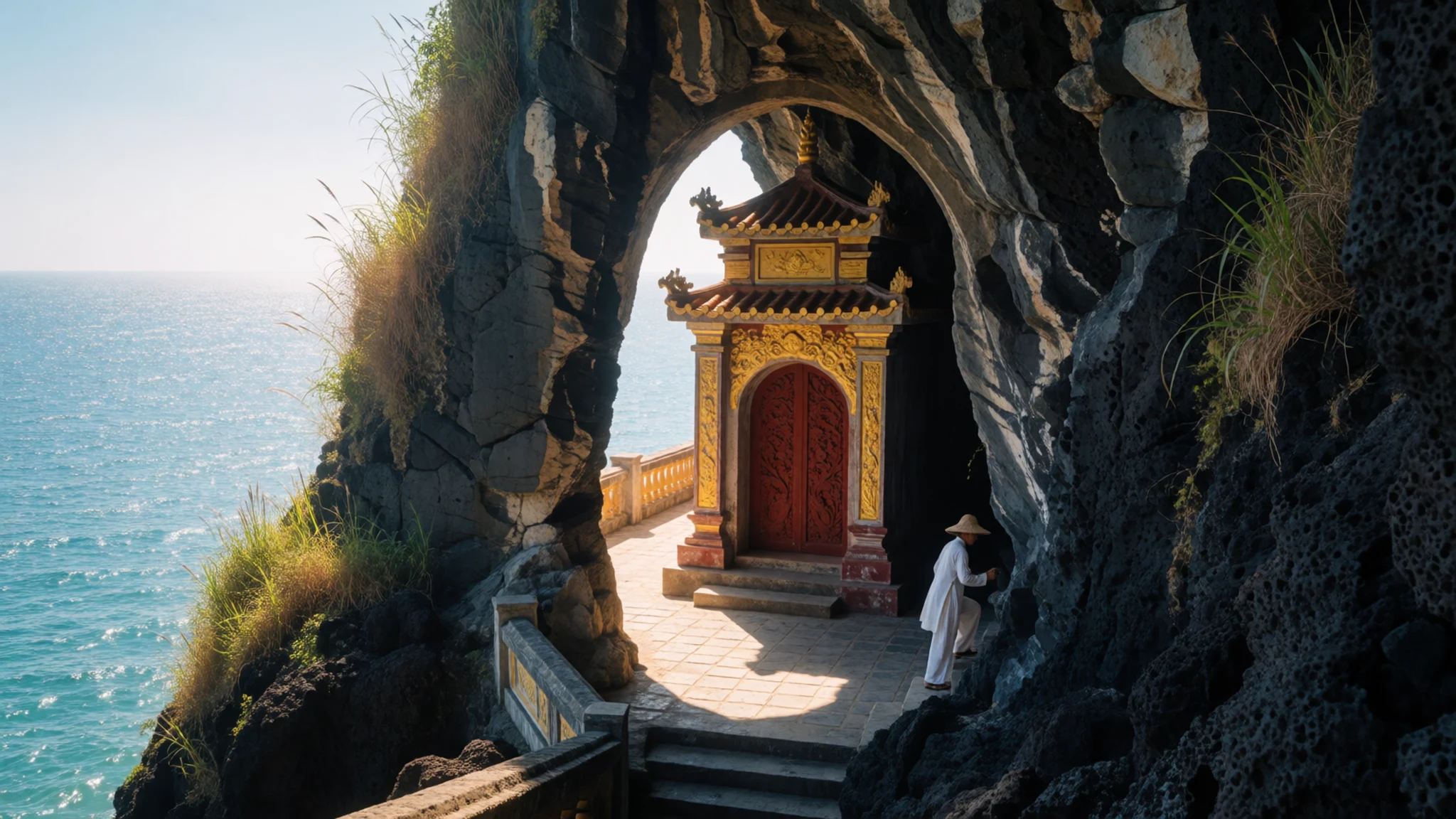
- Tan Temple — An Hải commune, main island
Tan Temple in An Hải commune keeps the whale skeleton that islanders rank above the rest. Tradition says it belongs to a whale king who ruled the sea. Treat it as a living shrine, not a museum, and ask before taking photographs.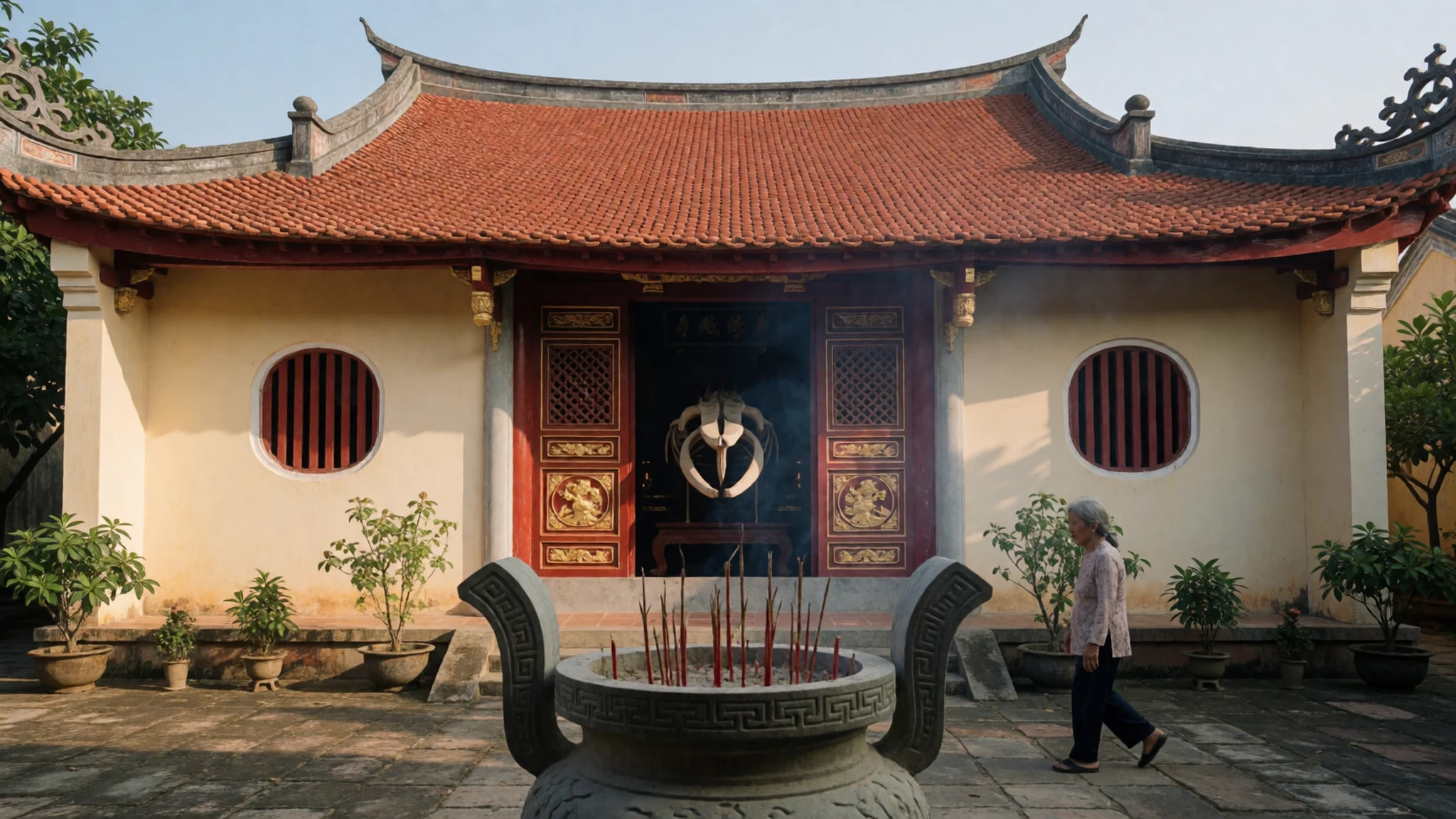
- Little Island — Cù Lao Bờ Bãi, east of the main island
Little Island (Cù Lao Bờ Bãi), the smaller of the two inhabited islands, is reached by a short boat hop and usually has a quieter feel than the main island. It suits a half-day swim and a slow look at village life, though boats depend on the sea, so confirm the return trip before setting off.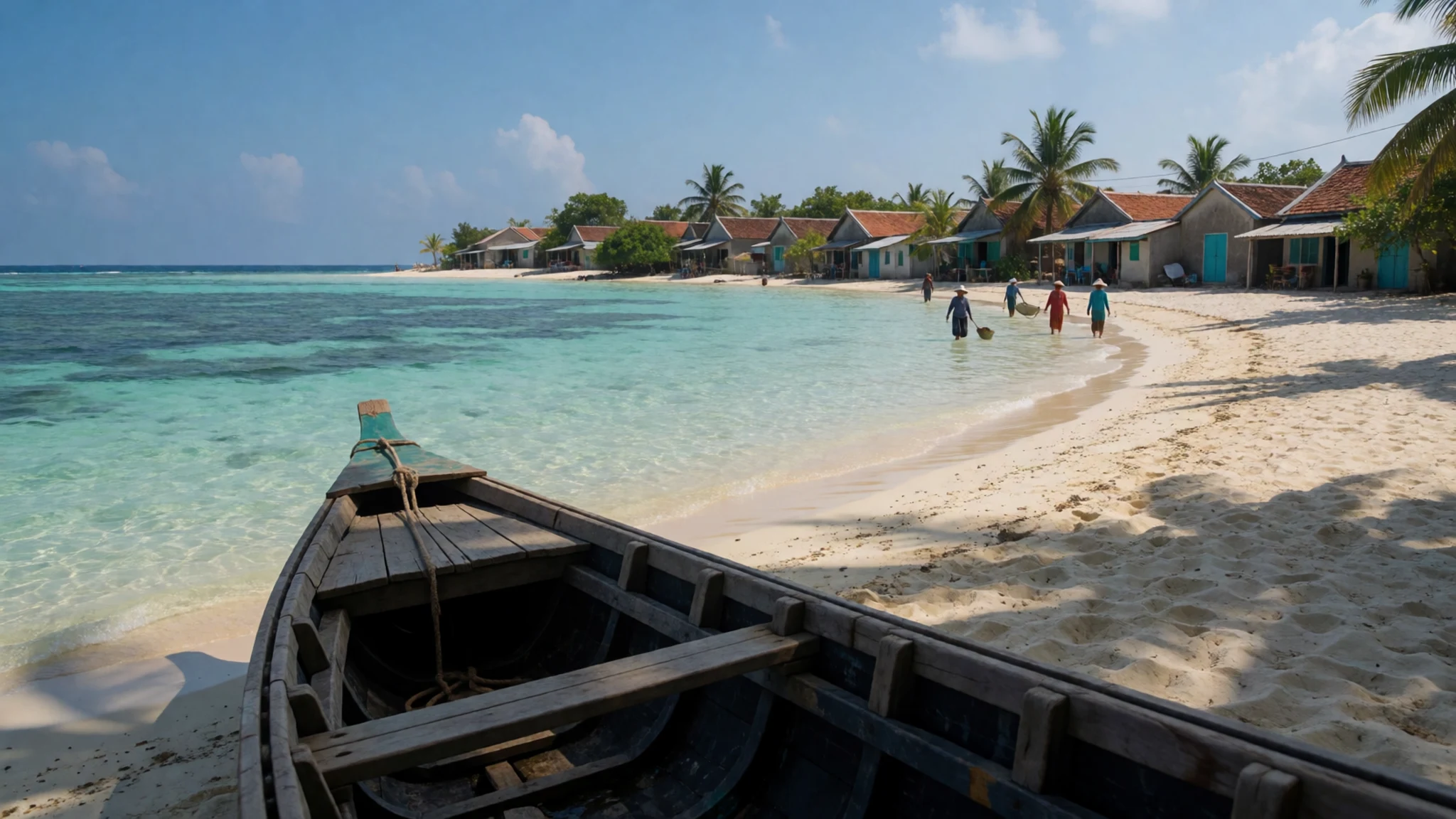
Culture
Ly Son's culture rests on the sea and the people who work it. As elsewhere on the Vietnamese coast, whales are honoured as protectors, and island temples keep whale skeletons, around one hundred of them. The most important sits in Tan Temple in An Hải commune. Islanders say the skeleton is about 200 years old and belongs to Nam Hải Đồng Đình Đại Vương, a whale said to rule the South China Sea. A whale found washed up is given a proper burial rite, because islanders trust the animal to look after crews at sea. That belief sits comfortably alongside Buddhism, and the island has cave pagodas and village shrines close together. Fishing sets the rhythm of the year, and the garlic harvest shapes the working calendar on land. Travellers will find that people are used to visitors but not to being treated as scenery, so a greeting and a smile go a long way. Dress modestly at temples and pagodas, keep your voice low, and ask before photographing worshippers or ceremonies.
What to wear
Ly Son's ceremonial dress follows wider Vietnamese patterns. The áo dài, a long fitted tunic with side slits worn over loose trousers and usually cut from silk or a silk-like fabric, appears at weddings, Tết (the lunar new year), temple festivals and in school uniforms. The áo bà ba, a looser cotton or silk blouse with matching trousers, is the older everyday outfit of rural Vietnam, and the conical nón lá hat, woven from palm leaves, still shades people working outdoors. Day to day, what islanders wear is practical. Fishers and farmers favour long sleeves, wide hats, scarves over the face against sun and salt, and rubber sandals. Younger people wear T-shirts, shorts and jeans much as on the mainland. Visitors should dress for strong sun and sea wind: light, breathable cotton with long sleeves, a hat and sunscreen. Pack swimwear for the beaches but cover up on the walk to and from the village. At pagodas and whale temples, cover shoulders and knees. Wear sandals or trainers with decent grip for crater paths and wet rock, and carry a light rain layer, since weather at sea can turn quickly.
What to eat
- Ly Son garlic — Stalls and shops near the port
Ly Son garlic, a distinctive local variety, turns up pickled, dried and in jars sold at stalls near the port. Buy it as a gift, and notice it in stir-fries and dipping sauces at island eateries.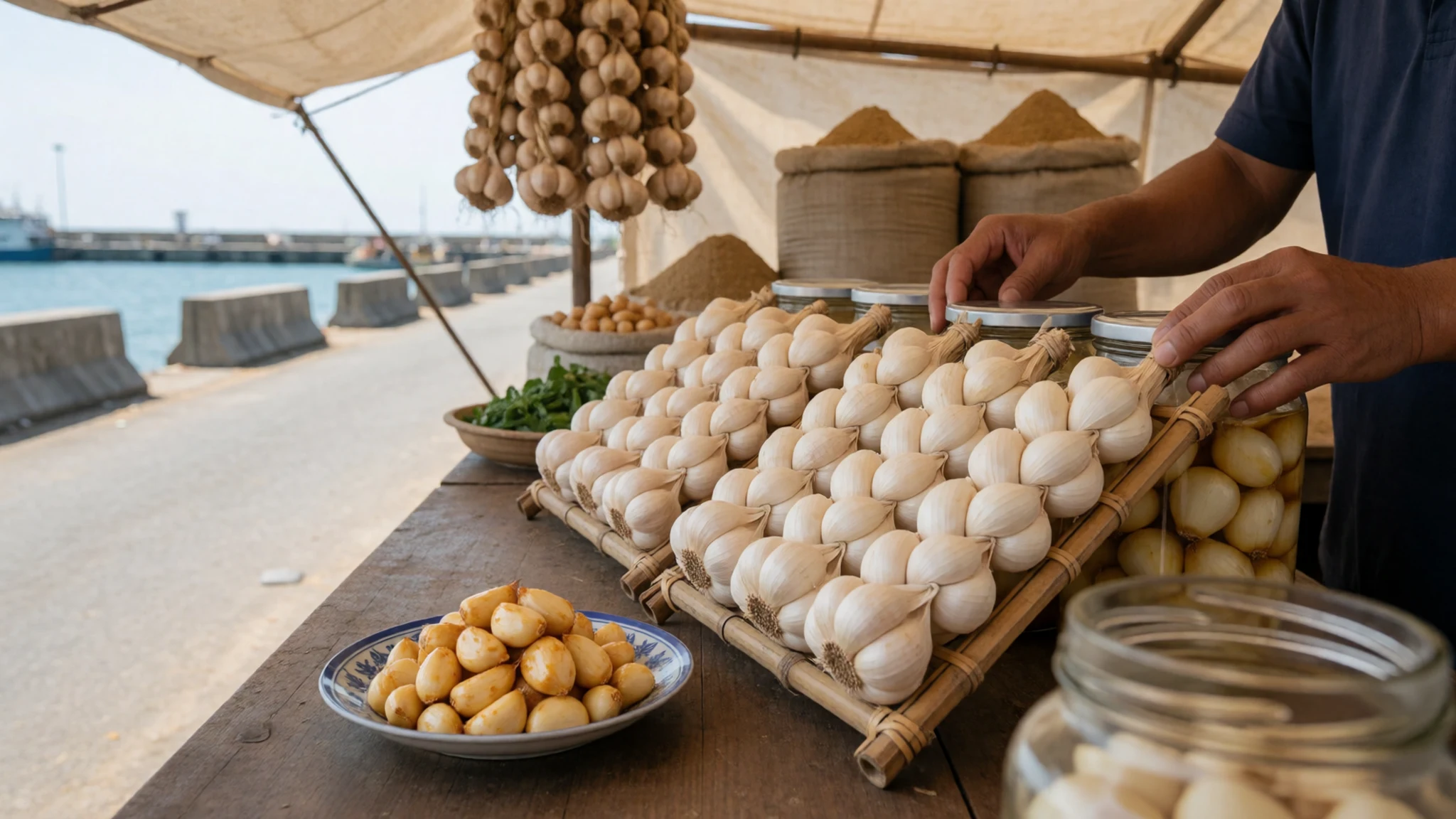
- Grilled fresh fish — Seafood eateries near the port and along the coastal road
Grilled or steamed fresh fish is the everyday meal here, because boats land the catch at the island's own harbours. Seafood eateries near the main port and along the coastal road usually show the day's fish and cook it to order.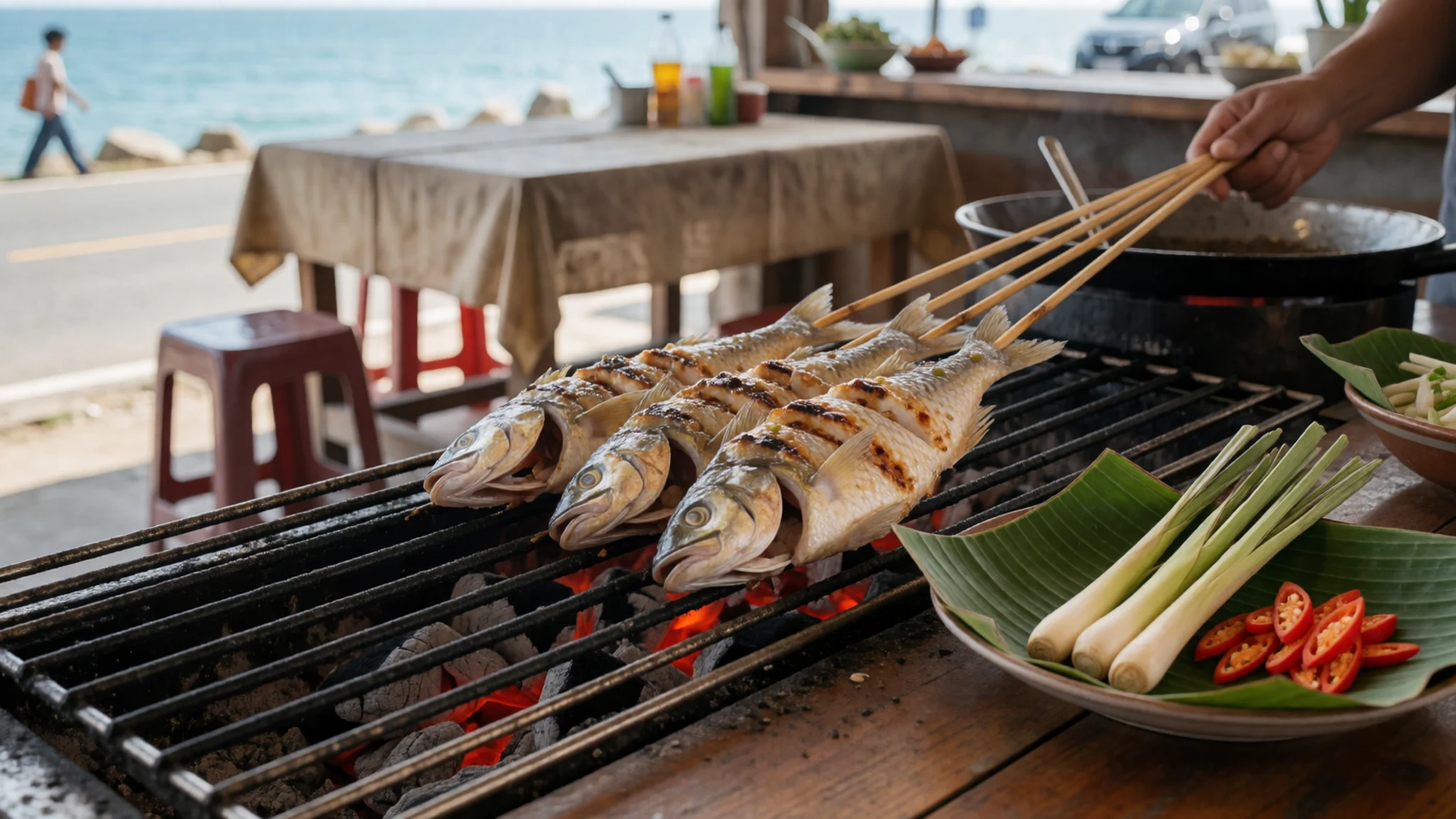
- Sea snails and shellfish — Evening stalls and open-air eateries near the port
Sea snails and shellfish are boiled, steamed with lemongrass or grilled over charcoal, and eaten with salt, chilli and lime. Look for evening stalls and open-air seafood eateries near the port, where plastic stools and a shared plate are the norm. - Gỏi rong biển (seaweed salad) — Island eateries and market stalls
Gỏi rong biển is a salad of local seaweed dressed with garlic, lime, sugar and peanuts. Island eateries and market stalls serve it as a cool starter, and it suits hot afternoons after a climb. - Dried and grilled squid — Shops and snack vendors around the port
Dried squid and fish are laid out in shops around the port, sold by weight as take-home presents. Vendors often grill squid over coals as a chewy snack, so the smell of smoke near the harbour in the evening is part of the island.
Plan it
Best time. March to July, when the sea is usually calmer and the sun reliable, though June to August are the hottest months and school holidays fill the boats. Late-year storms and rough seas can cancel crossings, so check the forecast before booking.
How long. 2–3
Getting there. Fly to Da Nang or Chu Lai, or take the train to Quảng Ngãi, then continue by road to Sa Ky Port. Ferries and speedboats leave Sa Ky for Ly Son daily; check the operators' official sites for current sailings.
Budget. mid
Tips
- Reserve boat tickets at least a day ahead at weekends, on public holidays and in Vietnamese summer holidays
- Visit midweek if possible, as weekends bring crowded ferries and sunset spots
- Carry cash for small eateries, stalls and scooter rental, as cards are not reliable on the island
- Climb the crater and watch the sunset at cooler hours, and carry plenty of drinking water
- Keep a spare day in the plan in case rough seas cancel the boat home
Etiquette
- Dress modestly and speak quietly at pagodas and whale temples
- Ask before photographing worshippers, ceremonies or people at work
- Take rubbish back with you, as the island's coast is already under pressure
Nearby
Sources
- Wikidata Q1320095 (CC0)
- Wikipedia: Lý Sơn (rev 1380826115) (CC BY-SA 4.0)
- Wikivoyage: Lý Sơn (rev 5239925) (CC BY-SA 4.0)
- Ly Son Islands, Vietnam — BertholdD (CC BY 3.0)
- Một phần quang cảnh của đảo Lý Sơn — Từ Trung Tâm Dữ Liệu Hoàng Sa (CC BY 3.0)
- Biển Lệ Thủy thuộc Dung Quất, đảo Lý Sơn ở phía chân trời — Tnt1984 (CC BY 3.0)
- Cong To Vo at sunset — Thuy-van.Kieu (CC BY-SA 4.0)
- Ly Son Island, Quang Ngai Province, Vietnam — Quangpraha (CC0 1.0)
- Góc chụp bãi tắm trên đảo Bé - Lý Sơn - Quảng Ngãi — Đôi Ta Đi (CC BY-SA 4.0)
- Chùa Hang — VuTuanHung1804 (CC BY-SA 4.0)
- Cổng chào trên Huyện Đảo Lý Sơn - Quảng Ngãi — VuTuanHung1804 (CC BY-SA 4.0)


Wildlife
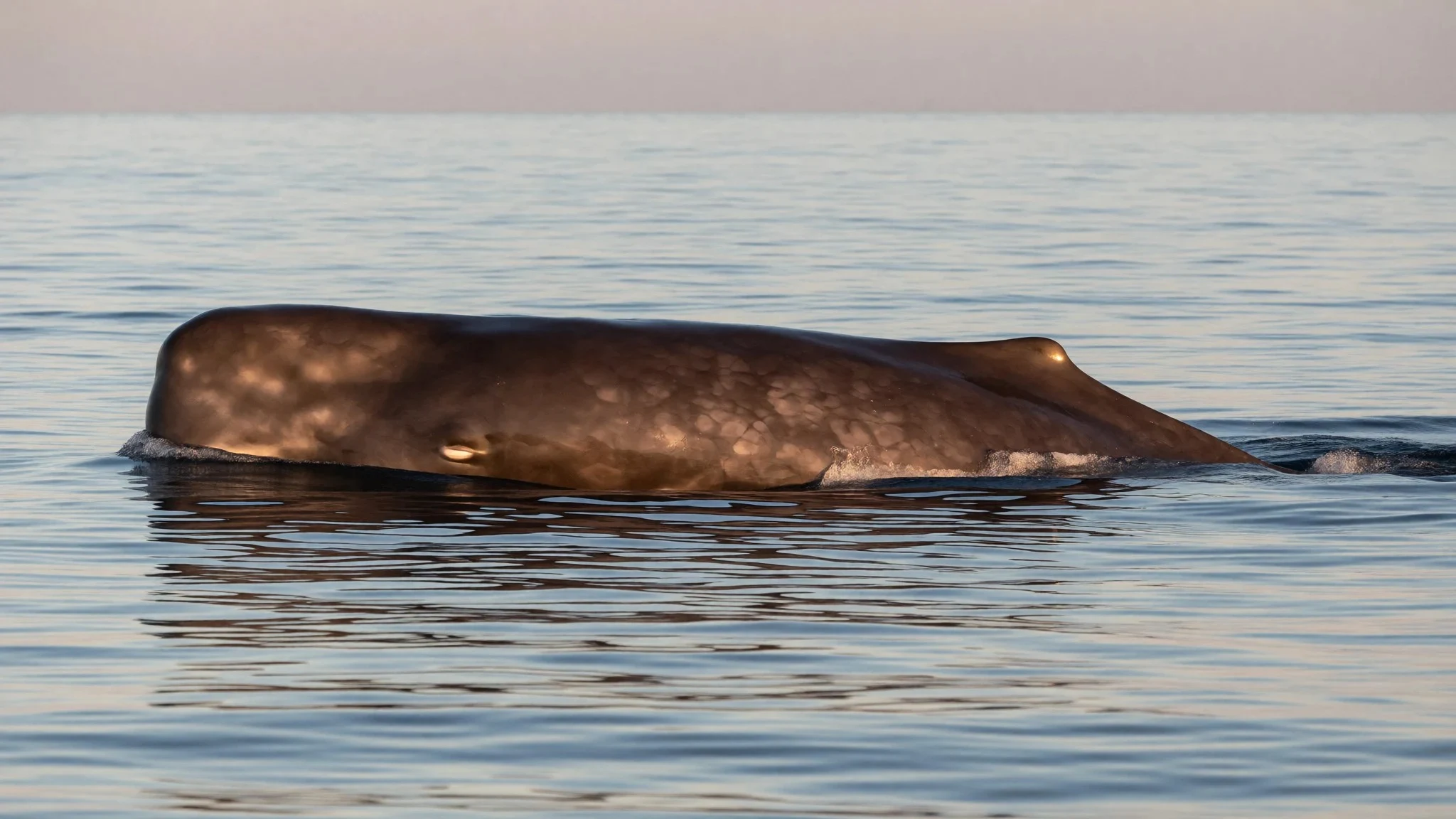
- Sperm whale (animal)
The sperm whale is the biggest of all the whales that have teeth, and the biggest hunter with teeth anywhere: picture a giant with a mouthful of them. I can't tell you where around Ly Son or in which season it appears, so ask local people rather than count on it. Islanders give any whale found washed ashore a formal burial ceremony, trusting it to watch over sailors at sea. If you do meet one, keep your distance, stay quiet, go with a guide, and never feed it.