Luoping Rapeseed Flowers
Luoping Rapeseed Flowers, People's Republic of China
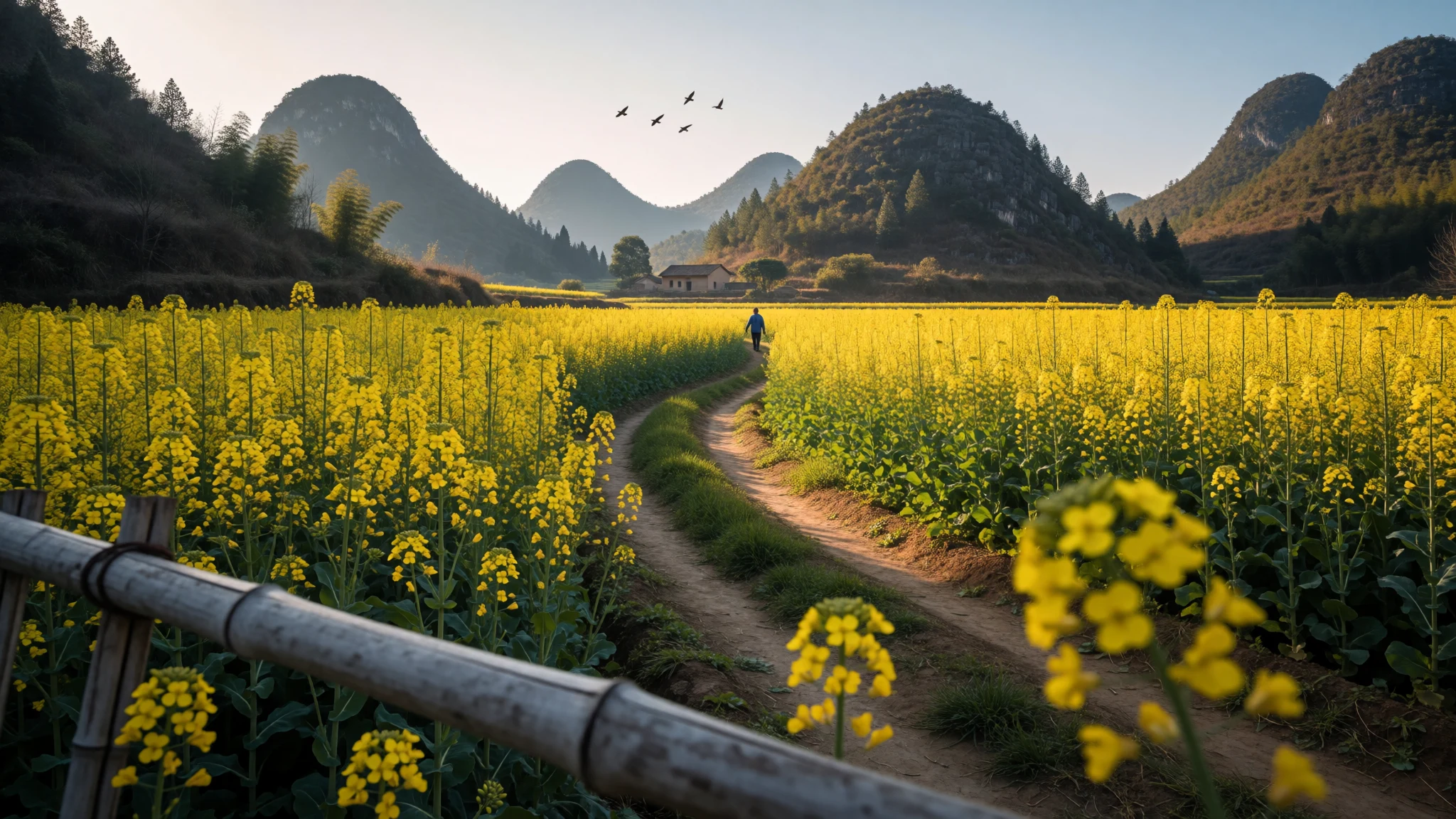
Luoping, in eastern Yunnan, turns its farmland gold each spring when rapeseed blooms between karst hills and winding rivers.
The place
Luoping County (罗平县, Luópíng Xiàn) sits in Qujing City, in the east of Yunnan province, close to where Yunnan meets Guizhou and Guangxi. It is about 240 kilometres east of Kunming, and about 535,000 people live in the county. Xingyi in Guizhou lies to the east and Xilin County in Guangxi to the southeast, so this is border country of farm towns rather than resorts.
The draw is a crop. In early spring the county's rapeseed, also sold as canola, flowers across the valley floors and hill slopes, and the mountains look wrapped in yellow. The hills are karst, steep and rounded, which gives photographers a layered scene of gold below and grey-green above. One travel guide compares the appeal to the terraced fields of Yuanyang in southern Yunnan, another landscape shaped by farming rather than by nature alone.
Honest expectations help. This is a working agricultural area, and the flowering is seasonal, so a visit outside the bloom shows ordinary countryside. In the flowering season buses from Kunming run almost hourly, which tells its own story about weekends and holidays: viewpoints and roads fill with domestic visitors and photographers. Timing also shifts from year to year with weather and altitude, because rapeseed is a crop, and the flowers are followed by pods and harvest. The county's official site is http://www.luoping.gov.cn/ for notices.
Qujing, the city that administers the county, is mainly a business and light-industry town with few sights of its own. Most visitors treat it as a stopover and spend their time out in the countryside.
Its story
Luoping's story is mostly the story of a crop and a crossroads. Rapeseed is grown across much of China for its oil, and in Luoping it is planted on a scale that changes the look of the whole county for a few weeks each year. Written records of when the flowers became a draw are thin, so this account sticks to what can be seen rather than guessing at a history.
What can be said is geographic. Luoping lies where three provincial boundaries come close together, in country of limestone hills and river valleys. Farmers have shaped the flat basins and gentler slopes into fields, and those fields are the landscape. When the crop flowers, the plots turn bright yellow against dark hills and pale village walls. Photographers were an early audience, and travel guides still describe the county first as a place for pictures. Visits now cluster around the bloom, with buses from Kunming running at a steady rate in the busy weeks.
The flowering has a rhythm. Petals come first, then green pods, then a harvest, and the fields return to being plain fields. Guides describe the main show as early spring but note that flowering in the wider area can run on until late June. Anyone planning around the flowers is really planning around a farming calendar, which weather moves from year to year, and which no website can promise.
What to see
- Rapeseed fields around Luoping — Countryside around Luoping town
The main sight is the fields themselves, spread across the county rather than gathered in one park. Walking farm lanes between the plots, or stopping at a roadside viewpoint, shows yellow flowers against karst hills. Early mornings are quieter and the light is softer. Paths are working tracks, so expect mud after rain.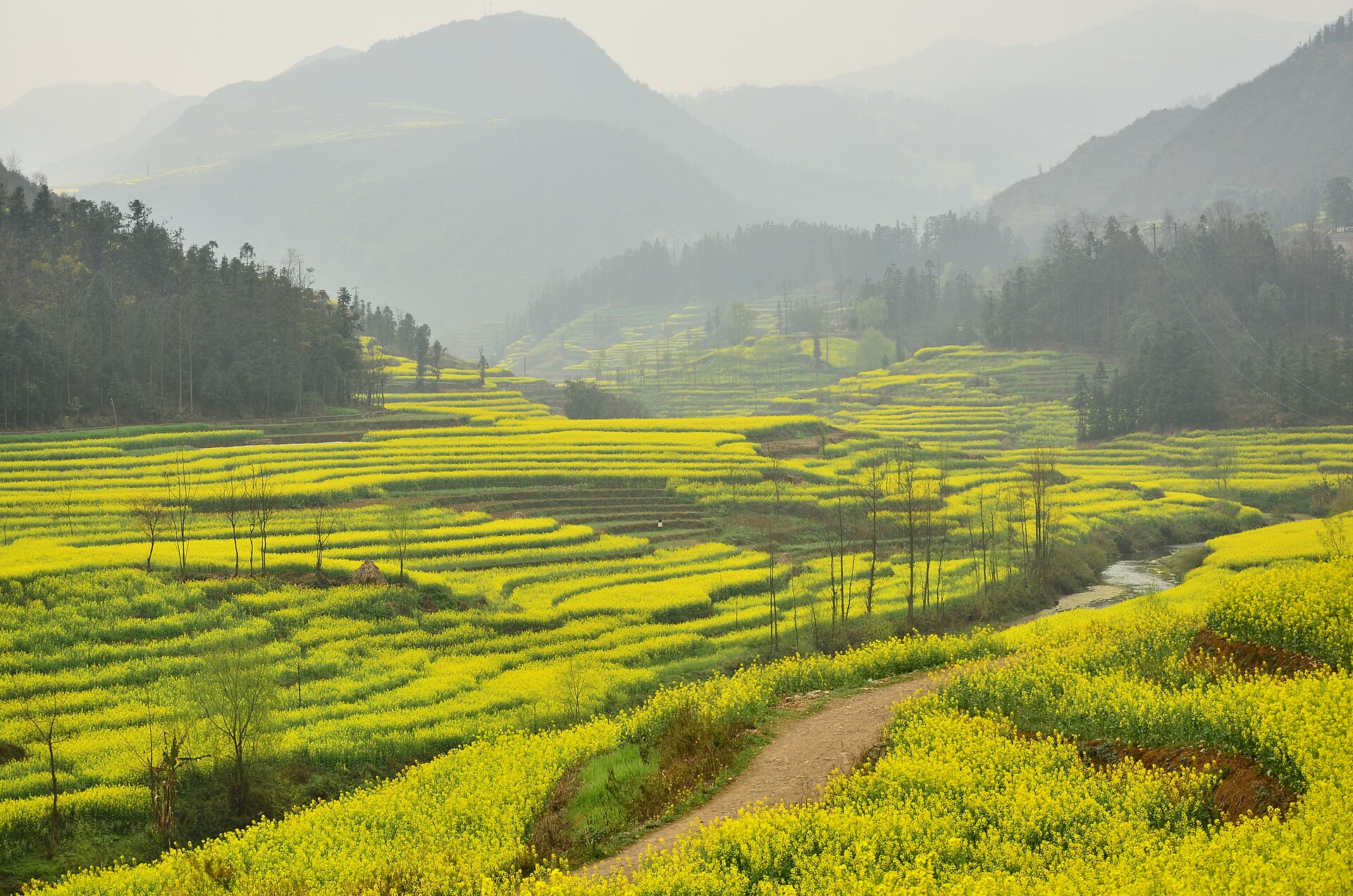
- Duoyi River — Luoping countryside
The Duoyi River runs through the Luoping countryside, and a reference photograph shows it as a calm green waterway beside farmland. It makes a change of pace from the fields: somewhere to stop, take in water and hills together, and take pictures that do not depend on the bloom. Ask locally about access points.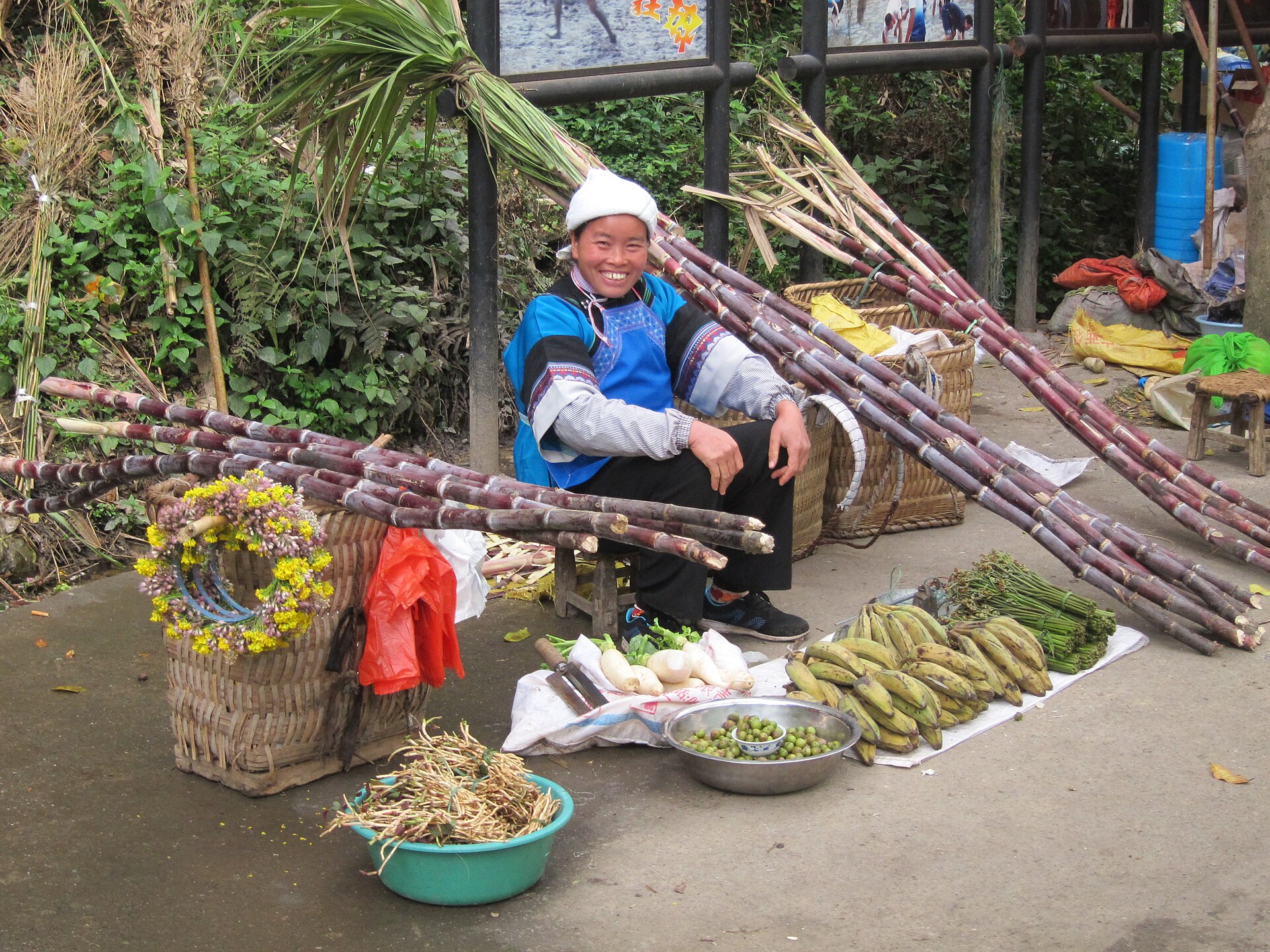
- Jinji Lingyi Temple (金鸡灵仪寺) — Luoping County
A temple in Luoping photographed under the name Jinji Lingyi Temple. Little is written about it in the sources used here, so treat it as a possible stop to ask about locally rather than a fixed highlight. Dress modestly, keep voices low, and check access arrangements before making a special trip.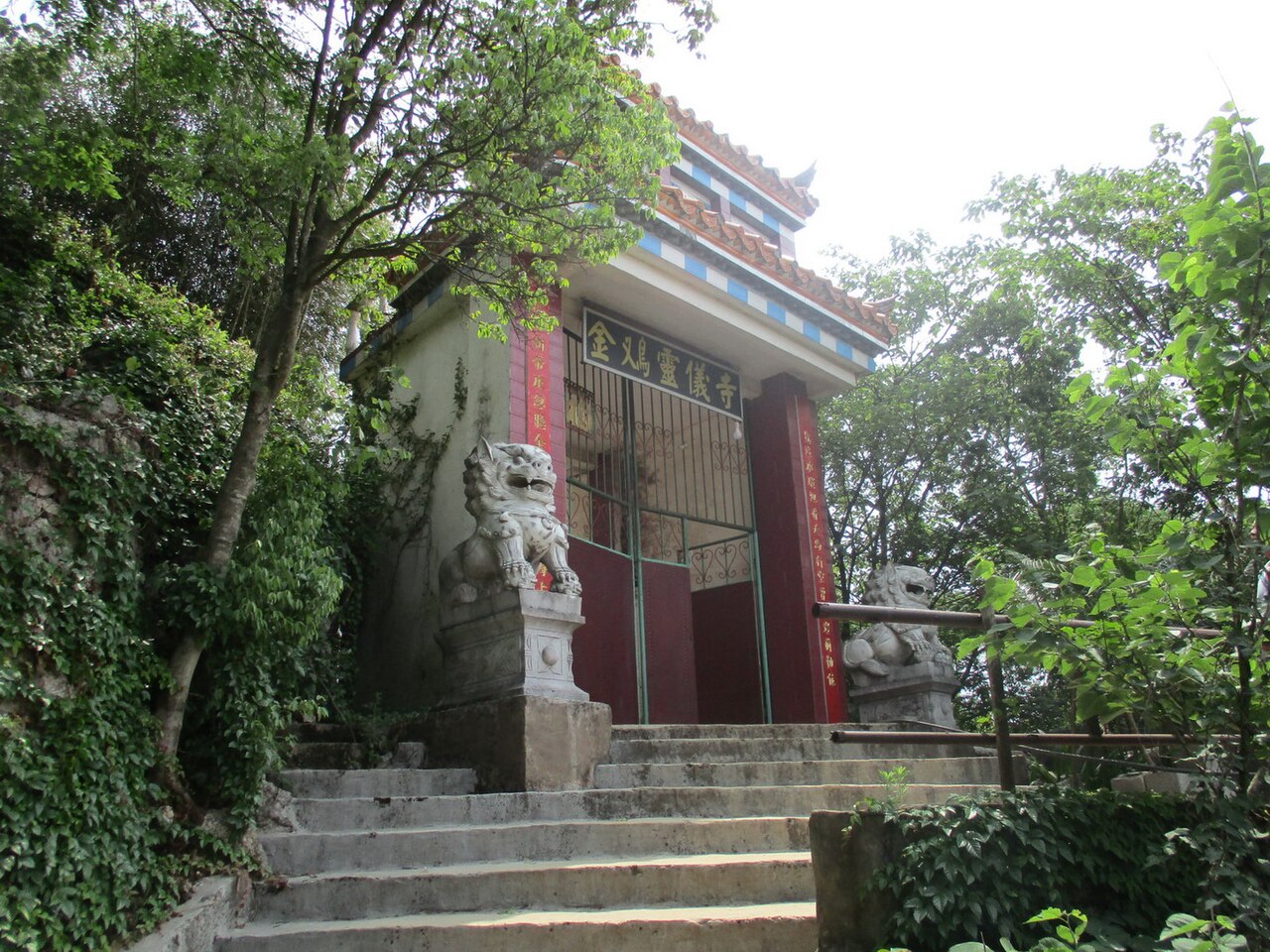
- Pearl River Source Scenic Area — Qujing region, outside Luoping
This scenic area in the Qujing region is associated with the source of the Pearl River. It offers forest landscapes, mountain views and natural springs. It lies outside Luoping itself, so it suits a longer stay based around Qujing. Check transport and any entry arrangements locally before setting out. - Qilin Water Town — Qilin district, Qujing
A wetland park in the Qujing area with walking trails, boat rides and plenty of flowers; lavender and lotus are the ones guides single out when in bloom. It is a flatter, gentler outing than the field walks and a reasonable option when the rapeseed is over. Check official channels for opening arrangements.
Culture
Luoping County is farming country first, and its culture is tied to the land. Yunnan's east is home to several ethnic communities alongside the Han majority, and visitors can expect village life, local markets and small temples, with the rapeseed fields as working property rather than a public garden. Families grow the crop for oil, and the flowering that draws photographers is, for them, one stage in a farming year.
Food is a large part of daily life. Rice noodles are eaten at any time of day, pastries are given as gifts at special events, and teahouses and noodle shops are where people meet. Qujing, which administers the county, is a working town more used to business travellers than tourists, so expect fewer English signs and menus than in Kunming. A translation app and the name of a dish written in Chinese characters help considerably, and a little patience goes a long way.
Spring weekends and holidays bring large numbers of domestic visitors, and the mood is cheerful but busy. Roadside sellers offer snacks and local crafts, and buying a drink or a snack near a viewpoint is a simple way of leaving something with the community.
Do not step into the rapeseed plots to take photographs, and ask before photographing farmers or villagers at work.
What to wear
Luoping County, like much of eastern Yunnan, has a mix of communities, and traditional dress varies with the group. Minority communities across Yunnan are known for cotton and hemp cloth, indigo dyeing, batik and embroidered collars, cuffs and head cloths, worn mostly at festivals, weddings and market days rather than for daily work. Patterns and meanings differ from village to village, so ask rather than assume.
In daily life, people in Luoping wear what most people in small Chinese towns wear: practical trousers, shirts, fleece jackets and sturdy canvas or rubber shoes for the fields. Farmers at work add wide-brimmed hats, long sleeves and boots. In flowering season, visitors often dress in bright colours for photographs against the yellow, and nobody finds it odd.
A visitor should dress for changeable spring weather in the hills: layers, a light waterproof, and sun protection for when the sky clears. Footwear matters most. Field paths and farm tracks turn muddy after rain, so closed shoes with good grip, or light boots, are better than sandals or white trainers. At temples, cover shoulders and knees and take hats off indoors. Evenings can feel cool, so a warm layer is useful even when the afternoon is mild.
What to eat
- Steamed rice noodles (蒸饵丝, zhēng ěr sī) — Local noodle shops in Qujing and county towns
A steamed rice cake sliced into thin strips, tossed in oil and finished with meat sauce, pickled vegetables and chives. It is usually eaten dry, with bone broth as an optional extra. Sold as a Qujing speciality and hard to find elsewhere. - Qujing braised pork rice noodles (曲靖卤肉米线) — Noodle shops and small eateries across Qujing
Rice noodles under a slightly sweet meat sauce with pickled vegetables. Chives, coriander or chilli oil go on top according to taste, so it is easy to adjust if you like less heat. - Zhanyi xiaobaba (沾益小粑粑) — Bakeries and pastry stalls in Qujing
A dense pastry, crisp outside and flaky within, rather like a scone. Fillings include red bean paste and powdered sugar. Locals often give them as gifts for special occasions, so they travel well in a day bag. - Flower cakes (鲜花饼, xiānhuā bǐng) — Bakeries and gift shops across Yunnan, including Qujing
A light, very flaky pastry filled with rose petals, sweetened with sugar or honey depending on the maker. A good snack to carry on a day among the fields, and a common gift to take home. - Over-the-bridge rice noodles (过桥米线) — Noodle restaurants in Qujing and throughout Yunnan
Famous across Yunnan and eaten in Qujing too. Raw ingredients and piping hot broth arrive separately, and the diner assembles the bowl at the table. Let the broth stay hot and add thin items last. - Small pot rice noodles (小锅米线) — Any noodle shop in Qujing or the county
The plain, no-frills cousin of over-the-bridge noodles. It arrives ready to eat in a small pot, and a bowl is a quick, filling meal between field walks when the weather turns.
Plan it
Best time. Early spring, roughly February to April, is the usual window for the rapeseed bloom, though flowering in the wider area can run into late June. Weather in the hills changes quickly and the bloom shifts from year to year, so check recent local flower reports before booking.
How long. 2
Getting there. Fly to Kunming Changshui Airport, the nearest airport for the Qujing area. Luoping is about 240 km east of Kunming, and in flowering season buses leave Kunming's bus stations almost hourly; high-speed trains and buses also link Kunming with Qujing in roughly one to two hours. Confirm the last leg to Luoping locally.
Budget. low
Tips
- Book rooms early for spring weekends and public holidays, when the flowering makes it high season
- Reach viewpoints early in the morning for lighter crowds and softer light
- Carry some cash and a payment app, as small eateries and stalls may not accept foreign cards
- Bring a light waterproof and shoes you do not mind getting muddy
- Check the official site, http://www.luoping.gov.cn/, and recent local posts for bloom updates before you travel
Etiquette
- Stay on paths and tracks and do not walk into the rapeseed plots, which are farmers' crops
- Ask before photographing farmers, villagers or children
- Buy a snack or a drink from roadside sellers rather than only taking photographs
Nearby
Sources
- Wikidata Q1200663 (CC0)
- Wikipedia: Luoping County (rev 1378744705) (CC BY-SA 4.0)
- Wikivoyage: Qujing (rev 5421315) (CC BY-SA 4.0)
- Photo: Canola field in Luoping (Fanghong) (CC BY 3.0)
- Photo: Map of Luoping (Lo-p'ing) area, Guangxi (Army Map Service, 1954) (Public domain)
- Photo: Duoyi River (Anders Johnson) (CC BY 3.0)
- Photo: 罗平金鸡灵仪寺 (MspreilsCN) (CC0 1.0)


