Lugu Lake
Lugu Lake, People's Republic of China
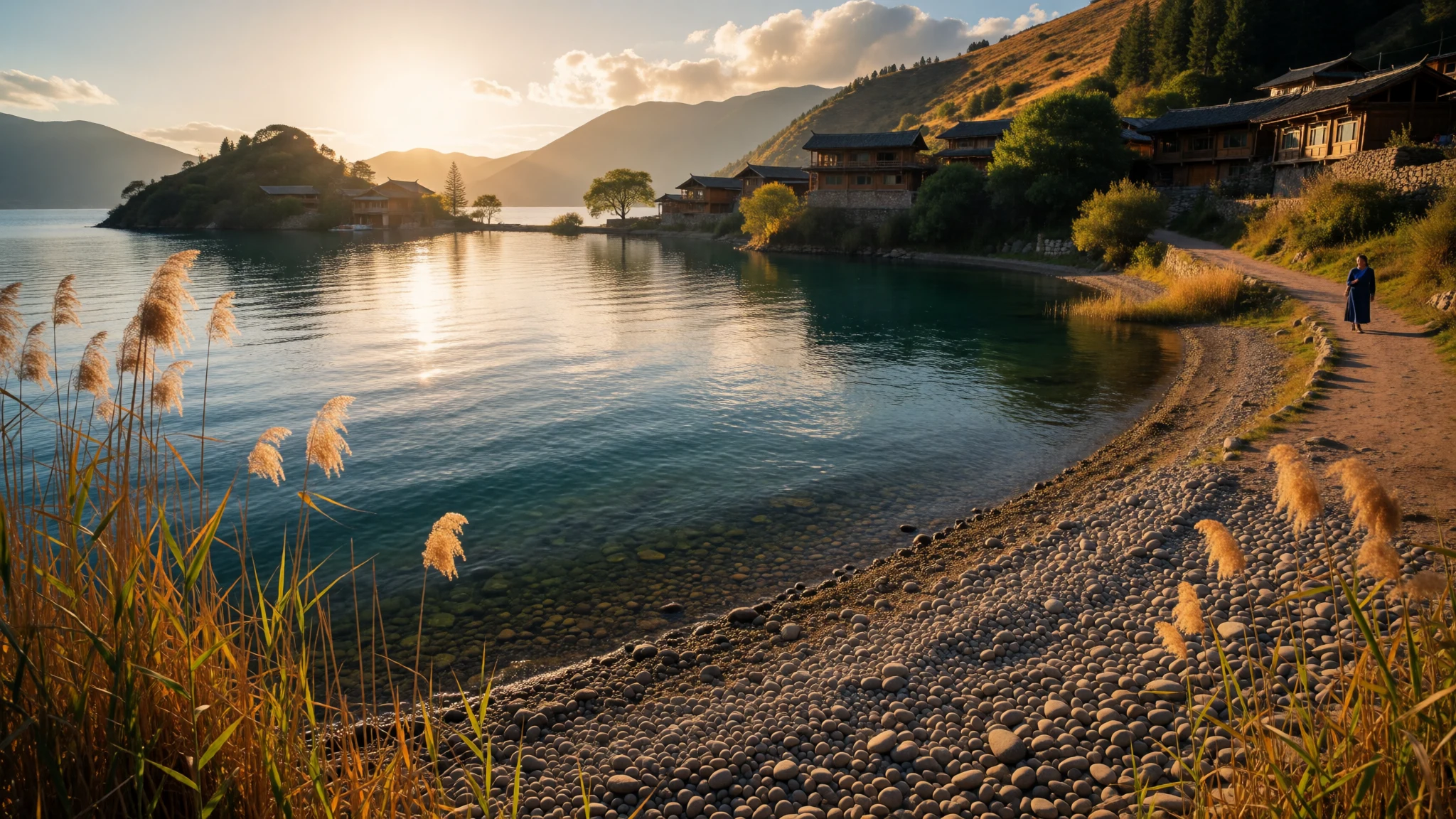
Lugu Lake is a high, quiet lake on the Yunnan–Sichuan border, home to the Mosuo, where mornings on the water matter more than ticking off sights.
The place
Lugu Lake (泸沽湖, Lúgū Hú) sits on the high plateau of north-west Yunnan, and the border between Yunnan and Sichuan runs through the middle of the water. The Ninglang County shore belongs to one province and the Yanyuan County shore to the other. At 2685 metres above sea level the air is thin and cool even when the sun is strong, and the lake is a deep blue-green bowl ringed by mountains. The basin is thought to have formed along a geological fault in the Late Cenozoic. Its edge is a patchwork of islands, peninsulas, bays and small pebbly beaches, so the shoreline is very irregular, and a boat shows this better than a map. Several communities live around the water, among them the Mosuo, Norzu, Yi and Pumi. The Mosuo are the most numerous, and they call the lake their mother lake. Chinese tourist literature has long sold the area as the Kingdom of Women, a label built on the Mosuo tradition of family life organised around the mother's line. Many visitors arrive expecting that to be a spectacle, but the reality is a string of lakeside villages and farming households. Luoshui is the main base on the Yunnan side, while Lige, a smaller village on the north shore, has the wide views over the water. High season brings crowds and noise to the main strips, while quieter months bring calm mornings, mist on the lake and empty lanes. The lake is remote enough that getting here is part of the trip, and a few days is enough to circle it slowly, take a boat out to an island and watch the light change.
Its story
Lugu Lake has a thin written history, and most of what is known comes from a few threads. The geology is the oldest: the basin lies in a fault belt and is thought to date from the Late Cenozoic, when movement in the earth's crust opened a trough that later filled with water. The Mosuo name for the lake, mother lake, says a good deal about how the community sees the water that feeds and surrounds them. The best-documented human episode involves Kublai Khan, whose Mongol army set up its headquarters south of the lake. Officers and troops stationed in the area brought a feudal style of government, and Buddhism arrived with administrative rules tied to religious teaching, spreading around the lake and the nearby Yongning district. One social effect is still discussed today. Officials of the Mongol army practised monogamous marriage, and the custom took hold among some Mosuo, notably in the villages of Yankouba and Tuodian, while the older Mosuo way of organising family life carried on elsewhere. In the last century the lake also drew outsiders such as Joseph Rock, who lived for a time on one of its islands. For a long while afterwards it stayed remote, reached only by slow mountain roads. That changed when the road from Lijiang was paved almost throughout, turning a gruelling day of bumping around into a far shorter ride. Since then the lake has become a destination for holiday visitors, and its present story is largely about how a small community shares its home with a growing stream of travellers.
What to see
- Lige observation deck — Lige, north shore
The viewpoint above Lige village on the north shore gives a wide sweep of the lake, its peninsulas and the ring of mountains. Late afternoon is the time to come, when the low light turns the water silvery. Mornings are quieter, and the view is the same whichever side of the border you look.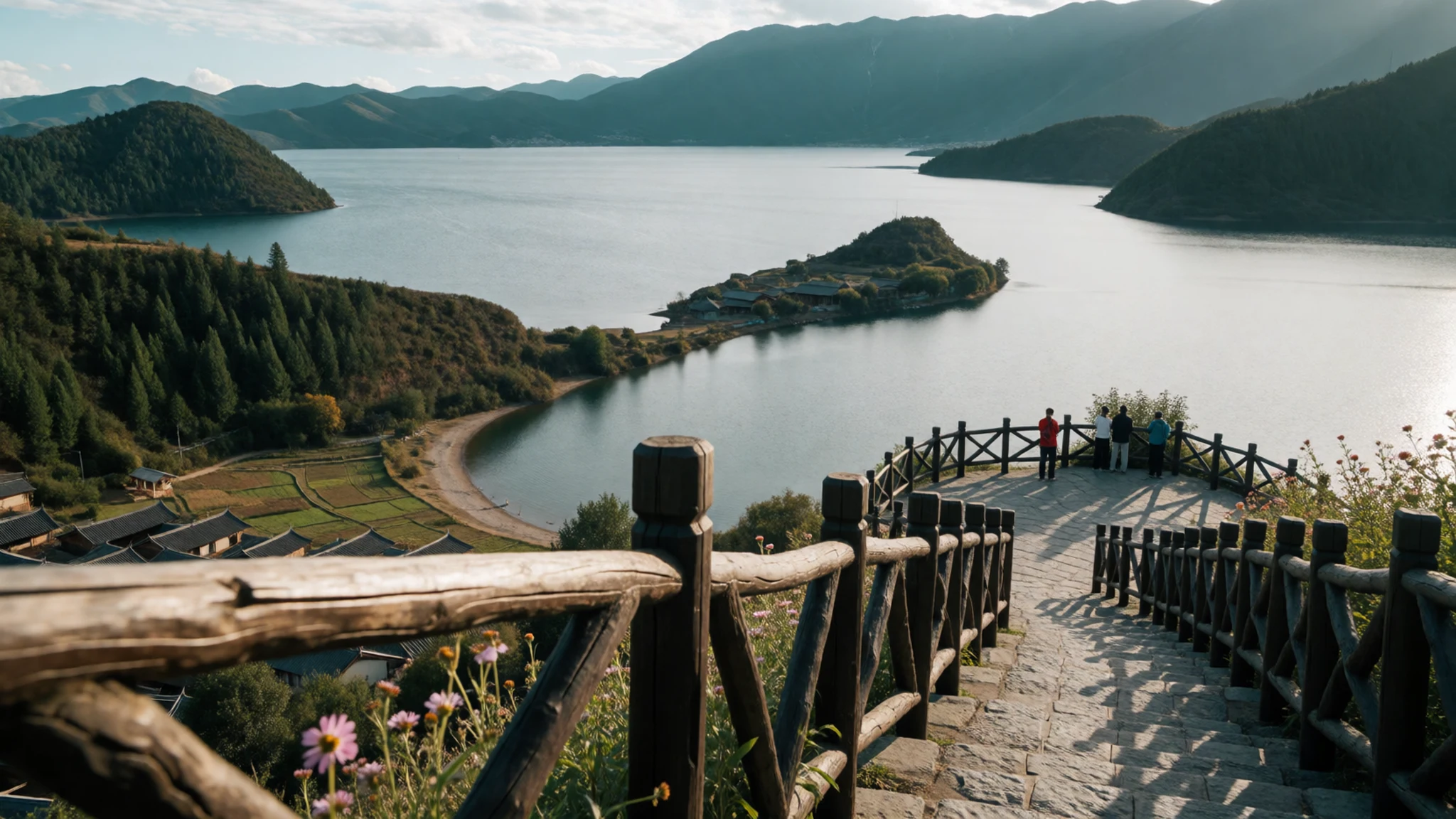
- Canoe ride to the island — Main pier, Luoshui area
Wooden boats leave from the pier and paddle passengers out to the island in the middle of the lake, usually once the boat is full. The crossing is short, quiet and the best way to feel the scale of the water. Agree the price before boarding, as it can shift with the time of day.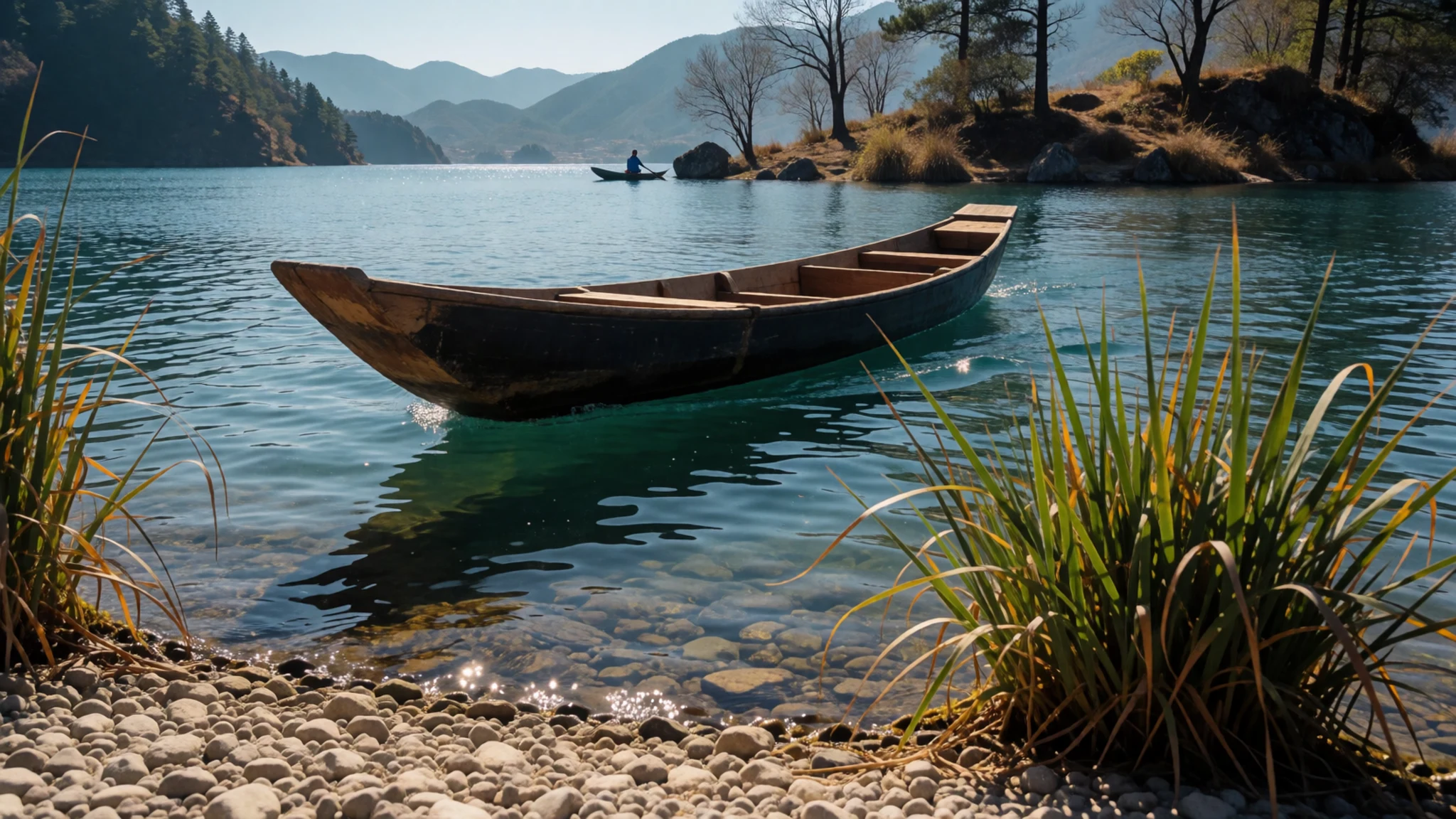
- Mosuo Museum — Lakeshore, Yunnan side
A small museum on the history, customs and daily life of the Mosuo. It is a useful first stop before wandering through villages, because it explains how households are organised around the mother's line, and why the Kingdom of Women label is more complicated than it sounds. Opening times change, so ask locally.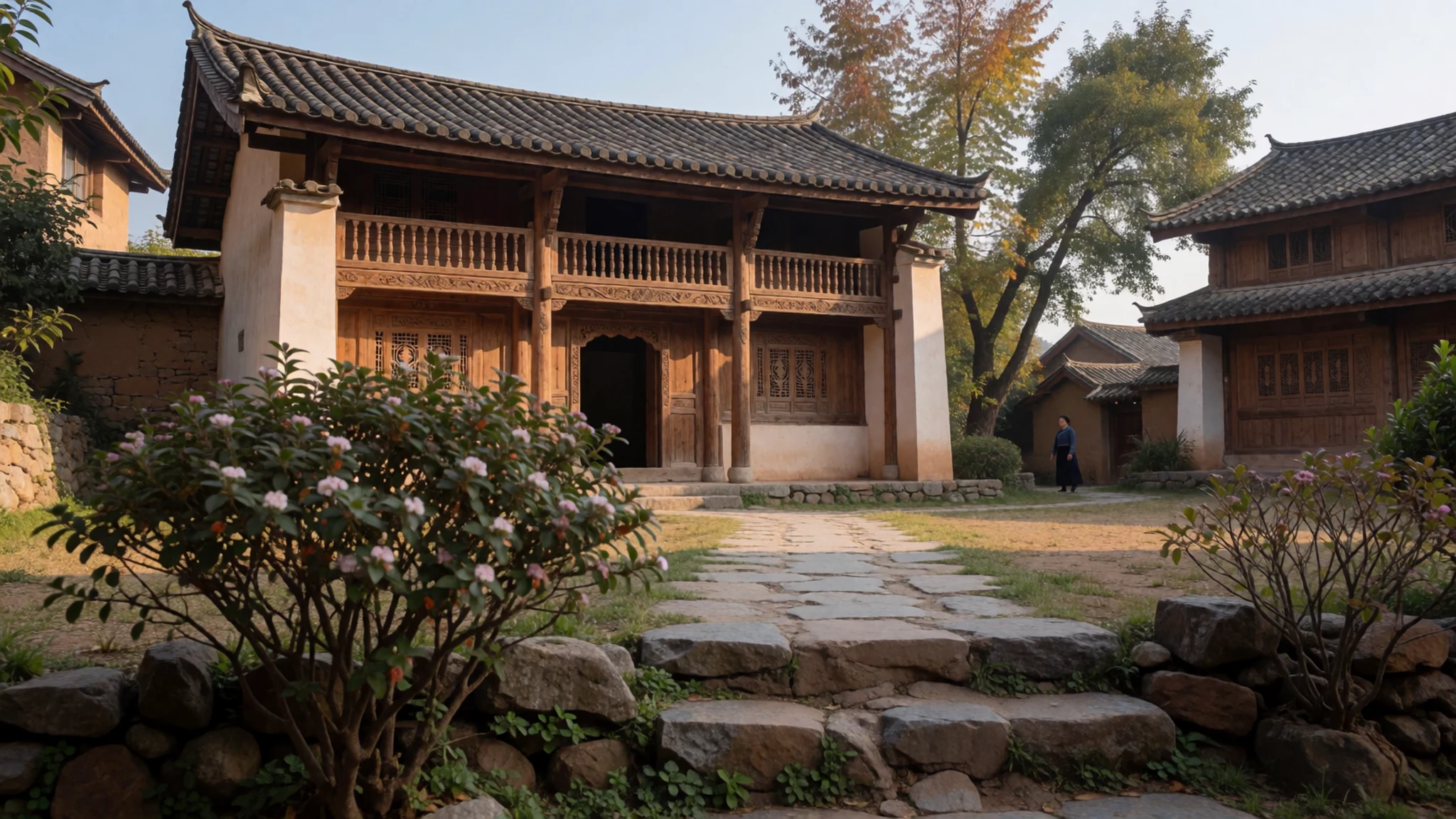
- Gemu Mountain cable car — Gemu Mountain, near Luoshui
A quick ride takes visitors to the top of the most prominent peak in the area, with sweeping views down to the lake and its bays. Near the summit there is a cave and a few mountain monkeys. Go on a clear morning, since cloud can blank out the view.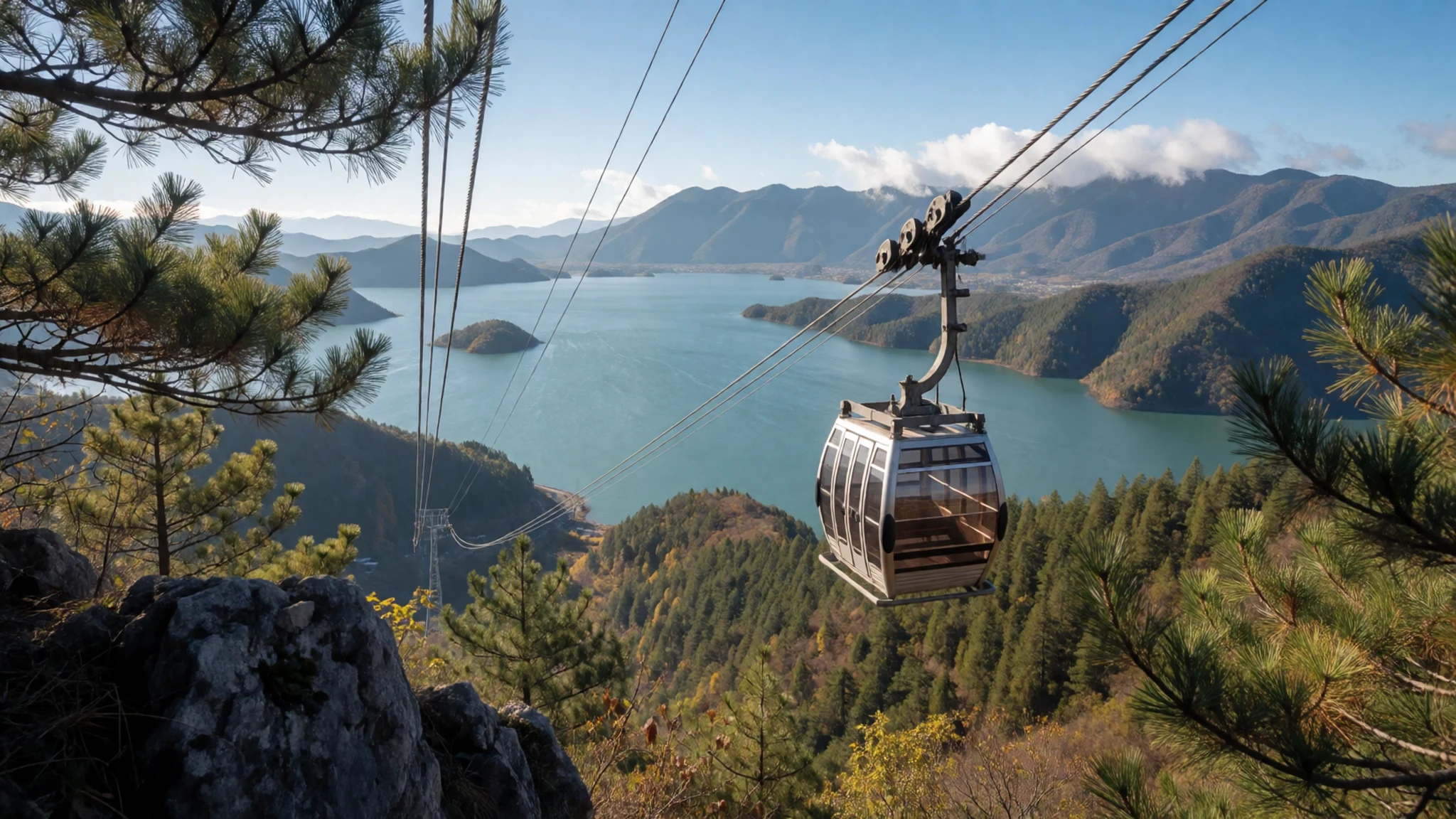
- Cycling the lake road — Lakeshore road
Hiring a bicycle or an electric scooter is a popular way to go round the lake, taking in villages, pebbly coves and farmland. The road on the Yunnan side is paved almost throughout, making for a smooth ride around the lake. Hikes into the surrounding mountains are also possible.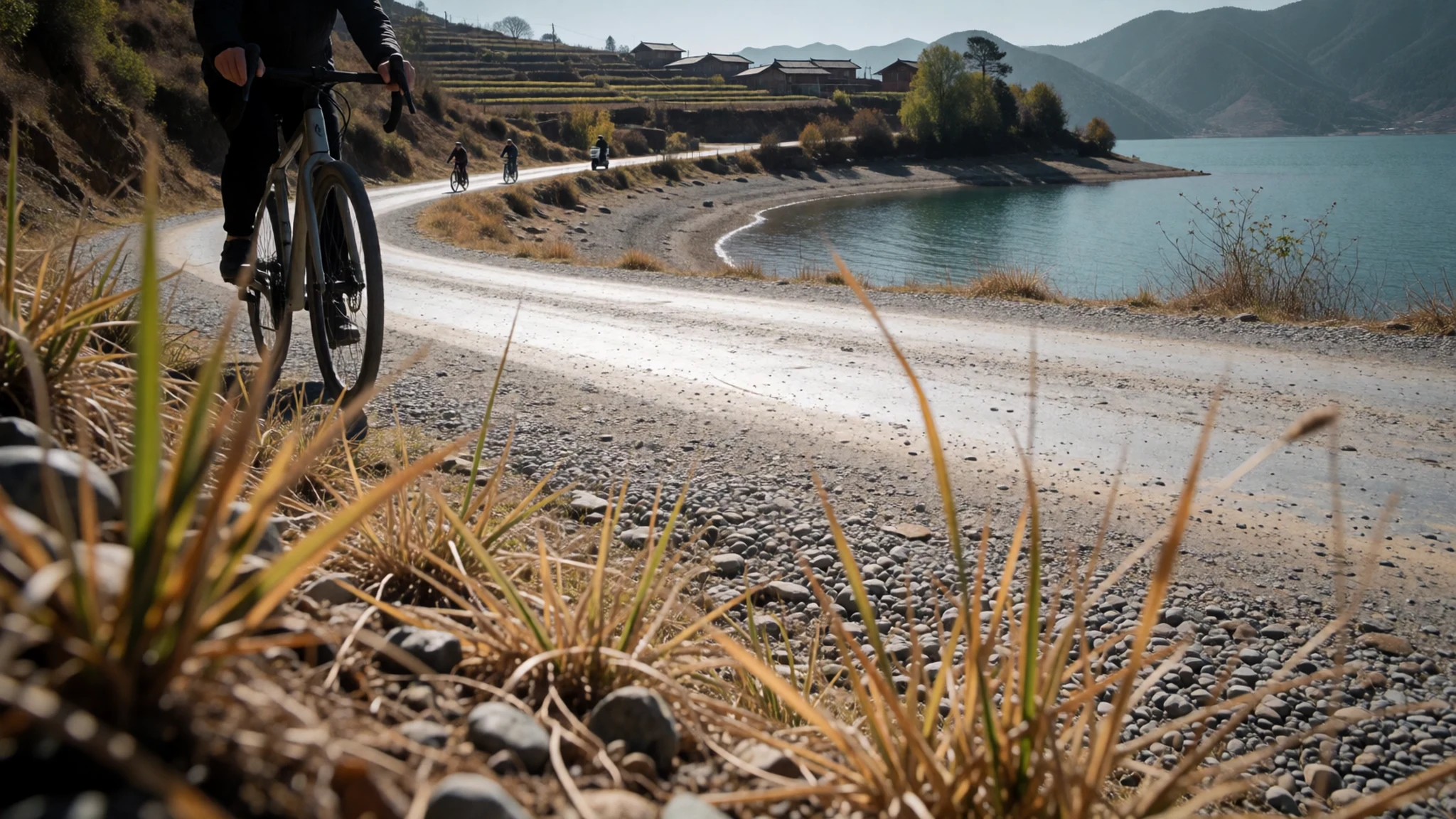
Culture
Lugu Lake is the heartland of the Mosuo, a people whose family life is organised around the mother's line. Households are commonly built around a grandmother, her children and her daughters' children, and property and family names pass through women. The best-known custom is azhu, often described as a walking marriage, in which partners keep separate homes and the relationship is personal rather than a legal household arrangement. This is the source of tourist labels like the Kingdom of Women and the exotic land of daughters, names that make locals smile politely, and that can reduce a community to a curiosity. Other groups share the shore, including the Norzu, Yi and Pumi, so festivals, language and house styles vary from village to village. Buddhism came with the Mongol period, and prayer flags, small shrines and lamas are part of the picture. Lake and mountains also carry spiritual meaning for local people, and the Mosuo call the water their mother. Evening performances of song and dance are staged for visitors, and they are a pleasant introduction, though quieter exchanges in a family courtyard usually say more about everyday life. Guesthouses are often family-run, which means a conversation over tea can teach more than a museum label. Treat the area as a home first and an attraction second: ask before photographing a person or a house interior, and never question people about their private relationships.
What to wear
Traditional Mosuo dress for women centres on a long pleated skirt, a fitted jacket with a broad sash at the waist, and braided hair coiled up and wrapped with dark thread or a headband. Fabrics have historically been hemp, wool and cotton, with brighter silk and synthetic cloth now common for festival wear. Men traditionally wore wide trousers, a belted jacket and a cap or felt hat, with Tibetan-influenced styles visible in some villages. Outfits like these come out for festivals, weddings and the evening performances laid on for visitors, and they are often hired out for photographs, so it is worth asking whether a person in costume is working or celebrating. Day to day, people around the lake wear what is practical for mountain farming and a cool climate: fleeces, padded jackets, jeans, trainers and rubber boots. Visitors should dress in layers, since the lake sits at altitude, mornings and evenings are cold even in summer, and sun and wind are strong at midday. Pack a warm fleece, a windproof and waterproof jacket, a hat and sunglasses. Shoes with grip help on the unpaved lakeside road and on boat piers. Clothes should be modest in villages and around small temples, with shoulders and knees covered, and swimwear belongs only on the beach, not in the villages.
What to eat
- Pig-trough pork (zhubiaorou) — Family guesthouses and village eateries in Luoshui and Lige
A Mosuo way of preserving pork, in which a whole pig is boned, salted and kept for months. Served sliced, it is rich, salty and fatty, usually with rice or flatbread. It is a regular fixture of family tables and guesthouse kitchens around the lake.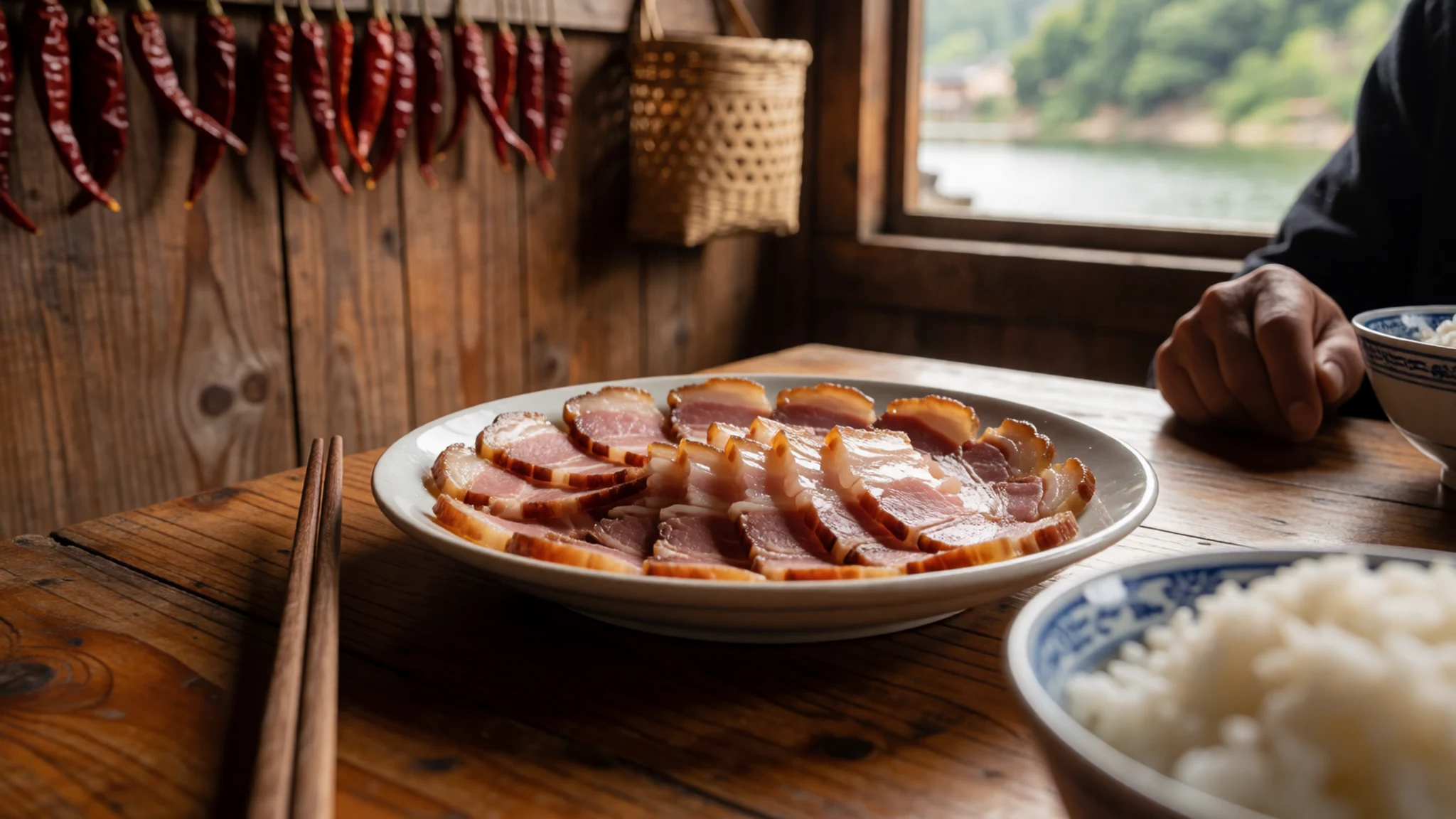
- Grilled lake fish — Lakeside eateries near the pier
Small freshwater fish from the lake, grilled or fried and seasoned with chilli and local herbs. Quality varies, so choose a busy place and ask where the fish came from. It makes a simple lunch after a morning on the water.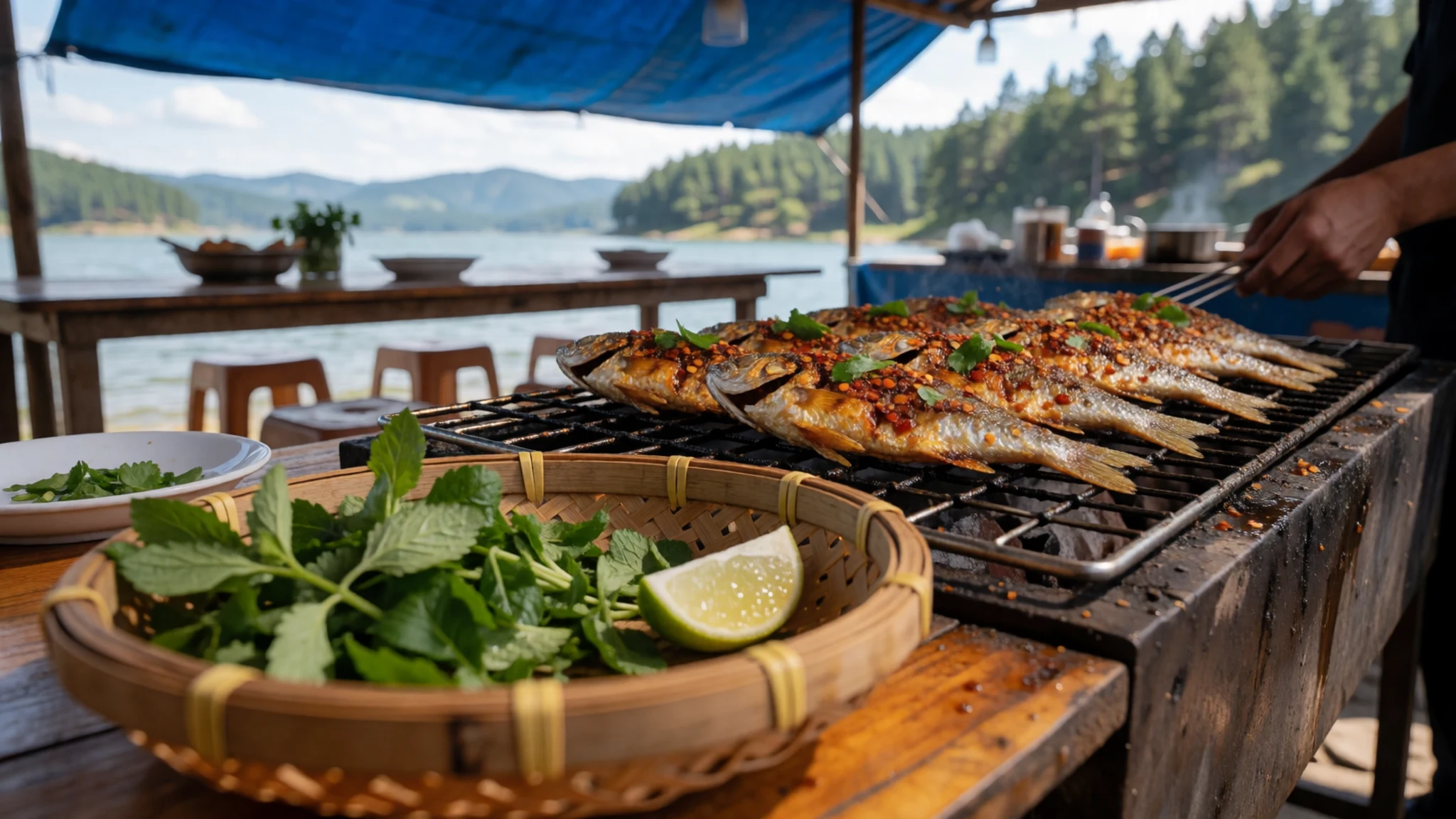
- Butter tea — Village homes and guesthouse courtyards
A salty, buttery tea drunk across the Tibetan-influenced highlands, thick enough to feel like a light soup. It is an acquired taste, but a warming one when mornings are cold at this altitude. Locals often offer a bowl to guests. - Baked potatoes and flatbread — Village stalls and roadside food sellers
Plain, filling highland food: potatoes baked in embers and breads cooked on a griddle. They are inexpensive, easy on the stomach after a long bus ride, and good picnic fare for a cycle ride round the lake. - Home-brewed grain liquor — Family homes and village shops
A clear, strong drink made in many Mosuo homes and offered at celebrations. Sips are customary rather than a full glass, and a refusal is easy to make politely. Commercial versions are sold, though homemade is more common.
Plan it
Best time. Late spring (May–June) and early autumn (September–October) are the most comfortable months, though June to September are the wettest. Winter is cold, summer can bring rain and cloud, and high season brings crowds, so low season suits those who prefer quiet.
How long. 2–3
Getting there. Fly to Lijiang in Yunnan, then take a minibus or fleet bus to the lake, a long half-day ride on a road now paved almost throughout. Buses also run from Xichang in southern Sichuan. Services leave in the morning, so plan the last leg for daylight, and check times locally.
Budget. low
Tips
- Travel from Lijiang in the morning, and do not drive at night, as road works can close the road outside set hours
- Expect the altitude to make you tire quickly: rest on the first day and drink plenty of water
- Carry cash for guesthouses, boats and small shops, as cards are not reliable everywhere
- Be careful with pickpockets in crowded spots and firm but polite with pushy food sellers
- Choose low season if possible, as Luoshui gets crowded in high season while Lige feels calmer
Etiquette
- Ask before photographing people, homes or ceremonies, and do not pay for photographs without agreeing a price first
- Do not ask Mosuo hosts about private relationships or treat their family life as a show
- Keep noise down in villages in the evening, and take litter away
Nearby
Sources
- Wikidata Q1351120 (CC0)
- Wikipedia: Lugu Lake (CC BY-SA 4.0)
- Wikivoyage: Lugu Lake (CC BY-SA 4.0)
- Photo: Lugu Lake from Lige Observation Deck, N509FZ (CC BY-SA 4.0)
- Photo: China edcp relief location map, Uwe Dedering (CC BY 3.0)
- Photo: Lugu Lake in the morning, Sherry Zhang (CC BY 2.5)
- Photo: Lugu Lake view from cable car, Jason Zhang (CC BY 3.0)
- Photo: Lugu Lake island, Evilbish (CC BY-SA 4.0)
- Photo: The glassy waters of Lugu Lake, Evilbish (CC BY-SA 4.0)
- Photo: Mosuo girls, Sherry Zhang (CC BY 2.5)
- Photo: Boat on Lugu Lake, Evilbish (CC BY-SA 4.0)


