Leuven
Leuven, Belgium
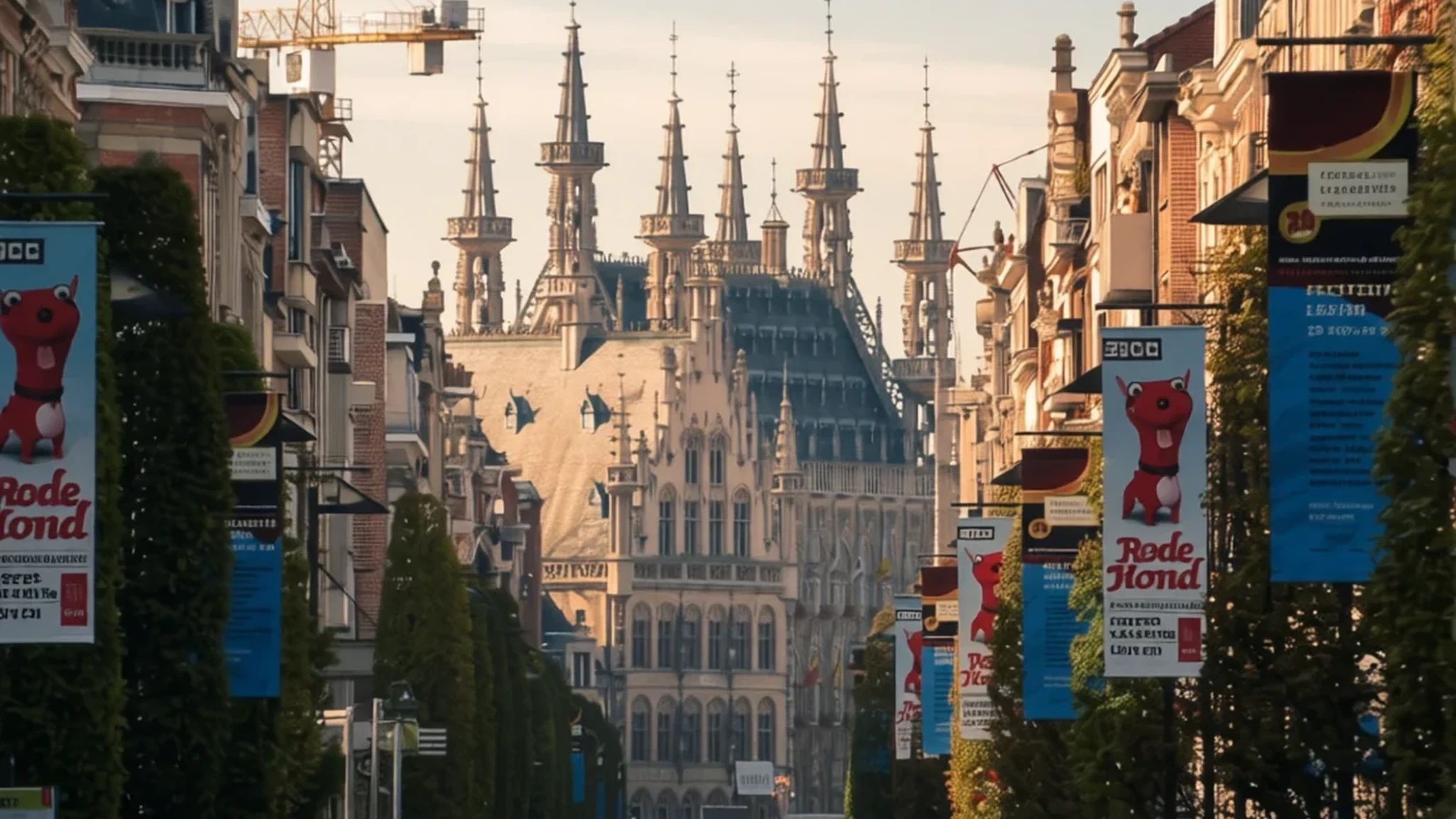
Leuven is a compact Flemish university town of Gothic façades, student cafés and beer, an easy day or two from Brussels.
The place
Leuven sits on the small river Dijle, about 25 km east of Brussels, and is the capital of the province of Flemish Brabant. Dutch is the everyday language, though the French name Louvain still turns up in older books and on some maps. The city has a population of about 101,000, and the centre is flat, at roughly 36 m above sea level, which is why bicycles outnumber cars on many streets.
The historic core is small enough to cross on foot in a quarter of an hour. It is organised around a handful of squares: the Grote Markt with its ornate town hall and the great church opposite, the Oude Markt lined with café terraces, and the Ladeuzeplein by the university library. Beyond the old ring road lie the quieter districts of Heverlee, Kessel-Lo, Wilsele and Wijgmaal, now part of the same municipality, with parks, an abbey landscape and student housing.
The university shapes everything. KU Leuven fills much of the centre with lecture halls, colleges and libraries, so term time brings crowds of young people, packed bike racks and busy terraces, while the summer holidays feel noticeably emptier. The city is also the home of the headquarters of a very large brewing group, and the beer connection is visible in the old port area, where former industrial buildings are becoming flats. It is a place for slow wandering, good eating and a few well-chosen interiors, not for ticking off a long list.
Its story
Leuven's first written mention dates from 891, when the Frankish king Arnulf of Carinthia defeated a Viking army nearby. A local legend says the red and white of the city's arms recall the blood-stained banks of the Dijle after that battle. Whether or not that is true, the colours are still everywhere in the city.
With the river for transport and the Dukes of Brabant close by, Leuven became the main trading centre of the duchy for several centuries in the Middle Ages. Cloth was the engine of that wealth. Plain linen was once called lewyn in texts of the period, a name that echoes the city's own, which says much about its reputation for weaving.
In 1425 the University of Leuven was founded, opening a second golden age. The town hall and Saint Peter's Church, which was designated a UNESCO World Heritage Site in 1999, belong to this confident period of building. Scholars came from across Europe, and the city kept its identity as a place of learning for centuries afterwards.
The twentieth century was harsher. German forces burned much of the city during the First World War, and the university library, with its irreplaceable collection, was destroyed. The Second World War brought further damage. Much of what visitors see today has been rebuilt or restored, so a medieval-looking façade is often a careful later reconstruction. Knowing this makes the lively, youthful present feel like a deliberate act of recovery.
What to see
- Town Hall — Grote Markt
Leuven's town hall on the Grote Markt is a Gothic building covered in carved detail, with rows of statues in niches along its façade. It is best admired from the square, in the morning light. Guided visits inside run on set schedules, so check the official city site before planning.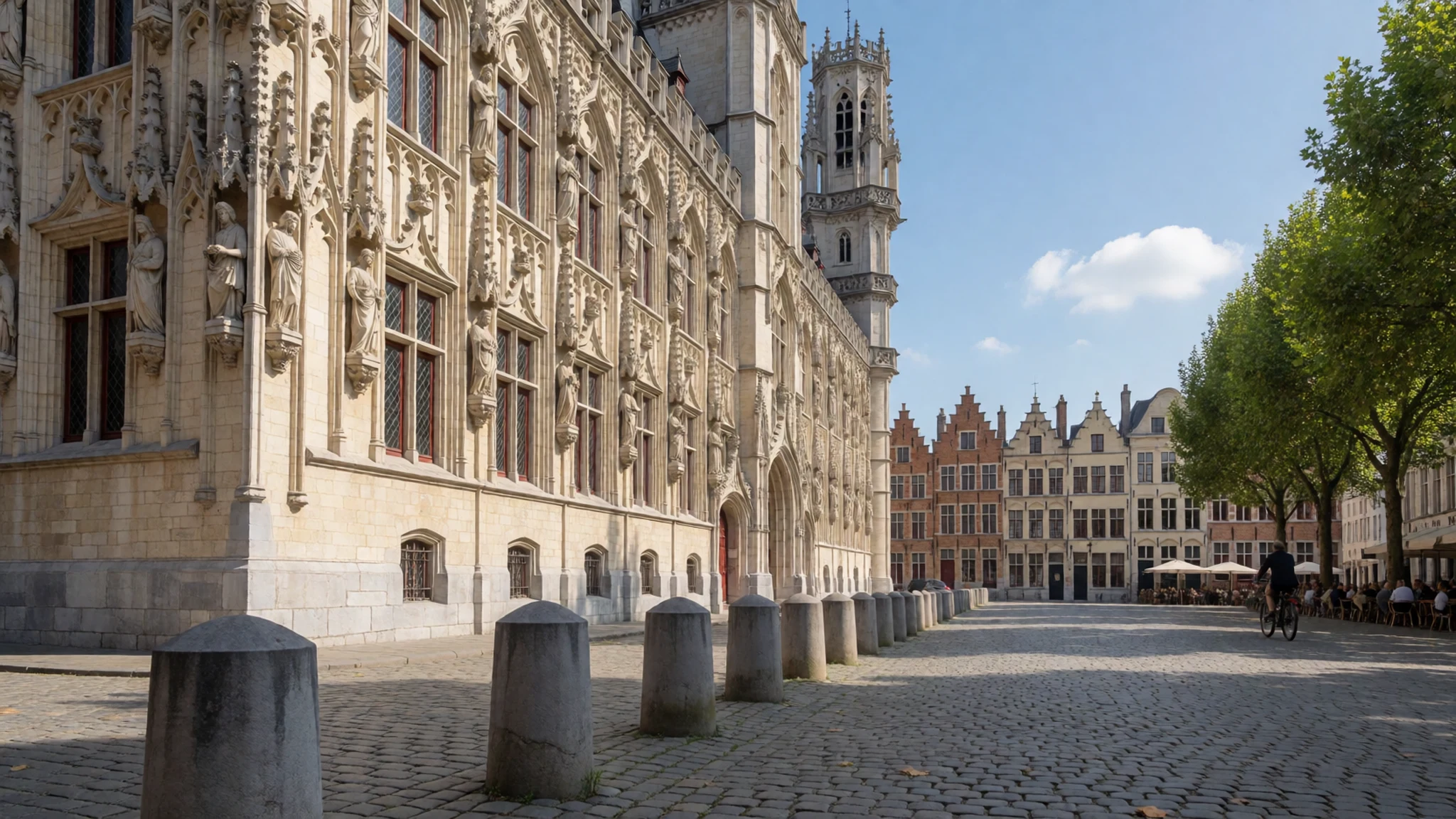
- Saint Peter's Church — Grote Markt
Facing the town hall, this medieval parish church carries UNESCO World Heritage status. It was badly damaged in both world wars, and much of the present structure reflects later rebuilding. Inside, the tall nave and the art collection reward a slow circuit. Opening arrangements change, so check before visiting.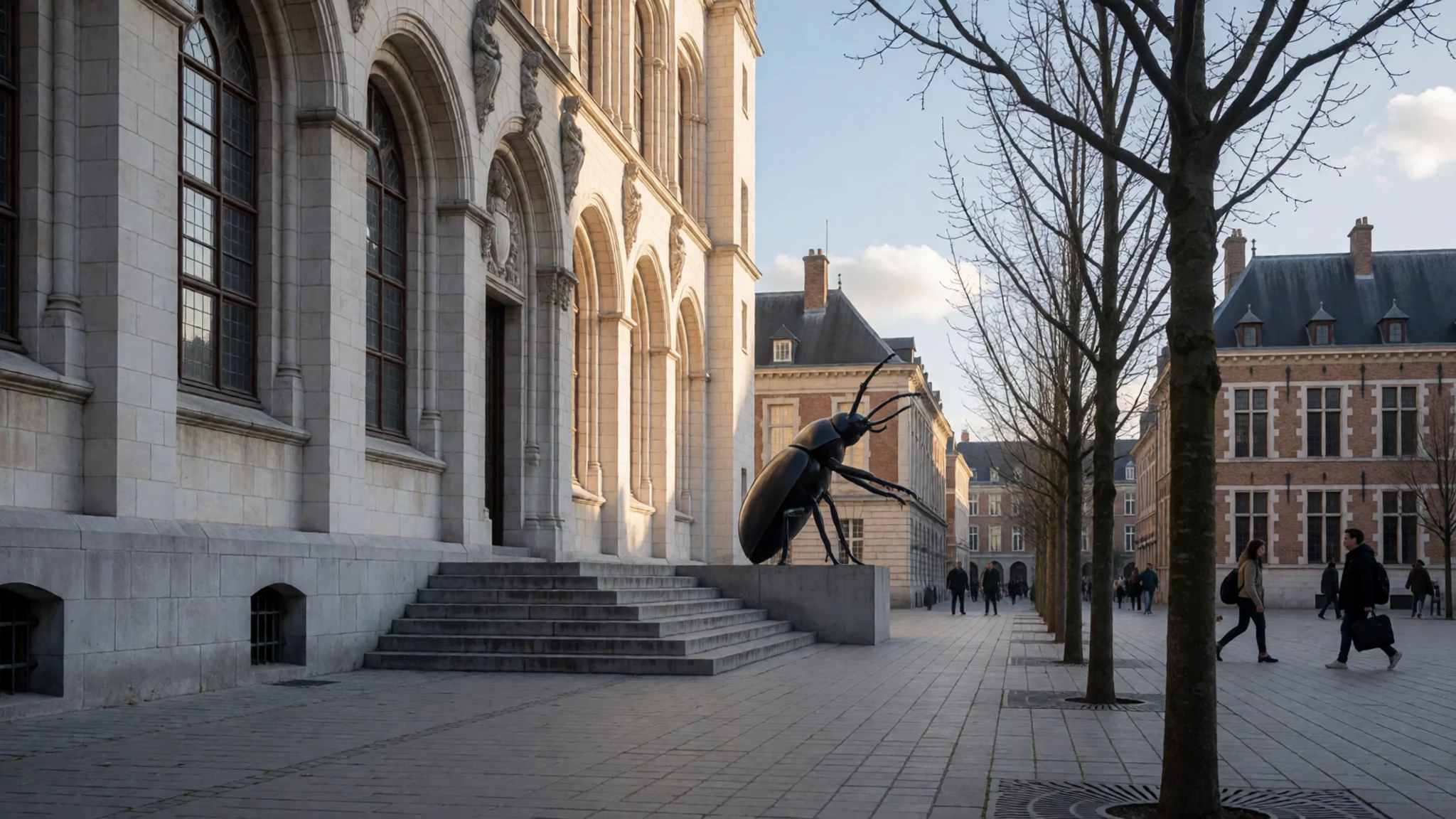
- University Library and Ladeuzeplein — Ladeuzeplein
The library stands on a broad square beside the M museum. The building was rebuilt after wartime destruction, and in front of it a giant sculpture of a dead beetle on a needle, Jan Fabre's Totem, divides opinion cheerfully. Old photographs of the ruined reading room show what was lost.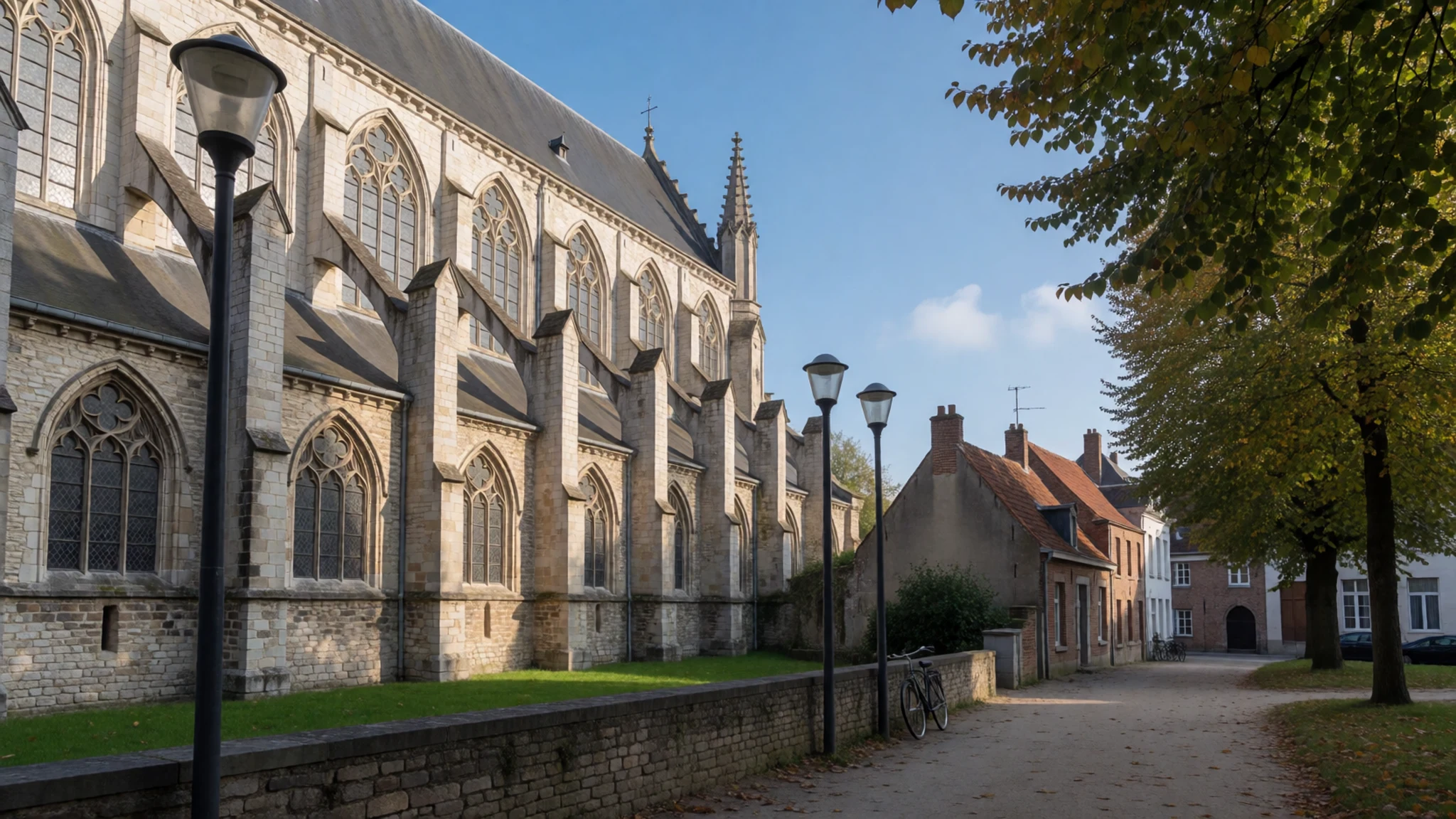
- Fonske — Near the Grote Markt
Fonske, the fountain of wisdom, is a small statue of a student pouring knowledge from a jug onto his head. It stands near the Grote Markt and is a favourite meeting point. It is easy to miss, so look for the small crowd of students photographing it.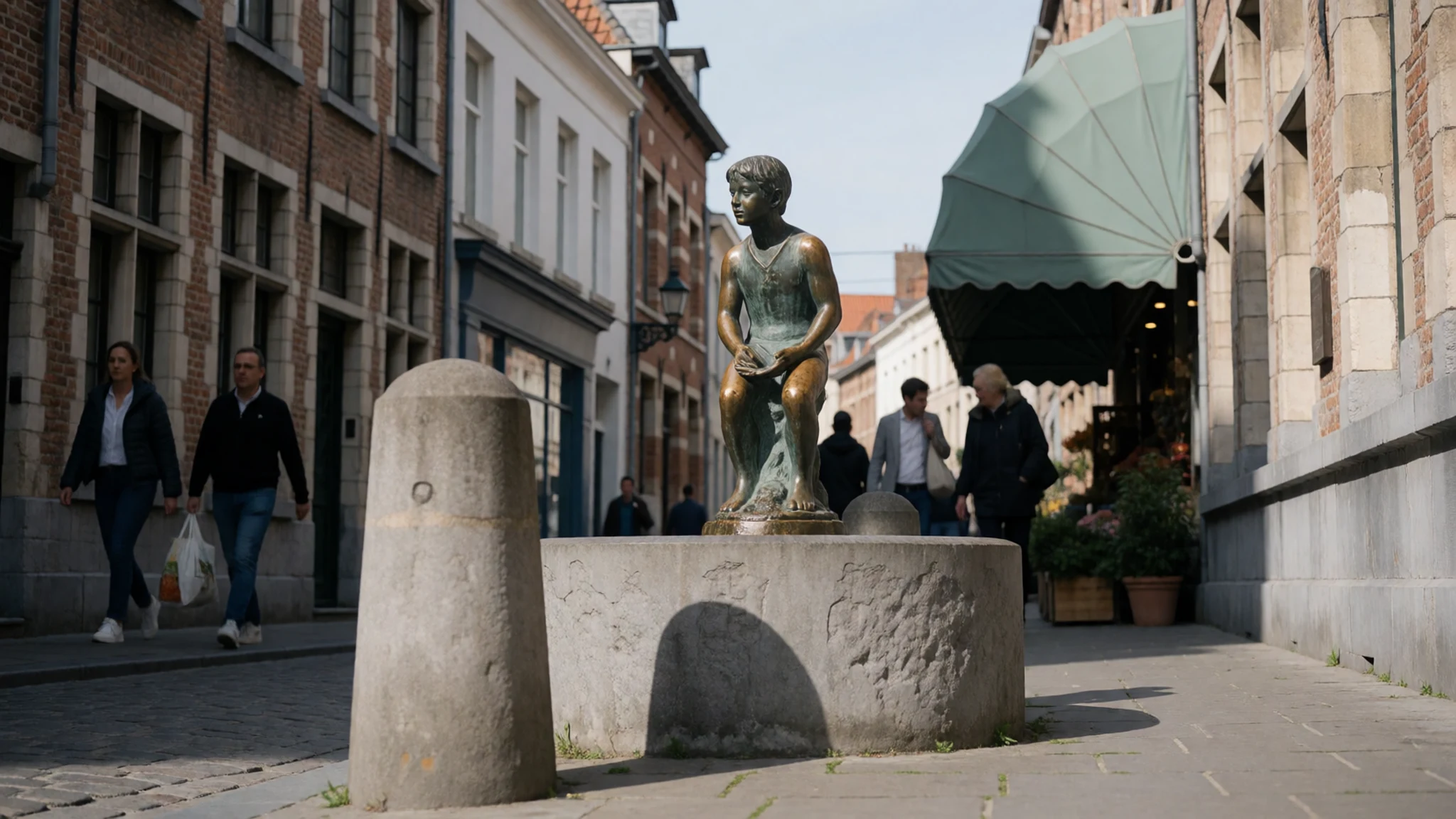
- Groot Begijnhof — South of the centre
The Great Beguinage is a walled quarter of brick houses, small lanes, gardens and the river Dijle, once home to lay religious women and now partly used by the university. It is peaceful, especially early in the day, and a good contrast to the busy squares.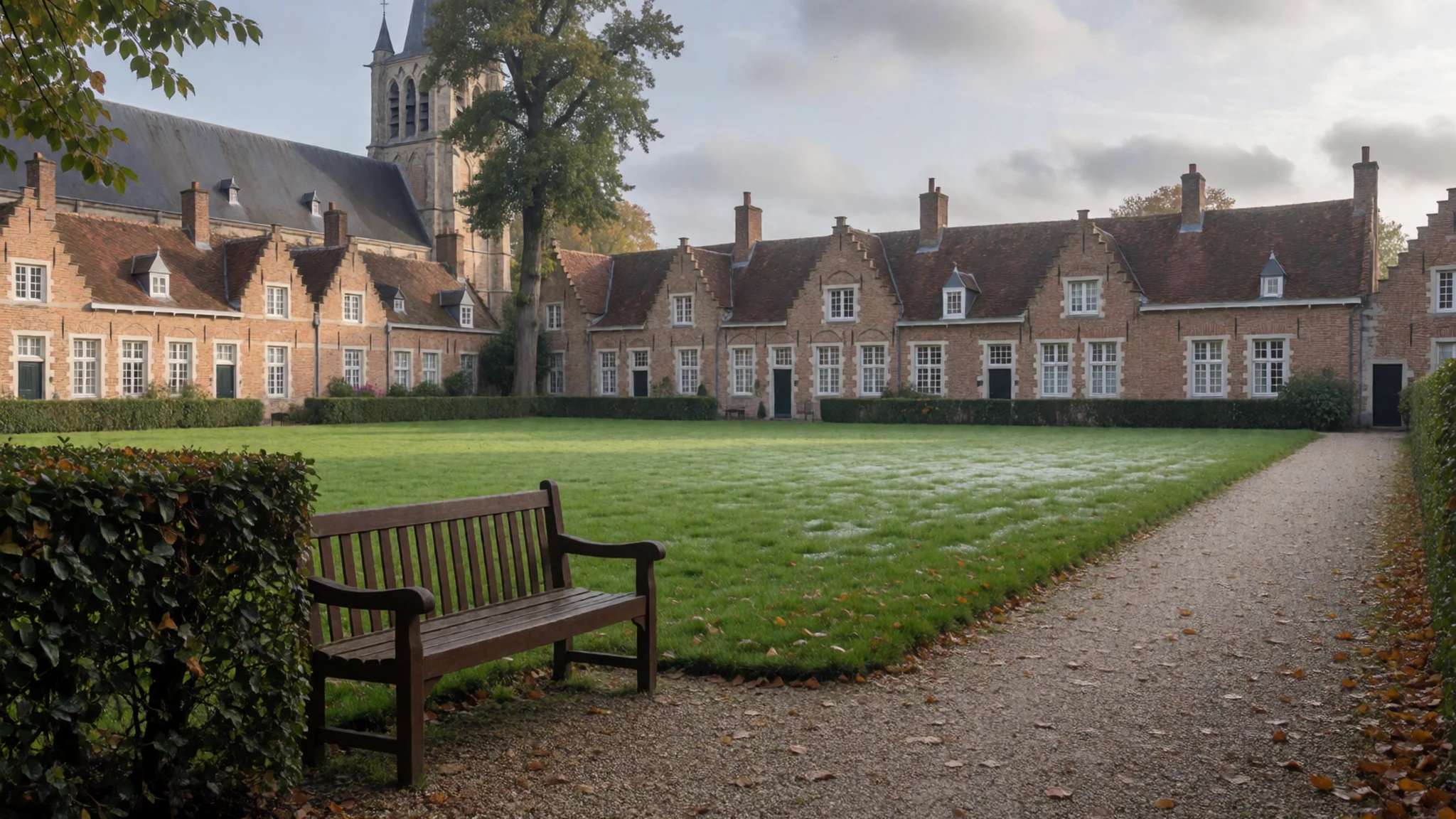
Culture
Leuven's culture is that of a university town in Flanders. Students set the rhythm: term time fills the squares with bikes, cafés and evening noise, while summer is calmer. The city hosts music, theatre and dance at the arts centre STUK, and the Lemmens Institute trains musicians and performers. Student orchestras and bands play regularly, and Marktrock, a summer rock festival, fills the central squares.
The M museum, opened in 2009 next to the Ladeuzeplein, mixes historical and contemporary art, and its building links old Leuven to the present. The city's pride in its past runs alongside a very modern outlook, and Dutch is the working language of daily life, though most people in the centre speak good English.
Beer is part of the social fabric. Old brewing traditions continue, and the headquarters of a major international brewer is based here. Evenings tend to be social, with long conversations on terraces and a relaxed pace of service. Cycling is the main means of getting about, so pedestrians learn quickly to watch for bikes.
In short, expect a courteous, informal, bookish city with a lively evening scene and strong local pride in its rebuilt heritage. Keep to the pedestrian side of marked cycle lanes, and keep your voice low on residential streets late at night.
What to wear
Leuven has no single traditional costume that residents wear today, but the city's identity is tied to textiles. Linen and wool cloth made it rich in the Middle Ages, and the name lewyn for plain linen preserves that history. Lace, from the wider Flemish region, remains a craft tradition, seen in shop windows and museums rather than on the street.
What people actually wear is practical and casual. Students and residents cycle everywhere, so jeans, trainers, waterproof jackets and scarves are standard, with darker colours and neat layers for evenings. Wool coats and boots in winter, light jackets and small umbrellas the rest of the year. Dress is relaxed even in restaurants, though people often look put together for a night out.
Visitors should dress for changeable weather. Bring a rain jacket and layers, because mild days can turn cool and damp quickly, particularly near the river. Comfortable, closed shoes with a good grip matter more than style, since the old centre is paved in cobbles and stone setts that get slippery when wet. In summer, light cotton clothing and sun protection are enough.
For churches and the beguinage, there is no formal dress code, but covered shoulders and knees are polite, and a light scarf or shawl is useful. Remove hats indoors and keep a respectful tone during services.
What to eat
- Frites with sauce — Any frituur in the centre or in Heverlee
Belgian chips are fried twice, served hot in a paper cone and topped with mayonnaise or a sauce of choice. A late snack after a beer is the usual way to enjoy them. Order from a frituur, a small chip shop.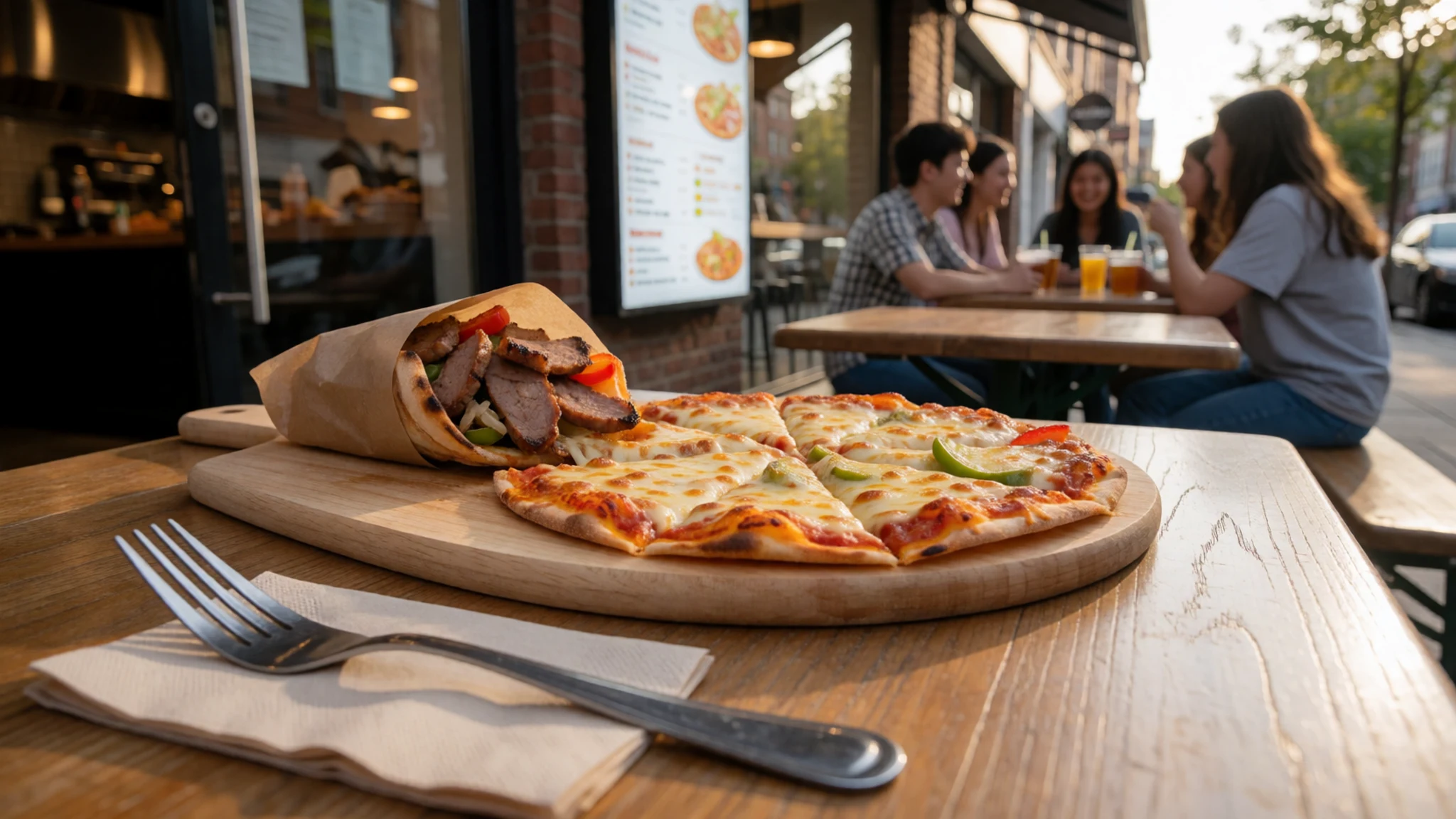
- Stoofvlees — Traditional Belgian restaurants near the main train station square
Flemish beef stew, slow-cooked with beer and onions until tender, normally served with chips or bread. It is hearty, rich and best on a cool day. Menus in several places are also printed in English.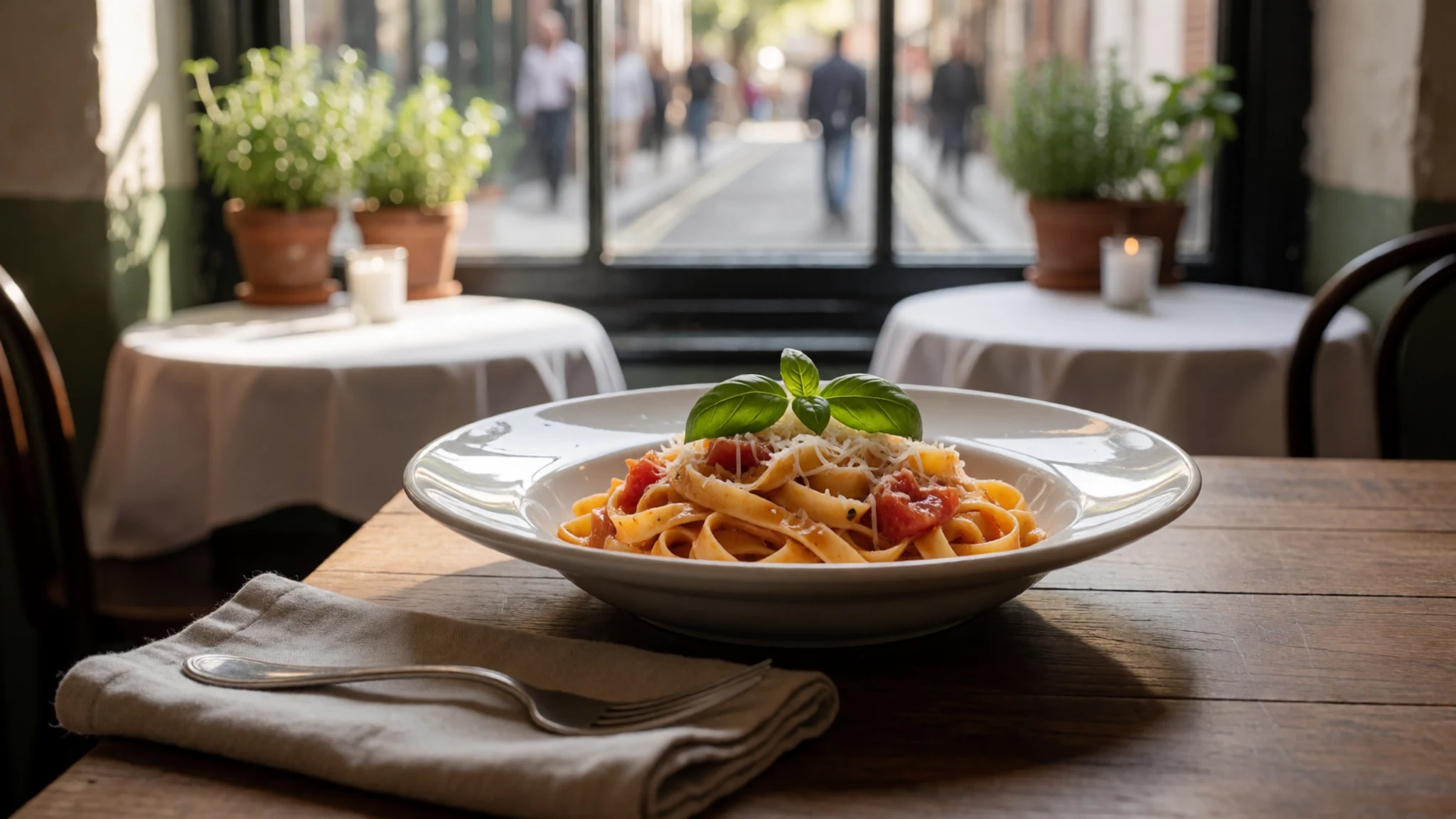
- Student pizza and kebab — Casual takeaway places around the central streets
Cheap, generous pizzas and kebabs are a staple of the student population, and the city is known for good value. They suit late nights and tight budgets, and vegetarian options are easy to find. - Belgian beer with bar snacks — The Oude Markt terraces and brown cafés nearby
Leuven has a strong beer culture, and cafés keep long lists of local and Belgian beers. Pair a glass with cheese cubes, sausage or a plate of simple bar food. Staff will gladly suggest a style if you ask. - Belgian waffles — Waffle stands and bakeries around the central squares
Warm waffles, either light and rectangular or round and caramelised, are sold as sweet street food and café desserts. Try them plain or with fruit and whipped cream. They are easy to find near squares and shopping streets.
Plan it
Best time. May–June and September are mild and pleasant, with long evenings for terraces. April brings spring freshness, though showers are likely. Winters are cool, grey and damp but quieter, and the university term fills the city from autumn to spring.
How long. 1–2
Getting there. Fly to Brussels Airport at Zaventem, then take the direct train to Leuven, which takes about 13 minutes. Trains from Brussels city also run regularly. From Leuven station, the old centre is a short walk or cycle.
Budget. mid
Tips
- Check the official city website (https://www.leuven.be) for opening times of the town hall and museums before you go
- Carry a waterproof jacket, since rain can arrive in any season
- Rent a bike or walk, as the centre is flat and compact
- Visit the beguinage and churches early in the morning for quiet
- Cards are widely accepted, but keep a little cash for small stalls
Etiquette
- Keep to pedestrian areas and watch for cyclists in marked lanes
- Keep noise down on residential streets at night
- Cover shoulders and keep voices low inside churches
Nearby
Sources
- Wikidata Q118958 (CC0)
- Wikipedia: Leuven (rev 1378153433) (CC BY-SA 4.0)
- Wikivoyage: Leuven (rev 5426477) (CC BY-SA 4.0)
- Oude Markt te Leuven (Wouterhagens) (Public domain)
- Tafelrond Leuven (Kris Vandevorst) (CC BY 4.0)
- View on Leuven (Detroit Publishing Co.) (Public domain)
- Interior of the Famous Library at Louvain (N. J. Boon) (Public domain)
- Historisch Station Leuven (Michael Segers) (CC BY 4.0)
- King Power at Den Dreef Stadion (Joliennoens) (CC0 1.0)
- Fonske (Juan V. Vera del Campo) (CC BY-SA 2.0)
- View of the Great Market in Leuven (Wolfgang de Smet) (Public domain)


