Dinant
Dinant, Belgium
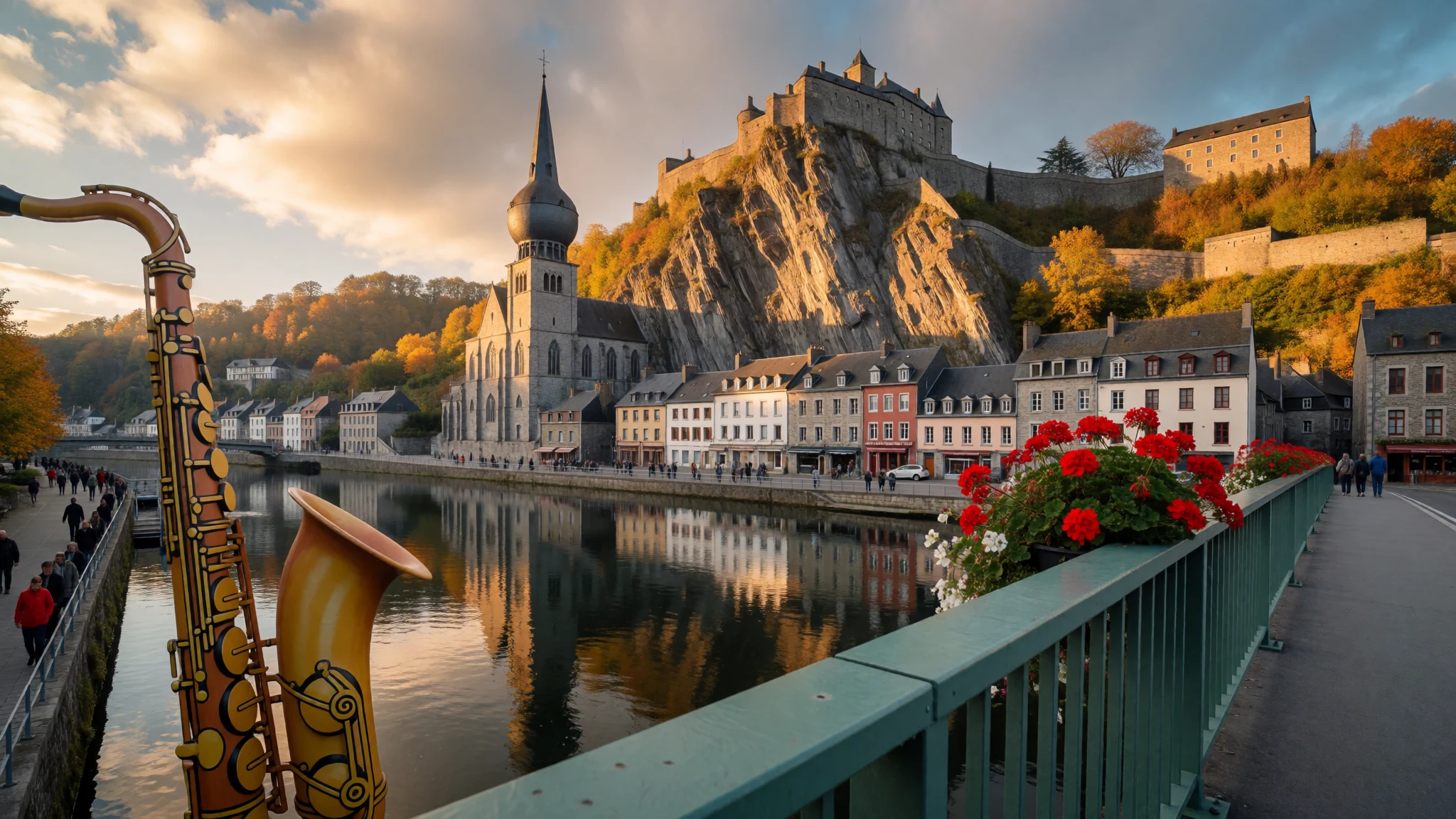
Dinant packs a cliff-top citadel, a riverside church, a legendary rock and Belgian beer into one narrow Meuse gorge within reach of Brussels.
The place
Dinant sits on the River Meuse in the Belgian Ardennes, in the province of Namur, about 90 kilometres south-east of Brussels and a short way north of the French border. About 13,400 people live in the town, at roughly 93 metres above sea level, and the valley decides almost everything about its layout. A cliff rises on one side, the river runs on the other, and there was never much flat ground between them, so the old settlement stretched into a long, thin ribbon from north to south. Nearly every view is framed by that rock: the collegiate church and the citadel stack up above the bridge and the quays, and boats tie up below. In the 19th century a side channel of the river to the south was filled in, which joined the former Drummers' Island to the rest of the town. Above the gorge lies a farming plateau, and the wider municipality takes in villages such as Anseremme, Bouvignes-sur-Meuse, Furfooz and Falmignoul, so a stay can combine riverside strolling with woodland and field walks. Brassware has long been the local craft, helped by a broad, navigable river that brought metal in and carried finished pieces out. The mood today is relaxed and small-town: restaurants along the water, boat trips from the landing stages, kayaks in the warm months. Fine summer weekends bring crowds from Brussels and Namur, while wet winter weekdays can feel almost empty and some attractions keep shorter hours. The railway reaches Dinant only by a branch line from Namur, which is why many visitors arrive by car.
Its story
Dinant takes its name from a Celtic phrase, Divo-Nanto, usually read as "sacred valley" or "divine valley", and people have lived in this gorge for a very long time. A burial found nearby in 1988, known as the Margaux Woman, is dated to the Mesolithic, around the middle of the ninth millennium BC. Neolithic, Celtic and Roman communities followed. The settlement enters written history in the 7th century, when Bishop Perpète of Tongeren moved his main residence here from Maastricht and founded the church of Saint Vincent. After that the town passed through the hands of successive Frankish realms as they were divided and reassembled, with authority split between the Count of Namur and the church based at Liège. By the 10th century it lay outside West Francia altogether. In the 11th century Emperor Henry IV granted the Prince-Bishopric of Liège several rights over Dinant, among them the market and the courts, which tied the town's commerce to Liège for generations. The cliff shaped events as much as any ruler did. In 1227 falling rock destroyed an earlier Romanesque church on the riverbank, and the collegiate church that stands there now is its successor. Metalworking, helped by the river, made Dinant a name in brass. Its darkest chapter came in the First World War, when streets were left in ruins; a period photograph of one wrecked street is among the images for this reading, and the town was rebuilt afterwards.
What to see
- Collégiale Notre-Dame — Riverside, central Dinant
The collegiate church of Notre-Dame stands right on the quay, and its tower is the first thing most people photograph from the bridge. A rockfall destroyed its Romanesque predecessor in 1227, which explains why the cliff looms just behind it. Step inside for the calm, then look back at the façade against the rock.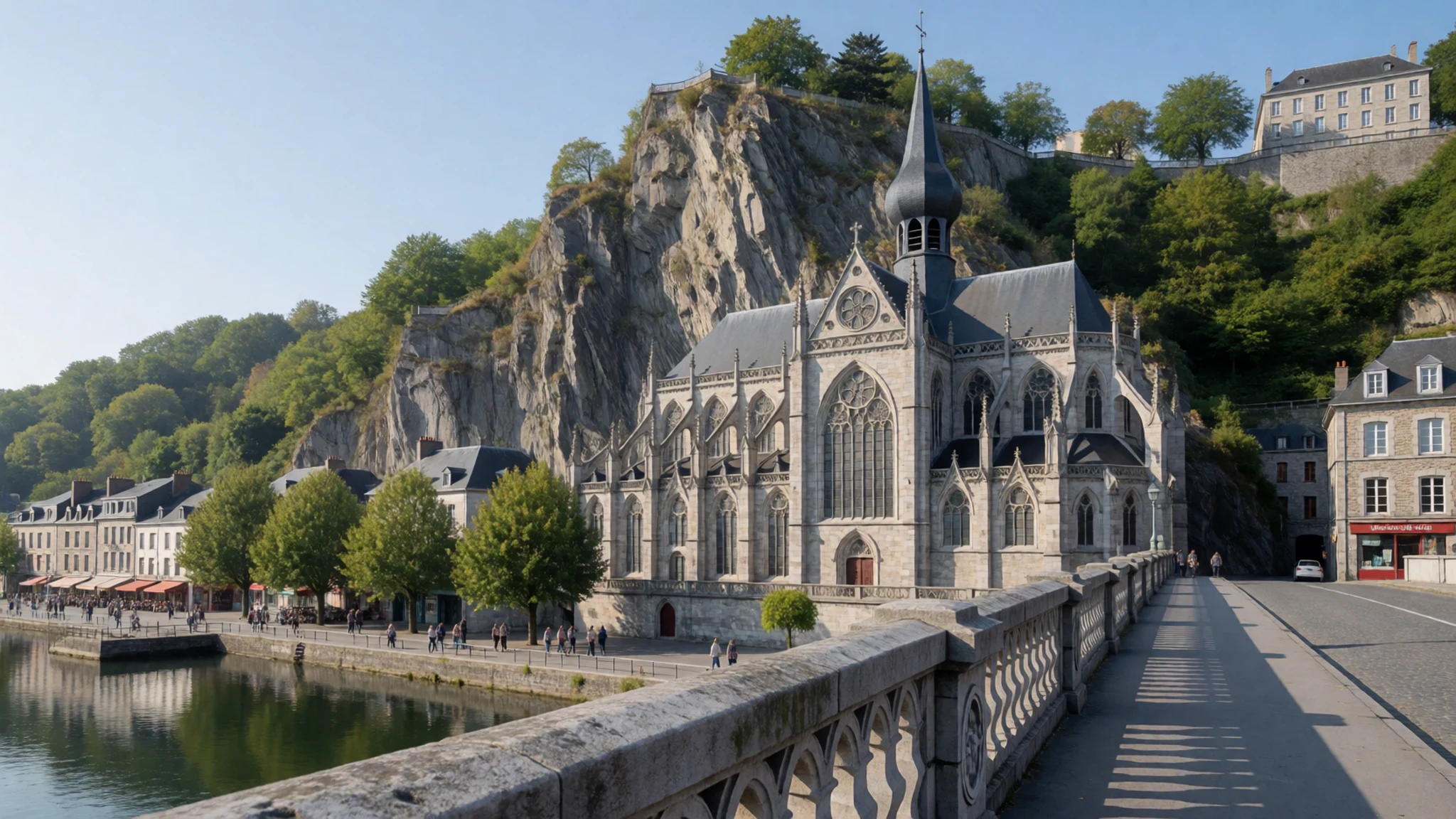
- Citadel of Dinant — Cliff above the town centre
The citadel crowns the cliff high above the Meuse and gives the widest view of the town, the river and the plateau beyond. A fortification may have stood here as far back as the fourth century, later in the hands of the prince-bishops of Liège. Check the official site for opening times and how to get up.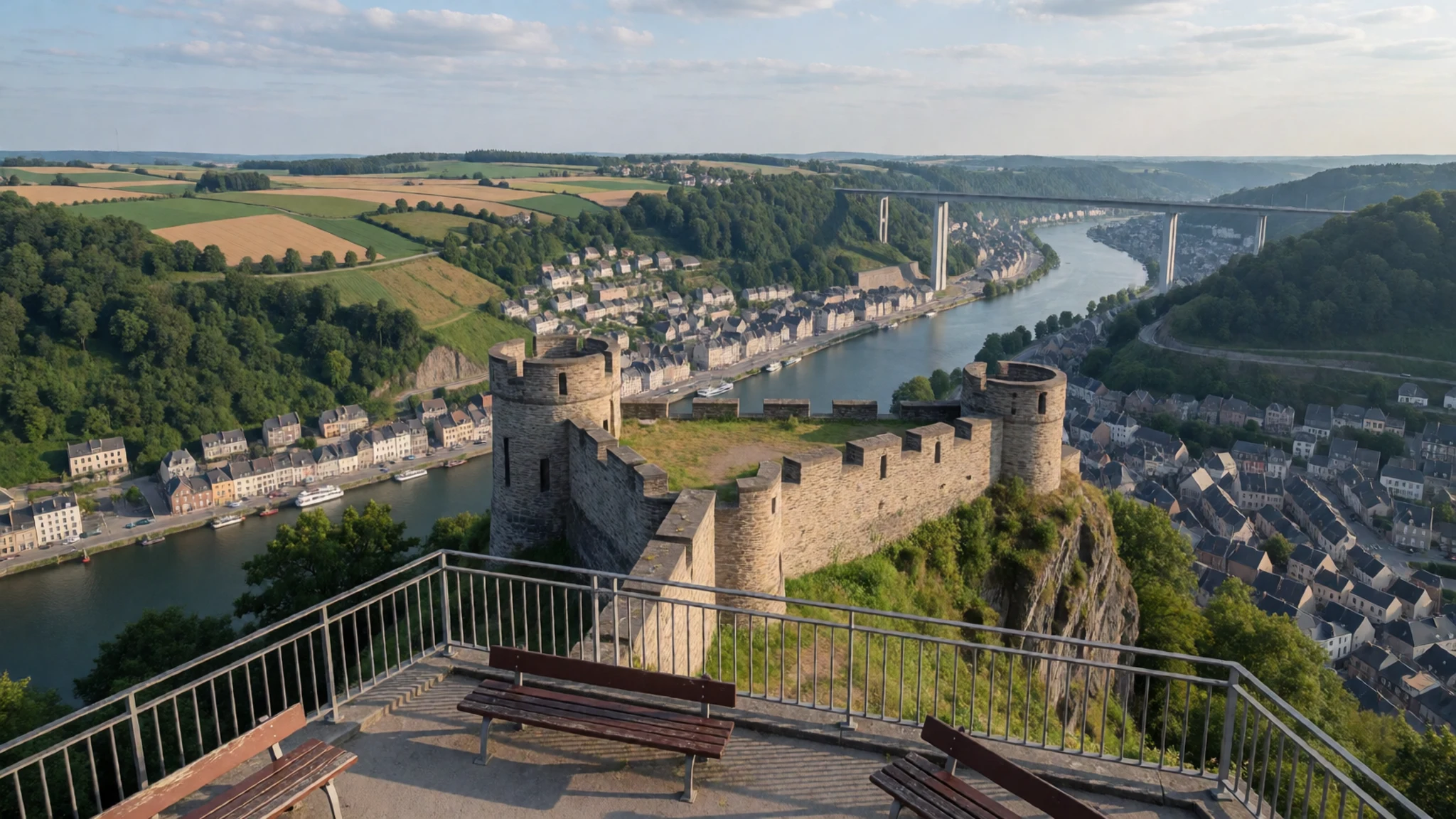
- Rocher Bayard — Southern edge of Dinant, by the Meuse
South of the centre, a tall needle of rock stands beside the river and the road. Legend says Bayard, the magical horse carrying the four sons of Duke Ayman, split it from the cliff with one strike of its hoof. It is a quick stop on the way towards Anseremme and photographs well from the riverbank.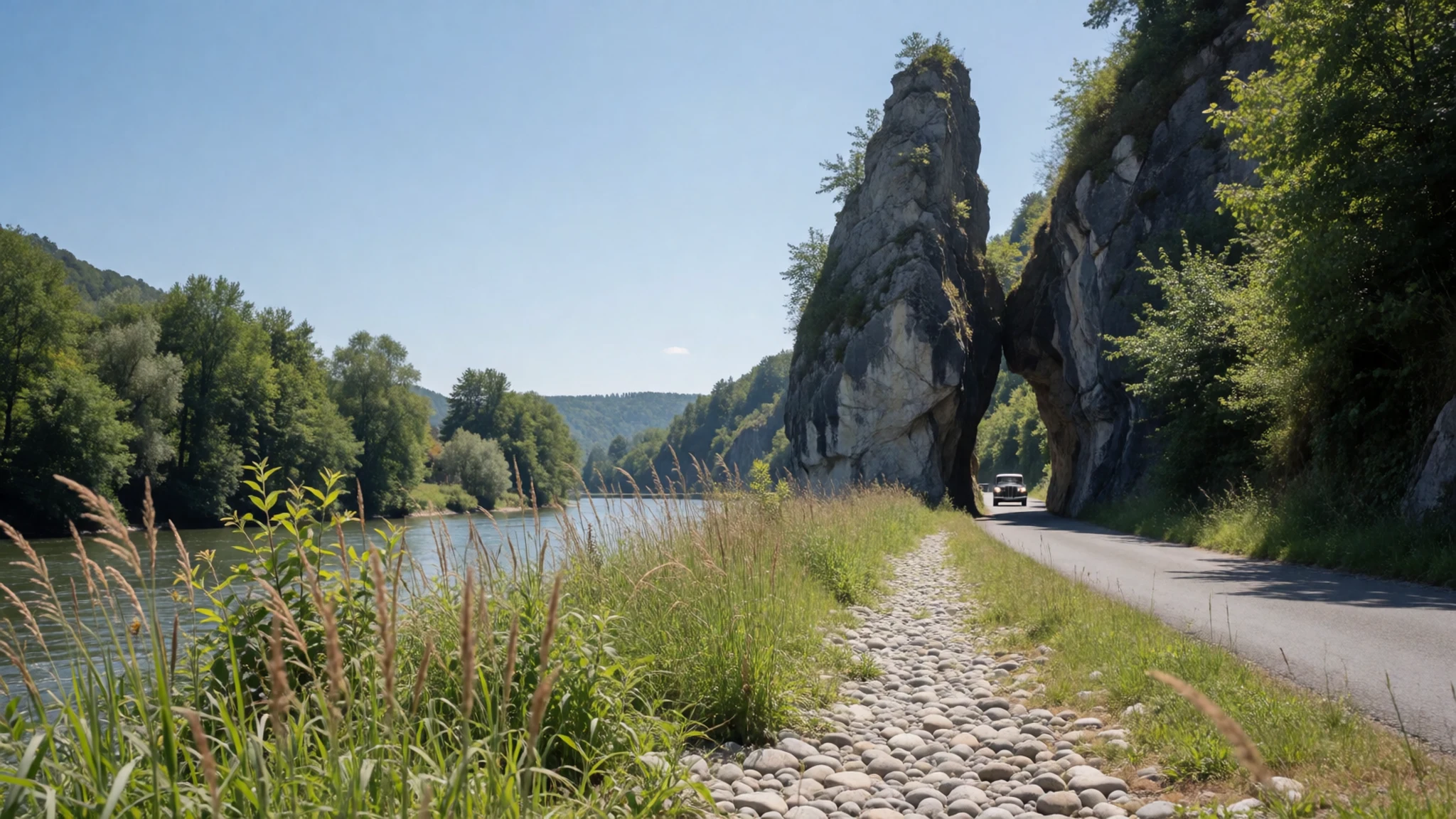
- Grotte la Merveilleuse — Southern Dinant
This cave was discovered in 1904 and is easy to visit, with small waterfalls and rock formations along the route. It stays cool whatever the weather outside, so bring a layer even in summer and wear shoes with grip. Tour times vary by season, so check the official site before setting out.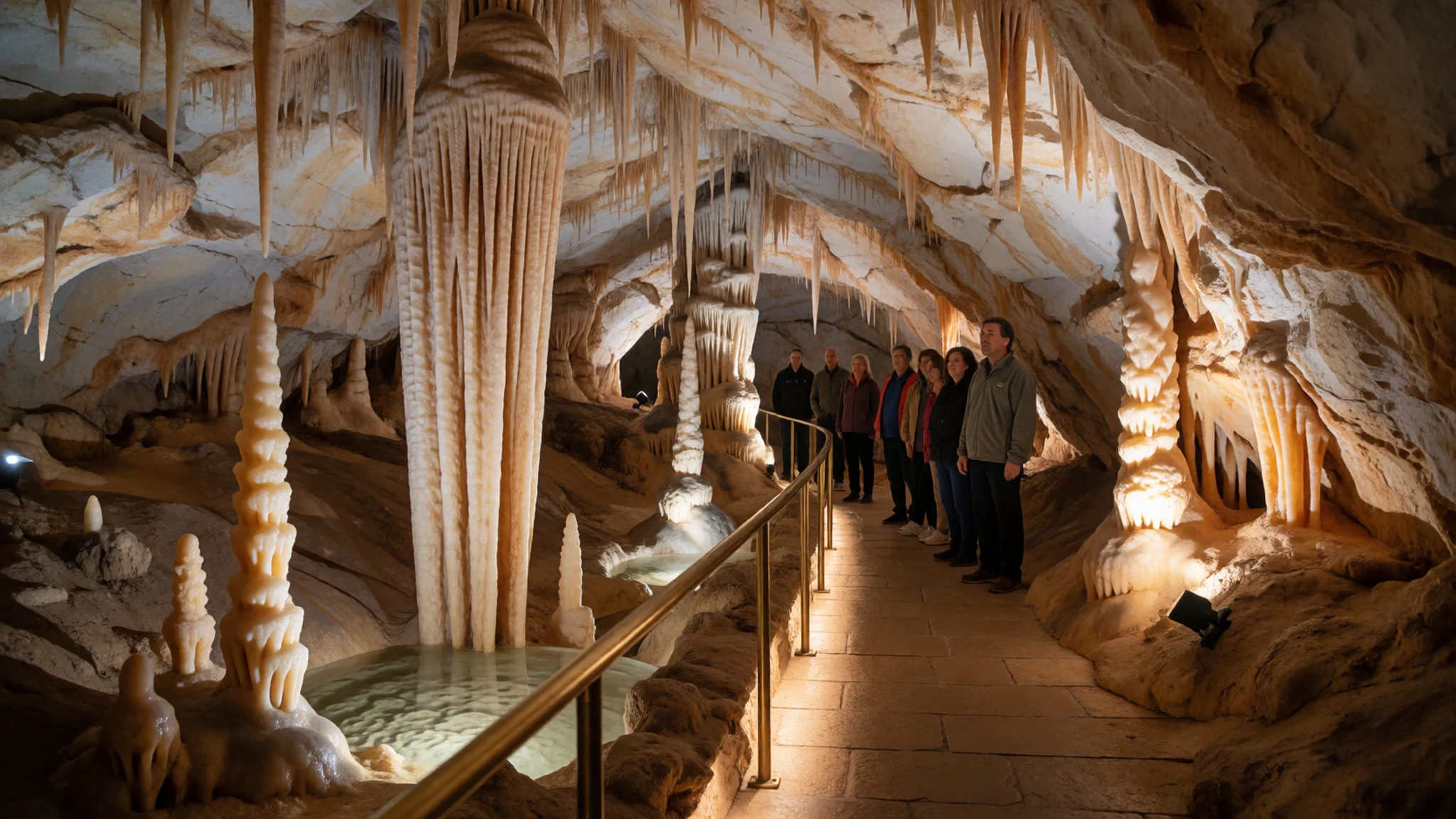
- Abbaye de Leffe and Maison Leffe — Leffe district, north Dinant
North of the citadel, the Abbaye Notre-Dame de Leffe has housed a religious community since 1152 and has a fine organ. Nearer the quay, Maison Leffe tells the story of the beer that began in Dinant. Together they make an easy half-day, ideally ending with a glass on a terrace.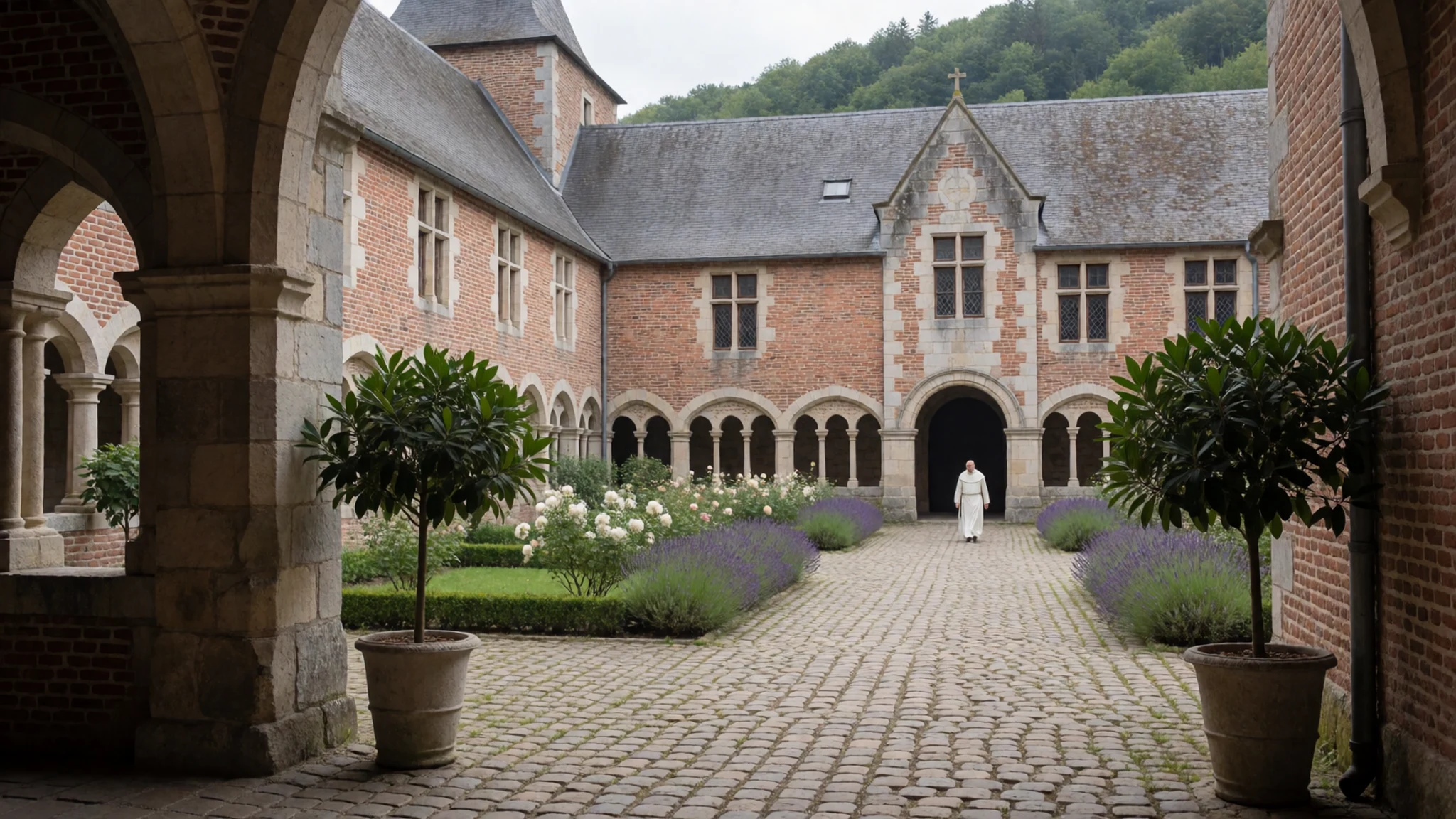
- The quays and the Meuse — Along the river through central Dinant
The riverside promenade works as the town's living room, with boat landings, café terraces and, on still days, the cliff and church reflected in the water. River trips leave from here, and a supermarket beside the landing stages makes picnic shopping simple. Evenings are the calmest time for a walk.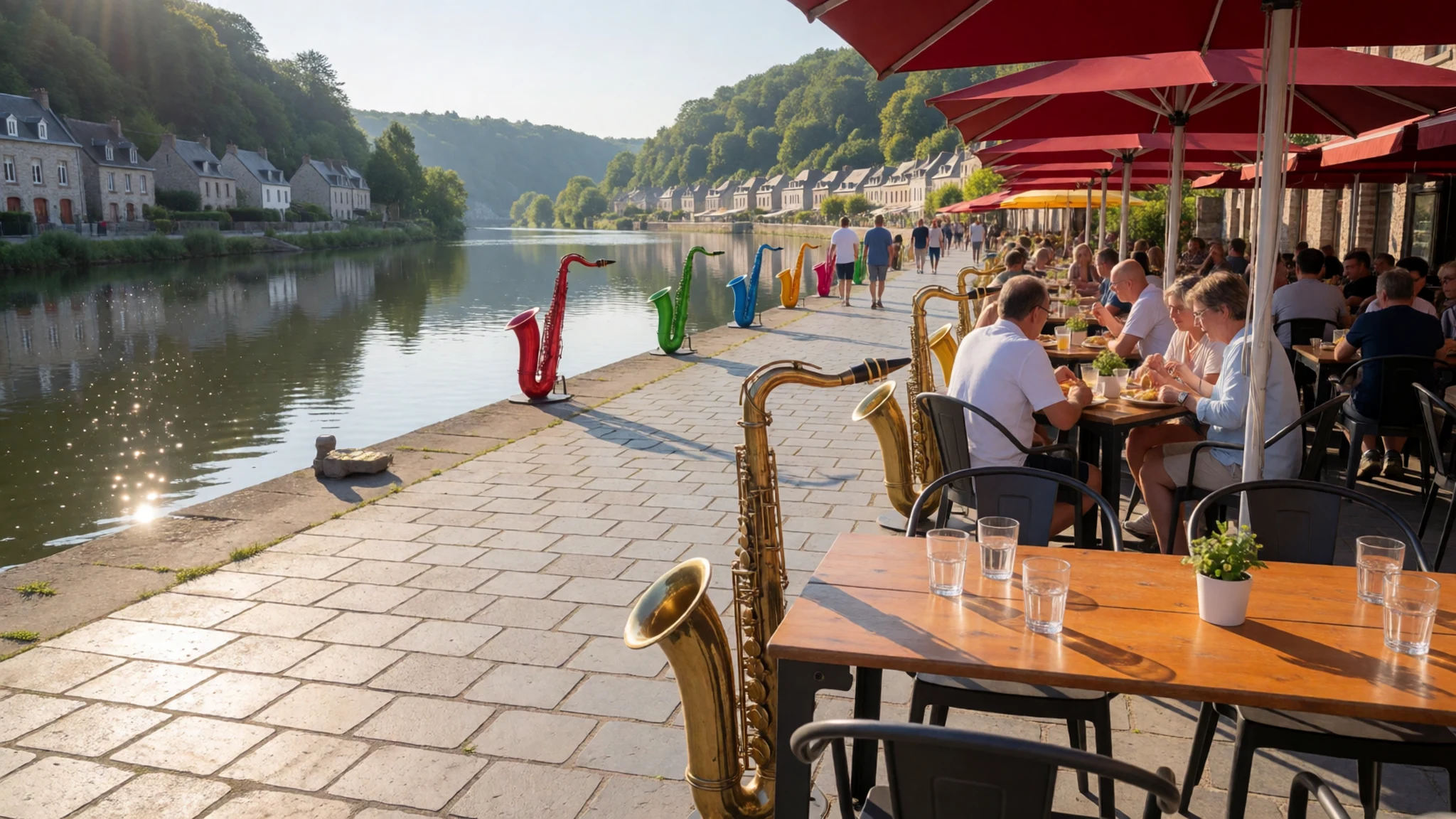
Culture
Dinant is French-speaking Wallonia, and French is the language of menus, signs and conversation, though staff in the busiest places usually manage some English. Local identity rests on a few strong threads. The first is metalwork: brassware has been made here for centuries and remains a point of civic pride, often shown in shops and museums. The second is the abbey tradition, most visible in Leffe, where a community has lived since 1152 and where the beer that carries the name began. The third is legend. Locals tell of Bayard, the magical horse whose hoof is said to have split the rock needle beside the river. There is also a story that a statue designed for the cliff top, Le triomphe de la lumière, inspired the Statue of Liberty; it is best treated as a local tale rather than settled fact. Café life matters too. People linger over coffee or a Leffe on the quay, and hurrying a meal is considered poor form. Weekends bring family lunches and day trippers, so Sundays feel social and busy. A quick bonjour to the shopkeeper or café owner when entering is simply expected. In the collegiate church and the abbey, keep your voice low and do not photograph worshippers during services.
What to wear
Dinant has no everyday regional costume, and it would be wrong to pretend otherwise. Belgium's best-known textile traditions, lace and fine linen, belong more to other towns, while Dinant's craft heritage is in metal rather than cloth, in the brassworkers' trade. Historic dress turns up at local festivals, processions and folklore groups, where members wear period costume in wool and linen, and the details differ from event to event. In daily life people dress for a cool, often damp river valley: waterproof jackets, jumpers, jeans and sturdy shoes, with lighter layers in the warm months. Belgian style is understated and practical, and nobody dresses up for a café terrace. A visitor should pack layers and a proper rain jacket in any season, since weather in the Ardennes changes quickly. Shoes need grip: the climb to the citadel involves many steps, riverside paving can be slick after rain, and the cave is cool and wet underfoot. Sunglasses and a hat help on the open quays in summer. In the collegiate church and the abbey, no special covering is required, but beachwear is out of place. Comfortable walking shoes matter more than anything else in the bag.
What to eat
- Couque de Dinant — Bakeries and gift shops in the town centre
A very hard, dense honey biscuit, traditionally pressed into decorative moulds. It is more souvenir than snack, sturdy enough to survive a suitcase, and best softened in coffee. Local bakers sell it in many shapes, and the flavour is simple, sweet and honeyed.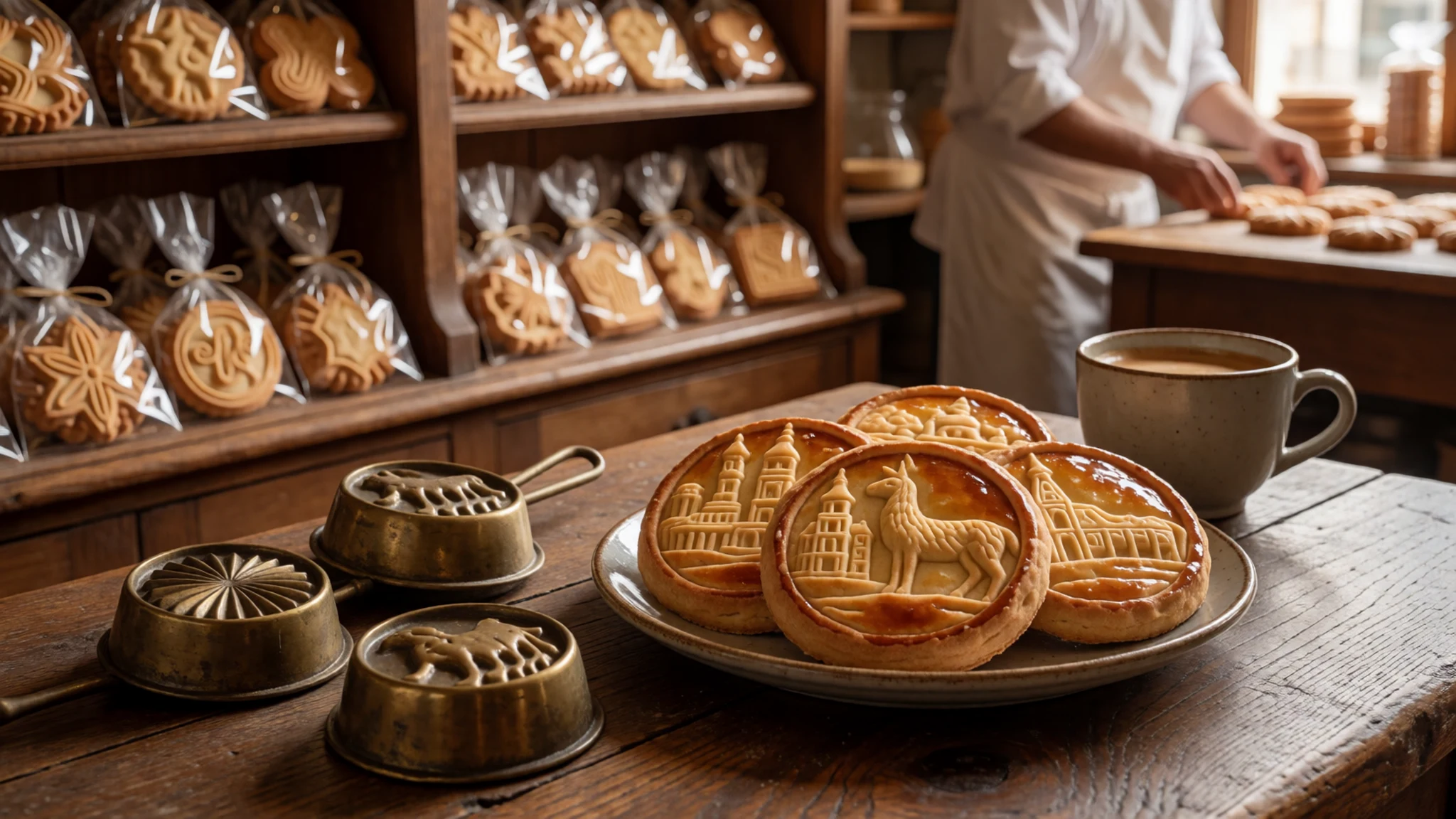
- Leffe beer — Café terraces along the quay and near Maison Leffe
An abbey-style beer that began in Dinant, sold in blond and darker versions. It is the easiest local taste to find, poured everywhere in Belgium but more satisfying beside the Meuse. Pair it with a plate of cheese or a bowl of chips.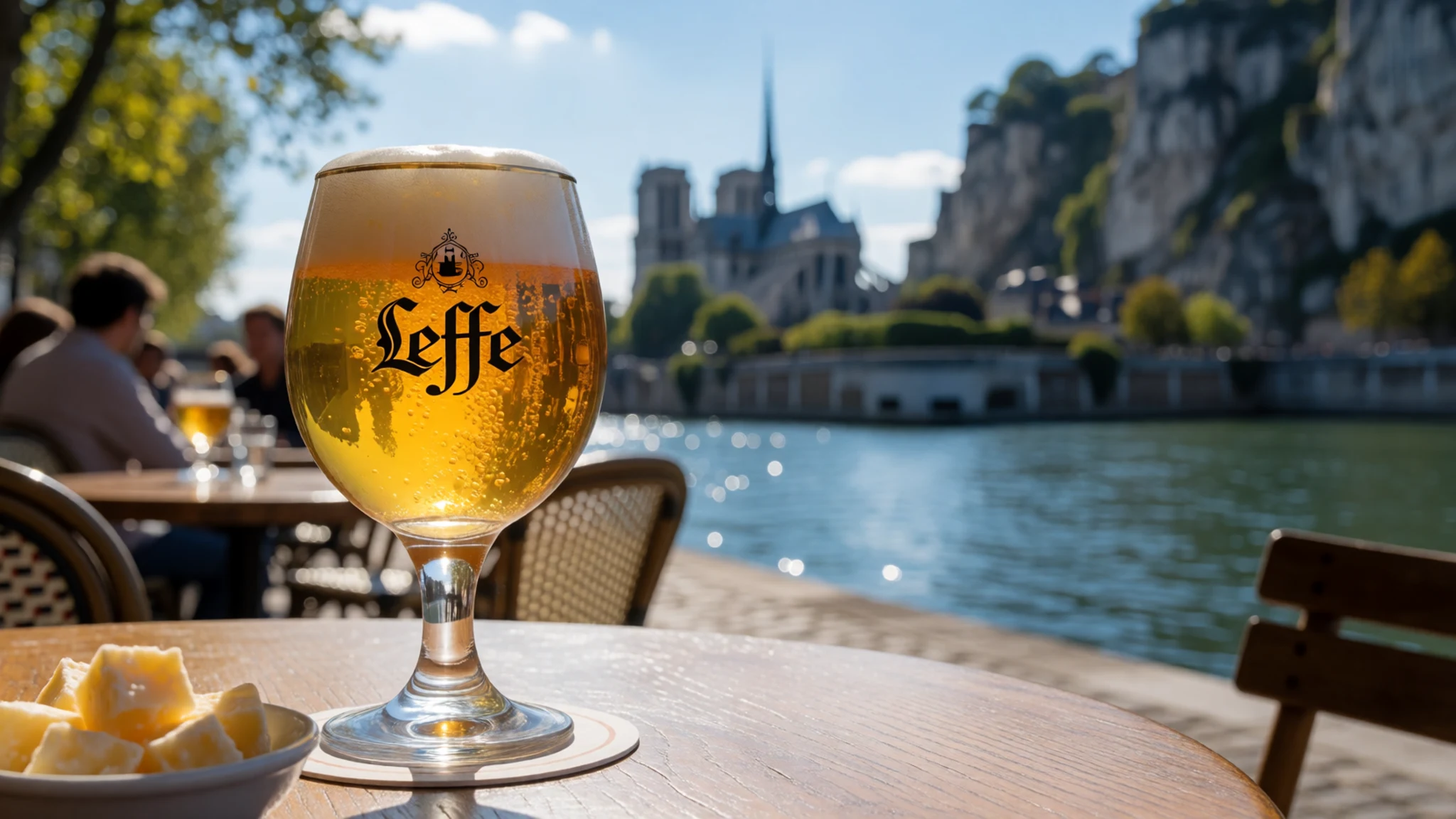
- Flamiche — Bakeries and traditional cafés in the centre
A savoury tart filled with a strong, creamy cheese, served warm and best eaten fresh. It makes a filling lunch with a salad, and the pastry is a good test of a local bakery. Expect a rich, salty flavour that suits cool weather. - Moules-frites — Riverside restaurants along the Meuse
Mussels steamed in white wine, celery and onion, served in a pot with a heap of chips. It is the national dish of Belgium and a fixture on riverside menus, with portions large enough to share. Mussels taste best in the cooler months. - Thai and Vietnamese curries — Restaurants in the town centre and near the quay
Dinant has a good cluster of Thai and Vietnamese eateries that locals genuinely use, offering fragrant curries, noodle soups and rice dishes. They suit anyone tired of heavy Belgian food. Book ahead on weekends, as the popular ones fill early. - Riverside picnic — Benches on the quay beside the boat landing stages
A cheap, pleasant lunch: bread, cheese, charcuterie and fruit from the supermarket by the boat landings, eaten on a bench facing the cliff. It saves time on busy days and works well before a boat trip.
Plan it
Best time. May to June and September to October are the most comfortable months: mild weather, boats running and the cave and citadel open. July and August are warmer and busier, especially at weekends. Winter is cold and damp, and some attractions run reduced hours.
How long. 1–2
Getting there. The nearest airports are Brussels, Charleroi and Liège. From Brussels Airport, take a train to Brussels-Nord and change for the direct hourly train to Dinant, about an hour and a half; alternatively change at Namur, which has frequent connections. From Charleroi, take the bus to Charleroi Sud station, then a train to Namur and another to Dinant. By car the motorway network is quicker than the branch rail line.
Budget. mid
Tips
- Check the official site (http://www.dinant.be) for opening times of the citadel, the cave and the boat trips, since hours change by season
- Book weekend dinners in advance, as popular restaurants fill early
- The town has only a few hotels, so book accommodation early in summer or consider an apartment nearby
- Bring a waterproof layer and shoes with grip for the citadel steps and the cave
- Allow extra time for train connections, because Dinant lies on a branch line from Namur
Etiquette
- Greet staff with a quick bonjour when entering shops and cafés
- Keep voices low in the collegiate church and the abbey
- Take litter back from riverside picnic spots
Nearby
Sources
- Wikidata Q108247 (CC0)
- Wikipedia: Dinant (CC BY-SA 4.0)
- Wikivoyage: Dinant (CC BY-SA 4.0)
- Dinan, Belgique (Public domain)
- Dinant reflected, Jiuguang Wang (CC BY-SA 2.0)
- Pierre Tetar van Elven, View of Dinant (CC BY-SA 4.0)
- Ruins of Dinant (Public domain)
- La Collégiale N.-D. de l'Assomption et la Meuse, Jean-Pol Grandmont (CC BY 3.0)
- Panorama of Dinant in Belgium, acediscovery (CC BY 4.0)
- Le rocher Bayard à Dinant, Mamiot (CC BY 3.0)
- Couques de Dinant display, Oreo Priest (CC0 1.0)


