Antwerp
Antwerp, Belgium
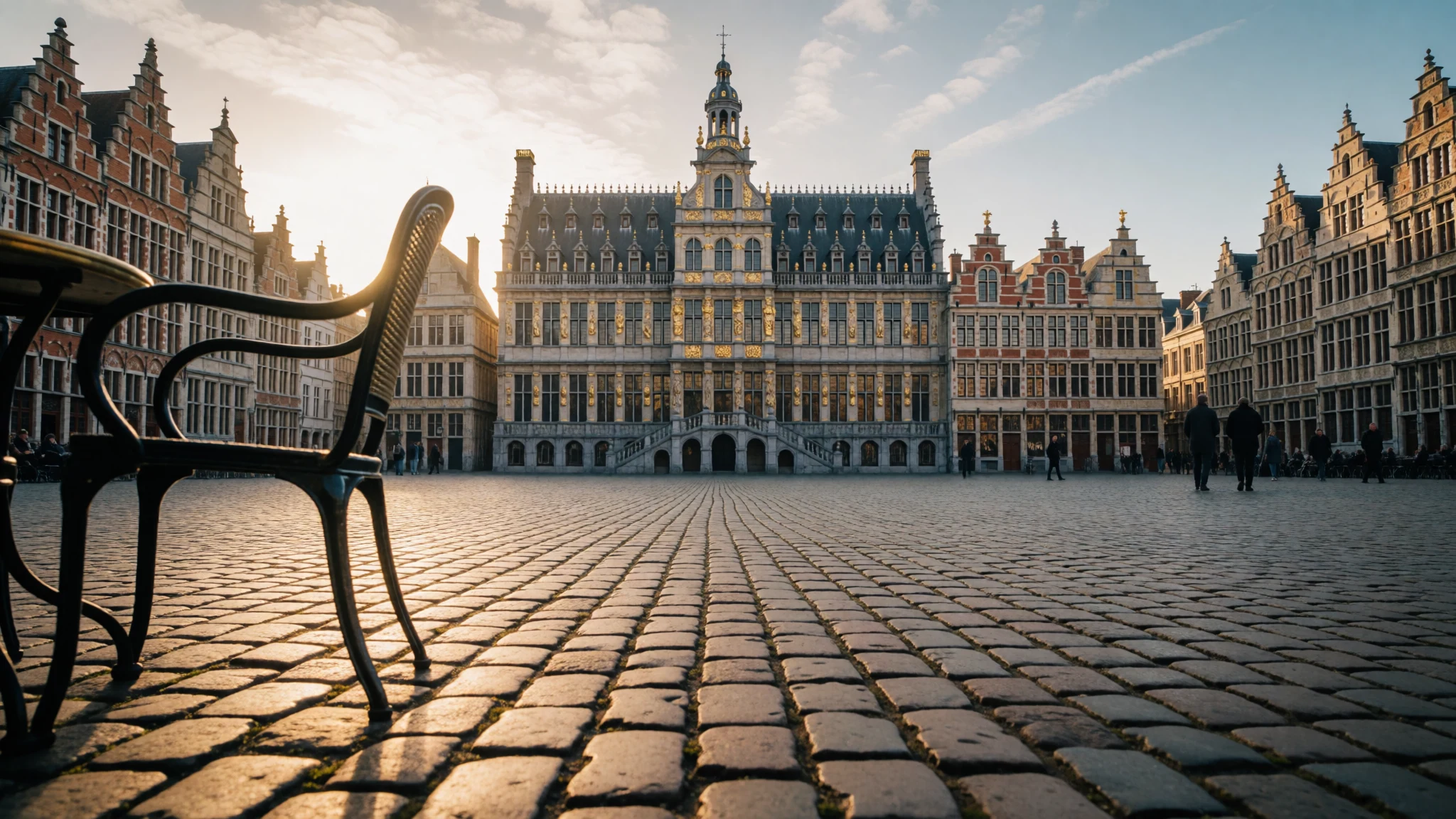
Antwerp packs Flemish guild houses, Rubens's studio, diamond streets and a working river port into one flat, walkable, easy-going city.
The place
Antwerp sits on the right bank of the Scheldt, a broad tidal river that carries ships inland from the North Sea, and the water shapes almost everything about the city. The ground is flat, only about 7 m above sea level, so walking and cycling are easy and the skyline is best read from the river. About 536,000 people live in the municipality, which is also the third-largest in Belgium by area. Brussels lies to the south and the Dutch border a short distance to the north, so the city works well as a stop between the two countries. Its working identity is trade. The port handles cargo on a scale that puts it among the busy harbours of Europe, and the diamond business has long been tied to the streets near the central station, where jewellers and dealers cluster. That commercial streak sits beside a strong artistic past: painters, printers and architects built a reputation here long ago, and the museums still show it. The old centre is compact. Guild houses frame the market square, medieval lanes branch off behind them, and the grand railway station and the angular modern port building show how often the city has reinvented itself. Neighbourhoods feel distinct: the old town for cobbles and church towers, the Zuid district for galleries and fine art, the Jewish Quarter for its synagogues and long-established community, and the docks for new architecture. The weather is mild and often damp. Antwerp is a lived-in working city rather than a museum piece, with trams, students, shoppers and dockers sharing the same pavements. Dutch is the local language, and English works well in shops and cafés.
Its story
Antwerp's early past is part legend and part archaeology. Digs beside the Scheldt in the 1950s turned up pottery and glass from the Roman period, hinting at a Gallo-Roman riverside settlement, and the name first appears in the fourth century, when Franks were living here. Missionary work by Saint Amand followed in the seventh century. The waterfront fortress called Het Steen has roots in the early medieval centuries, probably as a defence after Viking raids; the gatehouse that survives was built in the early thirteenth century as part of a larger castle for the Dukes of Brabant, and the rest was pulled down much later. Around the end of the tenth century the Scheldt became a boundary of the Holy Roman Empire, which put the town on a frontier. Over the following centuries Antwerp grew into a major trading centre of the Low Countries. Its stock exchange, first built in 1531 and rebuilt in 1872, is described as the first purpose-built commodity exchange. Trouble came with the Spanish Fury of 1576, a violent episode in the wars of the period, and then the Dutch Revolt, which reshaped the city's fortunes. Control passed through Spanish, Habsburg and Austrian hands before Belgium emerged, and the river that made Antwerp rich also made it a prize. Today that history is easy to read in layers: a stone gatehouse on the quay, guild houses around the square, a nineteenth-century exchange, and a port that still shapes daily life.
What to see
- Grote Markt and City Hall — Old town
Antwerp's historic centre is this market square, ringed by tall guild houses with stepped gables and gilded details. The city hall closes one side. Come early, before the café terraces fill, and walk around the edges to see how each house tells its trade. It is the natural start for any walk.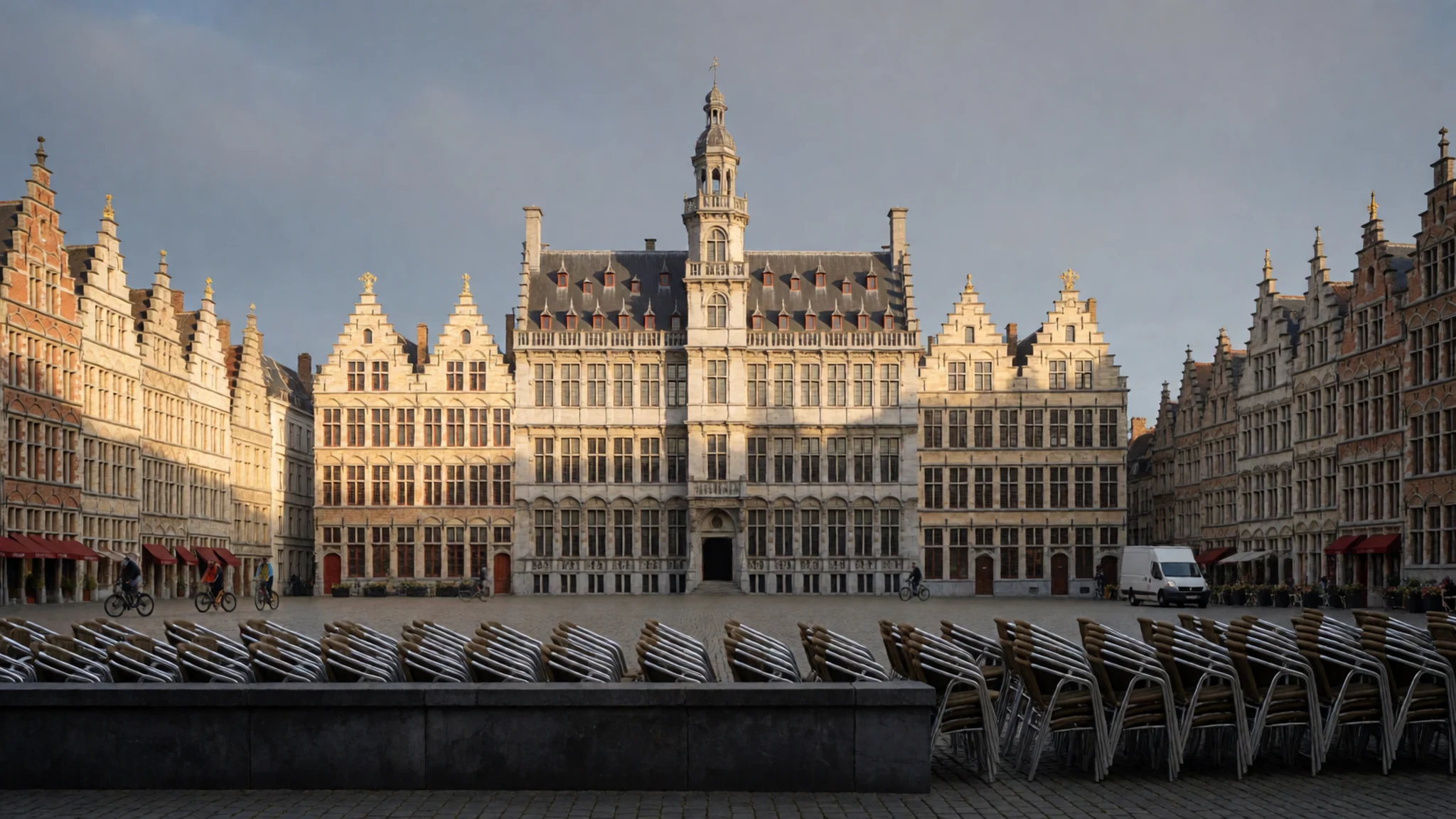
- Vlaeykensgang — Old town
This quiet lane links Hoogstraat, Oude Koornmarkt and Pelgrimsstraat, yet it is entered through ordinary-looking medieval doorways, so many people walk past without noticing. Inside, the cobbles and old façades feel far from the shopping streets nearby. It takes minutes to see and is worth a short detour.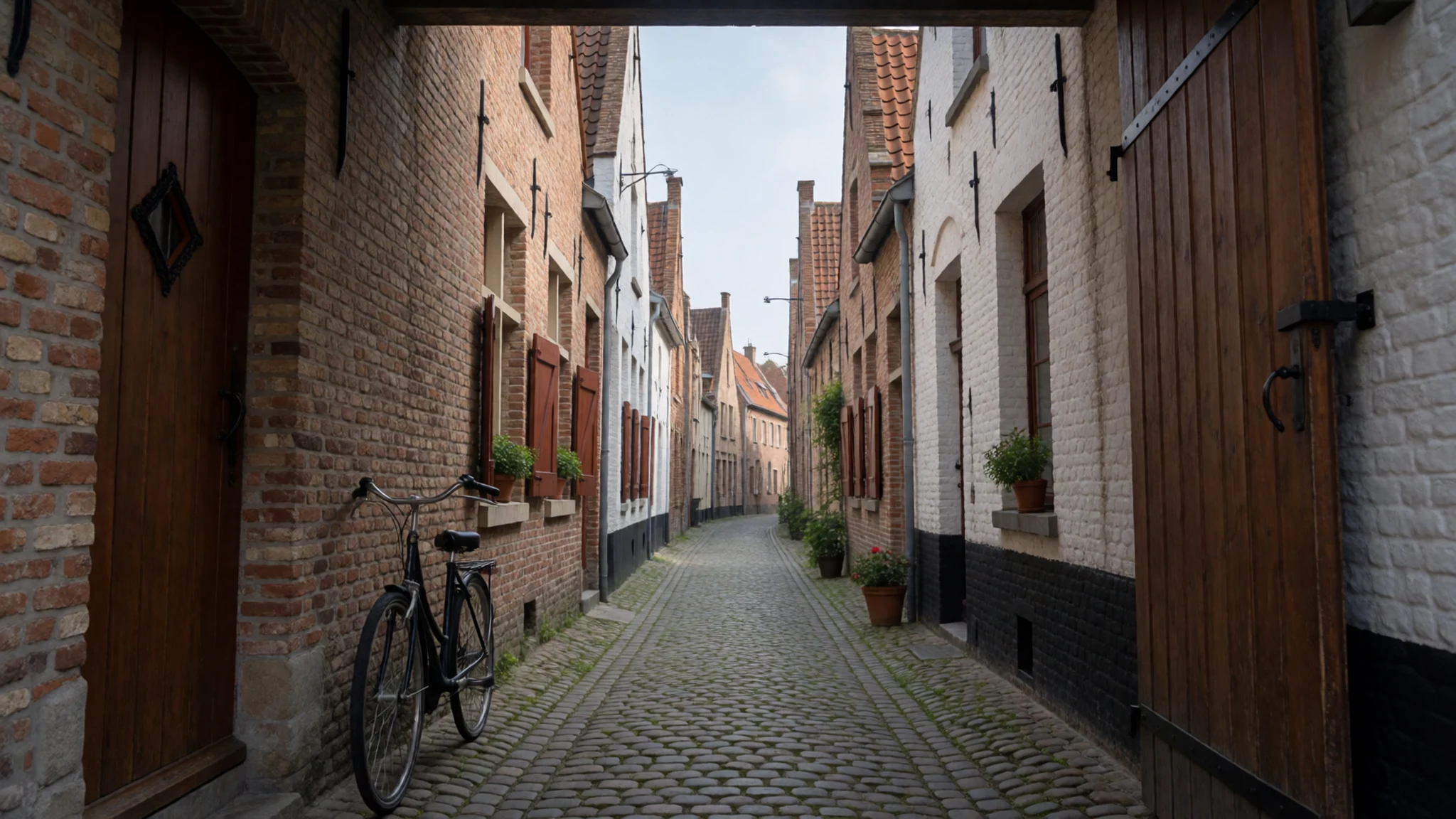
- Diamond District — Near Antwerpen-Centraal
South and south-west of the central station, this cluster of streets is packed with jewellery shops, and the Antwerp Diamond Exchange sits among them. Most of the trade happens behind closed doors, so the interest for a visitor is the window displays and the feel of a working quarter rather than any tour.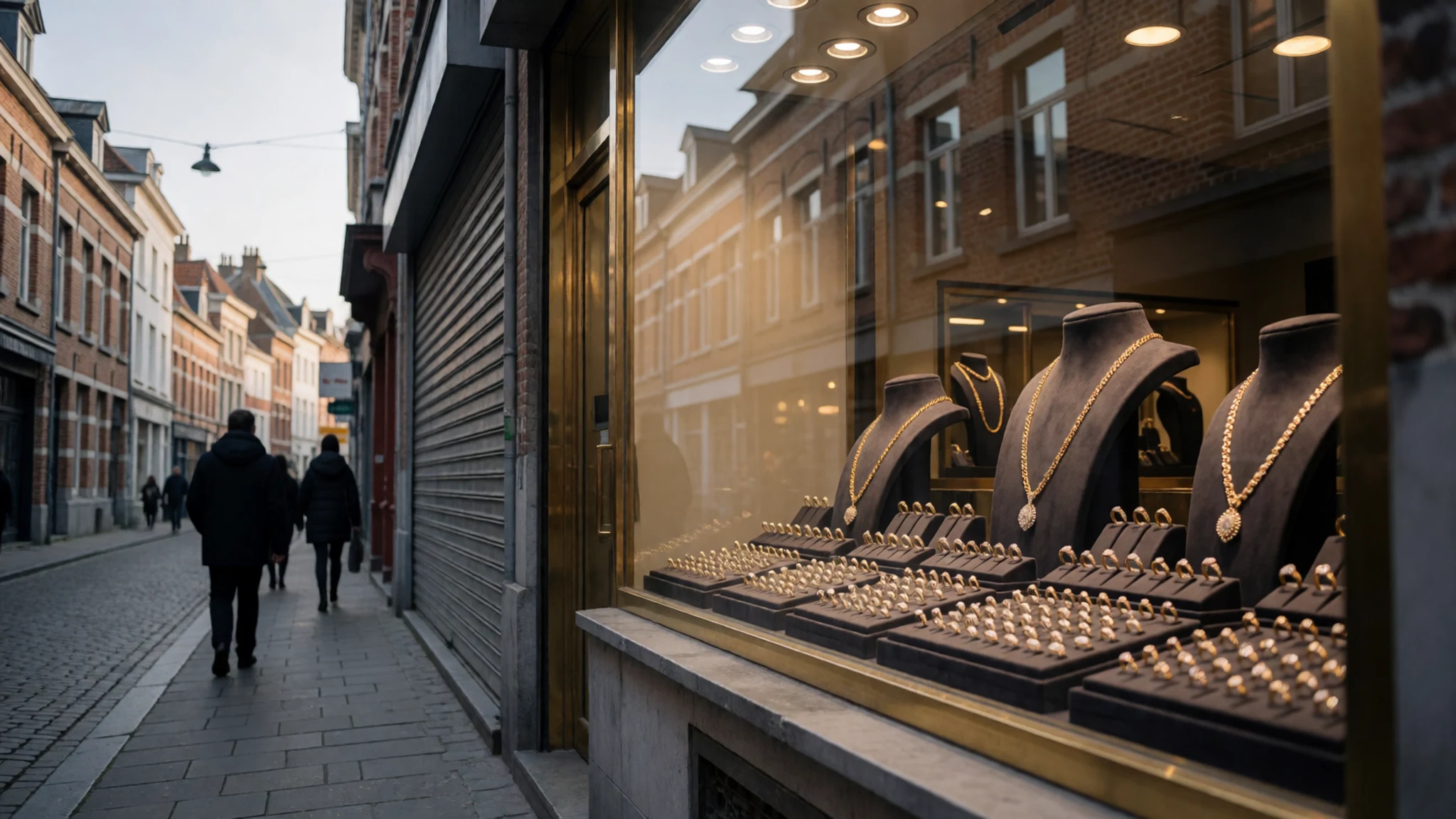
- Antwerpen-Centraal station — Koningin Astridplein
The main railway station is worth entering even without a train to catch. Architect Louis Delacenserie gave the stone-clad terminus a cathedral-like scale, with a great arched hall over the platforms. It also serves as the practical gateway for day trips to Brussels and the Dutch cities.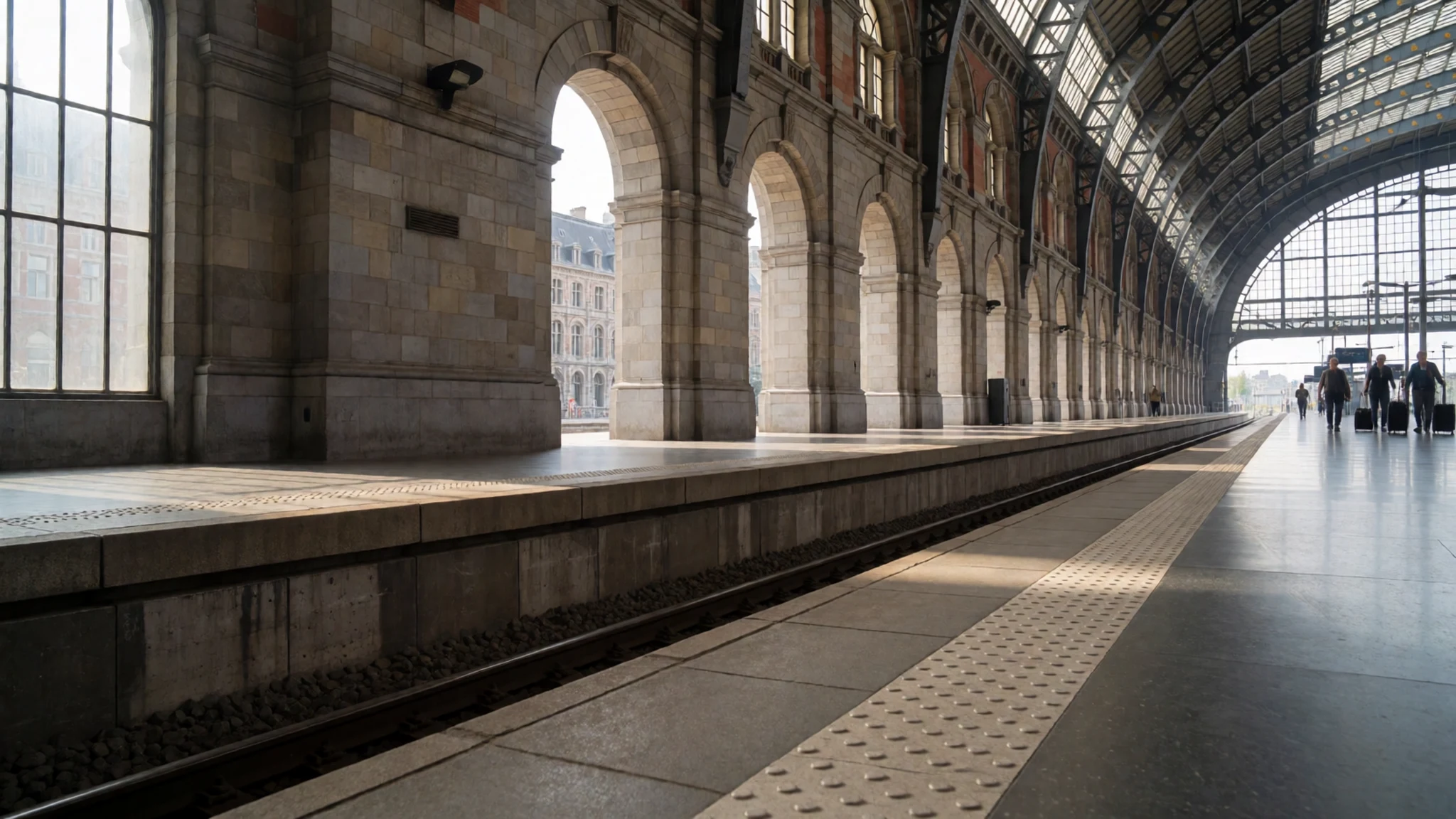
- Rubenshuis — Old town
This was the home and studio of Peter Paul Rubens and is now a museum. It gives a sense of how a successful painter of the period lived and worked, with a courtyard garden behind the house. Book ahead in busy seasons and check the official site for opening details.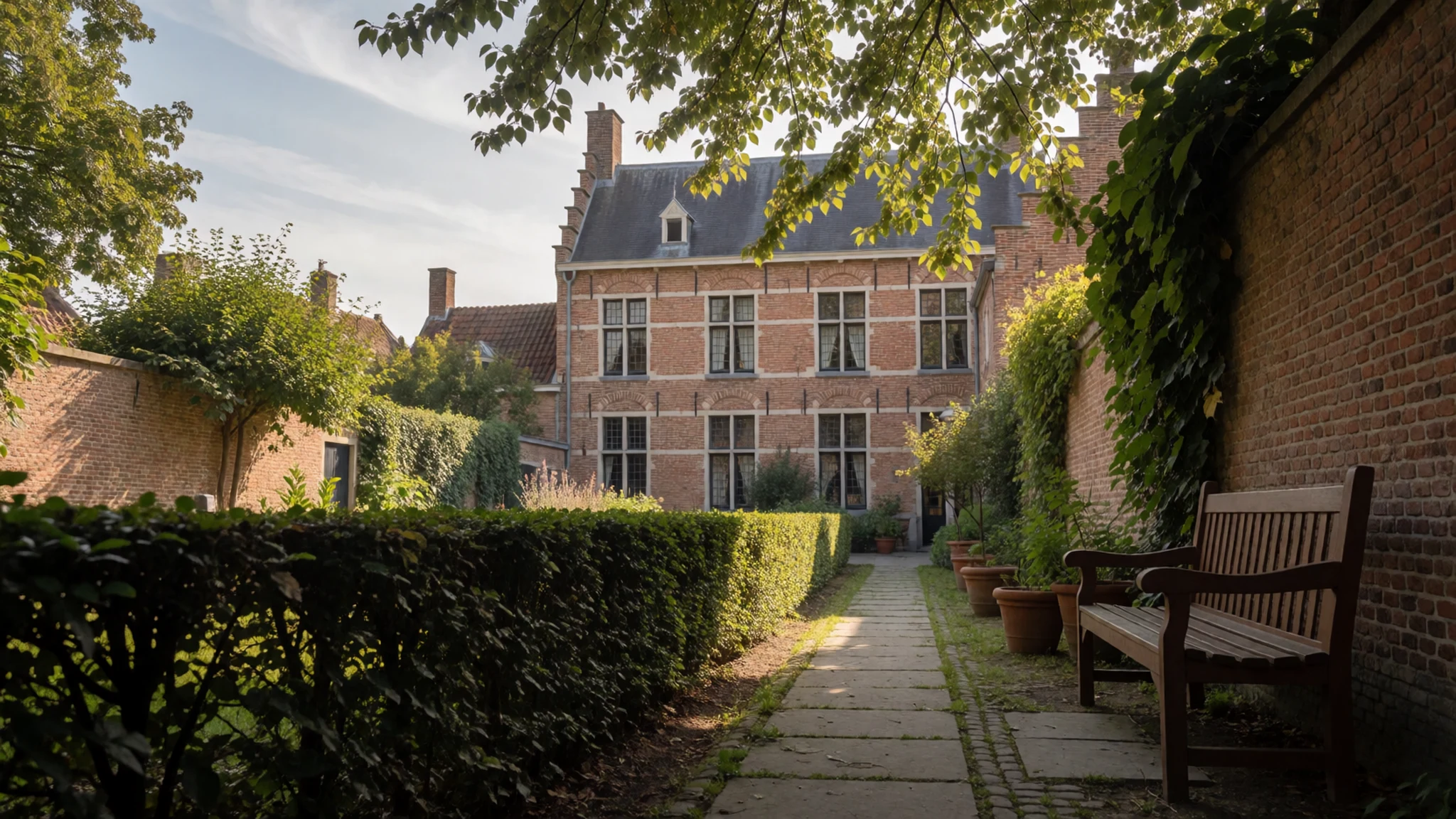
- Museum aan de Stroom (MAS) — Eilandje, the old dock district
The MAS is a stacked tower of red stone and curved glass beside the old docks, with a free-to-reach public route up to the rooftop. The panorama over the roofs, river and port cranes is the best way to grasp the city's layout. Check the official site for current access arrangements.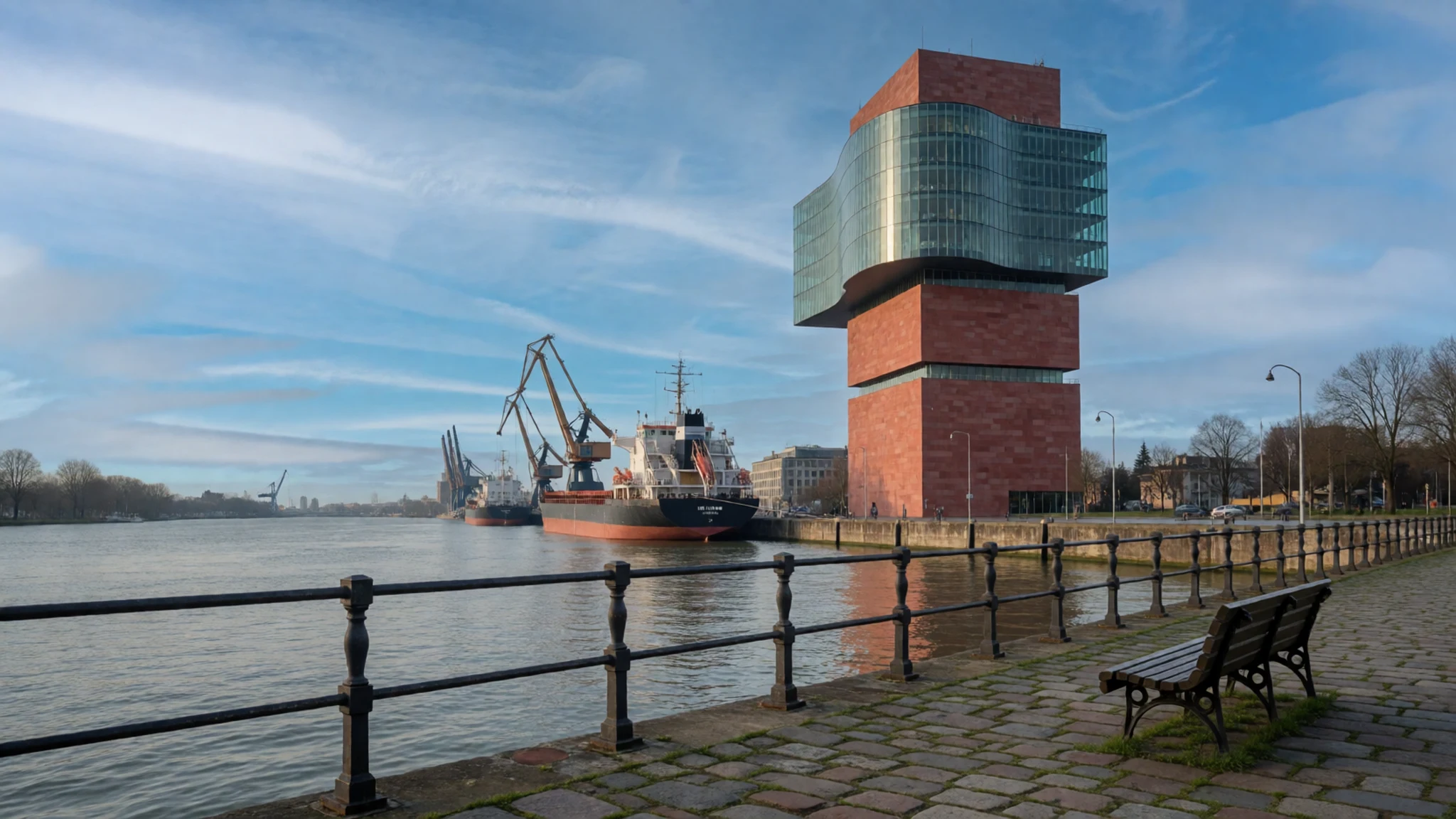
Culture
Antwerp built its cultural identity on painting. In the seventeenth century the city's school produced Rubens, Van Dyck, Jordaens, the Teniers family and many others, and their work still defines how the city presents itself. The Royal Museum of Fine Arts in the Zuid district, a neoclassical building completed in the late nineteenth century, holds paintings, sculpture and drawings from the medieval period to modern times. The Rubenshuis preserves the artist's own house and studio, while the Plantin-Moretus Museum keeps the home and workshop of the printer Christoffel Plantijn and his successor Jan Moretus, a reminder that Antwerp was a centre of books as well as paintings. The city is also home to one of the notable Jewish communities of Europe, centred on a quarter near the station with synagogues such as Van Den Nest and Bouwmeester, and closely linked to the diamond trade. Daily life runs on Flemish habits: coffee and a pastry in the morning, frites from a street hut, long evenings in brown cafés over beer. Football, fashion and design matter here, and people are direct but friendly. Sundays are quiet, with many smaller shops closed. When visiting synagogues, churches and the Jewish Quarter, dress modestly, keep your voice low, and always ask before photographing worshippers or residents.
What to wear
Antwerp has no single everyday national costume, and traditional Flemish dress now appears mainly at festivals, processions and folklore events, where linen, wool and handmade lace are the classic materials. Flemish lace in particular has a long reputation across the region and survives as a craft in shops and museums. In the Jewish Quarter, some residents wear traditional religious dress such as black coats and hats, which is part of daily life and not a costume. Most people in the city wear what suits a mild, damp climate: dark layers, good coats, trainers or sturdy boots, and an umbrella that rarely stays at home. Antwerp is also known for its fashion academy and the designers it has trained, so shop windows and young crowds often lean towards sharp, architectural, minimal styles. For a visitor, comfortable shoes matter most, because old streets are cobbled and uneven and walking is the best way to see the centre. Pack layers and a light waterproof in any season, with a warmer coat for winter. Churches and synagogues expect covered shoulders and knees, and a scarf or light jacket in the bag handles that easily. Smart-casual clothes suit restaurants and galleries.
What to eat
- Mussels and seafood — Traditional seafood restaurants in the old town
Mussels cooked in broth and served with frites are the classic Flemish meal, and Antwerp's river and port heritage keeps seafood prominent. Look for traditional seafood restaurants in the old town, where locals eat, and expect heavier, richer cooking in cooler months.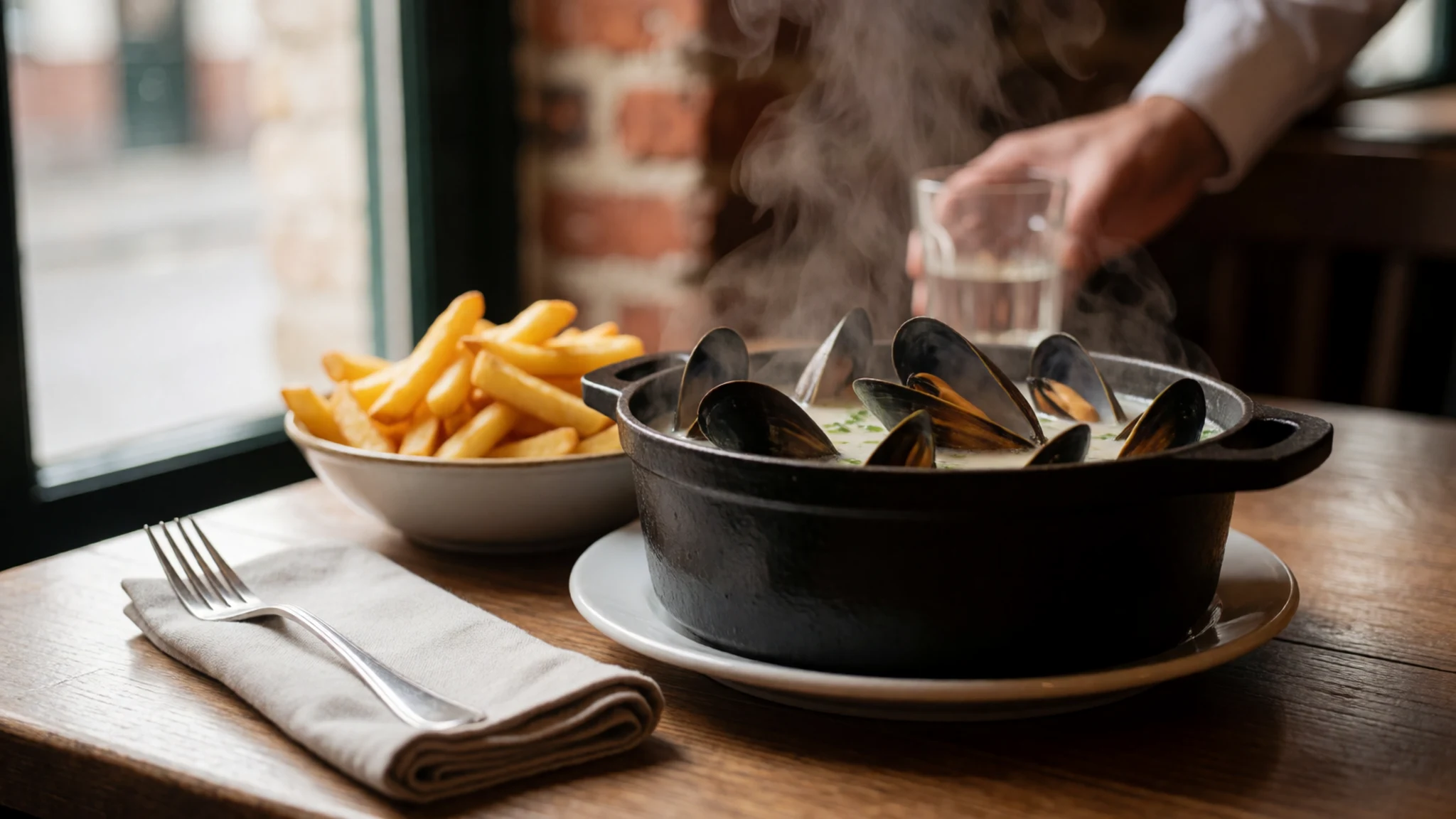
- Frieten from a frietkot — Frietkoten around the old town squares
Belgians take great pride in their chips, fried twice and served in a paper cone with a choice of sauces. A frietkot, the small chip hut, is the place to try them. Eat them standing up, near a square, and compare sauces.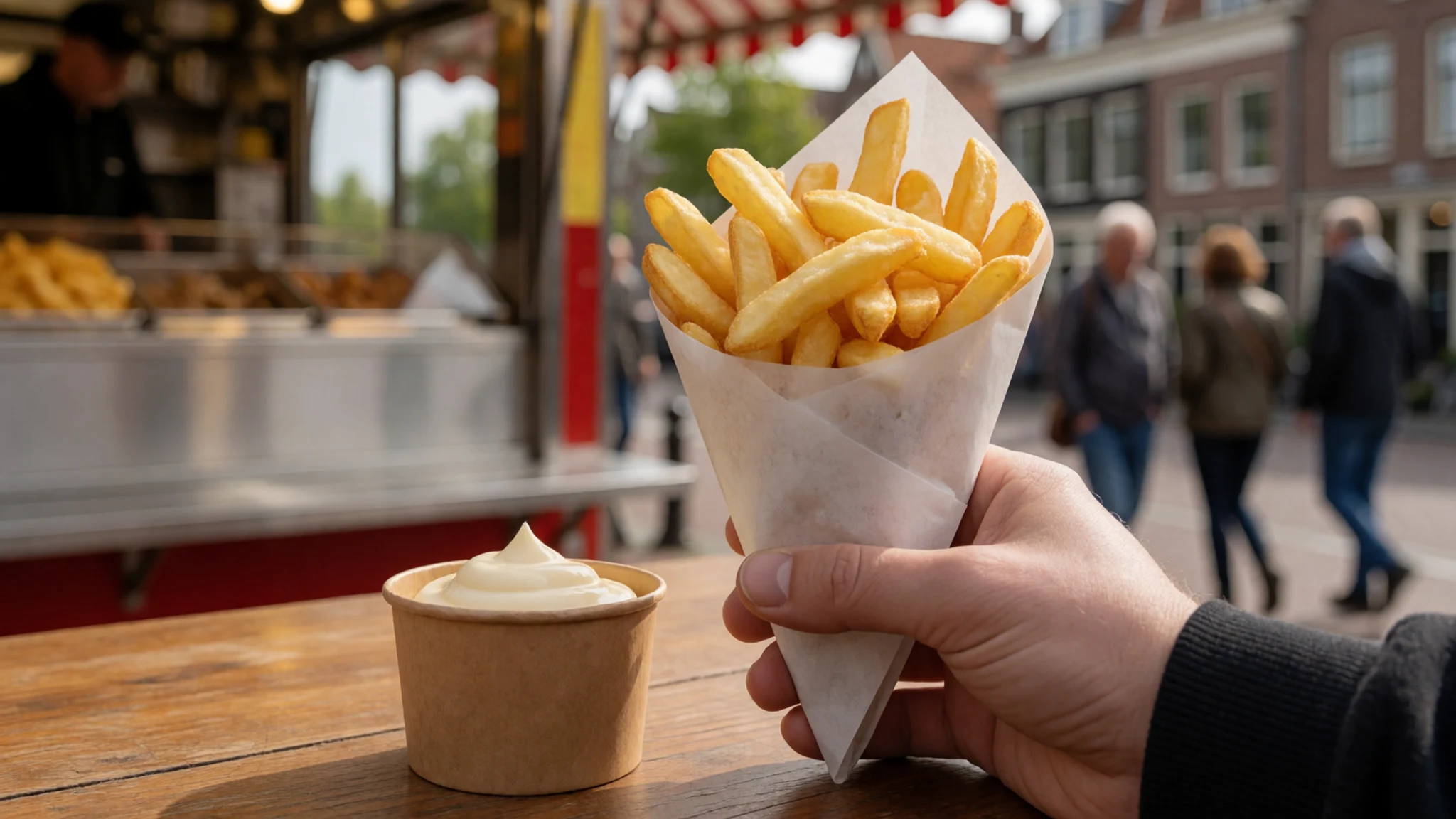
- Antwerpse handjes — Bakeries and chocolate shops in the centre
These small biscuits, and sometimes chocolates, are shaped like a hand and recall a local legend about the city's name. They were created by a Jewish baker in the 1930s. Buy a few as gifts, since they travel well in a bag. - Vegetarian Indian food — Eateries around the Diamond District and station
The city has a settled community connected to the diamond trade, and that has left a few vegetarian Indian eateries near the station, including buffet-style places with a changing daily menu. They make a reassuring option for travellers from India who want familiar flavours. - Kumpir and falafel — Casual eethuizen and falafel counters in the old town
Cheap, filling street food is easy to find in the old town. Kumpir is a large baked potato loaded with toppings, and falafel wraps come from small counters nearby. Both suit a quick lunch between museums and are good for vegetarians.
Plan it
Best time. May, June and September are the easiest months, with mild, comfortable weather for walking. Antwerp has an oceanic climate, with cool winters, warm summers and frequent light rain all year, so a waterproof is useful in any month. Winters are cool and grey but quieter.
How long. 2–3
Getting there. Fly to Brussels Airport, where direct trains run to Antwerpen-Centraal station; check the national rail operator's site for current times and fares. A direct semi-high-speed EuroCity Direct train connects Antwerp to Amsterdam Schiphol in about 1 hour and 13 minutes. From Brussels or the Dutch cities, trains also arrive at the central station, from where the old town is a short walk or tram ride.
Budget. mid
Tips
- Start at the Grote Markt early, before the café terraces and tour groups arrive
- Carry a light waterproof or umbrella, because showers come in every season
- Wear comfortable shoes for cobbles, and consider hiring a bike for the flat streets
- Check the official city website, https://www.antwerpen.be, for museum opening details and any city pass
Etiquette
- Dress modestly and keep quiet inside synagogues and churches
- Ask before photographing worshippers or residents in the Jewish Quarter
- Say a polite greeting when entering small shops and cafés
Nearby
Sources
- Wikidata Q12892 (CC0)
- Wikipedia: Antwerp (rev 1384178662) (CC BY-SA 4.0)
- Wikivoyage: Antwerp (rev 5424213) (CC BY-SA 4.0)
- Photo: View from the MAS rooftop (LBM1948) (CC BY-SA 4.0)
- Photo: Antwerpen-Centraal station (Fred Romero) (CC BY 2.5)
- Photo: Meir and Boerentoren (Mark Ahsmann) (CC BY-SA 2.5)
- Photo: Museum aan de Stroom (Calips) (CC BY 3.0)
- Photo: Port House (Bobo Boom) (CC BY 2.5)
- Photo: Belgium relief location map (Eric Gaba and NordNordWest) (CC BY 3.0)
- Photo: Europe relief location map (Alexrk2) (CC BY 3.0)
- Photo: Scaldis en Antverpia (Abraham Janssens I, 1609) (CC0 1.0)


