Namur
Namur, Belgium
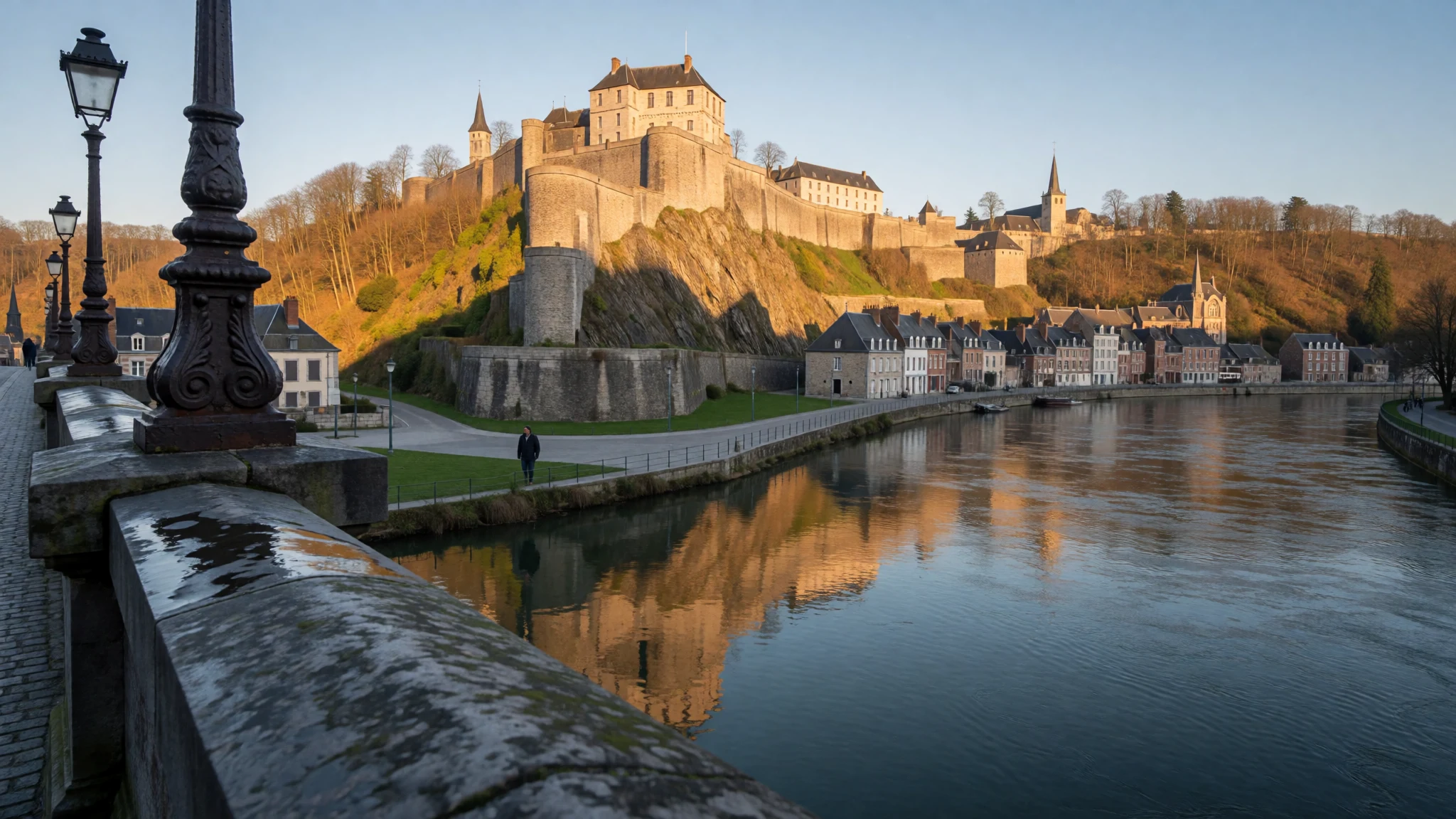
Namur is a calm, walkable river city where a hilltop citadel, small museums and chocolate cafés make an easy stop between Brussels and the Ardennes.
The place
Namur sits where the Sambre runs into the Meuse, in the French-speaking south of Belgium, and it serves as the capital of Wallonia. The regional parliament and government work here, which gives a modest city of about 115,000 people more administrative weight than its size suggests. The old centre lies low, at around 83 m above sea level, on the north bank of the Meuse, while a rocky spur above the confluence carries the citadel and shows how the two rivers shape everything below. Across the Meuse, Jambes is now effectively a suburb, and the wider municipality gathers dozens of former villages, from Wépion to Malonne and Saint-Servais, so the city fades into woods, fields and river bends within a short ride of the centre. Geographically it is a hinge: the farmland of Hesbaye lies to the north, the Condroz uplands to the south-east, and the hills of Entre-Sambre-et-Meuse to the south-west. Namur also makes a practical gateway to the Ardennes. Visitors should expect a walkable regional capital rather than a headline destination: crowds are thin outside summer weekends and festivals, the streets feel French, and the pace is that of a town going about its business. Charleroi, with its industrial past, lies to the west, and Brussels is a short train ride away. Namur works well as a one-night stop or as a base for river walks and day trips, with cafés, chocolate shops and small museums for wet afternoons.
Its story
Namur's story starts with geography. Celtic traders used the meeting of the rivers, where routes running east–west and north–south crossed the Ardennes, and the Romans followed after Julius Caesar's campaign against the local Aduatuci. Real prominence came in the early Middle Ages, when the Merovingians put a fortress on the rock above the confluence. By the tenth century Namur was a county in its own right, though growth was lopsided: the counts could build only on the north bank, since the south bank belonged to the bishops of Liège, which is why Jambes developed slowly and separately. The counts often held other titles too, in Flanders, Hainaut and Luxembourg, so Namur was never isolated. In 1421 Philip the Good, Duke of Burgundy, bought the county and folded it into a larger state, and it later passed into the Spanish Netherlands. That era left the citadel heavily reinforced in the 1640s. Strength did not save the town in 1692, when Louis XIV of France took it and annexed it. His military engineer Vauban then rebuilt the fortress to French designs. The same hill that attracted a Celtic market, a Roman presence and a Merovingian castle therefore carries the layered work of several powers, and walking its ramparts today means walking over those layers. The citadel is now demilitarised and open to visitors.
What to see
- Citadel — Hill above the confluence
Namur's citadel crowns the rock above the meeting of the Meuse and the Sambre, and it repays the climb with views over roofs, bridges and both rivers. The defences were strengthened under Spanish rule and rebuilt by Vauban for France. Now demilitarised and open to the public, it suits a slow walk along the ramparts.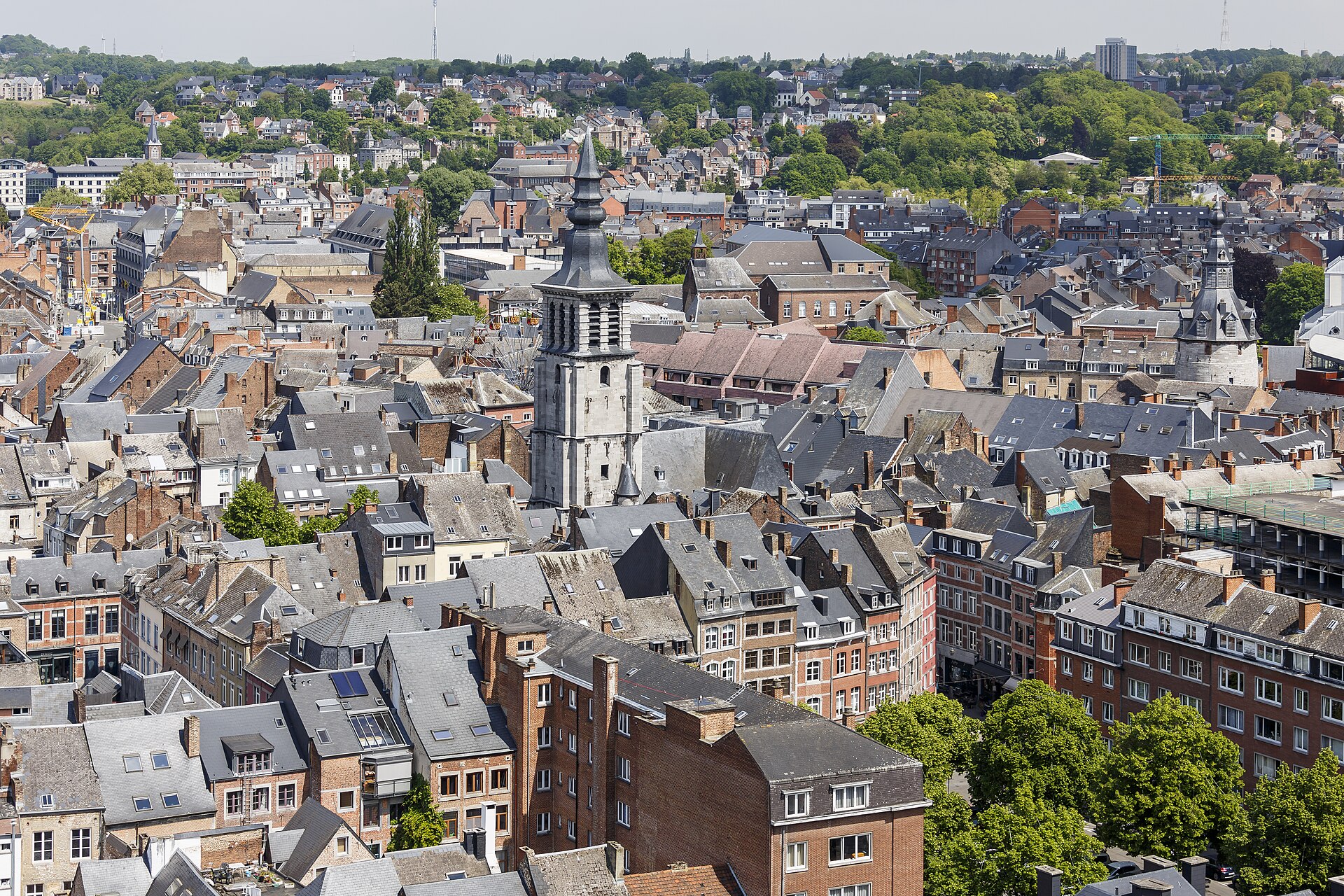
- Belfry — Old town centre
The belfry in Namur's old centre is a compact stone tower of the kind that once stood as a symbol of a town's independence. It belongs to the wider family of belfries across Belgium and France. Most visitors admire it from the street, then wander the nearby lanes towards the market squares and cafés.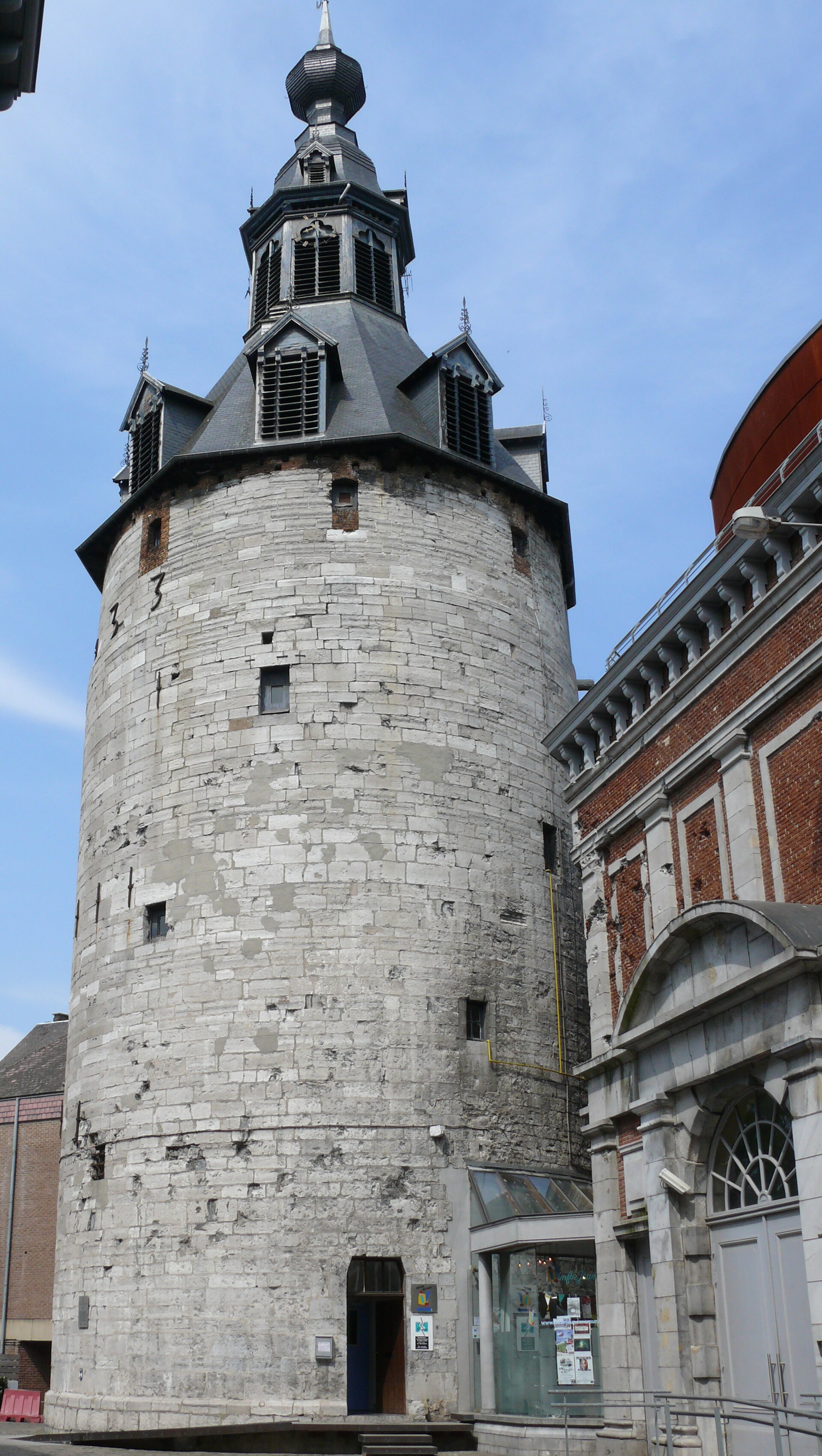
- Musée des Arts Anciens — Old town, Rue de Fer
This museum on Rue de Fer holds medieval and Renaissance Christian art, along with the goldsmith work of Hugo d'Oignies, a leading name in Mosan art. Recorded guiding in English has been available. It is a good wet-weather choice; check the official site for opening times. - Cathédrale Saint-Aubain — Near the Sambre, old town
Namur's cathedral of Saint Aubain is an eighteenth-century church with a distinctive domed profile, close to the Sambre. It is easiest to appreciate from the citadel, where it stands out among the roofs, and then close up on foot. Step inside for a quiet few minutes away from the street.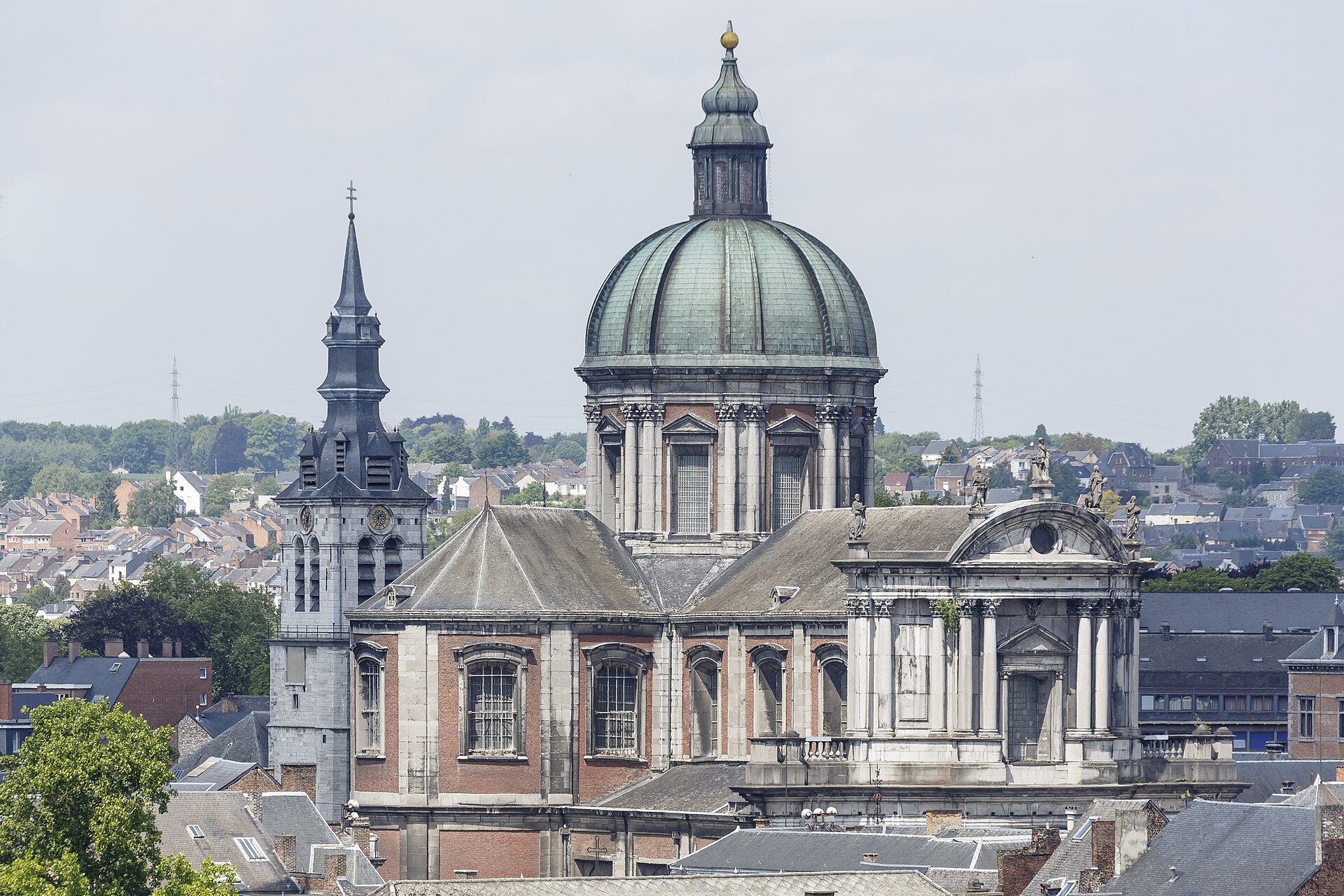
- Archaeological Museum — Old town
The archaeological museum is devoted mostly to objects from Roman Namur. The displays are modest, so it suits visitors curious about how the town began rather than those short of time. Combine it with a stroll through the surrounding streets, which have a distinctly French character.
Culture
Namur has the culture of a French-speaking regional capital with a long memory. Its identity rests on the rivers, the citadel and a sense of belonging to Wallonia, and the city has taken on political weight as the seat of the regional government. Art is part of that story: the Mosan goldsmith Hugo d'Oignies is remembered here and his work is shown in the Musée des Arts Anciens, while another museum honours the artist Félicien Rops. The best-known local tradition is the joust on stilts, a contest between teams of stilt-walkers that goes back to 1411 and is still practised by clubs in the city. Visitors may catch it at festival time, and it explains why stilts turn up in local imagery. The cathedral of Saint Aubain, from the eighteenth century, gives the skyline its dome, and the belfry speaks of older civic pride. Daily life is unhurried: markets, cafés and long lunches matter, and French is the working language, so a few polite words go a long way. Beyond the monuments, Namur is an administrative and student town, and conversation tends towards politics, football and food. Greet shopkeepers with a friendly "bonjour" before asking for anything, and keep your voice low and your camera flash off inside the cathedral.
What to wear
Namur has no everyday costume that locals still wear, and it is better to say so than to invent one. The nearest thing to traditional dress belongs to the stilt-walkers, whose club outfits appear at festivals during the jousts on stilts; that is ceremonial, not daily wear. More widely, Belgian textile heritage runs to linen, wool and lace, and museums and antique shops are the place to see old examples rather than the street. What people wear now is ordinary northern-European city clothing: dark jackets, jeans, trainers or leather boots, and a sensible coat. Students and civil servants set a smart-casual tone, and nobody dresses up for cafés. For visitors, the key is layers and rain protection, since weather can change within a day. Comfortable shoes with good grip matter more than style, because the old streets are cobbled and the climb to the citadel is steep. Churches such as the cathedral have no strict dress code, but covered shoulders and no beachwear are courteous, and hats come off indoors. In summer, light cotton and a sun hat cover the warm days; in winter, add gloves and a scarf against the wind off the rivers.
What to eat
- Waffles with cream and chocolate — Pâtisseries and cafés in the town centre
Namur's cafés and pâtisseries serve warm waffles topped with whipped cream and melted chocolate. They are a sweet, filling afternoon stop rather than a light snack, best shared after a walk up to the citadel. - Hot chocolate — Chocolate shop-cafés near the main shopping streets
Old-fashioned chocolate shop-cafés offer long lists of hot chocolates, from thin and bittersweet to thick and rich. It is a sensible answer to a damp or cold day, and often comes with a small biscuit. - Pralines and filled chocolates — Chocolate shops in the old town
Belgium's chocolate tradition is easy to sample here. Shops sell pralines by weight in small paper boxes, which makes them good gifts. Choose a mixed box and ask staff what is freshest that day. - Frites with sauce — Friteries and street stands around the squares
Belgian chips are twice-cooked, crisp outside and soft within, and eaten from a paper cone with mayonnaise or a spicy sauce. They make an inexpensive lunch on a bench by the river. - Coffee from a roastery café — Independent coffee houses in the centre
Some Namur cafés roast their own beans and serve a wide range of coffees, which suits a slow morning. Pair a cup with a small pastry and watch the town start its day.
Plan it
Best time. May to June and September to early October bring mild weather and comfortable walking on the citadel and by the rivers. Summer is pleasant but busier at festival weekends. Winters are grey and damp, and rain can arrive in any season, so keep museums in mind as a backup.
How long. 1–2
Getting there. Fly to Brussels Airport, then take a train via a Brussels station on the line towards Dinant or Luxembourg; the journey takes under an hour. Get off at Namur or Jambes station, and the old centre is a short walk from Namur station. From the old town, climb to the citadel on foot or by local transport.
Budget. mid
Tips
- Climb the citadel in the morning for clearer views and fewer people
- Pack a light waterproof, as showers are common in every season
- Carry a card, but keep a little cash for small cafés and market stalls
- Check the official city site, https://www.namur.be/, for festival dates and museum opening times
- Wear shoes with grip for cobbles and the steep citadel paths
Etiquette
- Say "bonjour" when entering a shop or café
- Keep voices low and avoid flash inside churches
- Do not photograph people closely without asking
Nearby
Sources
- Wikidata Q134121 (CC0)
- Wikipedia: Namur (rev 1378593218) (CC BY-SA 4.0)
- Wikivoyage: Namur (rev 5354109) (CC BY-SA 4.0)
- Namur, the Sambre river, the old city and the St. Aubin cathedral — Jean-Pol GRANDMONT (CC BY 3.0)
- Namur, Belgium: View of the historic center from citadelle — Uwe Aranas (CC BY 3.0)
- Namur - Pompe du Marché de l'Ange — Jmh2o (CC BY-SA 4.0)
- L'église Saint-Joseph de Namur — Schneider Jean-Marc (CC BY 3.0)
- Namur Belfry — Ad Meskens (CC BY 3.0)
- Namur, Belgium: Cathédrale Saint-Aubain seen from Citadelle — Uwe Aranas (CC BY 3.0)
- Namur, le parc Marie-Louise — Jean-Pol GRANDMONT (CC BY 3.0)
- La cour et la façade intérieure de l'ancien Evêché — Schneider Jean-Marc (CC BY 3.0)


