Brussels
Brussels, Belgium
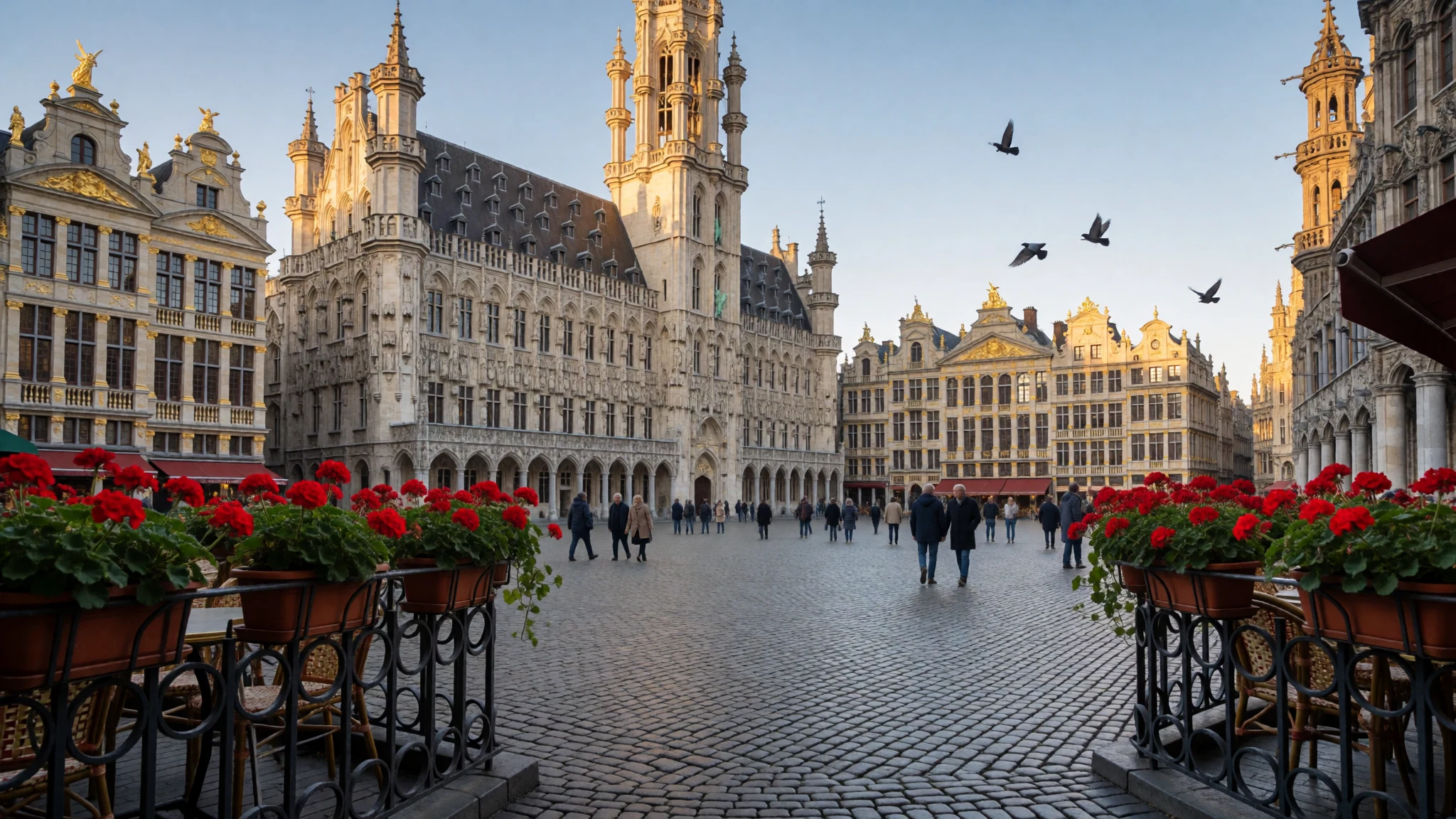
Brussels is Belgium's bilingual capital, a compact historic centre wrapped around a guildhall square and the working offices of Europe.
The place
Brussels is Belgium's capital and the municipality that holds the historical centre of the Brussels-Capital Region. Three political hats sit on the same city: capital of the French Community of Belgium, of the Flemish Community and of the Flemish Region, even though the municipality stands outside Flanders. French and Dutch are both official, and street names, transport announcements and civic business appear in the two languages together.
The recorded population is 196,828, at an elevation of 70 metres. That figure is the City of Brussels itself, not every commune of the wider region that shares the name. Haren, Laeken and Neder-Over-Heembeek, formerly separate municipalities, lie on the city's northern side. Avenue Louise, Louizalaan in Dutch, runs south-east to the Bois de la Cambre, Ter Kamerenbos, and the fence line with Flanders.
The walkable heart is the Pentagon, the line of walls that once ringed the town. Inside it are the surviving medieval streets and later ministries and palaces; the European Quarter, beyond that ring to the east, is where institutions of the European Union make Brussels an administrative capital as well as a national one. The climate is changeable and often damp, with rain every month: July is hottest, August wettest and April most comfortable, and a sunny week above 30°C is as likely as a wetter, cooler one. From the Mont des Arts the centre looks low and close-packed, brick and pale stone, with the town-hall tower as the landmark and parks just beyond the old ramparts.
Its story
Brussels became the capital of a new Belgian state in the nineteenth century, and the town was then rebuilt to look like one. Ministries, palaces, schools, barracks and office blocks went up across the old centre over a long stretch of the late nineteenth and twentieth centuries. Medieval walls that had enclosed the city were taken down. What planners spared of the older fabric was a small historic centre — essentially one great square and a handful of streets beside it — while much of the rest was replaced.
That clearance later drew heavy criticism, and the habit of knocking down older streets for plain modern blocks acquired its own name, Brusselisation, used for the same pattern in other cities. Flemish town centres such as Antwerp, Bruges, Ghent, Leuven and Mechelen kept more of their pre-modern street plans. Brussels kept the Grand-Place and then built a national capital around it: broad approaches, a royal quarter, and the European institutions that arrived once the city was already the seat of government.
Commerce had already pushed beyond the first walls long before those nineteenth-century works. The Black Tower is one of the few leftovers of that earlier circuit, a reminder that the port and the markets once sat outside the first line of walls. The Pentagon, roughly the Renaissance outline of the city, is the later ring. Walking it shows those layers together: guildhall brick against palace stone against postwar offices.
The story on the ground is therefore not a preserved medieval town but a capital that spent itself on being modern, then had to live with what that choice removed.
What to see
- Grand-Place — historic centre, inside the Pentagon
Brussels keeps its medieval centre on the Grand-Place, the square left after much of the old town was cleared. Guildhalls line the sides, each façade tied to a trade, and the town-hall tower stands out from the surrounding streets. This square and a few adjoining streets are what remains of medieval Brussels, so the older city sits here rather than across a preserved quarter.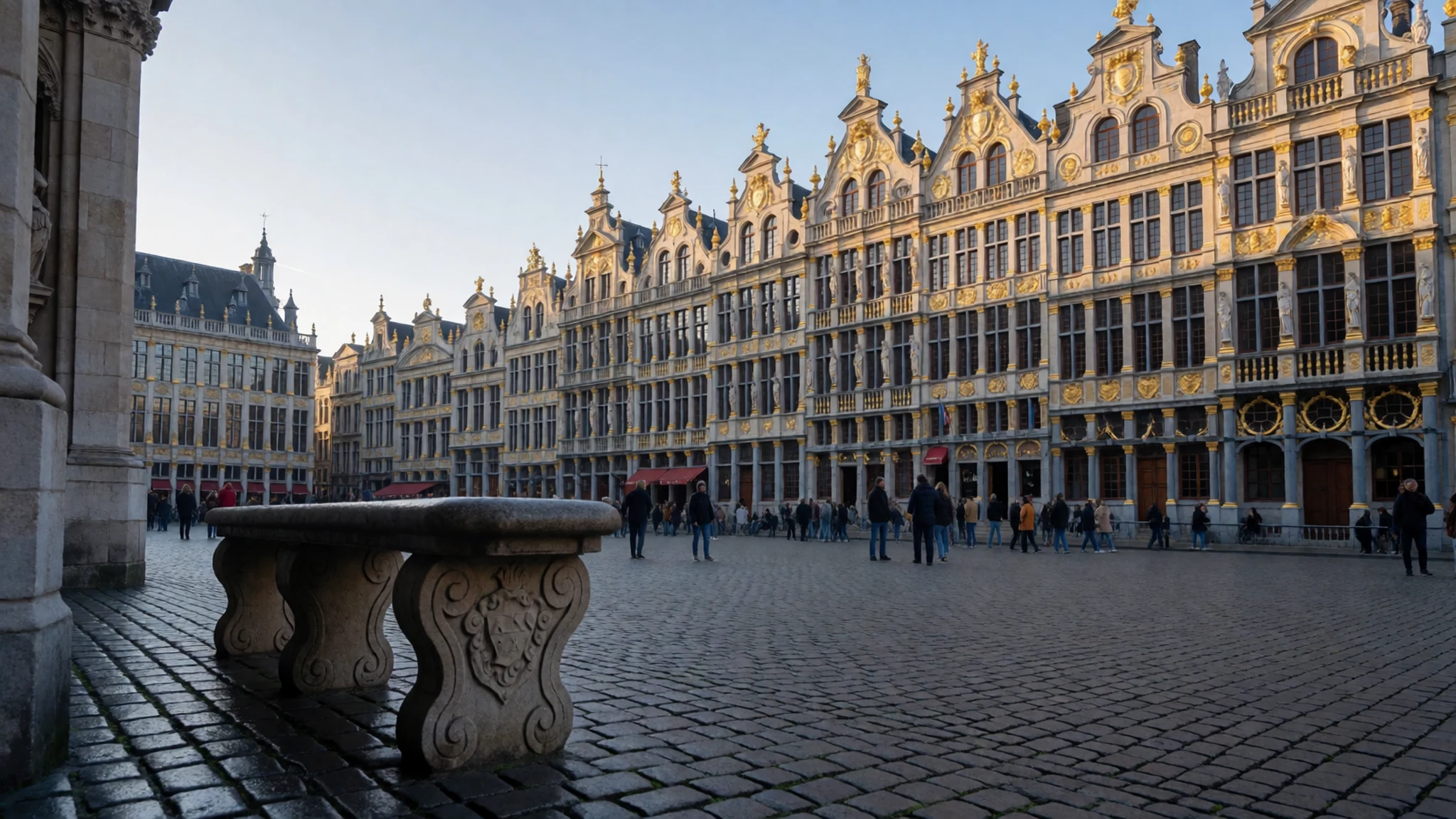
- Town hall — Grand-Place
Brussels orients itself on the town hall of the Grand-Place, the old civic building whose tower appears on countless postcards and above the roofs of the centre. The hall anchors one side of the square and is the meeting point for a walk through the old streets. Its silhouette helps in a low centre, and once the tower is visible the lanes lead back to the square.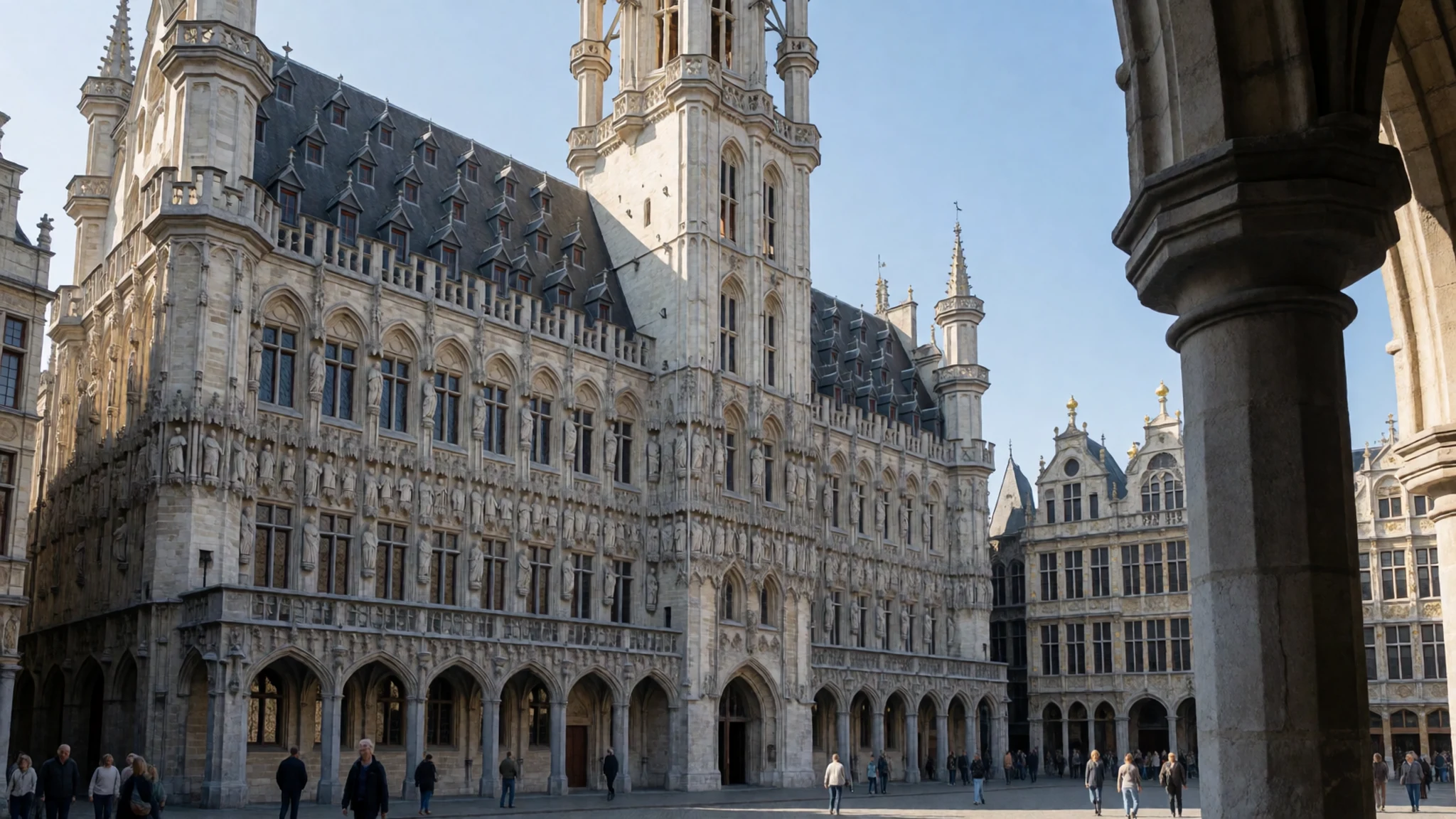
- Manneken Pis — a side street off the Grand-Place
Brussels keeps Manneken Pis in a side street off the Grand-Place, a very small statue of a boy whose reputation is far larger than the figure. People hunting a grand monument often miss it, which is easy to do. It makes a brief pause on a walk through the old lanes, sensible only when the square is already the plan, and quickly seen.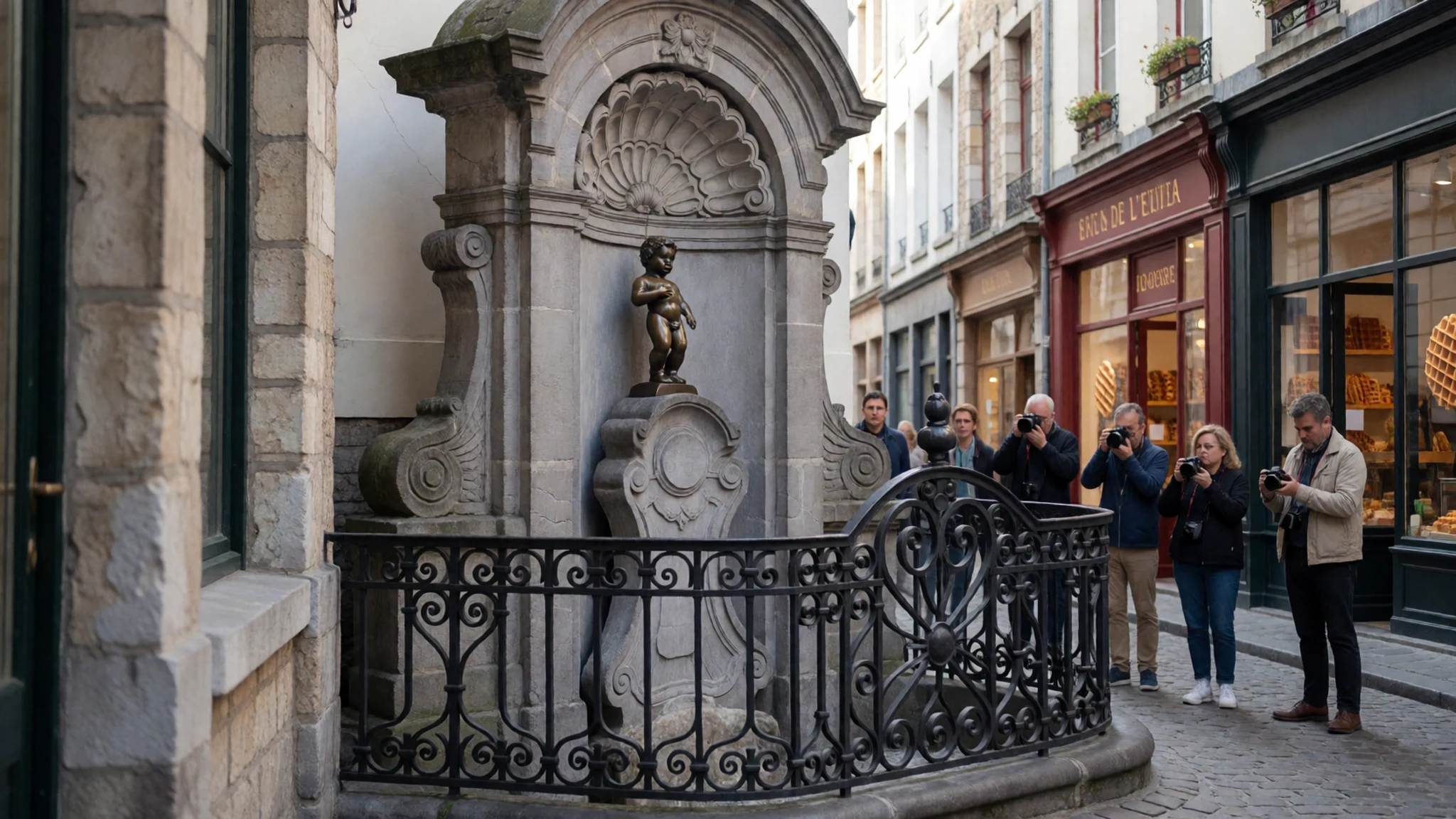
- Royal Palace — royal quarter, uphill from the old centre
Brussels presents its royal face at the Royal Palace, a long stone front set above a formal park a short walk uphill from the old centre. The palace quarter belongs to the nineteenth-century rebuilding, when the new capital wanted axes and state rooms rather than more medieval lanes. The exterior is the usual visit: a wide stone façade on the park, with Saint-Jacques-sur-Coudenberg closing that space.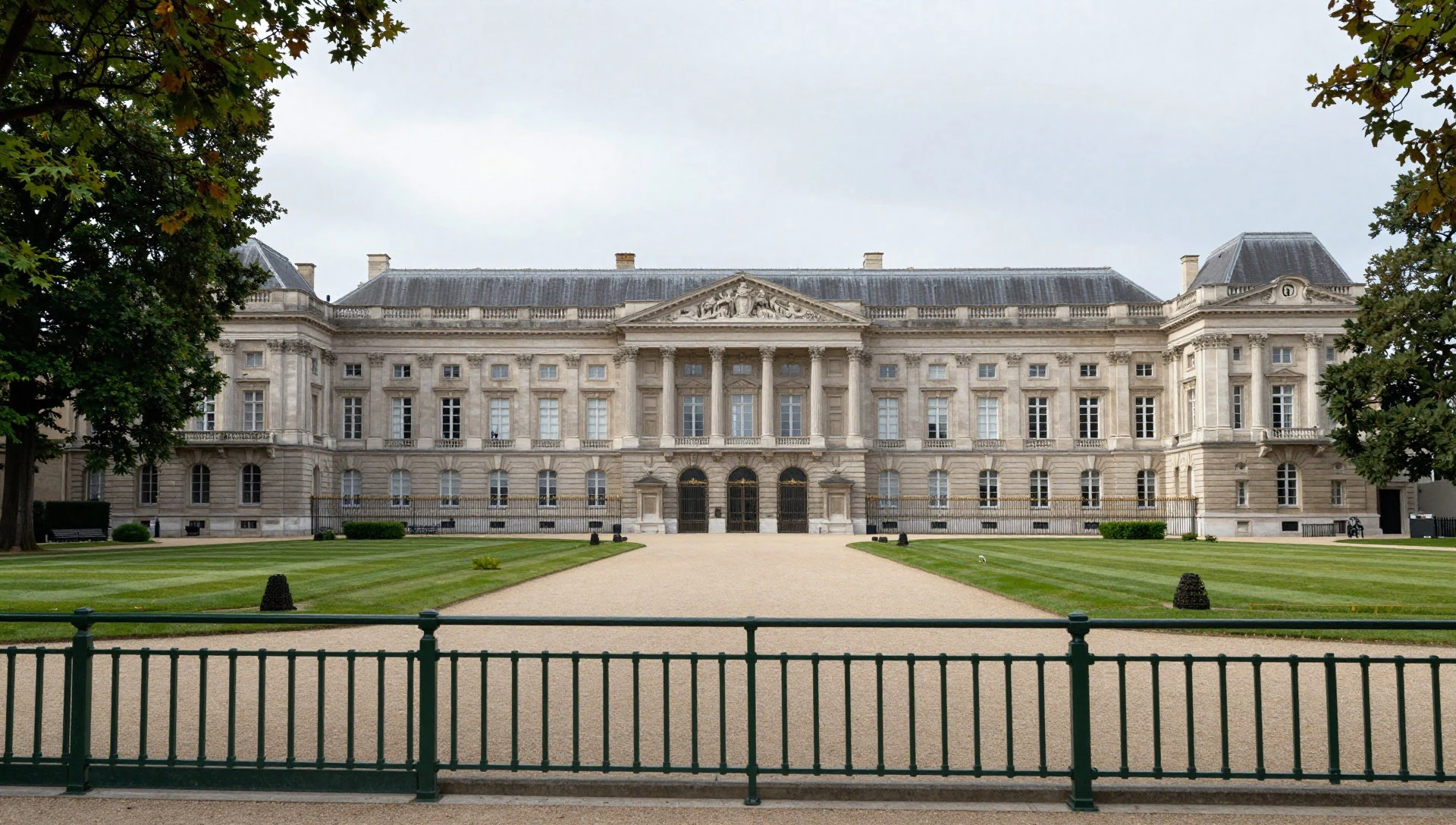
- Mont des Arts — between the old centre and the royal quarter
Brussels reads clearly from the Mont des Arts, the raised garden and terrace between the old centre and the royal quarter. From there the roofs of the lower town step down towards the town-hall tower, with the Grand-Place hidden in the middle distance. The view explains the city's layers in one glance: medieval core below, planned avenues and palaces behind, and a skyline that stays low.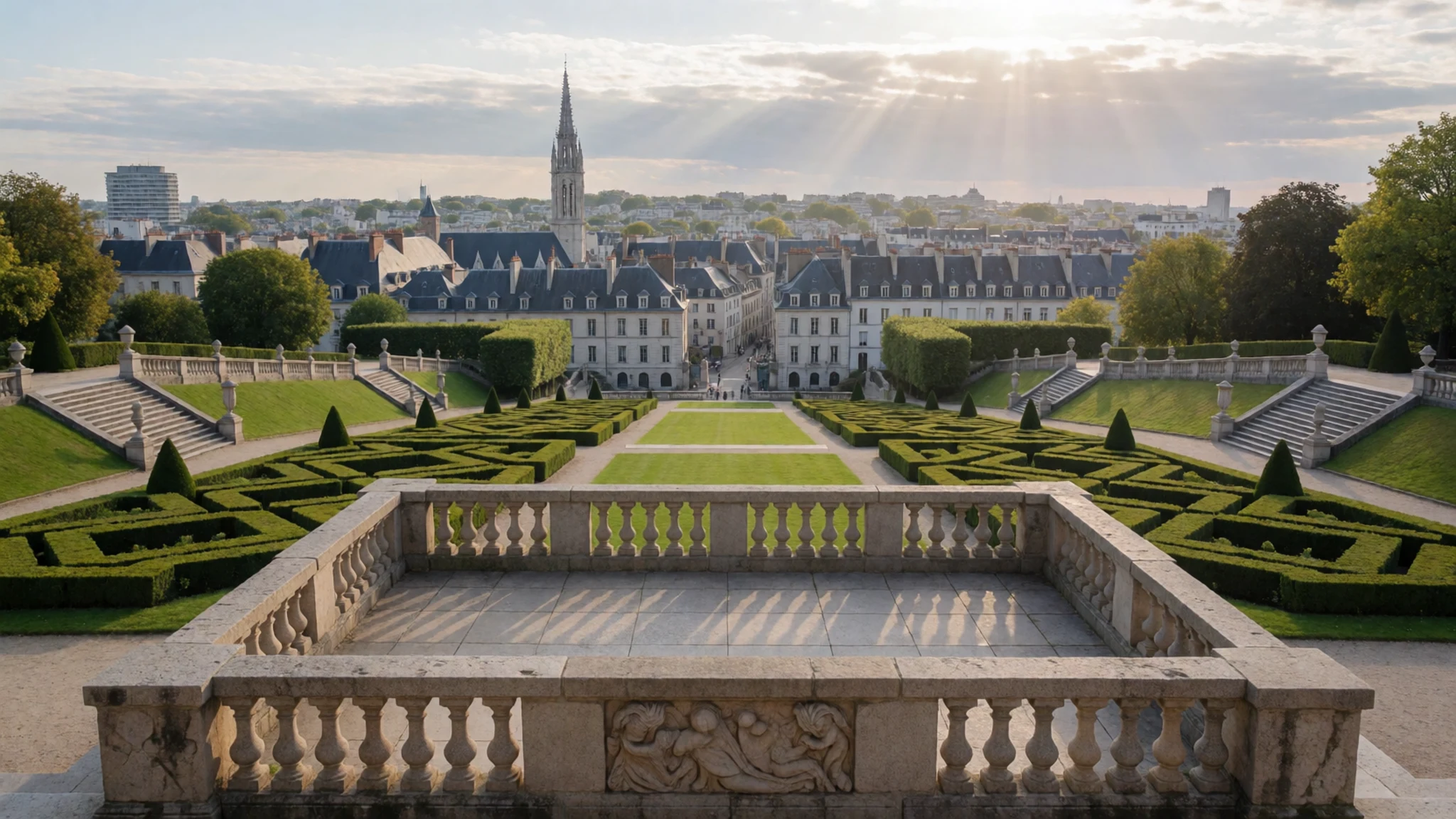
Culture
Brussels lives in two official languages, French and Dutch, and the split is practical rather than ceremonial. Street names are doubled — Avenue Louise and Louizalaan on the same plate — and many residents move between the languages depending on the shop, the office and the commune. The City of Brussels is capital not only of Belgium but of the French Community, the Flemish Community and the Flemish Region, so identity here is layered: a national capital, a bilingual region, and a city that is not itself part of Flanders.
On weekdays the European Quarter adds another public. The institutions of the European Union draw diplomats, interpreters and civil servants who use the city as a workplace and often leave it at the weekend. That rhythm shows in cafés near the institutions, busy at lunch and quiet on Sunday, while the Grand-Place keeps a visitor tempo of its own. The old centre and the European Quarter keep different clocks, and neither cancels the other.
Food and greeting follow the same bilingual habit. A menu may list moules or mosselen, frites or frieten, and either is understood in the centre. People queue in a loose European way and expect a greeting before an order.
In Brussels, lower your voice inside churches and ask before photographing people at close range in the old streets.
What to wear
Brussels does not dress its streets in a single folk costume the way a festival town might. The older civic look belongs to the guilds and the court: dark wool, linen shirts, lace at collar and cuff, and the kind of tailored cloth that still turns up in museum paintings of the city. Belgian lace, worked in fine linen thread, is a textile still tied to the place, once a trade of the lower town and now an heirloom or a shop-window craft rather than everyday wear. Lace collars and reconstructed guild dress belong to ceremonies, museums and shop windows, not to the commute.
What people wear now is ordinary northern-European city dress. In the European Quarter that means suits, coats and practical shoes on weekdays, then quieter weekend clothes in the communes. The centre sees more trainers, dark jackets and scarves, because rain falls every month and the air is cool for much of the year outside the hot summer. Umbrellas and waterproof coats are the real local uniform for much of the year.
A visitor should pack for rain and sharp swings in temperature: layers, a coat that can take rain, and comfortable walking shoes for cobbles inside the Pentagon and for park paths out towards the Cinquantenaire and the Bois de la Cambre. At churches, covered shoulders and a quieter outfit are the respectful choice; there is no need for formalwear in the streets.
What to eat
- Moules / mosselen — brasseries around the Grand-Place and the lower town
Brussels serves mussels as moules or mosselen, a pot of shellfish in a savoury broth that is the city's default feast. They turn up in brasseries around the Grand-Place and the streets of the lower town, often with a heap of fries on the side.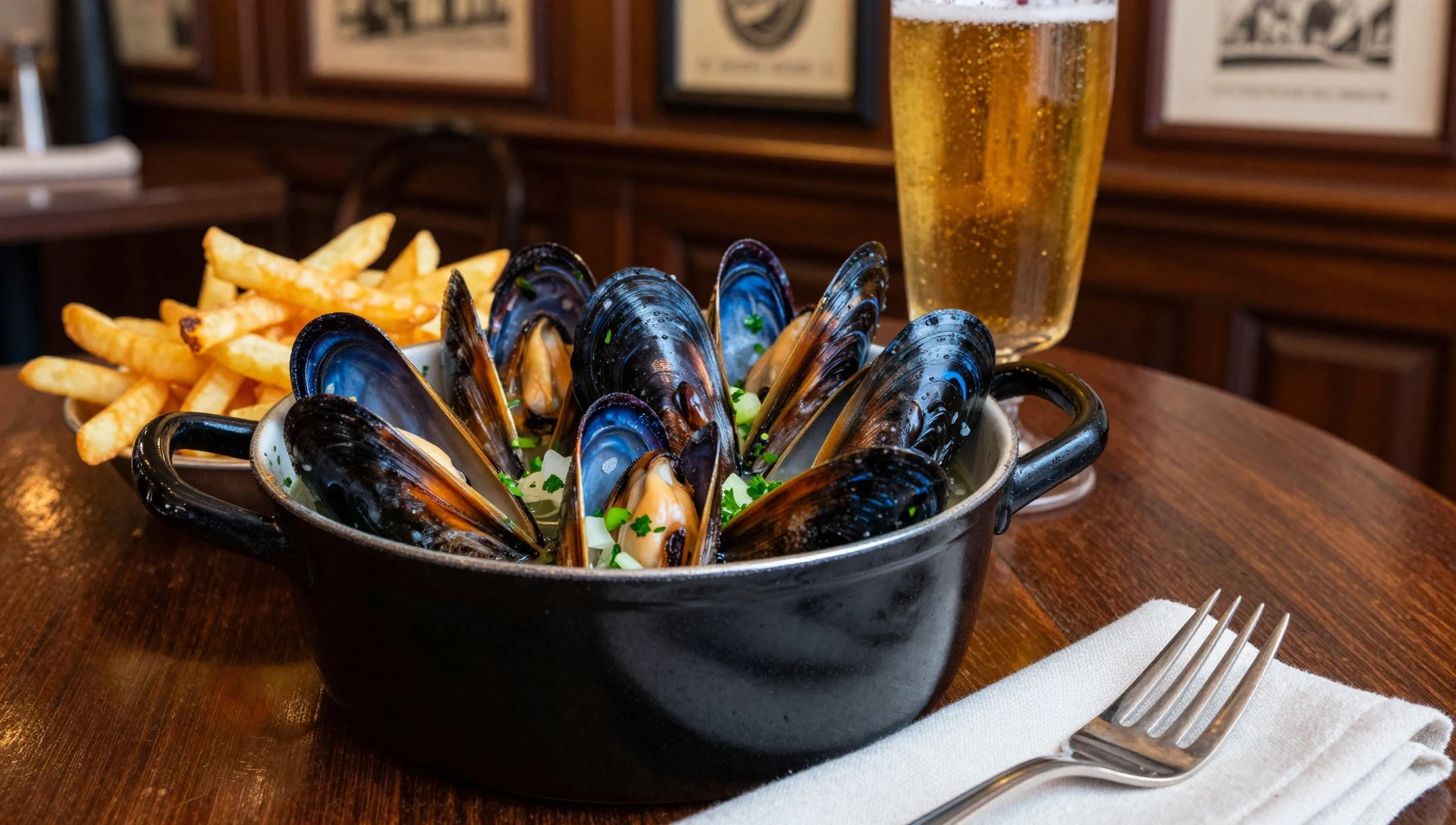
- Frites / frieten — fry stands and small shops in the centre
Brussels takes fries seriously under both names, frites and frieten, and they are a street food rather than a side thought. Stands and small shops fry them twice and serve them in a paper cone with a choice of sauces, from plain salt to richer mayonnaises.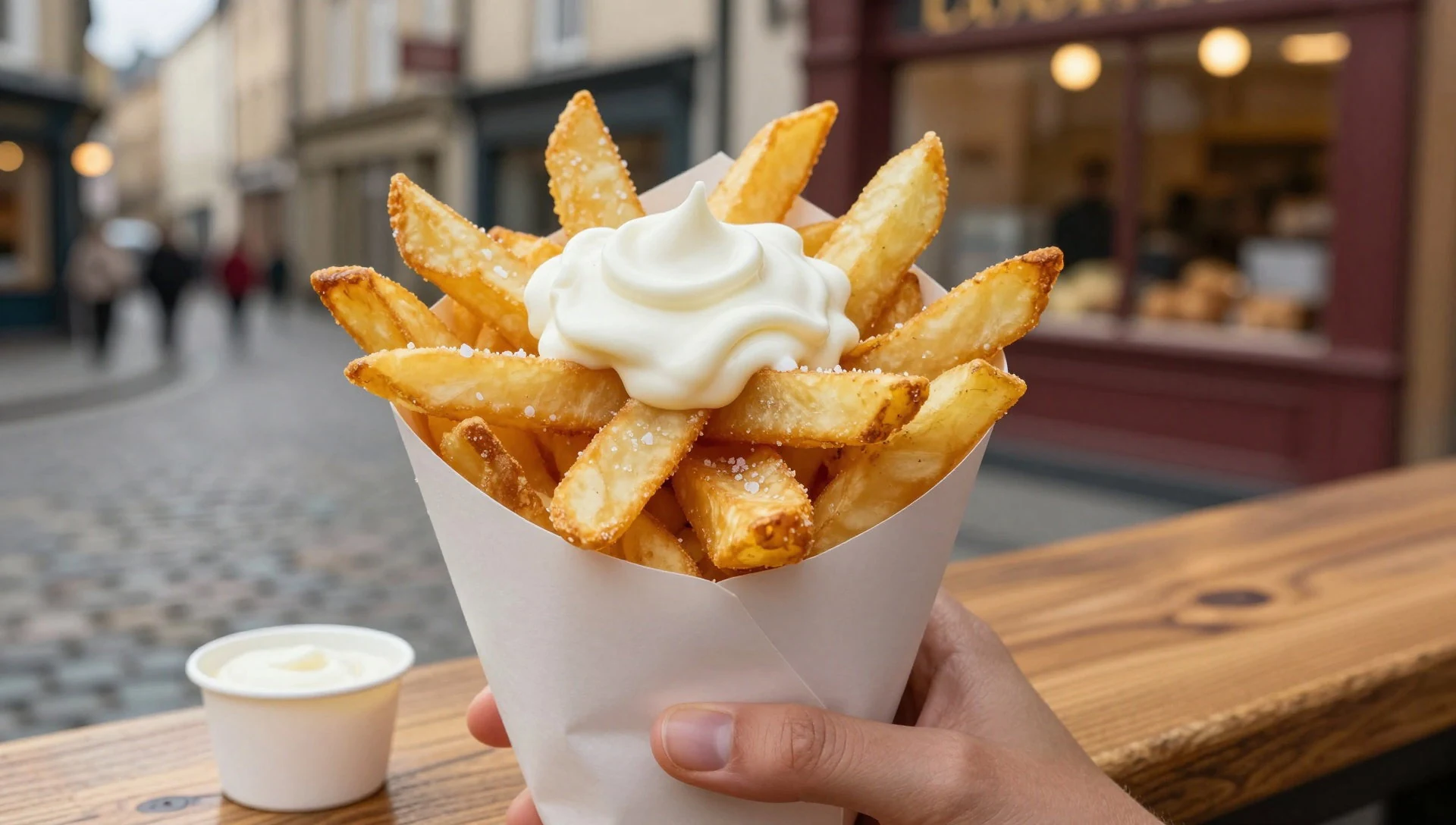
- Belgian pralines — chocolate shops in the streets off the Grand-Place
Brussels is a serious chocolate city, and the shops treat pralines as the thing to buy rather than bars from a supermarket shelf. Windows along the streets off the Grand-Place display filled chocolates, dark and milk, often sold by weight. - Turbot waterzooi — brasseries in the old centre
Brussels lists turbot waterzooi among its older dishes: turbot in a sauce of cream and egg, rich enough to count as a main meal. It is a sit-down plate on brasserie menus in the old centre, not a market-stall snack. The appeal is the mild, thick sauce around the fish. - Anguilles au vert / paling in 't groen — traditional brasseries in the centre
Brussels cooks river eels as anguilles au vert, or paling in 't groen, in a green sauce of herbs that gives the dish its name. It is a local plate, served in traditional brasseries in the centre rather than at fry stands.
Plan it
Best time. Brussels has a changeable climate, often damp, with rain in every month and no long dry season to aim at. July is the hottest month, August the wettest, and April the most comfortable for long walks in the centre. Rain is a year-round possibility, so a waterproof layer is the useful packing choice, and a forecast the day before is worth more than a fixed calendar.
How long. 2–3
Getting there. Fly into Brussels Airport and continue by Belgian Rail from the airport station to one of the city's three main train stations; that is the simple last leg into the centre. Direct trains also run from Paris Charles de Gaulle and from Schiphol, which helps if the journey is linking several cities. For current times, check the operator rather than a printed timetable.
Budget. mid
Tips
- Begin at the Grand-Place early, before the square fills with groups.
- Use the town-hall tower to reorient yourself when the Pentagon lanes curve.
- Carry a card and some cash; small stalls and church offertory boxes do not all take the same payment.
- Read current advice on https://www.brussels.be/ rather than trusting hours copied into old guides.
- Visit the European Quarter on a weekday if the institutions and their surrounding cafés are part of the plan; weekends there are quiet.
- Watch bags in the crowded streets around the Grand-Place; petty theft is a real local issue, even if the city's unsafe reputation is sometimes overstated.
Etiquette
- Offer a greeting before you order in a café or brasserie.
- A bonjour or a goeiedag is enough to start; English is widely understood in the centre.
- Speak quietly in churches and step aside if a service is underway.
- Ask before taking close photographs of people in the old streets.
Nearby
Sources
- Wikidata Q239 (CC0)
- Wikipedia (rev 1383060254) (CC BY-SA 4.0)
- Wikivoyage (rev 5396029) (CC BY-SA 4.0)
- Brussels view from Mont des Arts, Brussels, Belgium — Ank Kumar (CC BY-SA 4.0)
- Belgique - Bruxelles - Théâtre de la Monnaie — EmDee (CC BY-SA 1.0)
- Église Saint-Jacques-sur-Coudenberg — Pierre-Selim Huard (CC BY 4.0)
- Belgique - Bruxelles - Grand-Place — EmDee (CC BY 3.0)
- Exterior of the Royal Palace, Brussels — Suicasmo (CC BY-SA 4.0)
- Arcade du Cinquantenaire — Trougnouf (Benoit Brummer) (CC BY-SA 4.0)
- Jan Baptist Bonnecroy, Vue de Bruxelles (Public domain)
- Brussels town hall — Michielverbeek (CC BY-SA 4.0)


