Liège Cathedral
Liège Cathedral, Belgium
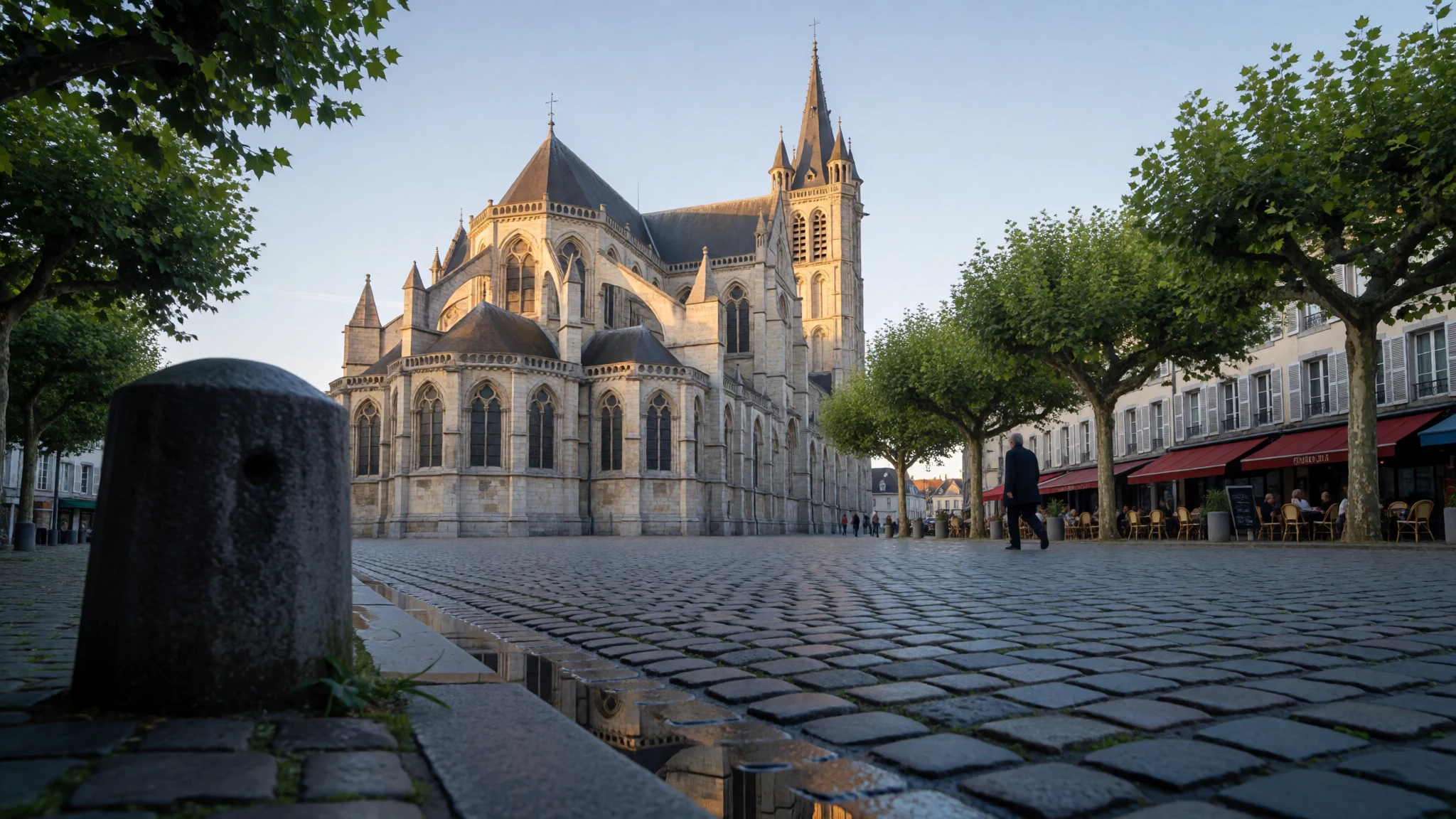
Liège Cathedral is a Gothic church that became a cathedral almost by accident, after revolution swept away the one that came before.
The place
Liège Cathedral, known locally as the Cathédrale Saint-Paul, is a Roman Catholic church in the middle of Liège, Belgium, and the seat of the city's diocese. Its plan is a Latin cross: a central nave with a lower aisle on each side, ending in a choir that has no aisles of its own. The architect's name has not survived. Most of the structure, meaning the choir, transept and nave, dates from the thirteenth century and shows early Gothic character. The five-sided apse came in the fourteenth century and is in the lighter radiant style. Later Gothic touches appear in the transept windows, the high nave windows, the side chapels and the tower. The busy upper gallery with its hooked pinnacles, the windowed stage of the tower and the spire are nineteenth-century work, from a restoration that gave the building the outline seen today. Over the portal a Latin inscription reads Sancta Legia Ecclesiae Romanae Filia, 'Holy Liège, daughter of the Roman Church', words that once appeared on the city's seal. The church has not always been a cathedral. For centuries it was a collegiate church, and it took on the cathedral role only in the nineteenth century. It sits among ordinary city streets and feels more like a working parish church than a monument. Inside, the interest lies in decorated vaults, carved statues and a treasury of church silver.
Its story
Liège Cathedral began as a church of Saint Paul founded in 967 by Bishop Eraclus. The tale goes that the idea came to him on the journey home, after he had been present at Archbishop Bruno the Great's funeral in Cologne. Eraclus died before the walls rose much beyond window height, and his successor Notger finished the job. Eraclus had set up a college of twenty canons to serve the church, and Notger added ten more. The settlement around it grew on an island, which is why chapels such as Saint-Germain and Saint-Calixte appeared nearby within a short walk of each other. For the next eight centuries the church was one of seven collegiate churches in Liège, alongside Saint Peter's, Holy Cross, Saint John's, Saint Denis's, Saint Martin's and Saint Bartholomew's. Together their clergy formed the 'secondary clergy' of the Prince-bishopric, ranking below the canons of Saint Lambert's, which was the city's true cathedral. That arrangement lasted until the Liège Revolution of 1789. Six years later, in 1795, Saint Lambert's was destroyed. The diocese needed a new seat, and Saint Paul's, by then rebuilt in Gothic style between the thirteenth and fifteenth centuries, was the obvious candidate. It became the cathedral in the nineteenth century and was restored in the middle of that century. A more recent cleaning and restoration has left the stonework noticeably lighter.
What to see
- Cathedral treasury and interior — Cathedral, city centre
The treasury holds goldsmiths' work, including a late Gothic reliquary bust of Saint Lambert. Beyond it, the nave rewards slow looking: decorated vaults, side chapels, and a lime-wood statue of Saint John the Baptist dated 1682. Check the official site before going, as treasury access can be limited.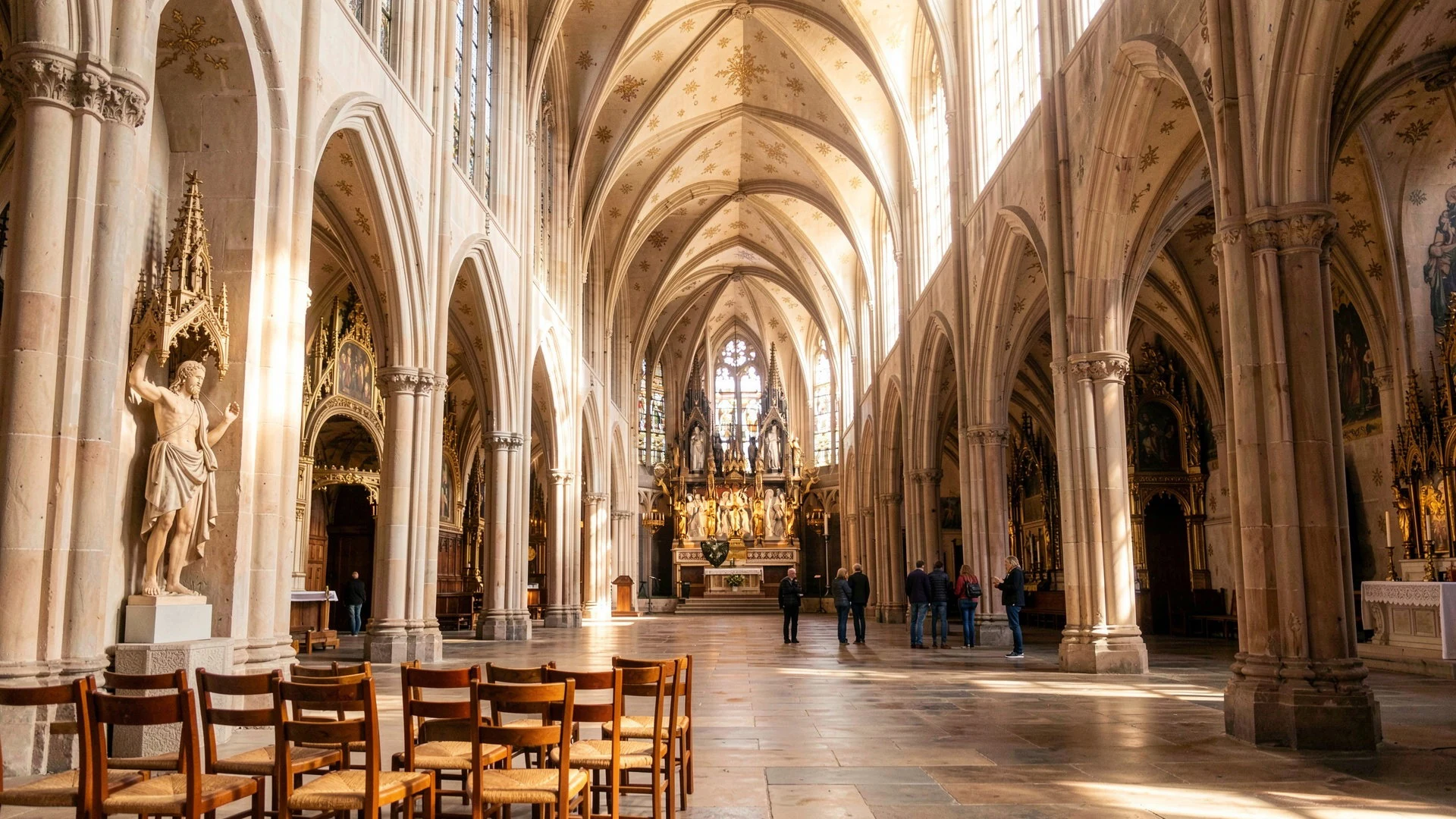
- Archéoforum — Place Saint-Lambert, under the square
An underground archaeological site beneath the square where Saint Lambert's once stood. It shows the remains of three successive cathedrals and a Roman-era building. It explains the city's religious story better than any sign, and it is a good wet-weather stop. Check the official site for opening times.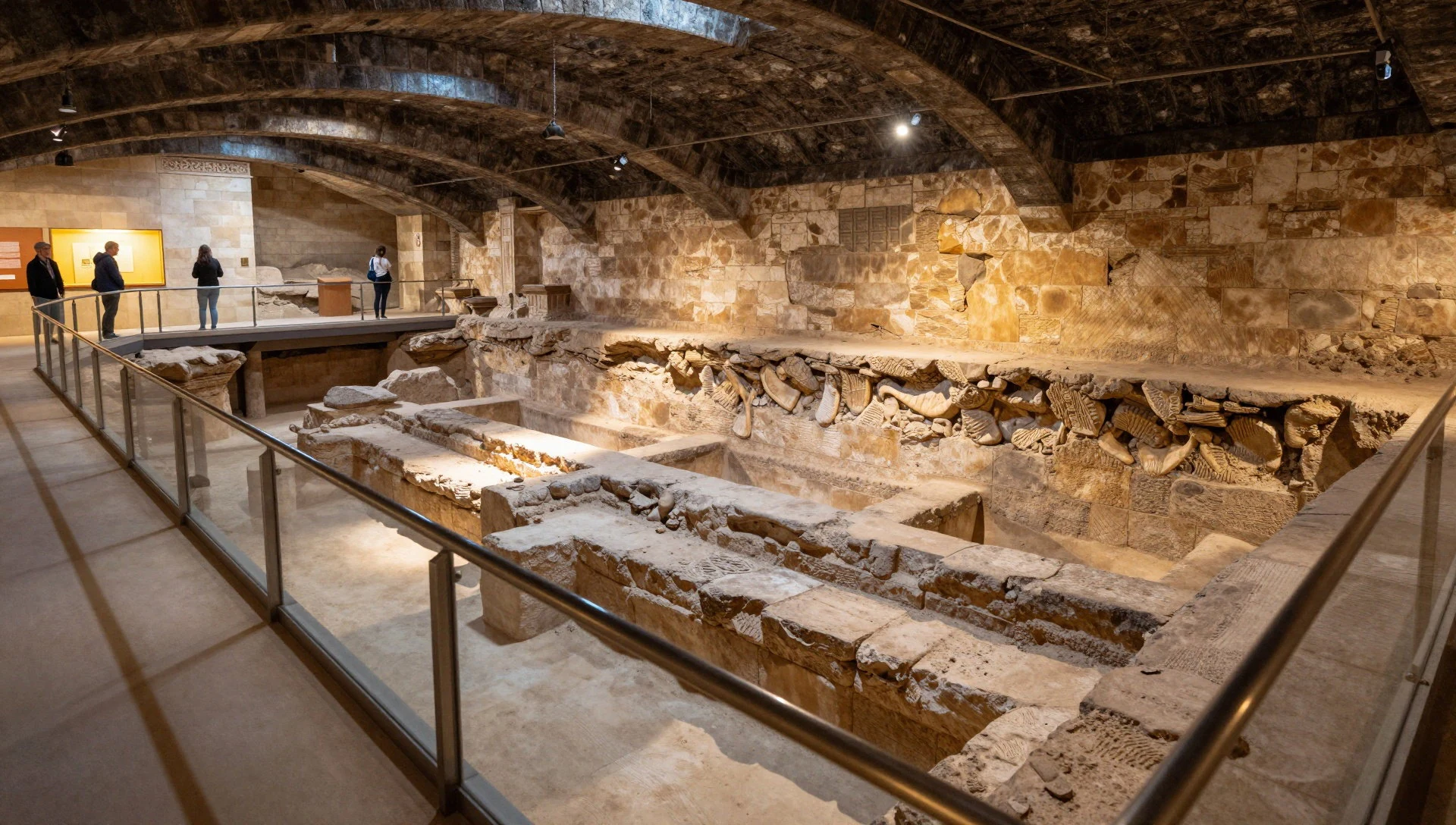
- Palace of the Prince-Bishops — Place Saint-Lambert and Place Notger
This large complex combines the Palace of Justice, with a classical façade on Place Saint-Lambert, and the Provincial Palace, whose side façade facing Place Notger is neo-Gothic. It recalls the centuries when bishops ruled Liège as princes. Visitors mostly admire the courtyards and façades from outside.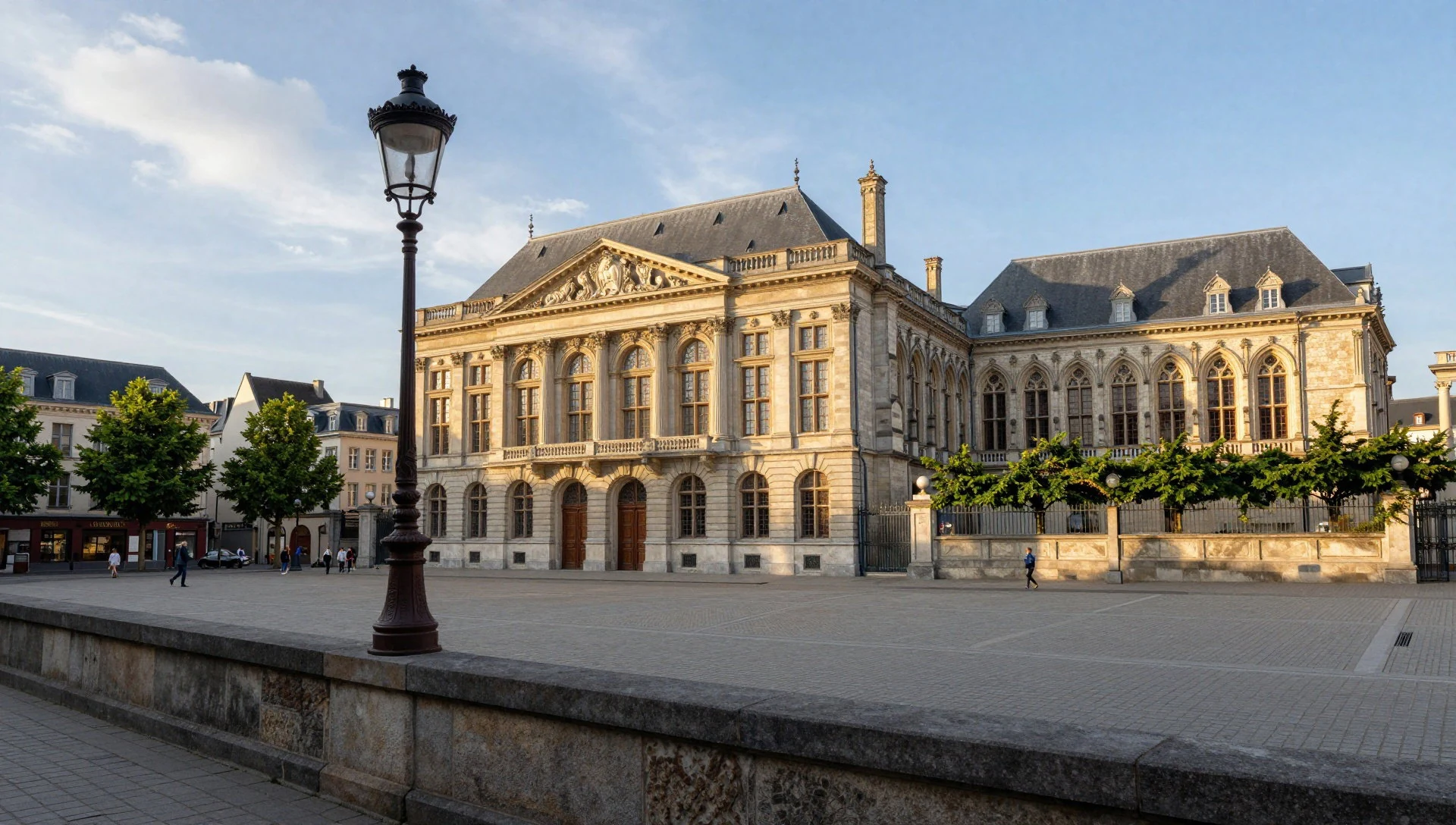
- Town hall (Hôtel de ville) — Market square, old centre
An elegant classical building on the market square, rebuilt after French attacks on the city. The Perron column stands nearby, a civic symbol of Liège, and the surrounding old houses make a pleasant circuit on foot. Good for a short stop between the cathedral and the cafés.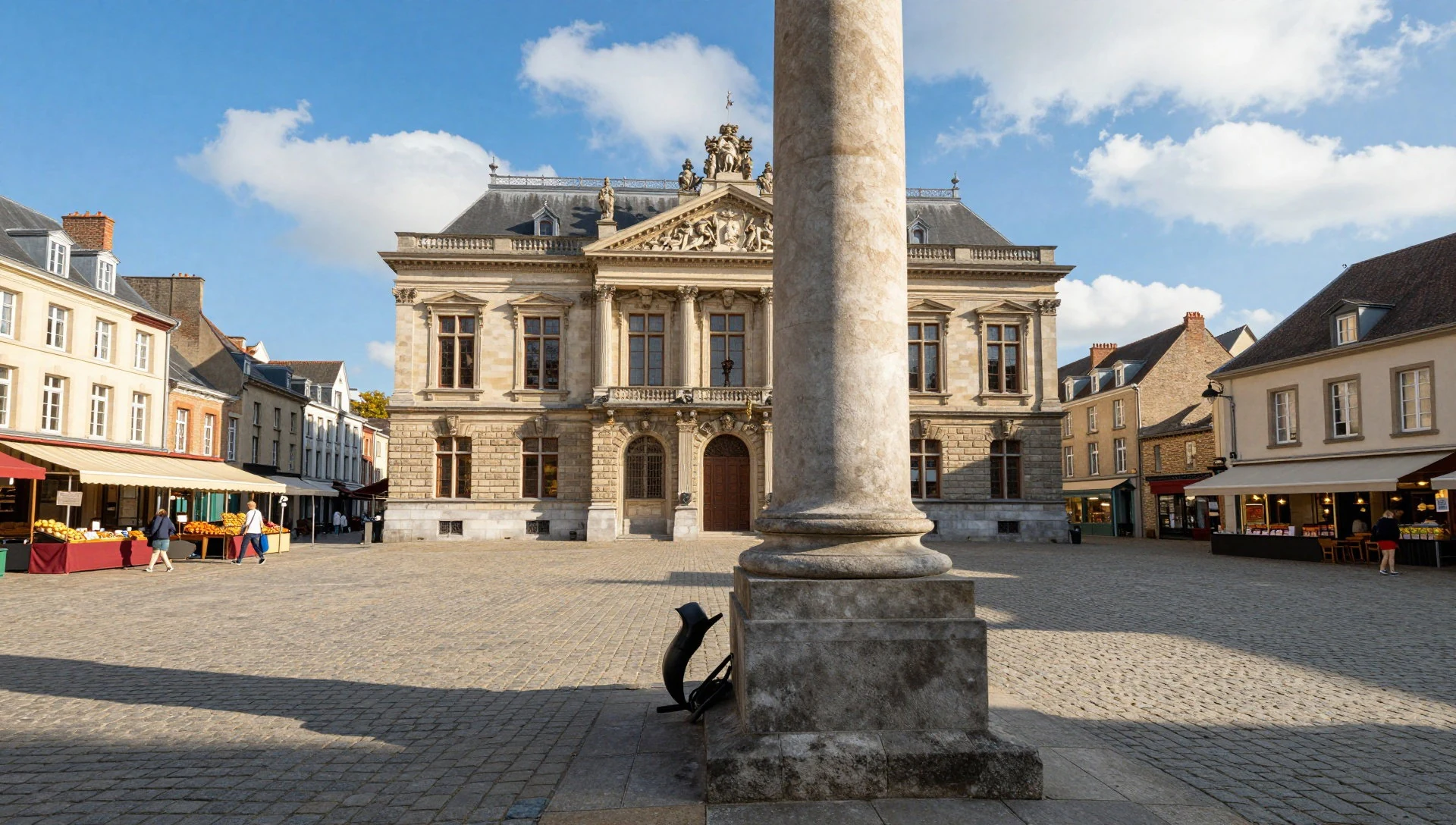
- Hôtel d'Ansembourg — Old centre, east of the market square
Now the Musée d'Ansembourg, this townhouse is worth visiting for its original interior, which survives remarkably intact. Rooms show how a wealthy family lived in the city's prosperous past. Check the official museum site for opening days, as small museums often close on set weekdays.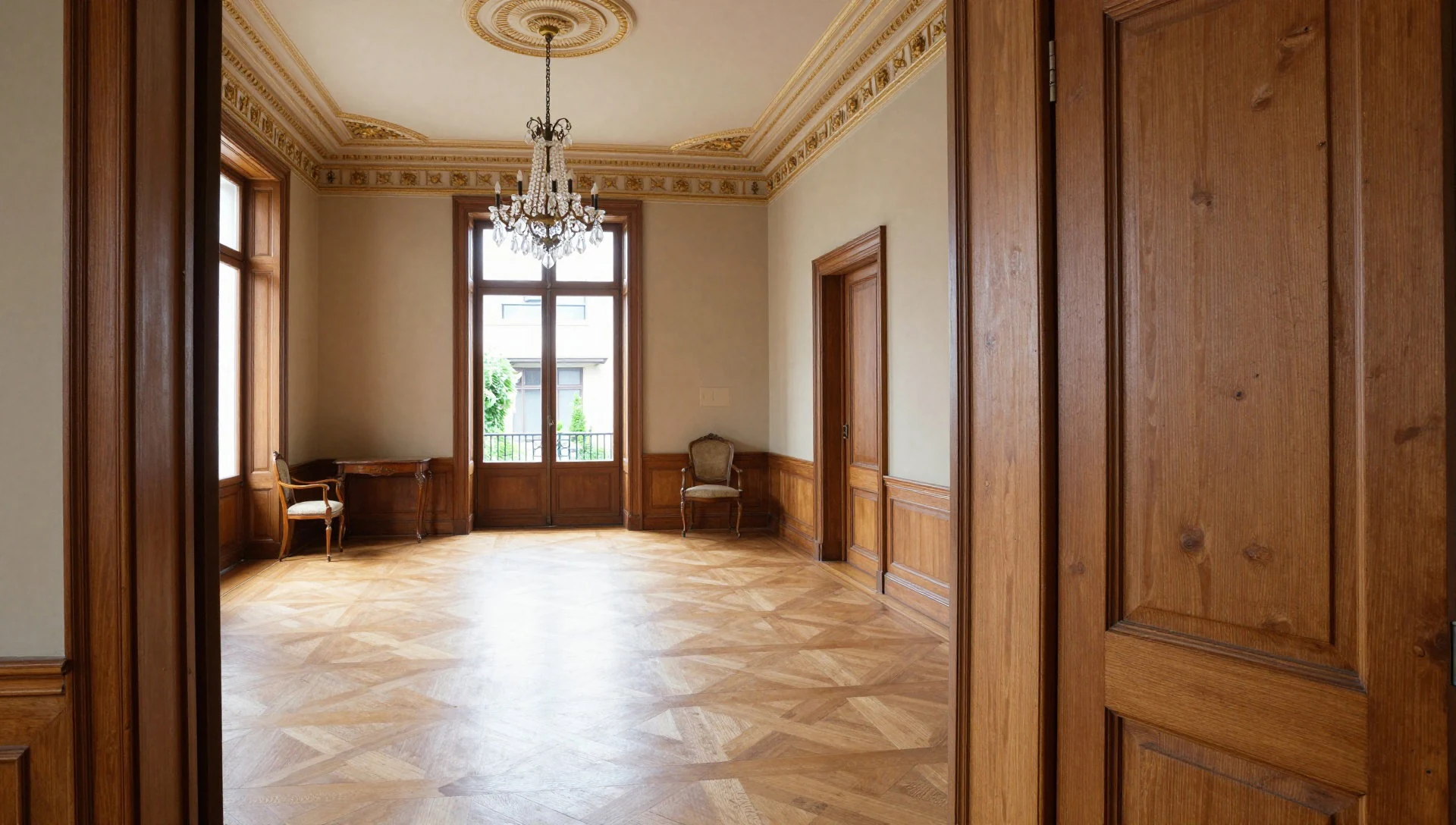
- La Boverie — Park of La Boverie, by the river
The city's art collections are now gathered in the Boverie Palace, set in a park of the same name. A large space hosts temporary exhibitions, and a smaller permanent display covers art from the Renaissance onwards. The park is also a calm place to walk after the busy centre.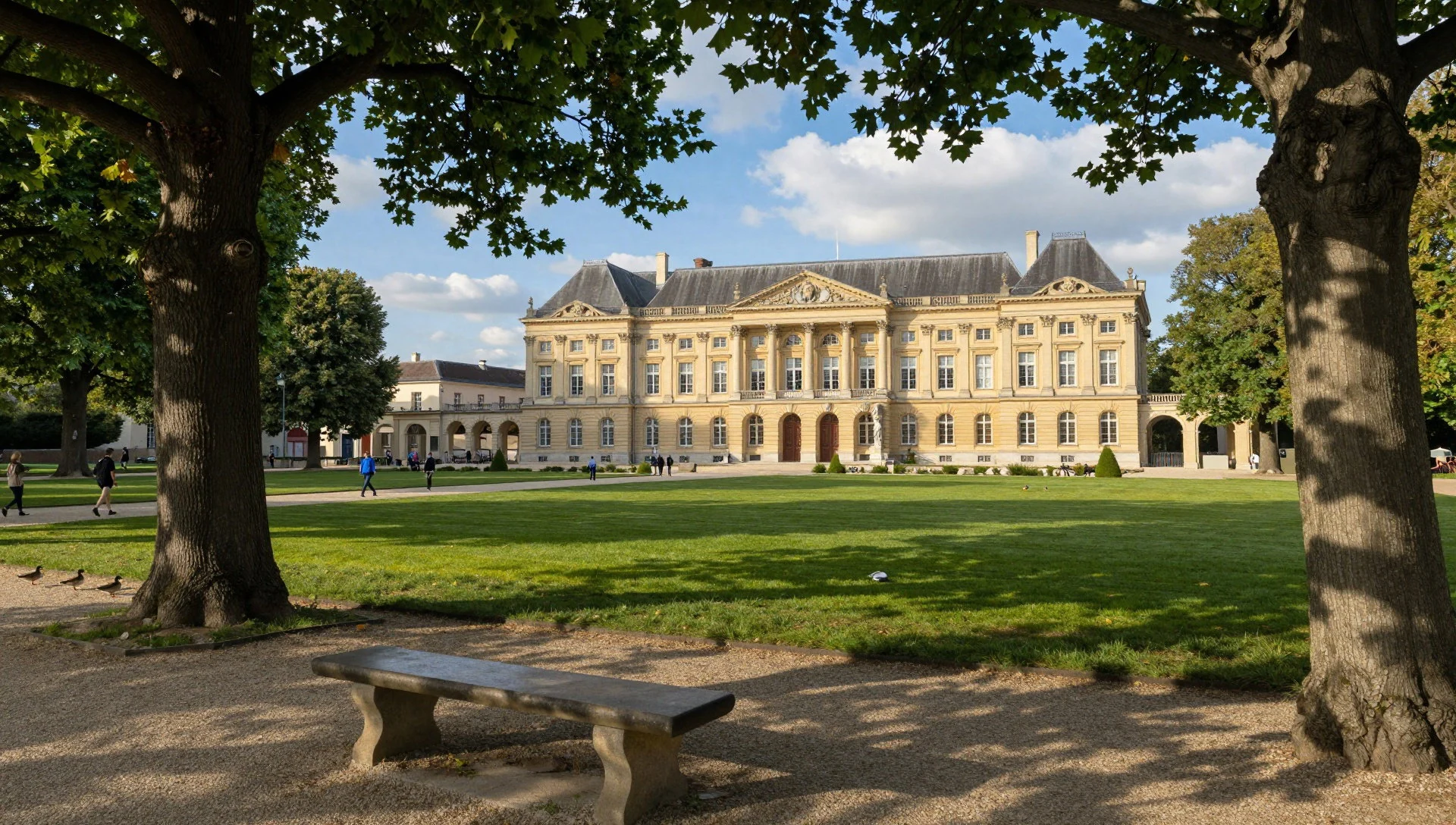
Culture
Liège Cathedral belongs to a city that thinks of itself as a Catholic stronghold with a sharp, independent streak. The portal inscription calling Liège the daughter of the Roman Church tells part of that story. The rest shows in the long rule of prince-bishops, in the seven collegiate churches that once shared the city's religious life, and in the quick sale of that old order after the revolution of 1789. Today the cathedral serves a living congregation, and the ordinary rhythm of Masses and prayer goes on beside the sightseeing. The city has a strong French-speaking identity, so a greeting in French goes down well, even if the conversation then moves into English. Liège people are known for being direct and sociable, and a quiet exchange with a volunteer or sacristan can lead to useful tips on what is open. Belgian church interiors are generally calm places, and the cathedral is no exception. Concerts and exhibitions sometimes use the space, so the atmosphere varies from day to day. Gothic churches like this one also reward visits at different hours, since the light through the high windows changes the feel of the nave. Keep your voice low, stay out of roped-off chapels, and do not use flash or walk in front of worshippers during a service.
What to wear
Liège Cathedral sits in a part of Belgium without a single everyday national costume, so the 'traditional' dress most visitors meet is ecclesiastical. Clergy wear vestments of silk, brocade and embroidered linen in colours that follow the church calendar, such as white and gold for feasts, purple in penitential seasons and green for ordinary time. Folk costume of the Walloon region, with long skirts, aprons and shawls for women and waistcoats and caps for men, now appears mainly at festivals and in museum displays. On the street, people in Liège dress much as in other northern European cities: smart casual, with dark jackets, jeans, scarves and practical coats, and a slightly dressier turn on evenings out. Weather swings from hot summers to freezing winters, so light waterproofs are normal. A visitor should wear comfortable shoes for the cobbled streets and uneven stone floors of the old centre, and carry an umbrella or rain jacket in any season. A warm layer helps inside the cathedral, where stone keeps the air cool even in summer. There is no strict dress code, but covered shoulders and knees are respectful for a working church, and hats are best removed indoors. In winter, bring gloves and a proper coat.
What to eat
- Boulets à la liégeoise — Traditional Belgian restaurants and brasseries in the old centre
Large meatballs in a sweet-and-sour sauce made with Liège syrup and onions, usually served with fries. A staple of local home cooking, and a dish many brasseries in the old centre feature as a house speciality.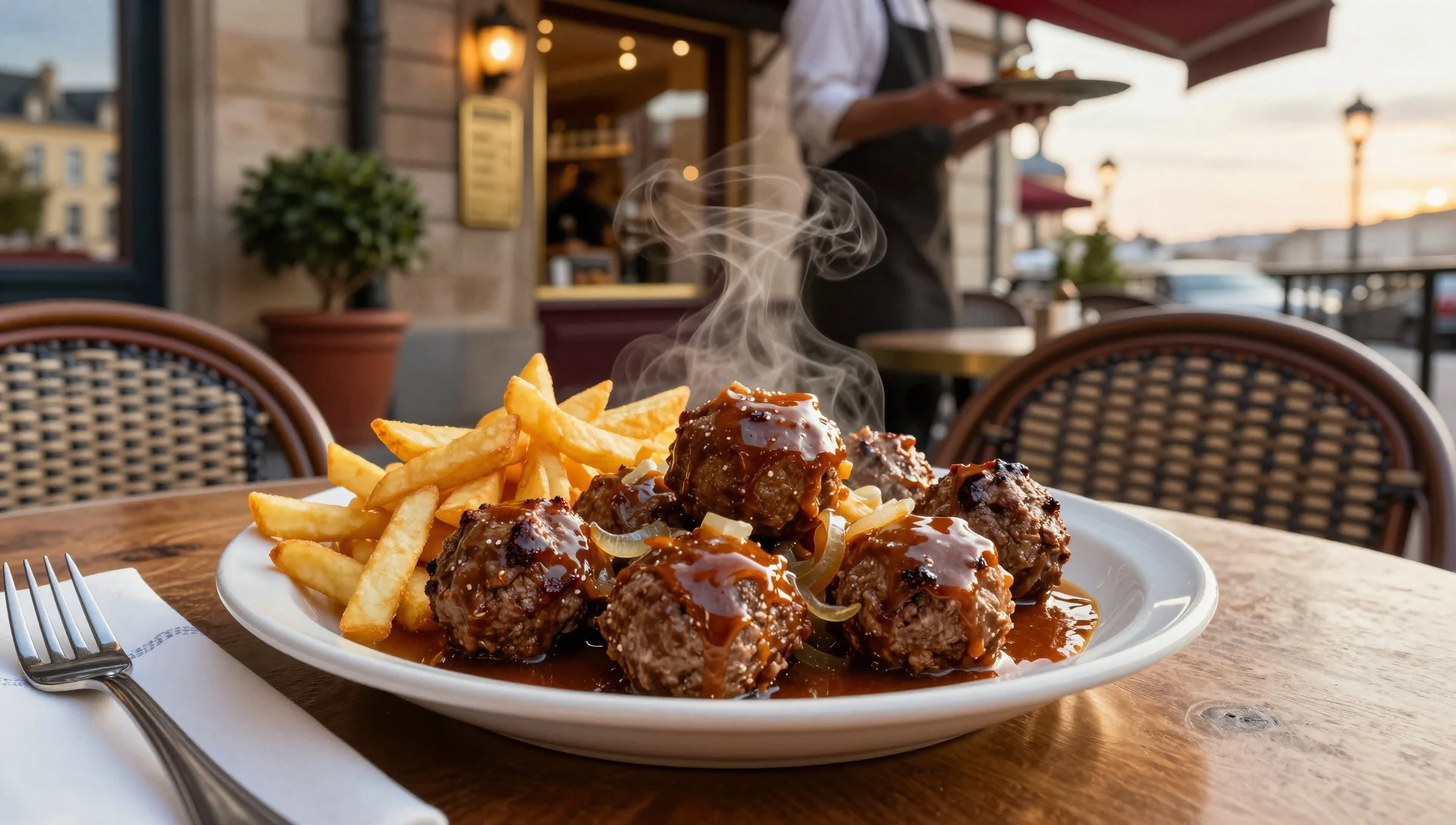
- Frites with Liège sauce — Fries stalls and brasseries around the centre
Belgian fries come twice-fried and sturdy, and in Liège they often arrive with a local sauce rather than plain mayonnaise. Ask at any frites stand which sauce the locals prefer.
- Gaufre de Liège — Waffle stalls and bakeries on the main shopping streets
A dense, chewy waffle made with yeasted dough and pearl sugar that caramelises on the iron. Eaten warm and plain from a paper bag, it is the city's best-known street snack and travels well. - Croque-monsieur — Cafés and lunch places near the cathedral
A toasted ham-and-cheese sandwich, often made at home-style cafés with thick bread and plenty of melted cheese. A reliable, inexpensive lunch after the cathedral, and many places offer vegetarian versions. - Café liégeois — Tea rooms and café terraces in the old town
A sundae-style dessert of coffee, coffee ice cream and whipped cream, served in a tall glass. Despite the name, it has become popular across Belgium and France, but ordering it in Liège feels right.
Plan it
Best time. April, May and October offer the most comfortable days, with highs of 25 to 28 °C, while June to September runs hot. Winters are grey, damp and cold, but the cathedral and nearby museums make good indoor stops in any season.
How long. 1–2
Getting there. Fly to Brussels Airport, then take a train via Leuven or change at Brussels-Nord for Liège-Guillemins. Brussels South Charleroi Airport has a bus to Charleroi-Sud station, then a train to Liège-Guillemins. Frankfurt has a direct high-speed train. From Liège-Guillemins, the cathedral is reached by local bus, taxi or a walk into the old centre.
Budget. mid
Tips
- Check the official site (http://www.cathedraledeliege.be/) for opening times and treasury access before travelling
- Visit in the morning for quieter interiors and softer light through the high windows
- Carry a light waterproof, as rain is common in every season
- Wear comfortable shoes for cobbled streets and stone floors
- Pair the cathedral with the Archéoforum, which is useful when the weather is poor
Etiquette
- Keep your voice low and avoid flash photography inside the cathedral
- Do not walk through chapels or areas where a service is in progress
- Remove hats indoors and keep shoulders and knees covered
Nearby
Sources
- Wikidata Q1573417 (CC0)
- Wikipedia: Liège Cathedral (rev 1371299214) (CC BY-SA 4.0)
- Wikivoyage: Liège (rev 5409384) (CC BY-SA 4.0)
- Photo: 2022-08 Cathédrale Saint-Paul de Liège (crop), The RedBurn (CC BY-SA 4.0)
- Photo: Liège, Belgium (18168975921), heipei (CC BY-SA 2.0)
- Photo: Cathédrale Saint-Paul de Liège, innerview 1, Raimond Spekking (CC BY-SA 4.0)
- Photo: Cathédrale Liège 240809 07, Vassil (Public domain)
- Photo: Cathédrale Liège 240809 11, Vassil (Public domain)
- Photo: Plafond au Cathédrale Saint-Paul, Liège, Jiří Komárek (CC BY-SA 4.0)
- Photo: Reliquary of Saint Lambertus, Hans von Reutlingen (CC BY 3.0)
- Photo: Cathedral (St. Paul's) Liège, Joseph Fussell (CC BY 3.0)


