Hallerbos
Hallerbos, Belgium
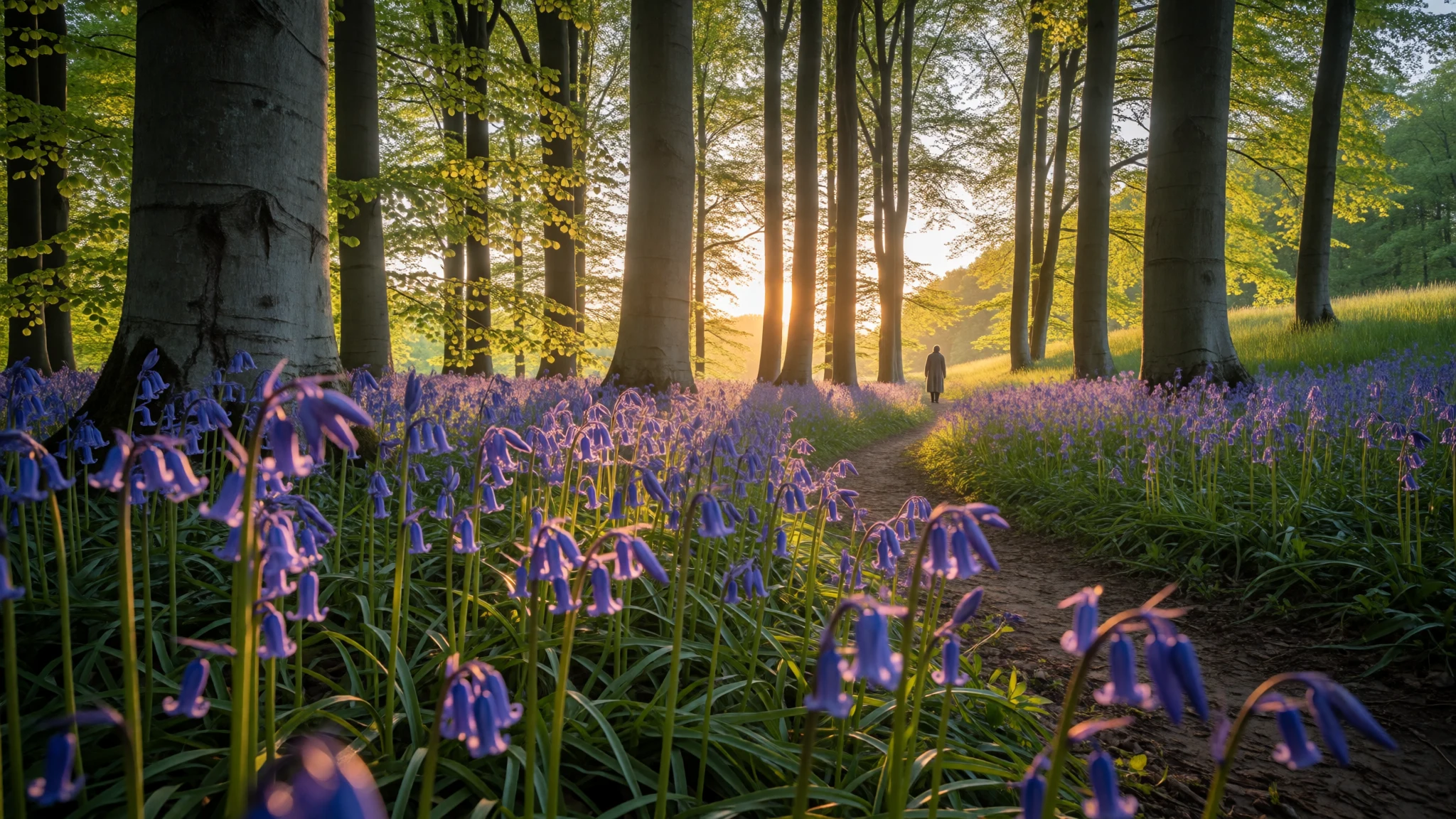
Hallerbos is a Belgian forest where bluebells flood the woodland floor for a few spring weeks, a short rail-and-bus trip from Halle.
The place
Hallerbos is a forest in Belgium, lying about 123 metres above sea level, mostly within the municipality of Halle in Flemish Brabant, with a small part across the line in Walloon Brabant. It covers 552 hectares, large enough that a walk here fills a morning or an afternoon without retracing steps. The records describe it as a mixed forest and as a bluebell wood, and the second description explains its fame. For a few weeks each spring the ground under the trees turns blue-violet, and visitors arrive in numbers to see it. Outside those weeks the forest is calmer and more ordinary in the best sense: bare branches and mud in winter, fresh green in late spring, leaf colour in autumn, and mostly local walkers. Halle, the town beside it, has a railway station, and a bus links the station to a forest entrance, so a car is not essential. At the entrances, information boards carry a map of the paths and a short explanation of the site. The landscape around is gentle Brabant countryside, west and south of Brussels, with the farmland of the Pajottenland close by. One honest warning: the bloom does not keep to the calendar. A cold spring delays it and a warm one brings it early, so a trip fixed weeks ahead can land on bare ground or on fading petals. The official site, hallerbos.be, is the place to check current visitor information shortly before travelling.
Its story
Hallerbos has a longer past than its trees suggest. In earlier centuries it belonged to the Silva Carbonaria, the 'charcoal forest', a broad belt of woodland that ran across this part of the Low Countries and also took in the Sonian Forest and Meerdaal. Over time that belt was cut into pieces by farming, roads and settlement. Records from 1777 still show a wooded corridor tying Hallerbos to the Sonian Forest, so the gap between the two is recent when set against the long life of the woodland. The First World War was harsher. German forces occupying Belgium felled most of the old trees here, and the forest was left badly depleted. Replanting followed between 1930 and 1950, which means the woodland that visitors walk through today is largely the work of one generation of foresters, not an untouched ancient wood. That is worth remembering when looking up at the canopy, which is younger than many visitors assume, while the flowers underfoot are what gave the place its reputation. Today the forest carries formal protection: one photograph in the reference collection records it as a Natura 2000 site, part of a European network of protected habitats. The result is a working recreation forest with a scarred history and a quietly recovered present.
What to see
- The bluebell carpet — Central woodland
This is the main event and the reason for the April crowds. Under the trees the flowers grow so densely that the ground reads as one blue-violet sheet, with narrow paths running through it. Timing depends on the spring weather, and weekends are busy. Early weekday mornings give softer light, fewer people and a better chance of hearing birdsong over voices.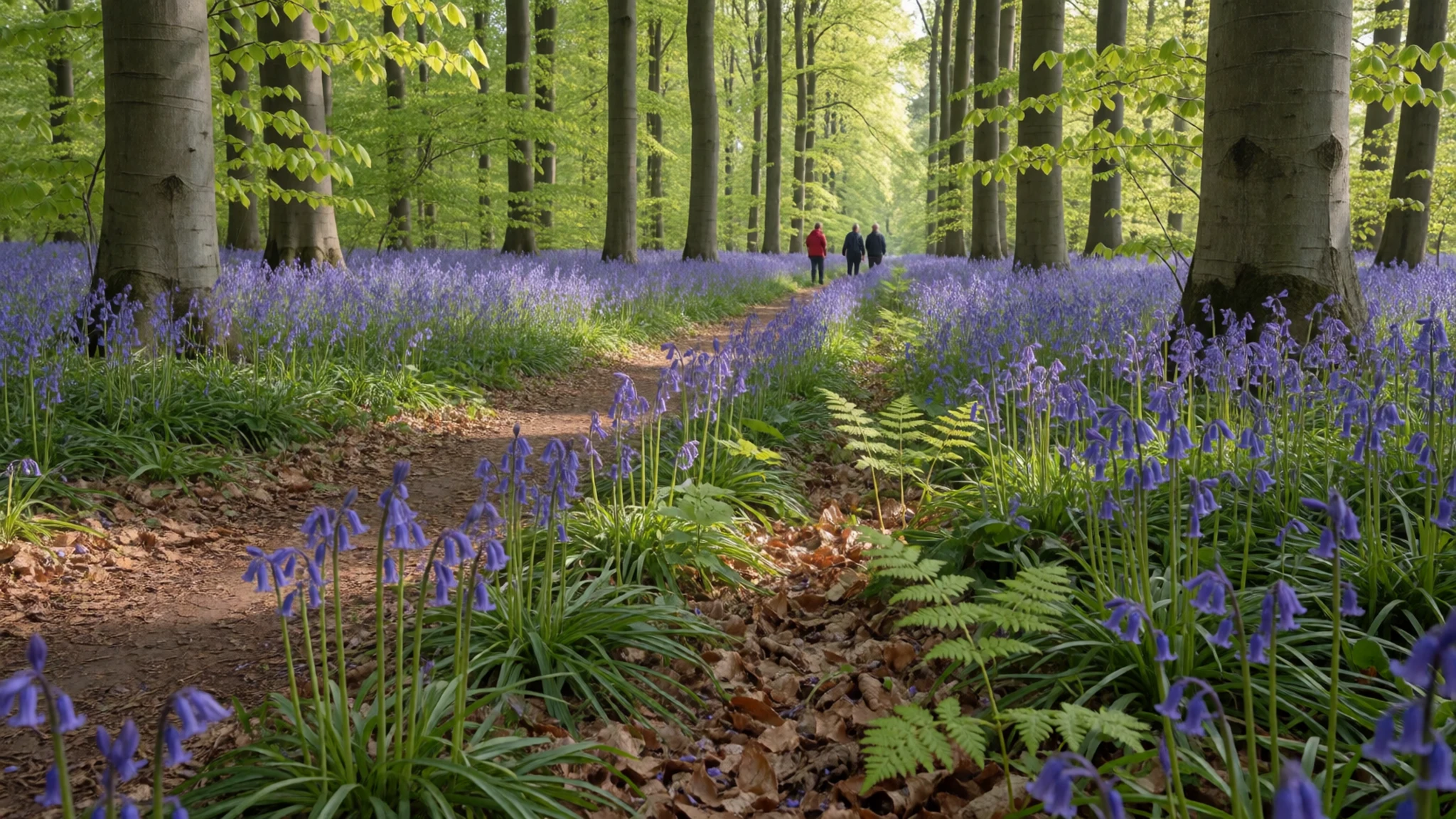
- The woodland paths — Throughout the forest
Marked walking paths cross the forest and make a loop of an hour or a whole afternoon easy to improvise. Away from the bluebell zones the tracks are quieter, and the woods change with the season: bare and muddy in winter, bright green in late spring. Surfaces vary, so check conditions after rain before choosing a route.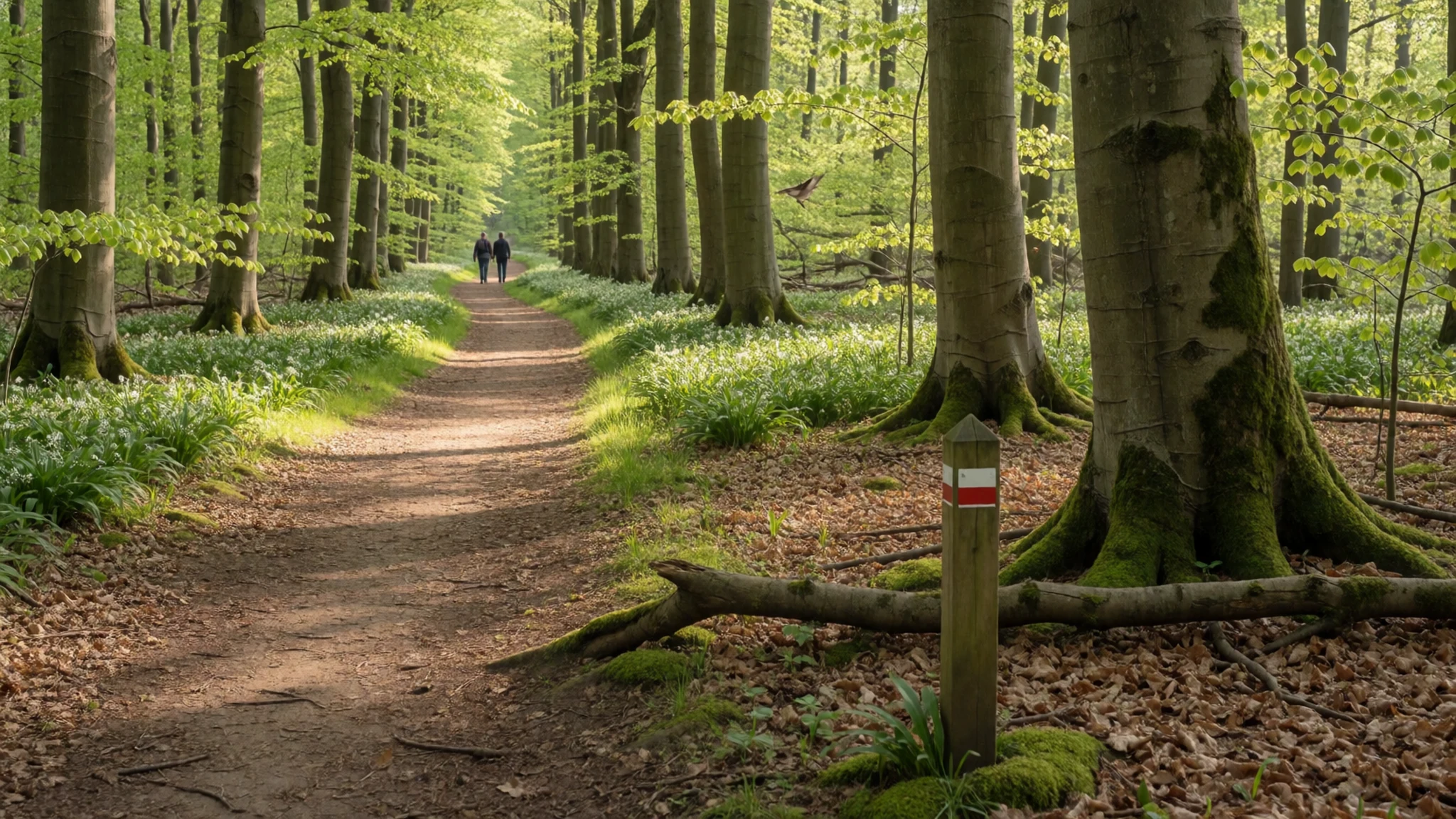
- Spring anemones — Path edges and clearings
Before the bluebells open, white wood anemones can scatter the ground in the same woods. They flower earlier and more quietly, so a trip in late March or early April may suit visitors who prefer thinner crowds. The display is smaller and the weather colder, but the forest feels more private and unhurried.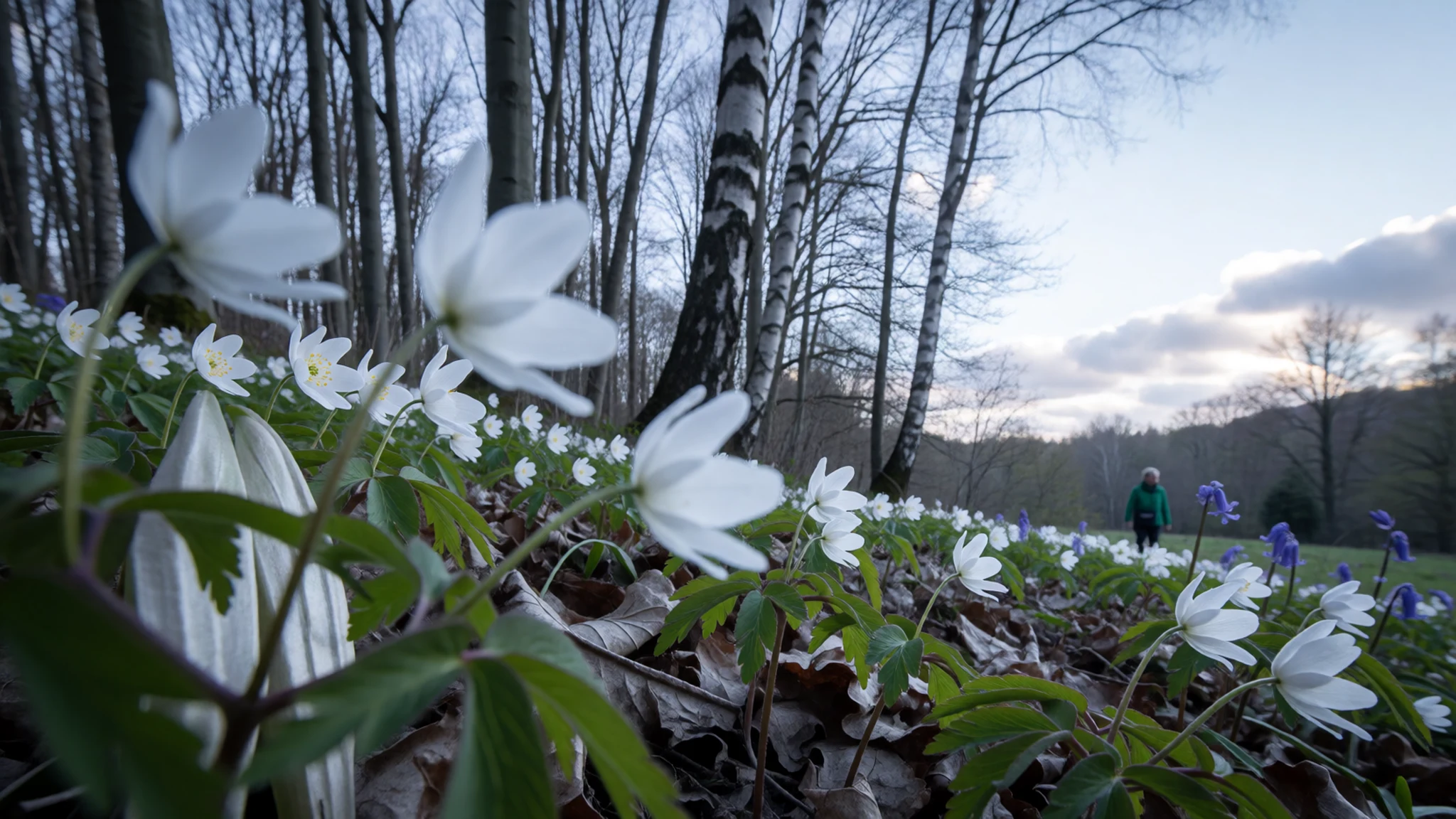
- Entrance boards and the forest map — Forest entrances
Each main entrance has information panels, and one shows a plan of the whole recreation area. Spending a few minutes here helps with choosing a route, especially on a busy day when the paths fill. Signs are in Dutch, so a photograph of the map on a phone is useful later when the tracks start to branch.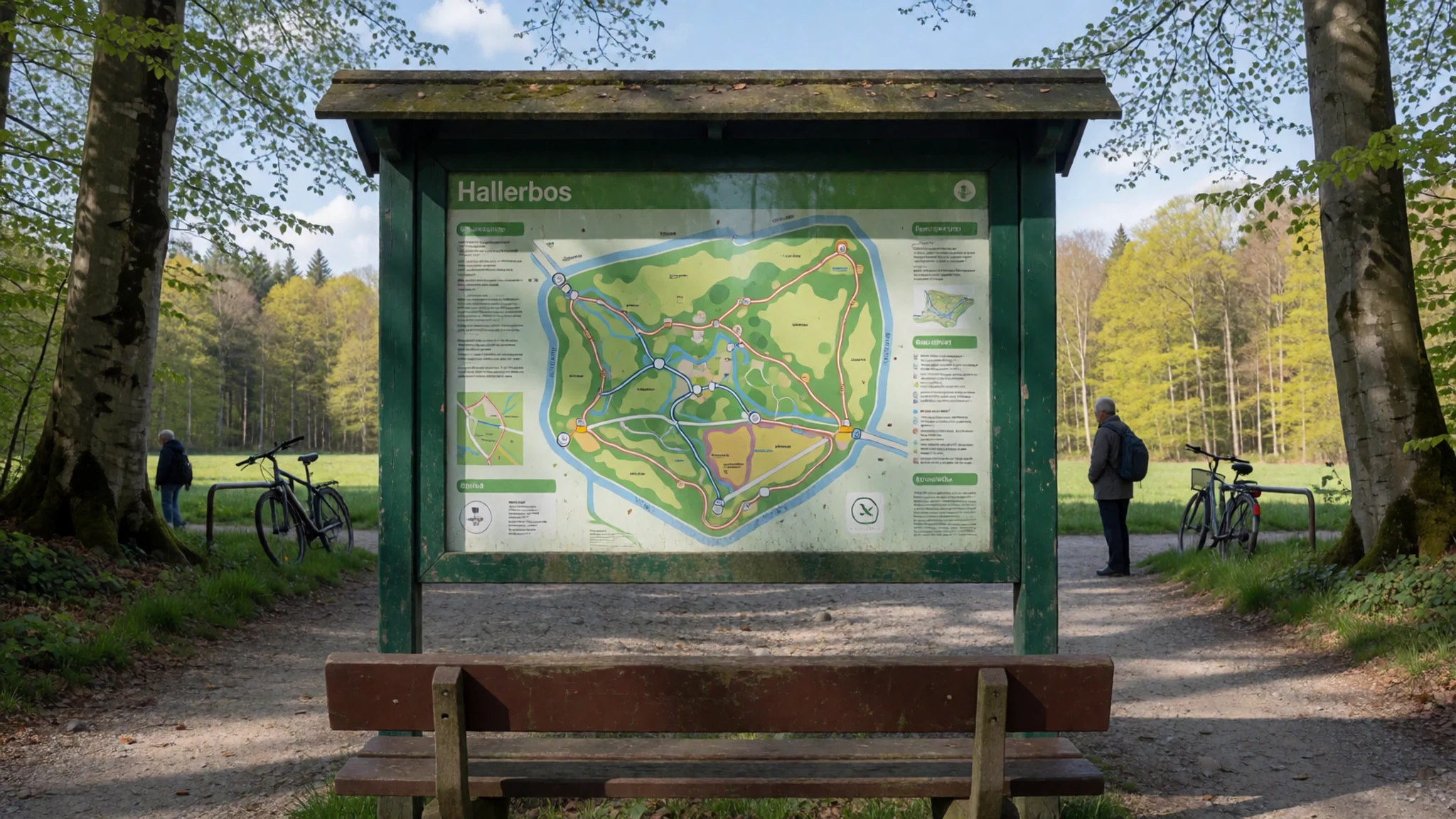
- Halle, the town beside the forest — Halle, Flemish Brabant
Halle makes a sensible base for the day and has the railway station that connects to the forest bus. Its streets offer somewhere for coffee or a meal before or after the walk. The edge of town meets the woods quickly, which is why many locals treat Hallerbos as a neighbourhood park as much as a destination.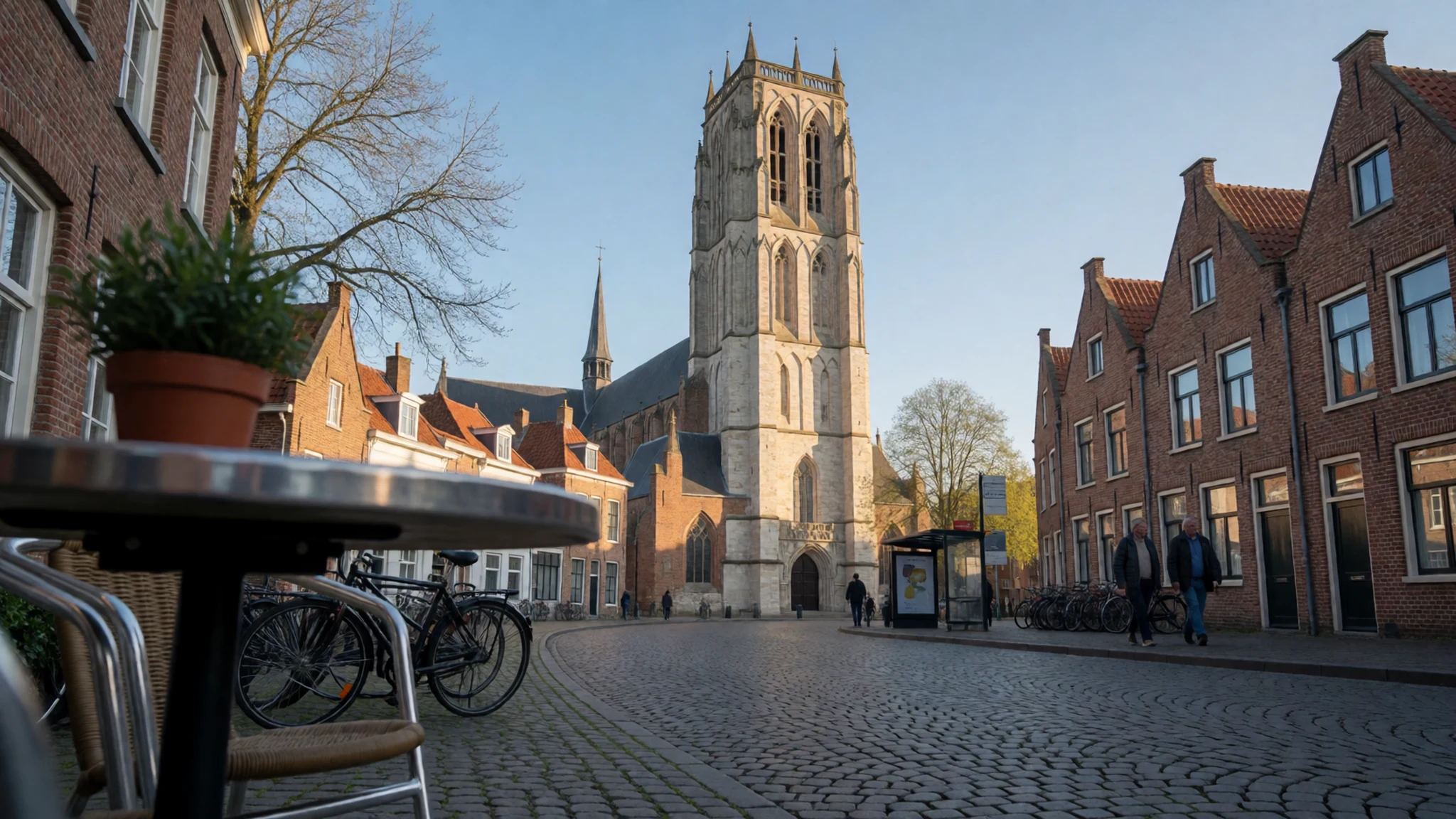
Culture
Hallerbos belongs to everyday Flemish life as much as to tourism. Families, runners and dog walkers use the forest all year, and the bluebell season is treated as a local outing, something people plan a weekend around and photograph for friends and family. The forest sits in Flemish Brabant, so Dutch is the main language on signs and in conversation, while the small part of the woods across the line in Walloon Brabant falls in French-speaking territory. English is usually enough for practical questions, but a greeting in Dutch goes down well. Belgians tend to be reserved in public: quiet voices, patient queuing for buses and orderly use of paths are the norm, and busy weekends in April run more smoothly because most people follow them. The bluebell season has also made photography a large part of the visit, with tripods and professional shoots appearing on the popular stretches. That interest has to be balanced against the health of the flowers, which are more fragile than a thick carpet suggests and recover slowly from trampling. The forest owes its fame to that carpet, and the people who manage it ask visitors to protect it. Stay on the marked paths, never step among the flowers for a photograph, and leave every bloom where it grows.
What to wear
Hallerbos has no costume of its own, and Belgium's traditional dress belongs to festivals and museums more than to daily life. The best-known historic textiles of Flanders are linen and bobbin lace, made from fine linen or cotton thread, and lace still appears in shop windows and craft demonstrations in Flemish towns. Folk costume turns up at processions and carnival days, usually in wool, linen and cotton, and almost always as part of an organised event. In daily life, people around Halle dress practically and quietly: waterproof jackets, jeans or walking trousers, trainers or boots, and layers that cope with changeable weather. On a bluebell weekend the forest also fills with photographers in outdoor gear and families in wellingtons. A visitor should dress for mud and damp rather than for any social code. Waterproof walking shoes or boots matter most, because forest paths can stay wet long after rain. Layers work better than one heavy coat, since spring mornings are cool and afternoons can be warmer, and a light rain jacket is sensible in every season. There are no religious sites in the forest, so no covering of shoulders or knees is needed. Dark or earth-toned clothes hide mud well, and a small waterproof bag keeps a camera or phone dry.
What to eat
- Frites with sauce — A chip stand (frituur) in Halle town
Twice-fried chips served in a paper cone with mayonnaise or another sauce are the default Belgian snack, and they suit the end of a muddy walk. Eat them standing outside, as most locals do, and try a sauce beyond plain mayonnaise.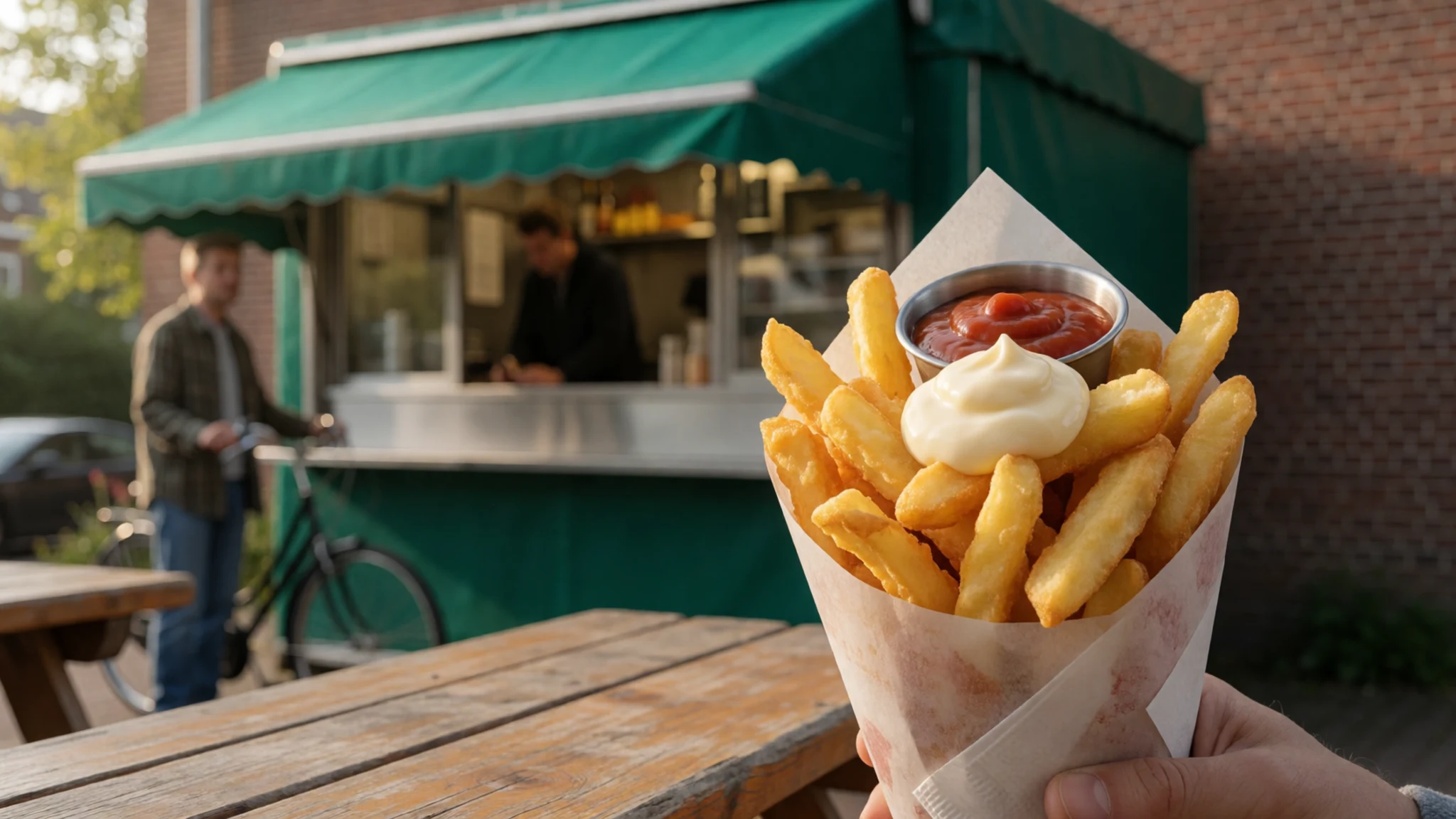
- Belgian waffles — Cafés and bakeries in Halle, plus stalls on busy weekends
Two styles dominate: the light, rectangular Brussels waffle and the denser, sugar-crusted Liège waffle. Both are sold warm and eaten by hand or with a fork, depending on the toppings. They make a fair reward after a cold April morning among the trees.
- Stoemp — Traditional brasseries and café-restaurants in Halle and nearby villages
Stoemp is mashed potato blended with vegetables such as carrot or leek, usually served with a sausage. It is plain, filling food that is easy to find in cooler months and sits well after a long walk in damp weather. - Gueuze and lambic beer — Local cafés in Halle and the Pajottenland villages
The Pajottenland countryside nearby is associated with lambic, a spontaneously fermented beer, and gueuze, its blended and bottled form. The taste is sour and dry, closer to cider than to ordinary lager, and it divides opinion. Ask for a small glass first. - Pistolets with cheese or ham — Bakeries in Halle
Pistolets are small, crusty bread rolls sold across the Brussels region. Filled with cheese or ham, they make a simple picnic for the forest, easy to carry in a pocket or small bag and good for a break on a bench.
Plan it
Best time. Mid-April is the usual peak for the bluebells, but flowering follows the spring weather and can come earlier or later, so check hallerbos.be shortly before going. Late spring brings fresh green leaves and thinner crowds, autumn gives leaf colour, and winter is bare, wet and quiet.
How long. 1
Getting there. Fly to Brussels Airport, then take a train to Brussels and on to Halle railway station; from the station a bus runs to a forest entrance (check the operator's timetable, as weekend and holiday services differ). By car it is a short drive from Halle, but parking is under pressure on bluebell weekends.
Budget. low
Tips
- Go on a weekday morning in bloom season; weekends bring the largest crowds
- Check hallerbos.be before travelling for current visitor information and flowering updates
- Wear waterproof footwear, because paths stay muddy after rain
- Photograph the map at an entrance before setting out and choose a loop that suits the time available
Etiquette
- Stay on the marked paths and never walk into the flowers
- Keep voices low and give other walkers and photographers room
- Take all rubbish away with you
Nearby
Sources
- Wikidata Q1338732 (CC0)
- Wikipedia: Hallerbos (rev 1303015779) (CC BY-SA 4.0)
- Wikivoyage: Flemish Brabant (rev 5108453) (CC BY-SA 4.0)
- Photo: Hallerbos20070421.jpg, David Edgar (CC BY 3.0)
- Photo: Hallerbos Plattegrond.JPG, Torsade de Pointes (CC BY 3.0)
- Photo: Hallerbos2.jpg, Joeykentin (CC BY-SA 4.0)
- Photo: 20081207 Hallerbos - Beersel (0007).jpg, Donar Reiskoffer (CC BY 3.0)
- Photo: Anemones in Hallerbos Belgium.jpg, Sally V (CC BY-SA 4.0)
- Photo: Halle - Hallerbos.jpg, Maaike (CC BY 4.0)
- Photo: Hallerbos (DSC 2258).jpg, Trougnouf (Benoit Brummer) (CC BY 4.0)
- Photo: Hallerbos.JPG, Ines.saraiva (CC BY 3.0)


