Lepakshi
Lepakshi, India
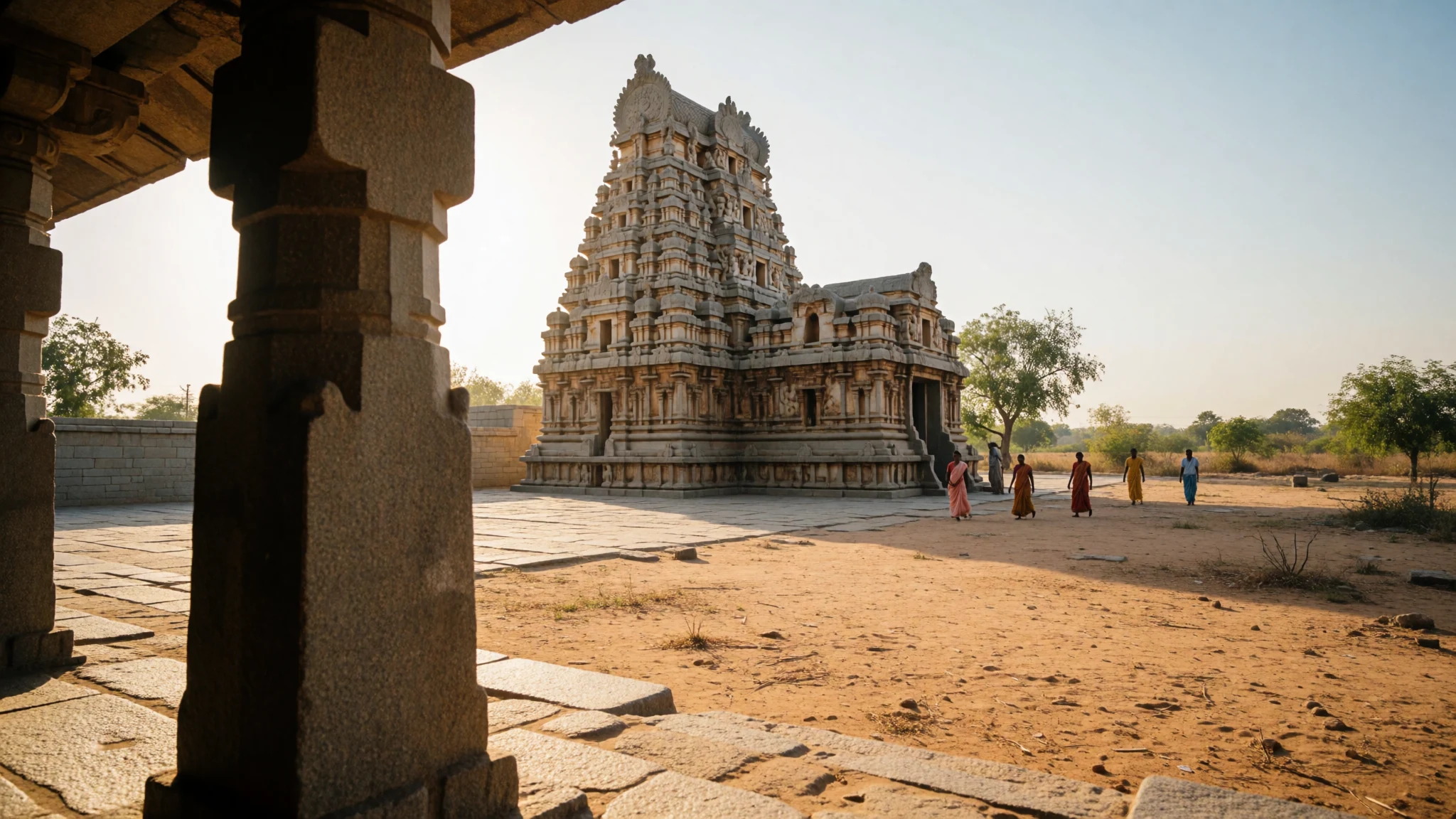
Lepakshi is a quiet Andhra village where a granite temple holds carved pillars, faded ceiling murals and a huge stone bull.
The place
Lepakshi is a village in Sri Sathya Sai district, Andhra Pradesh, with a population of 10,042 and one reason most travellers have heard of it: the Veerabhadra Temple. It sits about 15 km east of Hindupur and roughly 120 km north of Bangalore, in dry, rocky country where granite boulders break up the flat farmland. The temple is built into that landscape, on a low rocky rise, and the village around it is quiet, agricultural and unhurried. Most visitors come as a day trip from Bangalore or as a stop on the road between Karnataka and Andhra Pradesh, and the place rarely feels crowded outside festival days and weekends. The temple is the draw because it combines carved granite pillars, painted ceilings and large stone sculptures in the grounds and just outside them. Telugu is the language of daily life, and the culture is Dravidian, closer in feel to Karnataka and Tamil Nadu than to northern India. Expect heat for much of the year, little shade on the open stone, and a modest cluster of tea stalls and handicraft shops near the entrance. Facilities are basic, and larger towns such as Hindupur have more choice of eateries and places to stay. A visit takes a few hours, though the carving rewards slow looking.
Its story
Lepakshi's story is tied to the Vijayanagara Empire, which ruled much of southern India and counted Krishnadevaraya among its notable kings. Nearby Penukonda served as a summer capital, and the Veerabhadra Temple belongs to that world of royal patronage, when granite temples, forts and tanks rose across the dry Deccan plateau. Local tradition credits a royal officer named Virupanna with building it. The tale says he drew on the treasury to pay for the work, was accused of misuse, and blinded himself in protest before the king could act; dark marks on a wall are still pointed out as evidence. Historians treat such details with caution, but the story is part of how the village remembers its temple, and it is often offered as the reason one hall was left unfinished. A second tradition explains the name. In the Ramayana, the vulture-king Jatayu fell wounded here while trying to save Sita from Ravana, and Rama is said to have told the bird to rise, 'le pakshi' in Telugu. A rock outcrop with a large bird sculpture now marks the spot. After Vijayanagara fell, the Qutb Shahi dynasty of Golconda held most of the Andhra region, and the temple passed into a quieter life as a place of local worship, which it remains.
What to see
- Veerabhadra Temple — Lepakshi village
The Veerabhadra Temple is the reason to come. Its granite halls stand on a low rocky rise, with pillars carved from base to capital with dancers, musicians, deities and floral work. Guides point out a pillar said to hang just clear of the floor, and visitors test it by passing a thin cloth beneath. Allow time for the outer walls too.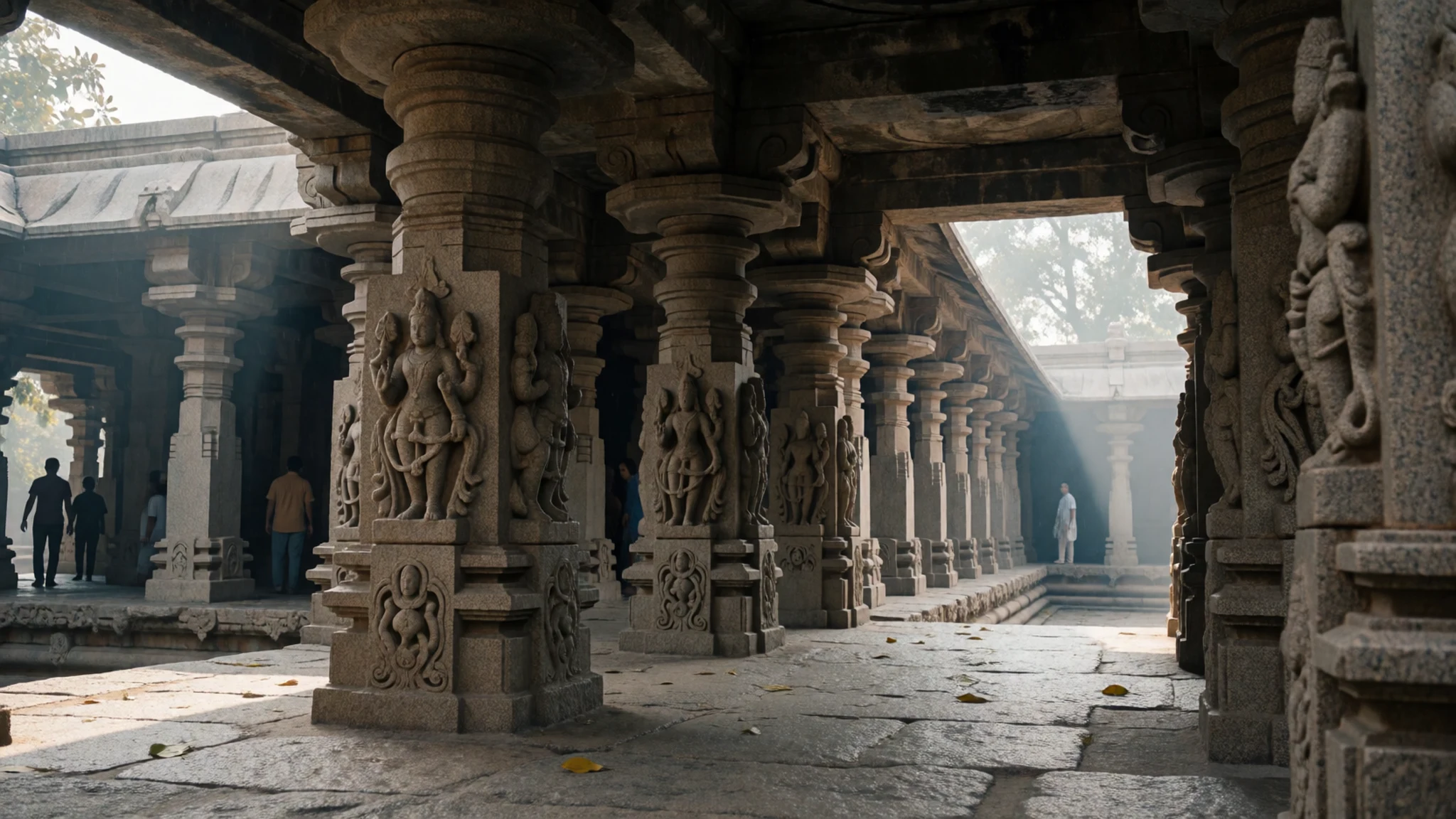
- The painted ceilings — Inside the Veerabhadra Temple
Inside the temple, the ceilings of the main hall carry large murals in earthy reds, blacks and ochres, showing gods, royal figures and scenes from the epics. Many have faded and the light is dim, so a phone torch helps. The paintings matter as much as the carving, so look up as well as around.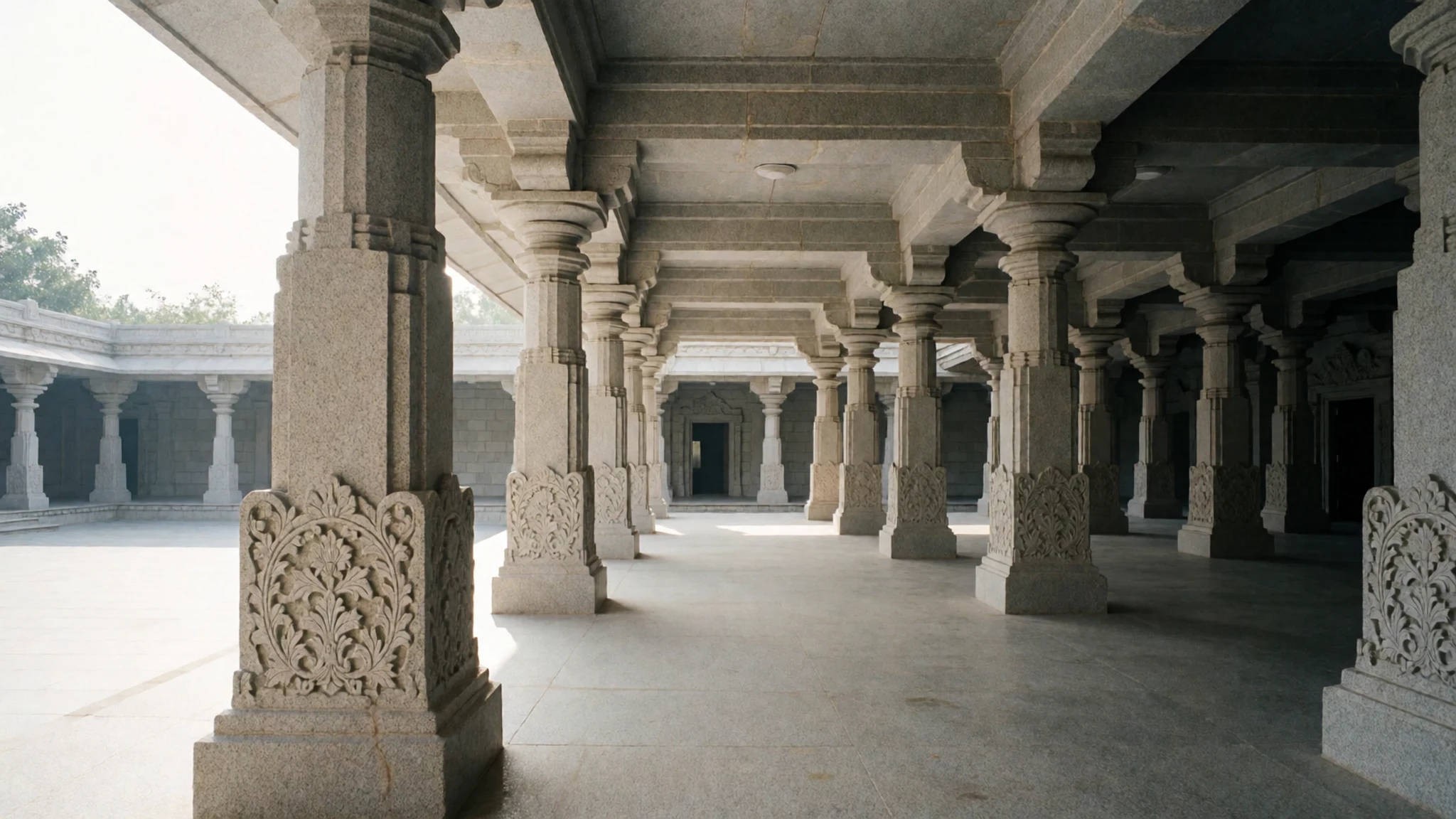
- Kalyana Mantapa — Temple grounds
The Kalyana Mantapa, or wedding hall, is an open pavilion of slender carved pillars that was never completed, which is why some of its stonework looks abruptly unfinished. Local accounts tie the stoppage to the Virupanna story. The carvings include deities and attendants, and the hall photographs well in low morning light, before the stone heats up.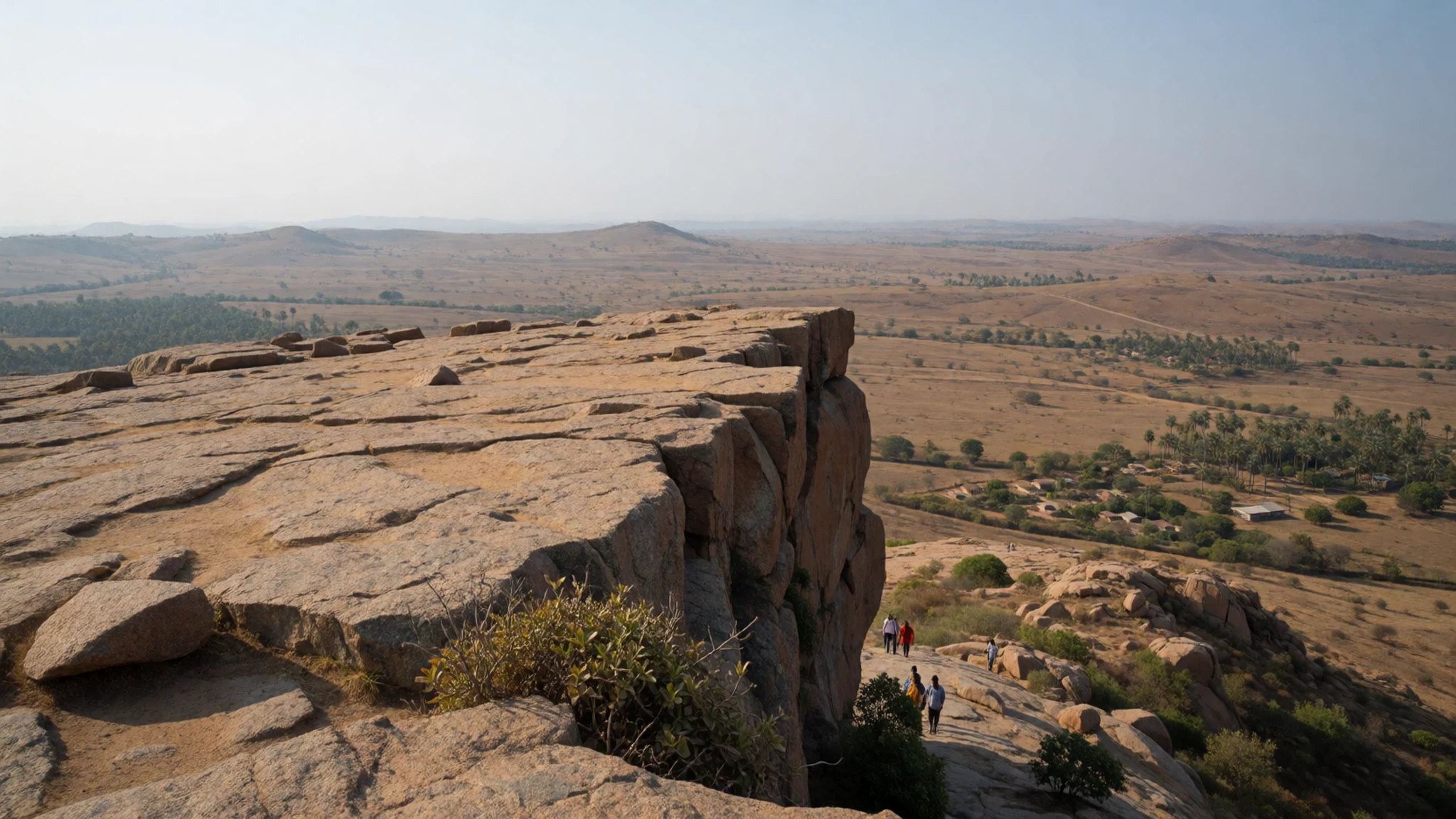
- The monolithic Nandi — Just outside the temple
A large Nandi, the bull that faces Shiva shrines, rests on open ground a short walk from the temple. It is carved from a single granite boulder and shown with sculpted garlands and bells. The scale is striking in person, and the setting is calm, with few stalls and little traffic, so a pause here is worthwhile.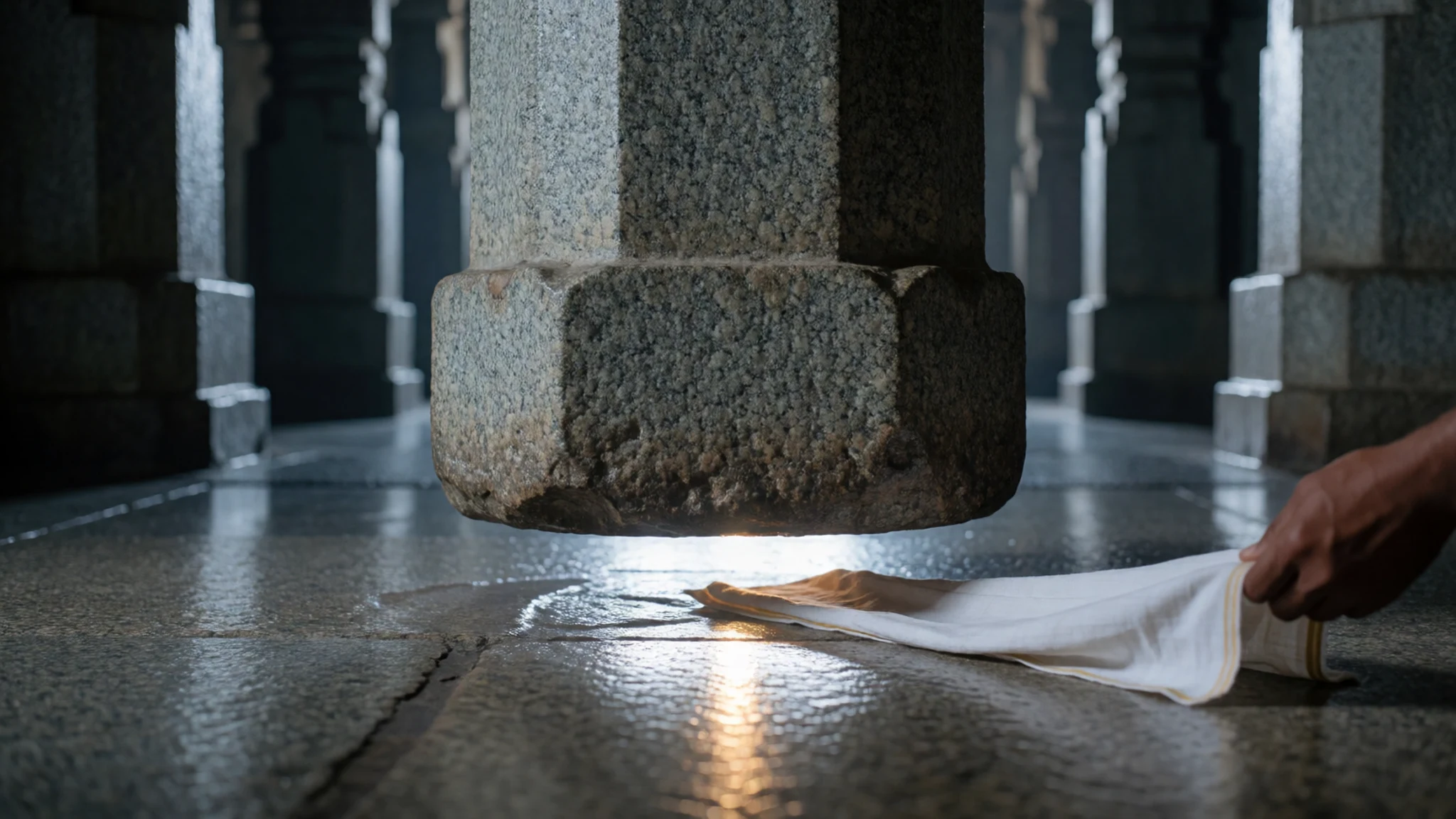
- Jatayu Rock — Edge of Lepakshi village
Jatayu Rock is a rocky outcrop linked to the Ramayana tale of the wounded vulture-king, topped by a large bird sculpture. The bird itself looks recent, and the place is more about legend and views over the plain than ancient art. It is a short stop, best at the end of the day when the light softens.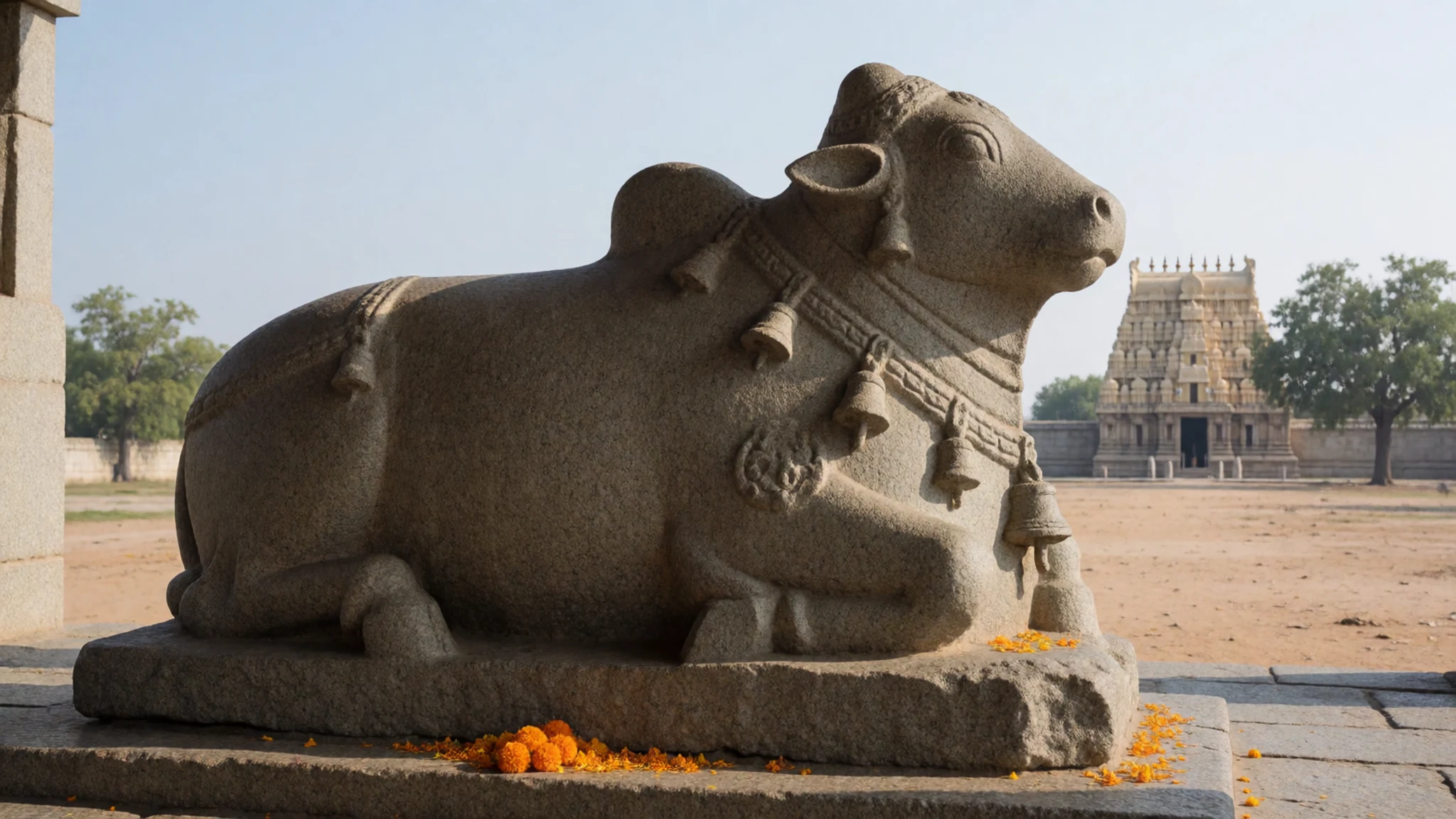
Culture
Lepakshi's culture is Telugu and Dravidian, shaped by Vijayanagara-era temple life and by the farming families around the village. Veerabhadra is a fierce form of Shiva, and the temple remains an active place of worship, so priests, local families and pilgrims moving through the halls take precedence over sightseers. Telugu names usually run family name first, then given name, with an optional caste title at the end, so Kasu Brahmananda Reddy is addressed as Brahmananda, or as Reddy if the title is known. Handicraft sellers near the entrance offer small wooden and stone items and hand-woven cloth, and a polite refusal with a smile is normal and well received. Festival days bring families from nearby villages, with music, offerings and queues at the shrine, and the quiet of an ordinary morning disappears. Local guides tell the Virupanna and Jatayu stories on site, and they are worth hearing as living tradition rather than settled history. In the main hall voices carry, and worship goes on beside the visitors, so a low tone and unhurried pace are the norm. Leave shoes at the stand outside the temple entrance, cover shoulders and knees, and ask before photographing priests or worshippers.
What to wear
Around Lepakshi, traditional dress follows the wider Telugu and Rayalaseema pattern. Women wear the sari, often in handloom cotton for daily use and in silk with wide contrasting borders for weddings and festivals; Dharmavaram, in the same district, is known for its silk saris, and Pochampally ikat and Mangalagiri cotton are also familiar Andhra textiles. Men's traditional wear is the panche, a cotton or silk dhoti, usually with an angavastram draped over the shoulder at ceremonies and temple visits. Day to day, people dress more simply. Many women wear saris or salwar kameez, younger people favour jeans and T-shirts, and men wear shirts with trousers, or a lungi, a wrapped cotton cloth, at home and in the fields. Visitors should dress for heat and for a working temple, and light, loose cotton that covers shoulders and knees suits both. The temple floor is granite that heats up fast under the sun, so go early, wear sandals or shoes that slip off easily, and carry thin socks in case the stone is hot. A hat, sunglasses and sunscreen help in the open courtyards. Women may like a salwar kameez or a long skirt with a scarf; men are fine in long trousers and a sleeved shirt.
What to eat
- Idli with sambar — Tiffin stalls and small breakfast eateries in Hindupur
Idli are soft steamed rice-and-lentil cakes, eaten at breakfast with sambar or chutney. Many tiffin stalls add a dusting of kaarampodi, a dry chilli powder, with oil. They are mild, filling and a safe start to a long day of temple walking.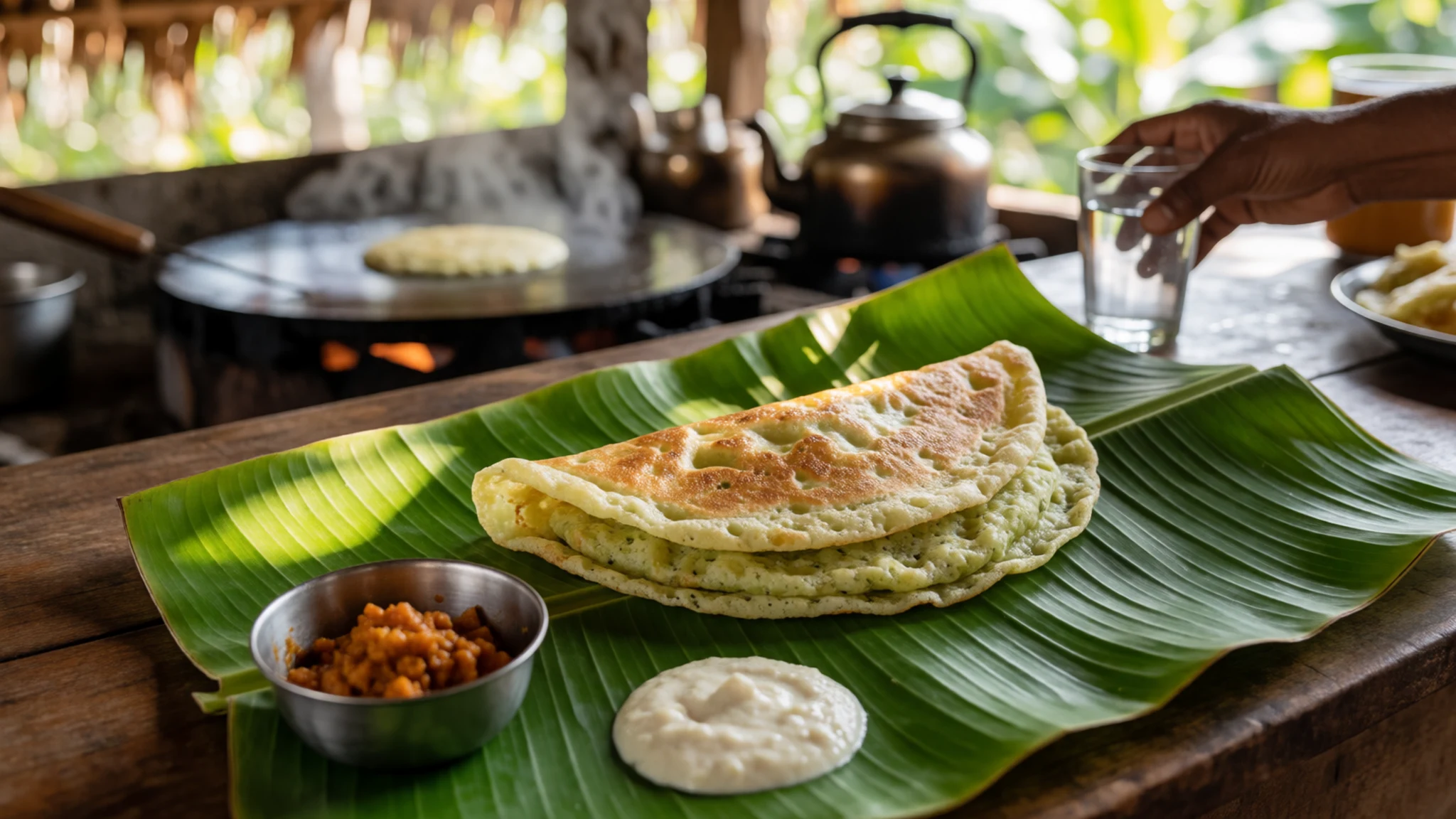
- Pesarattu — Small breakfast eateries in Hindupur and roadside tiffin stalls
Pesarattu is a thin, crisp pancake made from green gram (moong) batter, a speciality of Andhra kitchens. It is usually eaten at breakfast with a sharp ginger chutney, and sometimes stuffed with spiced upma or onions.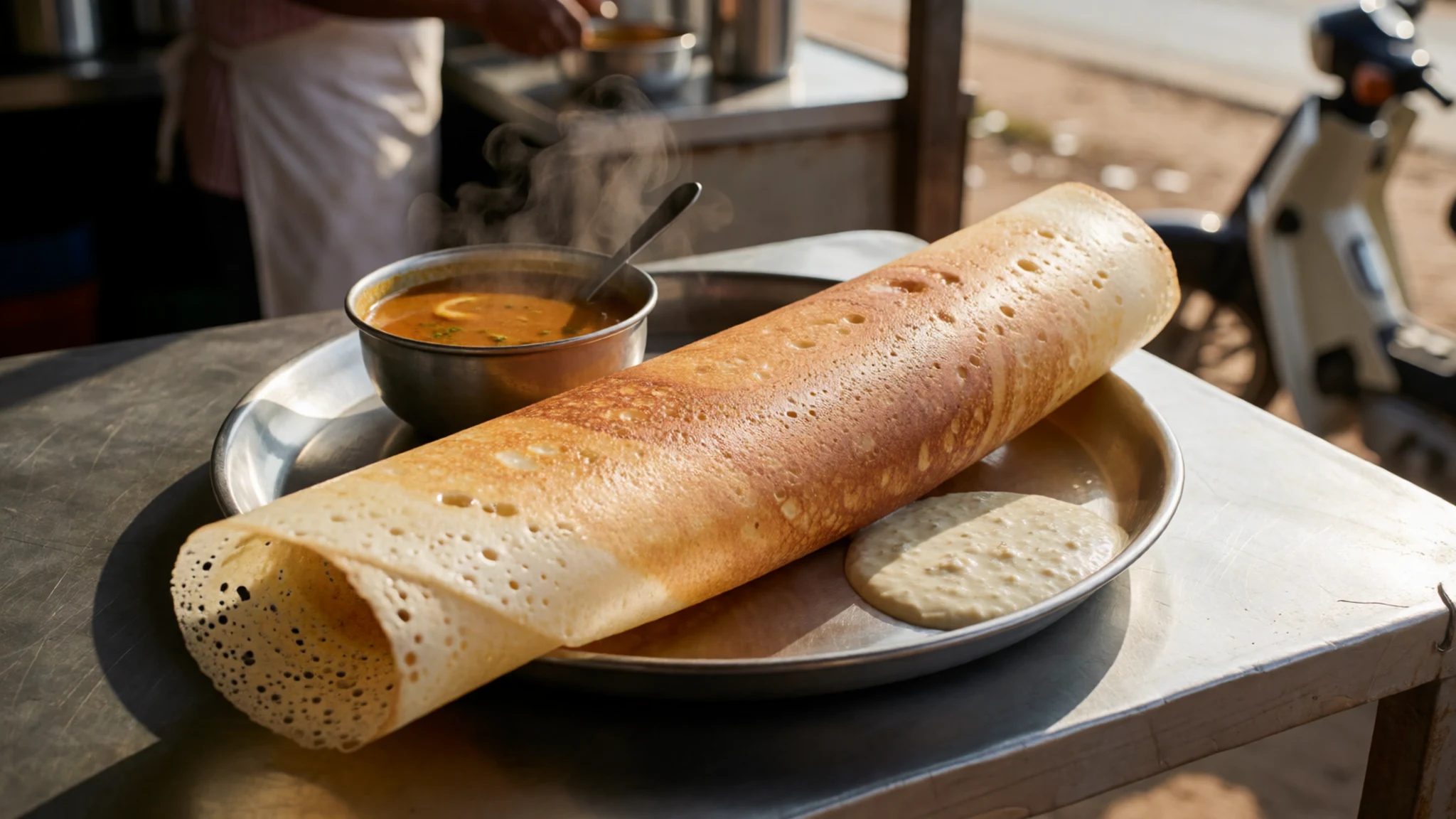
- Andhra meals — Local meal eateries along the main road in Hindupur
A full Andhra meal arrives on one plate or banana leaf: rice at the centre, with dal, a vegetable or meat curry, pickle, papad, and curd or buttermilk to finish. Chilli runs high, so ask for less spice if unsure. - Vada — Tea stalls and tiffin counters near bus stops
Vada are savoury, deep-fried rings or discs of ground lentil batter, crisp outside and soft within. They are a standard breakfast and tea-time snack, served hot with sambar or chutney. Fresh from the pan is best, so buy from stalls with a queue. - Andhra dosa — Tiffin eateries in Hindupur
Andhra dosas lean towards heat and crunch: thin rice-and-lentil crepes served with chutney and sambar, often fiery next to versions from neighbouring states. Plain, onion and masala types are common. They suit a quick lunch between sights. - Majjiga — Meal eateries and roadside stalls on the Hindupur road
Majjiga is thin, salted buttermilk, often seasoned with green chilli, curry leaf and ginger. It cools the mouth after a spicy meal and is served at the end of meals or sold in glasses by roadside stalls in hot weather.
Plan it
Best time. October to February, when days are cooler and the stone underfoot is easier to bear; March to May is very hot, so avoid afternoons, and the monsoon months bring humidity and some rain.
How long. 1
Getting there. Bengaluru's international airport is the usual gateway, then about 120 km by road north towards Hindupur. Hindupur has a railway station and is about 15 km west of Lepakshi; a taxi, auto-rickshaw or local bus covers the last stretch.
Budget. low
Tips
- Arrive early in the morning, before the granite heats up and before tour groups from Bangalore
- Carry a torch or a phone light to see the ceiling murals properly
- Bring water, a hat and some cash for small stalls and tea
- Check locally for opening times and any camera fee, as these can change
- Plan meals in Hindupur, where there is more choice than in the village
Etiquette
- Remove shoes at the temple entrance and keep voices low inside the halls
- Dress modestly, with shoulders and knees covered
- Ask before photographing worshippers, priests or families
Nearby
Sources
- Wikidata Q2350184 (CC0)
- Wikipedia: Lepakshi (rev 1381658356) (CC BY-SA 4.0)
- Wikivoyage: Andhra Pradesh (rev 5408407) (CC BY-SA 4.0)
- Photo: Kalyan Mantap, Rajesh Dangi (CC BY 3.0)
- Photo: Front side of Veerabhadra Temple, Bikashrd (CC BY-SA 4.0)
- Photo: AP Lepakshi Veerabhadra Temple, Nagesh Kamath (CC BY-SA 2.0)
- Photo: Assava, Skasturee (CC BY-SA 4.0)
- Photo: Carving on Granite, Skasturee (CC BY-SA 4.0)
- Photo: Eagle at Lepakshi, S7256042 (CC BY-SA 4.0)
- Photo: Eagle Jatayu, Ramya srivastav (CC BY-SA 4.0)
- Photo: Garuda Lepakshi, Shyamal (CC BY 3.0)


