Lanzhou
Lanzhou, People's Republic of China
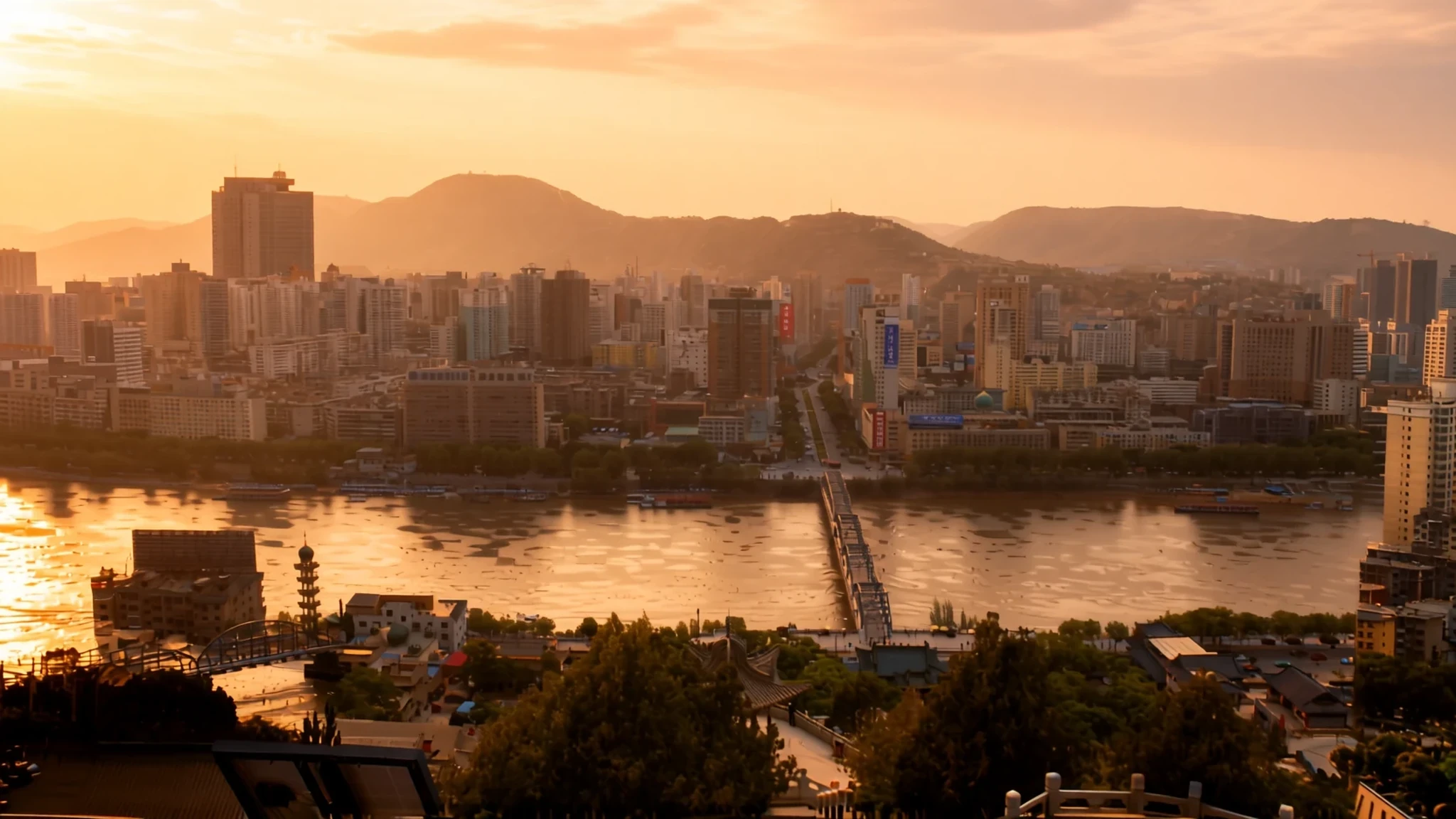
Lanzhou is a Yellow River city of bridges, mosques and hand-pulled noodles, a working Silk Road crossing that rewards a short, unhurried stop.
The place
Lanzhou is the capital of Gansu province in north-western China, home to about 4.4 million people at an elevation of 1,572 metres. It is a long, narrow city. The Yellow River runs west to east through a valley, and the urban area stretches along the banks with dry hills close on either side. That shape explains a lot: traffic funnels along a few main roads, the riverfront is where people walk, exercise and gather, and the hills give the best views over the whole strip.
The city is not a polished tourist destination, and it is better for that. It is an industrial and academic centre, with several universities and research institutes, and a major rail junction linking the eastern half of the country with the far west. Many visitors pass through on the way to Xining, Jiayuguan or Urumqi, which is a pity, because a day or two here shows a side of China that the coastal cities do not.
Expect a mix of communities. Han, Hui and Tibetan cultures all leave a mark, so mosques, Buddhist temples and noodle shops run by Hui families sit within a short ride of one another. The air can be hazy and the valley feels dry, particularly outside summer. Winters are cold and summers warm, so spring and autumn are kinder. Lanzhou is a city to eat in, cross bridges in, and watch the river from; it is less about ticking off monuments and more about spending an easy day among people who are going about their own business.
Its story
Lanzhou's story is the story of a river crossing. The Yellow River is wide and fast here, and anyone moving between central China and the western lands had to deal with it. That made the site valuable long before the modern city. By the 6th century BC the area belonged to the state of Qin, and in 81 BC the Han dynasty took it from the Xiongnu, known in English as the Huns, and set up a commandery called Jincheng, meaning Golden City.
From then on the place sat on the Northern Silk Road. Caravans, soldiers and monks passed through, and the Great Wall was extended west to protect the route. Fragments of the wall survive even inside today's built-up area. After the Han fell, Lanzhou became the capital of a series of short-lived tribal states, and for a time in the 4th century it was the seat of an independent state called Liang.
Between the 5th and 11th centuries the wider Gansu region became a centre of Buddhist study, with cave temples and travelling scholars. The Sui dynasty gave the city its name as a prefecture seat in the years after 581, and the Tang kept it. In 763 Tibetan forces overran the area, and the Tang took it back in 843. That back-and-forth is typical of a frontier town. The city kept changing hands and cultures, and that layered past still shows in who lives here and what they eat.
What to see
- Zhongshan Bridge — Riverfront, city centre
This iron truss bridge is the city's best-known crossing of the Yellow River. It is sturdy rather than pretty, built to stand up to a heavy, muddy current. Walk across it at dusk, then follow the riverside paths where locals stroll, fish and play cards. Good for understanding why the city sits here.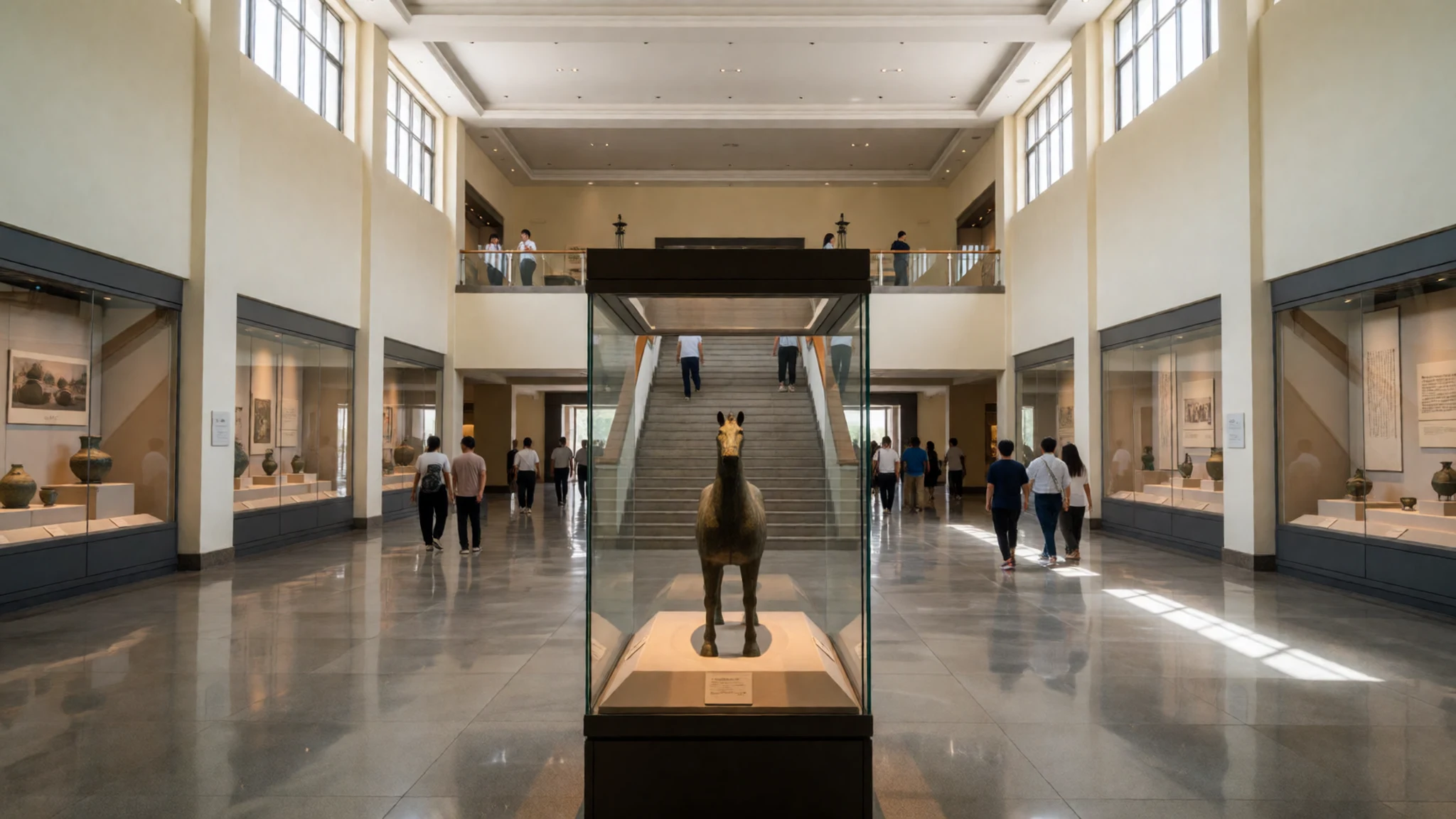
- Gansu Provincial Museum — Western districts
The museum is the place to understand the Silk Road in Gansu, with historic displays on the upper floors and natural history alongside. Allow a couple of hours and check the official site for opening arrangements and any entry requirements before you go, as these can change.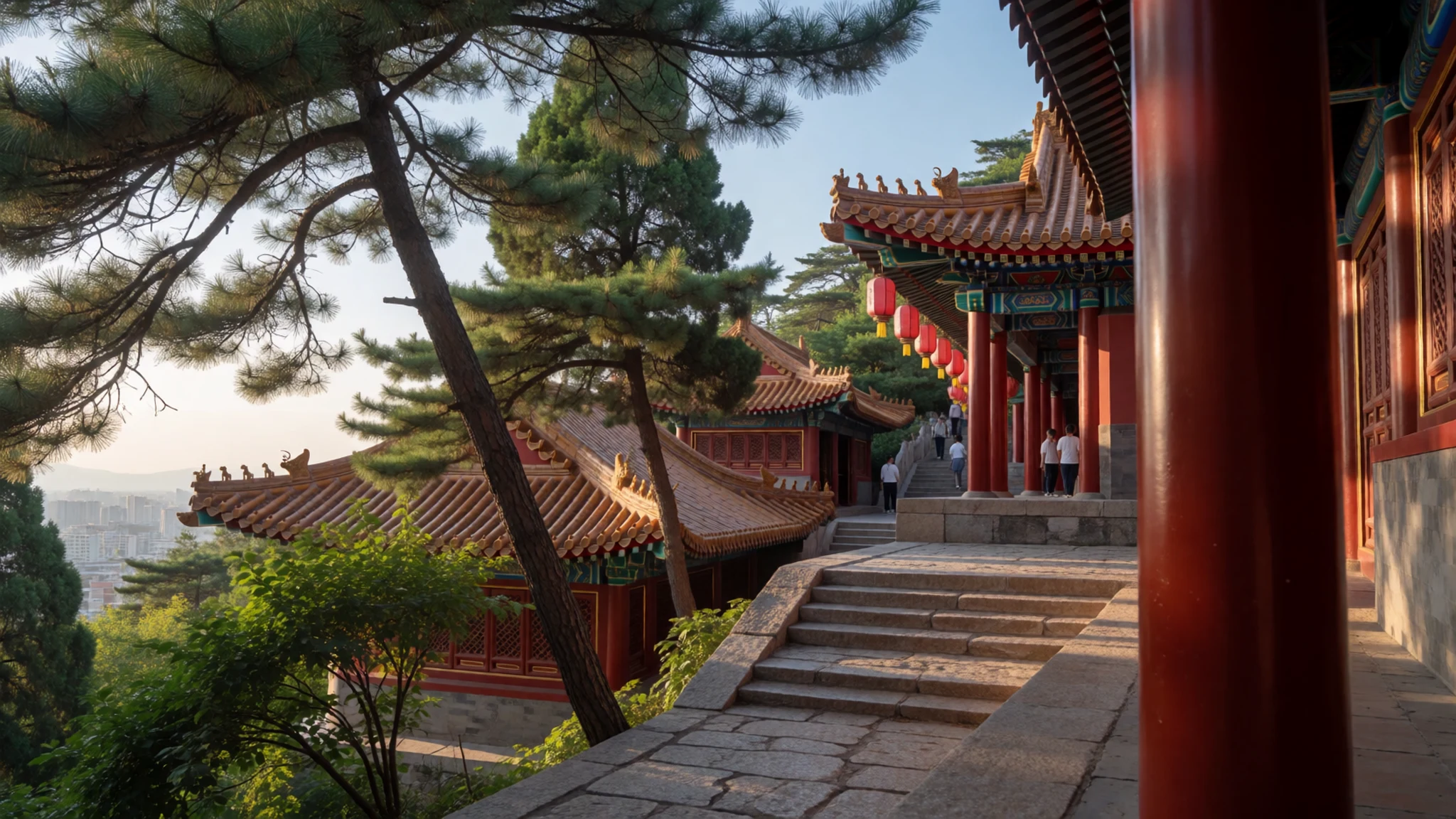
- Sculptures of the Mother River — Yellow River bank
A stone sculpture by the artist He E shows a reclining mother with her child, a tribute to the Yellow River as the cradle of Chinese civilisation. It sits on the riverbank and is a pleasant, free stop on a longer walk along the water, particularly in the evening when families come out.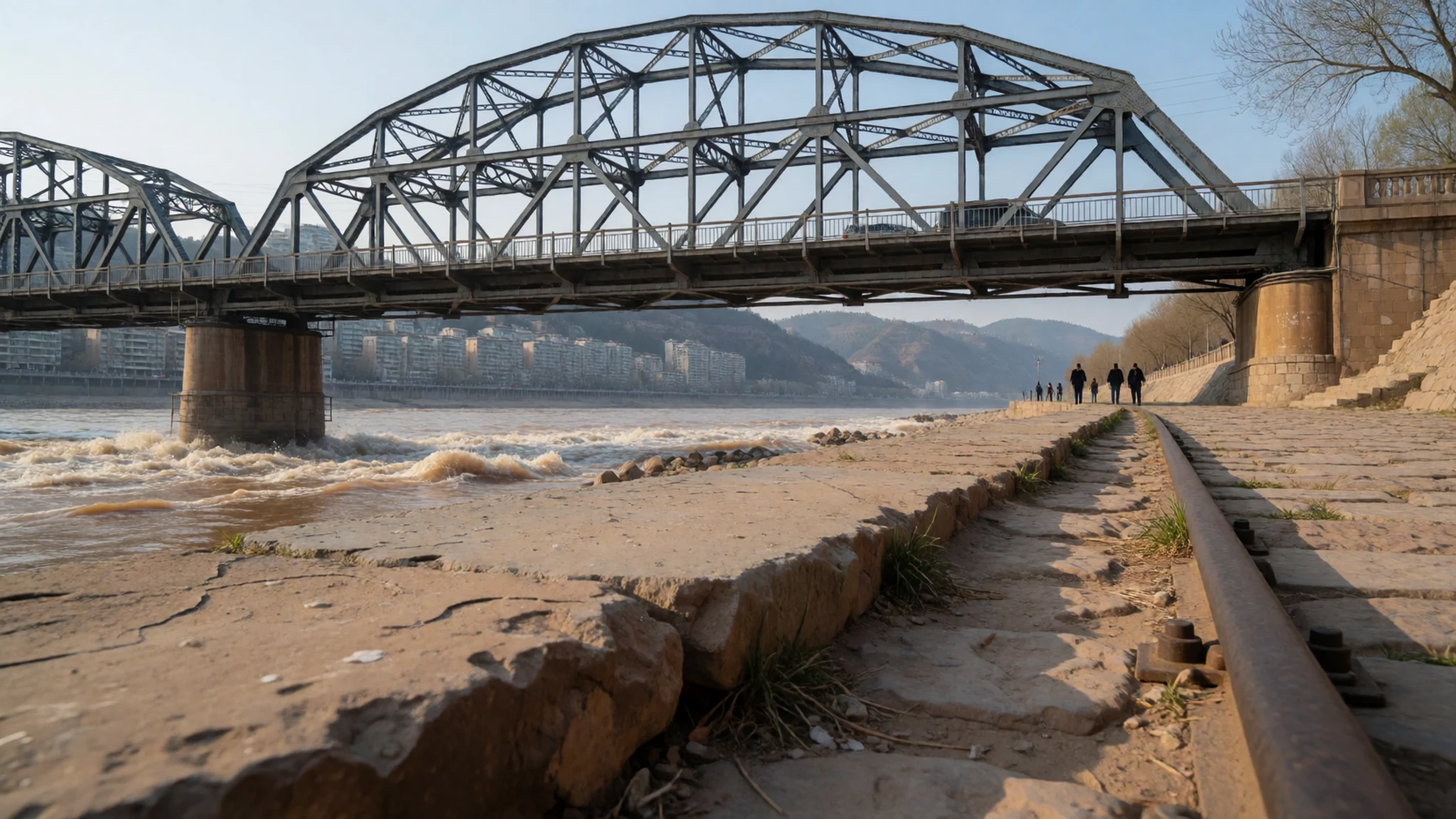
- Five-Spring Mountain — South of the centre
A hillside park with renovated temples, small pavilions and a somewhat tired amusement area. It is worth the climb for the shaded courtyards and the view down over the city. Go on a weekday morning, and treat it as a gentle walk rather than a major sight.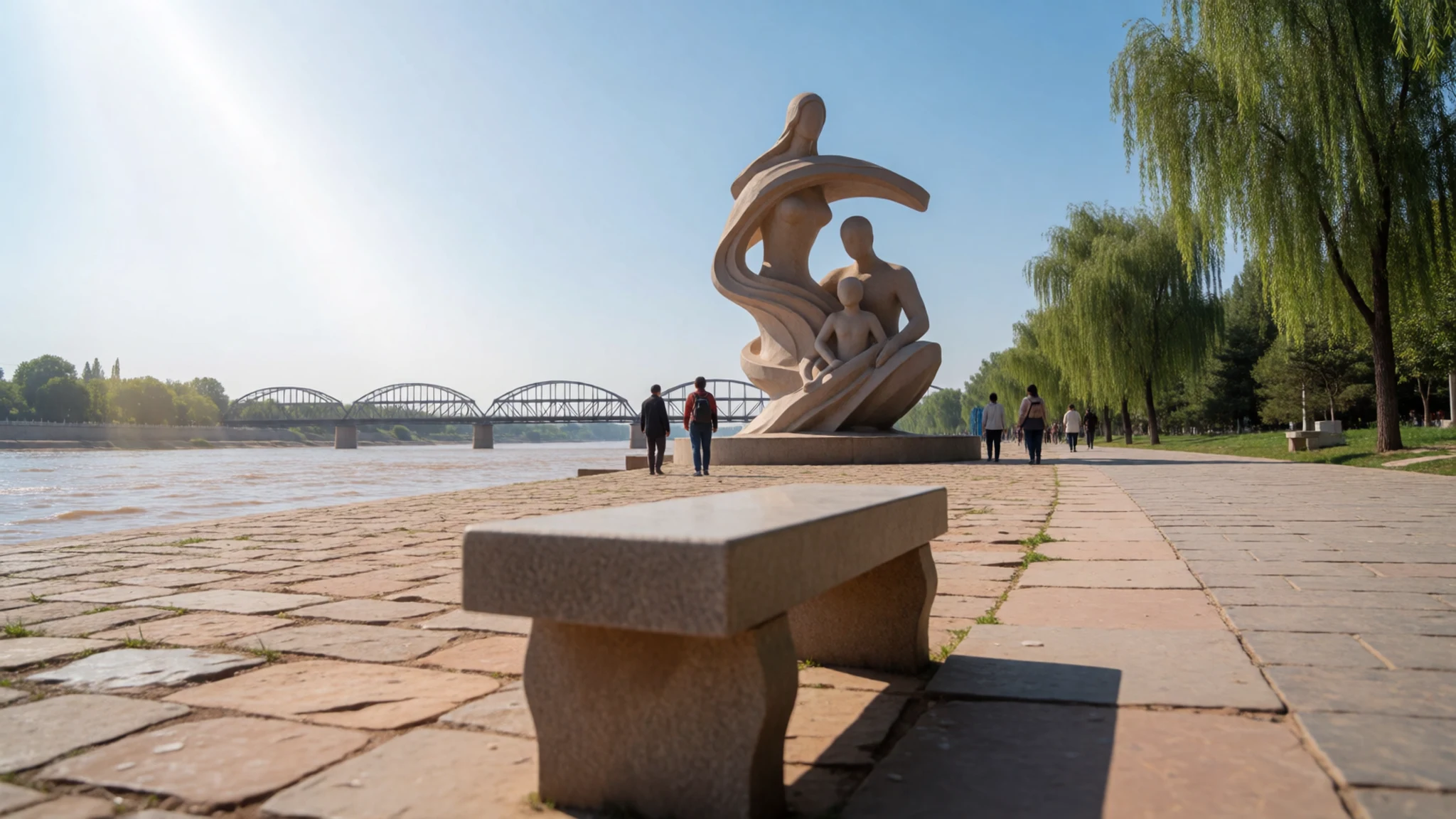
- Tianxu Sand Palace Geopark — Anning District, outskirts
A landscape of red sandstone carved by long weathering, in a gorge on the city's outskirts. It feels far from the traffic and offers a different side of the region. Allow time for the transfer from the centre, and bring water and a hat.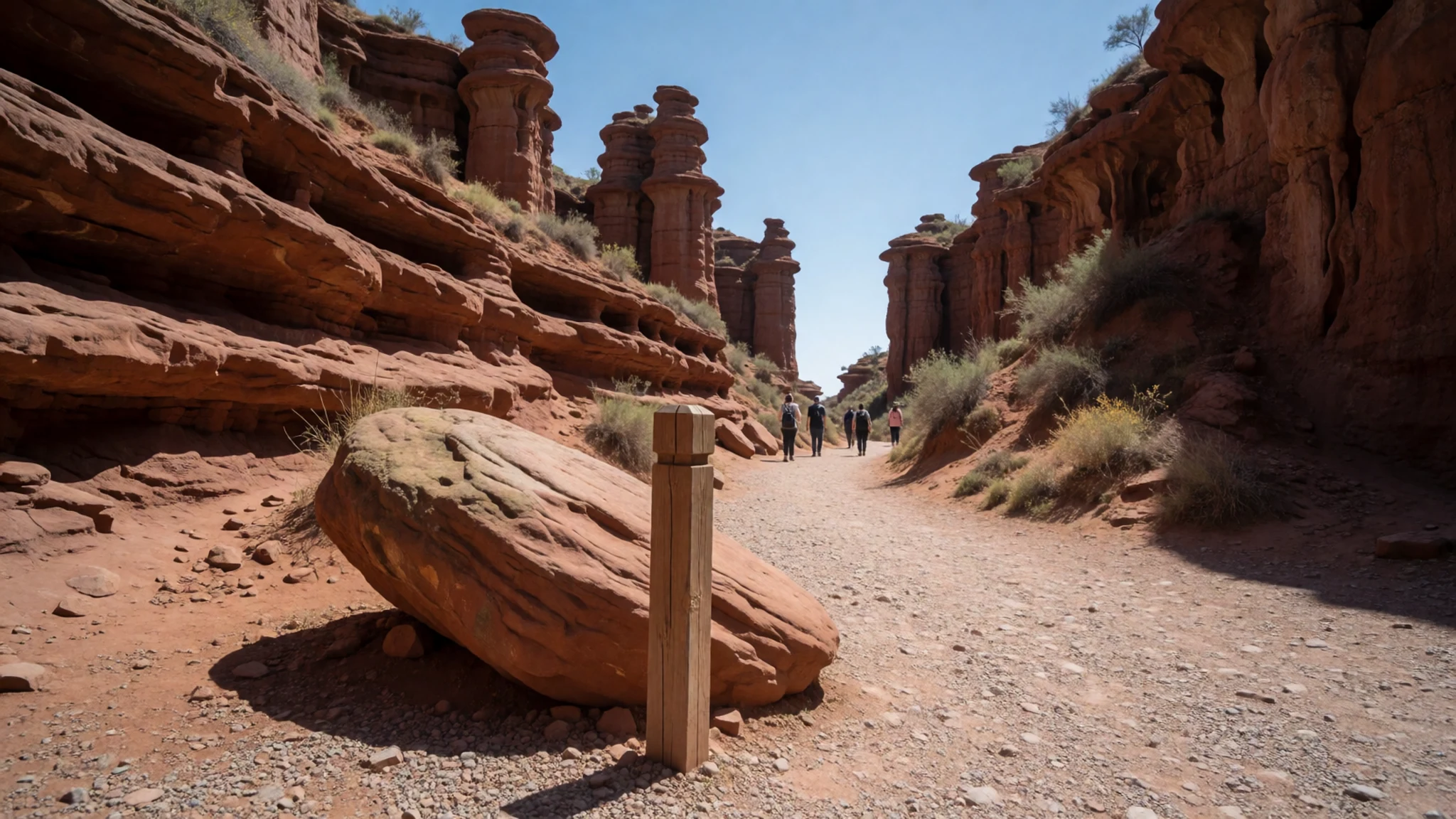
- Xiguan Mosque — Western old town
Lanzhou has a large Hui community, and its mosques are part of daily life. Xiguan Mosque is a good place to see this from the outside, with its distinctive roofline. Non-Muslim visitors should check whether entry is welcome and dress modestly.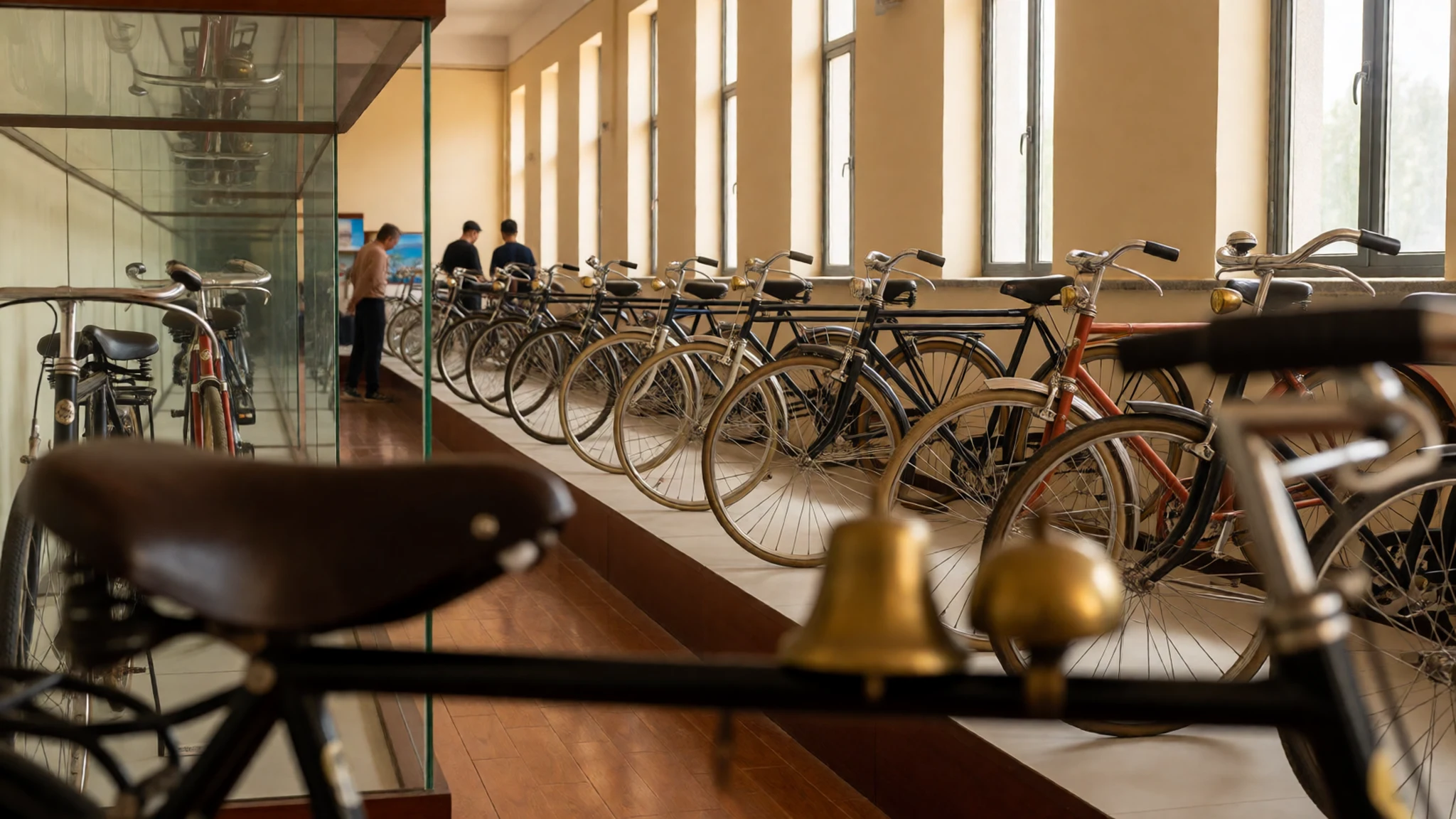
Culture
Lanzhou is the cultural centre of Gansu, and its character comes from several communities living side by side. The three most prominent are the Han, the Hui and the Tibetans, known locally as Zang. Mosques, Buddhist temples and Han neighbourhood life overlap, and it is common to see a halal noodle shop a short walk from a temple courtyard.
Local performing arts are worth knowing about even if you do not see a show. Gansu-style Qinqiang opera is a folk form, more impassioned and higher-pitched than its cousin in neighbouring Shaanxi, with stunts that include whip tricks and fire-spraying. Lanzhou Guzi, a drum narrative performed in the local dialect and drawing on historical tales and folklore, is recognised as national intangible cultural heritage.
Food is the most visible cultural thread. Beef noodles are central to the city's identity, with over a thousand shops, and many are run by Hui families who observe halal practice. That shapes daily rhythms: pork is absent from much of the local cooking, and many eateries close or quieten during prayer times and festivals.
Social life tends to happen outdoors, along the river, in parks and at night markets. People are generally friendly but not used to many foreign visitors, so a smile and a little patience with the language go a long way. Learning a few Mandarin phrases and having a translation app ready helps considerably in smaller places.
In mosques and Hui neighbourhoods, dress modestly, cover shoulders and knees, and ask before photographing worshippers or entering a prayer hall.
What to wear
Traditional dress in Lanzhou depends on community. Among the Hui, many men wear a white or black brimless cap and many women wear a headscarf, often in plain or muted colours, especially at the mosque or on Fridays. Tibetan communities in the wider region wear the chuba, a long wool robe, usually on festival days and in rural areas rather than in the city. Han festival dress is occasional and mostly tied to performances and weddings.
Day to day, Lanzhou dresses like most Chinese cities of its size: jeans, shirts, trainers, light jackets and puffer coats in winter. Students from the universities set a casual tone. In summer people wear lighter, practical clothes, though the climate is dry and the sun strong, so many cover up against it with hats or parasols. Workers in the noodle shops wear white caps and aprons, and you will see Hui cooks and servers in them throughout the city.
For a visitor, think in layers. Spring and autumn days can be warm while mornings and evenings are cool, and winters are properly cold. Summer needs sun protection and a hat. Comfortable walking shoes matter, since the riverfront paths are long and the hill parks involve steps. Carry a light scarf or shawl; it works for mosques, for sun and for air conditioning. Modest cuts, with covered shoulders and knees, are sensible at religious sites and in Hui neighbourhoods, and a small cover-up is easy to pack.
What to eat
- Lanzhou beef noodles (niurou lamian) — Any noodle shop, especially at breakfast time
The city's signature: hand-pulled noodles in a clear, spicy beef broth with chilli oil, slices of beef and herbs. The noodles are made fresh, and you can often choose the thickness. It is a Hui speciality, so a good halal option.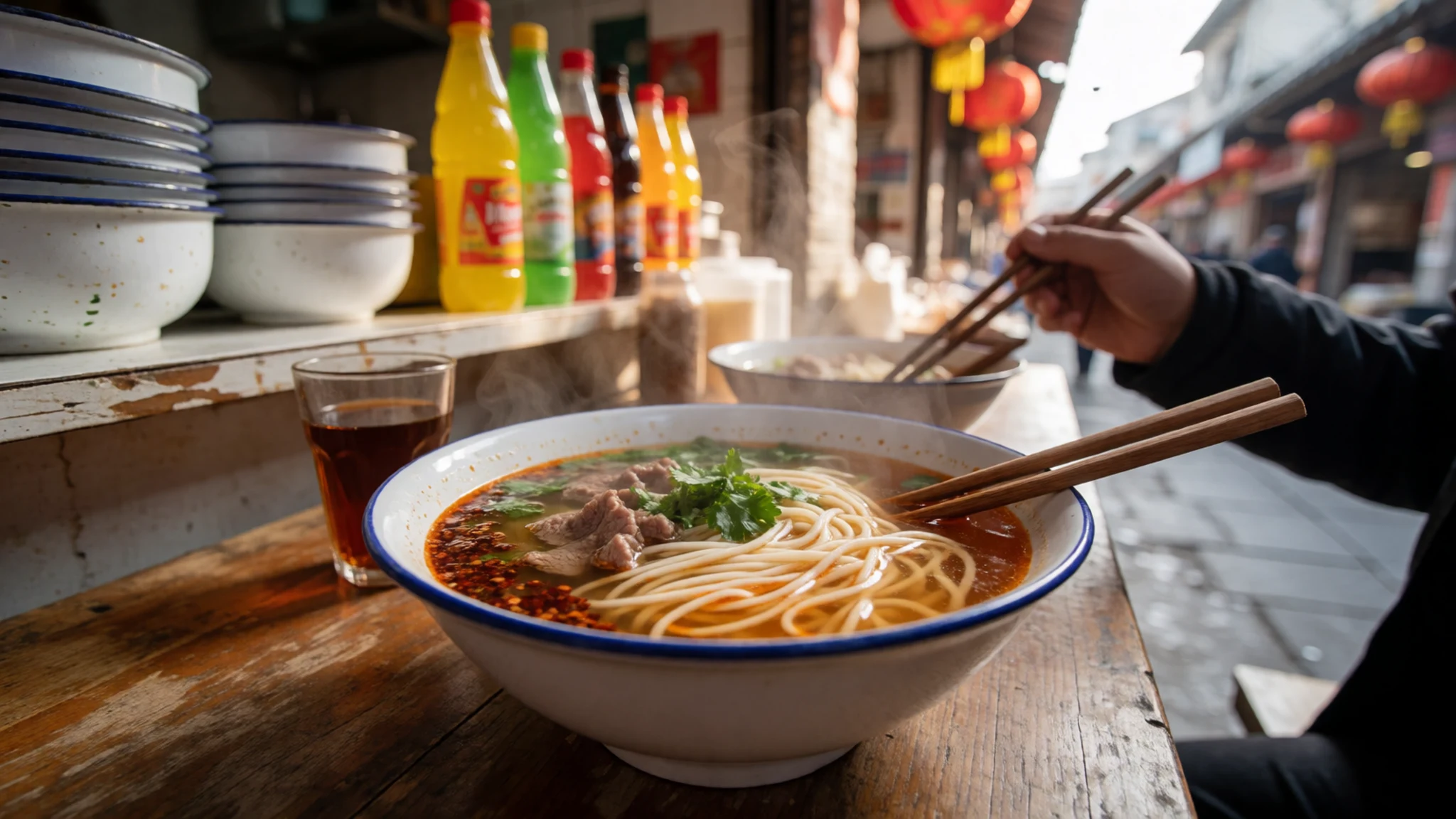
- Beef broth without meat — Small neighbourhood noodle shops
A cheaper bowl usually comes with broth and noodles but no sliced beef, which you pay extra for. It is a common way to eat here and a sensible, light option if you want more than one stop.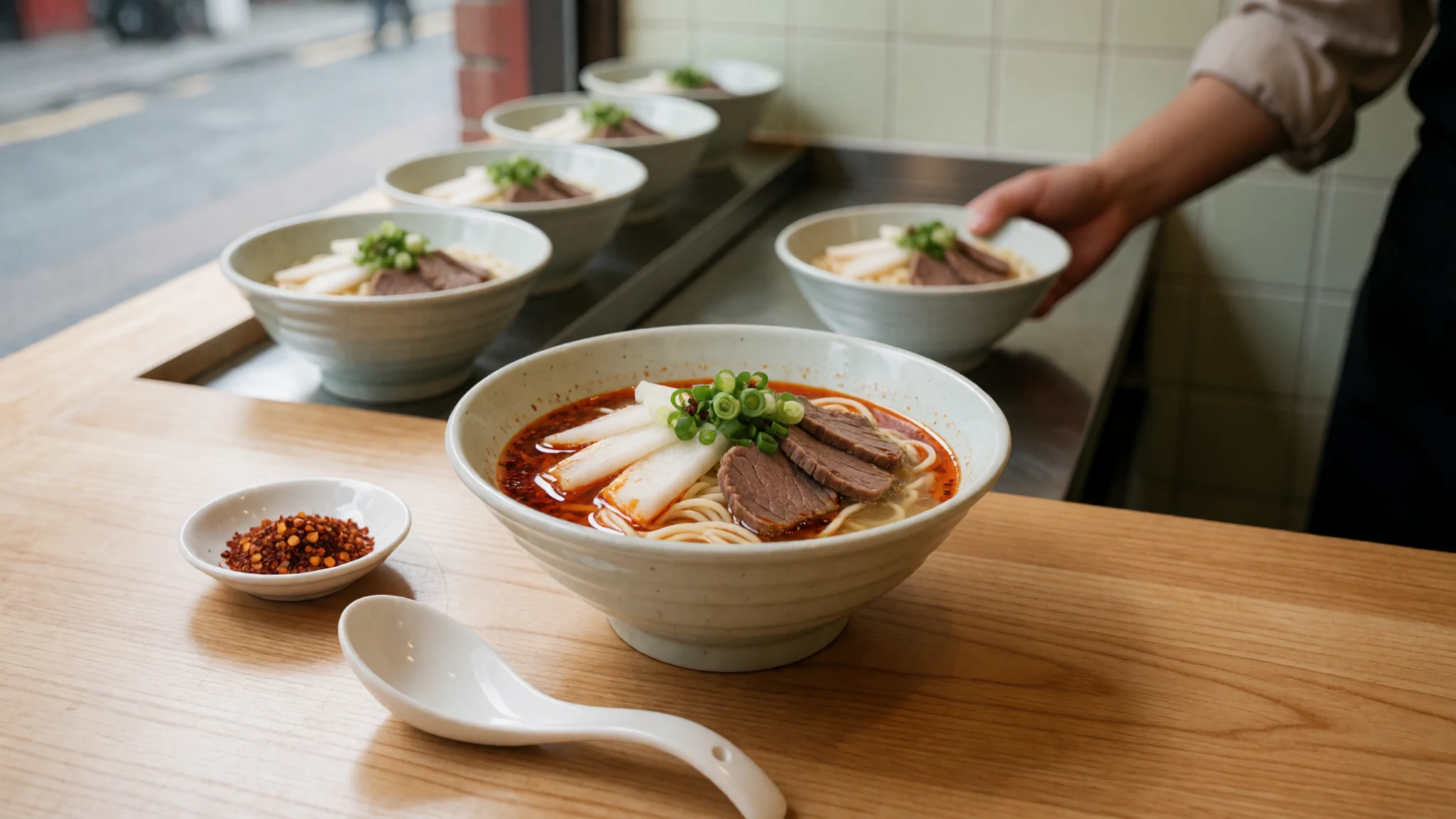
- Night-market skewers and snacks — Zheng Ning Road night market
Evening is when stalls fill the streets with grilled skewers, flatbreads, sweet snacks and cold drinks. It is a relaxed, sociable way to eat, and the best place to try a little of everything. - Hui halal dishes — Hui neighbourhoods near the mosques
Beyond noodles, Hui eateries serve lamb, bread and stews, cooked without pork. Look for the Arabic script or halal signs on the front. These are good places for hearty, simple meals. - Tea and sweets — Tea shops and old-town cafés
Many local eateries finish with tea, often with dried fruit or sweet additions. It is a gentle way to end a meal and an easy way to slow down after a day of walking.
Plan it
Best time. May–June and September–October, when days are warm and comfortable. Summer can be hot, winters are cold and dry, and the valley air can be hazy.
How long. 1–2
Getting there. Lanzhou Zhongchuan Airport has a commuter train to Lanzhou Railway Station and a shuttle bus into the city. High-speed trains use Lanzhou West Station, with links to Xining, Xi'an, Jiayuguan, Urumqi and Beijing; taxis or the metro cover the last leg.
Budget. low
Tips
- Check the official city site (http://www.lanzhou.gov.cn) and museum pages for opening arrangements before you go
- Carry some cash as well as a mobile payment app, as small noodle shops may prefer one or the other
- Start walks along the river early, before the day warms up
- Bring water and sun protection for the hill parks and the geopark
- Keep your passport handy, as hotels and train stations ask for it
Etiquette
- Dress modestly in mosques and Hui neighbourhoods
- Ask before photographing people, especially at prayer
- Queue patiently at stations and noodle counters
Nearby
Sources
- Wikidata Q183584 (CC0)
- Wikipedia: Lanzhou (rev 1382178138) (CC BY-SA 4.0)
- Wikivoyage: Lanzhou (rev 5408268) (CC BY-SA 4.0)
- View of Lanzhou from Gaolanshan, Pieceofmetalwork (CC BY-SA 4.0)
- Lanzhou skyline, Megalizard29 (CC BY-SA 4.0)
- 西关清真寺i, dayu490301 (CC BY 3.0)
- 兰州市中山桥, Zhangzhugang (CC BY-SA 2.5)
- The Yellow River at Lanzhou, Caitriana Nicholson (CC BY-SA 2.0)
- 兰州禅院 正殿, Zhangzhugang (CC BY-SA 1.0)
- 兰州安泊尔牛肉面, 三猎 (CC BY-SA 4.0)
- West Gate of City Wall of Lanzhou, 1875, Adolf Nikolay Boyarsky (Public domain)


