Lanzarote
Lanzarote, Spain
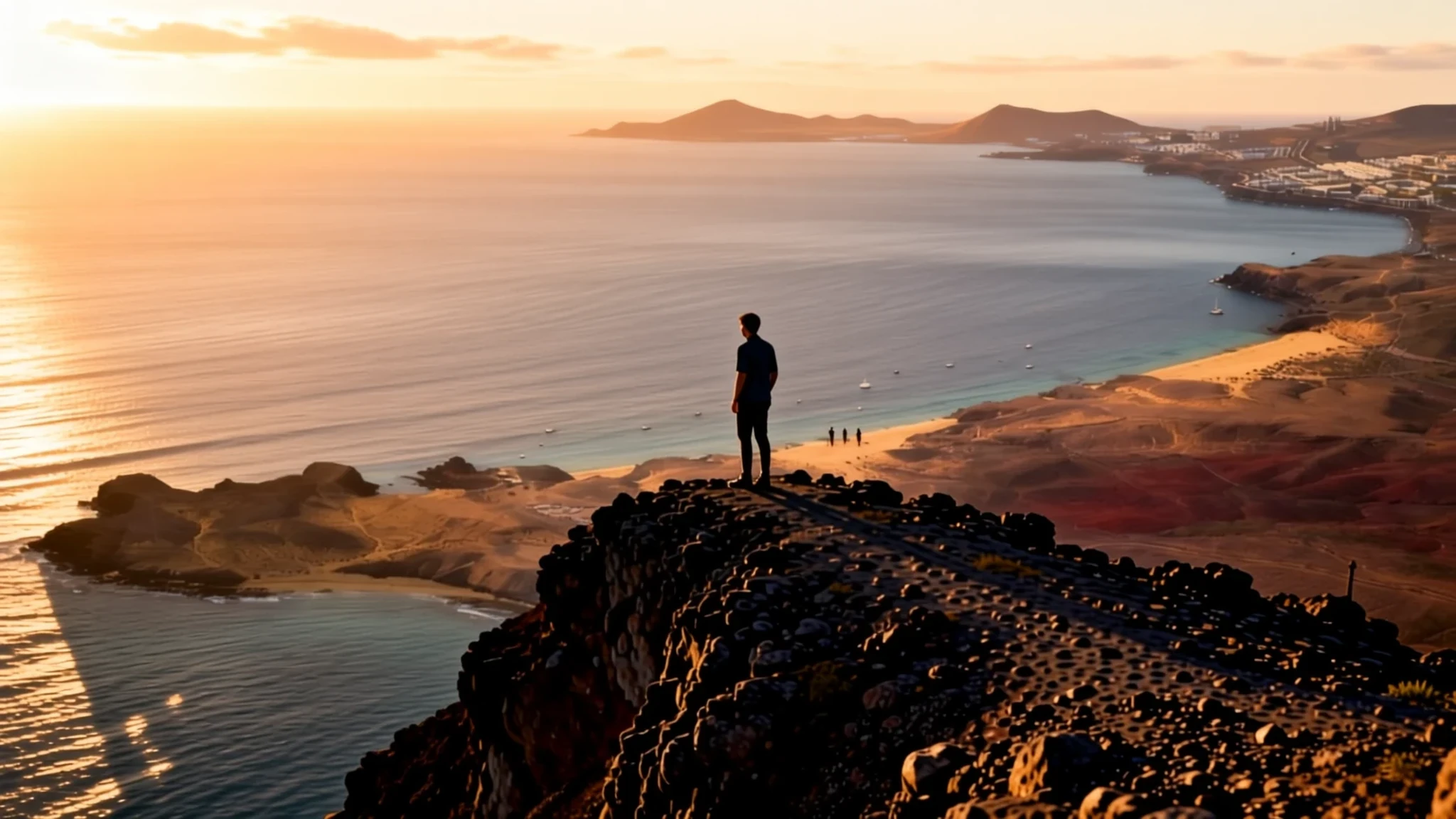
Lanzarote is a volcanic island off Africa where black lava fields, white villages and wind-sheltered vines sit beside reliable Atlantic beaches.
The place
Lanzarote is the easternmost of Spain's Canary Islands, lying about 125 kilometres off the north coast of Africa and a very long way, roughly 1,000 kilometres, from the Iberian mainland. Some 163,467 people live here, and the capital, Arrecife, sits on the eastern coast. The island is the fourth-largest in the archipelago, which tells you it is not big: a hire car crosses most of it in under an hour.
What strikes first-time visitors is the ground. Much of the interior is lava and cinder in black, rust and ochre, with volcanic cones standing in clusters. Villages are low, whitewashed and tidy, so the colour contrast is sharp. Trees are scarce, the wind is constant, and the island has no natural springs or lakes; drinking water is desalinated seawater.
Tourism is concentrated in three resorts: Puerto del Carmen, Playa Blanca and Costa Teguise, where hotels and self-catering apartments cluster along the coast. Outside them, the island is quieter and the pace slows. In the centre-west lies Timanfaya National Park, the island's best-known attraction. UNESCO declared the whole island a biosphere reserve in 1993, a nod to how closely farming, building and landscape have been fitted together here.
Smaller neighbours are close: Fuerteventura is about 11 kilometres to the south-west across a strait, and little La Graciosa is just over a kilometre off the northern tip.
Its story
Lanzarote is thought to have been the first of the Canary Islands to be settled. Roman writers knew the archipelago as the Fortunate Isles, and Pliny the Elder recorded island names, though he lumped the two eastern islands together as the 'purple islands'. The Majos, a branch of the Guanche people, were living here when Europeans arrived. Their name for the island, Tyterogaka, may mean 'one that is all ochre', a description of the land as it looked before the great eruptions.
The modern name comes from a Genoese navigator, Lancelotto Malocello, who landed in 1336 coming from Lisbon. An early map labelled the island after him, and the name stuck. Later, a fort was built near Montaña de Guanapay, close to present-day Teguise, which became an early centre of settlement.
The most dramatic chapter is geological. Volcanoes erupted between 1730 and 1736, burying farmland and villages under lava and ash and reshaping the centre-west of the island into the black, cratered terrain visitors see today. Tunnels formed as the lava drained away, leaving hollow tubes in the rock. Islanders adapted rather than left: they learned to grow crops in pits dug through the ash, and to shield vines behind low stone walls. That inventiveness is as much a part of the story as the eruptions themselves.
What to see
- Timanfaya National Park — Centre-west Lanzarote
The park fills the centre-west of the island with raw volcanic ground: cones, craters and fields of lava with almost no vegetation. Lava tubes lie beneath it, including a 500 m tube known as Cueva de Las Palomas. Access is controlled, so check the official site before going. Keep valuables out of parked cars; thefts have been a recurring problem.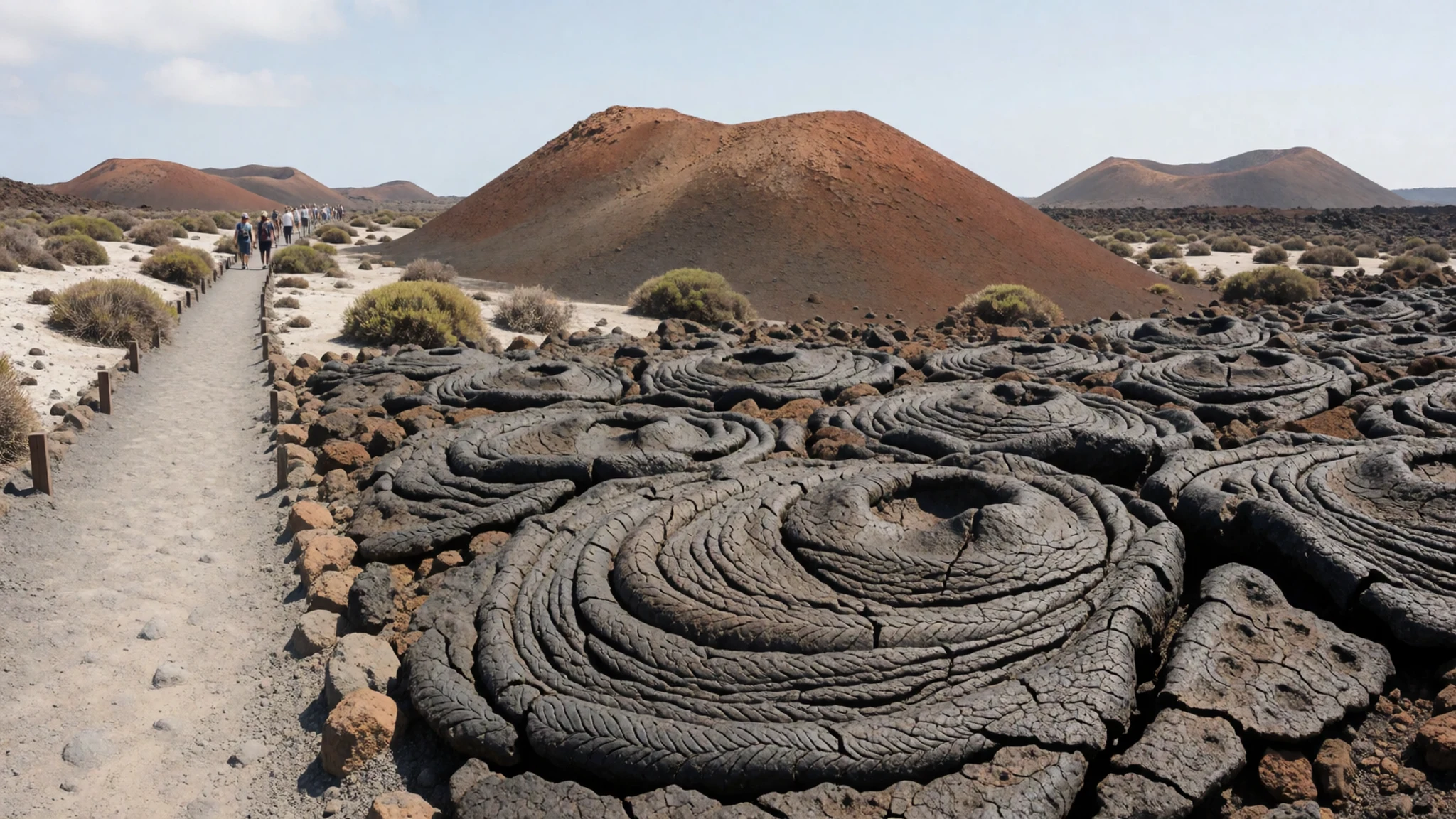
- La Geria vineyards — Between San Bartolomé and Yaiza
La Geria is the centre of the island's wine country, in a belt running from San Bartolomé to Yaiza. Vines sit in hollows in the black ash, each protected by a semi-circular dry stone wall against the wind. It looks like a field of small craters. Stop at a bodega for a tasting and a look at the method.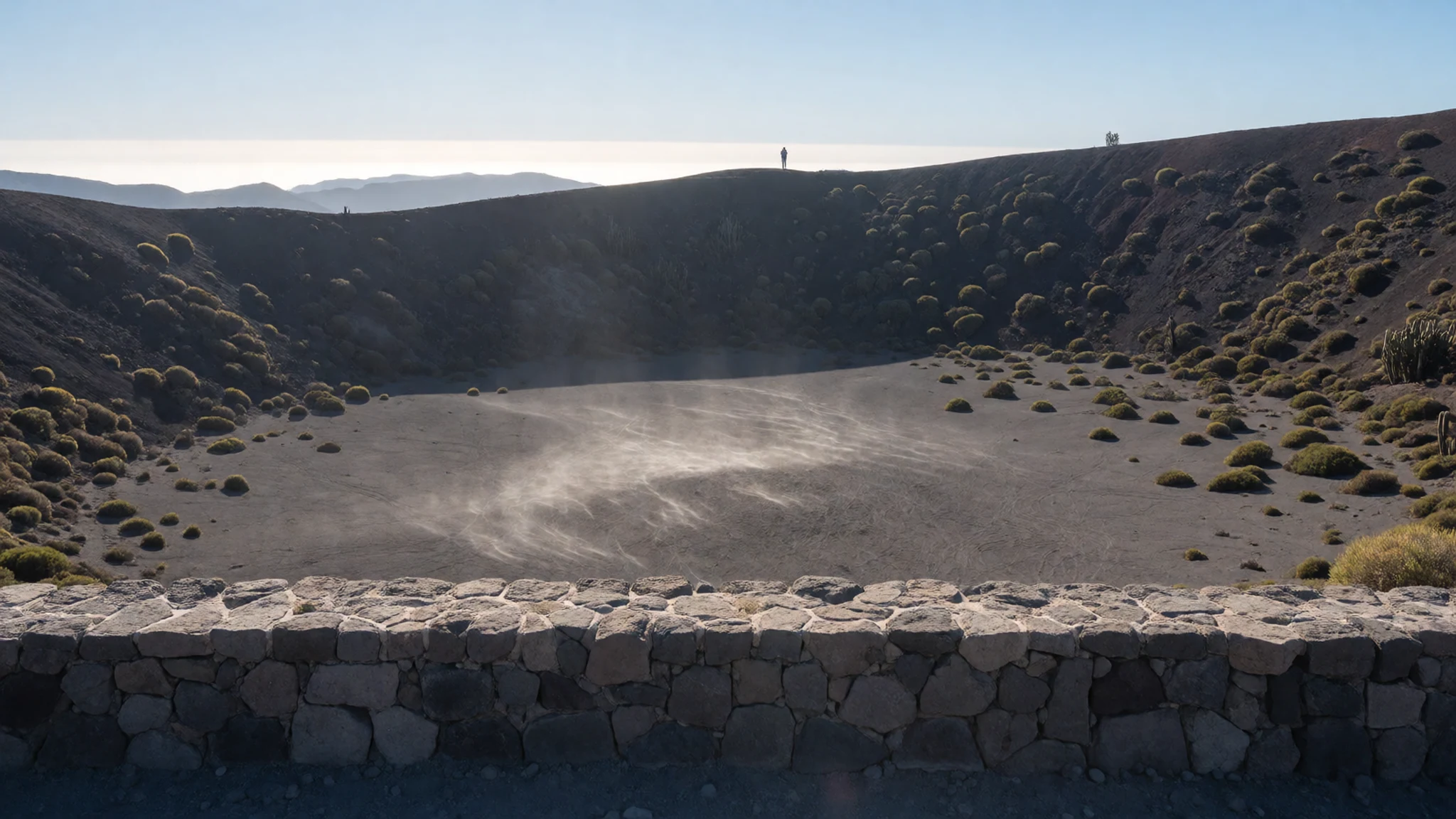
- Los Volcanes Natural Park — Southwest Lanzarote
This protected area on the island's southwest side holds calderas and cones, among them Caldera de Los Cuervos and the reddish Montaña Colorada. Marked paths allow walking among them, and the colours shift with the light. Wear proper shoes, because the cinder is loose and sharp, and bring a windproof layer.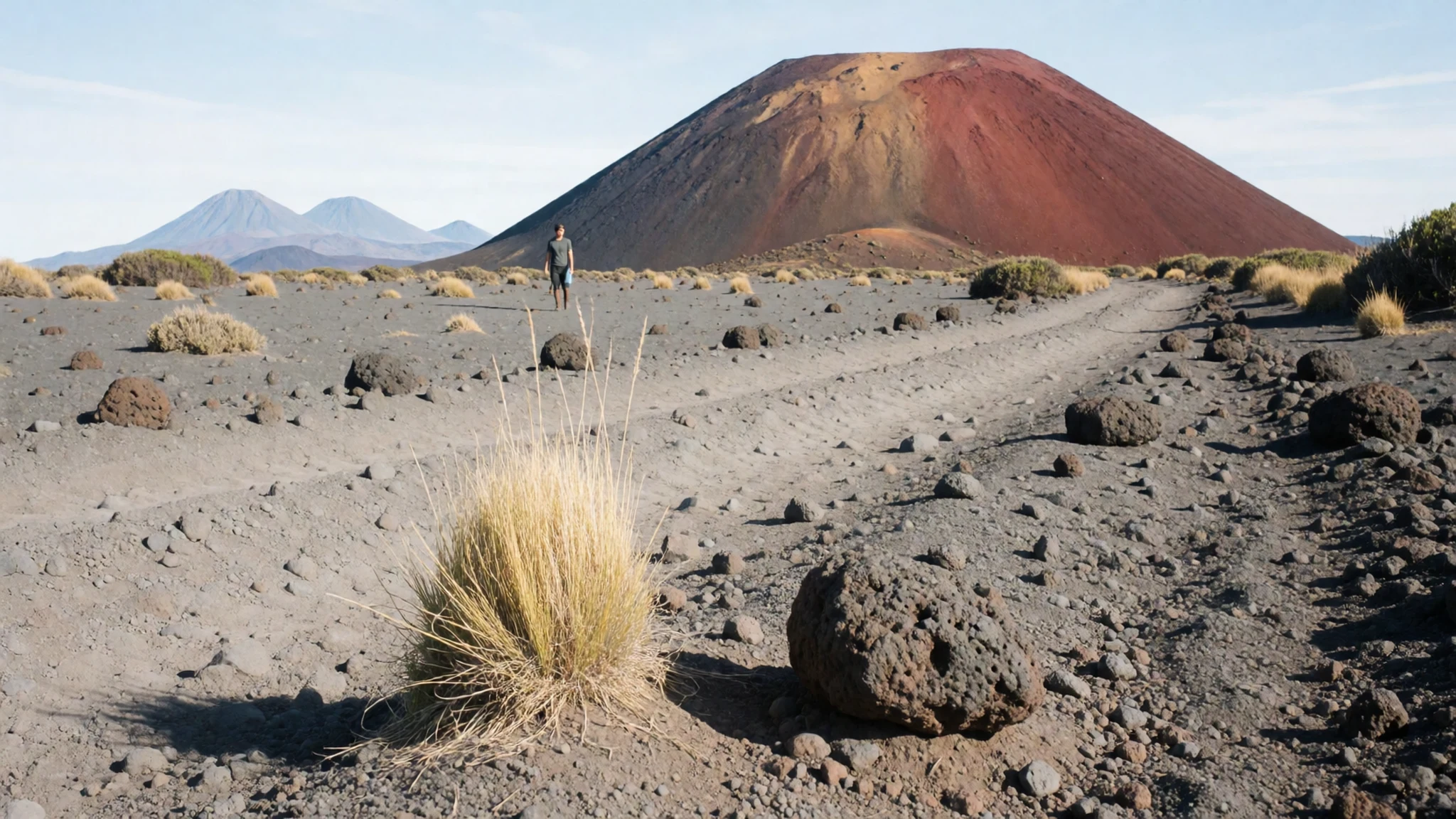
- Famara cliffs and El Jable — Northwest coast
On the northwest coast, high cliffs drop towards Famara Beach and the sandy plain of El Jable. The viewpoint above gives a clear picture of how much of the island is wind-shaped. Famara is exposed, so currents and gusts can be strong; swim with care and take advice from locals.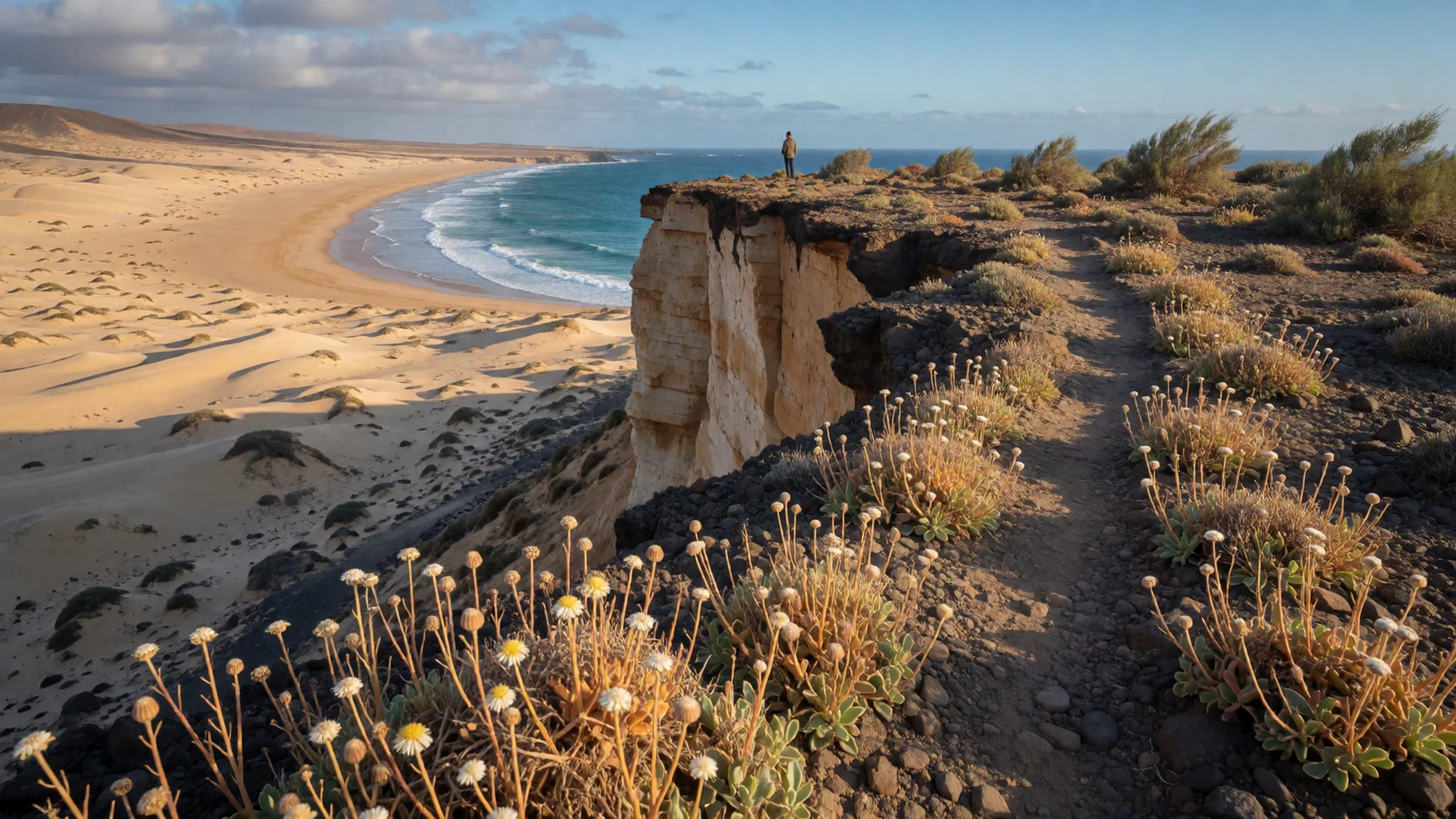
- Teguise — Inland, central-north
Teguise is an old inland town, set near the fort site on Montaña de Guanapay. Its low white streets are pleasant to wander, and the settlement shows the island's earlier life before the resorts. Check local listings for any market days. Go earlier in the day, before coach parties arrive.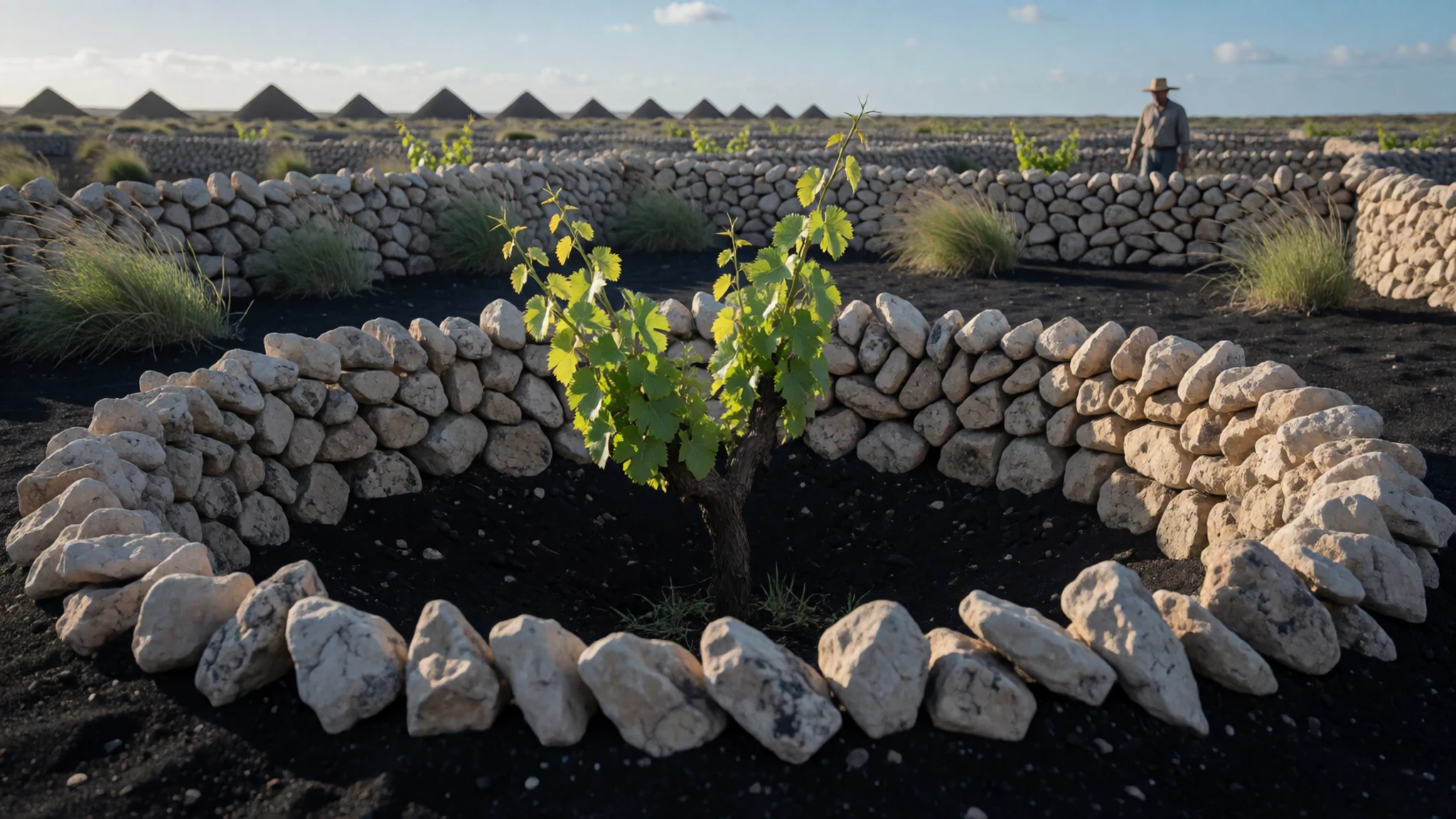
- La Graciosa by ferry — Órzola, north coast
A small ferry crosses in about 30 minutes from Órzola, on the northern tip, to La Graciosa, which lies just over a kilometre from Lanzarote. It is a quiet day out compared with the main island's resorts. Check the ferry operators' websites for timetables and take water and sun protection.
Culture
Lanzarote's culture is Canarian, a Spanish mix shaped by isolation, volcanic soil and a long habit of making do. Lanzarote's most famous celebration takes place annually on the 15th of September in Mancha Blanca, a village on the island. It honours Our Lady of Dolours, also known as the Virgin of the Volcanoes, who is the island's patron saint. People travel from all over Lanzarote to take part in the pilgrimage, and many wear traditional costume.
Carnival is the other big date. It falls on the Tuesday before Ash Wednesday, usually in late February, and many towns hold their own celebrations with costumes, music and late nights. The date moves each year with Easter, so plan from the calendar rather than from memory.
The islanders' relationship with the land is visible everywhere. Farmers have long worked the black ash rather than fighting it, and building is kept low and white, which is part of the reason the island holds UNESCO biosphere status. Sports also have a place: the island hosts an Ironman triathlon in May, which brings a flood of athletes and supporters.
Life outside the three resorts is quieter and more local. Cafes and bars serve alcohol, but the mood is relaxed rather than rowdy, and families are part of the evening scene.
When you visit a village fiesta or church procession, stay at the edge, keep your voice low, and ask before photographing people in traditional dress.
What to wear
Traditional dress on Lanzarote is a rural Canarian costume, worn today mainly for festivals. The clearest occasion is the September pilgrimage to Mancha Blanca, when people dress as peasants of the past. Expect simple, practical clothes: for women, full skirts, aprons, blouses and shawls, often with a wide-brimmed hat; for men, white shirts, dark waistcoats and trousers, and a hat. These were working clothes in wool, cotton and linen, made for a dry, windy climate, and festivals make them a point of local pride.
Day to day, people wear what you would expect in a warm Spanish island: light cotton, shorts and trainers in the resorts, smarter casual clothes for an evening meal in town. Beachwear stays at the beach, and locals tend to cover up a little more away from the coast.
For visitors, think wind, sun and rough ground. Bring a light windproof jacket even in warm months, as the Atlantic breeze can be cool. A hat, sunglasses and sunscreen matter more than you expect. Sturdy closed shoes or trail shoes suit the lava paths, because cinder is sharp and loose and sandals wear out quickly. A swimsuit and a quick-dry towel cover the beaches. For churches and village festivals, shoulders and knees covered is the respectful choice.
What to eat
- Papas arrugadas — Any local restaurant or tapas bar
Small potatoes cooked unpeeled in heavily salted water, then dried until the skins wrinkle and a salt crust forms. They are served with a mojo sauce and are the island's signature side dish. Order them in almost any local restaurant or tapas bar.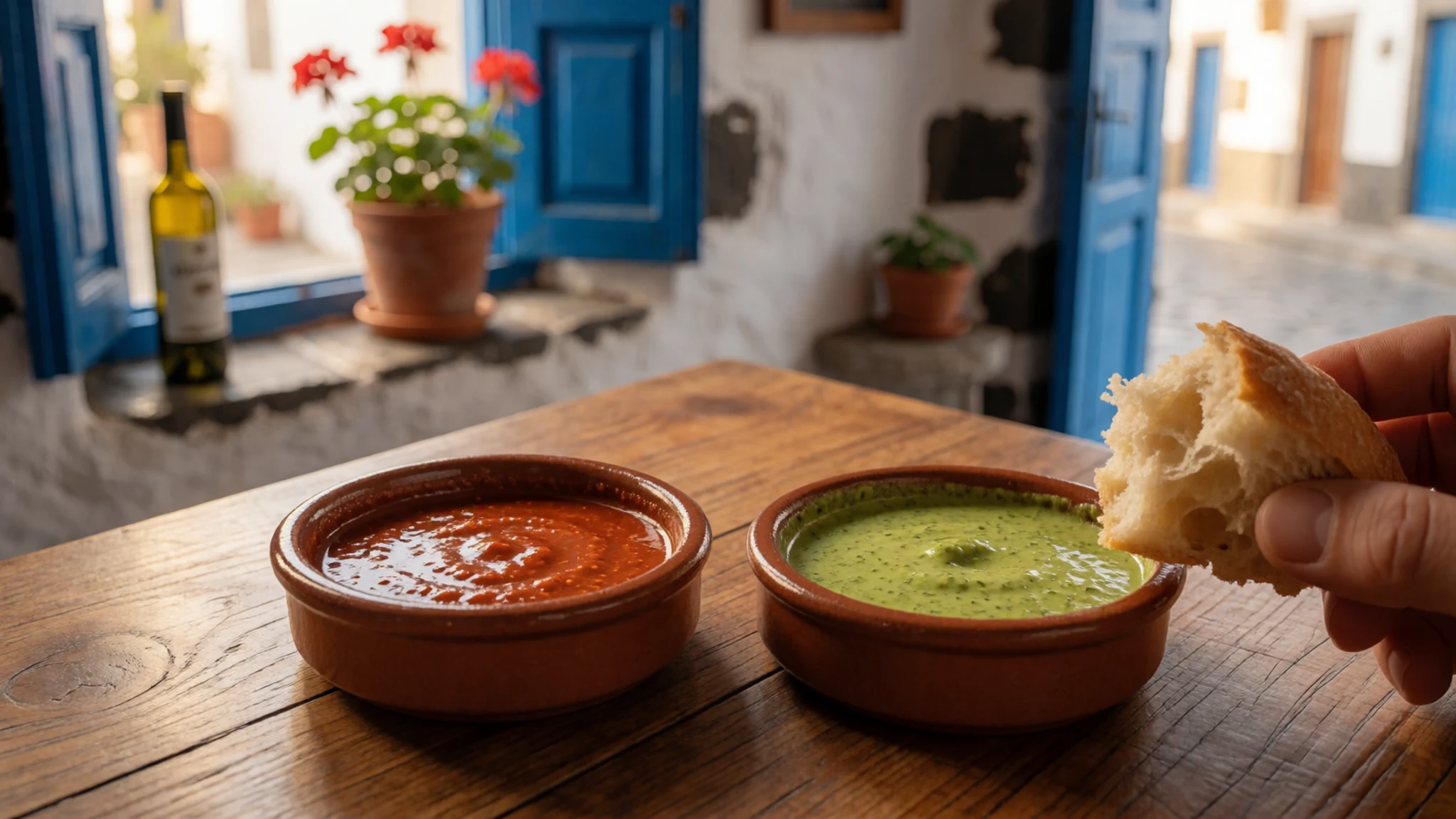
- Mojo picón and mojo verde — On the table in most restaurants
Mojo is the island sauce family. Mojo picón is hot and spicy, made from red chillies and paprika, while mojo verde uses green pepper or coriander. Both come with potatoes, bread or grilled fish. A good test of any kitchen is the mojo.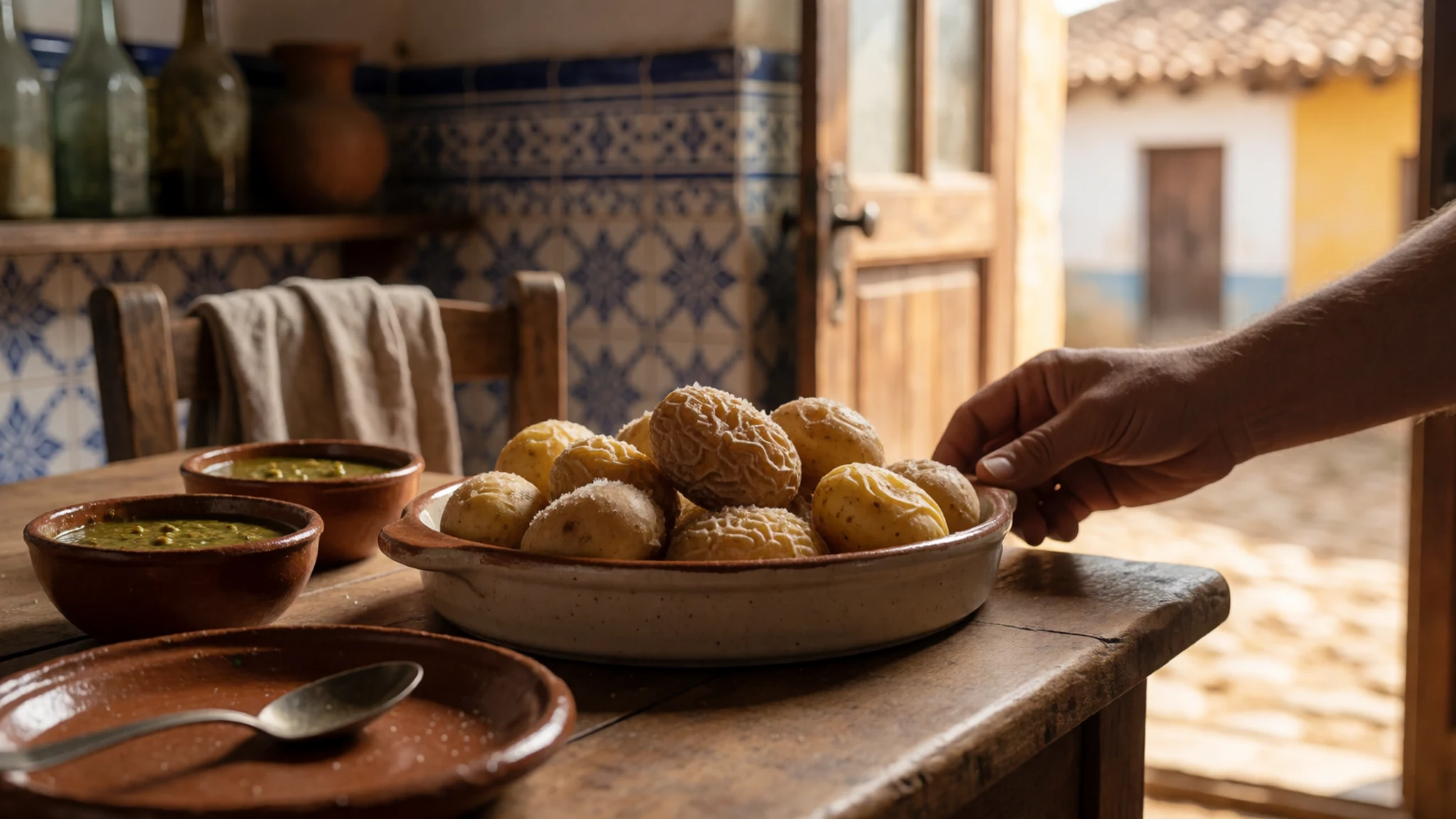
- Gofio — Village restaurants and local bakeries
Gofio is a toasted flour made from cereals such as wheat, maize or barley. It appears as a moist dough patty to start a meal, or as a base for pastries and pies. It is an old staple of island kitchens, from the days when wheat was hard to come by. - Fresh grilled fish — Harbour-side eateries, such as in Arrecife or Playa Blanca
Because Lanzarote is an island, fish is a natural choice, usually grilled simply and served with potatoes and mojo. Ask what the catch of the day is, and let the waiter guide you. Prices vary, so check the menu. - Local wine — Bodegas in La Geria, and village restaurants
The vineyards of La Geria, between San Bartolomé and Yaiza, produce wines grown in volcanic ash. Many bodegas offer tastings. Order a glass in a village restaurant, or visit a winery in the area for a closer look at how the vines are grown.
Plan it
Best time. Lanzarote is a year-round island with mild weather and steady wind. Spring (April–June) and autumn (October–November) usually give comfortable days for walking the volcanic landscape and swimming, with fewer crowds than peak holiday weeks. Late February brings Carnival and May brings the Ironman, so book early if you visit then. Summer is hotter and the beaches are busier.
How long. 4–5
Getting there. Arrecife Airport (ACE) lies roughly 5 km west of the capital. It takes low-cost carriers from many European countries, along with services from the Spanish mainland and flights linking the islands. Ferries run from Cádiz, Huelva, Tenerife and Gran Canaria to Arrecife, and Fuerteventura to Playa Blanca takes around 30 minutes. A hire car is the easiest way to see the island.
Budget. mid
Tips
- Hire a car for the interior; distances are short but public transport is limited
- Do not leave valuables in parked cars, especially around the national park
- Pack a windproof layer, sun protection and sturdy shoes for lava paths
- Tap water is safe but tastes flat; buy bottled agua mineral for meals
- Book flights and accommodation early for Carnival and the Ironman in May
Etiquette
- Stay on marked paths in the volcanic parks; the ground is fragile
- Ask before photographing people in traditional dress at fiestas
- Dress modestly for churches and village festivals
Nearby
Sources
- Wikidata Q182432 (CC0)
- Wikipedia: Lanzarote (rev 1364043825) (CC BY-SA 4.0)
- Wikivoyage: Lanzarote (rev 5269292) (CC BY-SA 4.0)
- Photo: Lanzarote's Lunar-Like Landscape, NASA Earth Observatory (Public domain)
- Photo: Montaña del Señalo, MiljenkoSuljic (CC BY-SA 4.0)
- Photo: Lanzarote San Bartolomé morning, MiljenkoSuljic (CC BY-SA 4.0)
- Photo: El Jable from Famara cliffs, MiljenkoSuljic (CC BY-SA 4.0)
- Photo: Atlantic Ocean at Los Picollos, Xyzspaniel (CC BY-SA 4.0)
- Photo: Caldera de Los Cuervos, MiljenkoSuljic (CC BY-SA 4.0)
- Photo: Montaña Colorada, MiljenkoSuljic (CC BY-SA 4.0)
- Photo: La Geria vines (CC BY-SA 2.5)


