Lake Singkarak
Lake Singkarak, Indonesia
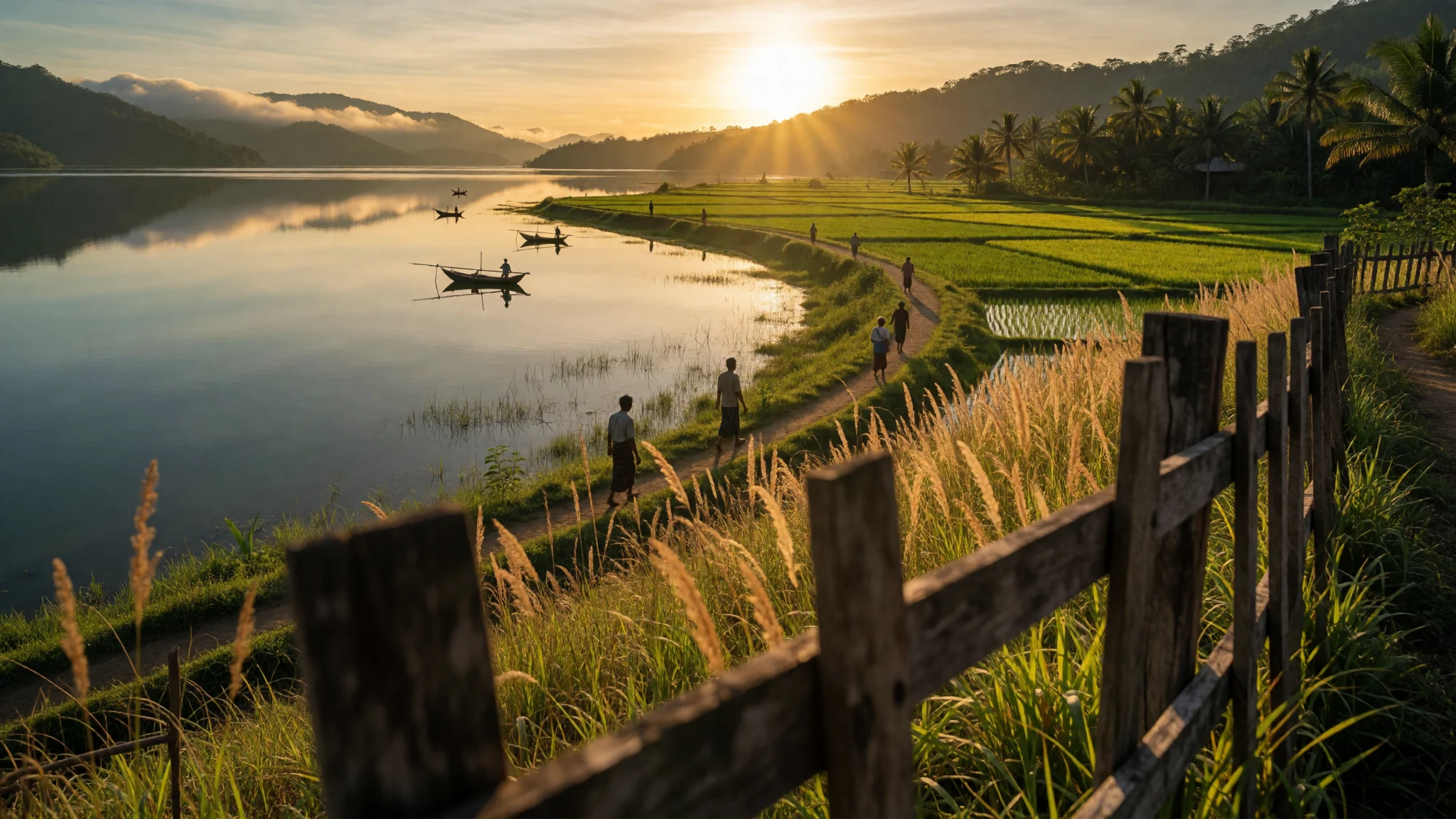
Lake Singkarak is a long, cool highland lake in West Sumatra, ringed by rice fields and Minangkabau villages, a quiet stop between coast and hills.
The place
Lake Singkarak sits at 362 m above sea level in West Sumatra, between the regencies of Tanah Datar and Solok. It covers about 107.8 km², stretching roughly 21 km in length and 7 km across, so it reads as a long ribbon of water between ridges rather than a round lake. The highland air is cooler than on the coast around Padang, and the shoreline is a patchwork of rice terraces, fishing villages and small roadside stalls. Water leaves the lake by two routes. The natural outlet is the Ombilin River, which runs east towards the Strait of Malacca. A hydroelectric scheme, however, takes most of the outflow west through the Anai River to the Indian Ocean near Padang, feeding a power station that supplies West Sumatra and Riau. A railway line between Padang and Sawahlunto-Sijunjung skirts the eastern side. The lake is also home to ikan bilih, a small fish found only here and caught for the table, so boats and drying racks are part of the scenery. This is Minangkabau country, and the villages around the water are marked by rumah gadang houses with upswept roofs. Most travellers treat the lake as a stop on the way between Padang and Bukittinggi rather than a destination in itself. That means quiet mornings, but also few facilities beyond simple eateries and roadside viewpoints.
Its story
Lake Singkarak has always been a working landscape more than a scenic one, and its story is told through water, rice and coal. The surrounding villages belong to the Minangkabau, a people whose family life runs through the mother's line: children take their mother's name, and a husband moves into his wife's household. Rice land and ancestral houses traditionally pass down through the women, which is one reason the paddies along the shore look so settled and carefully kept. The lake's fish, ikan bilih, has long been a local food and a small source of income for fishing families. Later, the story took an industrial turn. A hydroelectric project redirected most of the outflow away from the Ombilin River, which once carried the lake's surplus east towards the Strait of Malacca, and sent it west towards the Indian Ocean through the Anai River. The railway on the eastern shore belongs to the same modern chapter, linking Padang with the coal country around Sawahlunto, where old stations, a mine and a processing plant now make up a heritage area. West Sumatra itself was grouped with Riau and Jambi as Central Sumatra between 1948 and 1957 before becoming a province of its own. Today the lake sits quietly between these layers: farming, fishing, power generation and the memory of coal.
What to see
- The shoreline and its rice fields — Lake edge, Tanah Datar and Solok
Lake Singkarak's eastern and western edges are best taken slowly, stopping wherever the road drops close to the water. Terraced paddies run almost to the shore, and the colour changes with the planting cycle, from flooded mirrors to bright green to gold. Photographers favour early morning, before haze builds over the water.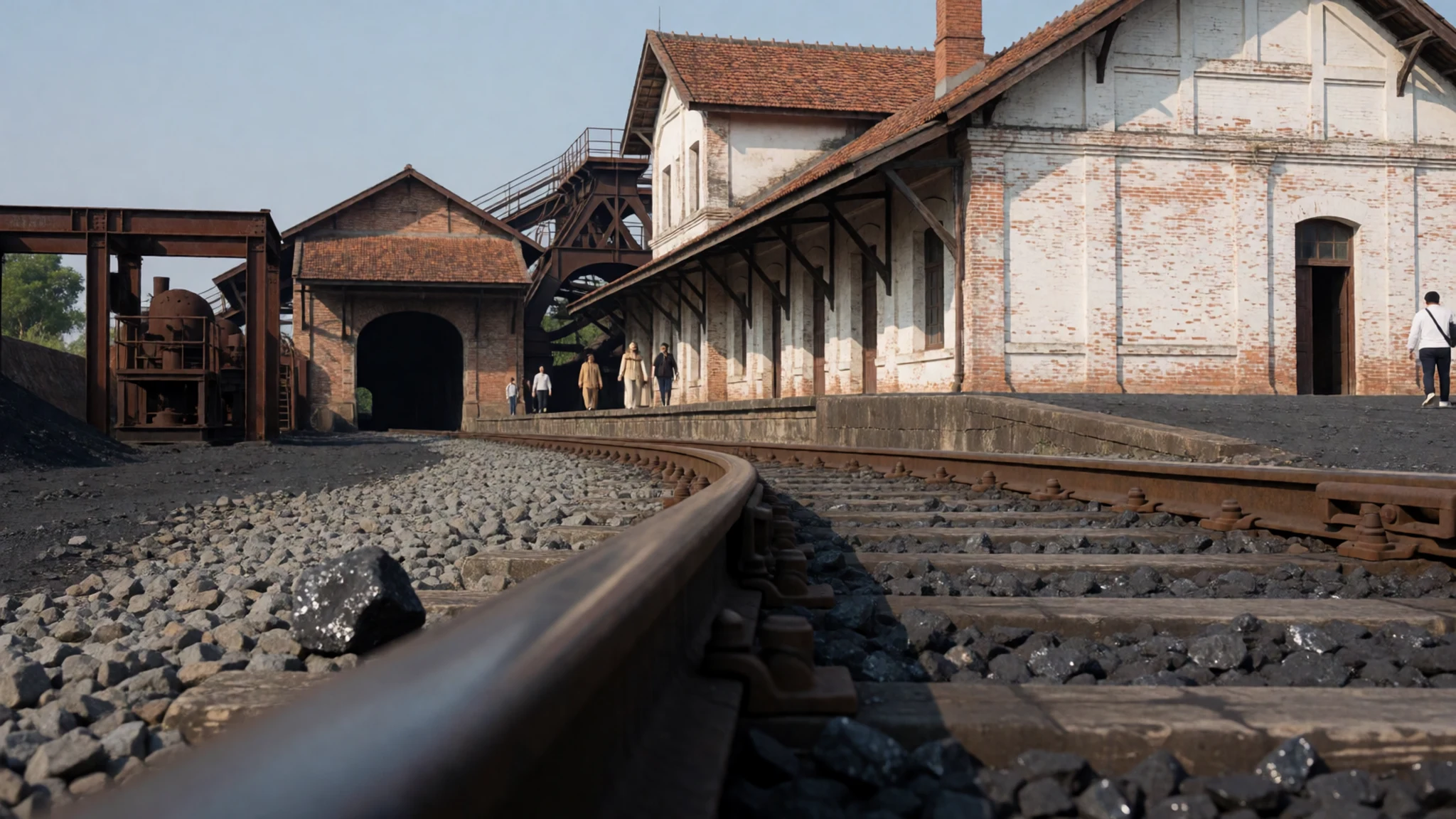
- Lakeside fishing villages — Villages around the lake
Small settlements along Lake Singkarak live partly from ikan bilih, the small fish found only in this lake. Look for boats pulled up on the bank, nets drying and stalls selling the catch. It is an easy, unhurried way to see how the lake supports daily life, and a chat with fishers goes further than a camera.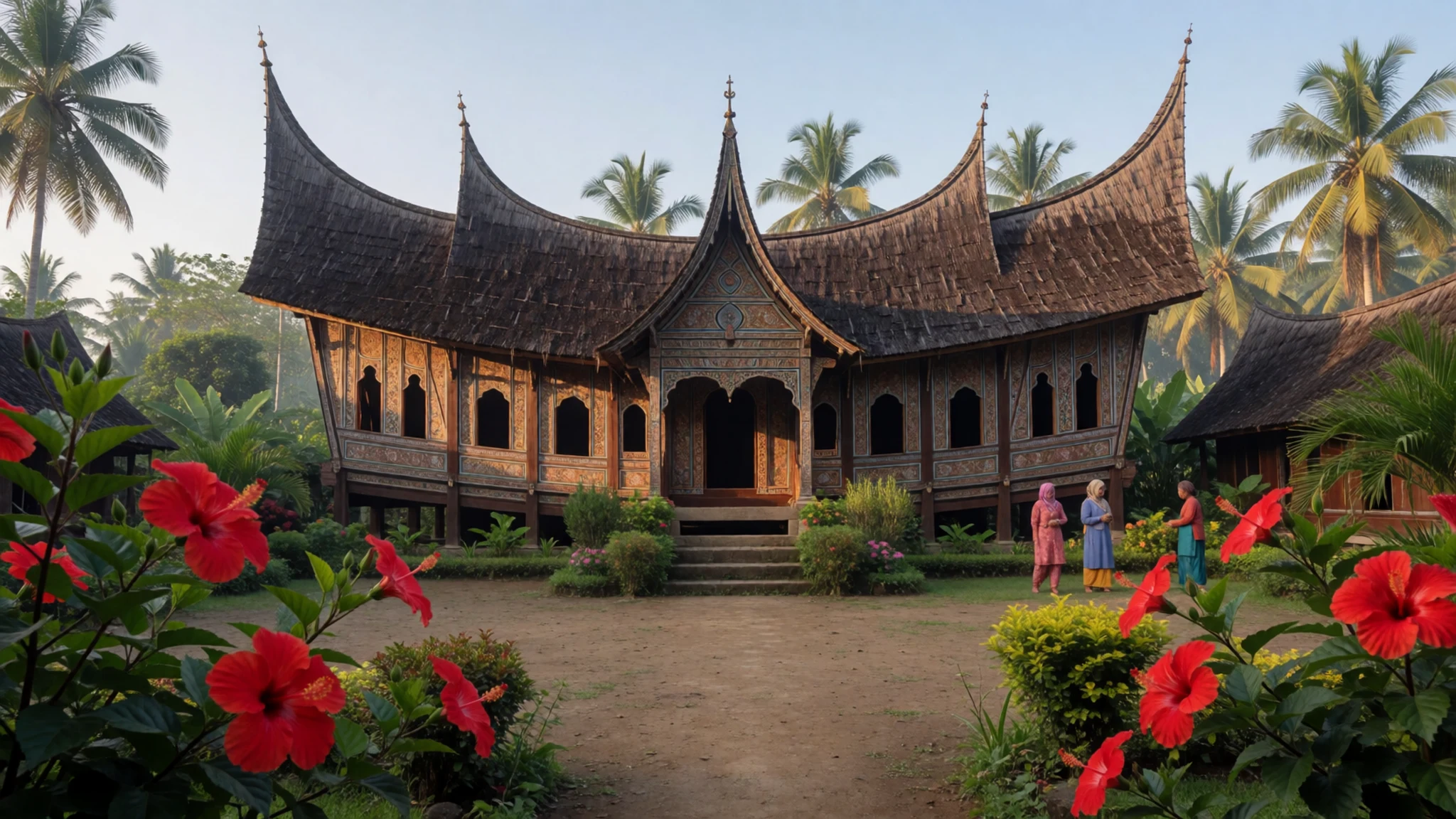
- Rumah Gadang Tuanku Lareh — West Sumatra highlands
This is one of the traditional Minangkabau houses listed for the region, the kind with a roofline that sweeps up at both ends like buffalo horns. Such houses are family homes and heritage buildings at once, so access depends on the owners and caretakers. Ask locally about visiting, and expect to remove your shoes.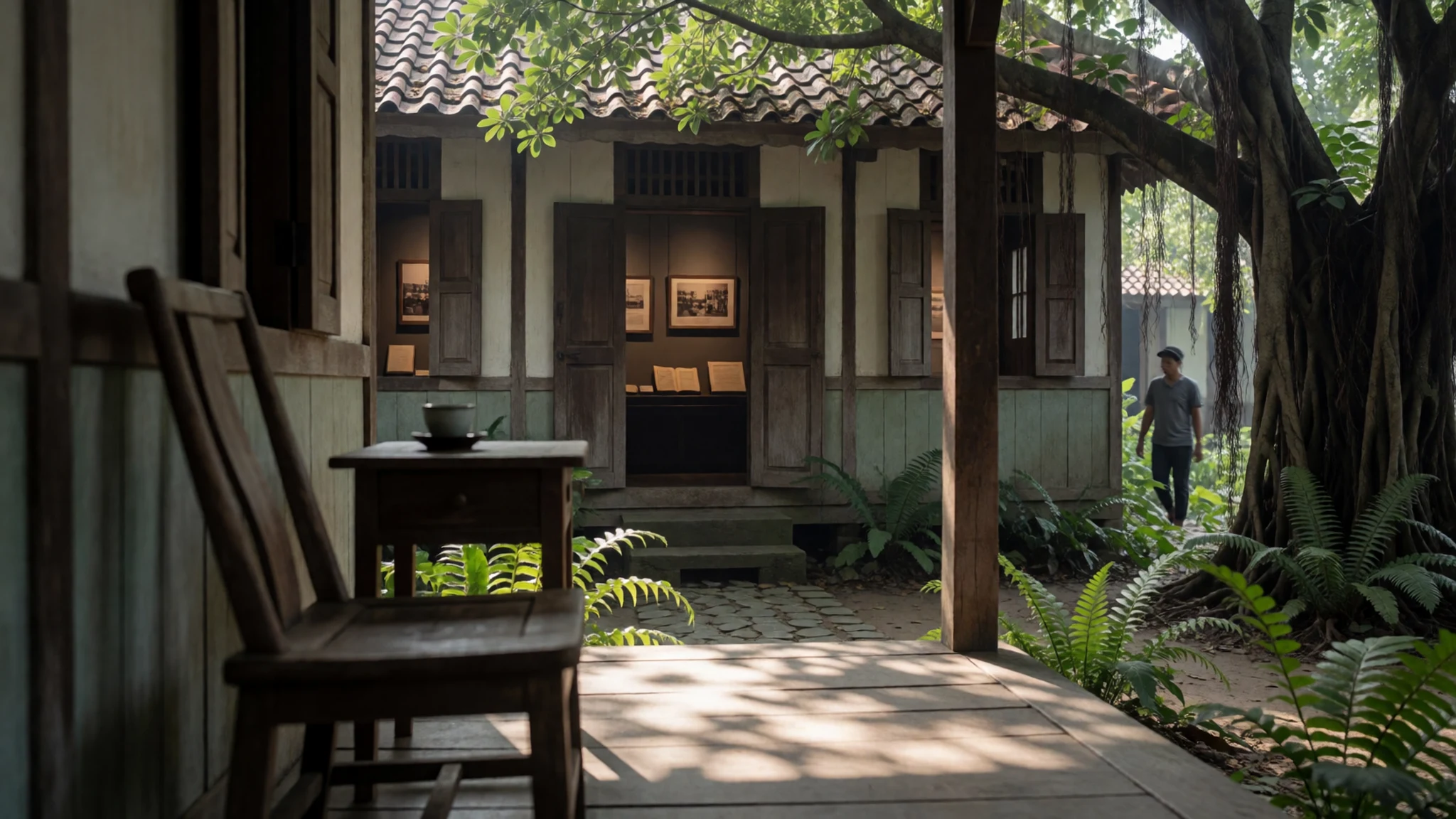
- Tan Malaka's Birth House and Museum — North of the lake, West Sumatra
This small museum is dedicated to Tan Malaka, an Indonesian nationalist thinker born in the Minangkabau highlands. It lies well north of the lake, so it suits a longer day through the region rather than a quick detour. It is a modest house-museum, and a guide or driver who knows the area helps.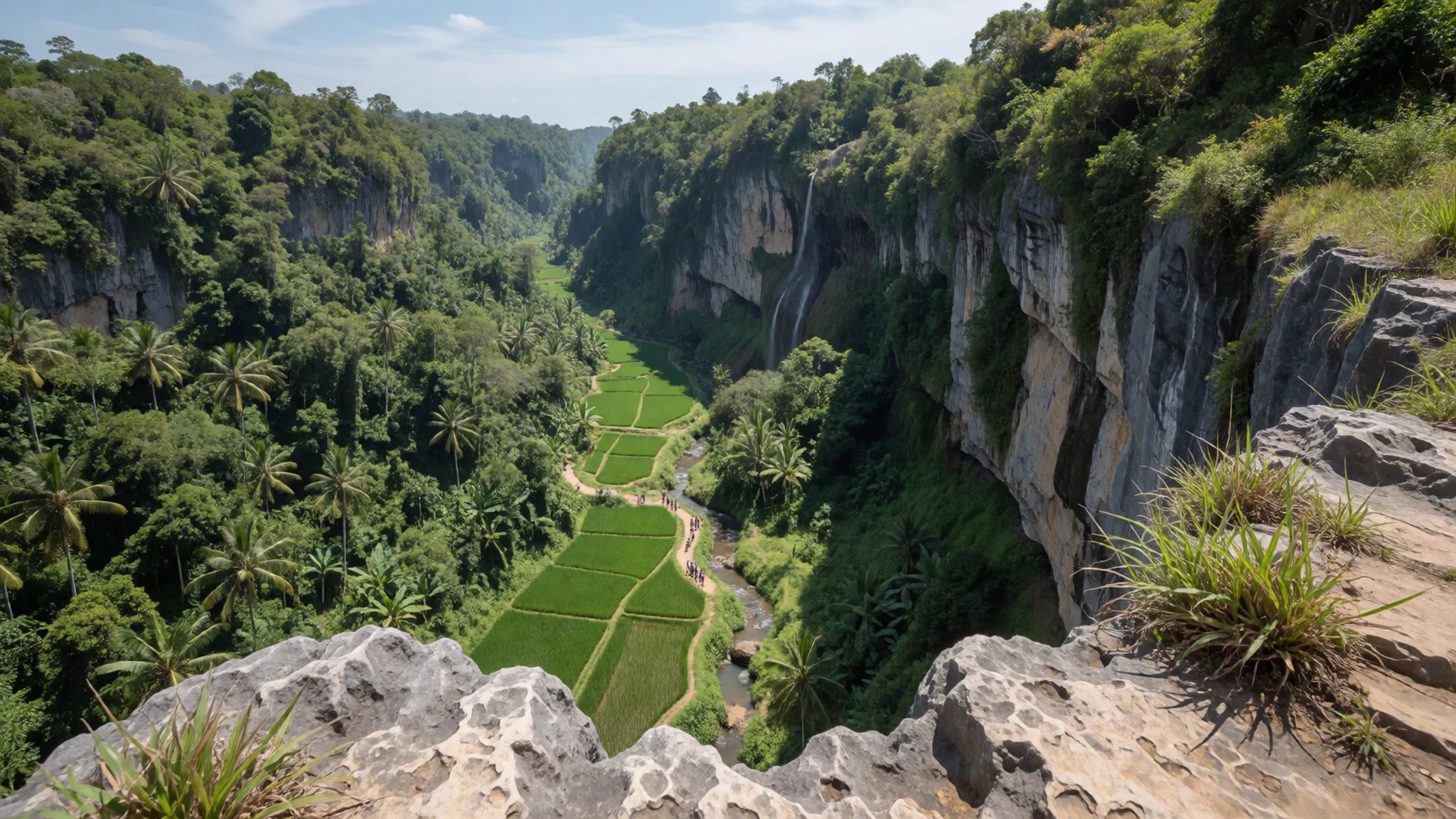
- Sawahlunto coal-mining heritage — Sawahlunto, east of the lake
The area between Bukittinggi and Sawahlunto holds the remains of the region's coal industry: railway stations, a mine and a coal processing plant. It connects naturally with the railway that follows Lake Singkarak, and it gives the lake a wider industrial context. Allow a separate day and check opening arrangements locally.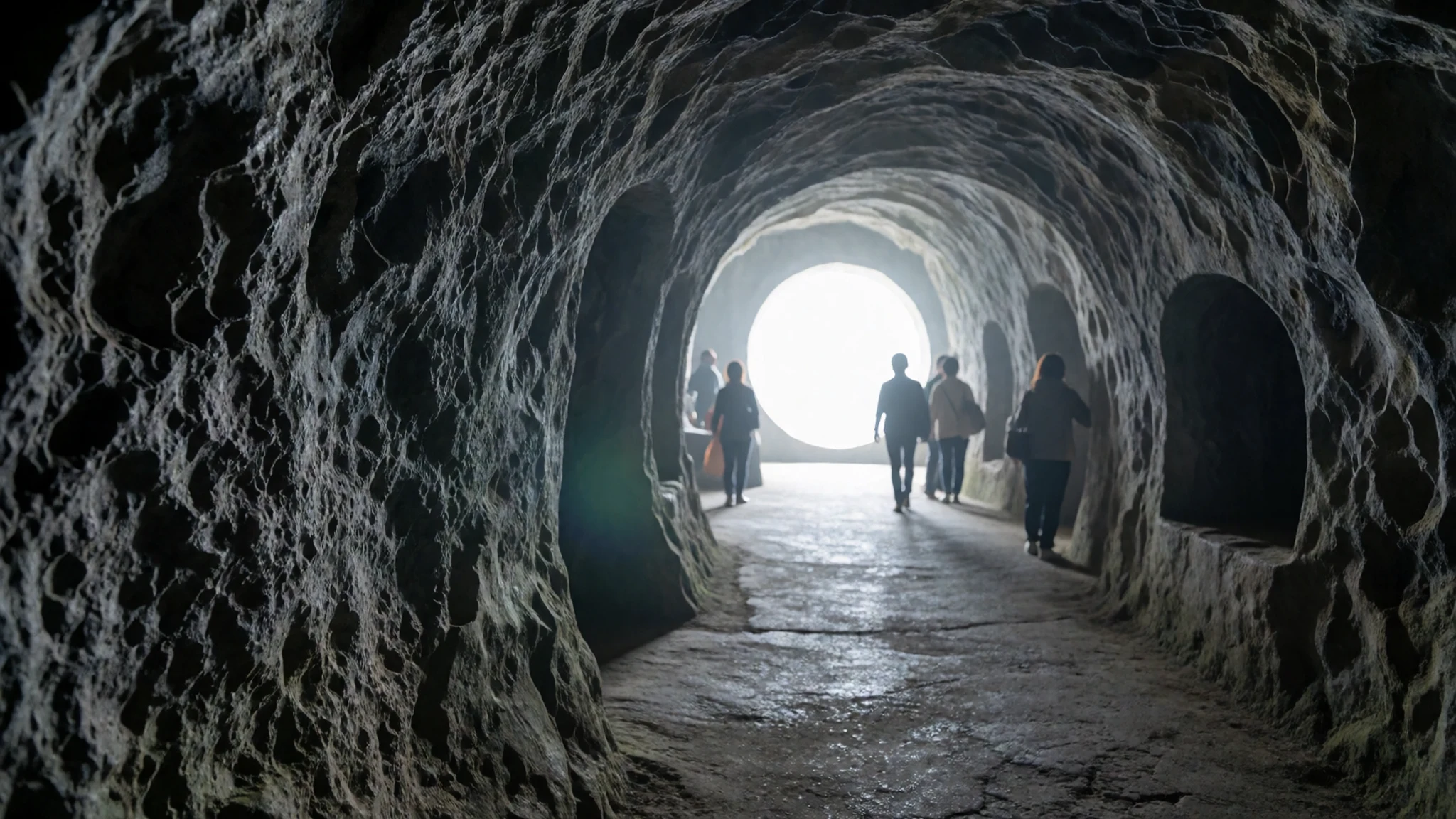
Culture
Lake Singkarak lies in the heartland of the Minangkabau, who make up about 85% of West Sumatra's population. They are Muslim and, unusually, organise family and inheritance through the mother's side. The visible sign of this culture is the rumah gadang, a long house with soaring, horn-shaped eaves, and in many villages the women of a family are the keepers of land and house. The region also keeps performing traditions alive. Randai is a folk drama that mixes story, music and dance built on silek, the Minangkabau martial art, which is related to silat elsewhere in the Malay world. Saluang is a bamboo flute tradition, often heard at gatherings and staged shows, though some performances laid on for visitors can feel contrived. Further west on the coast, Pariaman holds the Tabuik festival, which marks Muharram with drumming and reenactments. Religion shapes the daily rhythm. Traditional food is halal, and during the fasting month Ramadan is observed strictly, so many food stalls and restaurants close through the daytime and for a few days either side. Anyone visiting then should plan meals ahead and carry water and snacks. Hospitality is warm, and a little Bahasa Indonesia is appreciated far more than fluent English. Dress modestly away from the lakeside, remove your shoes before entering a mosque or a rumah gadang, and ask before photographing anyone.
What to wear
Around Lake Singkarak, traditional Minangkabau dress is built on woven cloth. Songket, a fabric brocaded with gold or silver-coloured thread, is the best known, and weaving villages in the West Sumatran highlands still produce it. Women wear a long tunic and wrapped skirt, often with a draped headcloth called a tengkuluak, shaped differently from district to district. Men wear a shirt, loose trousers, a songket sash and a folded headcloth. These outfits appear at weddings, ceremonies and festivals rather than on ordinary days. Everyday clothing is simple and modest: long trousers or skirts, loose shirts, and for many women a headscarf. Farmers and fishers wear practical layers and wide hats against sun and rain. A visitor should dress for a cool, humid highland: light, quick-drying clothes that cover shoulders and knees, with a thin waterproof for sudden rain and a sweater for the early mornings. Mosques and traditional houses call for long sleeves and long trousers or skirts, and a scarf is useful to have in a bag. Footwear matters more than fashion. Choose sandals or trainers with grip for muddy paddy bunds and lakeside paths, and shoes that slip off easily, since shoes come off at many doorways. Swimwear is best kept for private or tourist-oriented spots, not village shorelines.
What to eat
- Rendang — Nasi padang eateries in Padang and the highland towns
A slow-cooked, richly spiced dish of buffalo meat or beef in coconut milk and chilli, central to Minangkabau cooking. It is dry, dark and deeply flavoured. Order it at any nasi padang eatery in the region, where it sits among the dishes piled on the table.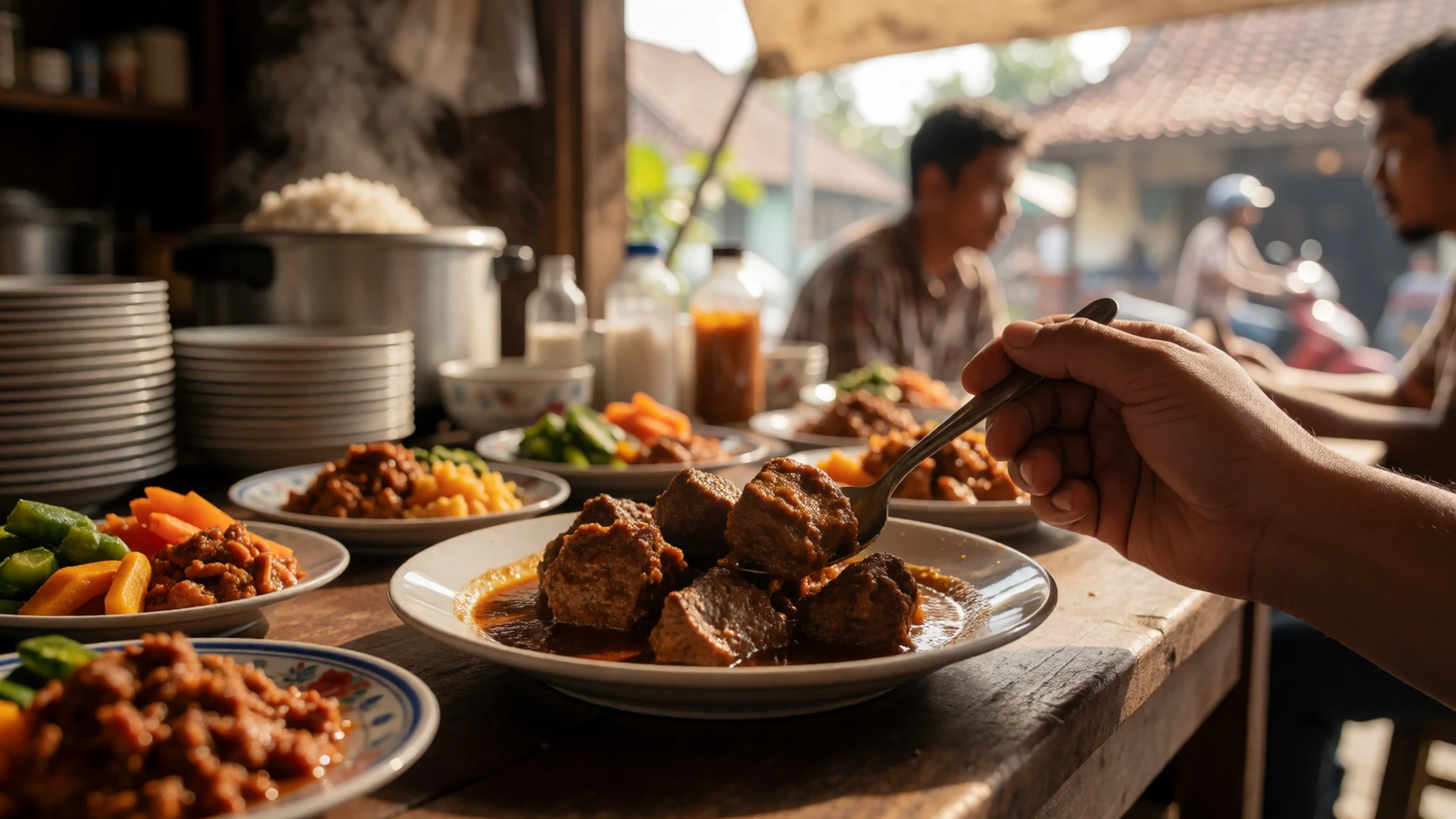
- Nasi padang — Nasi padang restaurants across West Sumatra
Not a single dish but a way of eating. You get a plate of rice, and a spread of curries, chilli sauces and vegetables arrives for you to pick from, with payment only for what you take. It is the easiest introduction to local flavours.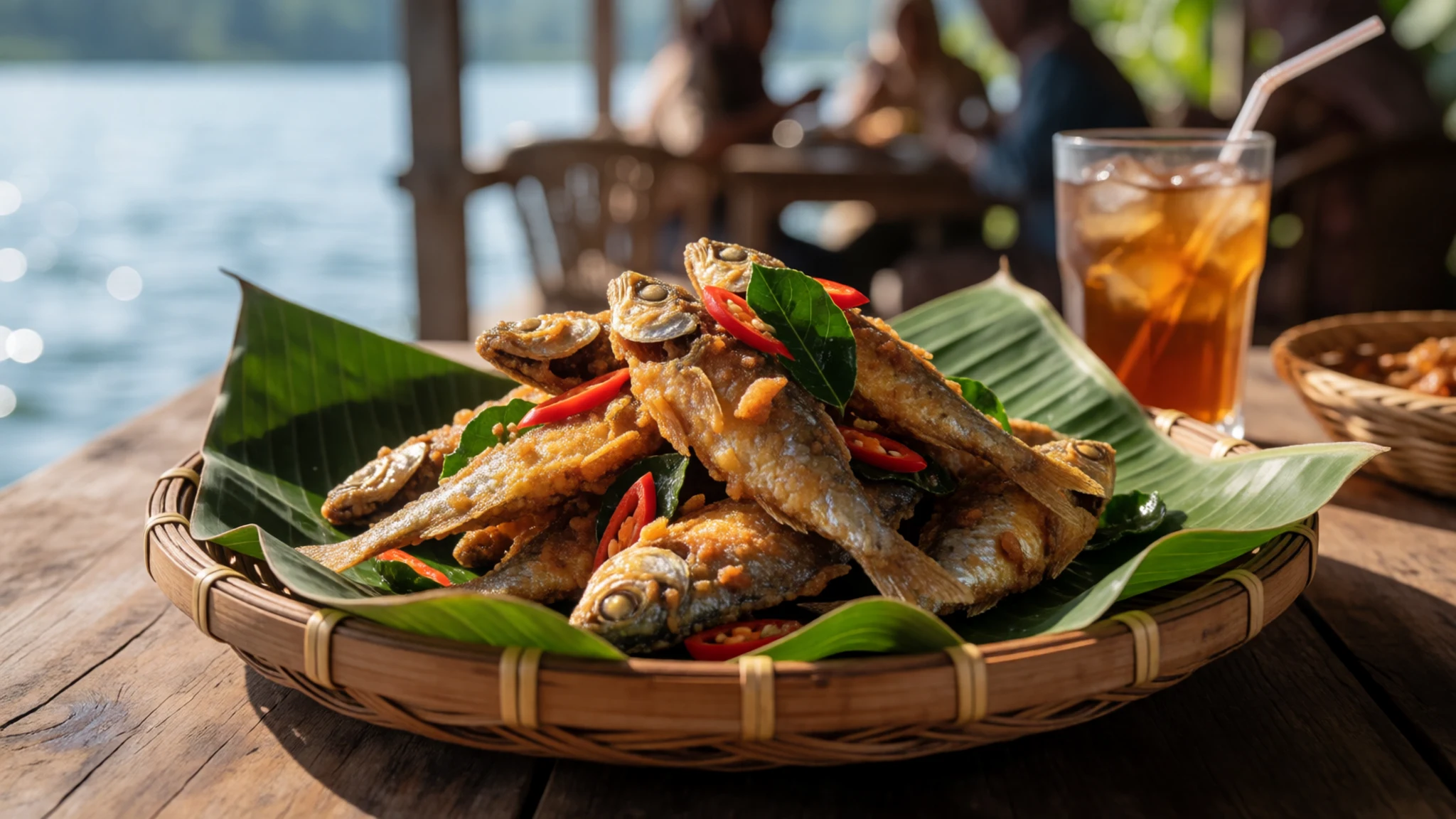
- Nasi kapau — Kapau-style stalls in highland towns and markets
A close cousin of Padang-style food that leans more on vegetables, with curries and side dishes ladled out from a counter. It is a good choice when the meat-heavy spread feels like too much, and it suits a lunch stop on a highland day. - Ikan bilih — Lakeside stalls and eateries around Singkarak
The small fish found only in Lake Singkarak, caught by local fishers and sold close to the shore. It is often served fried and crisp alongside rice and chilli sauce. Because it comes straight from the lake, it is the one dish that tastes of this particular place. - Ampiang dadiah — Local cafés and market stalls in the highlands
A West Sumatran dessert or snack of buffalo-milk yoghurt, served with palm sugar syrup, coconut flesh and rice. It is tangy, sweet and lightly chewy, and it makes a cooling break from the heat of the chilli-heavy savoury dishes.
Plan it
Best time. June to September is usually the more settled stretch for views and rice-field walks, though showers can come in any month in the West Sumatran highlands; the brief carries no climate data, so check a forecast before travelling. Avoid planning meals around the fasting month, when many eateries close in the daytime.
How long. 1–2
Getting there. Fly to Minangkabau International Airport (PDG), about 23 km north-west of Padang, with frequent flights from across Sumatra and Java and from Kuala Lumpur. From there the last leg is by road into the highlands. Bukittinggi makes a more comfortable base than Padang, and a hired car or driver is the simplest way to reach the lake.
Budget. low
Tips
- Use Bukittinggi as a base and treat the lake as a half-day or full-day outing by road
- Go early in the morning, when the air is cooler and the water is calmer for photographs
- Carry cash for lakeside stalls and small villages, and drinking water for the road
- Check train schedules locally if you want to ride the line along the eastern shore
- A few words of Bahasa Indonesia help a great deal outside the main tourist towns
Etiquette
- Ask before photographing people, especially women and children
- Dress modestly and remove your shoes at mosques and traditional houses
- During Ramadan, avoid eating or drinking openly in village streets in the daytime
Nearby
Sources
- Wikidata Q2541128 (CC0)
- Wikipedia: Lake Singkarak (rev 1366270901) (CC BY-SA 4.0)
- Wikivoyage: West Sumatra (rev 5369010) (CC BY-SA 4.0)
- Lake Singkarak and the Ombilin river, Christiaan Benjamin Nieuwenhuis (Public domain)
- Location map of Indonesia, Uwe Dedering (CC BY 3.0)
- Relief map of Sumatra, RXerself (CC BY-SA 4.0)
- Area persawahan di dekat Danau Singkarak 1, Indonesiagood (CC BY 4.0)
- Area persawahan di dekat Danau Singkarak 10, Indonesiagood (CC BY-SA 4.0)
- Area persawahan di dekat Danau Singkarak 2, Indonesiagood (CC BY 4.0)
- Area persawahan di dekat Danau Singkarak 3, Indonesiagood (CC BY 4.0)
- Area persawahan di dekat Danau Singkarak 4, Indonesiagood (CC BY-SA 4.0)


Wildlife
- Ikan bilih (animal)
The ikan bilih is a little fish that lives nowhere else in the world except Lake Singkarak, so every one you see is a true local. It matters greatly to the people here, who rely on it for their living and for what they eat. Ask a local guide where and when to look, and watch quietly from a respectful distance, keeping the water calm. Never feed the fish.