Lake Sentani
Lake Sentani, Indonesia
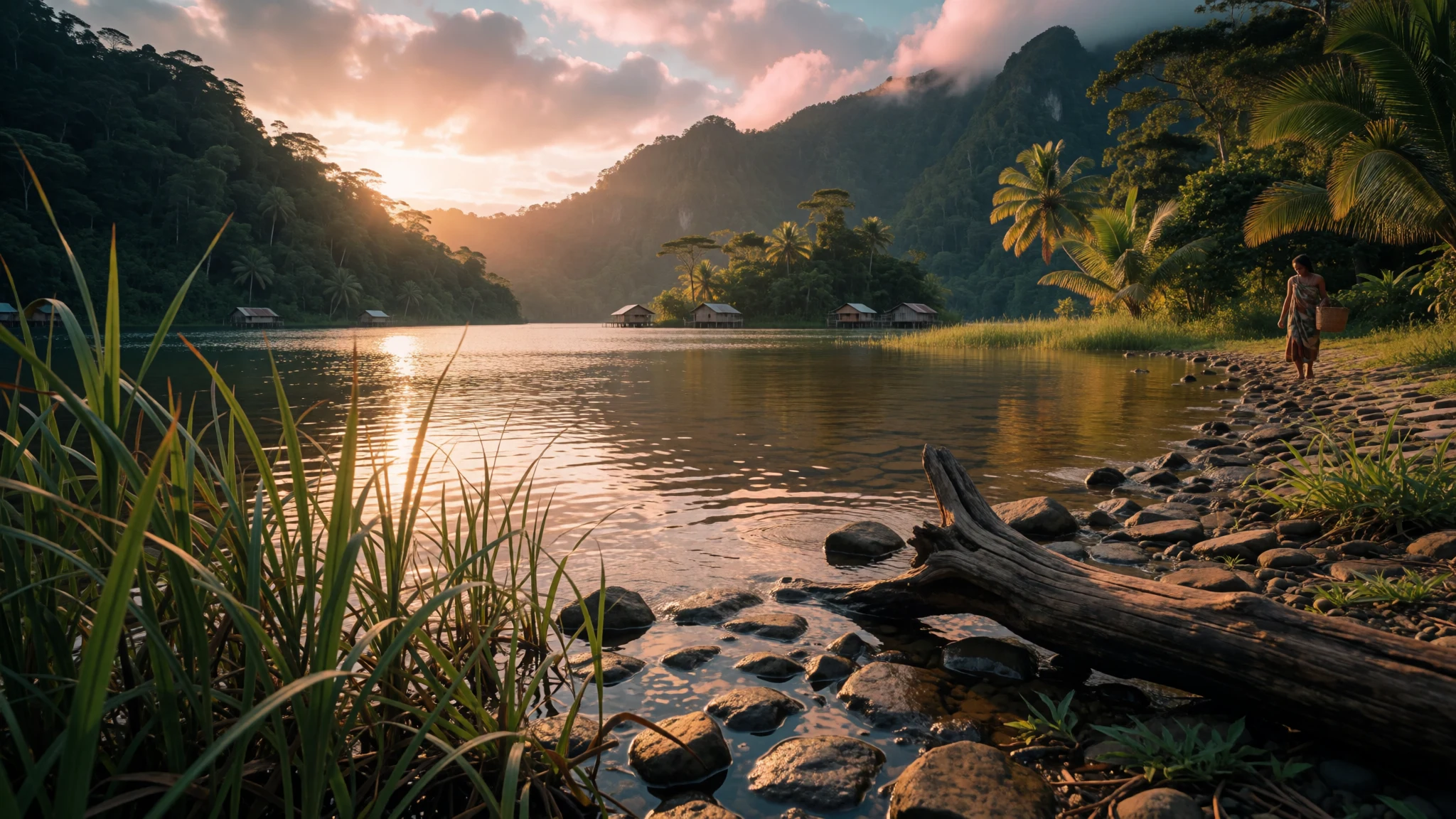
Lake Sentani is a warm, shallow lake in Papua where island villages, rainbow beliefs and forested ridges sit close to Jayapura.
The place
Lake Sentani lies in Papua province on the northern side of New Guinea, about 20 kilometres from the provincial capital, Jayapura, and sits 76 m above sea level. The water is shallow and warm, ringed by steep green hills, with the town of Sentani pressed against its northern shore. Small islands, many of them inhabited, dot the surface, and stilt houses and wooden jetties line the edges. Behind the lake rise the Cyclops mountains, a strict nature reserve, and the lake falls within that protected landscape. Local belief ties rainbows to the lake, which suits a place where showers and sudden sun swap places across the water several times a day. Several fish here are found nowhere else, so the lake interests naturalists as much as the villages that rely on it for food and transport. Scientists suspect it formed when an arm of the sea was dammed and lifted by movements of the earth's crust, although a sea connection has never been demonstrated. Among the lakes of this half of New Guinea it is relatively well studied and has stayed fairly intact. Day to day, life moves by narrow motorboat and dugout canoe between island villages, the shore and the market at Sentani. Heat and humidity are constant, and cloud usually builds over the ridges by afternoon.
Its story
Lake Sentani has been home to island and shore communities for far longer than any written record. The people living there today are organised around clans and hereditary chiefs, known locally as ondofolo, who hold authority over particular stretches of water and land. Early twentieth-century Dutch photographs and school lithographs show fish traps, canoes with carved prows and stilt settlements, a way of life tied closely to the lake. Dutch scientists also visited in the colonial period and mapped the geology around the water for a published expedition report. The best-known outside chapter came in the Second World War, when the United States Navy built a base on the lake as part of a wider Allied complex around Hollandia, the colonial name for the Jayapura area. The base ran only briefly, in the closing phase of the conflict, but the war reshaped the district: roads, an airfield that still serves the region, and a town that grew around them. Since then Papua has become part of Indonesia and Jayapura a provincial capital, while the lake villages keep their own languages, customs and land claims. Pressure from a growing town on the shoreline is real, and the lake is best understood as a working home for its communities rather than a museum piece.
What to see
- The Sentani shoreline and jetties — Sentani town
Lake Sentani is easiest to meet from the jetties near Sentani town, where boatmen wait and the whole shape of the lake opens out. Early morning gives the clearest light on the ridges and the calmest water. Wooden boats cross between islands and the shore all day, so a short ride shows the layout without any planning.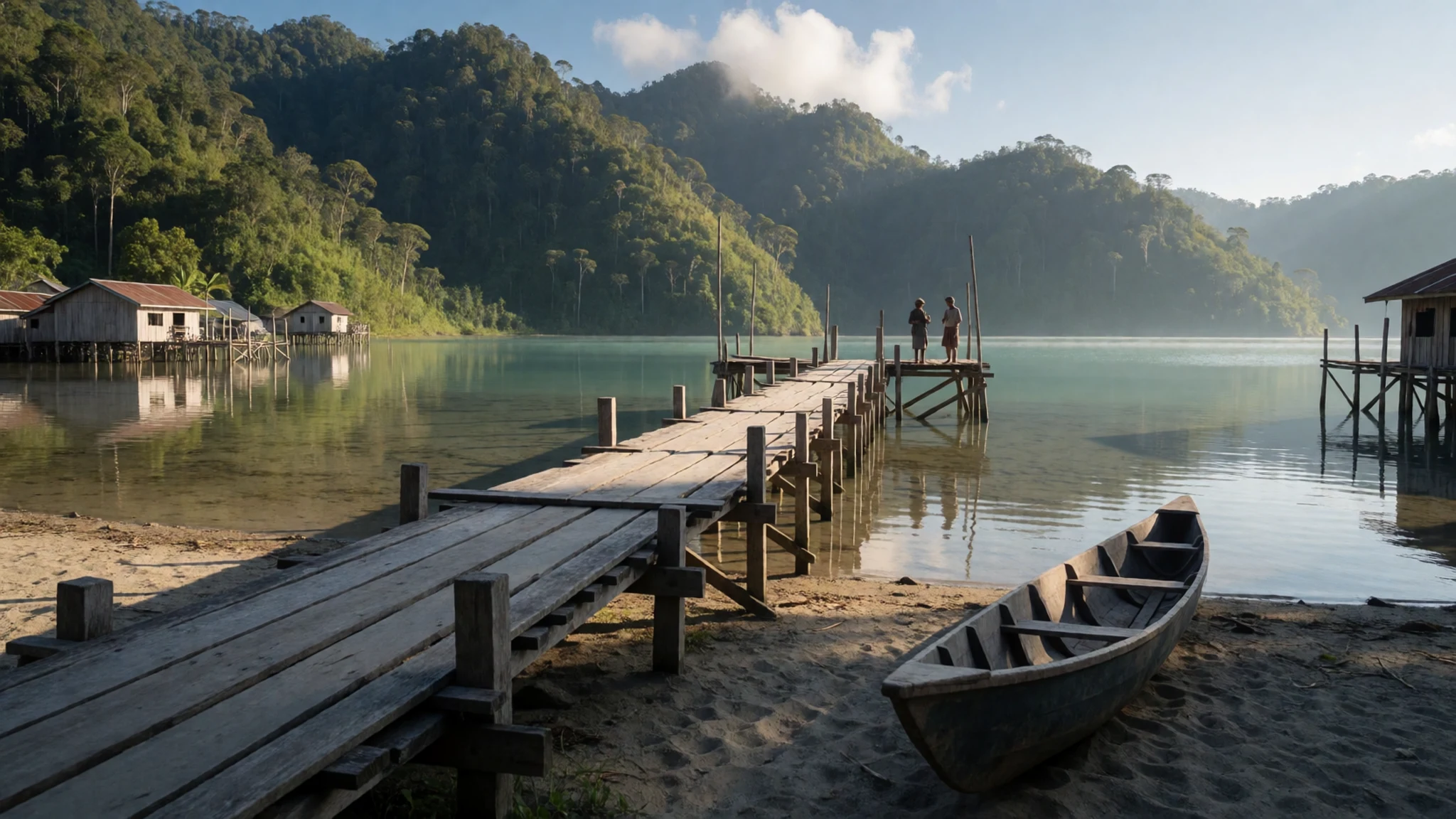
- Island villages and bark painting — Island villages on the lake
Some island villages on Lake Sentani are known for painted bark cloth, made from beaten tree bark and decorated with flowing, curved designs. Visiting one means arranging a boat and asking permission on arrival. Buying directly from the painters is the fairest way to support the craft, and it explains the lake's art better than any museum label.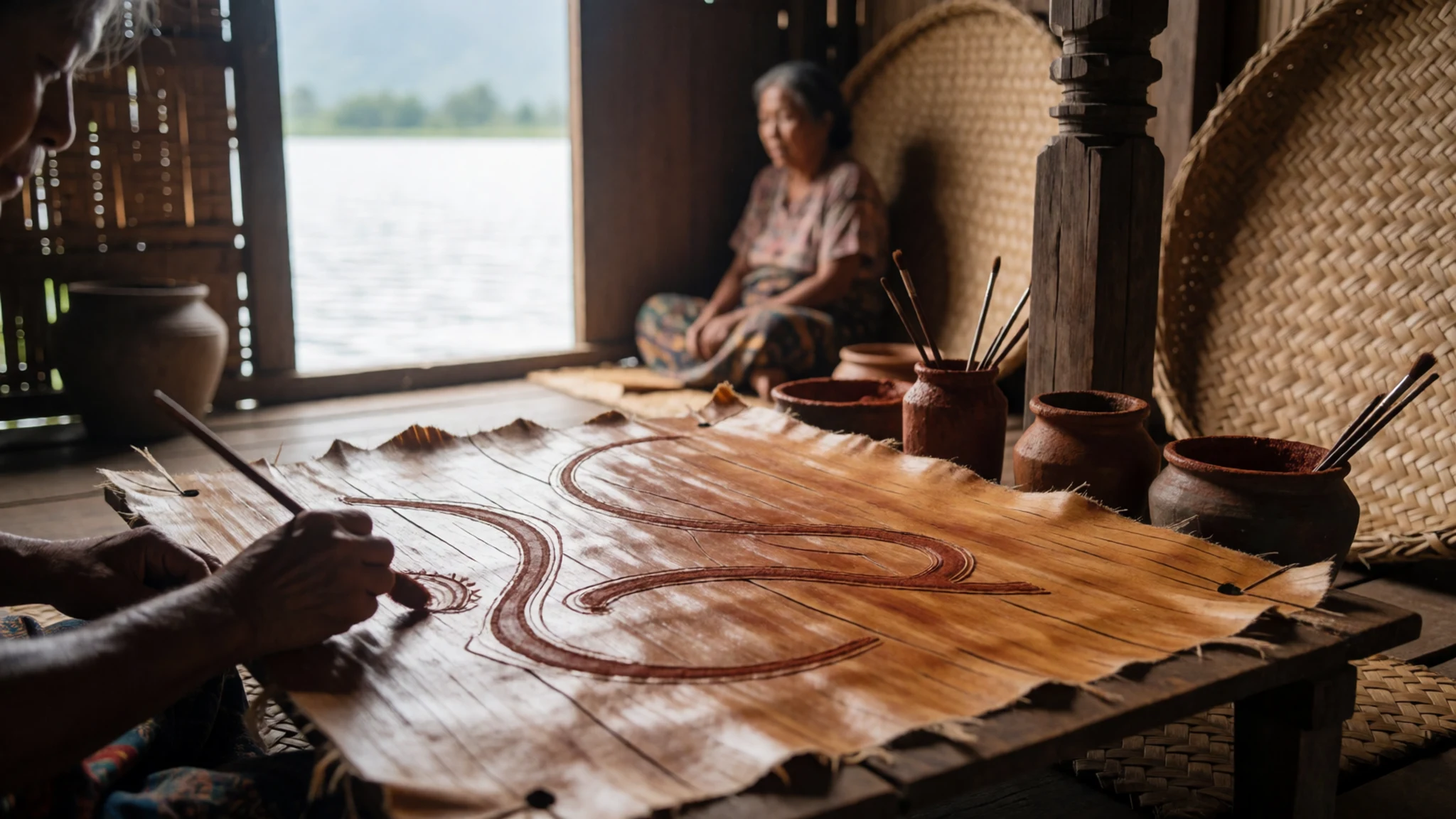
- The Cyclops mountains — North of the lake
The Cyclops range is a forested wall behind the lake and a strict nature reserve, so access is controlled and conditions are steep and wet. Most visitors simply enjoy it as a backdrop, with cloud clinging to the slopes. Anyone wanting to go further should hire a local guide and ask about current rules in Sentani first.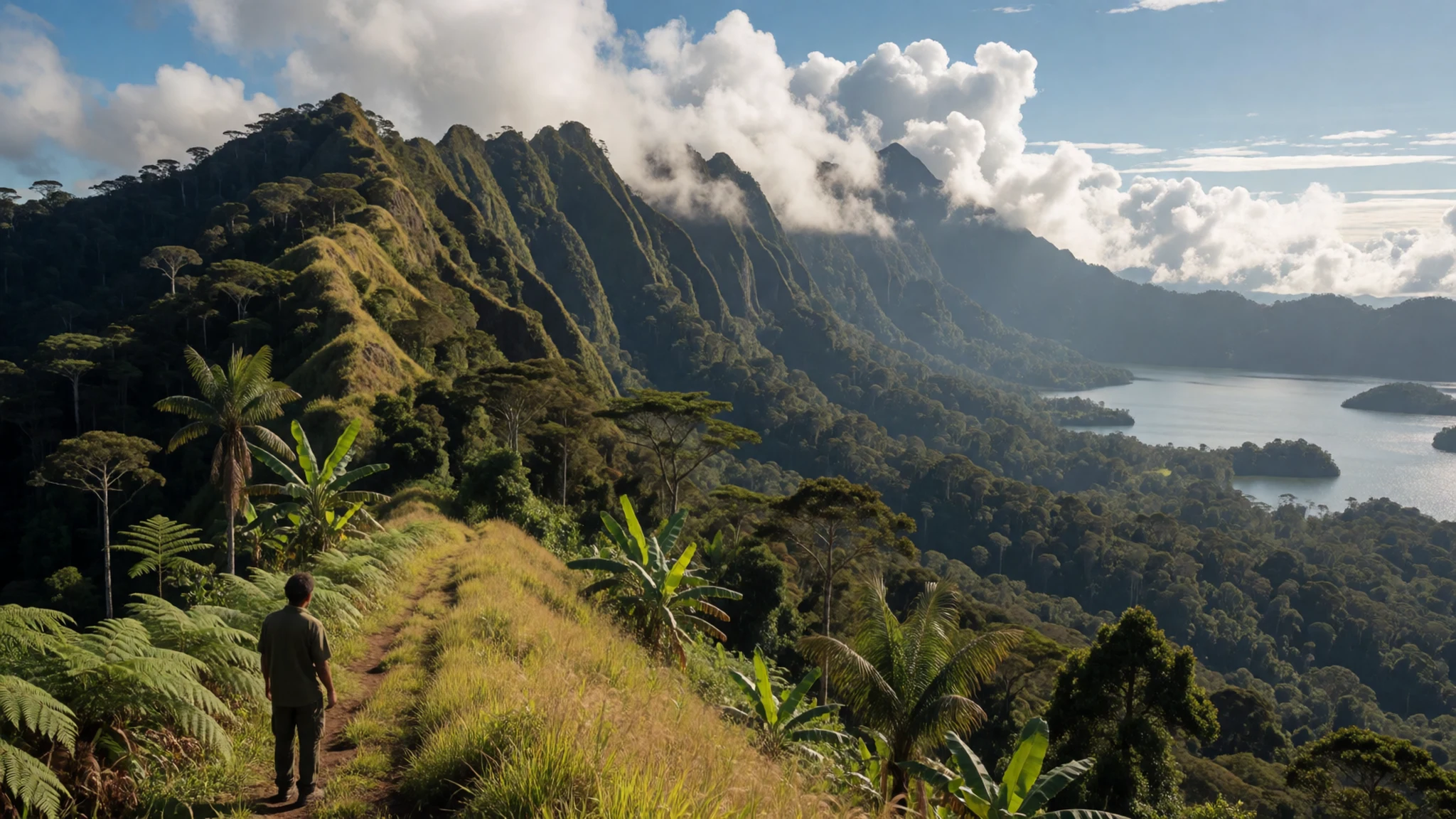
- Second World War relics — Hills above the lake
The hills and shoreline around Lake Sentani carry traces of the Allied campaign, from a naval base on the water to hilltop viewpoints associated with the wartime command in the area. Little is formally interpreted, so a local driver or guide adds a great deal. Expect modest sites, overgrown corners and good views, not polished museums.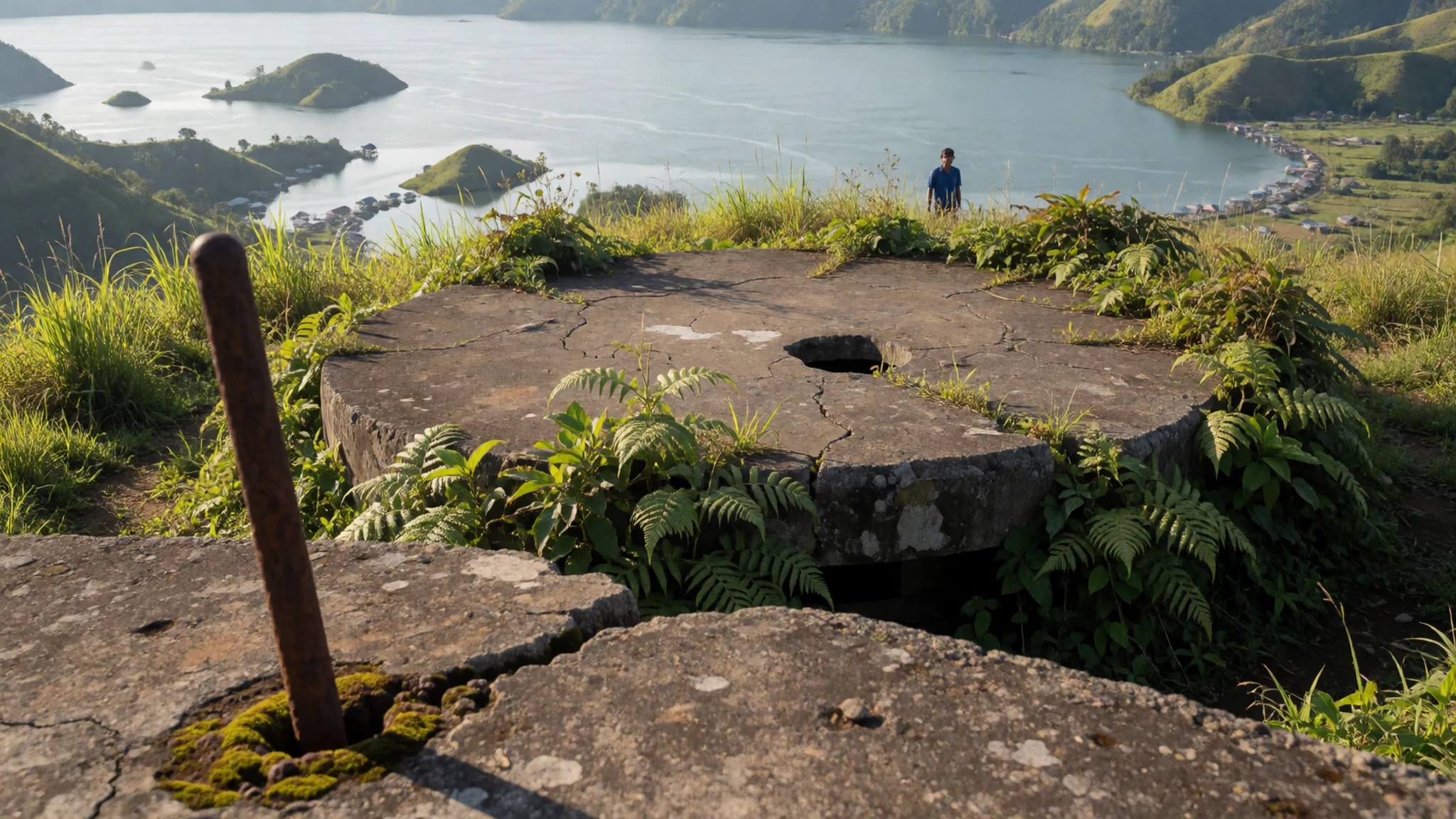
- Fishing on the open water — Open water, centre of the lake
Fishing remains part of daily life on Lake Sentani, from canoes working the shallows to fixed traps of the kind recorded in early Dutch photographs. A boat trip across the open middle of the lake, away from the jetties, shows how much of the community's routine is spent on the water. Ask the boatman before photographing anyone at work.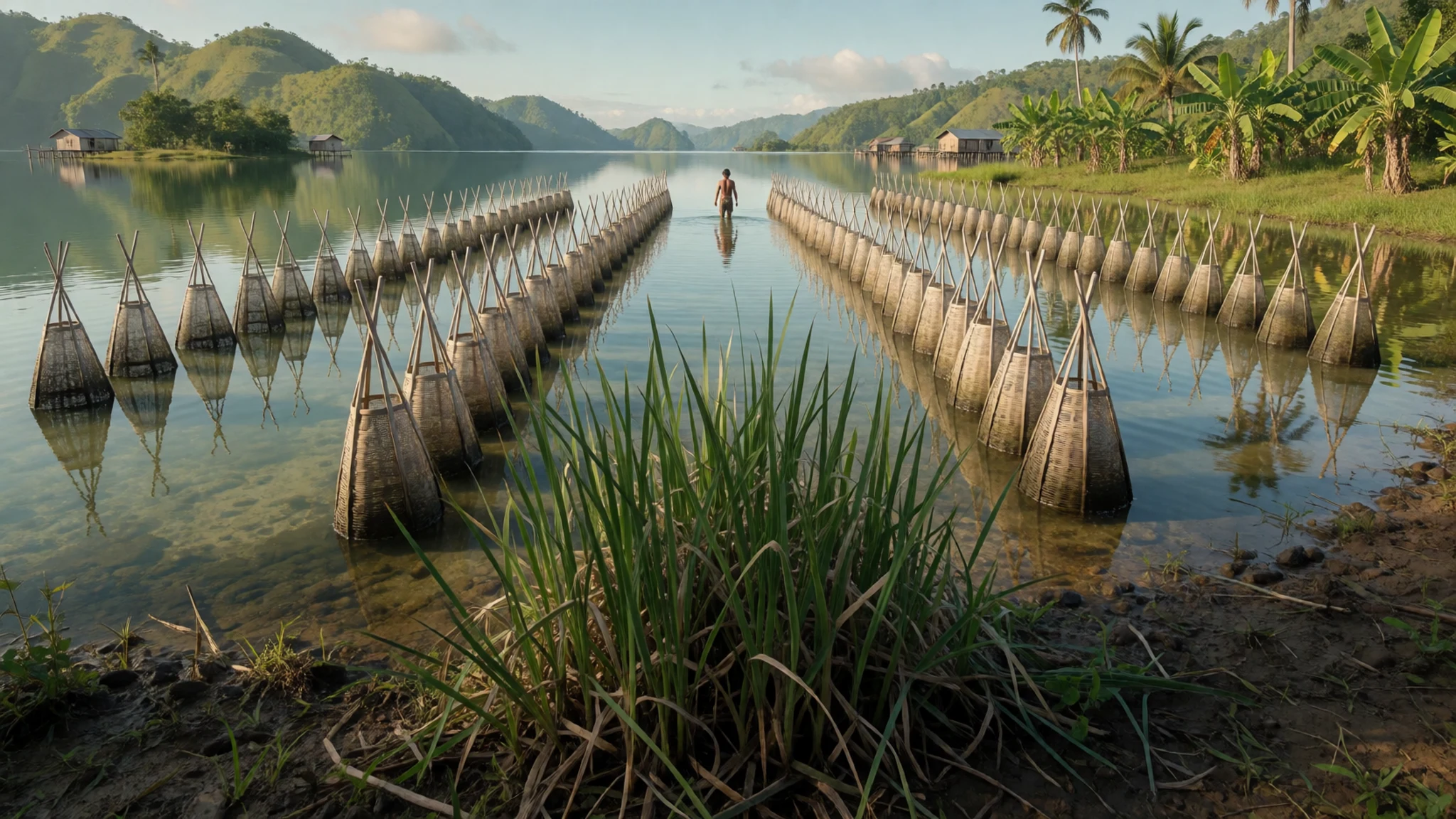
Culture
Lake Sentani is the territory of the Sentani people, whose society is built on clans, inherited chiefly authority and close ties to particular pieces of shoreline, water and island. Land and fishing places are owned, which matters for visitors: a pretty beach or jetty may belong to a family, and permission is part of ordinary courtesy. Most people on the lake today are Christian, and church shapes Sundays, with services, hymns and smart clothes taking over the villages. Older traditions survive in carving, bark painting, dance and ceremony, and are shown at local festivals; dates change, so check with the regional tourism office or a local guide before planning around one. Foreign visitors, especially those of European descent, may draw open curiosity: staring, laughter, requests for photographs and a few direct questions. Some may be called "bule", a word for foreigners. It is meant as interest rather than insult, and a smile and a few words of Indonesian go a long way. Indonesia is generally conservative, and in Papua's villages that applies to dress and behaviour alike. Ask the village head or your boatman before stepping ashore on an island or photographing people, and offer a small contribution if one is requested.
What to wear
Around Lake Sentani the best-known traditional textile is bark cloth, beaten from tree bark into a flexible sheet and painted with curving, repeating motifs in earthy reds, browns and black. It was once worn as clothing and still appears at ceremonies, dances and in the paintings sold by island artists. Ceremonial dress adds feathers, shell and bead ornaments, carved accessories and body decoration, usually seen at festivals or staged performances rather than in daily life. What people wear now is ordinary tropical clothing: T-shirts, shorts, trousers, flip-flops and caps in town, and neat shirts, dresses and often batik for church and formal occasions. Visitors should dress for heat, rain and modest village norms at once. Light, quick-drying shirts with sleeves, and shorts or skirts that reach the knee, suit island visits better than singlets. A light waterproof, a hat and sun cream are useful on open boats. Sandals with a grip cope with wet jetties, and a pair of closed shoes helps on hillside paths, where mud is common after rain.
What to eat
- Papeda with yellow fish soup — Eateries around Sentani town and Jayapura
Papeda is a glue-like porridge of sago, eaten with a sour-spiced yellow fish broth. It is wound onto chopsticks or a fork and slurped. The texture surprises newcomers, but it is the staple dish of the region and worth trying once.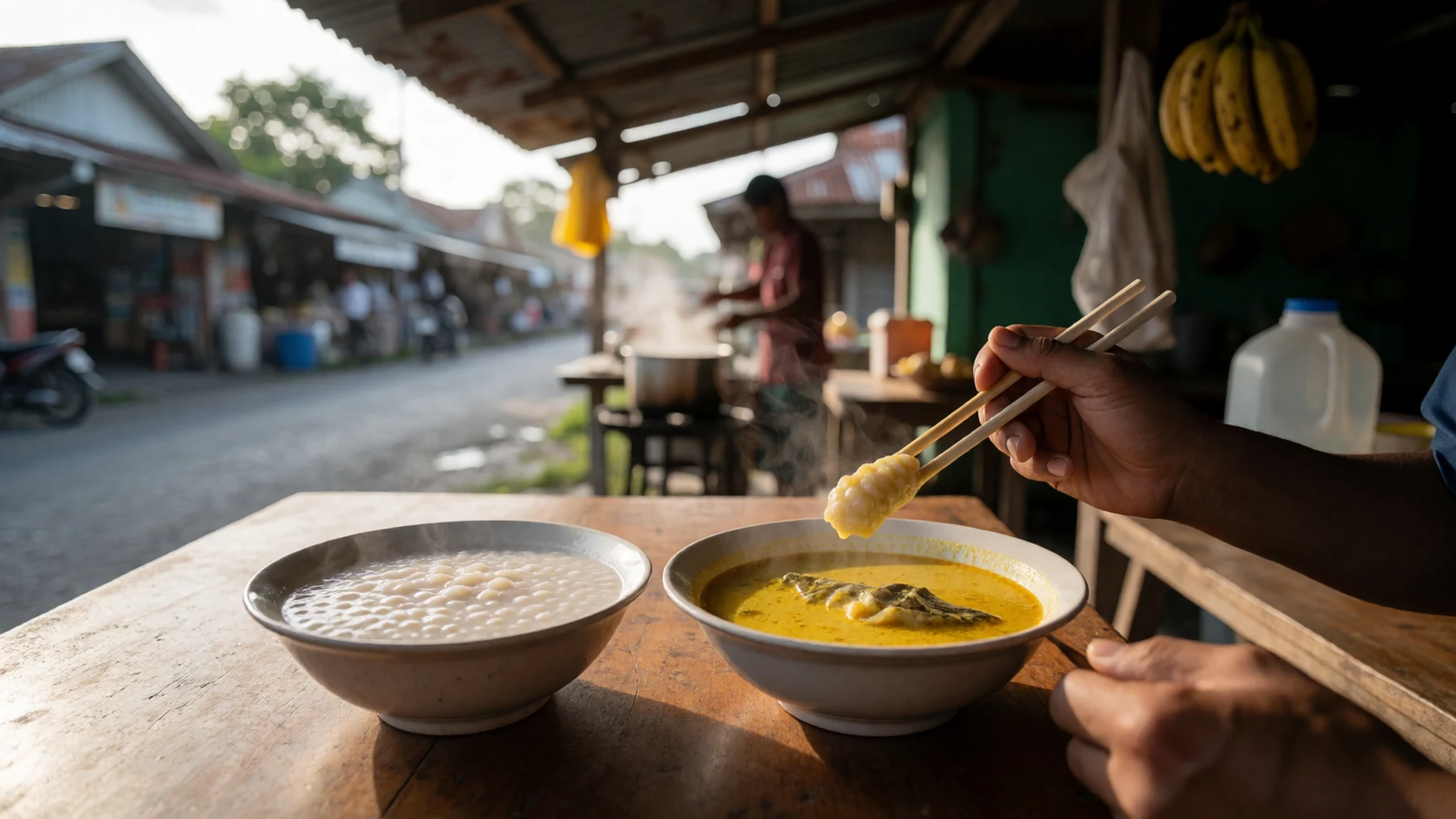
- Grilled lake fish — Warung along the lake road
Freshwater fish from the lake are commonly grilled over coals and served whole with chilli sambal and rice. Ask what was caught that morning. Cooking is simple, the smoky flavour is strong, and it is a good way to taste the lake itself.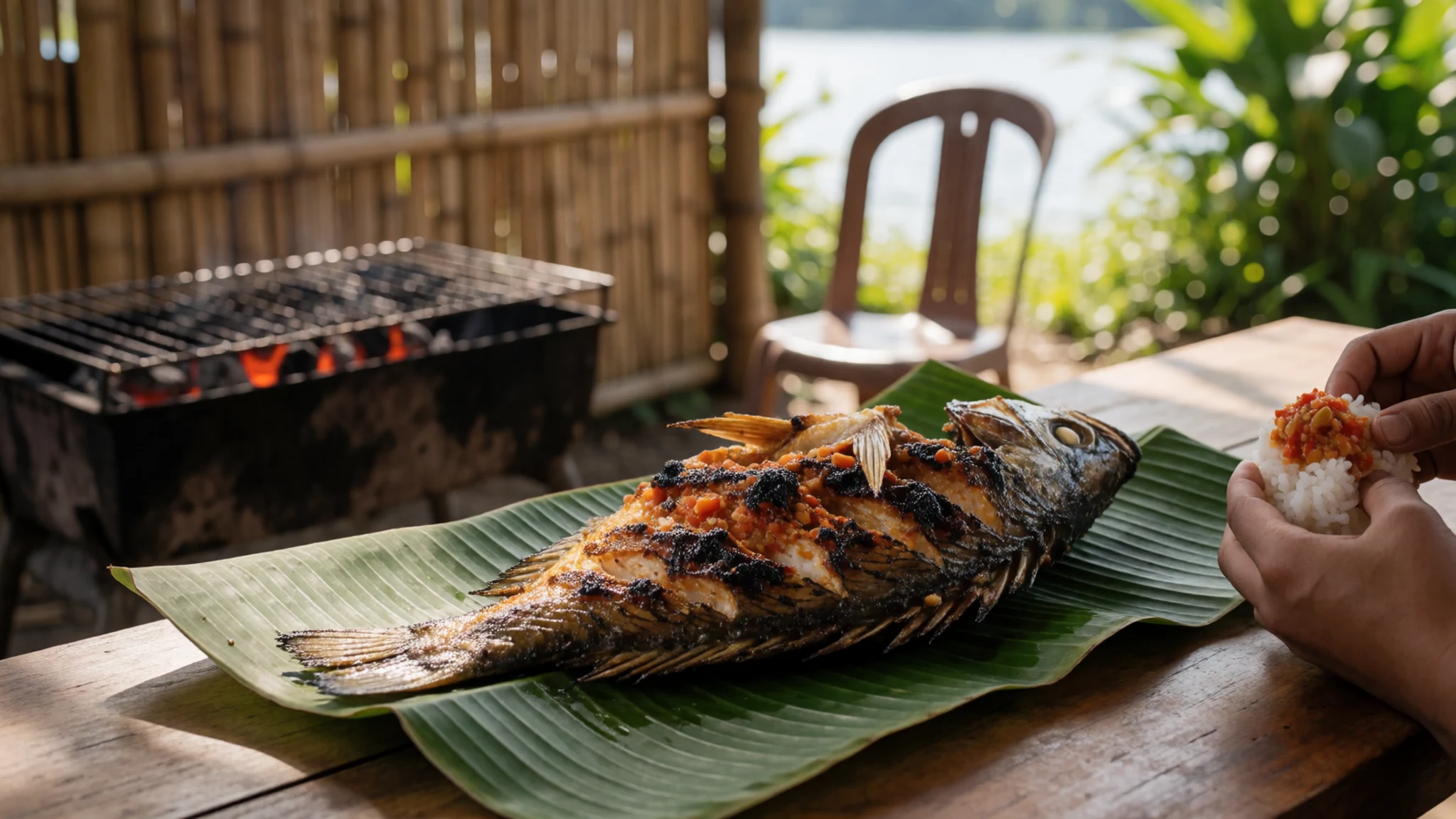
- Roasted sago — Sentani market and village stalls
Sago, the starch pressed from palm trunks, is also baked or roasted into dense cakes and eaten with fish or tea. It is filling, plain and ordinary food for many families, and a good test of how local cooking differs from Java. - Sweet potato and cassava — Morning stalls at Sentani market
Roasted or boiled sweet potato and cassava are everyday staples in Papua, often sold hot in the morning from market baskets. They make a cheap, filling breakfast, usually eaten with chilli or a little salted fish. - Nasi goreng and Javanese-style dishes — Simple restaurants and night stalls in Sentani town
Fried rice, grilled chicken, noodle soups and other Javanese-influenced dishes are widely sold throughout Indonesia, including Sentani. They are dependable, flavoured with peanuts, chilli and sweet palm sugar, and handy when the local staples feel too unfamiliar.
Plan it
Best time. September to November is usually the more settled stretch, though Papua's north coast is warm and humid all year and showers can arrive at any time. Plan for heat, sudden rain and cloud over the ridges whichever month is chosen.
How long. 2–3
Getting there. Fly to the airport serving Sentani and Jayapura, which sits close to the lake; flights usually connect through larger Indonesian hubs. The last leg is a short taxi, ride-hailing car or local driver to the lake jetties, then a hired boat to the islands. Check current visa and any regional travel guidance on the official Indonesian immigration site before booking.
Budget. mid
Tips
- Agree the boat route and price with the boatman before leaving the jetty
- Go early in the day, when the water is calmer and the light is clearer
- Carry cash in small notes, since island villages and market stalls rarely take cards
- Bring a light rain jacket, sun protection and drinking water, and keep valuables dry in a bag
- Hire a local guide for hill, wartime and reserve visits, as signs and access are limited
Etiquette
- Ask before landing on an island or photographing people
- Dress modestly in villages, with shoulders and knees covered
- Keep voices down and phones away during church services
Nearby
Sources
- Wikidata Q59058 (CC0)
- Wikipedia: Lake Sentani (CC BY-SA 4.0)
- Wikivoyage: Indonesia (CC BY-SA 4.0)
- Sentani Lake at Jayapura, Kiko Turteliny (CC BY 2.5)
- Nova Guinea Vol 4, Karte 3, C. E. A. Wichmann (Public domain)
- A Papua in a proa with hoisted sail, Gijsbert van der Sande (Public domain)
- Army Quartermaster General Staff (Reeve 0091553), National Museum of Health and Medicine (CC BY 2.5)
- Fotolitho van een Papoea-nederzetting aan het Sentani-meer, Tropenmuseum (CC BY 3.0)
- Papoea mannen van rond het Sentanimeer, Hendrik Freerk Tillema (Public domain)
- Constructies voor de visvangst in het Sentanimeer, Gijsbert van der Sande (TM-60012002) (Public domain)
- Constructies voor de visvangst in het Sentanimeer, Gijsbert van der Sande (TM-60012004) (Public domain)


