Labrang Monastery
Labrang Monastery, People's Republic of China
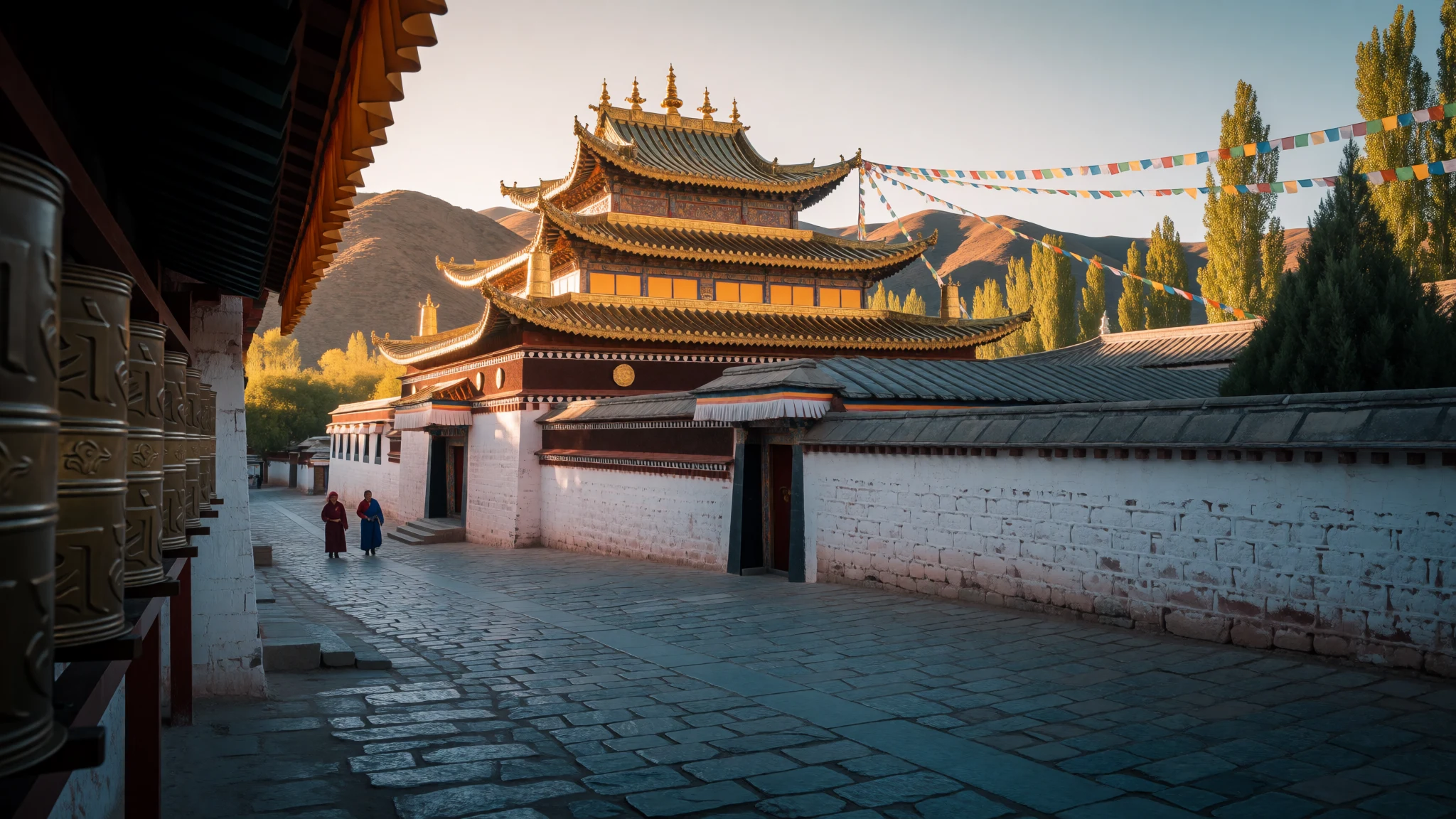
Labrang Monastery is a living Tibetan Buddhist monastery town in Gansu, where pilgrims, debating monks and prayer wheels still set the pace of the day.
The place
Labrang Monastery sits on the western edge of Labrang town in Xiahe County, part of the Gannan Tibetan Autonomous Prefecture in southern Gansu, a region Tibetans call Amdo. The Daxia River, a tributary of the Yellow River, runs through the valley, and the monastery's whitewashed walls, monks' quarters and golden roofs fill much of the ground along one side of town. It belongs to the Gelug school, the tradition linked with Tsongkhapa and the Dalai Lamas. Its full Tibetan name is a long one, so almost everyone says simply Labrang (བླ་བྲང་, Chinese Lābǔléng Sì, 拉卜楞寺). Inside, the layout is that of a monastic university rather than a single temple: prayer and assembly halls, separate colleges for study, a debating ground, a gilded stupa and a museum of statues, sutras and murals. The architecture blends Tibetan forms with older Indian monastery influences. Daily life runs on chanting, classes and debate, and the town around it feels distinctly Tibetan, with pilgrims, prayer wheels and shops selling butter, incense and robes. Xiahe is roughly four hours by road from Lanzhou, the provincial capital, so it feels remote but is reachable in a day. The monastery was founded in 1709 and, after the closures of the Cultural Revolution, reopened in 1980 with a limited number of monks. It is a place of worship first and a sight second, and visits go best when treated that way.
Its story
Labrang Monastery was founded in 1709 by the first Jamyang Zhépa, Ngawang Tsöndrü, and grew into a centre of learning and political weight on the frontier where Tibetan and Mongolian worlds met. Over the following centuries it drew students and pilgrims from across Amdo and beyond, hosted large religious gatherings through the year, and anchored a local power that tried to keep a measure of autonomy through the shifting alliances and violent conflicts that lasted until 1950. By the early twentieth century it was a leading monastery of the region, home to several thousand monks. The twentieth century was hard on it. During the Cultural Revolution the monks were sent back to their home villages to work, and the monastery stayed closed until it reopened in 1980. Many monks returned, though the authorities capped enrolment well below the old numbers. In April 1985 the Assembly Hall burned down; a replacement was built and consecrated in 1990. Tension has not gone away. A multi-day security operation in the monastery and nearby Tibetan villages was reported in October 2025, with house searches, confiscation of photographs of the Dalai Lama and restricted communications. Anyone planning a visit should know that conditions can change quickly, and that rules on access, photography and conversation are enforced locally and can differ from one month to the next.
What to see
- The outer kora — Around the monastery perimeter
The outer circuit path around Labrang Monastery is lined with rows of prayer wheels, and pilgrims walk it clockwise, spinning each wheel by hand. Going early, when the town is quiet and locals outnumber visitors, gives changing views of the whitewashed walls and golden roofs. Keep moving with the flow and expect to share the path with elderly pilgrims and dogs.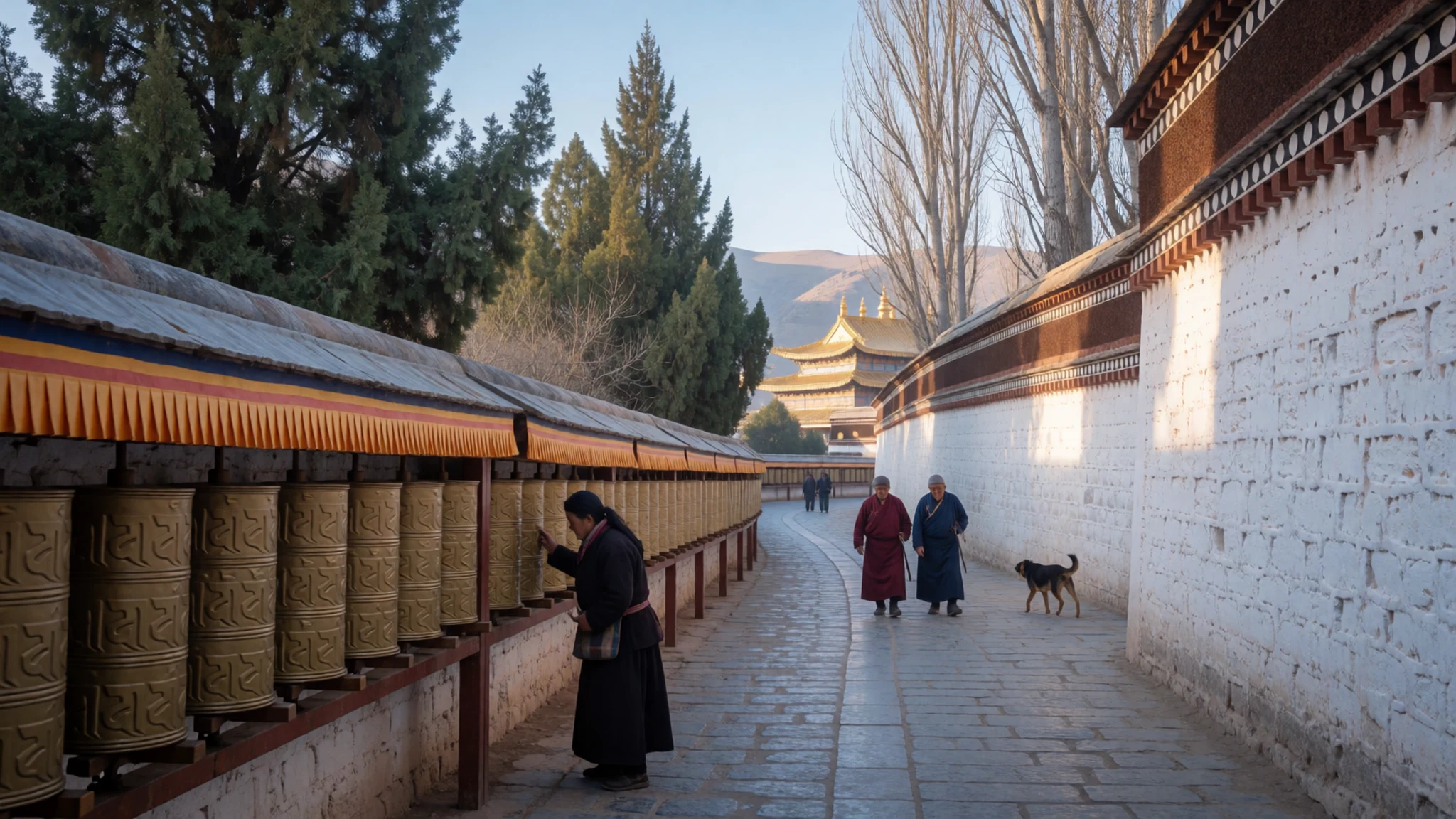
- The Assembly Hall — Inside the monastery complex
The Assembly Hall at Labrang Monastery burned in 1985 and was rebuilt and consecrated in 1990, so the building is modern even though its purpose is old. Monks gather here for prayer, and visitors who are admitted see rows of cushions, hanging banners and butter lamps. Photography is often restricted inside, so ask first.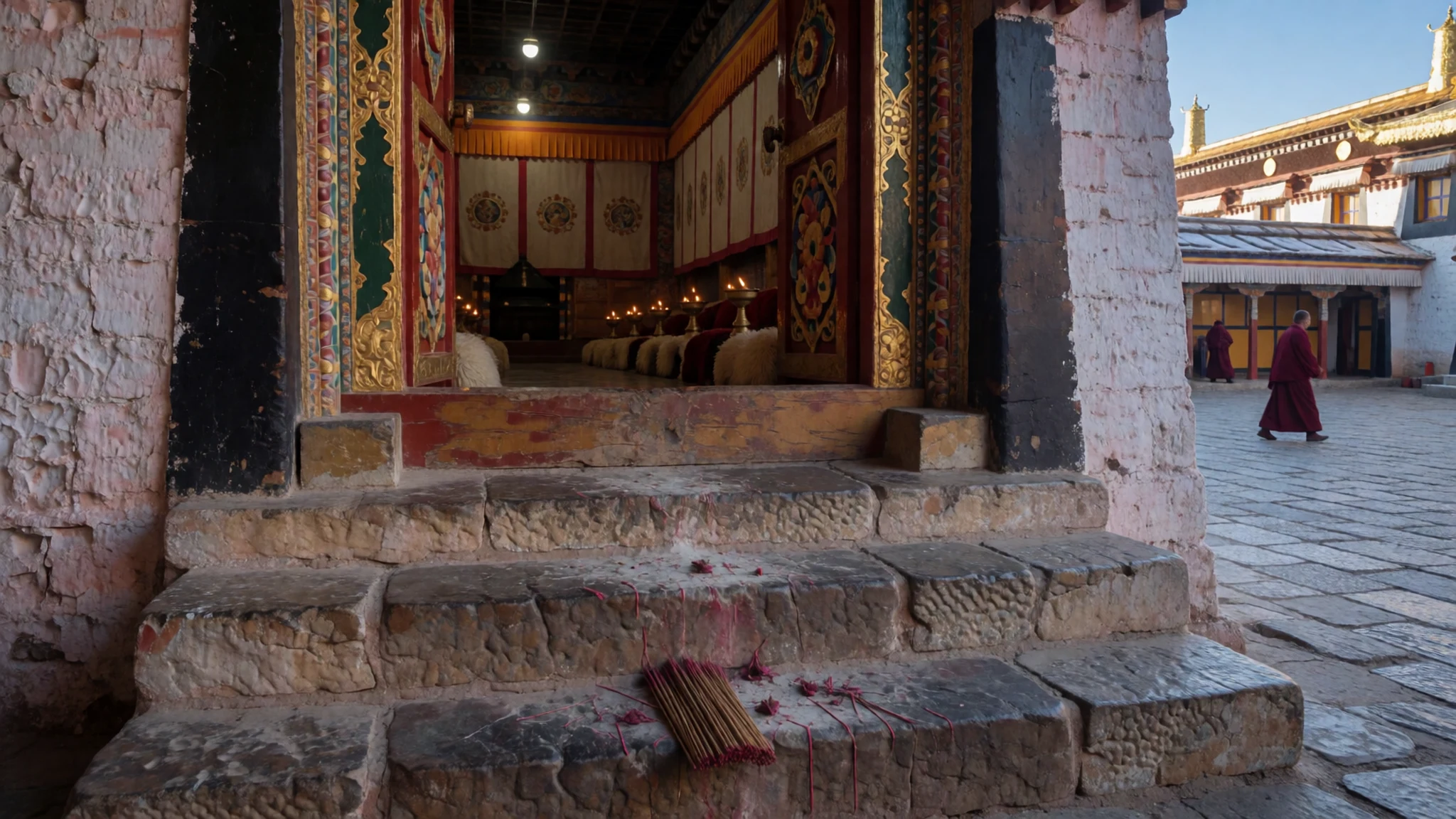
- The debating ground — Inside the monastery complex
Labrang Monastery has a sutra debate area where monks sharpen their arguments in pairs, one standing and clapping to press a point while the other sits and answers. Sessions follow the monastery's study timetable, which can change, so ask locally. Watch from the edge, keep voices low and do not photograph individual monks without asking.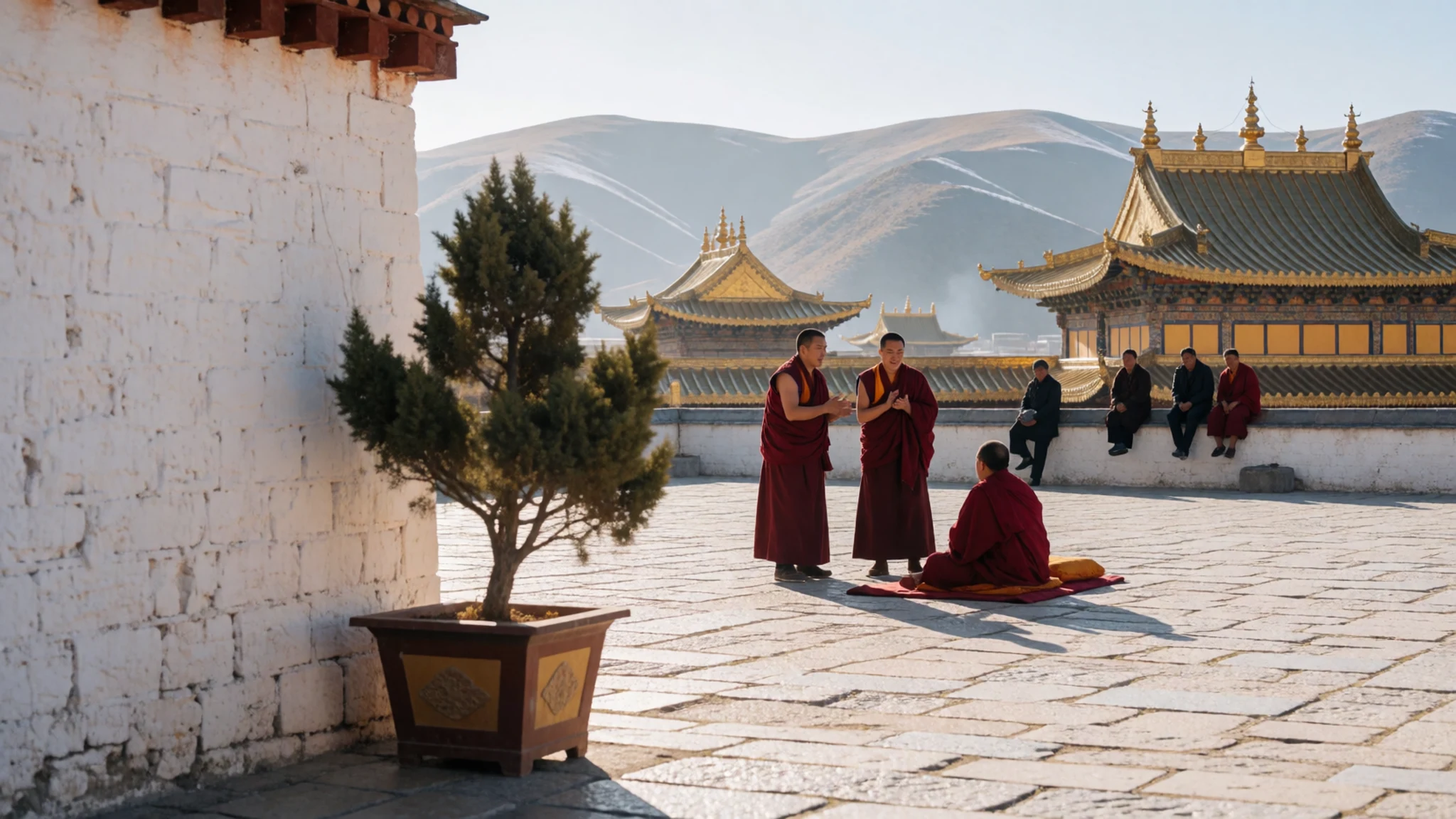
- The gilded stupa and golden roofs — Across the monastery complex
Among the eighteen halls of Labrang Monastery, the golden roofs and a gilded stupa catch the light most clearly in the morning, when the valley is still cool. They are best appreciated from the lanes and the outer path as well as from within. Binoculars or a zoom lens help with the roof ornaments.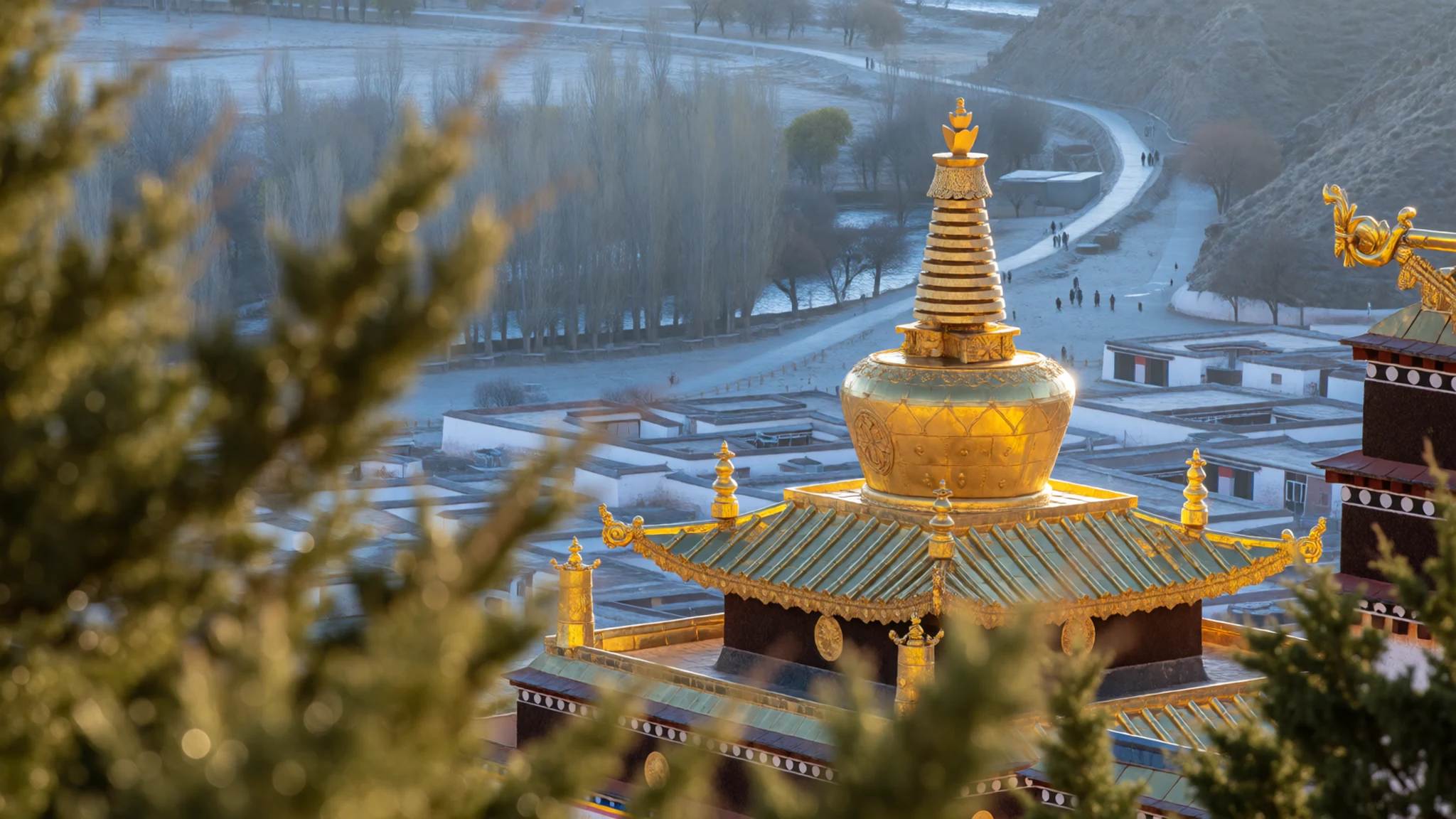
- The Buddhist museum — Within the monastery grounds
Labrang Monastery has a museum holding Buddha statues, sutras and murals, which gives useful context for the halls that are closed to visitors. Labels may be limited in English. Opening times and ticketing change, so check on arrival rather than relying on older guidebook details, and allow time to look slowly.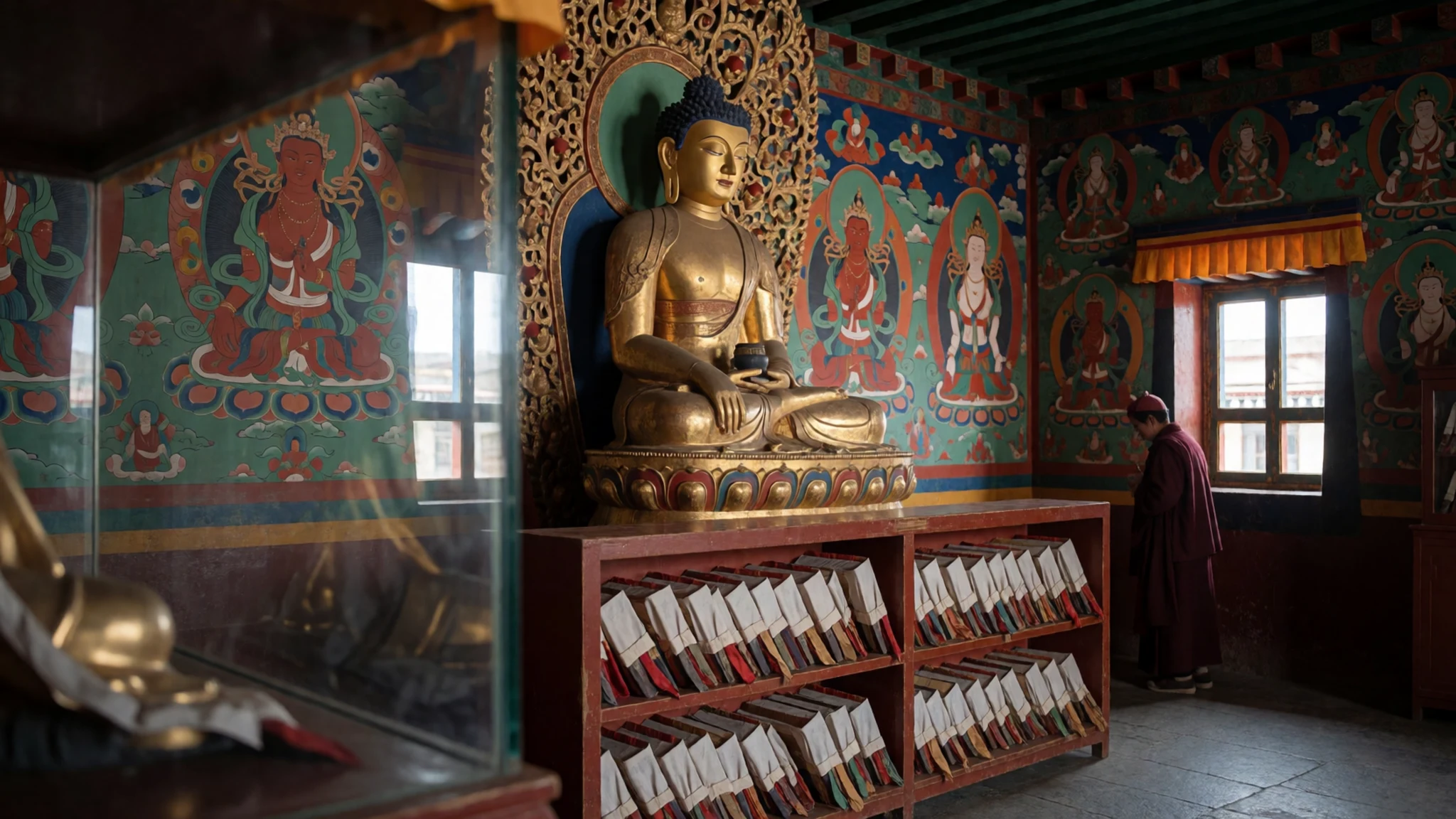
- Xiahe town lanes and riverside — Xiahe town
The lanes of Xiahe beside Labrang Monastery are lined with shops selling butter, incense, robes and prayer flags, with tea houses between them. A walk along the Daxia River in the late afternoon shows pilgrims, monks on bicycles and the daily life that surrounds the monastery. Prices in shops are not fixed, so ask politely.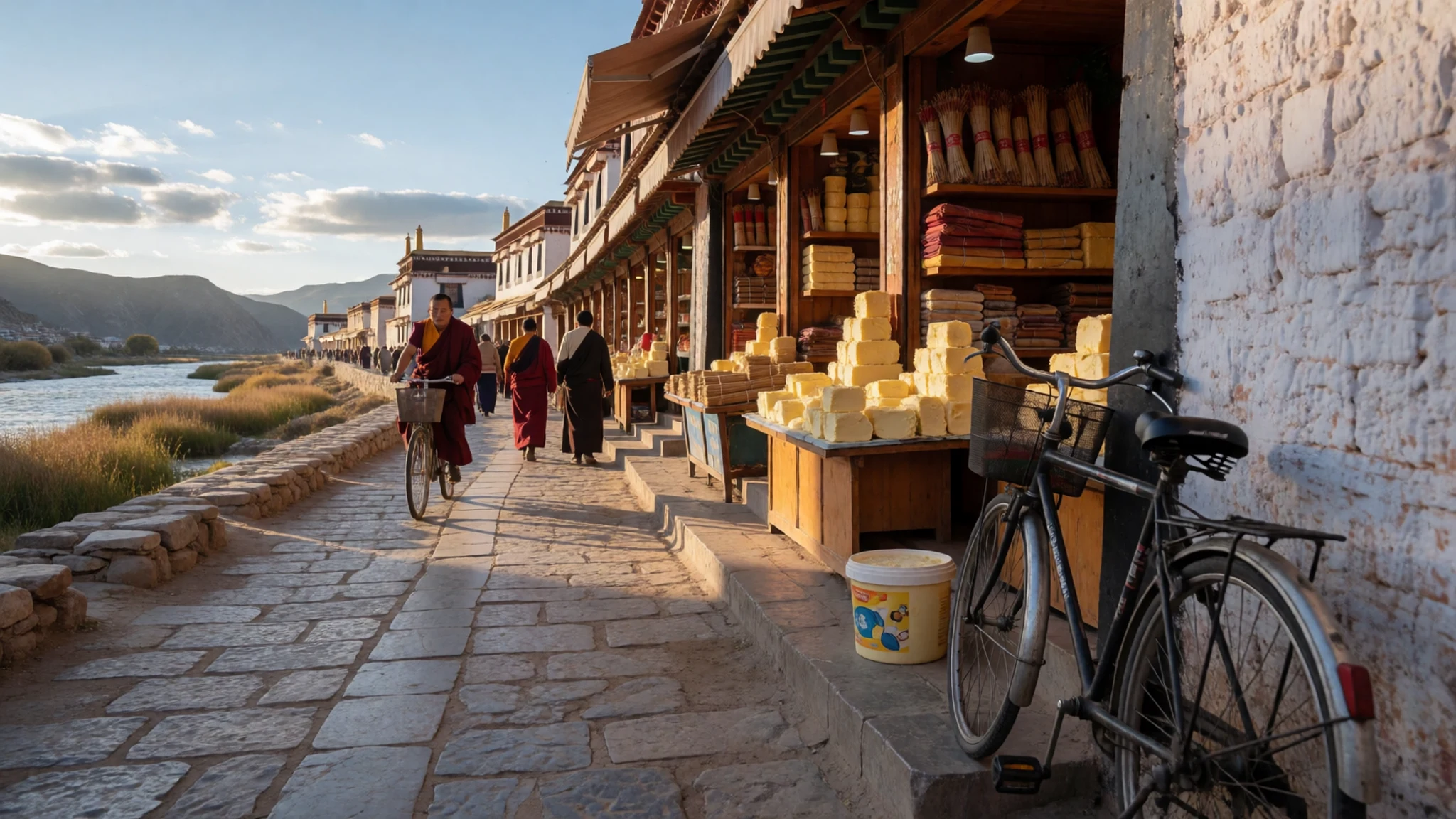
Culture
Labrang Monastery is a working centre of Gelug Tibetan Buddhism, and a visit makes most sense once its routines are understood. Monks study in the monastery's colleges, gather in the halls for chanting, and train in public debate. Lay Tibetans arrive from across Amdo as pilgrims, walking the outer path clockwise, spinning prayer wheels, offering butter for lamps, and sometimes prostrating full-length on the ground. White silk scarves called khata are offered to senior monks and to images as a mark of respect. Prayer flags and juniper smoke offerings are part of the scene on the hills around town. Large festivals, including the Monlam prayer festival after the Tibetan New Year, bring crowds and ceremony, but dates move with the lunar calendar and should be checked locally. The monastery has been through closure, fire and close state oversight, and many local people are guarded about politics. Pictures of the Dalai Lama are a sensitive subject in the area, and visitors should not raise the subject or hand out images. Conversation is best kept to everyday things such as food, family, weather and monastery life. Locals are generally glad to explain customs to a respectful visitor who lets them lead.
Walk clockwise around stupas and prayer wheels, take off hats and shoes where monks or signs ask, and ask before photographing monks, pilgrims or anything inside a hall.
What to wear
Around Labrang Monastery, traditional Tibetan dress centres on the chuba, a long wrap-over robe tied at the waist with a sash. Heavier versions are lined with sheepskin or made of thick wool for the cold, and lighter ones are worn in summer. Felt or fur-trimmed hats, tall boots and jewellery of turquoise, coral and silver complete festival outfits, and these are most visible at religious gatherings and weddings. Monks wear maroon and saffron robes, a daily sight in the lanes. Day to day, most townspeople wear practical modern clothes: padded jackets, fleeces, jeans and trainers, with the chuba kept for ceremonies or worn by older residents. Visitors should dress for a high, dry valley where mornings and evenings are cold even in summer, and winters are properly cold. Layers work best, along with a sun hat and sunscreen for strong daytime light. Shoulders and knees should be covered at the halls, and hats come off indoors. Shoes should be easy to slip off at doors, but sturdy enough for stone paths, steps and uneven lanes. Avoid bright, revealing or slogan-printed clothing, and bring gloves and a warm hat from autumn to spring.
What to eat
- Tsampa — Tibetan eateries and grain shops around the monastery
Tsampa is roasted barley flour, mixed by hand with butter tea into a firm dough or eaten as a porridge. It is the staple of Tibetan households and gives lasting energy for a day of walking. Look for it in family-run Tibetan eateries and in grain shops near the monastery.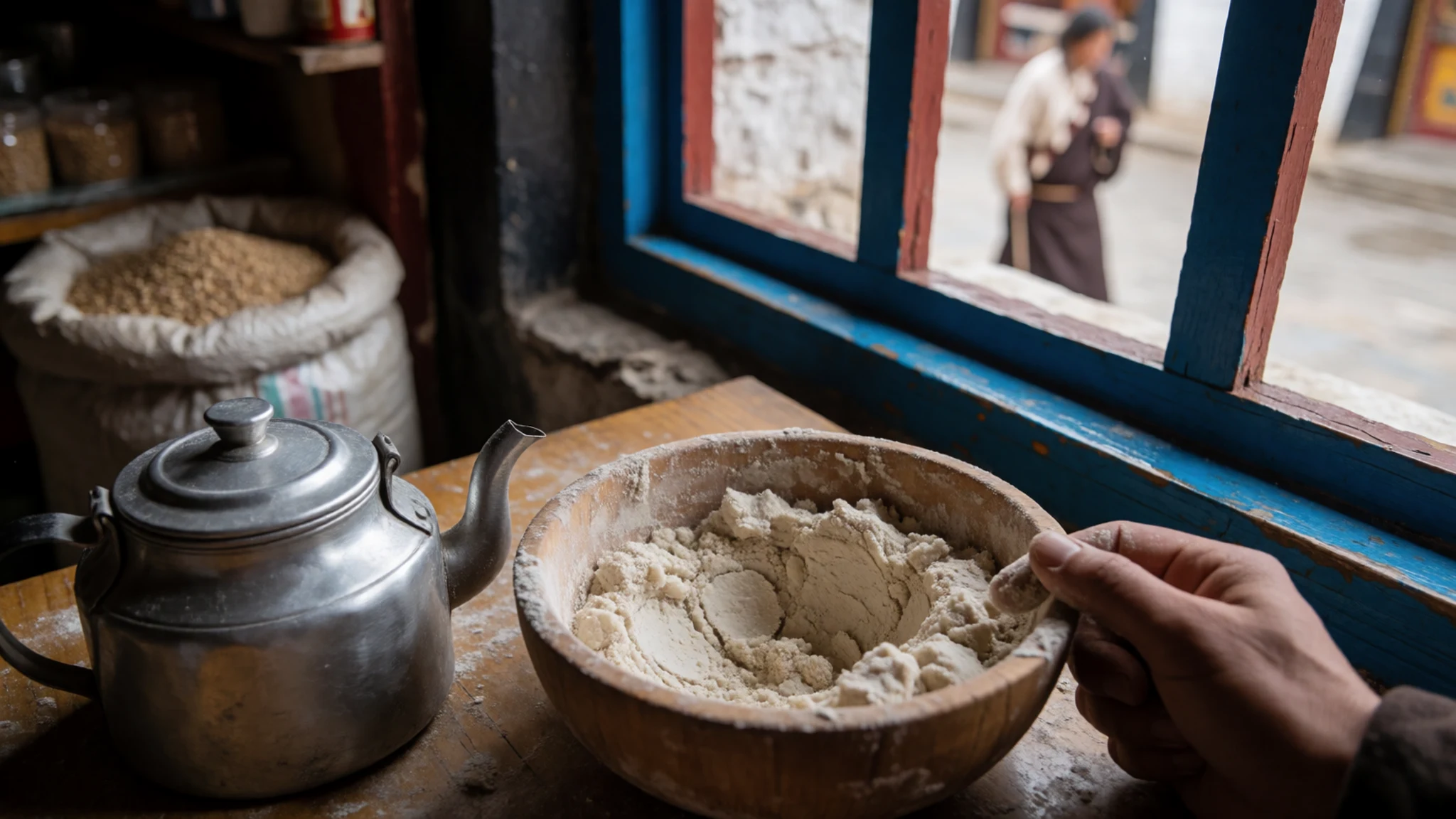
- Butter tea (po cha) — Tea houses in Xiahe and with local families
Butter tea is a salty, buttery brew of tea, churned with yak butter, served all day in Tibetan homes and tea houses. It is an acquired taste, warming and filling at altitude. Small cups are refilled constantly, so leave a little in the cup if finished.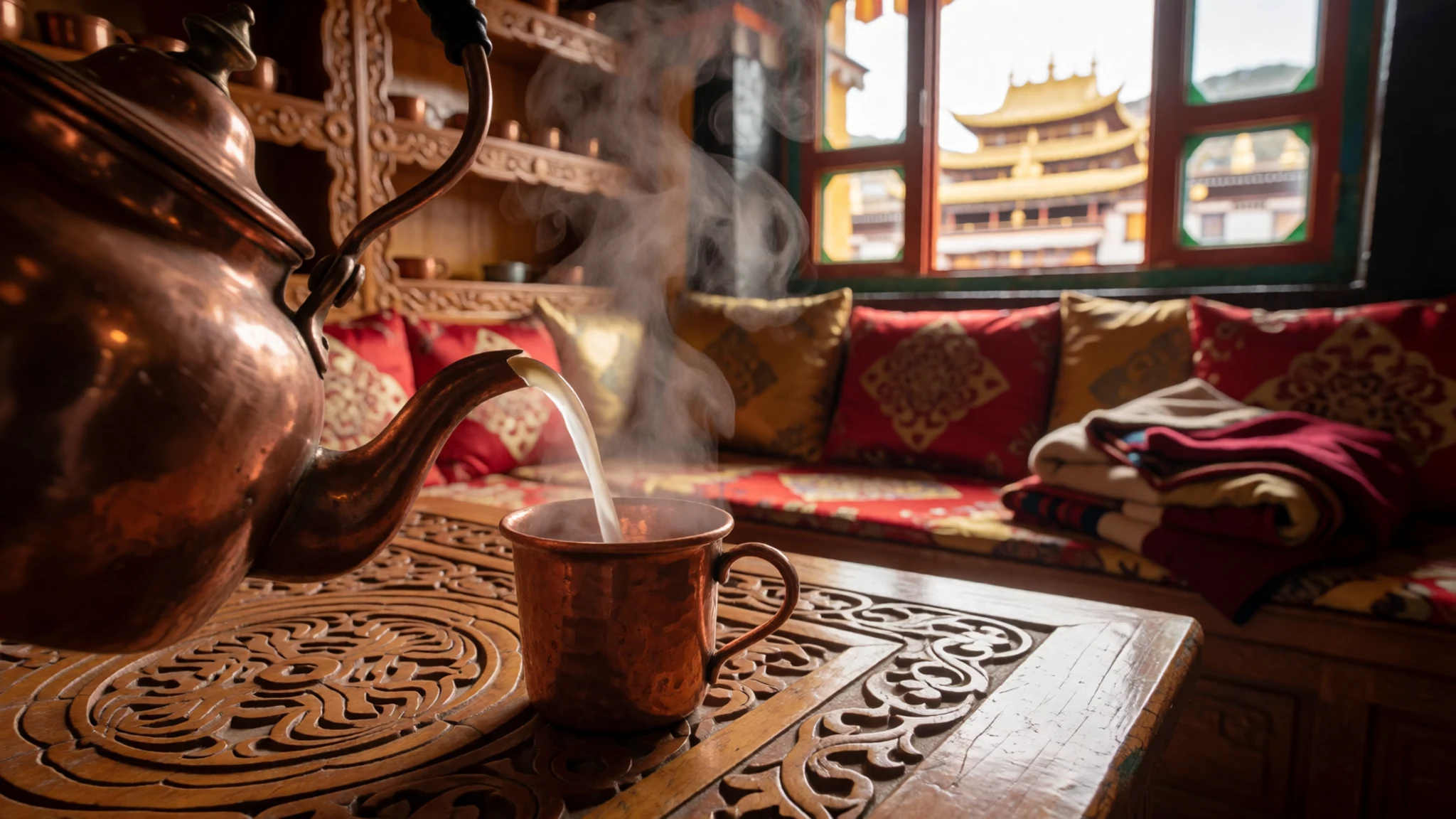
- Momo — Tibetan restaurants along the main street
Momo are steamed dumplings, commonly filled with yak or mutton and onion, and served with a chilli dip. They suit a quick lunch after the morning circuit of the monastery. Vegetarian fillings are sometimes available, though it is worth asking about the stock. - Thukpa — Small Tibetan and Hui eateries in town
Thukpa is a hearty noodle soup with meat, vegetables and sometimes dried chilli, eaten on cold evenings. In Xiahe it is simple, hot and cheap, and fits the climate well. Vegetarians should check what the broth is made with. - Hand-pulled beef noodles — Hui Muslim noodle eateries near the bus station and main street
Gansu is known for hand-pulled noodles in clear broth, served by Hui Muslim cooks in small, busy eateries. They are quick, filling and easy to order by pointing. The halal kitchens also offer a meat-free choice for travellers who want to avoid yak or mutton. - Yak yoghurt — Morning market and small dairy shops in Xiahe
Yak yoghurt is thick, tangy and sometimes sold in shops and markets by weight or cup, often with a spoonful of sugar. It is a good breakfast with bread, and at the right season fresher and richer. Choose shops with a steady stream of local customers.
Plan it
Best time. June to September has the mildest weather in a high, cold region, though evenings stay cool. October and November are clear but turn chilly, and winters are cold, with fewer visitors. Monlam in the first lunar month is atmospheric but cold and busy, so check dates in advance.
How long. 1–2
Getting there. Fly to Lanzhou, the Gansu provincial capital, then travel about four hours by road to Xiahe by bus or hired car. Check current bus services and road conditions before travelling. Within Xiahe, the monastery is a short walk or local taxi from most places to stay.
Budget. low
Tips
- Check current rules for foreign visitors, including any guided-tour requirement for the halls, before you travel and again on arrival.
- Arrive early or stay overnight so you can walk the outer path in the quiet morning and watch evening pilgrims.
- Carry some cash, as small shops and eateries may not take cards, and download offline maps and a translation app.
- Pace yourself on the first day, drink water often and bring warm layers, because the valley is high and cold after dark.
- Keep expectations flexible, since access, photography and festival timings can change at short notice.
Etiquette
- Dress modestly and remove hats and shoes at hall doors.
- Walk clockwise around stupas and the outer path.
- Ask before photographing monks or pilgrims, and avoid discussing politics or the Dalai Lama.
Nearby
Sources
- Wikidata Q1799533 (CC0)
- Wikipedia: Labrang Monastery (rev 1386005462) (CC BY-SA 4.0)
- Wikivoyage: Xinjiang (rev 5394920) (CC BY-SA 4.0)
- Photo: Labrang Military Build up Around Losar, SFT HQ (Students for a Free Tibet) (CC BY 2.5)
- Photo: Labrang Monastery 01, Jonashtand (CC BY-SA 4.0)
- Photo: Labrang Monastery 02, Jonashtand (CC BY-SA 4.0)
- Photo: Labrang Monastery 03, Jonashtand (CC BY-SA 4.0)
- Photo: Labrang Monastery 04, Jonashtand (CC BY-SA 4.0)
- Photo: Labrang Monastery 05, Jonashtand (CC BY-SA 4.0)
- Photo: Labrang Monastery 06, Jonashtand (CC BY-SA 4.0)
- Photo: Labrang Monastery 07, Jonashtand (CC BY-SA 4.0)


