Kumbum Monastery
Kumbum Monastery, People's Republic of China
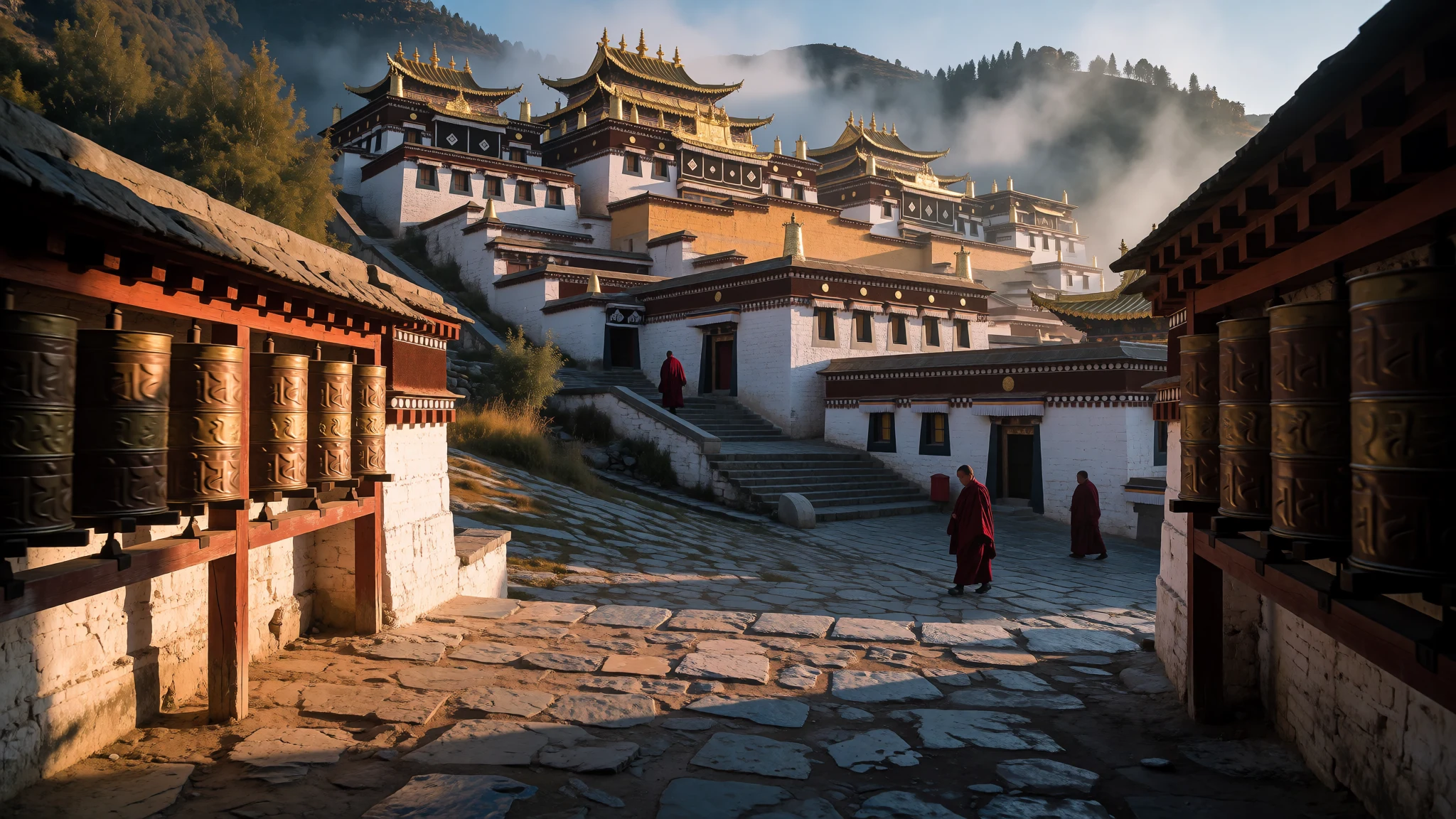
Kumbum Monastery is a working Gelug monastery in a Qinghai valley, where golden roofs, butter sculpture and pilgrims make Tibetan Amdo easy to reach.
The place
Kumbum Monastery, also called Ta'er Temple (Ta'er Si), fills a narrow valley beside the village of Lusar in Huangzhong County, a short run from the city of Xining in Qinghai province. This is the historical Tibetan region of Amdo, where the high plateau begins to fall away towards the Chinese heartland, and the monastery feels like a meeting point of the two worlds. Whitewashed monks' quarters and golden-roofed halls climb the slopes, and pilgrims in heavy coats walk the lanes between them, spinning prayer wheels as they go.
The Tibetan name is Kumbum Jampa Ling (སྐུ་འབུམ་བྱམས་པ་གླིང་). Kumbum refers to a sacred tree whose leaves are said to carry images of the Buddha. The monastery belongs to the Gelug school and has long been linked to Drepung, the great monastic house outside Lhasa. Wikidata classes it both as a Tibetan Buddhist monastery and as a Chinese AAAAA-rated tourist attraction. In practice that means good paths, signs and organised ticketing, and also tour groups around midday.
The valley setting shapes the visit. Alexandra David-Néel, the Belgian-French explorer who studied and translated Tibetan books here, wrote of mist pooling around the rocky ridge above the monastery and of sudden hailstorms that local people blamed on mischievous demons. Visitors today still meet fast-changing weather, so a morning that starts clear can end under cloud.
Near the entrance, a cluster of souvenir shops and Tibetan eateries sits slightly downhill and to the left. The monastery itself is best treated as a living religious site rather than a museum: monks still study, debate and chant here, and the rhythm of the day follows their routine.
Its story
Kumbum Monastery grew from the birthplace of Je Tsongkhapa, who was born nearby in 1357 and went on to found the Gelug school of Tibetan Buddhism. Local belief marks the exact spot with a tree, remembered as the Tree of Great Merit. Tsongkhapa's mother, helped by neighbours, is said to have raised a small temple with a stupa there, and the place stayed a quiet point of memory for generations.
The monastery proper begins in 1560, the date in the facts block, when a meditator named Tsöndrü Gyeltsen built a modest retreat called Gonpalung. It was meant for intensive meditation and housed only a handful of monks at a time.
The turning point came through Mongolia. In 1576 Altan Khan of the Tümed Mongols invited Sönam Gyatso, the future 3rd Dalai Lama, to bring Buddhism to his people. After the khan converted, he gave Sönam Gyatso the title Dalai Lama, a Mongolian rendering of the Tibetan name element Gyatso, meaning ocean. Travelling to meet the khan near Qinghai Lake, Sönam Gyatso broke his journey at the retreat beside the holy tree. He asked Tsöndrü Gyeltsen to build something much larger and made him head lama.
By 1583 the new monastery stood complete, and a fence was put round the tree. An annual Monlam prayer festival was begun, modelled on the one in Lhasa. The name Kumbum is usually explained as a hundred thousand images, a reference to the Buddha figures said to appear on the tree's leaves. The sandalwood tree, the Mongol patronage and the Lhasa connection explain why this valley became a major centre of Gelug learning on the north-eastern edge of the plateau.
What to see
- The triple-stupa gateway — Main approach, Lusar
Kumbum Monastery has a broad three-arched gate carrying three white stupas, which works as a ceremonial threshold to the main complex. It is a good place to slow down and watch how pilgrims bow, touch the wall and pass through. Photographers like the clean white shapes against the hillside.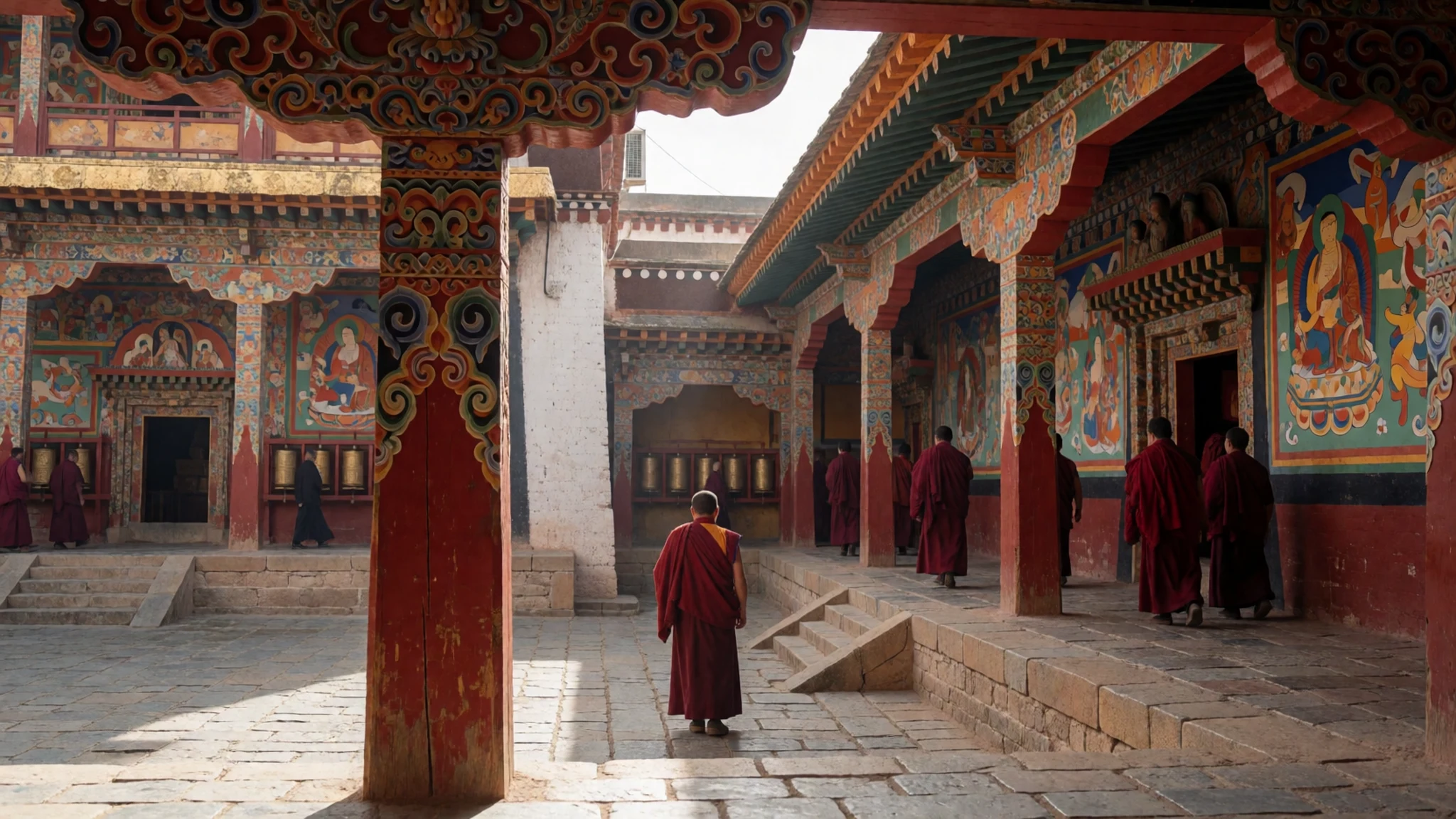
- Small Golden Roof Hall — North courtyard, Kumbum Monastery
At Kumbum Monastery the Small Golden Roof Hall overlooks the north courtyard, its gilded roof catching the light above the surrounding whitewashed and red-trimmed buildings. The courtyard is a useful vantage point for seeing how the halls, lanes and slopes are laid out, and for watching monks cross between lessons.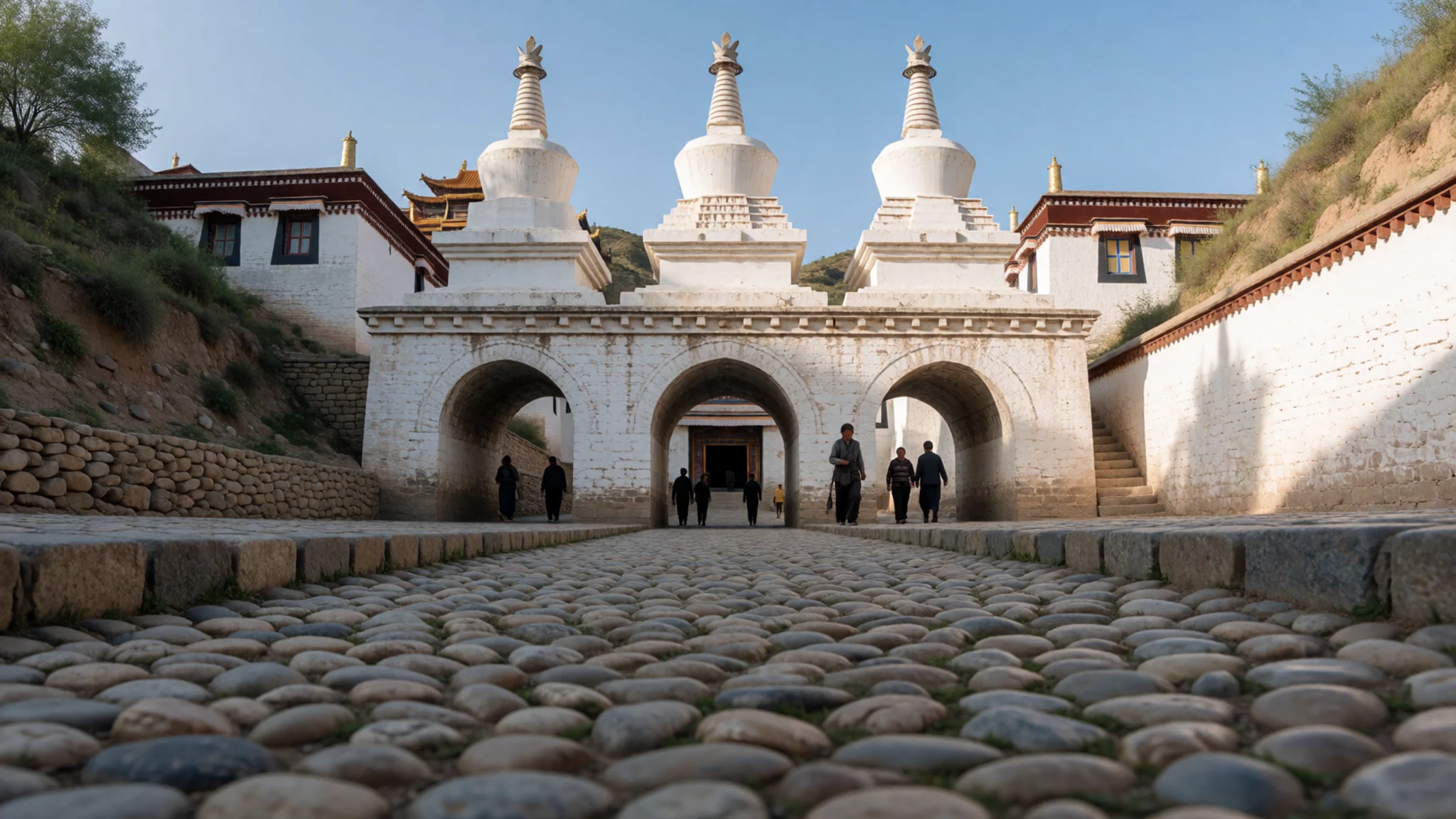
- The three treasures: butter sculpture, murals and appliqué — Prayer halls, Kumbum Monastery
Kumbum Monastery is known for three crafts: sculpture modelled from butter, painted frescoes and murals, and padded embroidery. Look for them inside the halls, where the colour and detail are striking in dim light. Butter work is delicate and seasonal, so ask what is currently displayed.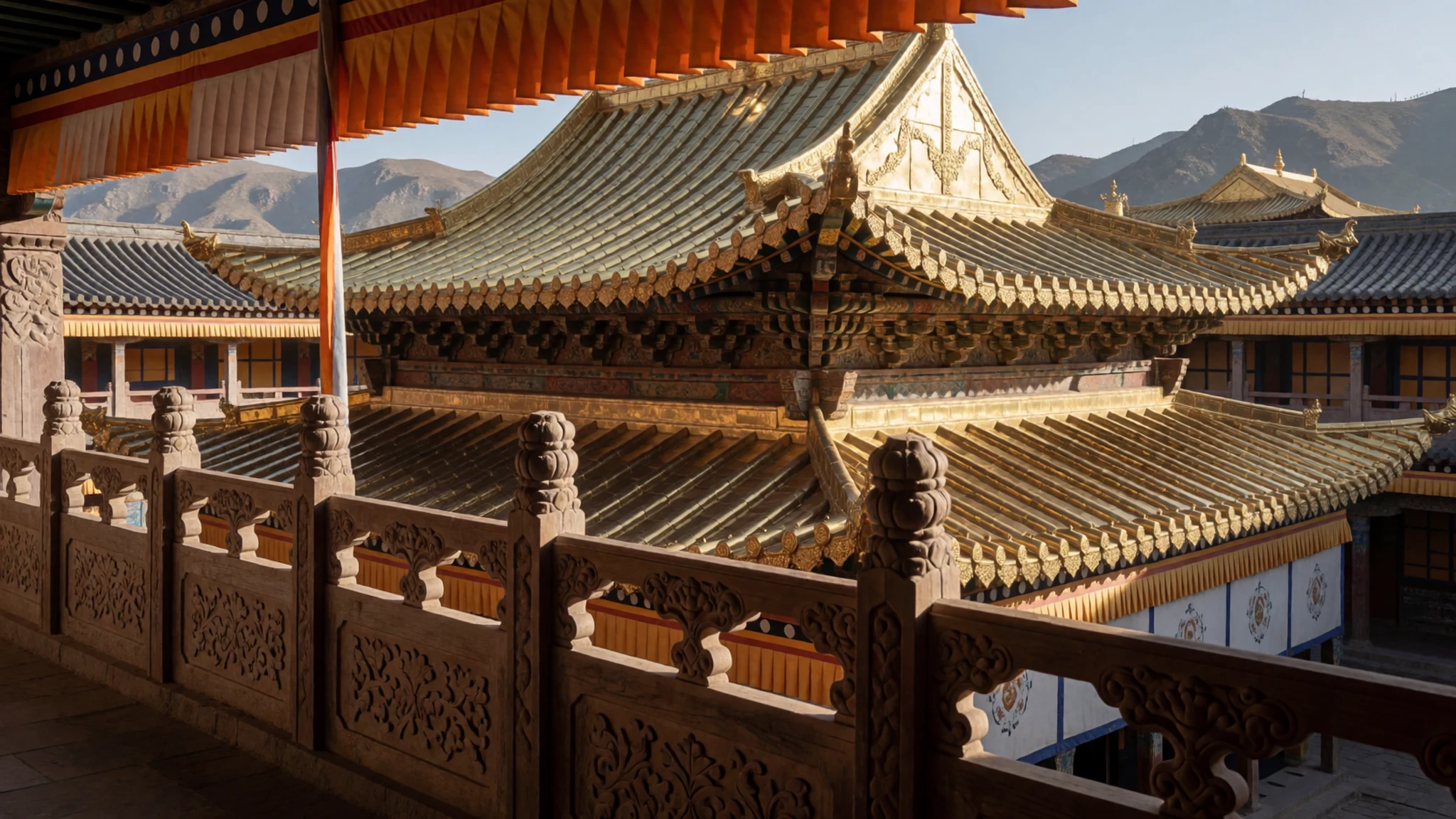
- Tibetan Culture Museum — East of the monastery, Lusar
A short distance east of Kumbum Monastery, the Tibetan Culture Museum offers background on the region's art, religion and daily life. It suits a slower hour away from the monastery crowds, or a wet afternoon. Check the official channels for current opening arrangements before making a special trip.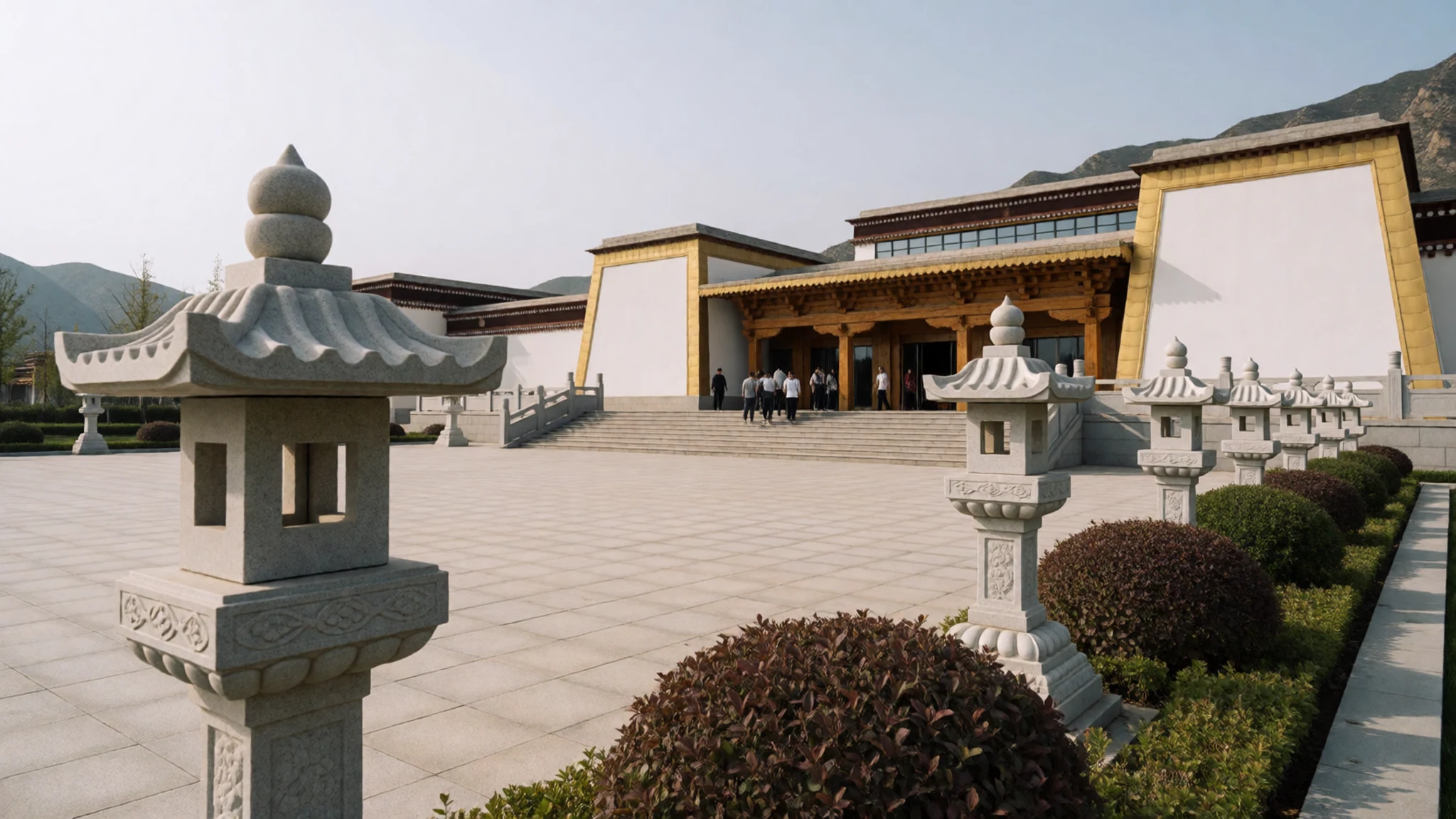
- The four summons ceremonies — Monastery courtyards, Lusar
Four times a year Kumbum Monastery draws large numbers of pilgrims for ceremonies that include the display of an enormous Buddha portrait in the sun, butter sculpture shows and debates on Buddhist philosophy. Debates are conducted in Tibetan, so non-speakers watch the gestures and energy. Confirm dates locally, as they follow the Tibetan calendar.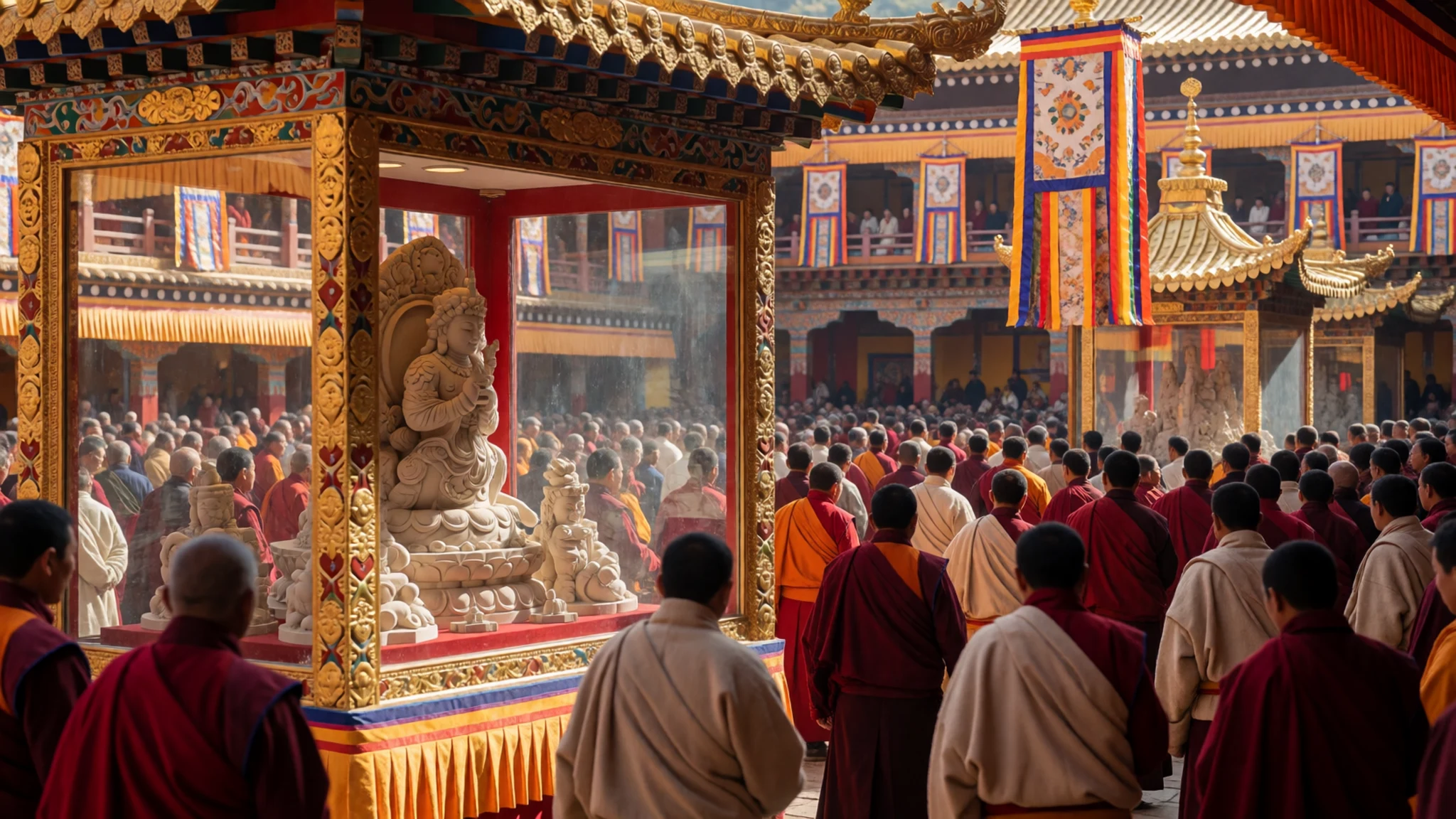
Culture
Kumbum Monastery is a Gelug institution, the school founded by Je Tsongkhapa, and its daily life is built around study, debate, chanting and offering. Monks in maroon and saffron robes move between halls and classrooms, and the sound of horns, drums and recitation carries across the courtyards at fixed times. Pilgrims arrive from across Qinghai and from further afield, many of them circling the buildings on foot and prostrating at shrines.
Butter plays a central part. It is burned in lamps before images, and it is sculpted into elaborate scenes that rank among the monastery's best-known crafts. Tea matters just as much: in the past, huge copper cauldrons here brewed Tibetan tea for the assembled monks, fuelled by straw, and a communal meal of tea and tsampa still anchors many Tibetan religious gatherings.
The Monlam prayer festival, established when the monastery was completed, links Kumbum to Lhasa and to the wider Gelug world. The monastery's relationship with Mongolia is also lasting, because Mongol patrons helped create it and Mongolian pilgrims continue the tradition of visiting.
The Tree of Great Merit, tied to Tsongkhapa's birthplace, remains a focus of devotion, and the mingled Tibetan, Mongol and Chinese influences are visible in the architecture, from carved wooden beams to tiled roofs.
Walk clockwise around stupas, prayer wheels and shrines, speak quietly in the halls, and ask permission before photographing monks, worshippers or any interior, where photography is often not allowed.
What to wear
Around Kumbum Monastery the traditional garment is the chuba, a long wrap-over coat tied at the waist with a sash. In Amdo it is commonly made of heavy wool or sheepskin, often with a contrasting trim at the cuffs and collar, and it is worn in winter, at festivals and on pilgrimage. Monks wear robes of maroon and saffron-yellow, cut from wool or cotton depending on the season, and on ceremonial days the pointed yellow hat of the Gelug school appears. Prayer beads, amulet boxes and silver or turquoise jewellery are common on pilgrims, and Tibetan women often wear coloured beads and ornaments on festival days.
On an ordinary day, most people in the Xining area wear what people wear in any Chinese provincial city: padded or fleece jackets, jeans, trainers or sturdy boots and a hat against the sun and wind. Many local Tibetans, Mongols and Hui Muslims combine modern clothes with a chuba, a headscarf or a brimmed hat.
For visitors, layers are the answer. The valley is high, cool in the morning, strong in the sun at midday and prone to sudden rain or hail, so pack a light waterproof, a warm fleece, a sun hat and sunscreen. Cover shoulders and knees inside the monastery, and avoid hats and sunglasses in the halls. Wear comfortable shoes that slip off easily, with good grip, since the lanes slope and the steps can be uneven and wet.
What to eat
- Butter tea (po cha) — Traditional Tibetan restaurants near the monastery entrance
A salty, buttery tea churned with yak butter, served hot to warm up pilgrims and travellers. The flavour is closer to a thin soup than sweet tea, and takes getting used to. Order a small cup first. - Tsampa — Tibetan eateries and tea houses around Lusar
Roasted barley flour, usually mixed with butter tea and a little butter into a dough that is rolled by hand and eaten. It is a staple of Tibetan life and a sensible, filling snack before a long walk around the monastery. - Yak-milk yoghurt and sour milk drinks — Small shops on the road below the monastery entrance
Tangy, thick drinks and yoghurts from yak or cow's milk, sold in small bottles and cups. The brief points to fermented milk drinks sold near the entrance. They are refreshing after a morning of steps. - Momos — Tibetan restaurants in the tourist area by the entrance
Steamed or fried dumplings filled with minced yak or mutton, or sometimes with vegetables, served with a chilli dip. They suit a quick lunch, and vegetarians can usually ask for a vegetable version. - Xining mutton and hand-pulled noodles — Noodle shops and street food areas in Xining and Huangzhong town
Qinghai's cooking draws on its Hui Muslim and Tibetan communities, so lamb and chewy wheat noodles in broth are everywhere. Expect warm, simple dishes with plenty of mutton, and ask for chilli on the side.
Plan it
Best time. June to September, when days are mild and the valley is green; winters are long and cold, and afternoon rain or hail can arrive suddenly even in summer. Festival days bring crowds and a lively atmosphere, so check dates if you want to see them.
How long. 1
Getting there. Fly or take the train to Xining, the provincial capital. From the Xining Gymnasium bus stop, buses run about every half hour to Huangzhong, a journey of about one hour. The bus station sits a few kilometres from the monastery, and local taxis wait near the entrance. Bus 909 runs directly between Xining and the monastery area.
Budget. low
Tips
- Go early, before tour groups arrive in late morning
- Check the official site for current opening hours, ticket rules and festival dates
- Carry a light waterproof, a warm layer and sunscreen, since weather changes quickly
- Qinghai sits on a high plateau, so walk slowly and drink water if you feel breathless
- Carry some cash as well as a phone payment app, as small shops may prefer one or the other
Etiquette
- Walk clockwise around stupas, prayer wheels and shrines
- Ask before photographing monks or pilgrims, and follow the signs inside halls
- Dress modestly and remove hats when entering the halls
Nearby
Sources
- Wikidata Q1791988 (CC0)
- Wikipedia: Kumbum Monastery (rev 1385781823) (CC BY-SA 4.0)
- Wikivoyage: Huangzhong (rev 5414256) (CC BY-SA 4.0)
- Photo: en:Kumbum Monastery, by Blofeld of SPECTRE (CC BY 3.0)
- Photo: Gombojab Tsybikov, Gumbum Monastery, 1900 (Public domain)
- Photo: The 14th Dalai Lama and Reting Rinpoche after enthronement ceremony (Public domain)
- Photo: A Cover of Taer Temple, by EricDiao (CC BY 3.0)
- Photo: A Temple in Kumbum Monastery, by Charlie fong (CC BY-SA 4.0)
- Photo: Tibetan-style buildings, Ta'er Si, by G41rn8 (CC BY-SA 4.0)
- Photo: Triple Stupa and Gate, Ta'er Si, by G41rn8 (CC BY-SA 4.0)
- Photo: Small Golden Roof Hall, Ta'er Si, by G41rn8 (CC BY-SA 4.0)


