Kumano Kodo
Kumano Kodo, Japan
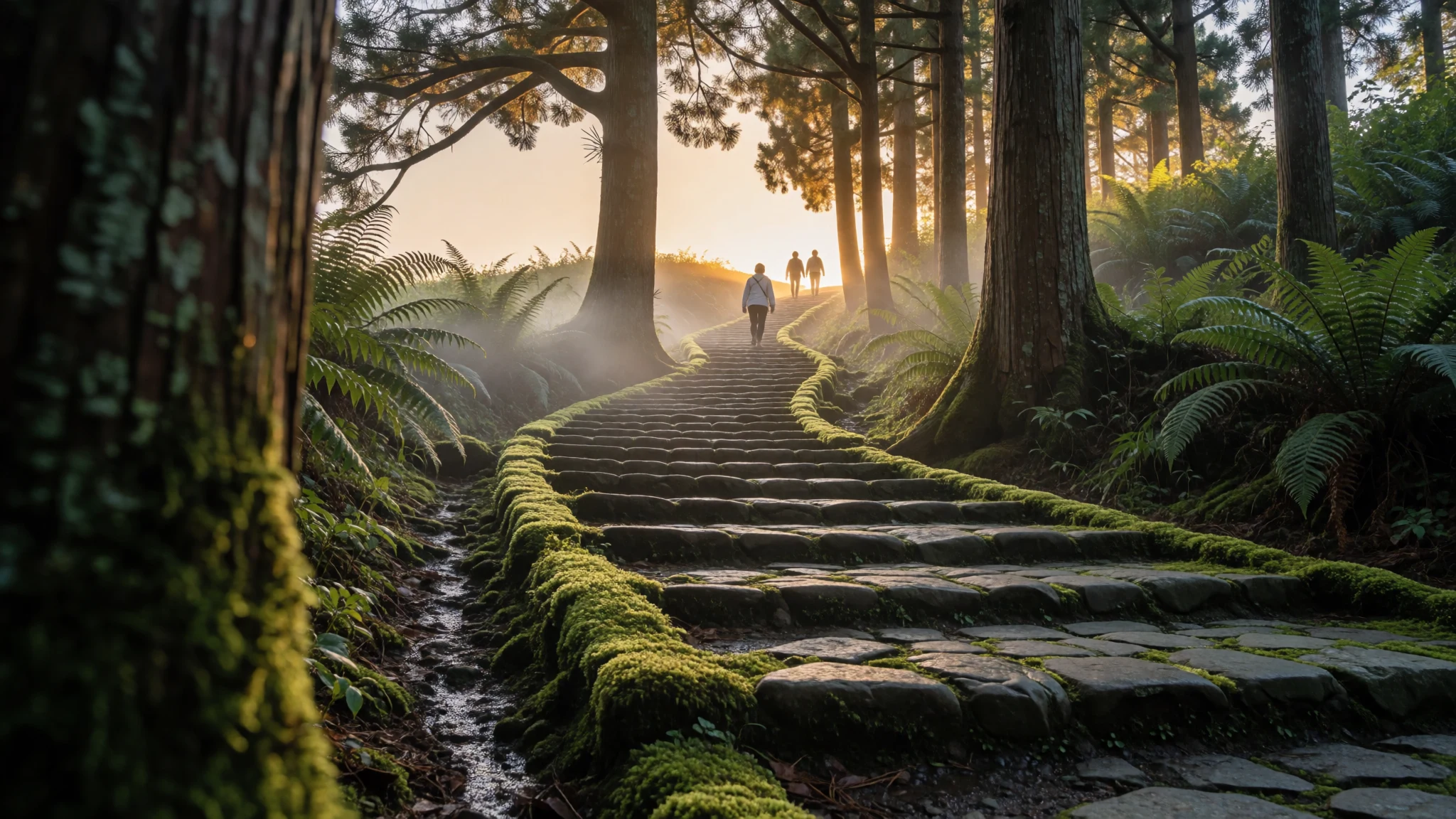
Kumano Kodo offers old pilgrim paths through misty cedar forest, linking mountain shrines and temples on foot, far from Japan's usual crowds.
The place
Kumano Kodo is a web of pilgrim paths across the Kii Peninsula, the forested, steep-sided land south of Osaka and Nara. It belongs to the UNESCO-listed Sacred Sites and Pilgrimage Routes in the Kii Mountain Range, a listing that joins shrines, temples and the old trails between them rather than protecting one monument. Most walkers mean the routes that run south to the Kumano shrines, but the wider listing also reaches Yoshino and Omine to the north and Koyasan to the west. The scenery is ridge after ridge of cedar and cypress, narrow valleys, stone-paved stretches, moss, small tea stops and the odd hamlet where a guesthouse serves dinner at a fixed hour. Weather matters. The peninsula is damp, and rain on old stone steps is a normal part of the walk rather than a bad-luck extra. Crowds are thin next to Kyoto, though the best-known stretches fill on spring and autumn weekends, and Koyasan and Yoshino see coach parties in season. Transport is the real constraint: trains and buses are sparse, they thin out in the evening, and one missed connection can cost half a day, so itineraries need slack. Phone signal fades in the valleys, and small places often prefer cash. The Japanese name is Kumano Kodō (熊野古道), which simply means the old roads of Kumano.
Its story
Kumano Kodo grew from a belief that the mountains of the Kii Peninsula were a place where gods and the dead lived close to the living. Peaks, waterfalls and rivers here were revered well before Buddhism arrived, and when it did, the two traditions blended instead of competing, so that shrine and temple practice became hard to separate. Mountain ascetics trained on the steep ridges around Yoshino and Omine, developing the Shugendō path that still shapes ritual life. Koyasan, to the west, grew into a monastic centre of Shingon Buddhism after its founder chose the mountaintop as a place of retreat. Pilgrims came from the capital, first nobles and monks and later ordinary travellers, walking for days, purifying themselves at rivers and stopping at small shrines along the way. The journey itself counted as an act of devotion. Later, roads, railways and changing habits left many trails overgrown, and some stretches have since been restored. The UNESCO listing now groups the shrines, temples and the routes between them as one linked heritage. Today the paths are a mix of old stone, forest track and short sections beside roads, and the history shows in the stone markers, waystations and small chapels passed along the way.
What to see
- Daimon-zaka — Nachi area, Wakayama Prefecture
Daimon-zaka is a stone-paved slope near the Nachi area, lined with old cedars and worn steps. It is widely used to picture the Kumano Kodo and short enough for a day visitor. Wet stone is slippery, so wear shoes with grip, and go early to catch the light before tour groups arrive.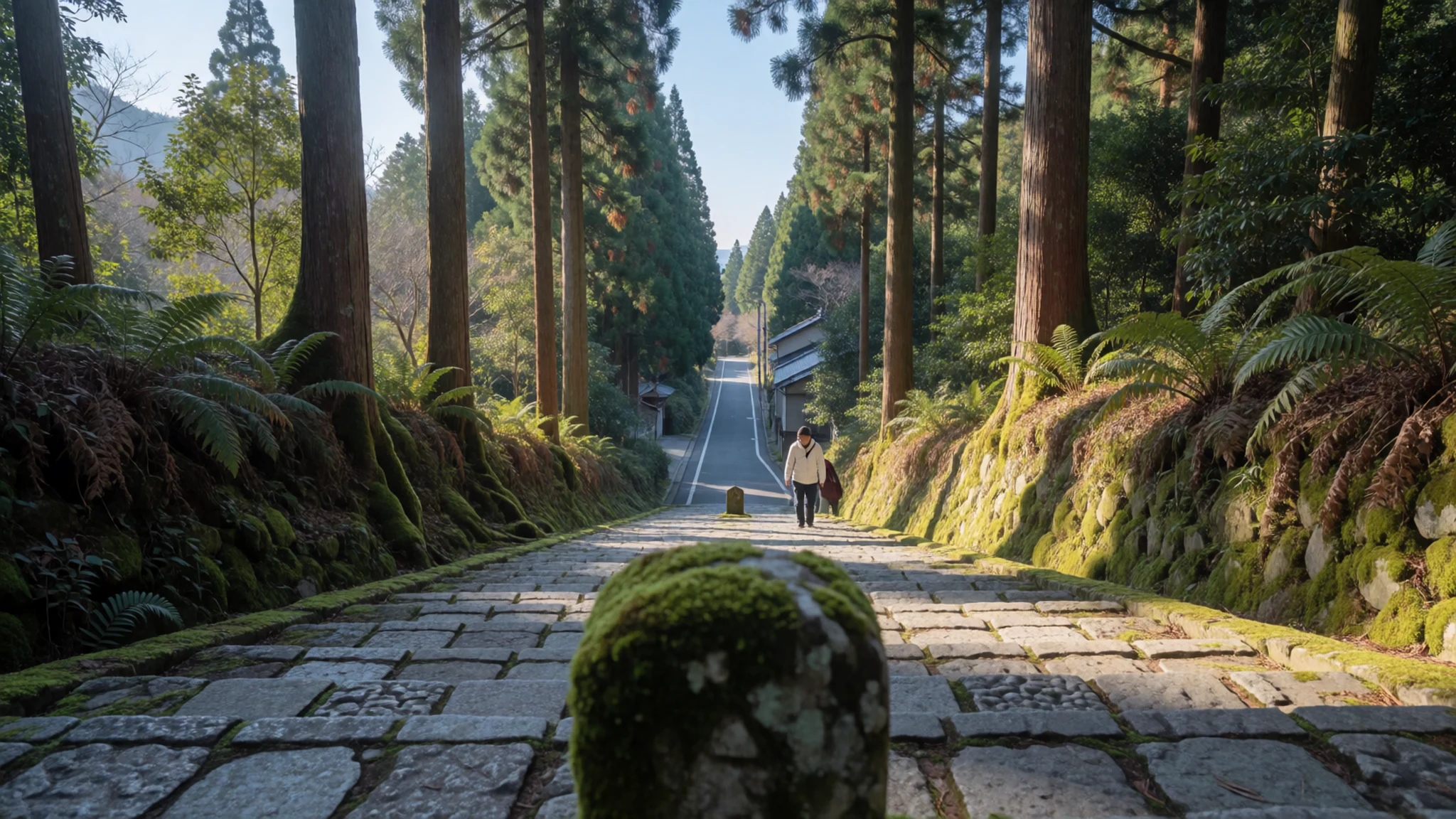
- Danjōgaran, Mount Kōya — Koyasan, Wakayama Prefecture
Danjōgaran is the central temple precinct on Mount Kōya in Wakayama Prefecture, where Koyasan's Shingon Buddhist community began. Pagodas and halls stand in a clearing among cedars. Many visitors stay overnight in a temple lodging, which makes it easier to see the grounds in the quiet of early morning, once day trippers have left.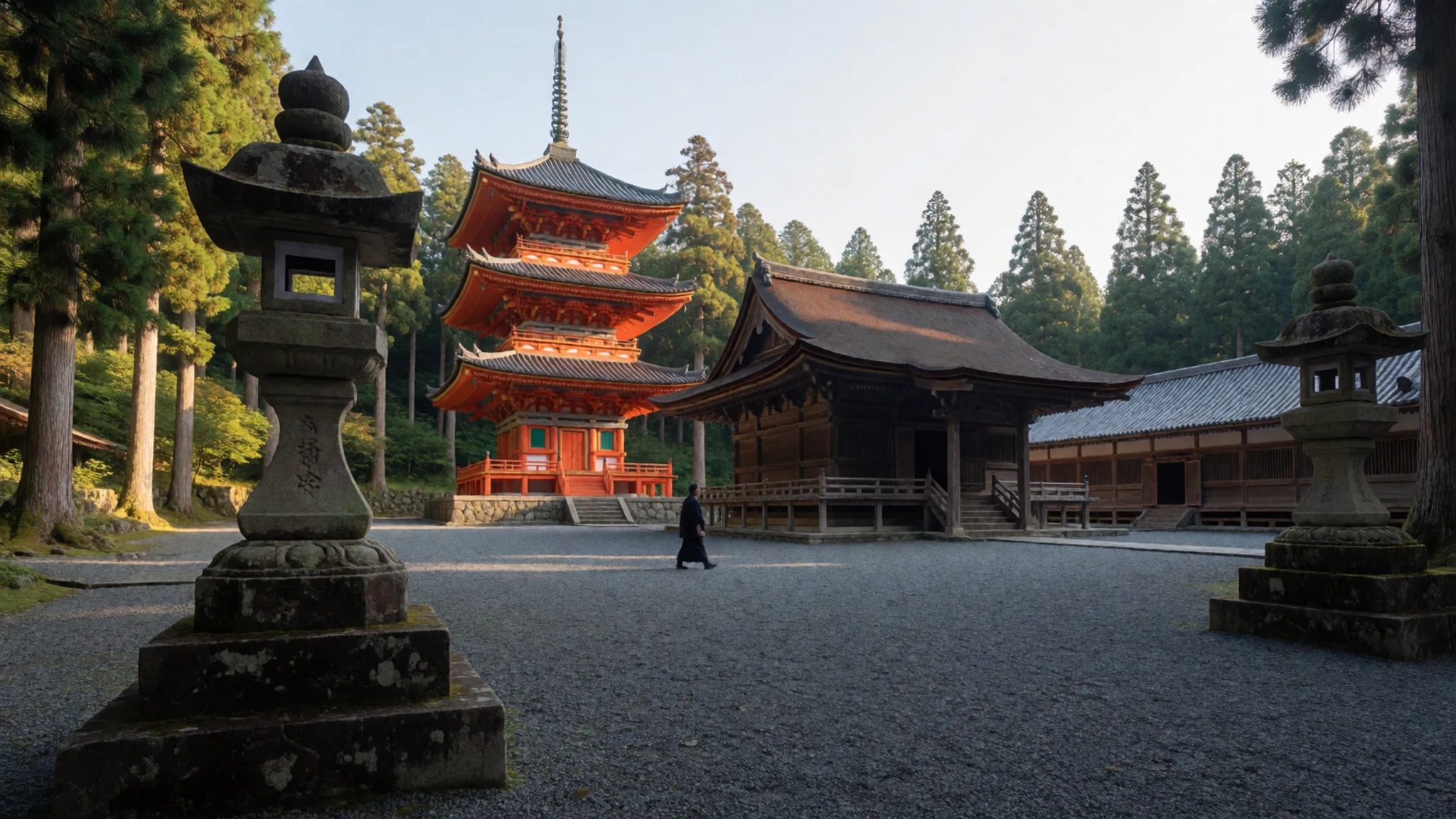
- Yoshinoyama cherry slopes — Yoshino, Nara Prefecture
Yoshinoyama is the ridge above Yoshino town in Nara Prefecture, famous in Japan for its cherry trees, which flower in bands up the slope. Blossom time draws heavy crowds and slow queues for buses and paths. In other seasons the same ridge is calm, with temples, viewpoints and red maples in autumn.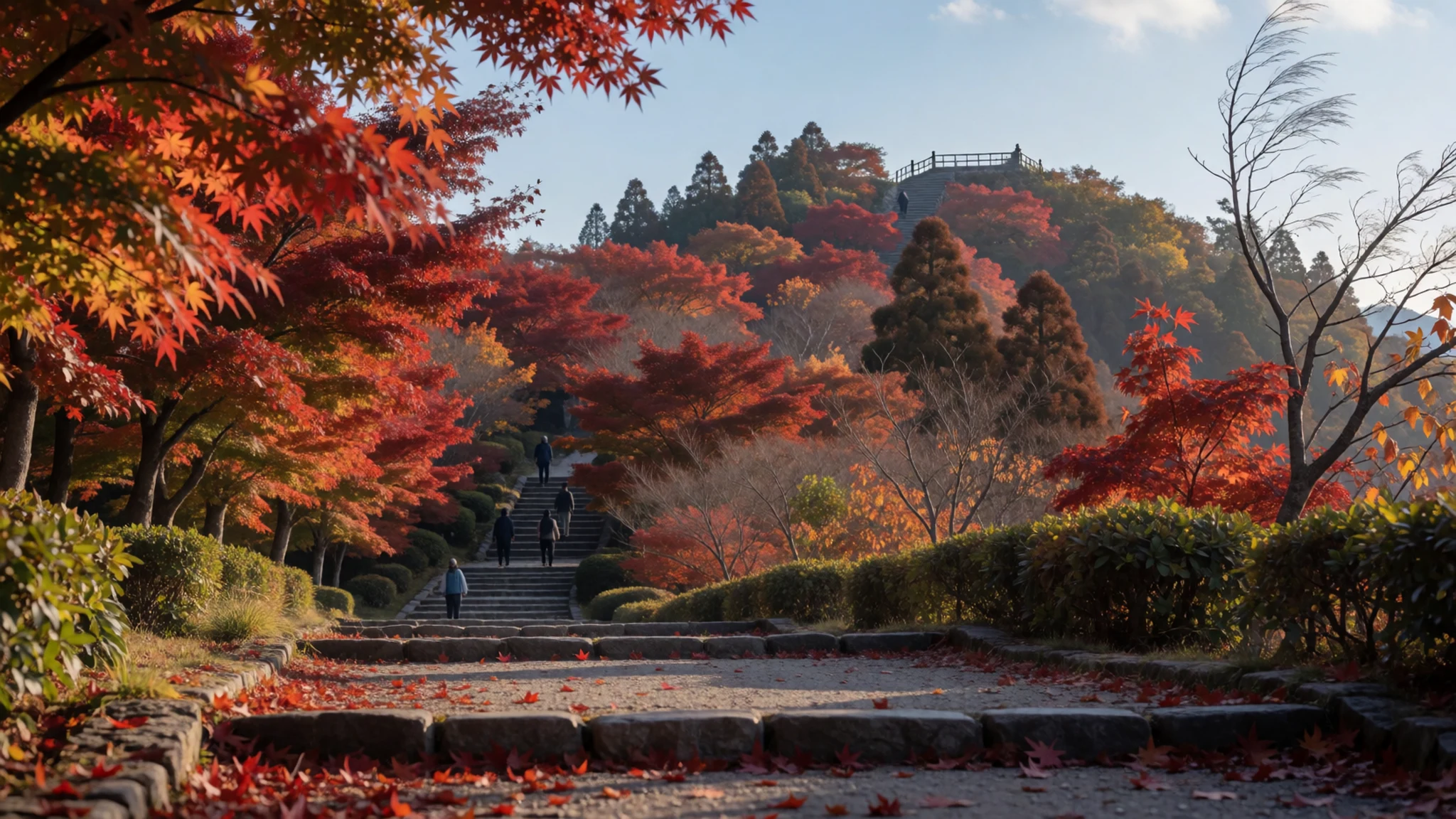
- Kinpusenji — Yoshino, Nara Prefecture
Kinpusenji is the main temple of Yoshino's mountain-worship tradition, and its Zaō-dō hall is a National Treasure, as the photo caption notes. The big timber hall looks dark and heavy among the trees. It is the focus of the Shugendō ascetic tradition, whose practitioners walk the ridges between Yoshino and Omine.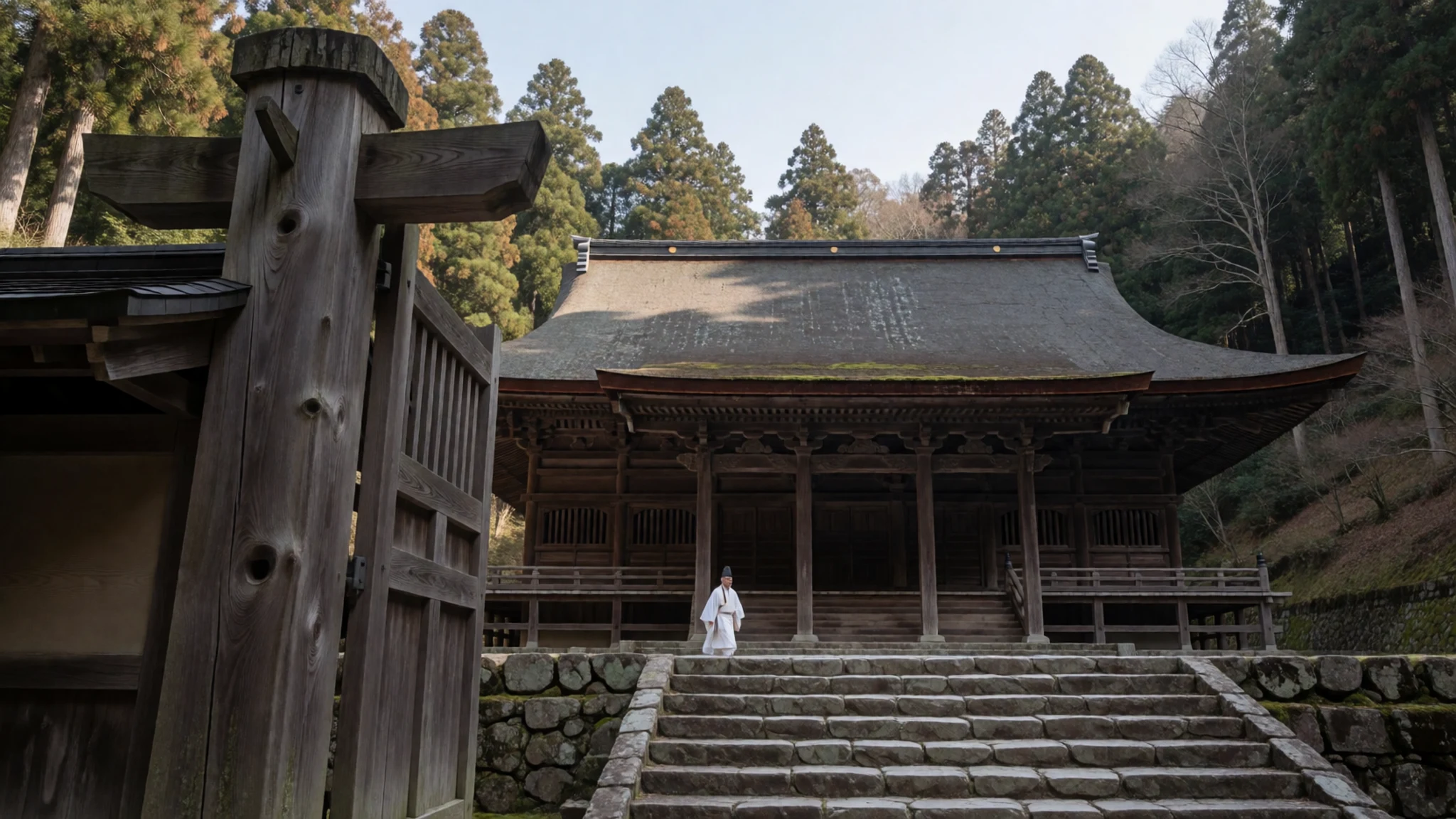
- Yoshimizu Shrine — Yoshino, Nara Prefecture
Yoshimizu Shrine stands on a wooded slope in Yoshino, and tends to be quieter than the main blossom viewpoints. It is small and worth a short detour on foot, as paths between the sights are uneven and partly stepped. Leave time for slow walking and allow for the climb back.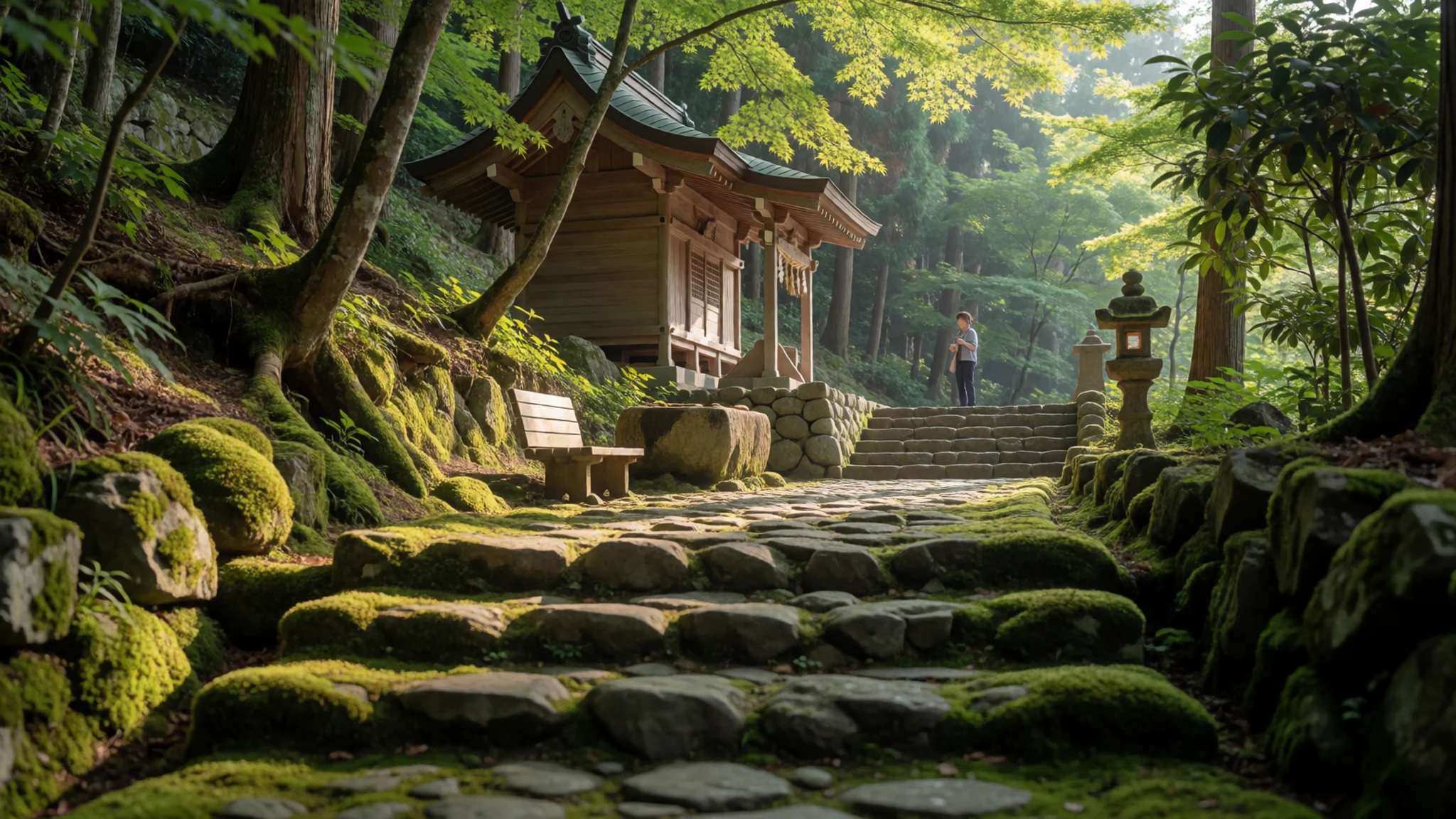
- Ōminesanji — Omine ridge, Nara Prefecture
Ōminesanji is a mountain temple on the Omine ridge in Nara Prefecture, reached by a stepped climb and traditionally a place for ascetic training. Access is a real hike, and the route can close or be restricted by season and weather, so check local information before setting out. Pack water and rain gear.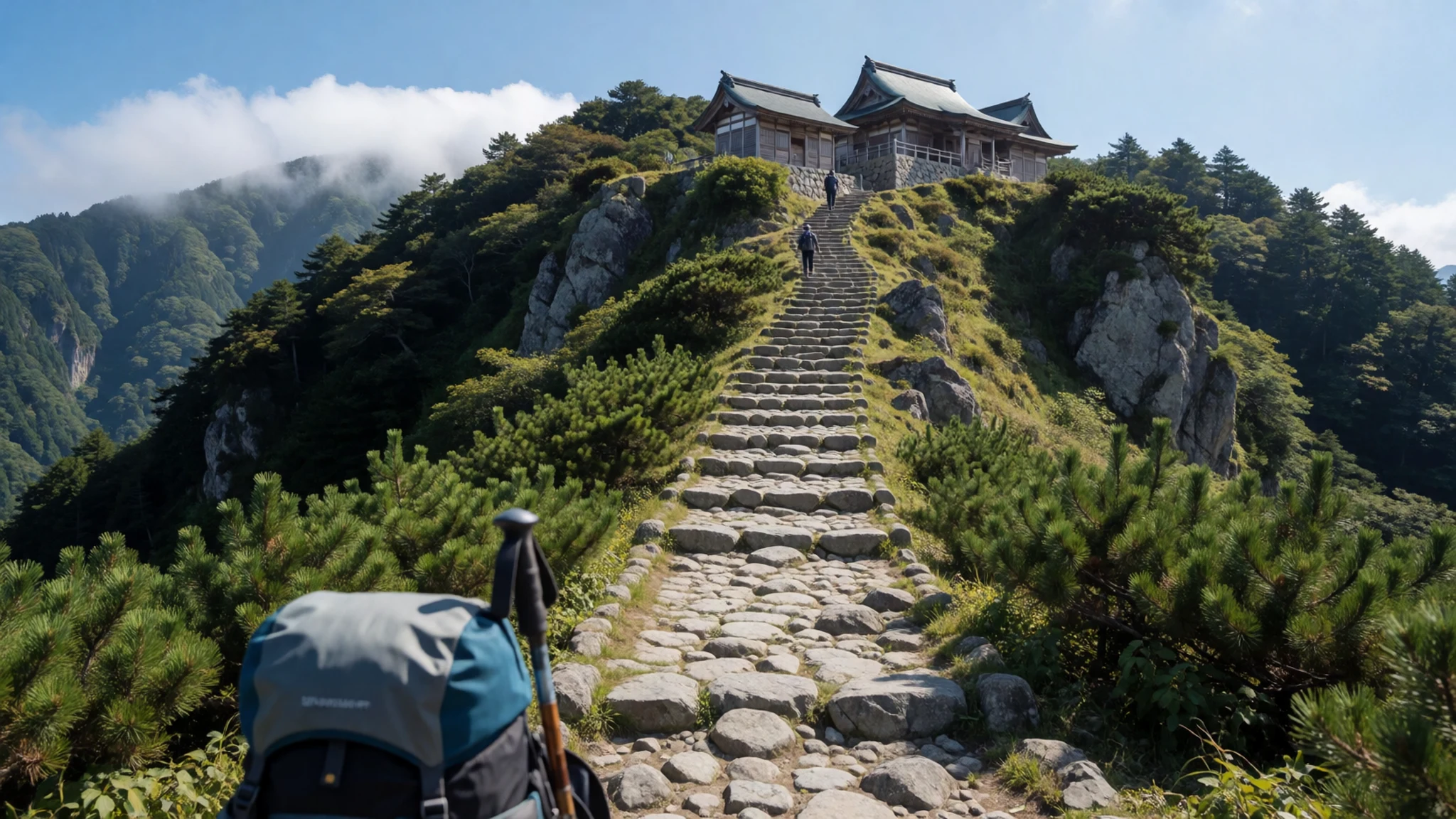
Culture
Kumano Kodo is a living pilgrimage landscape where Shinto shrines and Buddhist temples have long shared the same mountains. Local belief treats peaks, rivers, waterfalls and old trees as sacred, and practices from both faiths blend: purification at water, offerings at shrines, chanting and fire rituals at temples. Mountain ascetics called yamabushi, followers of the Shugendō tradition, still train on the ridges around Yoshino and Omine, sometimes seen in white robes with conch shells. Koyasan remains a working monastic town, where temple lodgings let guests join morning prayers and eat vegetarian monastic meals. On the trails, the walk itself counts: small waystation shrines, stone markers and guardian statues mark the route, and walkers often pause to bow. Family-run guesthouses use futon bedding on tatami, set meal times and shared bathing rules, so arriving on time and confirming bookings is basic courtesy. Bow lightly at a shrine gate, keep to the side of the central path, and ask before photographing worshippers or ascetics.
What to wear
Kumano Kodo has a traditional pilgrim dress built around plain white cotton. Pilgrims once wore white jackets, often with a sedge hat (sugegasa) and a staff, white being the colour of purity and of readiness for the journey. Shugendō ascetics wear white robes with a small black cap and carry a conch shell. These outfits now appear mainly at festivals, among religious practitioners and on a few devout walkers. Day to day, locals wear practical modern clothes: fleeces and waterproofs in the hills, ordinary casual wear in town. Visitors should dress for weather rather than style. Layers work best, since forest shade stays cool, and a proper rain jacket is worth carrying in any season. Sturdy shoes with good grip matter most on wet stone and root-covered steps. Quick-dry trousers suit the humid months and protect against brambles and insects. At shrines and temples, cover shoulders and avoid very short shorts. Pack a spare pair of clean socks, because shoes come off at lodgings and some temple halls.
What to eat
- Mehari-zushi — Station kiosks, small shops and trailside guesthouses in Kumano towns
A fist-sized rice ball wrapped in salt-pickled takana mustard leaves, eaten by pilgrims and hikers on the Kumano trails. The leaf is slightly spicy and salty. Look for it at station kiosks and small shops in Kumano towns, or packed at trailside guesthouses.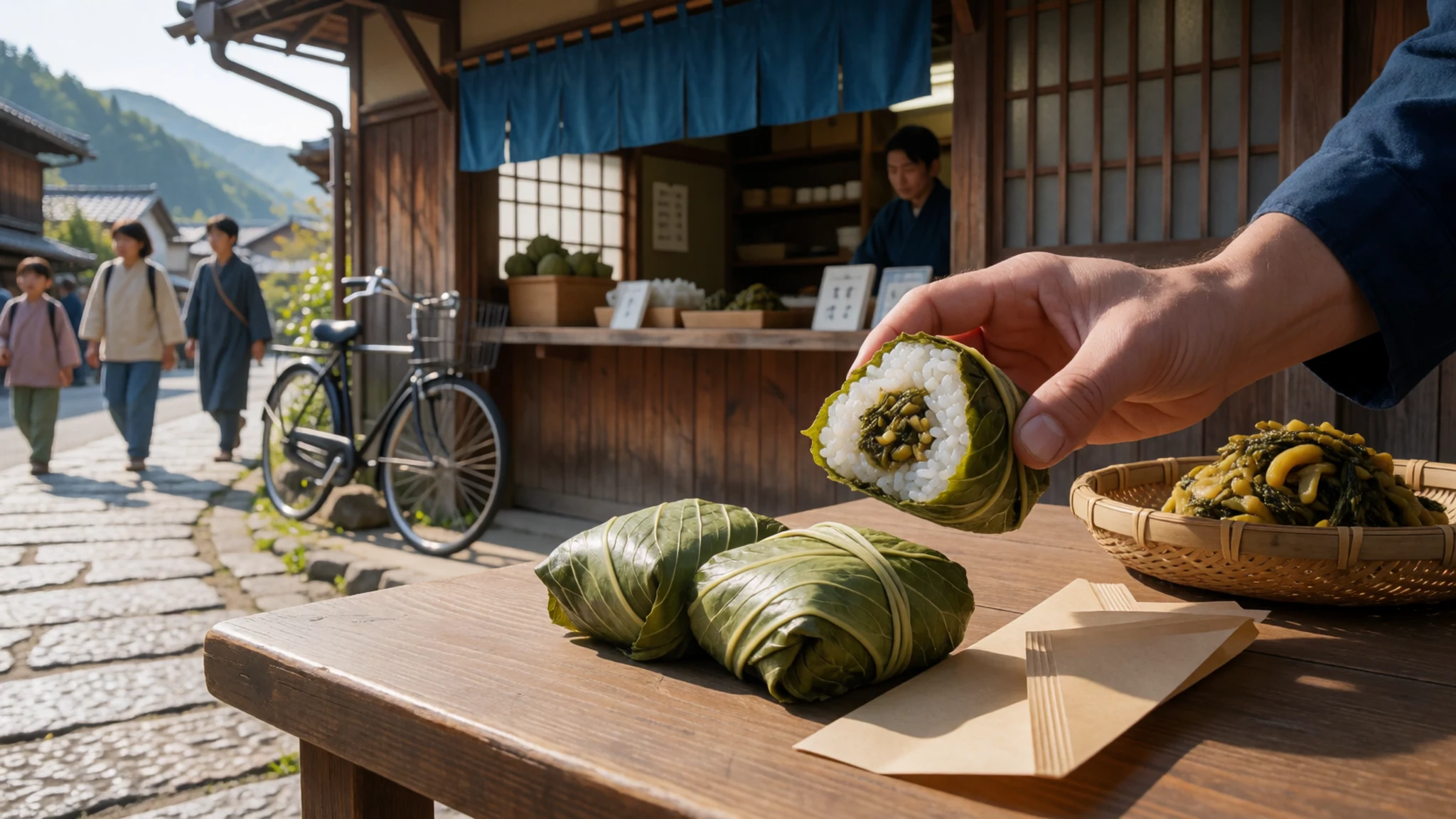
- Kaki-no-ha-zushi — Yoshino shops, station stalls and food halls in Osaka and Nara
Pressed sushi of salted mackerel or salmon wrapped in a persimmon leaf, a local favourite in Nara and Wakayama. The leaf is not eaten but scents the rice. Find it in Yoshino shops, station stalls and department-store food halls in Osaka and Nara.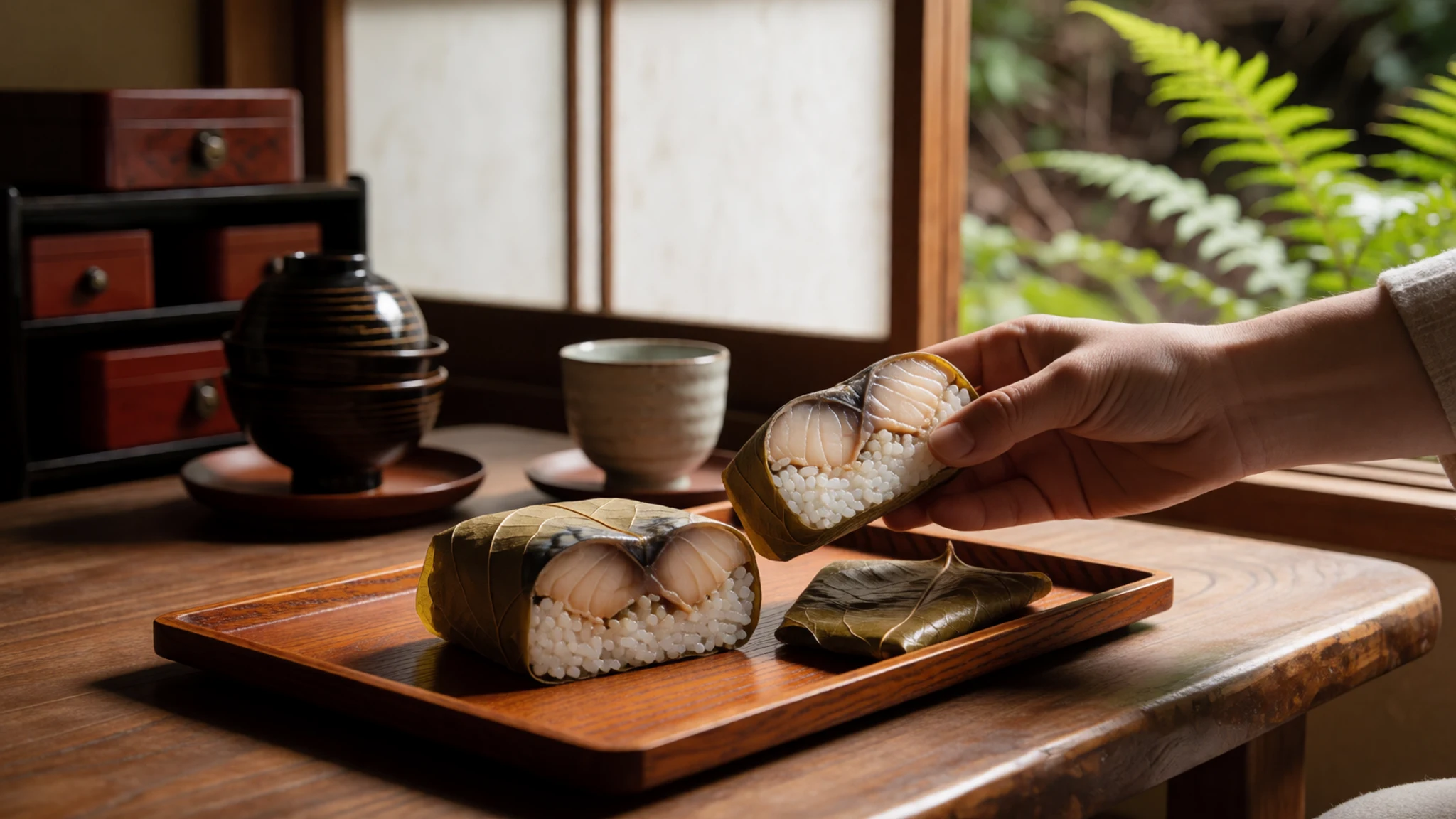
- Yoshino kuzu sweets — Tea shops along the main street of Yoshino town
Kuzu, a starch from the root of the kudzu vine, is made into smooth jelly sweets and cakes around Yoshino. They are often served chilled and lightly sweet, with dark syrup. Try them at tea shops along the main street of Yoshino town. - Shōjin ryōri — Temple lodgings at Koyasan
Vegetarian temple cuisine without meat or fish, built on tofu, sesame, seasonal vegetables and mountain greens. At Koyasan it is served at temple lodgings as the evening meal, with the morning meal equally plain. Book a lodging stay to eat it properly. - Wakayama ramen — Small ramen shops near Wakayama Station
A soy-sauce and pork-bone broth with thin noodles, the regional ramen style of Wakayama. Locals often eat it with a small portion of pressed sushi on the side. Find it at small ramen shops near Wakayama Station, a handy stop before the trails.
Plan it
Best time. March–April for cherry blossom at Yoshino and mild walking weather, October–November for autumn colour and clearer air; June is the rainy season, summer is hot, humid and buggy, and the mountains are cold in winter.
How long. 3–5
Getting there. Fly to Kansai International Airport and take trains to Osaka. For Yoshino, take Kintetsu Railway from Osaka, as other rail lines do not serve it. For the Kumano trails, take a JR limited express down the coast to Kii-Tanabe, then a local bus to a trailhead such as Takijiri or Hongu. Bus services are infrequent, so check timetables on official tourism sites.
Budget. mid
Tips
- Book guesthouses and temple lodgings well ahead, especially for spring blossom and autumn colour
- Check bus timetables the day before; services are sparse and finish early
- Start walking early so that each stage finishes before dark, and carry a small torch
- Carry cash, as small places may not take cards and cash machines are scarce in the hills
- Carry water and rain gear, and treat each stage as a proper mountain walk
Etiquette
- Bow at shrine gates and walk to the side of the central path
- Take litter back with you and keep voices low on forest paths
- Remove shoes where there is a raised floor or slippers waiting
Nearby
Sources
- Wikidata Q611345 (CC0)
- Wikipedia: Sacred Sites and Pilgrimage Routes in the Kii Mountain Range (rev 1376481587) (CC BY-SA 4.0)
- Wikivoyage: Nara (prefecture) (rev 5164967) (CC BY-SA 4.0)
- Photo: Daimon-zaka, by Jnn (CC BY-SA 4.0)
- Photo: Danjōgaran, Mount Kōya, by 663highland (CC BY 3.0)
- Photo: Cherry blossoms at Yoshinoyama, by Tawashi2006 (CC BY 3.0)
- Photo: Yoshino Mikumari Shrine main hall, by Naokijp (CC BY-SA 4.0)
- Photo: Konbu Shrine, Yoshino, by Kansai explorer (CC BY 3.0)
- Photo: Kinpusenji, Yoshino, by 663highland (CC BY 3.0)
- Photo: Yoshimizu-jinja, Yoshino, by 663highland (CC BY 3.0)
- Photo: Oominesanji stairs, by 顔なし (CC BY-SA 2.0)


