Kravica Waterfalls
Kravica Waterfalls, Bosnia and Herzegovina
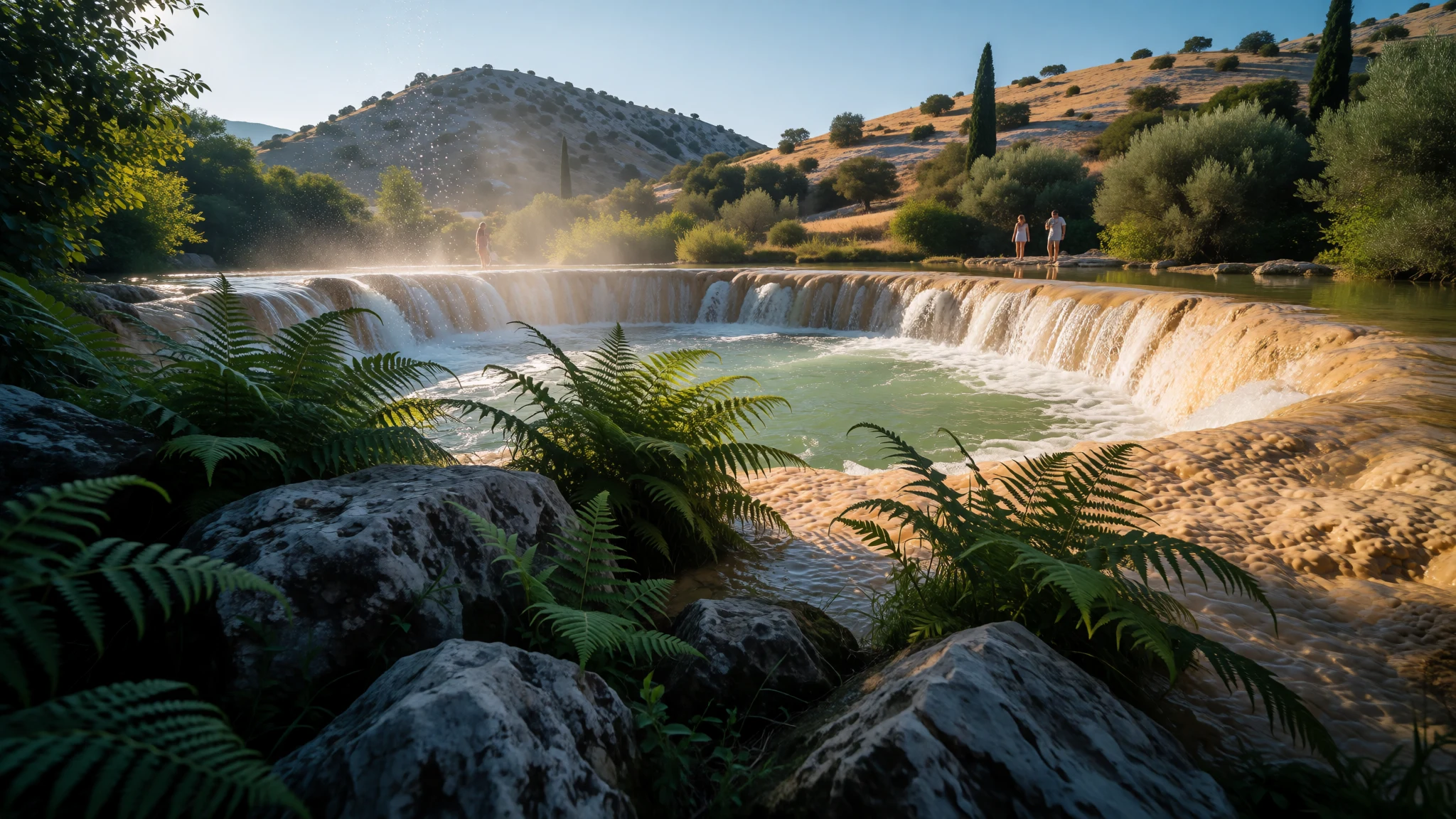
Kravica Waterfalls is a wide curtain of tufa cascades on the Trebižat river, where Herzegovina's dry hills open to a green swimming pool.
The place
Kravica Waterfalls sits on the Trebižat river in the karst country of Herzegovina, the southern part of Bosnia and Herzegovina. It lies south of the small town of Ljubuški and south of Mostar, at an elevation of 47 m, so the air feels warm and faintly Mediterranean rather than alpine. The river runs through dry, scrubby limestone hills, then fans out into a broad arc of cascades that spill over a ledge of tufa, a soft rock built from mineral deposits, and drop into a round green pool. Moss and ferns cling to the wet stone, and the contrast with the pale hills around it is the first thing most visitors notice. The shore has been set up for day trips: a small cafe, a rope swing, a picnic area, a place to camp and, in the high season, several eateries serving grilled meat and fish. Close by there is also a small grotto with stalactites, an old mill and a sailing ship left as a curiosity. Most people come for a swim and a long lunch rather than a hike, and the site works well as a half-day stop between Mostar and the coast. Spring brings the fullest flow and the greenest surroundings, while high summer brings swimmers, heat and crowds. The official site is http://www.kravica.ba, which is the place to check current opening and entry details.
Its story
Kravica Waterfalls owes its shape to chemistry as much as to moving water. Rain and river water in Herzegovina seep through limestone, dissolve a little of it and carry the mineral along. Where the Trebižat meets open air, the dissolved calcium carbonate settles out on moss, roots and stone, and over very long spans of time it hardens into tufa. That slow build-up has raised a natural dam, and the river now pours over its lip in many separate streams rather than a single drop. The same process explains the stalactites in the small grotto close to the falls. The land and the falls once belonged to Zaim-beg Selimić, a municipal councillor, landowner, benefactor and philanthropist from Ljubuški, a name still linked with the place. Today the site is known less for ownership than for use: families from the region have long come here to swim and picnic, and in summer visitors arrive from around the world. The old mill by the water is a reminder that rivers in this dry region were working rivers first, turning grinding stones long before they turned into postcards. Tufa is fragile and keeps growing only where water and plant life are left alone, so the care taken with the rocks and banks has a direct effect on how the falls look in future seasons. The place also shows how much Herzegovina's landscape depends on a few reliable rivers.
What to see
- The main cascade — The main falls
Kravica Waterfalls spreads across a wide curved ledge, and the best overall view is from the far side of the pool, where the whole moss-green curtain fits into one glance. Morning light is softer, and the spray picks up colour on sunny days. Pale hills frame the water.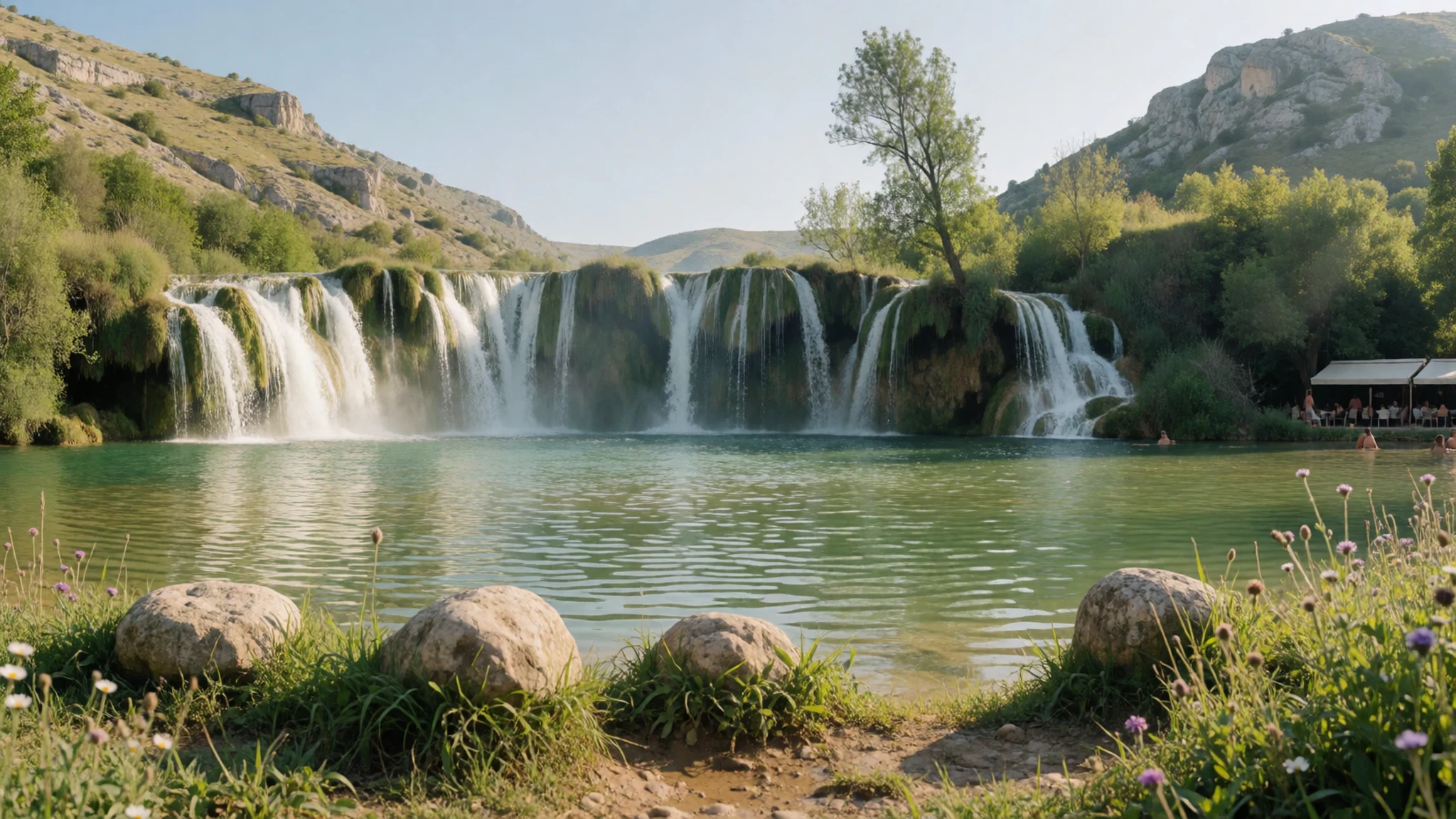
- The swimming pool — Base of the falls
Swimming is the main activity at Kravica Waterfalls, and the water stays cool even in summer heat. The pool is broad, with shallower edges and deeper water nearer the falls. Rocks under the surface can be slippery with algae, so water shoes help. Check on the day whether any areas are roped off.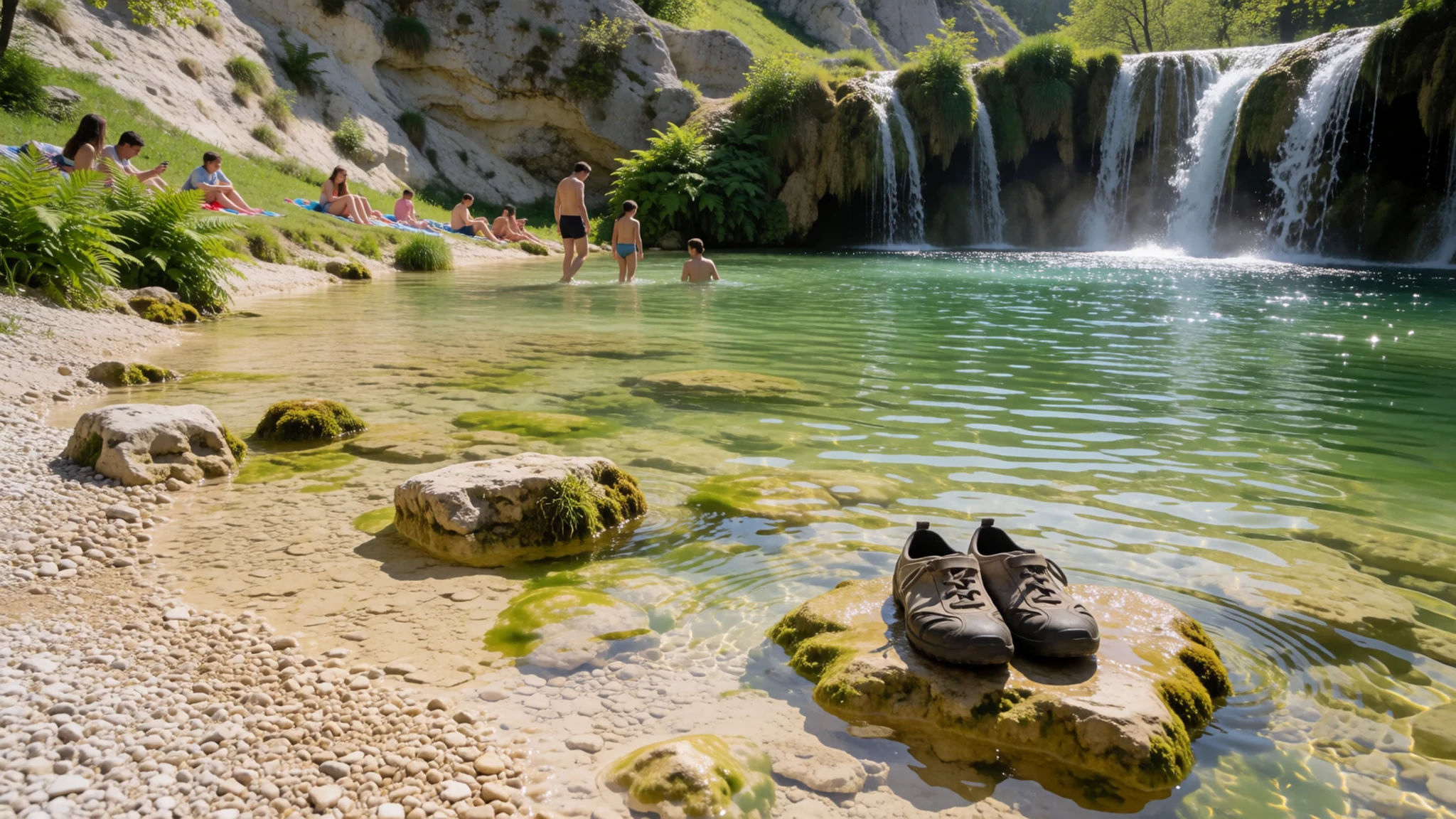
- The grotto and old mill — Beside the river, near the falls
A small grotto with stalactites sits close to Kravica Waterfalls, formed by the same mineral deposits that built the cascades. Not far off stand an old mill and a sailing ship, kept as curiosities beside the river. They take minutes rather than hours, but they explain how the river was once used.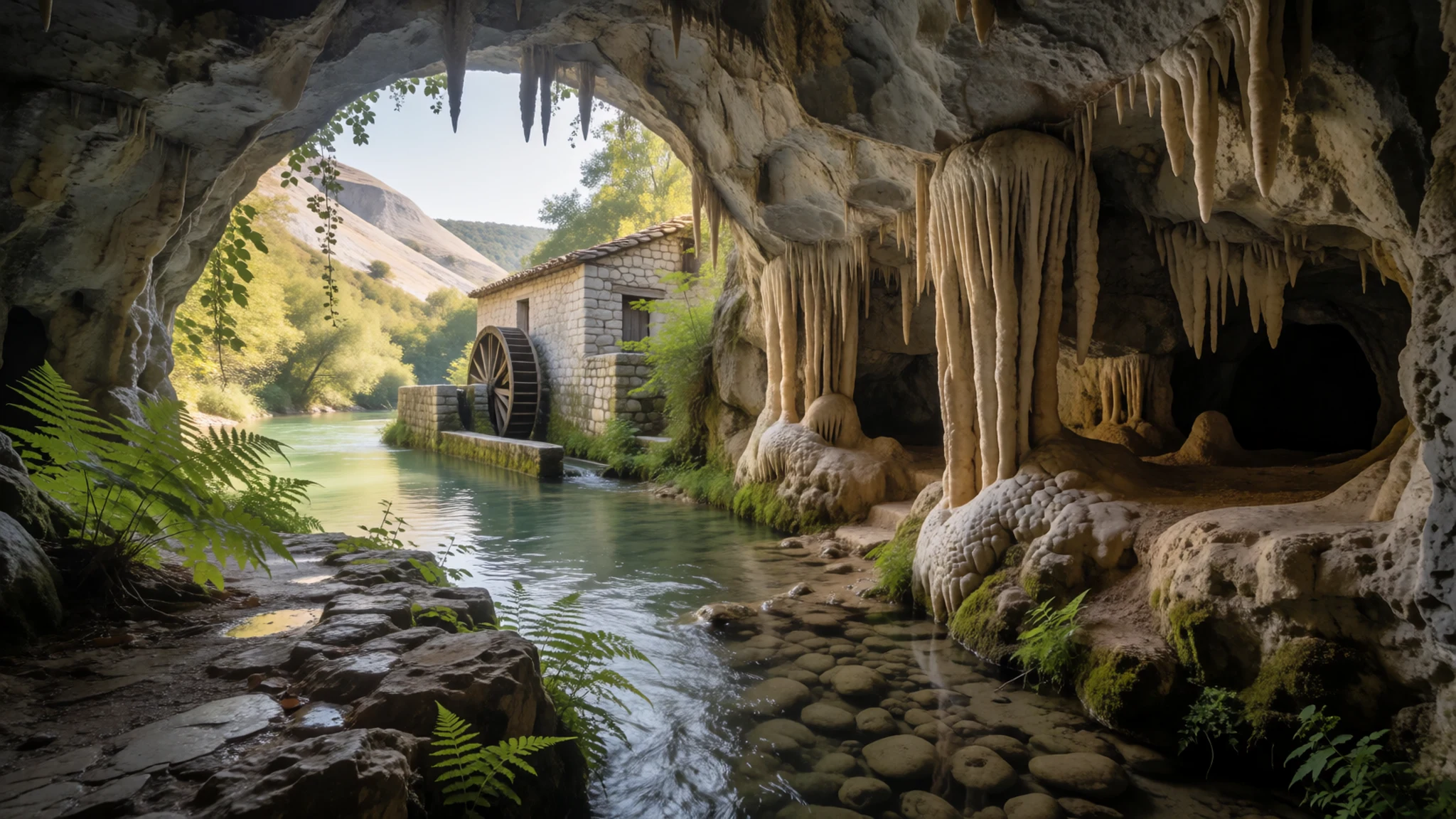
- The picnic shore and cafe — Pool shore
The shore around Kravica Waterfalls has a picnic area, a small cafe, a rope swing and a place to camp. Families spread blankets on the grass, and the rope swing draws the younger crowd. Bringing food from nearby towns is common, though the eateries close by also serve grilled dishes in season.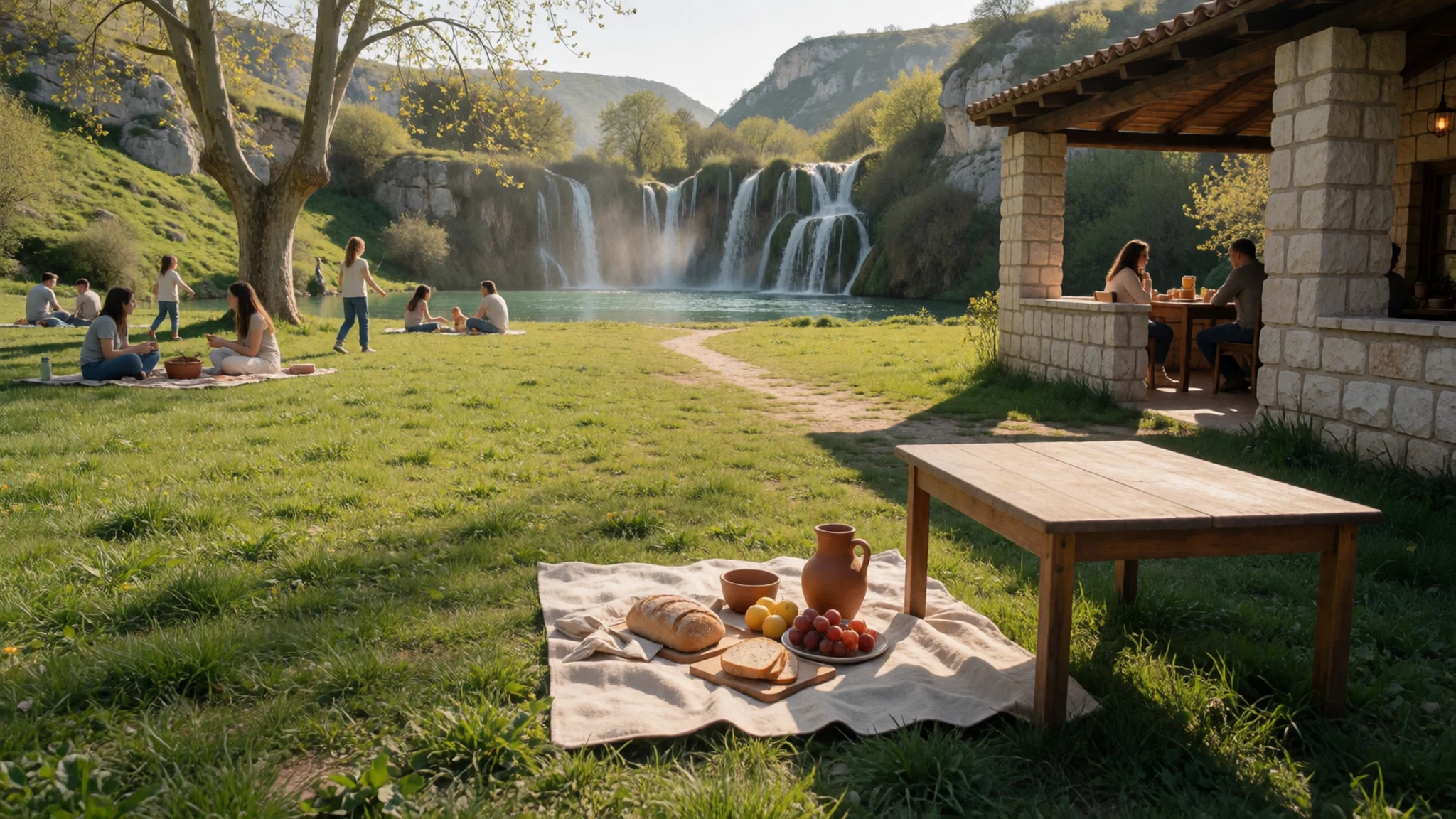
- Ljubuški — North of the falls
Ljubuški is the nearest town to Kravica Waterfalls and a practical stop for fuel, groceries and a coffee before or after the swim. It is a calm, small-town place with cafes and bakeries, better for a short pause than a full day, and a useful base for the surrounding countryside.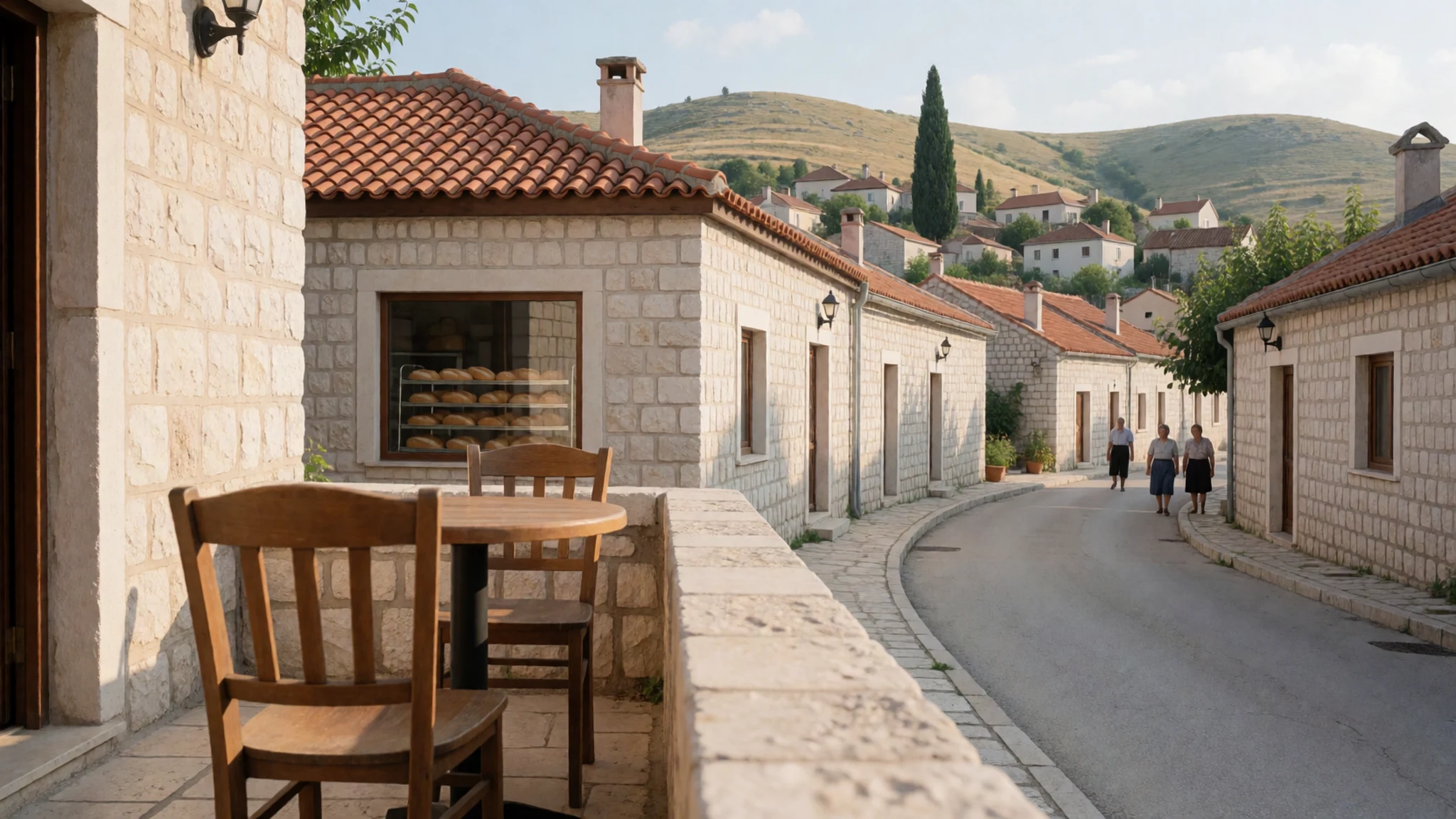
- Mostar and the Stari Most bridge — North of the falls
Mostar is the usual partner stop for Kravica Waterfalls, a short drive north. Its old town is centred on the famous Stari Most bridge, and many travellers pair a morning among its lanes and cafes with an afternoon at the falls. Go early in summer, when both places fill up.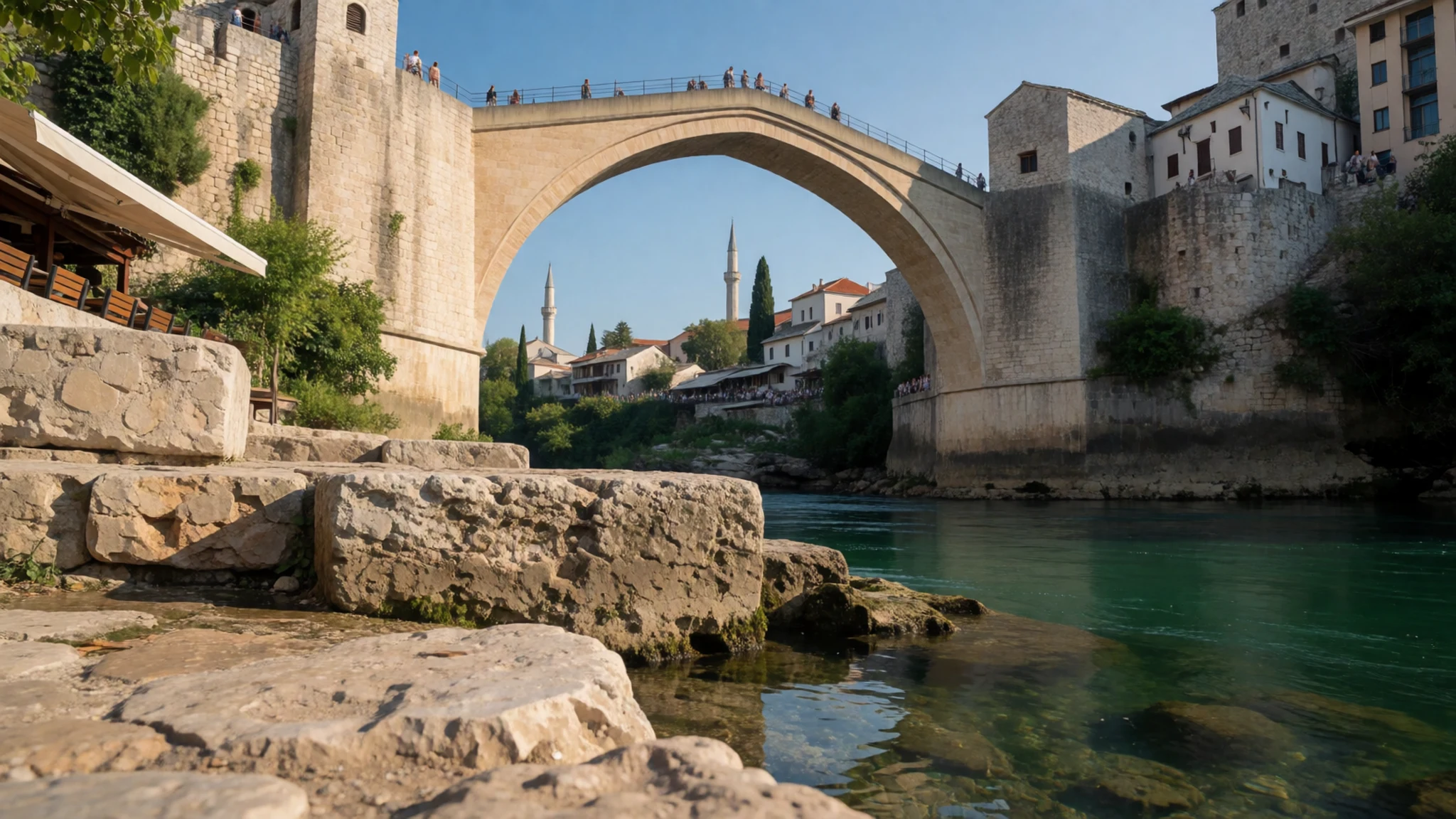
Culture
Kravica Waterfalls lies in Herzegovina, a part of Bosnia and Herzegovina where Muslim, Catholic and Orthodox communities have lived alongside one another for centuries. The country is often described as politically divided, but the two names "Bosnia" and "Herzegovina" are regions, and they do not match the two political units, so mixing them up can raise eyebrows. Muslims make up roughly half the population, and the form of Islam most Bosnians practise is relaxed: alcohol is common in cafes and some people eat pork. At the falls the mood is that of a family weekend, with relatives of all ages sharing food on the grass and children racing along the shore. Coffee is slow here, brewed in a small copper pot in the Bosnian style, and a stop at a village cafe often turns into a long chat. The war that followed the break-up of Yugoslavia still shapes many lives, and talk about it, or about disputed Balkan politics, tends to be painful and rarely informative for a visitor. The countryside around the falls has been spared much pollution, and locals take pride in keeping it that way. Streams and rivers can run strong, and footing on mossy rock is uncertain. Take your rubbish with you, keep to paved roads and marked paths, and avoid raising the war in conversation unless a local brings it up first.
What to wear
Traditional dress around Kravica Waterfalls follows Herzegovinian patterns that vary between communities. Rural women historically wore linen or cotton blouses with wool skirts or baggy trousers known as dimije, embroidered waistcoats and headscarves, while men wore wool trousers, sashes and waistcoats, with soft leather shoes called opanci. Embroidery and woven wool were the main decoration. These clothes now appear mostly at folk festivals, weddings and dance groups, not at the falls. Everyday dress is ordinary European: jeans, T-shirts and sundresses in town, and swimwear and sandals at the pool. Older people and women in conservative villages often dress more covered, in darker, practical clothes. For a visit to Kravica Waterfalls, pack swimwear, a quick-dry towel, a hat and sunscreen. Wear shoes with grip, because the tufa and the pool bed are slippery, so water shoes or sturdy sandals beat flip-flops. A light layer helps on spring days and evenings, when spray and shade feel cool. If the day also includes a mosque or church in Mostar or Ljubuški, carry a sleeved shirt and a light scarf or wrap for covering shoulders and knees, and change out of wet swimwear before walking around town, where beachwear looks out of place.
What to eat
- Ćevapi — Grill restaurants near the falls and eateries in Ljubuški and Mostar
Small skinless grilled sausages of minced meat, served in soft flatbread with chopped raw onion. This is the everyday Balkan kebab, filling and easy to find. Look for it at grill restaurants on the approach to the falls and at simple eateries in Ljubuški and Mostar.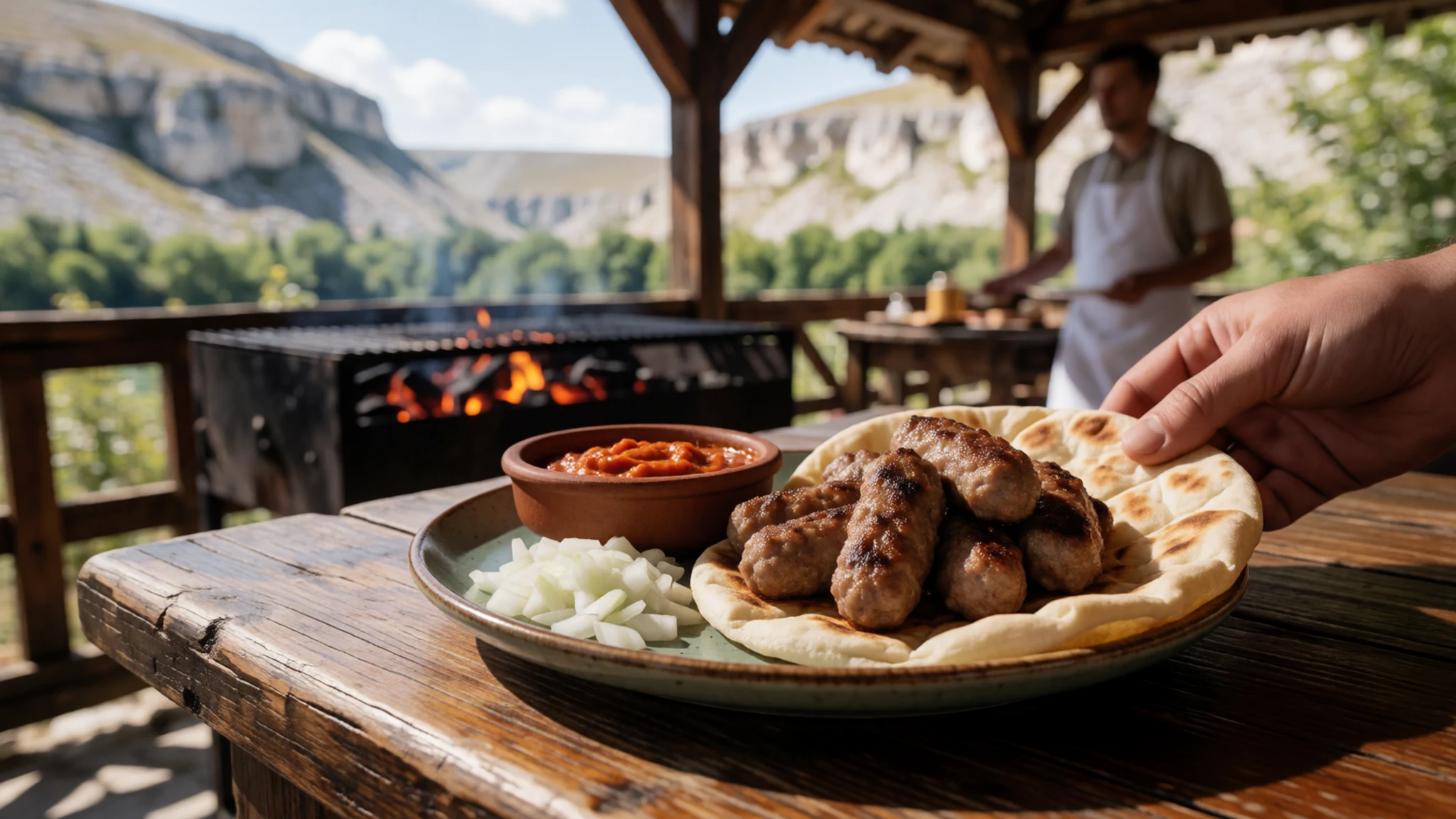
- Pita and burek — Morning bakeries in Ljubuški and Mostar
Flaky pastry rolled or coiled around fillings such as minced meat, cheese or spinach, baked until crisp and cut into wedges. It makes a sturdy road-trip breakfast. Bakeries in Ljubuški and Mostar sell it in the morning, often with a cup of plain yoghurt.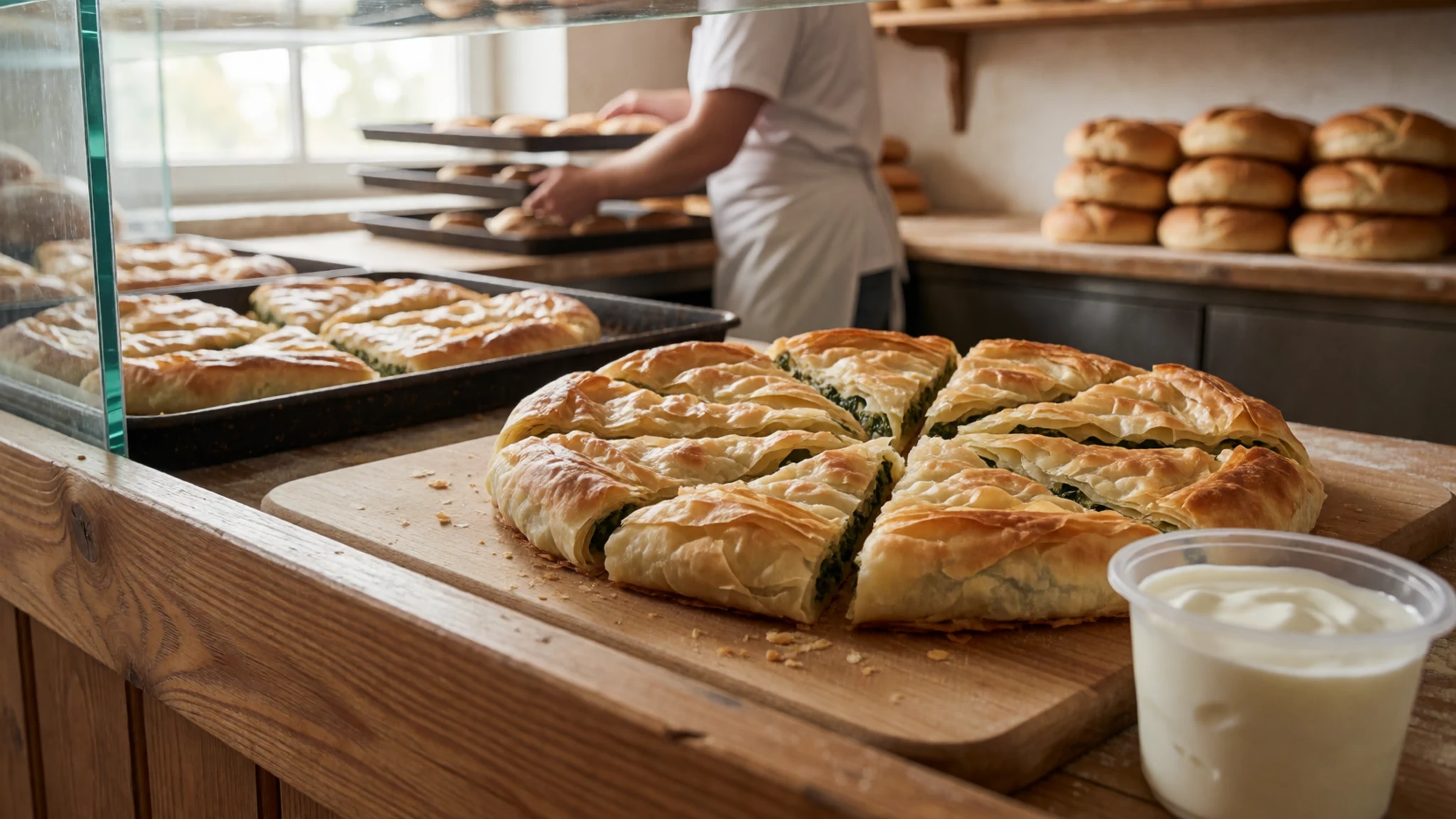
- Grilled fish — Seasonal eateries near the waterfalls
In the high season the eateries around Kravica Waterfalls serve fish straight from the grill, usually with potatoes, greens and lemon. Menus change with the day's supply, so ask what is on offer. Pick a table within sight of the pool and expect a leisurely lunch. - Mixed grill platter — Restaurants near the falls and roadside grills
A platter of grilled meats, often ćevapi, chops and sausages, served with flatbread, onions and ajvar, a roasted red pepper relish. Sharing is normal. Restaurants near the falls and roadside grills between Mostar and the coast do these well, especially in summer. - Bosnian coffee — Cafes in Ljubuški, Mostar and by the falls
Strong, finely ground coffee brewed in a small copper pot and poured into tiny cups, usually with a sugar cube and a glass of water on the side. Sip slowly. Any cafe in Ljubuški or Mostar serves it, as does the small cafe by the falls.
Plan it
Best time. April–June, when the flow is fullest and the dry hills turn green; July–August is the swimming season but hot and crowded; September is still warm and quieter.
How long. 1
Getting there. Mostar is the nearest large town; check current flights to Mostar or Sarajevo airports, or use Croatian coast airports and cross the border. The last leg is a drive south from Mostar through Ljubuški to the falls. Public transport is limited, so confirm locally or hire a car or taxi.
Budget. low
Tips
- Arrive early on summer weekends, when the pool and parking fill up
- Wear water shoes: the tufa and pool bed are slippery
- Carry some cash as well as a card for small cafes and parking
- Bring drinking water and sun protection, as shade is limited around the pool
- Check the official site, http://www.kravica.ba, for current opening and entry details
Etiquette
- Take all rubbish with you and keep to marked paths
- Dress modestly when stopping at mosques, churches or in town centres
- Avoid raising the war or disputed politics in conversation
Nearby
Sources
- Wikidata Q37472 (CC0)
- Wikipedia: Kravica (waterfall), rev 1366790628 (CC BY-SA 4.0)
- Wikivoyage: Bosnia and Herzegovina, rev 5424458 (CC BY-SA 4.0)
- Bosnia and Herzegovina - Kravica Waterfalls, Matěj Baťha (CC BY-SA 2.5)
- Blank relief location map of Bosnia and Herzegovina, DzWiki (CC BY 3.0)
- Kravice Falls from the distance, Bizutage (CC BY 3.0)
- One of the most attractive waterfalls on Trebižat river, Marcin Ostajewski (CC BY 3.0)
- Vodopády Kravice, Piotr Frydecki (CC BY 3.0)
- Kravice Waterfalls near Ljubuški, Stephan Hense (CC BY 3.0)
- Kravice Waterfalls, lasserbua (CC BY 2.5)
- Kravice - vodopády, Addvisor (CC BY 3.0)


