Blagaj
Blagaj, Bosnia and Herzegovina
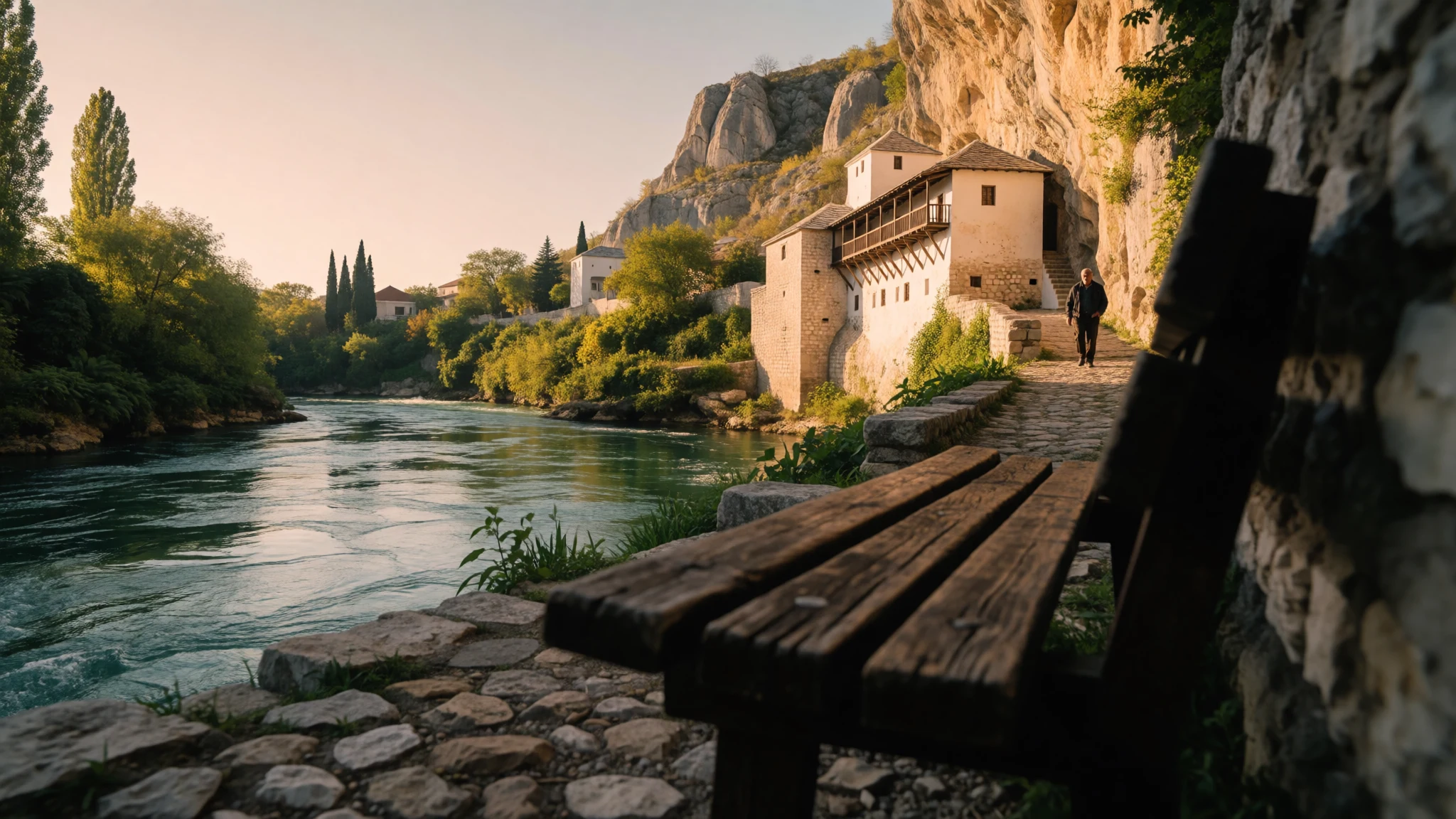
Blagaj is a quiet Herzegovinian village where a river pours out of a cliff beside a centuries-old dervish lodge.
The place
Blagaj is a small village in the Mostar basin of southern Bosnia and Herzegovina, in the Herzegovina-Neretva Canton, with a population of about 2,700 and an elevation of 98 m. It sits where the Bišće plain meets a steep limestone wall, and the Buna river leaves the base of that rock as a ready-made stream. The spring and the dervish lodge beside it draw most visitors, but the village around them is protected as a whole: a blend of town and farmland layout, stone houses with walled yards, and old mill sites strung along the water. The name is usually explained by blaga, a Bosnian word meaning mild, and the climate fits. Mediterranean air travels up the Neretva valley, so winters are gentler than in the mountains to the north, while summers are hot and bright. Blagaj is a short drive from Mostar, which makes it an easy half-day addition, though tour groups tend to arrive at similar hours and the lodge terrace fills by late morning. Early or late in the day the place is calmer, the water looks greener and the cliff throws longer shadows. It rewards slow handling: walk the river path, sit over a coffee, then climb towards the ruined fortress on the hill above. Blagaj suits a few unhurried hours rather than a checklist, and it rarely needs more than a day.
Its story
Blagaj's history is stacked in layers around its fortress hill. Before the medieval period the site held an Illyrian stronghold and later a Roman military camp, and Byzantine builders fortified several towns in the surrounding country. A Byzantine imperial text names a place called Bona in the district then called Zahumlje, usually read as an early mention of Blagaj. Records under the present name begin in 1423. The area belonged to the lands of Hum, which passed from Serbian to Bosnian rule before the Kosača family, Sandalj Hranić and later his nephew Stjepan Vukčić, held it in the fifteenth century. Blagaj served as a residence for those noble houses until the Ottomans arrived in 1466. Under Ottoman rule it became the seat of its own district and grew into a proper town, with mosques, inns, guest houses, a madrasa, mills and several stone bridges over the Buna. The dervish lodge at the spring was built around 1520. Bosniaks made up the majority up until 1835. Later, during the Austro-Hungarian era, Christians became the larger group, leading to the construction of an Orthodox church in 1893 and a Catholic church in 1908. Those layers still sit side by side: fortress walls on the crag, a mosque and lodge near the water, church buildings in the village. Blagaj is less a single monument than a long argument between rulers and faiths, settled in stone.
What to see
- Blagaj Tekija — Spring of the Buna, east of the village
The dervish lodge stands right against the cliff at the spring, combining Ottoman architecture with a Mediterranean feel. It is a national monument and still reads as a place of retreat. The wooden interior is modest, and the riverside terrace is where most people linger. Check locally for opening times before going.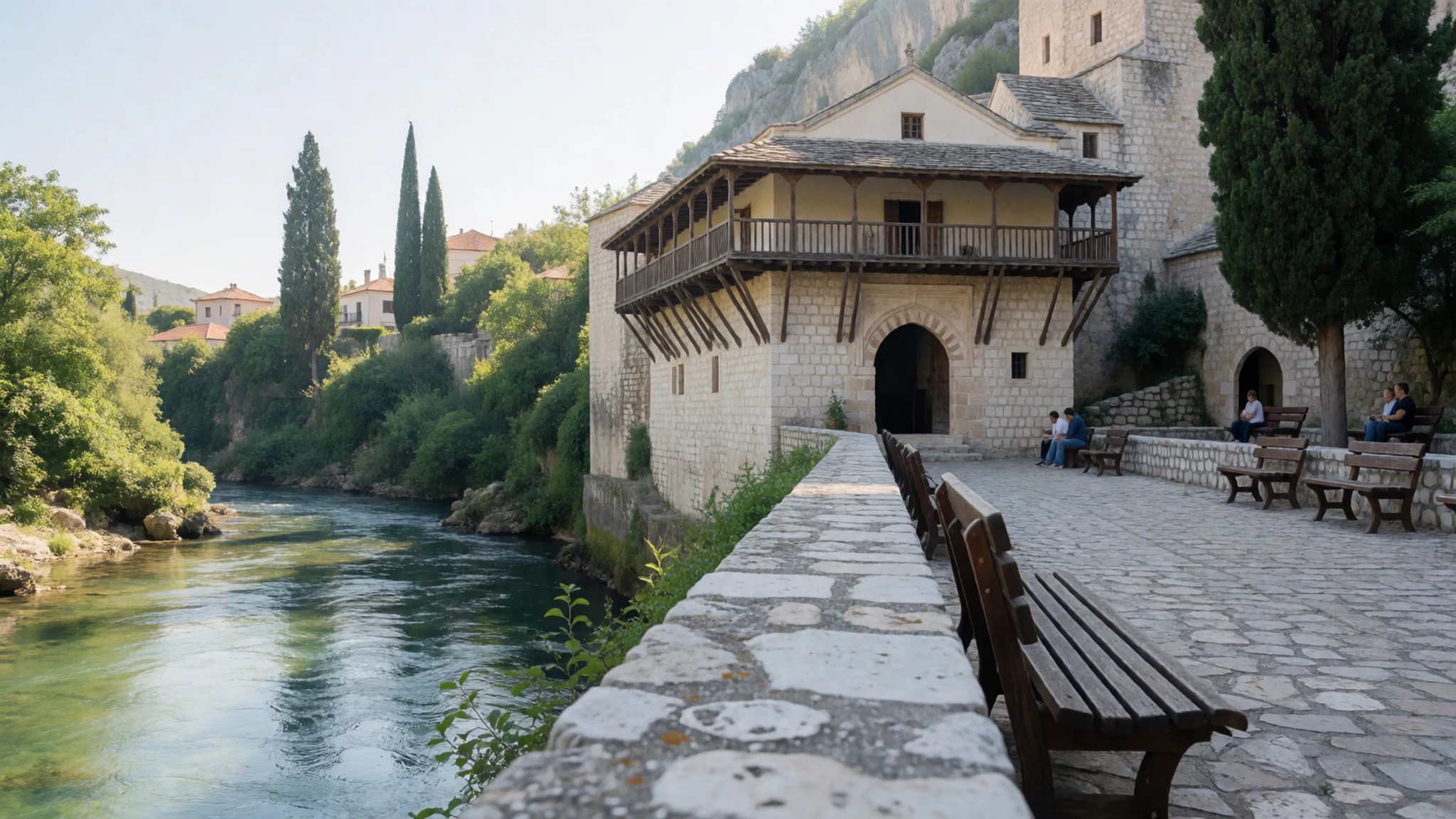
- Vrelo Bune (the Buna spring) — Base of the cliff behind the lodge
The river emerges from a cave mouth under the rock face, already wide and cold. Its colour shifts from jade to grey with rainfall and season. Paths and a terrace give views into the cave, but the water level changes, so conditions vary from visit to visit. Keep to marked edges and watch your footing.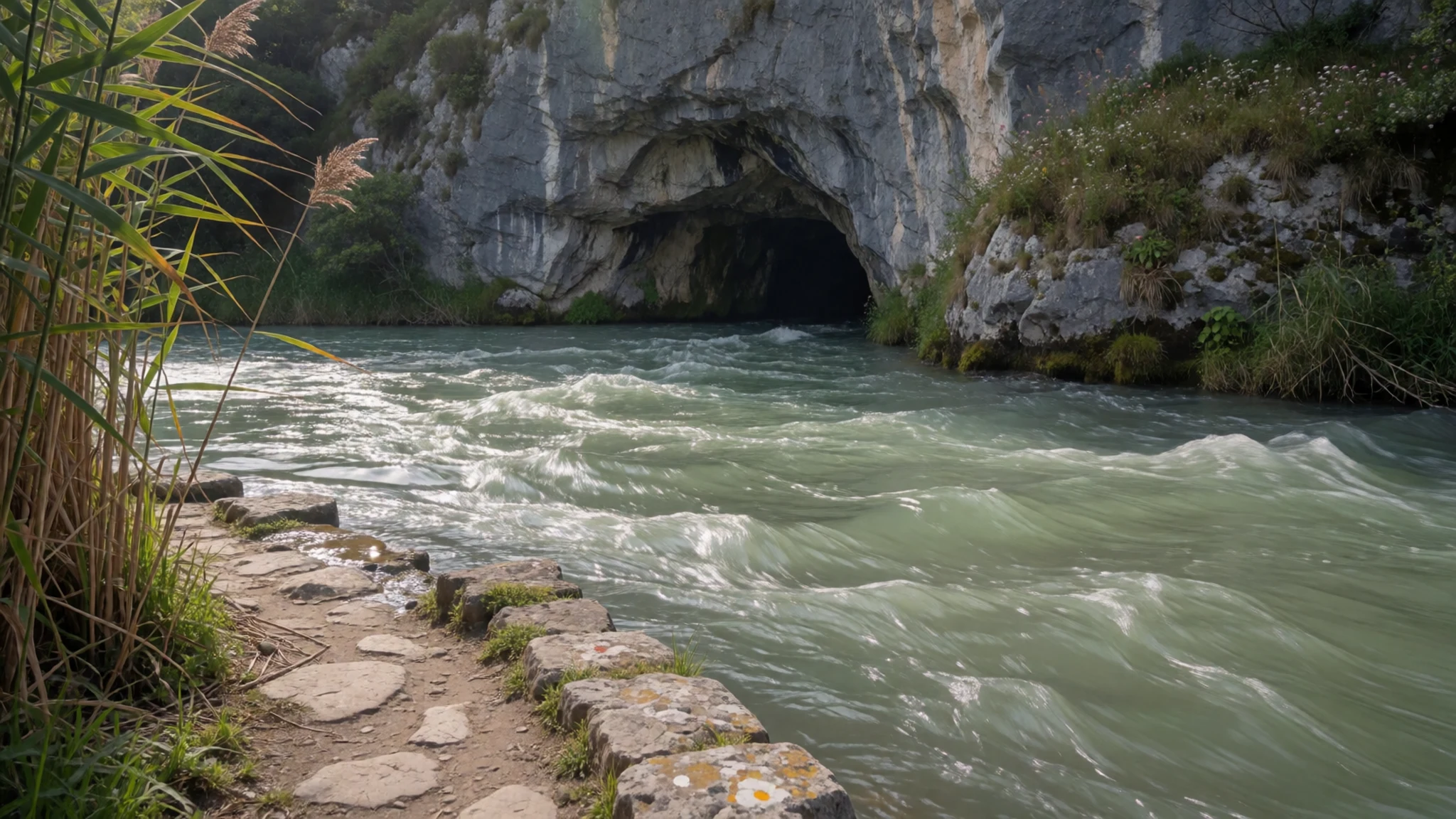
- Buna riverside walk — Along the Buna below the spring
A pleasant stroll follows the stream away from the spring, passing old mill sites, small stone bridges, gardens and open-air eating places. It is flat, shaded in parts and easy with children. Early morning light is best, and the walk gives a better sense of village life than the lodge terrace.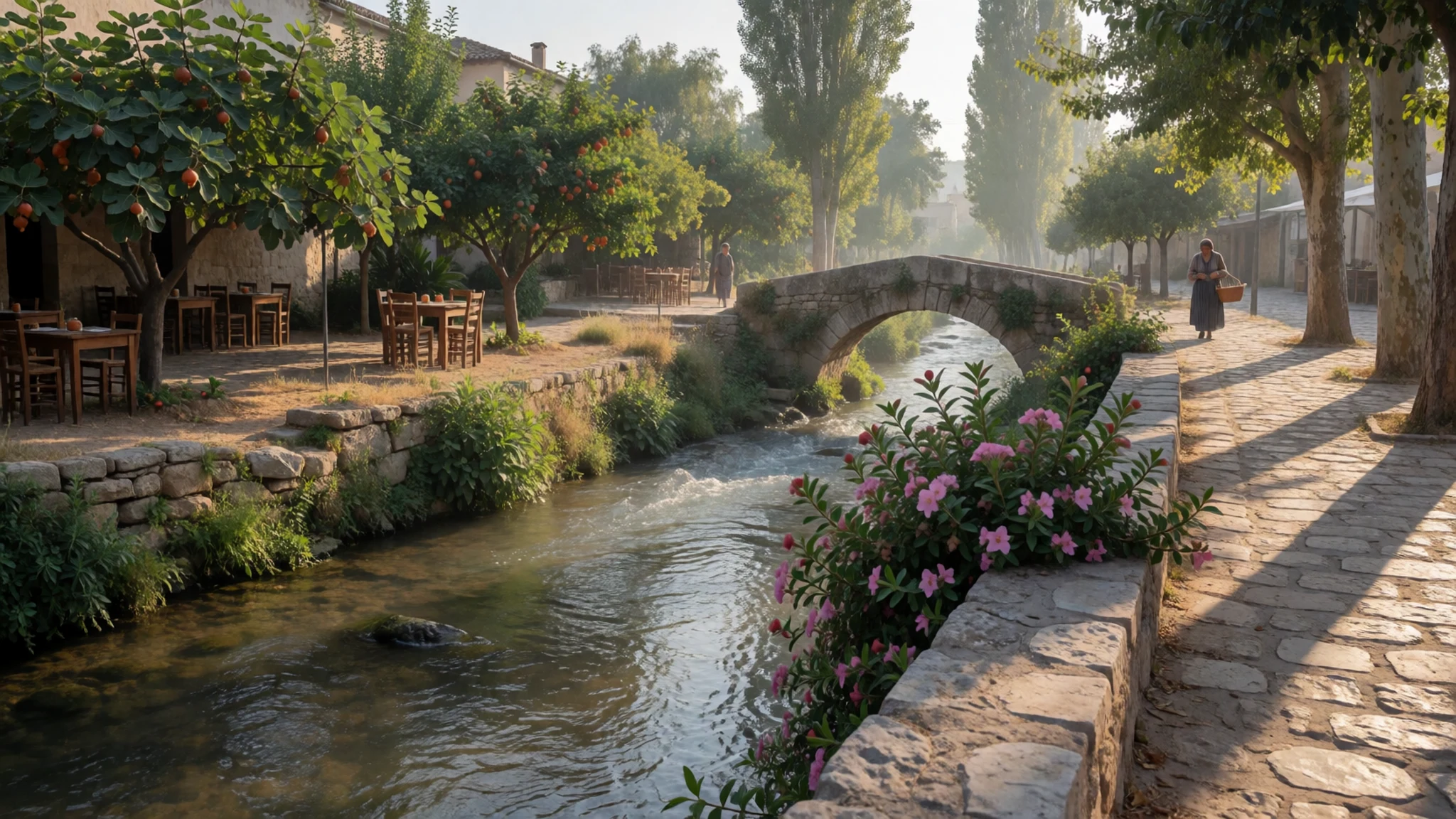
- Stari Grad fortress — Hilltop above Blagaj
Ruined walls crown the crag above the village, the last remains of the medieval stronghold associated with Bosnian nobles. The climb is steep and rocky, with little shade, so it suits morning or late afternoon in good shoes. Views over the plain and the village roofs justify the effort.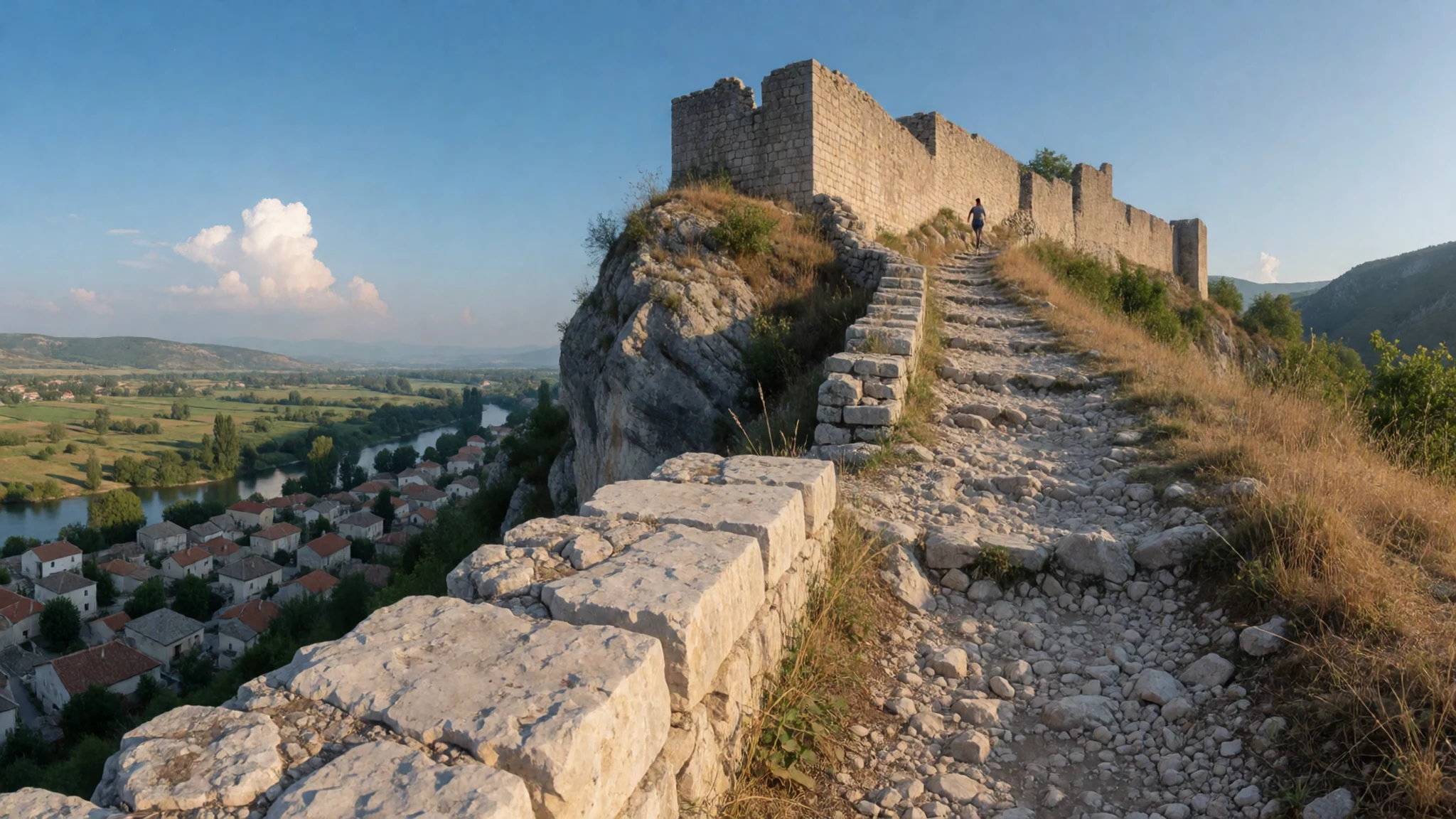
- Velagić house complex — Old village lanes
This residential complex shows the older domestic architecture of Blagaj: stone walls, timber, enclosed yards and sloping roofs, set within the protected village fabric. It is a good example of why the whole settlement is listed. Admire from the lane, and respect that homes in the area are lived in.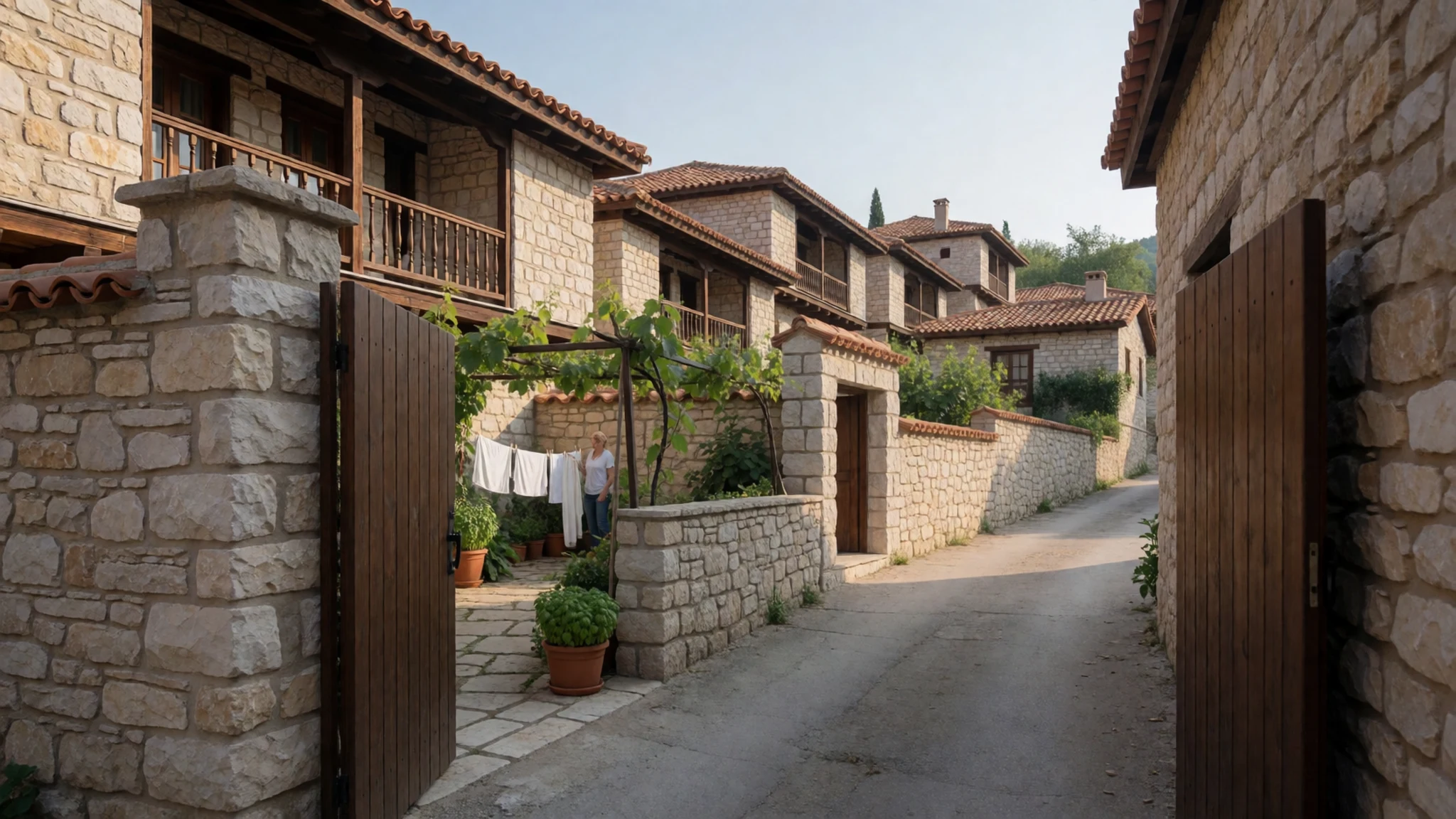
Culture
Blagaj sits in a part of Herzegovina where Muslim, Orthodox and Catholic communities have lived close together for generations, and the village's buildings reflect it. The dervish lodge represents the Sufi tradition of the Ottoman period: a place built for prayer, hospitality and contemplation beside flowing water. The mosque, the two churches and the old houses show how faiths and building styles overlapped over the centuries. Daily life is unhurried, centred on family, coffee and long conversations, and hospitality is taken seriously. Bosnian coffee is served slowly in a small copper pot with a cup and sugar cube on the side, and being offered one is a courtesy rather than a sales tactic. The Austro-Hungarian era left its mark in church building and civic habits, while the Ottoman centuries left the mills, bridges and house plans. Ordinary visitors will notice that the region still feels shaped by its recent history, and that people often prefer to talk about food, football and family before politics. Tour groups come and go, but late afternoon is when the village feels most like itself. In religious buildings, dress and behaviour matter more than in the street, and visitors should treat the lodge as a place of worship as well as a view. At the lodge, remove your shoes where others have left theirs, cover shoulders and knees, and keep your voice low.
What to wear
Traditional dress in the Mostar region drew on Ottoman and Balkan styles: embroidered waistcoats called jelek, wide trousers known as dimije for women, and headscarves in wool, cotton or silk, often with woven or embroidered borders. Men once wore a fez or a woollen cap with a sash at the waist. Fine needlework, braid and metal thread marked festival clothing, and such outfits now appear mainly at folk events, weddings and heritage performances rather than everyday life. Day to day, people in Blagaj dress as in most of southern Europe: jeans, shirts, light dresses, trainers and sandals, with modest, practical choices for older residents and for religious occasions. Some women cover their hair, many do not, and both are normal. A visitor should plan for heat in summer, so light, breathable cotton or linen is best, plus a hat and sunglasses for the exposed fortress climb. Shoulders and knees should be covered for the lodge and any mosque, and a light scarf is useful for women who wish to cover their hair. Shoes need grip: the riverside path and the fortress track are rocky and uneven, and flip-flops are a poor choice. In spring and autumn, evenings by the water turn cool, so bring a thin jumper or jacket.
What to eat
- Buna trout (pastrmka) — Open-air eateries along the Buna below the spring
Fresh trout grilled or pan-fried is the signature meal beside the river, usually served whole with potatoes, greens and lemon. Quality depends on the kitchen, so look for simple preparation and a busy table.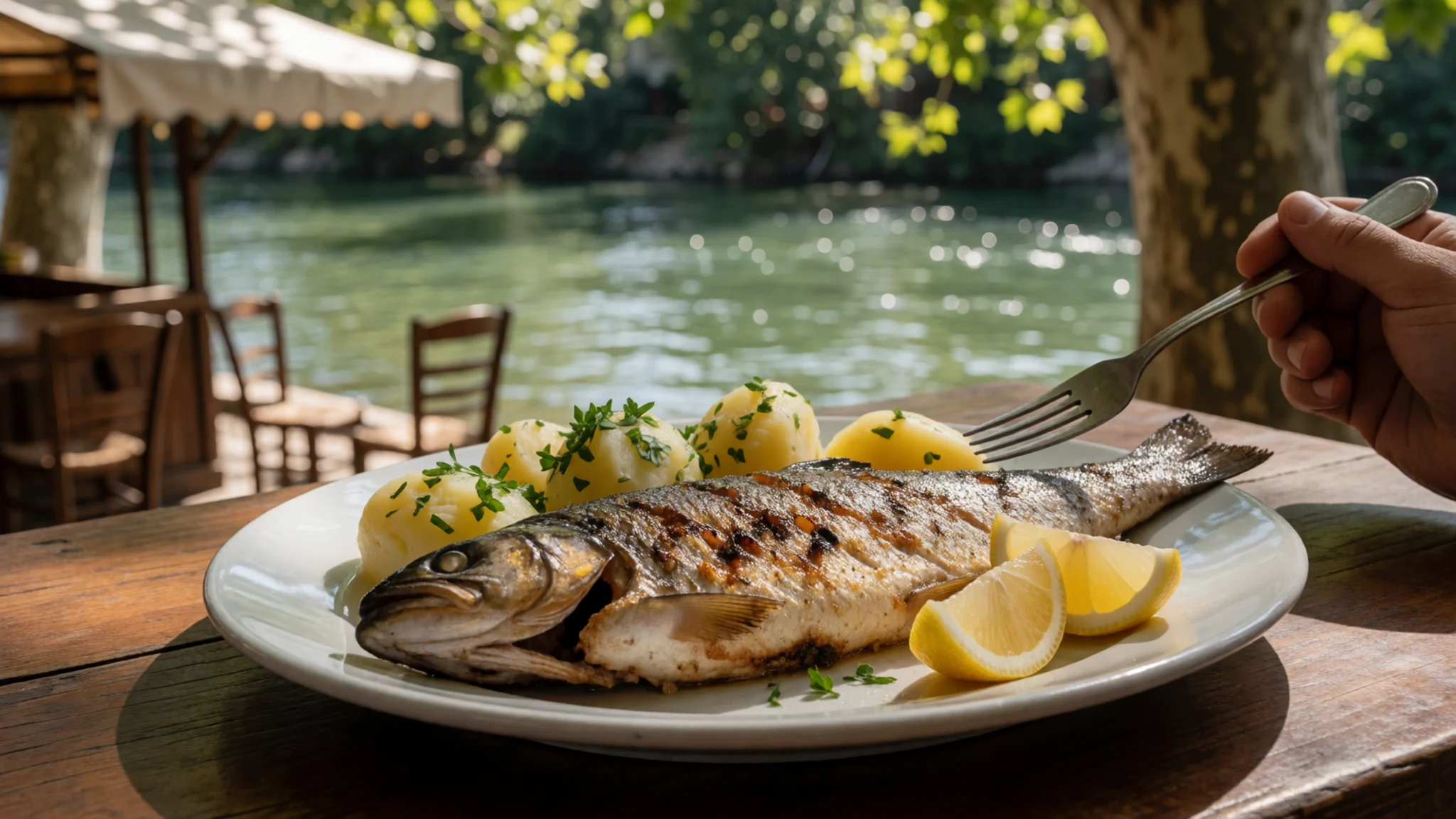
- Ćevapi — Grill houses in Blagaj village and nearby Mostar
Small grilled minced-meat sausages are served in warm flatbread (somun) with chopped raw onion and sometimes sour cream or kajmak. It is a cheap, filling meal found across Bosnia and Herzegovina.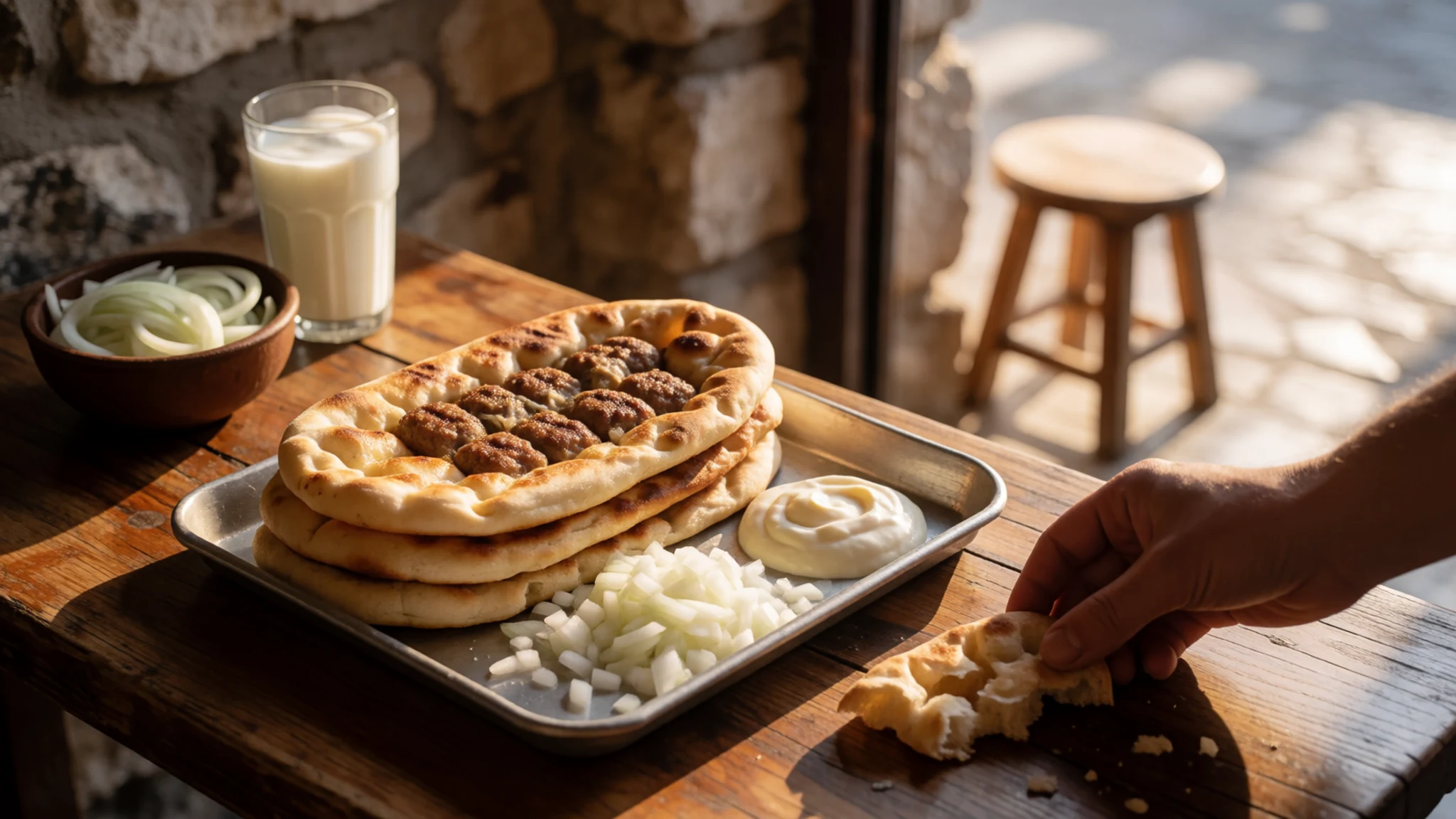
- Bosnian coffee — The lodge terrace and cafés along the river
Strong, finely ground coffee is brewed in a small pot called a džezva and served with a sugar cube and often a sweet. It is meant to be sipped slowly, not gulped, and the grounds settle at the bottom. - Tufahija — Cafés and restaurants in Blagaj and Mostar
This dessert is a poached apple stuffed with walnuts, topped with cream, and served in a light syrup. It is rich, sweet and often shared, and goes well with coffee after a heavy grilled meal. - Burek and other filled pies — Bakeries and pie shops in Mostar and the village
Flaky pastry rolled around minced meat is called burek, with cheese, spinach or potato versions sold under other names. It is a standard breakfast and an easy snack before the fortress climb.
Plan it
Best time. April–June and September–October, when the days are warm but not harsh and the river looks its best. July and August are hot and busy by midday, and winter is mild but quieter, with less outdoor seating.
How long. 1
Getting there. Mostar is the usual base, with rail and road links across Bosnia and Herzegovina, and Sarajevo is the nearest large airport for most visitors. From Mostar, Blagaj is a short drive or taxi ride south-east; check local bus times, as services can be limited.
Budget. low
Tips
- Go early or late to avoid the tour-group rush at the lodge
- Carry some cash, as small eateries and cafés may not take cards
- Wear shoes with grip for the fortress track and the wet riverside stones
- Bring water and sun protection in summer, as the fortress hill has little shade
- Check opening times for the lodge locally before making a special trip
Etiquette
- Dress modestly and remove shoes where others have left theirs at the lodge
- Ask before photographing residents or private yards
- Keep voices low near the lodge and mosque, especially at prayer times
Nearby
Sources
- Wikidata Q1277723 (CC0)
- Wikipedia: Blagaj, Mostar (rev 1378498908) (CC BY-SA 4.0)
- Wikivoyage: Blagaj (CC BY-SA 4.0)
- Photo: Blagaj panorama, Ma ▀ ▄ Ga (CC BY 3.0)
- Photo: Buna river near Blagaj, Talha Şamil Çakır (CC BY 3.0)
- Photo: Velagić house complex, Matěj Baťha (CC BY-SA 2.5)
- Photo: Quelle der Buna, Julian Nyča (CC BY 3.0)
- Photo: Old Blagaj fort, Matěj Baťha (CC BY-SA 2.5)
- Photo: Blagaj, Buna river, Matěj Baťha (CC BY-SA 2.5)
- Photo: Velagić house complex 2, Matěj Baťha (CC BY-SA 2.5)
- Photo: Velagić house complex 3, Matěj Baťha (CC BY-SA 2.5)


