Kozara National Park
Kozara National Park, Bosnia and Herzegovina
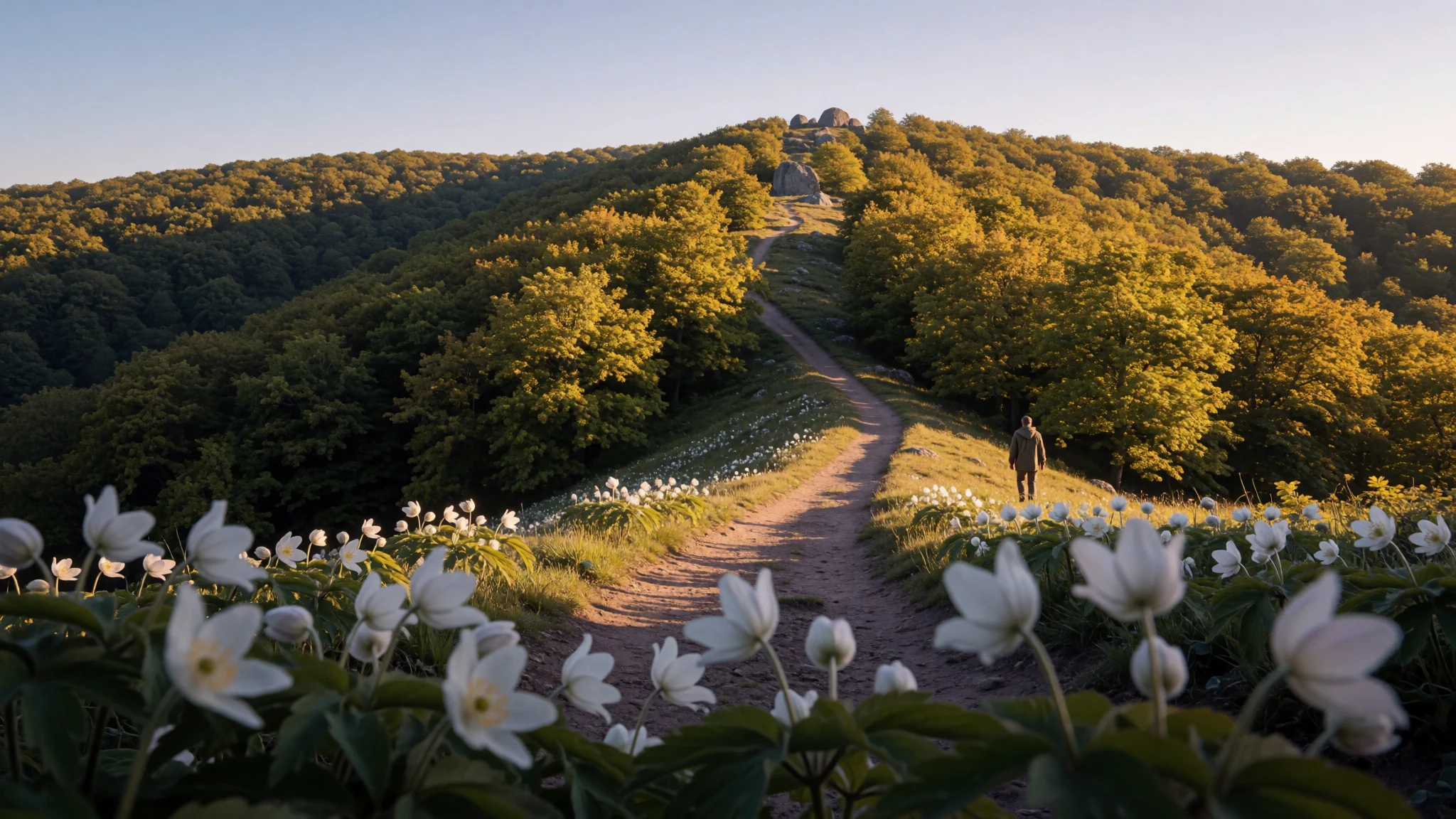
Kozara is a quiet forested mountain where long woodland walks sit beside one of the region's most sobering Second World War memorials.
The place
Kozara National Park lies in the north-west of Bosnia and Herzegovina, in the Republika Srpska entity, on a wooded upland framed by the rivers Una, Sava, Sana and Vrbas. It is a modest mountain rather than an alpine one: the elevation is 626 metres, which makes for rolling ridges, not rock walls. The protected area covers about 3,900 hectares, and roughly 88 per cent of that is forest and forest soil, broken by glades, small brooks and a scattering of monuments. That mix explains how the park is used. Most days it is a place for ordinary outdoor life: picnics in clearings, fitness circuits, long walks under trees, herb picking and cycling. Park management has laid out around 300 kilometres of trails, covering hiking paths, cycle routes and educational walks, so a visitor can choose anything from an hour's stroll to a full day's effort. Only a smaller part of the park is set aside for people who come mainly for nature. Sport has a firm place too. A marathon and ultra trail run here, and a mountain bike race on the park's tracks belongs to the international cycling calendar. Kozara is not a famous name abroad, and it is better judged as a regional green space with a heavy history than as a headline destination. Weekdays are likely to be quiet, with more local families out at weekends in good weather. The memorial sites sit among the trees, and they shape the mood of a visit as much as the scenery does.
Its story
Kozara National Park was proclaimed a protected national forest in 1967, but its name carries older and heavier associations. During the Second World War the mountain became a stronghold of partisan resistance against occupying forces, and the fighting left a deep mark on the memory of the surrounding region. In 1972 a large monument was raised to the dead, a museum followed in 1974, and a memorial wall now carries 9,864 names of partisan fighters killed in the area. Among Yugoslavia's memorial sites, Kozara stood out for how it was framed: less as a symbol for the whole federation than as a place of suffering, liberation and local belonging. The Bosnian War brought neglect. The memorial complex was partly abandoned, although the main monument came through undamaged, and a cross was later set at the entrance to the memorial area for the Second World War victims of Kozara. Since 2012 the park has been run under its own law, passed by Republika Srpska. Commemorations still take place each year on 4 July, the anniversary of the battle, yet the administration now speaks mostly about forests, trails and recreation. The story of Kozara is therefore two stories sharing one hillside: a memorial landscape, and a public park slowly widening what it offers to walkers, cyclists and families.
What to see
- The main memorial monument — Memorial area, central Kozara
The monument raised in 1972 is the focal point of the memorial area and the part of Kozara most people know first. It honours victims of the Second World War from the wider region and came through the Bosnian War undamaged. It rewards a slow walk around it in silence.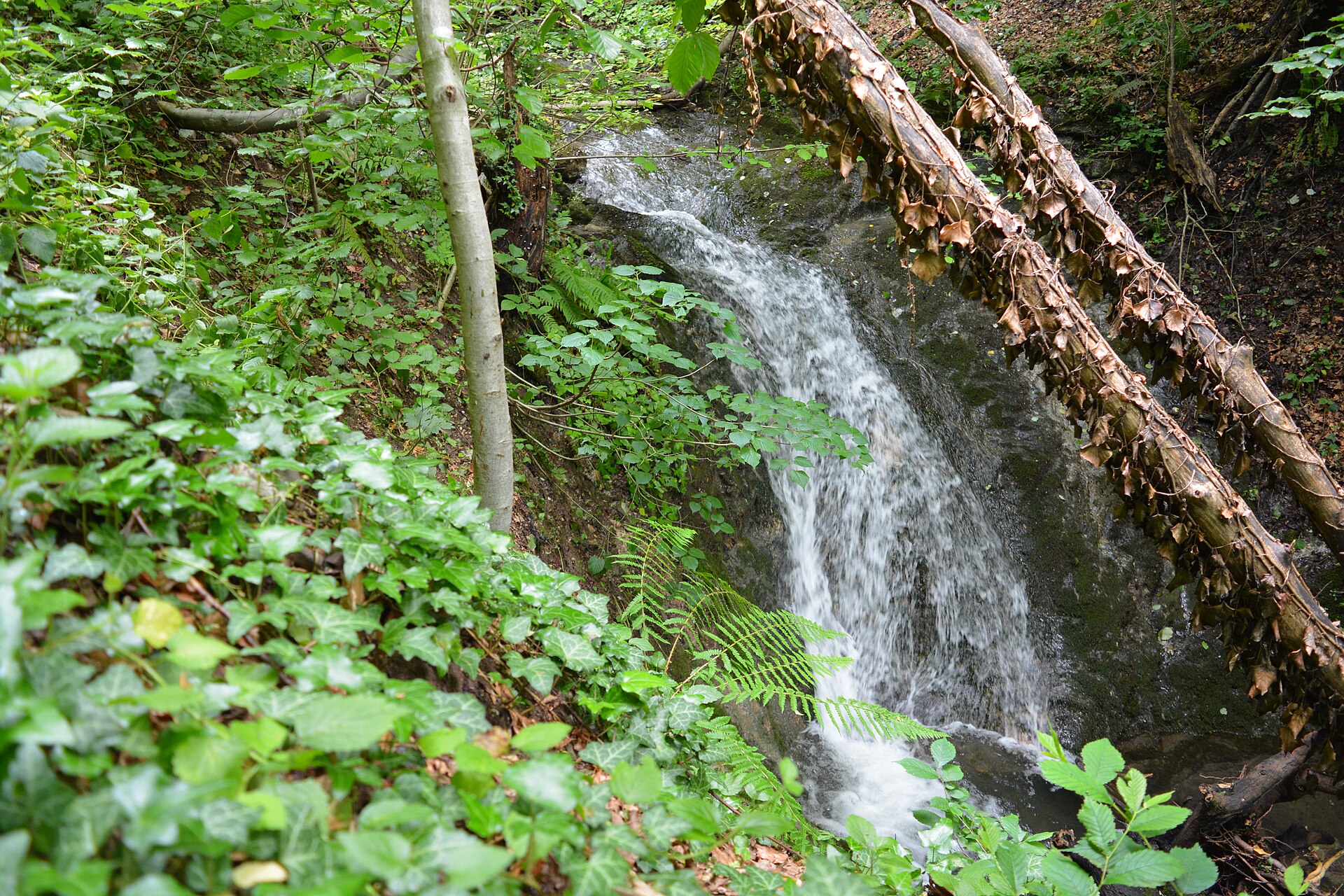
- Museum and memorial wall — Memorial area, central Kozara
The museum, opened in 1974, tells the wartime story of the mountain, and the memorial wall beside it lists 9,864 partisan fighters who died here. A cross at the entrance to the memorial area adds a later layer of meaning. Check the park's official site before travelling for opening arrangements.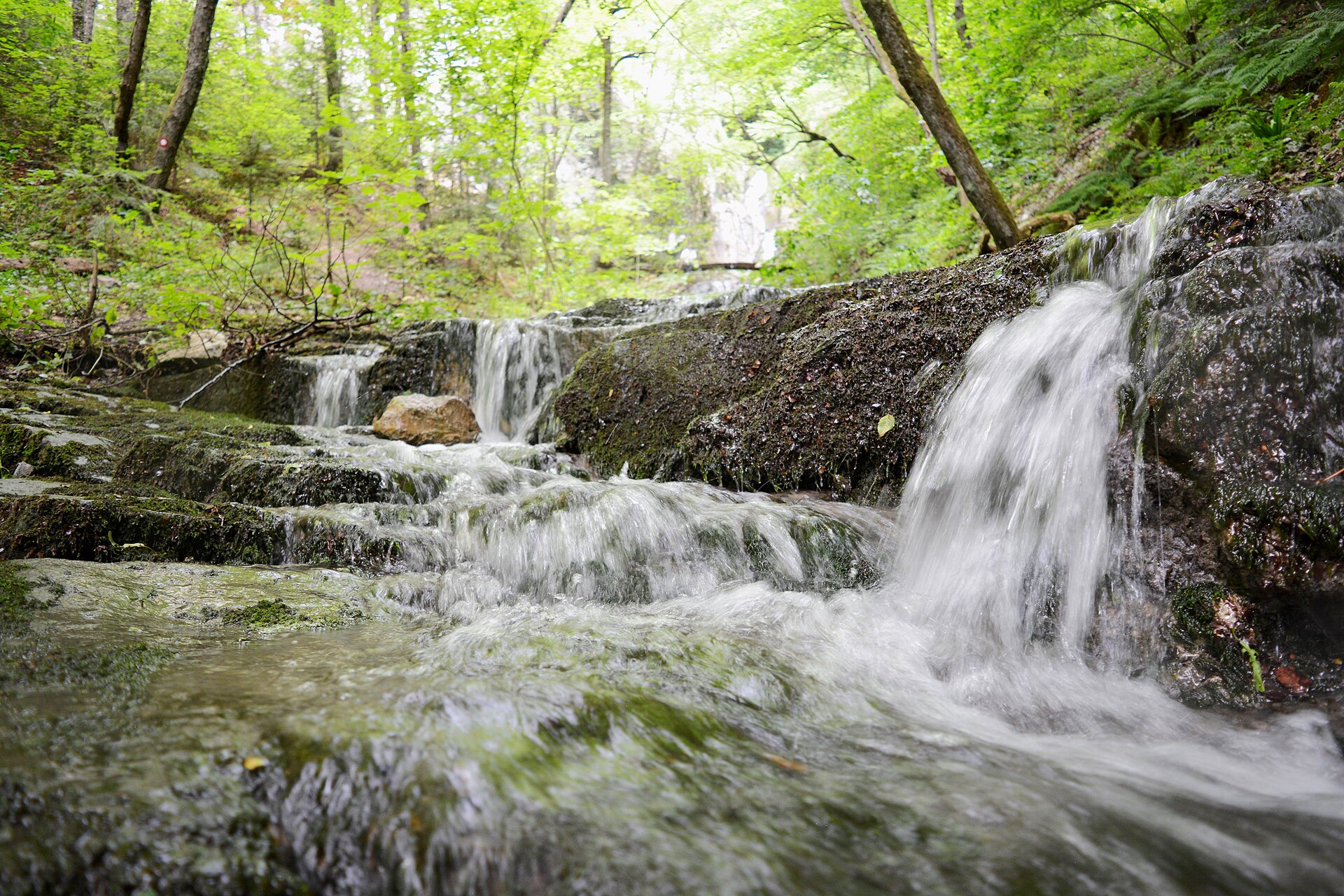
- Forest trail network — Throughout the park
With around 300 kilometres of routes, the trails are the park's main draw for walkers. Paths wander through woodland, past glades and small brooks, from short loops to demanding full days. Ask the park administration for a current map, since signage can vary from one route to the next.
- Educational paths and picnic areas — Recreation areas across the park
Alongside the longer routes, Kozara has educational trails that explain the woodland, plus clearings equipped for picnics, recreation and fitness. They suit families and anyone wanting an easy afternoon under trees rather than a hike. These areas are likely to be at their liveliest on fine weekends.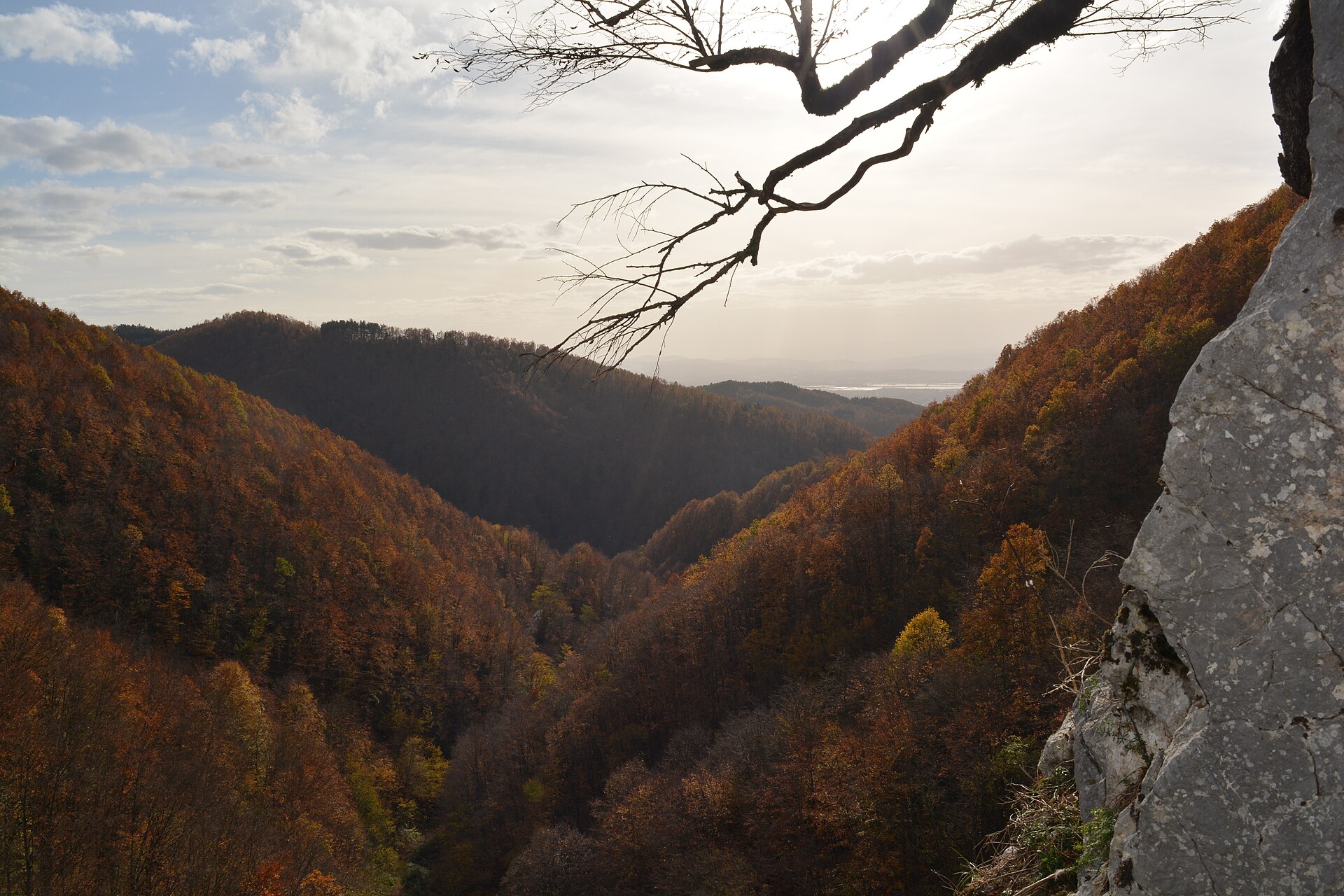
- Kozarački Kamen and the ridge views — Upland ridges of the park
A rocky outcrop known as Kozarački Kamen breaks the otherwise wooded skyline and appears in the park's reference photographs. Ridge viewpoints like this show how the forest rolls out in every direction. Wear shoes with grip, because rocky ground and wet leaves can both be slippery.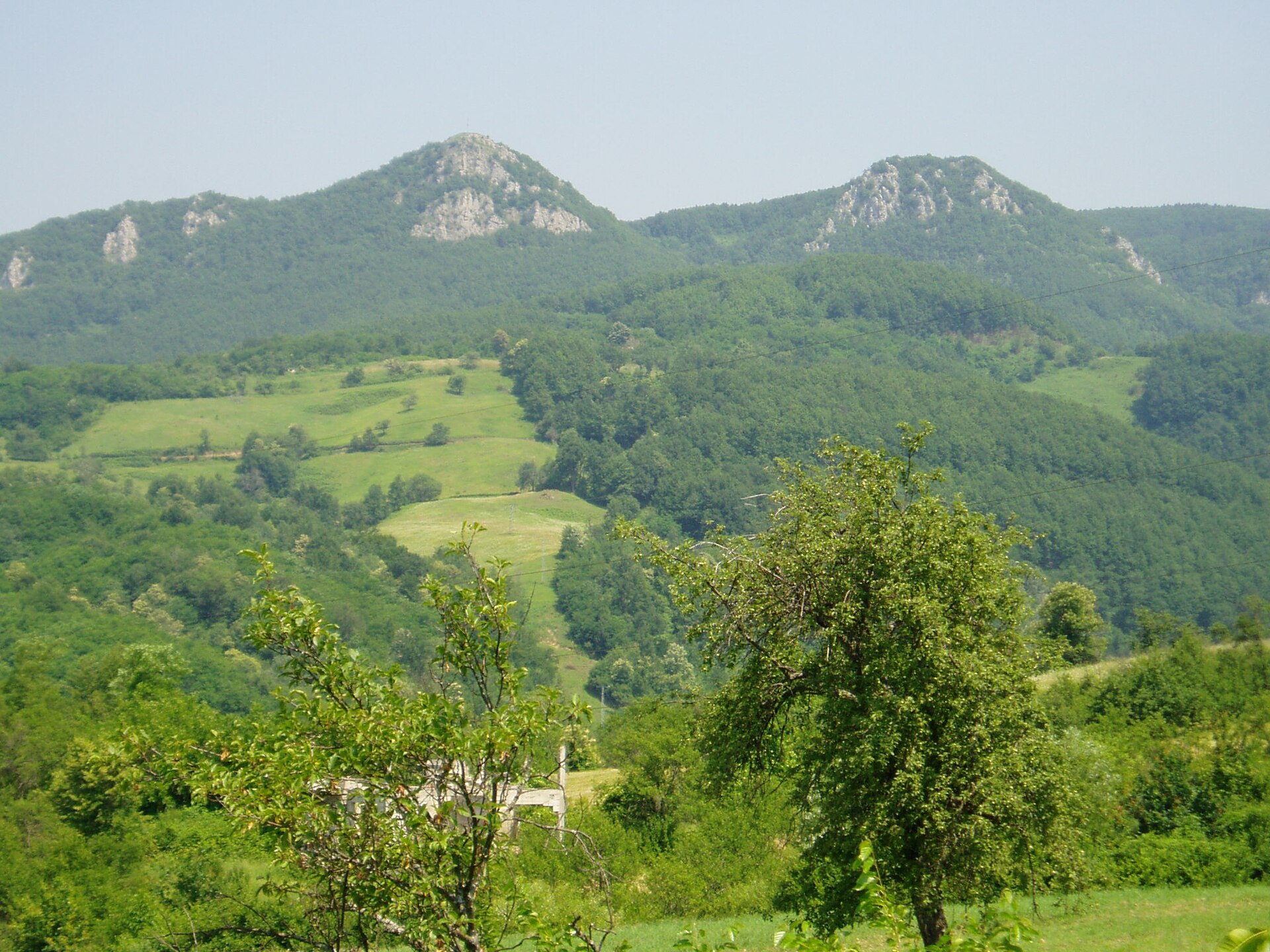
Culture
Kozara National Park is a place where memory is part of daily life rather than something kept behind glass. The mountain is tied to Second World War resistance, and families from across the region come to the memorial area to remember relatives and neighbours. The annual commemoration on 4 July draws people for ceremonies, and the atmosphere on that day is formal and sombre. The Yugoslav period left behind a particular style of memorial building, bold in shape and set deliberately in the landscape, and Kozara shows it clearly. Later events added new layers, including the cross by the memorial entrance. Outside the memorial area the culture is more relaxed. Local people use the forest to pick herbs, picnic with relatives and exercise, and Sunday outings with food and coffee are a familiar habit in this part of Bosnia and Herzegovina. Hospitality is warm, and a visitor who shows curiosity about the history is usually met with patient answers, though views on the past differ and are held deeply. It is wise to listen more than to argue, and to let people tell the story in their own way. Keep voices low and behave with respect at the monument, memorial wall and cross, and ask before photographing anyone who is attending a ceremony or paying their respects.
What to wear
Kozara National Park sits in a region whose traditional dress, seen now mainly at folklore festivals and village celebrations, is built from wool and home-woven linen. Typical pieces include embroidered blouses and waistcoats, woven belts and aprons with bold patterned borders, with leather opanci, a soft-soled peasant shoe, on the feet. Details vary from village to village, and the outfits are worn for performances, weddings and holidays rather than daily life. Everyday clothing around the park is plain and practical: jeans or outdoor trousers, fleeces, jackets, trainers and walking boots, with cycling kit on the race tracks. Families out for a Sunday walk tend to dress simply but neatly. For a visitor, the forest calls for comfort. Wear sturdy shoes with good grip, since paths can be muddy after rain and rocky on the ridges. Carry a waterproof layer and a warm top in every season, because weather on a wooded upland can change quickly, and add a hat and sun protection for summer clearings. Long trousers help against ticks and brambles. At the memorial area, modest, quiet clothing is the sensible choice, so avoid beachwear or anything with loud slogans. Layers also suit the cold months, when the temperature can drop well below what a nearby town feels like.
What to eat
- Ćevapi — Grill houses in Prijedor and on the approach roads
Small grilled minced-meat sausages served in flatbread with chopped raw onion, the standard casual meal across Bosnia and Herzegovina. Look for them at grill houses in Prijedor and along the roads leading up to the park. - Burek and other pita — Town bakeries and small eateries
Burek is flaky pastry coiled around minced meat; the same dough also holds cheese, spinach or potato in other pies. Bakeries and small eateries sell it by the slice, and it is a sensible breakfast before a day on the trails. - Kajmak with fresh bread — Town markets and village farms
Kajmak is a soft, salty dairy cream, spread thick on fresh bread or served beside grilled meat. It is made in village households across the region, so farm gates and town markets are the best places to taste it. - Roast lamb — Roadside roast houses near the park
Lamb roasted slowly over an open fire is the dish for celebrations and weekend outings in the region. Roadside roast houses on the main routes are the usual place to find it, and portions are generous enough to share. - Bosnian coffee — Any café in Prijedor or near the park
Coffee is boiled in a small copper pot and served with a sugar cube and a glass of water, to be sipped slowly. Any café in the area makes it, and a stop after a walk is part of the local rhythm.
Plan it
Best time. May–June and September–October, when walking is comfortable and the woods are green or turning. Summer can be warm, and winters in this part of Bosnia and Herzegovina are cold, so trails may be wet or icy.
How long. 1–2
Getting there. Banja Luka has the nearest regional airport, with Zagreb and Sarajevo offering wider connections. From there, travel to Prijedor, the nearest town, then make the last leg by car or taxi up to the park. Check the official site for current access details.
Budget. low
Tips
- Check the official site, npkozara.com, for current opening arrangements and any events before setting out
- Bring a map or download one, as trail signage can be uneven
- Carry water and snacks, since facilities inside the forest are limited
- Aim for weekdays for quiet trails; weekends in fine weather bring local families
- Keep some cash for small eateries and village stalls
Etiquette
- Stay quiet and respectful at the monument, memorial wall and cross
- Do not photograph people at ceremonies without asking
- Take litter back out with you and stay on marked paths
Nearby
Sources
- Wikidata Q2418337 (CC0)
- Wikipedia: Kozara National Park (rev 1370303991) (CC BY-SA 4.0)
- Wikivoyage: Kozara National Park (rev 5316880) (CC BY-SA 4.0)
- KozarackiKamen.jpg, unknown author, via Wikimedia Commons (Public domain)
- NP002 - 14.jpg, elektronak, via Wikimedia Commons (CC BY-SA 4.0)
- Kozara 1.jpg, Ljubica K-R, via Wikimedia Commons (CC BY-SA 4.0)
- Kozara 11 1.jpg, Ljubica K-R, via Wikimedia Commons (CC BY-SA 4.0)
- Kozara 11.jpg, Ljubica K-R, via Wikimedia Commons (CC BY-SA 4.0)
- Kozara 14.jpg, Ljubica K-R, via Wikimedia Commons (CC BY-SA 4.0)
- Kozara 16 1.jpg, Ljubica K-R, via Wikimedia Commons (CC BY-SA 4.0)
- Kozara 17 1.jpg, Ljubica K-R, via Wikimedia Commons (CC BY-SA 4.0)


