Ferhat Pasha Mosque
Ferhat Pasha Mosque, Bosnia and Herzegovina
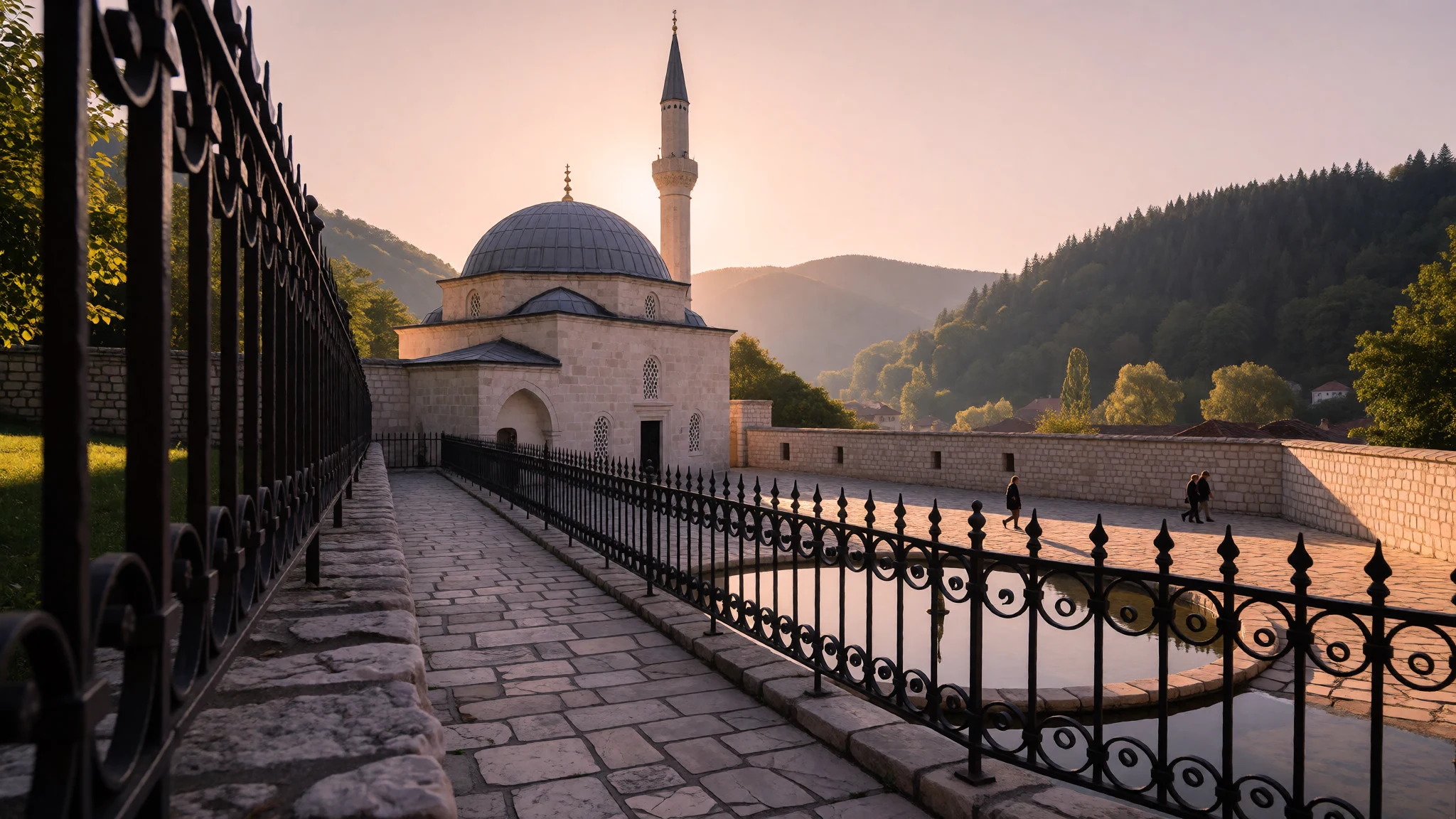
Ferhat Pasha Mosque in Banja Luka is a 16th-century Ottoman design, destroyed in 1993 and rebuilt in 2016, so it carries both beauty and loss.
The place
Ferhat Pasha Mosque (Ferhadija; Bosnian Ferhat-pašina džamija) stands in the middle of Banja Luka, a city on the Vrbas river that acts as the hub of northwestern Bosnia and Herzegovina. The surrounding region, Bosanska Krajina, is green and heavily wooded, and the city is its crossroads for buses, flights and road traffic. The mosque is a short walk from the main shopping street and the old Kastel fortress, so it slots easily into a stroll through the centre.
The building follows the classical Ottoman pattern: a prayer hall under a dome, a slender minaret, and a walled courtyard with a washing fountain called a shadirvan. A stone and iron fence encloses the grounds. Architectural historians link the design to the school of Mimar Sinan, the Ottoman chief architect, and name a mosque in Manisa, Turkey, as a close cousin. No builder's name survives, so the attribution rests on style alone.
What stands here today is a reconstruction. The original, completed in 1579, was demolished in 1993, and the rebuilt mosque opened in 2016. Fragments of the earlier building are kept on the site as a reminder. The place therefore reads as a 16th-century design and as a recent act of return, and it remains a working house of worship rather than a museum.
Its story
Ferhat Pasha Mosque owes its existence to Ferhad Pasha Sokolović, who governed the Bosnian sanjak for the Ottomans and ordered the building in 1579. Local tradition says the money came from the Auersperg family. After Ferhad Pasha prevailed in a clash on the Croatian frontier in 1575, they are said to have paid a ransom for a captured son and for the head of the Habsburg commander Herbard VIII von Auersperg. It is a vivid tale, best treated as tradition rather than documented fact.
The design is credited to someone trained in Sinan's workshop, probably the foreman of the works, though no record names the craftsmen. For centuries the mosque anchored the Muslim life of the town, and old photographs show its courtyard fountain and the fence that still encloses the grounds.
In 1993, during the war, the authorities of Republika Srpska ordered the mosque demolished. It was part of a campaign of ethnic cleansing that targeted the city's Muslims and their heritage. Rebuilding took years of research and planning, using the surviving records and photographs of the original. The reopening ceremony took place on 7 May 2016. Today the building serves as a place of prayer and as a marker of what was destroyed, and many Bosnians see it as both.
What to see
- Ferhat Pasha Mosque and courtyard — Banja Luka city centre
Start with the exterior: the dome, the minaret and the shadirvan fountain at the centre of the walled yard. The stone and iron fence frames the whole composition. Come early in the day for soft light and few people, and look at the main gate from outside before going in.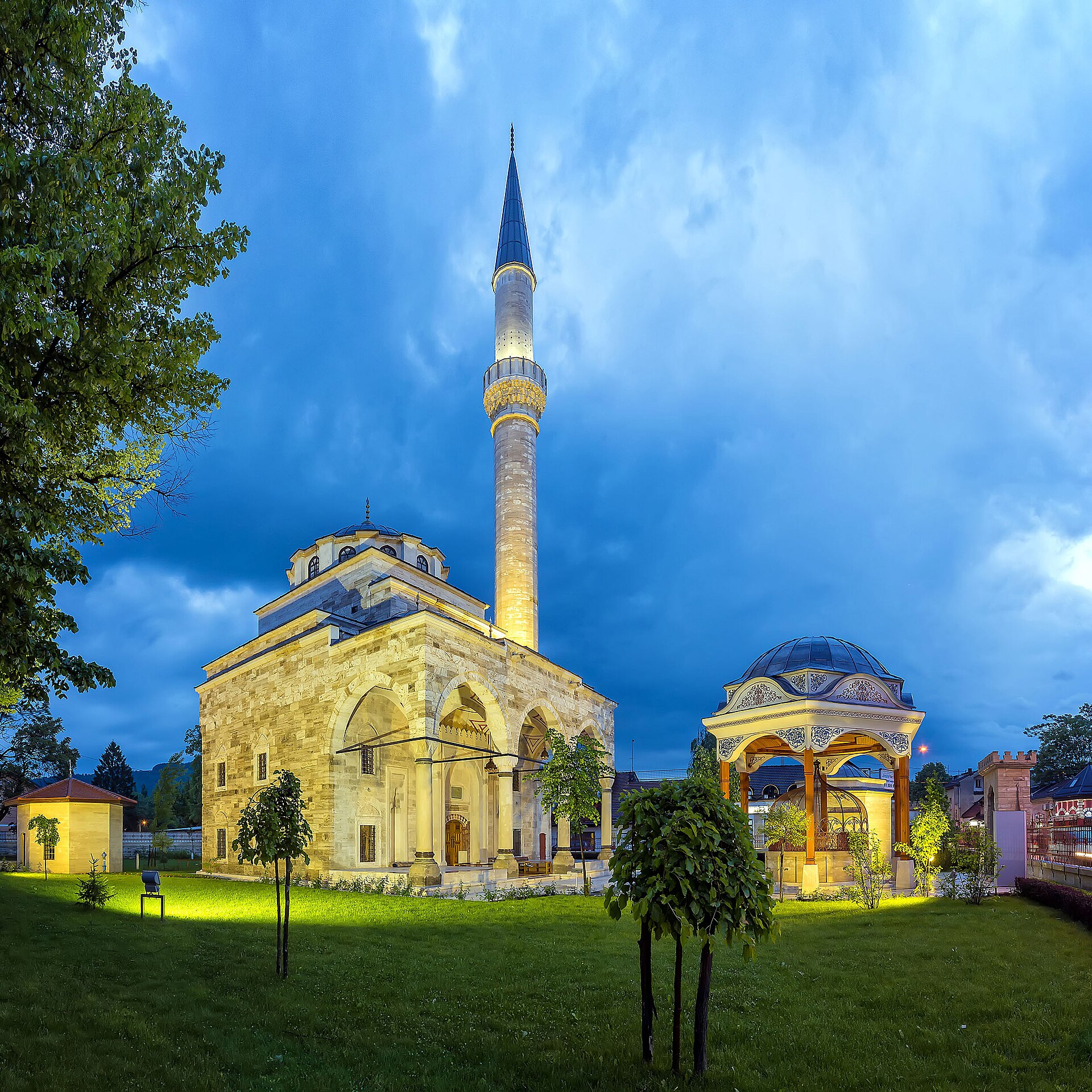
- Remains of the earlier mosque — Within the mosque grounds
Set aside the polished new stonework and look for the preserved fragments of the original building. They make the story of demolition and reconstruction tangible, and comparing them with the reconstruction shows how much was rebuilt from records. Allow quiet time here rather than a quick photograph.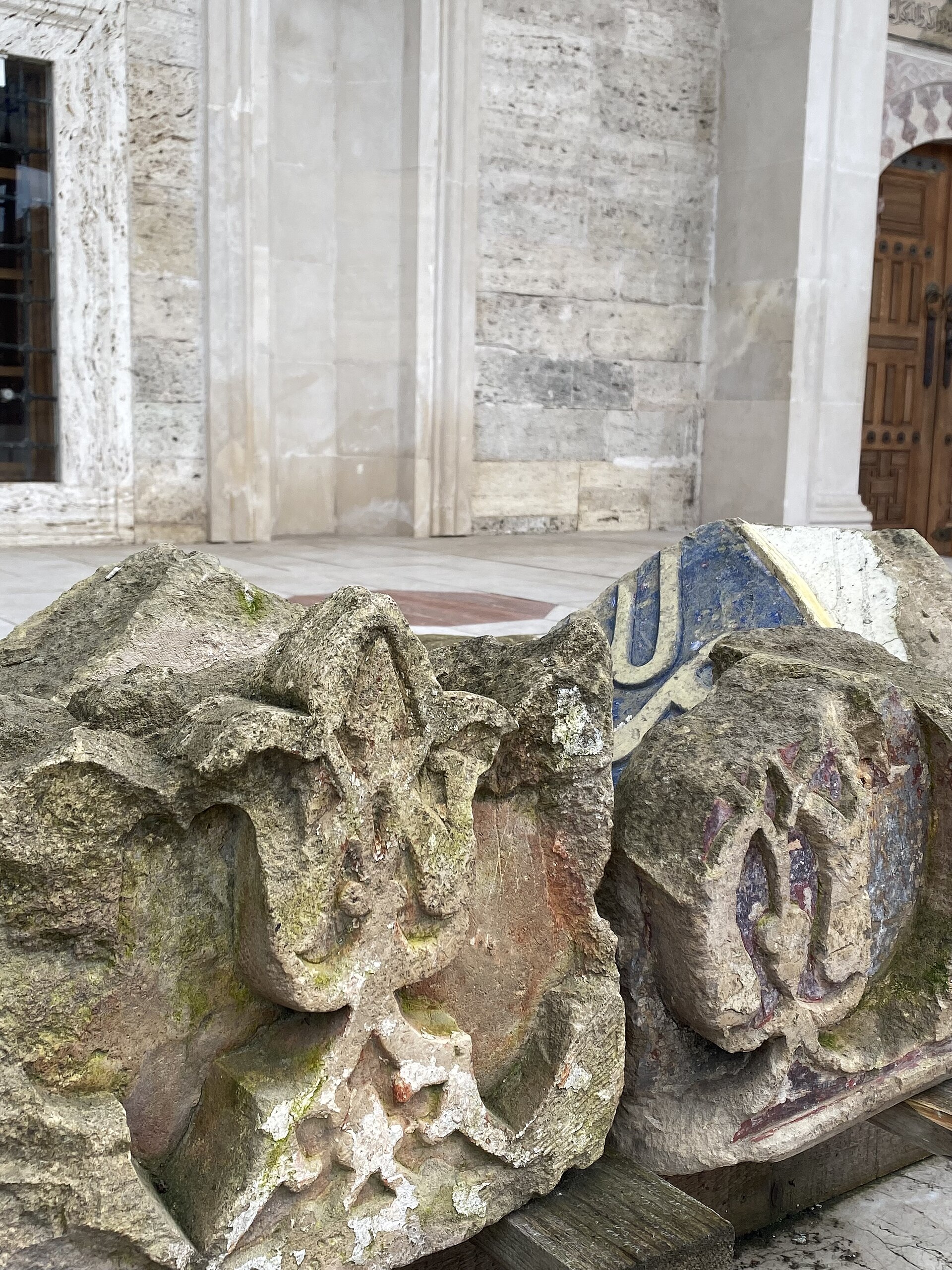
- Kastel Fortress — Beside the Vrbas river
The fortress sits on the river bank a few minutes' walk from the mosque, and its history reaches back to Roman times. The grounds are open and green, which makes them a pleasant place to rest in warm weather. It adds earlier layers of history to a visit centred on the Ottoman period. - Gospodska street — Central Banja Luka
The main street of the city is lined with shops, offices and cafés, and it is the easiest place to see everyday Banja Luka. Saturdays are lively all day, and weekday lunchtimes are busy. Sit at a café, watch the crowd go by and let the pace of the city settle in. - Banski Dvor — City centre
Banski Dvor is the city's main cultural centre, a building from the 1930s that houses a concert hall and a gallery. Check what is on before arriving, as programmes change. It is a good wet-weather option and gives a sense of the city's cultural life beyond its monuments.
Culture
Ferhat Pasha Mosque is first of all a place of worship for Banja Luka's Muslim community, and its rebuilding carries emotional weight for many local people. The city lies in Republika Srpska, one of the two entities that make up Bosnia and Herzegovina, and disagreements over the war and its aftermath are still unresolved. Most residents are welcoming to visitors, but politics and wartime history are sensitive subjects, so it is wise to let a local person raise them first and to listen more than you comment.
Daily life around the mosque follows the rhythm of the call to prayer, with the busiest moments on Fridays. Visitors are generally welcome outside prayer times, and the courtyard with its fountain is a calm spot to sit. Bosnian hospitality centres on coffee: a small cup served slowly with conversation is an invitation to stay awhile, and it is polite to accept when it is offered.
The city also holds Orthodox and Catholic places of worship, and walking between them shows how layered its identity is. Thoughtful curiosity about all of them is appreciated more than strong opinions about any.
Before entering the mosque, remove your shoes, cover your shoulders and knees (women are usually asked to cover their hair as well), and do not photograph people who are praying.
What to wear
Ferhat Pasha Mosque stands in a city where traditional Bosnian dress now appears mostly at festivals, weddings and folk performances. The older Muslim costume included dimije, loose gathered trousers worn by women, with a headscarf and an embroidered waistcoat, while men wore a fez and a wool or cotton jacket. Wool, cotton and linen were typical, often decorated with embroidery, and leather opanci, soft peasant shoes, completed the outfit. Ordinary clothing in Banja Luka today is plain European: jeans, shirts, light jackets and trainers, with smarter clothes in the evening. Some women wear a headscarf as a matter of faith, and men often wear casual shirts and trousers; the mix reflects the mixed communities of the city.
For a visit, dress for the mosque first. Shoulders and knees should be covered by everyone, and a light scarf for women is useful for entering the prayer hall. Slip-on shoes save fuss at the door, and clean socks are sensible. Summers are warm, so choose breathable cotton or linen in long sleeves and longer hemlines. Winters are cold, so bring a coat and a hat. Paving in the centre is mostly even, and comfortable walking shoes will do for the whole town, including the fortress grounds.
What to eat
- Ćevapi — Grill houses (ćevabdžinice) around the old centre
Short grilled sausages of minced meat, served hot with raw onion and soft lepinja flatbread. This is the dish the town is best known for. Order a half portion first, as servings can be generous, and ask for a glass of yoghurt on the side. - Pita pod sačem — Bakeries and small eateries near the mosque
Pastry baked under a metal lid covered with hot embers, giving a crisp top and soft layers beneath. Fillings vary from meat to cheese and greens. It is traditional, filling and good for a midday stop between sights. - Shish kebab and grilled meats — Grill restaurants across the city
Meat is central to the local table, and skewers and grilled cuts come with bread, salad and chopped onion. Vegetarians can usually find cheese pastries, salads and vegetable sides, but it helps to ask what each dish contains. - River fish — Restaurants along the Vrbas
Fish from the Vrbas and nearby rivers is served grilled or fried at riverside restaurants. The setting matters as much as the plate, with terrace seating over the water in warm weather. Ask what is in season. - Trappist cheese and wine — Mariastern Abbey and local shops
The Trappist monastery north of town makes cheese and wine that are sold locally. Taste them with bread as a simple picnic. Check opening arrangements at the abbey before travelling out, as visiting rules may change.
Plan it
Best time. May–June and September–October, when it is mild enough for walking and café terraces. Midsummer can be hot, and winters are cold, so pack accordingly.
How long. 1–2
Getting there. Banja Luka has its own airport, and direct buses link it with Sarajevo, Zagreb, Belgrade and Vienna. The bus station is northeast of the centre; a taxi or city bus covers the last leg, and the mosque is walkable from Gospodska street.
Budget. low
Tips
- Check the mosque's official site (http://www.ferhadija.ba) for visiting arrangements before you go
- Visit in the morning for quieter light and fewer people
- Carry some cash for small cafés and bakeries, as not every place takes cards
- Avoid prayer times and Friday midday for sightseeing inside
- Bring a light scarf and a layer so you are ready for the dress code
Etiquette
- Remove shoes before the prayer hall and keep your voice low
- Cover shoulders and knees, and women should carry a scarf for the hair
- Ask before photographing people, and do not photograph worshippers during prayer
Nearby
Sources
- Wikidata Q1267134 (CC0)
- Wikipedia: Ferhat Pasha Mosque (Banja Luka), rev 1384333456 (CC BY-SA 4.0)
- Wikivoyage: Banja Luka, rev 5394420 (CC BY-SA 4.0)
- Photo: Ferhat Pasha Mosque, Banja Luka 2016 (Samirzahirovic) (CC BY-SA 4.0)
- Photo: Dome of Ferhadija Mosque (Petar Milošević) (CC BY-SA 4.0)
- Photo: Џамија Ферхадија (Слободни умјетник) (CC BY 3.0)
- Photo: Banja Luka, Shadirvan of Ferhadija mosque, 1890 (Public domain)
- Photo: Ferhadija, Banja Luka 1912 (Auguste Léon) (Public domain)
- Photo: Džamija Ferhadija (Public domain)
- Photo: Ostaci prethodne džamije Ferhadije (Emin Tarahija) (CC0 1.0)
- Photo: Glavni ulaz u džamiju Ferhadiju (Emin Tarahija) (CC0 1.0)


