Mostar
Mostar, Bosnia and Herzegovina
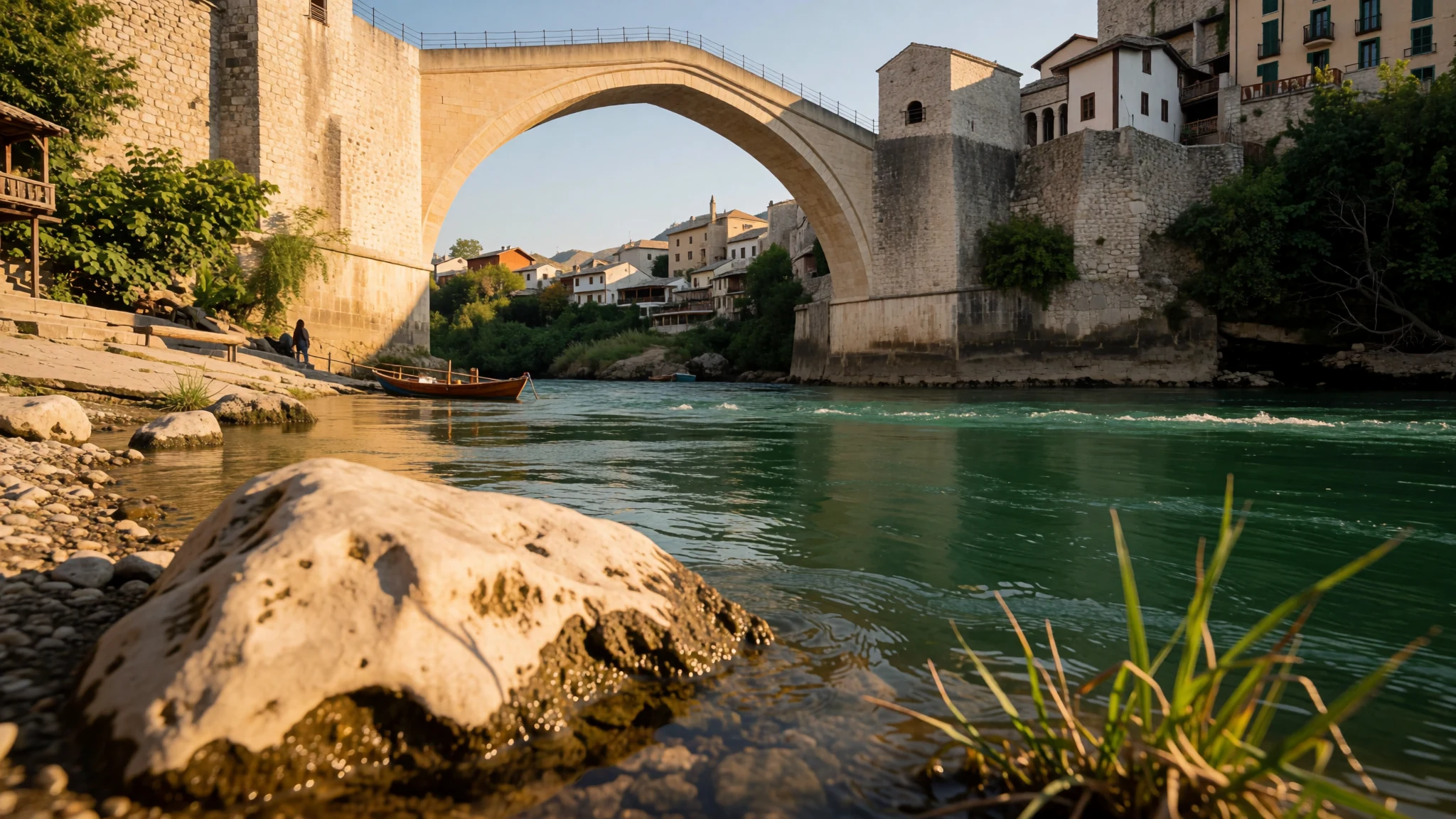
Mostar is a compact river town where a rebuilt sixteenth-century bridge makes a good first stop in Herzegovina.
The place
Mostar sits on the Neretva River and serves as the administrative centre of Herzegovina-Neretva Canton, as well as the historical capital of the wider Herzegovina region. With a population of about 105,000, it is the fifth-largest city in Bosnia and Herzegovina, yet it feels smaller than that because most of the sights cluster along the river within a few walkable blocks. The town stands at about 60 metres above sea level, and hills rise steeply on either side of the valley.
The Old Bridge is the reason most people come. It is a single high arch of pale stone joining the two halves of the town, and from the top it gives a clear view down the green, fast-moving river. Around it, the Old Town packs narrow lanes, bazaar stalls, cafés and restored Ottoman-era houses onto both banks.
Mostar wears its history openly. Mosques and churches stand within a short walk of one another, and the bridge is the thread that links them. The Old Town is busiest from late morning until early evening, and it is hot in July and August, so plan the midday hours indoors. Prices are generally modest, and small stalls and cafés often prefer cash. The town rewards slow wandering more than a rushed checklist.
Its story
Mostar's story begins long before its famous bridge. People have lived along the Neretva, between Mount Hum and the Velež range, since prehistory, and archaeologists have found fortified settlements and cemeteries in the area. Traces of Roman occupation lie beneath the modern town too, so this crossing was valued for many centuries before anyone wrote its name down.
The name comes from the men who looked after an early crossing. The earliest written reference, from 1474, ties the town to the keepers of a wooden bridge used by merchants, soldiers and travellers. The settlement was also the seat of a local court district with its own judge. Its position mattered, because it lay on a route linking the Adriatic coast with the mining areas of central Bosnia, and trade gradually pushed settlement onto the opposite bank.
Earlier medieval records mention nearby settlements and estates. In the early fifteenth century a fortress called Cim was built in the area, and a royal charter of 1454 refers to the place as a bridge, which shows that a crossing already existed.
Under Ottoman rule the town grew into a multi-faith trading centre. Suleiman the Magnificent commissioned the stone bridge that replaced the wooden one in the sixteenth century, and it became the symbol of the place.
In the twentieth century Mostar was pulled into the wars that followed the breakup of Yugoslavia. Air strikes destroyed many important buildings, including the Old Bridge, which fell in 1993. The city was later divided along ethnic lines, and that division still shapes everyday life. The bridge was rebuilt in 2004, and the Old Town has slowly come back around it.
What to see
- The Old Bridge (Stari Most) — Old Town
The bridge the town is named for, a single high stone arch over the Neretva. The original was built in 1566 and destroyed in 1993, and the replacement was rebuilt in 2004. It is the highlight of any visit. Go early or at dusk, when the span is quieter, and expect the crowds to thicken around midday in summer.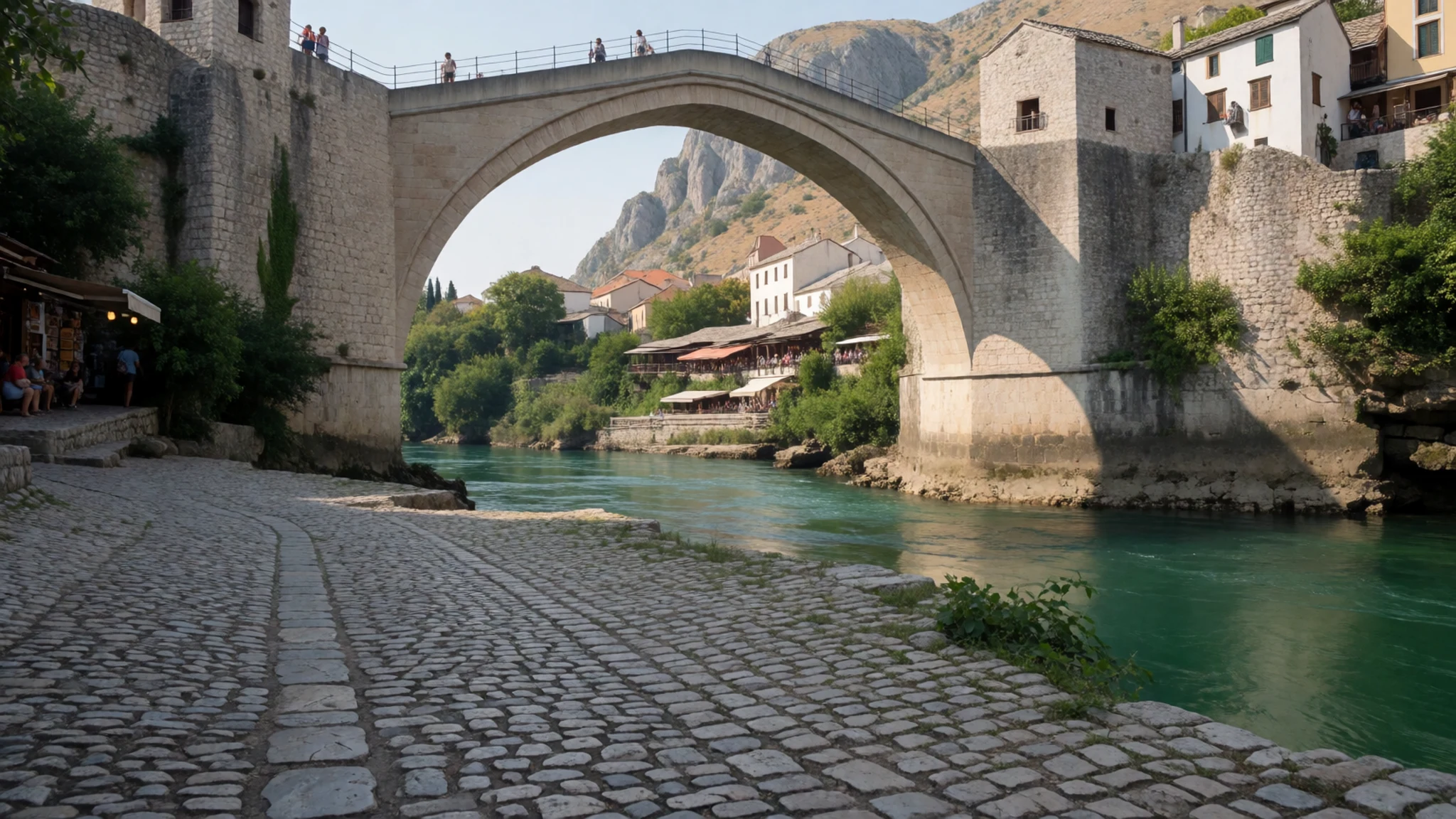
- Old Bridge Museum — Old Town, beside the Old Bridge
Beside the bridge, this museum covers the history of the structure and the story of its reconstruction, with a video on the rebuilding. You can also see the excavations below the bridge and climb for a panoramic view over the river and rooftops. Allow around an hour, and check the official site for current opening times.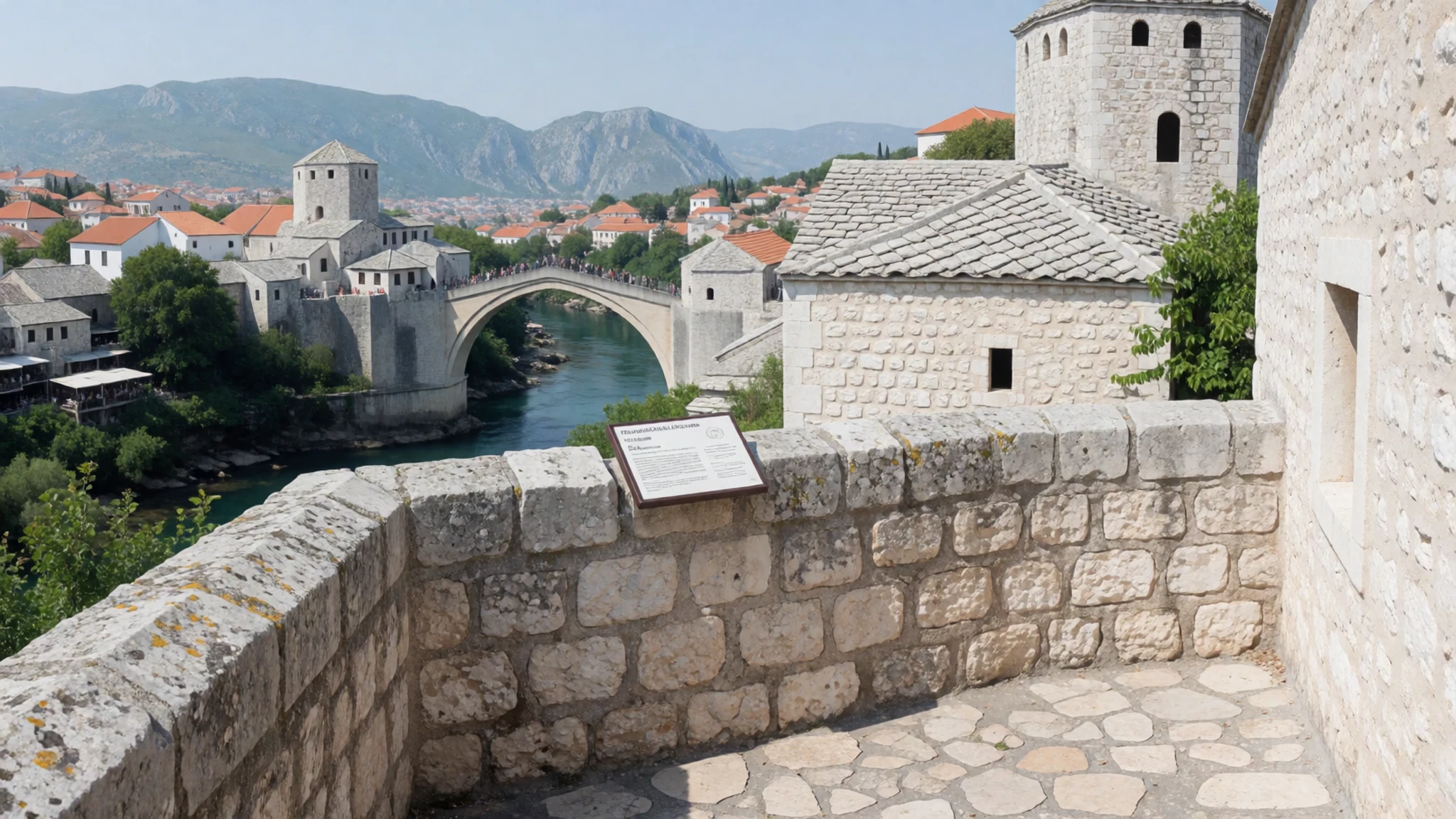
- Muslibegovića House — Old Town, north of the bridge
An Ottoman-period house in the old quarter, valued as one of the finest surviving domestic buildings of its era in the region. Its layout separates the women's courtyard, the haremluk, from the men's courtyard, the selamluk, which shows how family life was arranged. Visit to see the interior and the way the two spaces connect.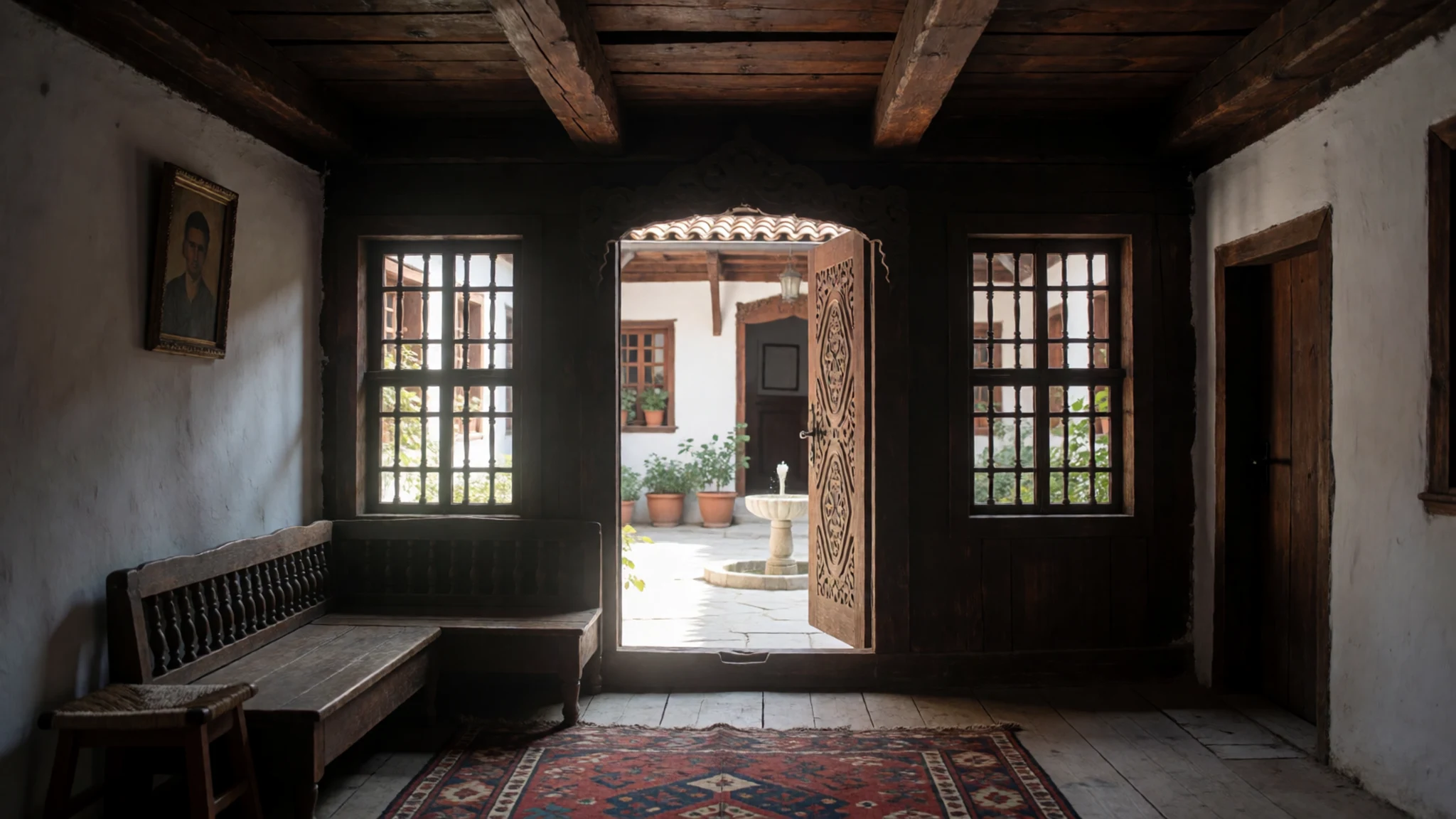
- Museum of Herzegovina — Old Town
A small museum with a modest collection of photographs charting different phases of the town's history. It also includes an exhibit on a Mostar-born man who went on to lead the Yugoslav government. It is a short visit, useful for putting the bridge and the wars of the 1990s in context before you walk the streets.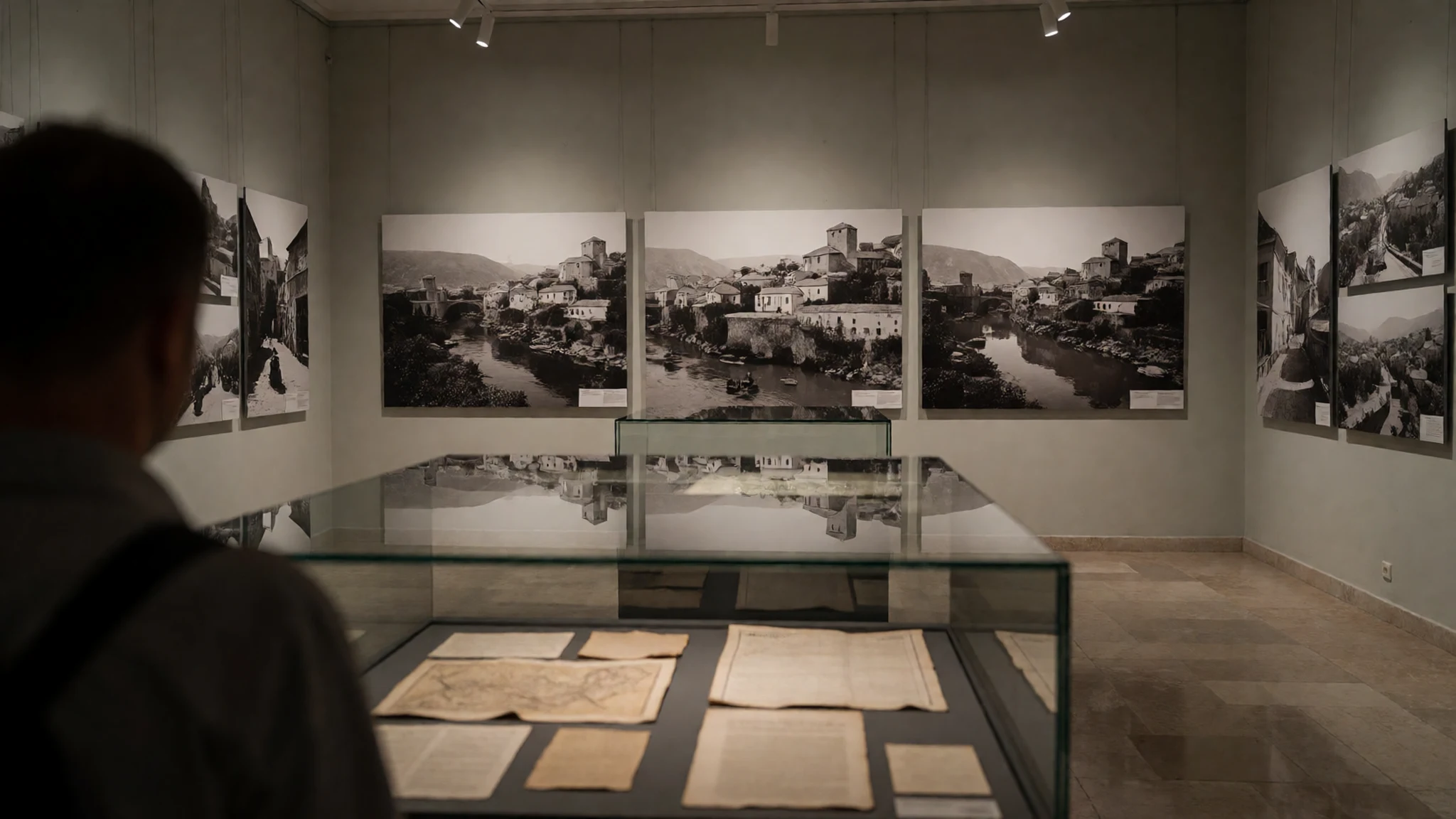
- Koski Mehmed Pasha Mosque — Old Town, near the bazaar
A small, pretty Ottoman mosque built in 1618. It was badly damaged during the war and later rebuilt with support from Turkey. Photographs of the Old Town are often taken from its minaret, so ask whether it is open. Its modest scale and garden setting make it a calm stop between the bridge and the bazaar.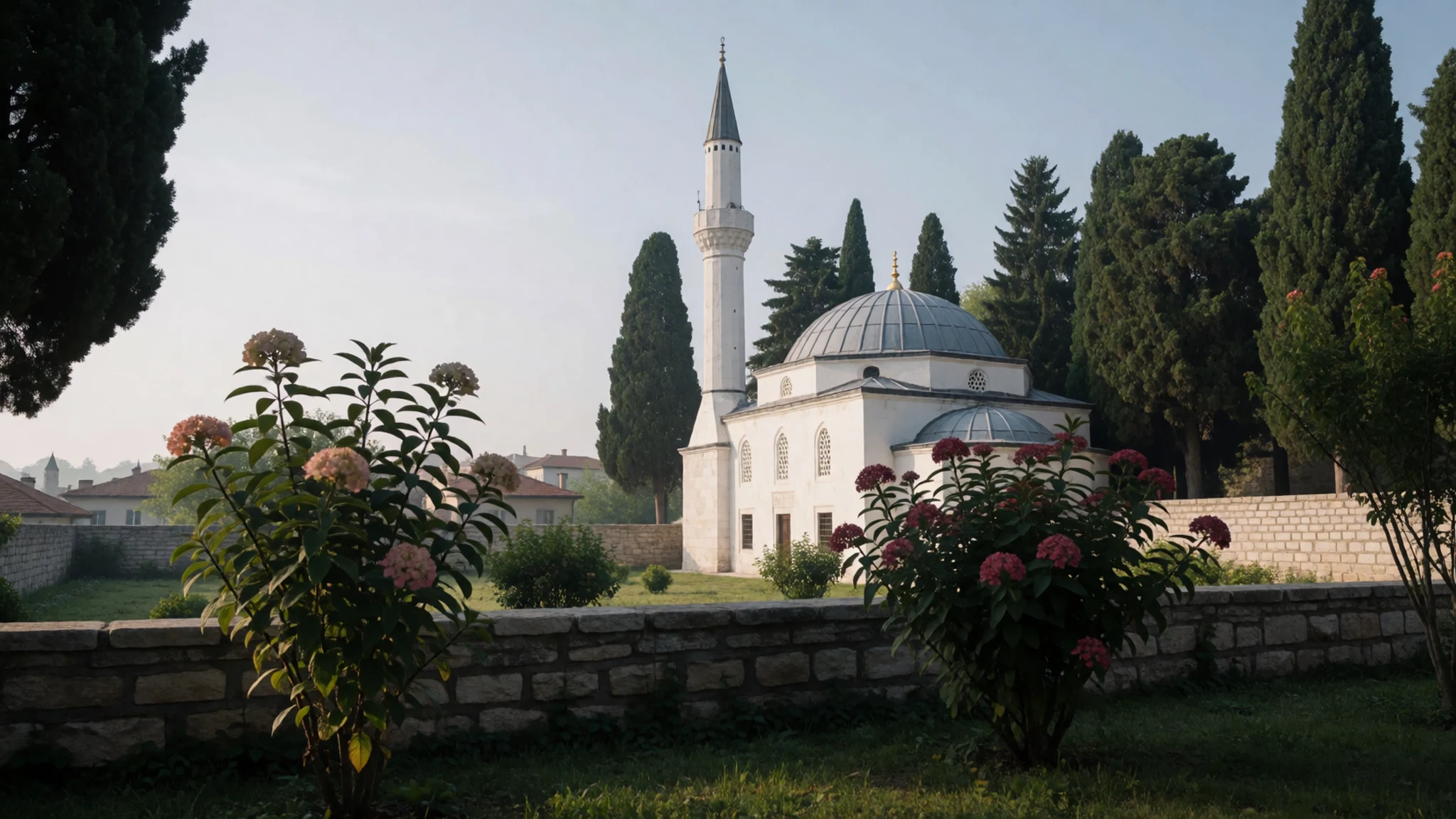
Culture
Mostar's cultural life runs through its festivals and literary evenings. The magazine Most and the Šantić Poetry Evenings have given young poets and writers a platform, and they remain among the main channels for the city's art and writing. Summer brings a run of events, including the Mostar Summer festival, the Festival of Bosnia and Herzegovina choirs and ensembles, and Dani Matice Hrvatske, a cultural festival backed by government sponsors. Mostar Melodies, a music festival, has been held every year since 1995.
Daily life is more relaxed than the festival calendar suggests. Locals meet over coffee in Old Town cafés and along the river, and conversations run long. The city remains divided along ethnic lines, so you will hear different names and histories depending on which side of the river you are on. Listen more than you assume, and avoid turning a casual question into a political debate.
Mosques and churches stand close together here, so keep your voice down near places of worship and during prayer times. When you enter a mosque, remove your shoes at the threshold, dress modestly and ask before photographing anyone at prayer.
What to wear
Traditional dress in Herzegovina, as worn in towns like Mostar, drew on Ottoman-era styles. Women's outfits typically combined loose trousers with a fitted top, an embroidered waistcoat and a headscarf, made from cotton, wool and silk and decorated with hand embroidery. Such clothing is now seen mainly at festivals, weddings and cultural performances rather than in daily life.
What people wear now is much like anywhere in southern Europe. Locals dress casually for the Old Town, with jeans, T-shirts and light summer fabrics. Some women wear headscarves and some men wear more conservative clothing, depending on family and community, and you will see both styles on the same street.
For a visit, dress in breathable layers. Summers can be very hot, with temperatures occasionally above 40 °C, so choose loose cotton or linen. Cover shoulders and knees for mosques, and carry a light scarf for women to drape over their hair. The Old Town is paved with uneven stone and the bridge steps can be slippery, so wear shoes with good grip rather than thin-soled sandals.
What to eat
- Ćevapi — Grill houses on the lanes around the Old Bridge
Short finger-shaped kebabs of minced beef and lamb, grilled over coals and served in flatbread with raw onion and a soft cream cheese. They are the everyday staple of Bosnian eating and a reliable lunch. Order a plate and a bottle of sparkling water to eat them the local way.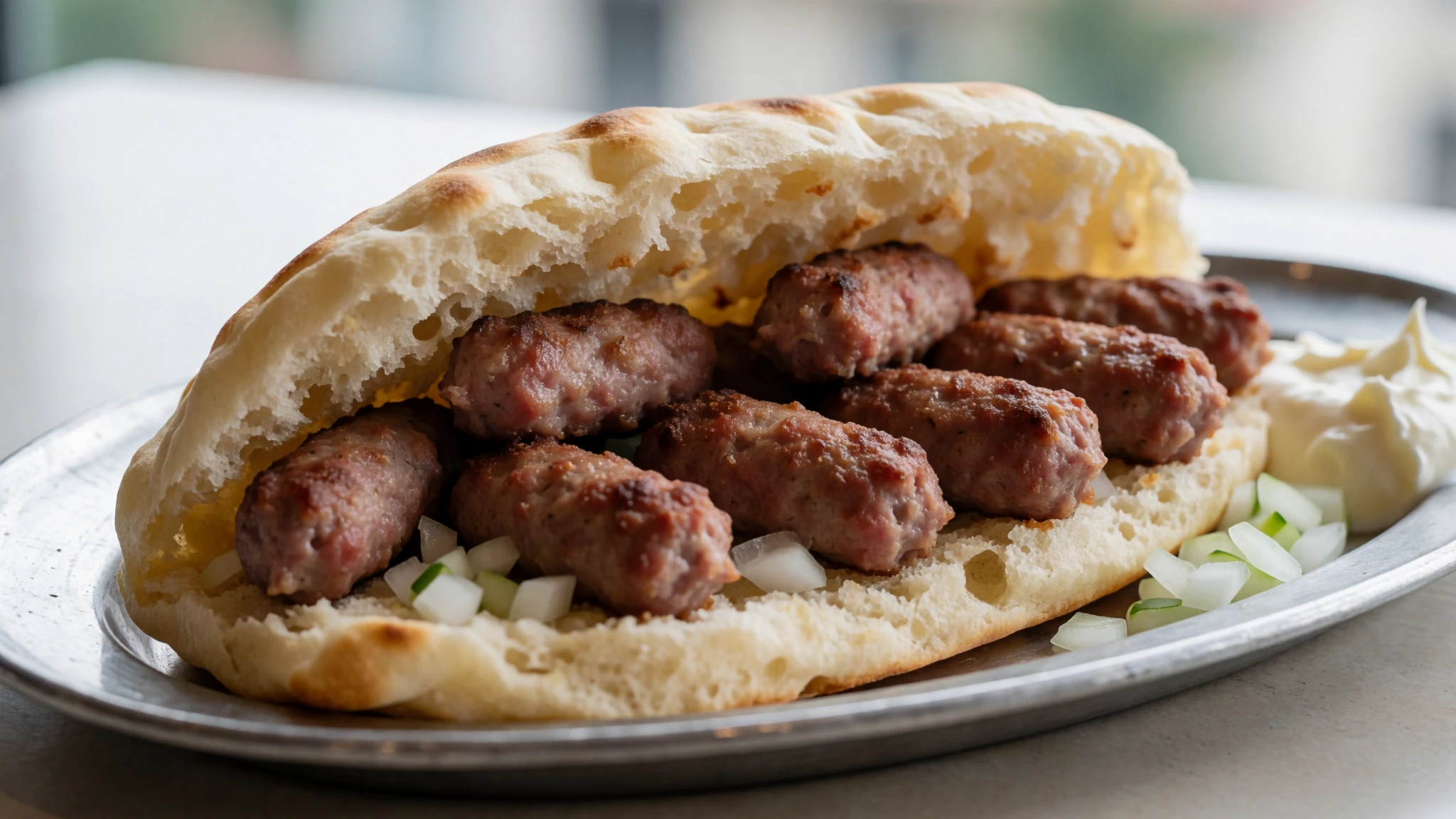
- Burek — Bakeries near the morning market by the river
A layered pastry of thin dough filled with minced meat, cheese or spinach, baked until crisp. It is often eaten for breakfast or as a quick snack with yoghurt on the side. Go early in the morning for the freshest batch, when the bakeries have just taken the trays out.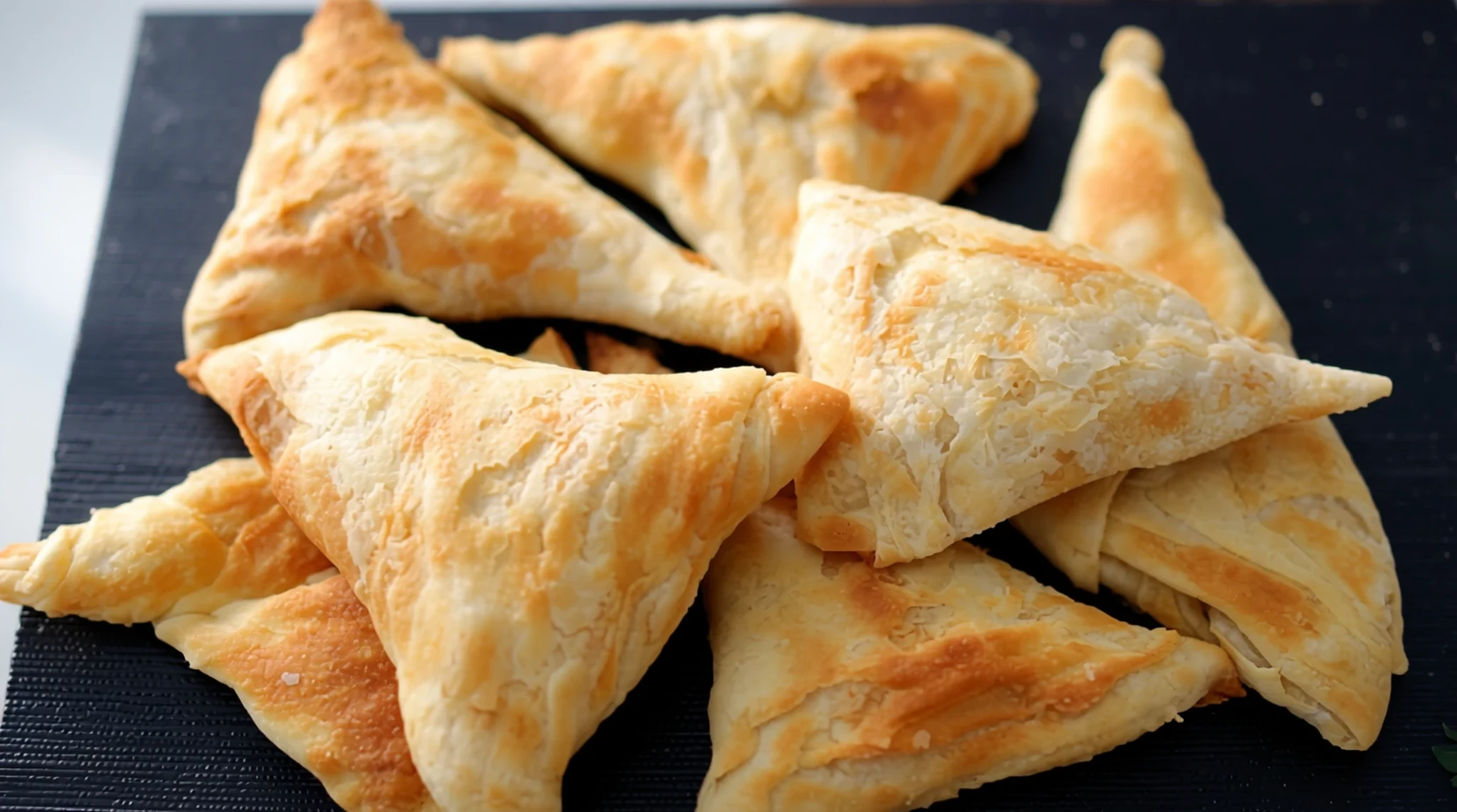
- Japrak — Family-run eateries in the Old Town side streets
Vine leaves wrapped around a filling of rice and minced meat, then simmered until tender. Herzegovinian cooks often serve them with yoghurt, and they are a good dish for trying regional home cooking. Look for it on the menus of family-run eateries away from the main bridge square.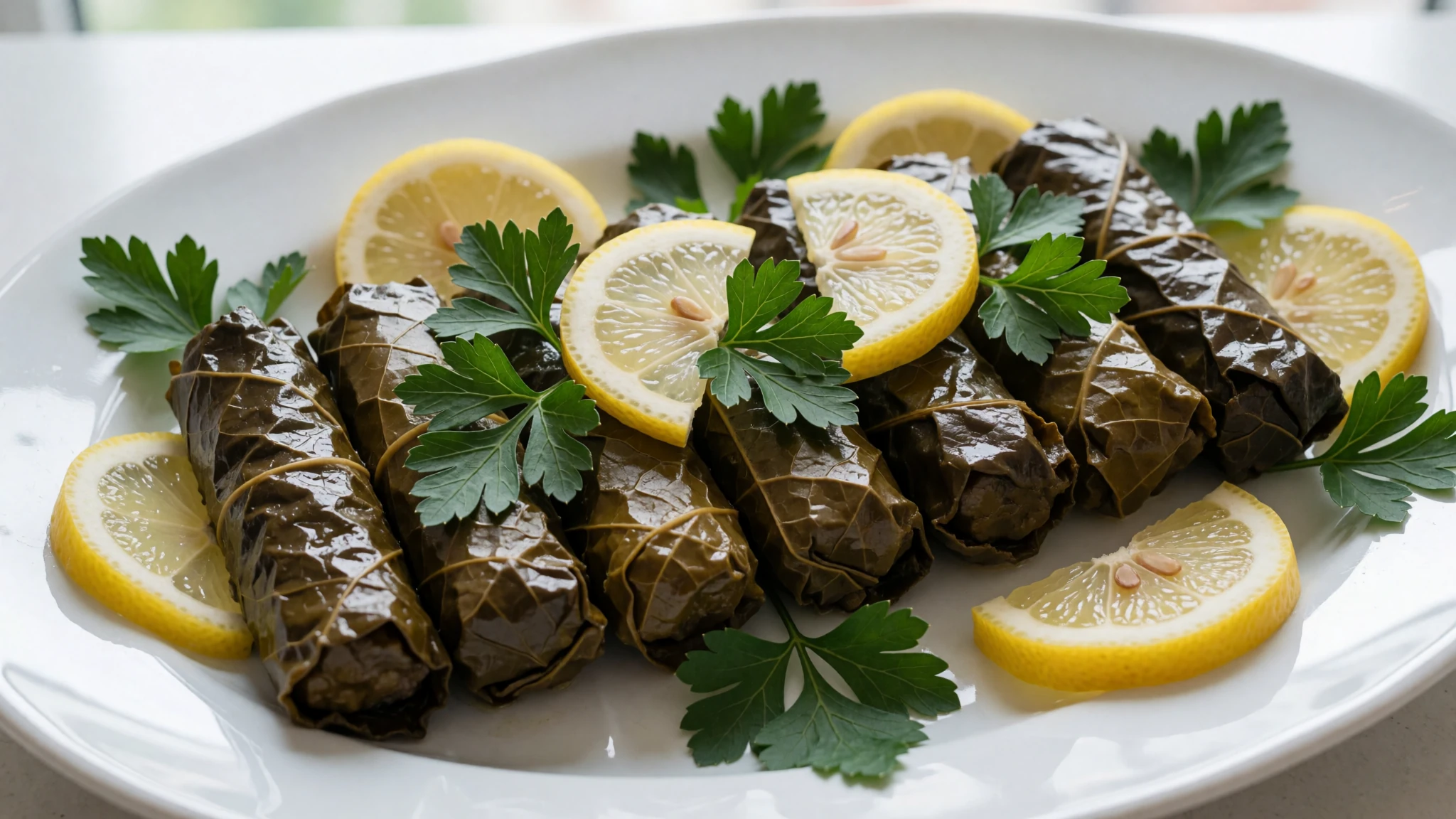
- Tufahija — Traditional cafés along the river
A whole apple poached gently in sugar syrup, with the core replaced by walnuts, and served with cream. It is a classic dessert across the region and a sweet end after a long meal. Ask for it in the more traditional cafés, where it is often served chilled. - Bosnian coffee — Any café in the Old Town
Finely ground coffee boiled in a small long-handled pot and served in a cup with sugar, often with a glass of water on the side. Drinking it is a social ritual, so take your time and let the grounds settle. Order it in any of the cafés in the Old Town, where it is a daily custom.
Plan it
Best time. April to June and September to October bring mild weather and the most comfortable walking in the Old Town. July and August are hot, with occasional temperatures above 40 °C, while winters are cool and humid, with snow that rarely lasts long.
How long. 2–3
Getting there. Most visitors arrive by bus from Sarajevo, which takes about two and a half hours. Check the official site for current timetables, as not every connection is listed online.
Budget. low
Tips
- Visit the Old Bridge early in the morning or at dusk to avoid the midday crowds
- Plan the hottest hours for a museum visit or a long lunch indoors
- Carry some cash for small stalls and cafés
- Carry water, especially between May and September
- Check bus times the day before, as not all connections are listed
Etiquette
- Dress modestly and carry a scarf for mosque visits
- Ask before photographing people, especially at prayer
- Keep voices low around places of worship
Nearby
Sources
- Wikidata Q93347 (CC0)
- Wikipedia: Mostar (CC BY-SA 4.0)
- Wikivoyage: Mostar (CC BY-SA 4.0)
- Mostar - Old Town panorama (Ramirez, via Wikimedia Commons) (CC BY 3.0)
- Stari Most viewed from North (Bernard Gagnon, via Wikimedia Commons) (CC BY-SA 4.0)
- Mostar Peace Bell Tower 02 (Bernard Gagnon, via Wikimedia Commons) (CC BY-SA 4.0)
- Koski Mehmed Pasha Mosque, Mostar 01 (Bernard Gagnon, via Wikimedia Commons) (CC BY-SA 4.0)
- Bazar of Mostar (Hibasi, via Wikimedia Commons) (CC BY-SA 4.0)
- Gimnazija Mostar (Dans, via Wikimedia Commons) (CC BY-SA 4.0)
- Viewing platform on hill above Mostar (Amakuru, via Wikimedia Commons) (CC BY-SA 4.0)
- Bazar at the Old Bridge in Mostar (Neoneo13, via Wikimedia Commons) (Public domain)


