Mehmed Paša Sokolović Bridge
Mehmed Paša Sokolović Bridge, Bosnia and Herzegovina
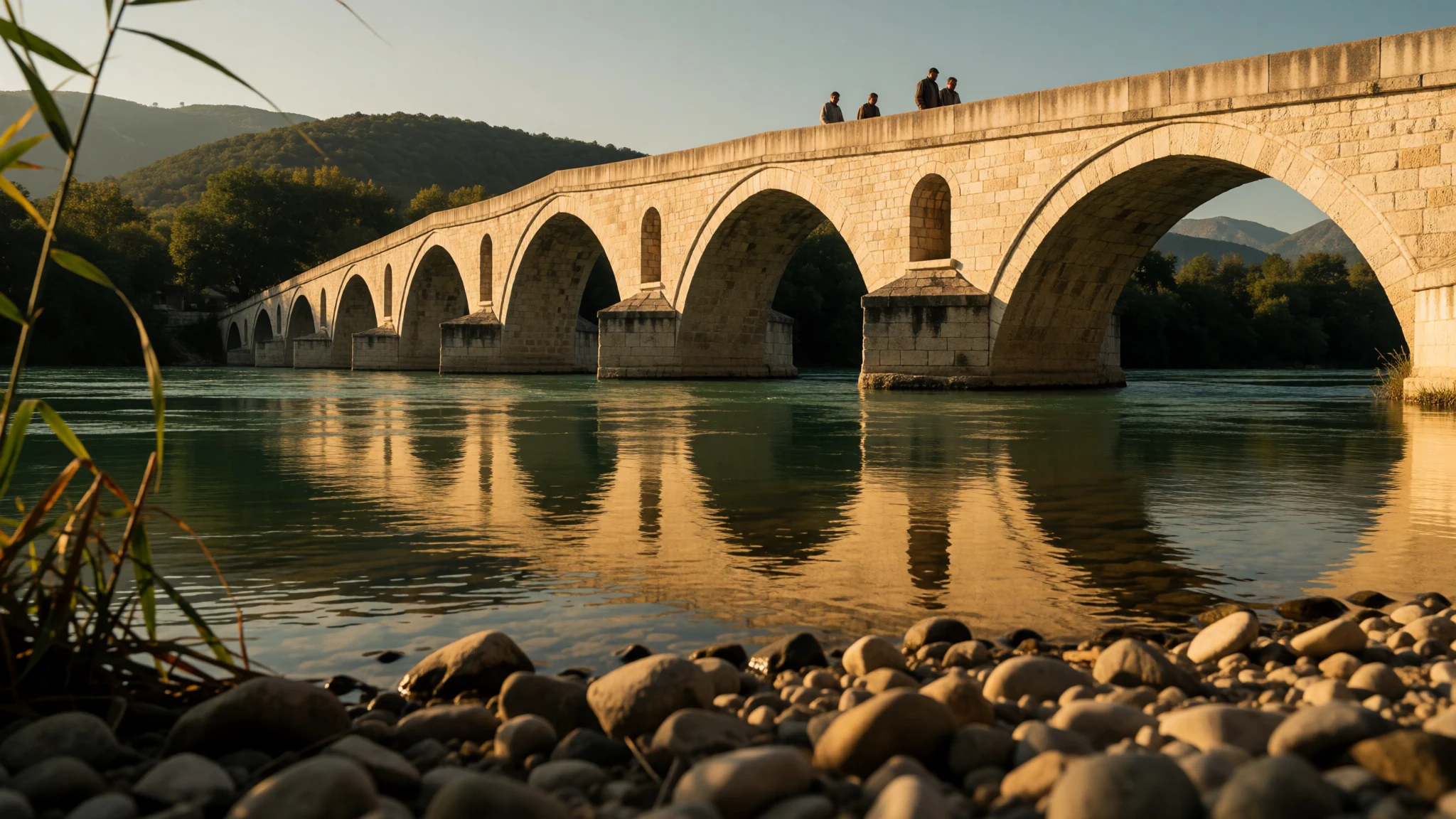
Mehmed Paša Sokolović Bridge turns a river crossing into living history—Ottoman-era masonry, long spans, and UNESCO status in Višegrad.
The place
Mehmed Paša Sokolović Bridge is a historic stone bridge over the Drina River in Višegrad, in the Republika Srpska region of Bosnia and Herzegovina. The bridge is known by its Serbian name (Мост Мехмед-паше Соколовића) and by its Ottoman-era origin: it was ordered by Mehmed Paša Sokolović and completed in 1577 under the court architect Mimar Sinan. The result feels less like a single monument and more like a whole riverscape—arches marching across the water, with the town’s old streets and viewpoints orbiting the bridge.
What makes it click on arrival is the way the spans relate to the river’s mood. When the Drina is calm, the masonry reads crisp and patterned; when the current is higher or the light is low, the bridge looks heavier, almost sculptural. The bridge is also the centre of a UNESCO story: it sits on the World Heritage List, and UNESCO-backed conservation has helped keep the details legible.
Crowds are usually manageable compared with the big-ticket European capitals, but weekends and peak travel months can bring photographers and day-trippers. In summer, expect heat and long daylight, which can be great for river reflections but tiring for walking; in shoulder-season, the air is kinder for lingering on viewpoints and reading inscriptions.
It’s a “walk up, look, and stay” place: spend time moving along the river approach roads, then return later for a different angle as the sun shifts.
Its story
Mehmed Paša Sokolović Bridge traces its power back to the Ottoman court. The Grand Vizier Mehmed Paša Sokolović commissioned the bridge as a tribute to his native region and as a public statement tied to trade and prosperity. Construction ran across the 1571–1577 period, and the bridge’s design is credited to Mimar Sinan, a name you’ll keep meeting across the Ottoman architectural world.
The bridge’s story does not stop at completion. Large renovations followed in 1664, then again in 1875, 1911, and in the 1940s era of restoration. Both World Wars took a toll: three arches fell in World War I and five were damaged in World War II, though all have been restored since. That pattern matters because the bridge you see today is both original and repaired, a layered reminder that monuments in living towns have to survive real history.
The bridge’s modern recognition adds another chapter. It was placed on the List of National Monuments of Bosnia and Herzegovina in 2003, and it was later included in UNESCO’s World Heritage List in 2007. Funding and cooperation also show up in the record: TIKA provided support for restoration efforts, with agreements signed in 2010 involving regional institutions and Višegrad’s municipality.
Standing on or near the bridge, it’s easy to read the structure as “just” stone and arches—but its history gives it weight. Every inscription and stone line feels like evidence of long planning, interrupted work, and careful rebuilding.
What to see
- Central span inscriptions in Arabic and Persian — Central part of the bridge
Mehmed Paša Sokolović Bridge’s central section carries inscriptions in Arabic and Persian, set into the masonry. Look closely from a steady vantage point so the lettering doesn’t blur, then compare the stonework around it for workmanship details.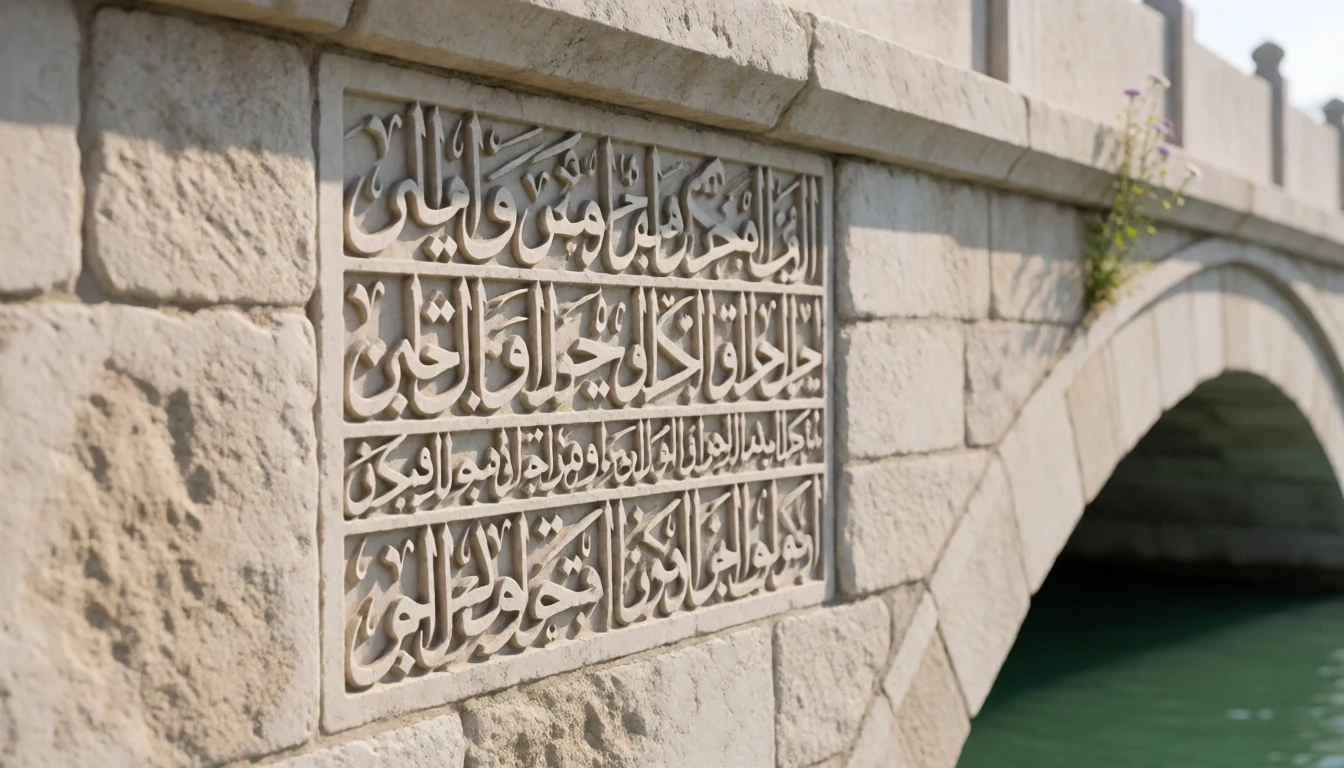
- Bridge over the Drina River — Riverside approach points around Višegrad
Mehmed Paša Sokolović Bridge sits directly over the Drina River in Višegrad, so the best views are often the ones where the waterline sits in the same frame as the arches. Timing helps: soft light makes the stone texture easier to see.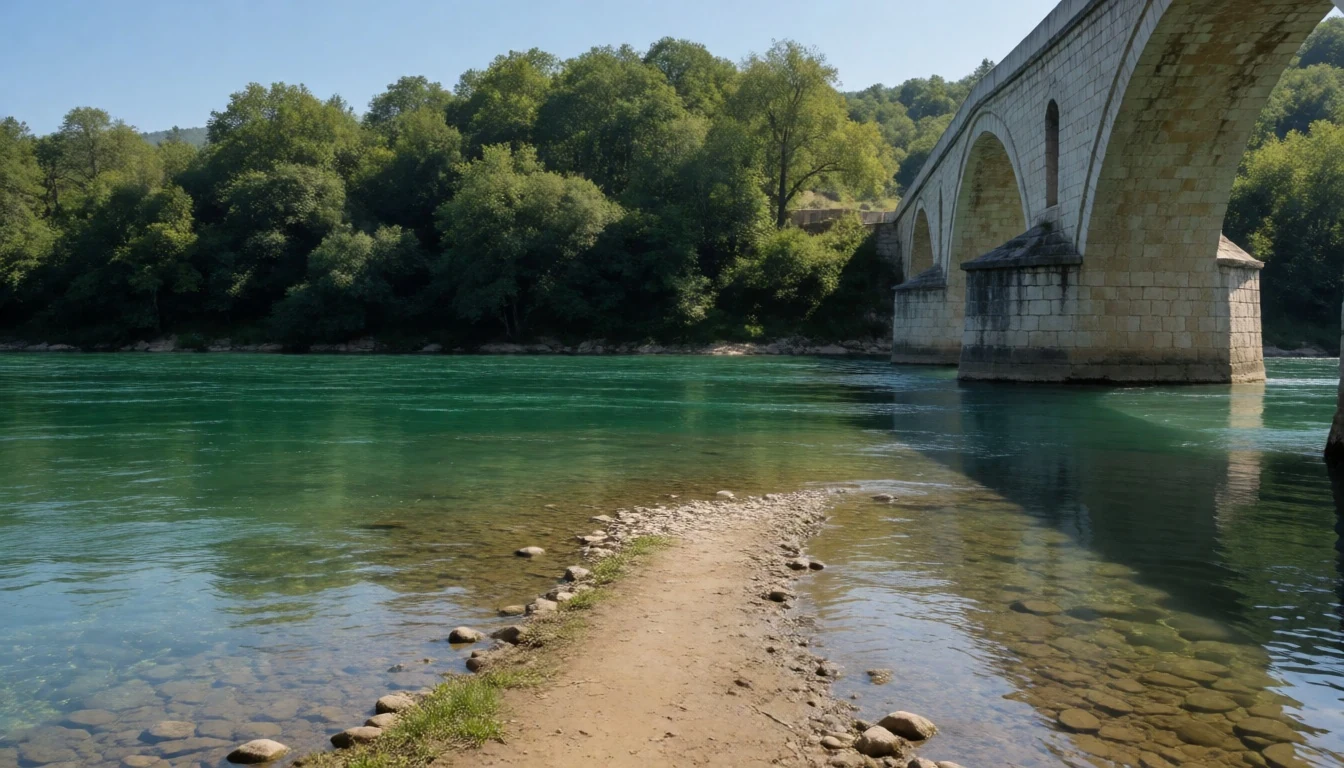
- 11-arch rhythm from the river line — Viewpoints along the Drina near the old bridge
Mehmed Paša Sokolović Bridge stretches across the Drina with an 11-arch rhythm. If you line up a viewpoint where you can see multiple spans in one sweep, the pattern reads instantly—more like music than engineering.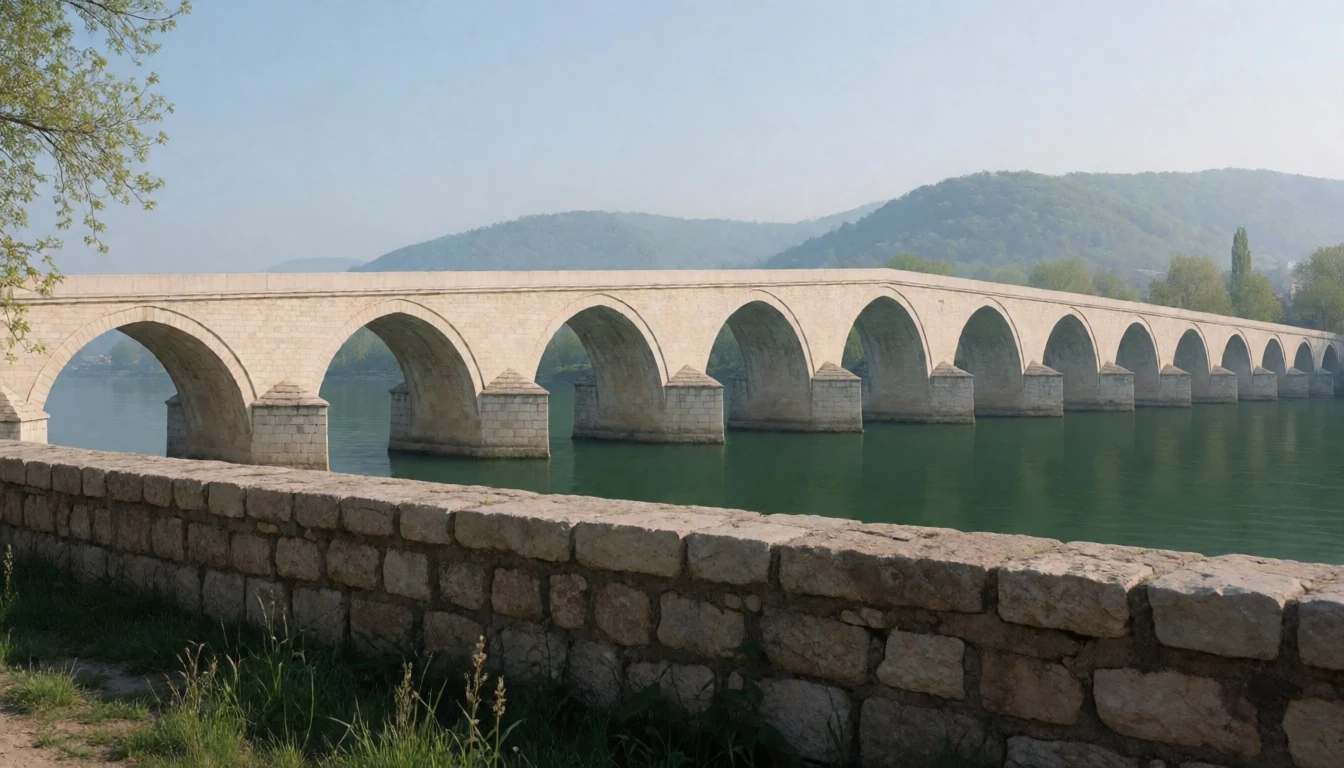
- Old-photos perspective in Višegrad — Town-side river crossings and nearby viewpoints
Mehmed Paša Sokolović Bridge has the kind of silhouette that holds up through decades. From river-adjacent angles, the structure can look “the same but changed,” helping you imagine earlier repairs and the way the town’s edges have evolved.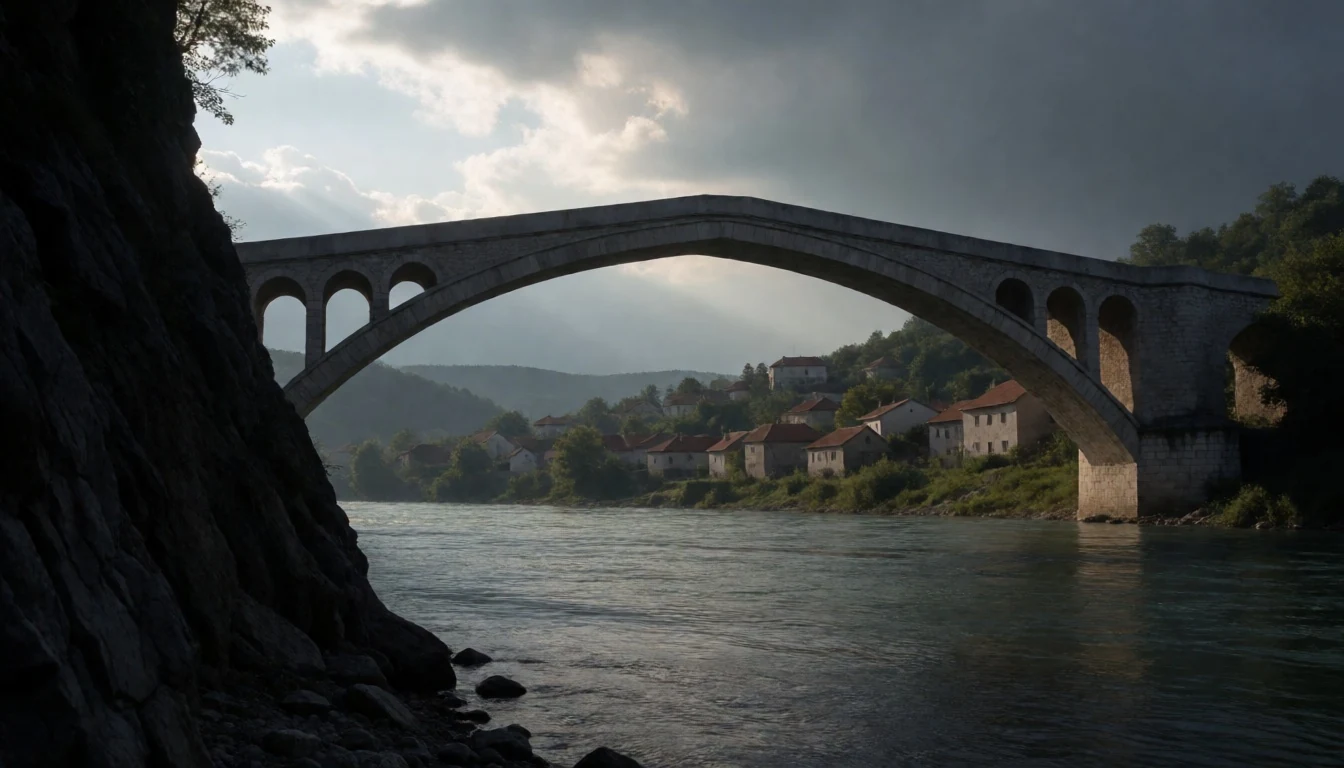
- Riverside walks for calmer light — Riverbank walks around the Višegrad bridge
Mehmed Paša Sokolović Bridge reads beautifully when the river surface is calmer and the sun is lower. Take a slow stroll along the river edges near the bridge area to catch softer reflections and fewer crowds at the same time.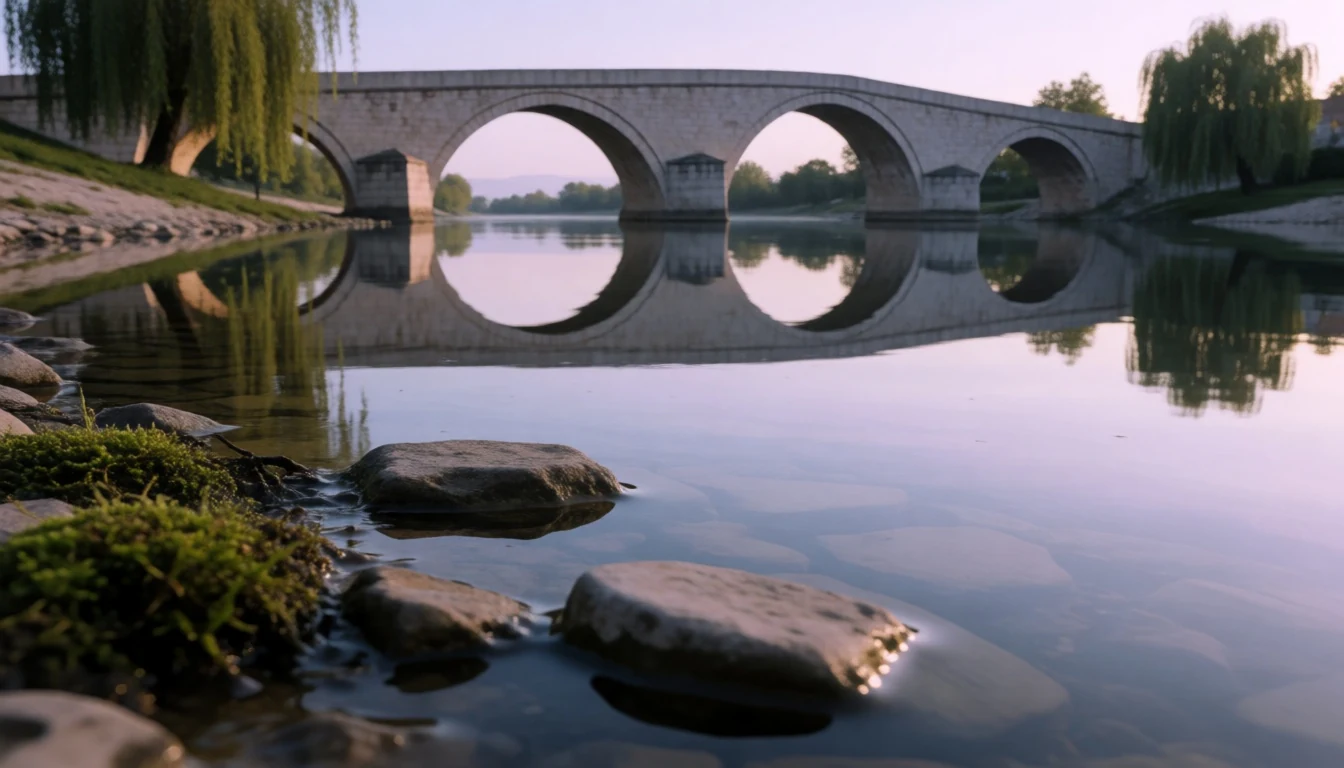
Culture
Bosnia and Herzegovina carries real historical sensitivities, and visiting Višegrad means treating local identities with care. Around the bridge and in the wider region, it helps to be mindful that many people still connect strongly to the past and that everyday life may be shaped by what happened in the 1990s. If conversation turns complicated, it’s best to steer away from debates that can polarise listeners.
Religious difference is also part of the atmosphere. Muslims make up a large share of the population in Bosnia, and respect goes a long way when you’re moving through local spaces and engaging with people. Keep your tone neutral, listen more than you speak, and avoid turning the bridge into a prop for arguments about politics. This is especially important because misinformation spreads easily when visitors try to “fill in the story” from social media.
At the practical level, remember that this is a town monument, not a theme park. People pass by going about their day, and the bridge is surrounded by public viewpoints and streets where noise and disruption stand out quickly.
Visitor etiquette: Keep the conversation neutral and respectful, and avoid discussing war-related or divisive political topics near local residents.
What to wear
Mehmed Paša Sokolović Bridge doesn’t have “dress code” in the way a religious interior might, but the setting—Bosnia’s river town in all kinds of weather—still shapes what works. Traditional clothing across the region varies, but you’ll often see garments that emphasize modest coverage and natural textiles, such as long skirts or dresses for women and shirts or longer coats for men, worn particularly during cultural events and ceremonies. Fabrics tend to be breathable in warmer months, and the overall look is conservative.
What people wear now around Višegrad is similar to mainstream European travel style: T-shirts, light shirts, jeans, and walking shoes are common. In summer, layering helps because mornings and evenings can feel cooler near the river; in autumn and early winter, a warm mid-layer is useful.
For visitors, wear comfortable footwear with grip for uneven paths and riverside approaches. Bring a light jacket even in shoulder season—wind off the Drina can be noticeable. If you’re spending time outdoors reading inscriptions and photographing, a hat and sunglasses help, and a small water bottle keeps the walk pleasant.
What to eat
- Ćevapi — Often available around Sarajevo
Ćevapi are the ubiquitous Balkan kebab—small grilled minced-meat portions served with sides. In Bosnia, they’re commonly found in Sarajevo, where many visitors go looking for this classic starter.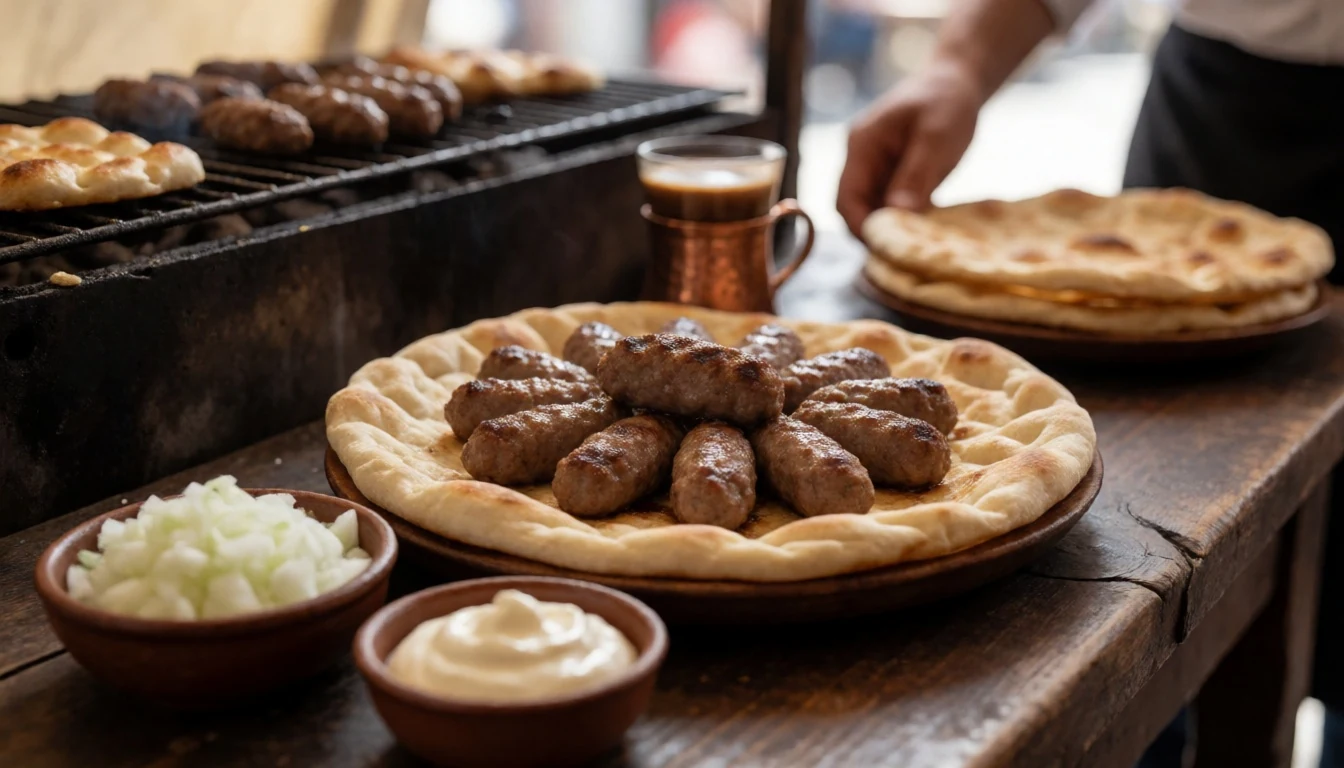
- Burek / pita — Local bakeries and takeaway-style eateries in town
Pita and burek show up as flaky, savoury pastries, a handy option between sightseeing blocks. They’re usually easy to pick up from local bakeries and takeaway-style eateries around town.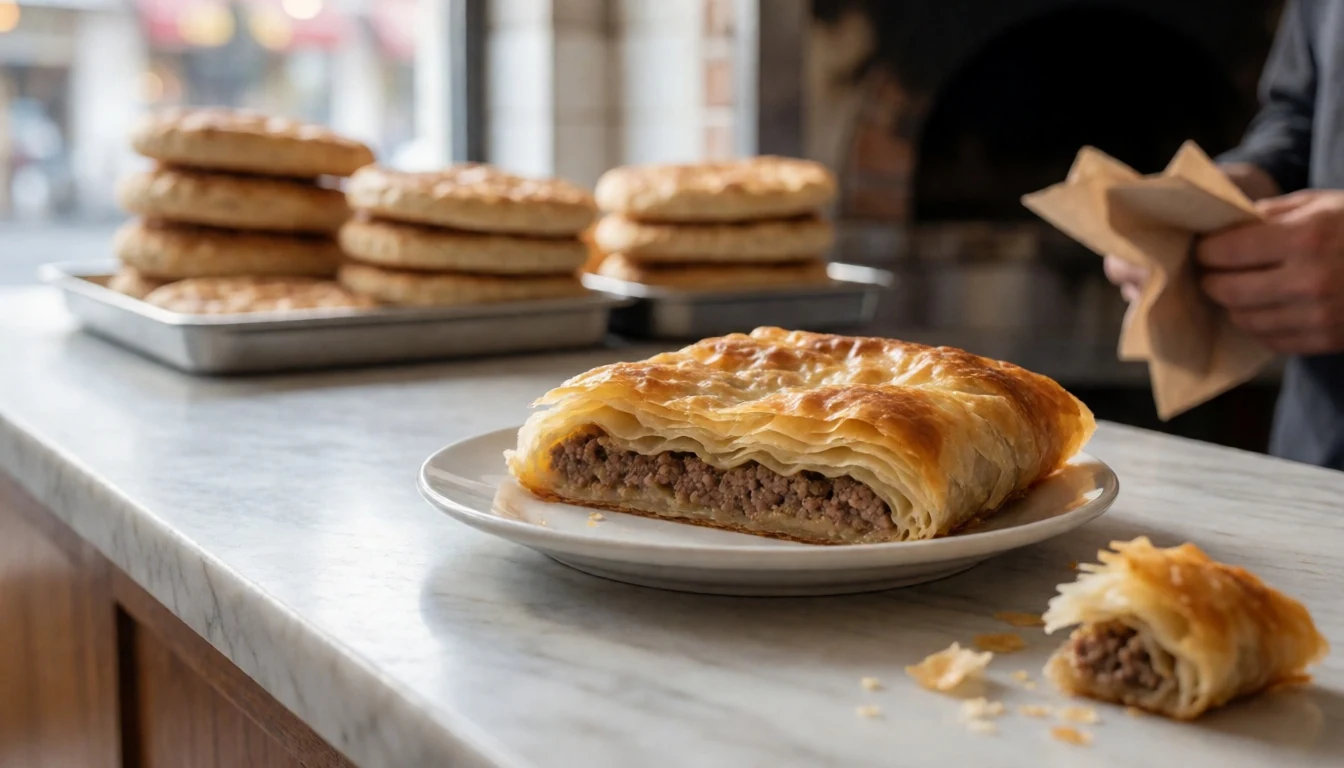
- Bosnian coffee — Coffee shops and cafés
Bosnian coffee is reminiscent of Turkish coffee and is a great pause when the day gets busy. It’s best enjoyed at a café rather than as a hurried takeaway, especially after time outdoors by the river. - Meat and fish stews — Traditional restaurants and local eateries
Bosnian home-style cooking often leans on meat and fish, with stews as a common comfort format. Even when you see restaurant versions, the heart of the dish is slow-cooked flavour rather than quick, light sauces. - Pizza, hamburgers and hot dogs (fast-food options) — Everyday fast-food spots around town
If the day is long and you’re not craving local specialities, you’ll still find the usual European fast-food choices. These can be useful for a quick meal between viewpoints when queues build up.
Plan it
Best time. June to August is the warmest, with the most rain falling from May to June; July is typically the driest of the summer. May and September often feel most comfortable for walking, and October–November brings cooler days with softer light.
How long. 2–3
Getting there. Fly into Sarajevo International Airport, then use a regional bus or hire a car for the drive to Višegrad; the last leg is the road into the town and down to the river viewpoints.
Budget. mid
Tips
- Start your bridge walk early to avoid the thickest day-tripper light and give yourself time to reposition for photos
- Plan one extra loop along the riverbank so you can compare stone texture and reflections in different light
- If inscriptions are a priority, bring your phone’s zoom settings ready and stand still—wind near the river can blur details
- Carry a bit of cash for small purchases around town, since card acceptance can vary in smaller places
- Pack water and a hat in warm months; shaded rest breaks can be sparse near river viewpoints
Etiquette
- Avoid loud, confrontational talk near locals; keep the mood calm around the monument area
- Be considerate with photography, especially when people are walking through the same viewpoints
- Dress for modesty and comfort when moving between town streets and any religious spaces nearby
Nearby
Sources
- Wikidata Q210055 (CC0)
- Wikipedia (Mehmed Paša Sokolović Bridge) (rev 1346929635) (CC BY-SA 4.0)
- Wikivoyage (Republika Srpska) (rev 5424458) (CC BY-SA 4.0)
- photos/01-visegrad-drina-bridge-1.jpg (CC BY 3.0)
- photos/02-bridge-on-the-drina-januar-2018.jpg (CC BY-SA 4.0)
- photos/03-mehmed-pasha-sokolovic-bridge-medieval-inscriptions.jpg (CC BY-SA 4.0)
- photos/04-mehmed-pasa-sokolovic-bridge-visegrad-1900.jpg (Public domain)
- photos/05-2.jpg (CC BY-SA 4.0)
- photos/06-2011-04-08-13-56-14.jpg (CC BY-SA 4.0)
- photos/07-2011-04-08-14-17-09.jpg (CC BY-SA 4.0)
- photos/08-2011-04-08-14-23-21.jpg (CC BY-SA 4.0)


