Krakatoa
Krakatoa, Indonesia
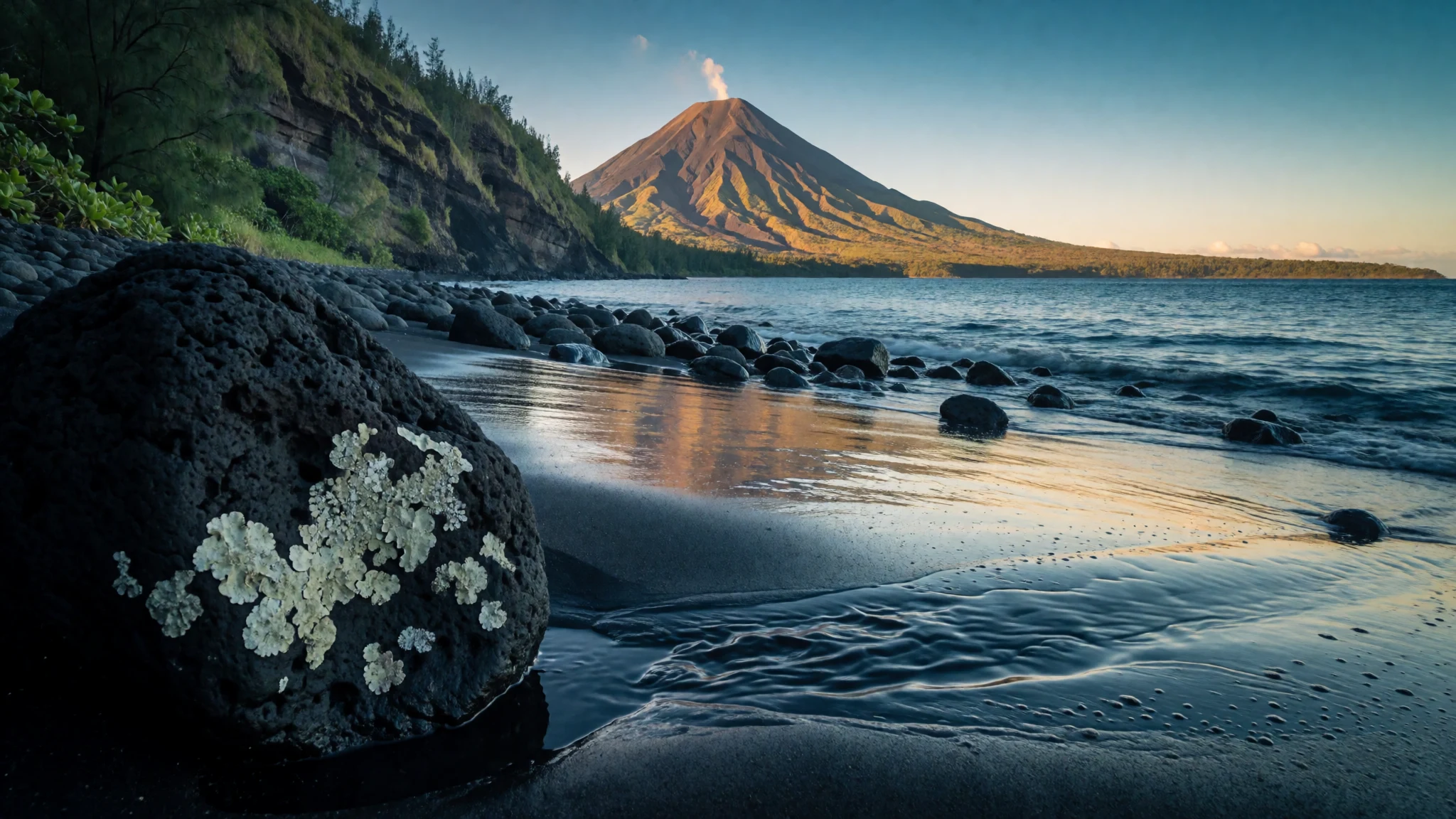
Krakatoa is a boat trip to volcanic islands in the Sunda Strait, where a young cone still smokes among the remnants of an older mountain.
The place
Krakatoa is a small archipelago of volcanic islands in the Sunda Strait, the sea between Java and Sumatra. There is no harbour street and no resident market, only rock, ash, scrub and, on the older remnants, a belt of green that returned after the mountain was torn open. The name covers both the island that was destroyed and the younger cone, Anak Krakatau, which rose in the gap and is still adding to itself. From a boat the group looks like a broken ring: a steep leftover peak, low outer islands, and a raw centre that does not keep a fixed outline.
The strait is the setting as much as the islands are. The sea may lie down in the morning and turn short and steep later, so the same crossing can feel easy outward and tiring on the return. People come ashore on black sand or jagged lava, then climb loose ash that gives way underfoot. Younger slopes are bare and pale; older ones carry casuarina and low coastal trees. Guides watch the summit and the alert level before a landing, because this is an active volcano rather than a tended viewpoint. Shade is scarce, there is nowhere to buy a drink once the boat is left behind, and if the weather closes in the only shelter is the crossing back to the mainland. Krakatoa suits an early start and a calm head for small boats, and it disappoints anyone set on an easy path or a summit that opens every day.
Its story
Krakatoa became famous because the island did not survive its own eruption. The mountain that stood in the Sunda Strait failed in blasts that emptied the cone, collapsed the centre and left only fragments above water. Ships nearby were overtaken by waves and by a darkness of falling ash, and the sound travelled so far that newspapers far from the strait carried the story. What remained was a ruined group: Rakata, the high leftover of the old wall, and lower islands around the hole where the summit had been.
The story did not end with that collapse. In the gap a new vent began to build a cone, later called Anak Krakatau, child of Krakatoa. It has grown, failed and grown again, sometimes quietly and sometimes with ash plumes that close the island to boats. The shoreline people see is therefore younger than the name. Old charts show a wooded island; the view now is a family of islands around a juvenile peak still changing its outline. Fishermen on both coasts kept working the water, and the name Gunung Api, the fire mountain, sits beside Krakatoa, Krakatau and the older spelling Cracatoa.
The story a visitor can actually see is plainer than the fame: a mountain that destroyed itself, a child cone that replaced it, and a channel that returned to fishing boats and passing ships once the sky cleared.
What to see
- Anak Krakatau — Central cone of the archipelago
Anak Krakatau is the young cone at the heart of Krakatoa, and the part of a visit that still looks unfinished. When a landing is allowed the walk is loose ash and dark lava with almost no shade, and the summit's outline shifts after active spells. From the water it is a pale heap against blue sea, often with a thin plume.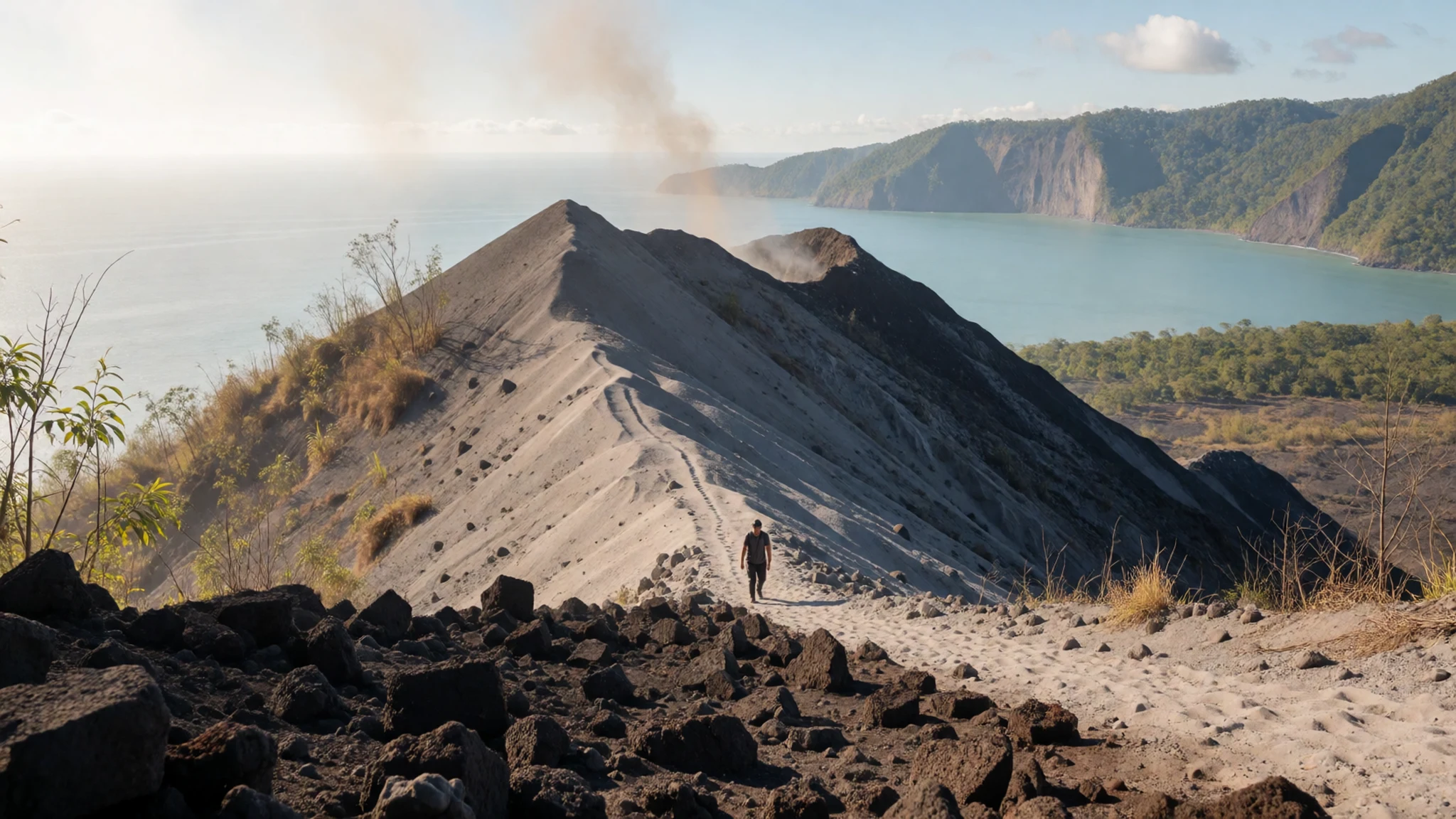
- Rakata — Southern remnant of the group
Rakata is the high remnant of Krakatoa, the wall of the island that stood here before the eruption tore it open, steep rock and returning green on the southern side of the group. Boats pass close more often than anyone lands: cliffs drop into the water, and forest has taken slopes that ash once stripped bare.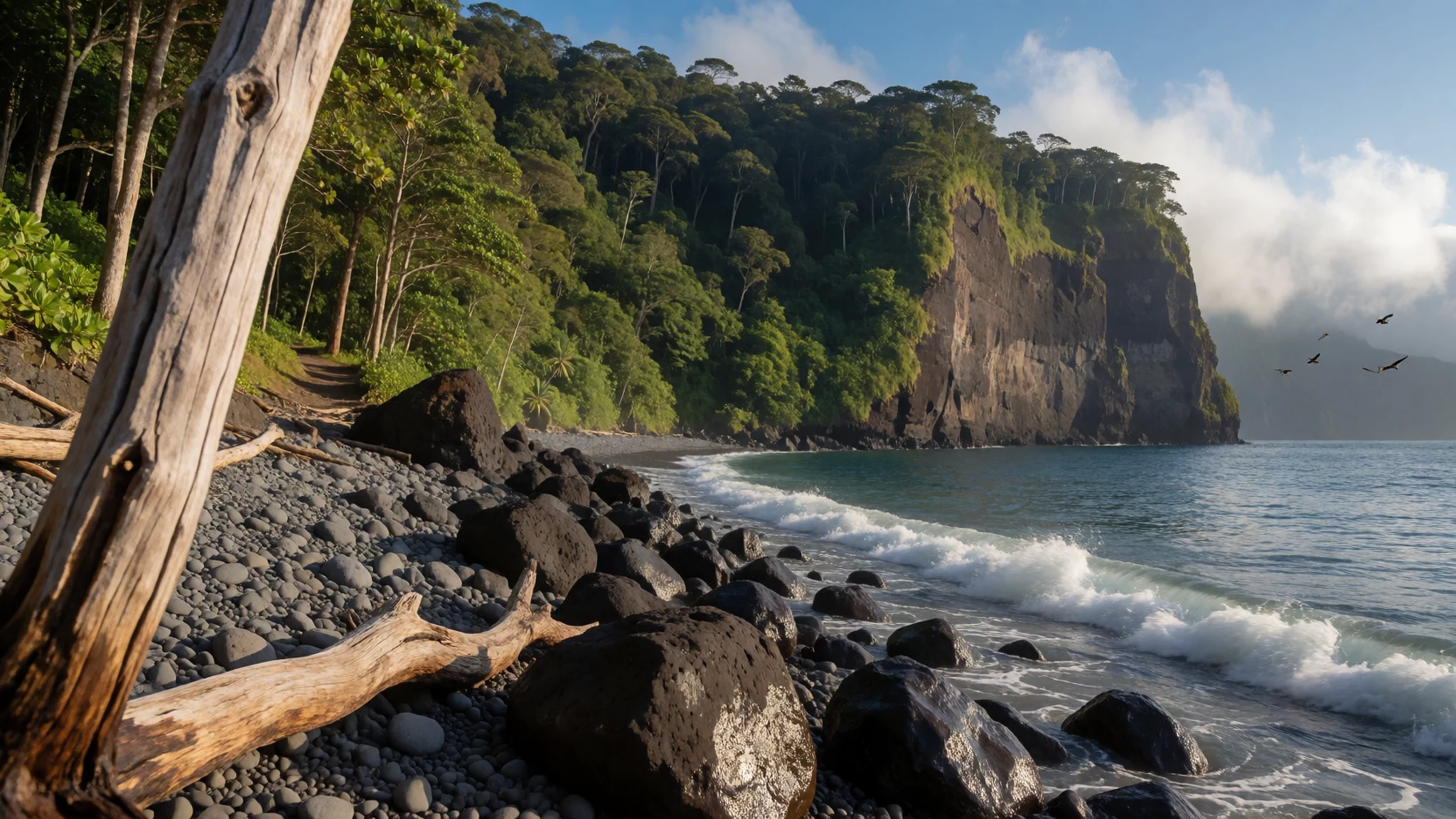
- Sertung and Panjang — Outer islands of the archipelago
Sertung and Panjang complete the ring of Krakatoa around the central vent, lower islands with dark beaches, a fringe of coastal trees and water that pales over the shallows. Boats pause for a swim when the current is kind. The stops are quiet, with nothing to buy and nowhere to shelter.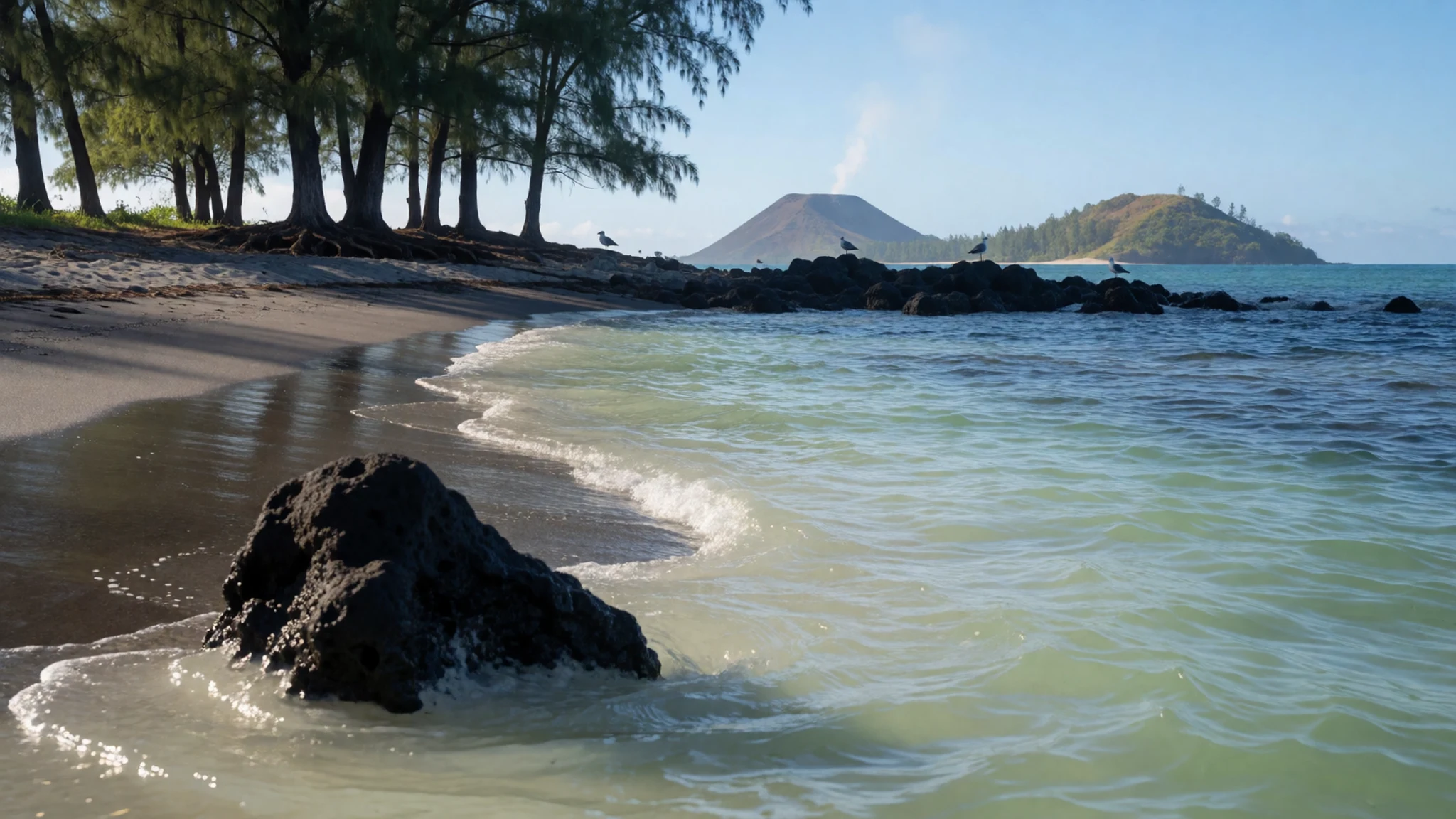
- The strait crossing — Sunda Strait
The crossing to Krakatoa is as much the visit as the landing. Boats leave from Carita and Anyer on the Java coast, or from the Lampung side of Sumatra, and run for a long stretch of open water before the islands show. Spray, engine noise and hard sun come with the ride.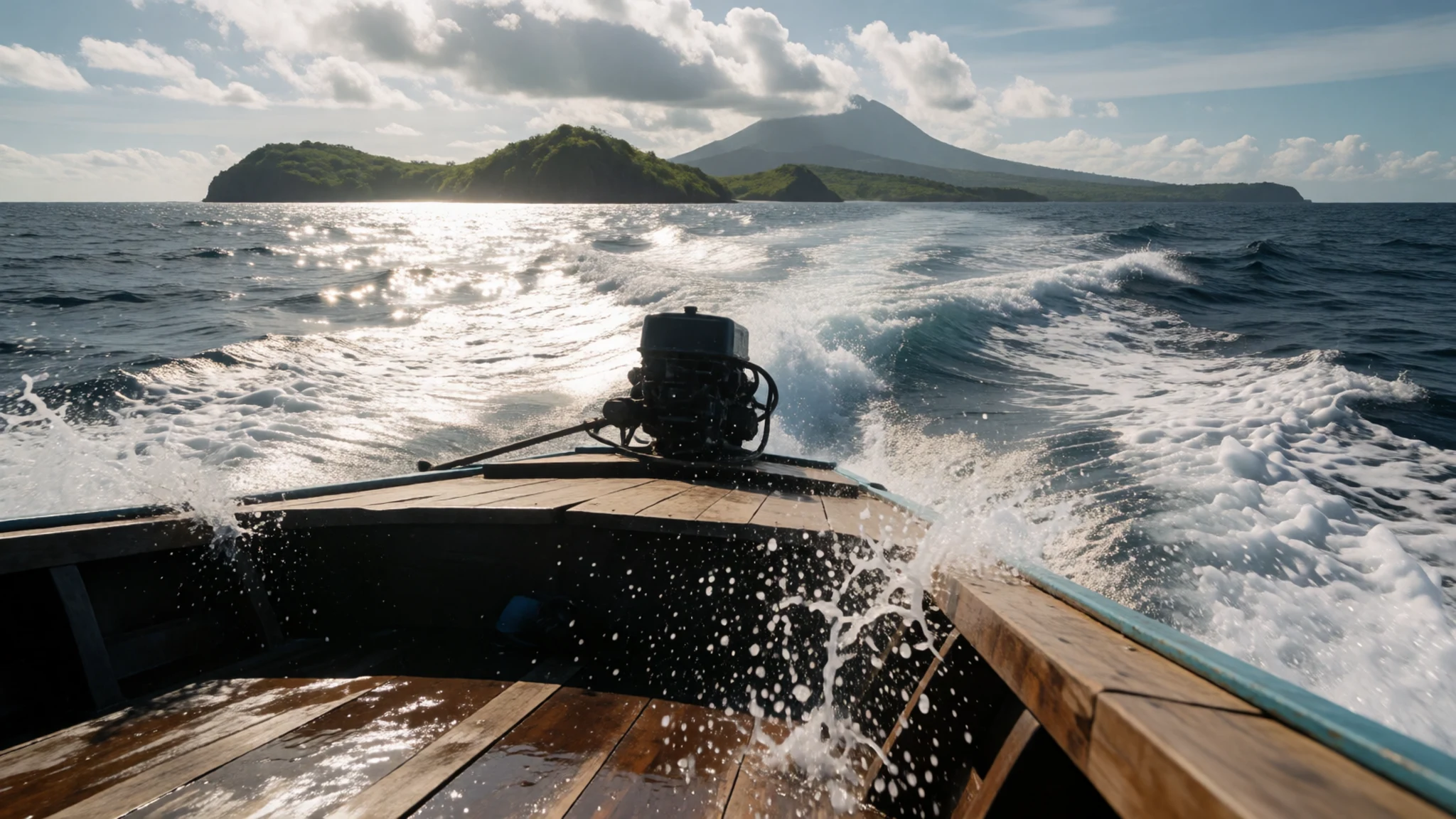
- The departure coast — Carita and Anyer, or the Lampung coast
The mainland is where a Krakatoa day actually begins and ends. On Java, Carita and Anyer stretch along a road of warungs, small guesthouses and boat jetties, with the strait in front and hills behind. This is where people eat, sleep and hear whether the volcano is open.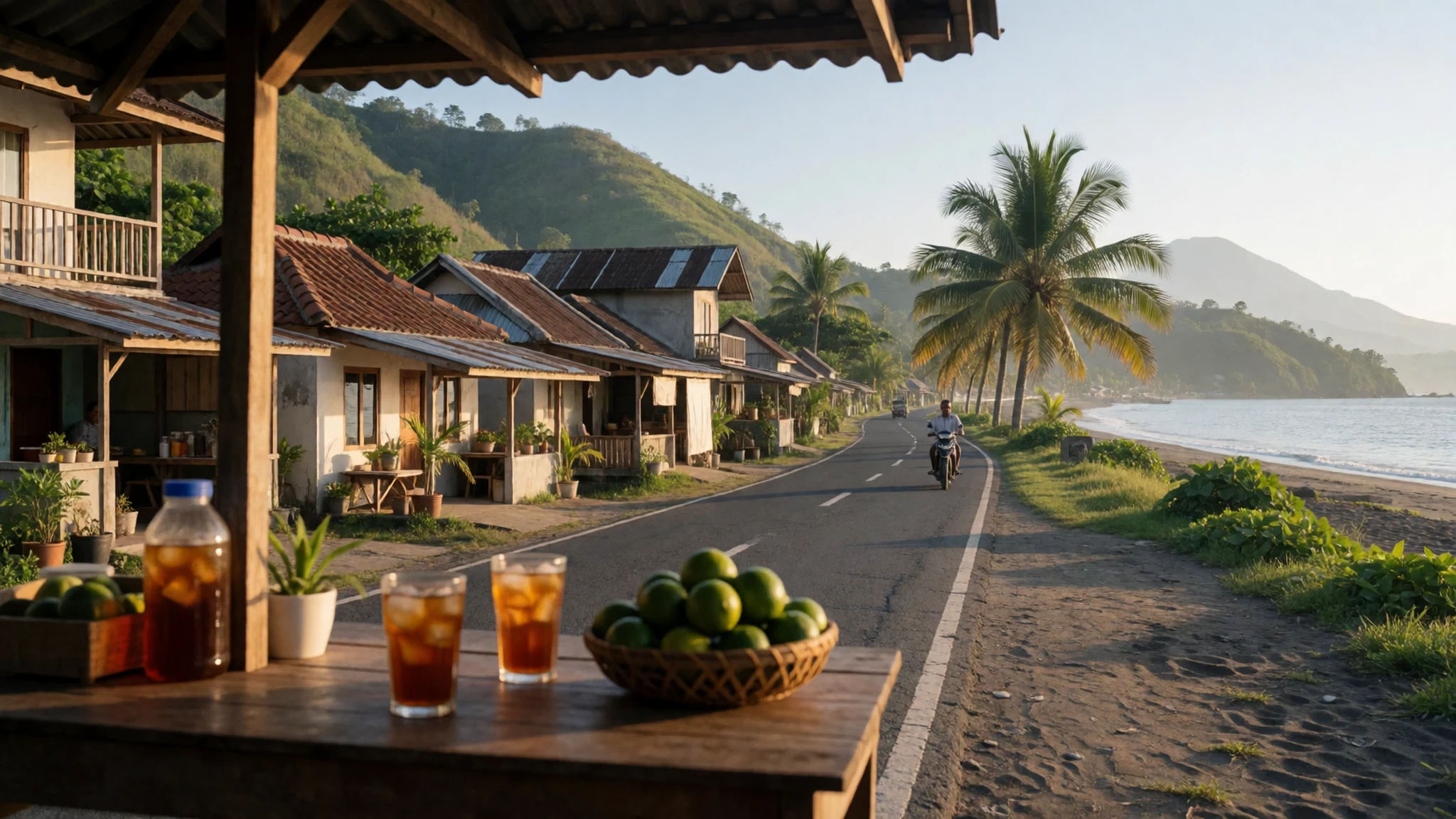
Culture
Krakatoa has no village of its own. The people who make a visit possible live on the shores of the Sunda Strait: Sundanese and other west Javanese communities around Anyer and Carita, and Lampung communities on the Sumatran side, many of them fishermen, boatmen and small traders. Daily life faces the water. Boats go out before dawn, catches are sold at beach warungs, and Friday prayers mark the week. Bahasa Indonesia is the shared language; Sundanese is common on the Java side and Lampung languages on the other. Hospitality is practical rather than ceremonial — a seat in the shade, sweet tea, and a direct answer about the sea.
The islands carry a heavier story than the beach towns suggest. Families on the coasts remember ashfall and sudden waves, and a smoking summit is a neighbour that sometimes misbehaves, which is why crews discuss the alert without drama. Older people still say Gunung Api, the fire mountain, as readily as Krakatoa. If you stop at a mosque, a house or a prayer room on the way to the jetty, take off your shoes, cover shoulders and knees, and ask before you photograph people at work.
What to wear
Krakatoa itself has no dress of its own — nobody lives on the ash — so visitors see the clothing of the coasts that send boats out to the islands. On the Lampung shore the cloth to know is tapis, a ceremonial textile woven with gold or silver thread, worn at weddings and formal gatherings rather than at the fish market. On the Java side, batik is the textile with a public life: shirts, sarongs and the selendang shoulder cloth, with patterns that differ by town. The kebaya, a fitted blouse over a batik sarong, still appears at ceremonies, while men may wear a sarong and peci to the mosque.
On each shore the everyday clothes are made for heat. People wear T-shirts, loose trousers, sandals and a cap or hijab; fishermen add long sleeves against sun and salt. A visitor does well to copy that practical side. For the boat: light cotton covering the shoulders, a hat, and a layer that can survive spray. For the cone: closed shoes or boots, because open sandals sink into the ash, and long trousers, because the lava is sharp. If the day includes a village meal or a prayer stop, a shirt that covers the shoulders and a sarong or long skirt are worth carrying. Fine tapis and ceremony batik belong to the occasions they were woven for; plain, modest, sun-proof clothes are the right kit for Krakatoa.
What to eat
- Ikan bakar — Beach-road warungs in Carita and Anyer, and south Lampung harbours
On the coasts that face Krakatoa, ikan bakar is whole fish grilled over coconut-husk charcoal and served with rice, lime and a fierce sambal. Warungs along the Carita and Anyer beach road, and in the fishing harbours of south Lampung, cook it from lunch onward.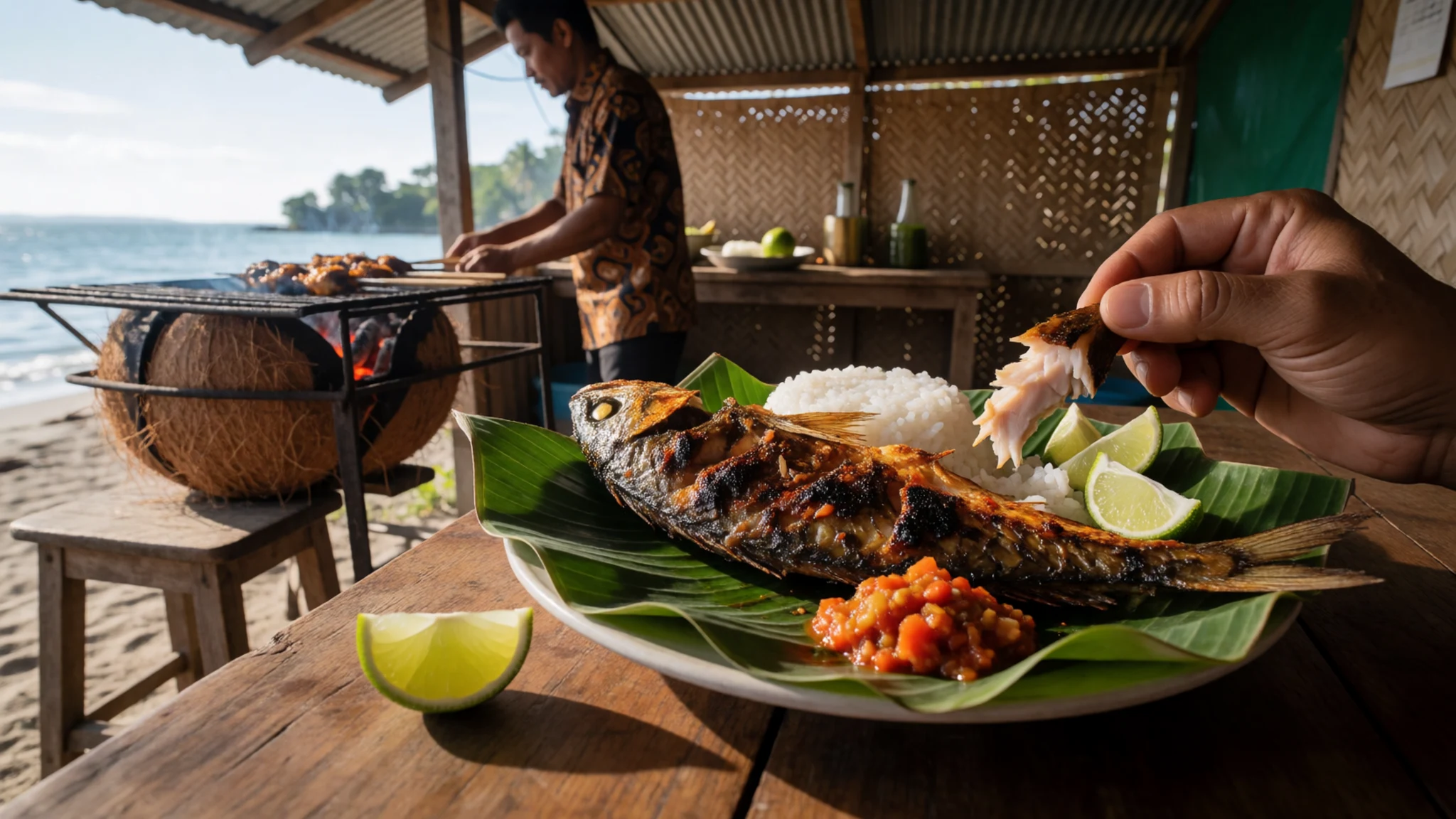
- Sate — Roadside carts in Anyer and Carita, and evening stalls near Lampung harbours
Sate, eaten on the way to Krakatoa, is chicken or goat on small skewers, grilled at the roadside and finished with peanut sauce or a sweet soy seasoning, plus lontong. Carts in Anyer and Carita, and evening stalls near Lampung harbours, sell it as a meal before an early boat.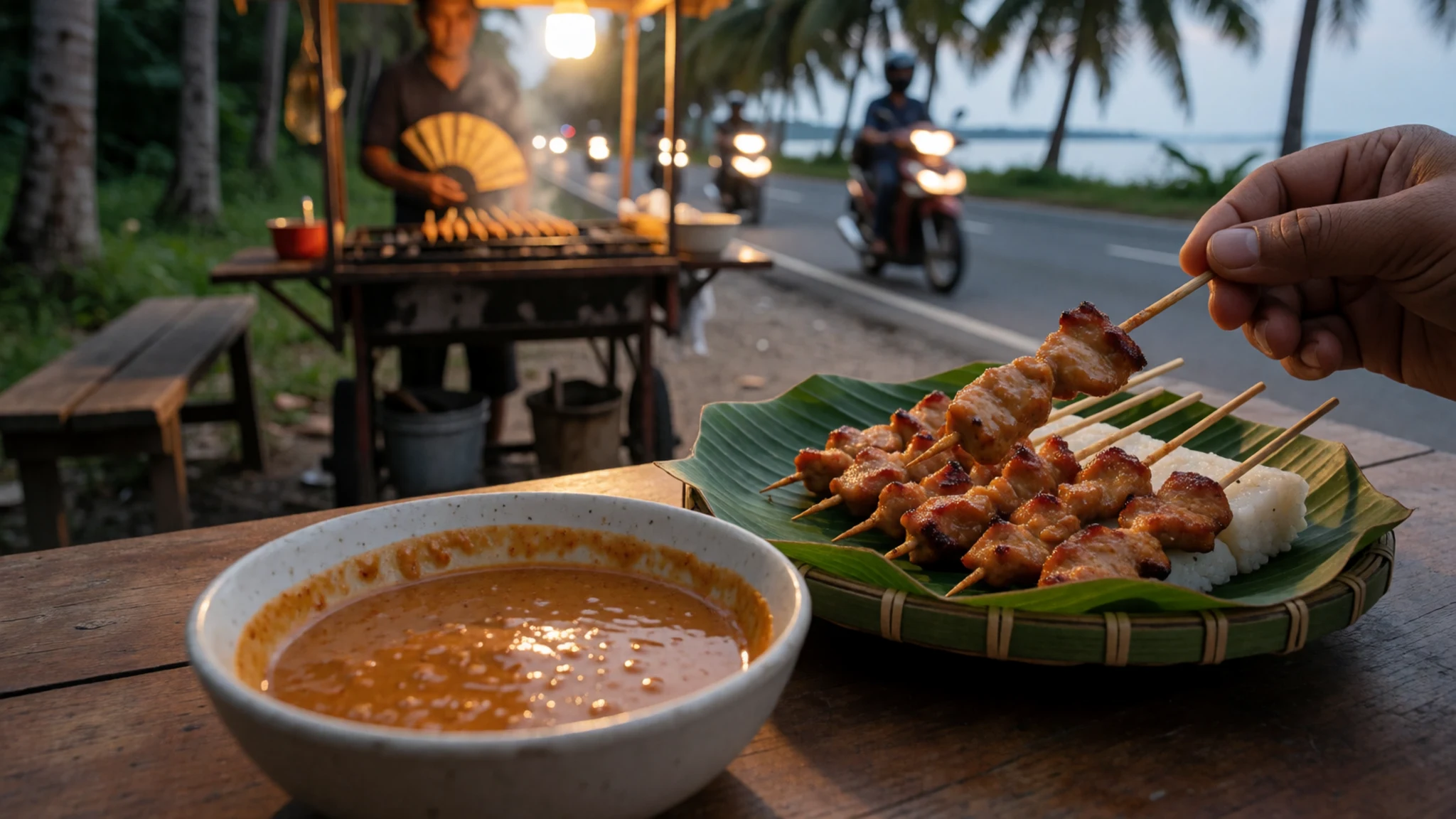
- Nasi goreng — Jetty stalls and beach-road kitchens on either coast
Nasi goreng is the breakfast that starts a Krakatoa day: fried rice with sweet soy, a little chicken or seafood, and a fried egg if the warung is generous. Beach-road kitchens and jetty stalls have it early enough for crews heading out with the tide. - Gado-gado — Warungs on the west Java coast
Gado-gado turns up at Krakatoa departure towns as a plate of blanched vegetables, boiled egg and fried tofu or tempeh under peanut dressing. Java-coast warungs serve it when a heavy grill feels like too much in the heat. Crackers come on the side. - Seruit — Eateries around Kalianda and Lampung harbours facing the strait
Seruit is Lampung's grilled fish for a Krakatoa trip that starts on Sumatra: the fish is covered with sambal and tempoyak, a sharp fermented durian paste. Eateries around Kalianda and the harbours facing the strait serve it, a shore taste rather than anything cooked on the island.
Plan it
Best time. May to September is the kinder window for Krakatoa, when rain eases and the strait is more often calm enough to land. From November through March, heavier rain and a shorter, steeper sea make cancellations likelier. In any month the volcano's alert can close the island, so the sky is only part of the decision.
How long. 1–2
Getting there. Fly into Jakarta and continue by road to Carita or Anyer, then by small boat across the strait to Krakatoa. From Sumatra, fly to Bandar Lampung and leave from the Kalianda coast. There is no public ferry to the islands; the last leg is a boat arranged with a local crew.
Budget. mid
Tips
- Check the volcanic alert the day before you go, and again in the morning; a landing can be cancelled without notice.
- Arrange the boat locally and make sure a guide comes along; there is no timetable to fall back on.
- Leave early, before wind and heat build over the strait.
- Carry cash for the boat, warungs and village stops.
- Bring drinking water, a hat and shoes that can handle loose ash.
Etiquette
- Stay inside the limits the guide sets; the cone is loose and some ground is closed.
- Ask before you photograph fishermen, crews or people in the coastal villages.
- On the coast, remove your shoes before a home or prayer room, and keep shoulders and knees covered there.
Nearby
Sources
- Wikidata Q43448 (CC0)
- Wikipedia, Krakatoa (CC BY-SA 4.0)
- Wikivoyage, Krakatau (CC BY-SA 4.0)