Koper
Koper, Slovenia
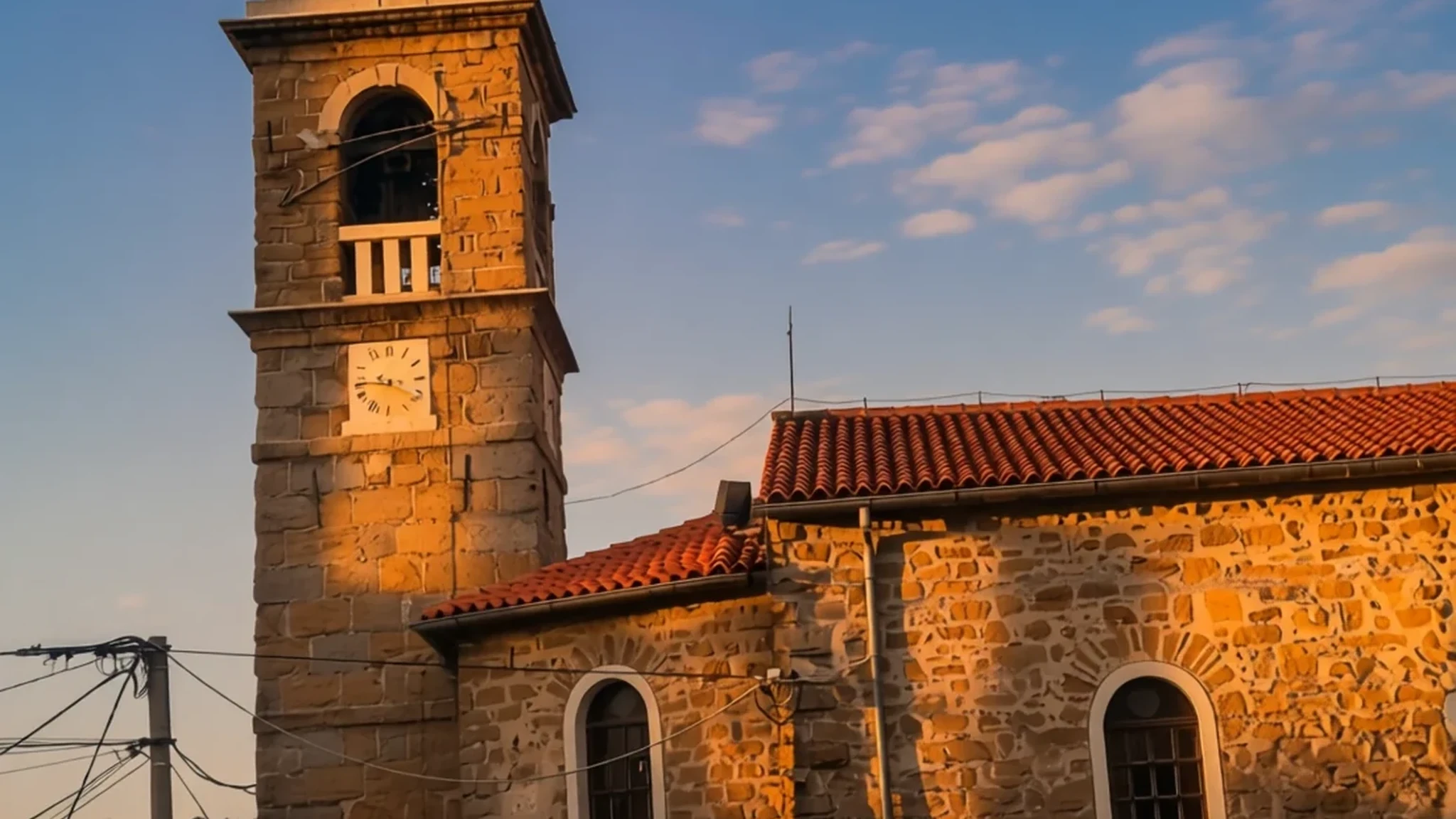
A small Venetian-flavoured port town on Slovenia's short Adriatic coast, with a walkable old centre and sea-and-Istria food.
The place
Koper sits on the northern Adriatic, in the Istrian corner of south-western Slovenia, a few kilometres from the Italian border. It has about 25,900 residents and a centre barely above sea level, at around 3 m. Slovenes know the coast as the Primorska, and Koper is its main town. Italians call it Capodistria, and the Italian name still appears on some old signs and in family conversations.
Two faces share one place. The old centre is a compact knot of lanes, small squares and stone palaces, with Venetian lines and shuttered windows. Beyond it, the working port dominates the bay. It is the country's only container port, and cruise ships call here too, so the waterfront can feel more industrial than a postcard would suggest. That honesty is part of the appeal: this is a town that does business, not a museum.
The old town began on an island, and the island has long since been joined to the mainland. Walking the centre takes an hour or two without hurrying, and nearly everything of interest lies around the main square, Titov trg, and the streets running off it. The pace is slow, café-based and Mediterranean.
Koper also works well as a base. Trieste is the closest big airport, the motorway to Ljubljana is straightforward, and there is a rail link to the capital. Summer brings heat and visitors, but the town rarely feels as crowded as its better-known neighbours across the border in Italy or along the Croatian coast. Evenings, when the day-trippers leave and the squares fill with locals, are the best time to be here.
Its story
Koper began as a settlement on a rocky island in the Gulf of Koper. Roman settlers knew it as a goat island, and the name Capris, with its goat roots, stuck in various forms for centuries. The ancient writer Pliny the Elder mentions a town here called Aegida, a name tied to the shield of Athena.
In the 6th century the place gained importance as a refuge. Roman citizens from Trieste fled the Lombard invasion in 568 and settled here, and the town was renamed Justinopolis in honour of a Byzantine emperor. Lombards, Franks and briefly Avars all held it in the centuries that followed. Later still, the Patriarchs of Aquileia called it the head of Istria, a title that shows how central it had become.
It was also a bishop's seat, from at least the 8th century and possibly earlier. One of its bishops, Pier Paolo Vergerio, later turned Lutheran reformer, a surprising career for a small Adriatic diocese. The see was merged into Trieste in 1828.
The longest influence was Venice. Trade between the two is recorded from 932, and the Venetian period shaped the architecture visitors see now: arcaded façades, Gothic windows, a lion-and-palace look familiar from across the northern Adriatic. Later the town passed through other states, and in the twentieth century it became part of Yugoslavia before joining independent Slovenia. A century-old rule of changing flags has left layered names, languages and street plans, which is why the same town carries Slovene, Italian, Latin and Greek echoes.
What to see
- Titov trg and the Praetorian Palace — Old town centre
Titov trg is the main square, and the Praetorian Palace is its anchor, a building from the 15th century that is the town's symbol. It was the seat of Venetian rule. Today the tourist office inside offers guided tours, including a look at the council chamber. Stand back first to take in the façade.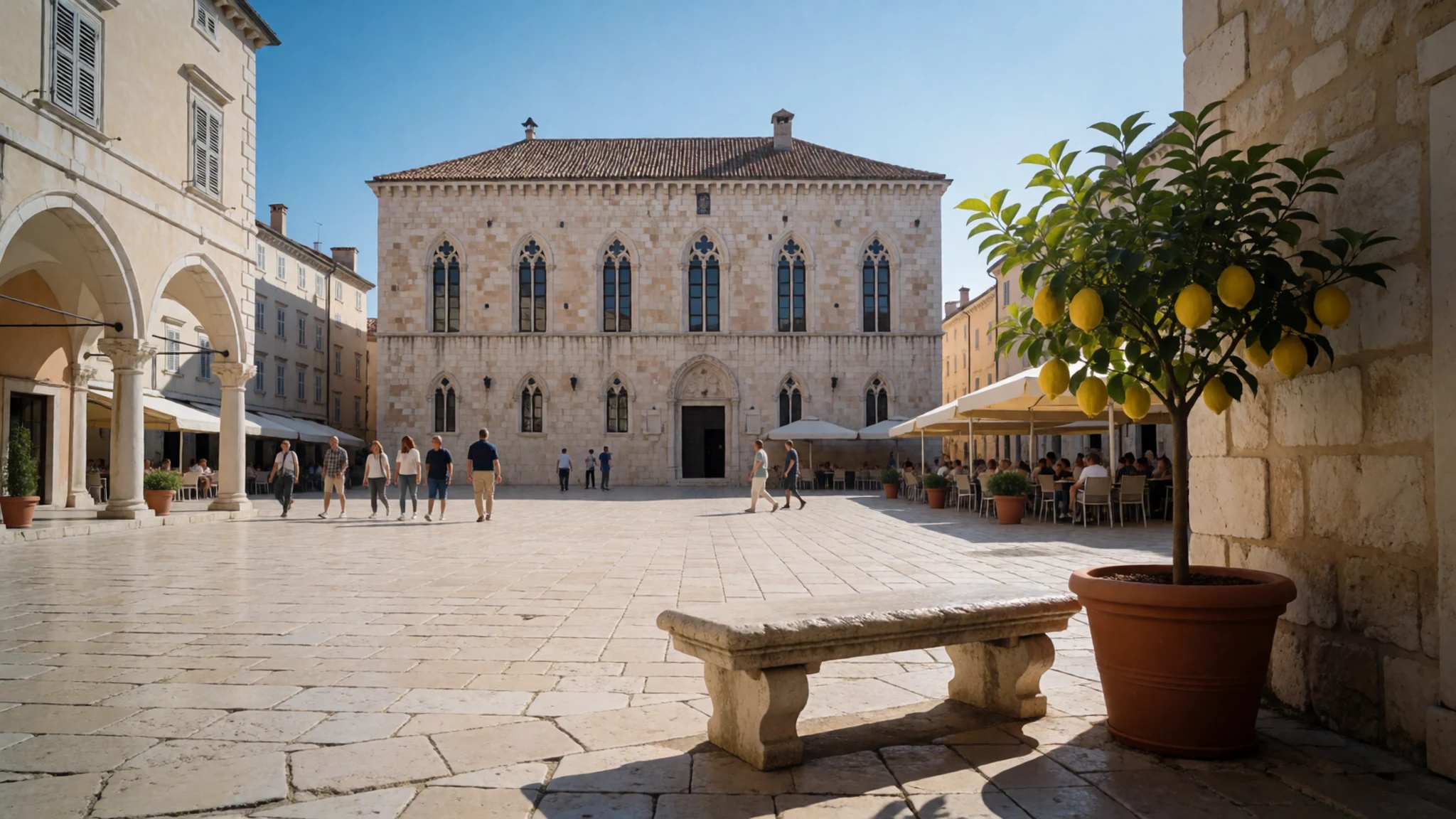
- Cathedral of the Assumption — Titov trg
The cathedral stands beside the square and is the biggest church of its kind in Slovenia. Inside, paintings include work by the Venetian artist Vittore Carpaccio. It has been renovated and holds a good deal of church treasure. Dress modestly, and check the official site for visiting times.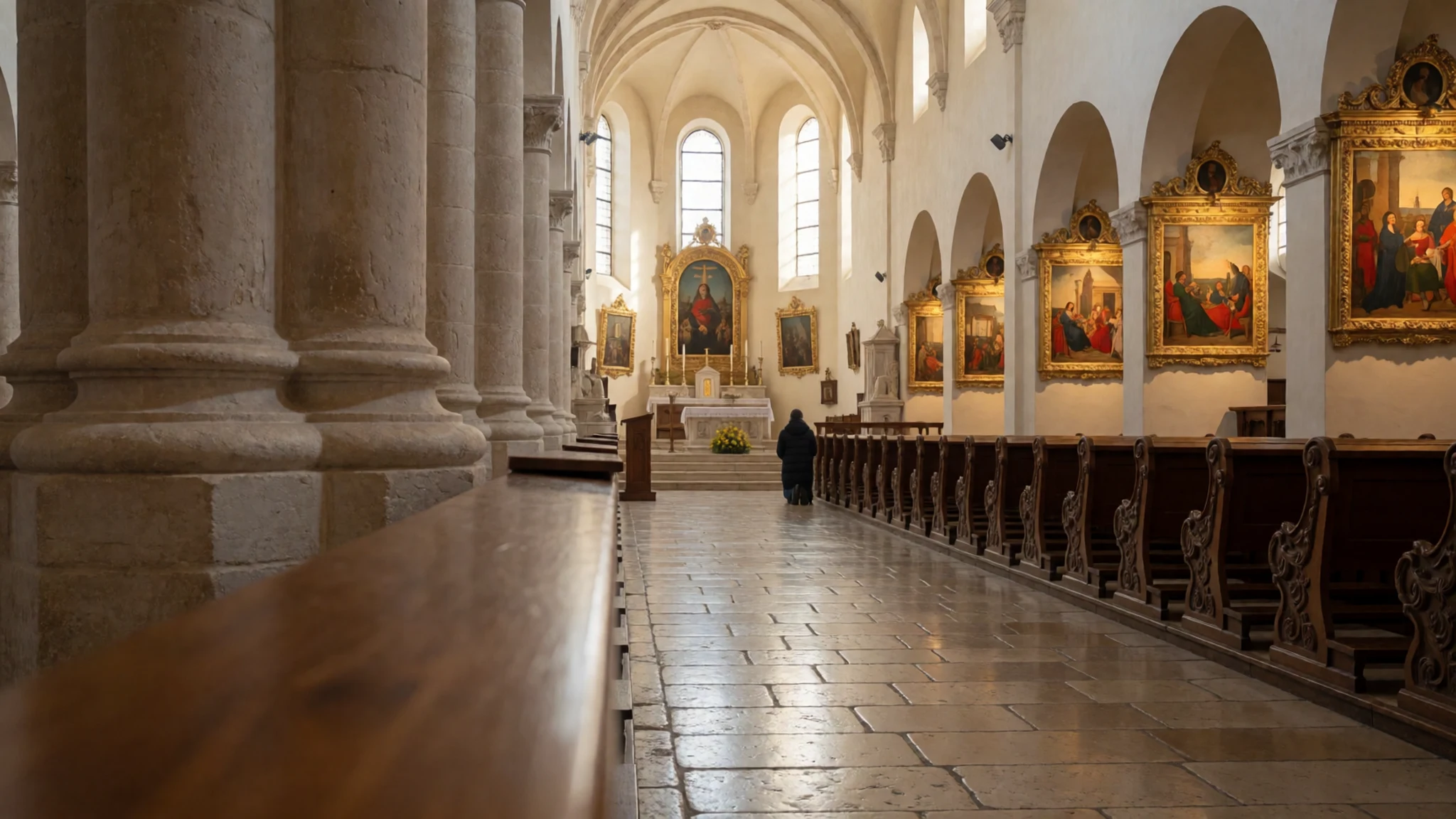
- City Tower — Next to the cathedral
The bell tower next to the cathedral is worth the climb for views over the terracotta roofs, the harbour and the surrounding hills. It houses the oldest working bell in Slovenia. The stairs are narrow and can be warm in summer, so go early and take water.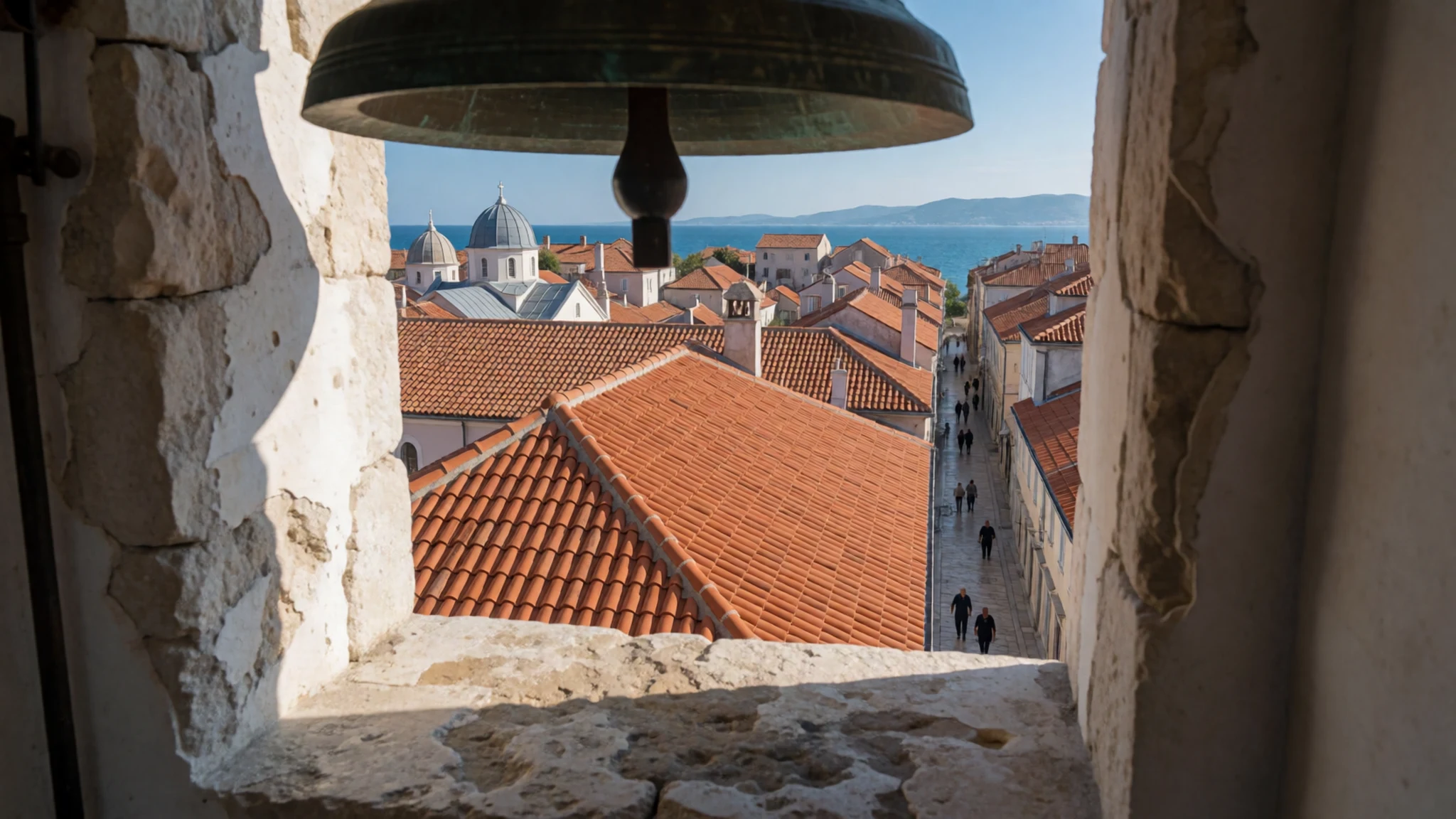
- Loggia — Titov trg
The Loggia is a Venetian-era arcaded building on the main square, now serving as a café and gallery space. Its open arches show the Venetian taste for public ceremony. It is a pleasant place to sit with a coffee and watch the square, and it photographs well in late afternoon light.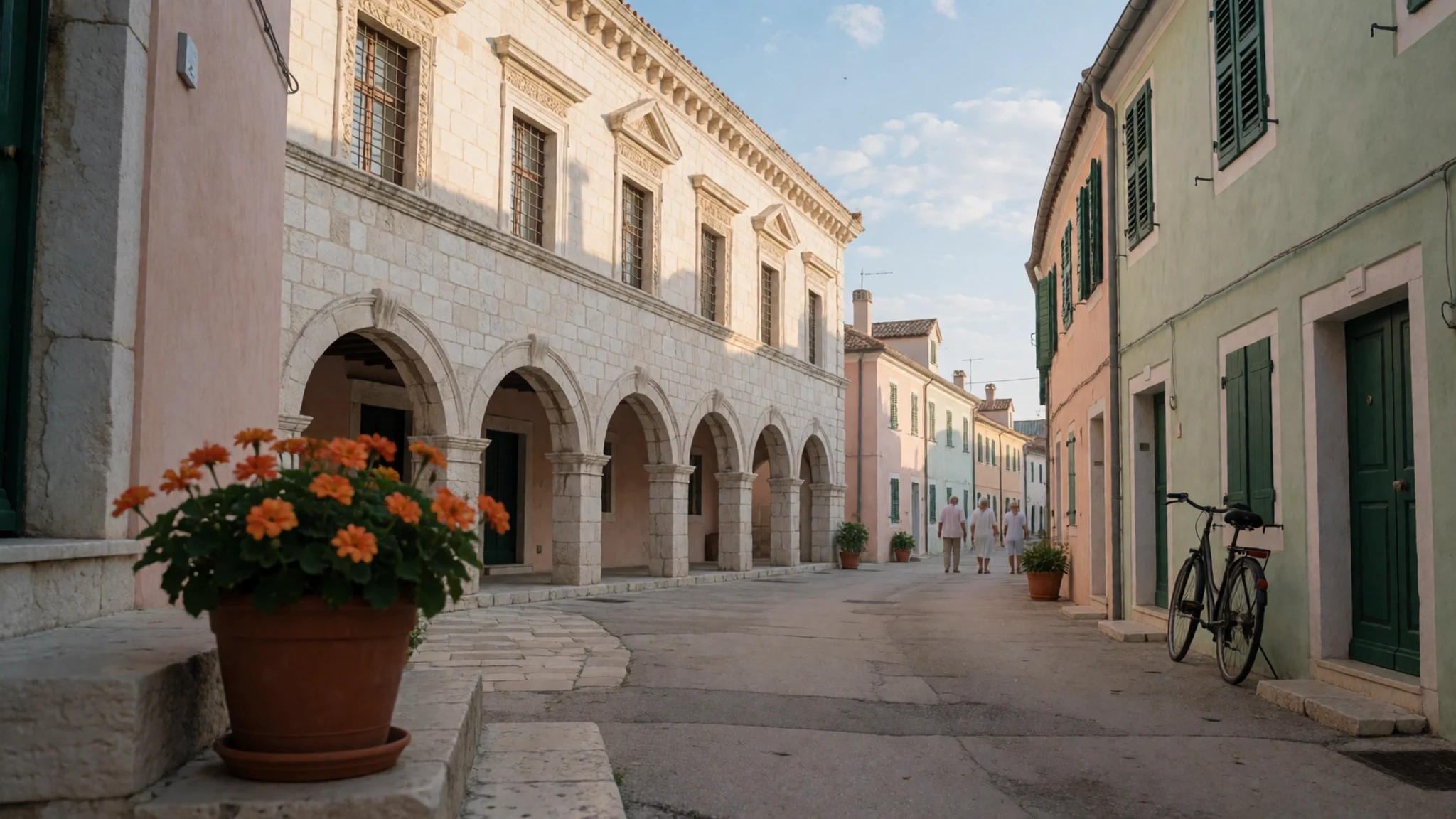
- Armoury and Foresteria — Old town
The Armoury was once the town's municipal store of weapons, while the Foresteria, once called the new inn, housed the guests of the Venetian governor. Both stand in the old centre and show how the town handled defence and hospitality. They are best appreciated from outside during a slow wander.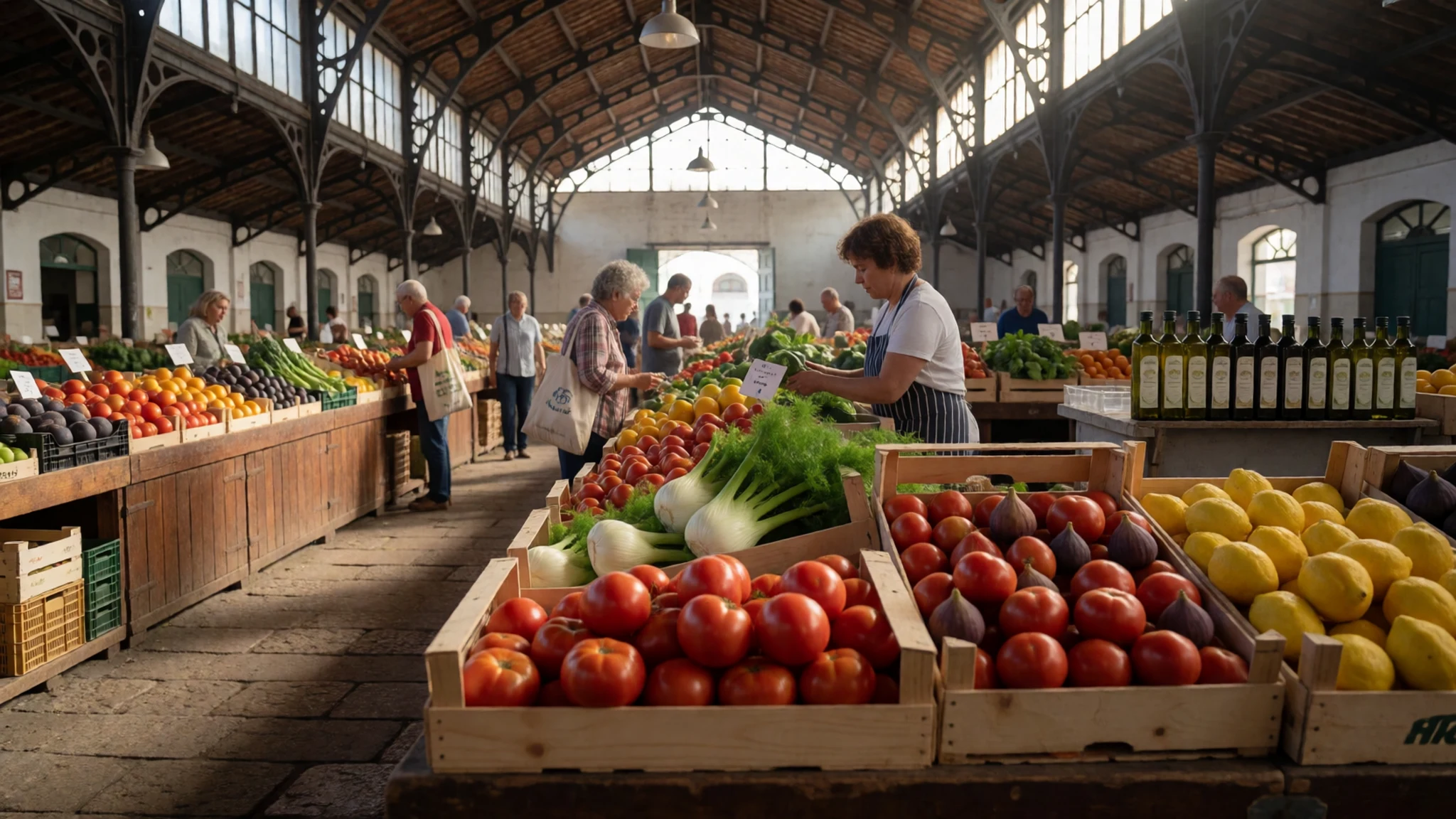
- Da Ponte fountain — Old town
The Da Ponte fountain is a handsome public water feature that recalls how the town supplied its people. It is a short walk from the main square and a quiet spot for a pause, with fewer people than the squares nearby. Look at the carving and the basin rather than rushing past.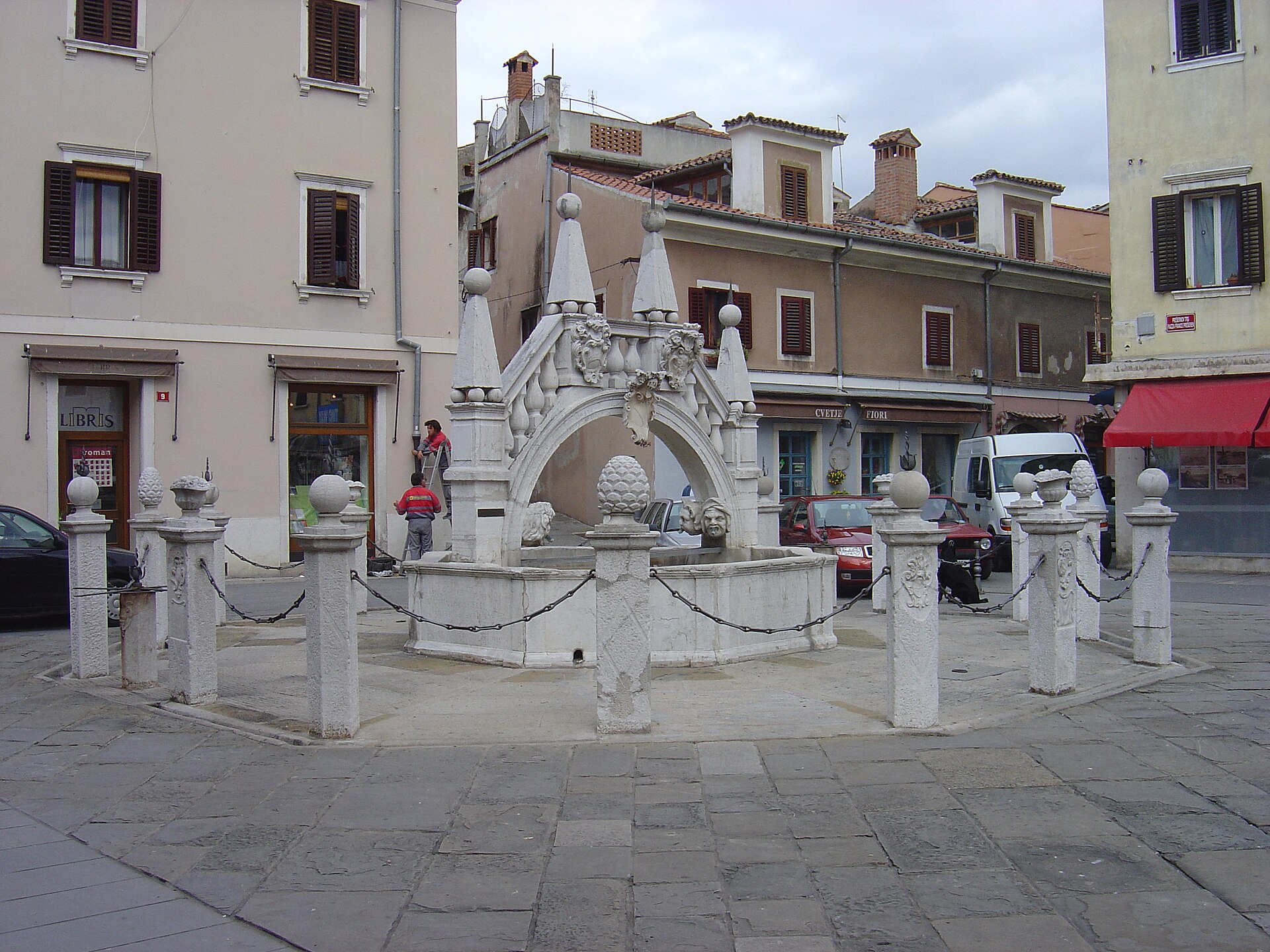
Culture
Koper is a Slovene town with a strong Italian thread. Both languages appear on public signs, and a good many families have Italian roots. That mix shapes daily life: coffee taken standing at the bar or slowly outside, long lunches, and conversation that slides between two tongues. Many locals also speak English well, particularly younger people.
The Venetian centuries left a civic style of squares, loggias and public ceremonies, and the old town still works as a stage for community life. In summer the squares host concerts and evening events. The Jazz Etno Funky Festival, known as JEFF, has run each July and August since 2003 in the gardens of the Regional Museum. It is organised by the Students' Association of Koper and mixes jazz, funk, world and folk acts. It is a good way to meet locals rather than other visitors.
Religion is quiet and mostly unobtrusive, with the cathedral at the centre of church life. Public manners are relaxed but polite. Greeting shopkeepers when you enter is normal, and rushing a meal is not. The coast has a lively outdoor habit: evenings along the waterfront and in the squares draw all ages.
Place your ordering and pace to match: meals are leisurely and service unhurried. Remove hats and keep voices low when you step into the cathedral, and avoid photographing worshippers during services.
What to wear
Koper has no single regional costume that people still wear daily. Historic dress in this part of Istria belonged to farming and fishing communities, with wool and linen cloth, simple waistcoats, headscarves for women and broad hats for men. Such clothes now appear mainly at folk events and festivals, and local museums are the best place to see them.
Everyday clothing today is relaxed and Mediterranean. People dress neatly but casually: linen shirts, light trousers, summer dresses, trainers or sandals. Younger people follow wider European fashion, and students from the local university give the town a casual feel. Smart dress is reserved for dinners and events, and even then it is rarely formal.
For a visitor, pack for a warm, humid summer and a mild, damp winter. The climate is humid subtropical, with rain in every month, so a light waterproof is useful at any season. Summer calls for breathable cotton or linen, sun hat and sunglasses. Old-town lanes are paved in stone and can be slippery when wet, so choose shoes with grip rather than smooth leather soles. Cobbled streets and hills make flat, comfortable footwear sensible.
When visiting the cathedral, cover bare shoulders and avoid very short shorts. Beachwear belongs on the beach, not in the old town streets. In winter, bring a warm layer for the sea wind, which can feel cold even on bright days. A small foldable bag helps if you plan to shop at the market.
What to eat
- Fresh Adriatic seafood — Seafood restaurants and takeaway counters in the old town
Grilled or fried fish, squid and shellfish are the town's natural order. Look for simple plates with olive oil and lemon, served with salad or potatoes. The coast is short, so the catch is local and seasonal. Ask what came in that day.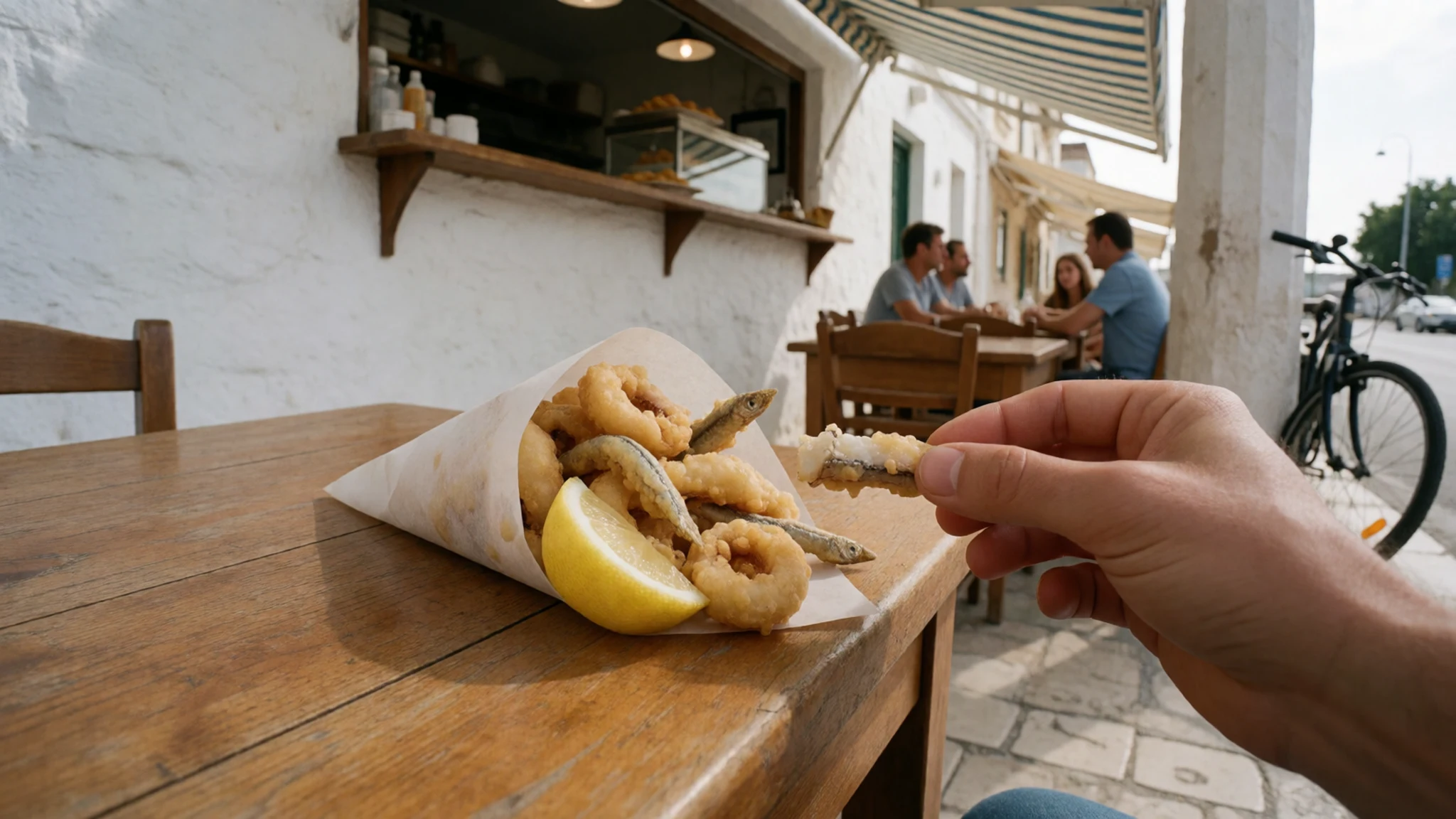
- Fritole and small fried fish — Takeaway fish stalls and small eateries near the waterfront
Fried fish served in a paper cone is the quick, inexpensive way to eat the sea. It is salty, crisp and best eaten standing near the water. A good lunch for a walking day, though it can be oily on a hot afternoon.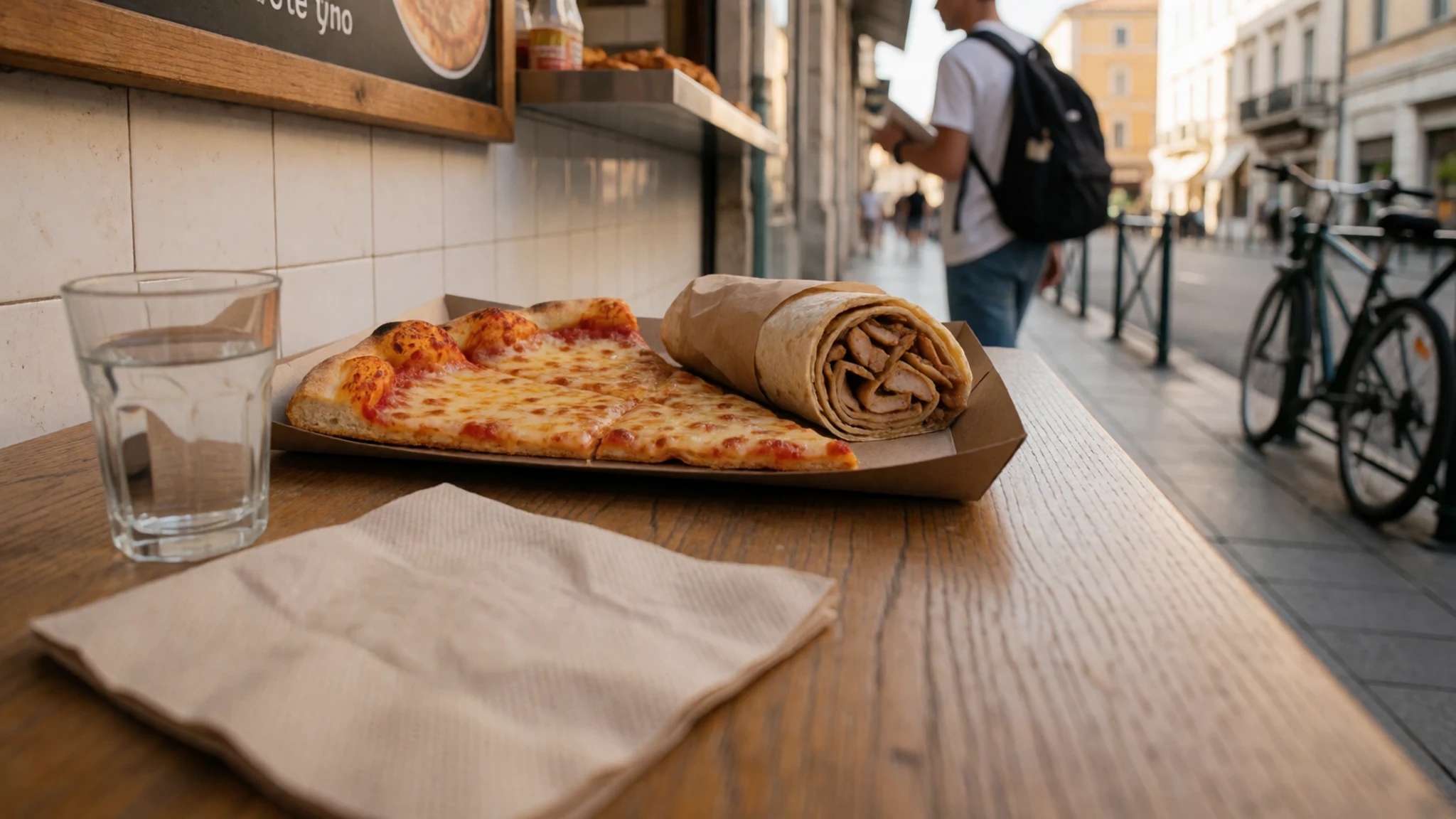
- Istrian home-style dishes — Small family-run restaurants and wine cellars in the old centre
Regional cooking uses olive oil, beans, cured meats, hand-rolled pasta and stews with wine. Portions are generous and the flavours are honest rather than fancy. It is the best way to taste inland Istria without leaving town. - Local cheeses and wines — Wine bars and bistros around the main square
Plates of cheese and cured meats go well with the regional white and red wines of the Istrian hills. They are served at bars, wine cellars and bistros, often shared. Ask for local producers and small glasses to taste several. - Pancakes and sweet snacks — Cafés and snack counters on the pedestrian streets
Pancakes with fruit, chocolate or nuts are a popular snack, especially with students. They suit a grey day, when the sea mist drives people indoors. Ice cream also does a brisk trade in summer evenings. - Vegetarian and vegan plates — Small takeaway eateries near the old town
The town has a few places serving vegetarian and vegan food, often as takeaway with outdoor tables. Salads, grain bowls and vegetable stews are the usual picks. It is a useful option for visitors from India who avoid meat or fish.
Plan it
Best time. May–June and September–October, when it is warm enough for the coast without the peak summer heat. July and August are hot, humid and busier. Rain falls in every month, so carry a light waterproof whenever you travel.
How long. 1–2
Getting there. The nearest airport is Trieste, about 64 km away, with Pula, Ljubljana and Venice as alternatives. Buses and shared shuttles link the airports to town. By road the motorways from Ljubljana and Trieste are easy. There is also a rail link to Ljubljana. The old town is walkable from the bus and rail stations.
Budget. mid
Tips
- Buy a vignette (motorway toll sticker) before driving on Slovenian motorways; there is a fuel station at the border
- Climb the bell tower early, before the stone stairs get warm and busy
- Visit midweek in summer for quieter squares
- Cards are widely accepted, but carry a little cash for kiosks and small stalls
- Check the official site, koper.si, for guided tours and event dates
Etiquette
- Greet shopkeepers and staff when you enter
- Cover shoulders and knees in the cathedral
- Keep voices low in the old town late at night
Nearby
Sources
- Wikidata Q1015 (CC0)
- Wikipedia: Koper (rev 1380260033) (CC BY-SA 4.0)
- Wikivoyage: Koper (rev 5407540) (CC BY-SA 4.0)
- Photo 01-koper-mesto.jpg, TICKoper (CC BY-SA 4.0)
- Photo 02-loggia-koper.jpg, MrPanyGoff (CC BY-SA 4.0)
- Photo 03-koper-fountain.jpg, Husond (CC BY-SA 1.0)
- Photo 04-capodistria-palazzo-pretorio-01.jpg, Sailko (CC BY 3.0)
- Photo 05-koper-slovenia-6843540389.jpg, Stephen Colebourne (CC BY 2.5)
- Photo 06-koperisland.jpg, Mrwho00tm (Public domain)
- Photo 07-josip-broz-tito-in-cesar-haile-selassie-v-kopru-1959-2.jpg (Public domain)
- Photo 08-veduta-kopra-1781.jpg (Public domain)


