Lake Bohinj
Lake Bohinj, Slovenia
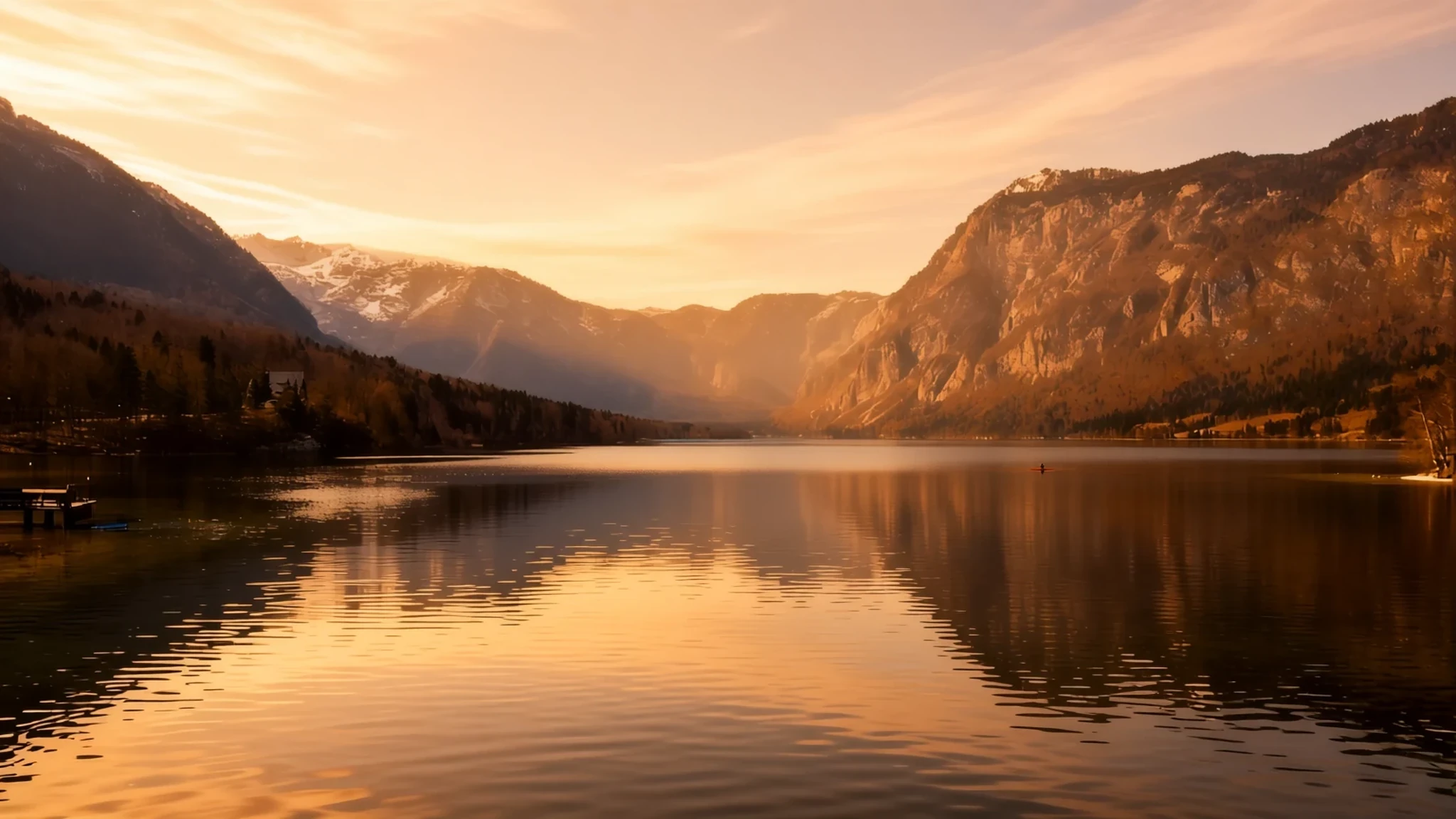
A glacial lake in the Julian Alps: clear enough for a swim, and quiet enough on a weekday morning to hear the water.
The place
Lake Bohinj (Bohinjsko jezero) lies in the Bohinj Valley of the Julian Alps, in the northwest of Slovenia and inside Triglav National Park. It is the largest permanent lake in the country: a long, narrow sheet of water about four kilometres from end to end and roughly one kilometre across at its widest point. The shape is clearest from the hillside above Ribčev Laz, where steep wooded slopes run down on both sides and, on clear days, the Triglav massif rises behind the western end.
The basin was gouged out by glaciers, and the rubble they left behind forms a natural dam that holds the water in. Observers noticed as far back as the 18th century that far more water leaves the lake than enters it, and the difference is thought to drain away through underground channels. Most of the inflow comes by way of the Savica stream, which rises in the Triglav Lakes valley above.
The water is cold and very clear, and on calm days the stones near the shore show plainly through it. Brown trout, Arctic char and burbot live here, along with minnows and chub, and the lake supports a surprising variety of algae and molluscs. In summer it draws day trippers who swim, paddle and hire boats, so the shore villages fill up in the afternoons. Out of season the valley is far quieter, and the lake shows its best side: still, reflective and framed by the mountains.
Its story
Few shores in Slovenia are tied to one legend as tightly as this one. A statue of Zlatorog, the golden-horned chamois, stands by the lake, and the animal's story belongs to the mountains above it. In the tale, Zlatorog lives among the high peaks of the Triglav country and guards a hidden store of gold. Greed enters through a hunter named Bogomil, who is drawn up into the mountains by the promise of that treasure. The story turns on betrayal and ends badly for the chamois.
The version most people know was shaped by Rudolf Baumbach, a German-language poet who turned the folk material into a poem that spread well beyond the valley. He did not invent the mountain spirits, which local people had long linked with the peaks, but he gave them a clear shape and a plot that readers could follow. Baumbach's telling is the reason many visitors now arrive knowing the legend before they see the water.
The story sits comfortably beside the landscape. The lake is clear and the valley is wide, yet the peaks above it are steep and remote enough to feel like a separate world, and a chamois on a ridge is easy to imagine. Standing on the shore, it is easy to see why a story about gold hidden in the rock has held on to people for so long.
What to see
- Ribčev Laz and the shore — Ribčev Laz, north shore
The lakeside village is the usual base for visitors, with the parish church set on a small rise above the water and the statue of Zlatorog nearby on the shore. Walk the lakeside path early in the morning, when the boats are still tied up and the water is glassy. This is the easiest place to start a swim or hire a boat.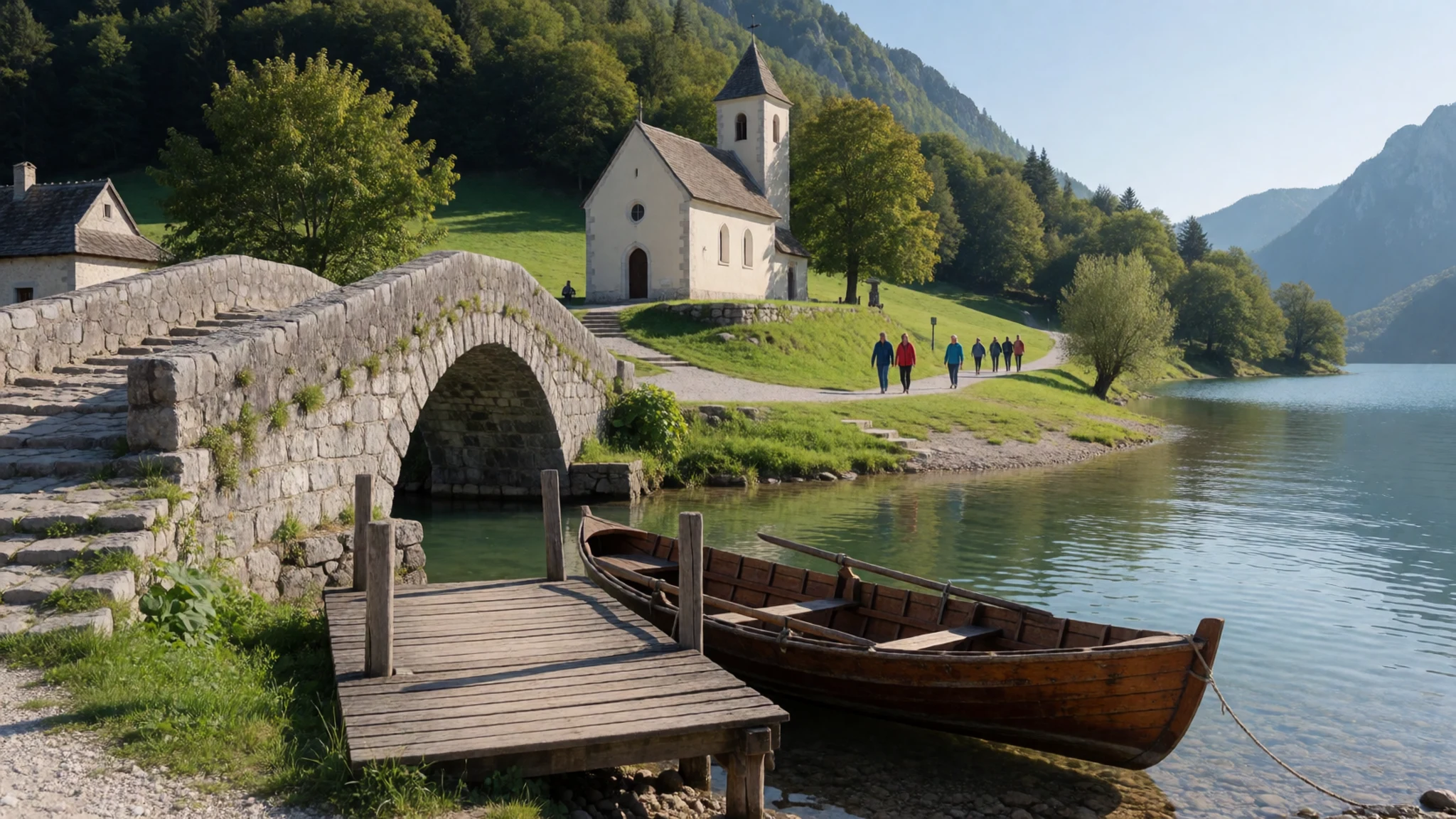
- Savica waterfall — Savica valley, above the western end of the lake
The Savica stream falls from the Triglav Lakes valley in a waterfall reached by a walk up from the road above the lake. It is most impressive after rain, when the flow is strongest. The path is steep in places, so wear shoes with good grip. Allow time for the walk up and back, and keep an eye on the weather in the mountains.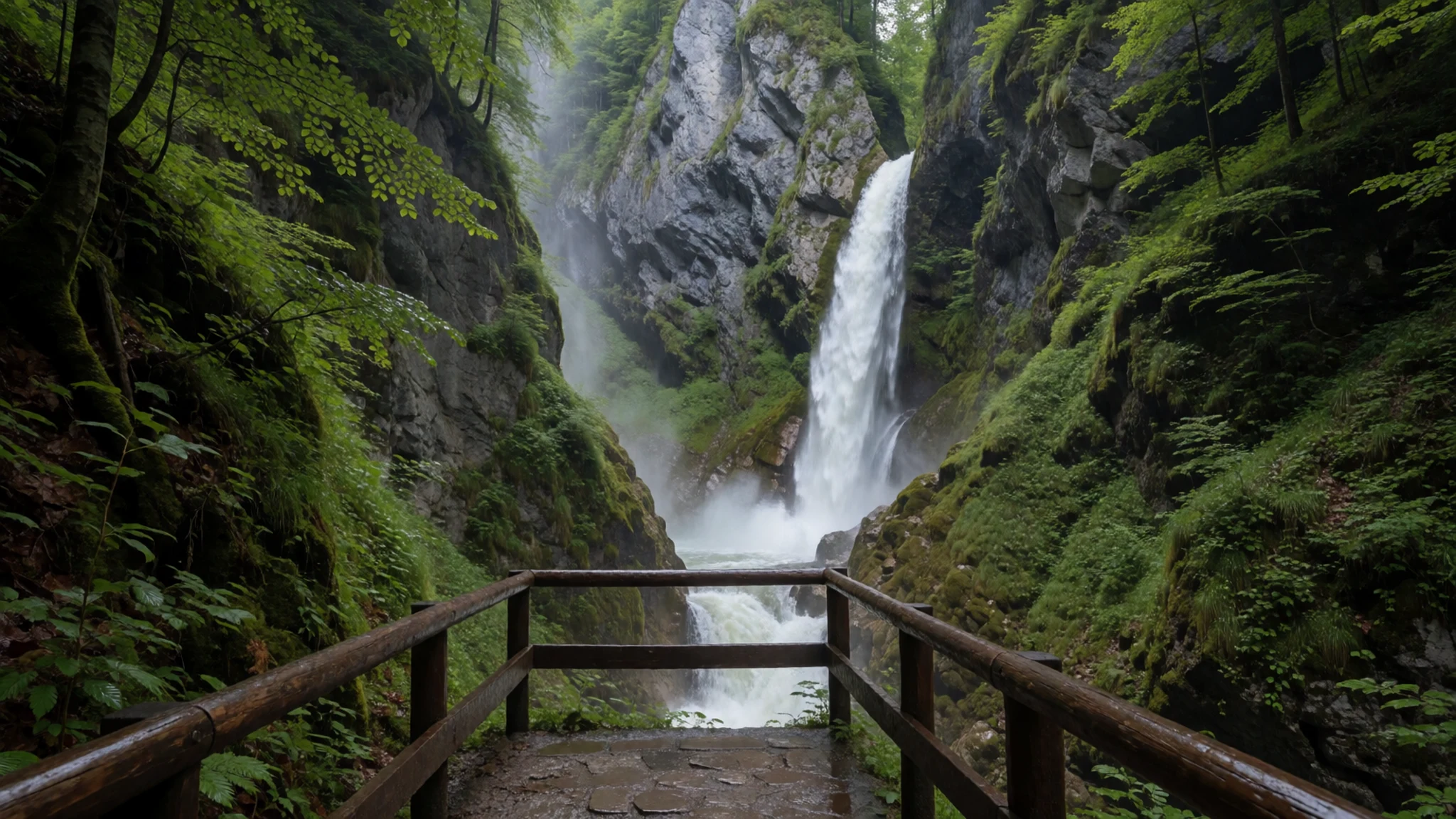
- Vogel above the lake — Vogel ridge, north of the lake
Vogel is a mountain ridge and ski area on the northern side of the valley, and its lifts carry walkers up for wide views down onto the lake. In summer the upper station is a starting point for hikes along the ridge. Check the operating times on the official site before you go, since they change with the season and the weather.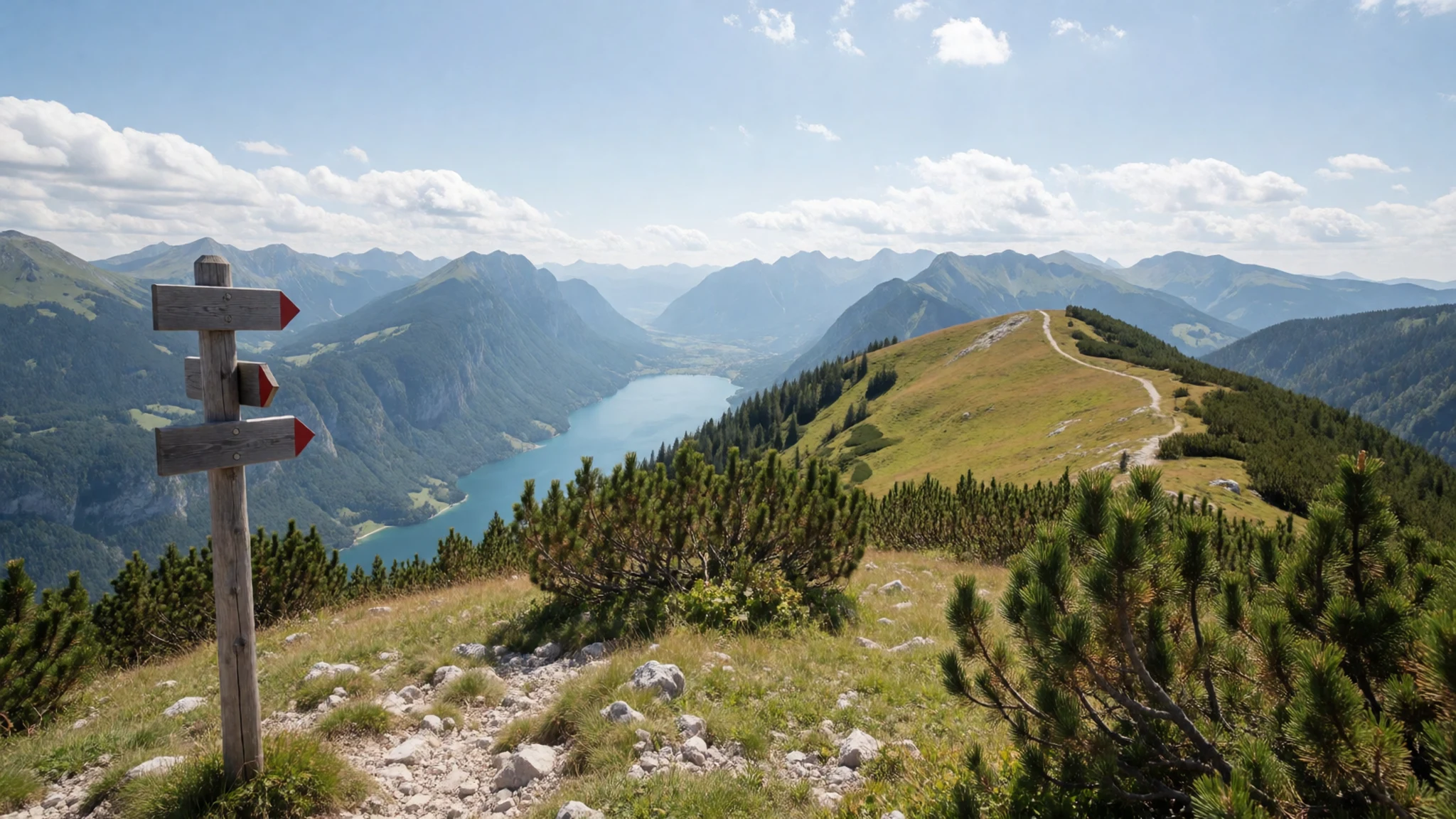
- Stara Fužina and the outflow — Stara Fužina, eastern end of the lake
Stara Fužina sits at the eastern end of the lake, where the water leaves as the Jezernica creek and begins its course towards the Sava. It is a quiet village of traditional houses and a small church, good for a slow walk. Standing by the outflow, you can picture the water that disappears underground between here and the lake's inflow.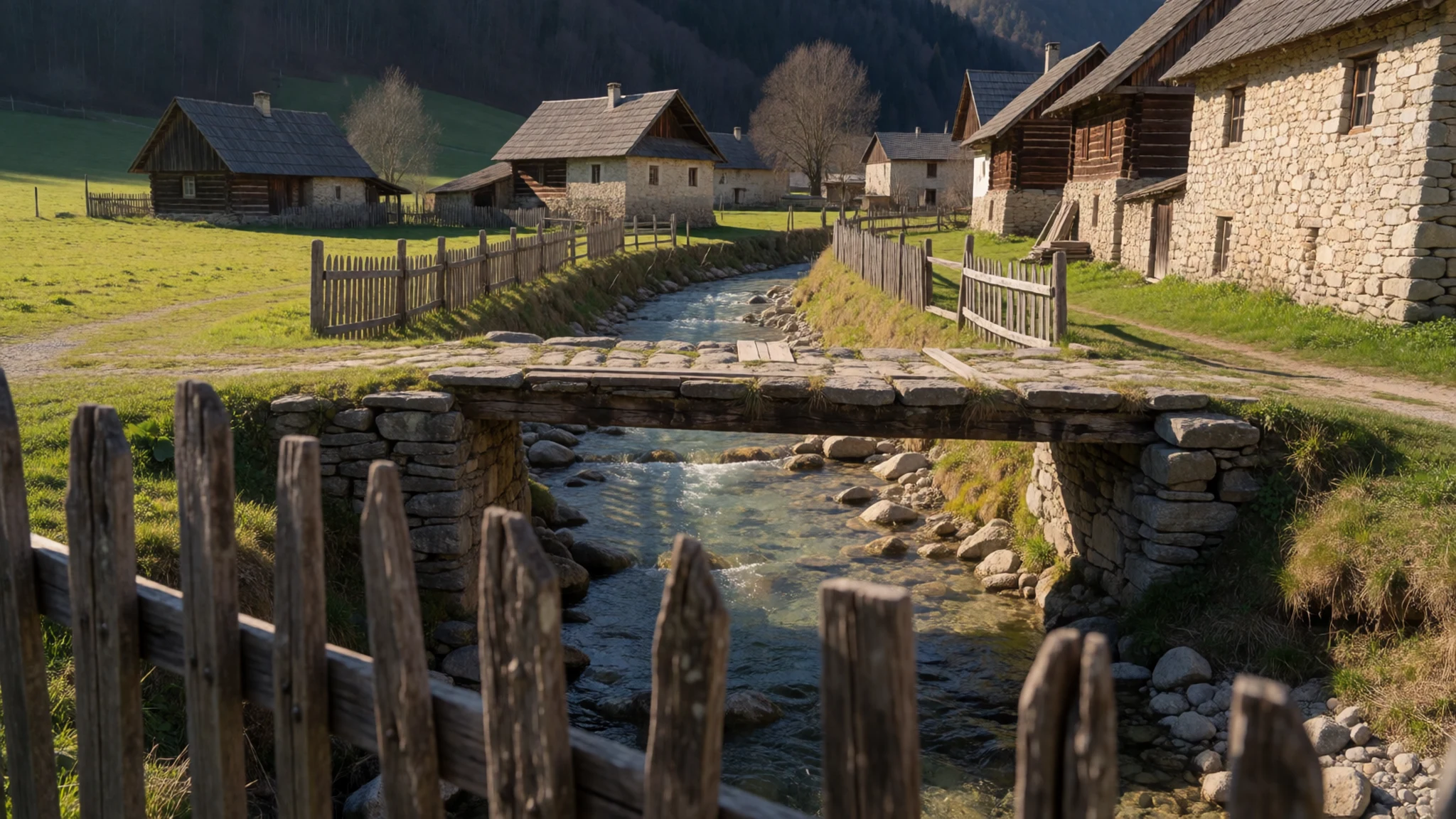
- The Triglav Lakes valley — Triglav National Park, above the Savica
Above Bohinj, the Triglav Lakes valley holds a string of glacial lakes, and Črno jezero, the lowest of them, feeds the Savica. The route is a long day's walk for most people, with steep sections and quickly changing mountain weather. Start early, carry water and a waterproof, and check conditions with the national park information centre before you set off.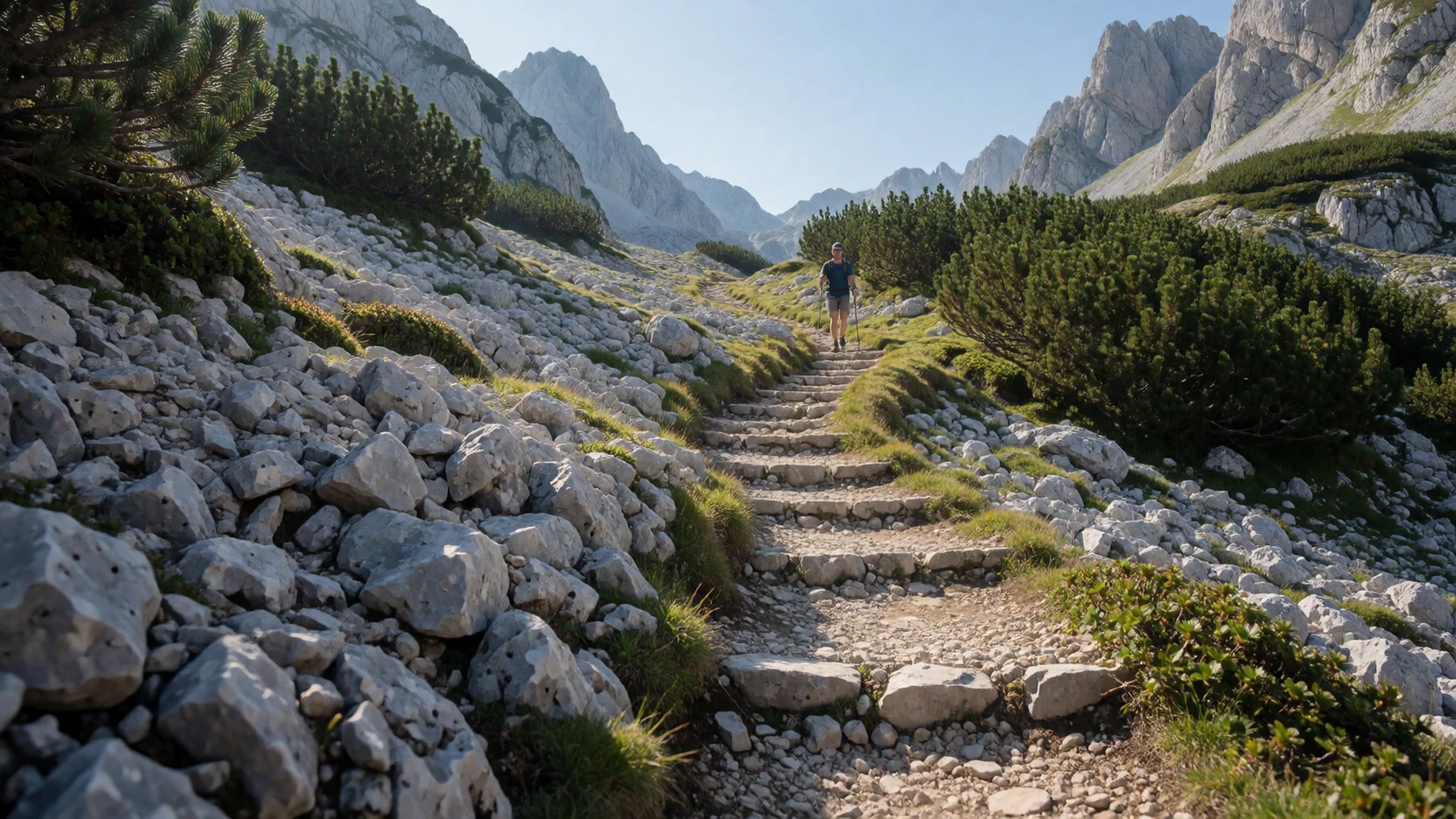
Culture
Lake Bohinj sits inside Triglav National Park, and visitors are expected to treat the valley with the care that status asks for. Slovene hospitality is quiet rather than showy: a short greeting, such as dober dan, goes a long way before any question. Church bells and village routines still set the rhythm in Ribčev Laz and the other shore villages, so keep voices low in the early mornings and evenings, when houses sit close to the water.
The lake is busy in summer. Swimming happens from the shoreline and the jetties, and boats and paddle boards keep to their own lanes, so follow the signs and any instructions from the people running the boat hire. Mountain walkers here tend to carry their own water and a map even on short walks, because weather in the Julian Alps can turn quickly. Photographs of people at work or at prayer deserve a question first, while landscapes and wildlife are open to everyone. Picnics on the grass are common, but the litter that follows is not treated lightly.
Religious buildings follow ordinary dress norms: cover shoulders and knees inside any church, and remove hats when you step through the door. Tipping is modest and not expected in the way it is in some countries, so a small amount for good service is enough. Stay on marked trails, keep dogs leashed where signs ask, and take every scrap of litter back down with you.
What to wear
Traditional dress in the Alpine valleys around Bohinj was tied to farming and church life, and the costumes you see at festivals and folk groups are built from local wool, linen and cotton. Women's dress traditionally combined a full skirt, a fitted bodice and an apron, often finished with hand embroidery and lace, while men wore dark woollen trousers and a waistcoat over a plain shirt. Embroidery and lace patterns varied from valley to valley, so a costume could show where its wearer came from.
Today most people in Bohinj dress much as they would anywhere in Europe: practical outdoor clothing, fleeces, walking trousers and trainers. Traditional costume is kept for weddings, church festivals and folk performances, so you will see it at celebrations rather than in daily life.
For a visit, dress for the mountains rather than the town. Lake breezes can feel cool even on warm days, so pack a layer and a light waterproof. Sturdy shoes with grip suit the trails above the lake, and sandals are fine on the shore but not on rocky paths. Swimwear is ordinary beach wear here, though it is polite to cover up in the villages, and modest dress is expected inside churches.
What to eat
- Lake trout (postrv) — Lakeside eateries at Ribčev Laz and Stara Fužina
Brown trout from the lake, usually grilled or fried whole and served with potatoes or a green salad. Look for it on the menus of lakeside eateries in Ribčev Laz and Stara Fužina. Order it simply, since the fish needs little more than salt, butter and a squeeze of lemon to show what it is.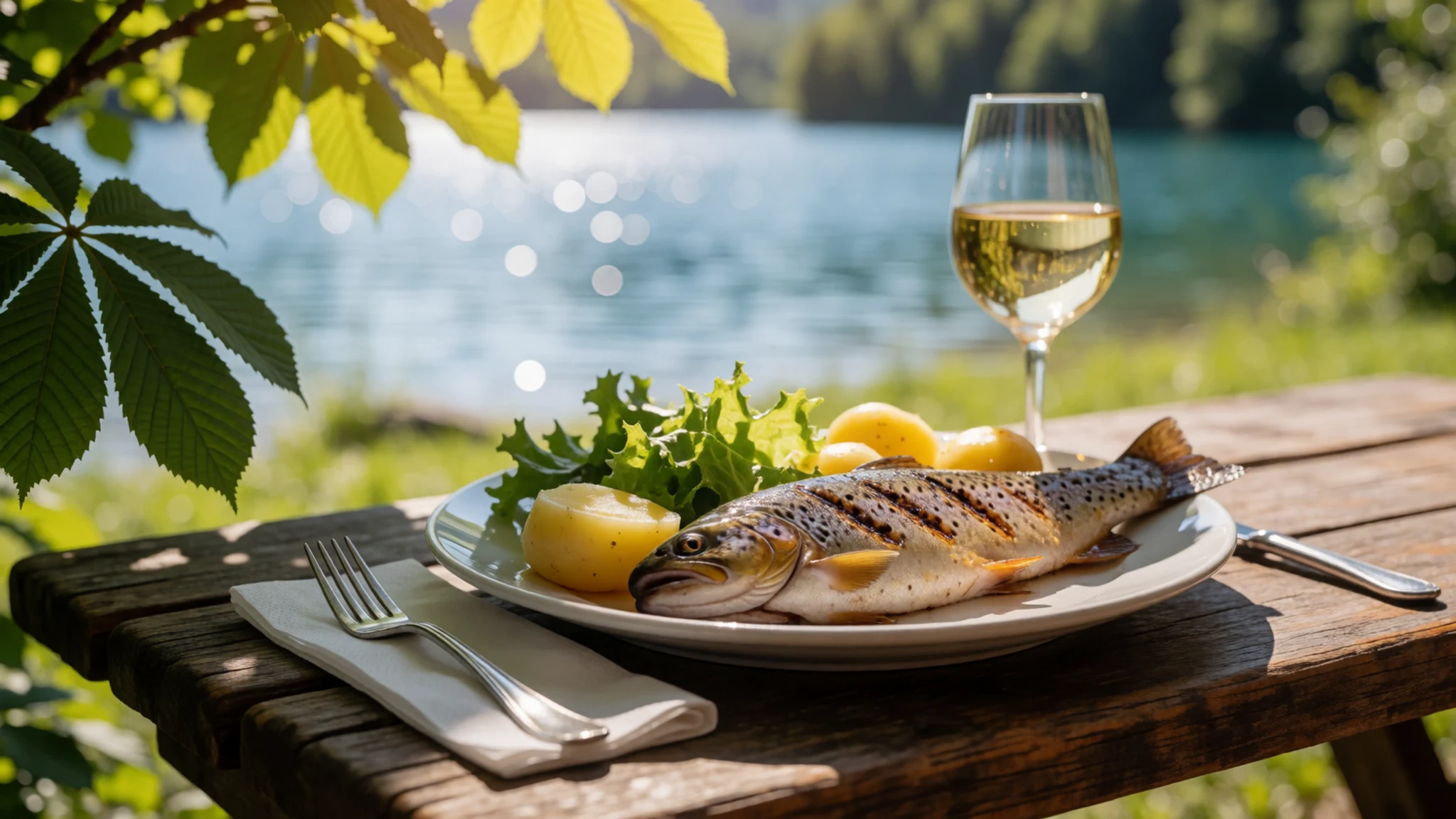
- Bohinj cheese (Bohinjski sir) — Farm shops and valley restaurants around the lake
A firm, mild cheese made from cow's milk on valley farms, grated over soup or eaten sliced with dark bread. Ask at a farm shop or a valley restaurant where the cheese was made. It keeps well, so it works as a souvenir for the journey home.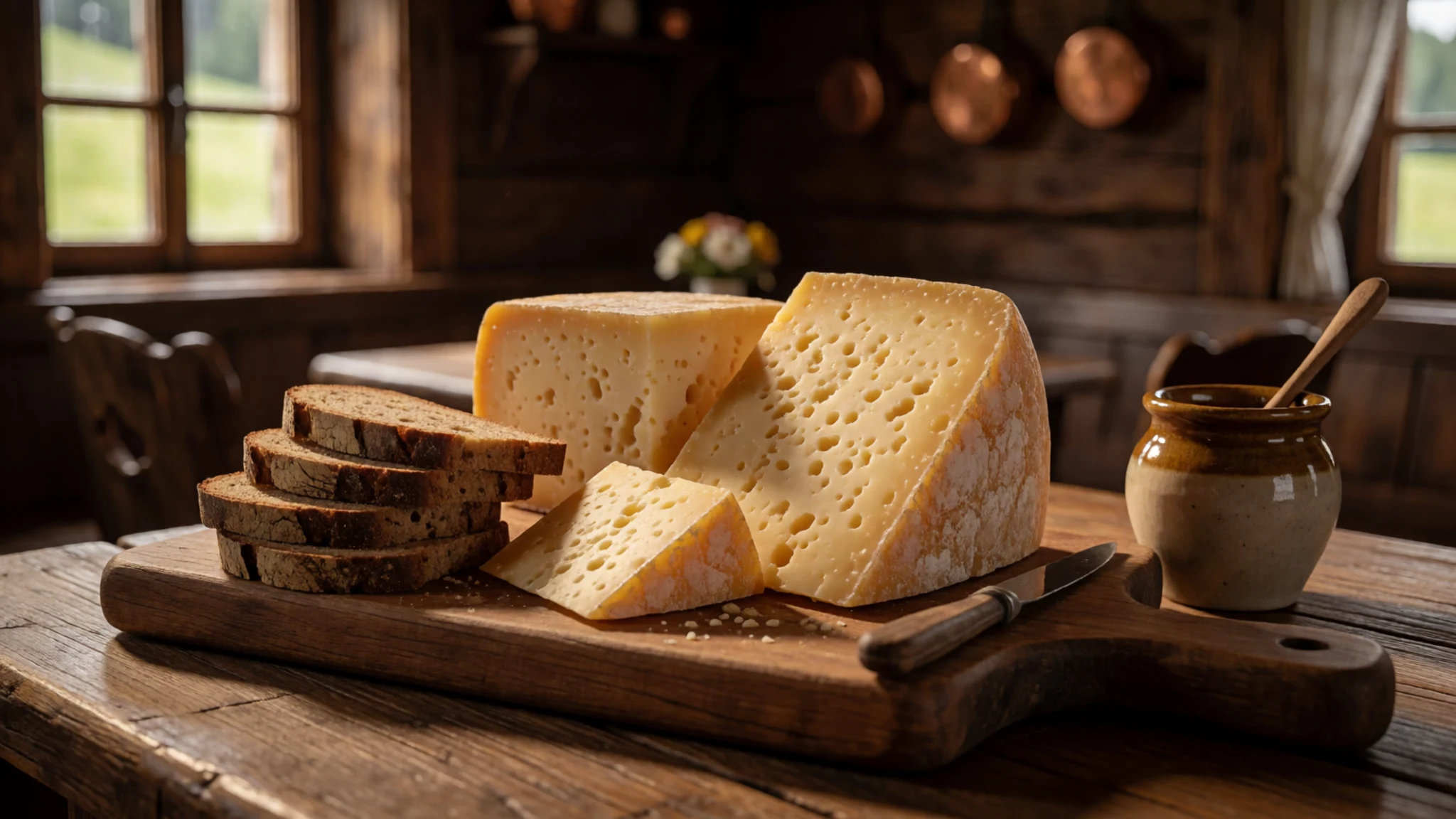
- Štruklji — Traditional restaurants across the valley
Rolled dough filled with cottage cheese, herbs or walnuts, then boiled or baked. Find them in traditional restaurants across the valley, especially on Sunday menus, and look for the sweet version filled with apple or poppy seed. - Žganci — Mountain huts and farm restaurants in the valley
A simple porridge of buckwheat or maize flour cooked in water or milk, often served with cracklings or sour milk. It is a rural dish, and you will find it on the menus of mountain huts and farm restaurants in the valley.
Plan it
Best time. Late June to September is the main swimming season, when the water is at its most inviting and boats are out. May and October are quieter, with fewer day trippers, but the weather is less settled, so check the forecast before you go. Winter brings snow to the valley and quieter trails, but many paths above the lake become difficult.
How long. 2–3
Getting there. Ljubljana's airport is the nearest international gateway, and from there a bus or hire car reaches Bohinj in a few hours. Trains run from Ljubljana towards Bohinjska Bistrica, and buses carry on to the lake from there. Check timetables online before you travel, as services change with the season.
Budget. low
Tips
- Book accommodation early for July and August, when the valley's guesthouses fill up
- Go to the shore early in the morning or in the evening to avoid the day-trip crowds
- Carry some cash for mountain huts and small restaurants, as not all take cards
- Bring water and a warm layer for the mountains, where weather changes quickly
- Check the national park website for trail conditions and any current rules before hiking
Etiquette
- Stay on marked paths and keep dogs leashed where signs ask
- Swim from the designated areas rather than from the boat jetties
- Carry your litter out, including from picnic spots
Nearby
Sources
- Wikidata Q831903 (CC0)
- Wikipedia: Lake Bohinj (CC BY-SA 4.0)
- Aerial image of Lake Bohinj with Triglav in the background (view from the south), Carsten Steger (CC BY-SA 4.0)
- Bohinjsko jezero s peči, Vid Pogacnik (CC BY-SA 4.0)
- Wocheiner See (1932), Ottomar Krupski (Public domain)
- Lake Bohinj Slovenia, Mateus2019 (CC BY 3.0)
- An afternoon at lake Bohinj, Veronika Mikec (CC BY-SA 4.0)
- An amphibious plane taking off from Lake Bohinj, Slovenia, Seb21m35421 (CC0)
- Arbre taillé au lac Bohinj, Alex Sirac (CC BY 4.0)
- Ausblick Bohinj jezero, domjisch (CC BY-SA 2.0)
- Wikivoyage (CC BY-SA 4.0)


