Maribor
Maribor, Slovenia
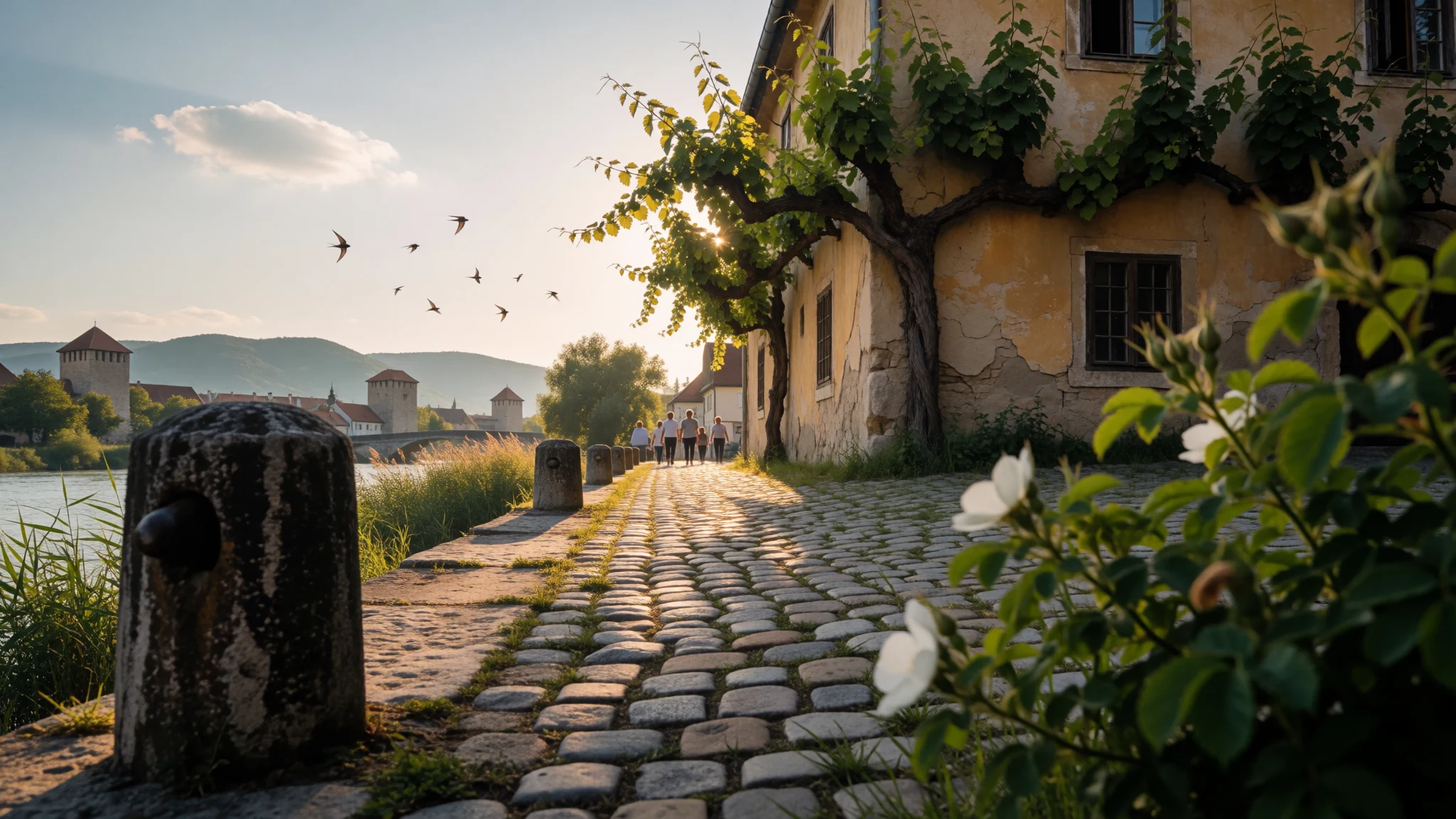
Maribor is a relaxed Slovenian river town where an old wine quarter, vineyard hills and a lively June festival sit within walking distance.
The place
Maribor lies on the Drava river in north-eastern Slovenia, near enough to the Austrian border that Graz is a short drive away. The city has a population of 114,301 and stands 273 m above sea level, which makes it modest by European standards but the main urban hub for the Lower Styria region and for eastern Slovenia. Courts, lecture halls, theatres and company offices for the whole area cluster here. The river shapes the centre. Along its bank runs Lent, the old waterfront quarter of towers, narrow houses and cafés, and in the water itself lies a small island that has held a public bathing place for a very long time. Behind the centre the ground rises into two hills, Calvary Hill and Pyramid Hill, both wrapped in vineyards. Pyramid Hill marks the northern edge of town and carries the remains of an early castle along with a nineteenth-century chapel. That mix of river, vines and tiled roofs gives Maribor its character: it feels like a working university town that happens to sit in wine country, rather than a place arranged around visitors. The University of Maribor was founded in 1975, and students keep the cafés and the riverside busy outside the summer festival season. Just outside the city, the Pohorje hills hold a ski area and a cable car, so a day can easily combine a riverside lunch with a walk or a lift into the woods.
Its story
Maribor first appears in the record as a fortress: a castle was mentioned in 1164, a settlement in 1209 and a town in 1254. People had been living in the surrounding area far earlier, though. Copper Age settlement traces turned up when the western bypass was built, and later Bronze Age and Iron Age communities left cemeteries and hill sites around the city. For the medieval centuries the land belonged to the Archbishop of Salzburg, and from 1555 the Habsburgs held it, so Maribor, long known by its German name Marburg, grew up as a border town of an empire that ran in German. That heritage still shows in the squares, church spires and café habits. The twentieth century was rougher. When the empire fell apart in 1918, the Slovene officer Rudolf Maister led the soldiers who took control of Maribor for the new South Slav state, which soon joined Serbia to form a kingdom later called Yugoslavia. During the Second World War the city was annexed by Nazi Germany, and afterwards it spent decades inside socialist Yugoslavia. Independent Slovenia arrived in 1991, and Maribor became one of its principal cities. In 2012 it shared the title of European Capital of Culture with Guimarães in Portugal, a recognition of the theatre, music and festival life that the city had built up.
What to see
- Lent and the Old Vine — Lent, Drava waterfront
Lent is Maribor's riverside old quarter, and its best-known resident is a vine growing on the front of the Old Vine House, which Guinness World Records has certified as the world's oldest. Nearby are two defensive towers, the synagogue and the Drava embankment, good for an unhurried hour towards sunset.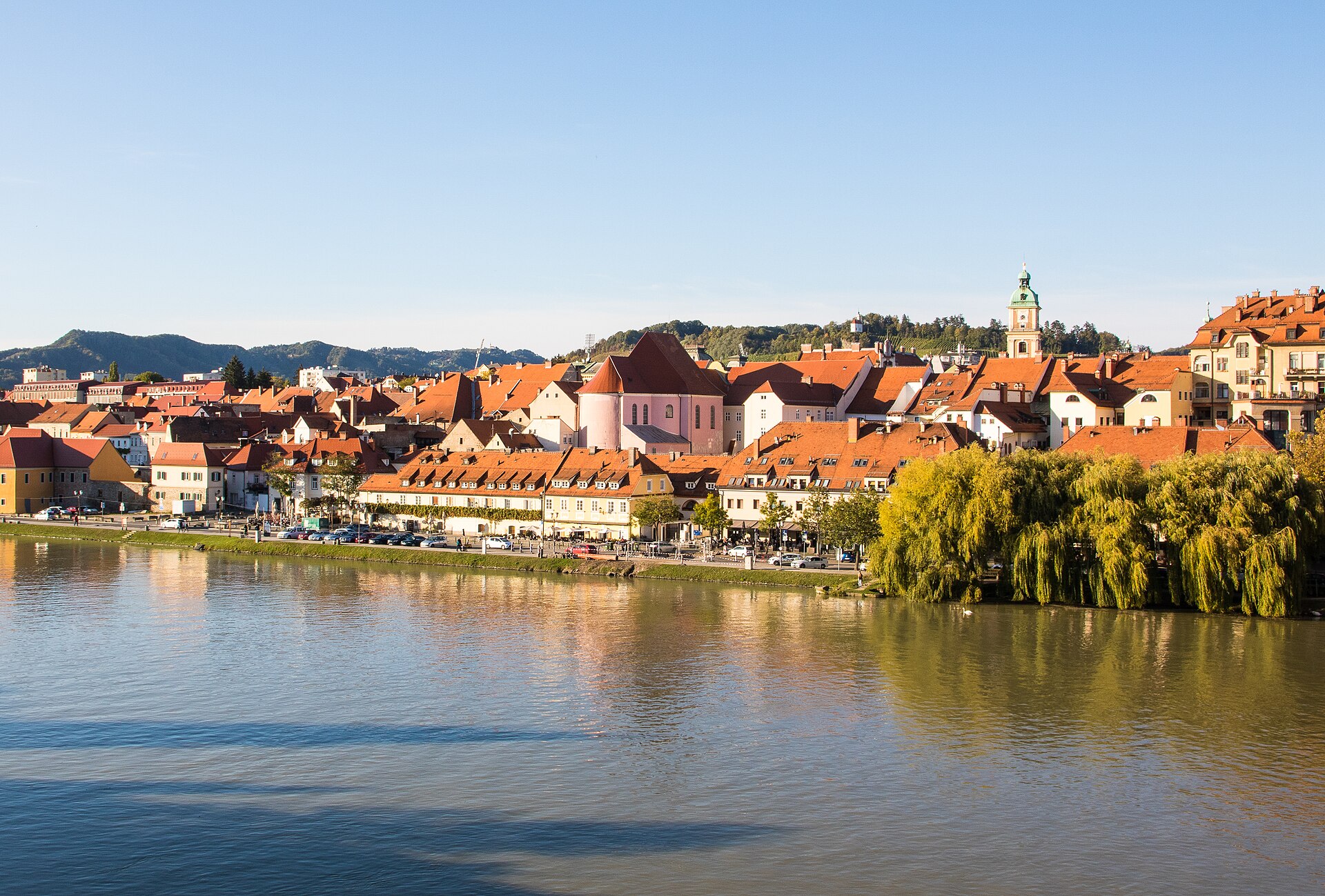
- Vinag Wine Cellar — Central Maribor
Maribor's Vinag cellar runs for about 2 km and can hold around 5.5 million litres of wine, which says a lot about how central the vine is to the city. Visits and tastings need planning, so check the city website, https://maribor.si/, for current arrangements before heading over. - Slomškov Square and the cathedral — Western old town
Slomškov Square, in the western part of Maribor's old town, is one of the calmer corners of the centre. The cathedral stands here, and the square suits a slow stop between the busier waterfront and the main streets, with a coffee nearby and little traffic noise.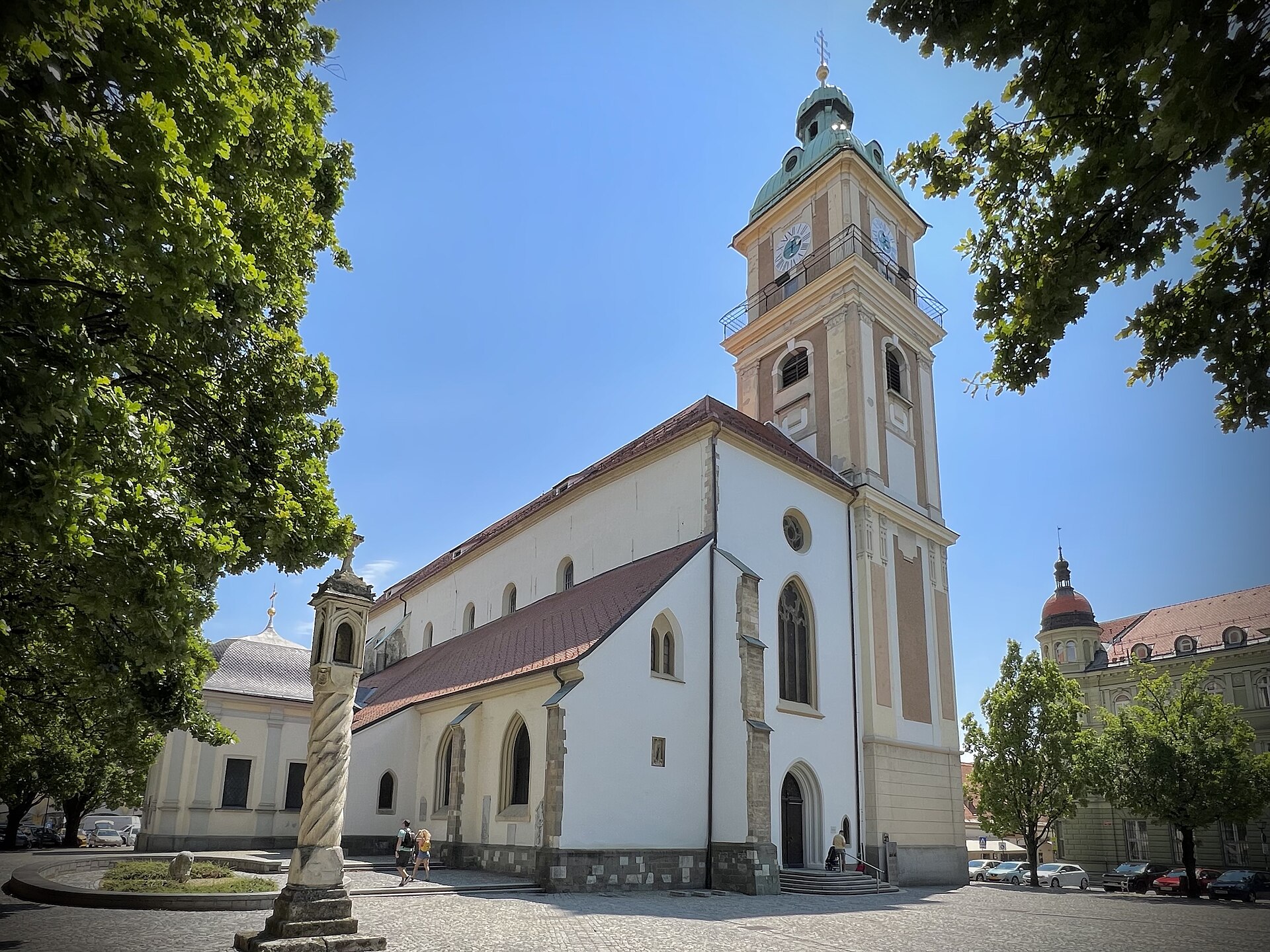
- Grajski trg — City centre
Grajski trg, or Castle Square, sits in the middle of Maribor and works as a handy base for exploring on foot, since most of the central sights lie within a short walk. Cafés and hotels line it, and it is a good place to get oriented on a first morning.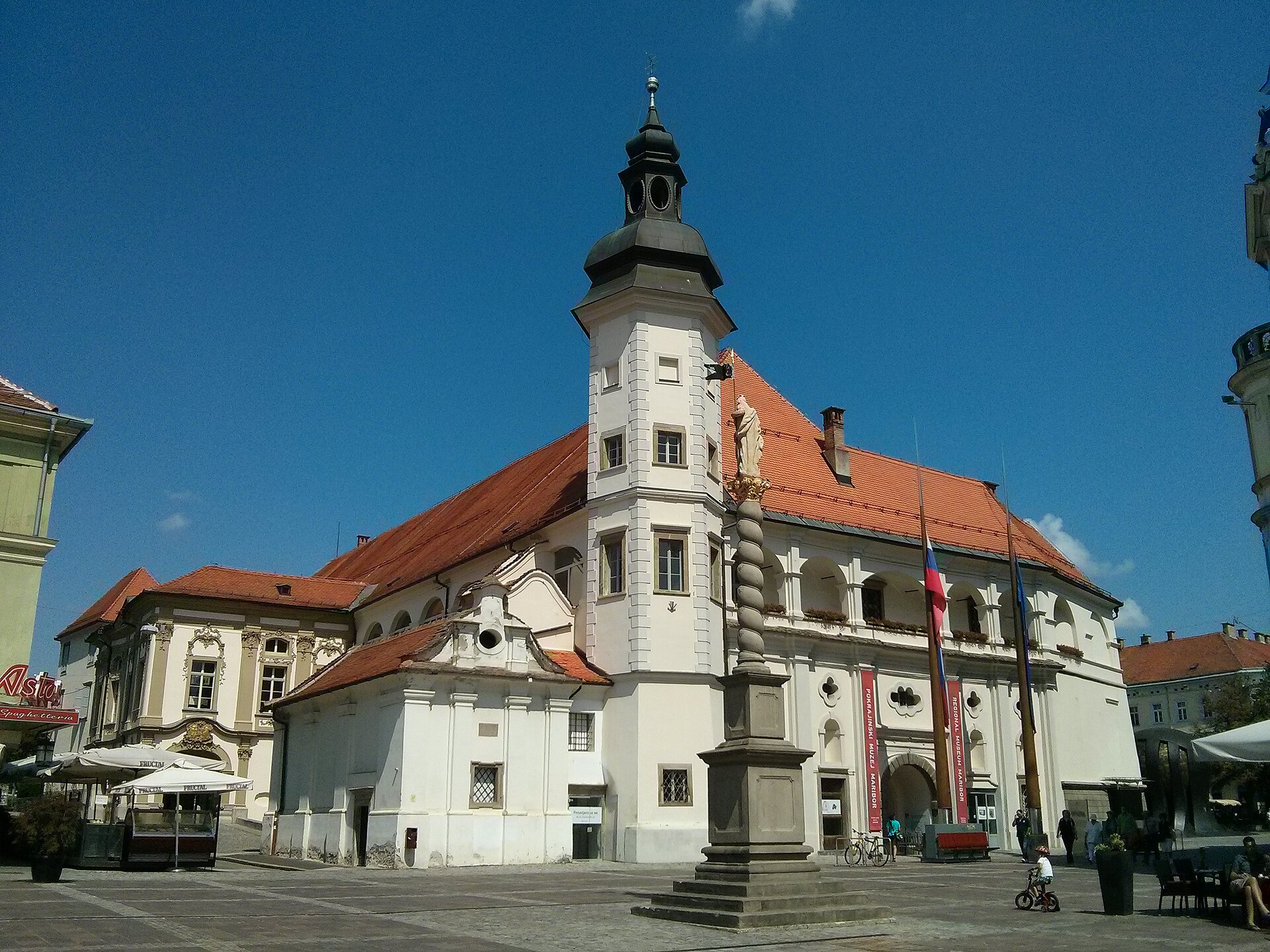
- Pyramid Hill — Northern edge of Maribor
Pyramid Hill rises above the northern edge of Maribor, with vineyards on its slopes, the ruins of an 11th-century castle and a 19th-century chapel. Walking up rewards with views over the roofs and the Drava. Wear proper shoes, as paths can be steep and muddy after rain.
Culture
Maribor is a university city and a wine city, and its culture shows both. The biggest event is the Lent Festival, held every June over two weeks, with hundreds of concerts, theatre shows and other performances in and around the waterfront quarter that gives it its name. Classical, jazz and modern music share the programme with dance, opera and street events, and the old town fills with people late into the evening. Outside June, the rhythm is calmer: students, coffee-house regulars and families set the pace, and the cafés around the main squares are social rooms where people linger. Wine matters here as a tradition rather than a tourist product. The Lower Styria hills around the city are planted with vines, the Old Vine House acts as a showcase and tasting point for the local wine area, and many people have a cellar, a relative with a vineyard or a favourite grower. Slovene is the language of daily life, and German is also widely understood in a region so close to Austria. A few words of Slovene, such as 'hvala' for thank you, are noticed and appreciated. At a wine tasting or a meal, wait for the host to raise the first glass, say 'Na zdravje' (cheers) as glasses meet, and pace yourself, since pours are generous and tasting measures are meant to be sipped.
What to wear
Maribor and the wider Styrian region have a folk costume tradition shared with neighbouring Austria and other Slovene regions. Women's outfits typically combine a fitted bodice, a full skirt, an apron and a white blouse, while men's dress features a waistcoat, a jacket and a hat, often in wool, loden or linen. Today these clothes mostly appear at folk festivals, brass band parades, weddings and wine-harvest celebrations rather than on ordinary days. Everyday dress in Maribor is practical and smart-casual: jeans, jackets, trainers and, in winter, proper coats and boots. Students and cyclists give the centre a relaxed look, and people dress up a little for the theatre, festival evenings or a good restaurant, without being formal. A visitor should pack for variable weather, with layers that cope with warm summers and cold winters, plus a light rain jacket. Comfortable, closed shoes matter more than anything else, since the old town has uneven paving and a walk up Pyramid Hill or through vineyards can be steep and muddy. Churches and the cathedral do not require special clothing, but covering bare shoulders and knees is a courteous choice when going inside. In ski season on Pohorje, bring waterproofs, gloves and a hat.
What to eat
- Mushroom soup with buckwheat mush — Traditional inns and local restaurants in the centre
A hearty soup of forest mushrooms served with a spoonful of buckwheat mush, a dish that reflects the region's inland, farmland kitchen. It is filling and especially welcome on cold days after a walk in the hills. - Sausages with sauerkraut — Traditional inns and lunch spots
Grilled or boiled sausages served with tangy sauerkraut, a plain and satisfying plate shared with neighbouring Austria. Expect it as a lunch staple, often with mustard, bread and a glass of local white wine. - Cheese dumplings — Local restaurants serving Slovene home cooking
Soft dumplings filled with cheese, a comforting, simple dish found on traditional menus around Lower Styria. They suit vegetarians and make a good lighter meal before a long evening of festival events. - Gibanica — Coffee houses and confectioners in the old town
A layered cheese cake, typically sweet, rich and filling. It is one of the signature desserts of Slovenia and appears on menus across Maribor. Order a slice with coffee in the afternoon. - Ćevapčiči — Grill eateries with a Balkan menu
Small grilled minced-meat sausages from the Balkans, served with flatbread and onions. They show the city's links with the wider region and are an easy, inexpensive meal for anyone short on time.
Plan it
Best time. May–June and September–October. Late spring and early autumn are mild and green, June brings the two-week Lent Festival, and early autumn is harvest time in the surrounding vineyards. Winters are cold, which suits the Pohorje ski slopes more than city strolling.
How long. 2–3
Getting there. Fly into Ljubljana or Graz and continue by road; Maribor is reached from Ljubljana on the A1 and from Graz on the A9. Rail services also run to the city, so check current timetables. The old town is compact and walkable from the main streets.
Budget. mid
Tips
- If you drive, you need a motorway vignette, sold at borders, petrol stations and post offices
- Book accommodation early for the June Lent Festival, when the centre fills up
- Check the city website, https://maribor.si/, for wine tasting and cellar visit arrangements
- Bring comfortable shoes for cobbles and vineyard paths
- Cards are widely used, but carry some cash for small cafés and market stalls
Etiquette
- Greet shop and café staff with a simple hello before ordering
- Wait for the host's toast before drinking at a wine tasting
Nearby
Sources
- Wikidata Q1010 (CC0)
- Wikipedia: Maribor (CC BY-SA 4.0)
- Wikivoyage: Maribor (CC BY-SA 4.0)
- Photo: Maribor, Slowenien (Ralf Roletschek) (CC BY-SA 1.0 fi)
- Photo: Mariborski Glavni trg (Vlada Republike Slovenije) (Public domain)
- Photo: Franciscan Church of St Mary Mother of Mercy (Plamen Agov) (CC BY 3.0)
- Photo: University of Maribor, main building (Public domain)
- Photo: Stolna župnija Maribor cathedral (Sharon Hahn Darlin) (CC BY 2.5)
- Photo: Grajski trg (Miha Kukovec) (CC BY 3.0)
- Photo: Drava river and Lent in Maribor Slovenia (Jernej Furman) (CC BY 2.5)
- Photo: Statt Marchburg (Georg Matthäus Vischer) (Public domain)


