Piran
Piran, Slovenia
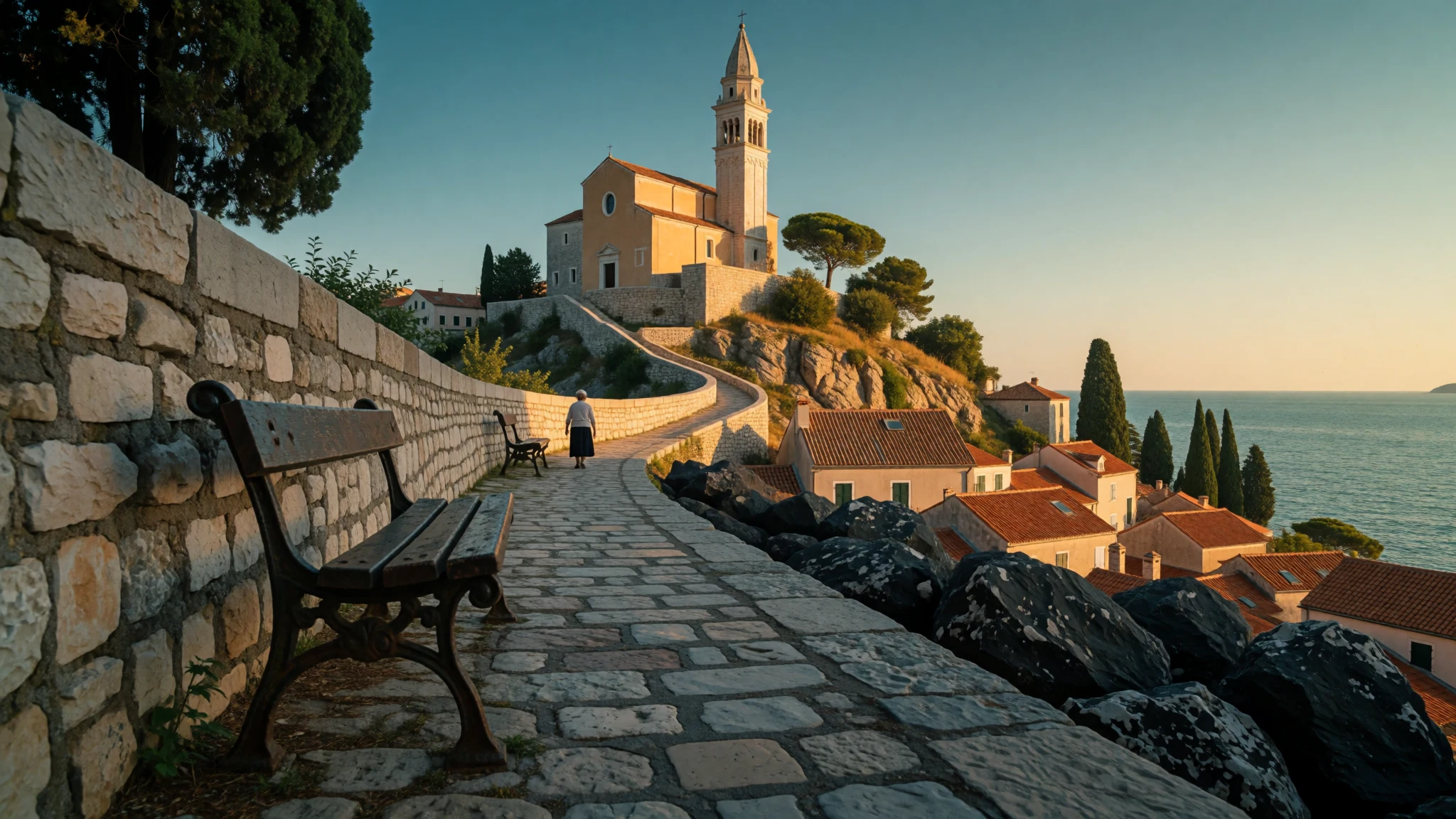
Piran is a compact Venetian-flavoured port on a Slovenian peninsula, where lanes, a sea-facing square and Adriatic seafood fit into a day.
The place
Piran sits at the tip of a small peninsula on the Gulf of Piran, in the Slovenian corner of Istria, and the sea is never far from any lane. The old town is dense and compact: narrow streets, tall houses pressed shoulder to shoulder, and little squares that open suddenly onto water. With a population of about 3,800 and a position only a few metres above sea level, everything is walkable and the pace is set by feet, not traffic. Slovene and Italian are both spoken, and street signs, names and conversations often slide between the two. That Italian side is no accident, because the town spent centuries under Venice and still looks the part. The climate is humid subtropical: summers are warm and sometimes properly hot, winters are cool and rainy, snow is rare and fog turns up on only a handful of days, mostly in winter. Along the coast to the east, the small settlement of Fiesa is linked to Piran by a beach promenade, and the adjacent resort of Portorož lies the other way. Piran is busy in high summer, especially at weekends, when day visitors fill the waterfront and the main square. The lanes behind are quieter, and early morning and evening are the best times to see the town without a crowd. Anyone expecting wide sandy beaches should adjust expectations: bathing here is mostly from concrete platforms and rocky edges.
Its story
Piran's story begins with the sea and the rock it stands on. Before Rome arrived, the hills around the peninsula were home to Histri tribes, who farmed, hunted and fished, and who raided shipping in the northern Adriatic often enough to trouble Roman traders. Rome absorbed the area and scattered it with farm estates. As Roman authority faded and new peoples pushed into the region, communities pulled back to places that were easy to defend, such as islands and peninsulas, and that retreat marked the start of Piran as a town. Under Byzantine rule it was heavily fortified. Later the Franks took Istria, Slavs settled in the surrounding land, and the town was eventually drawn into the Holy Roman Empire. The name probably comes from the Greek word for red, pyrrhos, a nod to the reddish flysch rock of the district; some historians prefer pyros, meaning fire, and link it to ancient beacons at the harbour's edge. The defining chapter was Venetian rule, which lasted for centuries until the Republic itself collapsed at the end of the eighteenth century. Piran was run with a fair degree of local independence, a council of local nobles working alongside a Venetian representative. The Gothic façades, the old harbour turned into a square and the copy of Venice's campanile all come from that long association, and they explain why the town feels closer to the Veneto than to the Alpine interior of Slovenia.
What to see
- Tartini Square — Old town centre
Tartini Square is Piran's main gathering place, an oval of pale stone paving laid over what used to be the inner harbour after it silted up. A bronze of the violinist Giuseppe Tartini stands at its centre, with cafés and Venetian-style façades around it. It is the easiest place to get oriented.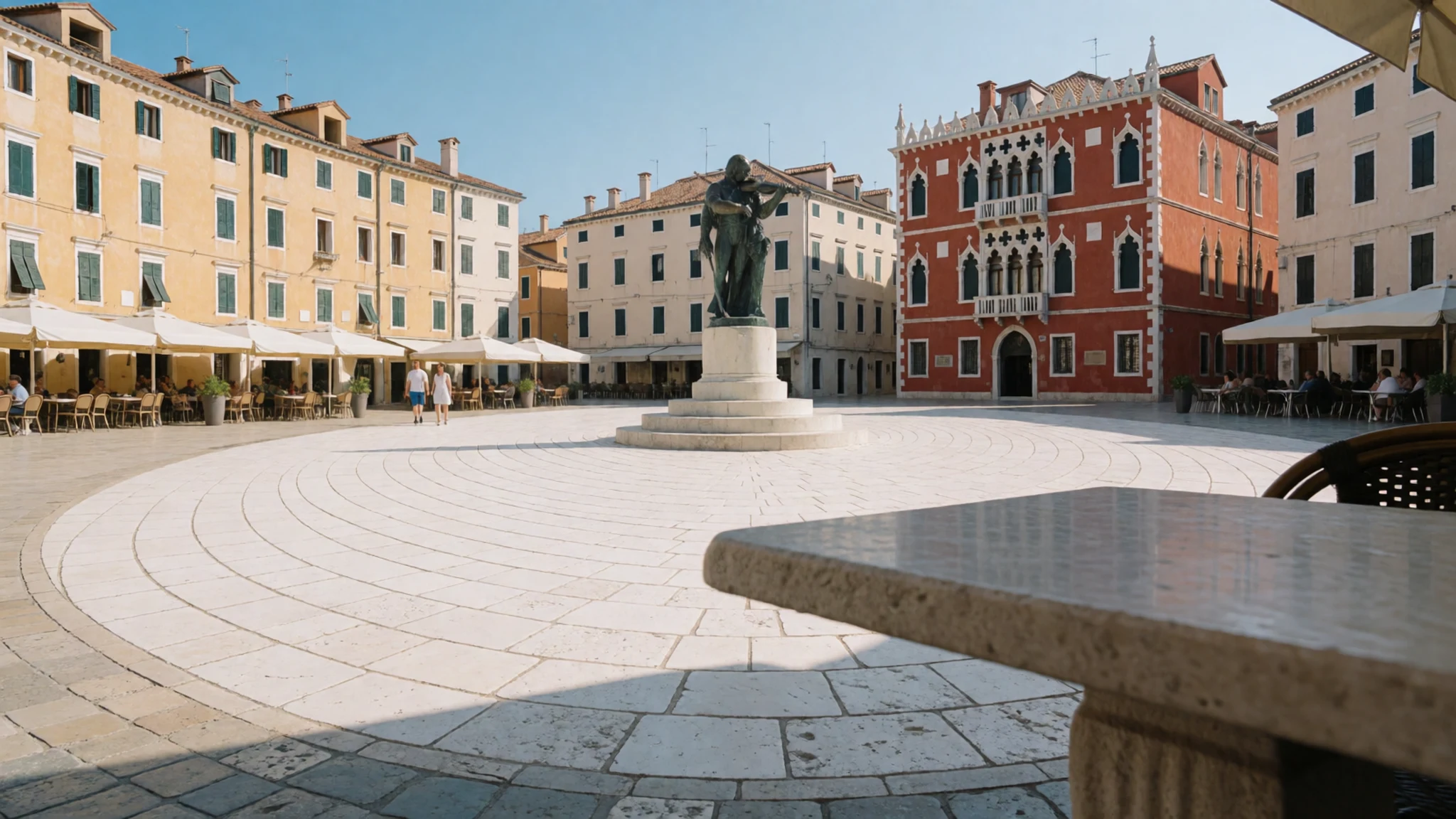
- Venetian House — Tartini Square
The Venetian House stands on Tartini Square, its red façade a clear example of Gothic Venetian building and among the older structures around the square. The details reward a slow look from across the piazza, and it shows plainly how closely Piran's architecture follows Venice, the city that governed it for centuries.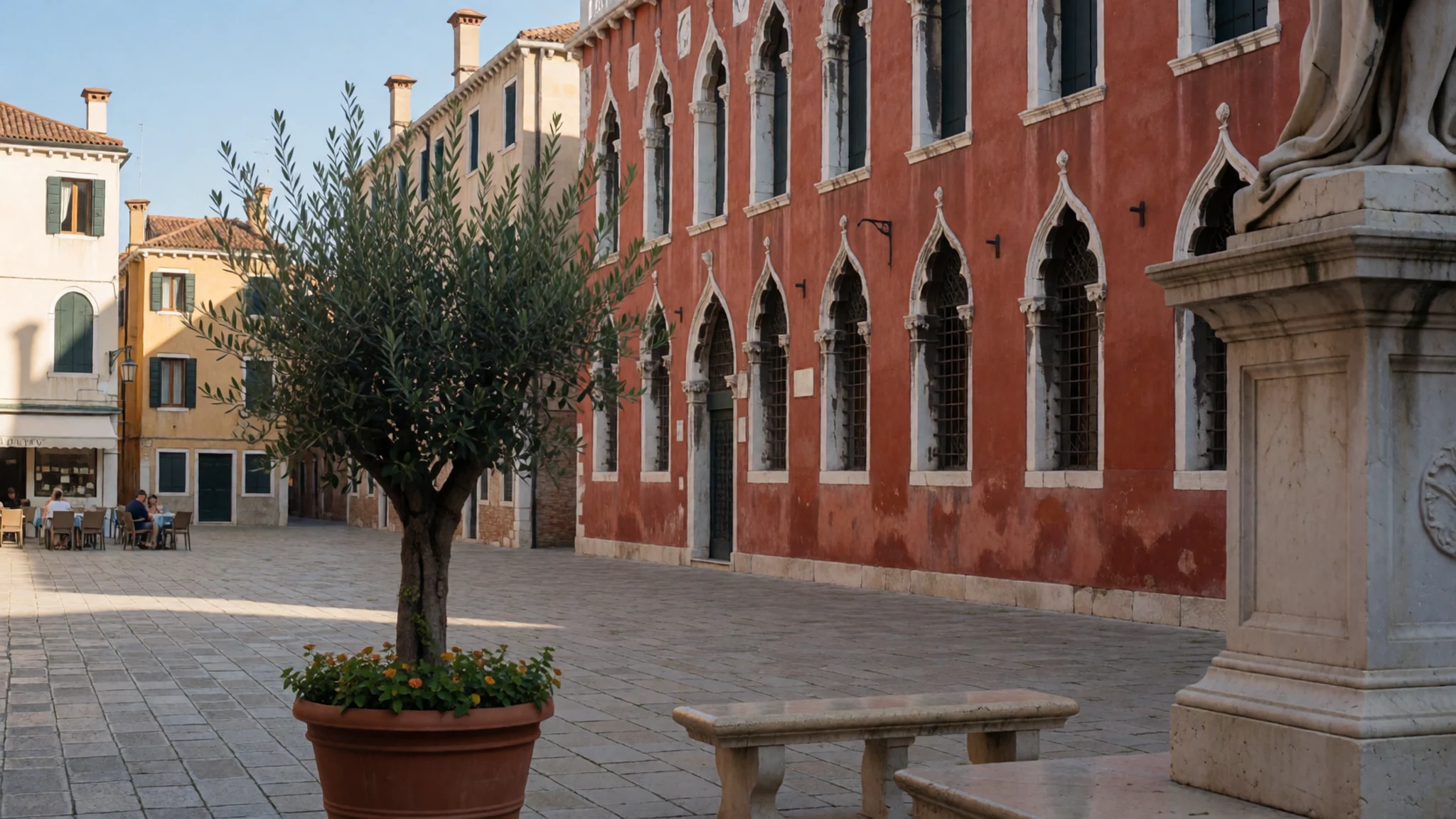
- Sergej Mašera Maritime Museum — Waterfront
The Sergej Mašera Maritime Museum occupies a historic palace close to the waterfront and tells the story of Piran's seafaring life and maritime culture. It is a good choice for a hot midday or a wet day. Check the official site for opening times and tickets before going.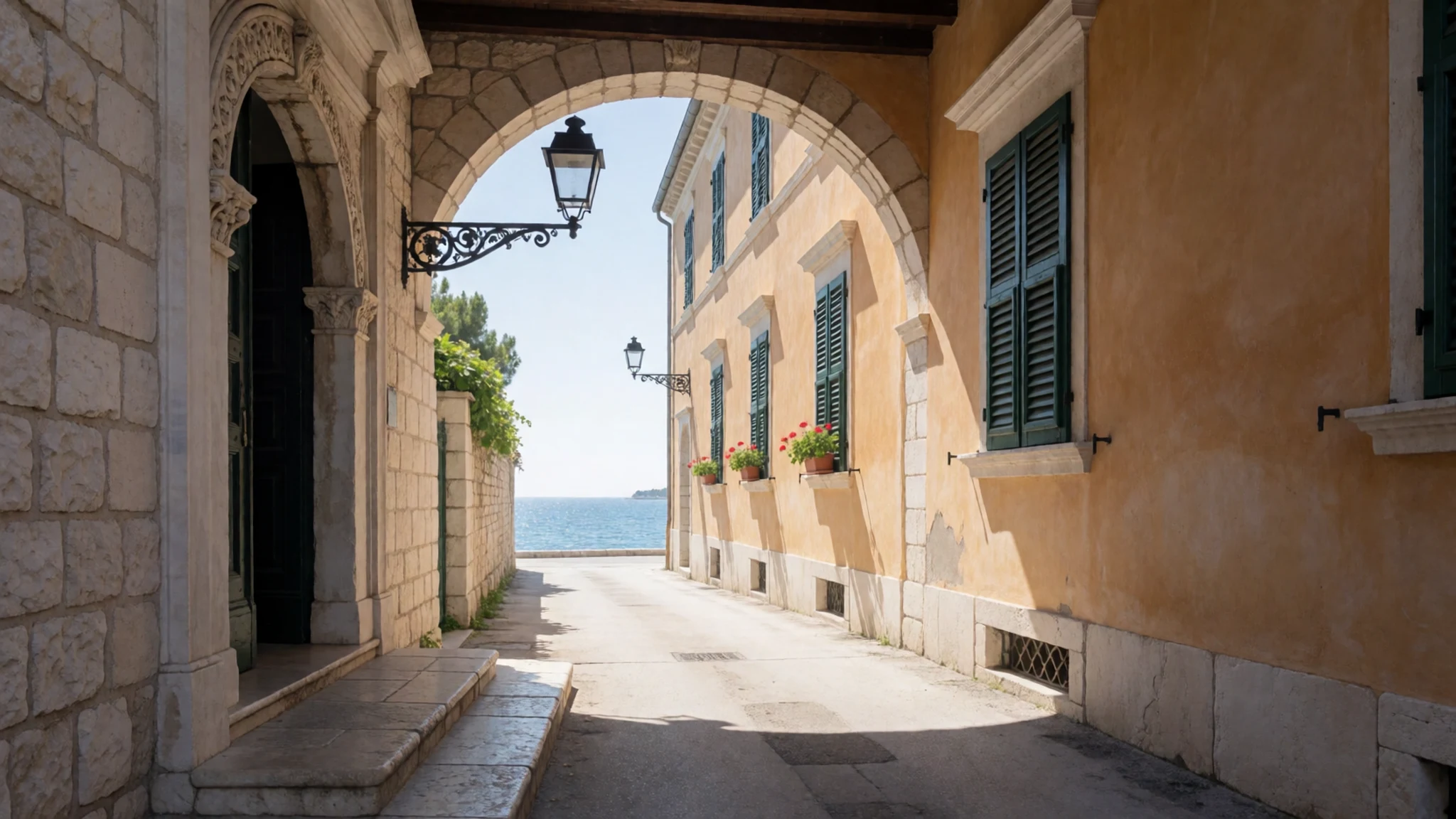
- Church of St George — Hilltop above the old town
The Church of St George crowns the hill above the old town, built in Venetian Renaissance style. Its terrace gives views over the rooftops and out to sea. Outside service hours the interior is often seen only through a gate, so treat the church as a viewpoint first. The climb from the harbour is uphill but short.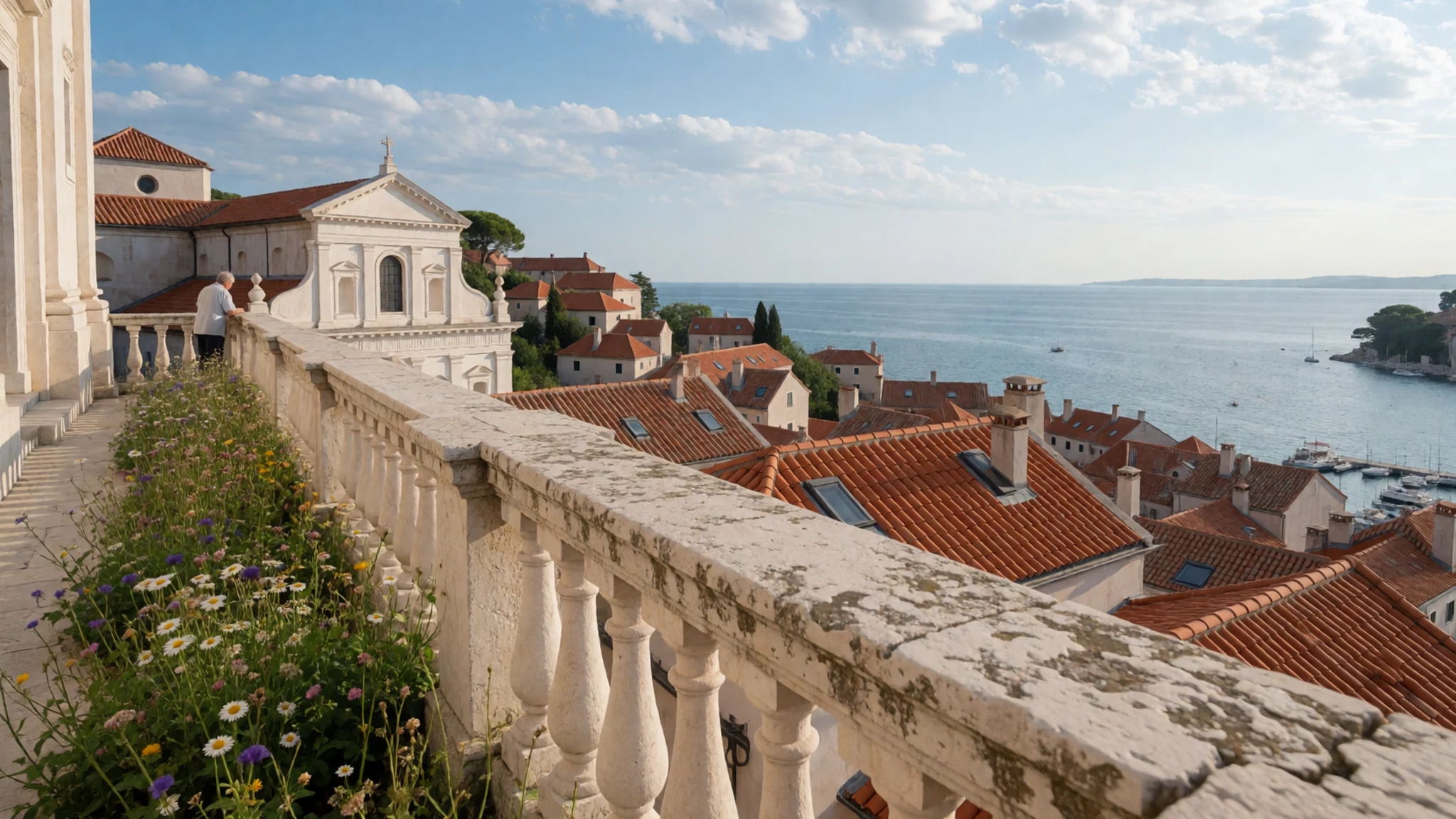
- Bell tower — Beside the Church of St George
Next to St George's, the bell tower is a faithful copy of the campanile of St Mark's in Venice, a reminder of who ran Piran for centuries. Access varies, so ask locally or check the official site; even from below it works as a landmark visible from the lanes and the sea.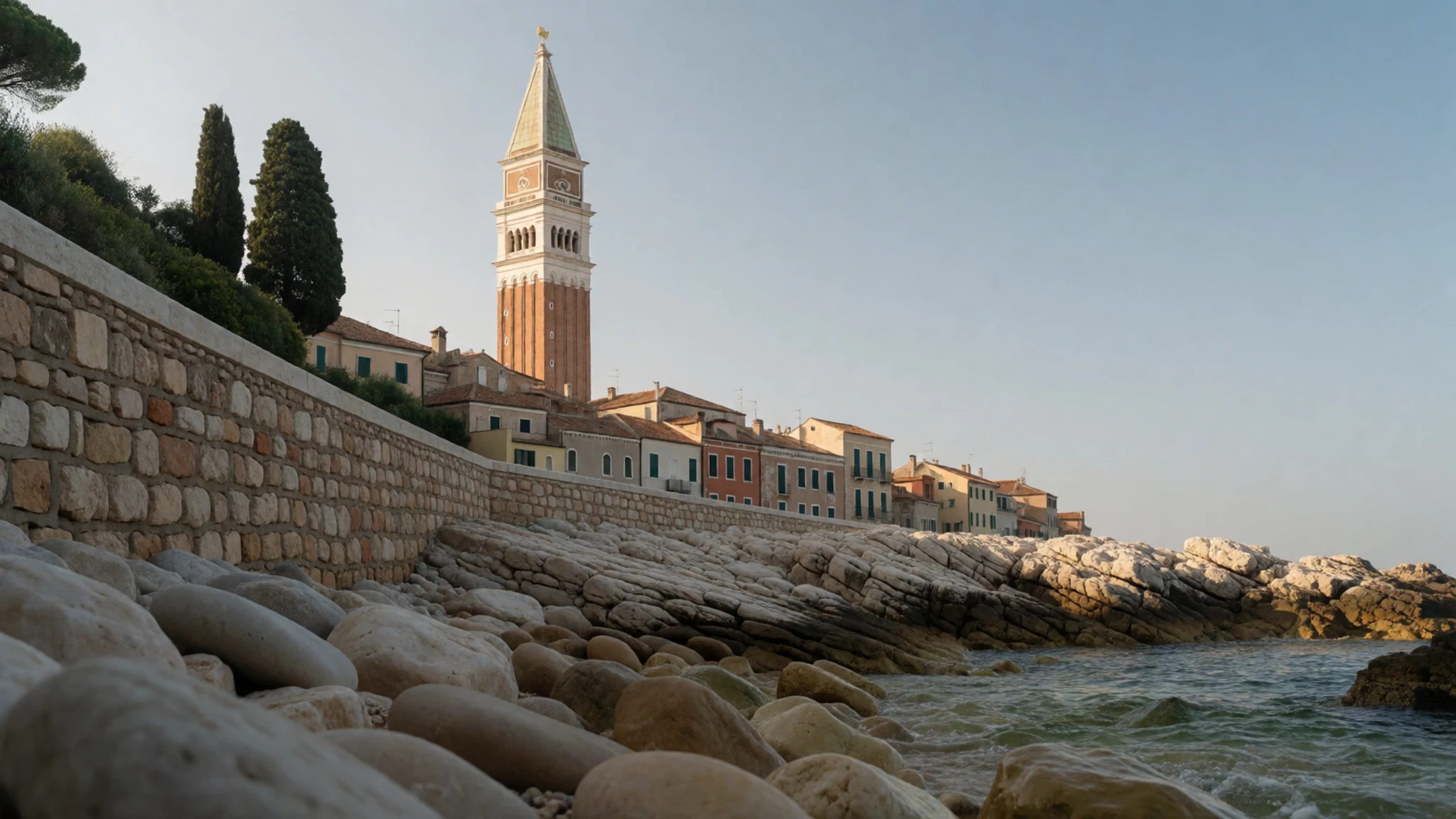
Culture
Piran's cultural identity rests on two languages and one famous son. The town is bilingual, Slovene and Italian, and the Italian presence is part of daily life, visible in street names, in local speech and on the table. Giuseppe Tartini, the Italian composer and violinist, was born here, and the central square carries his name in both languages: Tartinijev trg in Slovene, Piazza Tartini in Italian. A larger-than-life bronze statue by the Venetian sculptor Antonio Dal Zotto looks over the square, with the cathedral of St George on the hill above. Music is part of the town's self-image, so it is worth checking local listings for concerts in churches and courtyards. Beyond music, the town's character comes from the sea: salt, fishing, boats in the inner harbour and the habit of sitting out on the waterfront as the light fades. Piran welcomes visitors in season, but the old town is also a residential neighbourhood where people sleep, work and raise children, not an open-air museum. Evenings are the best time to feel that ordinary rhythm, when the day crowds thin and locals reclaim the benches and cafés. Keep your voice low in the narrow lanes at night, because windows open straight onto them, and cover shoulders and knees before stepping into a church.
What to wear
Piran has no single costume that visitors will see on the street. Older dress along the Istrian coast and its villages was practical, built from wool, linen and cotton for fishing, farming and salt work, with headscarves and aprons for women and dark waistcoats and caps for men. Slovene folk costume may appear at festivals and church events, but it marks an occasion and is not everyday wear. Today people dress as in any Mediterranean port: linen and cotton in summer, light layers and a waterproof in winter, with striped sailing-style tops and canvas shoes common near the harbour. Smart-casual is normal for dinner on the waterfront. For visitors, summer means a sun hat, sunglasses, sunscreen and breathable cotton or linen. Polished stone lanes and steep steps get slippery, so shoes with grip beat smooth-soled sandals, and the climb to the hilltop church rewards proper walking shoes. Bathing here is from rocky edges and platforms, so water shoes help. Swimwear belongs on the shore, not in the lanes or restaurants. Churches expect covered shoulders and knees, so carry a light scarf or shirt. In winter, the wind off the water makes a jacket useful even on bright days.
What to eat
- Grilled whole fish — Waterfront restaurants along Prešernovo nabrežje
Fish grilled simply and served with olive oil, lemon and boiled vegetables such as chard and potatoes. Ask what was caught locally. Look for it at the waterfront restaurants along Prešernovo nabrežje, where tables face the sea and the menus are broadly similar.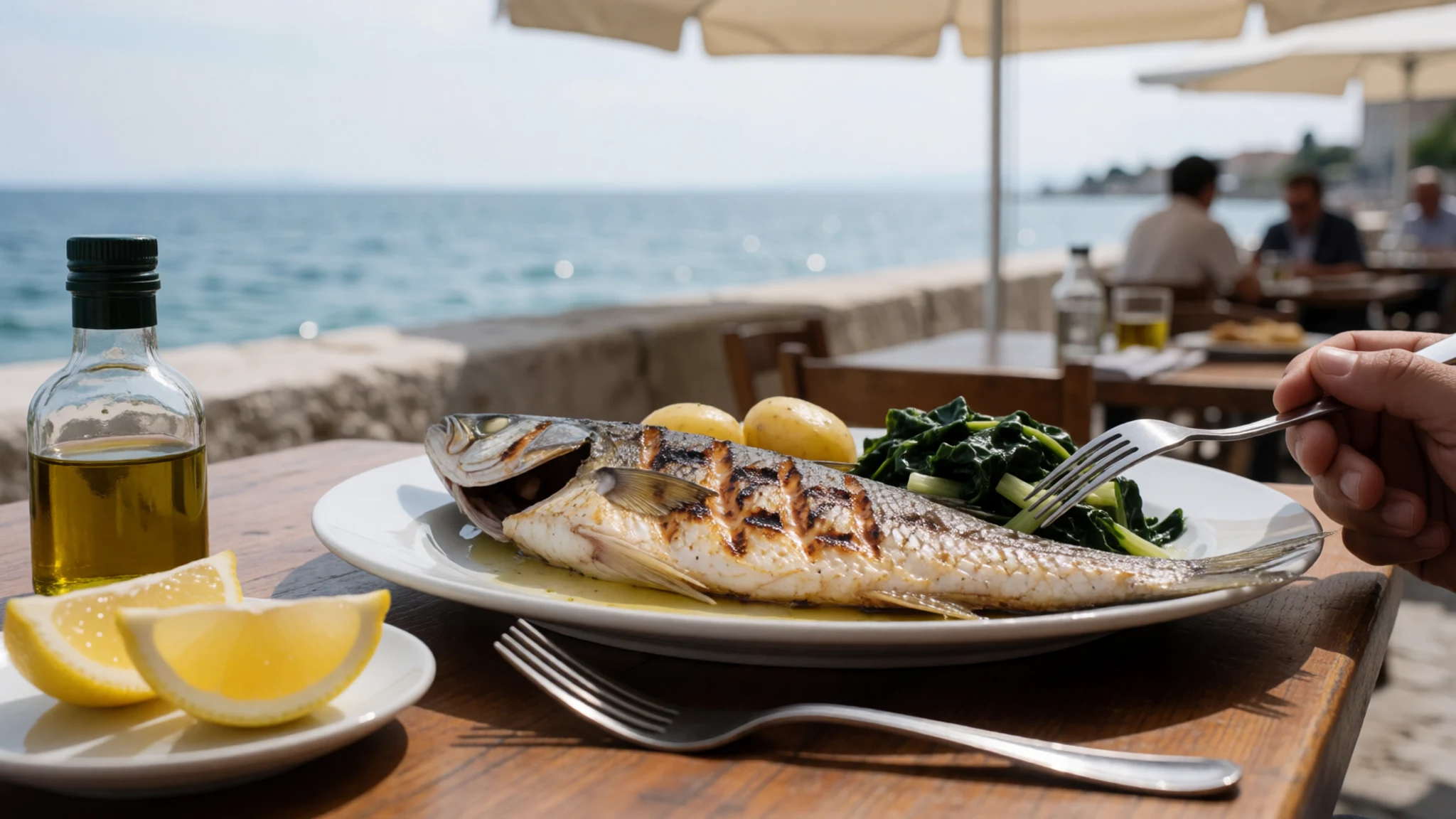
- Fried or grilled squid — Small seafood restaurants one street back from the harbour
Squid and other shellfish are staples of the Slovenian coast, usually fried in a light coating or grilled. Small seafood-specialist restaurants one street back from the harbour are often quieter than the front row and a good place to try it.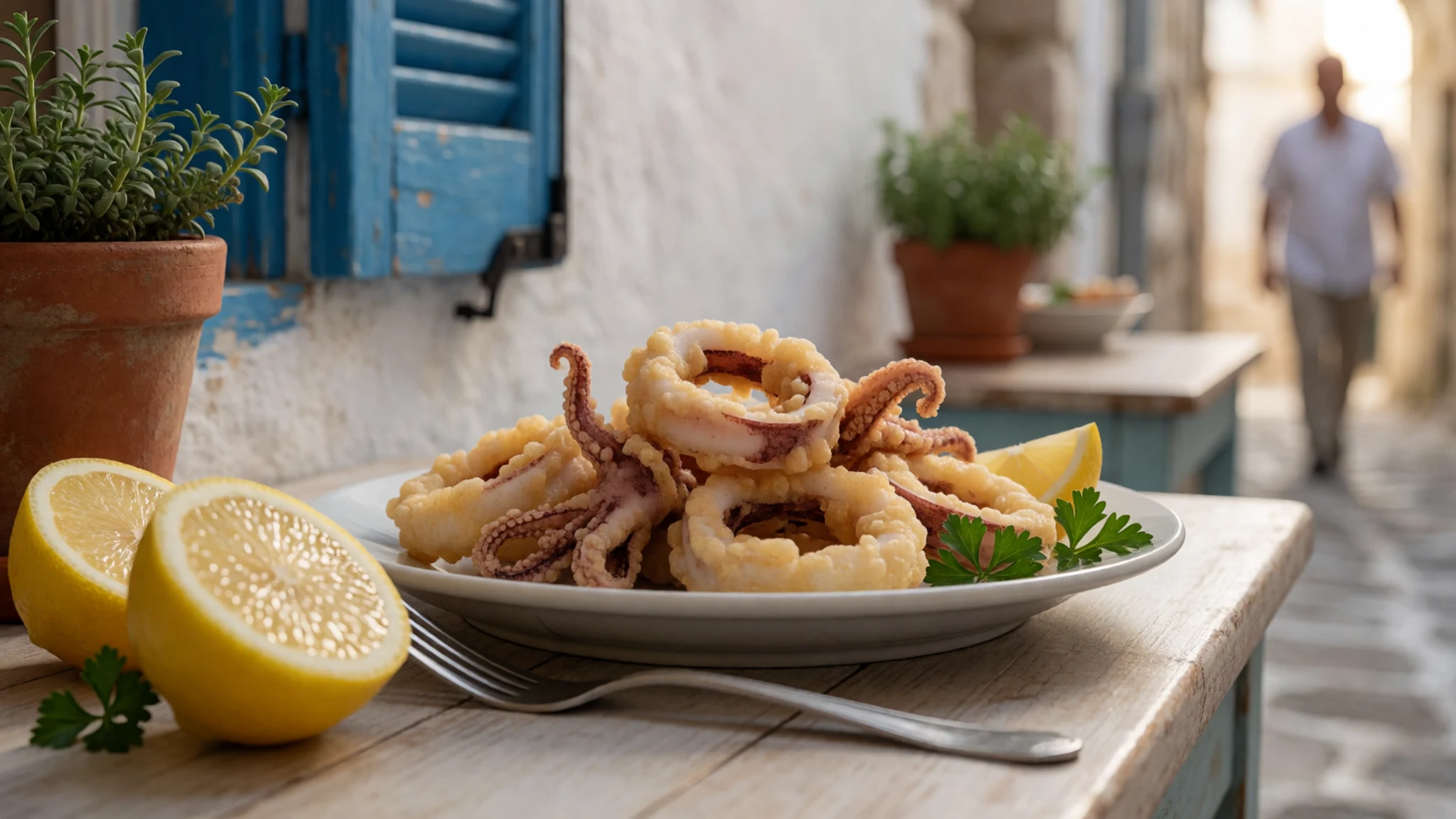
- Black cuttlefish risotto — Seafood restaurants near the inner harbour
Rice cooked in cuttlefish ink until it turns glossy black, an Adriatic classic with Italian roots. It is rich and briny, best shared as a starter. Seafood restaurants around the inner harbour and in the lanes behind the main square serve it. - Fuži with a rich sauce — Traditional gostilna restaurants
Fuži are hand-rolled pasta twists from Istria, usually dressed with a slow-cooked meat or seafood sauce. They show the inland side of the region's cooking. Try them at a traditional gostilna, a local inn-style restaurant, in town or in the hinterland. - Malvazija wine and olive oil — Wine bars and shops in the old town
Malvazija is a crisp white wine of Istria that suits fish, and the region's olive oil is worth tasting with bread. Order a glass with lunch on the waterfront or ask for a local bottle at wine bars and shops in the old town.
Plan it
Best time. Late May–June and September–early October, when days are warm, the sea is swimmable and the crowds are thinner than in July and August, which are hot and busy. Winters are cool and rainy, and many seasonal services slow down, though the old town is calm and atmospheric.
How long. 1–2
Getting there. The nearest airport is Portorož, close to the Croatian border, but it has few international connections, so many visitors fly into a larger airport and continue by road. There is no rail service to Piran; the nearest station is Koper, with frequent buses onward. Buses also run from Ljubljana roughly hourly and from Trieste, and in summer boats link Piran with Trieste and Venice. A free shuttle runs from Portorož. Check current timetables online before travelling.
Budget. mid
Tips
- Visit the main square and waterfront early in the morning or after the day visitors leave, especially in July and August
- Book summer accommodation well ahead; renting a private room in a local home is a common alternative when places fill up
- Carry a little cash as well as a card, since small cafés and stalls may prefer it
- Bring water, a hat and sturdy shoes for the climb to the hilltop church
Etiquette
- Cover shoulders and knees before entering a church
- Keep noise down in the lanes at night, as people live above them
Nearby
Sources
- Wikidata Q1382 (CC0)
- Wikipedia: Piran (rev 1385076003) (CC BY-SA 4.0)
- Wikivoyage: Piran (rev 5386029) (CC BY-SA 4.0)
- Piran old town — Isiwal (CC BY-SA 4.0)
- Piran, Slovenia, Viewpoint — Etienne O. Dallaire (CC BY 4.0)
- Piran Town Hall — Marco Almbauer (CC0 1.0)
- Piran (39) — János Korom Dr. (CC BY-SA 2.0)
- Piran Marije Zdravja sv Klementa lighthouse — Isiwal (CC BY-SA 4.0)
- Piran's Harbour at Night — Etienne O. Dallaire (CC BY 4.0)
- Piran, Slovenia — Anna & Michal (CC BY 2.5)
- The Harbour at Pirano, Istria — Leo von Klenze (Public domain)


