Postojna Cave
Postojna Cave, Slovenia
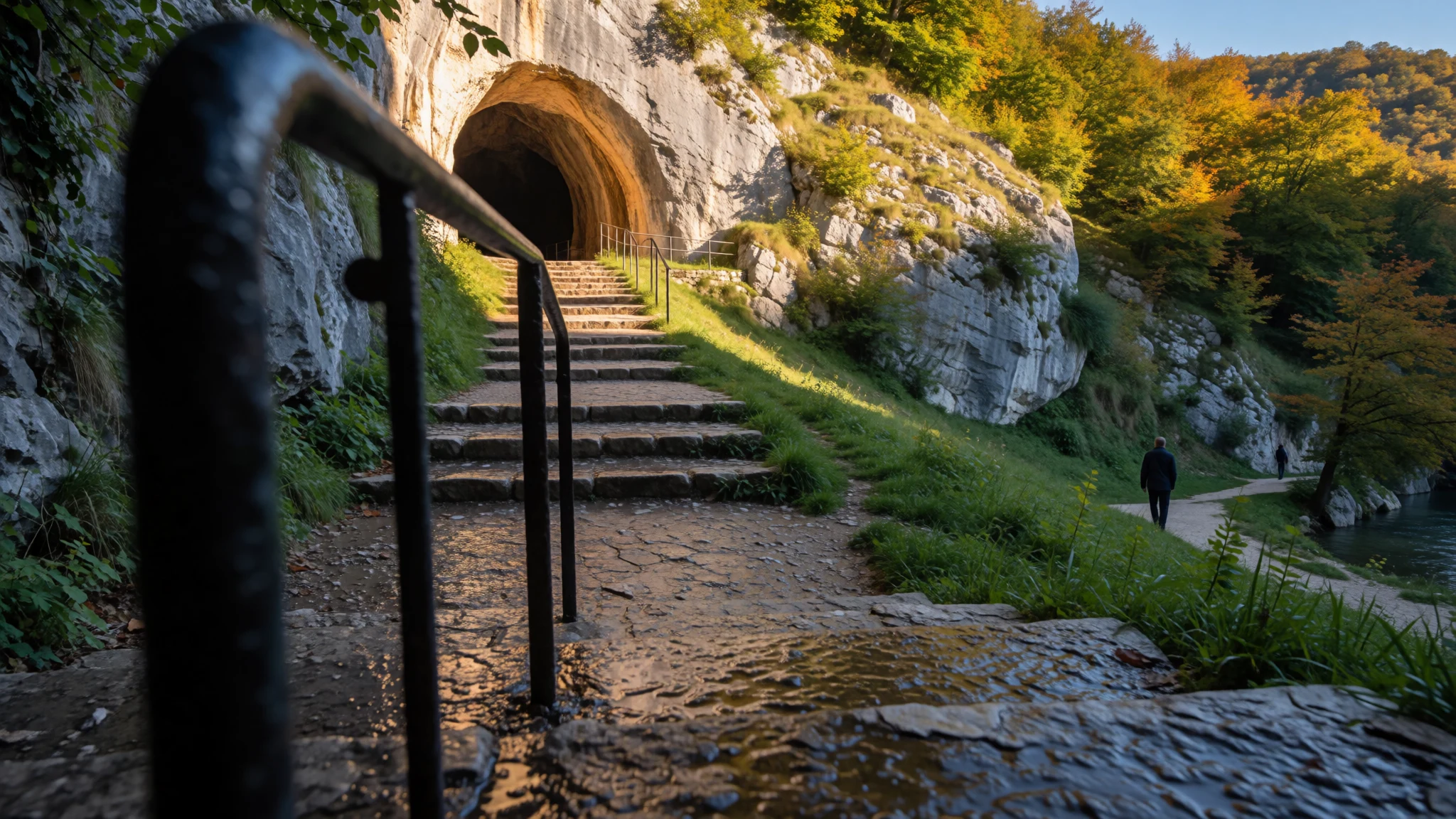
Postojna Cave is a vast limestone underground world in Slovenia, where a small train carries visitors past towering stalactites and stalagmites.
The place
Postojna Cave (Slovene: Postojnska jama; German: Adelsberger Grotte; Italian: Grotte di Postumia) lies beside the town of Postojna in southwestern Slovenia, on the limestone plateau known as the Karst. The three names hint at a border region that has belonged to several states over the centuries. Beneath the plateau, the Pivka River spent an immense stretch of time dissolving and carving rock, leaving a labyrinth of galleries, halls and passages that adds up to about 24.34 km (15.12 mi). Only part of that is open to visitors; the rest belongs to cavers and scientists.
This is classic karst country. Rainwater slowly eats into limestone, rivers vanish into sinkholes, and whole landscapes turn out to be hollow underneath. The very word karst is tied closely to this corner of Europe, and Postojna is one of the places where the idea was first studied. Wikidata classes the site as a show cave, a solutional cave and an archaeological site, which sums it up well: a natural wonder that people have been entering for centuries.
It is also one of Slovenia's busiest tourist sites, and that deserves an honest word. Summer weekends and school holidays fill the tours, the car park and the cafés, and the entrance queue can eat into the morning. Below ground the air stays cool and damp whatever the weather outside, and the paths can be wet. The town of Postojna is small and mostly a gateway. Ljubljana and the Adriatic coast are both an easy day trip away, which makes the cave a natural stop between them.
Its story
Postojna Cave was a place people entered long before it became an attraction. Graffiti scratched inside is dated 1213, so local people were walking into the dark centuries before anyone thought of tickets. In the 17th century the scholar Johann Weikhard von Valvasor described the cave in writing, an early step in what became the study of karst.
The modern chapter began in 1818. The cave was being readied for a visit by Francis I, the first Emperor of Austria, when Luka Čeč, the local man whose job was lighting the lamps, came across a section nobody had known about. The following year Archduke Ferdinand visited, the cave became officially known as a destination, and Čeč took on the role of its first guide.
Science followed the visitors. In the 1850s the Austrian-Czech geographer Adolf Schmidl published the first thorough survey of the Postojna caves and the surrounding Pivka Basin, and it became a standard reference for speleology. Comfort improved too. Rails and a cave train for tourists arrived in 1872, and electric lighting was installed in 1884, ahead of Ljubljana, the capital of Carniola, the province the cave then belonged to.
Through all this the region sat inside the Habsburg realm, until 1918, when the Slovene lands joined a new south-Slavic state. The cave's long tradition of organised visiting is a legacy of that imperial era, and the railway still carries the idea forward.
What to see
- The cave train — Cave entrance, Postojna
Postojna Cave is entered by a small train, a tradition dating back to the 1870s. It runs for roughly 5.3 km through the passages before the walking section begins. The ride is the quickest way to grasp the scale, and it saves tired legs for the longer halls beyond.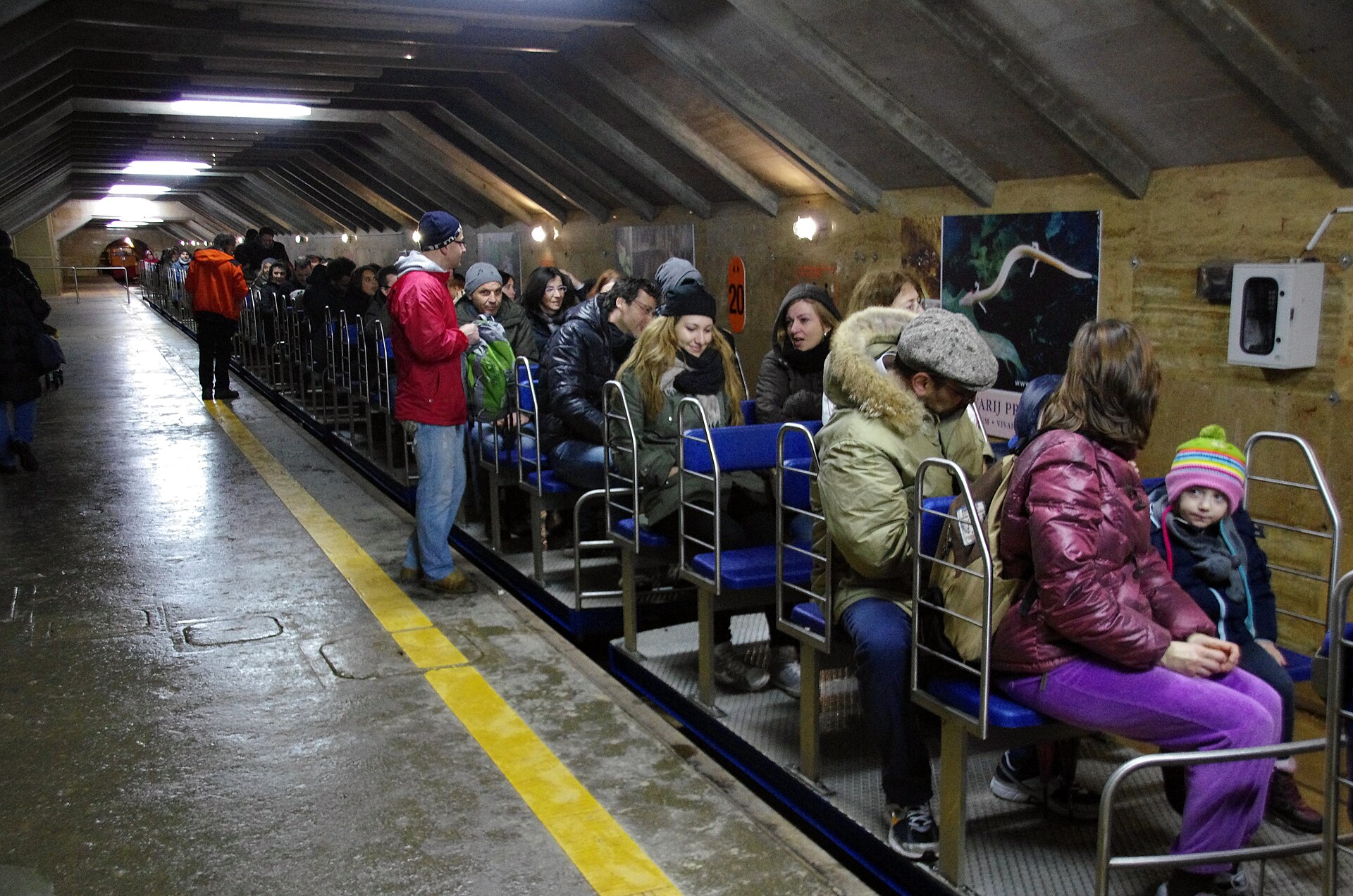
- The Brilliant (Briljant) — Inside the cave, Postojna
One of the best-known formations inside Postojna Cave is a gleaming white stalagmite called Briljant. Its pale colour stands out sharply against the darker rock around it. Guides usually pause here, so it is a good place to look closely at how mineral-rich drips build stone over very long periods.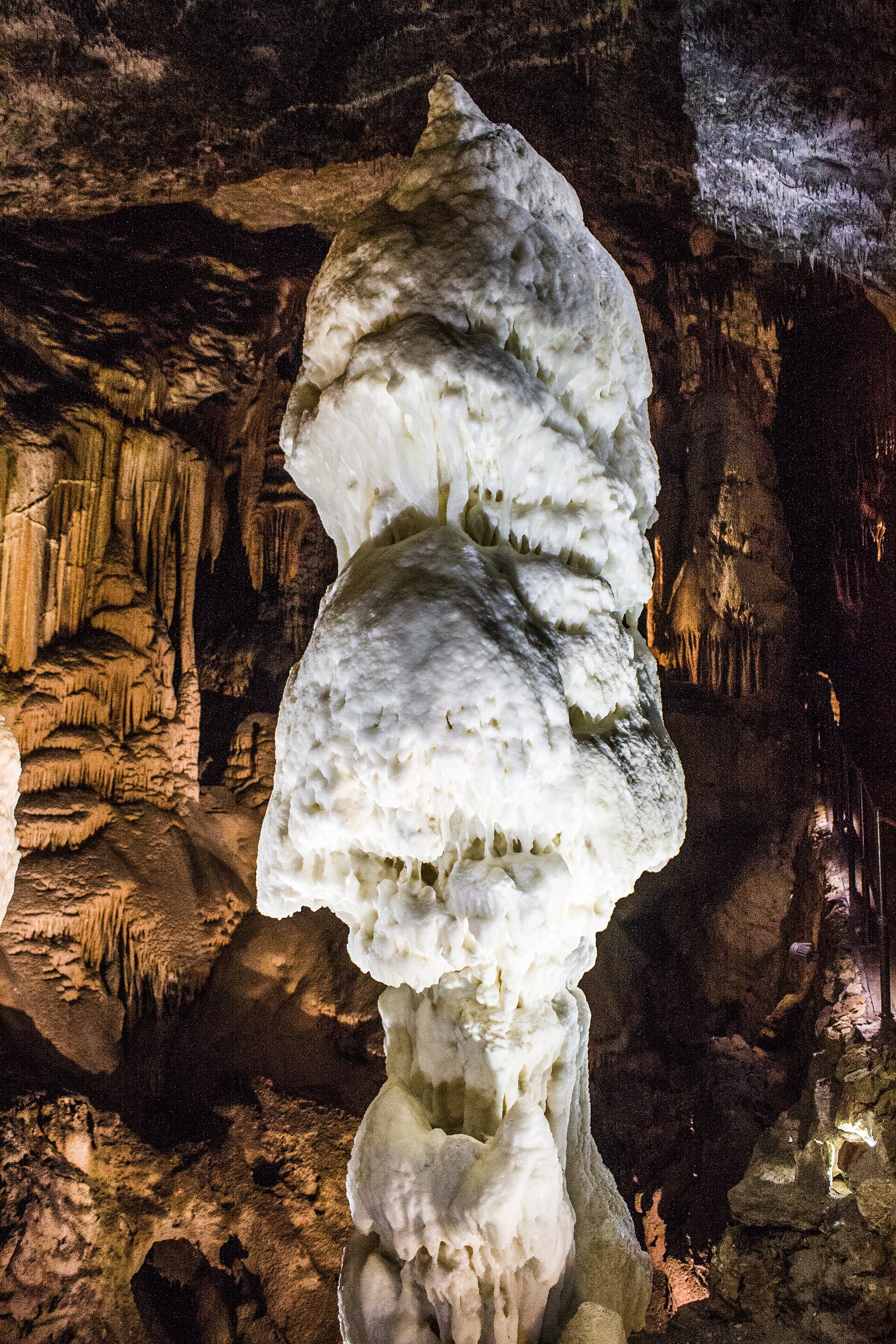
- Stalactite and stalagmite halls — Inside the cave, Postojna
Beyond the train ride, the walking route opens into chambers crowded with columns, curtains and spikes of calcite. Lighting is arranged to show their texture and depth. The Postojna Cave halls are the heart of the visit, and photographs rarely capture how tall and quiet they feel.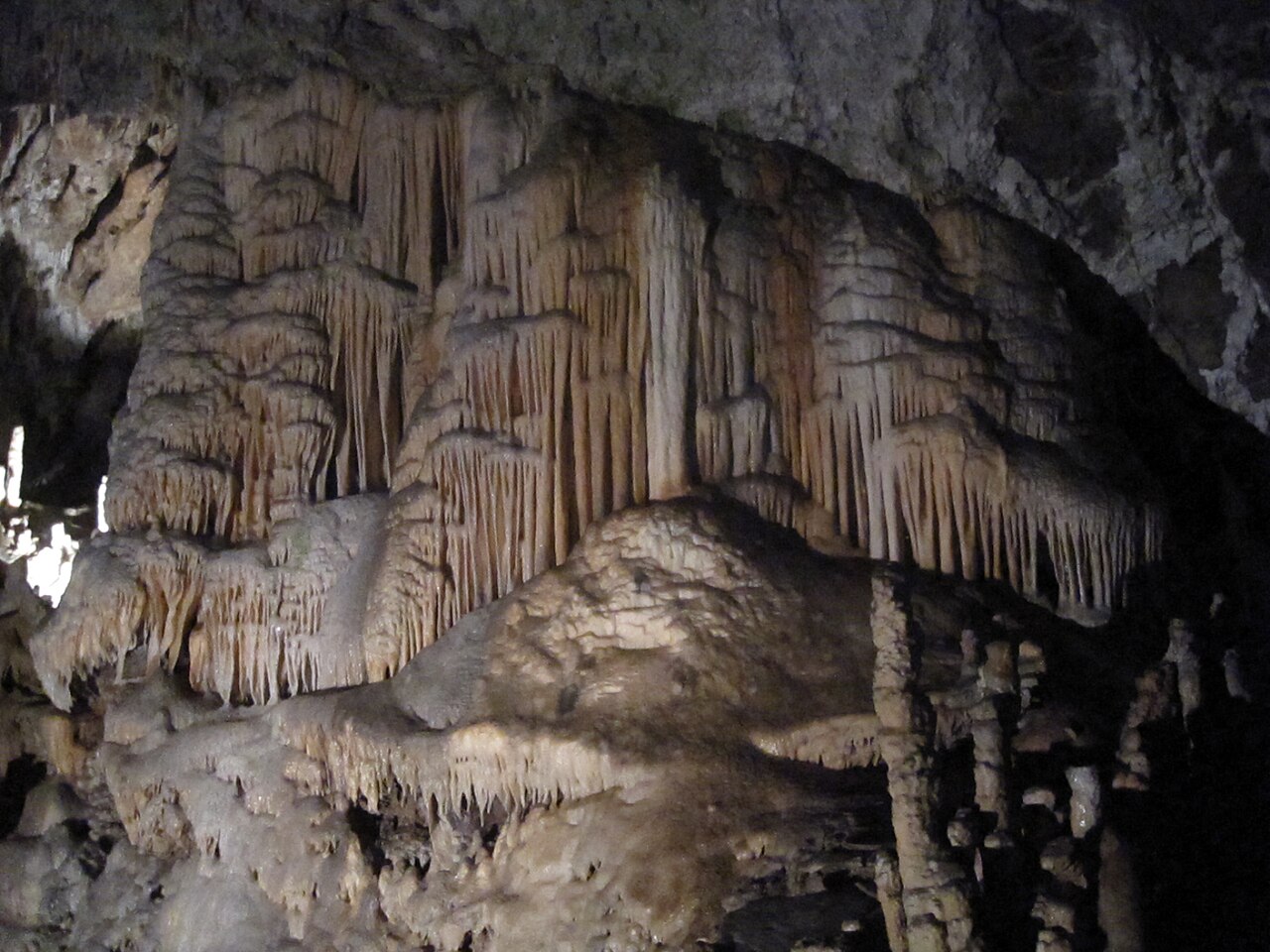
- The Pivka River passages — Lower passages, Postojna Cave
The Pivka River made Postojna Cave, and its water still runs through the lower levels. Seeing the channel makes the cave's origin clear: this is a river's work, left behind as the water cut deeper. Water levels change with rainfall, so conditions vary from season to season.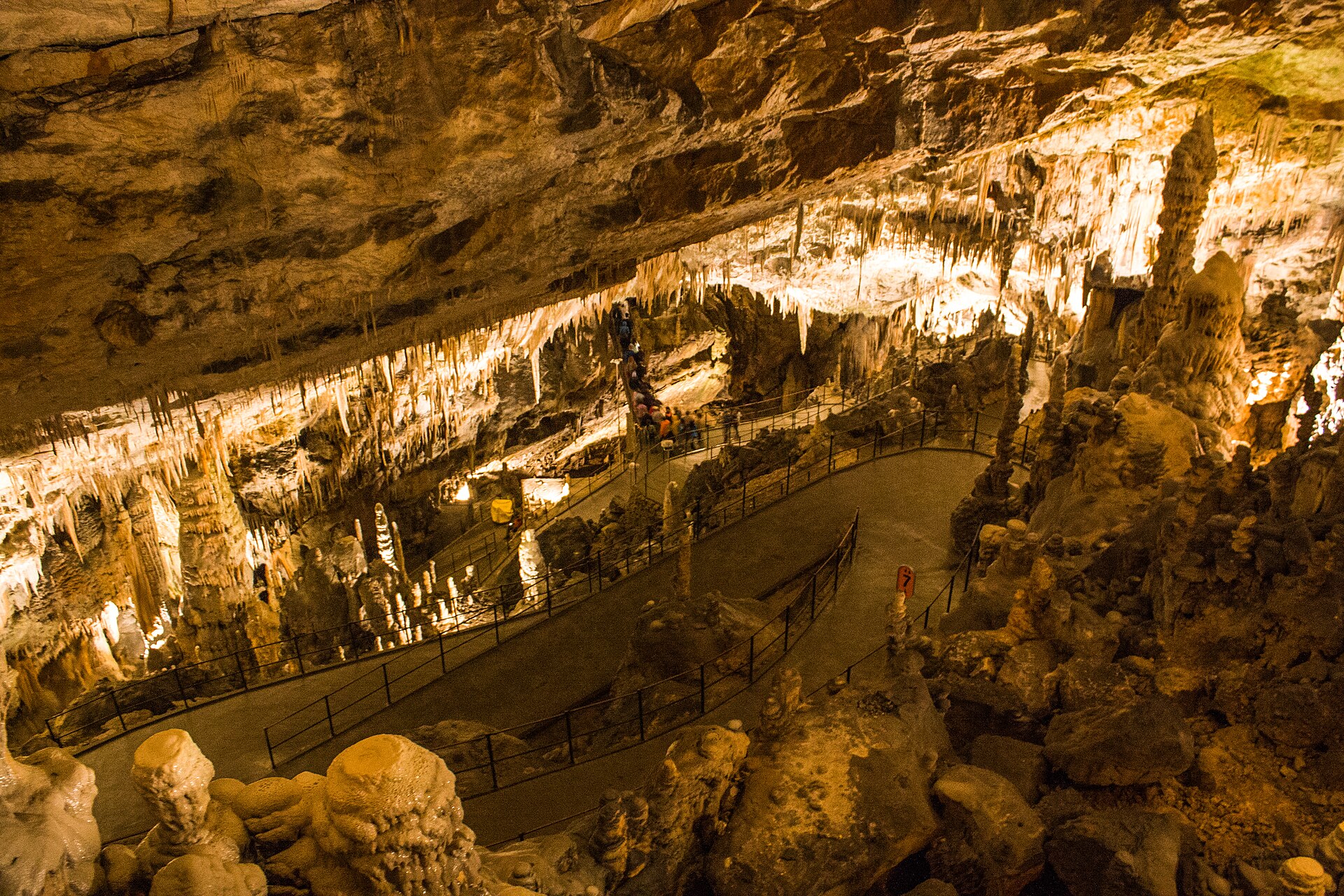
- Piran and the Sečovlje salt works — Slovenian coast
On the Adriatic coast, Piran has the look of a small Italian town, with narrow lanes and a harbour. Nearby, the Sečovlje salt works are a quiet, flat landscape of pans and sky, a calm contrast to a day underground. Both fit neatly into a trip with the cave.
Culture
Postojna Cave sits in a country that takes quiet pride in its small size and distinct identity. Slovenians have kept their language alive through centuries of pressure from larger neighbours, and the pride shows. A few words of Slovene, such as a greeting or a thank-you, are noticed and warmly received, even though most people under middle age speak good English.
Hospitality has its own rhythm. When a host offers food or a drink, a first refusal is often treated as politeness and the offer is repeated, so a gracious acceptance, or a clear second refusal with thanks, goes down well.
Many Slovenians also prefer to be placed in Central Europe rather than the East, a reflection of long Habsburg ties and the country's economic success. Calling the country Central European is the kinder shorthand.
The cave carries this layered history in its names. German, Italian and Slovene versions all survive because different rulers and neighbours shaped the area, and you may hear more than one of them in the ticket hall. Check the official site for the tour languages on offer.
Stay on the marked path, keep your hands off the formations because skin oils can stop them growing, and follow the guides' instructions on photography.
What to wear
Postojna Cave is in a region where traditional dress survives mainly as festival clothing rather than daily wear. Slovenia's regional costumes vary by area, but typically combine linen blouses, wool skirts and waistcoats, silk or cotton aprons, embroidered or lace details, headscarves for women, and felt hats for men. You are most likely to see them at folk-group performances, village festivals, weddings and parades.
In everyday life, people dress as in much of Central Europe: jeans, practical jackets and trainers in towns, and outdoor gear for hiking or cycling at weekends. Slovenians are an outdoorsy people, and nobody will look twice at walking boots or a waterproof in a café. Smart dress is kept for evenings out and occasions.
For the cave, think about the underground climate rather than the weather outside. The air is cool and damp even on a hot day, so bring a warm layer or a jacket and consider a fleece in summer. Wear closed shoes with a good grip, since the paths can be wet and uneven. Heels and open sandals are a poor idea. A light waterproof helps in spring and autumn. If you also visit village churches, covering the shoulders and knees is polite.
What to eat
- Goveja juha z rezanci — Traditional inns in Postojna and nearby villages
Beef broth with thin egg noodles is the classic way a Slovenian meal begins. It is clear, plain and comforting, which suits a damp, cool day. Look for it as a starter at inns and family-run restaurants around Postojna. - Meat with potatoes and salad — Restaurants and gostilna-style eateries along the main road
A typical main course is roast or grilled meat with potatoes and a sharply dressed fresh salad. The cooking is hearty rather than delicate, and portions are generous. Vegetarians should ask in advance, as meat dominates most menus in the region. - Kranjska klobasa — Cafés and snack stalls near the cave, and village taverns
This smoked pork sausage from the Carniola region is usually served hot with mustard and bread, or with sauerkraut. It is a filling lunch after the cave tour, and a good example of the Central European side of Slovenian cooking. - Pizza — Pizzerias in Postojna town
Pizza is a favourite in Slovenia, reflecting the Italian influence so close at hand. Plenty of locals rate it highly. A quick wood-oven pizza is an easy option for families after a day underground. - Potica — Bakeries and cafés in Postojna and Ljubljana
A rolled yeast cake filled with walnut paste, potica is served at celebrations and sold in bakeries. A slice goes well with coffee. It is sweet and dense, so share it if you want a lighter finish to a meal.
Plan it
Best time. May–June and September–October are the most comfortable months, with mild weather above ground and thinner crowds than peak summer. The cave stays cool and damp all year, so it works in winter too, but July and August bring the heaviest tour traffic.
How long. 1–2
Getting there. Fly to Ljubljana airport, then take a train or bus to Postojna and a short local transfer to the cave entrance; driving from Ljubljana along the motorway is simple. Check current timetables before you travel. Slovenia is in the Schengen Area, so check your entry requirements.
Budget. mid
Tips
- Book tickets online through the official site (https://www.postojnska-jama.eu/postojnska-jama/) and check opening times and tour languages there
- Arrive early in the morning or later in the afternoon to avoid the busiest tours
- Bring a warm layer even in midsummer, since it is cool underground
- Wear shoes with grip, as paths can be wet
- Combine the cave with Ljubljana or the coast to make a fuller day
Etiquette
- Stay on the marked paths and do not touch the formations
- Follow the guides' rules on photography and keep noise low
- Try a few words of Slovene; the effort is appreciated
Nearby
Sources
- Wikidata Q15903 (CC0)
- Wikipedia: Postojna Cave (rev 1361757715) (CC BY-SA 4.0)
- Wikivoyage: Slovenia (rev 5405631) (CC BY-SA 4.0)
- Photo: Boštjan Burger, Burger_PostojnskaJama (CC BY 3.0)
- Photo: Ivan Ivankovic, Postojnska Jama (CC BY 2.5)
- Photo: Unknown author, Tito and Sukarno in Postojna Cave (Public domain)
- Photo: Shadowgate, Postojnska jama - Briljant (CC BY 2.5)
- Photo: Shadowgate, Postojna Cave (18264483725) (CC BY 2.5)
- Photo: Cristian Raifura, Postojna Cave (13) (CC BY 3.0)
- Photo: Donald Judge, Postojnska jama - vlakec 1 (CC BY 2.5)
- Photo: Irene000, Postojna Cave - Slovenia (CC BY-SA 4.0)


