Kerkennah
Kerkennah, Tunisia
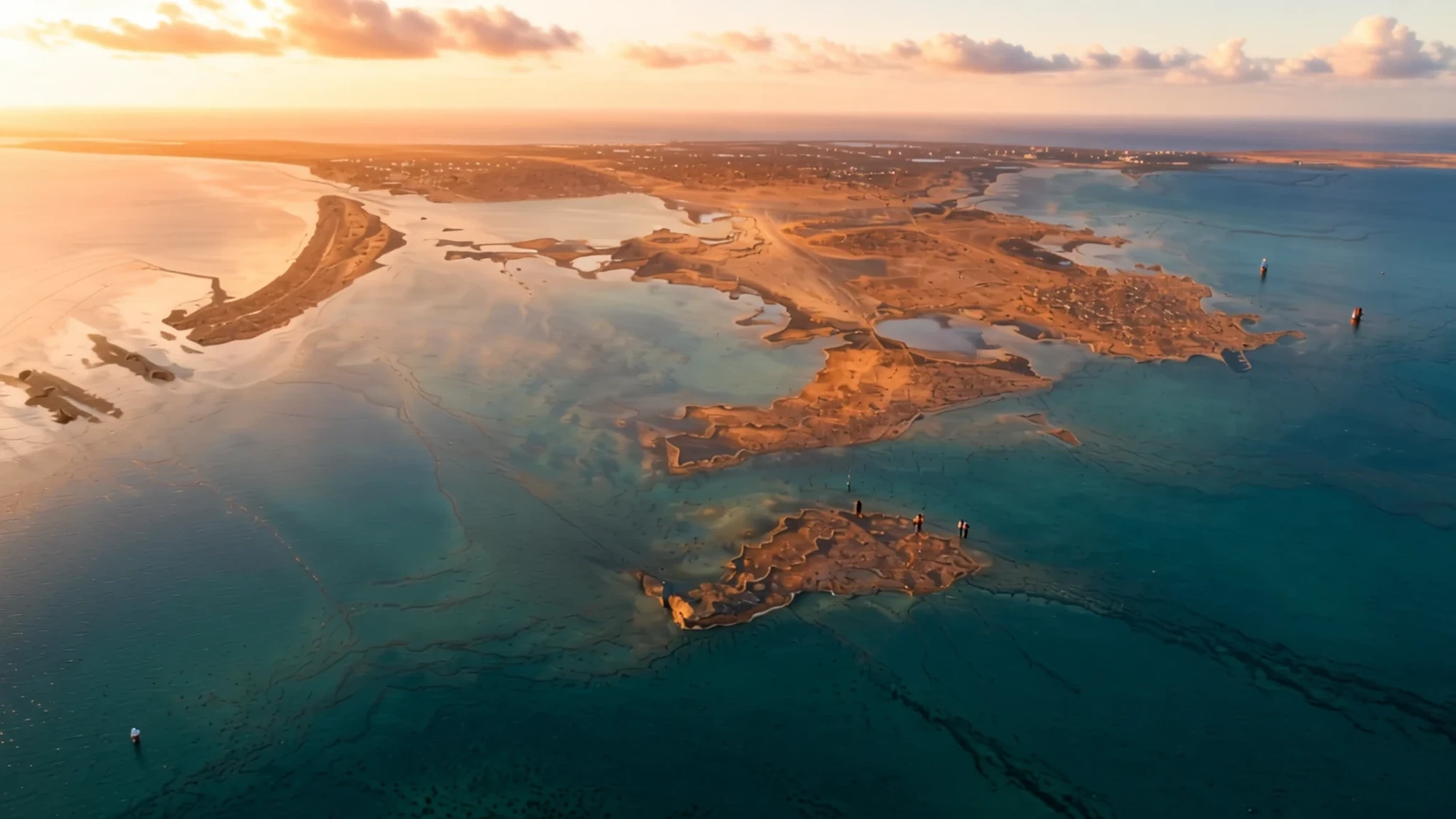
Kerkennah is a flat, windswept archipelago off Sfax where octopus fishing, palm groves and slow island days replace big-resort beach holidays.
The place
Kerkennah is a low archipelago in the Gulf of Gabès, east of Sfax on Tunisia's coast. Its two main islands are Chergui and Gharbi, and the highest ground is only about 13 metres above the sea. Altogether the islands cover roughly 160 square kilometres, and in the 2014 census about 15,500 people lived there, mostly in small villages strung along sandy tracks.
The land is flat, dry and open to the wind. Palms, saltbushes and other salt-tolerant plants dominate, and there is little farming beyond some chickens and goats kept for the household. The sea is the real economy: fishing, above all for octopus, supplies markets on the mainland and beyond.
This is not a place of broad golden beaches. The shoreline is shallow, with tidal flats, sandbanks and seaweed, and the pleasure lies in wading, cycling, watching fishermen and eating very fresh seafood. Many mainland Tunisians come here for holidays, and better-off families often keep second homes on the islands, so the feel is of a local retreat rather than a package destination. Some European visitors come too, but numbers stay modest.
Winds are a constant. Hot, dry air can blow across from the mainland, while sea breezes soften the afternoons. Shade is scarce, so the rhythm of a day tends to follow the light: early starts, a long pause at midday, and evenings out on the water's edge. Kerkennah rewards people who like quiet, space and simple comforts.
Its story
Kerkennah has been settled since long before written records, and its position off the Tunisian coast made it useful to every power that ruled the sea. The Romans used the islands as a port and a lookout post, watching traffic offshore. The Greeks knew them as Cercina, or Cercinna, and ancient geographers such as Strabo and Ptolemy used the same name for the island's main town.
Rome also used the archipelago as a place of exile. Augustus sent Sempronius Gracchus here for 14 years, punishment for his affair with the emperor's daughter Julia. A low, remote island was as good as a prison with no walls.
Later, Christianity left its mark. A bishop of Cercina was among those summoned to Carthage by the Vandal king Huneric in 484, and the Catholic Church still lists Cercina as a titular see, though no bishop lives here now. A monastery founded by Saint Fulgentius of Ruspe in 532 is thought to have stood on one of the islets, with scholars debating whether Kneiss island is the likelier site.
The Middle Ages brought raiders: an Aragonese expedition struck the islands in 1424. In the Second World War a naval clash, the Battle of the Tarigo Convoy, was fought nearby on 16 April 1941.
More recently the story has been about water and work. Drought in the 1980s pushed many people to leave, and the population fell sharply. Today the islands rely on the sea, and many families have members working on the mainland or abroad.
What to see
- Bordj Hassar ruins — Chergui island
The excavated field at Bordj Hassar is the best-known trace of the islands' ancient past, when Cercina served Rome as a port and lookout. Expect low walls and foundations rather than standing monuments, so go for the sense of history and the open views over flat land.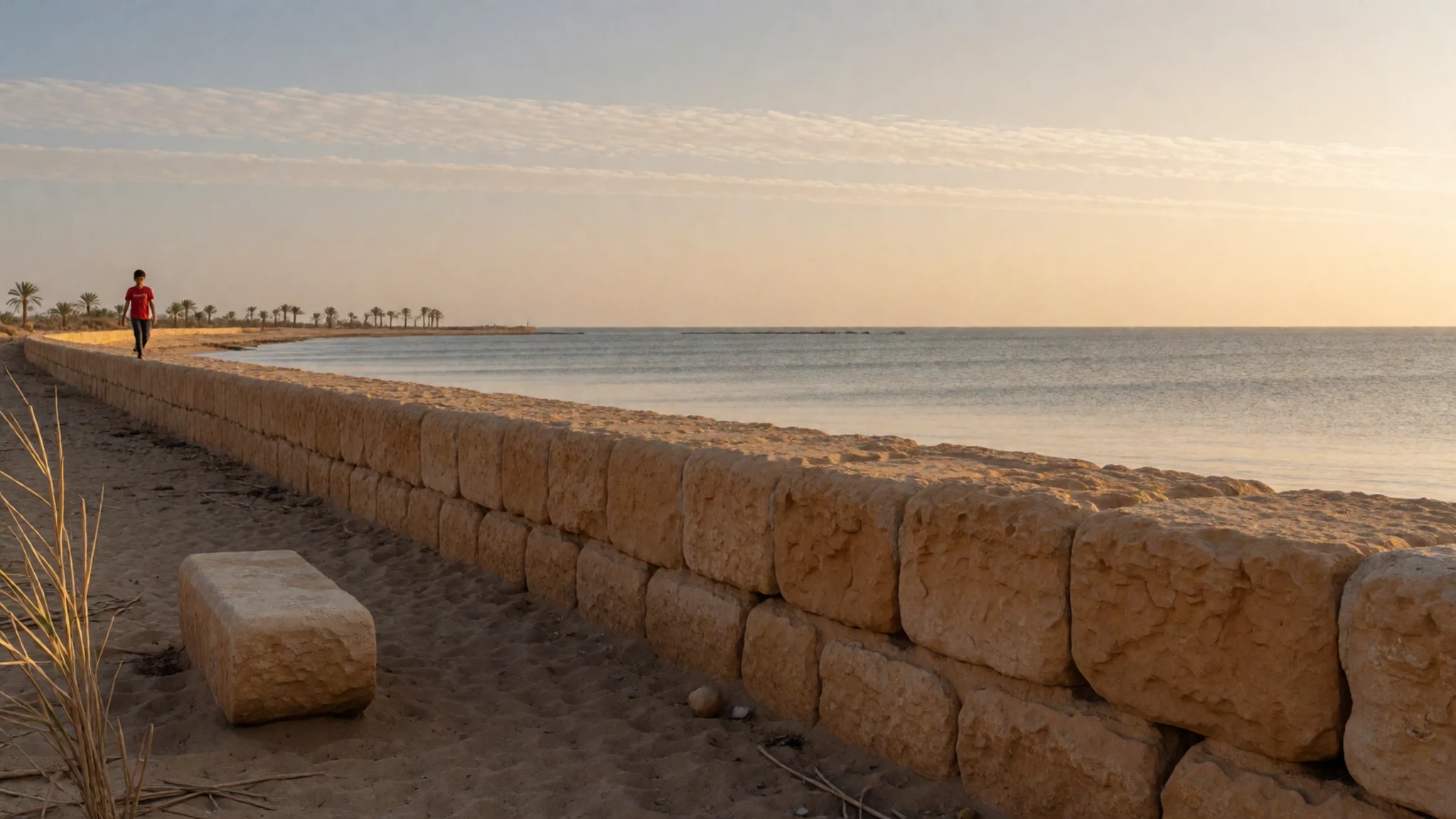
- Palm groves and farmland on Gharbi — Gharbi island
Gharbi island is the quieter, more agricultural half of the archipelago. Cycling its sandy lanes takes you past palm groves, small plots, goats and low village houses. It is flat and easy riding, though the wind can be strong, and shade is rare at midday.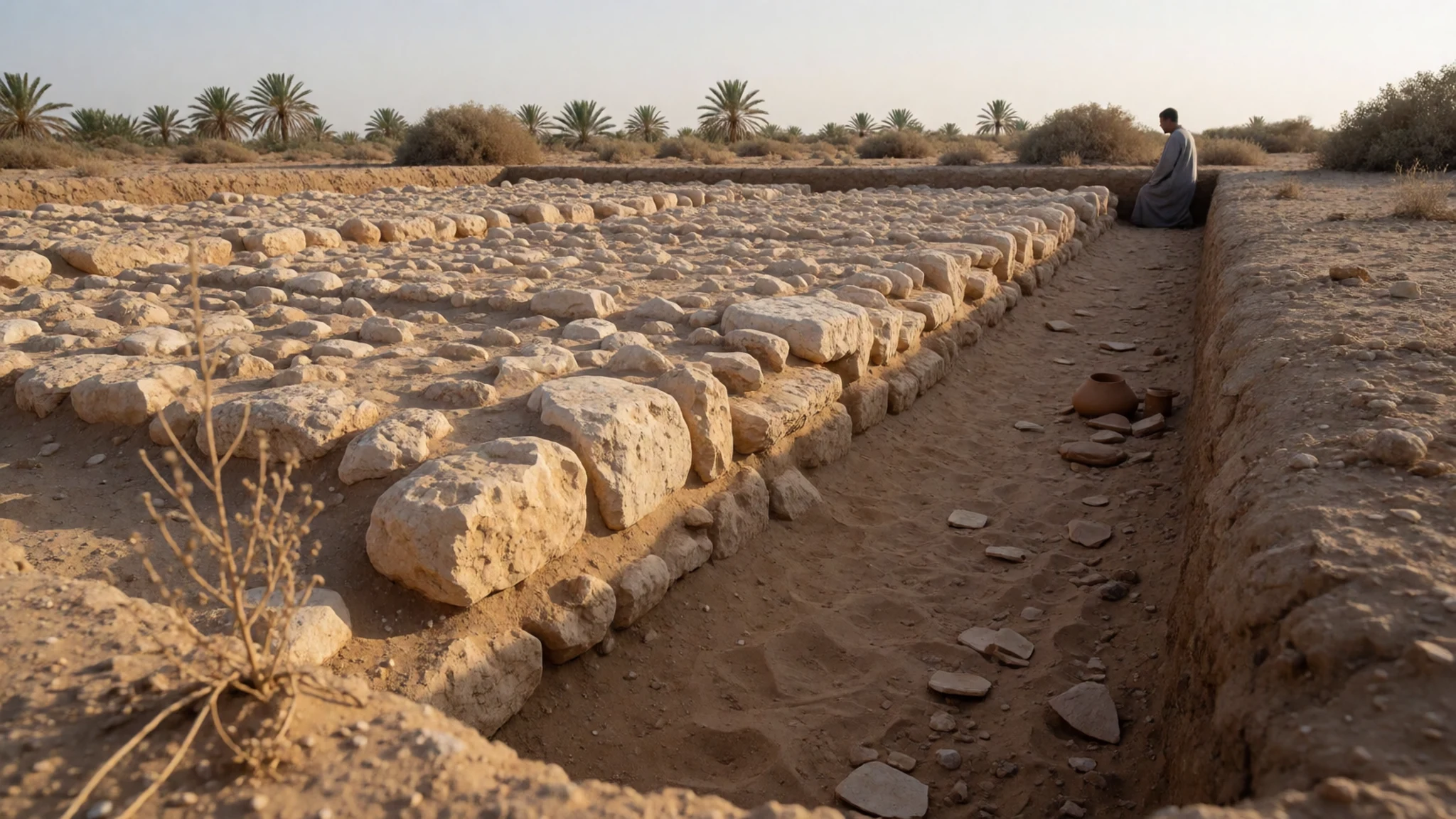
- Clam gathering on the tidal flats — Shallow shores around the islands
At low tide the shallow flats fill with people gathering clams by hand. It is a working scene rather than a show, so watch from a respectful distance and ask before photographing anyone. Local guides or hosts can tell you where and when the tide suits.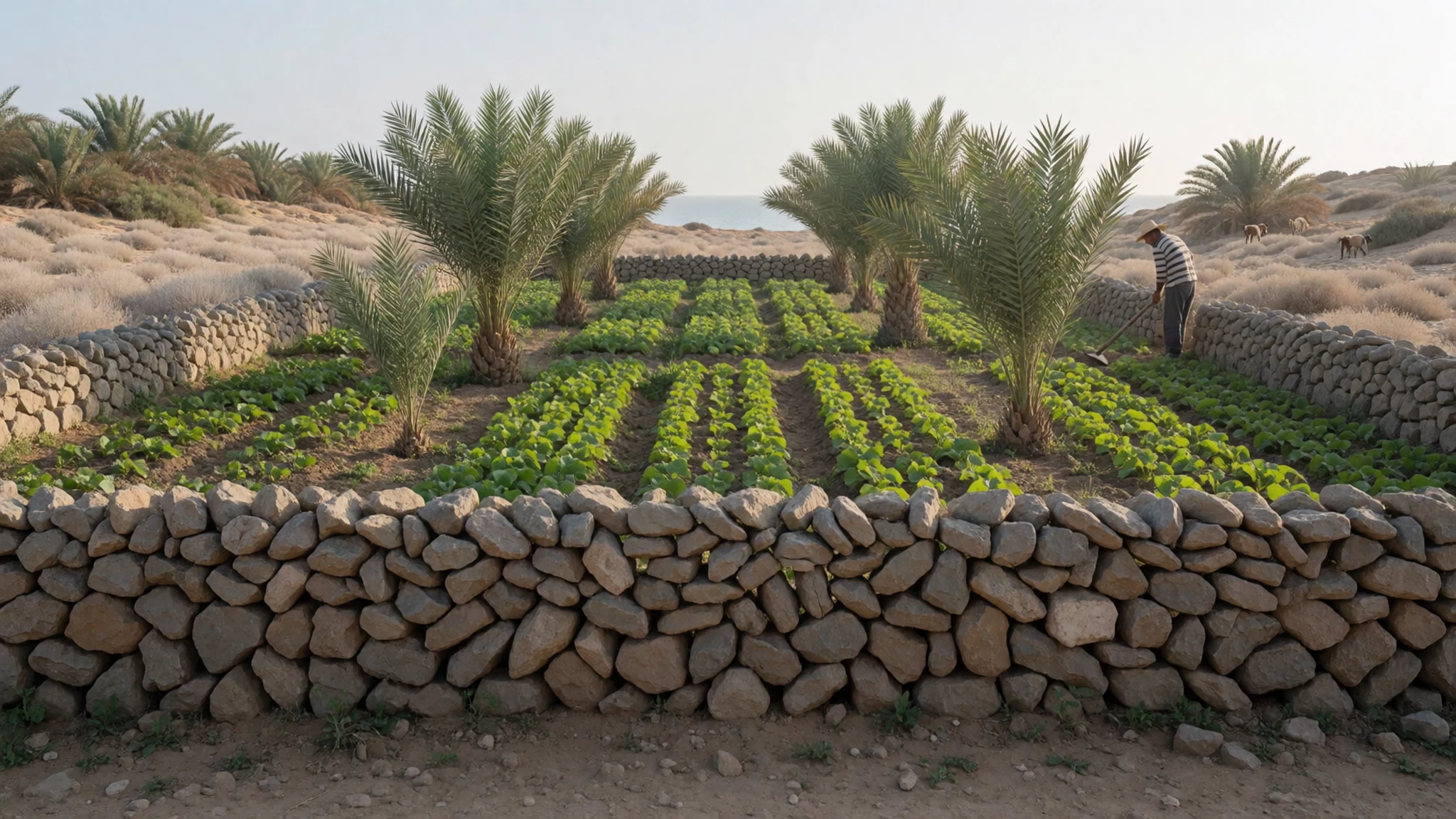
- Sunset on the western shore — Western coast
With almost no hills or tall buildings, the sky does the work here. Evenings are best spent on the shoreline as the light turns the shallows copper and pink. Bring a layer, because the wind often freshens once the sun drops.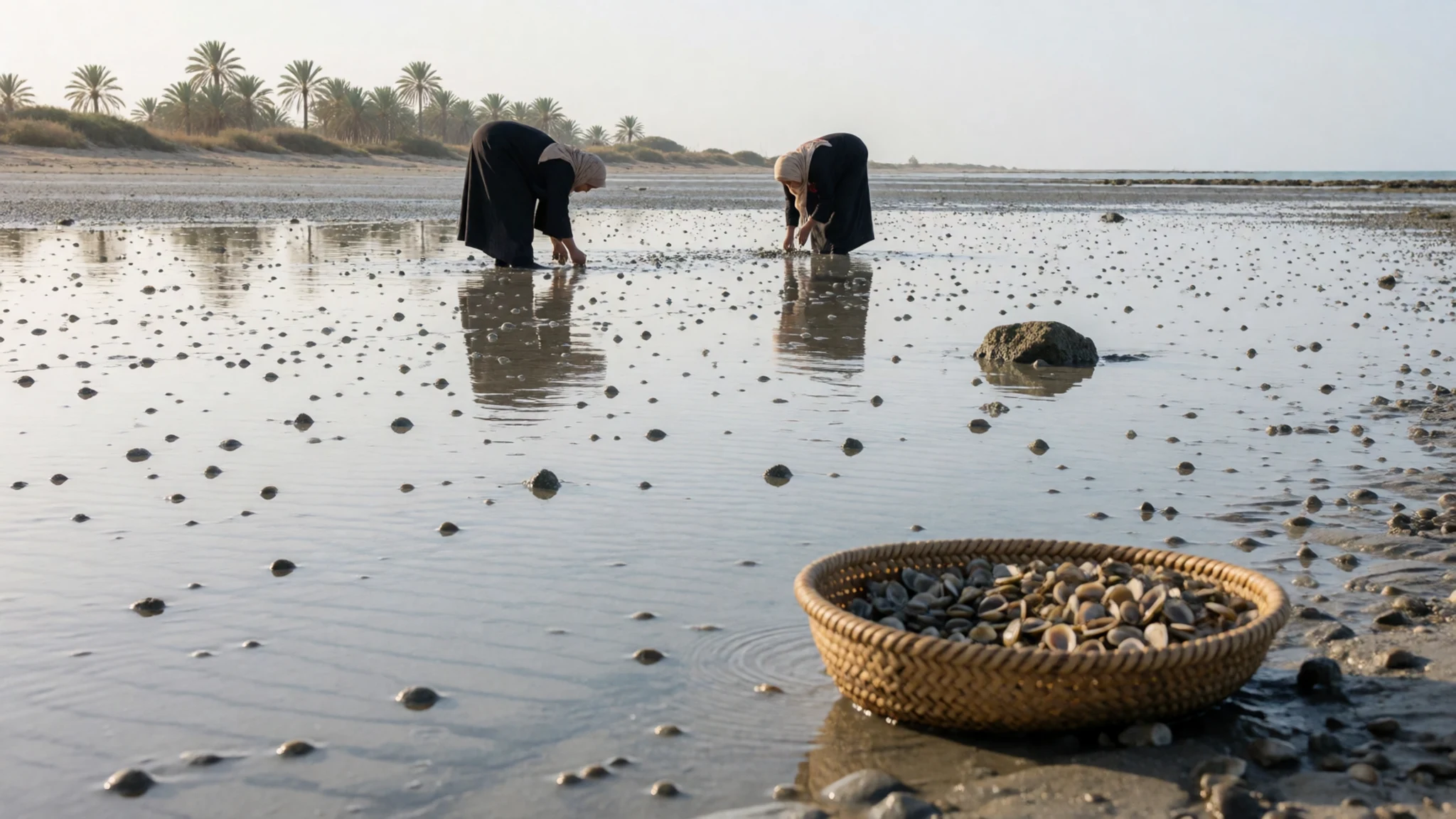
- Fishing harbours and octopus pots — Harbour villages on both islands
Small harbours around the islands are the heart of the local economy. In the morning boats return, and stacked octopus pots and nets line the quays. It is a good place to see the catch arrive, chat with fishermen, and understand how the islands live.
Culture
Kerkennah is part of a Muslim-majority country, and island life is quiet, family-centred and fairly traditional. Villages are small, people tend to know each other, and visitors are noticed. Hospitality is real, but it is expressed gently: a greeting, a glass of tea, an invitation to sit.
The sea shapes the culture more than anything else. Fishing families pass skills down through generations, from making octopus pots to reading the tides and winds. Many islanders also work on the mainland or overseas, and some return in summer, when holidaymakers and relatives swell the population and the pace picks up.
Tunisia grows more conservative the further south you go, and an island community off Sfax is more reserved than a big resort. Beaches and hotel areas tolerate relaxed swimwear, but in villages, shops and on the roads a modest approach is expected. During Ramadan, many places close or keep short hours in the daytime, and eating or drinking openly in public is considered discourteous, so plan meals and supplies accordingly.
Language is mostly Tunisian Arabic, with French widely understood. A few words of greeting go a long way, and people appreciate patience over hurry.
When you want to photograph fishermen, clam gatherers or villagers, ask first and accept a refusal with a smile.
What to wear
Traditional dress in Tunisia includes the jebba, a loose robe worn by men, often with a chechia, the red felt cap, and the women's sefsari or other wrapped and embroidered garments in cotton, wool and silk. On the islands such clothes now appear mainly at weddings, festivals and family occasions rather than in daily life, and I would not claim specific local patterns beyond that.
Everyday dress is practical. Fishermen wear waterproof boots, rolled trousers, caps and old shirts against sun and salt. In villages, women commonly wear long skirts or trousers with loose tops, and some cover their hair. Younger people wear jeans, T-shirts and trainers, much as on the mainland, and in summer holidaymakers dress more casually near the shore.
For visitors, think sun, wind and modesty. Light, loose cotton or linen that covers shoulders and knees is comfortable in the heat and suits village streets. Add a hat, sunglasses and a scarf or buff for blowing sand. Swimwear is fine at the water's edge or at a hotel, but put a cover-up on when walking into a village or shop.
Footwear matters more than people expect. Sandy tracks and shallow flats call for sturdy sandals or trainers, and water shoes help on the seabed, where shells and sharp stones lie. A light jacket is useful for breezy evenings, especially outside summer.
What to eat
- Grilled octopus — Harbour-side eateries and village restaurants
Octopus is the island's signature catch, and it is often grilled or simmered until tender, then dressed with olive oil, lemon and a little harissa. It is best eaten near the harbour, where the day's boats have just come in.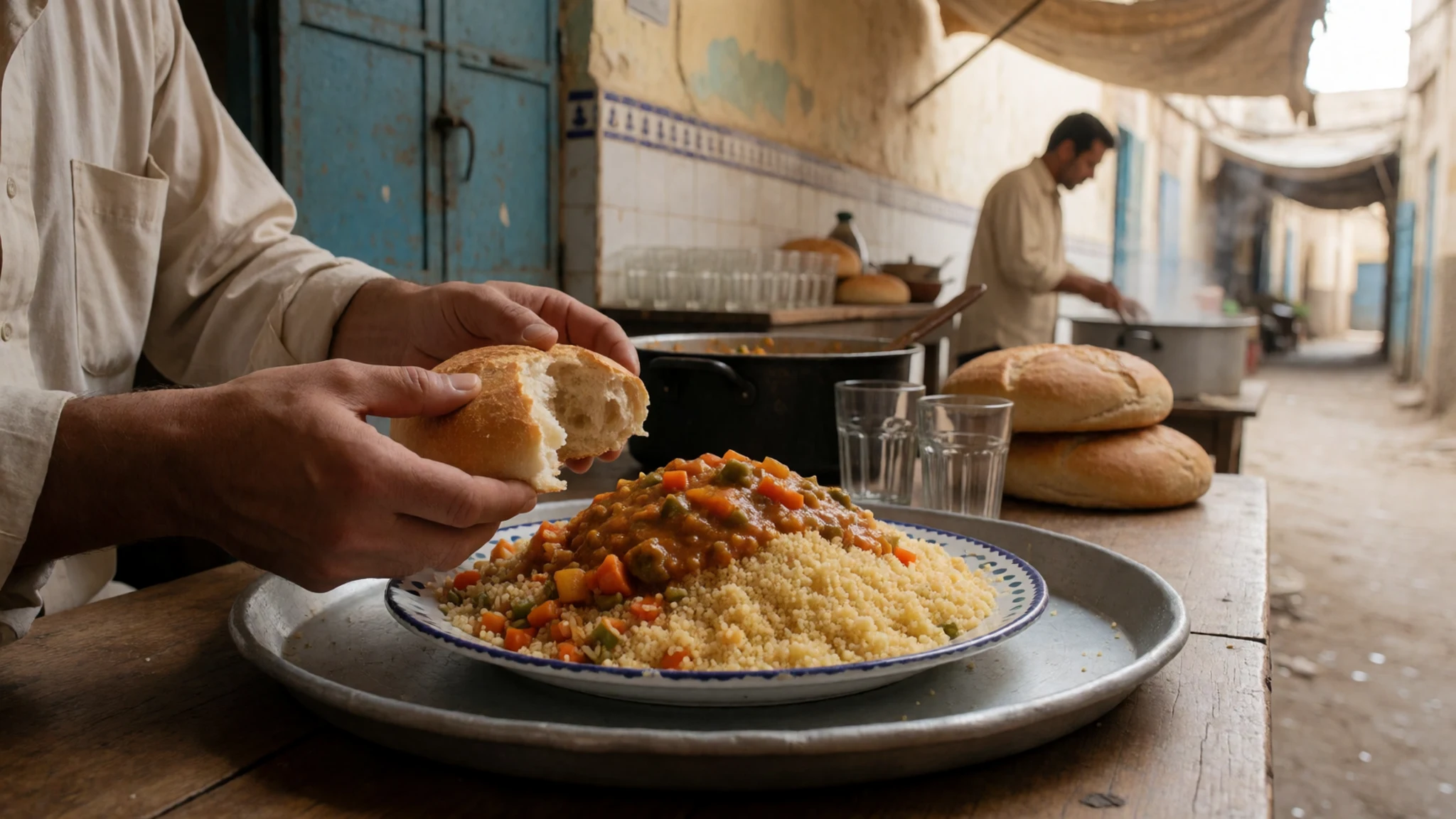
- Fresh grilled fish — Seafront restaurants in the larger villages
Whatever the nets bring in, usually sea bream, grouper or similar, is grilled whole and served with salad and bread. Choose your fish from the display, and ask how it is cooked before it goes on the fire.
- Clams and shellfish — Waterside restaurants and family kitchens
Local clams, gathered from the shallows by hand, appear steamed, in pasta or in a spicy tomato sauce. They are simple, salty and very fresh, and make a good starter before a main of fish. - Couscous with fish — Family-run eateries and home-style restaurants
Couscous is the backbone of Tunisian meals, and on the coast it comes with fish in a rich, peppery sauce and vegetables. Portions are generous, so it is good for sharing at lunch. - Brik and Tunisian tajine — Cafés and small eateries in the main villages
Brik is a thin pastry parcel, usually filled with egg and fried crisp. Tunisian tajine is different from the Moroccan stew: it is a baked, frittata-like pie of egg, cheese and meat or vegetables.
Plan it
Best time. April–June and September–October, when the sea is warm enough to enjoy and the heat is easier to bear. July and August are hot, dry and busy with Tunisian families; winter is cooler and windier.
How long. 2–3
Getting there. Fly to Sfax or Monastir, or to Tunis for wider connections, then continue to Sfax by road or rail. From Sfax port a ferry crosses to Kerkennah; check the operator's current timetable before travelling. On the islands, hire a bicycle, scooter or car, or arrange a local transfer.
Budget. mid
Tips
- Check ferry times in advance and arrive early in summer, when queues build
- Carry cash, because cards are unreliable in small villages
- Bring sun cream, a hat and plenty of water, as shade is scarce
- Book accommodation ahead for July and August, when holidaying families fill the islands
- Wear water shoes for the shallows and expect strong wind on exposed stretches
Etiquette
- Dress modestly in villages and away from the beach
- Ask before photographing people, especially fishermen and women
- Respect Ramadan by avoiding eating and drinking in public during the day
Nearby
Sources
- Wikidata Q761460 (CC0)
- Wikipedia: Kerkennah Islands (rev 1365799482) (CC BY-SA 4.0)
- Wikivoyage: Tunisia (rev 5423187) (CC BY-SA 4.0)
- Kerkennah Islands NASA.jpg (Public domain)
- NI 32-8 Sfax, Army Map Service (Public domain)
- Ruines KKH.JPG (CC BY-SA 2.5)
- Kerkennah 015.jpg, Visem (CC BY 3.0)
- Admiralty Chart No 176, UK Hydrographic Office (Public domain)
- Carte Kerkennah.png (CC BY 3.0)
- Cueillette de clovisses, Eyakaddour (CC BY-SA 4.0)
- Coucher de soleil, Kerkennah, Majbri wael (CC BY-SA 4.0)


