Djerba
Djerba, Tunisia
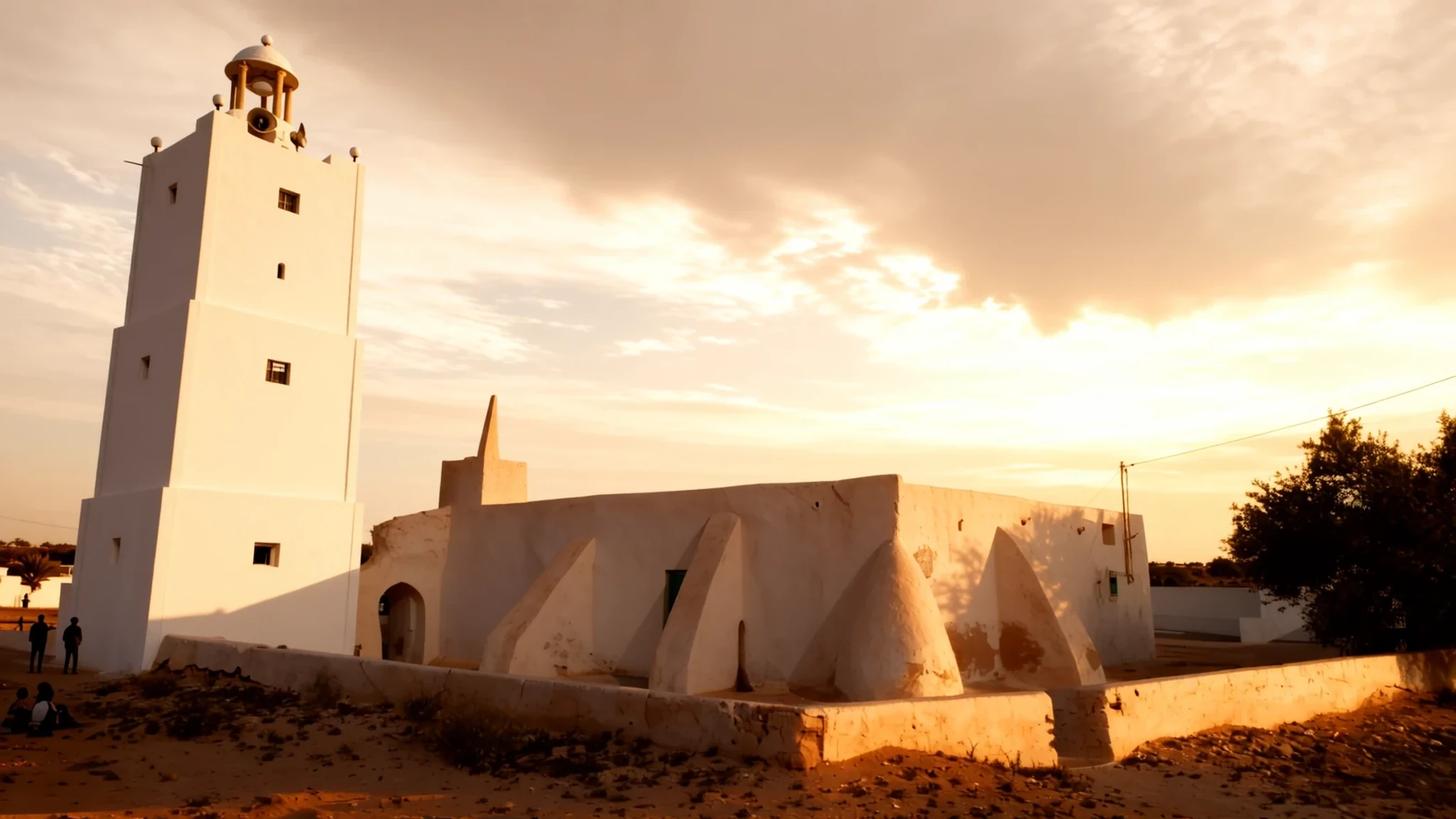
An island off southern Tunisia where Mediterranean beaches, Berber-speaking villages and a long Jewish history sit close together.
The place
Djerba sits in the Gulf of Gabès, off the coast of Tunisia. At about 176,000 people, it feels lived-in rather than staged. Houmt Souk, the main town, is the island's commercial heart, with lanes of stalls around the Place d'Algérie and the old fort of Borj El Kebir at its edge. Much of the rest of the island is flat, with olive groves, palms and low villages of white and ochre houses.
The island is best known for its beaches and sunsets. Long sandy stretches draw a large share of visitors, especially from France, Germany and Italy, and in summer the shoreline fills by late afternoon as families come down for the cooler air. The water is shallow and calm in many places, which suits children. Beyond the resorts, the western villages and the Ajim area keep a quieter character, with fishing boats and simple grills serving the day's catch.
Only a handful of spots across Tunisia still keep a Berber tongue alive, and Djerba is one of them. Its Jewish population, anchored around the El Ghriba synagogue, ranks among the last remaining in the Arab world. These threads, alongside a large tourism economy, give the island a layered identity that a single week rarely exhausts.
Heat is the main constraint. The climate is hot and dry, so spring and November are far more comfortable than July or August. Accommodation in high summer fills quickly, especially the large resort hotels that cater to package tours, so book early if you travel then.
Its story
Djerba's written history reaches back to the Greeks, who knew the island as Lytos or Meninx. The name Djerba itself came later, and it survives in French and Arabic forms. Some scholars have linked the island to the land of the lotus-eaters in the Odyssey, a suggestion that has lasted in local imagination even though it cannot be proved.
The deeper story is much older. Archaeological and genetic evidence points to the ancestors of today's Berbers, the indigenous people of North Africa, being present in the region since the end of the last Ice Age. Stone Age finds in Tunisia have been linked to the Libyan peoples known as the Tehenu, who appear in Egyptian records from the Old Kingdom. Early communities lived in several ways: farmers on the coasts and mountains, herders moving with their livestock, and people settled in towns.
Medieval writers describe the region's fortunes shifting sharply. The historian Ibn Khaldun wrote of Ifriqiya and the Maghreb being devastated when Arab tribes crossed into them and ravaged the land for generations, leaving behind ruined monuments and villages. The Borj El Kebir fort, a castle dating back to the 14th century, is a reminder that the island was fortified during these turbulent centuries.
The island's Jewish community is among its most distinctive threads. It has lived on Djerba for a very long time, and the El Ghriba synagogue stands on a site where a place of worship has existed for centuries, even though the present building is much newer. The Berber language that survives in a few villages is another reminder that the island's identity was built in layers rather than by a single event.
What to see
- Houmt Souk — Houmt Souk, the island's centre
Houmt Souk is the island's main town and the easiest place to start. Its colourful markets cluster around the Place d'Algérie, where stalls sell textiles, pottery and household goods, and the narrow lanes behind them are good for wandering in the cooler hours. Borj El Kebir, a fort on the edge of town, has an explanation room that is worth a look.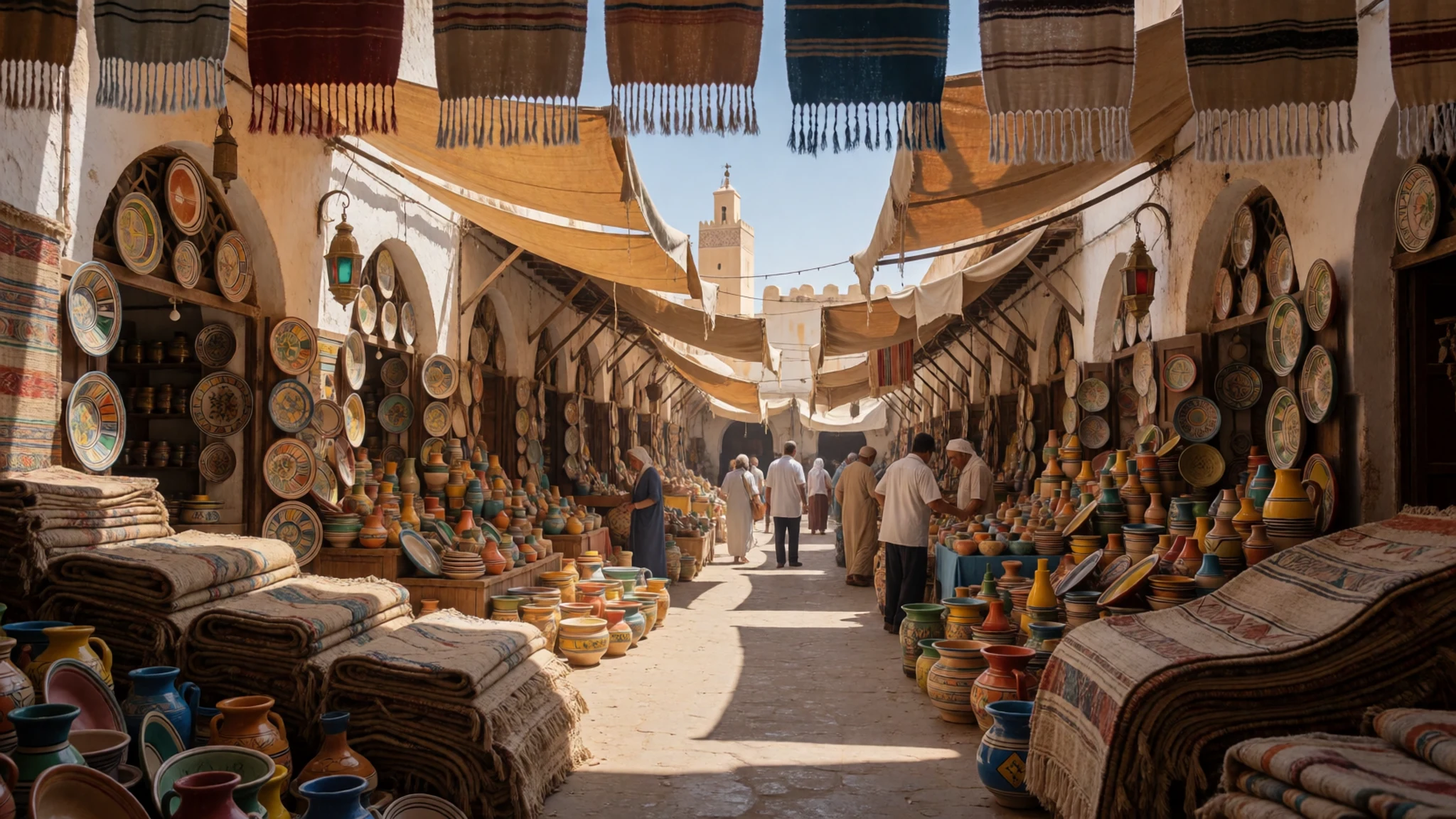
- Guellala — Western Djerba
Guellala is the island's pottery village, where clay has been shaped since ancient Roman times. Workshops and small showrooms line the streets, and visitors can usually watch the potters at work. A heritage museum covers local craft and village life. Many people stay on for the sunset, which is a good reason to linger until the light fades.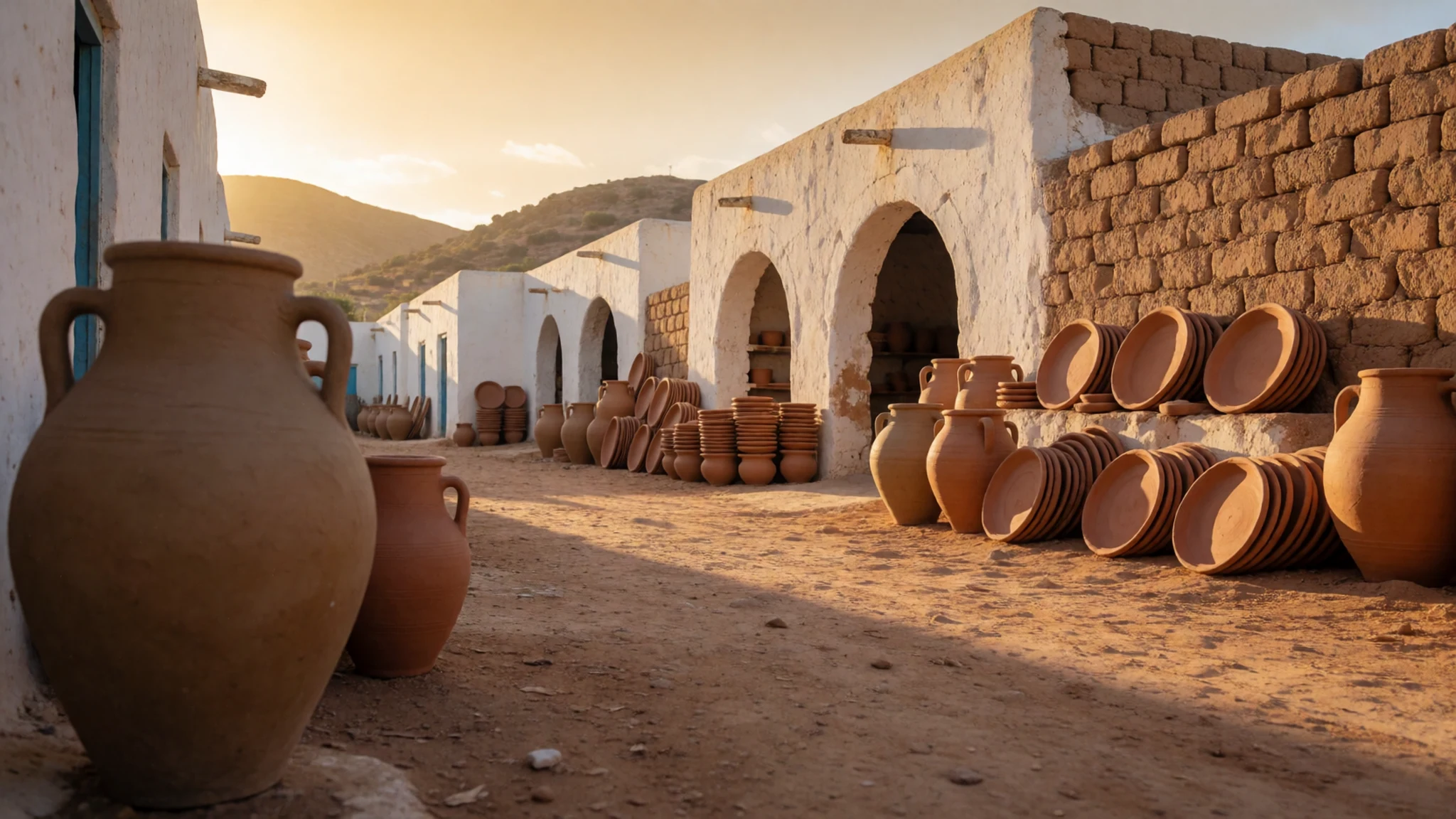
- El Ghriba Synagogue — Hara Seghira, southern Djerba
The El Ghriba synagogue sits on a site where a Jewish place of worship has stood for centuries, and it serves a community that has lived on Djerba for a very long time. The present building is much newer than the site's history. Gatherings here, including the Lag BaOmer festival, bring pilgrims and visitors to the village. Services come first, so dress modestly and ask before going inside during prayers.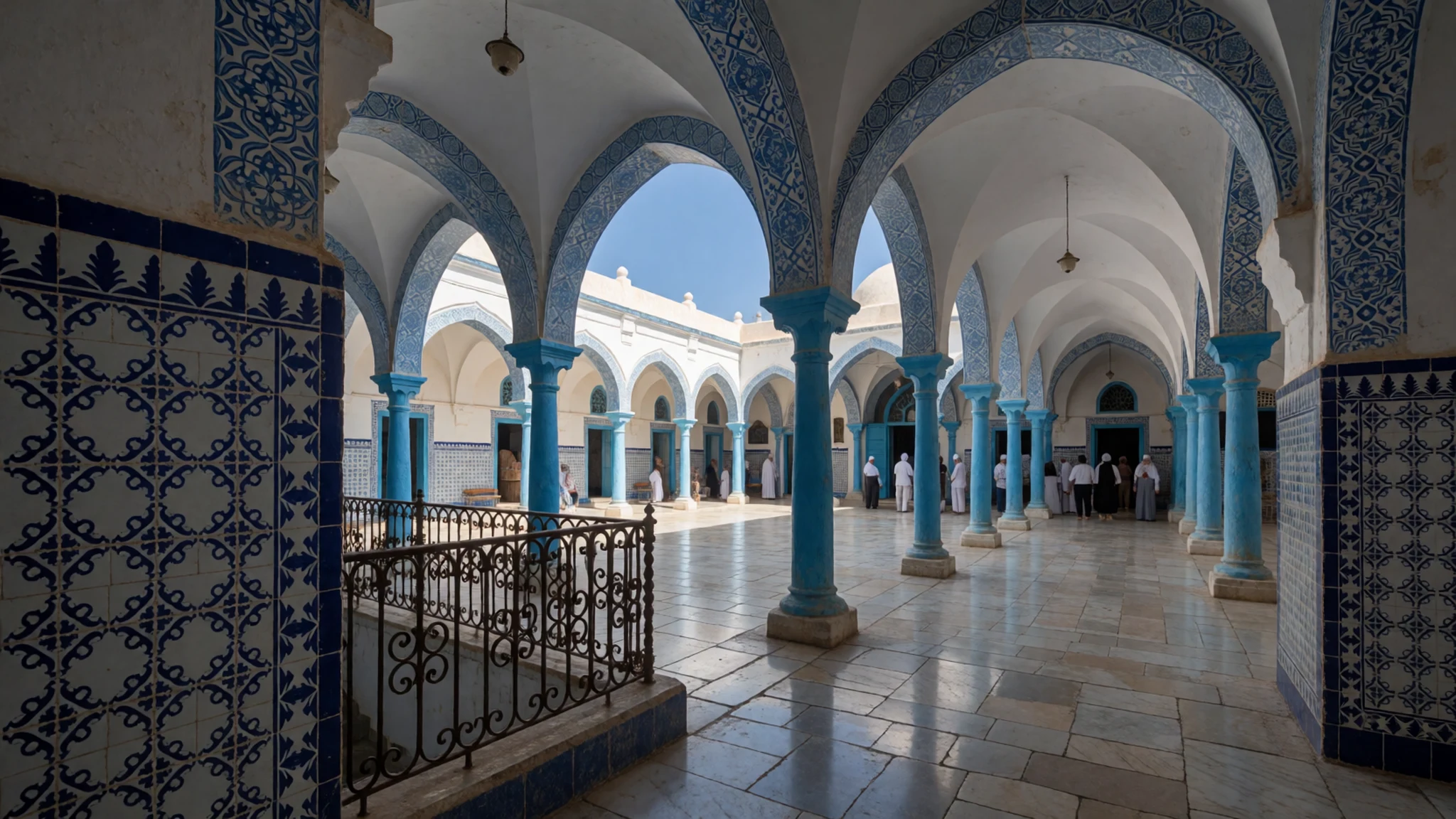
- Djerba Explore — Inland, central Djerba
Djerba Explore combines a crocodile farm with a museum of island life. The farm keeps Mediterranean crocodiles, with animals brought in from the Nile decades ago, and the Lalla Hadhria Museum shows local heritage. Behind the main site is a village built to show traditional life, which makes it a practical stop for families. Allow a few hours for a relaxed visit.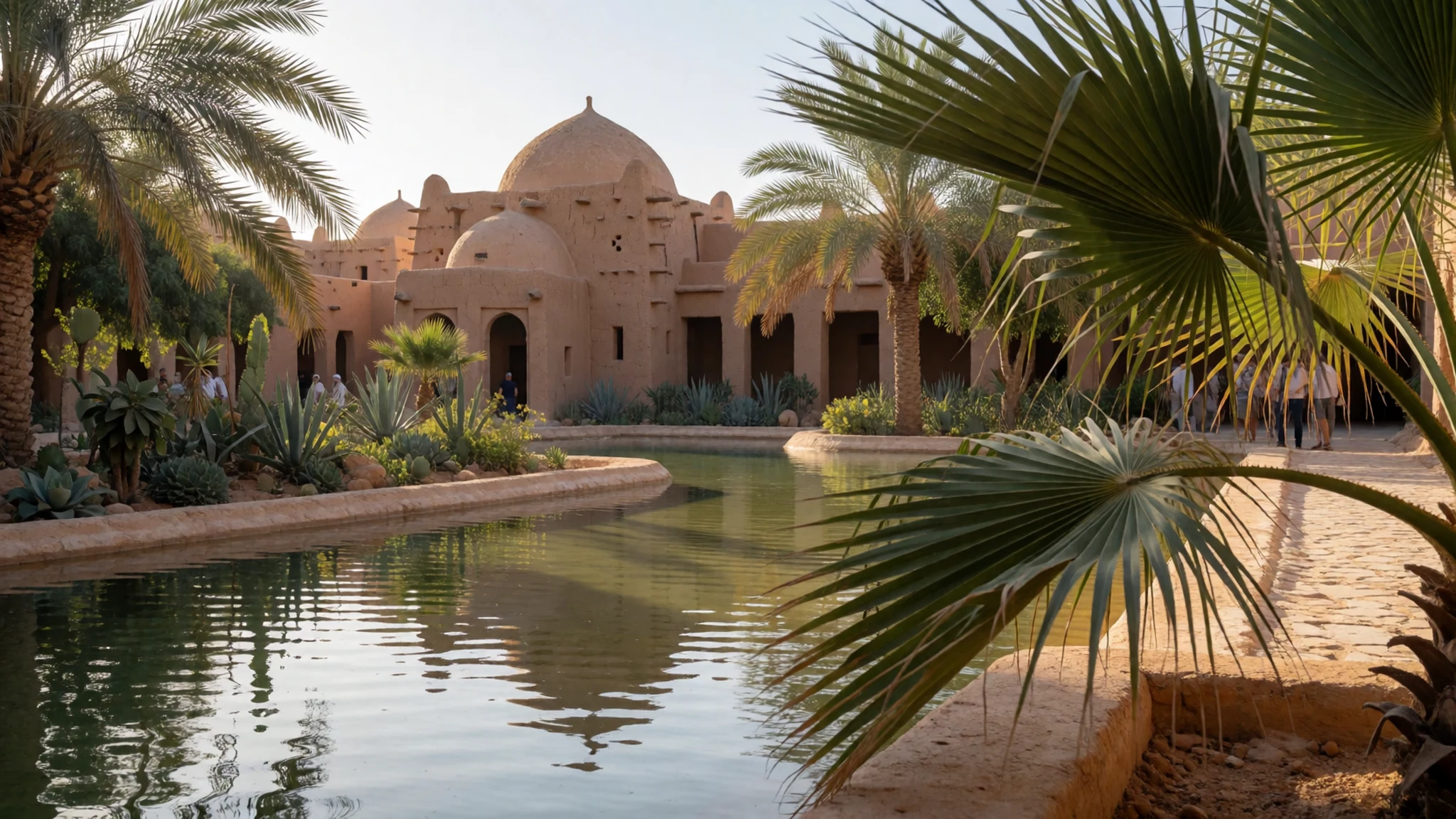
- Ras Rmel — Northern Djerba
Ras Rmel is a peninsula on the northern side of the island, sometimes called Flamingo Island or Pirates Island. Flamingos gather here in the colder months, usually from October, which makes it a good reason to visit outside the summer peak. The peninsula is open and quiet, with the sea on several sides, and it suits a slow walk rather than a packed itinerary.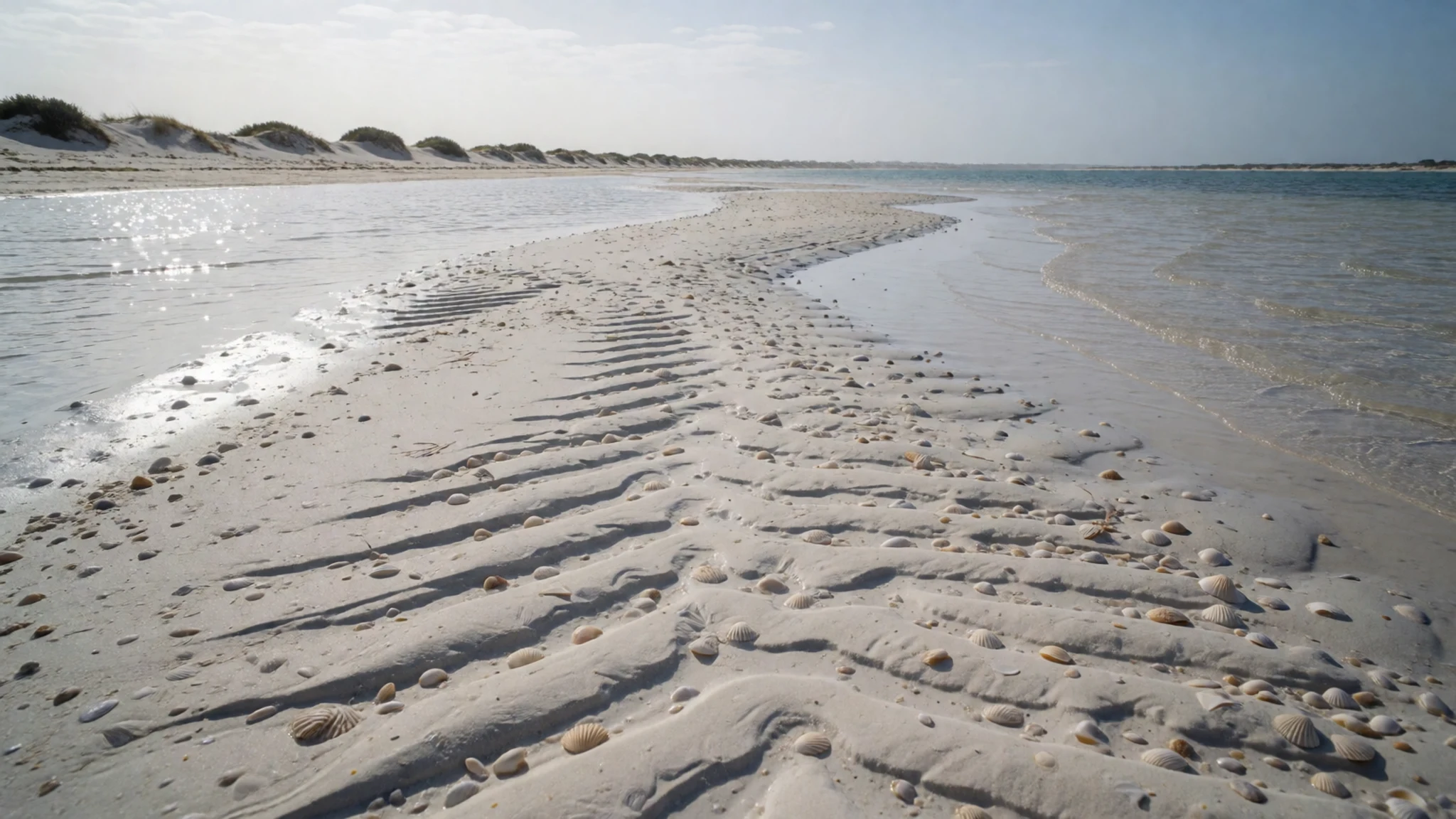
Culture
Djerba is a Tunisian island where Muslim, Berber and Jewish traditions have shaped daily life for centuries, and the mix shows in its towns and villages. Arabic and French are widely spoken in towns and resorts, and in a few villages a Berber language is still heard. Most people are relaxed about visitors, but the island's religious sites are working places, and their rules matter more than they do on the beach. Friday prayers at the mosques and the observance of Ramadan set the rhythm of the day in towns like Houmt Souk, so plan shopping and meals around them. At El Ghriba and other synagogues, visitors are expected to dress modestly and to ask before entering a room where services are under way. Hospitality runs deep, so accepting a glass of mint tea is a kind gesture. Ask before photographing people at the market stalls or in villages, since some people prefer not to be photographed, and never take pictures inside a prayer room.
What to wear
Traditional dress on Djerba draws on the wider Berber and Tunisian tradition of woollen cloth and dark, loose robes, worn for warmth in winter and for modesty in public. The reference photographs show a hooded garment known as the djerba hood, and striped woollen cloth belongs to the island's older textile story. The exact cut and dyeing methods vary by village and era, so check with a local museum or craft shop before buying anything as a souvenir.
People wear everyday clothes now, much as they do across Tunisia. In the towns, jeans, shirts and sensible shoes are common, and many women wear headscarves. Traditional dress appears mainly at weddings and festivals. The resort areas are relaxed, but clothing becomes more conservative as soon as you step into a village or a religious site.
A visitor should dress for heat first. Light cotton or linen, with shoulders and knees covered, works in towns and at sacred sites, and a scarf is useful for covering the head or shoulders in a synagogue or mosque. Swimwear belongs on the beach and at the pool, so change before walking through a village. For the terrain, closed shoes or sturdy sandals suit sandy lanes and rocky shorelines, and a hat is essential in summer.
What to eat
- Grilled fish — Fish grills in Ajim and along the coast
Fresh fish grilled over charcoal is the island's signature meal. At the simpler fish grills, the catch is often displayed on ice, so diners choose a fish by weight and watch it cook. It is usually served with salad, bread and a squeeze of lemon.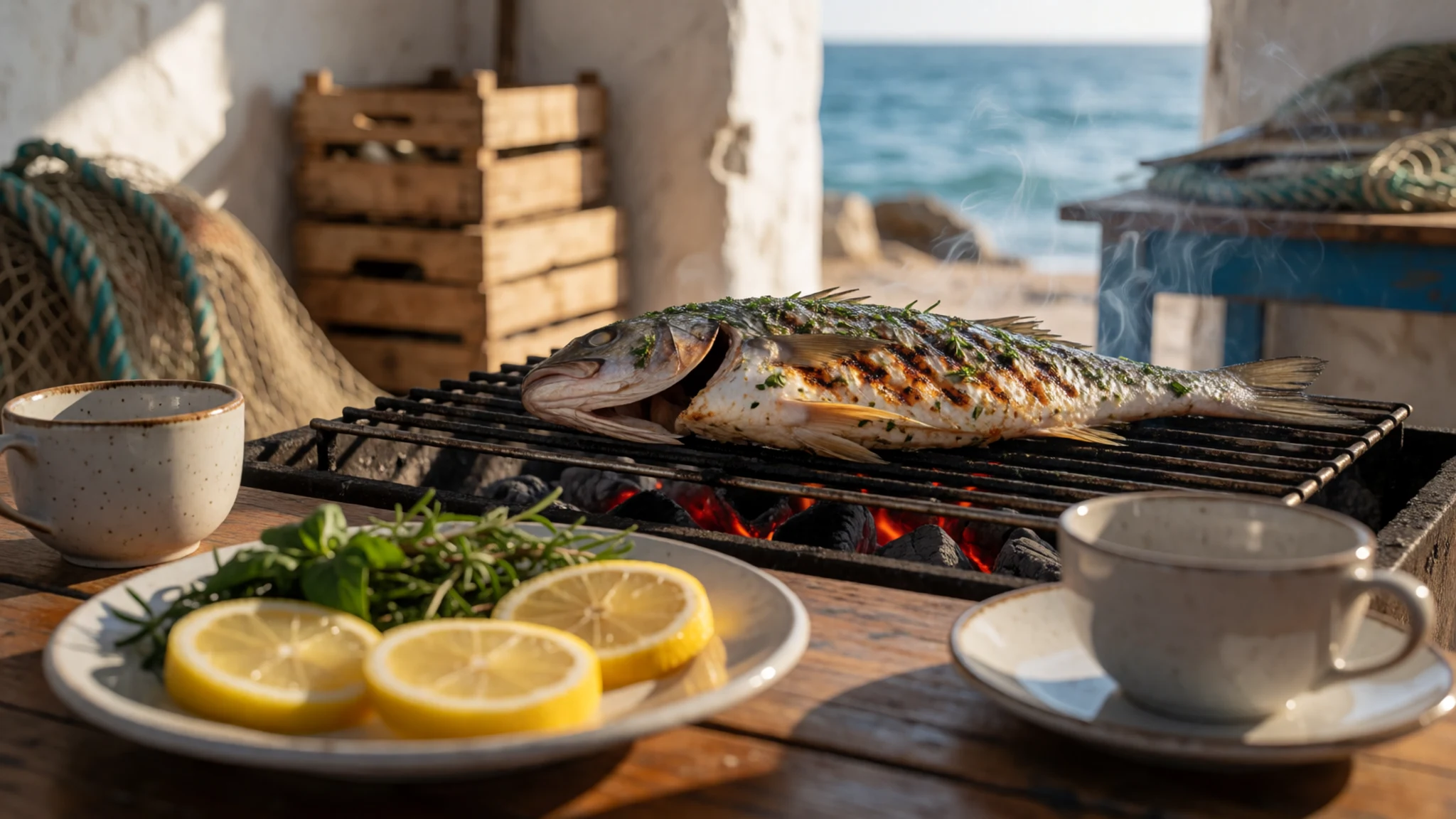
- Couscous with fish or lamb — Family-run restaurants in Houmt Souk and the coastal villages
Couscous here is steamed semolina served with a rich broth and either fish or lamb. The fish version is the coastal favourite, with vegetables and spices in the sauce. Lamb versions are common in the towns and at family tables.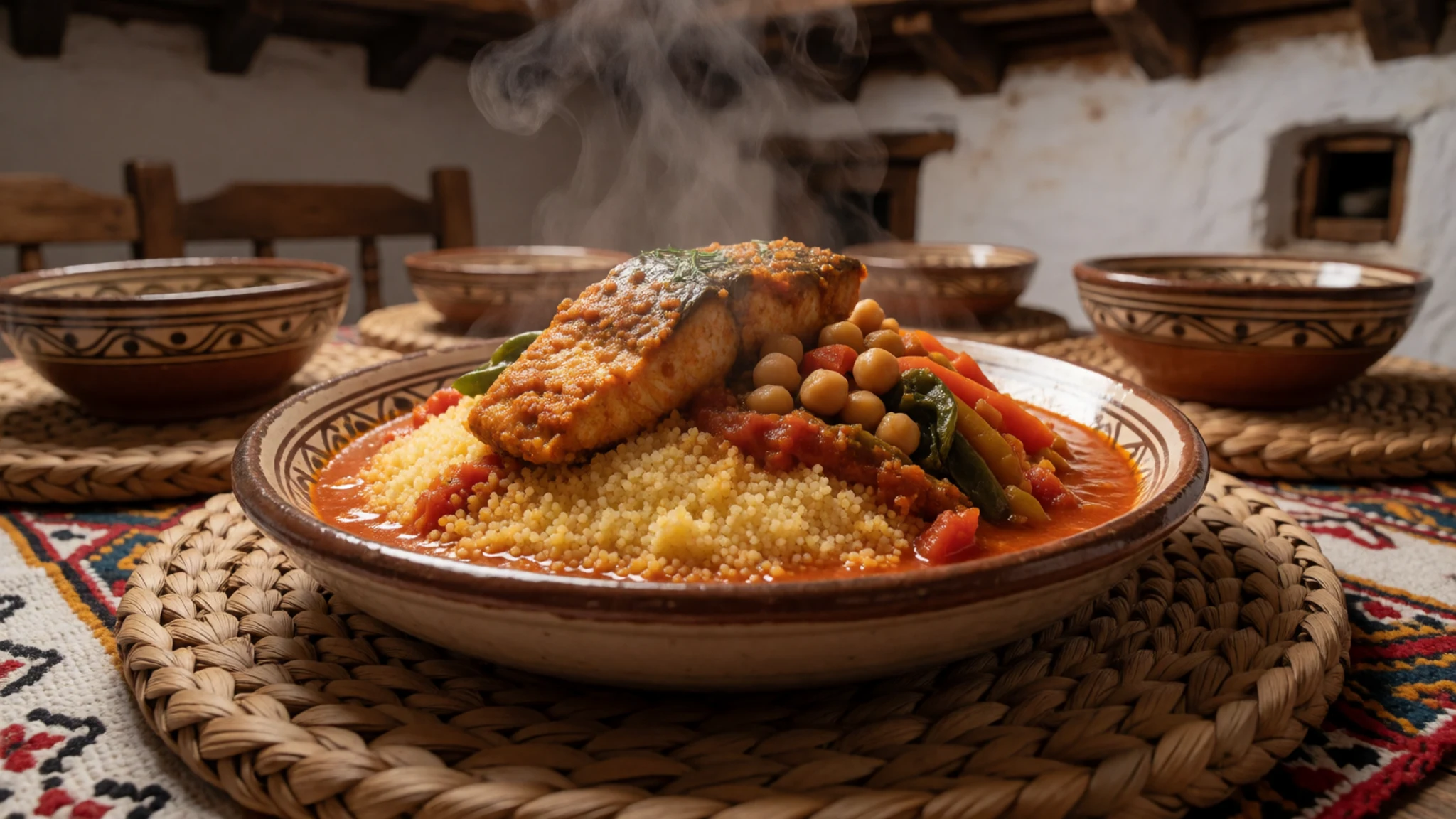
- Brik à l'oeuf — Street stalls and cafés around the Houmt Souk markets
Brik is a thin pastry parcel folded around an egg, a little tuna or herbs, and fried until crisp. Eaten hot, the yolk should still be soft in the middle. It makes a quick breakfast or snack, and stalls near the market turn them out fast. - Lablabi — Early-morning counters in the Houmt Souk market streets
Lablabi is a warming chickpea soup, thickened with bread and seasoned with cumin, garlic and harissa. It is often topped with a whole egg, tuna and olive oil. Locals eat it for breakfast or lunch, usually in a bowl at a plain counter. - Salade mechouia — Cafés and family restaurants throughout Houmt Souk
Salade mechouia is a smoky mix of grilled peppers, tomatoes and onions, dressed with oil, garlic and lemon. It is served cold as a starter across the island, and at many eateries it comes with bread and tuna.
Plan it
Best time. Spring (March–April) and late autumn (November) are the most comfortable, with warm days and mild evenings. Summer is hot and dry, and the beaches are at their busiest. Winter is mild but quiet, and flamingos gather at Ras Rmel from October.
How long. 2–3
Getting there. Fly into the island's airport, which is served by Tunisair and some European charter airlines; a taxi is the main option from there, and a metered fare to Houmt Souk is the usual choice. From Tunis, long-distance buses reach the island with a ferry crossing included, and night services are common. Trains run only as far as Gabès on the mainland, where road transport and a ferry complete the journey.
Budget. low
Tips
- Book resort hotels early for July and August, when package tours fill them
- Visit the markets in the morning, before the midday heat builds
- Carry cash for stalls, small sites and taxis, as cards are not accepted everywhere
- Drink plenty of water, especially in summer and away from the sea breeze
- Arrange one- or two-day trips into the western desert through a tour agency
Etiquette
- Dress modestly for mosques and synagogues, covering shoulders and knees
- Ask before photographing people, especially in villages and at market stalls
- Keep swimwear to the beach and pool, and cover up when walking through villages
Nearby
Sources
- Wikidata Q188938 (CC0)
- Wikipedia: Djerba (rev 1379211038) (CC BY-SA 4.0)
- Wikivoyage: Djerba (rev 5375032) (CC BY-SA 4.0)
- ISD highres ISS002 ISS002-749-82 3.JPG (Public domain)
- Djerba Island (Landsat 8 image of Ajim) (Public domain)
- Lag BaOmer festival in Djerba (CC BY-SA 4.0)
- Ecole primaire Taourit Djerba, WikiChallenge 2022 (CC BY-SA 4.0)
- An empty chair at sunset waiting for the sea lovers (CC0 1.0)
- Coucher du Soleil à Sidi Yeti (CC BY 3.0)
- Djerba hood (CC0 1.0)
- Jerba Ajim (CC BY 3.0)


