Utica
Utica, Tunisia
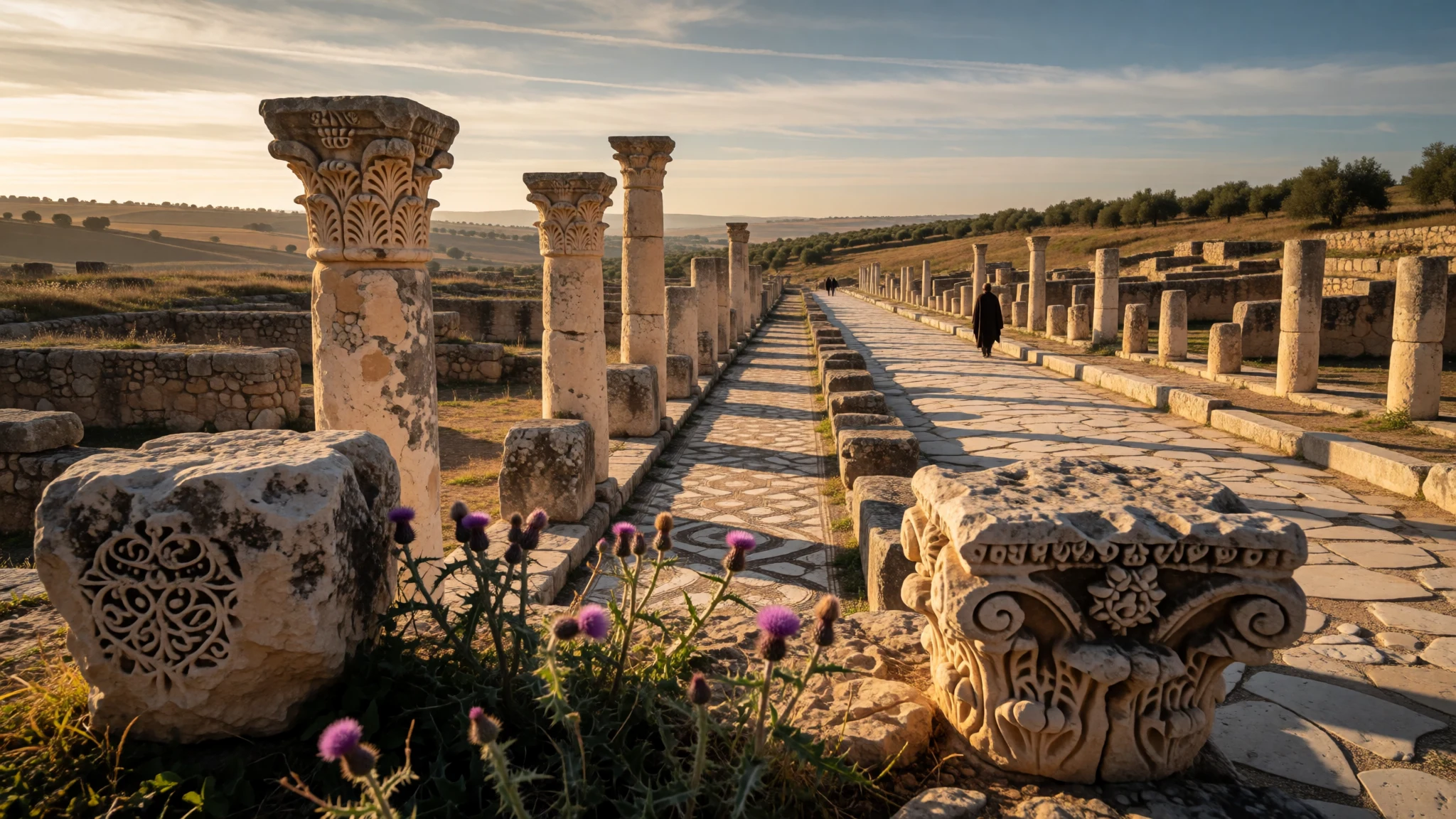
Visit Utica to walk through ancient Phoenician and Roman ruins that now rest quietly inland, far from the silted Mediterranean shoreline.
The place
Utica stands as a quiet reminder of antiquity, located within the Bizerte Governorate of Tunisia. Originally established near the outflow of the Medjerda River into the Mediterranean Sea, the settlement now sits further inland. Centuries of deforestation and intensive agriculture upriver carried immense quantities of sediment downstream, gradually silting up the original river mouth and leaving the ancient port stranded miles from the modern coast. Today, visitors exploring Utica encounter a serene landscape of scattered stone foundations, mosaic fragments, and weathered columns that emerge from the Tunisian earth. Unlike the heavily visited beach resorts along the coast, this archaeological zone offers a contemplative atmosphere where travellers can wander through remnants of Roman dwellings and Punic burial sites without the distraction of large crowds. The surrounding countryside remains largely rural and agricultural, giving the entire area a sense of timeless isolation. Understanding the geography requires looking past the dry fields to picture a time when merchant ships navigated these very waters to trade with Phoenician settlers. The shift from a coastal harbour to an inland ruin tells a powerful story of environmental change over millennia, making the journey here deeply rewarding for anyone interested in the physical transformation of the Mediterranean landscape. Walking among the excavated walls allows visitors to appreciate the scale of engineering achieved by ancient builders who once anchored their maritime trade networks in this fertile North African valley.
Its story
Utica holds a significant place in Mediterranean history as a vital outpost for ancient navigators. Classical authors traditionally dated its foundation to around eleven hundred BCE, making it a pioneer among Phoenician ventures in the region, though modern archaeological findings point towards establishment by the eighth century BCE. The settlement initially served as a strategic port on the maritime trade route connecting Phoenicia to the Atlantic Ocean and the Straits of Gibraltar, facilitating the exchange of valuable commodities such as tin. Early mariners utilised nearby coastal points for shelter while maintaining a flourishing commercial hub.
As Carthage grew into a dominant Mediterranean power, Utica maintained a distinct political and economic identity for centuries, preserving its autonomy well into the middle of the first millennium BCE. Eventually, the city fell under Punic control, entering a period as a privileged ally before commercial rivalries began to strain relations. This delicate alliance ruptured following the First Punic War, when disgruntled mercenaries revolted against Carthage, drawing Utica into broader regional conflicts. Following the ultimate defeat of Carthage by Roman forces, Utica transitioned into a major Roman colony, serving as an administrative and cultural center for seven centuries.
During this protracted Roman era, the town expanded with grand villas, public baths, and elaborate colonnades adorned with fine mosaics. The inhabitants enjoyed the stability of Roman provincial administration until the seventh-century Arab conquests transformed the cultural and political map of North Africa, slowly drawing the curtain on the classical era.
What to see
- The Archaeological Site of Utica — Main archaeological zone
The archaeological site of Utica reveals the skeletal remains of ancient Roman town planning, featuring excavated street grids, stone courtyards, and crumbling partition walls that stretch across the open Tunisian countryside. Visitors can wander freely among sunken floor plans and trace the outlines of once-grand residential blocks. - The Site Museum — Site entrance pavilion
The site museum houses a curated collection of artefacts recovered from the surrounding excavations, including weathered marble statues, terracotta oil lamps, and fragments of intricate floor mosaics. Examining these preserved objects offers a tangible connection to the daily lives and artistic tastes of the ancient inhabitants who once walked these streets. - Punic Tombs — Northern sector of the ruins
The Punic tombs provide a sombre glimpse into ancient burial customs, consisting of underground chamber graves hewn directly into the bedrock. Descending into these quiet subterranean spaces allows travellers to observe the distinct architectural techniques employed by early settlers long before the arrival of Roman engineers. - Maison de l'Insula II — Central residential sector
The Maison de l'Insula II showcases the remains of a substantial Roman patrician residence complete with private stable quarters and peristyle courtyards. Walking through the surviving doorways gives a clear impression of domestic luxury during the height of the imperial period. - Mosaic Pavements — Various excavated villas
The mosaic pavements scattered throughout the excavated villa floors display geometric patterns and mythological scenes crafted from tiny colored stones. These fragile artworks survive exposed to the elements, demonstrating the remarkable craftsmanship and enduring decorative traditions of classical artisans.
Culture
Tunisia is a predominantly Muslim nation with a rich cultural tapestry shaped by centuries of diverse influences. Visitors exploring Utica and surrounding regions will find that social customs vary significantly between urban centres and rural districts. While the capital and coastal tourist zones are relatively relaxed, inland areas tend to maintain more traditional and conservative values regarding public conduct and attire. The population also includes long-established Christian and Jewish communities who practise their faiths freely alongside the majority. Society places a strong emphasis on hospitality, family bonds, and respectful interpersonal interactions. When visiting local markets or rural villages near historical sites, travellers are advised to greet shopkeepers politely and maintain an open, courteous demeanor. Always respect local religious observances and dress modestly by covering shoulders and knees when exploring outside designated beach and hotel areas.
What to wear
In Utica and across Tunisia, traditional dress reflects a practical adaptation to the warm Mediterranean climate, featuring lightweight cotton garments, flowing tunics, and traditional headscarves worn by many older women in rural communities. Traditional textiles often highlight intricate embroidery and local weaving skills passed down through generations. Today, younger generations and urban residents primarily wear modern Western-style clothing such as jeans, shirts, and casual jackets for daily life. Visitors should pack breathable, lightweight clothing suited for warm weather while ensuring modesty requirements are met. For exploring open archaeological sites like Utica, sensible walking shoes or trainers are essential to navigate uneven stone paths and dusty terrain, alongside a hat and sunscreen for protection against the strong North African sun.
What to eat
- Couscous — Traditional family eateries and local restaurants
Couscous serves as the foundational staple of Tunisian dining, prepared by steaming semolina grains until light and fluffy. It is typically served topped with slow-cooked vegetables, tender lamb, or fresh fish simmered in a spiced broth. - Tunisian Tajine — Small neighbourhood cafes and traditional canteens
Unlike the Moroccan stew of the same name, the Tunisian version is an oven-baked frittata or omelette pie. It combines diced meat, potatoes, vegetables, herbs, and generous amounts of cheese and eggs until set firm. - Harissa — Every dining table and local market stall
Harissa is a fiery chili pepper paste made from roasted red peppers, garlic, olive oil, and spices such as cumin and coriander. It is served as a potent condiment alongside almost every meal to add heat and depth of flavour. - Marqa Stews — Traditional home-style eateries across the region
Marqa stews are slow-simmered dishes prepared with meat, seasonal vegetables, and aromatic spice blends cooked gently in earthenware pots. These comforting broths are deeply flavorful and usually enjoyed scooped up with fresh bread or couscous. - Local Olives — Morning food markets and local grocery shops
Tiny, intensely flavoured local olives are harvested in abundance across the countryside and feature prominently in daily meals. They are often served cured in brine, seasoned with herbs, or pressed into high-quality cooking oils.
Plan it
Best time. March to April for pleasant spring temperatures and blooming landscapes, or October to November for mild autumn weather; summer months can be intensely hot.
How long. 1–2
Getting there. Fly into Tunis-Carthage International Airport, then hire a taxi or rent a car to drive north towards the Bizerte Governorate.
Budget. low
Tips
- Hire a private taxi from Tunis for a flexible half-day trip to the ruins
- Wear sturdy walking shoes for uneven stone terrain and loose soil
- Carry bottled water as facilities at the archaeological site are limited
- Bring cash in local currency for transport and small purchases
- Check current travel advisories before planning your journey
Etiquette
- Dress modestly by covering shoulders and knees outside beach resorts
- Ask permission before photographing local residents in rural areas
- Respect local customs during religious holidays and prayer times
Nearby
Sources
- Wikidata Q166523 (CC0)
- Wikipedia (rev 1382142940) (CC BY-SA 4.0)
- Wikivoyage (rev 5423187) (CC BY-SA 4.0)