Tunis
Tunis, Tunisia
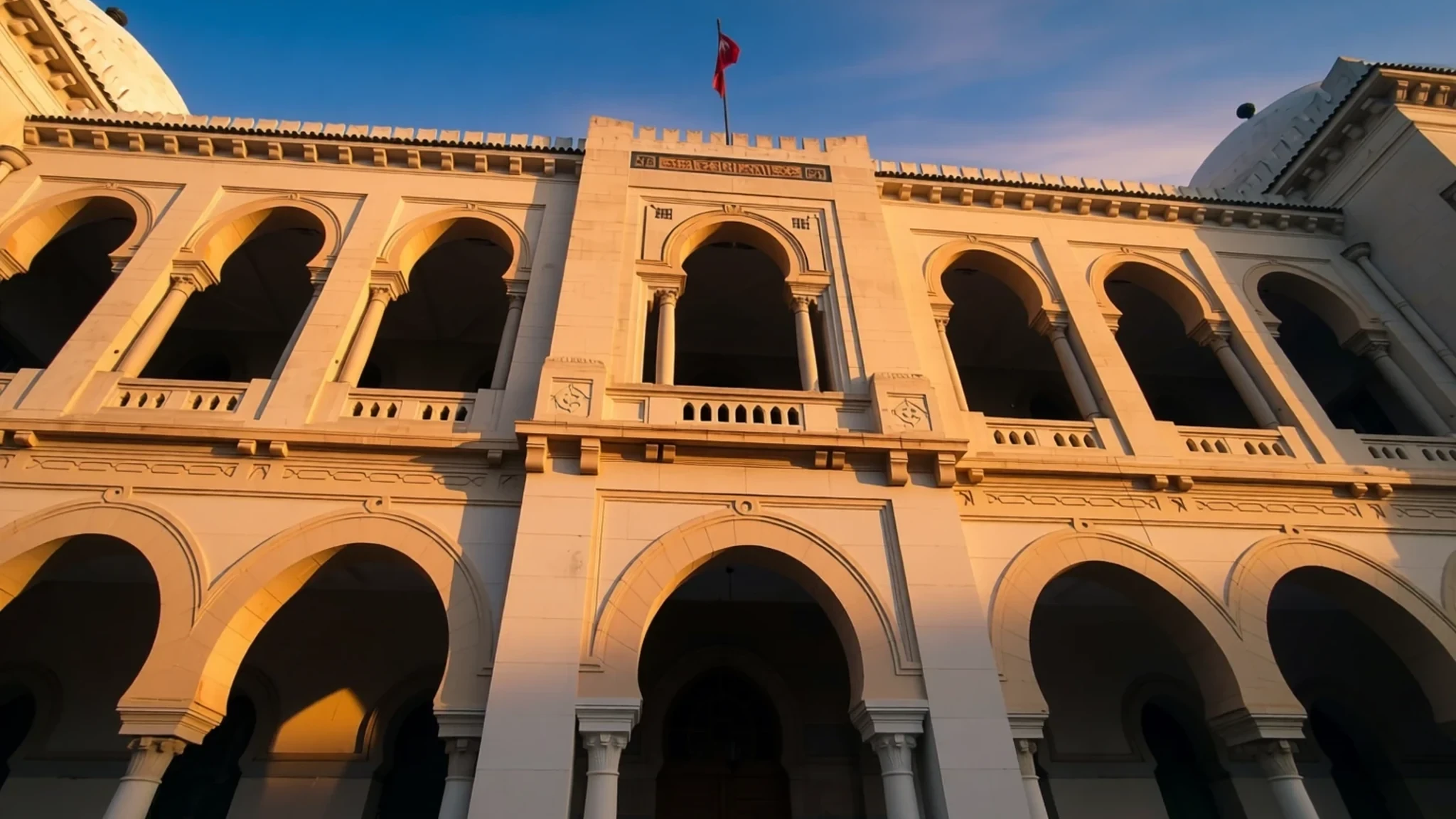
Tunis combines a walled medieval Medina, broad colonial-era avenues and the ruins of Carthage within easy reach, so it rewards slow walking.
The place
Tunis is the capital of Tunisia and by far its largest city, set on the Gulf of Tunis with the Lake of Tunis behind it and the port of La Goulette guarding the approach from the sea. The municipality holds about 600,000 people, while the wider Grand Tunis area has around 2.7 million, which makes it the third-largest city in the Maghreb after Casablanca and Algiers. Its historic heart is the Medina, a dense network of lanes, vaulted passages and old houses that is recognised as a World Heritage Site. East of the Medina, through the Sea Gate, the Ville Nouvelle opens out along the broad Avenue Habib Bourguiba, where colonial-era buildings stand against smaller, older fabric. Further east along the coast lie Carthage, La Marsa and Sidi Bou Said, separate towns in character but close enough to reach from the centre.
Being the capital, Tunis is where political and administrative life is concentrated, and it is also the centre of the country's commercial and cultural activity. The city feels busiest on weekday afternoons, when traffic thickens along the avenues and the cafés fill with office workers. The climate is Mediterranean, with the sea air moderating the heat along the shore. Because the city is built on a slope falling to the lake, with hills just above 50 metres behind it, those heights offer the clearest views back over the rooftops and the lake.
Its story
The early history of the region is hard to reconstruct. Carthage, the powerful city just to the north, left few records of its own after Rome destroyed it at the end of the Third Punic War, so much of what survives comes from Greek and Roman writers who were often rivals or enemies. The land around Tunis was first settled by Berber communities, and sources from the 4th century BC mention settlements here. The hill on which the early town stood looked out over the sea lanes and caravan routes running to and from Carthage, which made it a useful lookout as well as a place to live.
Over the centuries the settlement grew into the commercial and administrative centre of the region. Under the Hafsid dynasty, Tunis became a capital of learning and trade, and the Medina took much of the form it still has today: mosques, schools, fountains and a market quarter gathered around the great mosque. Ottoman control arrived in the sixteenth century, and the building of new mosques in the seventeenth century, beginning with the Sidi Youssef Dey Mosque, shows how closely the city stayed tied to wider Ottoman networks even as local rulers ran daily affairs.
The French protectorate later brought the wide avenues and colonial buildings that now define the Ville Nouvelle. These were laid out beside the old town rather than replacing it, which is why the contrast between the two is so visible today. During the struggle for independence, the nationalist leader Habib Bourguiba lived in Dar Maâkal Az-Zaïm, and that residence now houses a museum of the national movement. After independence Tunis became the seat of the new state, and it has remained the place where the country's politics, business and culture meet.
What to see
- Tunis Medina — Medina, the historic core
The Medina is the heart of old Tunis and a World Heritage Site, a dense labyrinth of lanes, vaulted passages, decorated houses and market stalls that can only be explored on foot. Midday and the busiest souks can be crowded, so earlier or later visits feel calmer. Workshops, shops and family homes share the same narrow streets, and the rhythm of daily life still feels close to medieval. Getting lost for an hour is part of the experience.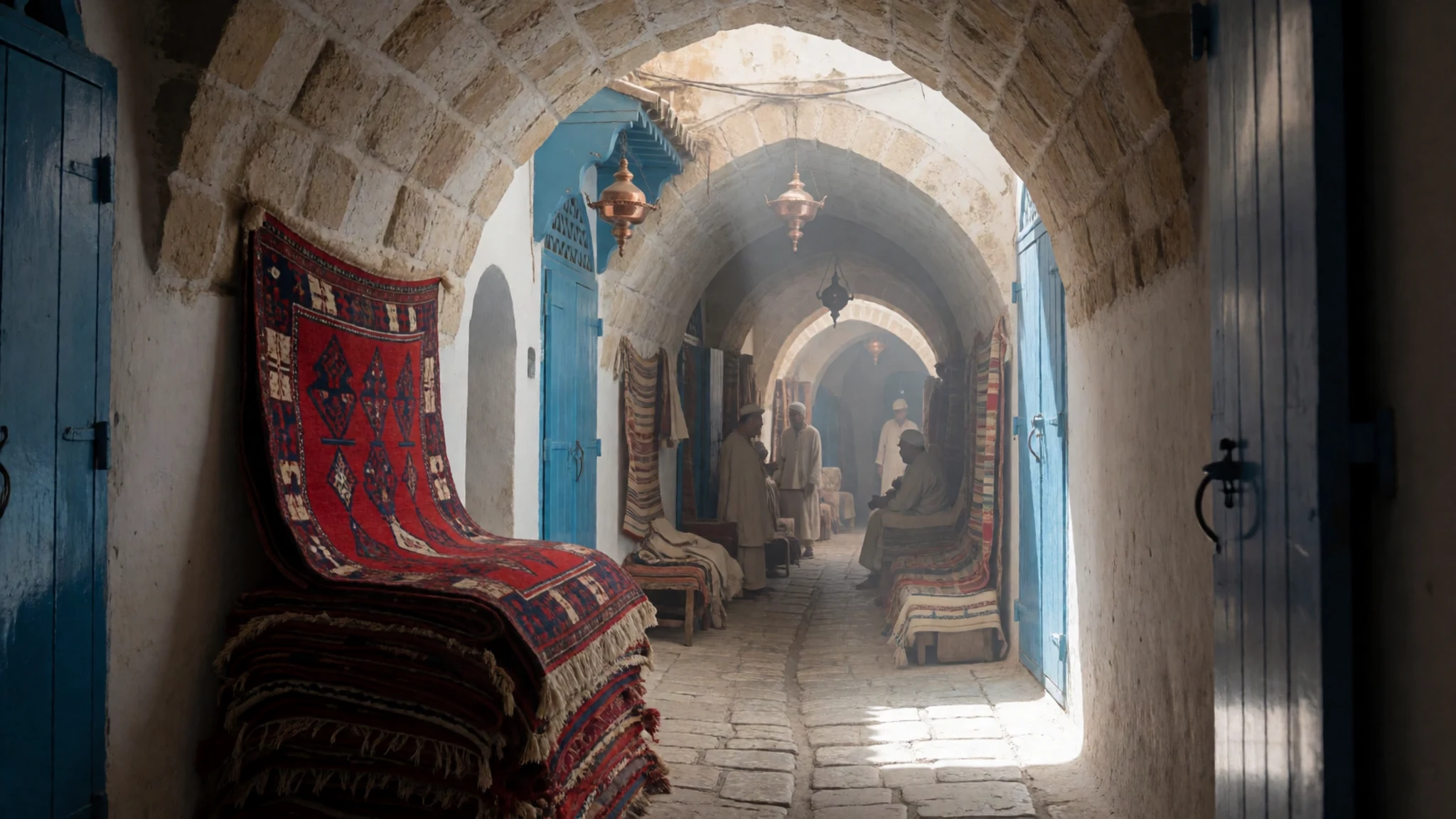
- Grande Mosquée Zitouna — Medina, near the central souks
The Zitouna is the largest and oldest mosque in Tunisia, with origins in the 8th century. Its square minaret, however, is a later addition from the 19th century and gives the skyline a distinctive shape. The mosque remains an active place of worship and a centre of learning, closely linked to the University of Ez-Zitouna. Its prayer hall and courtyard are a useful orientation point for the surrounding souks.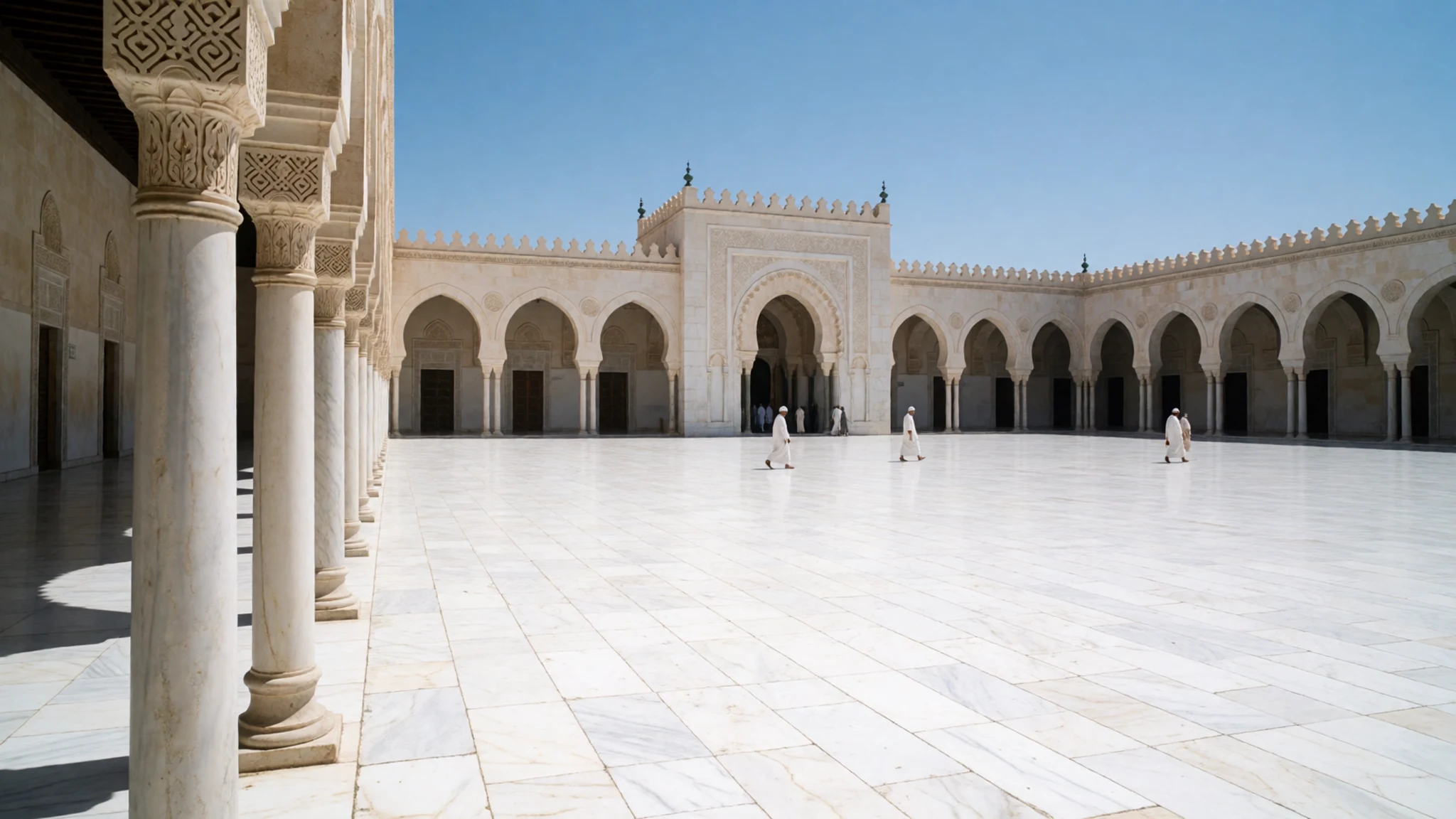
- Sidi Youssef Dey Mosque — Medina, beside the Zitouna
Opened in 1631, this was the first Ottoman mosque built in Tunis, and it remains the largest Hanafi mosque in the city. It was extensively restored in the late 19th century and now forms part of the University of Ez-Zitouna. The setting is quieter than the busiest mosques nearby, and the architecture shows the Ottoman influence that shaped the city's later centuries.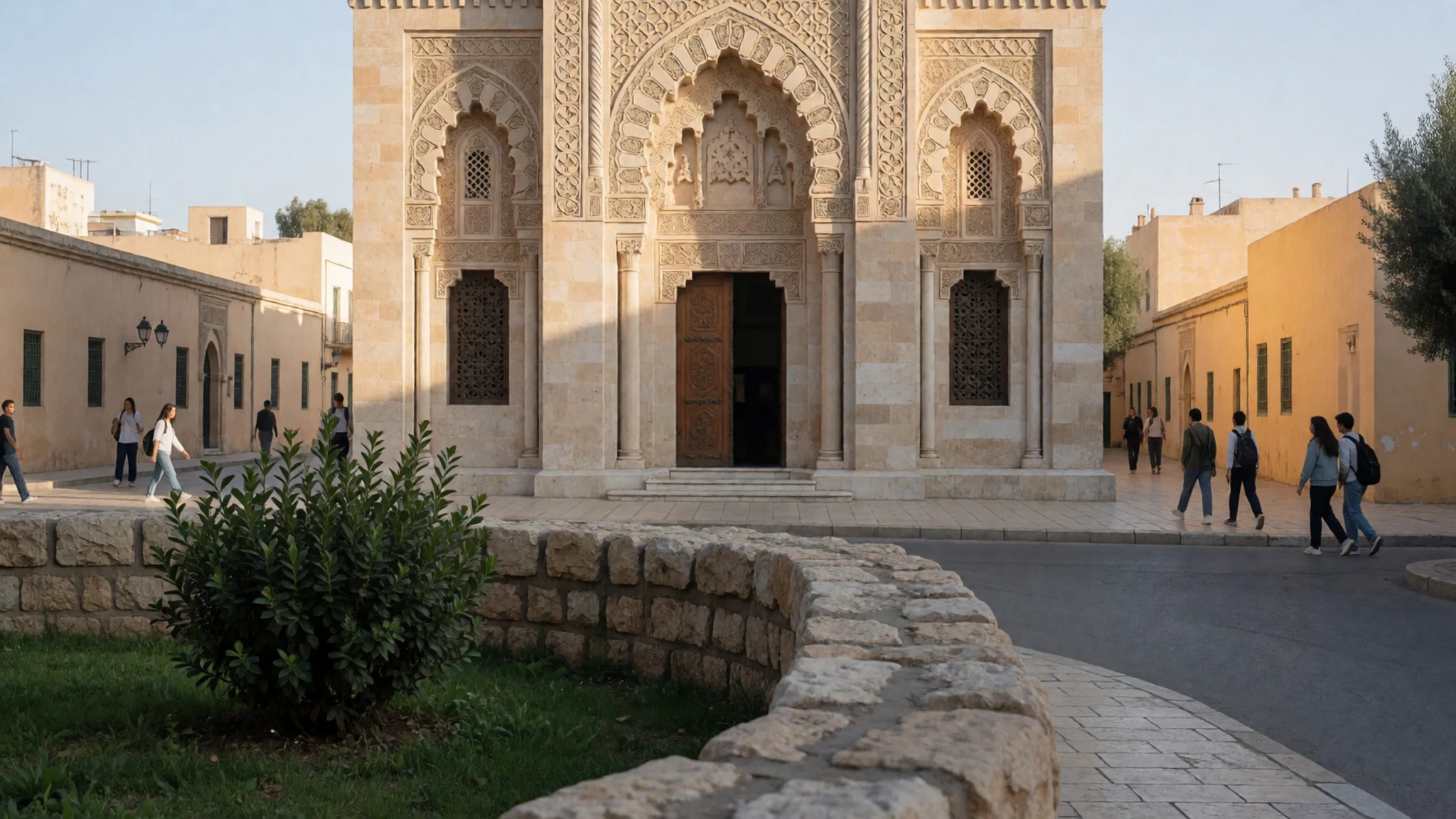
- Medersa Bachia — Medina, near the main market routes
This Quran school dates from the 18th century and has been a protected monument since 1912. Its notable feature is the public fountain outside the entrance, which gives the street a focal point. The school sits close to the main market routes, so it makes a convenient stop between the Zitouna and the Dar Ben Abdallah museum.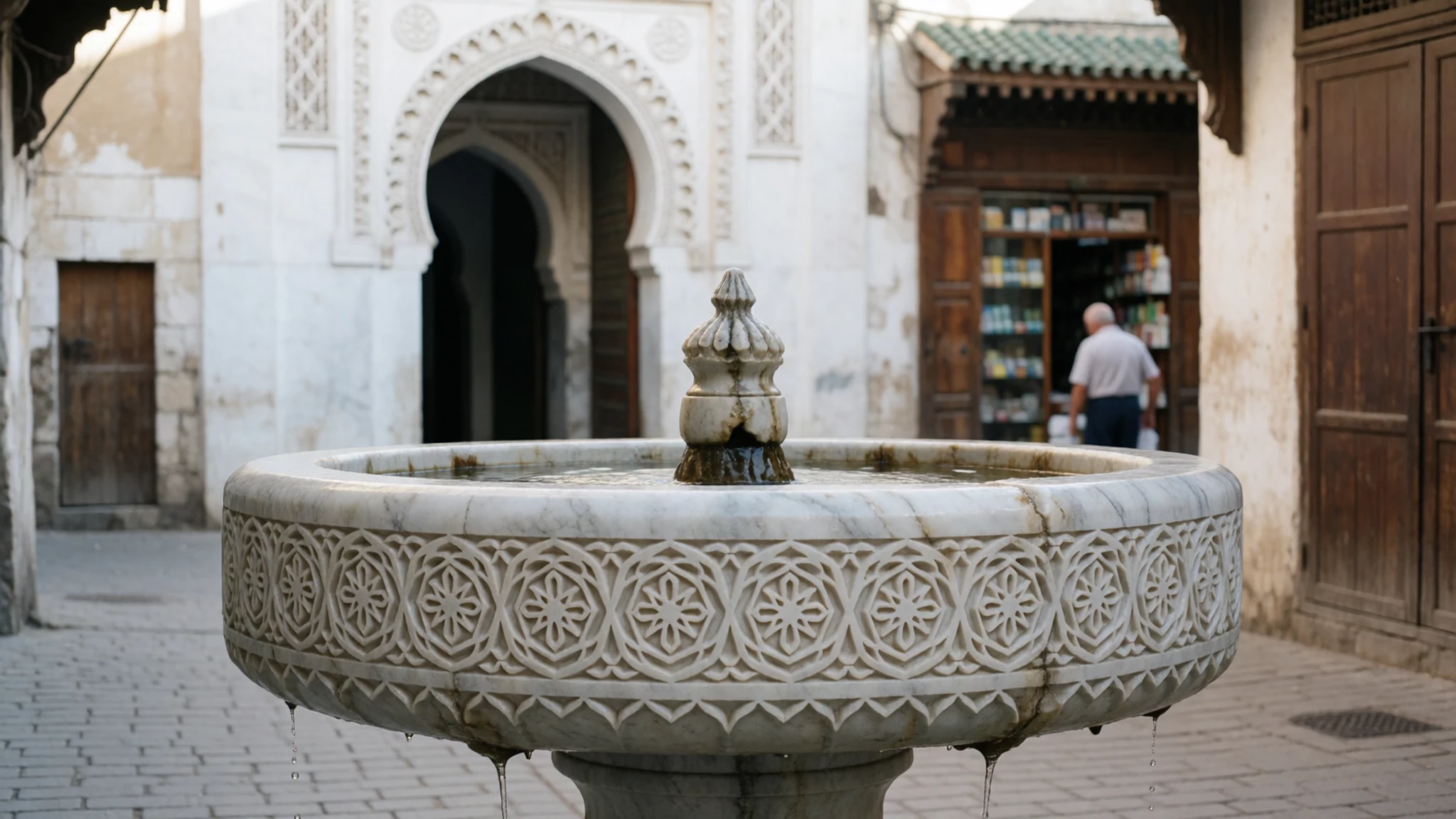
- Bab El Bahr — Where the Medina meets the Ville Nouvelle
Built in 1848 and unchanged since, this is the Sea Gate, also known as the Porte de France. It marks the boundary between the old Medina and the modern city. Traffic and pedestrians pass through it constantly, so it works better as a busy junction than as a quiet monument. Walking through from the Medina side brings you straight to the start of Avenue Habib Bourguiba.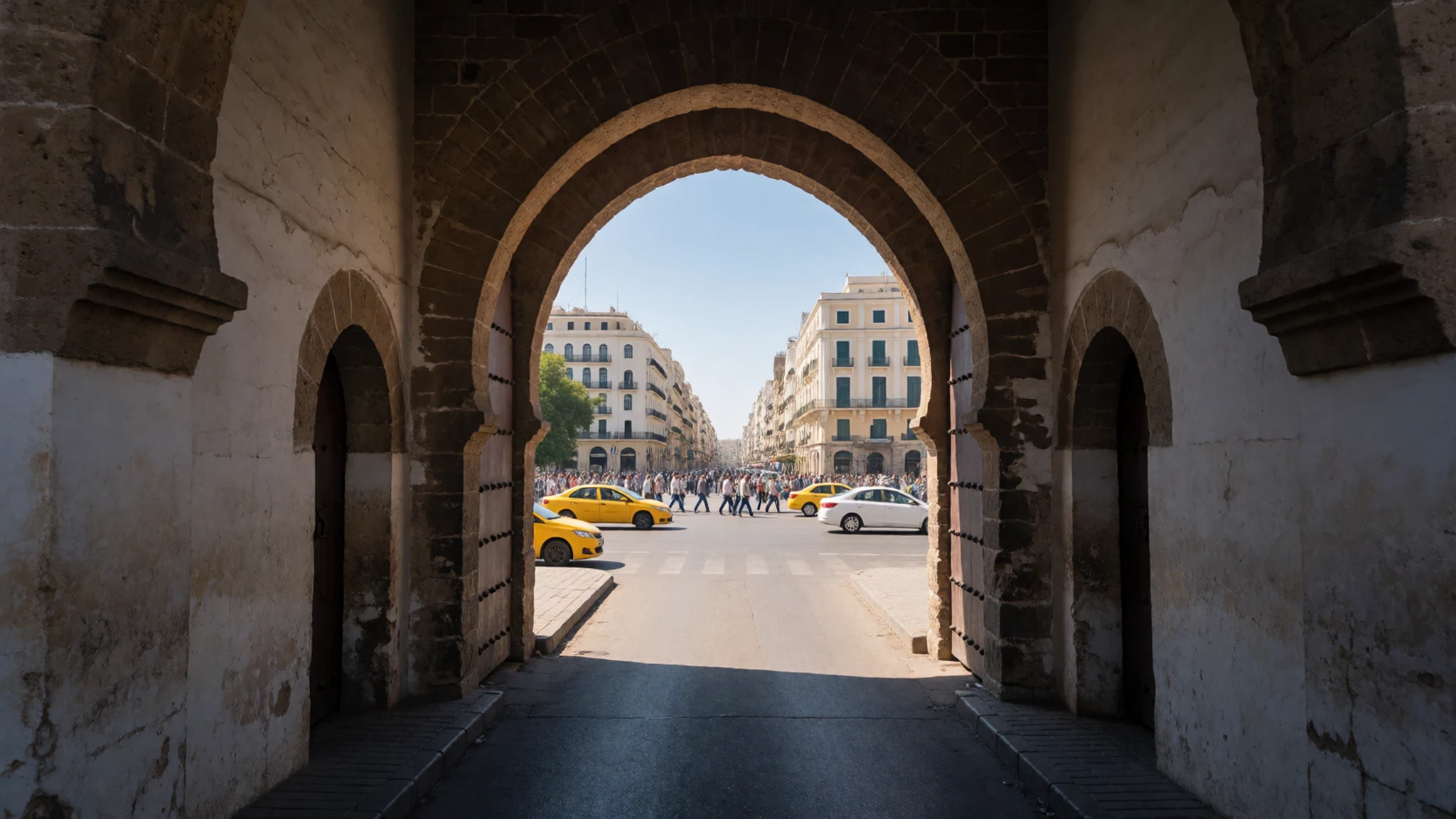
Culture
Religion, family and the old quarters shape daily life in Tunis, and the city takes its customs seriously. Most residents are Muslim, and the call to prayer structures the day in the Medina and across the wider city. The mosques are living places of worship and study, not only sights. Inside a former palace used by the Bey of Tunis since the late 1700s, the Bardo National Museum stands as the region's top archaeological site, housing one of the world's finest collections of Roman mosaics. The Dar Ben Abdallah, a palace probably dating from the 18th century, shows the everyday lives of families in the Medina. The Museum of the National Movement, in the former home of Habib Bourguiba, offers a more recent chapter.
Conversation tends to be warm and unhurried, and greetings matter before any request. In the crowded souks, bargaining is common for many goods, but it stays friendly rather than confrontational. Modesty is expected in religious spaces and in the older quarters, and many women and men dress more conservatively there than in the Ville Nouvelle. Photographing people, especially stallholders and women, needs permission first, so ask before raising a camera in the Medina.
What to wear
Traditional dress in Tunis draws on Arab, Berber, Ottoman and Andalusian influences, and a few garments carry most of the tradition. Women's formal dress has long included the malia, a large wrap usually made of silk or fine wool, often in deep colours with woven borders, worn over a long dress. Today it appears mainly at weddings and festivals. Men's traditional wear includes the jebba, a long coat often in striped or woven cloth, and the chechia, a red felt cap that remains common in older quarters. Local weaving has also produced the fouta, a flat-woven cotton textile with bold stripes that is used as a wrap at the beach, at the hammam and around the home. Names and techniques vary between families and workshops, so ask a shopkeeper about the origin of any piece before buying.
In everyday life most people in Tunis wear European-style clothing: jeans, tailored trousers, shirts and dresses. Headscarves and uncovered hair both appear in the streets. Office workers and students dress smartly, and the cafés and avenues of the Ville Nouvelle look much like those of a southern European city. Older women in the Medina are more likely to wear a traditional wrap or long outer garment, and some men still wear the chechia or a jebba on Fridays and holidays.
For a visitor, lightweight, breathable clothing that covers shoulders and knees is the sensible choice, especially for mosques and the older quarters. Summers are hot, so linen and cotton help, while a light layer suits the cooler evenings near the coast. The Medina's uneven stone paving and steps call for closed shoes with good grip, and a scarf is useful for covering your hair at religious sites.
What to eat
- Brik — Stalls and cafés in the Medina and along Avenue Habib Bourguiba, busiest at lunchtime
A thin, crisp pastry folded around egg, tuna or herbs and fried until golden. It is eaten hot, often with a squeeze of lemon and a little harissa. Brik is a quick lunch that locals eat standing up at the counter.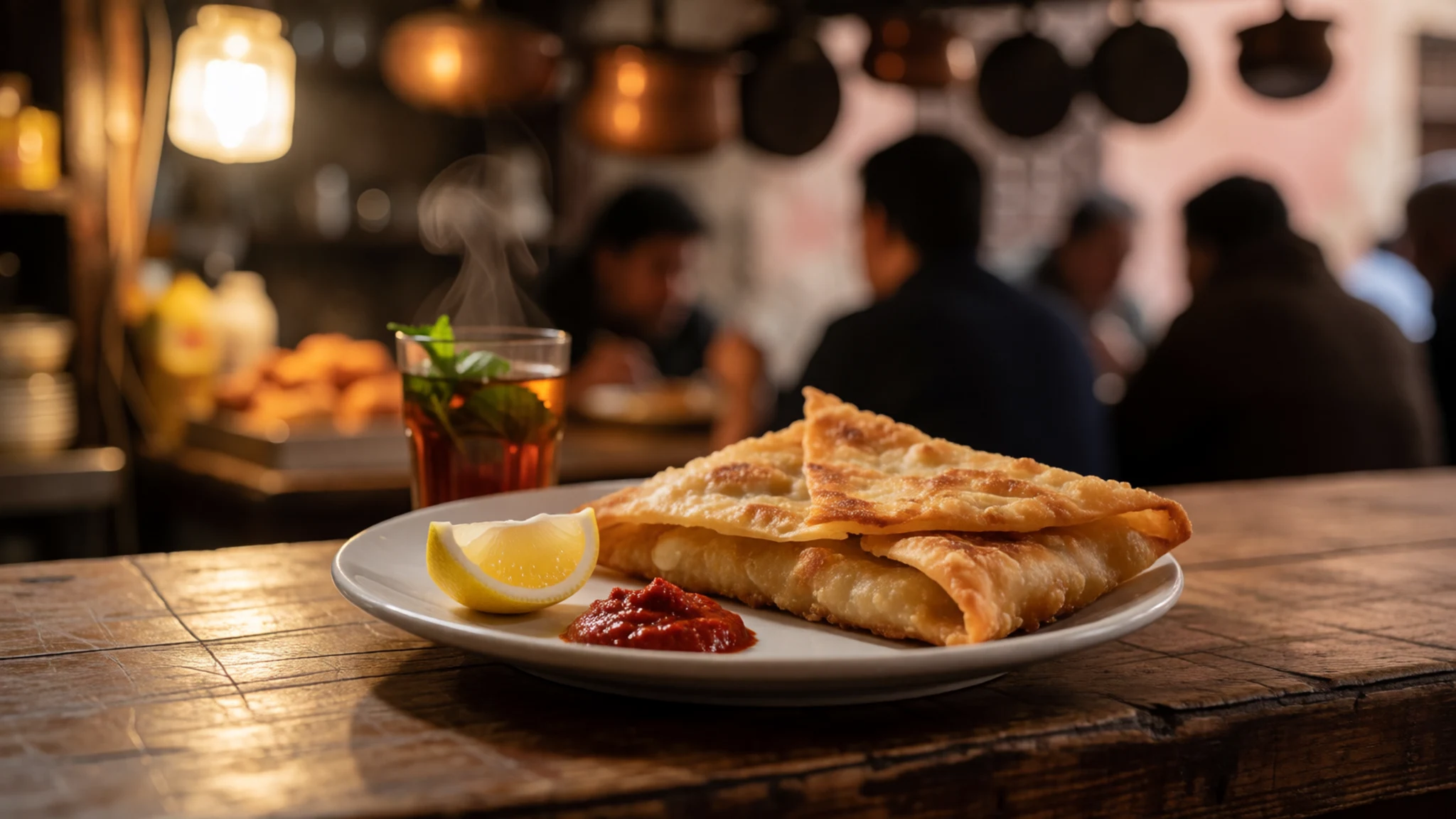
- Lablabi — Early-morning stalls near the Medina's market streets
A warming chickpea soup poured over torn bread and seasoned with cumin, garlic and harissa, often topped with an egg. It is a traditional breakfast dish and the early stalls sell out by mid-morning. Bring an appetite, as portions are generous.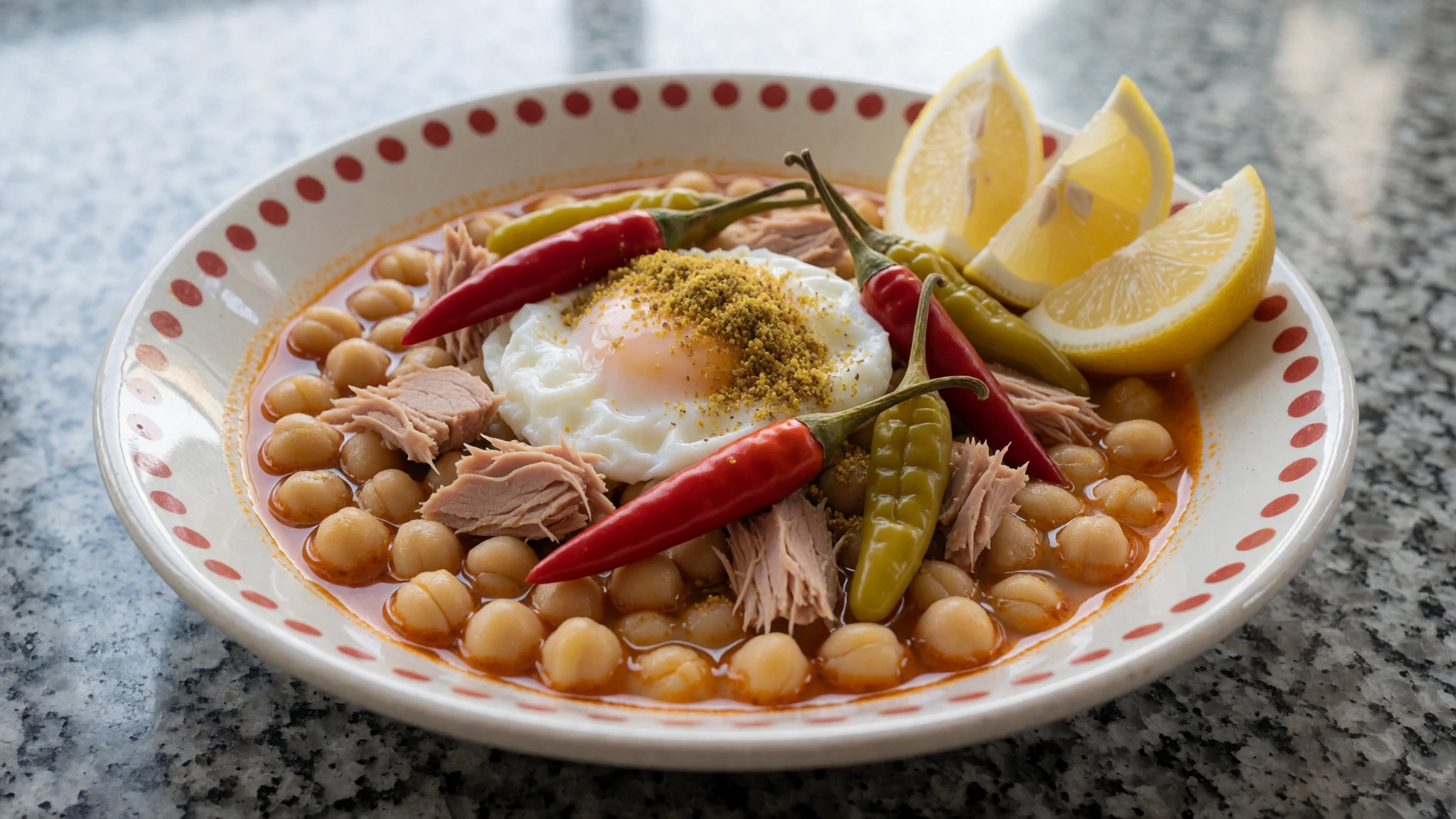
- Couscous — Family-style restaurants in the Medina and the Ville Nouvelle, especially on Fridays
Steamed semolina served with vegetables and a rich broth, with lamb, chicken or fish. Friday is the traditional day for it, and many family restaurants serve it all day. The dish is a good introduction to the city's everyday cooking.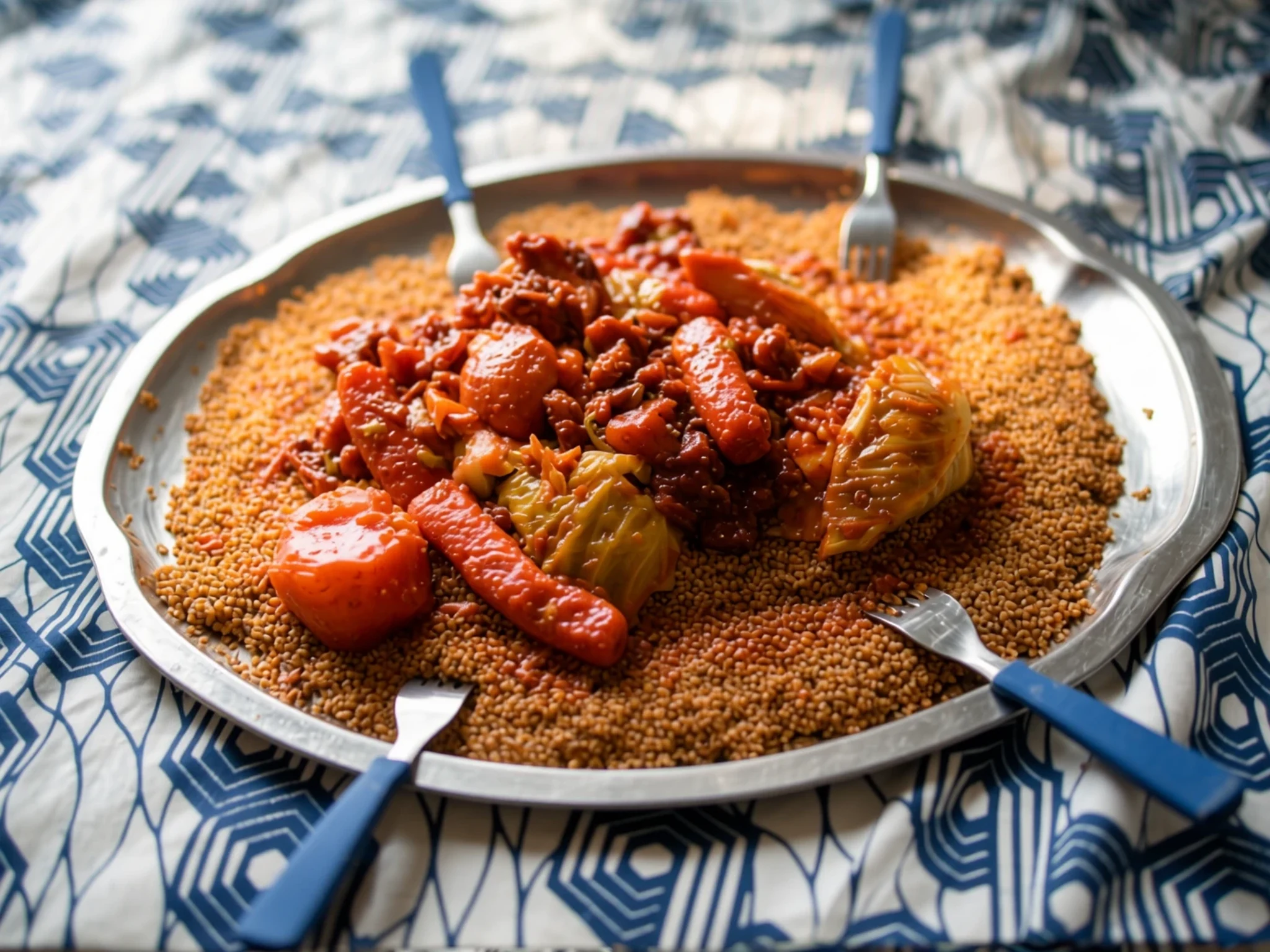
- Fried fish from the market — The fish market and seafront eateries at La Goulette, the port to the north
Choose a fish from the market stalls and have it fried on the spot, then eat it at a simple table by the water. The fish is usually plain and fresh, served with salad, bread and lemon. Waits can be long at busy times, so the sea view makes the queue more bearable. - Mint tea — Cafés in Sidi Bou Said, where the view over the bay is the main draw
Green tea sweetened heavily with sugar and brewed with fresh mint, poured from a height to froth it. It is served all day in cafés across the city. Sitting with a pot in the hillside cafés of Sidi Bou Said is one of the most relaxed ways to spend an afternoon.
Plan it
Best time. December to February are the mildest months, with highs of about 24 to 26°C, while May and October can reach nearly 40°C. Summers are hot and dry, and winters are cooler and wetter.
How long. 2–3
Getting there. Fly into Tunis-Carthage Airport, served by Tunisair and by Air France, ITA Airways and Lufthansa from European hubs, then take a taxi into the centre for the last leg.
Budget. low
Tips
- Start your Medina walk early, before the souks fill up and the heat builds.
- Change only the dinars you need at the airport, because Tunisian currency cannot be taken out of the country.
- Carry cash for small cafés and market stalls, and check card acceptance before ordering at larger restaurants.
- Allow extra time for traffic along Avenue Habib Bourguiba in the late afternoon.
- Make Sidi Bou Said or Carthage a separate half-day trip, ideally in the morning.
- Carry water on hot days, especially when walking the Medina's stone lanes.
Etiquette
- Dress modestly for mosques and the older quarters of the Medina.
- Ask permission before photographing people, especially in the souks.
- Greet people warmly before asking for directions or making a request.
Nearby
Sources
- Wikidata Q3572 (CC0)
- Wikipedia (rev 1381871718) (CC BY-SA 4.0)
- Wikivoyage (rev 5393138) (CC BY-SA 4.0)
- 01-panoramique-du-centre-de-tunis-3197369985-cropped.jpg (CC BY-SA 2.0)
- 02-tunisavehabibbourguiba.jpg (CC0 1.0)
- 03-place-7-novembre.jpg (CC BY 2.5)
- 04-statueibnkhaldountunis.jpg (CC BY 3.0)
- 05-vue-de-tunis.jpg (CC BY 3.0)
- 06-sidi-chebaan.jpg (CC BY 3.0)
- 07-super-moon-over-medina-of-tunis.jpg (CC BY-SA 4.0)
- 08-karthago-antoninus-pius-thermen.jpg (Public domain)


