Dougga
Dougga, Tunisia
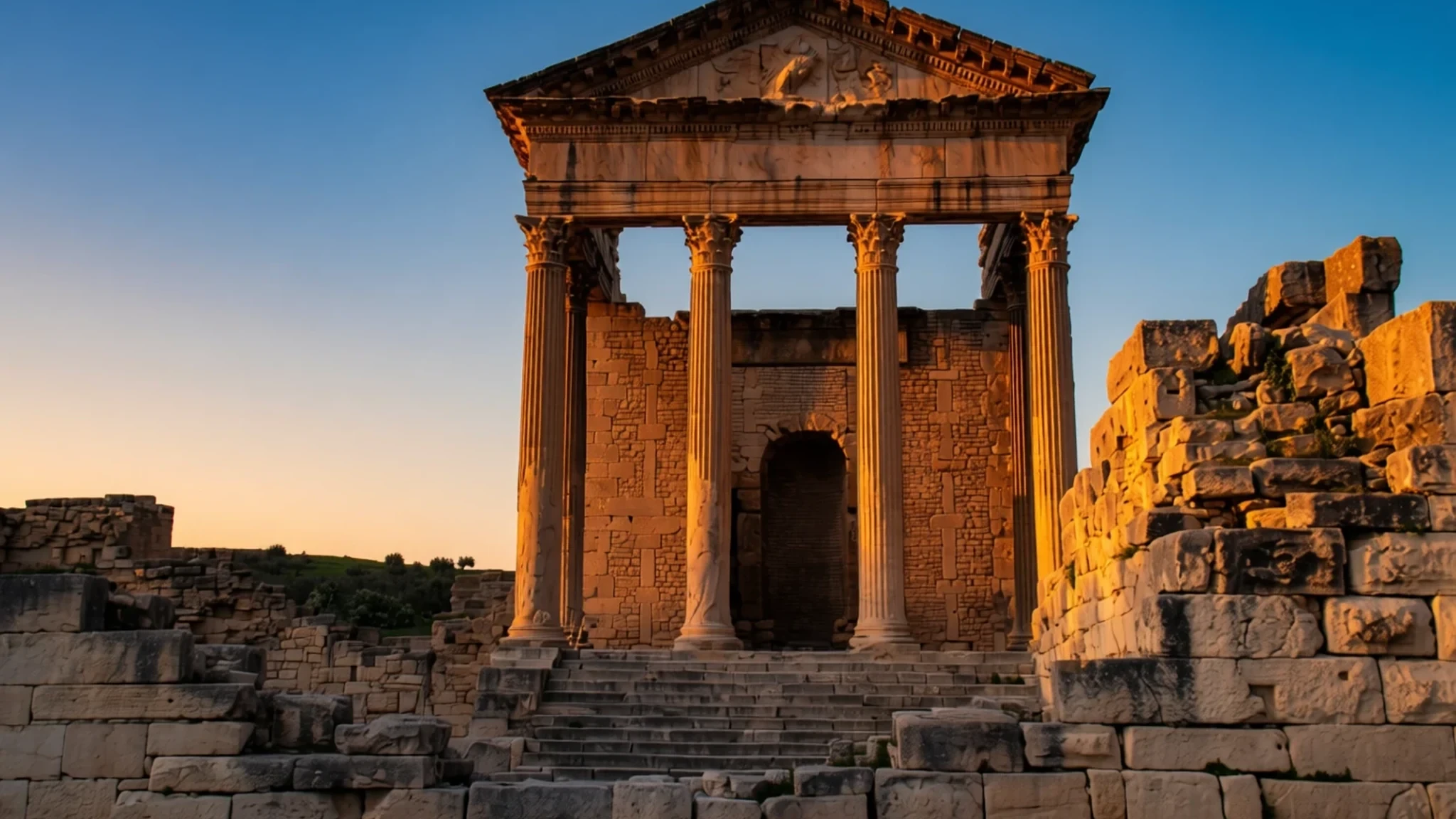
Dougga is a Roman town that still stands in its own streets, set in quiet Tunisian farmland.
The place
Dougga sits on a plateau in northern Tunisia, about 4.6 km south-south-west of the modern town of Téboursouk. The archaeological site covers 75 hectares, and its real distinction is how much of the old town is still legible. Many Roman remains in the region survive as isolated monuments among modern buildings, or have been stripped and reused over the centuries. At Dougga the streets, houses and public buildings still sit in their original arrangement, so you can walk the paving of a Roman town without much effort of imagination.
The setting explains why people settled here for so long. The ground rises to the north and drops sharply at the cliff called Kef Dougga on the east, which gave early inhabitants good natural protection. Further east runs a long ridge marking the Fossa Regia, a boundary ditch the Romans dug after Carthage fell. Dougga lies where the Punic and Berber worlds met, and from the plateau you look out over open plains that are working farmland, with olive trees growing among the ruins.
UNESCO listed the site as a World Heritage Site in 1997, largely because it has been protected from modern urban growth and so much of it survives in place. It was never built over by a later city, so it reads more like a time capsule than a museum piece. Most visitors come for a few hours, so allow time for the walk around the main ruins, and expect to be in the sun for much of it.
Its story
Dougga's written history is clearest from the Roman period, but the ground holds far older traces. Excavators have found a necropolis with dolmens, the oldest find on the site, along with a sanctuary to the Carthaginian god Ba'al Hammon, neo-Punic stone stelae and a mausoleum. Together they show a settlement that was already important before Rome arrived.
Its origins are thought to go back to the 6th century BC. Some historians identify Dougga with Tocae, a town a lieutenant of Agathocles of Syracuse seized at the end of the 4th century BC. The ancient writer Diodorus of Sicily praised the place's grandeur, though the identification remains debated because the surviving texts are thin.
The most important recent discovery changed the picture of the Numidian town. Beneath the forum, archaeologists uncovered a temple dedicated to Masinissa, the Numidian king, dated to 139 BC. Earlier scholars had believed the Numidian settlement stood apart on the plateau from the later Roman one. The temple showed instead that the forum area was already built up before Roman colonists arrived, and a building from the 2nd century BC turned up nearby.
The Roman period gave Dougga the forum, Capitol, theatre and baths that visitors see today. Because the town was never rebuilt on top of itself, its streets, sewers and public buildings still survive in place.
What to see
- The theatre — Upper site, first on the approach
The theatre is the first monument you reach after entering the site, and it is among the more intact theatres of Roman Africa. Built in 168 or 169 CE, it could seat around 3500 spectators. Sit on the rising tiers for a sense of scale, and look back over the plain beyond the stage, which frames the countryside much as it would have framed the crowds.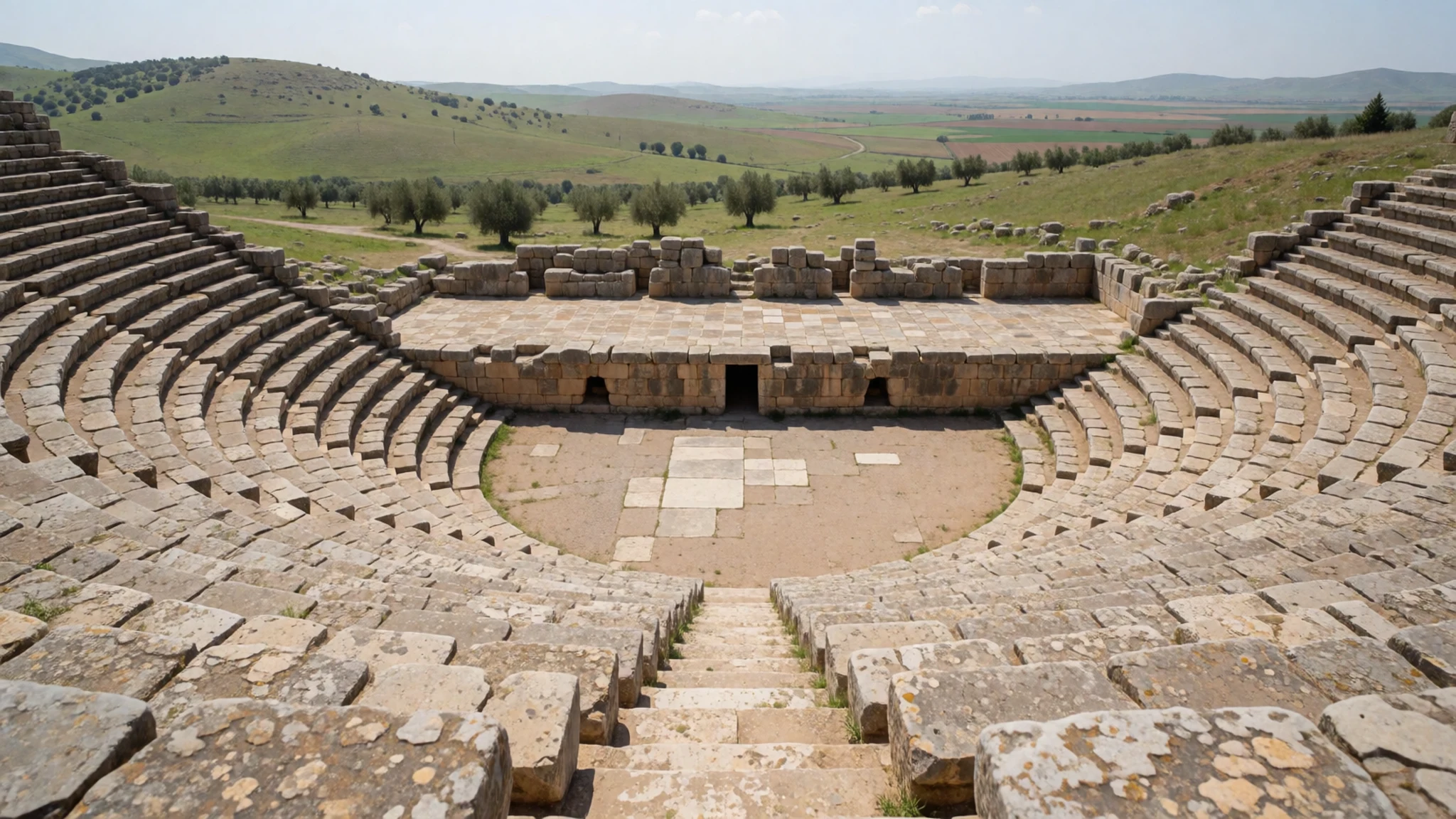
- The Capitol — Forum and marketplace area
A Roman temple from the 2nd century CE, dedicated mainly to Rome's protective triad of Jupiter, Juno and Minerva. It stands beside the marketplace and forum, so its position makes it the civic heart of the town. Walk up to its platform to see how the temple dominated the surrounding streets, and take a moment to read the inscriptions nearby.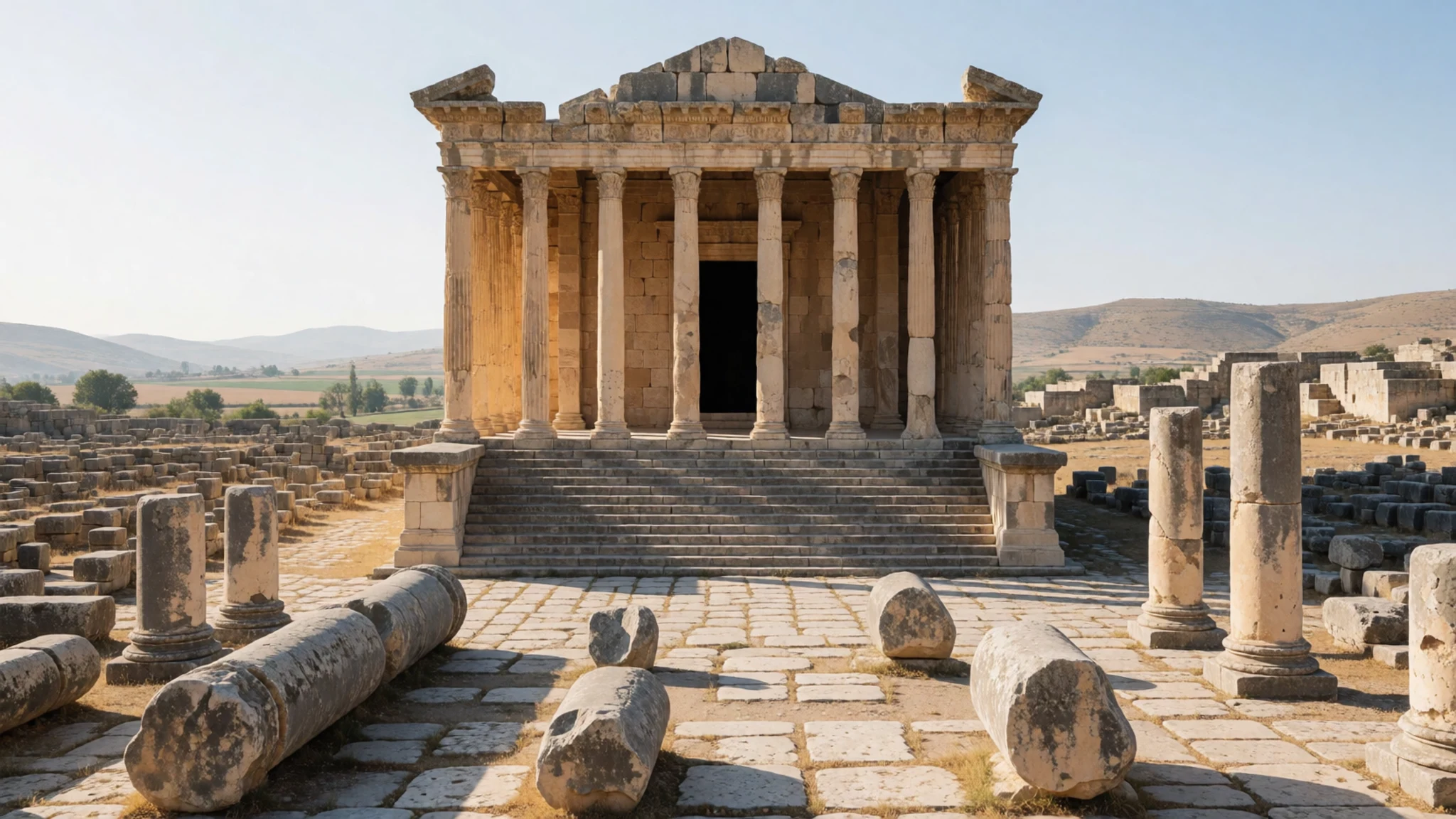
- Square of the Rose of the Winds — Town centre, near the forum
Look down for the markings set into the floor, which show twelve winds. Find the ones marking the winds that bring rain from the north, since they are the easiest to pick out. Standing over the compass lets you picture how the townspeople thought about weather, trade and the seasons.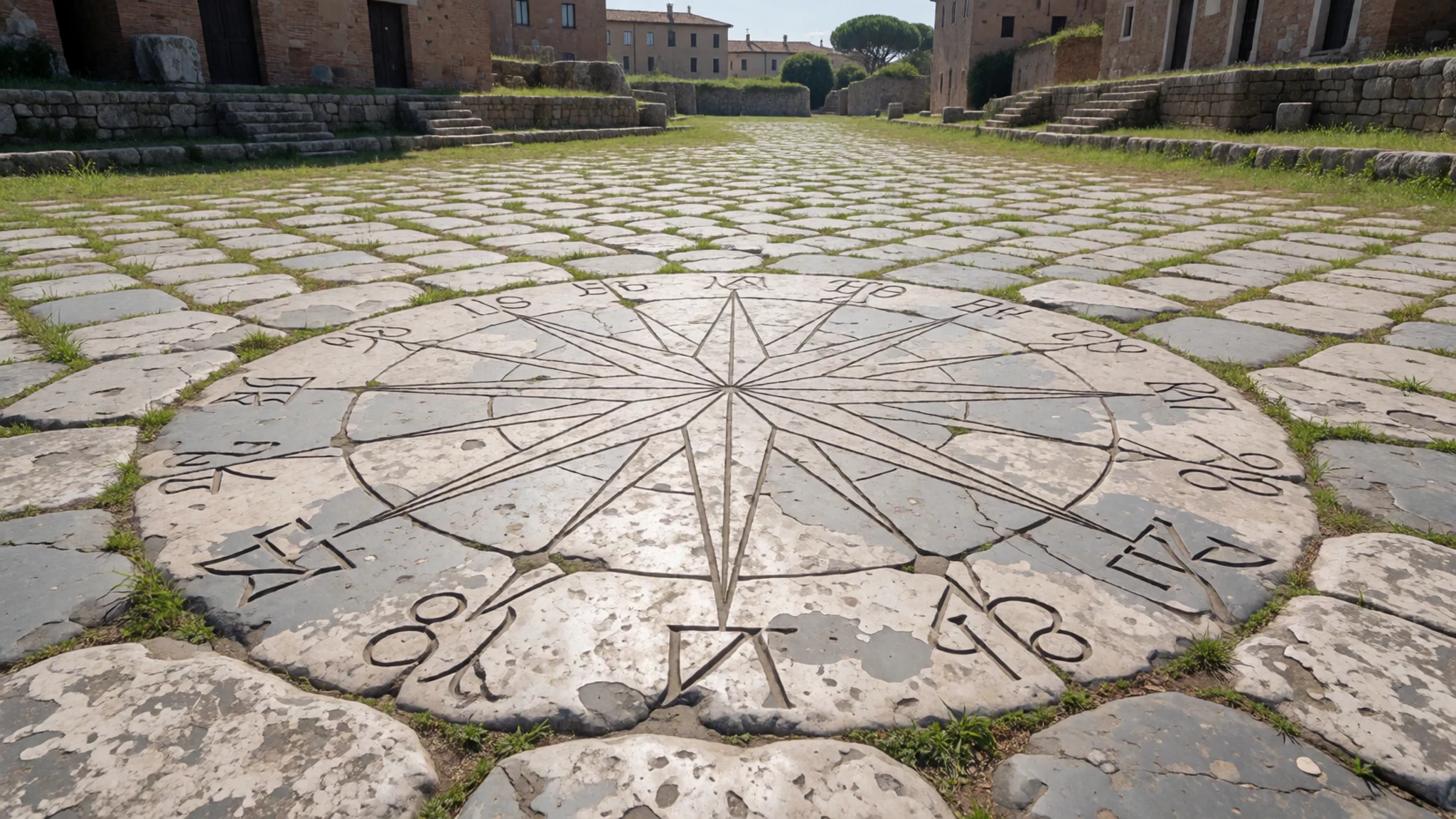
- Temple of Caelestis — Olive grove off the main path
A short way off the main path, through a grove of olive trees, a sign points to this temple. It is dedicated to Juno Caelestis, the successor of the Punic goddess Tanit. The grove keeps the walk shaded, so it is a good stop in the late morning, before the open ground becomes hot.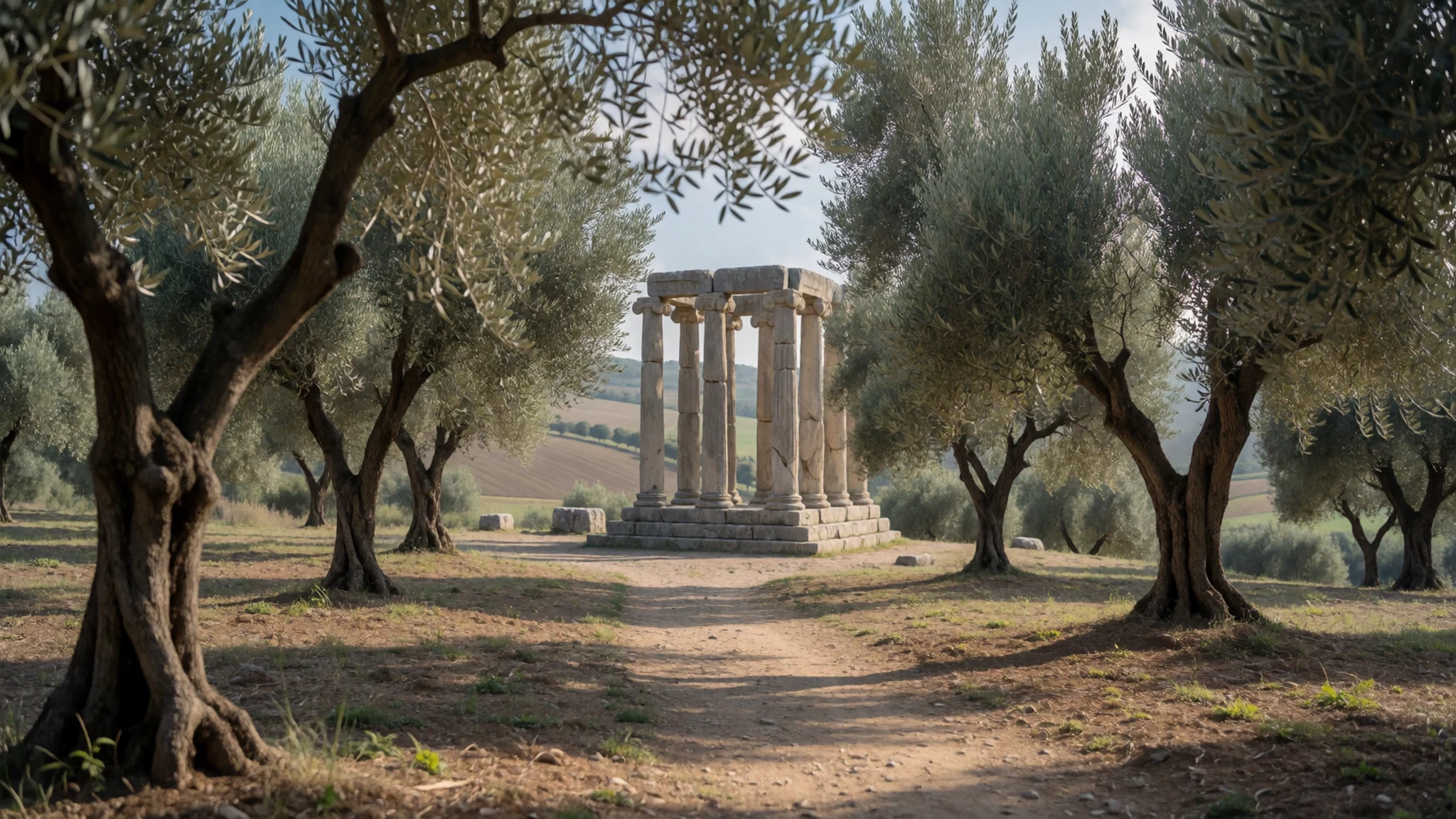
- Antonian Baths — Within the site, along the paved streets
The baths are laid out in three rooms, for hot, warm and cold bathing, and the sequence is still easy to follow. Read the floor plan as you move through, and notice how the rooms connect. The baths make a quieter contrast to the monumental civic buildings, and they are a good place to pause in the shade.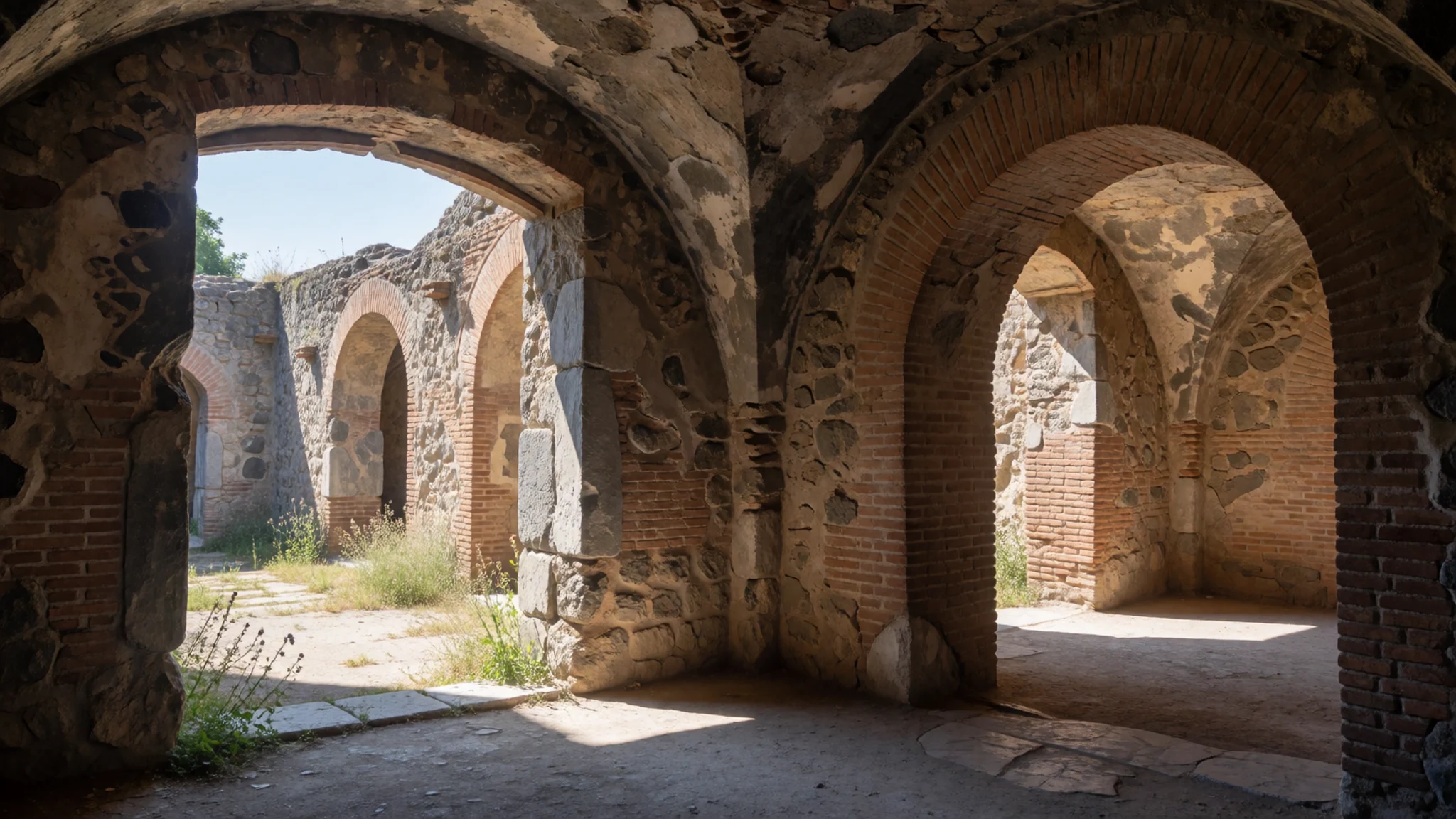
Culture
Dougga is a working countryside as well as an archaeological site, and people from Téboursouk and nearby villages visit it, so treat the ruins with the same care you would give a place of worship. The paths are uneven and the stones are old, and the marked routes keep the most fragile walls and floors safe from footfall. Guides are sometimes available on site, and they are glad to explain the inscriptions, the cut-outs for horses on the roads and the sewers beneath them. Photographing the ruins is generally fine, but ask before photographing anyone working in the fields or trading in the market. If you visit the small mosque, with its Roman columns, dress modestly and step quietly. Keep to the marked paths and do not climb on or sit on the carved stones, even where nobody is watching.
What to wear
At Dougga, the sun sets most of the rules, and the countryside sets the rest. Traditional Tunisian dress has long included the malia, a wide wrap worn by women, often in cotton or silk with woven or embroidered borders, and the chechia, a red felt cap that older men still wear in some areas. Weaving and embroidery in this region have traditionally used wool and cotton for everyday cloth and silk for celebrations, and the finest pieces appear mainly at weddings and festivals.
Around Téboursouk, most people wear ordinary clothing such as jeans, shirts and trainers, and some women wear headscarves. Traditional dress is seen most often on formal occasions rather than in daily life.
For a visit, choose loose cotton or linen in light colours, cover your shoulders and knees, and bring a wide-brimmed hat and sunglasses. A light scarf is useful for the mosque and for sun protection. Footwear matters more than fashion here: the paths are stony and uneven, so closed shoes with good grip are the sensible choice.
What to eat
- Couscous — The restaurant just below the south entrance
Steamed semolina served with vegetables and meat or fish is the everyday staple across the country. At Dougga you will find it on the single set menu at the restaurant just below the south entrance, a soup, salad and couscous meal that takes about an hour.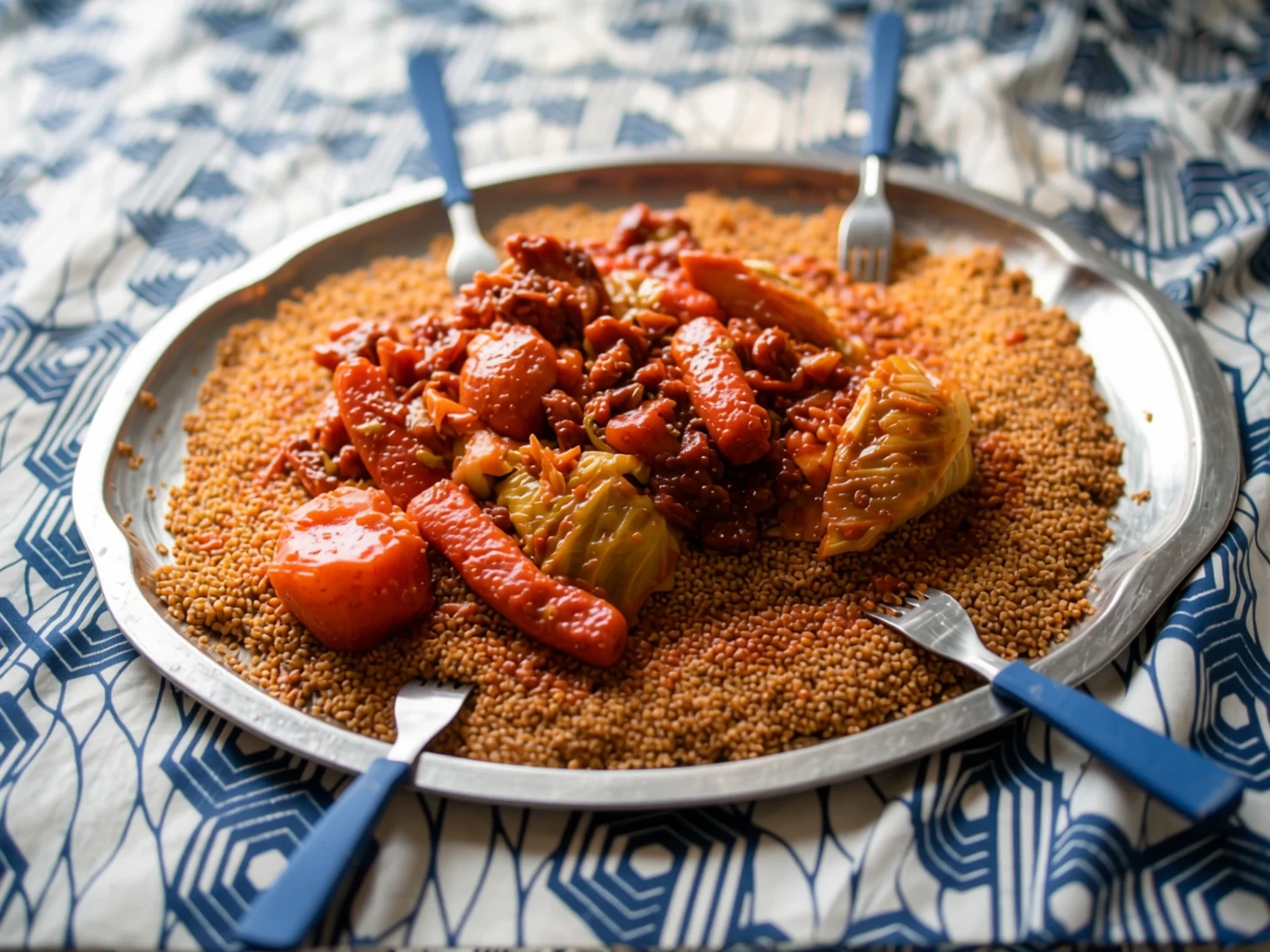
- Brik — Small cafés and snack counters in Téboursouk
A thin pastry folded around an egg, often with tuna or herbs, then fried until crisp at the edges. It makes a quick, filling lunch, and you can find it at small cafés and snack counters in Téboursouk while you wait for your taxi.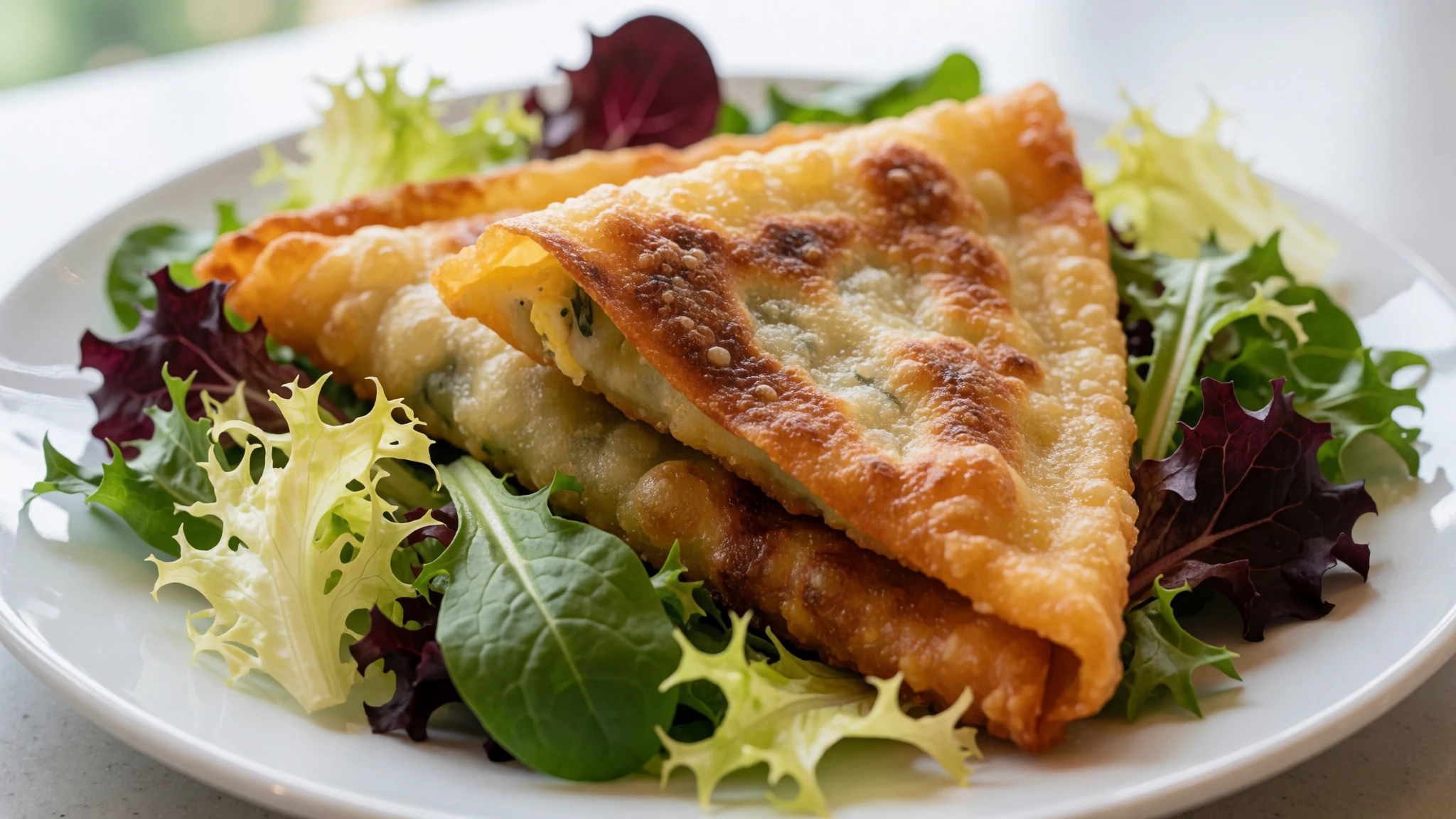
- Mechouia — Lunch counters and family-run eateries in town
Grilled peppers, tomatoes and onions, mashed together and dressed with olive oil and a little garlic. It is served as a salad or starter and is best eaten cool, with bread, as a light midday dish in the heat.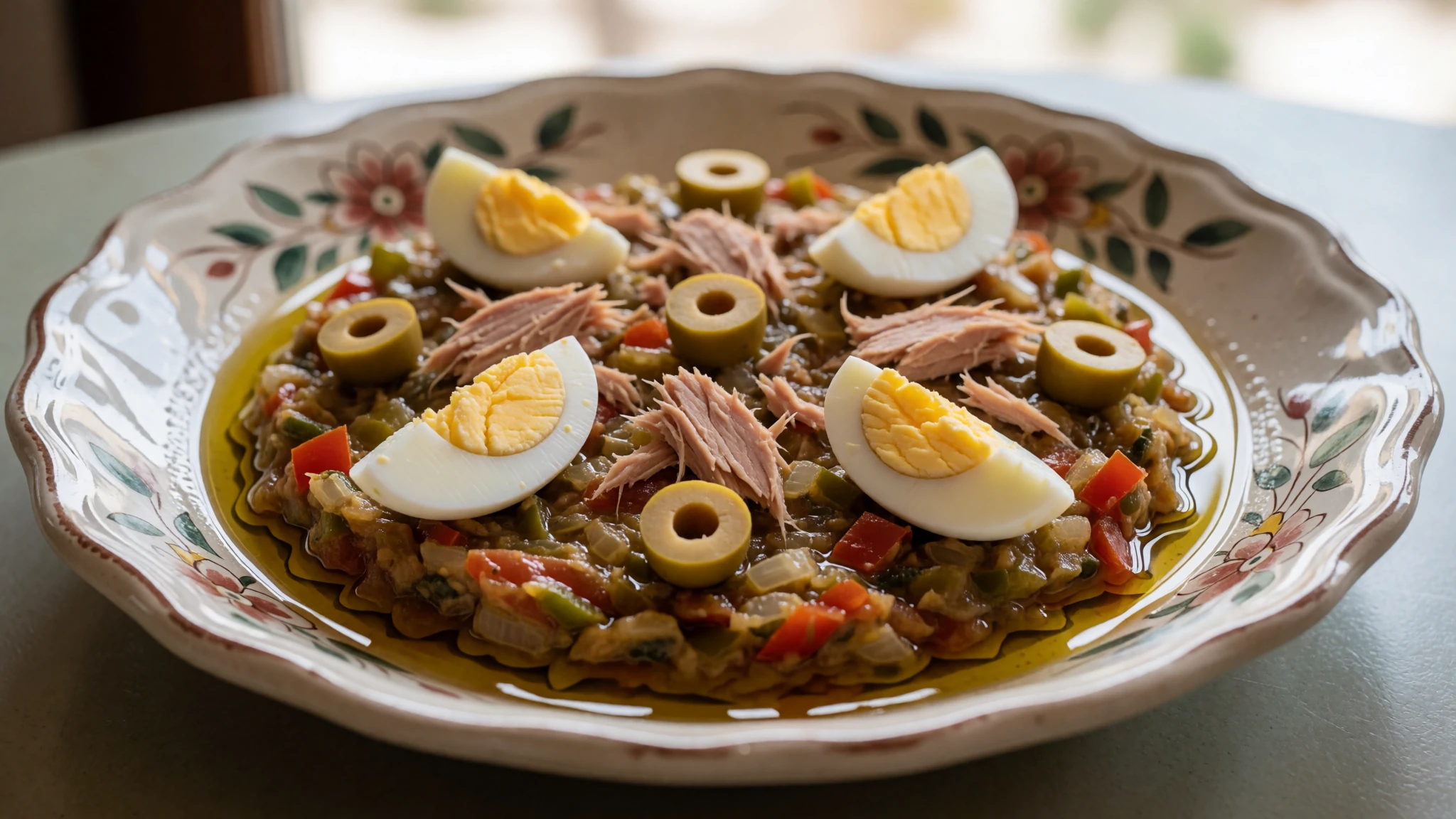
- Mint tea — Any café in Téboursouk or the tea stalls near the bus stop
Green tea brewed with fresh mint and plenty of sugar, poured from a height to build a light froth. It is often taken in the afternoon, and sitting with a glass in a town café is one of the easiest ways to meet local people. - Cold drinks and snacks — The small shaded kiosk inside the site
The small shaded area on site sells cold drinks, snacks, postcards and has toilets, which makes it a useful break. For water, buy bottles from a reputable shop rather than from a street seller, because some vendors refill empty bottles with tap water.
Plan it
Best time. December to February bring the mildest days, with highs of about 24 to 27°C, though nights can dip below freezing and January is the wettest month. Summer afternoons are very hot, with little shade among the ruins.
How long. 2–3
Getting there. Take a bus or louage from Bab Saadoune in Tunis to Téboursouk, which takes at least two hours by bus or about 80 minutes by louage. The last leg is a taxi to the site, so arrange a set return time with the driver before you go in, because few taxis wait at the ruins.
Budget. mid
Tips
- Set off early from Tunis so you reach Téboursouk with time to spare for the taxi.
- Arrange your return taxi before you walk in, since few cars wait at the ruins.
- Start the walk in the morning, before the midday heat builds on the open stone.
- Bring water and a hat, and buy extra water from a reputable shop rather than a street seller.
- Carry cash for the kiosk and for taxi fares, as small payments are easier in notes.
Etiquette
- Dress modestly when you visit the small mosque.
- Ask before photographing people in the fields or the market.
- Stay on the marked paths and keep off the carved stones.
Nearby
Sources
- Wikidata Q32378 (CC0)
- Wikipedia (Dougga) (CC BY-SA 4.0)
- Wikivoyage (Dougga) (CC BY-SA 4.0)
- Photo: Dougga, Beja (Emna Trabelsi) (CC BY 3.0)
- Photo: Dougga (Profburp) (CC BY-SA 1.0)
- Photo: Guggah, a historical monuments in Tunisia (Tnmarwaa) (CC BY-SA 4.0)
- Photo: Dougga olivier ruines (Profburp) (CC BY-SA 1.0)
- Photo: Inscription in Dougga (jjvaca) (CC BY 3.0)
- Photo: Inschrift aus Thugga (Profburp) (CC BY-SA 1.0)
- Photo: Maison du trifolium de Dougga (Pradigue) (CC BY 3.0)
- Photo: Market in Dougga (Pradigue) (CC BY 3.0)


