Great Mosque of Kairouan
Great Mosque of Kairouan, Tunisia
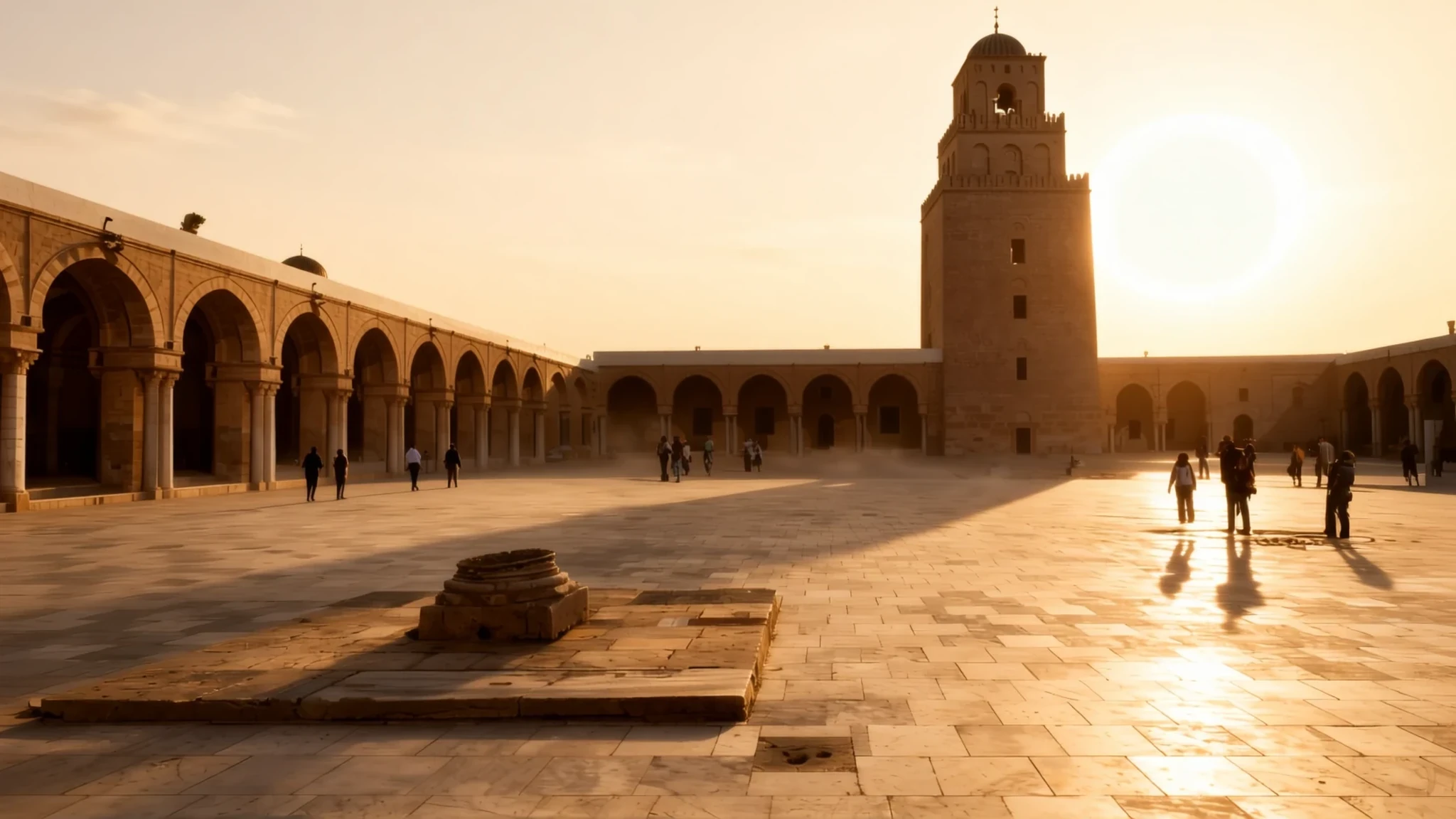
Founded in 670, the Great Mosque of Kairouan is one of North Africa's great monuments and a window onto early Islamic building.
The place
The Great Mosque of Kairouan stands in the north-east of the old walled medina, in the easternmost quarter against the city walls, and it has been a place of prayer since the town was founded in 670. Its plan centres on an open courtyard paved in marble, with a broad prayer hall on one side and a square minaret rising from the outer wall. Those approaching through the medina notice the thick buttressed walls first, which give the complex a solid, fortress-like presence.
Inside, the layout is about rhythm more than ornament. Rows of columns carry the roof of the prayer hall, and light falls in long bands across the floor. The mihrab, the niche that marks the direction of prayer, sits beneath a ribbed dome set on squinches, a construction that shows how the builders solved the problem of moving from a square base to a round top.
The mosque matters for its architecture as much as its religious role. It is credited with introducing the horseshoe arch into Islamic building, and its plan became a model for mosques across the wider Maghreb. Its early position beside the governor's headquarters reflects how closely faith and administration were tied together in the young city.
Because the building has been rebuilt and extended several times, it reads best as a sequence of layers. Walls, columns and arches from different periods sit side by side, and the overall effect is a building that has been maintained and reworked rather than frozen in one moment.
Its story
The Great Mosque of Kairouan began with the founding of the city in 670, when the Arab general Uqba ibn Nafi chose a central site near the governor's headquarters for his new mosque. Not long afterwards, during a Berber occupation of Kairouan led by Kusaila, the building was destroyed. In 703, Hassan ibn al-Nu'man, a general of Ghassanid descent, rebuilt the mosque and returned the city's chief house of worship to use just as the number of residents was rising.
Growth brought further change. Under the Umayyad caliph Hisham ibn Abd al-Malik, his governor Bishr ibn Safwan carried out a major expansion in the early eighth century. Most of the structure was pulled down and rebuilt, though the mihrab was kept, and work on the minaret began during this phase. A further reconstruction in 774, under the Abbasid governor Yazid ibn Hatim, added modifications and decoration.
The mosque's present appearance comes mainly from the Aghlabid period. Kairouan reached its height under the Aghlabid dynasty, and the mosque benefited from the stability and wealth of those decades. In 836 Emir Ziyadat Allah I rebuilt it, and by the end of that work the building had taken on, in its entirety, the form it largely keeps today. Around the same time the niche for prayer received its ribbed dome on squinches.
The mosque's reputation helped the wider city expand and drew pilgrims and scholars. Teachers who lectured inside the mosque formed a community that became a centre of learning in religious thought and in the secular sciences, a role often compared with that of the medieval University of Paris. Its later history is one of repeated repair rather than a single moment of completion.
What to see
- Great Mosque of Kairouan — Medina centre
The mosque itself is the reason most visitors come, and it is well worth a slow visit. Non-Muslims cannot enter the prayer hall, but the doorways are usually open, so you can look in at the columns and the mihrab. Spend time in the courtyard and walk the outer walls to see how the buttresses and minaret fit together.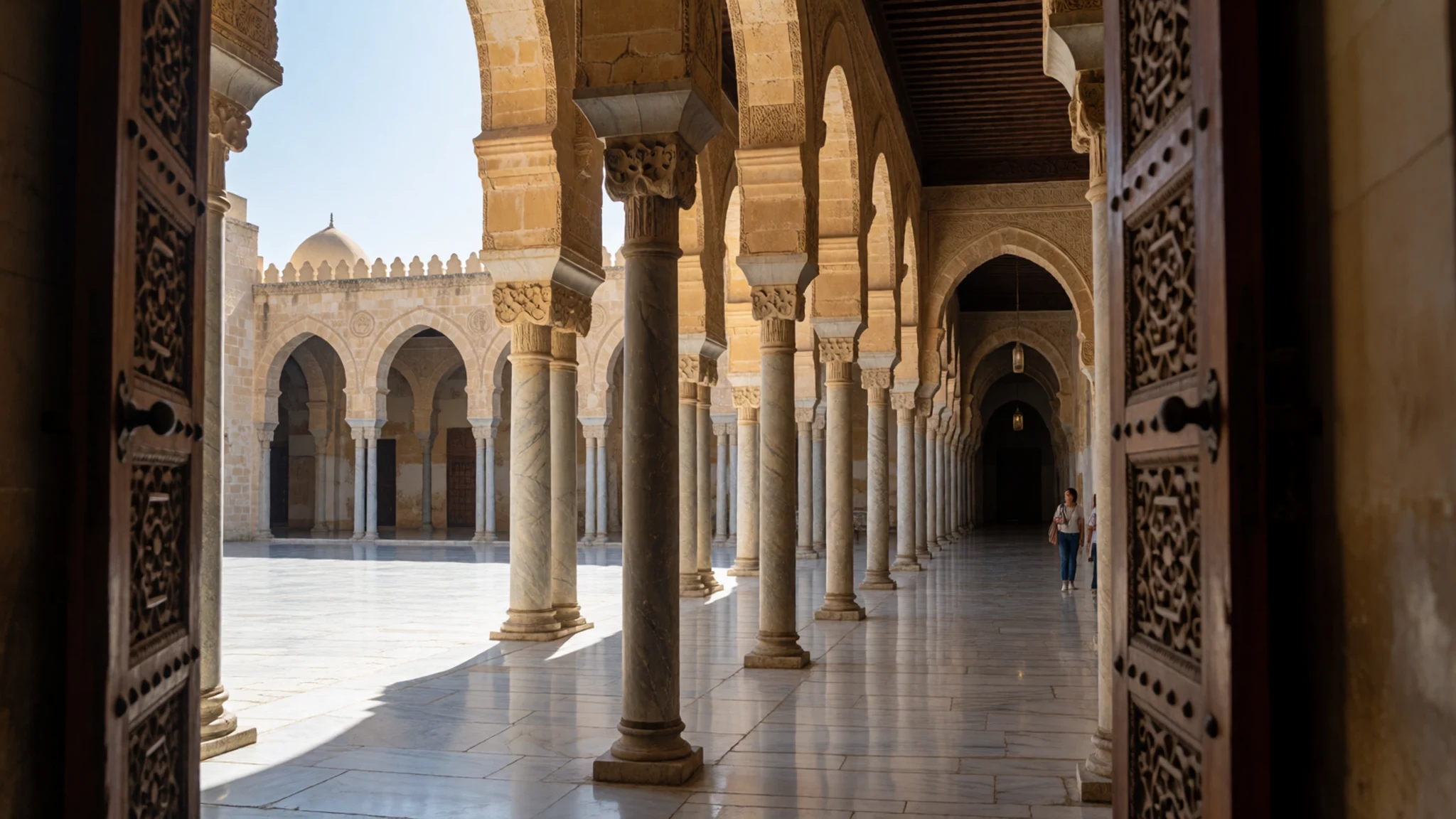
- Mosque of the Three Doors — Medina, near the Great Mosque
The mosque takes its name from its three doorways, and its façade repays a slow look from the street. The interior is not open to visitors, so the exterior is the part to plan around. It lies a short walk from the Great Mosque, so the two can be seen in one loop through the medina.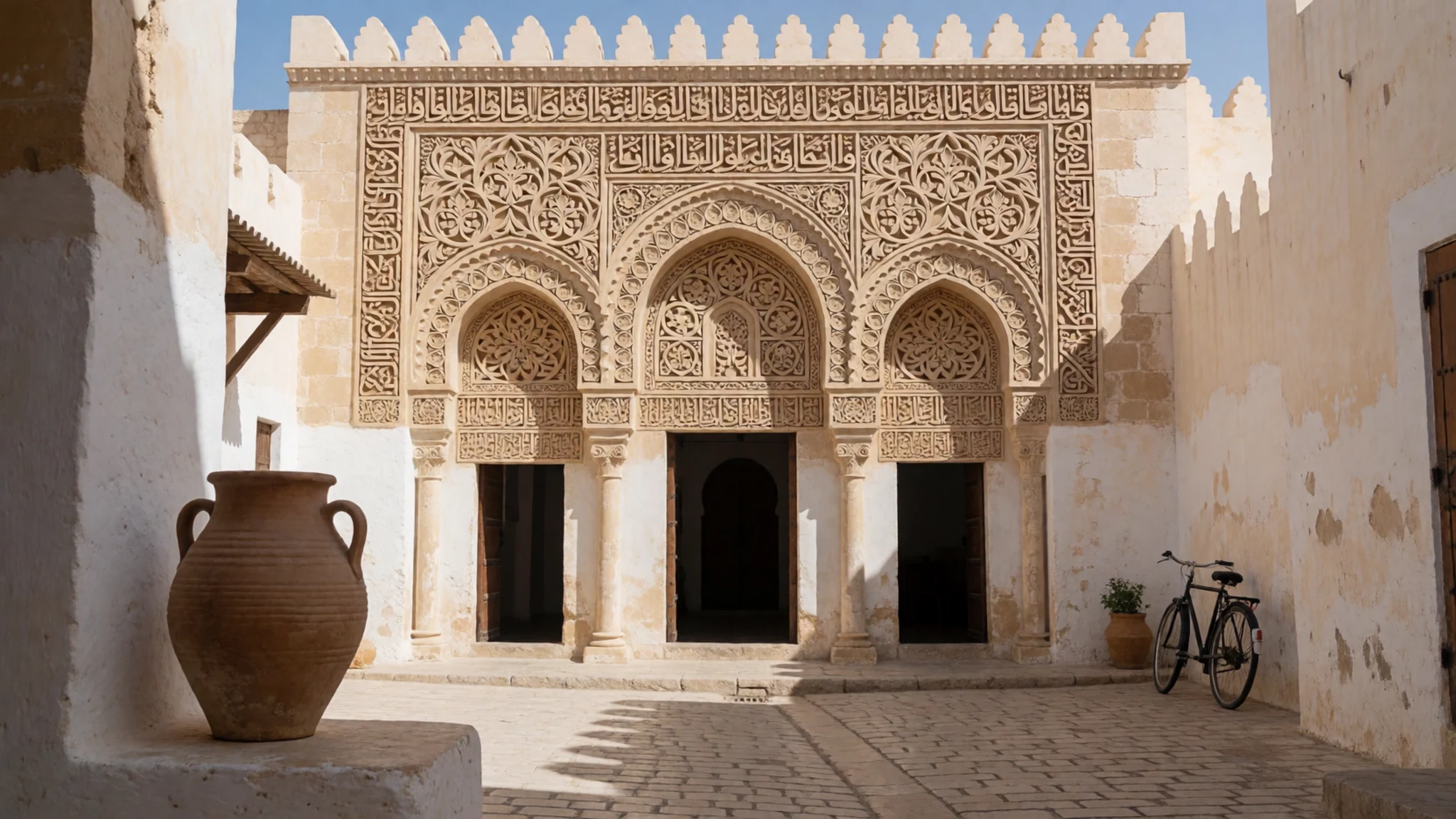
- Bi'r Barouta — Medina, south of the mosque
Bi'r Barouta is a well that local tradition links with the founding of the city, and it is among the most sacred sites in Kairouan for Muslims. It is reputedly connected with the Zamzam well in Mecca. A camel still turns the pump, which makes the scene lively and photogenic. Keep a respectful distance from people drawing water for prayer.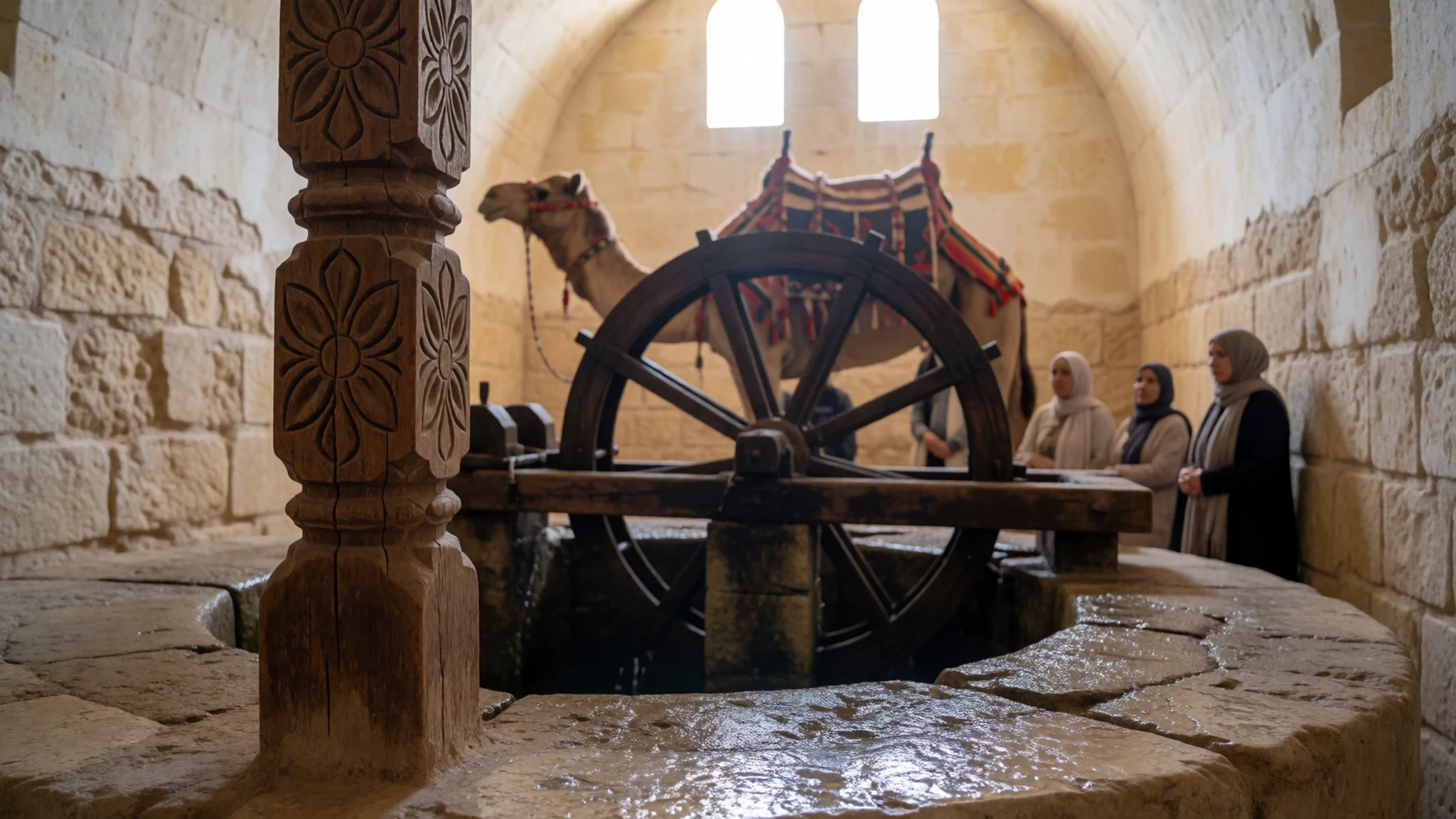
- Aghlabid Basins — South-west of the medina
These cisterns were built by the Aghlabids in the ninth century, and they impress more for their engineering than for their looks. They show how water was stored and managed in a city that depended on it. The site is open with little shade, so go in cooler hours and carry water. Check the official site for opening arrangements before you travel.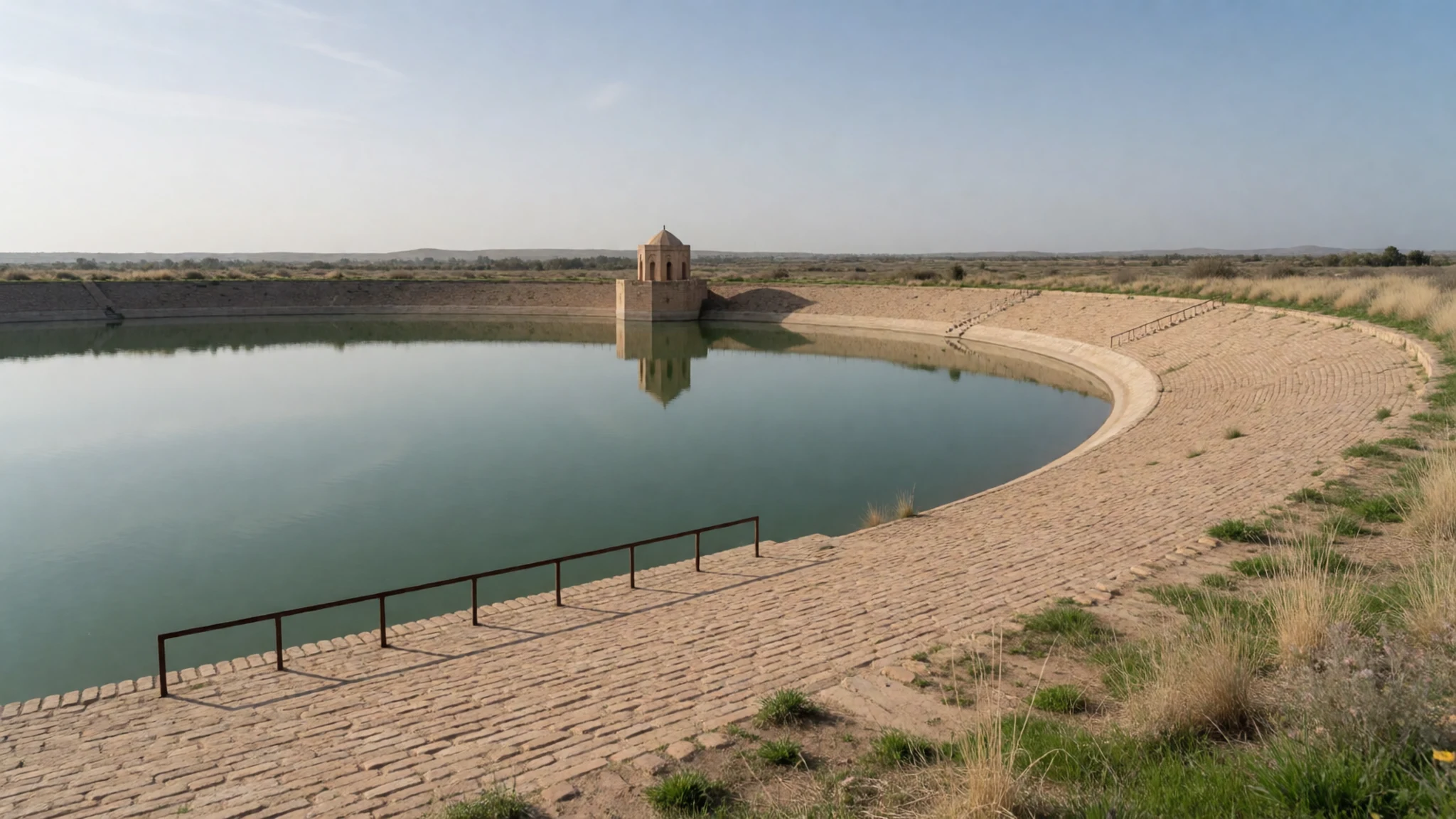
- Zaouia of Sidi Abid el-Ghariani — Medina, near the Great Mosque
This mausoleum once doubled as a Koranic school, and it sits within the medina's narrow lanes. It belongs to the religious life that grew up around the mosque. Visitors should dress modestly, speak quietly, and ask before taking photographs inside the tomb area.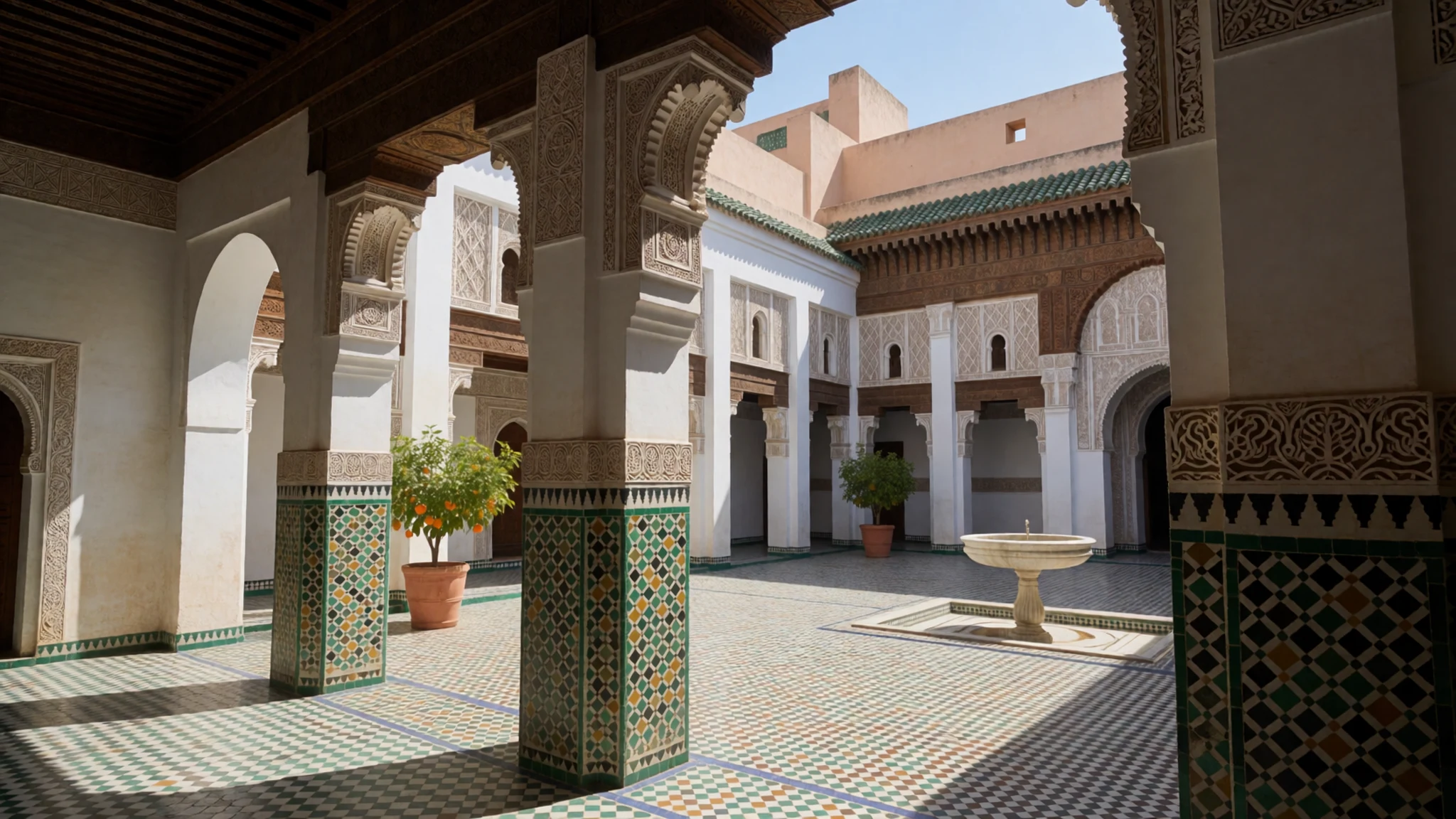
Culture
The Great Mosque of Kairouan is a working place of worship before it is a monument, so the rhythm of prayer shapes when visits are practical. Muslims gather for the daily prayers, and Friday midday prayer is the busiest time, so visits are quieter earlier or later in the day. Hospitality matters across Tunisia: people in the medina are often generous with directions and tea, and a polite greeting in Arabic or French opens most conversations. Many locals are glad to be photographed, but photographs of people, especially women and children, should be taken only after asking. Carpet sellers can be persistent, sometimes boarding buses just outside the city, and a firm, friendly refusal is usually accepted without fuss. During Ramadan, eating or drinking in public during daylight hours is best avoided out of respect for those fasting. Dress modestly, remove your shoes where others do, and stay out of the prayer hall if you are not Muslim.
What to wear
Traditional dress in Kairouan follows the wider Tunisian pattern, and the city's textile heritage is most visible in its carpets. Women's formal dress has long included the malia, a fine wrap worn over other clothes, while men traditionally wore the jebba, a long woollen robe, often with a red felt chechia cap. Kairouan's knotted wool carpets, sold in the medina's shops, are the city's best-known craft textile.
Today most people dress much as they would in any Tunisian city. Jeans, shirts, dresses and trainers are common, and many women wear headscarves while others do not. On Fridays some men still wear long traditional robes on the way to prayer.
For a visit to the Great Mosque of Kairouan, loose cotton or linen in long trousers or a long skirt works well in the heat, with sleeves covering the shoulders. Visitors should carry a light scarf to cover their hair in religious spaces and choose shoes that slip on and off easily, since shoes are removed at the threshold. Closed, comfortable footwear suits the uneven stone of the medina lanes, and a hat helps at midday.
What to eat
- Makroud — Pastry shops around the medina, especially near the Great Mosque
A sticky semolina pastry filled with dates, often rolled in sesame, then soaked in honey. Kairouan is known for it across Tunisia, and pastry shops in the medina sell it by weight in boxes. Ask for a mixed box, choosing the mix of fillings you like.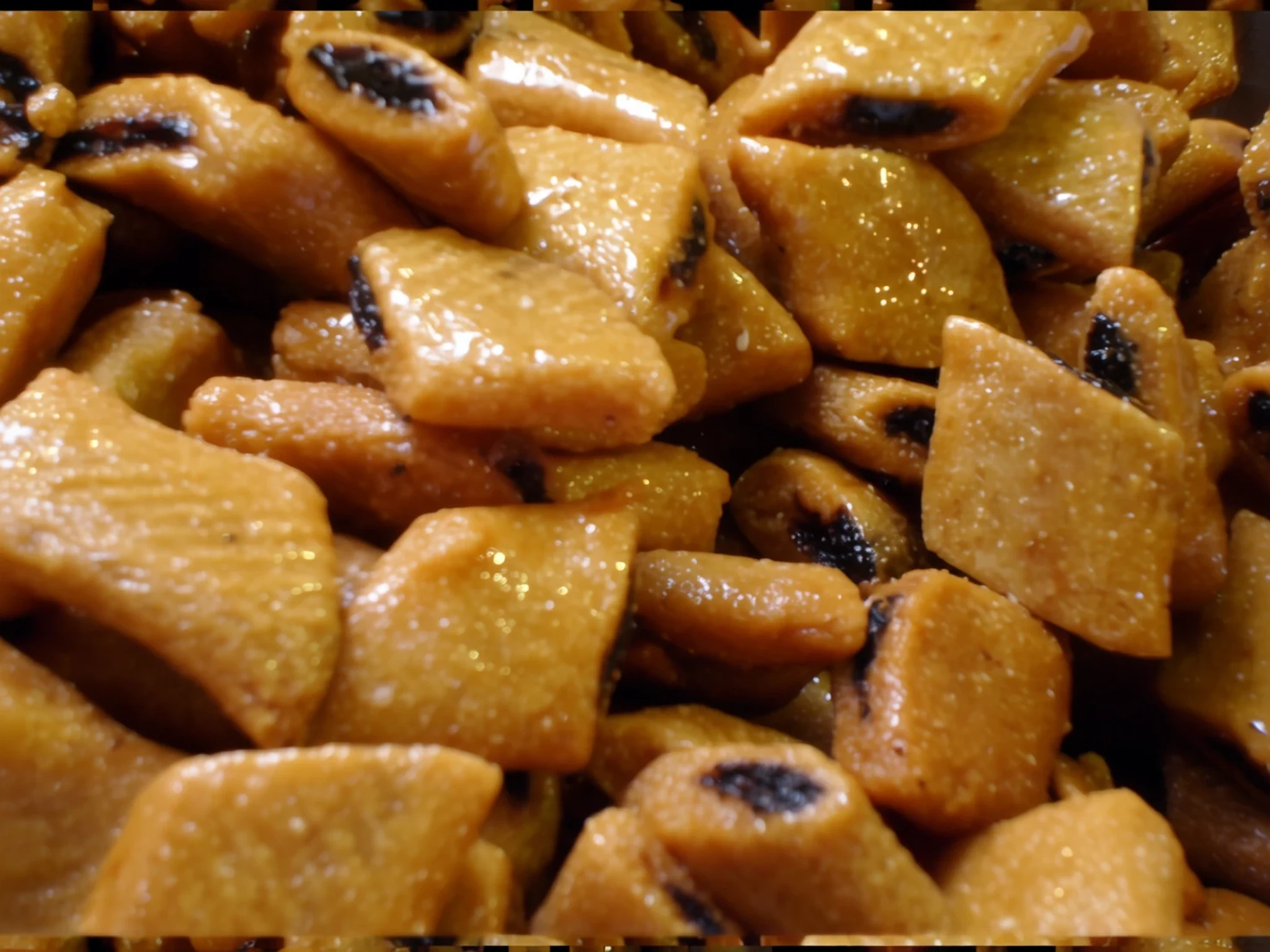
- Mint tea — The tea houses along the lane leading in from the city's Main Gate
Sweet green tea brewed with fresh mint and served in small glasses, poured from height to create a foam. It is the everyday drink of Tunisian cafés and tea houses, and a good way to sit for a while. Accept a glass when offered.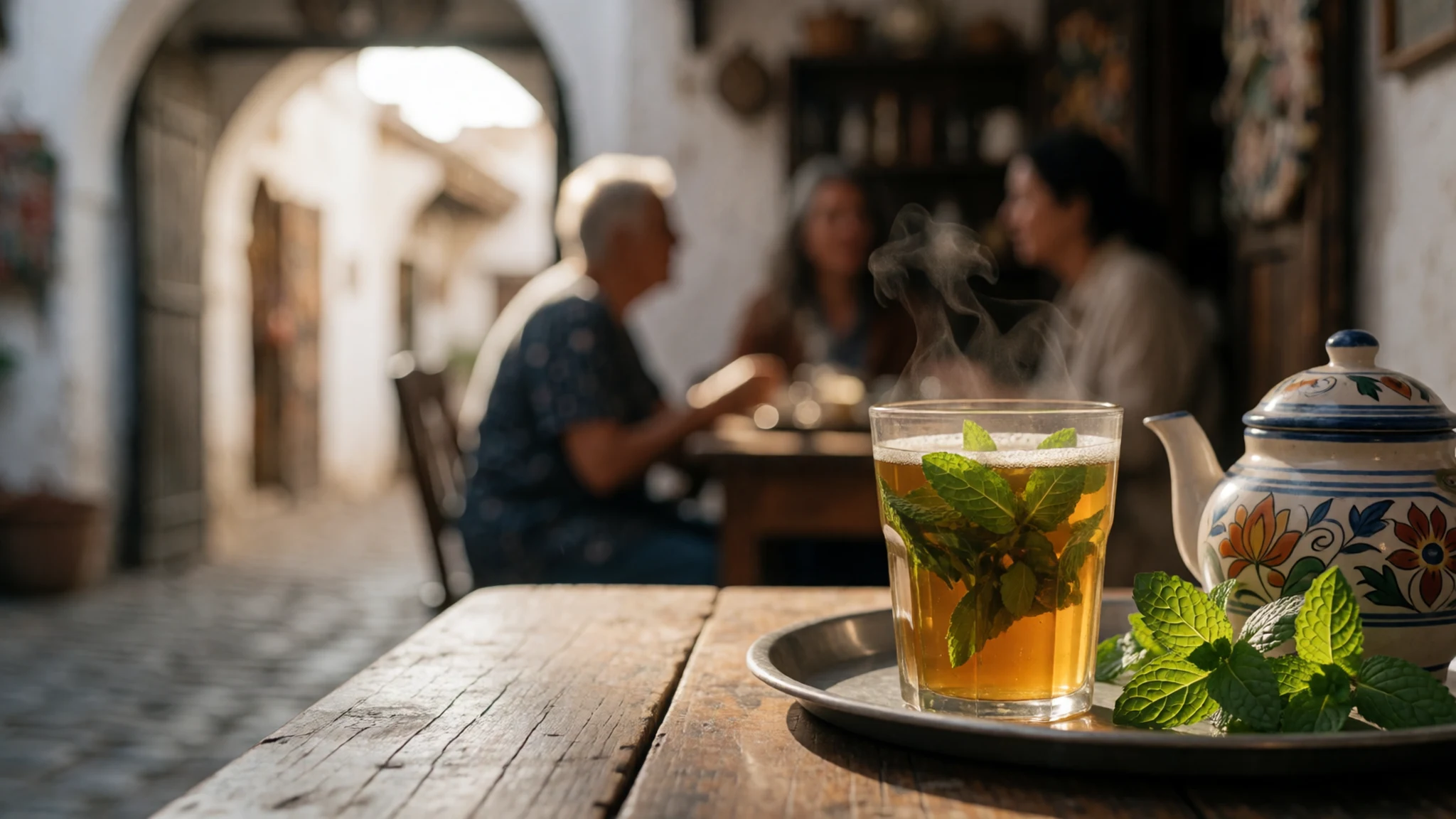
- Brik — Street stalls in the medina's main streets
A thin pastry parcel folded around a whole egg and a filling such as tuna or potato, then fried until crisp. Street stalls sell it hot as a quick lunch, eaten by hand. Look for a stall where the oil is fresh and the pastry is made to order.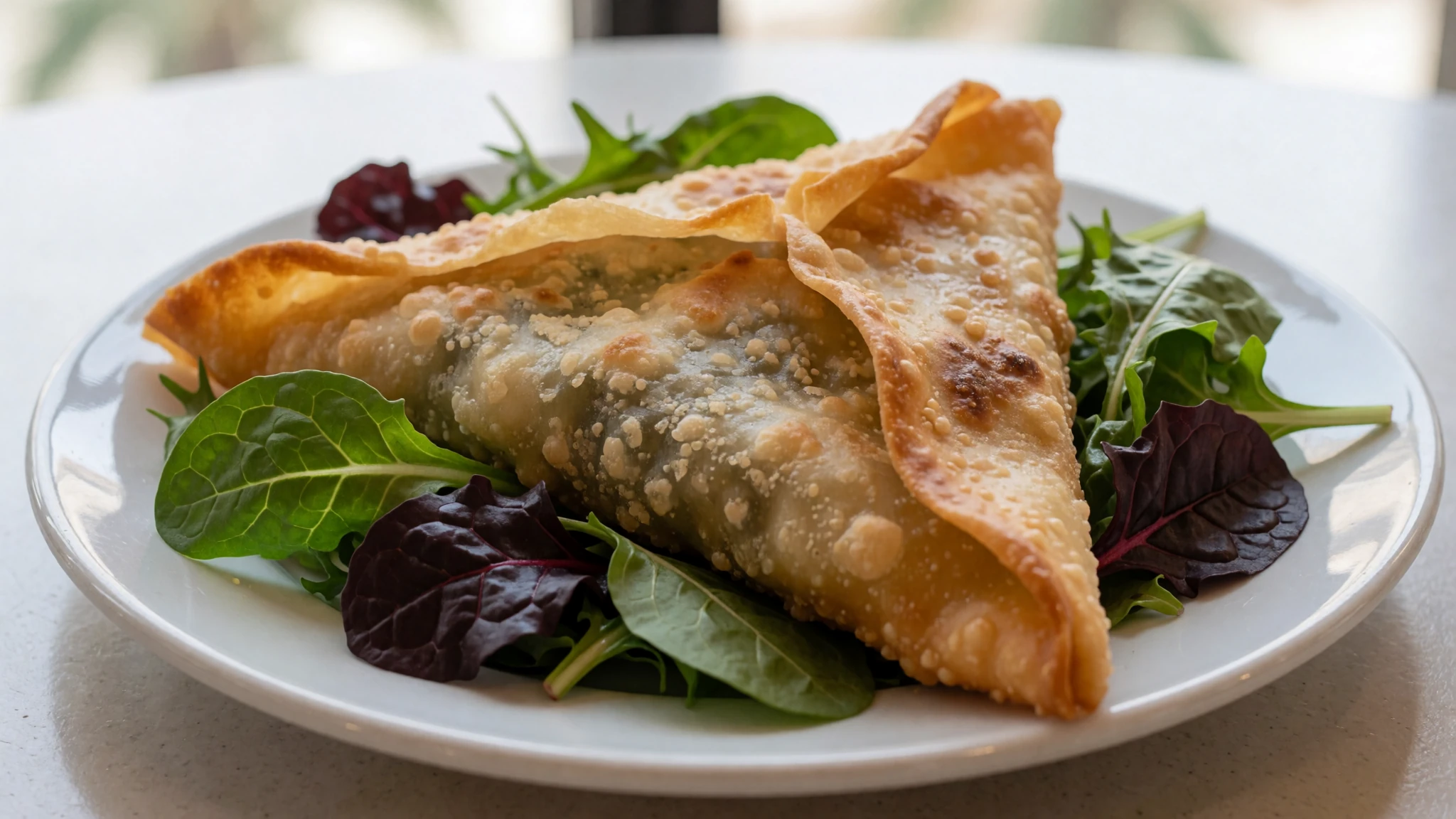
- Lablabi — Small breakfast eateries in the medina, especially in the morning
A warm chickpea soup thickened with bread and seasoned with garlic, cumin and harissa, often topped with an egg and olive oil. It is a morning dish, eaten early before the day heats up. Small eateries serve it in deep bowls, and locals often add chilli to taste.
Plan it
Best time. Winter (December to February) is the most comfortable time for walking the medina, with mild days and cold nights, while spring and autumn are already hot. Midsummer is very hot and dry, so the courtyard is hard going at midday.
How long. 1–2
Getting there. Louages (shared taxis) are the most frequent option from Tunis, a trip of about two hours. Buses also run from Tunis, Sousse (two hours) and Sfax, and Kairouan is not on a train line. Bus and louage stations lie north-west of the medina, though drivers will often drop passengers at a medina gate on request.
Budget. mid
Tips
- Visit the mosque early or late in the day, when the courtyard is cooler and quieter
- Expect carpet touts, who sometimes board buses a few kilometres before the city; a polite refusal is enough
- Carry cash for shops, tea houses and small charges, and check the official site for any fees
- Bring water and a hat, as the stone courtyard and streets offer little shade
- Check the official site for opening arrangements before you travel rather than relying on older guides
Etiquette
- Remove your shoes at the threshold and keep your shoulders and knees covered
- Stay out of the prayer hall if you are not Muslim, and look in from the doorways
- Ask before photographing people, especially women and children
Nearby
Sources
- Wikidata Q1255269 (CC0)
- Wikipedia: Great Mosque of Kairouan (rev 1382386290) (CC BY-SA 4.0)
- Wikivoyage: Kairouan (rev 5406109) (CC BY-SA 4.0)
- Photo: Grande Mosquée de Kairouan, vue d'ensemble (weetoon66) (CC BY-SA 2.0)
- Photo: Great Mosque of Kairouan Panorama (Marek Szarejko) (CC BY-SA 2.0)
- Photo: Plan Kairouan 1916 (Hachette et Cie) (Public domain)
- Photo: Kairouan 1900 (Public domain)
- Photo: Entry of the Great Mosque of Kairouan, postcard 1900 (Public domain)
- Photo: Water wells in the Courtyard, postcard 1900 (Public domain)
- Photo: View Great Mosque of Kairouan (albina&kostya) (CC BY 2.5)
- Photo: An exterior view of the Great Mosque of Kairouan (weetoon66) (CC BY-SA 2.0)


