Karimunjawa
Karimunjawa, Indonesia
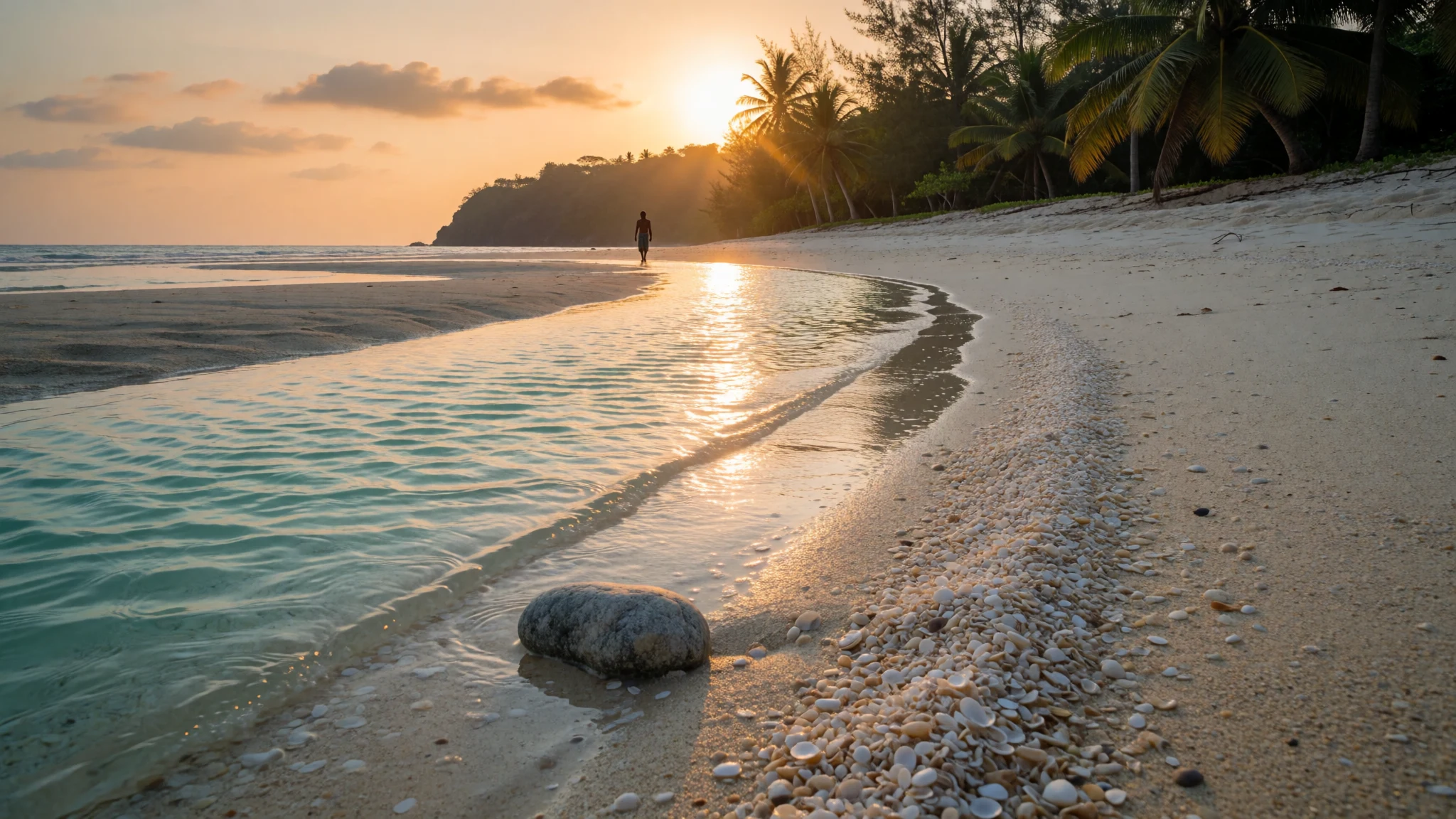
Karimunjawa is a quiet Java Sea island group of reef, sandbars and fishing villages, reached only by boat and ruled by the weather.
The place
Karimunjawa sits in the Java Sea off Central Java, a group of 27 islands lying about 80 km north-west of the port of Jepara. Most are small, low and uninhabited. Roughly ten thousand people live on just five of them, nearly all on the two largest, Karimun and Kemujan, which are close enough to read as one landscape of villages, coconut groves and fishing harbours. The rock underneath is old quartzite and shale, capped in places by basalt, and the shallows around it hold fringing and patchy coral reef. Twenty-two of the islands are protected within a national park, while a few of the rest are privately owned or held by the Indonesian Navy, so not every dot on the map can be landed on. Javanese is the everyday language, which is unusual for islands off Java's coast, and the mood is that of a small fishing community that has taken on visitors rather than a resort strip. Boats are the working life: fishing is the main income, with services and commerce behind it. The town on Karimun has a central square, a harbour, homestays and simple eateries, and most trips begin there, hopping by chartered boat to sandbars, beaches and reef. Heat is constant, mornings are usually calmest, and the sea sets the schedule, especially in the wet months when swells can halt crossings for a day or two.
Its story
Karimunjawa's own tradition credits its first settler to Sunan Nyamplungan, also called Amir Hasan, a son of one of the Wali Songo, the saints remembered for bringing Islam to Java. He is said to have come to the main island to teach, and his tomb there is still a pilgrimage site. The documented past is more worldly. Chinese ceramics found on the seabed, dating from around the 13th century, point to ships using these waters on the way to Java. After that the islands appear to have served pirates, and were otherwise empty until a penal colony was set up during the brief British rule of Java. In 1818 the Dutch placed a Prussian aristocrat, Carel Rudolph von Michalofski, in charge. His first job was clearing out the pirates; his second was building a settlement from about 1,100 convicts. Within a generation, a feared hideout had become a working community. When the Dutch withdrew during the Java War, the former convicts stayed and kept farming and fishing. The coconut estates laid out in that period became a major earner, alongside the catch. The modern chapter is conservation: the area became a national park in 1988, and twenty-two islands were declared a marine reserve in 2001, giving the reefs a legal shield that the old settlement never had.
What to see
- Ujung Gelam Beach — Karimun, near the main town
Ujung Gelam Beach lies on the western side of Karimun, close to the main town, and is the easy evening choice. The sand is pale, the water shallow and the sky changes colour after sunset. Fishing boats pass offshore. It suits a slow walk rather than serious swimming or snorkelling.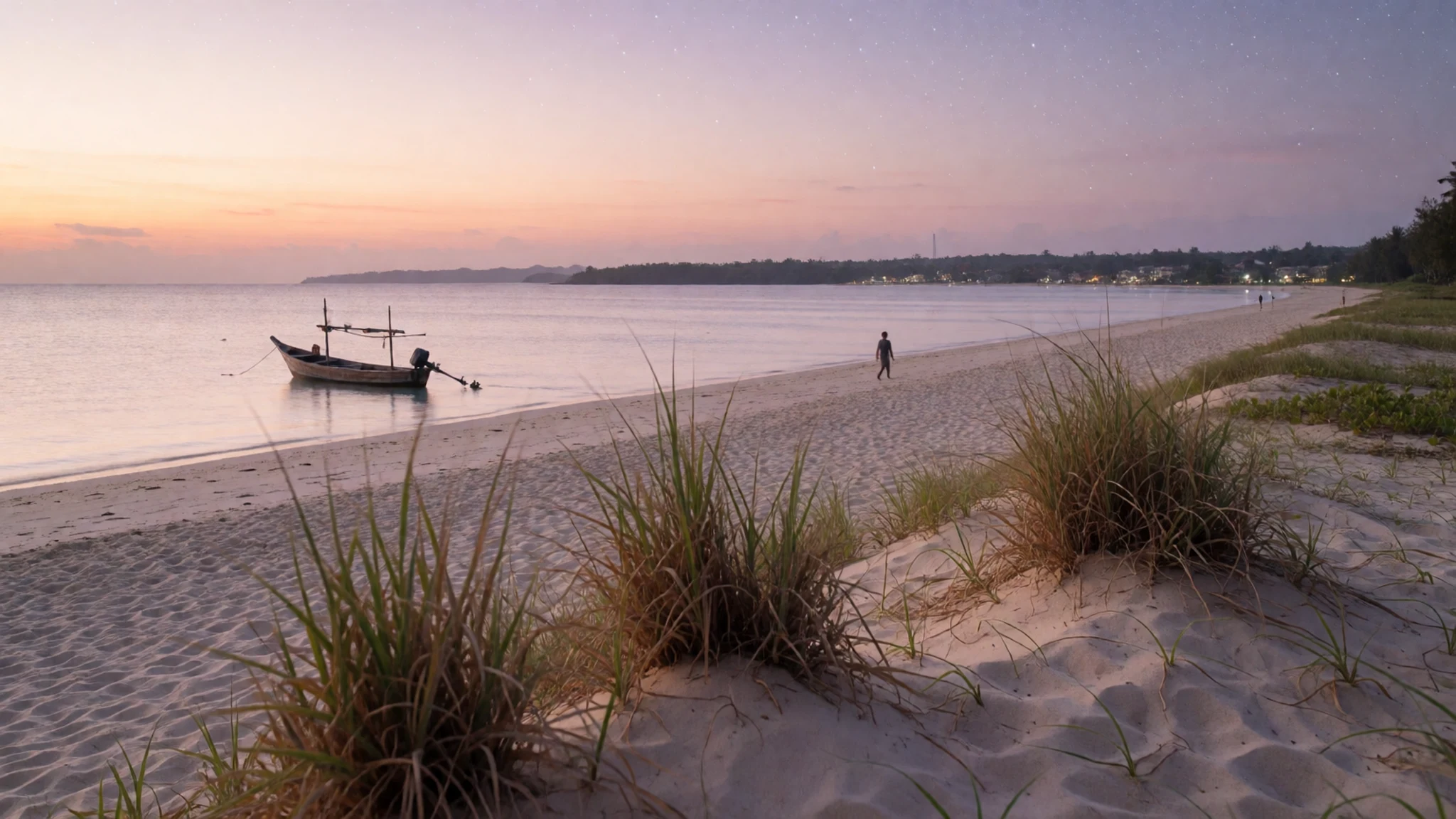
- Menjangan Kecil Island — Island south of Karimun
Menjangan Kecil is a small island south of Karimun, usually visited by short boat ride for its quiet shoreline and nearby reef. Snorkellers drift over coral close to the beach. Shade is limited, so a hat, water and an early start make the visit far more comfortable.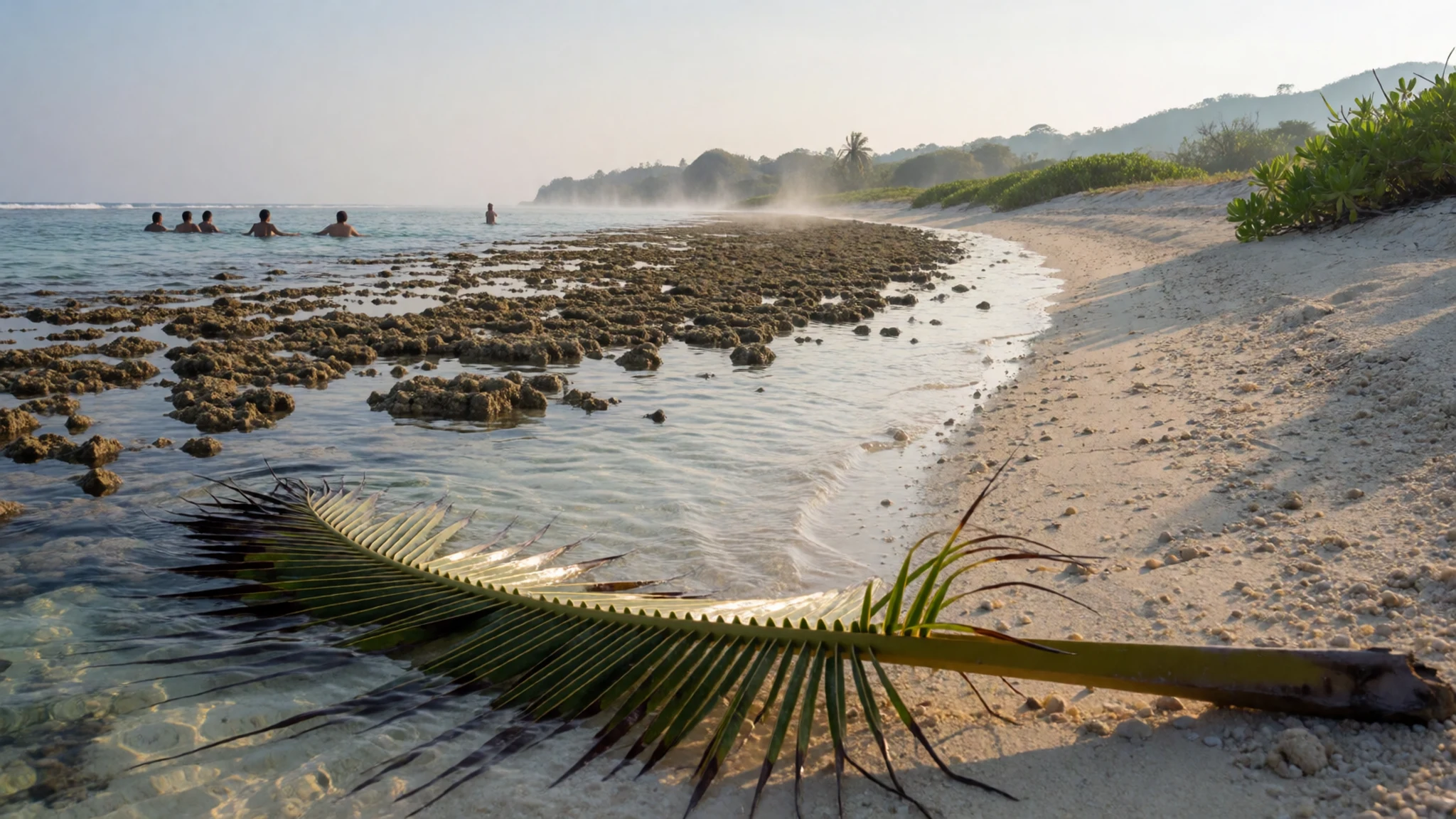
- Cemara Besar Island — Small island north-west of Karimun
Cemara Besar is a small, pine-fringed island northwest of Karimun, a popular stop on boat circuits. The beach is the draw, along with clear water for swimming. Nearby reef spots such as Gosong Cemara suit divers and snorkellers. Weekends and holidays bring the most boats.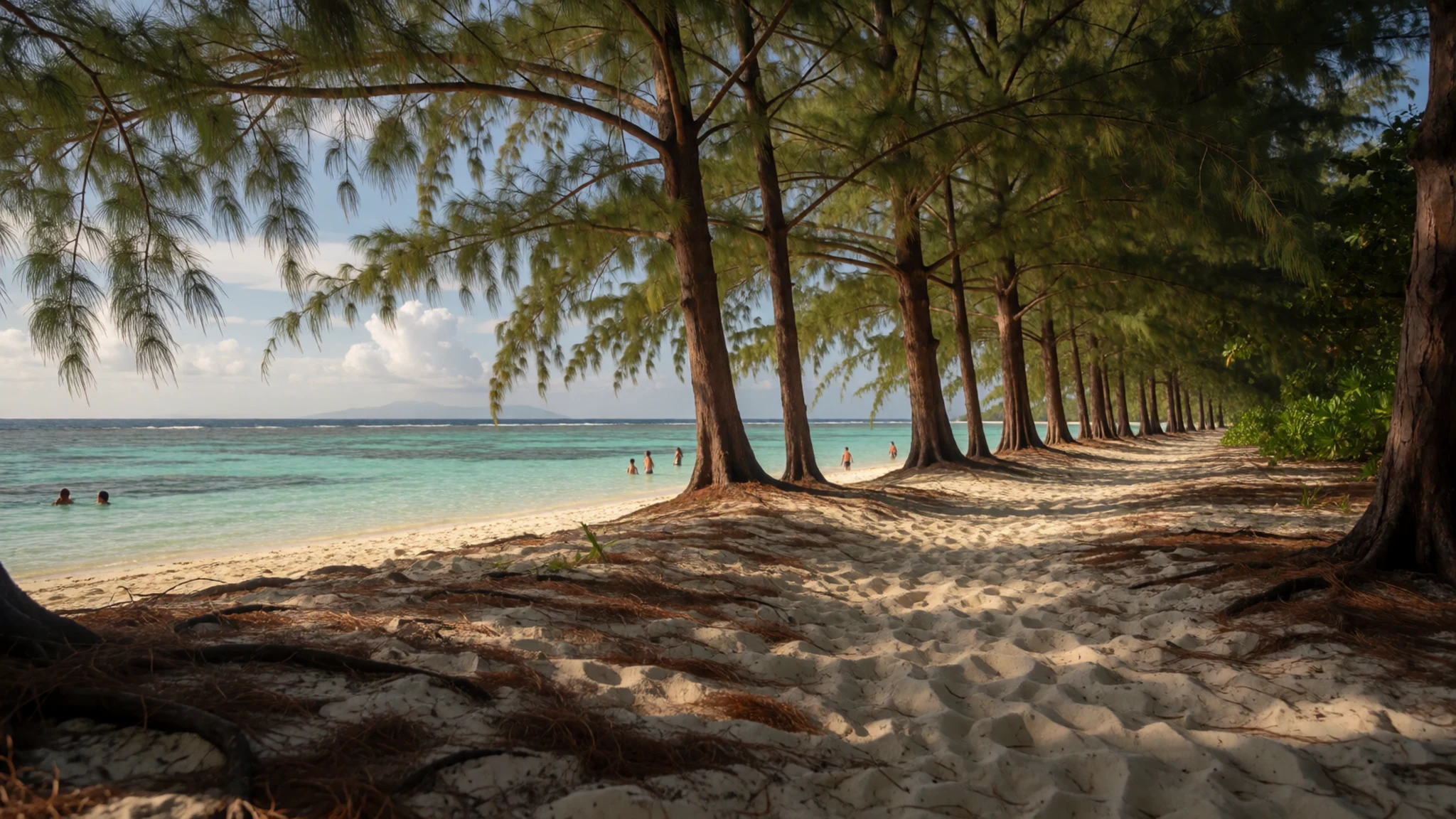
- Sea turtle conservation centre — Karimun, national park area
A conservation site on Karimun cares for sea turtles within the national park. It is a useful stop for understanding why the reefs and beaches are protected, and it gives a close look at animals normally seen only briefly from a boat. Opening arrangements are best checked locally.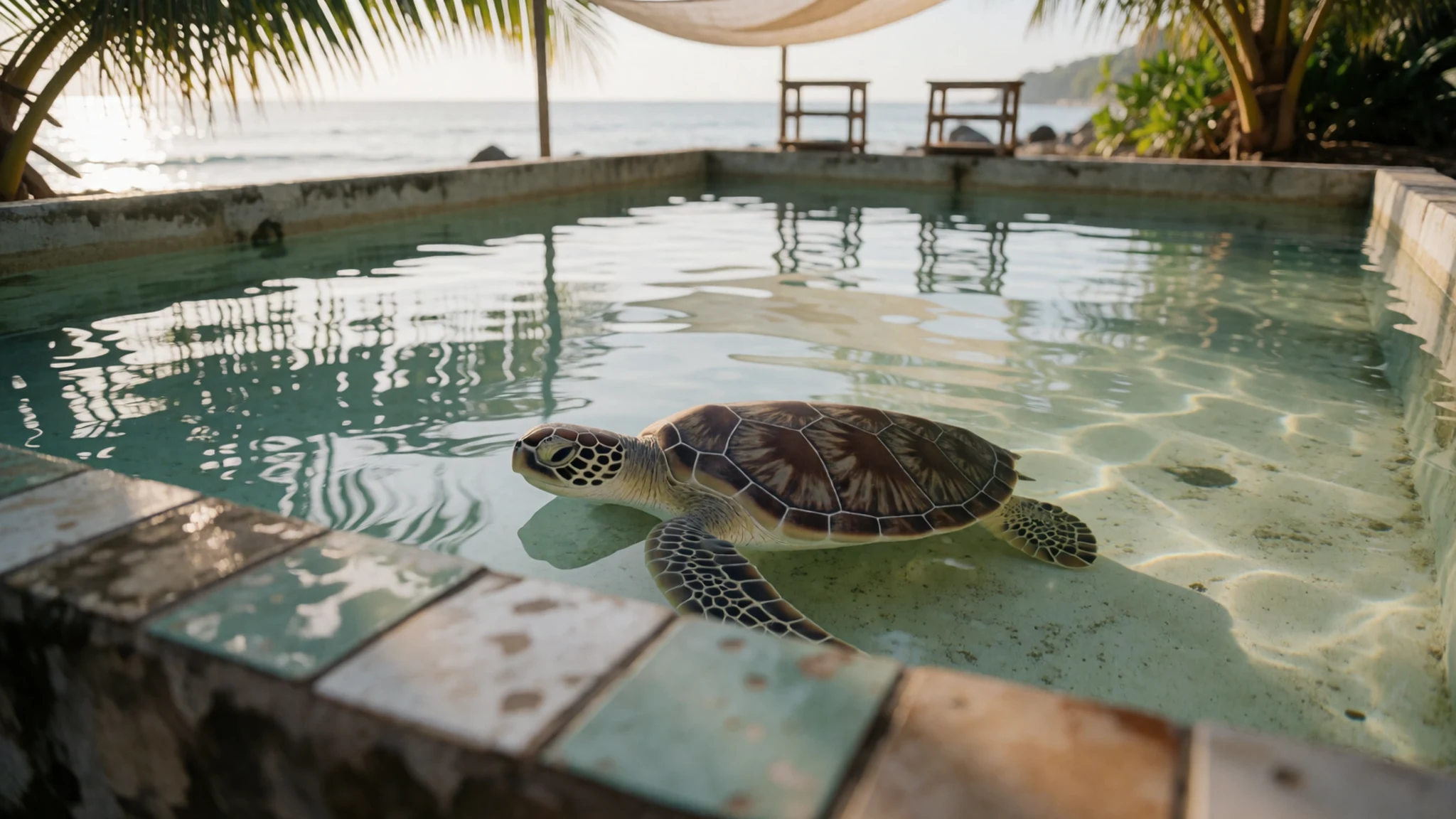
- Reef shark enclosure — Karimun, south of the main town
On Karimun, a small enclosure keeps blacktip and whitetip reef sharks as part of local conservation work. Visitors can watch them from the edge in shallow water. It is a calmer way to meet sharks than diving, though welfare standards of such sites are worth asking about.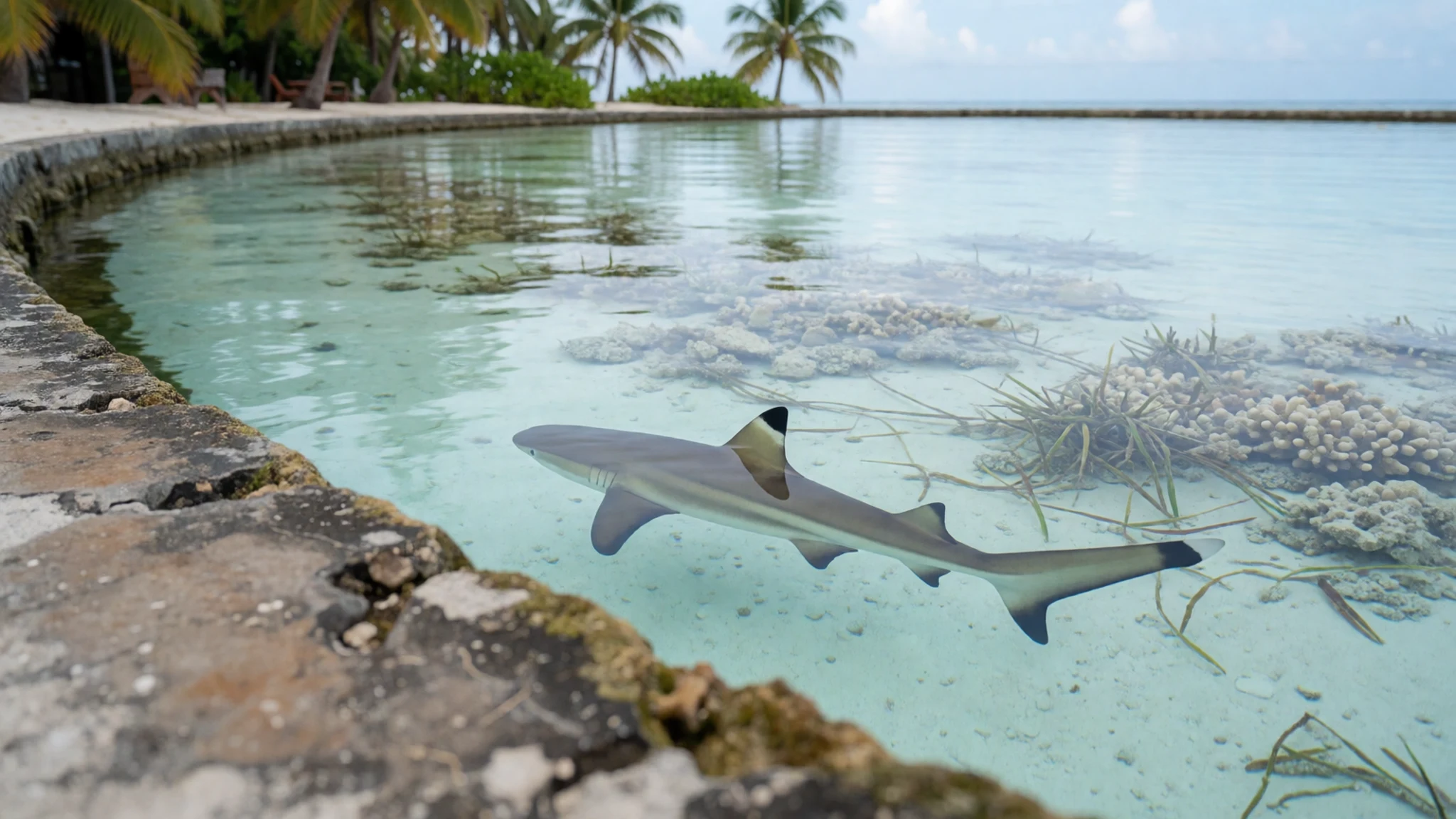
Culture
Karimunjawa is Javanese in outlook, with Bugis and Madurese families living alongside. Islam is the main faith, the call to prayer sounds across the harbour town, and Friday is a quieter day. Community life revolves around the sea: boats leave before dawn, catches are sorted at the harbour, and festivals and family events follow the fishing calendar and the weather. The tomb of Sunan Nyamplungan draws pilgrims from across Java, and it is treated as a place of devotion rather than a sightseeing stop. Many families rent rooms to visitors, so a stay often means eating at a family table and learning a few words of Javanese or Indonesian. A polite greeting goes a long way, and so does patience: boats run late, power can be intermittent, and plans change with the swell. The islanders have watched tourism grow quickly, and many take pride in the national park and its turtles and reef. Reef damage, litter and noise are the usual sources of local irritation. Travellers who keep their voices low in villages, accept that alcohol is scarce, and ask before photographing people tend to be welcomed warmly. Dress modestly away from the beach, and when visiting the tomb of Sunan Nyamplungan, cover your shoulders and knees, remove your shoes at the entrance and speak quietly.
What to wear
Traditional dress in Karimunjawa follows Javanese custom. Women wear the kebaya, a fitted blouse often of lace or cotton, with a batik wrap skirt, while men wear batik shirts and a sarong with a peci cap for prayers and religious events. Batik, made by waxing and dyeing cloth, is the textile most people mean by formal wear and is common at weddings, Friday prayers and celebrations. Day to day, island clothing is practical: T-shirts, shorts or loose trousers, rubber sandals and wide hats for fishermen, and long skirts or loose tunics and headscarves for many women in the villages. Wet-season clothing adds a light rain jacket. Visitors should pack quick-dry layers, a rash vest or long-sleeved swim top, and a hat for the strong sun. On the beach swimwear is normal, but in the town and villages, cover shoulders and knees, particularly on Fridays and at religious places. Reef-safe sunscreen matters because the coral is fragile. Sandals suit boat landings, where wet planks and shallow reef can be slippery, and water shoes protect feet at rocky beaches and during sandbar stops. Carry a dry bag for phones and cameras, and a light sarong, which works as a beach wrap, shade and modest cover-up.
What to eat
- Grilled fish — Seafood stalls around the town square (alun-alun)
Fresh fish grilled over coals is the island staple, usually served with rice, sambal and a few vegetables. The catch changes with the day and the boats. It is simple, smoky and best eaten near the water in the evening.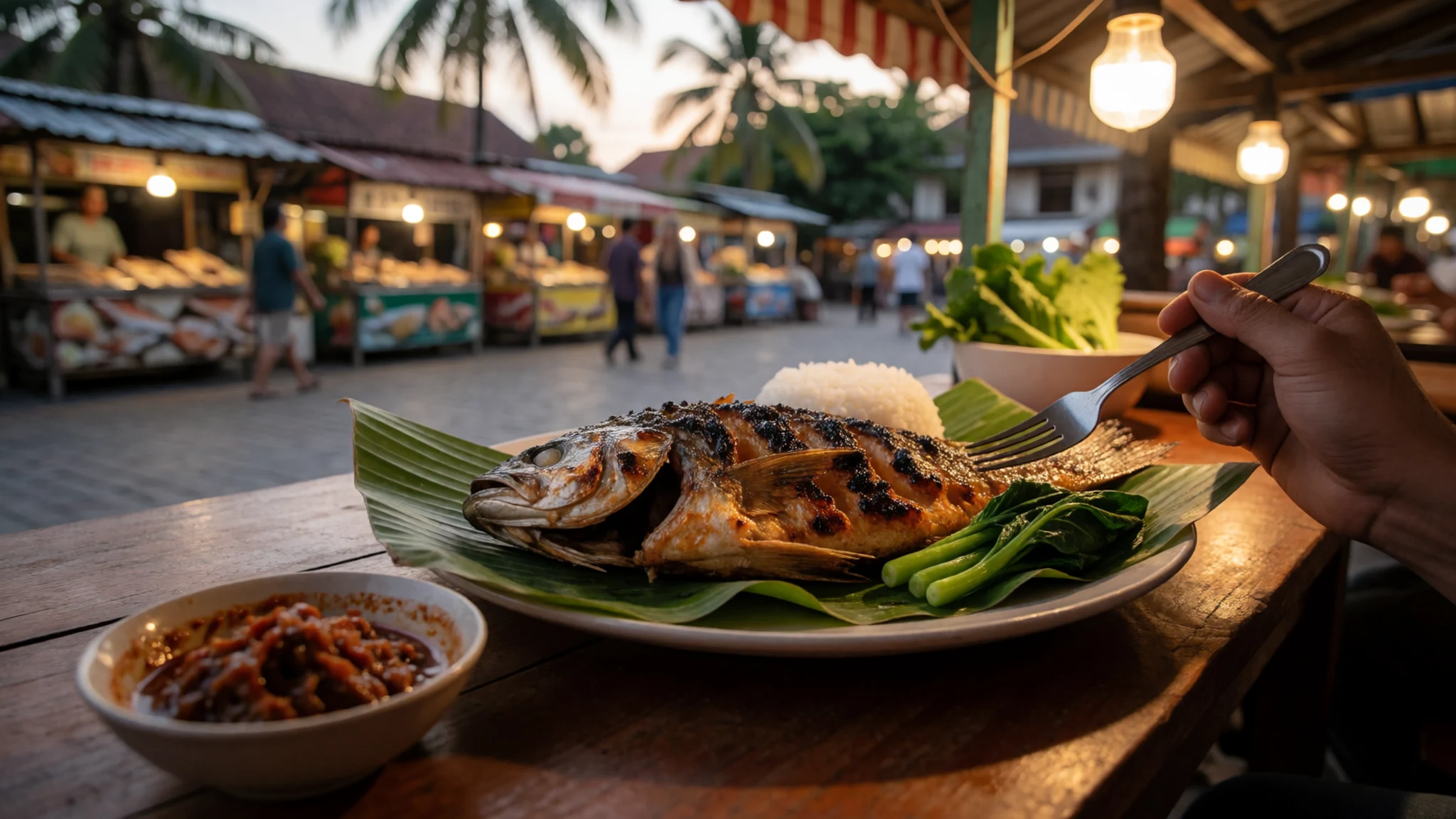
- Tongseng cumi — Stalls around the town square
Squid cooked in a sweet and spicy gravy, a local favourite that suits rice well. The squid is tender when cooked briefly, and the sauce has a gentle heat with a sweet, soy-like depth that balances the sea flavour.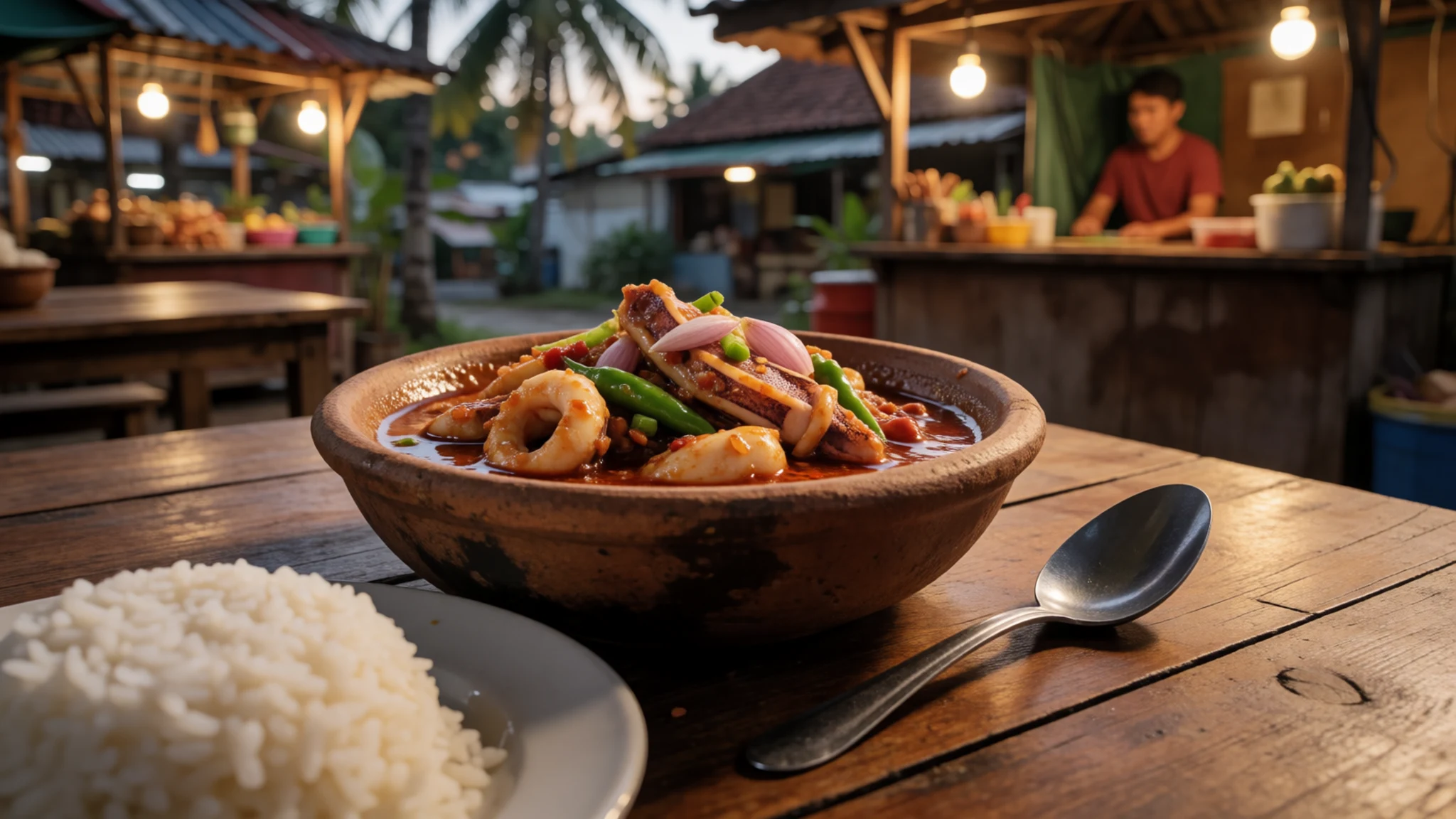
- Bakso ikan ekor kuning — Small eateries in the main town
A fish-ball soup made with yellowtail fish, light in broth and chewy in texture. It is warm, comforting and filling at any time of day, and a good example of how island cooks use their own catch in familiar Indonesian dishes. - Lontong krubyuk — Simple warungs in the main town
Rice cake served in a brown soup with chicken, cabbage, tofu and bean sprouts. It is a modest, savoury breakfast or lunch dish, soft and mild, and a change from fish for anyone who has eaten seafood for several days. - Fresh coconut and fruit juice — Warungs, beach stalls and homestay kitchens
Whole coconuts opened to drink are everywhere and welcome in the heat, while seasonal juices of mango, orange and avocado are served at most meals. They are filling, cheap by general standards and a sensible way to rehydrate between boat trips.
Plan it
Best time. May to October is the better window, with calmer seas and more reliable crossings; the monsoon from December to February can bring waves high enough to cancel boats for a day or two, so allow slack in the plan.
How long. 3–4
Getting there. Fly to Semarang or Surabaya, then take a ferry to Karimunjawa from Jepara, Semarang or Kendal; PELNI ships and a fast boat run from Semarang's Tanjung Emas port. The island airstrip's flights stopped during COVID and have not restarted, so confirm before relying on them.
Budget. mid
Tips
- Check the boat schedule and the Indonesian wave forecast (Prakiraan Tinggi Gelombang) before travelling, as crossings only run in calm to moderate seas
- Carry plenty of cash, since ATMs can run dry when storms strand travellers; keep spare for several extra days
- Book island-hopping boats and homestays ahead for weekends and school holidays, and start trips early when the sea is calmest
- Beginners should wear a life jacket while snorkelling
- Check the official site, karimunjawa.jepara.go.id, for current information
Etiquette
- Do not touch or stand on coral, and take all litter back to the harbour
- Dress modestly in villages and at the tomb of Sunan Nyamplungan
- Ask before photographing local people, especially women and fishermen at work
Nearby
Sources
- Wikidata Q1729398 (CC0)
- Wikipedia: Karimunjawa (rev 1376397450) (CC BY-SA 4.0)
- Wikivoyage: Karimunjawa (rev 5406302) (CC BY-SA 4.0)
- Landsat 8 image of Karimunjawa Islands, USGS/NASA Landsat Program, RXerself (CC BY-SA 4.0)
- Fishing boats in Karimun Jawa harbour, Anton Leddin (CC BY-SA 2.0)
- Sore Hari di Pantai Ujung Gelam Karimunjawa, Sam Hidayat (CC BY-SA 4.0)
- Perahu Nelayan di Pelabuhan Karimunjawa, Sam Hidayat (CC BY-SA 4.0)
- Kapal Cepat yang Melintas di Perairan Karimunjawa, Sam Hidayat (CC BY-SA 4.0)
- Nelayan Karimunjawa, Sam Hidayat (CC BY-SA 4.0)
- Senja di Tengah Perairan Karimunjawa, Sam Hidayat (CC BY-SA 4.0)
- Pesisir Pantai di Pulau Menjangan Kecil Karimunjawa, Sam Hidayat (CC BY-SA 4.0)


Wildlife
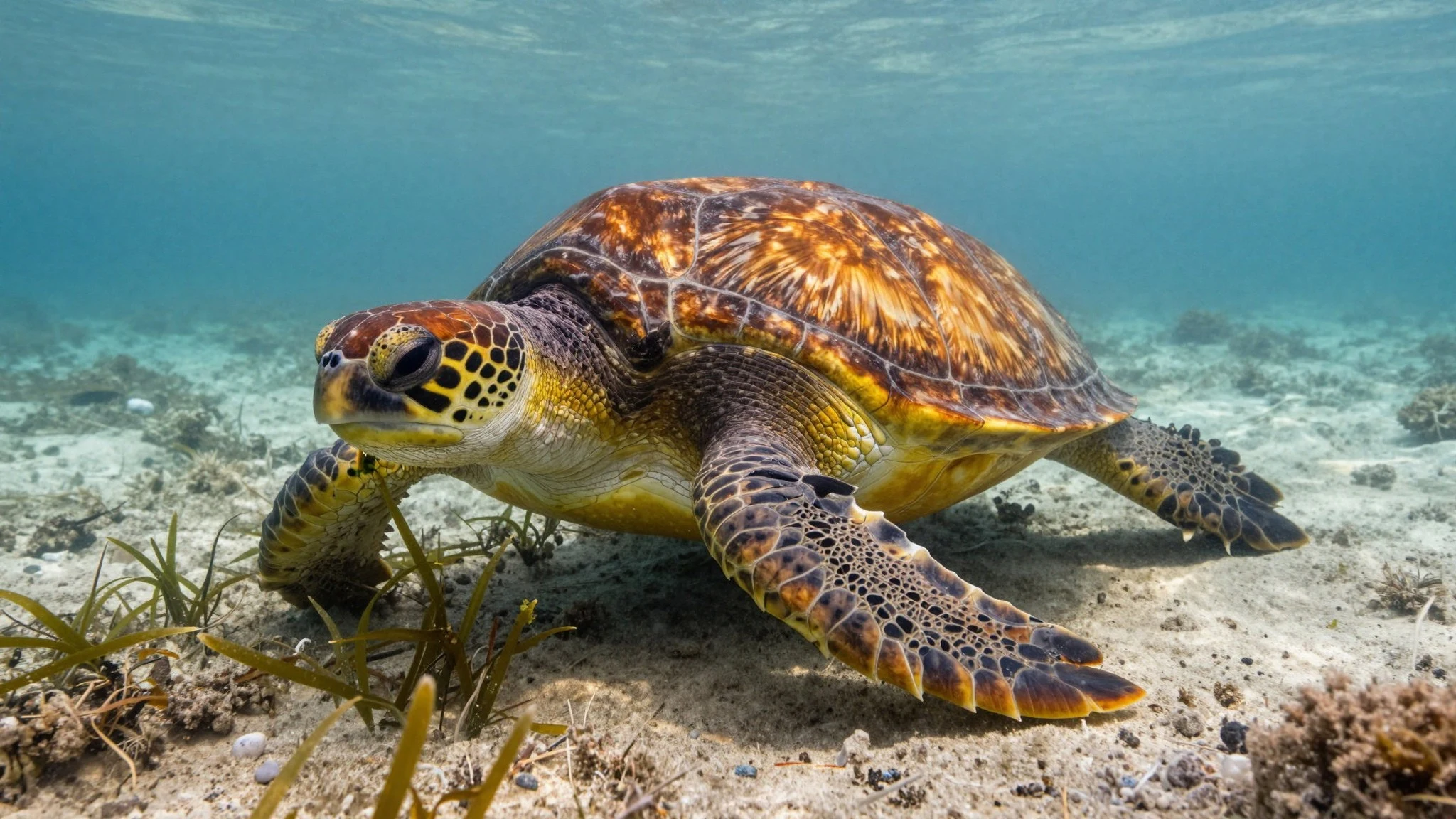
- Green sea turtle (animal)
The green turtle is a big sea turtle named for the green fat beneath its shell, not for the shell itself, which is olive to black. It eats nothing but seagrass, so it needs no snacks from visitors. In Karimunjawa, a conservation site on Karimun, inside the national park, looks after turtles, and it is the place to learn about them. Visit with respect and let the turtles carry on in peace.